IMPACTS ON EXPERIENCED TEACHERS’
PERCEPTIONS OF THEIR ICT PRACTICES
Lynette McDonald
B Bus (USQ) Dip T (QUT)
Submitted in fulfilment of the requirements for the degree of Master of Education (Research)
Centre for Learning Innovation Faculty of Education
Queensland University of Technology August 2015
How Professional Development Impacts on Experienced Teachers’ Perceptions of their ICT Practices ii case study, educational technology, ICTs in education, information communication technology, professional development of teachers, thematic analysis
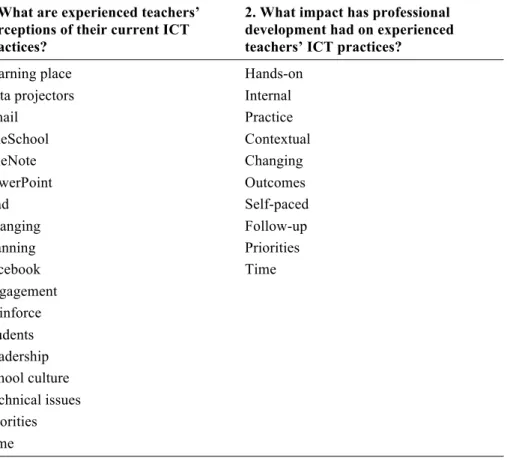
How Professional Development Impacts on Experienced Teachers’ Perceptions of their ICT Practices iii Technology drives a range of changes within all levels of Australian schools. Teachers are increasingly required to use digital technologies as tools for learning, while also including technology in administrative duties such as recording attendance, reporting student’s results and communication. This thesis examines two core issues: (1) experienced teachers’ perceptions of their information and communication technology (ICT) practices and (2) how professional development (PD) courses have affected these practices.
This research project used a case study approach and focused on experienced teachers in one urban Queensland high school. Data was collected from experienced teachers in relation to their current ICT use through face-to-face interviews and an online survey.
This study’s findings have important implications for the implementation of effective professional development in schools. The results have shown that the predominant use of ICTs by teachers in this school occurred outside the classroom and was generally in the areas of planning, resource development, communication and assessment. These teachers learned about ICTs using methods of professional development; however, this mainly occurred in their personal time due to other school-based priorities.
Teachers are at the forefront of ICT use in schools and teachers can be very influential in shaping a school’s culture. Schools face many competing agendas and priorities in relation to literacy, numeracy and changing curriculum frameworks. Therefore, these innovative teachers face many challenges and barriers that can halt any improvements. School leaders and teachers are under increasing pressure to maximise their use of resources and effective professional development methods, which have the highest impact, must be identified and implemented.
How Professional Development Impacts on Experienced Teachers’ Perceptions of their ICT Practices iv
Keywords ... ii
Abstract ... iii
Table of Contents ... iv
List of Figures ... viii
List of Tables ... ix
Acknowledgements ... xi
CHAPTER 1 INTRODUCTION ... 1
1.1 Background ... 1
1.1.1 Change agenda ... 1
1.1.2 Historical context of impacts and study site ... 2
1.2 Context ... 3
1.3 Purposes ... 4
1.4 Significance, scope and definitions ... 5
1.5 Thesis outline ... 7
CHAPTER 2 LITERATURE REVIEW ... 9
2.1 Topic 1: ICTs in education ... 9
2.1.1 Introduction ... 9 2.1.2 Pre-‐1980s ... 9 2.1.3 The 1980s ... 13 2.1.4 The 1990s ... 16 2.1.5 The 2000s ... 19 2.1.6 Current ... 24 2.1.7 Summary ... 27
2.2 Topic 2: Professional development of teachers, specifically in the area of ICTs and technology ... 28
2.2.1 Introduction ... 28
2.2.2 Professional development models ... 29
2.2.3 Features of effective professional development ... 31
2.2.4 Teachers’ attitudes and perceptions ... 35
2.2.5 Challenges or barriers towards effective implementation ... 37
2.3 Summary and implications ... 40
CHAPTER 3 RESEARCH DESIGN ... 42
3.1 Methodology and research design ... 42
3.1.1 Methodology ... 42
3.1.2 Research design ... 43
3.2 Participants ... 46
How Professional Development Impacts on Experienced Teachers’ Perceptions of their ICT Practices v
3.4 Procedure and timeline ... 48
3.4.1 Planning phase ... 48 3.4.2 Design phase ... 49 3.4.3 Preparation phase ... 49 3.4.4 Collection phase ... 50 3.4.5 Analysis phase ... 51 3.4.6 Sharing/dissemination phase ... 51 3.5 Analysis ... 51 3.5.1 Survey analysis ... 52 3.5.2 Thematic analysis ... 52 3.6 Ethics ... 57 3.7 Summary ... 57 CHAPTER 4 RESULTS ... 58 4.1 Results overview ... 58
4.1.1 Summary of survey method ... 59
4.1.2 Summary of interview method ... 59
4.1.3 Summary of survey and interview results ... 59
4.2 Experienced teachers’ perceptions of their current ICT practices ... 60
4.2.1 Survey results ... 60
4.2.2 Interview results ... 64
4.3 Impact of professional development on ICT practices ... 65
4.3.1 Survey results ... 65
4.3.2 Interview results ... 69
4.4 Summary ... 72
CHAPTER 5 ANALYSIS ... 74
5.1 Analysis process ... 74
5.1.1 Preparing the data ... 74
5.1.2 Coding the data ... 75
5.1.3 Organising the identifying themes ... 75
5.1.4 Defining the themes ... 76
5.1.5 Re-‐examining the text ... 78
5.1.6 Finalising the themes ... 78
5.2 Limitations of the thematic analysis process ... 79
5.3 Analysis overview ... 79
5.4 Analysis of experienced teachers’ perceptions of their current ICT practices ... 80
5.4.1 Experienced teachers’ perceptions of their current ICT practices: survey analysis ... 80
5.4.2 Experienced teachers’ perceptions of their current ICT practices: interview analysis ... 86
How Professional Development Impacts on Experienced Teachers’ Perceptions of their ICT Practices vi 5.5.1 The impact of professional development on experienced teachers’
ICT practices: survey analysis ... 98
5.5.2 The impact of professional development on experienced teachers’ ICT practices: interview analysis ... 106
5.5.3 Analysis of the term Impact ... 111
5.5.4 Summary ... 112
CHAPTER 6 DISCUSSION OF THEMES ... 113
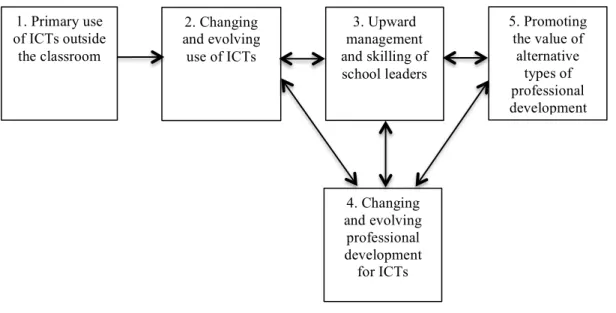
6.1 The five-‐theme model ... 113
6.1.1 Identifying the links between the themes ... 114
6.1.2 Reference to conceptual frameworks ... 115
6.2 The five themes ... 115
6.2.1 Theme 1: Primary use of ICTs outside the classroom ... 117
6.2.2 Theme 2: Changing and evolving use of ICTs ... 119
6.2.3 Theme 3: Upward management and skilling of school leaders ... 121
6.2.4 Theme 4: Changing and evolving professional development for ICTs ... 124
6.2.5 Theme 5: Promoting the value of alternative types of professional development ... 125
6.3 Summary ... 127
CHAPTER 7 CONCLUSIONS ... 129
7.1 Purpose of the research ... 129
7.2 Summary of the research project ... 130
7.2.1 Summary of research specific to this study site ... 131
7.3 Summary of Education Queensland Professional Development Policy ... 132
7.4 Conclusions ... 133
7.4.1 Overall conclusions ... 133
7.4.2 Conclusions specific to experienced teachers’ perceptions of their current ICT practices ... 134
7.4.3 Conclusions specific to the impact professional development had on experienced teachers’ ICT practices ... 135
7.5 A model for professional development and reforming ICT practices ... 136
7.5.1 Role of teachers at this study site ... 137
7.5.2 Role of school leaders at this study site ... 138
7.6 Limitations of the research and conclusions ... 139
7.7 Recommendations for this study site ... 141
7.8 Practical suggestions to address the challenges for teachers and school leaders at this study site ... 143
7.9 Future research ... 143
7.10 Concluding thoughts ... 144
How Professional Development Impacts on Experienced Teachers’ Perceptions of their ICT Practices vii
APPENDIX B: INTERVIEW ... 162
APPENDIX C: SURVEY DATA ... 167
APPENDIX D: INTERVIEW DATA ... 171
APPENDIX E: UNDERUTILISED TYPES OF PROFESSIONAL DEVELOPMENT181 APPENDIX F: DIFFERENCE BETWEEN FREQUENCY AND IMPACT ... 182
APPENDIX G: NVIVO QUERY SEARCH ... 183
APPENDIX H: MANUAL CODING OF TEXT ... 184
How Professional Development Impacts on Experienced Teachers’ Perceptions of their ICT Practices viii
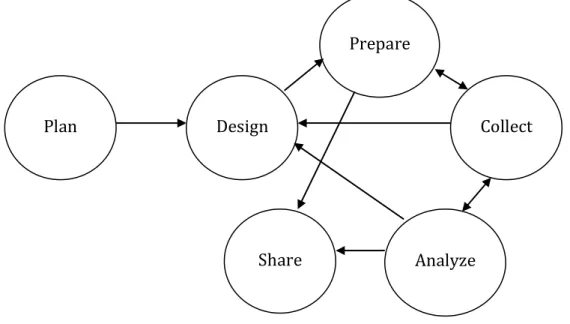
Figure 3.1 Design plan ... 44
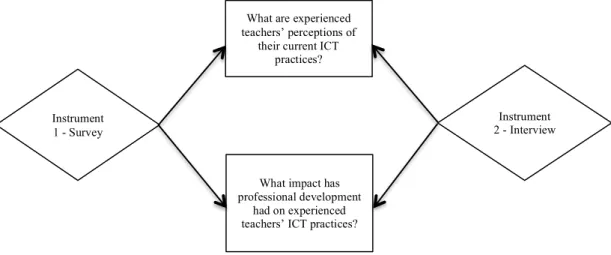
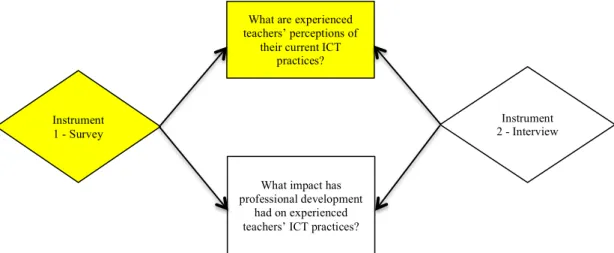
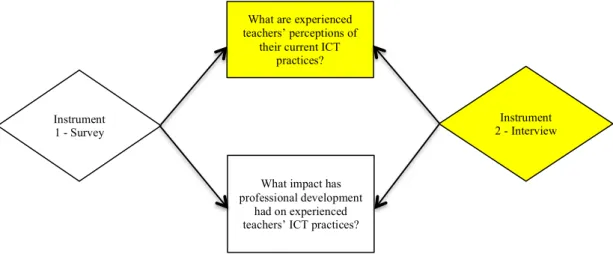
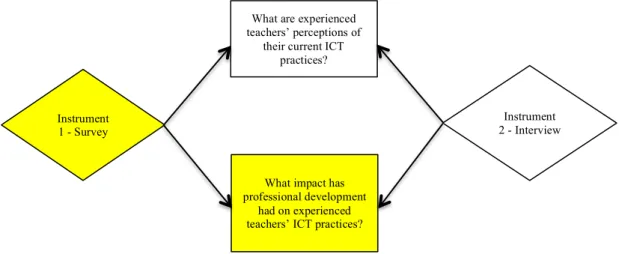
Figure 4.1 Map of instruments and research questions ... 58
Figure 4.2 Map of survey and research question 1 ... 61
Figure 4.3 Map of interview and research question 1 ... 63
Figure 4.4 Map of survey and research question 2 ... 65
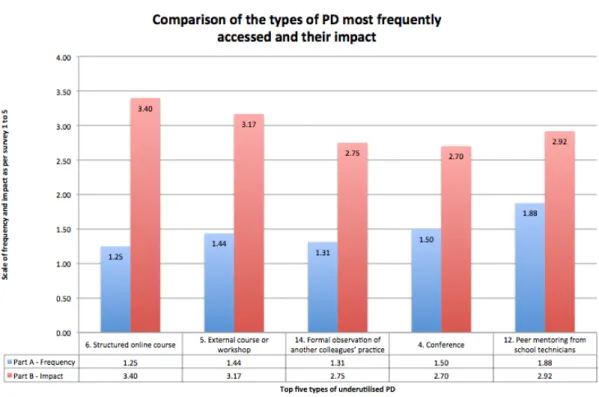
Figure 4.5 Underutilised types of professional development ... 69
Figure 4.6 Map of interview and research question 2 ... 70
Figure 5.1 The final themes ... 78
Figure 5.2 Map of analysis and research questions ... 79
Figure 5.3 Map of survey analysis and research question 1 ... 81
Figure 5.4 Verb frequency and significance ... 85
Figure 5.5 Map of interview analysis with research question 1 ... 86
Figure 5.6 Map of survey analysis with research question 2 ... 98
Figure 5.7 Map of interview and research question 2 ... 106
Figure 6.1 The five-‐theme model ... 114
Figure 6.2 Primary use of ICTs outside the classroom ... 118
Figure 6.3 Upward management and skilling of school leaders ... 123
Figure 6.4 The five-‐theme model ... 127
Figure 7.1 A model for professional development and reforming ICT practices ... 137
How Professional Development Impacts on Experienced Teachers’ Perceptions of their ICT Practices ix Table 2.1 Summary of research of features of effective professional
development ... 34
Table 3.1 Sources of evidence ... 46
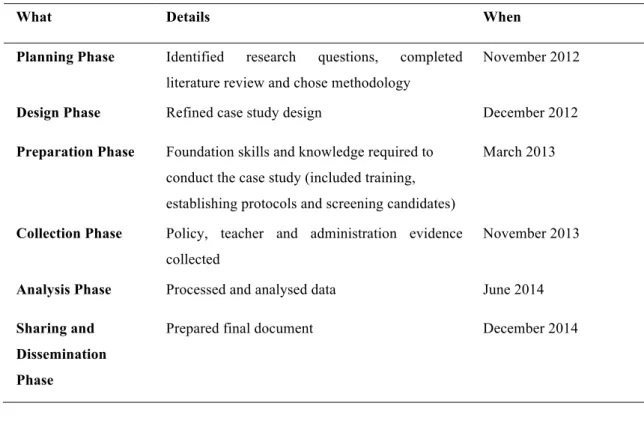
Table 3.2 Phases and timeline of project ... 48
Table 3.3 Potential themes ... 54
Table 3.4 Timeline of analysis ... 55
Table 4.1 Survey based on 27 focus areas from National Professional Standards for Teaching ... 61
Table 5.1 Identification of themes ... 76
Table 5.2 National Professional Standards for Teaching -‐ Use of ICT practices from highest to lowest ... 82
Table 5.3 Primary use of ICTs ... 88
Table 5.4 Tally of primary use of ICTs ... 89
Table 5.5 Types of professional development most frequently attended or accessed ... 100
Table 5.6 Types of professional development that had the highest impact on ICT practices ... 101
Table 5.7 Types of professional development categorised as underutilised ... 102
Table 5.8 Types of professional development that had the least impact on ICT practices ... 104
Table 5.9 Descriptive terms used for preferred type of professional development ... 107
How Professional Development Impacts on Experienced Teachers’ Perceptions of their ICT Practices x
How Professional Development Impacts on Experienced Teachers’ Perceptions of their ICT Practices xi I would like to acknowledge and thank Bruce Burnett and Michael Dezuanni for their guidance, advice and support over the last three years. Your encouragement, leadership, supervision and intelligence have been outstanding.
I would like to recognise and give special thanks to Cathy Pfingst, Principal, for her regular and unfaltering wisdom, guidance, and most of all, invigoration and assurance when it was needed.
I would like to thank Megan Pozzi, at Queensland University of Technology, for her opinions and direction during this process. I would like to thank professional editor, Melissa Giles, who provided flawless copyediting and proofreading services, according to the guidelines laid out in the university-endorsed guidelines and the Australian Standards for editing research theses.
I would like to thank the teachers, particularly those who participated in the interview and survey. I am eternally indebted to you and in equal measure inspired by you. I am also motivated and thankful to the teachers I work with on a daily basis, both within my faculty and within the eLearning Committee, who have always had kind words of encouragement, have shown their support in countless ways and have been innovative with their use of ICTs in the classroom.
I would also like to thank my family and friends, particularly my children, Rhian and Jared for allowing me to undertake this project over the last four years and put up with many replies of ‘Sorry I can’t do that, I have to work on my thesis’. Your support has been immeasurable and is enormously appreciated.
Thank you to all of the other people who have shown an interest in my research and have offered kind words of encouragement and optimism as the final deadline approached.
Chapter 1: Introduction 1
This chapter outlines the background of the project, the context and purpose of the research and provides definitions of terms used within this thesis. The significance and scope of this research is provided, followed by an outline of the remaining chapters.
1.1 Background
1.1.1 Change agenda
In the same manner that technology drives change in how businesses operate and how people behave in their homes, it generates pressure on educational policy makers, and therefore, on teachers, to change. Every year, there appears to be a new agenda of change in schools, often referred to as an explicit improvement agenda. Such agendas require teachers to re-think strategies, adopt innovations and ensure that benchmarks are measured and achieved. Although the role of teachers remains one of facilitating a course of learning that is engaging for students, improvement agendas are influenced by other discourses, such as those about assessment, with the outcome to ensure that academic achievement goals are attained.
Many change agendas are present in our schools and currently there is a focus on data and standardised testing. In contrast to this agenda, many millions of dollars is being spent on technological tools in order to ensure that curriculum practices are preparing students for 21st-century lives and careers. Some schools have adopted take-home laptop models, while other schools are creating pods and labs of computers. These changes are now no longer optional and teachers are required to embrace technology. Research has shown that computers and technological devices alone do not improve the academic results of students or schools (Eng, 2005, p. 635; Hurd, 2009, p. 139; Somekah, 2006, p. 167). This is largely because many teachers use these devices at a simplistic level based on traditional pedagogy or do not engage with these new technologies. The goal should be for teachers to use new technologies to encourage higher thinking, creativity and collaboration, so that students have the skills to be ready for 21st-century workplaces.
Chapter 1: Introduction 2 state) and from within the school. Federal government policies, under the banner of
the Digital Education Revolution, (Department of Education, Employment and Workplace Relations, 2008), have seen schools receive significant funding since
2009 to purchase desktop and laptop computers for use with Year 9−12 students as
part of the National Secondary School Computer Fund (NSSCF), which aims to increase the ratio of devices to students. The Queensland Government has developed programs in the form of the Smart Classrooms policy. For example, in 2007, all teachers in Queensland secondary and primary schools were provided with a personal laptop, based on the Computers for Teachers (C4T) policy.
1.1.2 Historical context of impacts and study site
This section outlines the historical contexts of impacts between 2000 and 2011 at the study site. I have been a user of technology in classrooms since beginning my high school teaching career in 1988. Since 2000, I have been chairing the eLearning Committee at my school, which, for many years, was a role that focused on managing the physical and financial resources of a computer network. Over the past few years, however, advances have been made in centralised networking environments, help desk support and the provision of more computers. This has allowed the eLearning Committee to focus on pedagogy and the professional development of teachers. The approach to professionally developing teachers was largely teacher-driven. Teachers at the school were required to write a Growth and Learning Plan to set goals and identify what professional development would help them to learn the desired skills. To date, no tracking of this professional development model has been carried out to ensure that the workshops being attended were successful in reaching these goals.
In 2008, C4T provided every teacher across Queensland with a laptop and most of the professional development sessions that were designed to help teachers learn how to use these devices occurred within schools. The introduction of electronic and online systems for attendance records, curriculum planning, reporting, notices, newsletters and email forced teachers to adopt technology in their daily duties and professional development was again offered to help teachers with this shift.
Chapter 1: Introduction 3 teacher attained a minimum benchmark of ICT use, including word processing,
presentation and email software, as well as use the Internet for research and inquiry. This goal was achieved by creating a mentor-based process and building ICT leadership capability across the school. In that year, approximately 97% of the school’s teachers attained this benchmark. The remaining 3% were actively resistant or lacked the necessary skills.
In 2011, the eLearning Committee led and managed a group of teachers in a long-term collaborative professional development model to develop ICT use within the classroom. About 15% of the school’s teachers nominated themselves to participate, partly motivated by the promise of increased access to devices and release from some classes. These teachers were already using ICTs in their classrooms, and with the rewards promised, there was little resistance to adopting innovations.
The long-term plan is to engage all of the school’s teachers in the effective and efficient implementation of ICTs, and in some cases, to change their values and beliefs about how ICTs can be integrated into the classroom to benefit student’s learning. Some of these teachers can see a direct benefit of using ICTs, but are not entirely convinced that technology provides an advantage. In addition, certain obstacles, such as access to equipment, technological barriers or a lack of time or priority, may prevent these teachers from implementing such changes. At this site, it is the most-experienced teachers who require additional persuasion to change their pedagogical practices in the area of ICTs. For the purpose of this research, an experienced teacher is defined as a teacher who has had at least 10 years of teaching experience in Queensland secondary schools.
1.2 Context
The impact that professional development has on experienced teachers’ ICT practices has been identified and analysed in this study. This research is important because this impact must be clear in order to further support teachers and guide the future professional development programs. Given the large financial investment that has been made to develop and equip schools with infrastructure, it is essential that a
Chapter 1: Introduction 4 outcomes, but quality technology use by a quality teacher can (Hattie, 2009).
The impact of professional development on experienced teachers’ ICT practices can be viewed in four key ways:
1. Professional development might have had little to no impact on some
teachers’ practices because they have not engaged with technology and their practices have not changed.
2. Many teachers have noticed a basic impact of technology on their
day-to-day methods. Professional development has changed their administrative and communication processes. These changes are evidenced by the use of electronic attendance records, electronic communications and word processors to develop unit plans, and integrating basic ICT skills into their classrooms (i.e. word processing and internet research).
3. Some teachers have already changed their practices so that technology is
being used to enhance students’ learning. They are using technology to encourage students to become critical and creative thinkers and learn in a global and mobile environment.
4. Some teachers have changed their practices to the extent that they are
influencing and persuading other teachers to change their practices. These leaders are collaborating, mentoring and coaching other teachers and have embraced the professional learning networks that technology has helped to facilitate.
1.3 Purposes
The overall aims of the study were to increase our understanding of experienced teachers’ current ICT practices and what impact professional development activities had on these experienced teachers. This increased understanding of the link between professional development and the impact that it has on teachers’ practice will support teachers as they contend with an ongoing agenda of change.
Chapter 1: Introduction 5
practices? This includes a self-reported identification of how ICTs are used by teachers to implement effective teaching and learning environments, which incorporates communication, administration, planning, implementation and assessment practices.
2. What impact has professional development had on experienced teachers’ ICT practices? This includes an analysis of the different types of professional development, the teachers’ attitudes and perceptions towards the professional development and the impact the professional development had on experienced teachers’ ICT practices.
1.4 Significance, scope and definitions
Schools strategically aim to achieve a range of desired benchmarks in relation to students’ outcomes. Given the amount of financial resources invested in schools to integrate ICT into the curriculum, it is essential that these funds are used efficiently.
Students have the right to experience a full range of educational learning experiences that prepare them for living, working and studying in the 21st century. Society demands that students have enhanced technological skills, and while some would argue that students have these skills regardless of their education, the research has shown that their acquired skills through social networking and internet use is primarily as a receiver of information (BECTA, 2008, p. 12; Scheuermann & Pedro, 2009, p. 19). Teachers need to ensure that students develop skills of creativity, critical thinking and communication, and ICT is one of the tools that can enhance the development of these skills.
Teachers need to be provided with quality professional development if they are expected to utilise the range of technologies available to them. As new forms of technology emerge, professional development also needs to evolve, so that teachers have the necessary skills and abilities to use them.
ICTs have not had the favourable impact on students’ learning that many had envisaged; however, this is unsurprising given that technology is only a tool for learning and it is the teacher’s use of ICTs that is paramount. Hattie’s research (2009) shows that teachers have the biggest effect on students’ learning. If technology is the tool, then combining an effective teacher with the effective use of
Chapter 1: Introduction 6 add-on tool, gadget or device, but as an essential component of learning, and
terminology such as 21st-century learning should now simply be learning. However,
teachers must be guided through a change-management process to develop their capability to use ICTs to benefit student’s learning outcomes.
Research has shown that professional development models (Borko, 2004; Garet, Porter, Desimone, Birman & Yoon, 2001; Wells, 2007) in the past have not always resulted in a positive change to teachers’ practice. To have any long-lasting change, professional development should be based on pedagogy and content, be collaborative, be engaging for teachers, be based on research and evidence, and offer follow-up and support. Identifying the impact that ICT professional development has on experienced teachers’ ICT practices will allow a professional development plan to be designed that will transform pedagogical practices and enable ICT to be used as an effective tool for learning.
This research is taking place in one school, which results in two main limitations of applying these results to other school environments. First, the school does not operate a 1:1 laptop-learning environment. A 1:1 environment may result in different impacts on teachers and students; therefore, the findings from this study can only be applied to an environment with similar infrastructure. Second, the environment is also significant because it is a large suburban high school that is only 15 years old, and therefore, is not steeped in long-standing traditions. The culture of the school is still forming; however, the school achieves high academic results and it has a focus on academic achievement, results and data, as opposed to innovation, creativity and entrepreneurship.
ICT encompasses skills that a teacher may use in the course of their duties that include hardware, software as well as duties which are based on communication and administration. The term digital pedagogies, while currently used by Education Queensland to provide advice to teachers on how to implement curriculum within the classroom does not incorporate those skills used outside the classroom. In addition to this, the term digital pedagogies is not widely adopted by federal educational
policies, in particular the National Professional Standards for Teaching, developed
Chapter 1: Introduction 7 Assessment and Reporting Authority (ACARA) (2012).
Professional development is the most widely accepted term outlined in state and local policies. Education Queensland and Queensland College of Teachers both currently have policies that reference the term developing or development. In
particular, Developing performance framework (EQ, 2012) and the Continuing
Professional Development Framework (QCOT, 2012). The term professional learning was considered, however given it is not widely used at this particular site or within Education Queensland policies it was not adopted.
1.5 Thesis outline
The remainder of the thesis chapters are structured as follows. Chapter 2 contains the literature review. The first section examines ICTs in education, including the history of ICT use in education and the impacts, outcomes and teacher perceptions of these uses. The second section examines the professional development of teachers, including models and features, teacher attitudes and perceptions, and barriers that may prevent effective implementation. Chapter 3 outlines the research methodology, which is based on case study and thematic analysis. Chapter 4 presents the study’s data and results. Chapter 5 contains an analysis of the results with reference to the literature. Chapter 6 discusses the major themes that became evident through the analysis. Chapter 7 offers conclusions, including the key findings, limitations and recommendations for implementing the research outcomes.
The research methodology outlined in this section was designed as a qualitative case study because the specific purpose of the research was to understand changes in experienced teachers’ ICT practices at this site as a direct result of the implementation of ICT professional development methods.
Case study research, similar to all research, requires a theoretical perspective from which the case study will be approached. The specific individual theory
proposed was Rogers’ (2003) Diffusion of Innovations Theory, which identifies
varying degrees of engagement and adoption of new practices. Tearle’s (2004) A
theoretical and instrumental framework for implementing change in ICT in education Theory analyses organisational aspects, such as corporate culture, work
Chapter 1: Introduction 8 innovations and a teacher’s willingness to engage with professional development.
Leaders’ roles within the organisation and their impact on professional development implementation are also addressed.
Chapter 2: Literature Review 9 This chapter presents a literature review divided into two sections. The first
section examines ICTs in education, including the history of ICT use in education and the impacts, outcomes and teacher perceptions of these uses. The second section examines the professional development of teachers including models and features, teacher attitudes and perceptions and barriers that may prevent effective implementation.
2.1 Topic 1: ICTs in education
This first section of the literature review begins with a historical account of ICTs in education beginning in the 1960s to what is currently occurring within Queensland schools. This is presented chronologically from pre-1980s, the 1980s, the 1990s, the 2000s and current.
2.1.1 Introduction
This is included to show how ICTs have been used by teachers in classrooms over many years and provides evidence that the evolution of use has taken place at a much slower rate than what has occurred in society. Also included are the positive and negative impacts on teachers’ practices, teachers’ perceptions and outcomes for students.
2.1.2 Pre-1980s
ICTs in society and education
Early innovators were beginning to see the potential that technology could have in business and industry in the 1960s. While this was having some impact on organisational and manufacturing practices in industry, the impact in schools was generally limited to administrative areas.
The origin of computer technology can be traced back to the early 1940s, when a German engineer developed a Z3 computer based on binary arithmetic; the first widespread commercial use occurred several decades later when the development of integrated circuits increased computer efficiency and reliability while reducing the cost (Bitter & Legacy, 2008). This innovation in the 1960s coincided with the first widespread use of computers in business and industry. In 1960, IBM released its
Chapter 2: Literature Review 10 1400 Series machines primarily for the business market, and in 1964, university professors Kemeny and Kurtz developed Beginners All-purpose Symbolic Instruction Language (BASIC), which became a pivotal programming language used in many applications (Harrington, 2009, p. 40). Devices such as audio-cassettes (1962), the first hand-held calculators (1964), compact discs (1965), computer mice (1968), word processors (1972), ethernet cabling and laser printers (1973), and spreadsheet software (1978) were subsequently developed (Harrington, 2009, pp.
40−42). Bill Gates and Paul Allen founded Microsoft (1974) and Steve Jobs and
Steve Wozniak founded Apple (1976), which revolutionised technology in society and education.
Computers were introduced into the university educational arena in the US in the 1960s, when students started using educational software (Coley, Cradley & Engel, 1997, p. 10; Kulik & Kulik, 1991, p. 75; Starkey, 2011, p. 2). The software in use was based on programmed instruction that required students to provide a simple response to stimuli, which was reinforced with either positive or negative feedback. In 1963, Stanford University developed a self-paced program based on computer-assisted instruction within its mathematics and reading courses. The focus behind these programs was based on the simple pedagogy of drill and practice, and writing, collecting and publishing information (Coley et al., 1997, p. 11; Starkey, 2011, p. 2). The use of computers in this way was in line with direct instruction educational beliefs, but was also due to the limitations of computer technology and the software available (Fouts, 2000, p. 2).
In the 1970s, personal productivity devices were being developed for consumer use with the launch of such companies as Apple, Tandy and Commodore. In addition to this, associated hardware technologies were being developed, including laser printers, INTEL processors, mice and the floppy diskette (Harrington, 2009, p. 42). In 1973, Transmission Control Protocol and Internal Protocol (TCP/IP) was developed, and this technology paved the way for the transmission of emails. (White, 2008, p. 4).
Classrooms in the US were beginning to adopt computers because they were more affordable in that country and offered a variety of uses (Fouts, 2000, p. 2; Pollard & Pollard, 2004, p. 1; Roach, 2010, p. 18). Newhouse (2002, p. 3) argues that many schools were integrating computers into their classrooms based on a rationale
Chapter 2: Literature Review 11 that society expected all students to have computer-literacy skills. In 1972, software (such as word processors) was released to the commercial and educational market, followed in 1978 by other productivity software for working with spreadsheets (Harrington, 2009, p. 42). These innovations in technology were now no longer limited to US classrooms; schools in the UK and in some parts of Europe also started to adopt the technology.
The microcomputer arrived in UK schools in the late 1970s, when each school was investing in one or two of these devices (McGarr, 2009, p. 1097). Showing considerable foresight about how this technology could be effectively utilised in schools, the UK pioneered summer in-service courses for teachers (mostly those from mathematical backgrounds). McGarr (2009, p. 1097) suggests that this training was prioritised by the UK’s Education Department because the development of teachers’ computer skills was seen as essential. The Institute of Educational Technology was formed with the purpose of working alongside school leaders to promote professional development in educational technology, as well as undertake research in teaching educational technology (Institute of Educational Technology, 2012).
Meanwhile, in Australia, Queensland schools used computers in their classrooms, but it was not until the next decade that any coordinated approach or strategic initiatives emerged (Baskin & Williams, 2006, p. 1). In the 1970s, differing schools of thought developed about how a computer could be used in education to benefit students. There were those who believed the computer was mainly for drill and practice, as had been the case in the 1960s. Others, however, believed that a computer could be used as a tool to enrich students’ writing and calculating, while a third group believed that computers should be used as a tool in the field of computer science and that all students should learn to program (Fouts, 2000, p. 2; Petras, 2010, p. 40).
Impacts on education
Although some government departments around the world, developed changes to policy and a minority of teachers responded to these changes, there was limited research to identify any impact or outcomes. By the late 1970s, however, research projects had provided data with which conclusions could be made (Eng, 2005, p. 638; McGarr, 2009, p. 4). The focus of this early research was to evaluate the
Chapter 2: Literature Review 12 effectiveness of computers in universities, where software was used specifically in relation to science or mathematics. The studies investigated the impact of learning with technology using pre-and post-testing methods, as well as control groups and exams. Margolin and Misch (1967 p. 99) noted that from a whole-school perspective, computers at that time predominantly influenced school practices such as budgeting, scheduling, teacher assignment, computer-assisted instruction, counselling, information storage and retrieval, simulation of innovation, school operations and research.
Teacher acceptance of, or resistance to, educational technology was a new area of research. Harrison (1977, p. 3) found that many teachers knew very little about computer use in their specialised field and did not have the time or the motivation to develop new skills. Teachers were, Harrison suggested, unsure of the relevance of computing in their own field, believing that computers belonged primarily in the area of computer science. Hooper (1969, p. 246) noted that resistance to technology existed because it was perceived to undermine a teacher’s role and create new centres of power. There was perhaps little reason for teachers to change their pedagogical methods, given that the dominant learning theories at the time were behaviourist and instructivist, and based on principles of tasks, subtasks and information processing, which gave rise to computer-assisted instruction pedagogies (Holkner et al., 2008, p. 9; Kulik & Kulik, 1991, p. 75; Petras, 2010, p. 40).
The research findings in this era included the impact of computers on students’ achievements, motivation and changes in teachers’ practice. Hooper (2008, p. 234) stated that “educational technology never reached or began to reach any of the big goals and big ambitions set for it by the pioneers in the 1950s, 1960s and 1970s”. Kulik and Kulik (1991, p. 88) at the University of Michigan performed a meta-analysis on several hundred studies in classes taught with and without computer-based instruction and found that computer-computer-based instruction increased exam scores by 0.30 standard deviations and was more effective when used over shorter periods of time. Hence, it was believed to have a novelty effect, temporarily increasing students’ motivation and engagement. Gagne (as cited in Cilesiz, 2010, p. 488) identified that computers altered the process and outcomes of teaching and learning, including classroom interactions. Cerutti, Brubaker and Littler (1969, pp. 87−89)
Chapter 2: Literature Review 13 motivation of students who were otherwise disengaged or were diagnosed with particular learning-support needs. While the school district in the US had felt that the computer would be most useful with mainstream students, Cerutti et al. (1969) found the best outcomes were achieved with underachievers or those who were disengaged.
2.1.3 The 1980s
ICTs in society and education
During the 1980s, the use of the personal computer rapidly expanded as more sophisticated technology was released every few months. By the end of the decade, Tim Berners-Lee had begun the initial development of the World Wide Web in order to share text, image and audio files (White, 2008, p. 2). The implications for society included new systems and new fields of employment, which were replacing obsolete occupations. Training was required to build employees’ capacity to understand and develop skills in the technological field (Molnar, 1997, p. 6).
Computers suited the general population due to operating systems, such as Microsoft Disk Operating System (MS-DOS), developed by Bill Gates and Microsoft. This operating system allowed users who had less computing knowledge or experience to interact with their systems. Computers were available with a suite of operating, application and utility software that could produce and transmit text, image and audio files. A computer storage system evolved to include Compact Disc Read Only Memory (CD-ROM) discs and drives, which could distribute entire books within schools and other environments (Newhouse, 2002, p. 3). In the US, supercomputers were developed and used in government organisations to solve complex problems and process enormous amounts of numerical data. In the late 1980s, mobile phones were in their early stages of development with wealthy business owners adopting these devices to enhance their communication with both staff and clients (Theisens, Roberts & Istance, 2010, p. 88).
While all these changes were happening in society, parallel changes were occurring in some educational environments. Governments, which were worried about losing the technological innovation race, increased funding to purchase more computers to be used in schools. (Cuban, 1986, p. 6; Wenglinksy, 1998, p. 9). The ratio of computers to students was a key indicator of success, and in 1983, the US government, aimed for one computer for every 125 students (Wenglinksy, 1998, p.
Chapter 2: Literature Review 14 9). However, in Warschauer’s (2003) major empirical studies at the University of California, Irvine, over a 10-year period, he argued that technology projects “too often focus on providing hardware and software and pay insufficient attention to the human and social systems that must also change for technology to make a difference” (p. 6).
Computers in education were re-branded as information technology. It was not
until sometime later that communication was added to this phrase to produce
information and communication technology or ICT (Pelgrum & Law, 2003, p. 19). Computers were being used for word processing, simulations, tutoring systems, touch-typing and maths games, in addition to drill and practice systems. In the 1980s, Apple Inc. introduced the Apple IIe, which became popular in schools with the
introduction of game-based learning pedagogies. Games such as Oregon Trail and
Odell Lake became popular as scientific simulation games.
In the US, schools faced increasing pressure to adapt (Pelgrum & Law, 2003,
p. 20). In 1983, the US federal government report called A Nation at Risk identified
computer science as one of the five new basics required, along with English, mathematics, science and social studies. This included an elaboration that students required an understanding of devices, electronics and related technologies, rather than be limited to basic application use. As a result of this, funding increased in the area of professional development of teachers (Culp, Honey & Mandinach, 2003, p. 11). In Australia, several national bodies developed educational reforms in the 1980s; however, it was not until 1988 that the use of computers and information technology in schools became a high priority (Education Queensland, 2012).
Cohen (1987, p. 154) argued that for many years teachers had been resisting technology innovations because teachers operated in a decentralised and isolated environment, were in charge of their own classrooms and teaching methods, and had very little reason to change. McGarr (2009, p. 1094) found that despite policies and initiatives, changes within classrooms were minimal.
Impacts on education
In the 1980s, there was an increase in the number of research projects occurring worldwide, on the impact of educational technology; however, there were many differing opinions on the results. Some educators held the belief that computers
Chapter 2: Literature Review 15 may replace teachers, much in the same way that this was occurring in some industrial occupations (Newhouse, 2002, p. 12). Cohen (1987, p. 154) argued that the success of technology depended on a teacher’s resistance to adopt innovations. Many teachers preferred to continue with traditional modes of teaching or use computers for basic administrative duties (Cohen, 1987, pp. 83−85). Cohen (1987) stated that many barriers further prevented innovation and suggested that although there was some documented evidence of a temporary increase in student motivation to engage in learning, the biggest impact was felt by the organisations that developed and sold the equipment. Cuban (2001) argued that change would take decades because teachers needed to be convinced that students would learn more effectively with technology. Cuban (2001, p. 13) also claimed, in further research, that the majority of teachers in the US were not using technology widely in their own personal lives, and this was a barrier preventing widespread change in classroom practices.
Other researchers had different findings that contrasted with the previously stated research. Kulik’s (1983, p. 19) research, for example, was one of the first meta-analysis studies and involved reviewing 51 projects that evaluated
computer-based teaching across Years 6−12. The results of this project showed that
computer-based teaching raised students’ scores on final examinations by approximately 0.32 standard deviations. There was also evidence of an improvement in student attitudes towards learning and that learning time was reduced with computer-based instruction. The Apple Classroom of Tomorrow (ACOT) research identified that the success of integrating technology largely rested with teachers and their use of the technology (Petras, 2010, p. 42). Teachers’ beliefs about learning and their preference towards various pedagogical approaches resulted in a combination of approaches (Dunn & Rakes, 2010, p. 58). Some educators, for example, adopted student-centred learning beliefs, such as those offered by Seymour Papert, who developed the LOGO programming system based on constructivist learning beliefs (Petras, 2010, p. 40).
Further complicating the research findings was the ongoing debate about the indicators or research criteria on which success was being evaluated. Early research focused on the ratio of computers to students or the number of machines connected to the internet, yet as Scheuemann (2009) suggested, this data did not provide a
Chapter 2: Literature Review 16 measure of learning success (p. 8). Subsequently, a new field of research was established to focus on frameworks to evaluate the success of technology use.
2.1.4 The 1990s
ICTs in society and education
Technology development continued to be the catalyst for changes in all areas of society. Computers became more affordable and the numbers of computers used in society and in education increased dramatically. As access to these devices increased online learning models, multimedia delivery and self-paced learning were
introduced. The term ICT was introduced early in this decade, when email
technologies created global communication opportunities (Pelgrum & Law, 2003, p. 19). In the US, a National Education Summit of educational leaders, business representatives and community leaders stressed the importance of educational technology and how teachers could best be supported to implement these changes (Coley et al., 1997, p. 10).
In the 1990s, operating systems, including Microsoft Windows and open-source systems, advanced new opportunities for collaboration and peer review (Pelgrum & Law, 2003, p. 45). Open-source systems resulted in higher quality, increased flexibility and cost-effective software, especially for businesses; however, there was some doubt about the reliability of open-source systems applications in education, due to problems with maintenance and ease of use (White, 2008, p. 7).
From 1995 to 1999, the World Wide Web multiplied at a rate of 263%, boosting to approximately five million websites at the close of this decade, but still only offered the ability to access or store information in images and text (Theisens et al., 2010, p. 84). Schools and universities developed websites to disseminate information globally in the form of online manuals (White, 2008, p. 2), and software evolved to generic business-standard packages with the internet becoming increasingly dominant (Hurd, 2009, p. 141). In addition to this, Web 2.0 services emerged and mobile phones became indispensable and changed the way that people accessed information and communicated with each other. The impact of these innovations was still yet to be realised in classrooms.
The use of technology in the 1990s became increasingly student-centred. There was renewed vigour in the belief that teachers and schools were preparing students
Chapter 2: Literature Review 17 for the digital age and a responsibility to ensure that students did not miss out on these opportunities. Teacher education in the use of ICTs was also a focus; however, the funding for this was proportionately much lower than the funding for infrastructure and hardware.
In Queensland in 1998−1999, funding was provided for increased
infrastructure and the professional development of teachers (DETA, 1999, p. 2). The key components of the policy included integrating computers in all curriculum areas, reaching a ratio of computers to students of 1:7.5, equipping all classrooms with internet access and ensuring that all teachers had a minimum level of skills in the use of computers for learning (Education Queensland, 2011, p. 1).
In 1998, the Victorian Department of Education released the Learning
Technologies in Victorian Schools 1998−2001 policy, which set a goal to achieve a
ratio of 1:5 computers to students, as well as a Notebook for Teachers Program, which provided a laptop for 36,000 principals and teaching staff over a five-year period. The focus of this policy was infrastructure rather than the professional development of teachers or the use of ICTs in the classroom (Ng & Gunstone, 2003, p. 245).
Impacts on education
Many educational-technology research projects were taking place in the US and UK. Given that many variables exist in relation to the role of technology in the classroom, clear findings on the effectiveness of technology to improve student achievements had been difficult to determine. Analysis of the results was a complex issue with many differing methodologies being used. There were studies on effective teaching, specific software applications, hardware devices and online learning. This research created a complex web of empirical evidence (Webb & Cox, 2004, p. 7).
Policies identified that technology provided significant potential for students’ learning to be improved. This assertion was overwhelmingly supported by more than 94% of educational leaders in Organisation for Economic Co-operation and Development (OECD) countries, who ranked “the use of technology in instruction” as the second most important issue in public education (OECD, 2010, p. 24). Studies have shown that schools have largely been successful in reaching infrastructure goals (Norton & Hathaway, 2011, p. 204), yet this has not necessarily equated to
Chapter 2: Literature Review 18 successful outcomes in terms of students’ achievements. Research has shown that ICT in education can increase motivation, understanding, collaboration, creativity and access to information (Jimoyiannisa & Komis, 2010, p. 3). This was not always occurring because curriculum and teaching practices were not transforming and technology was still being underutilised (Cuban, 2001, p. 826). Studies found that 80% of school use of computers in the US secondary schools in 2005 was for word processing (51%) and internet (29%) and that there was a chronic shortage of
subject-dedicated software (Hurd, 2009, pp. 148−150).
Wenglinksy (1998) argued that technology was “unlikely to improve academic achievement or indeed any other educational outcome of students” (p. 10). His argument was based on three points:
• teachers being resistant to adopting innovations when there were problems
and technical issues
• the opportunity cost of other learning innovations due to large amounts of
funding being poured into technology
• his beliefs about theories of learning, where students learn through social
interactions that cannot be replaced by a device (Wenglinsky, 1998, p. 10). The focus of most of the research conducted in the US, UK, parts of Europe and Australia at this time was to recognise the positive and negative effects of using computers in classrooms and how best to promote effective learning (Eng, 2005, p. 7). US research had often been considered the front runner, but in the late 1990s, the UK government formed the British Educational and Communications Technology Association (BECTA), whose role was to advise schools on effective ICT use based on a solid foundation of research and evidence. BECTA launched two wide-scale impact studies – the ImpaCT and ImpaCT2 projects – which commenced in 1999. These studies involved more than 2,000 pupils of differing ages in 60 schools in both urban and rural areas of England. The study found that ICT use resulted in enhanced student performance in some curriculum areas; however, there were insignificant
enhancements in other areas (Eng, 2005, pp. 643−644).
Analysis of why policy and associated funding did not always equate to successful outcomes resulted in analysis of the framework for measuring success. The issue was complex and it was argued that the indicators for success should
Chapter 2: Literature Review 19 include analysis of the process of pedagogy, the uses of educational technology, the attitude of the teacher, professional development, self-efficacy, teachers’ beliefs about learning and outcomes for students (OECD, 2010, p. 28; Norton, 2011, p. 204). In addition to researching teachers’ beliefs about learning, teachers’ attitudes and beliefs towards their own ability with ICT were investigated. Confidence, skill and ability, as well as an enthusiastic desire to be a life-long learner of technology, were factors in a teacher engaging and exploring the use of technology in classrooms. Factors such as teachers’ personal use of technology in their home or personal lives appeared to contribute towards their use of technology in their classroom (Jimoyiannisa & Komis, 2010, p. 4; Maddux et al., 2011, p. 205).
In Kendall and Wickham’s (1999) book, based on Foucault’s methods, they discuss the belief that “it is easy to regard technologies as having a particular ‘impact’ on society which society cannot resist” (p. 78). However, Kendall and Wickham (1999, p. 78) also outline a different perspective in which technology and society are part of a continuously developing dynamic system with inputs from social, cultural and political assumptions and that they mutually condition each other. In other words, technology alone does not create the impact; rather, the characteristics of the school community plays a major role in deciding which technologies are used and this varies depending on each school’s culture.
2.1.5 The 2000s
ICTs in society and education
Towards the later part of this decade, the use of mobile devices including laptops, tablets and smart phones became widely accepted, across the US, UK and in other developed countries, because they were affordable, efficient and compact. Many secondary schools were now offering 1:1 laptop programs and the numbers of computers, including both desktops and laptops, were increasing, with a ratio of 1 computer to 5 students the average in OECD countries. (Theisens et al., 2010, p. 79). For those that didn’t have 1:1 laptop programs, they aimed to provide at least 1 computer for every 3 students (White, 2009, p. 6). By 2008, household access to computers, including laptops, was approximately 80% in OECD countries (Theisens et al., 2010, p. 78).
Chapter 2: Literature Review 20 Online services for retail, education and entertainment increased dramatically to include 250 million services or websites by the end of this decade (Theisens et al., 2010, p. 82). Social networking became popular with services such as Facebook and Twitter becoming a common way for people to communicate and businesses to market and advertise their products and services. In 2005, Tim O’Reilly popularised
the new terminology Web 2.0 and the growth in these services encouraged entire new
industries in online learning systems, virtual eLearning spaces, web conferencing and
online collaborative spaces (White, 2008, pp. 4−6).
New learning theories such as Connectivism (Siemens, 2004) proposed a
learning methodology for the digital age in which learners watch, listen, interact, give opinions, ask questions or share information, experiences and resources. New theories coupled with interactive whiteboards and online learning-management systems required the use of new pedagogies in the classroom.
Many schools were still focused on infrastructure and hardware, with only some focusing on curriculum reform and teacher development (Jimoyiannisa & Komis, 2010, p. 3):
Cuban (2000) noted ‘most policy makers, corporate executive, practitioners, and parents assume that wiring schools, buying hardware and software, and distributing the equipment throughout will lead to abundant classroom use by teachers and students and improved teaching and learning’...‘we found that access to equipment and software seldom led to widespread teacher and student use’ (p. 2).
There was concern that ICT reforms were based on assumptions and preferences rather than empirical evidence (Margaryan, Littlejone & Vojt, 2011, p. 439).
In the global context, educational reforms were widespread. The US developed a new National Educational Technology plan in 2004, which included seven major policy initiatives: leadership, innovative budgeting, teacher training, e-learning and virtual schools, broadband access and a move toward digital content and integrating data systems (US Department of Education, 2004, p. 14) In the UK in 2005, BECTA released a policy titled Harnessing Technology: Next Generation Learning, which set out a range of strategies including developing e-confident systems, leadership, personalised learning and technology infrastructure, along with a comprehensive
Chapter 2: Literature Review 21 research program covering six core areas to provide evidence to support the strategy (BECTA, 2008, p. 3). In Europe, the rationale behind policy development in ICT was based on economic, social and educational reasons (Scheuemann, 2009, p. 16). ICT in education was viewed as a strategic objective to develop the capability and efficiency of European countries’ workforces, thereby leading to future economic stability or growth.
In Australia in 2008, the Labor Government released the Digital Education Revolution policy (Department of Education, Employment and Workplace Relations, 2008). This AU$2.4 billion initiative was marketed as a program to improve educational outcomes, transform learning and teaching environments, and increase social and economic participation. However, the funding only allocated 1.4% of this budget towards professional development of teachers. The focus continued to be on infrastructure not up-skilling teachers.
In 2005, Education Queensland developed the Smart Classrooms policy, which outlined how teachers were required to integrate ICT into their planning, curriculum delivery and assessment to enhance learning opportunities and outcomes for students (Education Queensland, 2012). Regional technology managers were appointed to regions within Queensland to provide technical support to schools and this role evolved to also include eLearning support. In 2009, Education Queensland launched the Computers for Teachers project, which provided every permanent teacher in Queensland with a laptop. This followed similar programs in other states in Australia.
Impacts on education
There was now a large body of research into the impact and outcomes of technology in education. Measuring the impact of ICT in education was challenging due to the complex and multilayered aspects of using ICTs, and at times, the findings were not entirely what was expected (Erstad, 2009, p. 21; Starkey, 2010, p. 3). Hixon and Buckenmeyer (2009) argued, for example, that “technology has made little
impact on the educational process” (p. 2). The ICT Impact Report (Balanskat,
Blamire & Kefala, 2006), conducted in Europe, presented discussions and recommendations from 17 impact studies and surveys carried out at a national, European and international level. The key findings from this report (Balanskat, Blamire & Kefala, 2006, p. 4) showed that:
Chapter 2: Literature Review 22
• ICT impacts positively on educational performance in primary schools,
particularly in English, but less so in science and not in mathematics.
• In OECD countries there is a positive association between the quantity of
ICT use and students’ performance in Programme for International
Student Assessment (PISA) mathematics tests.
• Interactive whiteboards had a positive impact on students’ learning in
mathematics and science.
• Broadband access in classrooms results in significant improvements in
pupils’ performance in national tests taken at age 16.
McGarr (2009, p. 1100) quoted findings from a large-scale evaluation commissioned by the European Union, which, in 1993, investigated the use of computers in secondary schools. The research reported high usage of standard software applications, including desktop publishing (Microsoft Publisher), word processing (Microsoft Word) and computer-aided design (CAD) in informatics-related subjects. The report also found there was little emphasis on programming. The standard arrangement for schools was to have a separate computer laboratory timetabled for specific groups. While this offered an organised approach, it did not help to promote the integration of the technology. It was also found that teachers of specialised ICT subjects were less likely to support initiatives that encouraged the use of ICT across the curriculum because they feared it might reduce the need for an ICT-specific subject within schools.
While the infrastructure and policies were being developed, there was reluctance on the part of many teachers to engage with educational technology in the classroom. Barriers commonly included not having enough computers or access to the facilities, the cost of software or other devices, teachers being unaware of the benefits, and a lack of both technical support and teacher confidence in using the technology (Ertmer & Ottenbreit-Leftwich, 2010, p. 7; Hurd, 2009, p. 146).
However, the innovators and early adopters (Rogers, 2003) of technology were
enthusiastic about the potential for computer use in classrooms. According to Hurd (2009):
Studies found that teachers with a home computer organised 10 more hours of ICT in lessons than colleagues without. Teachers who valued highly the use of computers were more likely to use them for 19 more hours per year
Chapter 2: Literature Review 23
and teachers who strongly embraced active styles of learning used computers 16 hours more than those teachers who were sceptical. (p. 147)
Over a 20-year longitudinal study from 1985 to 2005 that examined the use of ICTs in both primary and high school education, there were mixed results of teachers’ perceptions of the effectiveness of the educational contribution of ICT. The longitudinal analysis showed that “computers allowed the teacher time to help individual students”, “computers improved general attitudes towards the subject” and “computers improved examination performance” and there was an upward trend of teachers’ perceptions of the value of ICT (Hurd, 2009, p. 151). There were downward trends in the areas of “computers improved higher order thinking skills”, “teachers’ own enjoyment of computer-based lessons”, “computers help develop decision making skills” and “teachers in 1985 agreed or strongly agreed that ICT made an educational contribution”. (Hurd, 2009, p. 151).
In other research, evidence showed that teachers’ attitudes and perceptions or beliefs about the value of technology in education stemmed from their personal educational experience, and showed that unless they were challenged during the pre-service training or in the early years of teaching, they would base their pedagogy on their individual beliefs (Jimoyiannis & Komis, 2007, p. 167; Roach, 2010, p. 29). Phelps, Graham and Watts (2011) noted that many countries, including Australia, have an ageing population of teachers who were trained in the pre-digital era (p. 3). Ertmer and Ottenbreit-Leftwich (2010) noted how persuasive experienced teachers could be towards novice teachers who may want to innovate within the classrooms (p. 11). In relation to teacher confidence, Hurd (2009) found that almost 62% of teachers still felt that they lacked the confidence to make use of computers in teaching (p. 153). Studies also showed that classroom use of ICT promotes student collaboration and motivation, but academic achievement rates remain low or unsubstantiated and teachers struggle with the new demands (MacDonald, 2008, p. 429; Pollard & Pollard, 2004, p. 150; Starkey, 2011, p. 20).
Pelgrum (2001) showed that the reasons for the less than impressive results could be explained by identifying the potential barriers that prevented teachers from implementing ICT practices and presented results based on a worldwide survey conducted in over 26 countries in elementary and lower secondary schools (p. 174). Pelgrum (2001) identified three main obstacles that were prevalent in preventing