Education Dissertations and Projects School of Education
12-2016
A Mixed-Methods Program Evaluation of Two
Middle School Mathematics Intervention
Programs
Angela Hines
Gardner-Webb University
Follow this and additional works at:https://digitalcommons.gardner-webb.edu/education_etd Part of theJunior High, Intermediate, Middle School Education and Teaching Commons, and theScience and Mathematics Education Commons
This Dissertation is brought to you for free and open access by the School of Education at Digital Commons @ Gardner-Webb University. It has been accepted for inclusion in Education Dissertations and Projects by an authorized administrator of Digital Commons @ Gardner-Webb University. For more information, please seeCopyright and Publishing Info.
Recommended Citation
Hines, Angela, "A Mixed-Methods Program Evaluation of Two Middle School Mathematics Intervention Programs" (2016).Education Dissertations and Projects. 158.
By Angela Hines
A Dissertation Submitted to the
Gardner-Webb University School of Education in Partial Fulfillment of the Requirements
for the Degree of Doctor of Education
Gardner-Webb University 2016
ii
This dissertation was submitted by Angela Hines under the direction of the persons listed below. It was submitted to the Gardner-Webb University School of Education and approved in partial fulfillment of the requirements for the degree of Doctor of Education at Gardner-Webb University.
__________________________________ ________________________
Jennifer Putnam, Ed.D. Date
Committee Chair
_________________________________ ________________________
Kelsey Musselman, Ed.D. Date
Committee Member
_________________________________ ________________________
Kelly Clark, Ed.D. Date
Committee Member
_________________________________ ________________________
Jeffrey Rogers, Ph.D. Date
Dean of the Gayle Bolt Price School of Graduate Studies
iii
Acknowledgements
This doctoral journey has not been a solo voyage. I have been blessed with a coach, my dissertation chair, who has been extremely encouraging and honest through this process. Dr. Jennifer Putnam has been a tremendous support and helped me realize this is a process, a journey, and a wonderful learning experience. She helped me stay focused and was one of my biggest cheerleaders along the way.
I would also like to thank my committee members, Dr. Kelly Clark and Dr. Kelsey Musselman, for their guidance and support. These ladies were a significant presence in my journey and provided me with varying viewpoints and nuggets of knowledge I will carry with me forever.
I acknowledge the support from all of my middle school family and my special cohort who supported and encouraged my efforts by continually believing in me. My dear friend, Kristie Love, who was always there to show her support and helped me grow as an educator and friend. Mr. David Ivey, my principal, and Mrs. Angel Dalton, my assistant principal, for the daily reminders and encouragement. Mr. Brady Johnson and Dr. Melanie Taylor along with the executive cabinet for giving me permission to conduct my research and to collect and use the needed data for my study. Finally, I would like to thank my family. My loving husband, David, who is now a better house cleaner than me and has always supported any endeavor I have undertaken. No matter what I have wanted to pursue, he has encouraged and supported me 100%. My children, Jacob and Anna, for putting up with my constant reading and writing through the meals, holidays, and visits home from college. Thank you for helping me reach and realize my goals.
iv
Abstract
A Mixed-Methods Program Evaluation of Two Middle School Mathematics Intervention Programs. Hines, Angela, 2016: Dissertation, Gardner-Webb University, Academic Achievement/Instructional Effectiveness/Program Effectiveness/Teacher
Effectiveness/Constructivism
The purpose of this study was to conduct a program evaluation of two mathematics intervention programs, Transmath and Vmath, in order to discover whether students who are exposed to the intervention programs will show growth in their mathematics
performance. The effectiveness of the programs was measured quantitatively by collecting a pre and postassessment score using Moby Max and qualitatively regarding the implementation and effectiveness of the two programs by conducting classroom observations and teacher interviews.
The literature in this study identifies the connection between RTI, tiered intervention, mathematics intervention, and program implementation fidelity. The current literature contains a great deal of information on mathematics programs and how they help raise achievement scores on standardized testing; however, little literature is available comparing the use of mathematics programs and the amount of growth produced. Knowing that there is a gap in the research as to mathematics intervention programs and how they help raise achievement scores, this study aimed to address the following overarching research question: How effective are the Transmath and Vmath programs when used as an intervention strategy for struggling middle grade math students? This study is significant in that it presents findings related to the effectiveness of the Transmath and Vmath interventions and the relationship between academic growth as measured by Moby Max and program implementation and teacher perception.
Information from this program evaluation offers insight into which mathematics intervention program will result in the most achievement growth for middle school students.
v
Table of Contents
Page
Chapter 1: Introduction ...1
Statement of the Problem ...1
Local Context of the Problem ...3
Related Literature ...7
Vmath ...9
Transmath ...11
Deficiencies in the Literature ...13
Conceptual Framework ...15
Theoretical Framework ...16
Audiences ...16
Purpose and Significance of Study ...17
Research Questions ...18
Limitations of Study ...19
Background of the Role of the Researcher ...20
Definitions of Relevant Terms ...20
Organization of the Study ...23
Chapter 2: Literature Review ...24
Overview ...24
RTI ...24
Math Intervention ...29
Tiered Intervention ...34
Piaget’s Theory of Constructivism ...38
Vygotsky’s ZPD ...39
Vmath ...41
Transmath ...43
Fidelity of Implementation ...47
Gender and Ethnicity Differences in Mathematics Achievement ...50
Program Evaluation ...52 Summary ...53 Chapter 3: Methodology ...55 Introduction ...55 Research Questions ...56 Program Evaluation ...58 Mixed-Methods Approach ...60
Research Participants and Settings ...62
Research Procedures ...64 Intervention Times ...65 Intervention Teachers ...67 Research Instrumentation ...70 Research Design ...71 Role of Researcher ...72 Data Analysis ...73 Limitations ...75 Delimitations ...75 Summary ...75
vi
Chapter 4: The Results ...77
Introduction ...77
Research Questions ...77
Participants Demographics ...78
Quantitative Data Collection and Analysis ...81
Qualitative Data Collection ...96
Summary ...113
Chapter 5: Discussion ...115
Introduction and Overview of the Problem ...115
Purpose of the Study ...116
Participants Demographics ...117
Interpretation and Overview of Study and Results ...119
Brief Overview ...123
Data Collection and Analysis ...124
Connections to Theoretical and Conceptual Frameworks ...129
Limitations and Suggestions for Improving this Study ...133
Recommendations for Further Research ...135
Summary ...135
References ...137
Appendices A NCDPI Fidelity Form ...147
B Teacher Interview Form ...151
C IRB Approval from Intercontinental Schools ...153
Tables 1 Percentage of Sixth-Grade Students Proficient on NCEOG ...4
2 Percentage of Seventh-Grade Students Proficient on NCEOG ...5
3 Percentage of Eighth-Grade Students Proficient on NCEOG ...6
4 Effectiveness of Recommendations for Math Interventions ...32
5 Comparison of Vmath and Transmath Programs ...46
6 Demographics of WMS ...57
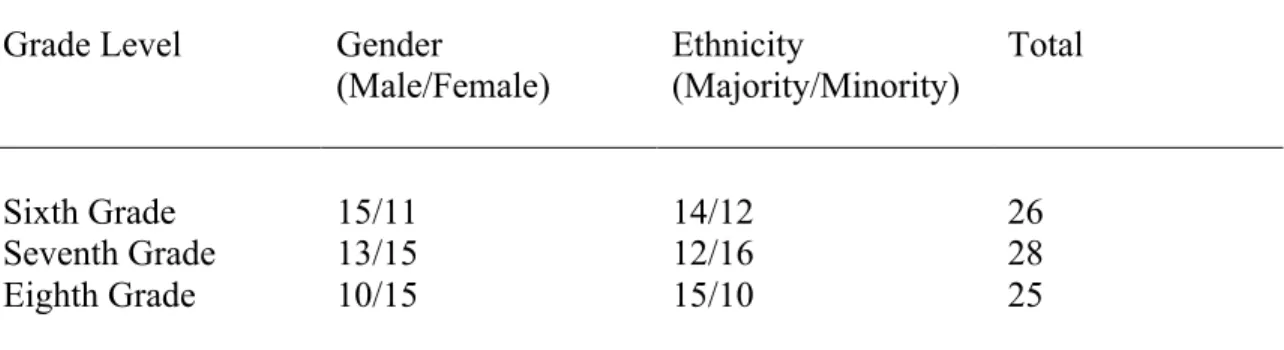
7 Gender and Ethnicity of Students Placed in Vmath ...63
8 Gender and Ethnicity of Students Placed in Transmath ...63
9 Moby Max Scores Used to Place Students in Transmath and Vmath ...64
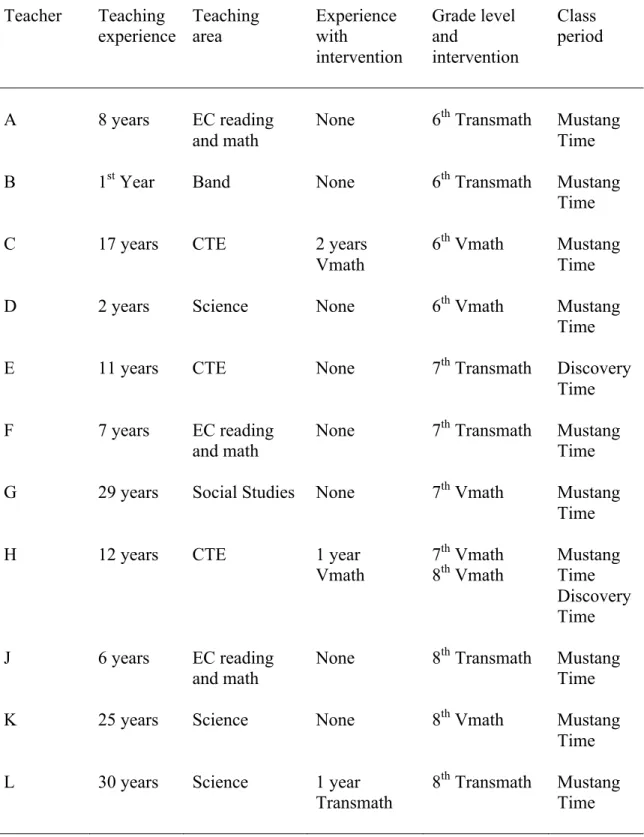
10 Vmath and Transmath Teachers ...69
11 Vmath and Transmath Teachers ...79
12 Gender and Ethnicity of Students Placed in Vmath ...80
13 Gender and Ethnicity of Students Placed in Transmath ...80
14 Vmath Mean Pre and Postassessment Scores ...82
15 Transmath Mean Pre and Postassessment Scores ...83
16 Major Categories and Concepts Observed Using Fidelity Observation Form ...97
17 Criteria for Assigning Observation Scores ...98
18 Intervention Teachers’ Mean Scores after Six Classroom Observations ...99
19 Observation Mean and Measured Growth Scores Significance ...100
20 Interview Questions Alignment Table with Research Questions ...102
21 Coded Themed Responses of Teacher Perception Interviews ...104
22 Interview Questions and Reoccurring Themes Relating to Fidelity of Implementation and Teacher Perceptions ...106
vii
23 Overall Teacher Perceptions of the Programs as Determined through
Interviews ...111
24 Summary of Quantitative and Qualitative Data ...112
25 Vmath and Transmath Teachers ...118
26 Gender and Ethnicity of Students Placed in Vmath ...118
27 Gender and Ethnicity of Students Placed in Transmath ...119
28 Transmath Mean Pre and Postassessment Scores ...122
29 Vmath Mean Pre and Postassessment Scores ...123
30 Transmath Observation Means and Measured Growth Scores Significance ...126
31 Vmath Observation Means and Measured Growth Scores Significance ...127
32 Overall Teacher Perceptions of the Programs as Determined through Interviews ...128
33 Overall Teacher Perceptions of Transmath and Vmath ...129
34 Hattie’s Effect Sizes of Influence ...133
Figures 1 Percentage of Sixth-Grade Students Proficient on NCEOG ...4
2 Percentage of Seventh-Grade Students Proficient on NCEOG ...5
3 Percentage of Eighth-Grade Students Proficient on NCEOG ...6
4 RTI Triangle ...37
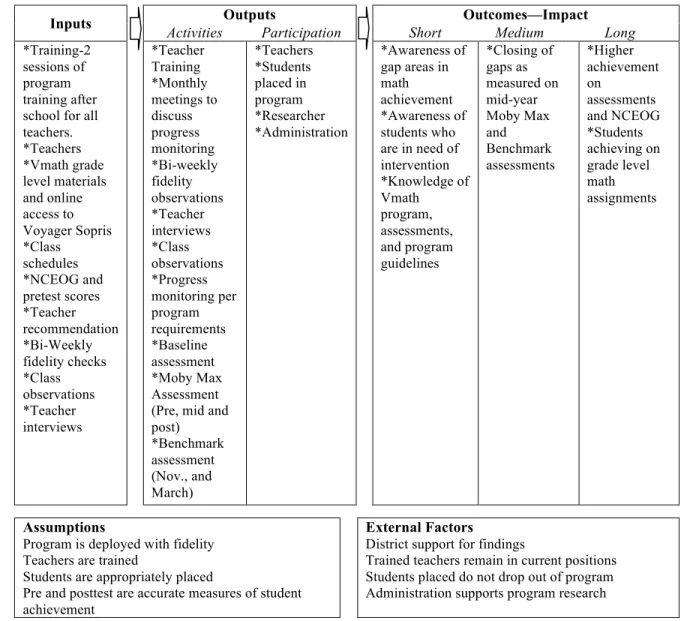
5 Vmath Logic Model ...59
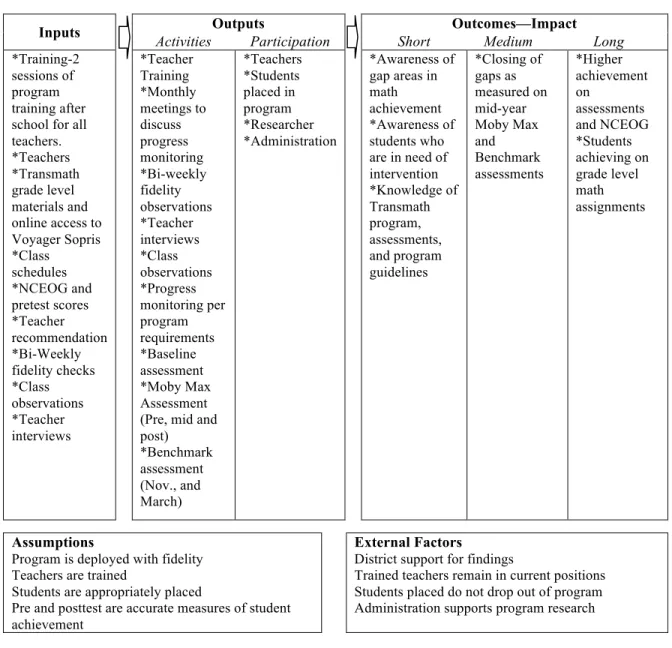
6 Transmath Logic Model ...60
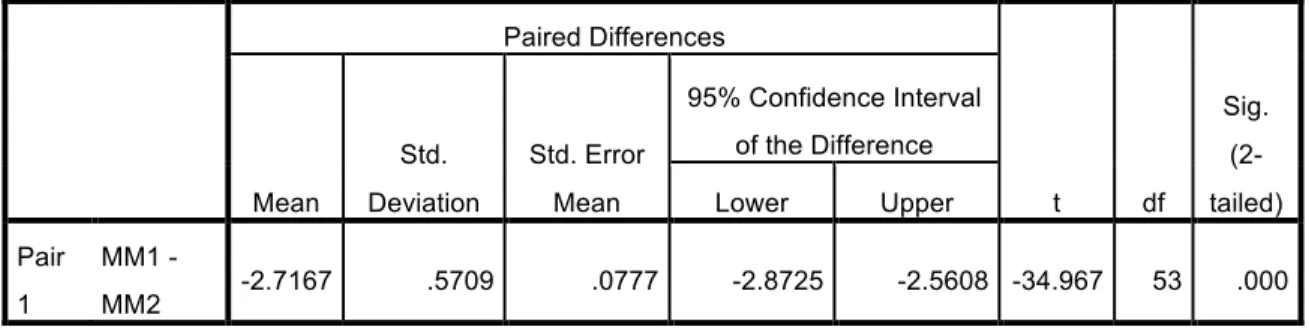
7 Paired-Sample t Test for Vmath ...82
8 Paired-Sample t Test for Transmath ...84
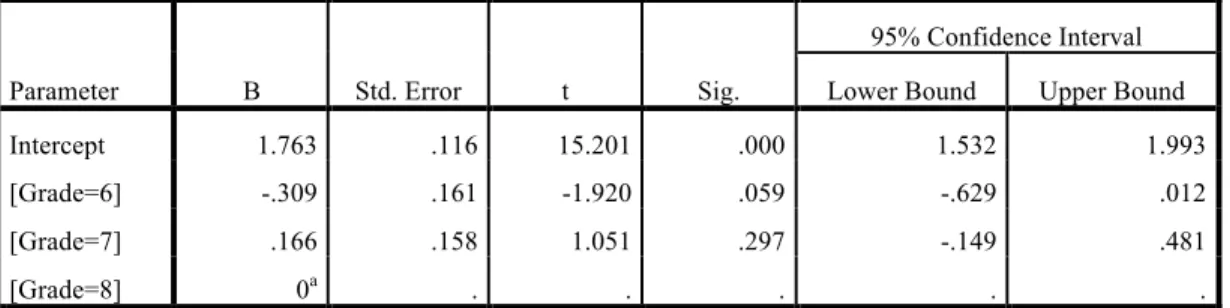
9 ANCOVA of Between-Subject Effects ...85
10 Transmath Growth per Grade Level ...85
11 Transmath ANOVA ...86
12 Vmath Growth per Grade Level ...87
13 Vmath ANOVA ...87
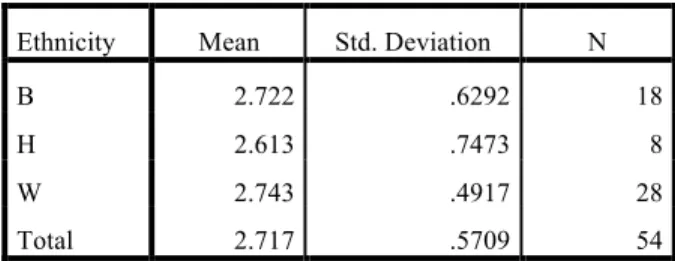
14 Transmath Growth per Ethnicity ...88
15 Transmath Ethnic Groups ANOVA ...89
16 Vmath Growth per Ethnicity ...90
17 Vmath Ethnic Groups ANOVA ...90
18 Transmath Growth per Gender ...91
19 Transmath Gender ANOVA ...91
20 Vmath Growth per Gender ...92
21 Vmath Gender ANOVA ...93
22 Growth per Teacher ...94
23 Teacher ANOVA ...95
24 Vmath Logic Model ...120
25 Transmath Logic Model ...121
26 Paired-Sample t Test for Vmath ...124
Chapter 1: Introduction Statement of the Problem
Middle school students in the United States are falling behind in mathematics achievement (Education Commission of the States, 2013, para. 1). Therefore, schools must find a way to close the learning and performance gaps to ensure these students are working on grade level.
The Program for International Student Assessment, or PISA, collects test results from 65 countries for its rankings, which come out every three years. The results, from 2012, show that U.S. students ranked below mean in math among the
world’s most-developed countries. (Chappell, 2013, para. 2)
The Education Commission of the States (2013) identified the fact that early development of mathematics skills, even more than the development of early reading skills, is a greater predictor of future success for students, even in the area of reading achievement (para. 1). For many years, schools have taken on the challenge of improving reading and math skills. It is important for schools, especially elementary and middle schools, to increase the focus on mathematics instruction to ensure interventions are offered to struggling students. According to What Works Clearinghouse (2004),
The call to improve mathematics education has also been driven by the
widespread belief that competence in mathematics enables individuals to become informed and competent in a technology-dependent society. But that call for improvement has not been accompanied by evidence-based recommendations for how to achieve it. (p. 5)
Many students benefit from differentiated instruction within the regular classroom setting where differentiated alternative assignments are offered from the regular
classroom teacher (“Differentiating,” 2005; Ferrara, 2010; Scott 2012; Williams 2012), but many other students need a focused mathematics intervention program to help them be successful and to close gaps. Clements and Sarama (2015) stated,
High-quality education can help children mathematize. Without such education beginning in preschool, too many children, especially from low-resource
communities, follow a path of failure in mathematics. However, present-day early childhood classrooms in many countries do not provide high quality
mathematics experiences, with many children learning little over the course of an entire academic year and some regressing on certain skills. (para. 4)
To assure that all students are receiving adequate mathematics instruction, mathematics intervention programs are becoming a necessity in many elementary, middle, and even high schools. Response to Intervention (RTI) is a proactive approach used to measure student achievement gaps through the guidance of data and selection of targeted teaching strategies. RTI is designed to help students move toward grade-level achievement (“Understanding response,” 2015, para. 8).
Mirroring the 1990s movement for focused reading achievement, awareness of
the need for focused mathematics interventions has developed in recent years. Even though math intervention is an underresearched area in relation to the research on reading interventions, research findings point to the need for quality math interventions guided by the RTI framework (“RTI and math instruction,” n.d., para. 3). Although “little research has been conducted to identify the most effective ways to initiate and implement RTI frameworks for mathematics, there is a rich body of research on effective mathematics interventions implemented outside an RTI framework” (“Assisting students struggling,” 2009, p. 10). This encouraging research can be used as a guide to develop math
interventions within the RTI framework. Wright (2015) noted that when deciding on a particular mathematics intervention, factors must be appropriately defined and
individualized for each student. It must also meet the requirements of the school
district’s math curriculum and measure the degree to which the student possesses or lacks the necessary auxiliary skills (Wright, 2015, para. 1). Many programs have been created and touted as the most effective intervention program to improve student mathematics achievement, but research of these programs has yet to be definitive. Some of these programs are Cortez Management Mathematics Lab System, I CAN Learn Middle School Mathematics, Saxon Mathematics, SuccessMaker, APlus, Larson’s Prealgebra,
Mathematics Navigator, Transition Math (Transmath), Vmath, Dreambox Learning and i-Ready Diagnostic and Instruction (Cooper, 2015, pp. 3-5).
Local Context of the Problem
The investigation into low-performing students led to this study which took place at a rural middle school, referred to as Whitefield Middle School (WMS) in
Intercontinental County Schools (IS), a pseudonym of a county located in western North Carolina. Data indicate that for the past 2 years, mathematics achievement scores at this school were well below both the district and state in all grade levels and demographic
categories. Data reported by the North Carolina Department of Public Instruction
(NCDPI) for 2013-2014 and 2014-2015, and displayed in Table 1, showed that less than
half of the sixthgraders in North Carolina and less than one third of the sixth graders at
WMS were proficient on the North Carolina end-of-grade (NCEOG) assessments in the area of mathematics for both years.
Table 1
Percentage of Sixth-Grade Students Proficient on NCEOG
Variable NC 2013-2014 IS 2013-2014 WMS 2013-2014 NC 2014-2015 IS 2014-2015 WMS 2014-2015 All 46.8% 51.5% 27.8% 48.5% 46.2% 23.5% Female 48.4% 53% 29.8% 49.9% 47.8% 22.9% Male 45.4% 50.2% 26.3% 47.2% 44.6% 24%
Figure 1. Percentage of Sixth-Grade Students Proficient on NCEOG.
Data displayed in Table 1 and Figure 1 highlighted the fact that mathematics scores at WMS were lower than the state and district in 2013-2014 and 2014-2015.
Data reported by NCDPI for 2013-2014 and 2014-2015, and displayed in Table 2,
NCEOG assessments in the area of mathematics. Table 2
Percentage of Seventh-Grade Students Proficient on NCEOG
Variable NC 2013-2014 IS 2013-2014 WMS 2013-2014 NC 2014-2015 IS 2014-2015 WMS 2014-2015 All 42.2% 51.3% 27.6% 46.9% 46.2% 18.8% Female 42.9% 54.1% 25.2% 49% 47.8% 19.2% Male 41.5% 48.5% 29.5% 44.9% 44.6% 19.2%
Figure 2. Percentage of Seventh-Grade Students Proficient on NCEOG.
Data displayed in Table 2 and Figure 2 reiterated the fact that mathematics scores at WMS were lower than the state and district in 2013-2014 and 2014-2015.
Data reported by NCDPI for 2013-2014 and 2014-2015, and displayed in Table 3,
show that less than half of the eighthgraders in North Carolina were proficient on the
NCEOG assessments in the area of mathematics. Table 3
Percentage of Eighth-Grade Students Proficient on NCEOG
Variable NC 2013-2014 IS 2013-2014 WMS 2013-2014 NC 2014-2015 IS 2014-2015 WMS 2014-2015 All 42.2% 51.3% 24% 43.2% 45.5% 21.2% Female 42.9% 54.1% 28.3% 44.4% 45.7% 21.4% Male 41.5% 48.5% 20% 42.1% 45.2% 21%
Figure 3. Percentage of Eighth-Grade Students Proficient on NCEOG.
scores at WMS were lower than the state and district in 2013-2014 and 2014-2015. These data highlight a large discrepancy in the NCEOG mathematics assessment performance of students at WMS as compared to IS as a school district and North
Carolina as a whole. Due to this discrepancy, mathematics intervention classes are being implemented at WMS to assist the students with foundational skills they may be missing as well as development of skills in which they may be weak. As part of this
implementation, it is important to determine the most effective program in terms of student growth in order to make future curriculum decisions. Data from two intervention programs currently in place at WMS were assessed by conducting a program evaluation on the Vmath and Transmath programs to determine their impact on the academic growth of students enrolled in the programs. Both of these programs have been in place at WMS for several years. Vmath has been used for 3 years, and Transmath has been used for 5 years; but there has never been an evaluation of either program to determine the
effectiveness of the intervention. Two separate groups of students were part of these
programs and were placed in groups based on universal screening data.
Related Literature
With the collected NCEOG mathematics performance data highlighting the weakness in students at WMS, research was conducted on finding a solution. What Works Clearinghouse (2004), a government education research publication, provides many schools with methods and resources to help educators improve student learning and achievement. Several strategies for use with unsuccessful math students are suggested for schools and/or districts (“Assisting students struggling,” 2009, p. 4). Interventions should be based on the individual student and the particular identified achievement gap. “When the mathematics content being taught is unconnected to students’ ability level
and/or experiences, serious achievement gaps result” (“Why do students struggle,” n.d., para. 3). When achievement gaps begin to be prominent in the student’s ability to perform in the classroom, the student is classified as unsuccessful in his or her attempt to perform in the mathematics classroom and is in need of specialized instruction or
intervention (North Carolina Public Schools, n.d., p. 3).
Many strategies have been suggested as additions to the core classroom math
instruction. These suggestions include first using universal math screenings to determine the students who may need additional math instruction in the form of interventions (“Assisting students struggling,” 2009, p. 4). Universal screenings are grade-level
assessments given to all students to determine students who are performing at grade level and students who may be at risk (“Universal screening,” n.d., para.1). Once these
students are identified, explicit and systematic intervention instruction in addition to core math instruction is offered. This intervention instruction is suggested to include solving word problems based on the problem structure, using visuals or models, and providing 10 minutes of math fluency during every session of the intervention class (“Assisting
students struggling,” 2009, p. 7).
This study assessed two programs, Vmath and Transmath, used for mathematics
intervention at the middle school level in IS. The purpose of this mixed-method study
was to assess the academic growthof two groups of students placed in Vmath and
Transmath intervention classes in terms of Moby Max. Moby Max is a completely integrated program for Grades K-8 curriculum with a built-in assessment tool. This tool is completely aligned to the Common Core State Standards and identifies skill sets and gives a breakdown of a student’s math proficiency by grade level, domain, and standard
Voyager Sopris Learning and are used in IS to increase student learning and achievement. Voyager Sopris is a company that claims it is “committed to partnering with school
districts to overcome obstacles that students, teachers, and school leaders face every day” (“About us,” 2015, para. 1). According to the Vmath Training Manual (2012), Voyager Sopris states all of their products are research-based and proven to increase student achievement.
Voyager Sopris based the creation of the Vmath and Transmath programs on the instructional theory work of Englemann and Carnine who asserted a “consistent support for using an explicit approach to teaching mathematics” (Voyager Learning, 2009, p. 5). Voyager Learning (2009) noted the National Math Advisory Panel reported that students who have mathematical difficulties need explicit instruction, and this has proven to have positive effects on students’ abilities to compute and answer word problems (p. 5). According to Cambium Learning (2010), the National Math Advisory Panel defined explicit instruction as providing “clear models for solving a problem, opportunities for students to talk through decisions and steps, extensive practice of newly learned skills and extensive feedback” (p. 3). The Vmath and Transmath programs were created using this idea of explicit instruction. Finally, Voyager Sopris referred to Rosenshine’s
conclusion that effective instruction is highly interactive, briskly paced, and clearly presented resulting in high rates of student success (Cambium Learning, 2010, p. 3). The use of these two programs at WMS were explored in greater depth.
Vmath
Vmath is a targeted math intervention program for struggling students in Grades 2-8. It provides additional opportunities to master critical math concepts and skills. Vmath is specifically designed to reinforce grade-level expectations. Students receiving
Vmath are offered this intervention 3-5 days a week during a 45-minute block reserved at WMS for intervention and enrichment classes. Vmath is not intended to replace the regular math class but is used as an extra block of math instruction time to help students develop skills and confidence in their math ability.
Through a balanced, systematic approach, Vmath creates successful learning experiences for students and develops confident, independent learners of mathematics. With a blended print and technology solution, or a digital-only option, Vmath delivers essential content using strategies proven to accelerate and motivate at-risk students. (“Vmath third edition,” 2015, para. 2)
According to Vmath Third Edition (2015), there are several reasons Vmath works for struggling math students. The program is built around consistent differentiated lesson plan formats that allow for a student to develop a conceptual understanding of
mathematical procedures and application of mathematical skills as well as develop a more robust mathematical vocabulary through adventures, both online and in classroom activities, using learned problem-solving skills.
The Vmath program is arranged into seven levels corresponding to a particular grade level, with seven modules per level. Each of the modules has 10 to 15 lessons with two preskills lessons, extra practice, and reteach lessons. There is also time built into the program for teachers to differentiate within the classroom and assess formatively. According to Vmath Third Edition (2015), each grade has specific levels covered within the Vmath curriculum. Sixth-grade students are placed in level G. Modules covered are Foundations, Rational Numbers Part A, Rational Numbers Part B, Expressions, Equations and Inequalities, Proportional Thinking, Geometry, and Data. Seventh-grade students are placed in level H. Modules covered are Equations and Inequalities, Proportionality,
Geometry and Data, Probability, and Statistics. Eighth-grade students are placed in level I. Modules covered are Foundations, Real Numbers, Equations, Functions Part A,
Functions Part B, Transforming Geometry, and Geometry(Voyager Sopris, 2015, para.
4). Built-in support for English Language Learners (ELL) and students with special
needs is included. The publishers of this program suggest that the teacher materials and pacing guides make this program easy to implement.
Assessments and progress monitoring are built into the curriculum. Students taking part in the Vmath program are administered an initial assessment, a progress assessment, and a computational fluency assessment before intervention instruction begins. For each of the eight modules within the program, students in this program take a pretest, a computational fluency progress monitor assessment, and a posttest. If
necessary, reteach activities for each module are available to be used.
Transmath
Transmath is also a targeted math intervention but is geared toward students in Grades 5-10 as opposed to Vmath, a program geared toward Grades 2-8. Students receiving Transmath are offered this intervention 3-5 days a week during a 45-minute block reserved at WMS for intervention and enrichment classes. Transmath is not
intended to replace the regular math class but is used as an extra block of math instruction time to help students develop skills and confidence in their math ability.
Transmath aims to increase 5th- through 10th-grade students’ skills in applied arithmetic, pre-algebra, and pre-geometry. This one-year curriculum also addresses general application to different wordings of problems, types of numbers, and contexts for problems and aims to promote mathematical reading
skills. The curriculum uses the University of Chicago School Mathematics Project (UCSMP) textbook. The sequence of the topics intends to assist the transition from arithmetic to algebra and geometry. (“Transition mathematics,” 2007, para. 1)
According to Voyager Sopris (2015), Transmath works because it helps deepen a student’s conceptual understanding of mathematics and builds problem-solving
proficiency through the use of explicit instructions and multisensory strategies (para. 5). “Transmath is a comprehensive math intervention curriculum that targets middle and high school students who lack the foundational skills necessary for entry into algebra and are two or more years below grade-level in math” (Woodard, 2015, para. 2). In addition, Transmath helps to guide teachers and strengthen the teachers’ background knowledge throughout the program. Finally, Voyager Sopris (2015) stated that Transmath offers digital tools to increase independent and peer learning and provides the teacher and student with eBook access, giving both the teacher and student better ways to communicate (para. 7).
Assessments and progress monitoring are built into the program. Students taking part in the Transmath program are administered a student placement test and a baseline test before intervention instruction begins. Students take a quiz after lesson five, a quiz after lesson 10, and an end-of-unit assessment. If necessary, reteach activities for each occur. Performance assessments for the reteach lessons are also given.
In looking at these two programs, there is a slight difference in how the programs
are designed and which group of students is targeted.
The main difference in the two programs is whom the program is intended for based on a student’s ability. Vmath is closely tied to grade level standards for
each level and will reach back about 2 years to pull students up. This is what we consider to be a Tier 2 intervention. Transmath is ability-level based on a student’s math ability. This is generally used for students about 2 years below grade level starting in 5th Grade. This is also a Tier 2 intervention, but could be used as Tier 3 as well. (J. Vincent, personal communication, November 4, 2015) For years, IS has been attempting to find a program that would address students’
mathematical achievement gaps at the elementary and middle school levels. Initially, Transmath was purchased to use with a small group of low-performing students. In many cases, this group consisted only of students in the Exceptional Children’s (EC) program. After the initial use of Transmath, Voyager Sopris introduced Vmath (with an online component), and IS chose to adopt this program as well. Several schools, including WMS, chose to use both programs due to the large number of students performing below grade level in mathematics. While both programs are being implemented and used at WMS to help raise student achievement scores, the leadership team at this school is interested in whether the use of either program will lead to improved math achievement and, if so, which one will result in more student achievement growth. This question led to the related literature research.
Deficiencies in the Literature
While there is much literature discussing the lack of achievement in mathematics in the United States and the lack of performance on assessments and grade-level
achievement for middle school students, there is less literature to defend the best
interventions to help close the achievement gaps. The literature contains a great deal of information on mathematics programs and how they help raise achievement scores on standardized testing verses control groups; however, little literature is available
comparing the use of math programs and the amount of growth produced. Much of the literature still focuses on student test performance as opposed to academic growth; for example, according to the Center for Public Education (n.d.), “recent policy discussions about school and teacher accountability are expanding the proficient view of achievement by recognizing that some students have much farther to go to reach proficiency” (para. 1). Final achievement-level scores do not measure the total amount of academic growth a student has achieved, because these scores do not define the starting level of a student. Goss and Hunter (2015) stated, “academic achievement is influenced by many factors, including prior achievement and socio-economic background. By contrast, academic progress, while not perfect, provides a better indication of how much students have actually learned” (para. 4).
Focusing on growth allows for a measure that gives researchers a way to measure the amount a student has learned instead of focusing on the achievement level scores on a test. Due to the knowledge that students do not start at the same beginning achievement levels, schools are determined to develop intervention programs to raise achievement levels of students from their current level. It is imperative to evaluate the effectiveness of programs used in schools in order to help determine instructional strategies that work. Due to the lack of research devoted to intervention programs and their effect on student growth, schools are faced with a multitude of academic intervention decisions and little guidance. Hanover Research (2014) stated that the choice of a mathematics intervention program is of great importance for schools and one that must be decided upon quickly to give students the best opportunity to grow (para.4).
In reference to research available stating the effectiveness of Vmath, according to What Works Clearinghouse (2009),
No studies of Vmath that fall within the scope of the Elementary School
mathematics review protocol meet What Works Clearinghouse (WWC) evidence standards. The lack of studies meeting WWC evidence standards means that, at this time, the WWC is unable to draw any conclusions based on research about
the effectiveness or ineffectiveness of Vmathon elementary school students.
Additional research is needed to determine the effectiveness or ineffectiveness of this intervention. (para. 1)
Likewise, studies on Transmath’s effectiveness, compared to other mathematics programs, have been inconclusive. According to What Works Clearinghouse (2004), the evidence base on effective math intervention programs in middle school is sparse. “There have been few randomized controlled trials of math interventions for middle school students, and those few trials conducted tend to be small” (What Works Clearinghouse, 2004, p. 3).
Conceptual Framework
When students are struggling in the classroom, different levels of interventions may be necessary to help them catch up and close learning gaps. Based on reports of the RTI Action Network (n.d.), RTI is a multi-tier approach that has been developed to identify and support students with learning and behavioral needs (para. 1). In an effort to identify students in need of interventions, RTI (2012) stated that at the beginning of the school year and periodically throughout the year, students should be screened to
determine if they are performing at grade level (para. 5). If the student is determined to be below grade level during this screening, they may be placed into a Tier 2 or Tier 3 intervention, depending on the performance gap. According to the RTI Action Network (n.d.), Tier 2 students are those students who need to be provided small-group instruction,
usually within the classroom 2-3 times a week, in addition to instruction in the general mathematics classroom. Tier 3 students should receive individualized, intensive
interventions that target that student’s skill deficits every day, in addition to instruction in the general mathematics classroom (RTI Action Network, n.d., para. 10). An in-depth exploration of the RTI framework is examined in Chapter 2.
Theoretical Framework
One of the theories that led to the development of RTI was Piaget’s Theory of Constructivism. Piaget’s Theory focused on how learning occurs and the importance of the teacher and delivery of the material (“Piaget’s theory,” 2015, para. 4).
Constructivism is a theory of learning and focuses on the way people learn instead of prescribing how people should learn (Richardson, 1997, p. 3). Math intervention classes allow students to be placed in a class where other students may have similar learning styles and background knowledge as well as having students placed in a class where the teacher will be delivering material in a different format. According to Richardson (1997), constructivists agree that the traditional way of delivering material will not allow struggling students the opportunity to make connections between prior knowledge and internalization and deep understanding of new knowledge (p. 3). Other psychologists, including Lev Vygotsky who developed the theory of Zone of Proximal Development (ZDP), built learning theories beyond Piaget’s that led to the development of the RTI framework in schools.
Audiences
The results of this research study will be of interest to middle school math teachers, intervention specialists, and RTI coaches. School-level administration may be interested as well as district-level curriculum developers. All school systems face budget
issues and must make appropriate decisions about the way money is allocated. The outcome of this study may help guide some of the decision-making processes within the school system or other school districts or math program creators as well as help establish the best approach to math intervention at the middle school level.
Purpose and Significance of Study
This mixed-methods study addresses and assesses the amount of growth in mathematics achievement when nonrandom, convenience populations of students are immersed in two different mathematics intervention programs. A convergent parallel mixed-methods design was used. This methodology is designed so qualitative and quantitative data are collected in parallel, analyzed separately, and then merged. Creswell (2005) suggested, “collecting quantitative data in is important to test the qualitative explorations of the study” (p. 517). In this study, pre and posttest Moby Max scores were used to test the theory that predicts Vmath and Transmath will positively influence the mathematical academic growth for middle school students at WMS. Moby Max is a completely integrated program for Grades K-8 curriculum with a built-in
assessment tool. This tool is completely aligned to the Common Core and identifies skill sets and a breakdown of a student’s math proficiency by grade level, domain, and
standard (“Moby Max,” 2015, para. 8). This program is used to universally screen
students three times within the school year and was used to provide a grade equivalent baseline measure, mid-year measure, and end-of-year measure which produced
quantitative data to be used in determining whether students displayed growth throughout the year and, if so, how much.
The qualitative data collected during this study consisted of teacher interviews
implemented for middle school students at WMS. “It has been demonstrated that the fidelity with which an intervention is implemented affects whether a lack of impact is due to poor implementation or inadequacies inherent in the program itself” (Carroll et al., 2007, p. 1). This study will provide information about two math intervention programs and which program, if either program, currently used will result in math achievement
growth for the students involved in these programs.
Research Questions
This research study combined both quantitative and qualitative data to answer research questions related to a program evaluation. The overarching question leading this study was,
RQ1: How effective are the Transmath and Vmath programs when used as an intervention strategy for struggling middle grade math students?
In order to answer the overarching research question, quantitative data were used
to analyze data related to Research Question 2, and qualitative data were used to analyze data related to Research Questions 3 and 4. The three additional questions this study addressed were,
RQ2. What are the differences in the mean scores of the students involved in the Vmath and Transmath intervention classes as measured by Moby Max?
RQ3. To what extent are the Vmath and Transmath programs being implemented with fidelity as measured by fidelity observations and teacher interviews?
RQ4. How do intervention teachers perceive the implementation and effectiveness of Vmath and Transmath?
The program evaluation in this study discovered whether students who are exposed to the intervention programs, Vmath and Transmath, showed growth in their
mathematics performance. The growth was measured quantitatively by comparing pre and posttest scores of the Moby Max universal screening tool. The programs were further evaluated by collecting qualitative data through fidelity implementation
observations and teacher interviews regarding the implementation and effectiveness of the two programs.
Limitations of Study
While some of the aspects of this study can be controlled, this study posed several limitations that may have affected the outcome of the findings. Limitations are potential threats or weaknesses that are out of the researcher’s control, cannot be dismissed, and may affect the final results (“Stating the obvious,” 2015, para. 3).
This study took place in one middle school in a rural area of southwestern North
Carolina. It was challenging to generalize the findings of this study to other schools of different demographic makeups or different levels of teacher implementation. The researcher was a coworker in this school and acknowledged this may have resulted in bias of data interpretation. Another limitation of this study was the inability to control for the comfort and experience level of the teachers in these intervention classrooms. Two of the teachers who were conducting these intervention classes taught the material before; one taught Transmath for several years; and one of the teachers taught Transmath the prior year and also taught Vmath during this study. The other seven teachers were new to the intervention, which could have caused a difference in the results. The amount of time given to this study possibly limited the results, as it only took place over an academic year of instruction. Finally, past performance of students may have weaken this study, as this performance may have been based on circumstances not related to student ability.
Background of the Role of the Researcher
The role of the researcher in this study was two-fold. The researcher collected and analyzed all of the data as assessments were given. The researcher played a different role in the aspect of the qualitative data collection since the researcher conducted
interviews and observations to determine the level of fidelity used in the implementation of both programs. Because the researcher also worked at the school in which the study took place, the potential presence of bias was acknowledged when observing classrooms and conducting teacher interviews. The researcher took steps to prevent this bias by having a coworker perform peer observations of all classrooms an equal number of times using a predesigned instrument by NCDPI and by asking all teachers the same questions
from a survey validated by math teachers in the school and district.
Definitions of Relevant Terms
Academic growth. The academic performance of a student or group (a collection of students) over two or more time points (Smith, 2013, p. 13).
Assessment. Assessment is the process of gathering and discussing information from multiple and diverse sources in order to develop a deep understanding of what students know, understand, and can do with their knowledge as a result of their educational experiences; the process culminates when assessment results are used to improve subsequent learning (“What is assessment,” n.d., para. 2).
Differentiated instruction. The way a teacher anticipates and responds to a variety of student needs in the classroom (“What is differentiated instruction,” n.d., para. 2).
Fidelity. The degree of accuracy with which sound or images are recorded or reproduced (“Fidelity,” n.d. para. 5).
Fidelity of implementation. The degree to which the program is implemented as intended by program developer, including the quality of implementation (“Using fidelity to enhance,” n.d., para. 1).
Intervention. An academic intervention is a strategy used to teach a new skill, build fluency in a skill, or encourage a child to apply an existing skill to new situations or settings (“Intervention central,” n.d., p. 3).
Mixed-methods research. An approach to inquiry that combines both qualitative and quantitative forms of research. It involves philosophical assumptions, the use of qualitative and quantitative approaches, and the mixing or integrating of both approaches in a study (Creswell & Plano, 2011, p. 244).
No Child Left Behind. A law passed in 2002 with the support of Congress and President George W. Bush which put into place measures that exposed achievement gaps among traditionally underserved and vulnerable students and their peers (“Elementary and Secondary Education Act,” n.d., para. 3).
NCEOG. Designed to measure student performance on the goals, objectives, and grade-level competencies specified in the North Carolina Standard Course of Study. (“Accountability services,” n.d., para. 1).
Prescreening. To examine or interview before further selection processes occur (“Prescreening,” n.d., para. 1).
Qualitative method. Qualitative method is a research approach for exploring and understanding the meaning individuals or groups ascribe to a social or human problem. This process of research involves emerging questions and procedures, data typically collected in the participant’s setting, data analysis inductively building from particulars to general themes, and the researcher making interpretations of the meaning of the data
(Creswell, 2005, p. 4).
Quantitative method. Quantitative method is a research approach for testing objective theories by examining the relationship among variables. These variables, in turn, can be measured, typically on instruments, so numbered data can be analyzed using statistical procedures (Creswell, 2005, p. 4).
RTI. RTI is a multi-tier approach to the early identification and support of students with learning and behavioral needs. The RTI process begins with high-quality instruction and universal screening of all children in the general education classroom (RTI Action Network, n.d., para. 2).
Tiered instruction. Tiered instruction represents a model in which the instruction delivered to students varies on several dimensions that are related to the nature and severity of the student’s difficulties (“Tiered instruction,” n.d., para. 1).
Transmath. Transmath is a comprehensive mathematics intervention curriculum that teaches a balanced approach of computational skills and problem-solving
applications (Transmath Training Manual, 2010, p.1).
Triangulation. Triangulation refers to the use of more than one approach to the investigation of a research question in order to enhance confidence in the ensuing findings (“Reference world,” n.d., para.1).
Universal screening. Universal screening is an assessment, which is typically brief, conducted with all students in a grade level and followed by additional testing or short-term progress monitoring to corroborate students’ risk status (Center on RTI, 2015, para. 1).
Vmath. Vmath is a math intervention system for students who struggle in the basic concepts of math. Vmath provides targeted math intervention that reinforces
essential concepts, skills, and strategies taught in the core math program (Vmath Training Manual, 2012, p. 1).
Organization of the Study
This research study is divided into 5 chapters. Chapter 1, the introduction of this study, presented the statement of the problem, local context of the problem, related literature, deficiencies in the literature, audiences of this study, research questions, conceptual framework of this study, limitations of this study, background of the role of the researcher, and definitions of relevant terms. Chapter 2 contains the review of literature and research related to the problem being investigated. The methodology and procedures used to gather data for the study are presented in Chapter 3. The results of this study are presented in Chapter 4. Chapter 5 contains a summary of the study and findings, conclusions drawn from the findings, and recommendations for further study.
Chapter 2: Literature Review Overview
Exploring the literature in the areas of math interventions using the RTI
framework of tiered instruction allows for an overall view of mathematics intervention strategies. This literature review uses a funnel approach by first addressing the RTI framework and the importance of identifying and addressing academic gaps in students. Next, this review addresses the rising importance of math interventions and the process of how to choose which students to place into a math intervention. An examination of tiered instruction and the learning theories that support it explain the importance of identifying struggling students and placing them into the correct level of intervention. The three levels of tiered instruction are discussed and how the intensity of the intervention would look in each of the levels. As it relates to this study, a focus is placed on two specific math intervention programs: Vmath and Transmath. This literature review provides program information and research-based evidence of success in using these programs as a math intervention. In this literature review, the researcher investigates the importance of fidelity of implementation and the necessity of following a prescriptive program. This literature review discusses the mixed-method approach to research and the importance of triangulation of data. Finally, this literature review addresses the differences in
mathematical achievement based on gender and ethnicity of students.
RTI
The importance of RTI in identifying struggling students is undeniable. RTI is an early detection, prevention, and support system that identifies struggling students and
assists them before they fall behind (VanDerHeyden, 2015, para. 7). RTI, also known as
redesigning and establishing teaching and learning environments that are effective for students, families, and educators (“Math intervention,” 2015; RTI Action Network, n.d.,
para. 2). RTI helps schools determine areas of weakness in students and develop
strategic plans to close achievement gaps. As stated by Carter-Smith (2015), “Response to Intervention (RTI) is a promising new measure through which learning disabilities can be identified. Students with academic delays are identified through a process of universal screening, and research-based interventions are offered at different tiers of intensity” (para.1).
VanDerHeyden (2015) explained that RTI provides a framework in which student
achievement data can be used as a basis for determining who needs help the most and how much help they may need (para. 4). Data must be used to make academic decisions for students when working in the RTI framework. These data can be used to decide who needs intervention, what intervention they need, and if the intervention is working. Burns (2010) also stated that a meta-analysis of RTI research found large positive effects on student achievement when the RTI process was incorporated and found reductions in special education referrals and increased reading scores (para. 4).
As noted by RTI Action Network (n.d.), RTI is a multi-tier approach used to
identify and support students with learning needs and begins with the process of universally screening all students to determine those in need of assistance and offering high-quality instruction in the regular classroom (para. 1). According to VanDerHeyden (2015), when properly used and followed, RTI is a way to focus instruction on student needs, gaps, and learning. Burns (2010) stated that RTI is the practice of providing quality instruction and intervention and using student learning in response to that instruction to make instructional and important educational decisions. According to
Burns, practitioners should take great strides to assure that the RTI model is implemented with fidelity, but many are unsure how to best accomplish this important objective (para. 4). If a mathematics program is to be implemented with fidelity following the RTI model, VanDerHeyden stated that a district or school must identify adequate screening and progress-monitoring measures and plan for effective delivery of intervention at Tiers 1, 2, and 3 (para. 9).
Bender and Crane (2010) suggested the RTI process should involve targeting the specific areas in which students are struggling; and once those areas are identified, increasingly intensive research-proven interventions should be applied until the threat to student achievement is alleviated (p. xi). In 2004, the Individuals with Disabilities Education Act (PL 108-446) encouraged all states to use RTI to accurately identify students with learning disabilities and attempt to provide additional supports for students with academic difficulties who were not identified as having a learning disability. Although many states have already begun to implement RTI in the area of reading, RTI initiatives for mathematics are relatively new (“Assisting students struggling,” 2009, para. 2).
When students are placed into a Tier 2 or Tier 3 intervention, the instruction becomes more intense and focused on gaps. “Students not making adequate progress in the regular classroom in Tier 1 are provided with increasingly intensive instruction matched to their needs on the basis of levels of performance and rates of progress” (“What is response to intervention, n.d., para. 6).
Concerns. One concern many schools may have about RTI is the number of students who might qualify for intervention using the RTI framework. According to many publications about the three-tier model of RTI, a school’s goal is for no more than
15%-20% of students to require additional support beyond Tier 1 curriculum and
instruction (Burns, 2010; “Indiana Department of Education,” 2009; Job, n.d.; RTI, 2012; “Response to intervention explained,” 2015; Searle, 2015). Eighty percent of students should be able to perform in the regular core classroom at or above grade level
achievement expectations. With these suggested percentages, tiers are not always going to be divided with these specific numbers, and students can move with fluidity from tier to tier. “What is necessary to remember for all tiers is that they are flexible. Students may move from one tier to another and back again depending on their response and their progress” (Job, n.d., para. 9). In addition, Sparks (2015) stated that RTI may be doing students an injustice as students who are in these intervention classes are scoring up to 10% lower than their peers who are not offered interventions. Also according to Sparks, to ensure Tier 2 students are closing the achievement gaps, Tier 2 instruction should be aligned with the core instruction. However, Sparks contended that Tier 2 instruction singles out a particular targeted and explicit component instead of modeling the core instruction to cover a much broader range of skills. Sparks stated in taking part in Tier 2 instruction, students may be missing out on much of the richer and deeper core content (para. 15).
Shapiro (2015) noted tiered instruction is only as good as the collaboration of the
staff within the school building, and the advantages to the RTI approach are seen at the highest success rate when teachers engage in discussions about how students are
performing during tiered intervention time. Because schools have limited staff, Shapiro suggested each member of the faculty must be actively involved in implementing and carrying out the tiered interventions, and this can lead to concerns about tiered instruction being circulated about in schools. According to Shapiro, many teachers are concerned
with the lack of time in the school day for regular classroom instruction, not to mention an extra instructional period for tiered intervention. Another concern Shapiro stated was the question as to whether or not there are sufficient school personnel available to be the tiered instructors and a data expert. Many teachers are still in the era of my students and your students, another issue that experts feel needs be addressed and solved with strong communication within the school building and between the school and home (Shapiro, 2015, para. 24). Shapiro suggested to successfully implement intervention programs, many of the staff would need to be trained in the delivery of the program or intervention; and then when trained, many times teachers leave the school or the district and new staff is brought in and in need of training (para. 25-26).
Fidelity. RTI Action Network (n.d.) suggested the number of hours, method of delivery, or the way the intervention is set up is completely left up to the discretion of the school and its decision makers, yet there are several components that are necessary to make RTI effective. One of the important qualities of a successful intervention is the degree of fidelity to which the program components are implemented. These intervention components are high-quality instruction, scientifically based classroom instruction, ongoing student assessment, tiered instruction, and parent involvement (para. 3). Further, Bender and Crane (2010) stated there are five foundational principles of the RTI process: “Universal screening to identify students struggling in mathematics, a multitier model of increasingly intensive educational interventions, research-based curriculum in each tier, frequent monitoring of each child’s performance, and data-based decision making
involving a collaborative team effort” (p. 5). To help guide fidelity, all of these elements should be considered and included in the implementation of any intervention.
Math Intervention
Mathematics achievement scores in the United States are a matter of national concern. National Math Panel Report Endorses Vmath Intervention Program Research Base (2008) discussed the poor showing of students in the United States on international comparisons of mathematics performance. This panel suggested that students in the United States suffered from key mathematical concept deficiencies including aspects of whole number arithmetic, fractions, ratios, and proportion. It was suggested that early intervention might be the key to helping students struggling in mathematics (“Assisting students struggling,” 2009, p. 4).
Mathematics literacy is a serious problem in the United States. According to Philips (2007), 78% of adults cannot explain how to compute the interest paid on a loan, 71% cannot calculate miles per gallon on a trip, and 58% cannot calculate a 10% tip for a lunch bill. Further, it is clear from the research that a broad range of students and adults also have difficulties with fractions, a foundational skill essential to success in algebra. The recent National Assessment of Educational Progress (NAEP, “the Nation’s Report Card”) shows that 27% of eighth-graders could not correctly shade 1/3 of a rectangle and 45% could not solve a word problem that required dividing fractions. (U.S. Department of Education, 2008, p. 3)
Due to this poor showing, schools in the United States are in need of finding a way to
close performance gaps in the mathematics achievement of middle school students.
“Researchers have begun to advocate for RTI procedures in mathematics for two specific
reasons: (1) many students need help in mathematics, and they can benefit from RTI procedures, and (2) RTI-based instruction works” (Bender & Crane, 2010, p. 7). Burns
(2010) suggested interventions should be highly and correctly targeted to be effective, but students cannot learn to read and do math if they are not receiving quality balanced instruction in addition to supplemental support (para. 2). Bender and Crane (2010) suggested that nearly all of the research on RTI has taken place in the area of reading, because reading and literacy have been major national priorities since the Clinton presidential administration; however, teachers are now beginning to use RTI procedures in mathematics (p. xi).
VanDerHeyden (2015) listed six key findings in the literature highlighting the need to focus on early mathematics instruction. Children who have less exposure to mathematical concepts are at high risk for failure; most American students fail to meet minimum mathematics proficiency at the end of high school; students with identified learning disabilities perform at a lower level and grow at a slower rate than their peers; textbooks do a poor job of relating important mathematical principles; math is highly proceduralized and builds on previous knowledge; and finally, early mathematics
intervention can repair and prevent future achievement deficits (para. 3). “As the United States increasingly sets high standards in mathematics, educators will need bold new approaches to teaching to meet those standards, and as the research demonstrates, RTI is an effective instructional process for meeting those demands” (Bender & Crane, 2010, p. xi)
Using VanDerHeyden’s (2015) findings as guidelines to focus on a successful math intervention program, Assisting Students Struggling with Mathematics (2009) reported that the Institute of Education Sciences (IES) recommended eight steps be followed to ensure math intervention is effective. These eight steps are as follows:
that focus on in-depth treatment of whole numbers in K-5th grade and on rational numbers in grades 4-8; instruction during the intervention should be explicit and systematic; include instruction on solving word problems based on common underling structures; intervention materials should include opportunities for students to work with visual representations of mathematical ideas; every grade level of intervention should focus about 10 minutes on building fluent retrieval of basic arithmetic facts; progress monitoring for all students at risk in necessary; and include motivational strategies in tier 2 and 3. (VanDerHeyden, 2015, p. 2) These recommendations received a rating based on the strength of the research evidence that showed the effectiveness of a recommendation as displayed in Table 4. VanDerHeyden (2015) showed the two strongest indicators for effective math
interventions are intervention instruction should be explicit and systematic and
instruction in solving word problems should be based on common underlying structures (p. 2).
Table 4
Effectiveness of Recommendations for Math Interventions
Recommendation Effectiveness
Screen all students to identify those that may be at risk. Moderate
Use instructional materials that focus on in-depth treatment of whole
numbers in K-5th grade and on rational numbers in Grades 4-8.
Low
Instruction during the intervention should be explicit and systematic. Strong
Include instruction on solving word problems based on common
underlying structures. Strong
Intervention materials should include opportunities for students to work with visual representations of mathematical ideas.
Moderate Every grade level of intervention should focus about 10 minutes on
building fluent retrieval of basic arithmetic facts. Moderate
Progress monitoring for all students at risk is necessary. Low
Include motivational strategies in Tier 2 and 3. Low
What Works Clearinghouse (2009) defined the ratings as displayed in Table 4 (strong, moderate, or low) as follows:
Strong refers to consistent and generalizable evidence that an intervention pro-gram causes better outcomes. Moderate refers either to evidence from studies that allow strong causal conclusions but cannot be generalized with assurance to the population on which a recommendation is focused (perhaps because the findings have not been widely replicated)—or to evidence from studies that are generalizable but have more causal ambiguity than offered by experimental which the equivalence of the groups at pretest is uncertain). Low refers to expert opinion
based on reasonable extrapolations from research and theory on other topics and evidence from studies that do not meet the standards for moderate or strong evidence. (“Assisting students struggling,” 2009, p. 6)
Placement. Placement of students into intervention groups needs to be based on collected achievement data. Data from universal prescreenings are used to make
educational decisions about all students in each level of tiered instruction. Following the collection of screening data, the decision makers must determine whether a student possesses a systemic problem. Where systemic learning problems are identified, the core instruction in the classroom should be evaluated to ensure that a research-supported curriculum is being used, that effective instruction is being delivered for a sufficient time and with sufficient quality, and that adequate resources are available to support effective instruction in the classroom (“What is response to intervention,” n.d., para. 1). Once a student is determined to need an intervention, the correct intervention must be chosen and the student’s progress must be systematically tracked to ensure the continual
effectiveness of the intervention. VanDerHeyden (2015) suggested,
Effective mathematics instruction should include a system for monitoring student learning and adjusting instructional efforts to ensure adequate learning or
accelerate it where needed. Other variables of effective instruction that are relevant include a well-sequenced program of instruction that logically builds on existing skills and periodically returns to previously mastered skills to ensure maintenance, demonstration of correct and incorrect responses, and substantial opportunity to practice performing newly learned skills with direct support. (p. 4) At that point, if it was determined that these criteria are being met, intervention programs can be instituted for students determined to be at risk. VanDerHeyden suggested that
these at-risk students’ performances might be similar to each other; therefore, they could be grouped and exposed to materials that target the needs of the group. These students might be targeted for Tier 2 or Tier 3 intervention programming.
Tiered Intervention
Prescreening data helps determine those students who may need academic interventions. When these struggling students are identified, instruction can be
developed in tiers depending on the level of support the student needs. The argument that mathematics instruction needs to be leveled for students is not new, but the agreement as to how to achieve this is ongoing (“Tiered instruction and assessment,” 2007, p. 2). “In the United States the tradition has been to teach mathematics at the same pace and in the same way to all students, and then later on, when some students begin failing, to provide remediation” (Kasten, 2005, p. 2). Intervention must be immediate if a student’s
individual needs are to be met and the student is to be helped before they fall behind; and researchers agree that a tiered system of intervention is critical to an effective
intervention program (Shapiro, 2015, para. 4; “6 critical components,” n.d.). According to Bender and Crane (2010), various states have adopted slightly different models, yet the most commonly used RTI model is the three-tier RTI pyramid (p. 3). The three-tiered RTI instructional model represents a way in which the instruction delivered to students varies on several levels that are related to the nature and severity of the individual student’s difficulties (“Tiered instruction in a response,” n.d., para.1). RTI Action Network (n.d.) defined the three tiers of instruction in the RTI framework as Tiers 1, 2 and 3. Tier 1 consists of regular classroom instruction with each student receiving regular universal screening to progress monitor using a curriculum-based measure, whereas Tier 2 and Tier 3 instruction adds another layer of support for a struggling
student. “Tier 2 and Tier 3 instruction differs on the intensity and frequency of instruction, the number of students within the groups and the level of progress
monitoring” (Shapiro, 2015, para. 7). Depending on the RTI model chosen by the school system, these dimensions of instruction can be varied and defined accordingly.
According to Bender and Crane (2010),
Tier 1 instruction is the foundation for all instructional interventions in mathematics, and it should be considered the single most important tier in the intervention pyramid, since effective instruction at this level greatly reduces the number of students requiring more intensive instruction at other levels of the pyramid. (p. 3)
According to Shapiro (2015), if Tier 1 instruction is implemented with fidelity by well-trained, certified teachers, when most students receiving this instruction are assessed, they should be achieving at grade level in the measured skill areas (para. 3). When students do not respond to Tier 1, or the regular classroom instruction, this is the time they are moved to Tier 2 status.
Once a student is placed in Tier 2, the intensity of the instruction increases both in time and amount of instruction. These services and interventions are provided in small-group settings in addition to instruction in the general curriculum. “For those students, an RTI model relies on supplemental interventions delivered in small groups for at least 20 to 30 minutes daily” (Burns, 2010, para. 8). It is suggested that Tier 2 classes should be made up of five to eight students and can be taught by a general education teacher or an intervention specialist (Harlacher, n.d., para. 10). In Tier 2, data are used to determine the type of instruction the student may need. Burns (2010) noted Tier 2 interventions are