Ministry of Labour and Human Resources
Page 1
Job Prospecting Exercise
Job Prospecting Exercise
Job Prospecting Exercise
Job Prospecting Exercise
2009
2009
2009
2009
Contents:
Table of Contents: ……….………...……1 Foreword …...……….……..….…….2 Introduction ………..………...….3 Research Scope and Methodology………...……..…4-5 Limitations………...…….…5 Number of establishments covered in the Job Prospecting Exercise
by type and ownership….:………....….…..6 Percentage distribution of establishments
involved in the Job Prospecting Exercise, 2009……….………...6 Number of establishments covered in the Job Prospecting
Exercise by Dzongkhag and ownership, 2009 ……….…...…7 Number of establishments covered in the Job Prospecting
Exercise by Dzongkhag and type, 2009……….…….…………...8 Future skill requirements by major occupational
group (2009-2013)………..……9 Graphical presentation of future requirements till
2013 by major occupational group, 2009-2013……….…....10 Graphical presentation of total male and female required,
(2009-2013)………..…...…..………..…..11 Future skill requirements during the period, 2009 - 2013 …….…………...….…..……….12-18 Soft skills………...…19-20 Recommendations……….………...…….…21-22 Coverage list ……….…..……...…23-26
Ministry of Labour and Human Resources
Page 2
Job Prospecting Exercise
Job Prospecting Exercise
Job Prospecting Exercise
Job Prospecting Exercise
2009
2009
2009
2009
Foreword:
The Labour Market Information Division of the Department of Employment under the Ministry of Labour and Human Resources is pleased to release the first issue of Job Prospecting Report. “Job Prospects” are the range of career opportunities available to a person having a particular combination of skills, knowledge, qualifications etc. For example, Job Prospects for degreed engineers are usually (and presently) good overall especially in the construction sectors. Like wise Arts graduates face a barrage of information these days telling them that employers are finding it difficult to recruit graduates with suitable skills and that there is a skills gap. Graduating with a first degree in Arts is not, it seems enough to guarantee a job within any sector that matches students’ expectations.
The Job Prospecting Report will provide information to the decision makers, the researchers, the HR officials, the students and job seekers on the potentiality of each sector in terms of providing employment to the increasing number of youths. Job Prospecting is a very important tool for the formulation of Human Resource polices.
Finally, the Ministry of Labour and Human Resources wishes to convey its appreciation to all the organizations and individuals who contributed their time and effort to the development of the Job Prospecting Report.
The sector study was funded by the UNDP, whose continued assistance is much appreciated. The Department will bring out annual publication of the Job Prospecting Report. We would like to invite your valuable comments and suggestions for further improvement of the report.
Ministry of Labour and Human Resources
Page 3
Job Prospecting Exercise
Job Prospecting Exercise
Job Prospecting Exercise
Job Prospecting Exercise
2009
2009
2009
2009
Introduction:
Structural unemployment is caused by changes in the composition of labor supply and demand. It basically emanates from two sources: first, as a result of mismatch between skills needed for available jobs and the skills possessed by those seeking work; and second, geographic mismatch between locations of job openings and job seekers. This kind of distortion is highly evident in the Bhutanese labor market. While shortages of skills are said to be pronounced in some occupations and areas in the country, oversupply of other skills are likewise observed.
Youth unemployment in Bhutan also has a geographical dimension: it is generally higher in urban areas than in rural ones. Limited formal work experience and a lack of general and job-related skills also put young job seekers unemployed. Young people are often at the end of the job queue for the formal labour market because they lack adequate skills and experience, as well as efficient social networks. And skills demanded by the labour market are not matched by the educational product, illustrating the lack of a functioning feedback between educational institutions and the private sector. However, there is a need to tackle the mismatch between the skills offered by this potential workforce and those demanded by potential employers
The Job Prospecting Exerciseis a comprehensive sector study of the short- and long-term human
resource issues and challenges facing the major sectors in the Bhutanese economy.
The study’s in-depth assessment of current and emerging human resource needs and gaps will serve as a foundation to overcome the mismatch of skills and to provide a very high rate of gainful employment.
The main objective for conducting this Job Prospecting Exercise is to:
1. To identify the gaps in critical skills that are in-demand and in-supply.
2. To formulate plans and strategies toward narrowing the skills & competency gaps & generating the right workers required by the sector.
3. To enhance job placement and promote appropriate skills training.
Job vacancy statistics provide information on unmet labour demand. Information on job vacancies is used for business cycle analysis and assessing mismatches on labour markets.
A job vacancy is defined as a paid post that is newly created, unoccupied, or about to become vacant:
(a) for which the employer is taking active steps and is prepared to take further steps to find
a suitable candidate from outside the enterprise concerned; and
Ministry of Labour and Human Resources
Page 4
Job Prospecting Exercise
Job Prospecting Exercise
Job Prospecting Exercise
Job Prospecting Exercise
2009
2009
2009
2009
Research Scope and Methodology:
The approach to the study included desktop research, field visits, interviews and a request for written submissions.
The Desktop Research was conducted utilizing published directories of the Private and Corporate sectors in the form of books. The Field visits and interviews were conducted with key interest groups such as the Manufacturing industries, service sectors etc. The aim of the interviews was to collect information on the future skill requirements during the period 2009-2013.
The study mostly focused on the sectors that were in a position to provide gainful employment. The study also focused on top 15 travel agents, the Class A Construction Companies. The study does not include the financial institutions.
The study involved extensive research activities, including:
• Surveys of 25 Construction companies;
• Surveys of 58 Service sectors including Tourism and Hotels;
Ministry of Labour and Human Resources
Job Prospecting Exercise
Job Prospecting Exercise
Job Prospecting Exercise
Job Prospecting Exercise
Process:
Limitations:
The Job Prospecting Exercise does not capture the small sectors (which includes all the
small/medium private and corporate establishments).
The study does not capture the petty contractors and the small travel agents and hotels.
The Job Prospecting Exercise does not capture any of the power sectors.
Out of the 131 establishments listed in the coverage, only 119 establishments could meet
up with our requirements. Data Processing (7) Analysis (8) Report Writing (9) Printing (10)
Ministry of Labour and Human Resources
Job Prospecting Exercise
Job Prospecting Exercise
Job Prospecting Exercise
Job Prospecting Exercise
The Job Prospecting Exercise does not capture the small sectors (which includes all the small/medium private and corporate establishments).
The study does not capture the petty contractors and the small travel agents and hotels. pecting Exercise does not capture any of the power sectors.
Out of the 131 establishments listed in the coverage, only 119 establishments could meet up with our requirements.
Planning (1) Ground Work Development (2) Coverage Listing (3) Training Of Supervisors and Enumerators (4) Data Collection (5) Data Entry (6) Data Processing (7) Dessimination (11)
Job
Prospecting,
2009
Page 5
2009
2009
2009
2009
The Job Prospecting Exercise does not capture the small sectors (which includes all the The study does not capture the petty contractors and the small travel agents and hotels. Out of the 131 establishments listed in the coverage, only 119 establishments could meet
Coverage Listing (3)
Supervisors and Enumerators (4)
Ministry of Labour and Human Resources
Page 6
Job Prospecting Exercise
Job Prospecting Exercise
Job Prospecting Exercise
Job Prospecting Exercise
2009
2009
2009
2009
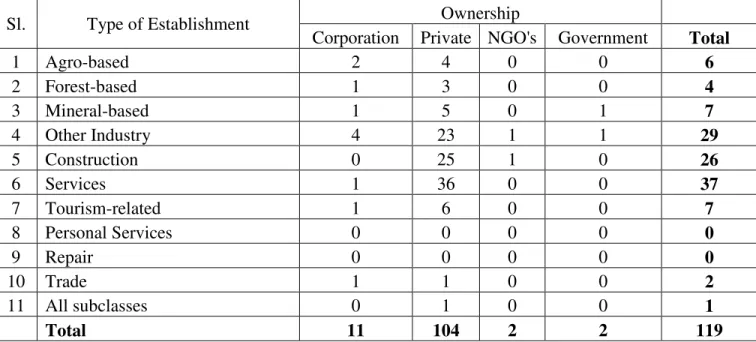
Table 1: Number of establishments covered by type and ownership involved in the Job Prospecting Exercise, 2009:
Sl. Type of Establishment Ownership
Corporation Private NGO's Government Total
1 Agro-based 2 4 0 0 6 2 Forest-based 1 3 0 0 4 3 Mineral-based 1 5 0 1 7 4 Other Industry 4 23 1 1 29 5 Construction 0 25 1 0 26 6 Services 1 36 0 0 37 7 Tourism-related 1 6 0 0 7 8 Personal Services 0 0 0 0 0 9 Repair 0 0 0 0 0 10 Trade 1 1 0 0 2 11 All subclasses 0 1 0 0 1 Total 11 104 2 2 119
The table above depicts the number of establishment covered in the Job Prospecting Exercise categorized by its type and ownership. Among the total coverage list of 131 establishments only 119 establishments were in a position to meet up with our requirements.
Percentage distribution of establishments involved in the Job Prospecting Exercise, 2009
9.2 % 87.4 % 1.7 % 1.7 % Corporation Private NGO Government
Ministry of Labour and Human Resources
Page 7
Job Prospecting Exercise
Job Prospecting Exercise
Job Prospecting Exercise
Job Prospecting Exercise
2009
2009
2009
2009
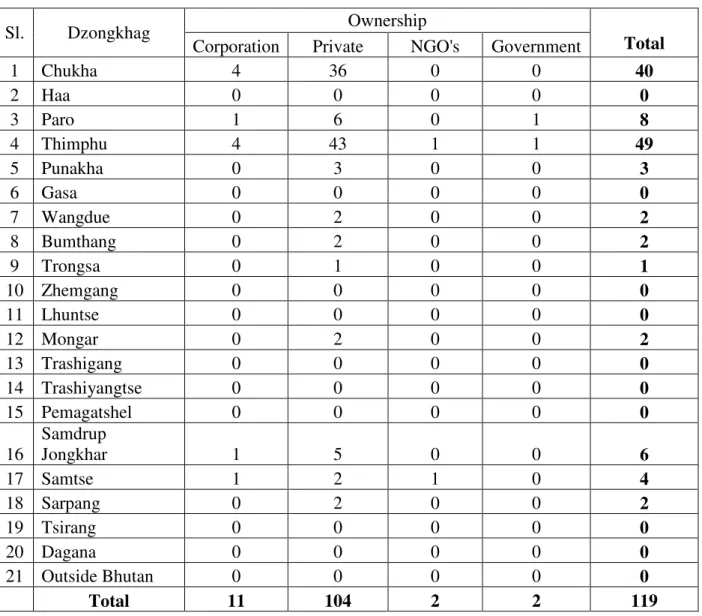
Table 2: Number of establishments covered in the Job Prospecting Exercise by Dzongkhag and ownership, 2009
Sl. Dzongkhag Ownership
Total
Corporation Private NGO's Government
1 Chukha 4 36 0 0 40 2 Haa 0 0 0 0 0 3 Paro 1 6 0 1 8 4 Thimphu 4 43 1 1 49 5 Punakha 0 3 0 0 3 6 Gasa 0 0 0 0 0 7 Wangdue 0 2 0 0 2 8 Bumthang 0 2 0 0 2 9 Trongsa 0 1 0 0 1 10 Zhemgang 0 0 0 0 0 11 Lhuntse 0 0 0 0 0 12 Mongar 0 2 0 0 2 13 Trashigang 0 0 0 0 0 14 Trashiyangtse 0 0 0 0 0 15 Pemagatshel 0 0 0 0 0 16 Samdrup Jongkhar 1 5 0 0 6 17 Samtse 1 2 1 0 4 18 Sarpang 0 2 0 0 2 19 Tsirang 0 0 0 0 0 20 Dagana 0 0 0 0 0 21 Outside Bhutan 0 0 0 0 0 Total 11 104 2 2 119
The table above depicts the number of establishments covered by Dzongkhag and by Ownership. Thimphu and Chukha Dzongkhag were the main focus of the exercise. Through the ownership status, Private sector contributed the most to the future requirements. From a total of 119 establishments, 104 Private Sectors contributed to our requirements.
Ministry of Labour and Human Resources
Page 8
Job Prospecting Exercise
Job Prospecting Exercise
Job Prospecting Exercise
Job Prospecting Exercise
2009
2009
2009
2009
Table 3: Number of establishments covered in the Job Prospecting Exercise by Dzongkhag and type, 2009
Sl. Dzongkhag Type of Establishment Agro-based Forest-based Minieral-based Other
Industry Construction Services Tourism-related
Personal
Services Repair Trade
All subclasses Total 1 Chukha 4 1 3 21 6 2 0 0 0 2 1 40 2 Haa 0 0 0 0 0 0 0 0 0 0 0 0 3 Paro 0 0 1 0 0 7 0 0 0 0 0 8 4 Thimphu 1 2 0 2 19 18 7 0 0 0 0 49 5 Punakha 0 0 0 0 0 3 0 0 0 0 0 3 6 Gasa 0 0 0 0 0 0 0 0 0 0 0 0 7 Wangdue 0 0 0 0 1 1 0 0 0 0 0 2 8 Bumthang 0 0 0 0 0 2 0 0 0 0 0 2 9 Trongsa 0 0 0 0 0 1 0 0 0 0 0 1 10 Zhemgang 0 0 0 0 0 0 0 0 0 0 0 0 11 Lhuntse 0 0 0 0 0 0 0 0 0 0 0 0 12 Mongar 0 0 0 0 0 2 0 0 0 0 0 2 13 Trashigang 0 0 0 0 0 0 0 0 0 0 0 0 14 Trashiyangtse 0 0 0 0 0 0 0 0 0 0 0 0 15 Pemagatshel 0 0 0 0 0 0 0 0 0 0 0 0 16 Samdrup Jongkhar 0 0 2 4 0 0 0 0 0 0 0 6 17 Samtse 1 0 1 2 0 0 0 0 0 0 0 4 18 Sarpang 0 1 0 0 0 1 0 0 0 0 0 2 19 Tsirang 0 0 0 0 0 0 0 0 0 0 0 0 20 Dagana 0 0 0 0 0 0 0 0 0 0 0 0 21 Outside Bhutan 0 0 0 0 0 0 0 0 0 0 0 0 Total 6 4 7 29 26 37 7 0 0 2 1 119
Ministry of Labour and Human Resources
Page 9
Job Prospecting Exercise
Job Prospecting Exercise
Job Prospecting Exercise
Job Prospecting Exercise
2009
2009
2009
2009
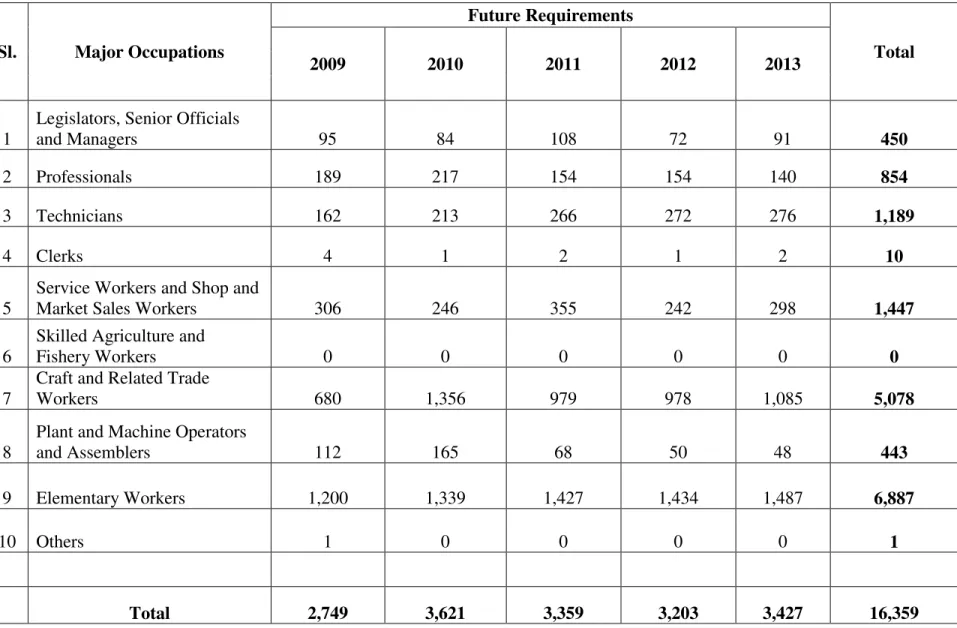
Table 4: Future skill requirements by major occupational group (2009-2013)
Sl. Major Occupations
Future Requirements
Total
2009 2010 2011 2012 2013
1
Legislators, Senior Officials
and Managers 95 84 108 72 91 450
2 Professionals 189 217 154 154 140 854
3 Technicians 162 213 266 272 276 1,189
4 Clerks 4 1 2 1 2 10
5
Service Workers and Shop and
Market Sales Workers 306 246 355 242 298 1,447
6
Skilled Agriculture and
Fishery Workers 0 0 0 0 0 0
7
Craft and Related Trade
Workers 680 1,356 979 978 1,085 5,078
8
Plant and Machine Operators
and Assemblers 112 165 68 50 48 443
9 Elementary Workers 1,200 1,339 1,427 1,434 1,487 6,887
10 Others 1 0 0 0 0 1
Ministry of Labour and Human Resources
Job Prospecting Exercise
Job Prospecting Exercise
Job Prospecting Exercise
Job Prospecting Exercise
Graphical presentation of future requirements till 2013 by 2009-2013
The figure below presents the future skill requirements during the period 2009 till 2013 segregated by sex. By 2013 there will be a high demand for elementary occupations and craft and related trade workers. Elementary occupations basically include the labourers (skilled/Unskilled), drivers etc and craft and related occupations include the masons, carpente etc.
There will also be some requirements for higher managerial level post, professionals and technicians with specific skill requirements.
A total of 15,163 vacancies were recorded for male during the period 2009 vacancies for female.
There were no vacancies recorded for the skilled agriculture and fishery group since the study mostly concentrated in manufacturing industries and the service sectors.
398 660 1088 52 194 101 0 1000 2000 3000 4000 5000 6000 7000 8000 L eg is la tor s, S eni or O ff ic ia ls a nd M ana g er s Prof es si ona ls T ec hni ci ans Male
Ministry of Labour and Human Resources
Job Prospecting Exercise
Job Prospecting Exercise
Job Prospecting Exercise
Job Prospecting Exercise
Graphical presentation of future requirements till 2013 by major occupational
The figure below presents the future skill requirements during the period 2009 till 2013 sex. By 2013 there will be a high demand for elementary occupations and craft and related trade workers. Elementary occupations basically include the labourers (skilled/Unskilled), drivers etc and craft and related occupations include the masons, carpente There will also be some requirements for higher managerial level post, professionals and technicians with specific skill requirements.
A total of 15,163 vacancies were recorded for male during the period 2009
There were no vacancies recorded for the skilled agriculture and fishery group since the study mostly concentrated in manufacturing industries and the service sectors.
6 776 0 5046 436 6752 1 4 671 0 32 7 135 0 C le rks S er vi ce W or ke rs a nd S hop and M ar ke t S al es W or ke rs S ki ll ed A g ri cul tur e and F is he ry W or ke rs C ra ft a nd R el at ed T ra de W or ke rs P la nt a nd M ac hi ne O pe ra tor s and A ss em bl er s E le m ent ar y W or ke rs O the rs Male Female
Page 10
2009
2009
2009
2009
ccupational group,The figure below presents the future skill requirements during the period 2009 till 2013 sex. By 2013 there will be a high demand for elementary occupations and craft and related trade workers. Elementary occupations basically include the labourers (skilled/Unskilled), drivers etc and craft and related occupations include the masons, carpenters There will also be some requirements for higher managerial level post, professionals and -2013 and 1,196
Ministry of Labour and Human Resources
Job Prospecting Exercise
Job Prospecting Exercise
Job Prospecting Exercise
Job Prospecting Exercise
Graphical presentation of total male and female required, (2009
Due to the growth of the construction industries and manufacturing industries, there has been a high requirement for male workers in the construction sector and the manufacturing industries. During our interview with the construction companies there requirem
categories:
1. Unskilled Labourer - General site labour with little or no construction qualifications.
2. Skilled Labourer - On-site managers who possess extensive knowledge and experience in
their craft or profession.
3. Professionals - Personnel with the greatest educational qualifications, usually degrees, trained to design, manage and instruct the construction process.
Skilled occupations in Bhutan require further education qualification, often in vocational subject areas. These qualifications are either obtained direct
education or through “on the job” apprenticeship training. 0 500 1,000 1,500 2,000 2,500 3,000 3,500 M al e F em al e M al e 2009 2010 2,522 227 3,383
Ministry of Labour and Human Resources
Job Prospecting Exercise
Job Prospecting Exercise
Job Prospecting Exercise
Job Prospecting Exercise
Graphical presentation of total male and female required, (2009-2013)
to the growth of the construction industries and manufacturing industries, there has been a h requirement for male workers in the construction sector and the manufacturing industries. During our interview with the construction companies there requirements were based on three
General site labour with little or no construction qualifications. site managers who possess extensive knowledge and experience in Personnel with the greatest educational qualifications, usually
, trained to design, manage and instruct the construction process.
Skilled occupations in Bhutan require further education qualification, often in vocational subject areas. These qualifications are either obtained directly after the completion of compulsory education or through “on the job” apprenticeship training.
F em al e M al e F em al e M al e F em al e M al e F em al e 2010 2011 2012 2013 3,383 238 3,075 284 2,995 208 3,188 239
Page 11
2009
2009
2009
2009
to the growth of the construction industries and manufacturing industries, there has been a h requirement for male workers in the construction sector and the manufacturing industries.
ents were based on three
General site labour with little or no construction qualifications. site managers who possess extensive knowledge and experience in Personnel with the greatest educational qualifications, usually graduate
Skilled occupations in Bhutan require further education qualification, often in vocational subject ly after the completion of compulsory
F
em
al
e
Ministry of Labour and Human Resources
Page 12
Job Prospecting Exercise
Job Prospecting Exercise
Job Prospecting Exercise
Job Prospecting Exercise
2009
2009
2009
2009
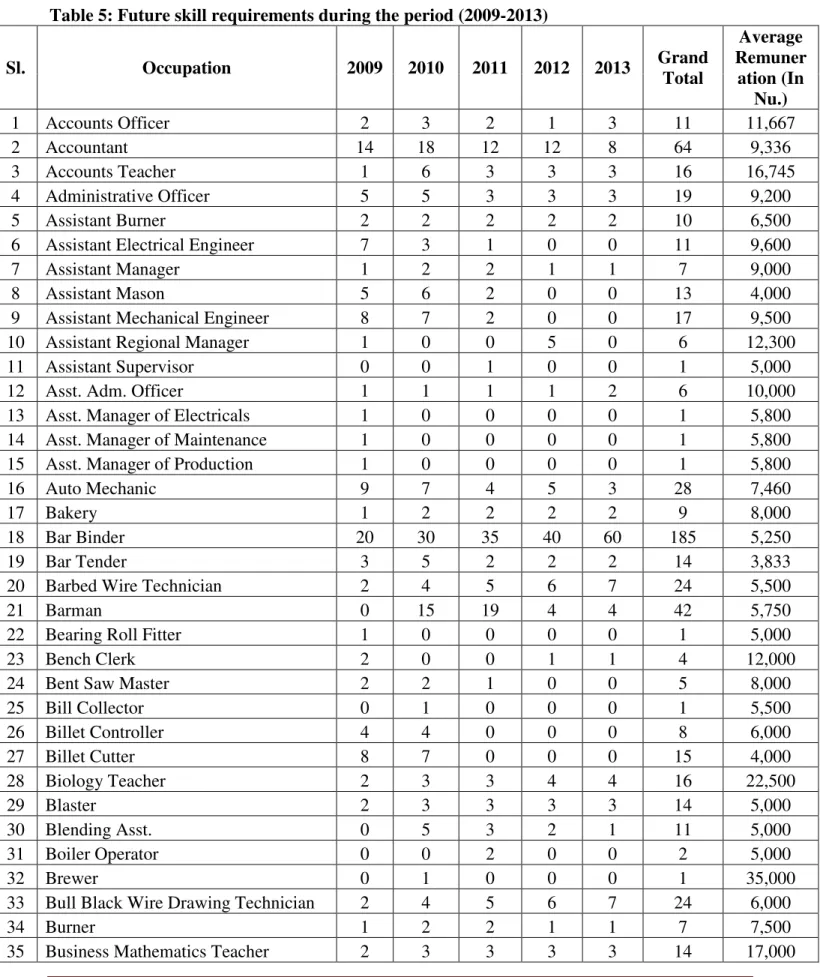
Table 5: Future skill requirements during the period (2009-2013)
Sl. Occupation 2009 2010 2011 2012 2013 Grand Total Average Remuner ation (In Nu.) 1 Accounts Officer 2 3 2 1 3 11 11,667 2 Accountant 14 18 12 12 8 64 9,336 3 Accounts Teacher 1 6 3 3 3 16 16,745 4 Administrative Officer 5 5 3 3 3 19 9,200 5 Assistant Burner 2 2 2 2 2 10 6,500
6 Assistant Electrical Engineer 7 3 1 0 0 11 9,600
7 Assistant Manager 1 2 2 1 1 7 9,000
8 Assistant Mason 5 6 2 0 0 13 4,000
9 Assistant Mechanical Engineer 8 7 2 0 0 17 9,500
10 Assistant Regional Manager 1 0 0 5 0 6 12,300
11 Assistant Supervisor 0 0 1 0 0 1 5,000
12 Asst. Adm. Officer 1 1 1 1 2 6 10,000
13 Asst. Manager of Electricals 1 0 0 0 0 1 5,800
14 Asst. Manager of Maintenance 1 0 0 0 0 1 5,800
15 Asst. Manager of Production 1 0 0 0 0 1 5,800
16 Auto Mechanic 9 7 4 5 3 28 7,460
17 Bakery 1 2 2 2 2 9 8,000
18 Bar Binder 20 30 35 40 60 185 5,250
19 Bar Tender 3 5 2 2 2 14 3,833
20 Barbed Wire Technician 2 4 5 6 7 24 5,500
21 Barman 0 15 19 4 4 42 5,750
22 Bearing Roll Fitter 1 0 0 0 0 1 5,000
23 Bench Clerk 2 0 0 1 1 4 12,000
24 Bent Saw Master 2 2 1 0 0 5 8,000
25 Bill Collector 0 1 0 0 0 1 5,500 26 Billet Controller 4 4 0 0 0 8 6,000 27 Billet Cutter 8 7 0 0 0 15 4,000 28 Biology Teacher 2 3 3 4 4 16 22,500 29 Blaster 2 3 3 3 3 14 5,000 30 Blending Asst. 0 5 3 2 1 11 5,000 31 Boiler Operator 0 0 2 0 0 2 5,000 32 Brewer 0 1 0 0 0 1 35,000
33 Bull Black Wire Drawing Technician 2 4 5 6 7 24 6,000
34 Burner 1 2 2 1 1 7 7,500
Ministry of Labour and Human Resources
Page 13
Job Prospecting Exercise
Job Prospecting Exercise
Job Prospecting Exercise
Job Prospecting Exercise
2009
2009
2009
2009
36 Cable Man 2 1 1 0 0 4 4,000 37 Care Taker 0 2 1 0 0 3 5,000 38 Carpenter 187 298 307 317 348 1,457 6,483 39 Cashier 0 1 0 0 0 1 19,000 40 Catering Headperson 2 0 0 0 0 2 5,000 41 Chamber Maid 2 4 0 0 0 6 4,000 42 Charter Accountant 3 0 1 1 0 5 22,333 43 Chef 0 4 3 3 2 12 7,875 44 Chemist 8 10 8 2 3 31 10,500 45 Chemistry Teacher 4 5 3 4 3 19 19,500 46 Chief Cashier 0 1 0 0 0 1 8,750 47 Chief Chemist 0 1 0 0 0 1 12,000 48 Chief Engineer 0 0 1 0 0 1 55,000 49 Chief Mason 0 1 0 0 0 1 7,000
50 Chinese Master Chef 1 1 0 0 0 2 15,000
51 Civil Engineers 39 43 42 46 52 222 23,396
52 Cold Shearing Operatives 0 1 0 0 0 1 4,000
53 Co-Matron 0 1 0 0 0 1 10,000 54 Commerce Teacher 1 5 3 3 3 15 16,667 55 Commercial Manager 1 0 0 0 0 1 25,000 56 Compressor Operator 2 3 3 3 3 14 5,000 57 Computer Operator 1 0 0 0 0 1 6,000 58 Concast Mechanic 0 2 1 1 0 4 5,000 59 Concrete Worker 100 150 150 150 200 750 4,500 60 Conference Coordinator 1 2 2 2 2 9 15,000 61 Consultant 2 2 2 2 2 10 25,000
62 Continental Master Chef 1 1 0 0 0 2 15,000
63 Control Room Operator 2 0 0 0 0 2 5,000
64 Cooks 52 19 35 14 64 184 5,469
65 Co-Warden 0 1 0 0 0 1 10,000
66 Crane Operators 2 10 2 1 0 15 7,750
67 Crank Cutter 0 1 0 0 0 1 10,000
68 Cultural Guides 7 12 16 14 14 63 11,750
69 Customer Service Representative 3 4 2 6 3 18 7,000
70 D.C Drive Technician 2 1 0 0 0 3 5,000
71 Data Manager 0 1 0 0 0 1 10,000
72 Depot Manager 5 0 2 2 2 11 9,500
73 Dinning 4 12 12 13 8 49 5,333
Ministry of Labour and Human Resources
Page 14
Job Prospecting Exercise
Job Prospecting Exercise
Job Prospecting Exercise
Job Prospecting Exercise
2009
2009
2009
2009
75 Driller 5 5 7 8 7 32 4,150
76 Driver (Medium) 0 3 3 2 5 13 6,500
77 Heavy Vehicle Driver 15 22 23 28 29 117 6,591
78 Light Vehicle Driver 4 6 6 7 7 30 5,599
79 Dy. Hotel Manager 0 0 2 2 2 6 15,000
80 Dzongkha Teacher 1 4 4 3 2 14 13,484 81 Economics Teacher 1 3 2 2 2 10 14,000 82 Electrical Engineers 29 25 15 16 12 97 20,237 83 Electricians 27 40 96 109 108 380 7,107 84 Embossing Operatives 1 0 0 0 0 1 5,000 85 Engineer(software/Hardware) 0 1 0 1 0 2 13,000 86 English Teacher 2 5 6 4 4 21 16,745 87 Excavator Operator 10 15 14 15 14 68 8,667 88 Fabricator (Furniture’s) 0 0 2 0 0 2 4,500 89 Finance Manager 4 5 9 4 6 28 18,191 90 Finance Officer 2 4 4 4 4 18 25,000
91 Fine Wire Drawing Technician 1 2 3 4 5 15 5,500
92 Finish Material/Goods Operatives 6 6 0 0 0 12 4,000
93 Fire Man 1 0 1 1 0 3 4,500
94 First Hand 0 2 1 1 0 4 6,500
95 Fitters 6 5 6 4 4 25 5,800
96 Fly Shearing Operatives 0 1 0 0 0 1 4,000
97 Food & BP(Kitchen) 4 4 0 0 0 8 6,000
98 Food & House Keeping Manager 0 1 0 0 0 1 10,000
99 Food Machine Operator 0 1 1 1 0 3 4,500
100 Food Processors 0 2 3 0 0 5 6,240 101 Foreman 0 0 0 0 1 1 6,500 102 Foreman(Electrician) 1 1 1 0 0 3 9,000 103 Foreman(Mechanical) 1 2 1 0 0 4 6,500 104 Form Fabricator 0 1 2 1 0 4 6,000 105 Front Office 6 4 3 5 3 21 5,833 106 Furnace Operator 0 2 0 0 0 2 6,500 107 Gardener 6 9 7 5 3 30 3,750 108 Gas Cutter 0 1 0 0 0 1 5,500 109 General Engineering 4 4 4 4 0 16 6,500 110 General Manager 1 5 3 2 3 14 22,000 111 Geography Teacher 2 3 2 2 2 11 14,990 112 Guide Roll(Controller) 0 1 1 0 0 2 6,000 113 Gym Instructor 0 2 2 2 2 8 4,500
Ministry of Labour and Human Resources
Page 15
Job Prospecting Exercise
Job Prospecting Exercise
Job Prospecting Exercise
Job Prospecting Exercise
2009
2009
2009
2009
114 HB Wire Technician 1 2 3 4 5 15 5,500
115 Head Melter 0 1 1 1 0 3 9,000
116 Head of Information & Technology 3 0 0 1 0 4 35,000
117 Head of Legal Section 1 0 0 0 1 2 33,000
118 Helper 5 1 1 1 1 9 4,250
119
High Speed Fine Wire Drawing
Operator 1 1 1 0 0 3 6,000
120 History Teacher 3 2 2 2 2 11 14,000
121 Hotel Management Specialist 10 0 20 0 20 50 8,000
122 Hotel Manager 8 3 8 2 7 28 22,333
123 Housekeeping 56 26 65 32 41 220 4,694
124 Human Resource Officer 3 2 1 0 0 6 15,333
125 Indian Master Chef 1 1 0 0 0 2 15,000
126 Industrial Motor Winder 1 0 0 0 0 1 5,300
127 Injector Operatives 1 1 2 0 0 4 6,000
128 Instrumentation Engineer 0 1 0 0 0 1 20,000
129 IT Engineer 4 7 2 5 3 21 11,330
130 JCB Operator 3 4 2 2 2 13 7,000
131 Junior Electrical Engineer 0 1 0 0 0 1 10,000
132 Junior Mechanical Engineer 0 1 0 0 0 1 10,000
133 Junior Operator 3 0 0 0 0 3 4,000
134 Lab Assistant 5 4 1 1 1 12 4,750
135 Lab Technicians 5 1 2 0 2 10 7,000
136 Lama 1 0 0 0 0 1 5,500
137 Lat Threading Operator 0 1 1 1 1 4 8,000
138 Laundry 11 4 19 4 19 57 4,375 139 Library Asst. 0 2 2 2 2 8 7,500 140 Loader 0 0 4 0 0 4 3,000 141 Machine Operator 11 18 12 11 11 63 6,800 142 Maintenance Engineer 0 0 0 0 1 1 11,335 143 Manager 2 0 1 0 0 3 10,083 144 Manager (Administrative) 3 1 1 1 0 6 9,500 145 Manager (mechanical) 0 1 0 0 0 1 28,000 146 Manager (P&A) 0 2 1 1 1 5 11,000 147 Manager (S&M) 0 3 1 1 1 6 11,000 148 Manager (TRTI) 1 0 1 0 1 3 9,500
149 Manager Front Desk 0 1 0 0 0 1 12,000
150 Manager Reservation 0 1 0 0 0 1 12,000
151 Manager(Assistant) 0 1 1 1 1 4 5,000
Ministry of Labour and Human Resources
Page 16
Job Prospecting Exercise
Job Prospecting Exercise
Job Prospecting Exercise
Job Prospecting Exercise
2009
2009
2009
2009
153 Manager/Engineer 20 22 23 25 25 115 20,000
154 Marketing Manager 3 3 3 0 0 9 15,500
155 Marketing Officer 2 1 0 1 1 5 19,278
156 Mason 281 762 395 386 405 2,229 6,567
157 Material Handling Operatives 10 30 0 0 0 40 4,000
158 Materials Managers 5 4 4 4 4 21 23,800 159 Math’s Teacher 0 4 2 1 1 8 16,750 160 Mechanical Engineers 32 22 11 13 11 89 21,286 161 Mechanical Foreman 1 0 0 0 0 1 8,500 162 Mechanical Welder 1 2 1 0 0 4 5,000 163 Mechanics 3 3 1 0 0 7 6,000 164 Melter 0 4 1 1 0 6 8,000 165 Messenger 0 1 0 1 0 2 5,000 166 Metallurgist 2 1 1 0 1 5 14,375 167 Microbiologist 1 0 0 1 0 2 10,000 168 Mill Operator 1 2 1 0 0 4 5,000 169 Mines Foreman 1 0 1 0 0 2 10,000 170 Mining Engineer 2 2 0 0 1 5 18,500 171 Mould Operator 0 3 1 1 0 5 5,750
172 Multi Skilled Technician 1 0 0 0 0 1 7,770
173 Musician 2 2 0 0 0 4 5,000 174 Office Assistant 6 19 12 12 10 59 8,050 175 Operator 5 1 5 2 2 15 5,500 176 Operator Helper 2 10 2 2 0 16 4,250 177 Operator(Finance Officer) 2 4 3 0 0 9 9,000 178 Packing Worker 2 5 2 2 1 12 4,000 179 Painter 11 14 14 14 15 68 6,167 180 Pasting Operator 5 0 3 0 5 13 6,000 181 Personal Secretary 0 1 0 0 0 1 6,000 182 Pharmacist 1 2 0 0 0 3 9,500 183 Physical Instructor 0 0 1 0 0 1 7,770 184 Physics Teacher 2 7 5 4 4 22 20,750 185 Plant Manager 0 1 0 0 0 1 30,000 186 Plant Operator 2 4 4 4 4 18 9,000 187 Plumbers 21 27 21 26 26 121 6,227
188 Press Machine Operator 0 1 0 0 0 1 6,500
189 Principal 1 1 0 0 0 2 36,000
190 Process Worker 5 3 3 0 2 13 3,500
Ministry of Labour and Human Resources
Page 17
Job Prospecting Exercise
Job Prospecting Exercise
Job Prospecting Exercise
Job Prospecting Exercise
2009
2009
2009
2009
192 Production Manager 0 1 3 1 1 6 14,000 193 Production Supervisor 2 2 2 2 2 10 7,000 194 Project Engineer 1 1 0 0 0 2 15,000 195 Project Managers 5 5 5 5 5 25 28,333 196 Pump Operator 3 1 0 0 0 4 5,500 197 Pusher Operatives 4 4 2 1 0 11 6,000
198 PVC Cable Wire Operator 1 1 1 1 1 5 10,000
199 Quality Control Officer 1 0 0 0 0 1 8,000
200 Quality Executive 0 1 0 0 0 1 20,000 201 Receptionist 24 16 26 8 26 100 5,136 202 Regional Managers 3 3 3 3 3 15 13,000 203 Reservationist 3 1 2 0 0 6 9,000 204 Riggers 10 20 10 10 0 50 4,500 205 Rob Binder 1 2 2 2 2 9 6,000 206 Rod Bender 10 5 5 5 5 30 5,000 207 Roll Welder 1 1 0 0 0 2 5,000 208 Roller Operator 3 3 2 2 2 12 7,500
209 Roughing Mill Controller 6 4 2 0 0 12 6,000
210 Sales Person 4 18 8 7 7 44 6,200
211 Sawyer 2 2 2 2 2 10 5,000
212 Scrap Collector 5 5 5 5 5 25 4,500
213 Secretary 0 0 0 0 0 0 12,000
214 Security Guard 43 71 71 86 57 328 4,566
215 Senior Bench Clerk 2 0 2 0 1 5 15,000
216
Senior Manager (Finance and
Accounts) 0 1 0 0 0 1 29,000
217
Senior Manager (Production of
Carbide) 0 0 1 0 0 1 27,000
218
Senior Manager (Production of Silicon
) 0 0 1 0 0 1 27,000
219 Senior Manager (Quality Control) 0 0 1 0 0 1 26,000
220 Senior Operator 2 0 0 0 0 2 5,000 221 Service Manager 0 1 0 0 0 1 12,000 222 Shaper-man 2 0 0 0 0 2 5,000 223 Shift Brewer 1 0 1 0 0 2 17,500 224 Shift In charge(CCM) 0 0 1 0 0 1 16,000 225 Shift In charge(Production) 2 0 0 0 0 2 8,500 226 Shotfrerer 2 0 0 0 0 2 12,000 227 Site Accountant 4 5 5 5 5 24 7,000 228 Site Supervisor 6 11 3 7 5 32 6,500
Ministry of Labour and Human Resources
Page 18
Job Prospecting Exercise
Job Prospecting Exercise
Job Prospecting Exercise
Job Prospecting Exercise
2009
2009
2009
2009
229 Skid Board Operatives 1 1 1 0 0 3 5,000
230 Skilled Labourer 760 797 840 870 912 4,179 3,900 231 Software Engineer 1 1 1 1 0 4 10,000 232 SPA 2 7 4 5 2 20 4,833 233 Sr. Project Engineer 0 0 1 0 0 1 45,000 234 Steward 6 4 1 3 0 14 4,750 235 Store Keeper 6 4 7 7 6 30 5,875 236 Store Manager 1 0 1 0 0 2 25,500 237 Strapping Operatives 20 30 0 0 0 50 3,500 238 Supervisors 20 30 64 66 65 245 8,767 239 Supervisor(Auto Mechanical) 6 6 7 8 10 37 6,250 240 Supervisor (Civil) 6 7 7 8 10 38 6,250 241 Supervisor(Electrical) 0 1 0 0 0 1 7,000 242 System Manager 0 1 2 1 0 4 24,000 243 System/Instrumentation Engineer 1 0 0 0 0 1 15,000 244 Technical Executive 0 1 0 1 0 2 20,000 245 Technician(Electrical) 3 5 5 4 3 20 7,500 246 Teemer Man 1 2 1 0 0 4 4,000 247 Telephone Operator 0 2 1 1 1 5 5,000 248 Tester 2 2 2 2 1 9 4,500 249 Tour Assistant 1 0 0 0 0 1 5,000 250 Tractor Operator 3 3 2 2 2 12 5,000 251 Traffic Officer 6 0 0 0 0 6 9,000 252 Trained Librarian 1 0 0 0 0 1 7,770 253 Trainee Pilot 2 0 0 0 0 2 9,000 254 Trekking Guides 20 24 34 23 26 127 12,667 255 Turner 2 2 1 0 0 5 5,000 256 Unskilled Labourer 380 460 500 495 490 2,325 4,000 257 Waiter/Waitress 65 15 58 26 46 210 4,538 258 Warden/Matron 0 0 2 0 0 2 7,770 259 Welders 5 4 3 3 3 18 5,667 260 Wet Sweeper 8 6 8 7 8 37 3,250
261 Wire Nail Technician 6 10 13 16 18 63 4,900
Ministry of Labour and Human Resources
Page 19
Job Prospecting Exercise
Job Prospecting Exercise
Job Prospecting Exercise
Job Prospecting Exercise
2009
2009
2009
2009
Soft Skills:
Soft skills play a vital role for professional success; they help one to excel in the workplace and their importance cannot be denied in this age of information and knowledge. Good soft skill is what’s required by every employer at present.
During our interviews with the employers, the most common traits, mentioned by virtually every employer, were:
~ Positive work ethic. ~ Good attitude.
~ Desire to learn and be trained. ~ Hard work.
~ Consistency. ~ No job hopping.
Soft skills "are as important, if not more important, than traditional hard skills to an employer looking to hire -- regardless of industry or job type. This could offer a major breakthrough as educators and training providers seek to develop and cluster training courses to fit business and industry needs.
The Job Prospecting Exercise defined about 71 "soft skills", which employers seek. They are applicable to any field of work, according to the study. Soft skills like personal responsibility, team work and multi-tasking were some of the most important skills that employers usually look for while selecting employees for jobs of any type.
Most of the employers observed that they could find workers who have "hard skills" i.e. the capability to operate machinery or fulfill other tasks, but many potential hires lack the "soft skills" that a company needs.
Through out study we came to know that CEOs and human resource managers or employers are ever ready to hire workers who demonstrate a high level of "soft skills" and then train them for the specific jobs available. The ever-changing impact of technology has given hard-skills-only workers a short shelf life.
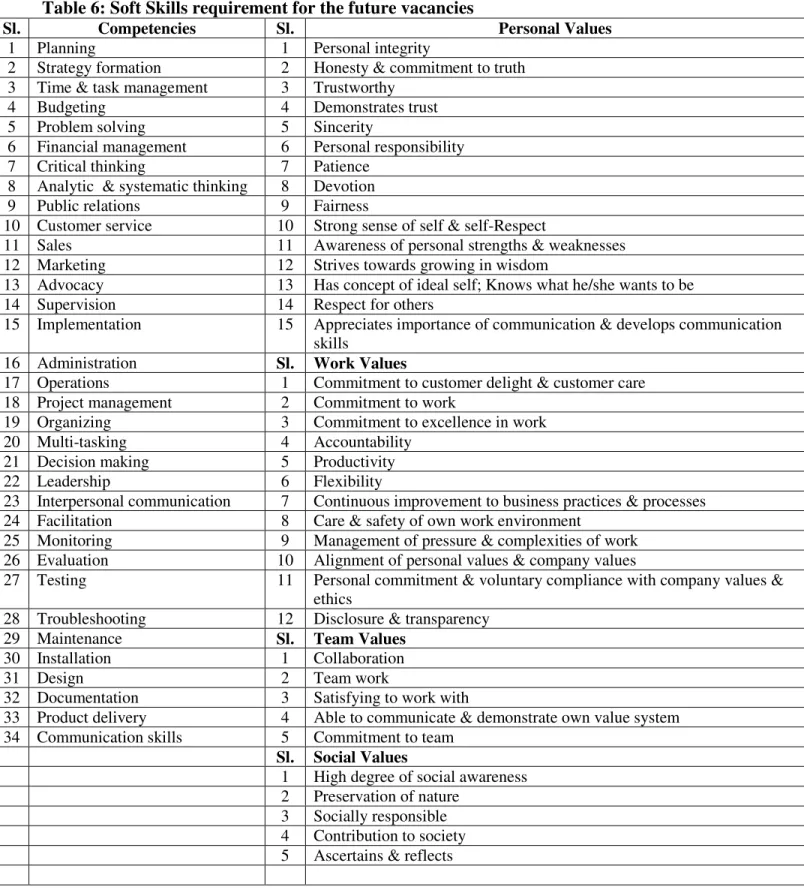
Table 6 depicts the various kinds of soft skills required for each occupation during the period 2009-2013.
Ministry of Labour and Human Resources
Page 20
Job Prospecting Exercise
Job Prospecting Exercise
Job Prospecting Exercise
Job Prospecting Exercise
2009
2009
2009
2009
Table 6: Soft Skills requirement for the future vacancies
Sl. Competencies Sl. Personal Values
1 Planning 1 Personal integrity
2 Strategy formation 2 Honesty & commitment to truth
3 Time & task management 3 Trustworthy
4 Budgeting 4 Demonstrates trust
5 Problem solving 5 Sincerity
6 Financial management 6 Personal responsibility
7 Critical thinking 7 Patience
8 Analytic & systematic thinking 8 Devotion
9 Public relations 9 Fairness
10 Customer service 10 Strong sense of self & self-Respect
11 Sales 11 Awareness of personal strengths & weaknesses
12 Marketing 12 Strives towards growing in wisdom
13 Advocacy 13 Has concept of ideal self; Knows what he/she wants to be
14 Supervision 14 Respect for others
15 Implementation 15 Appreciates importance of communication & develops communication
skills
16 Administration Sl. Work Values
17 Operations 1 Commitment to customer delight & customer care
18 Project management 2 Commitment to work
19 Organizing 3 Commitment to excellence in work
20 Multi-tasking 4 Accountability
21 Decision making 5 Productivity
22 Leadership 6 Flexibility
23 Interpersonal communication 7 Continuous improvement to business practices & processes
24 Facilitation 8 Care & safety of own work environment
25 Monitoring 9 Management of pressure & complexities of work
26 Evaluation 10 Alignment of personal values & company values
27 Testing 11 Personal commitment & voluntary compliance with company values &
ethics
28 Troubleshooting 12 Disclosure & transparency
29 Maintenance Sl. Team Values
30 Installation 1 Collaboration
31 Design 2 Team work
32 Documentation 3 Satisfying to work with
33 Product delivery 4 Able to communicate & demonstrate own value system
34 Communication skills 5 Commitment to team
Sl. Social Values
1 High degree of social awareness
2 Preservation of nature
3 Socially responsible
4 Contribution to society
Ministry of Labour and Human Resources
Page 21
Job Prospecting Exercise
Job Prospecting Exercise
Job Prospecting Exercise
Job Prospecting Exercise
2009
2009
2009
2009
Recommendations from the Employers:
1. The Employers raised concerns on the growing number of youth population and
expressed that the system of school education does not inculcate basic and soft skills required for a productive workforce, while higher and vocational qualifications do not generate the specialized skills employers require.
2. The Employers also expressed that the Career and Counseling Programmes in schools
and colleges should be strengthened so that the youths seeking job are well aware and informed about the current labour market situation and the future requirements.
3. Though the Ministry of Labour and Human Resources focus is much diverted towards
unemployment and the increasing number of unemployed youth floating in the labour market, it is also apparent that not enough has been done to develop the skills of young people. Skill mismatch is a major concern in Bhutan now where educated youths acquire skills that are not demanded by the labour market.
4. One approach to tackle the problem of skill mismatch is to combine formal education
with work-based training
5. The Employers also suggested that if their employees could also be given short-term vocational trainings like in the Civil Service since continuing vocational training increases the innovation capacity of firms, by allowing workers to upgrade their skills and respond more rapidly to changes in economic conditions.
6. The Bhutanese economy will depend on the skills of its people and how firms and industry support workers to work to the best of their potential. The skills of workers increasingly determine firms’ ability to build competitiveness.
7. During the formal/compulsory education, young people in schools should acquire skills that can be used across most occupations and which provide the foundation for their working lives.
8. Bhutan has a very high number of youth population and the main reason for shortage of
labour could be either because of not much people with the required skills or there’s a mismatch between labour demand and supply.
9. The Ministry of Labour and Human Resources must maintain close contact with the
private sector to continuously assess skills demands. The Employment Service Centers also need to advise young people on marketable skills. And it needs to stay in close contact with training institutions. For young people, Employment Service Centers can provide information on different professions, facilitate decision-making on what to study and promote internships. In its turn, the private sector needs to publicize vacancies and provide data to the Department of Employment, Ministry of Labour and Human Resources. This will pay off by saving enterprises the transaction cost of searching for adequately skilled staff.
10.Skills shortages mean much more than vacancies. Even though there are lots of vacancies
in the private and corporate sector, most of these vacancies are not occupied. This is mainly due to the lack of right skilled person that the employer is looking for.
Ministry of Labour and Human Resources
Page 22
Job Prospecting Exercise
Job Prospecting Exercise
Job Prospecting Exercise
Job Prospecting Exercise
2009
2009
2009
2009
11.Being a good worker means having the skills to do the job. When most of us think of skills, we think of job-specific skills such as a mechanic’s ability to repair engines or a pilot’s ability to fly a plane. Most importantly, soft skills are the skills most sought after by employers. Because most job-specific skills can be easily taught, employers would prefer to hire individuals with the required soft skill, such as adaptability, dependability, and responsibility.
12.The low quality of education, which leads to a general lack of skills, is another cause of
youth unemployment
13.One of the ways for overcoming the mismatch of skills is by feeding in the profile needed
by the private sector into the curricula of education sector and the vocational training institutes.
Ministry of Labour and Human Resources
Page 23
Job Prospecting Exercise
Job Prospecting Exercise
Job Prospecting Exercise
Job Prospecting Exercise
2009
2009
2009
2009
Coverage List
Sl. Name of the Establishment Dzongkhag
1 Gangri Tours & Treks Thimphu
2 Etho Metho Tours and Treks Thimphu
3 Hotel Druk Thimphu
4 Hotel Phuntsho Pelri Thimphu
5 Kelki Higher Secondary School Thimphu
6 Hotel Kisa Thimphu
7 Namgay Heritage Thimphu
8 Jamyang Resort Thimphu
9 Rinchen Higher S. School Thimphu
10 Nima Higher S. School Thimphu
11 Wangchuk Resort Thimphu
12 Happy Holiday Thimphu
13 Bhutan Toursim Corporation Ltd Thimphu
14 Hotel Olathang Paro
15 Yangphel Tours and Treks Thimphu
16 Dragon Tours and Treks Thimphu
17 Tsenden Construction Thimphu
18 Dhoensum Construction Thimphu
19 Rabsel Construction Thimphu
20 Hotel Motithang Thimphu
21 Hotel Riverview Thimphu
22 Bhutan Mandala Tours Thimphu
23 All Bhutan Connection Thimphu
24 G4S Thimphu
25 Hotel Jhomolhari Thimphu
26 Druk Chapchap Construction Thimphu
27 Rainbow Tours and Treks Thimphu
28 Bhutan Agro Industries Thimphu
29 Rinson Construction Thimphu
30 Druk Sherig Construction Thimphu
31 Norbu Bhutan Travel Pvt. Ltd Thimphu
32 Kuenga Higher S. School Paro
33 Bhutan Resorts Pvt. Ltd. Paro
34 Samden Choling Resort Paro
35 Taj Tashi Thimphu
Ministry of Labour and Human Resources
Page 24
Job Prospecting Exercise
Job Prospecting Exercise
Job Prospecting Exercise
Job Prospecting Exercise
2009
2009
2009
2009
37 Druk Air Corporation Paro
38 NRDCL Thimphu
39 Terma Linca Thimphu
40 Zhiwaling Hotel Paro
41 Royal Thimphu College Thimphu
42 Dawa Construction Thimphu
43 Dechen Hill Resort Paro
44 Welfare Construction Thimphu
45 Nima Construction Thimphu
46 Bhutan Builders Thimphu
47 Druk Seed Corporation Paro
48 Hotel Holiday Home Paro
49 Kichu Resort Paro
50 Bhutan Construction Thimphu
51 Hotel Wangdicholing Bumthang
52 Wood Craft Center Thimphu
53 Barma Chemicals Samdrup Jongkhar
54 Sherub Reldri Higher S. School Mongar
55 Zangto Pelri Hotel Punakha
56 Dragon Nest Resort Wangdue
57 Sonam Kuenphen Higher S. School Bumthang
58 Hotel Meri Phuensum Punakha
59 Yangkhil Resort Trongsa
60 Damchen Resort Punakha
61 Ugyen Academy Punakha
62 Aman Kora Resort Bumthang
63 Tashi Rosin & Turpentine Factory Sandrup Jongkhar
64 Gyeltshen Wood Industries Gelephu
65 Eastern Bhutan Ferro Silicom Pvt. Ltd. Samdrup Jongkhar
66 Kuendrup Higher S. School Gelephu
67 Tshering Steel Works Samdrup Jongkhar
68 SD Eastern Bhutan Coal Company Samdrup Jongkhar
69 Druk Satair Corporation Samdrup Jongkhar
70 Wangchuk Hotel Mongar
71 Mountain Lodge Bumthang
72 Bhutan Telecom Thimphu
73 Tashi Infocom Ltd. Thimphu
74 Bhutan Business Solution Thimphu
Ministry of Labour and Human Resources
Page 25
Job Prospecting Exercise
Job Prospecting Exercise
Job Prospecting Exercise
Job Prospecting Exercise
2009
2009
2009
2009
76 IT Park, DIT, MoIC Thimphu
77 Singye Group of Companies Thimphu
78 Saint Gobin Ceramic Materials Pvt. Ltd. Pasakha
79 Bhutan Carbide and Chemicals Ltd. Pasakha
80 Bhutan Oil Distributors Phuntsholing
81 Ugyen Ferro Alloys Pvt. Ltd. Phuntsholing
82 Tashi Engineering Works Phuntsholing
83 Tashi Commercial Corporation Phuntsholing
84 Bhutan Wood Pinery Industry Phuntsholing
85 Yangzom Cement Industry Samtse
86 Army Welfare Project Phuntsholing
87 Penden Cement Samtse
88 Jigme Mining Corporation Ltd. Samtse
89 Druk Ferro Alloys Ltd. Phuntsholing
90 Bhutan Fruit Products Samtse
91 Bhutan Polymers Co. Ltd Samtse
92 State Trading Corporation of Bhutan Ltd. Phuntsholing
93 Yarab Pvt. Ltd Phuntsholing
94 Tashi Beverages Pasakha
95 K.D. Construction Phuntsholing
96 Bhutan Concast Pvt. Ltd. Pasakha
97 Food Corporation of Bhutan Phuntsholing
98 Druk Cement Compnay Pvt. Ltd. Phuntsholing
99 Druk Wang Alloy Ltd. Pasakha
100 Bhutan Brewery Pvt. Ltd Pasakha
101 K.K. Steel Pvt. Ltd. Pasakha
102 Bhutan Bitumen Industries Pvt. Ltd. Phuntsholing
103 Bhutan Polythene Co. Ltd. Phuntsholing
104 Karma Steel and Wood Industry Phuntsholing
105 Druk Iron and Steel Phuntsholing
106 Karma Feeds Phuntsholing
107 Reldi Higher Secondary School Phuntsholing
108 Kenpa Pvt. Ltd Phuntsholing
109 Gaseb Construction Phuntsholing
110 RSA Pvt. Ltd. Phuntsholing
111 Marble Cutting and Processing Unit Phuntsholing
112 Yarkay Group of Companies Phuntsholing
113 Bhutan Battery Phuntsholing
Ministry of Labour and Human Resources
Page 26
Job Prospecting Exercise
Job Prospecting Exercise
Job Prospecting Exercise
Job Prospecting Exercise
2009
2009
2009
2009
115 Bhutan Ferro Alloys Ltd Phuntsholing
116 T&K Construction Phuntsholing
117 Quality Gases Pvt. Ltd. Pasakha
118 Druk Hotel Phuntsholing
119 Lhojong Construction Thimphu
120 Rabten Wire Industry Phuntsholing
121 Lhaki Steel and Rolling Pvt. Ltd. Pasakha
122 Bhutan Steel Indutries Ltd. Pasakha
123 Bhutan Ferro Industries Ltd. Pasakha
124 Bhutan Rolling Mills (P) Ltd. Pasakha
125 JD Construction Thimphu
126 East West Construction Thimphu
127 Construction Association of Bhutan Thimphu
128 Dungkar Construction, Hiring and Auto Center Thimphu
129 Bhutan Engineering Pvt. Ltd. Thimphu
130 Singye Construction Thimphu