5
IV
April 2017
Technology (IJRASET)
Automatic Rationing System
Minal Patil1, Ayush Sahu2, Aditya Pisode3
1, 2,3
Department of Electronics & Telecommunication Engineering, YCCE Nagpur
Abstract: RFID based automatic ration system is a novel approach in public distribution system (PDS). For ration distribution it is more efficient, very accurate, fully automated technique. PDS (rationing distribution system) is always controversial issues that involve malpractices. The PDS is used now a day’s having lots of drawbacks like inaccurate quantity of goods, low processing speed, waiting time is more, material theft in ration shop. The proposed PDS system will replaces all manual interference. The PDS is designed to provide transparency in the distribution system. Now a day’s ration card is used for issuing ration, the proposed system uses Radio Frequency Identification (RFID) technology it will replace the current ration card. The RFID tags are provided instead of conventional ration cards. Government Authority will provide all the information related to the customer and that will be stored in microcontroller. First step of PDS system is to scan RFID reader, after scanning microcontroller will check all the details of customer authenticate it. After successful verification, with the help of keypad consumer will enter type of material as well as quantity of material. After delivering material to consumer, the microcontroller sends the information to customer as well as PDS authorities using Global System for Mobile (GSM) technology.
Keywords: GSM, Microcontroller, Public Distribution System, RFID
I. INTRODUCTION
In India Public Distribution System (PDS) is the largest retail system in the world. A ration card is provided by the Public distribution system (PDS) under an order or an authority of the State Government for the purchase of essential consumer materials like wheat, rice, kerosene, pulses and oil etc. State Government allowed distinctive ration cards having different types like yellow ration card, saffron ration card, and white ration card .The quantity of consumer material depends on number of family members and annual income. The material supplied to the consumer with the help of ration card in the first week of every month by ration shopkeeper.
There are number of people in the country who uses PDS for rationed distribution. Some People are trying to chit the customers by using this system. The manual involvement in weighing of the materials may leads to inaccurate measurements and/or it may happen, the ration shop owner may illegally uses consumer materials without prior knowledge of ration card holders.
The PDS can control malpractices in ration shop with the help of transparent automatic system based on RFID and GSM. Every consumer i.e. family head provided RFID card which acts as ration card. The RFID card has unique identification number. The consumer has to scans the RFID card on RFID reader which is interfaced with microcontroller and it is kept at ration shop. Once consumer is validated by password, the system asks the consumer to select appropriate material and quantity of material through keypad. With the help of allied circuitry, material chosen by the consumer will be delivered to the consumer. GSM interfaced with microcontroller sends information in the form of SMS to related people. The proposed RFID based automatic ration shop system would bring transparency in public distribution system and become very helpful to prevent malpractices.
II. BACKGROUND
Automation in Rationing System using ATmega16 is based on radio frequency identification of customer. Each customer is provided with RFID cards. In this system with the help of RFID module and by entering the password we can access the system. Customer is authenticated, after authentication system shows its balance. User has to enter amount in terms of Kg after entering amount, again system will check its current balance. If current balance is available system will open valve. Through valve consumer material like grain will come and it will get weighted by weight sensor. Once the count reached the entered amount controller automatically shut down the valve and updates the account of the customer. With the help of GSM module updated information is send to the customer. In this system the data base of customers can be made with their account details, password etc.
irregularities at ration shop and direct communication between people and government is possible.
Cloud-Based Ration Card System using RFID and GSM Technology”, Presents an efficient method for the user to buy the products in the ration shop by just flashing the card at the RFID reader at the ration store. To overcome the problems which exist in the current PDS module like i) Illegal Usage ii) Over crowd iii) Processing speed is slow iv) Selection of households – Targeting v) Bogus cards vi) Hijacking of ration cards vii) Materials theft viii) Mixing of products ix) Poor quality of supplies x) More than the prescribed rates are charged xi) Cannot able to get the accurate quantity of supplies xii) Cannot able to get the material at any time can be overcome by RFID and GSM based Automation of ration shop.
III. PROPOSED SYSTEM
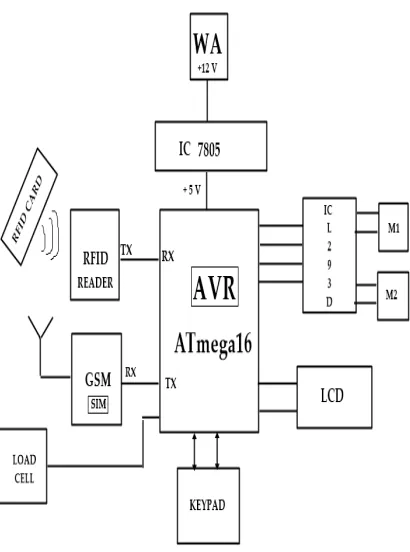
[image:3.612.189.394.248.524.2]The block diagram of the system based on the RFID technology consists of microcontroller, RFID, GSM, motor driver, RFID card, load cell, LCD and keypad.
Fig. 1 System Block Diagram
The proposed system demonstrates distribution of solid as well as liquid consumer materials like grains (wheat/rice) and kerosene. Input to the system is RFID reader, load cell and keypad. Ration stock and related activities will be displayed on LCD. Output of the microcontroller is used to drive motor.
IV. WORKING METHODOLOGY
Technology (IJRASET)
Fig. 2 System Flow chart
V. RESULT
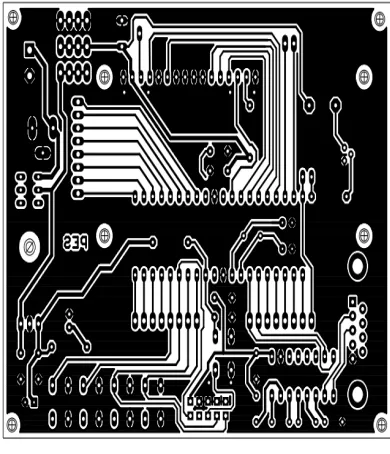
LCD module is interfaced successfully with microcontroller. System uses 4x4 matrix keypad. Both the terminals of the switches of 4x4 matrix keypad are connected to the port pin i.e. four rows and four columns. Each row and column sections pulled to high or low to scan particular key press. The PCB layout of the system has been designed with the help of PCB designer.
Fig. 3 PCB Layout
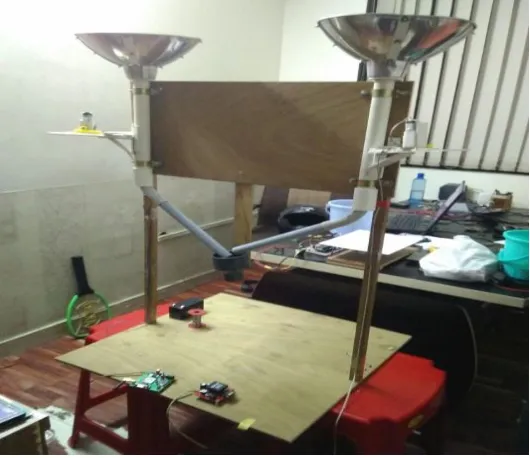
[image:4.612.208.403.424.651.2]Fig. 4 Grain drawn system
VI. CONCLUSION
The current conventional system has drawbacks like malpractices, processing speed is very low, very hectic get material and material will be theft from the ration shop without any acknowledgement to Government and consumer. To overcome above problems, automatic ration shop played vital role. With the help of RFID as well as GSM technology the distribution of kerosene or grain material is possible. The system becomes more transparent and more efficient. The proposed system has advantages like it is helpful to prevent malpractices at ration shop, maintain data properly, reduces paper work, time saving approach and cost effective.
REFERENCES
[1] Dhanoj Mohan, Rathikarani, Gopakumar, “Automation of Ration Shop Using PLC”, International Journal of Modern Engineering Research, 2013, Vol. 3, issue. 5, pp. 2971-2977.
[2] S.Valarmathy, R.Ramani, “Automatic Ration Material Distributions Based on GSM and RFID Technology”, International Journal Intelligent Systems and Applications, 2013, Vol. 11.
[3] Rajesh C. Pingle and P. B. Boroley, “Automatic Rationing for Public Distribution System (PDS) using RFID and GSM Module to Prevent Irregularities”, HCTL Open International Journal of Technology Innovations and Research, 2013, Vol. 2, pp. 102-111
[4] S. Sukhumar, K. Gopinathan, “Automatic Rationing System Using Embedded System Technology”, International Journal of Innovative Research in Electrical, Electronics, Instrumentation and Control Engineering, 2013, Vol. 1, Issue 8, pp. 339-342.