ISSN(Online): 2319-8753 ISSN (Print): 2347-6710
I
nternational
J
ournal of
I
nnovative
R
esearch in
S
cience,
E
ngineering and
T
echnology
(A High Impact Factor, Monthly, Peer Reviewed Journal)
Visit: www.ijirset.com
Vol. 7, Issue 12, December 2018
Precautionary Construction Management for
Sustainability
Roshan Patil, Prof. Ghanasham Chandrakant Sarode
M. E Student, Department of Civil Engineering, Dr. D.Y.Patil Institute of Technology, Pimpri, Pune, India
Assistant Professor, Department of Civil Engineering, Dr. D.Y.Patil Institute of Technology , Pimpri, Pune , India
ABSTRACT: Precautionary construction management for sustainability is most important thing.Construction industry is one of the most significant industries that contribute toward socio-economic growth especially to developing countries. The nature of the industry are fragmented, unique and complex which always face chronic problems like time overrun (70% of projects), cost overrun (average 14% of contract cost), and waste generation (approximately 10% of material cost). It is also regarded as one of the largest polluters to our environment. Traditional practices of construction process and management are found unable to control unprecedented challenges including the carbon emission issue. These challenges accent the need for practitioners to rethink and improve the construction process and technology. This shows that the construction industry has a major potential in the advancement of sustainable development by addressing issues related to the economic, social, and environment. By adopting sustainable construction, it can reduce the overall energy use and maximize potential for renewable energy supply, minimize waste, conserve water resources, enhance water quality, incorporate water sensitive design and minimize vulnerability to flooding, minimize polluting emissions to water, air and soil and minimize noise and light pollution.
KEYWORDS: Construction Waste, Cost Overrun, Green building, Issues in construction, Sustainable construction, Time Overrun.
I. INTRODUCTION
ISSN(Online): 2319-8753 ISSN (Print): 2347-6710
I
nternational
J
ournal of
I
nnovative
R
esearch in
S
cience,
E
ngineering and
T
echnology
(A High Impact Factor, Monthly, Peer Reviewed Journal)
Visit: www.ijirset.com
Vol. 7, Issue 12, December 2018
1. Management and organization, 2. Product and building issues, and 3. Resources consumption.
Management and organization is a key aspect of sustainable construction accordingto CIB (1999). This part contains technical aspects as well as those of social, legal,economic and political nature. It is a complex issue because of the interdependencyof the above aspects and because of the number of different stakeholders involvedin the construction process. The challenge involves the construction process, butalso the environmental effects, human resources issues, innovation of new solutionsof construction methods, knowledge transfer in the project, demands fromstakeholders, common standards and relevant legislation.
II. LITERATURE SURVEY
[1] The Way Forward in Sustainable Construction: Issues andChallengesJamilusMd Hussin1, Ismail Abdul Rahman, AftabHameedMemon:
Construction industry is one of the most significant industries that contributetoward socio-economic growth especially to developing countries. Thenature of the industry are fragmented, unique and complex which alwaysface chronic problems like time overrun (70% of projects), cost overrun(average 14% of contract cost), and waste generation (approximately 10% ofmaterial cost). It is also regarded as one of the largest polluters to ourenvironment. Traditional practices of construction process and managementare found unable to control unprecedented challenges including the carbonemission issue. These challenges accent the need for practitioners to rethinkand improve the construction process and technology. This shows that theconstruction industry has a major potential in the advancement of sustainabledevelopment by addressing issues related to the economic, social, andenvironment.
[2] Sustainable Construction Trends in Journal PapersBo Xia; JianZuo; Peng Wu, YongjianKe:
Sustainable construction is gaining worldwide attention and has inspired research toidentify and solve the problems involved in its implementation over a project lifecycle.While an impressive number of papers have been published on the topic to date, littlehas been done to review these papers to identify current research status or provideguidance for future research. This paper reviews existing sustainability papers in 12internationally renowned construction journals. Based on a three-stage literaturereview, sustainability papers published in these journals from 2000 to 2012 areanalyzed in terms of the annual number of papers published and the research interestsinvolved. The number of sustainability-related papers in construction increases from30 papers in 2000 to 127 papers in 2012, which shows an increasing trend insustainability topics.
[3] Project Managers’ Role in SustainableBuilding Process, MAHVIN DELNAVAZ:Providing all residences of a community with a better quality of life by developing ofenvironmental, social and economic aspects has been focused in sustainabledevelopment for decades. In order to achieve the sustainable development, theconstruction industry is an important sector that should adopt the sustainabilityconcept. Sustainable construction faces some challenges in adopting new processesand working methods due to the new technologies that require some changes in theprocess and considering risk. Learning about new tasks, actors and roles is necessaryto overcome the challenges. The role of project managers requires particular attentionamong the other stakeholders because project managers are in a special position atproject level.
[4] Sustainability in Project ManagementCompetencies: Analyzing the CompetenceGap of Project ManagersA. J. Gilbert Silvius, Ron P. J. Schipper:
ISSN(Online): 2319-8753 ISSN (Print): 2347-6710
I
nternational
J
ournal of
I
nnovative
R
esearch in
S
cience,
E
ngineering and
T
echnology
(A High Impact Factor, Monthly, Peer Reviewed Journal)
Visit: www.ijirset.com
Vol. 7, Issue 12, December 2018
“changeagents” in organizations that have a strong influence on the sustainability of organizations. However,the standards of project management fail to address the role project managers’ play in realizingsustainable development and project managers are lacking the competences to consider thesustainability aspects of their projects. For the implementation of sustainability in organizations,it is crucial that this competence gap is closed by the standards of project management competencies.This paper reports a literature-based analysis of the coverage of the competencies requiredfor considering sustainability aspects, in the standards of project management competencies.
[5] Environmental Guidelines for MajorConstruction Sites, EPA publication: The Environmental Guidelines for majorConstruction Sites provides a useful sourcedocument to help prepare and implement aenvironmental management plan for majorconstructions sites.
The purpose of these Guidelines is to providedevelopers, contractors and governmentagencies involved with commissioning orconstructing freeways, major roads or majordevelopment projects with: information how to avoid and minimiseenvironmental impact, which is preferableto the less cost-effective option ofcontrolling or treating discharges to the
environment, or undertaking remedialaction.
[6] Management of sustainability inconstruction works, Urban Persson, LUND University:
The present global environmental condition is a consequence of the increasingconsumption of natural resources whose depletion exceeds what is physicallypossible to sustain in the long term. The construction sector is a considerablecontributor to this resource depletion and sustainability is adopted in the form ofthe theory of ecological modernization. The implementation depends to varyingextents on sustainability demands at the global, national, regional, local, corporateand individual levels. In addition, there appears to be a lack of new knowledgetransfer from the international research community to local construction project
Managers, particularly in the process of construction works in line with theobjective of sustainability. According to environmental legislation, it is the clientwho is the responsibility party, performing activities as owner and administrator ofconstruction works.
[7] Risk Management in Construction Industry -A Case Study, A. Suchith Reddy:
The Study investigated to acquire an overall idea about risk and its consequences in construction fieldand the process required for its management. The effect of risk on assessment of a project is discussed along with thetools and methods adopted to manage risk in construction industry. The objective of the research topic “RiskManagement in Construction Industry” is to explore the effective way for implementation of risk management inconstruction industry, to consider the different types of risk management techniques applied to alleviate risk, to identifythe use of implementation of the risk management, to determine the factors that can influence the applications of riskmanagement in the project life cycle, wherein to categorize the principles adopted in Risk Management. I haveconducted a survey on the following aspects of it, a) Identify, characterize, and assess threats involved in theconstruction industry b) Assess the vulnerability of critical assets to specific threats. c) Determine the risk (i.e. theexpected consequences of specific types of attacks on specific assets). d) Identifies ways to reduce those risks. e)Prioritize risk reduction measures based on a strategy.
III. METHODOLOGY OF WORK
Research is to contribute to a special field of issues with something unknown, unpredictable, generalized and/or interdependent to the main body of knowledge. To achieve this contribution in a systematic way it is essential to approach the performance of the research with appropriate and scientifically approved methods as explained by Atkin and Wing “Knowing which path to follow, which tools and techniques to apply, and how to make sense of findings are the fundamental prerequisites of good research and, likewise, good researchers.”
To perform a decent research Robson (2002) identifies five inter-related phases to design a research: 1. Purpose – what is the achievement,
ISSN(Online): 2319-8753 ISSN (Print): 2347-6710
I
nternational
J
ournal of
I
nnovative
R
esearch in
S
cience,
E
ngineering and
T
echnology
(A High Impact Factor, Monthly, Peer Reviewed Journal)
Visit: www.ijirset.com
Vol. 7, Issue 12, December 2018
3. Research questions – what is the statement of possible findings and what the expectation of these findings is, 4. Methods – how to collect, analyse and validate the findings and how to show its reliability
5. Sampling strategy – how, where and when the input data should be collected and how the sample should be justified.
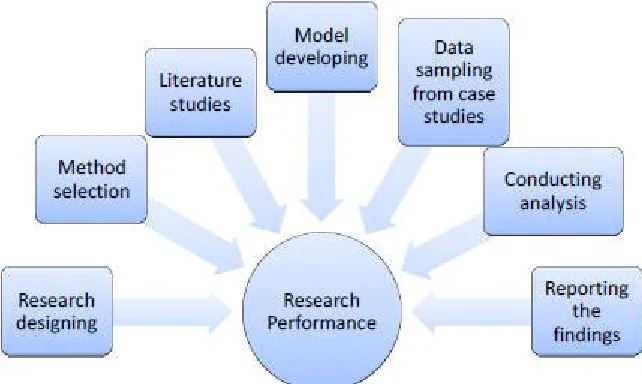
Figure 1: Input in this research’ performance.
IV. METHOD APPROACH
During the performance of this research, a combination of method approaches were adopted; literature reviews, development of assessment model and validation of assessment model with case studies from different stages of the life-cycle of construction works. This was done in a context of construction sustainability with client and project manager perspective.
1. Literature review
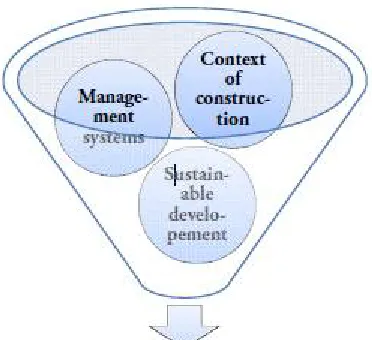
Literature studies has been undertaken covering definitions and concepts of sustainable development in general and sustainability in construction works in particular. Further on, an overview of useful indicators of sustainability for building construction, different assessment techniques and assessment tools adapted to buildings and its performance are made. Finally, an overview of some relevant management systems adapted to construction works is made. The literature covers international peer-reviewed journals, scientific reports, conference proceedings from the Sustainable Building conference series, and books. The literature review has been used as input for validating an assessment model, which has been developed in the context of construction management systems in
ISSN(Online): 2319-8753 ISSN (Print): 2347-6710
I
nternational
J
ournal of
I
nnovative
R
esearch in
S
cience,
E
ngineering and
T
echnology
(A High Impact Factor, Monthly, Peer Reviewed Journal)
Visit: www.ijirset.com
Vol. 7, Issue 12, December 2018
Figure 2: Blending concepts and context.
2. Model developing
During the phase of model developing, an assessment model approach was developed with respect to a client’s desired level of sustainability during a project process. It has been developed with respect to present theories and practical usefulness. The development process included a conceptual model containing purely environmental aspects of construction work management (Persson, 2001) through a set of applications where additions such as sustainability construction works concept, stakeholder analysis, management systems and links to other facility developments or processes were added (Persson, 2002; Persson, 2003; Persson and Olander, 2004; Persson et al, 2005; Persson et al, 2008a; Persson et al, 2008b). The model is based on principles of environmental management systems, i.e. as the principles of ISO 14001. The phase of model developing also contained a development of a simplified scheme (Persson, 2001) of how to assess site dependent sustainability aspects of a Facility in accordance to a simplified version of standard environmental impact assessment, EIA, e.g. as described in The Swedish Environmental Code (2000). This scheme was intended as a compliment to the assessment model and was applied in Persson (2002), Persson (2003), Persson and Olander (2004) andPersson et al (2005).
3. Conducting analysis
The analysis process is to validate the developed interdisciplinary process-orientated model with the ISO 15392 (2008) and the terms derived from the literature studies. The case studies’ different significant data were aimed to validate the model with the ISO standard. The result of this validation is then put in a bigger context of sustainability of construction works, derived from the literature studies, to be discussed if the findings from the particular cases could be generalized to be valid to sustainability of construction works entire life-cycle. Further on, if the result of the generalization could lead to usability of the developed model to estimate range of sustainability of such construction works.
V. FIELD APPLICATIONS
ISSN(Online): 2319-8753 ISSN (Print): 2347-6710
I
nternational
J
ournal of
I
nnovative
R
esearch in
S
cience,
E
ngineering and
T
echnology
(A High Impact Factor, Monthly, Peer Reviewed Journal)
Visit: www.ijirset.com
Vol. 7, Issue 12, December 2018
order to achieve life quality and be able to provide favourable environmental conditions to future generations, it is indispensable to become conscious about environmental effects of all mankind’s production activities. 2. It is vital to promote and encourage an environmental sustainability culture development: meeting society’s
demand of industrial and technological products with the indispensable proper disposal of their products at the end of life, that is, discard minimizing environmental impacts on the completion of its life cycle. Some measures have been taken over recent years, with the intention of minimizing the generation of environmentally hazardous waste in the world, emphasizing the relevance of changes in production processes. In the specific case of construction, begins to be aroused interest from external factors. Among them, there is the availability of solutions to minimize negative environmental impacts identified and applicable management tools.
3. Methods for evaluating environmental performance of the construction industry and increased competition in the industry and customer requirements are also seen as elements boosters, which come to be added to increase environmental awareness at the part of builders.Similarly, as many construction companies have implemented quality management systems that have brought them considerable benefits, it increases their interest in introducing environmental elements into existing systems. However, there are few builders that are committed to environmental issues. Still, environmental solutions have begun to be applied in enterprises, although this does not ensure continuous improvement and sustainable development of the sector.
4. Despite its recognized economic impacts to the country such as: high job creation, income and viability of housing, infrastructure, roads and others; in the construction sector one still lacks a firm policy for disposal of solid waste, mainly in urban centres.The need to take the RCC not only results in a desire to economize. This is a fundamental attitude towards the preservation of our environment.The important thing to be improved in this sector is the management process, with the decrease in solid waste generation and appropriate management of the same construction site, building awareness of the actors involved, creating the methodology.
5. It is noteworthy that is necessary a change of culture among all those involved in the process of IC, indicating the importance of preserving the environment we live.Therefore, it is notorious the necessity of a mentality change in the aspect of environmental sustainability at the IC sector’s stakeholders, in order to fortify and develop a responsible conduct, aware of the relevance of preserving and extracting as better as possible the environment’s resources
VI. CONCLUSION
ISSN(Online): 2319-8753 ISSN (Print): 2347-6710
I
nternational
J
ournal of
I
nnovative
R
esearch in
S
cience,
E
ngineering and
T
echnology
(A High Impact Factor, Monthly, Peer Reviewed Journal)
Visit: www.ijirset.com
Vol. 7, Issue 12, December 2018
title.Finally, on the micro or construction works project level, there is need for an easyand user-friendly framework for managing the issues of sustainability in an alreadycomplex context such as a construction works project. It is essential to apply a‘many-small-steps’ approach towards sustainability. The proposed STURE methodand the connection to STEPS maturity roadmap on a corporate level and thecombinations of the above-mentioned ISO-standards are a way of structuringstakeholder demands or outcomes of expectancy.
REFERENCES
[1] JamilusMd Hussin1, Ismail Abdul Rahman2, AftabHameedMemon, “The Way Forward in Sustainable Construction Issues and Challenges”, International Journal of Advances in Applied Sciences (IJAAS) Vol. 2, No. 1, March 2013, pp. 15~24
[2] Bo Xia; JianZuo; Peng Wu, YongjianKe, “Sustainable Construction Trends in Journal Papers”,queensland university of technology
[3] MAHVIN DELNAVAZ, “Project Managers’ Role in Sustainable Building Process”, Division of Construction Management CHALMERS UNIVERSITY OF TECHNOLOGY, MASTER’S THESIS 2012
[4] A. J. Gilbert Silvius, Ron P. J. Schipper, ”Sustainability in Project Management Competencies”, Analyzing the Competence Gap of Project Managers, Journal of Human Resource and Sustainability Studies, 2014, 2, 40-58
[5] Environmental Guidelines for Major Construction Sites, EPA publication
[6] Management of sustainability in construction works, Urban Persson, LUND University