5 X October 2017
50
©IJRASET (UGC Approved Journal): All Rights are Reserved
Micro Irrigation with Priority Driven Scheduling
To Utilize Water at Optimum Level
Santosh R Durugkar1, Ramesh C Poonia2 1, 2
AIIT, Amity University Rajasthan, Jaipur
Abstract: All of we know that natural resource conservation and utilization became very important nowadays. We are talking
about the “water” which is very important resource for human being and agriculture also. We are observing monsoon’s nature is irregular and due to this irregularity ground water level also decreasing. We have to take care of this situation by preventing unnecessary utilization of the water. We have proposed a novel approach in which main emphasis is on saving and controlling the unnecessary utilization of water. In agriculture or garden though either sprinkler or drip irrigation is used to control the utilization of water still optimum level is not achieved. We are observing sprinkler are spraying the water but in an inefficient way i.e. equal surface area is not covered and because of this few region will remain wet and other may be dry. In drip irrigation though drips are used still it cannot control the water utilization at optimum level. What we wish to suggest is that drips are good, but if the particular region holds good moisture level then also it will be irrigated. Proposed system will prove unnecessary utilization of water can be avoided as moisture sensors to be used to sense the moisture from the soil. As per the requirement only that region where moisture level is low, it will be immediately irrigated by using solenoid valves. Along with this proposed system have few more added advantages like identifying pH of the soil, field capacity analysis, and best water utilization for the plants, storing all the parameters like temperature, humidity, moisture and pH for later analysis.
Keywords: Scheduling, WSN, Moisture Sensors, Smart Irrigation, Volumetric Water Contents, temperature, humidity
I. INTRODUCTION
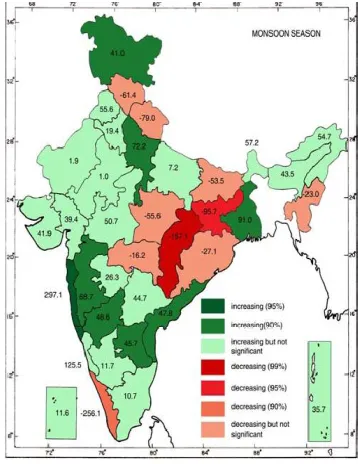
[image:2.612.215.394.488.720.2]Climate change is crucial and everyone is responsible for preserving our nature. There is need to adopt some strategies in our day to day life to reduce and manage the risks else next generations won’t be survived. Reducing the utilization cost of natural resources is the important challenge and everyone should contribute to climate-resilient pathways for sustainable development. In day to day life, adaptation means to adapt current state and the dynamic evolutionary process which changes periodically that leads to the adaptation. Irregularity of monsoon tends to create limitations on available resources i.e. water – which we considered as important asset to be utilize properly. We have focused this asset – water- to be utilized effectively in agriculture sector where maximum wastage is observed.
51
©IJRASET (UGC Approved Journal): All Rights are Reserved
[image:3.612.149.477.133.306.2]The Earth’s climate has always changed and evolved. Some of these changes have been due to natural causes but others can be attributed to human activities such as deforestation, atmospheric emissions from industry and transport, which have led to gases and aerosols being stored in the atmosphere.
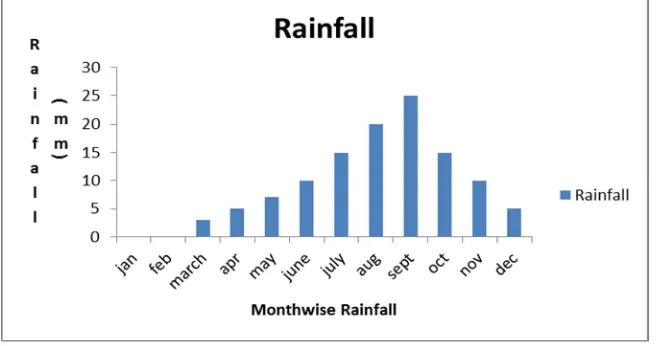
Figure 2 Month wise Indian Rain fall Observation
We have proposed a system which is useful to everyone for soil analysis and water quality analysis. Proposed system is implemented to provide a single GUI to the end user through which user interacts. GUI gives detailed information by providing pH, temperature, humidity and most important moisture at specific node.
II. REVIEWOFLITERATURE
52
©IJRASET (UGC Approved Journal): All Rights are Reserved
Irrigation requirements are primarily determined by crop water requirements, but also depend on the char-acteristics of the irrigation system, management practices, and the soil charchar-acteristics in the irrigated area [4]. Climate change will increase existing risks and will create new one for natural and human systems which we day to day experiencing. Risks are unevenly distributed as already we have discussed utilization of the natural resources unevenly and in random way are generally higher therefore people at all levels are being suffered. As it is not happened suddenly, rather it is a continuous process in which human being is interfered since many years and already started disturbing the frame work of nature and these factors contributed in climate change process which is not good for human being [5]. Wireless Sensor Networks have attracted much attention in recent years especially with the agriculture sector. The potential applications of WSNs are immense and WSN is combined with the numerous fields agriculture, banking, weather, health management etc. WSN components are used for collecting, storing and sharing sensed data [6]. Priority scheme is required to allow some selected nodes’ packets to reach the base station / sink node for computing something. In this paper author evaluates the performance of priority packet in a congested traffic, sensor network traffic has been defined as event-based considering the traffic pattern i.e. how many nodes are sending data towards the sink node is mainly correlated to phenomena which have been observed in a sensor network [7].
III.PROPOSEDSYSTEMWITHRESULTSDISCUSSION
53
[image:5.612.168.455.95.434.2]©IJRASET (UGC Approved Journal): All Rights are Reserved
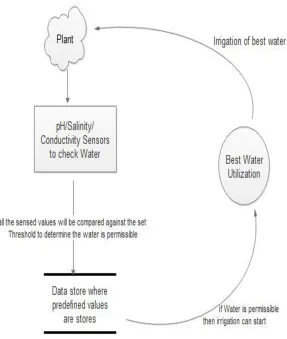
Figure 3 Best Water to be Use
54
©IJRASET (UGC Approved Journal): All Rights are Reserved
Figure 4 Irrigation Cycle
WSN applications can be divided in two categories: Event Detection and Spatial Process Estimation. In the first case, the aim of deploying the sensor nodes is to detect and inform about an event to the sink nodes. The emphasis is on deploying the nodes with simple signal processing capabilities and to keep the number of sensor nodes to be sufficient to detect an event but they must avoid the false alarms. The examples of event detection applications are detection of fire in a forest or an earthquake. In spatial process estimation the main aim is to estimate a physical phenomenon which can be modeled as bi-dimensional random process.
Data Set and Analysis
TABLE IDATA SET ANALYSIS
NODE TEMPERATURE HUMIDITY MOISTURE pH DATE
NODE1 27 54 65 10 17/07/2017
NODE2 28 59 60 9 17/07/2017
NODE3 26 73 55 8 17/07/2017
NODE1 28 28 54 6 21/07/2017
NODE2 29 55 78 4 21/07/2017
NODE3 28 71 75 6 21/07/2017
NODE1 29 54 65 10 21/07/2017
NODE3 28 69 70 7 21/07/2017
NODE2 29 54 80 6 21/07/2017
NODE1 29 29 69 9 10/08/2017
NODE2 29 42 86 6 10/08/2017
NODE3 28 58 54 8 10/08/2017
NODE1 29 29 69 10 10/08/2017
NODE2 29 42 86 7 10/08/2017
NODE3 28 57 54 7 10/08/2017
NODE1 29 29 68 9 10/08/2017
NODE2 29 42 86 8 10/08/2017
NODE3 28 57 11 7 10/08/2017
NODE1 29 29 68 9 10/08/2017
NODE2 29 42 86 9 10/08/2017
NODE1 29 29 67 9 10/08/2017
NODE2 29 42 32 10 10/08/2017
NODE3 28 56 80 7 10/08/2017
55
©IJRASET (UGC Approved Journal): All Rights are Reserved
NODE1 29 29 32 9 10/08/2017
NODE2 29 42 72 5 10/08/2017
NODE3 28 56 78 7 10/08/2017
NODE1 29 29 33 10 17/08/2017
NODE2 29 41 85 4 17/08/2017
NODE3 28 56 78 6 17/08/2017
NODE1 29 29 86 10 17/08/2017
NODE2 29 41 35 6 17/08/2017
NODE3 28 55 78 6 17/08/2017
NODE1 29 29 86 10 17/08/2017
NODE1 29 29 85 10 17/08/2017
NODE2 29 40 87 8 17/08/2017
NODE3 28 54 53 6 17/08/2017
NODE1 29 29 85 10 17/08/2017
NODE2 29 40 87 8 17/08/2017
NODE3 28 54 52 7 17/08/2017
NODE1 29 29 85 10 17/08/2017
NODE2 29 40 87 9 17/08/2017
NODE3 28 54 90 6 17/08/2017
NODE1 29 29 85 10 17/08/2017
NODE2 29 40 86 8 17/08/2017
NODE3 28 54 52 7 17/08/2017
NODE1 29 29 85 10 17/08/2017
NODE2 29 40 86 7 17/08/2017
NODE3 28 54 46 7 17/08/2017
NODE1 29 29 85 10 17/08/2017
NODE2 29 40 86 8 17/08/2017
NODE3 28 54 46 6 17/08/2017
NODE1 29 29 85 10 17/08/2017
NODE2 29 40 86 7 17/08/2017
NODE3 28 54 36 7 17/08/2017
NODE1 29 29 85 10 17/08/2017
[image:7.612.95.517.89.658.2]NODE2 29 40 86 6 17/08/2017
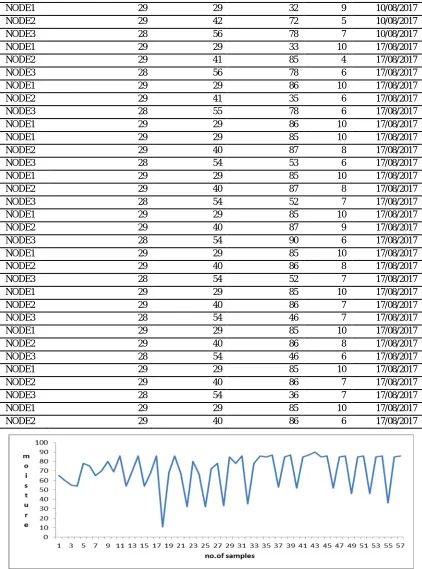
Figure 5 Moisture observation and data analysis
A. F Test Analysis
Applying the F test on Temperature and moisture:
56
©IJRASET (UGC Approved Journal): All Rights are Reserved
TABLE IIF-TEST TWO-SAMPLE FOR VARIANCES
temp and moisture F-Test Two-Sample for Variances
MOISTURE TEMPERATURE
Mean 70.05263158 28.59649123
Variance 356.7650376 0.387844612
Observations 57 57
df 56 56
F 919.8659128
P(F<=f) one-tail 3.73901E-68
F Critical one-tail 1.557933374
B. Similarly regression analysis will be as follows
TABLE IIIREGRESSION STATISTICS
Summary output Regression Statistics Multiple R 0.969523 R Square 0.939974 Adjusted R Square 0.920701 Standard Error 18.08553
Observations 57
ANOVA
df SS MS F Significance F
Regression 2 281709.3 140854.6 430.6346 6.5E-34
Residual 55 17989.74 327.0862
Total 57 299699
IV.CONCLUSIONS
Utilization of natural resources is the important challenge and everyone should contribute to climate-resilient pathways for sustainable development. It is nothing but utilizing the natural resources in an effective way. With this regard we have proposed a system which is based on priority driven approach which proves that in wireless sensor network environment can be a better option for better crop yielding.
V. ACKNOWLEDGMENT
This work is supervised by Prof. (Dr.) Ramesh C.Poonia, Amity University, Rajasthan, Jaipur. Author thanks guide for his continuous guidance and timely help. Author also likes to thank Prof. (Dr.) Deepshikha Bhargava, Director & Head of Institution Amity Institute of Information Technology, Amity University, Rajasthan, Jaipur for her continuous guidance and help & other technical staff of institution too.
REFERENCES
[1] Liu Qianlin, Zhao Dongfeng. "Priority Polling Strategy for Wireless Sensor Networks." IEEE (2009): 4062-4065.
[2] Jerry Wright, Dave Wildung, Terry Nennich (2012). Irrigation Considerations and Soil Moisture Monitoring Tools. University of Minnesota.
[3] J. Anguilar, D.Rogers, I.Kisseka. Irrigation Scheduling Based on Soil Moisture Sensors and Evapotranspiration. Kanas: Kanas State University, 2015.
[4] M.D.Dukes, L.Zotarelli, G.D.Liu, E.H. Simonne (2015). Principles and Practices of Irrigation Management for Vegetables. IFAS University of Florida, 01-15
57
©IJRASET (UGC Approved Journal): All Rights are Reserved and Programme Implementation, 2015.
[6] Manijeh Keshtgari, Amene Deljoo. "A Wireless Sensor Network Solution for Precision Agriculture Based on ZigBee Technology." Scientific Research Publications (January 2012): 25-30