Housing Corporation (Good Practice Grant YH/18/99) and the Department of Trade and Industry. Link to Leeds Beckett Repository record:
http://eprints.leedsbeckett.ac.uk/826/
Document Version: Monograph
The aim of the Leeds Beckett Repository is to provide open access to our research, as required by funder policies and permitted by publishers and copyright law.
The Leeds Beckett repository holds a wide range of publications, each of which has been checked for copyright and the relevant embargo period has been applied by the Research Services team.
We operate on a standard take-down policy. If you are the author or publisher of an output and you would like it removed from the repository, please contact us and we will investigate on a case-by-case basis.
P e r f o r m a n c e S t a n d a r d s
S t N i c h o l a s C o u r t P r o j e c t
F i n a l R e p o r t
R
Ro
ob
be
errtt L
Lo
ow
we
e
M
Ma
allc
co
ollm
m B
Be
ellll
D
Da
avviid
d R
Ro
ob
be
errttss
Ce
Centre for the
Built Environment
Final Report
Robert Lowe, Malcolm Bell & David Roberts
April 2003
This report should be referenced as:
Lowe, R.J., Bell, M. & Roberts, D. (2003) St. Nicholas Court Project: Final Report, Centre for the Built Environment, Leeds Metropolitan University, UK.
The work was supported financially by the Joseph Rowntree Foundation, by the Housing Corporation under Innovation and Good Practice Grant YH/18/99 and by the Department of Trade and Industry under Partners in Innovation Contract 39/3/604.
Cover design by Ian Dickinson, Leeds Metropolitan University. Front cover image courtesy of Phil Bixby, Constructive Individuals.
This project was supported financially by the Joseph Rowntree Foundation, by the Department of Trade and Industry (previously DETR) through the Partners in Innovation Programme (contract 39/3/604), and by the Housing Corporation under Innovation and Good Practice Grant YH/18/99. The project was hosted by the York Housing Association and received support in kind from Wates Construction Limited, Constructive Individuals, Baxi Air Management Ltd, City of York Council
Department of Building Control, the National House-Building Council (NHBC) and the Construction Industry Training Board (CITB).
The support and encouragement of Julie Cowans at JRF, of Ted King and Caroline Cousin now at the Office of the Deputy Prime Minister (ODPM), and of John Collinson at the Housing Corporation are gratefully acknowledged. All Partners in Innovation Programmes are assigned a project officer. This project was fortunate enough to have two – Dr Mervyn Jones, previously of FBE Management and now of David Langdon Consultancy and George Henderson of W.S. Atkins.
Participatory Action Research requires partners. This project would have been impossible without the active involvement of Jenny Brierley, John Gilham and Ron Bailey of York Housing Association, Phil Bixby of Constructive Individuals, Phil Hughes, Graham Cooper, Phil Askin and John Corke of Wates Construction, Robin Dodyk of Oregon Timber, Brian Stace of RWS Partnership, Chris Palmer, Martin Searle and Barry Turner, of Baxi Air Management, John Fowler, Phil Parker and Mike Collins of City of York Building Control and James Haigh of LEDA. Advice on the theory and practice of Participatory Action Research was provided by Dr Lai-fong Chiu of Leeds University and on interviewing technique by Dr Bridgette Rickett of LMU.
Neil Smith of NHBC, Ben Cartwright of CITB, Dr Vic Crisp of BRECSU (now at the Carbon Trust) and the late Martin Rowbotham of Hastoe Housing Association Ltd served on the Project Advisory Group. Roger Stephens of BRE and David Olivier of Energy Advisory Associates, with support from the Design Advice Service,
participated in technical workshops on airtightness and energy efficient dwelling design.
It does not diminish the contribution of any of the above to affirm that the
EXECUTIVE SUMMARY ... V
INTRODUCTION...V
THE PARTNERSHIP...V
SUMMARY OF EPS08...VII
RESEARCH METHODOLOGY...IX
THE DESIGN PROCESS...X
THE DESIGN SOLUTION...XII
COSTS AND COST EFFECTIVENESS...XIII
CONCLUSIONS AND RECOMMENDATIONS...XV
CHAPTER 1 INTRODUCTION...1
CHAPTER 2 RESEARCH METHODOLOGY AND PROJECT IMPLEMENTATION – AN OVERVIEW ...3
2.0 INTRODUCTION...3
2.1 THE CHOICE OF THE ACTION RESEARCH APPROACH...3
2.2 THE PROJECT PROGRAMME...6
2.3 OUTPUTS AND STRANDS OF EVALUATION...7
2.4 DISSEMINATION...9
CHAPTER 3 THE DWELLING ENERGY AND VENTILATION STANDARD ...11
3.1 HISTORY OF THE STANDARD...11
3.2 STRUCTURAL INNOVATIONS IN EPS08. ...12
3.3 ELEMENTAL AND ENVELOPE PERFORMANCE TARGETS IN EPS08 ...13
3.4 MODIFICATIONS TO SAP IN EPS08 ...17
3.5 TREATMENT OF AIR LEAKAGE AND VENTILATION...17
3.6 WINDOW ENERGY RATING AND SOLAR GAINS. ...19
3.7 VENTILATION REQUIREMENTS IN EPS08 ...20
3.8 CRITIQUE OF VENTILATION PROVISIONS...22
3.9 COMPARISON OF PROJECTED ENERGY USE AND CO2 EMISSIONS – ADL95 / ADL02 / EPS08 26 CHAPTER 4 DESIGN SOLUTION AND PREDICTED TECHNICAL PERFORMANCE ...35
4.0 INTRODUCTION...35
4.1 TECHNICAL DESCRIPTION OF DWELLING DESIGNS, INCLUDING CONSTRUCTION, H&V...36
4.2 PREDICTED ENERGY PERFORMANCE OF ST NICHOLAS COURT FINAL HOUSE DESIGN...38
4.3 SCHEME DRAWINGS: ELEVATIONS, FLOOR PLANS, SECTION AND SITE PLAN...40
4.4 ASSUMPTIONS USED IN THE COMPARISON BETWEEN STANDARDS...45
4.5 DISCUSSION OF THERMAL BRIDGING ISSUES...48
4.6 INCORPORATING THERMAL BRIDGING HEAT LOSSES INTO THE DWELLING MEAN U VALUE....48
4.7 HEAT FLOW MODELLING...49
4.8 PREDICTED RESULTS OF COMPARISON OF THREE STANDARDS...49
4.9 OVERALL EFFECT OF INCLUDING THERMAL BRIDGING INTO THE CALCULATION OF U VALUE.52 4.10 PLANE WHOLE ELEMENT U VALUES...53
4.11 IMPORTANCE OF THERMAL BRIDGING...53
4.12 COMPARISON BETWEEN STANDARDS USING LOW-PITCHED COLD ROOF...54
4.13 ANTICIPATED WINDOW PERFORMANCE...57
4.14 REVIEW OF EXPECTED PERFORMANCE OF MEV AND MVHR SYSTEMS...58
5.3 EXTERNAL WALLS...68
5.4 INTERNAL WALLS AND LININGS...69
5.5 ROOF...70
5.6 WINDOWS AND DOORS...71
5.7 SERVICES...71
5.8 COST EFFECTIVENESS...72
5.9 DISCUSSION...75
CHAPTER 6 THE DESIGN PROCESS: DEVELOPING THE SOLUTION ...77
6.0 INTRODUCTION...77
6.1 SCHEME INCEPTION...77
6.2 OUTLINE DESIGN AND DESIGN TEAM ASSEMBLY...79
6.3 RESEARCH TEAM INPUT AND TRAINING...81
6.4 WALL DESIGN...82
6.5 ROOF DESIGN...86
6.6 DESIGN OF BUILT FORM...89
6.7 FLOOR DESIGN...90
6.8 WINDOW DESIGN...91
6.9 AIRTIGHTNESS...91
6.10 HEATING AND VENTILATION SYSTEMS DESIGN...93
6.11 THE BUILDING REGULATIONS SUBMISSION...94
CHAPTER 7 THE DESIGN PROCESS: DEVELOPMENT OF THE DESIGN TEAM ...97
7.0 INTRODUCTION...97
7.1 TEAM MEMBER BACKGROUND...101
7.2 CHANGE IN VIEWS AND ATTITUDES...102
7.3 KNOWLEDGE, SKILLS AND UNDERSTANDING...104
7.4 MANAGING THE DESIGN PROCESS: PARTNERING...107
7.5 RESEARCH TEAM IMPACT...111
CHAPTER 8 REFLECTIONS ON THE DESIGN PROCESS ...113
8.0 INTRODUCTION...113
8.1 THE ROLE OF THE PROTOTYPE STANDARD...113
8.2 THE DESIGN SOLUTION AND TECHNOLOGICAL DEVELOPMENT...114
8.3 RETOOLING THE KNOWLEDGE BASE...118
CHAPTER 9 BUILDING CONTROL ISSUES...121
9.0 INTRODUCTION...121
9.1 FINDINGS FROM FOCUS GROUP, HELD 9TH OCTOBER 2002 ...123
9.2 SOFTWARE TOOLS...124
9.3 THERMAL BRIDGING...126
9.4 PLAUSIBILITY...126
9.5 AIRTIGHTNESS TESTING...128
9.6 VENTILATION...130
9.7 HEATING...131
9.8 STAFFING RESOURCES...132
9.9 WINDOWS...132
9.10 REALISM AND VALIDITY OF THE ‘BUILDING CONTROL EXERCISE’...132
9.11 EDUCATION AND TRAINING...133
9.12 OVERALL PERCEPTION OF EPS08 ...134
10.2 THE ROLE OF THE RESEARCH TEAM...141
10.3 REPLICATION POTENTIAL...142
10.4 DID THE PROJECT CONFORM TO ACCEPTED MODELS OF PAR? ...143
10.5 CONCLUDING REMARKS...143
CHAPTER 11 CONCLUSIONS AND RECOMMENDATIONS ...145
11.0 INTRODUCTION...145
11.1 IMPACTS ON PERFORMANCE...145
11.2 COST EFFECTIVENESS...146
11.3 IMPACTS ON CONSTRUCTION TECHNOLOGY...148
11.4 IMPACTS ON THE DESIGN TEAM AND DESIGN PROCESSES...151
11.5 IMPLICATIONS FOR TRAINING AND PROFESSIONAL DEVELOPMENT...151
11.6 METHODOLOGICAL AND RESEARCH MANAGEMENT CONCLUSIONS...152
11.7 DIRECTIONS FOR FUTURE WORK? ...153
APPENDIX 1 TEMPERATURE DROOP IN UNHEATED UPSTAIRS ROOMS...159
APPENDIX 2 PARAMETRIC DOMESTIC ENERGY MODEL ...163
APPENDIX 3 COMPARISON OF Y VALUES CALCULATED USING THERM WITH VALUES FROM THE WÄRMEBRÜCKEN-ATLAS...165
APPENDIX 4 PARTNERS INTERVIEW QUESTIONNAIRE...169
APPENDIX 5 AIRTIGHTNESS AFTERNOON, 20TH JUNE 2000...177
APPENDIX 6 INNOVATIONS BRIEF...181
APPENDIX 7 MINUTES OF THE DESIGN REVIEW MEETING, 26 OCTOBER 1999 ...185
APPENDIX 8 ARE SPACE HEATING CONTROL PROBLEMS LIKELY TO BE MORE SEVERE IN HIGHLY INSULATED DWELLINGS WITH OVER-SIZED BOILERS? ...201
APPENDIX 9 THERMAL BRIDGING HEAT LOSS CALCULATOR...209
APPENDIX 10 ORIGINAL DESIGN DRAWINGS ...213
APPENDIX 11 CULTURAL DIMENSIONS TO ENERGY USE ...219
Executive Summary
Introduction
The St Nicholas Court Project was set up to explore the implications of an enhanced energy performance standard for new housing for the design, construction and
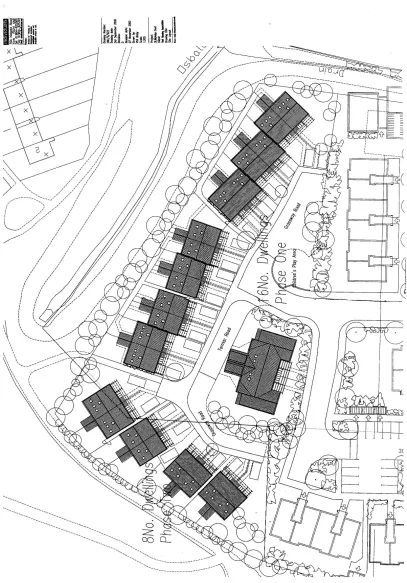
performance of timber framed dwellings. The energy performance standard, EPS08, is modelled on proposals made by the DETR in June 2000 for a possible review of Part L of the Building Regulations in the second half of the present decade. The overall goal of the project was to support the next revision of Part L through an enhanced body of qualitative and quantitative evidence on options and impacts. The seeds of the project were contained in a report – Towards Sustainable Housing -commissioned by Joseph Rowntree Foundation at the start of the last review of this part of the Building Regulations. The project itself has been based on the St Nicholas Court Development which involves the design and construction of a group of 18 low energy and affordable dwellings on a brown field site in York (see site plan below). The research project was established in two stages. Initial funding was provided by the Joseph Rowntree Foundation in the spring of 1999. This ensured the involvement of the research team from the outset of the development process. Additional funding was provided from late 2000 by the Housing Corporation and by the DETR through the Partners in Innovation programme (responsibility for which now lies with the DTI).
The research project was originally divided into five phases – project definition, design, construction, occupation, and communication and dissemination. Delays in site acquisition initially allowed the design phase to be extended, but ultimately forced the abandonment of the construction and occupation phases, and the scaling down of the communication and dissemination phase. Despite the delays, the development itself will now go ahead, with construction starting in mid-2003.
The Partnership
The St Nicholas Court Project was based on a partnership that included all those involved in the design process. The following organisations contributed directly throughout the design phase:
York Housing Association Constructive Individuals RWS Partnership
Wates Construction Ltd Oregon Timber
Summary of EPS08
The St Nicholas Court Project was conceived from the outset as revolving round a clearly defined energy performance standard, used in place of the then current version of Part L (ADL95). The first version of the Energy and Ventilation Performance Standard, written in 1999, was based on an expansion and revision of the proposals for 2005 contained in Towards Sustainable Housing. The opportunity was taken to review the elemental U values that had been proposed in 1998, to provide a much clearer indication of the relationship between three compliance modes - elemental, target or mean U value and carbon index and to define, more precisely and
procedurally, in terms of the raft of CEN standards that had by then emerged, what was meant by U value. The opportunity was also taken to begin to explore approaches for integrating other contemporary developments – such as the BFRC window energy rating system – into the standard, and to outline a possible format for the ventilation provisions of Part F which would be consistent with the proposals for Part L. The elemental requirements of EPS08 are presented in Table 0.1 below:
Table 0.1: EPS08 elemental performance requirements
exposed walls 0.25 W/m2K
roofs 0.16 W/m2K
floors 0.22 W/m2K
windows, outer doors & rooflights
(no more than 25% of gross floor area) 1.3 W/m
2K
(or window energy rating ³ 70)
air permeability at 50 Pa 5 m/h
maximum carbon intensity for space
and water heating 70 kg/GJ
U values in the above table are defined as whole element values. They include contributions to total heat loss from all linear thermal bridges. U values calculated on this basis are more difficult to achieve than those calculated according to procedures laid out in the current Part L Approved Document. Crudely, a wall with a U value of 0.25 W/m2K calculated according to EPS08 requires 10-15% more thermal insulation than one calculated according to ADL02. The precise amount depends on the care taken to reduce thermal bridging, both within the wall, and at junctions between it and other elements of the building thermal envelope.
The predicted impact of these elemental performance requirements on CO2 emissions
Figure 0.2: Comparisons of carbon emissions under ADL95, ADL02 and EPS08, for an 80m2 gas heated semi-detached dwelling.
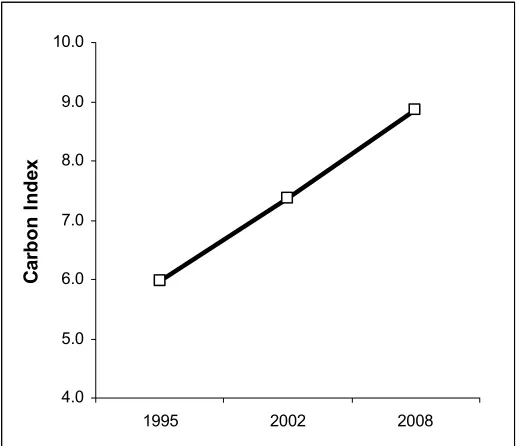
Figure 0.3: Comparisons of carbon index under ADL95, ADL02 and EPS08, for an 80m2 gas heated semi-detached dwelling.
In brief, EPS08 is expected to reduce CO2 emissions and gas consumption for a
typical 80 m2 semi-detached dwelling by approximately one third compared with ADL02 and by more than one half compared with ADL95. At this level of
performance, annual energy requirement for domestic hot water is greater than for space heating.
0.0 1.0 2.0 3.0
1995 2002 2008
C
O
2 em
issi
o
n
s t
/a
Space heating Water heating Total CO2
4.0 5.0 6.0 7.0 8.0 9.0 10.0
1995 2002 2008
C
ar
bon I
nde
[image:14.595.168.430.374.597.2]Research methodology
The research project was conducted using an action research approach. The appeal of action research stemmed, to paraphrase Greenwood et al (1993), from the fact that it: · addresses real-life problems;
· is change-oriented;
· emphasises a participatory approach in which participants and researchers generate knowledge and understanding through collaborative processes in which all participant’s contributions are valued;
· is an eclectic approach that embraces ideas, knowledge and theory from any source that is able to contribute to the goal of addressing the research problem; · does not insist on classical experimental methods as the only way of establishing
truth, particularly in the social domain;
· maintains the validity of meanings negotiated by free agents in the course of undertaking and reflecting upon a shared task.
This approach worked well with the partnering approach to design and construction, which was laid down as a requirement, from the outset, in York Housing
Association’s Innovations Brief (Gilham 1999). This in turn drew on the Egan Report,
Rethinking Construction (Construction Industry Task force 1998). The key features of the research process were:
· the acceptance by all partners of the performance standard EPS08, which defined the performance target to which the dwellings and their sub-systems were
ultimately designed.
· reflection on and evaluation of the design process and the performance standard throughout the design process and through a series of group and individual interviews conducted by the research team.
The research team participated throughout the design process and provided technical support to the design team though a series of workshops, informal meetings,
demonstrations, email exchanges and working papers. Wherever possible, exchanges between partners were minuted and minutes circulated to support processes of
individual and collective reflection. In many cases, meetings were tape-recorded and, in a small number of cases, video recorded to provide additional material for
York Housing Association’s decision to adopt the partnering approach was perhaps the most important determinant of the design process. As a result of this decision, up-stream suppliers – in particular Oregon and Baxi - were involved from the start of the design process. Within the design team, the primary role of the architect was
information broker. Within this structure, the prototype standard provided a very clear focus for the design process and was used, in place of ADL95, continuously to assess emerging design solutions. The research team acted partly as the guardian of the standard and partly as a facilitator of training and provider of technical support. The atmosphere within the design team was characterised by open debate and a positive attitude to the achievement of the standard. This atmosphere was the result of clarity of purpose, reinforced by the client, and the partnering approach.
Early design discussions focused on conceptual reorientation as the design team grappled with the changes required by the new standard. Thermal bridging,
airtightness and the need for a whole house ventilation system were key areas to be addressed. Initial attempts at solutions for the dwelling envelope tended to seek the achievement of the required U values using conventional approaches that did not take account of thermal bridging and with little appreciation of the implications for
airtightness. This was to be expected and these early attempts provided an essential starting point for raising awareness of the practical significance of the issues. The conceptual principles involved were grasped very quickly - in the case of the wall design bridging through the studs and at openings and junctions was illustrated at a single meeting, leading to a rapid redesign. The resulting solution, an 89 mm stud externally insulated frame, remained largely unchanged through subsequent design iterations. Airtightness was addressed in a general way by raising awareness of the importance of continuity of the primary air barrier, and of the need to minimise service penetrations. Practical impacts of this on the design included the choice of roof construction, the decision to use a combi-boiler, the incorporation of a polythene vapour barrier in the wall construction and the provision of a service-space between it and the plasterboard.
Considerable effort was centred on the design of the roof. Initially, a low pitch, trussed rafter roof with insulation at ceiling level was designed. This was challenged both by the research team and ventilation designer/supplier and an I-beam warm roof was proposed. Despite an acceptance that such a solution was technically superior and provided an opportunity for additional living space, it was rejected on cost grounds. Considerable effort was then put into making the trussed rafter solution work, a process that promised to produce some complicated details. The delay in the project programme coupled with the client’s desire to realise the benefits of additional habitable volume resulted in a review of this decision and the adoption of the warm roof design.
falling costs are likely to make this an increasingly common choice for timber frame construction.
The proposed airtightness standard requires the adoption of a continuous whole house ventilation system. Early hopes that the levels of insulation envisaged by EPS08 would enable heating and ventilation systems to be combined proved infeasible and separate systems were designed. However improved insulation enabled a reduction in the size of heating systems, particularly in dwellings ventilated using MVHR where the omission of bedroom radiators was considered to be a viable option.
The training support facilitated by the research team ranged from formal seminars and workshop discussions to the provision of feedback as design solutions emerged. The two approaches proved to be complimentary with the seminars covering a wide range of principles that were reinforced by discussion during design development. Although it would be prohibitively expensive to replicate this approach in full, there are lessons that can be learned. As far as possible, training programmes should be participatory and based on “real” cases with design and feedback cycles built into the process. The role of building control staff as a dissemination tool should be exploited much more than in the past, backed up by investment in building control training, again, based on a participatory approach.
The proposed requirements for the comprehensive treatment of thermal bridging require efficient mechanisms for accounting for thermal bridges. In this project the calculations were done by the research team and the resulting values provided to the design team through a modified SAP spreadsheet. This was designed to simulate an approach based on a catalogue of pre-calculated values or on certified values provided by suppliers for standard construction details. This approach demonstrated
It appears that the design that emerged from this process will meet the U value and airtightness requirements of the EPS08 performance standard with relatively minor modifications. The specifications of the main elements of the dwellings are:
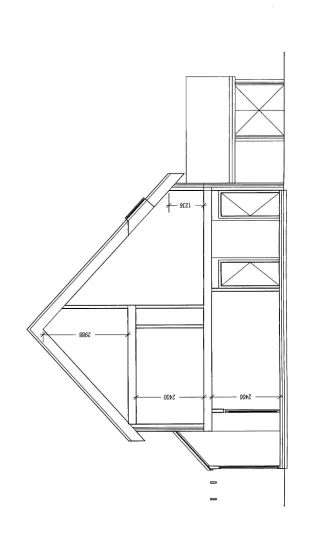
Wall construction: The construction of the proposed St Nicholas Court dwellings is shown in Figure 0.4. The most obvious change is to the wall construction, which is to consist of conventional 89mm studwork clad externally with 40 mm of rigid
polyurethane insulation. This construction:
· significantly reduces thermal bridging through studwork and at junctions · makes the overall thermal performance less sensitive to detailed design of the
timber frame
· achieves the required whole wall U value of approximately 0.25 W/m2K.
An alternative construction using timber I beams in place of conventional studwork was considered, but was rejected mainly on grounds of practicality and lack of familiarity on the part of the timber frame supplier. Cost was an important secondary factor in this decision.
Roof construction: Two roof constructions were developed for the scheme – a cold roof variant using a conventional timber truss structure and a warm roof variant using an I-beam structure with 200 mm of insulant (mineral or cellulose fibre). The costing exercise also explored the option of a warm roof design using conventional 150mm rafters, over-clad with approximately 50 mm of rigid insulation board. This option was found to be more expensive than the I-beam option.
Ground floor construction: The U value requirement for the ground floor is to be met through a modest increase in insulation thickness coupled with improved edge detailing. The method chosen is beam-and-block construction, insulated with approximately 60 mm of polyurethane insulation. Incremental reductions in ground floor U value can be achieved, without qualitative changes in construction, by increasing the thickness of the insulation board.
Windows: Windows are to be double glazed in softwood timber frames from a UK supplier. Sealed units are to incorporate a high performance low emissivity coating and argon filled gas space. Currently it is not intended to use insulating glazing spacers. The resulting window U value is estimated to be in excess of 1.6 W/m2K – failing to meet the elemental requirement of EPS08 and falling just outside the
acceptable range for trade-off. Clearly further design iterations will need to be carried out with the manufacture to seek to achieve the required values. Work with a second, European manufacturer, undertaken as part of the companion Brookside Farm project, has led to the development of a specification for a double glazed window in a
Costs and cost effectiveness
The termination of the research project at the end of the design phase has restricted the cost assessment to design estimates. The lack of actual construction costs means that conclusions in this area must remain tentative. The cost increase stems from 5 areas - ground floor, walls, roof, windows & doors and services.
In the 3 bed 5 person dwelling (warm roof - as designed), the change in standard from 1995 to 2002 adds just over £1,470 to cost. The step from 2002 to EPS08 adds a further sum, either £1,130 or £1,900 depending on whether the cost of the internal service-space is taken into account1. In percentage terms, the 2002 standard adds some 2.6% to construction cost. EPS08 adds a further 1.9% if the cost of the service space is not counted, rising to 3.3% if it is.
Annual energy cost savings of just under £70 were calculated for the shift from 1995 to 2002 and a further £50 from 2002 to 2008. If the value of the carbon saved is added, the figures increase to £93 and £67 respectively. Simple pay back times (based on energy cost savings) are:
1995 ® 2002 22 years
2002 ® EPS08 23 years (excluding cost of services space) to 39 years
The discount rate currently recommended for long term investment in such areas as building regulations is 3%. The economic benefit of moving to EPS08 from ADL02, expressed as an average annual equivalent saving over a 60 year life, and including the value of carbon saved, ranges from +£26 to -£2, depending on whether the cost of the service space is included or not. The former case comfortably passes the economic test and the latter is on the margin.
Our general observations and analysis of costs in this project lead us to the conclusion that the uncertainties that exist during the design phase of any project are likely to impact much more on estimates of cost for novel constructions and untried standards of performance than on those that are well tried and tested. This leads to the general conclusion that the costs of achieving improved standards are likely to be over
estimated. Empirical evidence for this is provided by the trajectory of over-cost for an I-beam warm roof, which fell from an initial value of approximately £2,000 per dwelling reduced to something close to zero as the design was firmed up and more definitive cost estimates were obtained. This tendency to over-estimate in the face of uncertainty is understandable, but unless it is allowed for, it may have the unfortunate effect of inhibiting the development of both housing energy standards and the
Principal conclusions and recommendations
The wide-ranging discussion contained in the full report is summarised here, with key recommendations emphasised.
(i) It appears that with the exception of windows, the envelope requirements of EPS08 are relatively straightforward to meet in timber-framed housing. The standard appears to be economic when tested against current Treasury guidelines, provided that account is taken of the value of carbon saved by the improved standard.
(ii) With the support of the research team, the design team found the thermal bridging and airtightness requirements of the standard conceptually straightforward. However few, if any, of the design team or York Building Control achieved
familiarity with the quantification of thermal bridging. This suggests that a
prescriptive standard, based on the current Robust Details approach, would be an important part of the implementation of EPS08 or similar standards. There is a need to extend Robust Details to include numerical information on thermal bridging, and a need to ensure that this information is interfaced to a modified version of SAP.
(iii) The approach taken by the project to training appears to have been effective. The key features were a workshop-based approach, with use of graphical techniques and on-site demonstrations, in the context of real design problems. Training was facilitated by the partnering approach. Training of this nature is needed throughout the supply chain and in organisations responsible for building control.
(iv) Absence of reliable information on air leakage led to uncertainty in a number of areas – e.g. as to whether a services void on the inside of the timber frame would be needed to achieve the air leakage target of 5 m/h at 50 Pa. The introduction of mandatory pressurisation testing of a proportion of new dwellings may be the most effective way to ensure the rapid diffusion of knowledge about air tightness and the rapid generation of a large database of experience on both effective and ineffective design and construction solutions.
the UK context. More work is needed to commercialise a wider range of continuous ventilation systems, particularly single point extraction systems (MEV) and balanced heat recovery ventilation (MVHR).
(vii) There is a powerful case for requiring, from 2005, the use of condensing boilers wherever gas is used for heating. However, the thermal performance of the
condensing boiler has essentially reached its physical limit. There is therefore a pressing need to define and commercialise a range of successor technologies to the condensing boiler. These are likely to include some or all of (micro-) CHP, fuel cells, district heating and heat pumps supplemented with solar hot water heating. It is clear from our work both at St Nicholas Court and at Brookside Farm that the integration of any of these technologies into the UK construction industry will be a major, probably decade-long, task.
(viii) Innovation in the construction industry requires empirical information on actual in-use performance, if it is to achieve the objectives of raising building performance and reducing environmental impact. There is therefore a need for measurement programmes capable of detecting long-term trends in energy use in the whole stock, and in the performance of new homes. This would require performance data from significant numbers of existing and new dwellings, based on stratified random samples and measured on a rolling, cohort-by-cohort basis.
(ix) The St Nicholas Court project has helped us to identify a number of areas of technology in which the UK lags behind developments elsewhere. These include condensing boilers, high performance windows and construction systems. We suspect that a significant contribution to this situation was made by the view, which prevailed through the 1980s and much of the 1990s, that regulation is a burden on industry. It appears that under certain conditions the opposite may be the case, and that a challenging regulatory environment can become a stimulus to innovation.
Chapter 1 Introduction
The purpose of this report is to document the methods, results and conclusions of the St Nicholas Court Project. The overall aim of the project was to make it possible to expand the range of options considered in the next review of Part L of the Building Regulations, by providing a comprehensive evaluation of the impact of an enhanced energy performance standard (Lowe & Bell, 1998a) on a real housing development. The standard itself was first outlined in 1998 by Lowe and Bell in Towards
Sustainable Housing: Building Regulation for the 21st Century - a report commissioned by Joseph Rowntree Foundation (Lowe & Bell, 1998b).
The St Nicholas Court Project emerged from a series of discussions between Leeds Metropolitan University, Julie Cowans of the Joseph Rowntree Foundation and Jenny Brierley and John Gilham of York Housing Association in the middle of 1998. York Housing Association had at this stage decided to build approximately twenty low energy and affordable dwellings on a brown-field site in York. It quickly became apparent that this project offered an opportunity to evaluate proposals in Towards Sustainable Housing for an enhanced energy performance standard for new housing. The project architect, Phil Bixby, was appointed at the beginning of 1999. Initial discussions involving Bixby and Lowe and Bell from LMU took place early in 1999. The decision to build the St Nicholas Court dwellings in timber was taken at this stage. Initial funding for the research project was secured from Joseph Rowntree Foundation in the spring of 1999. The Project Definition Phase involving discussions with the design team began in earnest in May of 1999. An initial bid for Partners in Innovation funding based on the proposed development was made in September 1999 and a full bid was made in January 2000.
The design process, conducted through a series of meetings and supported by
workshops, occupied the eighteen months from the beginning of 2000 to the middle of 2001. This was the most intensive period of activity in the life of the Project. This period was prolonged by delays in the acquisition of the site for the development. These delays, which began early in 2001, were initially used as an opportunity for further exploration of issues thrown up earlier in the design phase and ultimately for a complete redesign of the dwellings. This unexpected iteration significantly enriched the understanding that emerged from the design phase but ultimately made it
necessary to abandon the original aim of tracking the construction phase and evaluating the performance of the dwellings in use. The decision to truncate the research project was taken, with regret, early in 2002.
Chapter 2 Research methodology and project
implementation – an overview
2.0 Introduction
The objective of this chapter is to provide an overview of the methodology of the St Nicholas Court Project. Detailed descriptions of methods used in particular phases of the project will be presented in other chapters.
Any discussion of methodology has to begin with a clearly defined research problem. The fundamental research problem for the St Nicholas Court Project was to evaluate an improved energy performance standard for new UK housing by applying it to a real development project.
Any proposal to implement an improved energy performance standard in the domestic sector faces a number of obstacles. It is necessary to demonstrate to the house
construction industry and to Government that the costs of the proposed standard are proportionate to the social and environmental objectives; that the standard can be understood and implemented at all levels in the construction industry; that buildability problems could be overcome; and that implementation is unlikely to lead to a
significant net increase in the incidence of building failures. It is necessary to
understand the training and professional development needs of actors throughout the house construction industry, and of the building control community. Finally, it is essential to demonstrate that occupants like dwellings built to such standards, and that health, comfort and safety are not compromised.
As noted in Chapter 1, the St Nicholas Court Project aimed to address all of these issues. The Project Team, adopting an Action Research approach, set out to develop an intimate understanding of the attitudes of the major stakeholders in the
procurement process and the way in which these attitudes developed and changed with exposure to the sorts of technical standards proposed, in the context of a real housing scheme.
2.1 The choice of the Action Research approach
groups” in developing countries (Elden & Chisholm 1993, see also Grundy 1988). The classic examples of the former are the work of Whyte, Greenwood and others on the development of manufacturing at the Xerox Corporation, and the work of Whyte, Greenwood, Gonzalez and others with the Mondragon industrial co-operatives. Both are summarised in Greenwood et al (1993). Classic examples of the latter are
provided by the work of Freire (1985). Clearly, the St Nicholas Court Project sits at the former end of this spectrum.
The appeal of action research in the present context stemmed, to paraphrase Greenwood et al (1993), from the fact:
· that it addresses real-life problems;
· that it is change-oriented;
· that it emphasises a participatory approach in which participants and researchers generate knowledge and understanding through collaborative processes in which all participant’s contributions are valued;
· that it is an eclectic approach that embraces ideas, knowledge and theory from any source that is able to contribute to the goal of addressing the research problem;
· that it does not insist on classical experimental methods as the only way of establishing truth, particularly in the social domain;
· that it maintains the validity of meanings negotiated by free agents in the course of undertaking and reflecting upon a shared task.
Specifically, the approach appeared to be consistent with the partnering approach to procurement that was laid down as a requirement from the outset of the process in York Housing Association’s Innovations Brief (Gilham 1999), which in turn drew directly on Rethinking Construction (Construction Industry Task force 1998). Finally, the approach appeared to be the only possible way:
· of enabling stakeholders in the procurement process to develop considered views on the impact of an enhanced energy performance standard, through the process of designing and building dwellings to that standard;
· of providing a framework and a process through which the development of those views could be documented and evaluated;
· of allowing the research team to participate in and provide technical support throughout the design phase (and, had it taken place, the construction phase) thus ensuring that the other members of the team would not simply be left to sink or swim as they came to terms with the enhanced energy performance standard3.
3 An informal undertaking, using precisely this form of words, was given by Lowe and Bell to the other
This last point in our view is crucial. The construction industry has to negotiate changes in the building regulations approximately every 5 years. Such changes are normally negotiated publicly over a period of 2 or 3 years, are presaged by
consultation documents and draft approved documents and are underpinned by a wealth of supporting material provided by BRE, BRECSU, CITB, NHBC and others to ensure that, by and large, disasters are avoided. In the case of the 2002 revision to Part L, the industry has had a period of approaching 4 years to adjust to the new requirements4. For the St Nicholas Court partners in the context of EPS08 (a detailed description of which appears in Chapter 3), none of this has been true. To have attempted to implement a non-participatory research approach - insisting on clear distinctions between researchers and researched - would have led, in our view to any or all of:
· unacceptably high risk of technical failure;
· unrealistically high costs;
· defensive and sub-optimal designs; and
· unremittingly negative views from many of those involved on the difficulties imposed by the proposed standard.
Technical support was delivered through a series of workshops, informal meetings, demonstrations, email exchanges and working papers. Wherever possible, such exchanges were minuted and minutes circulated to support processes of individual and collective reflection. In many cases, meetings were tape-recorded and, in a small number of cases, video recorded to provide additional material for subsequent reflection. Although the research team proposed workshops in most cases, the
ultimate decision to hold a major workshop on any particular subject was taken by the team as a whole. The whole process of design was managed and punctuated by a series of Design Team meetings, involving essentially all those with a professional interest in design and construction of the St Nicholas Court project: client, architect, main contractor, up-stream suppliers, building services engineer. These meetings were business-like, multi-disciplinary and non-hierarchical and were generally
characterised by vigorous and respectful exchanges. Meetings involving smaller sub-groups were held between Design Team meetings, normally at the request of
The St Nicholas Court Project was divided from the outset into five main phases, each of which contained a series of sub-tasks. These are set out, with their original timings, as follows:
1. Project definition phase – May 1999 to October 1999
Drafting and review of enhanced energy performance standard (covering parts L, J and F of building regulations).
2. Design phase –September 1999 to February 2000
Qualitative evaluation of process based on recordings of Design Team meetings, focus group interview with Design Team, supplemented by individual interviews with planning and building control officers.
Preliminary cost analysis of dwellings to EPS08 standard and to 1995 and proposed 2000 Building Regulations.
Qualitative analysis of previous schemes built by YHA to determine major changes in practice.
Technical support for design process, including seminars on airtightness and pressurisation testing, heating and ventilation systems for low energy houses, techniques for minimisation of thermal bridging.
Submission of final designs for Building Control approval, evaluation of Building Control process.
3. Construction phase - March 2000 to December 2000 4. Occupation phase – January 2001 to May 2002
5. Communication and dissemination phase – January 2001 to November 2002 For the reasons discussed in the introduction, the design phase of the project has been significantly extended and the construction and occupation phases have been aborted. As will be discussed later, the original intention to include construction and
occupation in the research project were essential in two key respects:
· to secure the full co-operation of four companies and the personal commitment of more than a dozen busy professionals; and
· as a guarantee of the validity of the results of the project, the fact that participants were committed to build St Nicholas Court as a commercial project provided a powerful incentive for honesty and frankness throughout the design process. (The pragmatist philosopher, Dewey, refers to insights derived through research in such real-world situations as “warranted assertions”).
construction phases appeared to us to be essential to the success of the research project.
Despite the loss of the latter phases of the project, the prolongation of the design phase has provided significant added value in allowing one major redesign of the dwellings to be undertaken, incorporating the insights gained from evaluation of the initial design.
2.3 Outputs and strands of evaluation
The principal outputs from the project are a comprehensive evaluation of the impacts of enhanced domestic energy performance standards on all participants in the design and building control process. These include the client, architect, contractor, team, principal up-stream suppliers and building control officers. Context for this evaluation is provided by detailed assessments of the costs and predicted energy performance of the dwellings.
The results of this work will provide the DETR and the housing industry with guidance in the following areas:
1. The expected additional costs involved in achieving enhanced energy and environmental performance, and the extent to which they may be contained by: rationalisation of construction techniques; management and procurement processes; and overall dwelling design, within the constraints of prevailing construction techniques and aesthetic values.
2. Predicted energy performance of dwellings constructed to the requirements of the enhanced standards.
3. The development of attitudes to the substantive and procedural aspects of the enhanced standards among building designers, the construction workforce,
planning and building control officers and within the housing association, over the life of the project.
Evaluation has been both quantitative and qualitative. Qualitative evaluation has been based on participant observation, focus groups and individual interviews. Quantitative evaluation has been based on predictions of cost and energy performance. The
principal issues for evaluation are the predicted costs of achieving the enhanced energy performance standard, the costs of achieving it and the impact of the proposed standards on all participants in the design process. The following bulleted paragraphs describe the main areas of investigation and associated methods in more detail:
predicted changes in elemental U values, extent of thermal bridging, design responses to airtightness requirements, measures to ensure indoor air quality and measures to reduce the capital costs of heating and ventilation systems. This analysis has been undertaken using a SAP-based energy calculation tool to estimate energy and CO2 emissions from the completed dwellings, finite element
simulation to estimate elemental U values and use of the admittance method to predict impacts on thermal comfort.
· Economic impact - the economic costs of the changes incorporated in the proposed standards, including the possible ameliorating effects of technical rationalisation and process improvement, have been assessed using conventional quantity surveying methods based on data from the design of the field trial
dwellings and from previous housing schemes with which the team were familiar. The economic costing exercise has been supplemented by an analysis of the reductions in carbon dioxide emissions that we predict will be achieved by the standard. This in turn has enabled us to estimate the economic cost of carbon saved by the standard and to compare this with current estimates of the wider economic cost of carbon emissions.
· Impact of enhanced standards on the Design Team – This has been investigated through participant observation of the design and procurement process, which has enabled direct observation of both the process of adaptation of construction methods and detailed design and the process of the Design Team’s adaptation of their models and theories of dwelling energy performance. Raw data from this process has been collected through tape recordings, written notes and minutes of Design Team meetings and workshops and through individual and focus group interviews with Design Team members. Interviews have been conducted
throughout the design phase of the project. The purpose of these interviews was to establish and document the reasoning behind particular technical decisions and to gain insight into the development of the views of the Design Team on the
proposed regulatory framework and its implications for design and construction. An important practical outcome of qualitative work with this group and other participants has been the identification of training and professional development requirements that would be likely to arise from the adoption of the proposed standards.
· Impact on Building Control - The impact of the proposed regulatory framework on Building Control has been tested by having the Building Control Department of York City Council assess the development for compliance under the proposed standards. This exercise has been supported and shadowed by the Project Team and monitored through interviews with Building Control Officers responsible. It has required the Project Team to document the enhanced standards to the
2.4 Dissemination
Dissemination was an integral part of the original work plan. The results of this project have been disseminated through interim reports and through the CeBE website: http://www.lmu.ac.uk/cebe/projects/energy.htm.
Chapter 3 The dwelling energy and ventilation
standard
3.1 History of the standard
The origins of the St Nicholas Court Project go back a study of options for the end-of-millennium review of Part L of the Building Regulations undertaken by LMU for Joseph Rowntree Foundation in 1997, at the outset of the most recent review of Part L of the Building Regulations6. This work, published as Towards Sustainable Housing: Building Regulation for the 21st Century (Lowe & Bell 1998b) included outline proposals for the development of Part L in two stages. The first, intended for possible introduction in 2000, aimed to achieve a reduction in excess of 60% in carbon
emissions from space heating in a typical UK dwelling. The second was aimed at a subsequent review of Part L in or around 2005. This aimed to achieve a reduction in excess of 80% in carbon emissions from space heating. The relationship between the requirements of the 1995 Part L and what were subsequently referred to as the 2000 and 2005 standards is illustrated below in Figure 3.1.
Figure 3.1: Relationship of CO2 emissions for space heating from reviews of Part L.
As noted in the previous chapter, the methodology of the St Nicholas Court Project was conceived from the outset as revolving round a clearly defined energy
0 500 1000 1500 2000 2500
1990 1995 2000 2005 2010 2015 kg/a
base case
proposed in 1998, to provide a much clearer indication of the relationship between three compliance modes - elemental, target or mean U value and carbon index - and to define more precisely and procedurally, in terms of the raft of CEN standards that had by then emerged, what was meant by U value. The opportunity was also taken to begin to explore approaches for integrating other contemporary developments – such as the BFRC window energy rating system – into the standard, and to outline a possible format for the ventilation provisions of Part F which would be consistent with the proposals for Part L.
The following year, 2000, saw the publication by the DETR of a Consultation Paper on its proposals for amending Part L. This document included a section on possible future amendments of the energy efficiency provisions – a step that had been strongly recommended in Towards Sustainable Housing and that had found a measure of support in the 1998 public consultation process on Part L. These proposals, summarised below, were with the exception of the requirements for window performance, close to those presented by the Centre for Built Environment. A
decision was therefore taken in March 2000, in consultation with the DETR, to adopt the opaque elemental U values and air leakage limit proposed in the Consultation Document for the St Nicholas Court Project. The amended energy performance standard was published as Dwelling Energy Performance Standards for 2008: Prototype standards for energy and ventilation performance (Lowe & Bell 2001a)7. This document is also on the CeBE website.
Table 3.1: Summary of indicative long term fabric performance standards for Part L. (DETR 2000:180)
roof 0.16 W/m2K
external walls 0.25 W/m2K
ground floors 0.22 W/m2K
windows, doors and rooflights 1.8 W/m2K
air leakage at 50 Pa 5 m/h
3.2 Structural innovations in EPS08.
As noted above, the main objectives of EPS08 were:
· to define a level of energy performance capable of achieving significant reductions in CO2 emissions, and which was consistent with the thinking on possible future
amendments of Part L set out in the 2000 Consultation Document;
· to explore possibilities for simplification of the structure of Part L;
· to explore the implications of developments such as the BFRC Window Energy Rating System for Part L.
7 This in turn was abbreviated to EPS08. This title reflected the fact that the review of Part L, that had
The two main structural innovations in EPS08 concern the relationships between the three numerical compliance modes – elemental, target U value and carbon index. In the first of these innovations, compliance under the elemental and target U value modes requires the dwelling’s heating system(s) to achieve a minimum level of performance. This is expressed in the form of a maximum annual mean carbon intensity for space and water heating. The advantages of this form are that it:
· treats all heating systems in an identical manner – there is no need for the
regulations to make specific reference refer to gas, oil, electric or any other class of heating system;
· encompasses future categories of heating system – for example, heat pumps – without further modification;
· extends the scope of the elemental compliance mode – in ADL02 this cannot be used with electric heating systems;
· provides a clearly defined incentive for the development of low carbon heating systems8.
The simplest approach to implementing the carbon intensity concept would be through modifications and extensions to the SEDBUK system for domestic boilers. The second structural change is to move all trade-offs other than those between elements within the target U value mode, into the carbon index compliance mode. Thus, trade-offs between heating system, ventilation system and envelope
performance are evaluated using a single comprehensive SAP-based energy
calculation tool. This simplifies the elemental and target U value modes and makes it easier to ensure consistency between the requirements of all three numerical
compliance modes.
3.3 Elemental and envelope performance targets in EPS08
cf = S Ai .Ui + S lj .Yj (W/K)
where:
Ui represent heat losses averaged over plane elements of the building
Yj represent linear thermal bridges that have not been included in Ui
cf is the fabric heat loss coefficient, including all linear thermal bridges
The point here is that the choice of where we account for any particular linear thermal bridge or class of thermal bridges is arbitrary. The options include:
· accounting for all thermal bridges in the S lj .Yj sum;
· accounting only for junctions between construction elements in the S lj .Yj sum;
· rolling all linear thermal bridges into the U values and omitting the S lj .Yj sum
completely - in this formulation, all U values become “whole element U values”. The advantage of expressing regulatory constraints on envelope performance in terms of whole element U values, is that the concept is likely to appear familiar to most members of the UK construction community, who will be therefore feel able to relate proposals for future U values to their past experience. This advantage can, however, also be a disadvantage. Because whole element U values represent and emerge from a more rigorous approach to the problem of defining building heat loss than the industry has hitherto been used to, an intuitive understanding of the practical implications of, say, a whole wall U value of 0.25, may well be misleading.
At a conceptual level, the notion of elemental U values is complicated by the fact that major linear thermal transmission components relate to the junctions between
different types of element – from junctions between wall and roof, wall and ground floor, wall and window, external wall and party wall. While it is straightforward to partition linear thermal transmission values between adjacent elements using standard 2-D tools such as THERM, the Y values for such junctions are actually shared
properties of the adjacent elements. Changing the construction on one side of the junction changes both the Y value for the whole junction, and the contributions to the
Y value from each side of the junction. The accounting process wants to deal with separate contributions to fabric heat loss from separate construction elements, but the underlying physics wants to treat the whole envelope as a single continuous entity. One possible response to the perceived artificiality of whole element U values is to express regulatory constraints on envelope performance in terms of the fabric heat loss coefficient, cf - or, and this amounts to the same thing, the mean U value. The
relationship between these two concepts is:
Umean = cf / S A
10 For completeness, we should also include point thermal transmittances, Sa
k in the above. In
In this formulation, Umean is the U value, including all linear thermal bridges,
averaged over the whole surface area of the building, S A (which, by convention, we measure over the inside surface of the thermal envelope). Part L of the Building Regulations currently requires Umean to be less than the target U value. This in turn is
calculated straightforwardly from the elemental U values, and assumptions about dwelling geometry and glazing ratio11. The problem with the target U value approach from the viewpoint of a discussion of possible future standards, is that the target U value is not a single value, but a variable that depends on dwelling form. Moreover, the calculation of target U value involves notional elemental U values.
In drafting EPS08, we took the view that, for all their problems, whole element U values are a helpful way of sub-dividing and thinking about building heat loss. The same view appears to have been taken by the DETR. The maximum whole element U values in EPS08 are shown in Table 3.2:
Table 3.2: EPS08 maximum elemental U values and leakage rate.
exposed walls 0.25
roofs 0.16
floors 0.22
windows, outer doors & rooflights
(no more than 25% of gross floor area) 1.3(or window energy rating ³ 70)
air permeability at 50 Pa 5 m/h
The only departure here from the proposals contained in the 2000 Consultation Document is in the treatment of windows and doors. The authors took the view that the DETR’s proposed U value of 1.8 did not take sufficient account of developments in window technology over the last twenty years, or of the profound impact of high performance windows on comfort, energy use and the design of heating and
ventilating systems. The value of 1.3 W/m2K was selected as being achievable, with care, with well-designed double-glazed windows, while being relatively easy to achieve with triple-glazed windows. The former would require high performance low-emissivity coatings, argon or krypton-filled gas spaces and warm-edge technology in well-designed window frames12. The inclusion of window energy rating as an
alternative to specification of window U values provides designers with the option of trading off heat loss against solar gain, both at the level of the window and, through the carbon rating method, at the level of the whole dwelling. The latter option is dealt with at greater length in section 3.6 below.
ADL02 and EPS08 are illustrated in Figures 3.2 and 3.3 below. The dotted lines show the relationships between the numerical values of the limiting U values, with no account taken for different treatments of thermal bridging. The logarithmic axis in Figure 3.3 makes it easier to compare the proportional changes involved.
Figures 3.2 Comparisons of limiting elemental U values in ADL95, ADL02 and EPS08, including the effects of linear thermal bridging (the dotted lines exclude these effects).
Figure 3.3 Comparisons of limiting elemental U values in ADL95, ADL02 and EPS08, including the effects of linear thermal bridging(the dotted lines exclude these
0.0 0.2 0.4 0.6 0.8 1.0
1995 2002 2008
o p aq u e e lem e n ts ( W /m 2K ) 0 1 2 3 4 w ind ow s & do or s ( W /m 2 K ) roof ground floor wall windows & doors 0.1 1.0
1995 2002 2008
op a q u e el e m ent s ( W /m 2K ) 1 10 w ind ow s & d o o rs ( W /m 2 K ) roof ground floor wall
effects). The logarithmic scale means that equal proportional changes correspond to equal vertical displacements.
The final point to note in this section is the constraint on envelope air leakage. The original proposal in Towards Sustainable Housing was for a maximum value of 3 m/h at 50 Pa. Following discussions with the DETR, this was changed to 5 m/h at 50 Pa to bring it in to line with the Consultation Document. EPS08 defines leakage rate in terms of the total envelope area of the dwelling, including “those elements shared with adjacent dwellings (party walls, and floors between separate dwellings)”, an approach subsequently adopted by CEN (EN 13829:2000).
For most dwellings, this represents a relaxation of the standard originally proposed. The assumption in EPS08 is that compliance would be confirmed by testing a
proportion – perhaps 10% - of dwellings constructed in each separate development. A more detailed discussion of possible approaches to mandatory pressurisation testing is contained in Lowe et al. (2000). One of the implications of a mandatory standard discussed in that paper is that the mean air leakage rate of all new dwellings will be significantly below the regulatory maximum – by how much, depends on the failure rate that the construction industry decides to accept. This in turn depends both on the rate at which knowledge about the means for achieving air tightness diffuses through the industry, and on the penalties for test failure. The approach taken by Lowe et al. suggests that to achieve a failure rate of 10% against a 5 m/h limit, mean air leakage rate would need to be just over 3 m/h. An leakage target at this level is low enough to begin to reveal the energy and carbon benefits of MVHR (Lowe 2000).
3.4 Modifications to SAP in EPS08
The letter and spirit of the changes introduced in EPS08 would require corresponding changes in SAP. The demands of the project required us to produce a modified version of SAP in which we prototyped these changes. The main changes relate to treatment of air leakage and ventilation, the handling of the performance of ventilation systems, and solar gain and window energy rating. In the rest of this section, we present a brief summary of these changes.
3.5 Treatment of air leakage and ventilation
SAP 9.70 currently contains a model of ventilation based on the 1/20 rule of thumb: nbackground = (1 - 0.075 . shelter factor) . q50/20
in which: q50 is the air permeability at 50 Pa (m/h)
neffective = nbackground + 0.17
The figure of 0.17 in the above equation is derived from the contribution to ventilation heat loss of an MVHR system supplying 0.5 ac/h of ventilation with a heat recovery efficiency, hT, of 66%:
0.17 = 0.5 . (1 - hT)
We propose in the first place to retain most of the above13. But there are three specific limitations in the approach that we feel need to be addressed. The first is that
SAP 9.70 makes no explicit mention of continuous whole house mechanical extract ventilation (MEV). As it happens, the choice of natural ventilation model in SAP 9.70 appears to represent a reasonable fit to the performance of MEV systems. All that would be needed to would be to make it clear that equations 23 and 24 in SAP 9.70 apply to MEV systems (and probably to PSV systems) as well, and to account for the electricity used by the continuously operating fans in MEV systems.
The second is that while a heat recovery efficiency of 66% is likely to be
representative of a significant proportion of MVHR systems in the UK, it does not represent the effective upper limit of performance. Restricting the heat recovery efficiency of MVHR to a single prescribed figure provides no incentive to those manufacturers who achieve, or, given the incentive, could achieve higher
performance. Indeed, without a system for certifying the performance of MVHR systems, there is no incentive even to meet this prescribed level of performance. The second problem is with respect to electricity consumption. SAP 9.70 assumes that all whole-house mechanical ventilation systems consume an additional 0.004 GJ/a of electricity per m3 of dwelling volume. The problem with this is that it does not differentiate between MEV and MVHR systems, and takes not account of wide range of performance of both types of system.
We therefore propose that the heat recovery performance of MVHR systems be made explicit. Ultimately this could be done through a system similar to SEDBUK. We also propose that the electricity consumption of all continuously operating ventilation systems be based explicitly on specific fan power (ratio of fan power to air flow rate, with units of W/l/s or, more simply, J/l). Tabulated generic values for specific fan power could, in the first place, be based on factors such as motor type (shaded pole, electronically commutated DC) and duct type (flexible, rigid rectangular section, rigid circular section). But a better long-term option would be an independently certified rating system for mechanical ventilation systems, backed by empirical measurements from sample installations.
13 The SAP 9.70 approach is not consistent with the EPS08 recommendations for ventilation air flow
3.6 Window energy rating and solar gains.
The main problem with this section of SAP 9.70 is that it does not make window solar performance explicit. This is a significant drawback, which will be come even more significant if window U values are further reduced in the next revision of Part L14. It turns out that overcoming this problem simultaneously simplifies the structure of SAP, and makes it possible to integrate the BFRC window energy rating system into the tool in an elegant and physically straightforward way. The current approach in SAP 9.70 is based on tabulated values of solar flux at the inside surfaces of a variety of glazing systems. In the proposed modification, the whole of this table would be replaced by a table of unobstructed external solar fluxes on vertical and horizontal surfaces. The current version of this table contains 7 times as much data and, in any future review of Part L, would need to be further extended to account for technical developments in glazing.
Table 3.3 Proposed modifications to tabulated solar radiation data in SAP 9.70.
Taken from: SAP 9.70 Table 6 (revised) –UK heating season mean unobstructed solar fluxes on vertical and horizontal surfaces
Window orientation Flux (W/m2)
N 27.8
NE/NW 33.0
E/W 47.2
SE/SW 63.2
S 70.3
Horizontal 73.2
Radiation data are approximate values for the East Pennines region.
6. Solar gains
ORIENTATION Access factor
(table 6a) Area(m2) windowsolar
factor
solar flux (table 6)
(W/m2) Gains(W)
North x x x = (56)
NE/NW x x x = (57)
E/W x x x = (58)
SE/SW x x x = (59)
South x x x = (60)
Roof-lights x x x = (61)
Total solar gain [56]+…+[61] = (62)
Note: window solar factors to be taken from BFRC Certified Products Directory or table of generic values
The major change here is the insertion of an additional column representing window solar factor into the calculation for solar gains on each façade (lumping together of façades with equal levels of solar gain (East and West, NE and NW etc.) is an additional minor simplification). In CEN terminology, solar factor, g, is the ratio of the solar flux on the outside of the glazing system to heat flux at the inside surface (BS EN 410: 1998). As defined by CEN, solar factor is a property of the glazing system, not of the whole window. We have adopted the term “window solar factor” to refer to the analogous property of the whole window15.
The final modification to SAP would be the extension of Table 6b to include generic window solar factor and window energy rating data. This would be used, by default, for windows that were not BFRC rated. Reference to an externally validated database of certified window performance data would, in principle, allow further
simplifications to be made to Table 6b and would remove the need for regular updates to SAP itself to take account of on-going developments in the UK window market.
3.7 Ventilation requirements in EPS08
It must be stated at the outset that the proposals for ventilation in EPS08 are not as detailed or as thoroughly thought through as those for energy performance. It was nevertheless essential for the St Nicholas Court Project that we formulate a set of proposals that would deal with the implications of the airtightness standard in EPS08, and would ensure a combination of energy efficiency, safety and satisfactory indoor air quality.
15
The primary objectives of the proposals made in EPS08 were:
· to indicate how a performance-based alternative to the current Part F might be developed
· to ensure “that buildings are constructed so as to ensure satisfactory indoor air quality in normal use, while at the same time limiting energy use for space heating. This standard, together with the associated prototype standard relating to energy performance […] will ensure that buildings in normal use will be
adequately ventilated, free from condensation and mould, and in the case of dwellings, that excessive summertime temperatures can be avoided.”
As with thermal performance, proposals for ventilation can be divided into structural and substantive proposals.
The most important structural proposal in EPS08 is that Part F should be based on the objective of providing a defined quantity of fresh air per occupant at design
occupancy in a manner that limits over-ventilation under adverse weather conditions. This was operationalised through a requirement for means to provide a flow rate of 5 l/s/occupant at design occupancy, based on the quantity of fresh air needed to ensure that internal CO2 concentration did not substantially exceed 1000 ppmv as a result of
emissions from sedentary occupants16. This criterion was supplemented by room-by-room requirements for air supply. These requirements were based on the current Canadian standard for mechanical ventilation systems CSA-F326-M91 (CSA, 1998), with the exception of the extract rate for kitchens which was taken from the current Danish Building Regulations (Anon 1995).
Other innovations set out in this section of EPS08 were:
· requirements for supplementary means of ventilation to allow dwellings to be ventilated despite failure of the primary means of ventilation;
· explicit linking of the provisions for rapid ventilation to the summer condition
· a general requirement for ventilation systems to be designed and constructed to allow proper and safe cleaning and maintenance of ducts, fans and filters;
A number of criticisms can be levelled at the ventilation provisions laid out in EPS08. The first is that, based on the relationship between occupancy and gross floor area assumed in SAP, the 5 l/s/p overall requirement leads to a design air change rate of approximately 0.22-0.25 ac/h. In practice this requirement is completely subsumed by the room-by-room requirement. Conversely, the room-by-room requirements lead to ventilation requirements that appear unnecessarily high. As noted above, these
requirements were based on the current Canadian standard for mechanical ventilation.
The Canadian approach is a comprehensive one, dealing with a range of systems and establishing control, installation, commissioning and verification requirements. The principles of CSA-F326-M91, as laid out in an extensive commentary in its Appendix B, are:
· to ensure a continuous ventilation capacity of at least 7.5 l/s per occupant to account for biogenic contaminants, and of at least 0.3 ac/h to account for non-biogenic contam