The West Johnstone digital inclusion
project: an evaluation study
Slocock, B, Maguiness, H and Smith, SO
Title
The West Johnstone digital inclusion project: an evaluation study
Authors
Slocock, B, Maguiness, H and Smith, SO
Type
Monograph
URL
This version is available at: http://usir.salford.ac.uk/1078/
Published Date
2004
USIR is a digital collection of the research output of the University of Salford. Where copyright
permits, full text material held in the repository is made freely available online and can be read,
downloaded and copied for noncommercial private study or research purposes. Please check the
manuscript for any further copyright restrictions.
The West Johnstone
Digital Inclusion Project:
An Evaluation Study
-
Appendices
Dr Simon Smith
Hugh Maguiness
Brian Slocock
School of Social Sciences, University of Paisley
Co-funded by Renfrewshire Council's Better Neighbourhood
Services Fund and the School of Social Sciences,
University of Paisley
School of Social Sciences, University of Paisley,
High Street Paisley. PA1 2BE
The following appendices contain a series of supplementary and
supporting documents for the Evaluation Study on the West Johnstone
Digital Inclusion Project: a review of the academic literature relevant to
the study; a set of documents on specific working studies carried out as
part of the evaluation; the questionnaire used in the survey carried out for
the evaluation; and some of the key results from the survey.
CONTENTS
PART I: Review of literature on the digital divide ...3
PART II: Working Documents ... 22
Home users’ focus group (25 May 2004)
... 22
Reconfiguring space I: Domestic space
... 22
Reconfiguring space II: Neighbourhood space
... 22
Parent-child relations: Supervision and role reversal
... 23
Learning
... 24
Computing course students and DIP participants 2002-4
... 27
Website review survey results
... 32
Computer use in West Johnstone schools: School policies and teachers’
approaches
... 34
Boundary spanning between home and school, educational and
non-educational skills
... 34
Role reversals between teacher and pupil
... 35
Access, resources and curriculum design
... 36
Peer group networks and „pupil cultures‟
... 37
Results of Questionnaire from
Johnstone High School, Year 1 ... 41
Results of Questionnaire from Cochrane Castle Primary School,
and St David’s Primary School
... 45
PART I: Review of literature on the digital divide
by Dr Simon Smith, Centre for Contemporary European Studies, University of Paisley
Public versus private computer and internet access
The initial emphasis of strategies to combat the digital divide focused on public access provision (Liff, Steward & Watts 2002: 79-80). The bulk of resources from government programmes such as IT for All (under the Conservatives) and its successor UK Online have gone to existing public-sector organisations such as local authorities, colleges, schools and libraries which “fits comfortably with a discourse of public provision for literacy and knowledge” (Liff, Steward & Watts 2002: 80). Whereas such institutions have benefited from continuous funding, community-based internet access sites have tended to be funded on a project basis on the apparent assumption that “there is only a transitional need for the provision of such types of access, which will disappear once the internet‟s value is proved” (Liff, Steward & Watts 2002: 81). Though still prominent in most countries‟ strategies, and still emphasised in the European e-Inclusion strategy (European Commission 2001a), evidence suggests limited penetration of digitally, socially and economically excluded groups. The public debate has not surprisingly moved farthest in the USA, with the Consumer Federation of America arguing that public access is not „full‟ access, and that use of the internet at work or at the library should be regarded only as “transitional steps useful for creating skills in the population, or carrying out specific tasks associated with those locations, but … not a replacement for [the internet‟s] availability in the home.” (Cooper 2002: 3). They argue that internet access, having crossed the 50% threshold, needs to be regarded by public policy as “worthy of the status of universal service
support”, i.e. a service which provides „essential functions‟ in the public interest without which it is impossible to fully engage in commercial, civic and political activity (ibid.: 8). What is notable is how the argument hinges in part on the assumption that America is not a „café‟ culture and that “most personal business is conducted from the home” (ibid.: 3): hence public access can at best be regarded as supplementary. This raises the intriguing question of whether a different policy rationale could be valid in societies which are regarded as café cultures (e.g. parts of central and Mediterranean
Europe). It should also caution us to treat cross-national comparisons of home internet access with reserve, at least until we have established that „digital divides‟ in relation to access are replicated in internet use patterns. For example, American experience seems to be that the diffusion of internet adoption proceeds from workplace to home, with projects to promote information technologies through public access having only a marginal effect. This implies that the opportunity structure for individuals is tightly conditioned by the local business structure and the extent of commuting, as well as by patterns of residential migration (Donnermeyer & Hollifield 2003: 115). Even in America this picture is challenged by other observers who note, for example, the important historical role played by public libraries in the creation of social and political citizenship - providing widespread access to connectivity, capability and content, to employ today‟s language (Schement 2003). If in other countries diffusion of information technologies in addition follows other channels (including
public/community channels) the work-home axis may be less determining of individuals‟ opportunity structure.
internet experience and training are most commonplace, such as Sweden, Denmark, Finland and the Netherlands (Eurobarometre 55.2 2001, Eurobarometre 58.0 2002). In all countries the users of PIAPs are disproportionately younger and better educated, and are likely to be multiple-location internet users rather than groups which rely on public facilities; correspondingly PIAPs are more attractive to those who already use the internet - about 40% of non-users but just 13% of internet users said that nothing could encourage them to use PIAPs, a finding all the more significant in Britain, where people are generally more reluctant than the average EU citizen to use PIAPs
(Eurobarometre 55.2 2001: 22-4). UK evidence indicates these drawbacks apply to all types of public facilities, i.e. community centres as well as educational establishments, libraries or museums, and estimates suggest that at best around a quarter of current non-users of ICT can be „included‟ by a policy of public provision alone: one authoritative report on the roll-out of UK online centres under the Capital Modernisation Fund, commissioned by the Department for Education and Skills, concluded that “in the UK at least, public Internet access is not well used and may not be a major method of longer-term access for excluded groups” (Hall Aitken 2003: 59-60). Another author, summarising one of the major shortcomings of most UK policy and practice, claims “It is simply not enough to expect the location of ICTs in public places to meet community need. Despite its
importance, this is the main weakness of the currently dominant community services approach to policy development” (Day 2002: 91).
On the other hand, community centres do play a vital role in addressing the needs of certain groups
of potential and new users, such as the established clientele of such facilities, for whom ICT can be important as a path to new learning opportunities and can generate new synergies between existing groups, activities and practices: a Hall Aitken survey of UK online centres highlights institutional synergy achieved in many local communities, with the setting-up of accessible on-line centres boosting the local profile of existing community facilities and intensifying linkages between community centres, colleges, libraries, etc. Public provision therefore has a critical complementary community-building and community-integrating role to play with the proviso that it is highly unlikely to enable comprehensive access among populations characterised by multiple forms of social
exclusion. Centres - as public spaces - are important sites of social interaction and group formation, where peer support among users in an informal setting is often as valuable as formal support from tutors and staff (Hall Aitken 2003: 43) and where existing social groups, and even families, can be prompted to interact in new ways (Horrigan 2002: 21-2). A survey of users of 11 community
technology centres in Portland found that while their clientele tended to be demographically or socio-economically quite narrow (and over half had the internet at home), their „social dimension‟ and „comfort level‟ were important reasons why (certain) people come to them (Horrigan 2002: 12). Community centres are also relevant to those who cite a lack of skills and confidence as reasons for not using ICTs, for whom some type of training and support, particularly if it is provided in a familiar setting and from their own peer group, is necessary (for a summary of survey evidence on this see Hall Aitken 2003: 67-77). In the case of the latter group, however, the emerging orthodoxy suggests that the role of public facilities is more modest than earlier policy initiatives envisaged: an
introductory exercise in building skills and confidence which can then feed into greater home take-up and effective use of ICTs within the environment is increasingly seen as the most effective path for new users (Hall Aitken 2003: 61).
While public usage has failed to solve the „digital divide‟, so home connections have reached a plateau of around 45% of British households since late 2001 (Hall Aitken 2003: 71-2). It is questionable whether market-driven expansion will take this figure much beyond 50% and,
households can be regarded as „users‟ (Hall Aitken 2003: 77)1
. Given the above-mentioned
shortcomings of public facilities in terms of reaching the digitally excluded, and given the dominance of cost (of PCs and internet access) among the barriers cited by non-users of the internet
(Eurobarometre 55.2 2001: 21), one response to these realities has been to shift policy away from community sites towards community resources, so that ICT infrastructure can be taken into people‟s homes and - in contrast to market-led provision - backed up by outreach support and centre-based training opportunities. The 2003 „policy framework‟ document of the Office of the e-Envoy heralds a divergence from earlier approaches to tackling the digital divide in the UK (Office of the e-Envoy 2003a, Loader & Keeble 2004: 6). This shift, which was paradoxically prompted by a reflection on positive trends and optimistic projections for the market-driven spread of home internet access in the UK, actually leaves current policy looking slightly self-contradictory: on the one hand the promotion of home access is seen as “vital if more sophisticated patterns of use are to become widespread”; on the other, public access points are “providing a valuable safety net” (Office of the e-Envoy 2003b: 5, 12). In fact, as seen, this is not where their strength lies: they rarely reach the most socially excluded sections of the population but are valuable community assets which can enhance people‟s on-line experiences, including by enabling people to develop more sophisticated use habits! Home use is more about convenience, entitlement and the formation of habits rather than sophistication, if the latter rests on skill acquisition. Nevertheless the policy shift is conceptually significant because it makes it more feasible and legitimate to influence patterns of household use in line with social inclusion, community participation and citizenship goals.2 Arguments for promoting home access as a public policy initiative can therefore be simultaneously more user-friendly and more interventionist. An example of the former is the common argument that only home access constitutes full access, providing privacy, convenience and flexibility, i.e. the ability to access services when required by the user or consumer in the place where many services are already habitually accessed, using the
telephone for example (Loader & Keeble 2004: 10, 34). Some research and policy advice has even extended this argument to suggest that it is necessary to promote universal broadband access to create the broadest possible conditions for digital inclusivity (Horrigan & Rainie 2002, Mason & Rennie 2004). A strategy to promote home access is also, however, by definition more engaged with the reality of social and cultural practice in communities and neighbourhoods: the concept of
„community network‟ is typically an important reference point, denoting the goal of integrating ICTs into the day-to-day life of communities and adapting provision according to a particular community‟s needs and potentials, ideally allowing enough flexibility so that policy implementation can be
actively shaped by local people and groups. This makes sense not only in order to reach groups that rarely visit community facilities, but also because survey evidence shows that even relatives‟ and friends‟ houses are perceived as potential points of access to the internet by more people - and
1 However the converse argument is equally plausible - that parents are more likely to become users than
non-parents precisely because they are either „nudged‟ into internet adoption and use by the children, or because they encourage their children to use the internet in the belief that it is a necessary life skill, and in the process learn themselves (Allen & Rainie 2002: 8), or because they are particularly attracted by certain benefits of the internet, such as 24-hour availability of health advice or information (ibid.: 16). It seems reasonable to assume that while parents in wired households may effectively be non-users at first, they will often gradually become users through one of the above processes. Nevertheless survey data show that while parenthood is a predictor of the likelihood that a household is connected, parents in wired households spend less time on-line than non-parents and derive less benefit from (or are less interested in) the internet‟s communicational facilities: lower proportions of on-line parents use instant-messaging and chat rooms, post to messageboards, use the internet to meet new people, or acknowledge that e-mail has improved their friendship and kinship networks (Allen & Rainie 2002). An
interesting exception with particular relevance for West Johnstone is the lone parent household: both parents and children are more likely than their counterparts in two-parent households to use chat rooms and send instant messages, which could reflect the comparative youth of lone parent households, or could indicate that the internet has an important role as companion, dating service or babysitter (ibid.: 21).
2 It is also politically bold, as it appears to go against the climate of public opinion in the UK, which, asked to
especially more people from lower socio-economic groups and more elderly people3 - than public access sites of any particular type (Selwyn 2002, Eurobarometre 55.2 2001). Patterns of technology adoption in low-income communities are unlikely to flow across from the spheres of work and higher education, since more people there are excluded from these spheres; instead they are likely to rely on kinship and neighbourhood networks and for this reason alone it is more incumbent on project managers to find a „hook‟ - a good reason for people to go on-line - since initially it will be an activity poorly - or differently - integrated with existing social practices4. One approach to the problem is illustrated by a scheme in Cleveland, where the West Side community development corporation has set up a training programme in PC repair, designed to “foster a culture of computer tinkering” analogous to the custom of car-tinkering which is both a social and an economic
phenomenon in the neighbourhood (Horrigan 2002: 29). Thus the programme is modelled on a set of localised practices and networks which amount to an informal economy from which people draw both cash and social benefits: embed computers in the same „culture of practice‟, the project leaders believe, and people are more likely to commit their time to acquiring the new skills, and hopefully in time this will provide at least some members of the community with a way into the more generalised community activism that the programme aspires to foster.
In the UK the first concerted attempt to increase home access among disadvantaged social groups was the programme, announced in October 1999, to offer low cost recycled computers to 100,000 low income families, although experimental local schemes had already been tried (DTI 2000). This was followed by the Wired Up Communities pilot schemes in England, and the Scottish Executive‟s Digital Communities pilots. The rationale for such schemes rests in the claim to be able to build upon existing family- and friendship-centred social networks in attempting to „digitally include‟
disenfranchised communities5. EU policy is also starting to acknowledge the same realities: after polls indicated that cost, training and lack of useful content were the main disincentives for non-users of the internet (European Commission 2001a: 14) the 2001 e-Inclusion strategy document welcomed
3 The single most common motivation for getting an internet connection among American senior citizens was
encouragement from family members, according to a survey in 2000 (Fox 2001: 5), and three fifths of wired seniors felt the internet had improved their connections with family (ibid.: 6), which suggests a virtuous circle operating between extended family ties and internet adoption/use.
4 A review of some of our survey findings illustrates this point: they show how the early development of
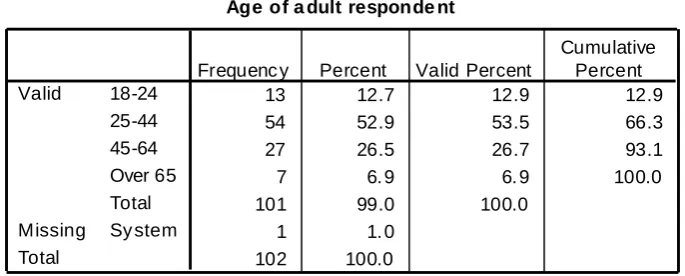
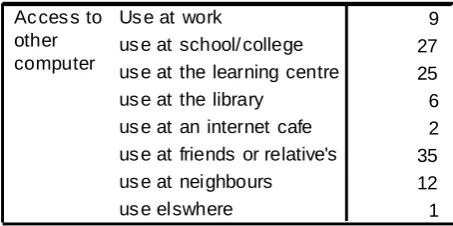
repertoires of computer usage in West Johnstone has differed from „normal‟ patterns. Among the EU population as a whole, for example, where about 76% of people used a computer at home in 2001, 37% used a computer at work, 15% at a friend‟s house, and just 7.6% at a non-commercial public access point (including libraries) (Eurobarometre 55.2: 2001). Among DIP participants (92% of our sample said they actually used the computer at home), a mere 9% used a computer at work, whereas 34% used a computer at a friend‟s house and 25% at the Community Learning Centre. The socio-economic conditions of the West Johnstone SIP area explain the first difference, with relatively few people (less than 30% of adults according to our sample) in work of any kind. The differences between use in social and community locations is more intriguing, however: given the (near)
universality of home use among our sample, we might expect to find use in other locations to be lower than the EU average, when in fact it is 2-3 times higher. The explanation is likely to revolve around the particular ways in which computers and the internet are adopted and socialised in different types of community, and West
Johnstone (thus far) evidently diverges markedly from the patterns observed in the market-driven spread of ICT technology in Europe. Whether future trends will converge is difficult to predict, but the strong role of the Community Learning Centre as a conduit for initiation and support, and of local configurations of
neighbourliness and sociability as contexts for a distinctively collective form of technology adoption, suggest not. These are (formal and informal) institutions which exist apart from the DIP but seem to have structured the way the project has developed; therefore the project serves as a valuable test for the „social shaping of
technology‟ in a socio-economic context quite different from the communities and classes which were earlier adopters of home computing.
5
Residents‟ testimonials in Bellsmyre, West Dumbartonshire, where one of the Scottish Executive‟s Digital Community projects has been operating, emphasise the catalytic effect of computers in homes on
communication, collaborative learning and visiting within kinship networks, especially for grandparents and grandchildren: one resident echoed widespread sentiments when they wrote how computers provide “a new focal point within the family” (Bellsmyre Project Survey, available at
Wired Up Communities as a timely initiative for targeting “disadvantaged local communities” through a more strategic approach, coordinated with broader neighbourhood renewal projects (ibid.: 18-19). What it particularly noted was the commitment to develop local content through community portals, a recognition that barriers to the wider use of ICT amount to more than conventional definitions of access.
The e-Inclusion strategy, summarising the evolution of policy across the EU, speaks of a triple mechanism: Public Internet Access Points are still seen as fundamental to the infrastructure of internet provision (conceived as a universal service), whilst incentives to the purchase of ICT equipment are seen as more effective ways of reaching certain groups - the recalcitrant minorities which still do not use the internet - and finally the importance of public commitment to connecting less-favoured areas which would not be covered by market-led expansion is stressed. Although the differences in tone are only slight, the EU and UK policy discourses diverge on the issue of targeting: are we spreading home access in pursuit of a „universal service‟ goal, recognising that public access centres will inevitably be de facto „targeted‟ at certain groups (as the UK government frames its initiatives)? Or are we deploying home access initiatives strategically, because we believe we can thus better target the internet refuseniks (as the EU has it)? Current Scottish Executive policy
arguably fits more closely with the tone of EU than UK policy insofar as there has been less of a shift away from public access to measures to increase home connections: the former continues to represent the central plank of access policy, supplemented by home provision as a kind of safety net to catch those still „excluded‟ (because “individual incentives [to purchase and effectively use ICT
equipment] can be more targeted … [For example they are] more suitable for people needing special assistive technology” (European Commission 2001a: 24)). This is so despite the fact that home connectedness is lower in Scotland than the UK average (40% compared with 48% (Office of the e-Envoy 2003b: 6, 39)). The Executive‟s public internet access points initiative, on the other hand, is more expansive than its English equivalent: the Scottish initiative had established 700 out of a planned 1,000 new access points by the end of 2003, which, per capita, compares favourably with the 6,000 UK online centres established in England. Moreover, whereas 3,000 of these are libraries, and many others schools, the SE‟s programme targets “venues where people already go as part of their everyday lives, egg shops, hotels, post offices, community centres and pubs.” (ibid.: 39) It could be argued that this distinction is appropriate given that the prevailing culture of public space in Scotland is often regarded as closer to parts of continental Europe than to England6. To that extent there may be more „familiar places‟ used by a broader cross-section of society north of the border. Accordingly, Renfrewshire Council‟s information age strategy stresses that “community learning centres represent the fulcrum of our current response to digital exclusion”. At the same time, various avenues are being explored for extending personal access in deprived areas (such as provision of digital access in all council housing stock, for example) (Renfrewshire Council 2003).
The contradiction between policy discourses is, however, more apparent than real: both strands are actually targeting certain users, but their effective deployment depends on different mechanisms and a mutually supportive combination. The Scottish approach is fully in keeping with the DTI‟s Policy Action Team report on ICTs in deprived areas (DTI 2000), which argues strongly for integrating digital inclusion strategies within an overall social inclusion strategy and for integrating new and existing community activities and initiatives. For example, one criterion for siting public internet access facilities should pay heed to a location‟s existing and potential function as a fulcrum for community groups and organisations: doctors‟ surgeries, local post offices, religious centres and
neighbourhood learning centres are named as examples. This approach maximises the capacity of ICTs to improve the coordination of a community‟s social capital resources. An example of best practice cited in the PAT 15 report in this regard is the lottery-funded Grimethorpe Electronic Village
6 Cultural factors in internet use are clearly evident from Eurobarometer polls showing striking differences in the
Hall in a Yorkshire ex-mining village, which, aside from offering training to individuals had supplied equipment or training to no less than 500 community groups and 60 businesses in the first year of operation. By servicing the needs of existing local community groups in this way, public access facilities can play a vital role in community „asset-mapping‟, thereby enabling more effective collective action. One of the irreplaceable functions of a well-managed public access facility is thus the targeting the organisational resources of a neighbourhood, where there is a much better prospect of comprehensive coverage than when the focus is on individuals, many of whom, as we have seen, will never be reached by this mechanism. However when the policy goal is to target broad socio-economic or demographic strata regarded as digitally disenfranchised or underserved, the more appropriate mechanism, according to the emerging research, is subsidised provision of ICTs to the home.
Recent evaluative research on community computing projects in the USA has identified a trend which points to a third dimension as a precondition for achieving real benefits for a community: thus
following on from earlier projects building community networks (usually with free dial-up access for participants) and/or providing public access centres (usually known as community technology centres in the USA), some newer projects focused on providing relevant and interesting content for specific low-income groups (Beamish 1999, Pinkett 2002). A speech by the Commissioner for Social Policy sketching the European Union‟s e-inclusion policies in 2001 also stressed relevant and useful content as one of four key areas for political action (alongside awareness-raising, access and digital literacy) and called for public authorities to become a catalyst here (European Commission 2001b). For this is one dimension in which the World Wide Web, as it becomes increasingly commercialised, is weak, according to a systematic survey of on-line content for low-income and other „underserved‟ groups in America: interviews and focus groups conducted in the same research project made a strong case for including local and ethnic communities in the development of content (via community portals, for instance) because this “helps ensure that online content incorporates what the community wants and will use, that content acknowledges residents‟ methods of acquiring information, and that the look and feel of the content works with the user‟s literacy and linguistic levels. Equally important,
involvement of the community builds a group of users who sees the Web as a space that reflects their culture and values and is useful.” (Lazarus & Mora 2000). Some of the positive examples in these regards are explicitly predicated on a constructionist approach of motivating people to adopt and use technology to accomplish their own needs and goals. The presumption here is to start from an analysis of the goals of a community (asset-mapping) or of the „missing ingredient‟ (identifying service gaps and priority problems) instead of assuming that a standardised model of provision will bring community benefits without specifying how this will occur in a particular environment. In analysing community computing projects it is useful to distinguish between catalytic and content effects (both of which must be present for social capital formation to occur): introducing new technological means involves social innovation, the by-product of which can be found in collective action; but social capital formation will not be consolidated “unless the initial catalytic effect from Internet planning translates into content” (Horrigan 2002: 9).
Governance (the modernising government agenda)
Information and communication technologies are often promoted as enabling innovation in service delivery and information-availability between citizens and the state. Experience from early „digital city‟ projects, developed in cities such as Amsterdam as a way of harnessing this potential (see Schuler 2002), suggests a public preference for the use of interactive public information websites to confront opinions or enable self-expression, whereas the ability to influence decisions was not a major motivating factor - perhaps reflecting the general state of apathy with formal democratic mechanisms.
and letters (in that order) as the means of communications “which carries most weight” and behind telephone calls, letters and meetings/visits as the most frequent means of communication received (ibid.: 11); councillors and mayors were mostly cautious in their evaluations of the potential of the internet to revolutionise their own dissemination and outreach activities. There is little reason to believe Scottish councillors‟ opinions would differ dramatically. From the perspective of citizens, the potential of e-mail to intensify two-way communication and debate with their local representatives or to enhance their own organising capabilities in local groups or campaigns was also surprisingly under-valued, and the vast majority of the Pew Internet and American Life Project‟s survey respondents show an inclination to regard e-mail and the internet as useful tools for engagement in global issues and networks but not local ones (ibid.: 4-5).
In this respect the ethos of the community network seems to go against the grain of the habits of the average internet user. As experiments that makes them interesting, because they counter some of the tendencies towards more distanced forms of political participation characteristic of late modernity, which the internet, paradoxically, may otherwise encourage. Whilst the separation of debate and decision-making represents a challenge to democratic systems, as they undergo a crisis of legitimacy and accountability, some have argued that expression of opinion is becoming an increasingly
important form of political engagement and the existence of ICT-facilitated fora for open, non-expert-led debate is one way in which democracy can be enhanced as internet access spreads (Chambat 2000: 263, 269). In other words, ICT has the potential to render more effective the generation of community-based discourses which represents the first phase of collective action - networking. Other authors have argued that ICT does also have potential during subsequent phases of collective action - for „collaborative planning‟ (linking description of the present situation to the generation of
alternative scenarios of development and confrontation between them) and „representation‟
(advocacy), where it has the capacity to „voice‟ community demands in a variety of formats tailored to the discursive preferences of different target audiences, including decision-makers (Shiffer 1999, Day 2002). Yet this potential remains crucially dependent on the receptiveness of decision-makers themselves to this form of address, and the existence of accessible and legitimate channels between civil society and the local state - i.e. it is as much a matter of the transformation of organisational cultures within local government as it is of the development of new forms of collective action and self-representation.
The DIP fits neatly into the current European discursive model as formulated by the European Commission‟s Higher Level Expert Group on the Information Society, essentially an endogenous development model stressing community capacity building, and contrasting with the „first wave‟ of European policy (Bangemann report) with its emphasis on „hard‟ infrastructure. These first
information society strategies deployed the metaphor of mobility and downplayed social interventions in keeping with a neo-liberal policy framework; however this obscured the spatial effects of a market-driven roll-out of a new network architecture and in particular the „pump‟ effects for weak regional economies of a new era of increased capital mobility and the critical importance of human capital resources in intensified competition between places and regions. The creation of the HLEG was designed “to place social considerations at the centre of the frame”, through “policy initiatives to develop locally attuned forms of public service” (Ducatel, Webster & Herrman 2000: 10, 16). European governments are urged “to build a humanitarian information society in which the key dynamics are those concerned with learning, social inclusion, community development and democratic participation. Perhaps the best way of achieving this vision is by giving people the tools (ICT-based tools and more conventional ones) and the support to build their own future in a
productive and creative European information society” (ibid.: 17).
networking between communities and external actors can take on a set of variable geometries as long as the appropriate support structures - framed by public service policies - are in place. Experience from one New York community networking project found that the project was failing to have much community impact because local „cross-sectoral connectivity‟ was not being actively induced by the project steering group, and as a result such ties were underdeveloped compared with
inter-organisational (hierarchical) connectivity, which subscribers predominantly used the network for: evaluation subsequently therefore recommended mandating cooperation among local organisations in order that the resource rich assist the resource poor to get connected (Venkatesh & Shin 2002). One of the drivers behind the innovativeness of ICT policy is that the intrinsic logic of network architectures is to transform connectivity through the creation of distributed intelligence to the point where any demarcation between network boundaries and users‟ private space becomes meaningless (Neuman, McKnight & Solomon 1998: 106): the „scale‟ of a local economy / local society then becomes much more a question of subjectivity and identity-building rather than critical mass. If it is accepted that local economic development is increasingly conditional not on „smokestack shopping‟ or even its high-tech equivalent inward investment strategy, but on strategies that try to promote social networking as a stimulus to entrepreneurship (Horrigan 2002: 51), boundaries will be
determined from the bottom up. Not only is there a logical connection between network architectures and endogenous development, ICT lends itself to an endogenous development strategy as a tool for mapping a community‟s assets (Horrigan 2002: 12-13, 21-2). This has two principal benefits: as a process it draws attention to relationships between people and institutions within the community and can therefore increase the efficiency of their networking and better coordinate their actions; and as an informational resource it becomes a marketing device when competing for inward investment or development grants, raising the probability of both acquiring resources and of matching assets and new investments to produce synergy rather than conflict.
Hitherto the development model followed in West Johnstone has arguably been more endogenous than intended, but the absence of external direction raises questions over its sustainability, particularly in relation to the small size of the neighbourhood the project serves. Does it have the „critical mass‟ of users to be sustainable? Does it have access to the requisite skills within the community or will it have to seek more external support? Is it an appropriate size to develop a strong community identity through „self-publishing‟ activities? Is there a stronger sense of local ownership in smaller community computing projects? Is there a higher ratio of producers to consumers than in larger projects? Evidence from a study of three Boston neighbourhoods suggests that “large
community networking projects beyond a few hundred homes reduce the social pressure of geographic co-presence and limit the need for residents to maintain the „neighbourliness‟ that appeared in Netville [an experimental suburban community computing network in Canada]”
(Hampton 2003: 28). Comparison of a variety of US community computing networks suggested that different sizes may facilitate different functions: highly localised systems may have difficulty sustaining bulletin boards / e-mail lists because they lack the critical mass to generate a lively
conversation, and a vicious circle develops between lack of messages and lack of participants. On the other hand very small networks are ideal for enhancing „general public awareness‟ and countering the tendency of the internet towards the parochialisation or specialisation of discussion. The small volume of information on very local websites becomes an advantage because it is easily surveyable by individual users who are less prone to focus only on their personal interests than when browsing larger sites or indeed the entire web (Shiffer 1999: 205-6). One of the few UK projects of comparable size to West Johnstone, Manchester‟s Redbricks, is a small neighbourhood project which has
nonetheless proved its viability in terms of communication levels and funding models, but a key role there was played by local animateurs and by the presence of a receptive audience stimulated to self-expression by a number of strong campaigning issues (Hellawell 2001: 24-9).
Collective action
Social interaction was intensified, and self-expression was freer due to the relative impersonality of on-line communication. In other words the internet has value for organising more efficiently the hidden network phase of social movement formation - preparing the case among activist networks before it is presented in the public realm (Chambat 2000: 272). Other authors have stressed equally its role in empowering communities to choose and use the right media to „translate‟ their own visions into discourses accessible to a range of strategic decision-makers and advocates, i.e. to facilitate the „public representation‟ phase of collective action (Shiffer 1999). There are a number of factors involved here. US community activists who took part in a MIT Department of Urban Planning colloquium on Advanced Information Technology and Low-Income Communities were surprisingly enthusiastic about its potential to assist their work, one reason being that they saw in it potential to overcome some of the limits placed by spatiality on their own organisational capacity: by networking electronically with non-local actors they could more easily build a „critical mass‟ of support for their efforts (Sanyal & Schon 1999: 374); at the same time, at the local level, IT could boost participation, for example by parents in the running of schools (ibid.: 386). The inverse, however, also applies: to ensure the poor‟s access to the digital world, “traditional, door-to-door campaigning by community activists … patiently explain[ing] how to utilize personal computers and demonstrat[ing] how they would provide access to information vital to the well being of the poor families” is essential (ibid.: 379). Street-level and on-line organising, word-of-mouth and electronic networking, thus have complementary roles to play - the latter can augment and empower, but not substitute the former. Collective action structures must satisfy specific communities‟ and groups‟ need for belonging: how do people relate to projects: as members, owners, visitors, directors, clients, customers, students? Which model and which symbols (cards, registration systems, conditions of entry) of association are most appropriate for a given purpose?
Evidence that organisational capacity is increased by CMC comes from other pilot projects: groups with special needs became more agitative as they gained confidence with ICT in Knowsley
(Hellawell & Mulquin 2000: 13). The internet may thus reduce the threshold for participation among social groups traditionally under-represented in collective action: a Pew Internet telephone survey of US internet users found striking socio-demographic differences between those whom the author terms „net joiners‟ (those who joined community networks after encountering the group online) and „long-timers‟ (those who already belonged to a group before they used the internet to communicate with it): the former were a much more diverse group ethnically, and in terms of age, education and income (although both groups tended to have above-average on-line experience). This finding applied to both virtual and local groups, offering the interpretation that the internet lowers the barriers to association and community participation, enabling greater representation from social categories which are otherwise selectively excluded, and thereby diversifying the memberships of existing local associations (Horrigan, Rainie & Fox 2001). The internet could thus be a powerful recruitment channel for local groups, especially among the youngest age-groups, who make up a higher proportion of local „net joiners‟ than the overall profile of online community members.
Social network data from Netville show how ICT (principally an e-mail list) increased density of weak ties (less so strong ties) among connected residents compared with non-connected ones (Hampton 2003: 14; Hampton & Wellman 2003). A much higher percentage of households got involved in active protest against the developer (concerning routine problems with a new housing scheme) than is typical for similar Canadian estates (Hampton 2003: 8), and collective protest against premature ending of the free internet trial period was extremely rapid and intense. The model
hypothesised is one of connectedness producing an increased number of local weak ties, in turn producing greater informedness and action capacity (visibility of action by others produces a powerful demonstration effect and mobilises even those individuals with high „thresholds‟). But the process was not preconceived: initially the developer had expected the primary selling point of the wired neighbourhood to be access to (global) information via a high-speed, permanently-on internet connection. It was only later that residents re-appropriated the system to emphasise communication rather than information, pressing the developer to provide a means of local interaction online, the need for which had not been anticipated: a simple neighbourhood e-mail list was set up, which became the principal means of organising collective protests as well as serving as a means of exchanging introductions, organising social events, obtaining various kinds of support and getting help for kids with homework (Hampton 2003: 10-11). An incentive to use it for voicing demands or grievances was that corporate stakeholders in the project were subscribers, so it became a forum for negotiation with these partners. E-mail became an important channel for receiving validation of one‟s own position from a peer-group and exerting pressure on corporate partners by creating an impression of concerted feeling and action within the community. ICTs reduced the transaction costs of
collective action around local issues as well as of more casual social networking: both activities declined once campaigning issues disappeared from the immediate agenda of Netville, and once social networks stabilised (a similar pattern has been observed in studies of „non-wired‟ new neighbourhoods); however residents valued the e-mail list service highly enough to replicate it for themselves after the end of the trial (Hampton 2003: 26).
More evidence on the effectiveness of community bulletin boards for „bringing the village back to an urban neighbourhood‟ comes from experimental project carried out in Newark, New Jersey, with support from MIT Media Laboratory: “using the network, residents have been able to organize numerous events and to come together during crises. They have organized talent shows, a recycling drive, flea markets, gardening projects, field trips and fundraisers … by and large most project ideas begin by being posted to the bulletin board” (Shaw & Shaw 1999: 330-1). In West Johnstone Cheryl Smith has observed the take-off of many collective projects thanks to the existence of e-mail
on the design of the new Community School complex) which are being realised via the spontaneous creation of e-mail networks, where previously efforts would have foundered because the word-of-mouth networks which poor communities rely on have a much greater friction of distance (and time) (conversation with Cheryl Smith 8/3/04). This is highly significant because focus groups in Glasgow among internet non-users showed that although there was a broad awareness of the commercial, consumptive, information-seeking and dispersed family-centred communication possibilities the internet offered, there was a gap in people‟s perceptions where local community affairs are concerned. This was evident both in terms of formal and informal institutions: accessing public services was not mentioned when non-users were asked (unprompted) what you could do on the internet; and when asked how they keep abreast of local news some people cited community newsletters, but more common responses referred a range of „third places‟ that heavily structure the public space of working class neighbourhoods - pubs, bookies and community meeting places (including very prominently the library, which most had been socialised into using as children) alongside word-of-mouth networks (Boyes & McCormick 2003: 7-8, 13). If it has been argued that e-mail and voice calling, far from being a threat, are ideal ways of enhancing these traditional
communication media and fora, this is poorly appreciated among non-users. The positive articulation of traditional and new media is often only revealed to people as they adapt their own social and cultural practices during the adoption process. To the extent that subsequent community capacity building processes occur, as it were, „by accident‟, contrary to expectations or against generalised scepticism and disinterest towards computing, then provision of computers for free and with few strings attached (as in the DIP) may be crucial in inducing a social situation where people are free to experiment with a new communication tool, thereby partially circumventing the difficult process of awareness-raising (about the benefits of the internet, for instance) on which many „digital divide‟ strategies founder.
Digital divide policy themes
Awareness, access, skills (Scottish Executive‟s key performance criteria, based on identification of barriers to digital inclusion).
Both policy and research have hitherto been overly focused on access issues, employing a simplistic binary distinction between users and non-users of ICT. More recently studies and policy have begun to appreciate that the digital divide may be manifest in terms of differences between types of use. This turns attention towards questions of skills and confidence, and necessitates a long-term perspective. For instance, a major American survey found that while demographic factors can be correlated with internet use patterns, “the most useful predictors of the activities that users enjoy online are their length of experience with the Internet and their frequency of logging on from home” (Howard, Rainie & Jones 2001: 400-3). In particular, activities such as line transactions and on-line learning and job training were found to be primarily the domain of experienced and intensive users - those who have fully integrated the internet into their repertoire of communication and informational strategies. Similarly, a Pew Internet survey of parents‟ use of the internet showed consistently higher percentages of those who went on-line more than three years ago felt the internet helped them accomplish practical tasks such as planning family trips, shopping for birthday presents and taking care of their children‟s health than those who went on-line in the last year (by margins of 44% to 26%, 37% to 17% and 26% to 17% respectively) (Allen & Rainie 2002: 14). It may be unrealistic to expect significant take-up of these kinds of use among a population of new users until the internet use has become embedded in their lifestyles and they are fully convinced of its efficacy in helping them meet their life goals.
In addition it is essential to consider the social context into which any technology is to be integrated. Exclusive focus on awareness, access and skills risks over-balancing projects in favour of needs and aspirations of individuals (in train to an ideology of individualism), abstracted from the
neighbourhood and community context. There is a critical thread in the literature arguing that the dominant discourse on the digital divide reduces the concept of access to the availability of
the goods and services it distributes. Without addressing questions of content and effective use (access for what?) it becomes a surrogate for increasing e-commerce markets. As well as corporate interests, civic freedoms are equally threatened by a powerful public discourse in which the agenda of public agencies is presented in terms of a response to inexorable technological change, but which in fact amounts to an imposition of new requirements for citizenship. Thus the National
Telecommunications and Information Administration (NTIA), in one of its authoritative reports on the digital divide in the USA (NTIA 2000) maintains that „Each year, being digitally connected becomes ever more critical to economic and educational advancement and community participation‟. This fatalistic vision is compounded by and legitimises a „myopia‟ commonly propounded from policy-making circles, „that prevents society from perceiving that complete dependence on ICT is anything but positive, beneficial and desirable‟ (Mitchell 2002). However ethnographic research in Washington State which asked practitioners and opinion-leaders involved in strategies to address the digital divide to envisage future scenarios found considerable dissension from the general direction of US public policy, with many expressing worries about the establishment of new conditions for citizenship in society and membership of the dominant culture in the „information age‟: their experience led them to take a much more complex view of the digital divide as a social problem which involves the erosion of personal rights, the evolution of new requirements for membership of socio-cultural systems and the exacerbation of existing social inequalities. Interviewees stressed that advances in information and communication technologies impinge on communicative practices in ways that contain both possibilities for new types and degrees of inclusion and threats of new forms of exclusion (Mitchell 2002). Increased access is not therefore of itself a public good: access only becomes a public good if it enables further activities relevant to people‟s needs - only if it enables self-representation of one‟s needs, and thus amounts to the integration of ICTs into „the
accomplishment of self or collaboratively identified goals‟ (Gurstein 2003: 8).
Some focus groups conducted by the Scottish Council Foundation for Scottish Enterprise Glasgow among non-users of the internet concur with these findings in a number of respects: that few are excluded from access through lack of awareness or through network poverty (almost all said they had somewhere to go - usually a friend or relative with home access - if they should want to use the internet); but that the perceptions of non-users about what the internet offers tend to give prominence to commercial uses and consumptive behaviour, while there is lower awareness of any public service function, any value to local communities, or any possibility of creative involvement by the user (Boyes & McCormick 2003: 13-14, 18). Non-users in these focus groups (held in late 2002)
demonstrated varying degrees of interest in trying the internet, but also a (perhaps healthy?) suspicion that the „surveillance‟ possibilities it offered were not necessarily to their benefit and that the
information „needs‟ it generated were not necessarily real social needs (most were comfortable living without the internet). The report concluded that measures to increase physical access are becoming increasingly irrelevant to the spread of internet use, and that instead there is a need for measures to promote awareness among „excluded‟ and „marginal‟ groups of the potential benefits of connectivity to themselves and their families and communities while allaying quite widespread fears concerning security and safety in „virtual space‟. This agenda concerns far more the way that learning
opportunities are structured and the overall structure of support for new and potential users than the provision of new infrastructure. In this context the DIP acts as a useful test case: home provision might prove ineffective if it merely amounts to a physical relocation of an already acknowledged opportunity from friends‟ or relatives‟ houses to one‟s own. On the other hand this may itself have altered the opportunity structure in an unanticipated way - some of the focus group participants in Glasgow expressed unease or embarrassment at the thought of taking their first steps on the internet in any public or semi-public space, and felt their own home to be the only place where they could comfortably practice their skills initially (ibid.: 20, 22).
already had an interest or an incentive related to ICT prior to attendance - above-average numbers already had a computer at home, for example. As in America (Horrigan 2002: 12) women were over-represented and but unlike American experience the elderly were under-over-represented (Hall Aitken 2003: 18), which is probably an inevitable feature of provision which is mostly structured around traditional community institutions with limited opening hours and which may be difficult to get to for people with restricted physical mobility (often compounded by social isolation). Their accessibility to the hardest to reach groups in society is still limited by the institutional context and the traditional character of much of the learning programmes on offer (ibid.: 2003: 25). Moreover the authors reported managers‟ perceptions that budgetary pressures would increasingly force them to adopt more conventional packaged training, and the informal supportive atmosphere that had encouraged many new users in may be lost or diluted (ibid.: 2003: 49). The report therefore makes “a case for providing longer term [revenue] funding for these [community and voluntary sector] centres”, where such difficulties were most acute (ibid.: 2003: 52), and which make up around 45% of the 3,000 or so Capital Modernisation Fund supported centres set up in England‟s 2,000 most deprived wards between 2000 and 2002 (ibid.: 2003: 55). Among the groups who have been reached - typically people with prior motivation but lacking confidence, and with limited recent learning experience (41% of new users surveyed had not attended a course in the last five years) - UK on-line centres have provided a successful (re)induction into a variety of learning activities (with 31% of new users surveyed having gained a certified qualification after a year (ibid.: 2003: 50)) as well as boosting self-confidence both in relation to computing and to study or employability - 8% of respondents in the follow-up survey after six months said attending the centre had helped them get a job, 7% that it had helped them get a better job or promotion (ibid.: 2003: 29-33). Liff, Steward & Watts‟ (2002) study of a smaller sample of public facilities concurs: community centres have a good record in achieving „distance travelled‟: they tap existing social networks based around strong ties and can induce a sense of community ownership if they are appropriately located: one interesting American example was the renovation of a building in Washington D.C. previously known as a centre of the drugs trade, which gradually became a focus for residents‟ pride because it symbolised neighbourhood renewal, and yet always remained accessible for the most at-risk sections of the youth population as a place they could call their own - it thus came to serve as a bridge between the two communities, cemented by
programmes whereby students with chequered backgrounds were trained to perform outreach work in the community, for example providing internet coaching for elderly residents (Horrigan 2002: 36-7). The best community facilities achieve a mode of social inclusion which leads to a “second stage of keeping users and developing their learning” because users have either shared interests („attribute networks‟) or common activities („transactional networks‟) as a basis for continued and deepening involvement (Liff, Steward & Watts 2002: 91). However their funding regimes usually put stress on learning outcomes and new users are gradually directed towards more or less formal course-based learning, stressing conventional computer skills - in contrast to patterns of usage at „shop-front‟ (commercial) e-gateways, where internet use (either for information or communication)
predominates.
via formal education: they are often embedded in emerging communicational practices (ranging from the typographical conventions of e-mail and chat to the complex ways in which flows of e-mail traffic are regulated by users, and which generally work to extend the reach of networks). Most important, they are the product of distributed rather than centralised intelligence, and accordingly they are acquired and reproduced by participation: exclusion from networks can thus be self-reinforcing; however the barriers to entry are also more permeable than in the case of traditional groups due to the absence of both formal (e.g. literacy skills) and informal social controls.
Support, content, community involvement (additional „softer‟ goals of Scottish Executive‟s Digital Inclusion policy).
In introducing these parameters, digital inclusion policy represents a clear advance on the discourse of earlier „information age‟ policy in the UK, which essentially conceived ICT and computers as technical fixes for social problems. They promise to admit new thinking and new solutions at the interface between society and technology, breaking away from the economically deterministic rationale for digitising the country (usually framed in terms of employability and literacy/numeracy skills - a justification underpinned by a spurious assumption that everyone will be employed as „symbolic analysts‟ in the future) and seizing the alternative trajectories ICT avails to communities and citizens, which lie not in skilling workforces or instilling „effective‟ consumption habits but in more socially transformative goals linked to their actual needs (Selwyn 1999). In particular, according to Selwyn, an inadequacy of attention to the social context and social relations of
technology adoption risks a pattern of diffusion driven economically by the creation of new markets for educational and entertainment applications, given the heavy involvement of commercial interests in the development of infrastructures such as the National Grid for Learning, and driven politically by an instrumental rationality of the internet as an information resource for acquiring economically-valuable social skills, given the absence of softer strategic goals from government discourse. Hence, according to one critical account, the construction of both its targets and the public-private
partnerships to deliver the National Grid for Learning has been “commercialised and „educational-ised‟” such that the strategy “constructs users as a homogenous set of ready made consumers who are eager to make use of the information on offer if the barriers to access can only be removed.” (Moran-Ellis & Cooper 2000). Questions of motivation - of the use-values specific social groups might bring to and/or derive from internet access - which would logically problematise the notion of access in relation to much more fundamental issues of social power relations and collective identities - are not addressed.7 Such an absence would patently be a major flaw in any policy which purports to address problems of social exclusion, i.e. to address the problems of communities where education, learning, knowledge etc. are not typically accorded high value by among young people or their parents.8
7 Moran-Ellis & Cooper pointedly note how, of the multitude of players positioned around the National Grid for
Learning, the strategy document devotes disproportionate space to persuading business to participate but virtually none to enrolling children themselves, because “the traditionally available positions and constructions (child as learner, technology as non-social object) that are employed are unproblematic in the context of the policy the Government is pursuing.” Business interests, by comparison, are more difficult to direct. (Moran-Ellis & Cooper 2000)
8 Umberto Eco wrote recently of the difficulty of explaining to young people - and he was thinking of
prospective university students - “why study is useful. It‟s pointless telling them that it‟s for the sake of
Key questions for a more flexible and socially sensitive digital inclusion policy thus include: How does the home access model square with the community learning approach to digital inclusion? Is it an attempt to de-marketise the spread of internet provision or a concession to changed activity patterns in local communities (the privatisation of leisure time, loss of public space)? What can be done to ensure there is a matching commitment to the creation and enhancement of public fora within the community? How can the two approaches be combined to best reach target groups of social inclusion policy?
Support for home users is clearly a critical aspect of any programme like the DIP, because users are more physically isolated than if they were attending a public access facility. Home provision represents one possible response to the failure of public access schemes to reach certain target groups, while continuing to prioritise access to computers and the internet as the key outcome. Some research has questioned this goal, suggesting that access to services is key, and that this may be better facilitated by empowering community advocates, such as charities, voluntary groups and community organisations, as intermediaries who support these target populations in their interactions with public authorities and the market. To quote a very down-to-earth example, this was the rationale for
equipping a charity in Texas with an internet-enabled computer for use in assisting the poor obtain cheap medicines (Strover 2003: 13). In theory they would be able to do this for themselves with a computer, but many would lack the specific knowledge required - thus the goal of access to services through the internet might be more effectively reached by ensuring community organisations are equipped, empowered and tasked to support target populations than by equipping the target
populations themselves. Supporting members of a community computer network means mobilising the organisational infrastructure which is necessary to achieve tangible benefits for people from computers. This means recognising a community as a network of not only individual but also collective social agents, in accordance with social capital theses, i.e. using computers to improve linkages between social agents and the constituencies they serve and to reduce the transaction costs involved in their coordinated action.
One of the distinguishing features of the internet as distinct from other media is that “interactivity and user participation are the main strategies for the generation of content”, to the extent that it has been argued that “users‟ labour is used to sustain the economic development of the internet” (e.g. by writing reviews, participating in mailing lists, uploading content and keeping virtual communities active) (Wyatt, Thomas & Terranova 2002: 24). This implies that the way internet use is embedded in social circles - i.e. the articulation between real and virtual social space - is critical in determining the use value of internet communication and therefore its sustainability. In a study of internet drop-out, Wyatt et al identify three sets of factors which promote continued use: time and money invested in equipment and learning; availability of alternative means of accessing goods and services distributed via the internet; and embeddedness of the user in social circles committed to internet use (ibid.: 35). These are clearly susceptible to considerable variation depending on social and geographic context. In West Johnstone it seems that the third factor is most critical, as people have not personally invested any money in acquiring the equipment (though they may have invested considerable time in learning how to use the internet both formally and informally), nor are their consumptive behaviour patterns, even after the DIP, particularly dependent on internet access (disposable income is low, many people do not even have bank accounts). Therefore the sustainability of the project as a whole seems destined to be determined to a large degree on its becoming a valued community resource which both intersects with existing networks and creates new relations (of variable geometry) valued for informational, companionship or esteem support (Nettleton et al 2002). This would necessarily seem to imply the incremental accumulation of user-driven content, such that the project acquires the
their own experiences in a way which is meaningful to them. Computers and the internet do represent a
dimension of a narrativising practice operating simultaneously at the level of community building and at the level of individual identity construction.
Concluding remark: the difficulty of handling soft and unintended outcomes
In keeping with government modernisation trends emphasising the softer dimensions of public policy intervention, this evaluation exercise was commissioned by Renfrewshire Council not only to
measure progress towards the above goals, but to track the overall „impact on participants’ lives’. The „value added‟ brought to individuals, communities and localities by ICTs as technologies with multiple uses are inherently difficult to quantify. There is a general assumption that they impact positively on participants‟ lives, but “we simply do not have [enough] evidence of the value to be derived from using them… [U]nderstanding … [this value] may require a different form of assessment” from the usual indicators used to track deprivation, regeneration and social exclusion (Southern 2002: 699, 702). According to a Hall Aitken survey of UK online centres, “the clearest outcomes for centre users were in soft outcomes such as increases in confidence and increased social contact” (2003: 35). Moreover these outcomes were unanticipated, even by the user themselves. Socialisation, communication and community involvement did not figure prominently among new users‟ expressed motivations for attending the centre in the first place (in fact more wanted to learn computing as a skill than use e-mail or the internet as a communication medium, with fewer still talking of becoming more involved in their local community (2003: 24)). After six months, however, meeting new people was cited by half of all users as the best thing about coming to the centre (2003: 36). Similarly centre managers reported synergies in terms of raising the profile of an existing community facility among the local public, improving the use of existing services (related or
unrelated to ICT) and, in the case of college-based centres, expanding community based provision of learning (2003: 37). Liff, Steward & Watts speculate whether these outcomes are really instances of community-building as new networking, or whether they are the effect of a mode of inclusion which taps existing networks, achieves (to greater or lesser degree) some „boundary-spanning‟ between heterogeneous networks based around an existing facility, and by building a “virtual presence that reinterprets their users‟ sense of the real place in which they are located … encourages people to re-engage with local networks” (2002: 96). From a policy perspective, however, the problem is that the further one moves towards softer goals and outcomes, the more difficult it can be to meet „harder‟ social inclusion objectives defined in terms of the fullest possible access by all sectors of a community. Softer outcomes often involve quite exclusive groups even if they add to the stock of social capital in a community; harder social inclusion targets imply the mobilisation of a much more dispersed pattern of social networking but make it less likely that narrower networks can form a strong sense of ownership of any project.
References
Allen, K. & Rainie, L. (2002) Parents Online, Washington D.C.: Pew Internet & American Life Project research report. Available at <<HTTP://www.pewinternet.org>>
Beamish, A. (1999) „Approaches to Community Computing: Bringing Technology to Low-Income Groups‟ in Schon, D., Sanyal, B. & Mitchell, W. (eds.) High Technology and Low-Income
Communities. Prospects for the Use of Advanced Information Technology, Cambridge, MAS & London: MIT Press: 349-68.
Boyes, L. & McCormick, J. (2003) Learning to be Digital: Vision and Action through inclusive technology, dialogue with Glasgow’s citizens, Scottish Council Foundation: October 2003. Cooper, M. (2002) Does the Digital Divide Still Exist? Bush Administration Shrugs, But Evidence Says “Yes”, Consumer Federation of America research report. Available at:
<<HTTP://www.consumerfed.org/DigitalDivideReport20020530.pdf>>