ScholarWorks @ Georgia State University
ScholarWorks @ Georgia State University
Art and Design Theses Ernest G. Welch School of Art and Design
Summer 8-2011
Visual Response: A Curriculum Unit Integrating Book Arts and
Visual Response: A Curriculum Unit Integrating Book Arts and
Literature in the Elementary Classroom
Literature in the Elementary Classroom
Anne Shea
Follow this and additional works at: https://scholarworks.gsu.edu/art_design_theses
Recommended Citation Recommended Citation
Shea, Anne, "Visual Response: A Curriculum Unit Integrating Book Arts and Literature in the Elementary Classroom." Thesis, Georgia State University, 2011.
https://scholarworks.gsu.edu/art_design_theses/93
This Thesis is brought to you for free and open access by the Ernest G. Welch School of Art and Design at ScholarWorks @ Georgia State University. It has been accepted for inclusion in Art and Design Theses by an authorized administrator of ScholarWorks @ Georgia State University. For more information, please contact
A CURRICULUM UNIT INTEGRATING BOOK ARTS AND LITERATURE IN THE
ELEMENTARY CLASSROOM
by
ANNE C. SHEA
Under the Direction of Dr. Melanie Davenport
ABSTRACT
This study focused on the integration of book arts in a fifth grade classroom. As an art teacher
turned regular education teacher I was interested in the effects of integrating art into the area of
reading. The curriculum unit consists of two lessons in which the students were invited to use
books arts as a means of expression and comprehension. The lessons correlated with the novel
Number the Stars, by Lois Lowry. The results include my observations and reflections as a
practicing elementary teacher.
INDEX WORDS: Integrated curriculum, Interdisciplinary curriculum, Book arts,
A CURRICULUM UNIT INTEGRATING BOOK ARTS AND LITERATURE IN THE
ELEMENTARY CLASSROOM
by
ANNE C. SHEA
A Thesis Submitted in Partial Fulfillment of the Requirements for the Degree of
Master of Art Education
in the College of Arts and Sciences
Georgia State University
Copyright by Anne Colleen Shea
VISUAL RESPONSE:
A CURRICULUM UNIT INTEGRATING BOOK ARTS AND LITERATURE IN THE
ELEMENTARY CLASSROOM
by
ANNE C. SHEA
Committee Chair: Dr. Melanie Davenport
Committee: Dr. Kevin Hsieh
Dr. Melanie Davenport
Dr. Melody Milbrandt
Electronic Version Approved:
Office of Graduate Studies
College of Arts and Sciences
Georgia State University
TABLE OF CONTENTS
LIST OF TABLES vi
LIST OF FIGURES vii
Introduction 10
Need for the Study 10
Purpose of the Study 11
Literature Review 13
Integrated vs. Interdisciplinary Curriculum 14
Integrating Art with Reading and Writing 17
Visuals and Reading Comprehension 19
Books Arts: A Historical and Contemporary View 21
Artists‘ books. 22
Tunnel books. 23
Implications for Education 25
Methodology 28
Limitations 29
Curriculum 31
Discussion 60
What Did I Learn as a Practicing Teacher? 60
Revisiting the Research Questions 60
How did I integrate book arts and reading into an age
What did I learn about the teaching process. 63
What did I learn about book arts. 66
Conclusion 68
REFERENCES 69
LIST OF TABLES
Table 1. Questions for Reflection Book 43
Table 2. Reflection Book Rubric 44
LIST OF FIGURES
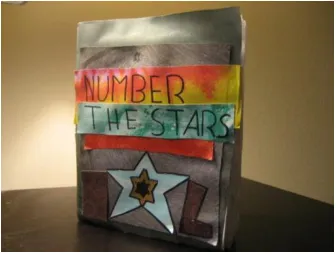
Figure 1. Student Reflection Book I, wall and computer paper, 5 ½‖x6 ½‖ 28
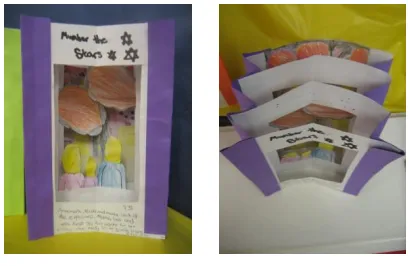
Figure 2. Student Tunnel Book-Front View, construction paper and 29
colored pencil, 6‖x9‖x4‖
Figure 3. Student Tunnel Book-Top View, construction paper and 29
colored pencil, 6‖x 9‖x 4‖
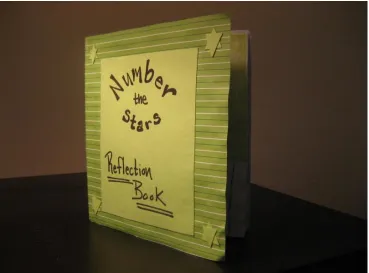
Figure 4. Student Reflection Book II, wall and computer paper, 5 ½‖x6 ½‖ 31
Figure 5. Construction of Reflection Book I 37
Figure 6. Construction of Reflection Book II 38
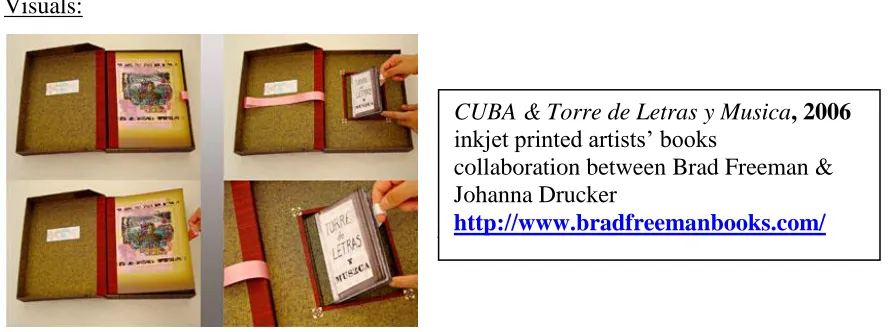
Figure 7. Brad Freeman and Johanna Drucker, CUBA & Torre de Letras y Musica 41
(2006), inkjet printed, 12 ¼ ‖ x 9 ¼ ‖ x 2‖
Figure 8. Student Reflection Book III , wall and computer paper, 5 ½‖x6 ½‖ 41
Figure 9. Reflection Book Teacher Example-Outside, wall and 42
computer paper, 5 ½‖x6 ½‖
Figure 10. Reflection Book Teacher Example-Inside, wall and 42
computer paper, 5 ½‖x6 ½‖
Figure 11. Student Reflection Book IV, wall and computer paper, 5 ½‖x6 ½‖ 45
Figure 12. Student Reflection Book-Inside, wall and computer paper, 5 ½‖x6 ½‖ 45
Figure 13. Van Gogh, Fishing Boats on the Beach at Saintes-Maries (1888), 55
oil on canvas, 65.0 x 81.5 cm.
Figure 14. Unknown, Paris (1830) Tunnel Book Example 56
Figure 15. Martin Engelbrecht Tunnel Book (18th cen.) etched prints-Side View 56
Figure 17. Carol Barton,Everyday Road Signs (1988), silkscreen 56
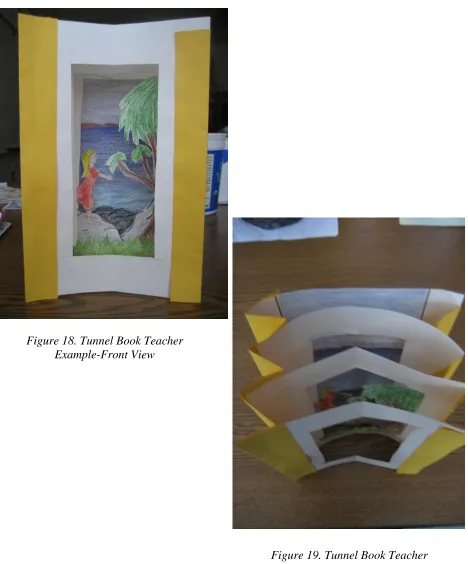
Figure 18. Tunnel Book Teacher Example, construction paper and 57
colored pencil, 6‖x9‖x4‖-Front View
Figure 19. Tunnel Book Teacher Example, construction paper and 57
colored pencil, 6‖x9‖x4‖-Top View
Figure 20. Student Tunnel Book II, construction paper and 59
colored pencil, 6‖x9‖x4‖
Figure 21. Student Tunnel Book III, construction paper and 59
colored pencil, 6‖x9‖x4‖
Figure 22. Student Tunnel Book IV, construction paper and 59
colored pencil, 6‖x9‖x4‖
Figure 23. Student Tunnel Book V, construction paper and 59
colored pencil, 6‖x9‖x4‖
Figure 24. Student Reflection Book V, wall and computer paper, 5 ½‖x6 ½‖ 61
Figure 25. Student Tunnel Book VI, construction paper and 62
CHAPTER ONE
Introduction
Art education is a fundamental element in a quality education. However, over the past
few years economic factors have caused many to question its importance. When faced with the
reality of budget cuts that many districts are experiencing it is difficult for many to see the
significance of art programs any longer.
Need for the Study
In contemporary educational institutions many programs are being sacrificed due to
budgetary issues. Visual art education is a program that appears to be one of the first to be
dismembered. Much of education today is focused upon state-wide tests and school achievement.
Art is one area of the curriculum on which students are not tested, therefore when faced with
budgets to cut, art looks like an easy option. During these difficult economic times incorporating
art could be just the thing that students need. Integrating the visual arts into the core curriculum
has become a more relevant concept. This integration could prove beneficial to students‘ learning
and engagement in the core curriculum. According to Kosky and Curtis (2008) ―introducing the
Arts into everyday classroom work may provide the extra push students need to gain or maintain
a desire to learn‖ (p. 23). This issue is one of great importance to me due to the fact that I have
had the rare experience of being an art educator who has made the transition to a traditional
educator. The perspective that I have gained from this transition is a unique one.
The district in which I work, like so many others, faced a difficult task in the previous
year. This task was reducing the budget. The district was forced to make difficult choices to
resolve this issue. At first they considered the idea of cutting orchestra and band at the middle
proposal. In response, the board of education for the district swiftly made a decision that would
affect my future and livelihood. The resolution was to reduce the number of teaching and support
positions within the district. Consequently the number of elementary art and music teachers was
reduced by half. The board stated that one art teacher would travel between two schools,
therefore eliminating a teaching position at one of every two schools. The faculty retained was
based on seniority. Since I had only been with the district for one year I was the one to be
displaced. The board also decided that the students would receive half of the amount of time in
art and music as they had in previous years. The students would only visit art every other week
as opposed to every week.
Due to the fact that I am also certified in elementary education I was offered a teaching
position at the same school where I had been teaching art. As a fifth grade teacher I learned a
great deal about myself as well as the education of my students. It was a difficult transition but I
found comfort in teaching my students creative, hands-on lessons that incorporated the standards
being studied across the curriculum. This allowed my students to take a more imaginative
approach to the learning process. My interest and passion lies in teaching my students lessons
that are integrated with the visual arts. The research questions that I intended to answer in this
study were, (1) How can I integrate book arts and reading into an age appropriate curriculum?
(2) What can I learn about the teaching process from this curriculum? (3) What can I learn about
book arts?
Purpose of the Study
I took an auto-ethnographic approach to my research. The study was based on my
observations and experiences as I developed and implemented a unit of study for my students,
Much of elementary education is based on literacy. If students are not able to read and
write then they will automatically suffer in the years to come. Books of all kinds are a wonderful
tool to utilize in the classroom. The unit of study that I developed for my students was based
upon the idea of integrating art with reading and writing. My students created two books, a
pocket book and a tunnel book. The pocket book was constructed in order to be used throughout
the reading of the novel, Number the Stars (1989)by Lois Lowry. These books in particular were
used as a means of responding to literature. The tunnel book was used to bring to life a scene
from the novel using visualization.
Through this unit I learned how these types of projects can be a positive addition to the
curriculum. It was my hope that the students would become more engaged in the reading and
writing processes. Though I will not be measuring their performance in any way, I will record
my own reflections and process. Being able to utilize my reflections as a practicing classroom
teacher, should be beneficial for my future planning and teaching. I am optimistic that my
CHAPTER TWO
Literature Review
In recent years there has been much talk among educators concerning No Child Left
Behind and the trail of alterations that have followed it. Much of today‘s education is based on
tests and test scores required under law. With such an abundance of time spent on the subject
areas of reading, writing, and math there has been little time for other areas of study. Content
areas that are not assessed do not hold as much value as those that are and this permits the
non-tested areas to be neglected easily in order to allow more time for the core subjects of reading,
writing, and math (Jones & Thomas, 2006). According to Chapman (2004), these standardized
tests will most likely result in fewer hours of study spent in other areas, such as the arts. From
the first day of school students are training for the tests they will take near the end of the school
year. At one point I asked my students to respond to three questions one of them being: what was
their goal for fifth grade? The majority of the students responded by saying their goal was to pass
the Criterion-Referenced Competency Tests (CRCT), which is Georgia‘s state-mandated
assessment. This supports the idea that students are reminded constantly about this type of
assessment and of its importance. Jones and Thomas (2006) state that the creation of the No
Child Left Behind Act will ultimately lead to negative impacts in the areas that are not tested,
such as art, music, and physical education, while areas that are assessed will have increased time
and attention.
There is another issue that is plaguing art programs in education and that is financial
distress. Many public school districts feel the hard economic times and it has taken its toll on
many programs. The art programs are particularly susceptible to cuts especially in states that
hand and have seen what one school district believes to be important and what is easily
disposable.
Integrated vs. Interdisciplinary Curriculum
Due to the problems associated with No Child Left Behind and budget concerns, many
educators have turned to integrated or interdisciplinary curriculum. In some opinions the two
words may seem interchangeable while in other opinions they differ entirely. It is important to
decipher between the two terms in order to gain a proper perspective.
Taylor, Carpenter, Ballengee-Morris, and Sessions (2006) define an integrated education
as the uniting of two or more areas of study. That is, in an integrated curriculum there is a natural
flow or connection between two content areas, no clear separation is present.
Jones and Thomas (2006) state, ―In schools, we break the world down into fragments, but the
preference of the brain is to consider phenomena coherently—to identify the patterns and
structure with context as a clue‖ (p. 64). It is important for human beings to observe and make
connections. However useful an integrated education may be, there are many demands put upon
the teachers in order to develop and implement a quality curriculum (Eisner, 2002). Integrating
curriculum makes sense in the eyes of many educators, however, the extra time and energy
required may scare most people away. Due to the fact that such precise collaboration must
occur, the integrated method requires additional time for planning and is more often seen at the
elementary level (Taylor, et al., 2006).
In his book, The Arts and the Creation of Mind, Elliot Eisner (2002) refers to integrated
curriculum several times. Eisner articulates that the arts are utilized four ways in regards to
integration. The first method discussed is when the arts are used as an avenue of comprehension
studying the 1920s in social studies one could relate the Harlem Renaissance and the various
prominent artists that dominated the time period to the students. The second mode of integration
is based on the arts as a whole and the commonalities they share, but also keeping in mind their
individual values. For example, teachers could discuss repetition in both music and art while
looking at the similarities and the differences of the two. The third method mentioned is related
to exploring a particular theme, most likely from another area of study, such as science. Take for
example the concept of metamorphosis. This concept can be explored through both fields of
music and art as well as focusing on science (Eisner, 2002). The final approach discussed
involves the idea of problem solving skills. Lessons can be designed that require students to use
various areas of study in order to find the solution to the particular problem given to them
(Eisner, 2002). These various approaches to an integrated curriculum are the ones most likely to
be seen in education. Eisner‘s approaches to integrating art with the core curriculum are typical
ones that I have observed as well. As a fifth grade teacher, I have found myself using art as a
means of furthering the students‘ comprehension of various time periods and important historical
events in social studies. Through these approaches the students appeared to enjoy this avenue of
learning.
On the other hand, an interdisciplinary education is a precise connection between the
content and instruction of more than one area of study in a teaching/learning practice (Taylor, et
al., 2006). Instead of studying World War II in social studies and in literature class separately an
interdisciplinary approach would allow students and teachers to ―see, celebrate, and make
explicit cognitive connections between and among their varied courses of study (Taylor, et al.,
2006, p. 7). In the article Toward a Connected Core Curriculum Wraga (2006) suggests that
as well as connecting those academic experiences to real world experiences of the students.
Wraga (2006) focuses on a concept identified as ‗horizontal articulation of curriculum.‘
Traditionally, education has focused on the connections between subjects from grade to grade.
That is, looking at the relationship between sixth and seventh grade math, instead of looking at
the relationship between the different subject areas at the same grade level (Wraga, 2006).
Wraga (2006) provides three approaches to an interdisciplinary curriculum: correlated
curriculum, fused curriculum, and integrative core curriculum. The correlated curriculum focuses
on the students being allowed to investigate and make precise connections between the separate
content areas of study. In this case teachers could easily collaborate to organize their focus of
study so there will be a clear correlation between two subject areas. The fused curriculum
approach merges two completely separate subject areas into an entirely new class. Integrative
core curriculum does not refer to the commonly used version usually associated with the required
courses. This method is based on the idea of students discussing personal and social tribulations
and having the content material only be incorporated when it correlates with the specific issue
being addressed. This approach allows students to work in partnership with each other as well as
with their teachers. In working together the students ―apply and integrate subject knowledge to
analyze common personal or social problems‖ (Wraga, 2006, p. 93).
In regards to my own teaching philosophy I am drawn to the integrated approach as
describe by Eisner. Due to that fact that I am an elementary school teacher this approach is by far
the most sensible. I often use art as a means to further comprehension and support the topic being
studied. For example, while studying the circumference of a circle I taught a lesson in which we
looked at Concentric Circles by Wassily Kandinsky. My students were then given either the
out these circles. Once glued concentrically to each other the students were to find the
circumference of each using a formula we had studied. This lesson created vibrant collages
while reinforcing the area of math. It was an apparent success in regards to integration.
High school may be a more appropriate place for the interdisciplinary approach due to the
fact that the areas of study are more focused and not as broad as elementary curriculum. For
example, in fifth grade social studies we cover information from the Civil War to present day.
The amount of information that the students must learn is enormous and requires an immense
effort from both the teachers and students. Therefore it would be impossible to bring all of this
information and combine it with another area such as literature. As mentioned previously high
school curriculum becomes more centered on a particular time period. Students can decide, for
example, whether they want to study American History, World History, or a more specific time
period within those. By choosing one particular time period in history teachers could more
easily collaborate and create a new curriculum combining history and literature, or perhaps art
history and world history.
There are many theories about what constitutes an integrated or interdisciplinary
education. With such an abundance of options it is easy to become confused by the various
definitions. However, it is important to remember that whichever approach is taken the main
focus is the success of the students.
Integrating Art with Reading and Writing
Along with the subject of math, reading and writing are a main concern on many state
mandated assessments. Due to the fact that so much time is spent on these content areas it only
makes sense to utilize multiple approaches in order to benefit the students‘ comprehension of the
more creative method to comprehend or respond to the information. Helm and Katz (2001, cited
in Wu, 2009) state that children utilize drawing and painting in order to make connections and
relationships with various concepts and express their thoughts.
The National Endowments for the Arts (cited in Shmulsky, 2009) published a survey
revealing a great decline in the amount of literature being read by all age groups. Due to this
alarming decrease in reading Lucinda Shmulsky, an art teacher in Massachusetts, developed and
implemented a lesson to engage and encourage her students in reading. Shmulsky (2009) asks
the rhetorical question, ―What better way to engage young students in the love of reading than by
using the arts as an integral part of the process?‖ (p. 40). In the lesson, Shmulsky had her
students write a story and then create original illustrations in order to bring their stories to life.
She also used a variety of children‘s books as inspiration in order to get their young minds
excited and thinking. Upon completion, the stories were assembled into a book for the students
to enjoy. It was Shmulsky‘s hope to motivate her students ―in the roles of writers, editors, and
illustrators‖ (p. 42). This is simply one successful example of a teacher incorporating art into the
literature curriculum in order to inspire her students.
Another avenue of integrating art with literature is thru the use of comic books or graphic
novels. Comic books have been enjoyed by children dating back to the late 1800s, however they
did not become as mainstream until the 1920s and 1930s (Vega & Schanckenberg, 2004).
Comic books and graphic novels are an ideal avenue in which to engage students and literacy.
This type of approach can help students in contemporary society ―relate to big themes and topics
by tapping into the way students are already learning naturally‖ (Cleaver, 2008, p. 30). There are
a variety of quality skills and knowledge that one must have in order to create comic books.
graphic design sense, familiarity with document layout, and finally computer literacy (Vega &
Schackenberg, 2004). Cleaver (2008) states,
The American Library Association recently embraced comic books as an ideal way to
motivate young readers. The Maryland State Department of Education (2005) has done
the same by partnering with Diamond Comics, a distributor for Disney, to develop a
comics-based curriculum for reluctant readers. Several organizations—including the
National Association of Comics Art Educators (2006) and the New York City Comic
Book Museum (2006)—are aligning with schools and teachers to promote the use of
comic books in K–12 classrooms. (p. 30)
It only makes sense to utilize what is already present in the lives of students in order to grasp
their attention and allow for exploration. If teachers are able to find a topic that is interesting to
their students then students will most likely become immersed in the process and ignore the
reality that learning is in fact taking place. Papert (1993, cited in Vega & Schnackenberg, 2004,)
suggests that when works are created that hold a certain value of importance to the creator then
this is when ―some of the most powerful learning occurs‖ (p. 818). The examples presented here
simply demonstrate only two methods to investigate while developing lessons that integrate art
and literature.
Visuals and Reading Comprehension
The ability to understand what one is reading is essential to a successful educational and
professional career. I have observed students who were able to read fluently, however when
asked questions in regards to the context of the reading they struggled to articulate it. Many
researchers and teachers have attempted to find a connection between reading comprehension
By using visuals we can obtain student responses that we might not otherwise get through
talk or writing. Visuals, as response, represent a third ―sign‖ system through which
understandings are expressed metaphorically. They provide an opportunity to express
aesthetic responses and responses to a word‘s form and quality as well as to its content.
(p. 27)
Eisenkraft (1999) developed a curriculum for her high school English class that incorporated
visual representations. The aim of this implementation was to find a more interesting approach to
a novel. She felt that her students were not excited or involved in the reading process. Eisenkraft
states, ―I was looking for an activity that would assure full participation and appeal to a variety
of learning styles‖ (p. 95). During this lesson the students created watercolors based on scenes
from the book. These watercolors were a means to open up the class to further discussion
regarding the reading, which they successfully did. Upon the completion of this unit Eisenkraft
was adamant about ―integrating visual responses into our regular reading, writing, and
discussion‖ (p. 101). Based on her experience Eisenkraft urges other teachers to integrate the use
of visuals to further students involvement and achievement.
In the article, Using Pictures to Assist in Comprehension and Recall (Rich & Blake,
1994) a program was implemented which used the strategy of picture drawing throughout the
reading process to help students comprehend the text. The fourth and fifth grade students used
sticky notes to draw simple representations of the reading. According to Rich and Blake (1994),
the students were enthusiastic about this creative strategy. They were also able to easily create a
visual summary, and then use the visual as a means of articulating the reading in the days that
followed without having to reread the material. This provides sufficient evidence that the use of
stated that they felt the picture drawing strategy was helpful to them (Rich & Blake, 1994).
Hibbing and Rankin-Erickson (2003) agree that,
A picture truly is worth a thousand words for students who struggle with reading
comprehension. We have found that if students can create their own images on the
television screens of their minds as they read, their potential for understanding the text is
increased. (p.769)
Many teachers have implemented the use of visuals in their lesson plans and based on their
experiences, as well as my own, there is much support for integrating these strategies in order to
aid in student achievement.
Books Arts: A Historical and Contemporary View
In the traditional sense of what is thought to be art, one may not think that a book would
be considered. However, many artists in historical and contemporary times have turned to this
mode of creation in order to express their ideas.
According to Hutchins (2002) books have a long standing history. The first books were
made of clay tablets and placed in libraries around 1300 B.C. The ever important Bible and the
Torah began on scrolls not long after. The ancient Mexican cultures communicated with vibrant
pictographs on folded strips of bark. While the Chinese in the 10th century used dragon-scale
binding in order to attach multiple pages of scroll. During The Middle Ages books were
considered luxuries due to the fact that this time pre-dates the invention of the printing press.
Furthermore, at the time of illuminated manuscripts, books had to be written, illustrated, and
Artists’ books
Books have evolved since then and have been used and transformed in a variety of ways.
The idea of artists‘ books is a fairly recent development. According to Drucker (2005), the artist
book did not come into existence until the 20th century. It was during this period of important
social and artistic movements that the idea made an impression. One of the most recognizable
forms is the livre d‘artiste. These books originated in France during the late 1800s and were quite
the commodity. They are recognizable by large format, intricate hand coloring, elaborate
printing techniques, exquisite binding, the use of exceptional materials, and text or images that
appealed to more sophisticated demographic (Drucker, 2005). The 20th century was an important
time for artists; some of the artists featured in early livre d‘artitse include such influential names
as Pierre Bonnard, Henri Matisse, Joan Miró, Max Ernst, and Pablo Picasso (Drucker, 2005).
In contemporary times, Phillpot (1998, cited in Burkhart, 2006) states, that artists‘ books
are ―distinguished by the fact that they sit provocatively at the juncture where art,
documentation, and literature all come together‖ (Burkhart, 2006, p. 33). Many artists have
continued down the path that was paved by some of the most influential artist of all time.
Some recognizable artists of today are Johanna Drucker, Brad Freeman, and Clifton
Meador. Each of these artists‘ projects their unique style in the creation of their artists‘ books.
Drucker is a professor at University of California, Los Angeles. She is an internationally
recognized book artist. Her work primarily focuses on typography and has been exhibited in
countless museums throughout the country. Drucker also founded Artists Books Online which
provides access to a multitude of images of various book artists (Drucker, 2009).
Brad Freeman, another renowned creator of artists‘ books, produces books that center on
book entitled, CUBA & Torre de Letras y Musica, 2006. This particular book was in response to
visiting Cuba as guests of the UNEAC (The Union of Writers and Artists of Cuba). Freeman
believes that his books become mobile exhibitions in themselves due to their portable nature.
Clifton Meador, yet another well known book artists, approaches the art form as
narratives that are a combination of the disciplines of writing, photography, printmaking, and
design. The narratives that he conceptualizes are based on culture, history and place; therefore,
his books illustrate this interconnectivity.
All three of these artists approach the art form of creating artists‘ books in different ways,
however, they all share a common interest and that is taking their ideas and expressing them in
the form of a book rather than a painting or drawing.
Tunnel books
Another book that has caught the attention of many artists is the tunnel book. The concept
of tunnel books dates back hundreds of years. For centuries people have been enticed by illusions
and the tunnel book is a simple illusion based on perspective. In 1437, Leone Battista created a
box with a small hole (a peep hole) that allowed the viewer to see scenes using perspective. From
this point on peep show boxes were seen throughout Europe at various fairs and gatherings. The
scenes typically depicted were those based on religion, history, or mythology (Hutchins, 2002).
Hutchins (2002) states,
Regardless of the subject matter, the physical structure of tunnel books creates an
intimate setting that immediately draws the reader into the heart of the book. The viewer
is not merely holding an object, the participant has mentally entered the structure and is
quickly grab the reader‘s attention…It‘s almost alchemy; certainly it‘s enchantment.
(para. 46)
Tunnel books are still being created by many artists today. Some prominent tunnel book artists
include Carol Barton, Edward Gorey, and Laura Davidson. Carol Barton‘s work has been
exhibited internationally throughout the years. Along with being a book artist, she is an educator,
as well as the proprietor of Popular Kinetics Press, which is a company that focuses on the
publications of various artists‘ books. Barton is interested in showing individuals how to create
these imaginative books. The Pocket Paper Engineer, published in 2005,was produced as a
workbook for those interested learning more about the creation of pop-up books. Barton (n.d.)
expresses her views on book arts in the following statement,
Making books as an art form allows me to combine my backgrounds in painting and
photography with my interests in sculptural forms, printing, and serial images. My
inspiration comes from various sources: reading, history and science topics, functional
objects (furniture, jewelry, and kinetics toys), architecture, and other artists‘ books. The
book is an intimate type of art in which the viewer becomes actively involved. It‘s
the opportunity for personal communication through the books I design that I most enjoy.
(para. 2)
Another well known artist who experimented with tunnels books was Edward Gorey. Gorey was
a renowned illustrator as well as costume and set designer. One of his creations that has attracted
much attention is the tunnel book entitled, Tunnel Calamity (1984). This particular piece from
Gorey‘s whimsical imagination invites the viewer into his world. The book consists of various
opening on the cover. Though published in 1984 Tunnel Calamity continues to entice viewers
both young and old.
Laura Davidson is yet another artist who is revitalizing books as an art form. She has
created several tunnel books, one in particular entitled, Tunnel Vision (2000), depicts a
construction scene outside of her studio. Davidson states (Hutchins, 2002),
I chose the tunnel format for this book because I found it to be [a] perfect way to show a
view of something in a 3-dimensional way. If I had chosen a conventional format, it
would not have captured the visual depth I was after. (para. 23)
Another tunnel creation by Davidson is Venice (2010), which depicts San Marco Square.
This is one of a series that the artist has created to showcase her favorite places. The detail and
delicate nature of this piece allows the viewer to obtain a more intimate view of this popular
destination.
Even with all of the technology of contemporary times, people are still fascinated by this
simple means of illusion; the tunnel book. These artists, along with many others, have assisted in
the continuation of this art form and keeping it alive for the younger generations to discover.
Implications for Education
Why are bookmaking or book arts important to education? What are the implications for
general, as well as, art education? Heath (1997, cited in Darvin, 2009) notes, it is the
responsibility of educators to provide students with ample opportunities to write and illustrate
―meaningful personal narratives‖ (p.58) as well as to gain the perspective of considering writing
and drawing as a mean of interacting with each other. Burkhart (2006) states that by teachers and
students exploring artists‘ books they will be investigating concepts applicable to
researcher observed children who had experienced traumas from a war-ridden country and the
use of book creations as a means of expression. There are many benefits from utilizing
book-making, Darvin (2009) explains that the method of bookmaking was specifically chosen for the
children because such an activity can promote a creative and meaningful mode of expression.
Rosenblatt (1978, cited in Jacobs, 2006) states that by responding in a more aesthetic fashion to
literature the reader may more easily comprehend the reading by partaking in a more authentic
―lived-through experience‖ (Jacobs, 2006, p.113) therefore, the student would have ―a higher
level of engagement and interaction‖ (p.113). The results from Jacobs‘ study (2006), which
focused on incarcerated youth, provides various implications for the benefits of integrating art
with literature. Two of the findings indicated in the study are: (1) when artistic response to
literature is incorporated into the curriculum, specifically high –level thinking, it can be useful in
determining comprehension of the text (2) by incorporating an artistic response the students are
being provided an alternative method of response as opposed to the traditional paper and pencil
approach. Darvin (2009) notes, that by allowing children to write their own stories, create their
own illustrations, and generate their own titles, book covers and autobiographies the children
will be able to more fully express their thoughts and feelings regarding a particular theme or
issue. Jacobs (2006) found that allowing the youth to respond artistically to readings elevated
their communication skills, attitudes, and engagement toward the text. There are many positive
implications of incorporating art or artistic response in the areas of reading and writing, teachers
simply need to know which tools to utilize. Jacobs (2006) states, ―Artistic response can be a
powerful tool to evaluate engagement and understanding of the text. It is important to engage
youth in literature, and there are a multitude of ways to make sure that happens‖ (p. 118). From
engaging students in the learning process. By using various approaches the students are being
allowed the freedom to express themselves in alternate mode, which is what some students
desperately need. If only more teachers would utilize these valuable tools for the sake of their
CHAPTER THREE
Methodology
The curriculum that I developed and implemented was focused on the idea of integrating
art and literature. I taught this unit to one fifth grade class in a suburban public school setting.
The class consisted of sixteen students ranging from ages ten to eleven. The novel was read both
independently as well as collectively. The length of this unit was four weeks long and was
centered on one novel, Number theStars by Lois Lowry.
Reading has become an integral part of a student‘s education, therefore by focusing on a
novel I integrated reading and writing with art as well as social studies due to the fact that the
story is set in Poland during World War II. The unit of study had two main components
integrated with visual production. The lessons developed for this unit of study ranged from
analyzing the text by identifying and summarizing the important details to using visualization in
the depiction a scene from the novel.
The first lesson was centered on analyzing the text. Students were expected to read the
assigned chapters and then accurately identify three
important details related to the chapter. In addition to
providing three keys points from each chapter students
were expected to respond to specific questions related
to the reading. All of this was completed and kept in the
pocket book that they created. This pocket book was
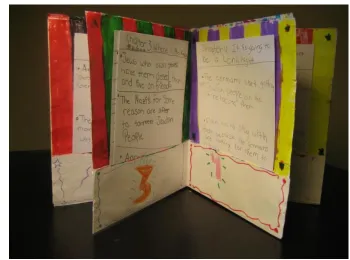
referred to as their Reflection Book. While the students read the story they used index cards for
each chapter, these index cards were then placed in the corresponding pocket within the book. As
[image:29.612.352.520.468.595.2]the class proceeded through the novel, the students‘ Reflection Books were easily accessible and
helped with mental as well as physical organization. This book was produced in a creative
fashion in which the students were allowed to express their ideas in an imaginative approach. I
purposely left the overall design of the book up to each individual student. I wanted to allow
them freedom in regards to their design. Some chose to show Stars of David, which were related
to the story, while others chose to draw more abstract designs using various lines and patterns.
While I did allow them choice in design, however, I did require them to use collage on the
outside of the book and drawing on the inside, otherwise the design was up to the student.
The second lesson was centered on visualization. Throughout the unit I discussed with
the students what is meant by the term visualization and the important role it plays while reading
a story. While progressing through the reading the students and I discussed various scenes or
events that had transpired, this was done on a daily basis. Upon reading the majority of the novel
students began working on a tunnel book. After a collective dialogue related to various scenes
from the novel the students chose a scene that was of interest to them to visualize. The students
used the text in order to locate meaningful details
that helped to create a vivid image. Instead of
simply drawing the scene the students created a
three dimensional version of it. Along with creating
a visual representation students were required to
write a brief description of the scene they had
chosen.
Limitations
There were some limitations that were evident as I approached this study. First, due to the
[image:30.612.76.280.434.567.2]fact that this is an auto-ethnographic study the findings were based upon my observations only.
Figure 2. Student Tunnel Book- Front View
The students did not participate in a survey or questionnaire in order to help with the results.
They were not interviewed or asked to share their thoughts about the lessons. The results are
based upon notes and observations that I kept throughout the unit of study. Therefore, I am not
able to fully report on the success or failure of this unit in terms of student learning. Rather, my
goal was to see what I learned from the process to enhance my own teaching.
Another limitation I faced was time. I implemented this unit near the end of the school
year after the state mandated tests. I was concerned that time may become an issue and in fact it
did. Originally, I had planned on implementing three lessons within this unit, however due to
unforeseen end-of- the-year events I was only able to focus on two lessons. One thing I have
learned as a teacher is that you can only plan so much. Students may end up taking you down a
different path and the teacher has to be flexible with the plans. As this unit was taught to fifth
graders I was concerned about keeping their focus as the school year came to an end with the
CHAPTER FOUR
Curriculum
In this chapter I provide detailed lesson plans of the two components that comprise this
unit on art and literature. Both plans provide a wide range of information needed to implement
these lessons. Included are: the characteristics of the learner, rationale, historical and cultural
context, standards, objectives, materials, preparations, introduction/motivation, procedures,
distribution and clean-up, closure, assessment, extensions, vocabulary and visuals, and a teacher
example.
Number the Stars:
Art and Literature Unit
Lesson: Reflection Book
Teacher: Anne Shea
Grade Level: 5th Grade
Characteristics of the Learners:
The students being taught this lesson were average 5th grade students with no
accommodations necessary in regard to physical or academic state. This lesson was done with 16
students, 8 boys and 8 girls. There are a few important things that students must be able to do in
order to complete this assignment. First, students are expected to be able to read and comprehend
at a 5th grade reading level. Second, the students work on summarizing various chapters. Finally,
they will be working on deciphering the important details from the non-important details of the
chapters. They will also be expected to respond to a number of questions by inferring as well as
finding specifics from the text.
Rationale:
The ability to read, process, and summarize are important skills to acquire. Throughout
ones educational and professional career one may be asked to use these specific skills. This
lesson is teaching and furthering those skills that are vital to critical thinking.
Historical/Cultural Context:
The idea of artists‘ books is a fairly recent development. According to Drucker (2005),
the artist book did not come into existence until the 20th century. It was during this period of
important social and artistic movements that the idea made an impression. One of the most
and were quite the commodity. They are recognizable by large format, intricate hand coloring,
elaborate printing techniques, exquisite binding, the use of exceptional materials, and text or
images that appealed to more sophisticated demographic (Drucker, 2005). The 20th century was
important time for artists; some of the artists featured in early livre d‘artitse include such
influential names as Pierre Bonnard, Henri Matisse, Joan Miró, Max Ernst, and Pablo Picasso
(Drucker, 2005).
In contemporary times, Phillpot (1998) states that artists‘ books are ―distinguished by the
fact that they sit provocatively at the juncture where art, documentation, and literature all come
together‖ (p.33). Many artists have continued down the path that was paved by some of the most
influential artist of all time.
Some recognizable artists of today are Johanna Drucker, Brad Freeman, and Clifton
Meador. Each of these artists projects their unique style to the creation of their artists‘ books.
Drucker is a professor at University of California, Los Angeles. She is an internationally
recognized book artist. Her work primarily focuses on typography and has been exhibited in
countless museums throughout the country. Drucker also founded Artists Books Online which
provides access to a multitude of images of various book artists
Standards:
ELA5R1 The student demonstrates comprehension and shows evidence of a warranted and
responsible explanation of a variety of literary and informational texts.
For literary texts, the student identifies the characteristics of various genres and produces
evidence of reading that:
a. Identifies and analyzes the elements of setting, characterization, and conflict in plot.
f. Identifies and analyzes the author‘s use of dialogue and description.
g. Applies knowledge of the concept that theme refers to the message about life and the world
that the author wants us to understand whether implied or stated.
i. Makes judgments and inferences about setting, characters, and events and supports them with
elaborating and convincing evidence from the text.
j. Identifies similarities and differences between the characters or events and theme in a literary
work and the actual experiences in an author‘s life.
ELA5W2 The student demonstrates competence in a variety of genres.
The student produces a response to literature that:
a. Engages the reader by establishing a context, creating a speaker‘s voice, and otherwise
developing reader interest.
b. Advances a judgment that is interpretive, evaluative, or reflective.
c. Supports judgments through references to the text, other works, authors, or non-print media, or
references to personal knowledge.
d. Develops interpretations that exhibit careful reading and demonstrate an understanding of the
literary work.
e. Excludes extraneous details and inappropriate information.
VA5C.1 Applies information and processes from other disciplines to enhance the understanding
and production of artworks.
a. Makes interdisciplinary connections applying art skills, knowledge, and ideas to improve
understanding in other disciplines.
a. Creates a series of thumbnail sketches to alter visual images (e.g., magnifying, reducing,
repeating or combining them in a variety of ways) to change how they are perceived and
interpreted.
c. Develops fluency, flexibility, and elaboration of ideas in the development of a work of art.
VA5PR.3 Understands and applies media, techniques, and processes of three-dimensional works
of art (e.g., ceramics, sculpture, crafts, mixed-media) using tools and materials in a safe and
appropriate manner to develop skills.
d. Creates compositions using traditional and/or contemporary craft methods (e.g., weaving,
stitchery, batik, jewelry, book arts).
SS5H6 The student will explain the reasons for America‘s involvement in World War II.
a. Describe Germany‘s aggression in Europe and Japan‘s aggression in Asia. b. Describe major
events in the war in both Europe and the Pacific; include Pearl Harbor, Iwo Jima, D-Day, VE and
VJ Days, and the Holocaust.
Objectives:
Students will…
1. Demonstrate comprehension of the novel Number the Stars by Lois Lowry by providing
answers and information directly related to the text.
2. Analyze the text being read and provide an adequate summary of the chapters.
3. Respond to questions directly related to each chapter.
4. Identify books (artists‘ books) as a creative means.
5. Create a pocket book in which to house their summaries as well as questions for each
Materials:
Number the Stars by Lois Lowry (novel)
8.5x11 computer paper-9/student.
Large (around 6.5x 11.5) and small pieces of wall paper, construction paper, scrap
booking paper, etc.
Glue
Scissors
Rulers
Markers, crayons, colored pencils
4x6 index cards or 4x6 pieces of paper-18/student
Preparations:
Prior to presenting this lesson the teacher will need to locate and organize supplies to be
used. Once the books are constructed students will be using the index cards and regular pencils.
You can make the books before reading of the novel has begun.
Introduction/Motivation:
The introduction should take 15-20 depending on the amount of discussion.
Lead into the lesson by talking about books. What are books for? Why do we have them?
Discuss artists‘ books. What do you think they are?
Share with students the definition provided (See Vocabulary below)
Share with the students images of various artists‘ books.
Discuss the images. What do they think of the books? What do they notice about the
Glue
Share with the students about the lesson. We will be creating our own books that will be
used throughout the reading of Number the Stars.
These books will house their ideas, questions, and answers regarding the novel.
Procedures for Art Production:
The production of the book will take 4 days; however the book itself will then be used
throughout the reading of the novel.
Day1
Today students will construct the reflection book.
Begin by introducing the lesson to the students by using the above information/questions.
Pass out 9 pieces of computer paper to each student. It‘s best to have the paper counted
and sorted for easy distribution.
Students should have rulers and pencils available.
Holding the paper horizontally fold each piece in half vertically. Do each piece
separately, not all together. Seems tedious but makes a difference.
In order to create a pocket students must measure from the bottom of each piece about 2
inches and then fold. The folds should all be about two inches; this will ensure a nice and
neat book. Try to make them all the same. This will take them some time.
With each piece folded independently you will construct the book by taking the first two
pieces of paper and gluing the half of the back of one to the back of the other piece.
e
[image:38.612.80.524.613.675.2]Put glue on half of the back of the paper.
Do this for the rest of the pieces of paper to create the book. Make sure they are being
glued properly with all of the pockets across the bottom and not upside down across the
top.
After books are constructed have students choose a large piece of wall paper,
construction paper, scrapbook paper, etc. to be the cover of the book.
Glue the decorative paper to front and back of the book creating a taco. Some of the
pages may not be lined up perfectly which is okay.
Final gluing…on each page put a small dot of glue under the flap to create a secure
pocket.
Carefully separate pages so they don‘t get permanently glued together.
Allow them to dry standing up or fanned open.
Day 2
Today students will decorate the outside of the books.
Carefully pull pages apart if they are glued together.
Using any decorative paper students can cut and paste to add creative details to front and
back covers of the book. I do not allow them to draw on the covers- I want them to use
collage to add interest. They may use sharpie to write ―Reflection Book‖ and ―Number
the Stars‖ somewhere on the cover.
Day 3
Today the students will decorate the inside of the book. They will have two days to work
and finalize the design of the book.
Using colored pencils, crayons, and/or markers the students can add creative details to the
inside pages of the book. You may want to remind them that index cards will be going in
the pockets so don‘t draw in the space because it will be covered up. I also allow them a
lot of freedom in regards to their design. They may choose to draw Stars of David which
are related to the story or they may choose to draw more abstract designs using various
lines and patterns.
One requirement: they must number each page for the chapters of the book. There are 17
chapters so starting from the front of the book students will somehow label each
page/pocket. There will be an extra pocket at the end which will be used to keep a
character list.
Day 4
Today students will continue and finalize the design of the book.
Continue to use crayons, colored pencils, and/markers to add creative details to the inside
of the book. This is the last day to add such designs.
Once the book is constructed the students will use the index cards to write 3 bullets points
from each chapter. This will be the summarizing aspect of the project. This will be done
both in class as well as for homework.
They will also be given one question for each chapter (Table 1). The answer to the
questions will go on the back of the corresponding index card.
Also if supplies are available each student could receive and additional piece of 4x6
paper or index card to draw a quick sketch and the important events that happened in the
Distribution and Clean-up:
This lesson can get a bit messy with the glue during construction and with all of the paper
scraps used during the decorating. As far as the glue issue, make sure to stress that they do not
need a lot of glue. This will make their pages bubbly and more likely to get stuck together. Glue
sticks may be a good alternative to Elmer‘s glue that I used. In regards to the distribution of
materials I usually pass out most of the supplies to avoid a chaotic classroom. Sometimes I ask
for students to help. When it comes to the decorative papers being used for the covers and the
details I spread out a variety of paper on a table and call a few students at a time to choose their
paper. It is always a good idea to have basic supplies in a well known location for easy access.
Closure:
As with many lessons I enjoy allowing the students to share with one and other what they
have created and/or accomplished.
Assessment: See Rubric (Table 2)
Extensions:
This particular type of book, a pocket book, could be constructed and used in any area of
study for a wide variety of purposes. The students could create a book to keep track of
observations and experiments performed in science or to use as a journal for writing. Since the
book consists of pockets the artifacts housed within are endless.
Vocabulary and Visuals:
Vocabulary:Definition from www.artlex.com
Artists‘ Books- Artworks in book form, not books about art, or art made of books.
William Blake (English, 1757-1827) was among the first artists to create books with his own
(French, 1887-1968) made some, beginning in the 1930s. Artists in many countries have
produced them since the late 1960s, including Sol LeWitt (American, 1928-), John Baldessari
(American, 1931-), Ed Ruscha (American, 1937-), and Anselm Kiefer (German, 1945-)
Visuals:
Teacher Example:
CUBA & Torre de Letras y Musica, 2006
inkjet printed artists‘ books
collaboration between Brad Freeman & Johanna Drucker
http://www.bradfreemanbooks.com/
[image:42.612.70.516.159.325.2]Figure 7. Artist Book by Brad Freeman and Johanna Drucker
Teacher Example:
Figure 9. Reflection Book Teacher Example-Outside
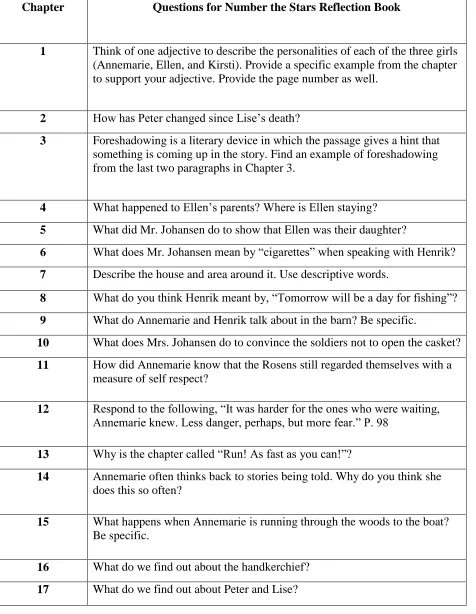
[image:43.612.111.511.395.682.2]Table 1. Questions for Reflection Book
Chapter Questions for Number the Stars Reflection Book
1 Think of one adjective to describe the personalities of each of the three girls (Annemarie, Ellen, and Kirsti). Provide a specific example from the chapter to support your adjective. Provide the page number as well.
2 How has Peter changed since Lise‘s death?
3 Foreshadowing is a literary device in which the passage gives a hint that something is coming up in the story. Find an example of foreshadowing from the last two paragraphs in Chapter 3.
4 What happened to Ellen‘s parents? Where is Ellen staying? 5 What did Mr. Johansen do to show that Ellen was their daughter?
6 What does Mr. Johansen mean by ―cigarettes‖ when speaking with Henrik? 7 Describe the house and area around it. Use descriptive words.
8 What do you think Henrik meant by, ―Tomorrow will be a day for fishing‖? 9 What do Annemarie and Henrik talk about in the barn? Be specific.
10 What does Mrs. Johansen do to convince the soldiers not to open the casket?
11 How did Annemarie know that the Rosens still regarded themselves with a measure of self respect?
12 Respond to the following, ―It was harder for the ones who were waiting,
Annemarie knew. Less danger, perhaps, but more fear.‖ P. 98
13 Why is the chapter called ―Run! As fast as you can!‖?
14 Annemarie often thinks back to stories being told. Why do you think she does this so often?
15 What happens when Annemarie is running through the woods to the boat? Be specific.
16 What do we find out about the handkerchief?
Table 2. Reflection Book Rubric
Reading - Analyzing Information : Number the Stars Reflection Book
Rubric
Teacher Name: A Shea
Student Name: ________________________________________
CATEGORY 4 3 2 1
Demonstrates comprehension
Student demonstrates a clear and precise understanding of the text through verbal and written communication.
Student
demonstrates an above average understanding of the text through verbal and written communication.
Student
demonstrates an average
understanding of the text through verbal and written communication.
Student demonstrates a lack of
understanding of the text through verbal and written communicatio n.
Analyze the text in order to summarize
Student identifies several important and specific details in an accurate summary of the chapter.
Student identifies some important and specific details in an accurate summary of the chapter.
Student identifies few important and specific details in a less accurate summary of the chapter.
Student identifies no important and specific details in a less accurate summary of the chapter. Response to Questions Student provides accurate and correct responses to all of the questions.
Student provides accurate and correct responses to most of the questions.
Student provides few accurate and correct responses to the questions.
Student provides no accurate and correct responses to the questions. Creates a pocket
book to house all of the components
Student creates a pocket book that is very well
constructed and is organized as instructed.
Student creates a pocket book that is constructed properly and is organized as instructed.
Student creates a pocket book that is constructed less than proper and is organized as instructed. Student creates a pocket book that is constructed poorly and/or is disorganized. Overall design and
craftsmanship of the pocket book
The overall design of the pocket book is creative and unique. The craftsmanship is excellent.
The overall design of the pocket book is creative and unique. The craftsmanship is good.
The overall design of the pocket book is somewhat creative and unique. The craftsmanship is good. The overall design of the pocket book lacks creativity and uniqueness. The craftsmanship is lacking.
Comments: Total___
_______
_
Images of Student Work: Reflection Book
[image:46.612.170.520.416.676.2]Figure 11. Student Reflection Book IV
Number the Stars
Art and Literature Unit
Lesson: Tunnel Book
Teacher: Anne Shea
Grade Level: 5th Grade
This lesson was adapted from Joanna Davis, Garden Elementary School Venice, FL from
http://www.princetonol.com/groups/iad/Files/Joanna-Popart.htm
Characteristics of the Learners:
The students being taught this lesson were average 5th grade students with no
accommodations necessary in regards to physical or academic state. This lesson was done with
16 students, 8 boys and 8 girls. There are a few important things that students must be able to do
in order to complete this assignment. First, students were expected to be able to read and
comprehend at a 5th grade reading level. Second, they were expected to understand the concept
of foreground, middle ground, and background in a visual sense-this was also related to literature
during the lesson. Finally, the students were expected to develop the idea, create the drawings,
and construct the tunnel book.
Rationale:
So many lessons in regards to reading are simply reading and then writing a response.
Students are all different and all have different needs when it comes to how they comprehend
things. This lesson is showing students that there are many ways to go about exhibiting their
understanding. This happens to be a more creative approach that the majority of teachers may not
Historical/Cultural Context:
History of Tunnel Books Information from Edward Hutchins
http://artistbooks.com/abr/index.htm
The concept of tunnel books dates back hundreds of years. For centuries people have
been enticed by illusions and the tunnel book is a simple illusion based on perspective. In 1437
Leone Battista created a box with a small hole (a peep hole) that allowed the viewer to see scenes
using perspective. From this point on peep show boxes were seen throughout Europe at various
fairs and gatherings. The scenes typically depicted were those based on religion, history, or
mythology. Tunnel books are still be created by many artists today. Even with all of the
technology of contemporary times, people are still fascinated by a simple means of illusion, the
tunnel book.
The novel, Number the Stars, is fictional writing however, the story takes place during
WWII in Denmark. The Nazi are occupying Copenhagen and many are faced with the choice of
staying and being taken or fleeing to pursue safety. The main character, Annemarie, along with
her family, helps their friends (who are Jewish) escape to Sweden. Along the way Annemarie
must act beyond her years and take on tasks that a ten year old would not normally undertake.
She must show strength and courage in order to help those she cares about.
In 5th grade WWII is an area of study, therefore, this lesson also relates to the subject of
social studies. The students‘ knowledge of the war helped them to imagine and comprehend the
Standards:
VA5MC.1 Engages in the creative process to generate and visualize ideas.
a. Creates a series of thumbnail sketches to alter visual images (e.g., magnifying, reducing,
repeating or combining them in a variety of ways) to change how they are perceived and
interpreted.
b. Formulates visual ideas by using a variety of resources (e.g., books, magazines, Internet).
c. Develops fluency, flexibility, and elaboration of ideas in the development of a work of art.
VA5C.1 Applies information and processes from other disciplines to enhance the understanding
and production of artworks.
a. Makes interdisciplinary connections applying art skills, knowledge, and ideas to improve
understanding in other disciplines.
ELA5R1 The student demonstrates comprehension and shows evidence of a warranted and
responsible explanation of a variety of literary and informational texts.
For literary texts, the student identifies the characteristics of various genres and produces
evidence of reading that:
a. Identifies and analyzes the elements of setting, characterization, and conflict in plot.
i. Makes judgments and inferences about setting, characters, and events and supports them with
elaborating and convincing evidence from the text.
SS5H6 The student will explain the reasons for America‘s involvement in World War II.
a. Describe Germany‘s aggression in Europe and Japan‘s aggression in Asia. b. Describe major
events in the war in both Europe and the Pacific; include Pearl Harbor, Iwo Jima, D-Day, VE
Objectives:
Students will…
1. Demonstrate comprehension of the novel Number the Stars by Lois Lowry by depicting a
specific scene from the novel.
2. Analyze the text to find important details related to a specific scene.
3. Identify tunnel books as an art form.
4. Create a tunnel book to illustrate the scene from the novel.
Materials:
Number the Stars by Lois Lowry (novel)
5 pieces/student of 6x9 white paper
2 pieces/student of 9x9 colored paper
Glue
Scissors
Pencils
Prints to show perspective
Colored Pencils
Preparations:
Prior to teaching the lesson the teacher and students will need to have read the novel
either half way or in its entirety. This provides the students with a number of scenes to choose
from. The teacher must also prepare the paper that the students will use to create their tunnel
books. Cutting and organizing the paper beforehand is essential for an organized and timely
Introduction/Motivation:
The introduction should take probably 15-20 minutes depending on the discussions
involved.
Ask students what they think is meant by the term ―visualization.‖
Discuss what it means to visualize something.
Brainstorm scenes or events that have taken place in the novel.
Share with the students about the lesson-they will be choosing a scene from the book and
create a visual representation of it.
However, it will not just be a simple 2 dimensional drawing, it will be 3 dimensional.
Discuss the history of tunnel books.
Show students various examples of these works of art.
Show students the teacher example to really get them excited.
Ask students what they notice about the example being presented.
Show students prints that show perspective.
Ask about background, middle ground, and foreground. What do they notice about the
objects in each of these places?
Relate BG, MG, and FG to the elements of a story. BG is the setting, FG are the
characters, and MG are any other details that are important to the scene.
Have students independently choose a scene that they wish to visualize and bring to life.
Have students find the scene in the book and read about it to find any descriptions that