Review Article
Effect of CCR5 -59029A/G polymorphism on risk of
HIV-1 infection: a meta-analysis based on 13 studies
Zhenghua Gong1,2*, Jialin Tang3*, Chaowen Deng2*, Guoxin Hu1,2
1Shenzhen Peking University and Hong Kong University of Science and Technology Medical Center, Shenzhen, China; 2Department of Infectious Diseases, Peking University Shenzhen Hospital, Shenzhen, China; 3Department of Public Health, Center for Disease Control and Prevention in Jiangxi Province, Nanchang, China. *Equal contribu-tors.
Received November 18, 2016; Accepted April 7, 2017; Epub November 15, 2017; Published November 30, 2017
Abstract: A number of studies have investigated the relationship between CCR5 -59029A/G polymorphism and risk of HIV-1 infection; however, the results have been inconclusive. Electronic databases, including PubMed, Embase, China National Knowledge Infrastructure and Wanfang, were comprehensively searched to identify related studies. Finally, 13 studies with 5915 subjects were considered qualified for meta-analysis. The association of single nucleo-tide polymorphism with HIV-1 susceptibility was evaluated using odds ratio (OR) with 95% confidence interval (CI). Factoring in healthy controls, results indicate no association between CCR5 -59029A/G polymorphism and HIV-1 infection. Further analysis stratified by ethnicity indicates a significant association among Caucasians under an al-lelic model (OR = 1.24, 95% CI = 1.02-1.49, Phet = 0.532) and a dominant model (OR = 1.51, 95% CI = 1.15-1.98, Phet = 0.708). The use of HIV-1-exposed seronegative controls revealed a significant association in a recessive model (OR = 1.38, 95% CI = 1.07-1.78, Phet = 0.954). Our findings indicate that the -59029G allele might be a risk factor for HIV-1 infection among Caucasians. Further studies with a large sample size and precise routes of infection should be conducted to verify this association.
Keywords: CCR5, polymorphism, risk, HIV-1, meta-analysis
Introduction
At the end of 2015, nearly 36.7 million people suffer from human immunodeficiency virus-1 (HIV-1) infection. HIV/AIDS remains one of the most severe public health problems world- wide, particularly in low- and middle-income areas (http://www.who.int/hiv/en/). HIV-1-ex- posed seronegative (HESN) individuals include commercial sex workers, men who have sex with men, intravenous drug abusers, hemophili-acs, and fetuses of infected women [1]. Despite high-risk behaviors and multiple exposures to HIV-1, some individuals remain seronegative, and these cases demonstrate different cours-es of progrcours-ession to AIDS and different clinical outcomes [2, 3]. Genetic variation among indi-viduals is widely considered to mediate entry by HIV-1 into host cells, immune response, and other factors that influence the risk of HIV-1 infection, disease progression, and therapy outcomes [4-7].
As an essential coreceptor for macrophage-tropic strains (R5) of HIV-1, the human CC che-mokine receptor 5 (CCR5) is the principal core-ceptor for HIV-1 entry into CD4+ T lymphocy-
average, than homozygous 59029A individuals [12].
A number of studies have assessed the rela-tionship between CCR5 -59029A/G polymor-phism and HIV-1 infection. However, the results have been regarded as controversial and incon-clusive probably because of the variety of eth-nic populations or the small sample size in each study. Thus, a comprehensive analysis is essential to draw a reliable conclusion.
We performed a meta-analysis to evaluate the relationship between CCR5 gene -59029A/G polymorphism and host susceptibility to HIV-1 infection by using both healthy and HESN controls.
Materials and methods
Publication search strategy
Electronic databases, including PubMed, Em- base, Wanfang, and China National Knowledge Infrastructure were screened up to September 2016 using a variable combination of items such as the following: “CCR, CCR5, CC chemo-kine receptor”, “HIV, HIV-1, AIDS, human immu-nodeficiency viruses”, and “polymorphism, poly- morphisms, mutation, variant”. Article selec-tion was restricted to English and Chinese lan-guages, and titles and related literature abstracts were screened to evaluate the rele-vance of investigations by two independent reviewers. Full texts of selected initial reports were downloaded for further analysis, and ref-erences from selected studies were retrieved to identify relevant studies.
(2) reviews, and (3) duplication or overlapping of data from previous studies.
Data extraction
According to the listed criteria, two researchers (Gong and Tang) extracted the data indepen-dently. Disagreements between researchers were resolved by discussion; in the absence of a resolution, a third investigator was included in the debate. The primary characteristics obtained from final studies are as follows: first author, year of publication, country or area, eth-nicity, number of subjects, method of genotyp-ing, and distributions of CCR5 -59029A/G poly-morphism across all subjects.
Statistical analysis
We performed the meta-analysis by using healthy controls and HESN controls. To evalu-ate the association between CCR5 -59029A/G polymorphism and HIV-1 susceptibility, odds ratio (OR), and 95% confidence intervals (CI) were applied. The allelic (G vs. A), homozygous (GG vs. AA), dominant (GG+AG vs. AA), and recessive models (GG vs. AG+AA) were used for quantitative analysis. We further performed stratified analysis by ethnicity. Heterogeneity between studies was calculated by χ2-based
[image:2.612.101.377.74.234.2]Q-test. Summary ORs have been computed using a fixed effects model without heterog- eneity, where the P value for heterogeneity (Phet) was more than 0.05. Otherwise, a random effects model was applied to calculate the summary ORs. The Hardy-Weinberg equilibrium (HWE) was applied to estimate the deviation of frequencies of CCR5 polymorphism in the con-trols. Egger’s test and Begg’s test with funnel
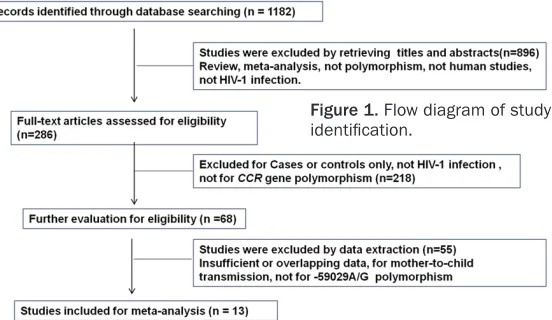
Figure 1. Flow diagram of study identification.
Inclusion and exclusion criteria
plots were used to evaluate publication bias. Sensitivity analysis was applied to evaluate the effect of individual studies on the stability of results. Stata 9.2 was used for all statistical analyses. Statistical significance was consid-ered when P was less than 0.05.
Results
Major study characteristics
As shown in Figure 1, 1082 articles were identi-fied after an initial search in accordance with the search strategy. Examination of titles and abstracts from the identified studies reduced the field to 68 studies for further data extrac-tion during which 55 studies were excluded for failing to meet the qualification criteria. Finally, 13 studies were used for meta-analysis [13-25], among which 6 focused on Asians [16, 19, 21, 22, 24, 25], 3 on Caucasians [13, 14, 20], 3 on Africans [15, 17, 23], and 1 on Brazilians
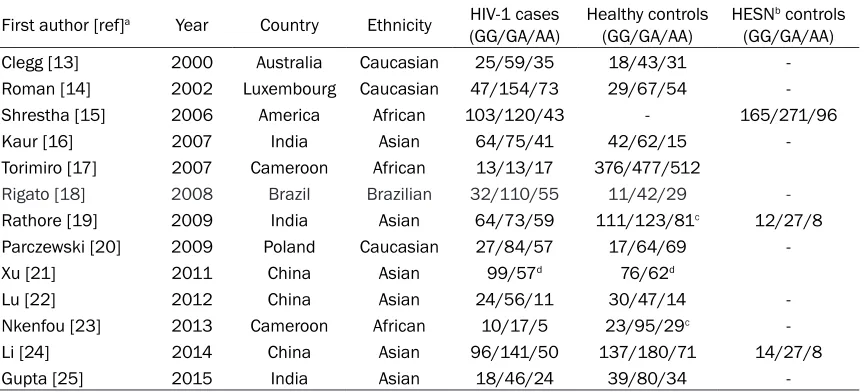
[image:3.612.92.526.85.281.2][18]. We combined the studies on Africans and Brazilians into a category labeled as Others. The total number of samples was 5915, which consisted of 2097 HIV-1 infected patients, 3190 healthy controls, and 628 HESN controls. Twelve studies focused on healthy controls, and 1 study included the genotype of allelic G and A [21]. Three studies included HESN con-trols. In two studies, the genotype distributions of healthy controls were inconsistent with HWE [19, 23]. The major characteristics of the included studies are presented in Table 1. Quantitative synthesis using healthy controls
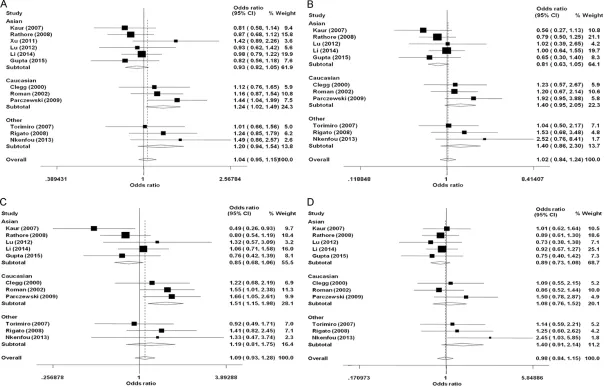
Table 2 and Figure 2 present the primary results of the meta-analysis. Comparing the results with those of healthy controls, no signifi-cant association was found between CCR5 -59029A/G polymorphism and HIV-1 infection. Results from further stratified analysis by eth-nicity suggested a significant association am-
Table 1. Major details of the studies included for meta-analysis
First author [ref]a Year Country Ethnicity HIV-1 cases
(GG/GA/AA) Healthy controls(GG/GA/AA) HESN
b controls (GG/GA/AA)
Clegg [13] 2000 Australia Caucasian 25/59/35 18/43/31
-Roman [14] 2002 Luxembourg Caucasian 47/154/73 29/67/54
-Shrestha [15] 2006 America African 103/120/43 - 165/271/96
Kaur [16] 2007 India Asian 64/75/41 42/62/15
-Torimiro [17] 2007 Cameroon African 13/13/17 376/477/512
Rigato [18] 2008 Brazil Brazilian 32/110/55 11/42/29
-Rathore [19] 2009 India Asian 64/73/59 111/123/81c 12/27/8
Parczewski [20] 2009 Poland Caucasian 27/84/57 17/64/69
-Xu [21] 2011 China Asian 99/57d 76/62d
Lu [22] 2012 China Asian 24/56/11 30/47/14
-Nkenfou [23] 2013 Cameroon African 10/17/5 23/95/29c
-Li [24] 2014 China Asian 96/141/50 137/180/71 14/27/8
Gupta [25] 2015 India Asian 18/46/24 39/80/34
[image:3.612.89.524.337.434.2]-aThe [ref] referres to the reference numbers in this study. bHESN: HIV-1-exposed but seronegative. cThe genotype distributions of controls were not consistent with Hardy-Weinberg equilibrium. dGenotype of G/A only.
Table 2. Results of CCR5 -59029A/G polymorphism on the risk of HIV-1 infection
G vs. A GG vs. AA GG+GA vs. AA GG vs. GA+AA
Variables Na ORb (95% CIc) P
hetd Na OR (95% CI) Phet OR (95% CI) Phet OR (95% CI) Phet
Total 12 1.04 (0.95-1.15) 0.160 11 1.02 (0.83-1.25) 0.209 1.09 (0.93-1.27) 0.007 0.98 (0.83-1.15) 0.133
Ethnicity
Asian 6 0.93 (0.82-1.05) 0.864 5 0.81 (0.63-1.05) 0.659 0.85 (0.68-1.06) 0.261 0.89 (0.73-1.08) 0.915 Caucasian 3 1.24 (1.02-1.49) 0.532 3 1.40 (0.95-2.05) 0.558 1.51 (1.15-1.98) 0.708 1.08 (0.76-1.52) 0.428 Others 3 1.20 (0.94-1.54) 0.583 3 1.41 (0.86-2.30) 0.452 1.19 (0.81-1.75) 0.917 1.40 (0.91-2.14) 0.556 aN: Number of studies included in the meta-analysis; bOR: Odds ratio; cCI: Confidence interval; dP
ong Caucasians under the allelic model (G vs. A: OR = 1.24, 95% CI = 1.02-1.49, Phet = 0.532) and the dominant model (GG+GA vs. AA: OR = 1.51, 95% CI = 1.15-1.98, Phet = 0.708), (Table 2).
Quantitative synthesis using HIV-1-exposed but seronegative controls
Applying HESN controls, three studies were enrolled to perform the analysis, which revealed a significant association in the recessive model (GG vs. GA+AA: OR = 1.38, 95% CI = 1.07-1.80, Phet = 0.954), but not in the other models (G vs. A: OR = 1.14, 95% CI = 0.96-1.36, Phet = 0.443; GG vs. AA: OR = 1.22, 95% CI = 0.85-1.76, Phet = 0.462; GG+GA vs. AA: OR = 0.95, 95% CI = 0.69-1.30, Phet = 0.168).
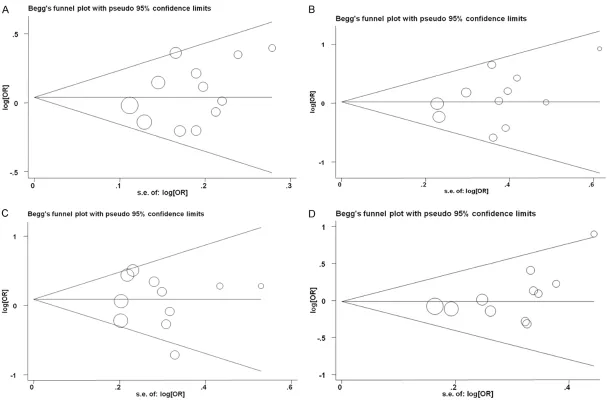
Sensitivity analysis and publication bias Sensitivity analysis was applied to estimate the stability of results. The results for all genetic models remained stable (data not shown). Publication bias was assessed using Begg’s test and Egger’s test. Publication bias was not present in both healthy and HESN controls group under all genetic models (Figure 3).
Discussion
An increasing number of studies show that both viral genetic and host genetic background are critical factors for HIV-1 infection and progres-sion of AIDS in human beings [26, 27]. Many studies have evaluated the relationship between chemokine genes, chemokine recep-tor gene polymorphisms, and risk of HIV-1 infec-tion [28, 29]. Liu et al. performed a meta-anal-ysis and concluded that HIV-1 infection is not significantly associated with heterozygosity in CCR5D32 [30]. The -403A/A genotype chemo-tactic chemokine ligand 5, the primary ligand for CCR5, could protect against HIV-1 infection among Asian and African populations [31]. Meanwhile, Gong et al. found that the -28G allele could decrease the risk of HIV-1 infection among Asian populations [32]. Studies on the association between CCR5 -59029A/G poly-morphism and HIV-1 infection have been con-ducted; however, the results have been incon-clusive. This meta-analysis, which appears to be the first to estimate the association bet- ween CCR5 polymorphism and HIV-1 infec- tion, seeks a more reliable and comprehensive conclusion.
Thirteen studies, including 2097 HIV-1 pati- ents, 3190 healthy controls, and 628 HESN controls, were enrolled for this meta-analysis. A significant association among healthy controls was found among Caucasians under the allelic and dominant model by further ethnic stra- tification.
Many researchers believe that the CCR5 59029G allele limits promoter activity and reduces the number of receptors on the cell surface. The CCR5 59029G allele may delay disease progression and extend the life expec-tancy of individuals with HIV-1 infection [12, 13, 16]. Results seem counterintuitive that the fre-quency of CCR5 -59029GG in HIV-seropositive patients was significantly higher than that in HIV-seronegative subjects among Africans [23]. In addition, CCR5 -59029AG genotype carriers exhibit increased vulnerability to HIV-1 infection in a Northern Han Chinese population among Asians [22]. In other studies, no significant rela-tionship was indicated between -59029A/G polymorphism and risk of HIV-1 infection [24, 33, 34]. Many studies have also shown no sig-nificant correlation between CCR5-59029 A/G polymorphism and disease progression among HIV-1-positive individuals or those living with AIDS [16, 19, 35].
polymor-phisms in a Northern Han Chinese population, indicating the cooperative action of CCR2-V64I and CCR5 gene polymorphisms on the process of HIV-1 infection [22]. (3) Environmental, as well as social and economic conditions, may play a part. As we know, individuals, including commercial sex workers and intravenous drug users, suffer a considerably higher risk of HIV-1 infection than the general population. HIV/AIDS in South Africa is a prominent health concern, where transmission is mostly heterosexual and not associated with drug use, but is associated with disruption of nuclear families. South Africa reportedly has more people with HIV/AIDS than anywhere else in the world.
The use of HESN controls revealed a significant association in the recessive model (GG vs. GA+AA: OR = 1.38, 95% CI = 1.07-1.80, Phet = 0.954). Commercial sex workers, people with hemophilia, men who have sex with men, intra-venous drug users, and exposure in utero are considered the main sources of HESN individu-als [1]. In studies concerning HIV-1 susceptibil-ity, taking samples from HESN individuals may provide more useful results than using random healthy individuals as controls. This meta-anal-ysis includes an HESN group with a small sam-ple size consisting of 628 subjects. Our screen-ing collected intravenous drug users and in- dividuals repeatedly having sexual intercourse (twice a week) without protection and with HIV-infected partners for at least one year as the HESN group. Genes affecting the risk for HIV-1 infection of the host and disease progression may exert their effects via different HIV-1 infec-tion routes; thus, future studies involving HESN individuals selected by infection routes can help elucidate this matter.
Although a meta-analysis is expected to pro-vide a comprehensive conclusion, limitations exist. First, potential publication bias exists, given that studies published in English and Chinese are retrieved, whereas those in other languages are not included. Studies with posi-tive associations are more easily published than studies with negative associations [33, 34]. Second, controls for most research in this analysis consisted of healthy individuals even though HESN individuals are more appropriate as controls in studies related to disease sus-ceptibility. Further stratified analyses by high-risk exposure routes (intravenous drug use,
sexual contact, etc.) of HESN individuals sh- ould be performed to address the association between exposure routes, genetic background, and risk of HIV-1 infection. Third, gene-gene and gene-environment interactions could affect the risk of HIV-1 infection. In fact, many factors such as genes and behaviors have been con-firmed to affect HIV-1 infection, but no suffi-cient data are available to adjust these con-founding factors.
In conclusion, our findings indicate that the -59029G allele could be a risk factor for HIV-1 infection among Caucasians. Future studies with a large sample size and precise routes of HIV-1 infection should be conducted to esti-mate the aforementioned association.
Acknowledgements
This work was partially supported by the Na- tional Natural Science Foundation of China (No. 81473473), the Science and Technology In- novation Committee of Shenzhen City in China (No. JCY2014041562543026).
Disclosure of conflict of interest
None.
Address correspondence to: Guoxin Hu, Department of Infectious Diseases, Peking University Shenzhen Hospital, Room 502, Scientific Research Building, Lianhua Road 1120, Futian District, Shenzhen 518036, China. Tel: 8613927481027; Fax: +86-755-83923333; E-mail: [email protected]
References
[1] Young JM, Turpin JA, Musib R and Sharma OK. Outcomes of a national institute of allergy and infectious diseases workshop on understand-ing HIV-exposed but seronegative individuals. AIDS Res Hum Retroviruses 2011; 27: 737-743.
[2] Mahajan SD, Agosto-Mojica A, Aalinkeel R, Reynolds JL, Nair BB, Sykes DE, Martinez J, Ad-ams J, Singh N, Bernstein Z, Hsiao CB and Schwartz SA. Role of chemokine and cytokine polymorphisms in the progression of HIV-1 dis-ease. Biochem Biophys Res Commun 2010; 396: 348-352.
[4] McLaren PJ and Carrington M. The impact of host genetic variation on infection with HIV-1. Nat Immunol 2015; 16: 577-583.
[5] Kaur G and Mehra N. Genetic determinants of HIV-1 infection and progression to AIDS: im-mune response genes. Tissue Antigens 2009; 74: 373-385.
[6] Biasin M, De Luca M, Gnudi F and Clerici M. The genetic basis of resistance to HIV infection and disease progression. Expert Rev Clin Im-munol 2013; 9: 319-334.
[7] Freguja R, Gianesin K, Zanchetta M and De Rossi A. Cross-talk between virus and host in-nate immunity in pediatric HIV-1 infection and disease progression. New Microbiol 2012; 35: 249-257.
[8] Berger EA, Doms RW, Fenyo EM, Korber BT, Lit-tman DR, Moore JP, Sattentau QJ, Schuitemak-er H, Sodroski J and Weiss RA. A new classifica-tion for HIV-1. Nature 1998; 391: 240. [9] Samson M, Soularue P, Vassart G and
Parmen-tier M. The genes encoding the human CC-che-mokine receptors CC-CKR1 to CC-CKR5 (CMK-BR1-CMKBR5) are clustered in the p21.3-p24 region of chromosome 3. Genomics 1996; 36: 522-526.
[10] Huang Y, Paxton WA, Wolinsky SM, Neumann AU, Zhang L, He T, Kang S, Ceradini D, Jin Z, Yazdanbakhsh K, Kunstman K, Erickson D, Dragon E, Landau NR, Phair J, Ho DD and Koup RA. The role of a mutant CCR5 allele in HIV-1 transmission and disease progression. Nat Med 1996; 2: 1240-1243.
[11] Dean M, Carrington M and O’Brien SJ. Bal-anced polymorphism selected by genetic ver-sus infectious human disease. Annu Rev Ge-nomics Hum Genet 2002; 3: 263-292. [12] McDermott DH, Zimmerman PA, Guignard F,
Kleeberger CA, Leitman SF and Murphy PM. CCR5 promoter polymorphism and HIV-1 dis-ease progression. Multicenter AIDS cohort study (MACS). Lancet 1998; 352: 866-870. [13] Clegg AO, Ashton LJ, Biti RA, Badhwar P,
Wil-liamson P, Kaldor JM and Stewart GJ. CCR5 promoter polymorphisms, CCR5 59029A and CCR5 59353C, are under represented in HIV-1-infected long-term non-progressors. The Aus-tralian Long-Term Non-Progressor Study Group. AIDS 2000; 14: 103-108.
[14] Roman F, Franck N, Burgy C, Servais J, Zimmer JM, Mossong J, Goubau P, Schneider F, Hem-mer R and Schmit JC. Prevalence of HIV co-re-ceptor polymorphisms in HIV-infected patients and uninfected volunteers in Luxembourg. HIV Clin Trials 2002; 3: 195-201.
[15] Shrestha S, Strathdee SA, Galai N, Oleksyk T, Fallin MD, Mehta S, Schaid D, Vlahov D, O’Brien SJ and Smith MW. Behavioral risk ex-posure and host genetics of susceptibility to HIV-1 infection. J Infect Dis 2006; 193: 16-26.
[16] Kaur G, Singh P, Rapthap CC, Kumar N, Vajpay-ee M, Sharma SK, Wanchu A and Mehra NK. Polymorphism in the CCR5 gene promoter and HIV-1 infection in North Indians. Hum Immunol 2007; 68: 454-461.
[17] Torimiro JN, Wolfe ND, Thomas A, Martin MP, Mpoudi-Ngole E, Tamoufe U, Birx DL, Car-rington M, Burke DS and Carr JK. Frequency of CCR5 variants among rural populations with low HIV-1 prevalence in Cameroon. AIDS 2007; 21: 527-528.
[18] Rigato PO, Hong MA, Casseb J, Ueda M, de Castro I, Benard G and Duarte AJ. Better CD4+
T cell recovery in Brazilian HIV-infected indi-viduals under HAART due to cumulative car-riage of SDF-1-3’A, CCR2-V64I, CCR5-D32 and CCR5-promoter 59029A/G polymorphisms. Curr HIV Res 2008; 6: 466-473.
[19] Rathore A, Chatterjee A, Sivarama P, Yamamo-to N, Singhal PK and Dhole TN. Association of CCR5-59029 A/G and CCL3L1 copy number polymorphism with HIV type 1 transmission/ progression among HIV type 1-seropositive and repeatedly sexually exposed HIV type 1-se-ronegative North Indians. AIDS Res Hum Retro-viruses 2009; 25: 1149-1156.
[20] Parczewski M, Leszczyszyn-Pynka M, Kaczmar-czyk M, Adler G, Binczak-Kuleta A, Loniewska B, Boron-Kaczmarska A and Ciechanowicz A. Sequence variants of chemokine receptor genes and susceptibility to HIV-1 infection. J Appl Genet 2009; 50: 159-166.
[21] Xu L, Qiao Y, Zhang X, Sun H, Wang J, Sun D, Jia X, Shen C, Zhao Y, Jin Y, Yu Y, Ling H, Wang K and Fu S. A haplotype in the CCR5 gene pro-moter was associated with the susceptibility to HIV-1 infection in a northern Chinese popula-tion. Mol Biol Rep 2011; 38: 327-332. [22] Lu J, Sheng A, Wang Y, Zhang L, Wu J, Song M,
He Y, Yu X, Zhao F, Liu Y, Shao S, Lan J, Wu H and Wang W. The genetic associations and epistatic effects of the CCR5 promoter and CCR2-V64I polymorphisms on susceptibility to HIV-1 infection in a Northern Han Chinese pop-ulation. Genet Test Mol Biomarkers 2012; 16: 1369-1375.
[23] Nkenfou CN, Mekue LC, Nana CT and Kuiate JR. Distribution of CCR5-Delta32, CCR5 pro-moter 59029 A/G, CCR2-64I and SDF1-3’A genetic polymorphisms in HIV-1 infected and uninfected patients in the west region of Cam-eroon. BMC Res Notes 2013; 6: 288.
[24] Li H, Liu TJ and Hong ZH. Gene polymorphisms in CCR5, CCR2, SDF1 and RANTES among Chi-nese Han population with HIV-1 infection. In-fect Genet Evol 2014; 24: 99-104.
[26] Larsen MH, Thorner LW, Zinyama R, Amstrup J, Kallestrup P, Gerstoft J, Gomo E, Erikstrup C and Ullum H. CCL3L gene copy number and survival in an HIV-1 infected Zimbabwean pop-ulation. Infect Genet Evol 2012; 12: 1087-1093.
[27] Mueller A and Strange PG. The chemokine re-ceptor, CCR5. Int J Biochem Cell Biol 2004; 36: 35-38.
[28] Hollox EJ and Hoh BP. Human gene copy num-ber variation and infectious disease. Hum Gen-et 2014; 133: 1217-1233.
[29] Guergnon J and Combadiere C. Role of chemo-kines polymorphisms in diseases. Immunol Lett 2012; 145: 15-22.
[30] Liu S, Kong C, Wu J, Ying H and Zhu H. Effect of CCR5-Delta32 heterozygosity on HIV-1 sus-ceptibility: a meta-analysis. PLoS One 2012; 7: e35020.
[31] He J, Li X, Tang J, Jin T, Liao Q and Hu G. Asso-ciation between chemotactic chemokine li-gand 5 -403G/A polymorphism and risk of human immunodeficiency virus-1 infection: a meta-analysis. Onco Targets Ther 2015; 8: 727-734.
[32] Gong Z, Tang J, Xiang T, Zhang L, Liao Q, Liu W and Wang Y. Association between regulated upon activation, normal T cells expressed and secreted (RANTES) -28C/G polymorphism and susceptibility to HIV-1 infection: a meta-analy-sis. PLoS One 2013; 8: e60683.
[33] Jang DH, Choi BS and Kim SS. The effects of RANTES/CCR5 promoter polymorphisms on HIV disease progression in HIV-infected Kore-ans. Int J Immunogenet 2008; 35: 101-105. [34] Liu H, Hwangbo Y, Holte S, Lee J, Wang C,
Kaupp N, Zhu H, Celum C, Corey L, McElrath MJ and Zhu T. Analysis of genetic polymor-phisms in CCR5, CCR2, stromal cell-derived factor-1, RANTES, and dendritic cell-specific intercellular adhesion molecule-3-grabbing nonintegrin in seronegative individuals repeat-edly exposed to HIV-1. J Infect Dis 2004; 190: 1055-1058.
[35] Wasik TJ, Smolen J, Kruszynski P, Bratosiewicz-Wasik J and Beniowski M. [Effects of CCR5-delta32, CCR2-64I and SDF-1-3’A polymorphic alleles on human immunodeficiency virus 1 (HIV-1) infection in the polish population]. Wiad Lek 2005; 58: 500-507.
[36] Arenzana-Seisdedos F and Parmentier M. Ge-netics of resistance to HIV infection: role of co-receptors and co-receptor ligands. Semin Im-munol 2006; 18: 387-403.
[37] Li M, Song R, Masciotra S, Soriano V, Spira TJ, Lal RB and Yang C. Association of CCR5 hu-man haplogroup E with rapid HIV type 1 dis-ease progression. AIDS Res Hum Retroviruses 2005; 21: 111-115.
[38] Mummidi S, Bamshad M, Ahuja SS, Gonzalez E, Feuillet PM, Begum K, Galvis MC, Kostecki V, Valente AJ, Murthy KK, Haro L, Dolan MJ, Allan JS and Ahuja SK. Evolution of human and non-human primate CC chemokine receptor 5 gene and mRNA. Potential roles for haplotype and mRNA diversity, differential haplotype-specific transcriptional activity, and altered transcrip-tion factor binding to polymorphic nucleotides in the pathogenesis of HIV-1 and simian immu-nodeficiency virus. J Biol Chem 2000; 275: 18946-18961.