J Range Manage 57:656 -660 I November 2004
Can Solid Matrix Priming With GA3 Break Seed Dormancy in Eastern Gamagrass?
C. Rogis, L. R. Gibson, A. D. Knapp, and R. Horton
Authors are from the Department of Agronomy, Iowa State University, Ames, IA 50011.
Abstract
Development of methods for breaking seed dormancy in eastern gamagrass (Tripsacum dactyloides, L.) could increase its
use.Solid matrix priming, the controlled hydration of seed in a system of solid carrier and water, has been used with some success to enhance germination in warm season grasses. Gibberellic acid (GA3), a known promoter of eastern gamagrass germination, can be added to solid matrix priming systems. In this study, systems were evaluated for conditioning eastern gamagrass seeds using the solid carriers Agro -Lig, MicroCel E, and Vermiculite #5. GA3 was added in 0.01 M concentration solutions to systems with water potentials of 0.4 and 0.6 MPa in Agro -Lig and 0.2 and 0.4 in MicroCel E and Vermiculite #5 and compared with systems with deionized water. Priming seed with GA3 increased germination to 18% compared with 13% without GA3. MicroCel E and Vermiculite #5 were suitable materials for controlled hydration of eastern gamagrass seed. Germination was only 11 `Yo in Agro -Lig compared with 16 % -19% for MicroCel E and Vermiculite #5. Priming with GA3 does not appear to be as successful at breaking seed dormancy as cold, wet stratification.
Resumen
El desarrollo de métodos para romper la dormancia de las semillas del "Eastern gamagrass" (Tripsacum dactyloides, L.) pudiera incrementar su uso. La matriz soelida de preparación de la superficie de la semilla, la hidratación controlada de la semilla en un sistema en un sistema de conductor sólido y agua, ha sido usado con algo de éxito para mejorar la germinación del zacates de estación caliente. El ácido gibérelico (GA3), un conocido promotor de la germinación del "Eastern gamagrass ", puede ser agregado en los sistemas de matriz sólida de preparación de la superficie de la semilla. En este estudio, los sistemas fueron evaluados para acondicionar semillas de "Eastern gamagrass" usando los acarreadores sólidos Agro -Lig, MicroCel E y Vermiculite
#5. El GA3 en soluciones de concentración de 0.01 M se agregó a los sistemas con potenciales de agua de 0.4 y 0.6 MPa en Agro -Lig y 0.2 and 0.4 in MicroCel E y Vermiculite #5 y se comparó con sistemas con agua desionizada. La preparación de la superficie de la semilla con GA3 incrementó la germinación a 18% en comparación con el 13% obtenido sin GA3. El Micro Cel E y la Vermiculite #5 fueron materiales adecuados para la hidratación controlada de las semillas del "Eastern gamagrass ". La germinación fue solo del 11% en Agro -Lig comparada con el 16 al 19% obtenidos con MicroCel E y Vermiculite #5. El cubrir la superficie de las semillas con GA3 parece no ser tan exitoso para romper la dormancia como la escarificación húmeda y fría.
Key Words:
seed quality, seed enhancement, seed dormancy, germination
Introduction
Seed dormancy is very strong in eastern gamagrass, and less than 10% of newly harvested seeds typically germinate (Ahring and Frank 1968; Tian et al 2002). Application of gbberellic acid (GA3) may have the potential for breaking seed dormancy in eastern gamagrass (Anderson 1985; Tian et al 2003). Removal of the cupule and application of GA3 increased germination to almost 100% of the viable seed (Tian et al 2003). Because removal of the eastern gamagrass cupule risks the integrity of the caryopsis, it is necessary to find a method of increasing the germination of intact seeds. GA3 could be incorporated into solid matrix priming systems, which control the rate and level of seed hydration through osmotic or matric forces of water potential (Khan 1992; Khan et al 1995; Taylor et al 1998).
Research was supported by the Iowa Agriculture and Home Economics Experiment Station and the Leopold Center for Sustainable Agriculture.
Correspondence: Lance Gibson. Dept of Agronomy, Iowa State University, Ames, IA 50011. Email: [email protected]
Manuscript received 4 October 2003; manuscript accepted 23 March 2004.
Solid matrix priming utilizes carriers possessing characteristics such as high water holding capacities, low osmotic potentials, and low bulk density (Khan et al 1990). We hypothesized that exposure of intact eastern gamagrass cupules to GA3 in a solid matrix priming system could be an effective system for breaking seed dormancy. The objectives of this study were 1) to evaluate the hydration of eastern gamagrass seed in solid matrix priming systems and 2) to determine if addition of low molar concen- trations of GA3 to solid matrix systems would stimulate germination of eastern gamagrass seed.
Materials and Methods
"Pete" eastern gamagrass seed was used for these studies. Seed
harvested in 1999 (Gamagrass Seed Co, Falls City, NE) was
purchased and stored in a controlled environment of 4 °C
and 40% relative humidity from the time they were acquired
in 2000. Previous research indicated a relatively small amount
of variability in percent germination among 12 seed lots and
2 cultivars of eastern gamagrass when seed was tested with
the cupule intact (Tian et al 2002, 2003; Aberle et al 2003).
-2.00
0.00
-0.40
-1.20
o 0.00-0.40
a o
á-0.80-
co 2 --1.20-
d
:Fs
-1.60
UCarrier Water Content (% of dry weight)
100
200
300400
500y = -7E-06x2 + 0.0062x - 1.4893 R2 = 0.9902
,-. -0.80
a
co2
-1.60
-2.00
0.00
-0.40
-0.80
MicroCel-E
y = 0.0013x - 0.785 R2 = 0.9899
y = -4E-05x2 + 0.0275x - 4.9185 R2 = 0.9929
-1.60
-2.00
y = -2E-06x2 + 0.0026x - 0.8373 R2 = 0.9828
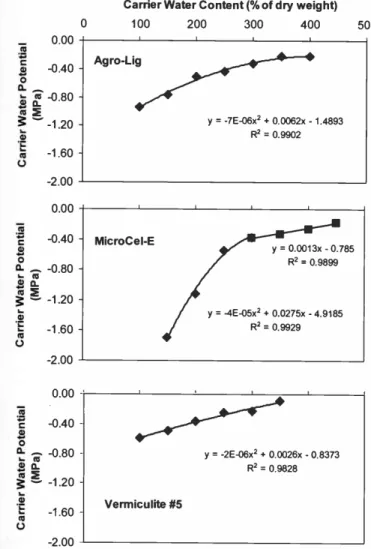
Figure 1. Water uptake curves for 3 solid matrix priming carriers.
Carrier water potentials were measured at various water contents using an electronic potentiometer.
Seed Hydration in Solid Matrix Priming Systems
Eastern gamagrass seed hydration was evaluated in 3 solid carriers: Agro -Lig, MicroCel E, and Vermiculite #5. The solid carriers were stored in large airtight containers at room temperature (25 °C) for the duration of the study. The moisture contents of the carriers were determined by placing 5 g of Agro- Lig and 3 g of MicroCel -E and Vermiculite #5 in aluminum weighing dishes and drying in a convection oven at 100 °C for 24 hours. Four replications were randomly selected from different areas of the bulk container.
Twelve water /carrier mixtures, in increments of 50% mois- ture by weight up to 600 %, were thoroughly blended with a spatula and allowed to equilibrate for 16 hours. Water potential was determined on 7 mL samples of the mixtures in a Decagon WP4 dew point hygrometer (Decagon Devices Inc, Seattle, WA; Scanlon et al 2002). The fit of curves for the relationship between carrier water content and water potential and the variability between 2 replications were analyzed using the general linear model (GLM) procedure of the Statistical Analysis System (SAS; SAS Institute, Cary, NC).
Conditioning systems with water potentials of -0.2, -0.4, -0.6, -0.8, and -1.0 MPa were developed for each carrier.
Twenty -five grams of eastern gamagrass seed was added to 100 g of carrier hydrated to each targeted water content. Seeds were conditioned for 1, 2, 3, 4, 5, 6, 7, 14, 21, or 28 days. The hydrated carriers with seed were placed in airtight containers
and kept at room temperature for the duration of the conditioning period. Each container was shaken on a daily basis to keep contents evenly mixed. Seeds were sieved from the carrier at the end of each conditioning period, and the number of germinated seeds was counted. Moisture was determined on 5 g samples of carrier and 10 g samples of seeds in a convection oven at 100 °C for 24 hours. Samples were allowed to cool to room temperature in a desiccator before weighing. Water potentials of the carriers and seed were determined on 7 mL samples of each in the WP4 hygrometer.
This portion of the study was replicated 3 times with each replication spaced in time. Means and standard deviations were calculated to determine the actual water potentials obtained and the variability across the duration of the conditioning period and among replications. The general linear model procedure of SAS was used to determine interactions and significant differences among treatments. The response between seed moisture content and duration of conditioning followed a nonlinear hyperbola, which levels off at an asymptote. Therefore, the equation for Mitscherlich's law of diminishing returns was used to fit lines to the data using Proc NLIN of SAS (Snedecor and Cochran 1989).
The form of the equation used was y = A B(e-`x), where y = seed moisture content, A = maximum seed moisture con- tent, B = the difference between the maximum possible seed moisture content and moisture content on day 1 of the conditioning period, c = constant, and x = days of condition- ing. Dunnett's multiple comparison test (Steel and Torrie 1980a) was used to determine when seeds were fully hydrated in each of the water potential systems.
Germination Response to Solid Matrix Priming With GA3 The 2 water potentials in each material that provided the
greatest seed water content without causing seed germination in the first 7 days of priming were selected for addition of 0.01 M
GA3 solution. Water potentials of -0.4 and -0.6 MPa were used for Agro -Lig because hydration was not controlled in the -0.2 MPa system. Water potentials of -0.2 and -0.4 MPa were chosen for MicroCel E and Vermiculite #5. Conditioning systems using deionized water were used to make comparisons with the 0.01 M GA3 systems in each material and water potential.
The conditioning systems were contained in airtight plastic
boxes at ambient room temperature (25 °C) for 7 days. The
moisture content of the seed and the water potential of the
carrier system were tested at the conclusion of the conditioning
period using the methods described previously. Fifty seeds were
randomly selected from each treatment solution, water poten-
tial, and carrier treatment combination for germination and
viability testing. The seeds were placed in 13 X 13 X 3.5 -cm
covered containers containing 2 layers of Anchor Steel Blue
seed germination paper (Anchor Paper Co, St. Paul, MN)
moistened with distilled water. The germination tests were
carried out at 30 ° /20 °C alternating temperature (Ahring and
Frank 1968). Light (four 40 -W cool -white fluorescent lights
vertically oriented on each the left and right sides of the
o o
7
Time (d)
14 21 28
e e
Agro-Lig
-e--0.2 MPa
MPa-A--0.6 MPa f-0.8 MPa
Ts.
C
m
á
Micro -Cel E
MPa -F-0.4 MPa -A--0.6 MPa f--0.8 MPa -0--1.0 MPa
-3
Figure 2. Water potentials of priming of eastern gamagrass.
0.2 MPa -F-0.4 MPa -A--0.6 MPa
MPacarrier materials during solid matrix
germinator) and 30 °C were combined for 8 h daily. Germinated seeds were counted and removed at 7, 14, 21, and 28 days.
Germinated seeds were counted as normal if the coleoptile and root were similar in length and were at least as long as the seed (AOSA 1992). Water was added to each germination box as needed to maintain moisture levels. On day 28, abnormal germinants were counted and ungerminated seeds were tested with tetrazolium solution (AOSA 1998) to determine the number of empty, dead, and dormant seeds. The percent germination, abnormal seedlings, dead seeds, and dormant seeds were calculated after adjusting for the amount of empty seeds in each treatment.
Three replications were performed over time. Seed moisture content, carrier water potential, final germination, abnormal seedlings, dead seeds, and dormant seeds were analyzed using
the general linear model procedure of the SAS system. A Tukey's studentized range test was used to determine differences among main effects (Steel and Torrie 1980b). The mixed procedure of SAS with an autoregressive covariance structure was used to analyze the repeated measurements of germination over time.
50
40
30
20
10-
o 50
40
30
20
10-
Agro -Lig
o
o -0.2 MPa y = 43.77 5.15e 13x) R2 = 0.99 x -0.4 MPa y = 43.57 - 9.33e° 33x) R2 = 0.99 -0.6 MPa y = 44.43 12.10e(4 31x) R2 = 0.99 -0.8 MPa y = 28.13 - 8.19e48x) R2 = 0.99
0
50
40
30
20 -
10 -
Micro -Cel E
o o
f =
o
o -0.2 MPa y = 39.11 - 13.03e")36x) R2 = 0.99 x -0.4 MPa Y = 32.10 - 19.20e" 07x) R2 = 0.99 -0.6 MPa y = 29.69 - 8.37e°43x) R2 = 0.99 -0.8 MPa y = 28.03 - 8.10e° 47x) R2 = 0.99 -1.0 MPa Y = 29.25 - 7.24e0 18x) R2 = 0.99
o o
Vermiculite #5
x
o -0.2 MPa x-0.4 MPa -0.6 MPa
-0.8 MPa
-1.0 MPay = 34.95 y = 31.62 y = 27.65 y = 24.91
y = 22.86 - 4.64e 31x) R2 = 0.99 - 33.44e(-1
- 14.99e0 - 12.60e(-°
- 20.88e"
45x) R2 = 82x) R2 = 99x) R2 = 78x) R2 =
0.99 0.99 0.99 0.99
7 14
Time (d)
21 28
Figure 3. Water uptake of eastern gamagrass seeds during conditioning in 3 solid matrix priming carriers. Water uptake was fit to the following equation: y = A B(e dl, where y = seed moisture content, A = maximum seed moisture content,
B =the difference between the maximum seed moisture content and seed moisture at
1day of conditioning, c = constant, and x = days of conditioning.
Results
Seed Hydration in Solid Matrix Priming Systems
The initial moisture contents of Agro -Lig, Vermiculite #5, and
MicroCel -E were 12.9 %, 0.4 %, and 4.5 %, respectively. The
relationship between carrier water content and water potential
for each of the 3 carriers is shown in Figure 1. Water potential
in Agro -Lig and Vermiculite #5 containing 50% water could
not be determined by the hygrometer. Similarly, water potential
in MicroCel E could not be measured at 50% and 100% water
content. Saturation occurred at 450 %, 500 %, and 400% water
content in Agro -Lig, MicroCel E, and Vermiculite #5, re-
spectively. The conditioning systems were easily repeated over
time as indicated by a lack of significant replication effects for
any of the 3 carriers.
Table 1. Germination and viability of eastern gamagrass seed primed for 7 days in 3 solid carriers. Means for each carrier include priming in both water and 0.01 M GA3. Test results were recorded at the conclusion of a 28 -day germination period.
Carrier
Normal seedlings ( %)
Abnormal seedlings ( %)
Dormant seeds ( %)
Dead seeds ( %)
Agro -Lig 11b1 4a 57a 29a
MicroCel E 19a 3a 56a 22b
Vermiculite #5 16ab 3a 61a 19b
SE 1.2 0.4 1.3 1.1
'Means within a column followed by the same letter are not significantly different at P = 0.05.
The equations of the response of water potential to carrier water content were used to hydrate carriers to known water potential for eastern gamagrass conditioning systems. Water potentials of -0.2, -0.4, -0.6, -0.8, -1.0 were targeted for
each carrier. The actual water potentials measured are presented in Figure 2. The -1.0 MPa systems for Agro -Lig and Vermic- ulite #5 were not shown because of a poor relationship between the targeted and actual water potentials and high variability over time and replications. The systems were designed to provide water transfer from the carrier material to the seed with minimal effects on the water potential within the carrier.
They were successful in this regard, since analysis of variance (ANOVA) indicated that water potentials of the carriers did not differ with duration of the conditioning period.
The initial moisture content of the seeds added to the
conditioning systems was 5.2 %. Seed hydration in the 3 priming materials at the various water potentials is presented in Figure 3.
There was an interaction between water potential and duration of priming for Agro -Lig. Seed took up moisture very quickly in the -0.2 MPa system, and seed hydration in the -1.0 MPa system was inconsistent over the duration of the priming period.
Seed moisture content varied with water potential and duration of conditioning in MicroCel E and Vermiculite #5. Hydration was more than 75% complete after 1 day in all water potentials and all 3 of the priming materials.
Germination Response to Solid Matrix Priming With GA3
Seed was primed for 7 days with 0.01 M GA3 in water potentials of -0.4 and -0.6 MPa for Agro -Lig and -0.2 and -0.4 MPa for MicroCel E and Vermiculite #5. Actual water
Table 2. Germination and viability of eastern gamagrass seed primed for 7 days in solid carriers that included water or 0.01 M GA3 as the priming solution. The solutions were tested in 3 solid carriers: Agro -Lig, MicroCel E, and Vermiculite #5. Test results were recorded at the conclusion of a 28 -day germination period.
Priming Normal Abnormal Dormant Dead
solution seedlings ( %) seedlings ( %) seeds ( %) seeds ( %)
Water 13b1 2b 62a 23a
0.01 M GA3 18a 5a 54b 23a
SE 1.2 0.4 1.3 1.1
'Means within a column followed by the same letter are not significantly different at P = 0.05.
50
40
30
20
10-
E Stratified seed
+ Unstratified seed
SE = 1%
0 7 14
Time (d)
21 28
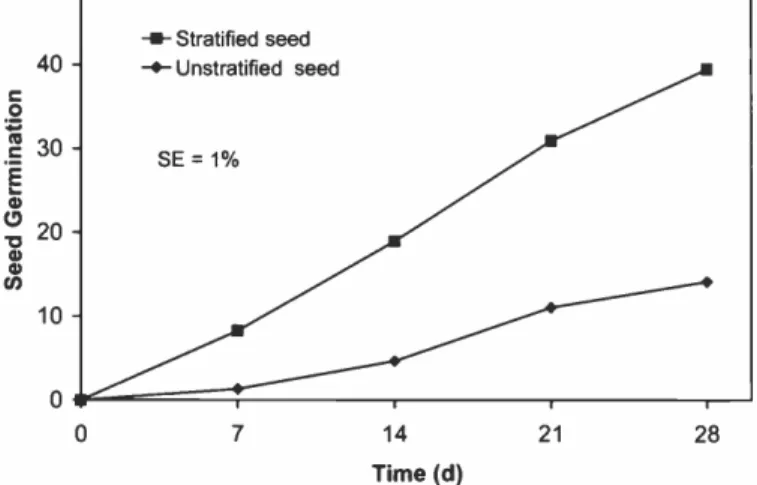
Figure 4. Germination of cold, moist stratified and unstratified seed of
"Pete" eastern gamagrass. Seed was stratified for 6 weeks at 4 °C. The germination data was generated from 5 tests with 3 replications per test.
potentials attained in these priming systems were within ± 0.1 MPa of the intended water potentials in all 3 carriers. There were no differences in germination, abnormal seedlings, dor- mant seeds, or dead seed between the 2 water potentials used in any of the 3 carriers. The interaction between carrier and GA3 addition to the priming system was not significant. The effect of carrier material was significant for seed germination and dead seeds (Table 1). There were fewer normal seedlings and more dead seed produced from priming in Agro -Lig than MicroCel E and Vermiculite. Addition of GA3 promoted greater amounts of both normal and abnormal seedlings and reduced the number of dormant seeds (Table 2). The interaction of germination time and priming solution effects on the amount of seed germination was not significant for any of the carrier materials, indicating that addition of GA3 did not accelerate the rate of seed germination. For all 3 carriers, the percent seed germination increased up until 21 days of germination time, but did not change between 21 and 28 days.
Discussion
The results of this study suggest that addition of GA3 to solid matrix priming systems has a small, positive influence on eastern gamagrass seed germination. Our interest in evaluating GA3 in solid matrix priming systems for increasing seed germination of eastern gamagrass came from several previous studies. Solid matrix priming has been used to increase the germination of native, warm season grasses. Priming increased emergence of big bluestem (Andropogon gerardii Vittman var.
gerardii) seed by 7 percentage points and switchgrass (Panicum
virgatum L.) by 19 percentage points (Beckman et al 1993). It
also increased the cold temperature germination rate of 7
warm season grasses native to the Great Basin of the United
States (Hardegree 1994). Low molar solutions of GA3 increased
the germination of eastern gamagrass caryopses removed from
the encompassing cupule structures (Anderson 1985; Tian et al
2003). Removal of the cupule and application of GA3 increased
germination to almost 100% of the viable seed (Tian et al
2003). The results of the current study were most similar to those obtained from soaking cupulated seed in GA3 solution for 24 hours (Tian et al 2003).
Cold, wet stratification of eastern gamagrass seed (Ahring and Frank 1968) has been an accepted practice for reducing seed dormancy in eastern gamagrass. Priming with GA3 does not appear to be as effective at reducing dormancy as stratification.
Multiple germination tests were performed on cold, wet stratified and unstratified seed from this lot for another study (Fig. 4; Aberle et al 2003). When compared with the germina- tion obtained in these tests, priming eastern gamagrass seed in GA3 did not increase seed germination to the levels obtained from stratification. Although priming with GA3 stimulated seed germination, the 18% germination attained from priming for 1 week was less than the 40% attained when the seed was stratified at 4 °C for 6 weeks. Priming may have decreased the time needed to complete germination by as much as 1 week.
Typically, eastern gamagrass seed germination continues to increase from 21 and 28 days of germination time (Tian et al 2002, 2003; Fig. 4). In the current study, germination peaked at 21 days and there was no additional germination at 28 days.
MicroCel E and Vermiculite #5 were suitable materials for controlled hydration and priming of eastern gamagrass seed.
When compared with these 2 materials, germination was lower and the number of dead seeds was greater when Agro -Lig was used as the carrier. It took longer for full seed hydration in MicroCel E than in Vermiculite #5 at similar water potentials and final seed water contents. The water content of seeds after 1 day in the priming systems was similar for these 2 materials.
After the first day, seed hydrated more rapidly in Vermiculite #5 than in MicroCel E.
Literature Cited
ABERLE, E. Z., L. R. GIBSON, A. D. KNAPP, P. M. DIXON, K. J. MOORE, E. C. BRUMMER, AND R.
HINTZ. 2003. Optimum planting procedures for eastern gamagrass.
Agronomy Journal 95:1054 -1062.
AHRING, R. M., AND H. FRANK. 1968. Establishment of eastern gamagrass from seed and vegetative propagation. Journal of Range Management 21:27 -30.
ANDERSON, R. C.
1985. Aspects of the germination ecology and biomass production of eastern gamagrass (Tripsacum dactyloides L.).
Botanical Gazette 46:353 -364.Association of Official Seed Analysts. 1992. Seedling evaluation handbook.
Contribution No. 35:84 -87. Las Cruces, NM: Association of Official Seed
Analysts.Association of Official Seed Analysts. 1998. Rules for testing seeds. Las Cruces, NM: Association of Official Seed Analysts.
BECKMAN, J. J., L. E. MOSER, K. KUBIK, AND S. S. WALLER. 1993. Big bluestem and switchgrass establishment as influenced by seed priming. Agronomy Journal 85:199 -202.
HARDEGREE, S. P. 1994. Matric priming increases germination rate of great basin native perennial grasses. Agronomy Journal 86:289 -293.
KHAN, A. A. 1992. Preplant physiological seed conditioning. Horticulture Review 13:131 -181.
KHAN, A. A., S. ILYAS, AND W. PTASZNIK. 1995. Integrating low water potential seed hydration with other treatments to improve cold tolerance. Annals of Botany
75:13 -19.
KHAN, A. A., H. MIURA, J. PRUSINSKI, AND S. ILYAS. 1990. Matriconditioning of seeds to improve emergence. Minneapolis, MN: Proceedings of the National Sympo- sium on Stand Establishment of Horticultural Crops. p 19 -40.
SCANLON, B. R., B. J. ANDRASKI, AND J. BILSKIE. 2002. Miscellaneous methods for measuring matric or water potential. In: J. Dane and C. Topp [eds.]. Methods of soil analysis. Madison, WI: ASA and SSSA.
SNEDECOR, G. W., AND W. G. COCHRAN. 1989. Statistical methods. 8th ed. Ames, IA:
Iowa State University Press. p 398 -419.
STEEL, R. G. D., AND J. H. TORRIE. 1980a. Principles and procedures of statistics:
a biometrical approach. 2nd ed. New York, NY: McGraw -Hill. p 188.
STEEL, R. G. D., AND J. H. TORRIE. 1980b. Principles and procedures of statistics:
a biometrical approach. 2nd ed. New York, NY: McGraw -Hill. p 185.
TAYLOR, A. G., P. S. ALLEN, M. A. BENNETT, K. J. BRADFORD, J. S. BURRIS, AND M. K.
MISA. 1998. Seed enhancements. Seed Science Research 8:245 -256.
TIAN, X., A. D. KNAPP, L. R. GIBSON, R. STRUTHERS, K. J. MOORE, E. C. BRUMMER, AND T. B. BAILEY. 2003. Response of eastern gamagrass seed to gibberellic acid buffered below its pKa. Crop Science 43:927 -933.
TIAN, X., A. D. KNAPP, K. J. MOORE, E. C. BRUMMER, AND T. B. BAILEY. 2002. Cupule