Proceedings of the 55th Annual Meeting of the Association for Computational Linguistics (Short Papers), pages 58–63 Vancouver, Canada, July 30 - August 4, 2017. c2017 Association for Computational Linguistics
Proceedings of the 55th Annual Meeting of the Association for Computational Linguistics (Short Papers), pages 58–63 Vancouver, Canada, July 30 - August 4, 2017. c2017 Association for Computational Linguistics
Evaluating Compound Splitters Extrinsically with Textual Entailment
Glorianna Jagfeld Patrick Ziering Institute for Natural Language Processing
University of Stuttgart
{jagfelga,zierinpk} @ims.uni-stuttgart.de
Lonneke van der Plas Institute of Linguistics University of Malta, Malta Lonneke.vanderPlas
@um.edu.mt
Abstract
Traditionally, compound splitters are eval-uated intrinsically on gold-standard data or extrinsically on the task of statistical machine translation. We explore a novel way for the extrinsic evaluation of com-pound splitters, namely recognizing tex-tual entailment. Compound splitting has great potential for this novel task that is both transparent and well-defined. More-over, we show that it addresses certain as-pects that are either ignored in intrinsic evaluations or compensated for by task-internal mechanisms in statistical machine translation. We show significant improve-ments using different compound splitting methods on a German textual entailment dataset.
1 Introduction
Closed compounding, i.e., the formation of a one-word unit composing several lexemes, is a com-mon linguistic phenomenon in several languages such as German, Dutch, Greek, and Finnish. The goal of compound splitting is to obtain the con-stituents of a compound to increase its semantic transparency. For example, for the German com-poundApfelsaft‘apple1 juice2’ the desired output
of a compound splitter isApfel1 Saft2.
Intrinsic evaluationof compound splitting mea-sures the correctness of the determined split point (Riedl and Biemann,2016) and the resulting lem-mas by means of precision, recall, F1-score and
accuracy (e.g., Koehn and Knight (2003)). In ex-trinsic evaluation setups, compound splitting is applied to the input data of an external natural lan-guage processing (NLP) task that benefits from split compounds. As closed compounding intro-duces semantic opaqueness and vastly increases the vocabulary size of a language, many NLP tasks
benefit from compound splitters. Still, previous work that evaluates compound splitting with ex-trinsic evaluation methods mostly focuses on sta-tistical machine translation (SMT) (e.g., Nießen and Ney (2000), Koehn and Knight (2003)). Some other external tasks such as information re-trieval (Kraaij and Pohlmann, 1998) or speech recognition (Larson et al.,2000) have been shown to benefit from prior compound splitting, yet these works have not compared the extrinsic perfor-mance of different compound splitting methods.
Interestingly, the performance found in in-trinsic evaluations does not automatically propa-gate to performance in downstream evaluations as shown in (Fritzinger and Fraser, 2010) for SMT, where oversplit compounds are simply learned as phrases (Dyer, 2009; Weller et al., 2014). Over-splitting is an example of a feature that might not be measured in intrinsic evaluations, because some available gold standards contain positive ex-amples only (Ziering and van der Plas,2016). It is highly relevant to increase the number of extrin-sic tasks for the evaluation of compound splitting to be able to evaluate features that intrinsic evalu-ations and known extrinsic evaluevalu-ations ignore.
In this paper we investigate the suitability of Recognizing Textual Entailment (RTE) for the task of compound splitting, inspired by the fact that previous work in RTE underlined the potential benefits of compound splitting for this task (Zeller, 2016). Textual Entailment (TE) is a directional relationship between an entailing text fragment T and an entailed hypothesis, H, saying that the meaning of T entails (or implies) the meaning of H. This relation holds if ‘typically, a human, read-ing T, would infer that H is most likely true’ (Da-gan et al.,2006). The following is an example of an entailing T-H pair:
T: Yoko Ono unveiled a bronze statue of her late husband, John Lennon.
H: Yoko Ono is John Lennon’s widow.
We opted for exploring the use of RTE as an ex-trinsic evaluation for compound splitting for three main reasons: first, in contrast to SMT systems, most RTE systems are less complex. In fact, we deliberately chose an RTE system that reaches good performance with a method that is transpar-ent, i.e., a method that allows for exploring the ef-fect of compounding.1 It is not our goal to reach state-of-the-art performance for the RTE task. We aim to find a suitable alternative extrinsic eval-uation for compound splitting. Second, human agreement on the binary RTE decisions is very high, e.g., on the dataset used in our experiments, an average agreement rate of 87.8% with aκlevel
of 0.75 was reported (Giampiccolo et al., 2007). Third, the potential benefits for RTE are large. According to Zeller (2016, p. 182) the number of T/H pairs in their phenomenon-specific RTE dataset would rise by about 16 percentage points by compound splitting. In the dataset we use in our experiments, about three-quarters of the T-H pairs contain at least one closed compound.
2 Relevance of Compound Splitting for RTE
The approach to RTE taken in this paper fol-lows the Lexical Overlap Hypothesis (LOH), which states that the higher the number of lex-ical matches between T and H, the more likely the T-H pair is entailing rather than non-entailing (Zeller,2016). In other words, H is more likely to be entailed by T if most of its lexical content also occurs in T. While this hypothesis is a simpli-fication of the TE problem, it has been shown to perform reasonably well for some datasets (Noh et al.,2015). We argue that the brittleness of the chosen LOH-based RTE system may actually be a strength in terms of evaluation, since it will penal-ize oversplitting more severely than, e.g., an RNN-based RTE system or a phrase-RNN-based MT method that can recover from systematic oversplitting by chunking the splits.
Under the LOH, the problem caused by the opacity of closed compounds becomes evident. As shown in the example below, missing informa-tion on the constituents of closed compounds hin-ders the matching of words from T in H1. Con-versely, compound splitting also helps to detect
1We did not opt for neural RTE systems (Bowman et al., 2015), albeit state-of-the-art, in this first study because of the opacity of the models and the inclusion of phrase-level infor-mation, which will make interpretation of the effect harder.
non-entailing T-H pairs. By compound splitting, we increase the number of uncovered tokens in H2, which makes a non-entailment decision more likely2.
T: Kinder lieben Fruchts¨afte1 aus ¨Apfeln2‘
Chil-dren love fruitjuices1made ofapples2’
H1: Peters Sohn liebt Apfel3saft4 ‘Peter’s son
lovesapple3juice4’
H2: Peters Sohn liebt Apfel5kuchen6st¨ucke7
‘Peter’s son lovespieces7 ofapple5pie6’
3 Materials and Methods
In this section we explain the splitters and the RTE framework used in our experiments.
3.1 Inspected Compound Splitters
Our proposed extrinsic evaluation approach for compound splitting is language-independent as we do not use any language-specific parameters. However, in the present work we test it on the most prominent closed-compounding language, German (Ziering and van der Plas,2014). We in-spect the impact of three different types of auto-matic compound splitting3 methods that follow a generate-and-rank principle, where the candidate splits are ranked according to the geometric mean of the constituents’ frequencies in a given training corpus (Koehn and Knight,2003).
FF2010 The compound splitter by Fritzinger
and Fraser (2010) relies on the output of the German morphological analyzer SMOR (Schmid
et al., 2004) to generate several plausible com-pound splits (e.g., due to word sense ambiguity).
WH2012 As an alternative method, we use
the statistical approach presented in Weller and Heid (2012) for German compound splitting. In-stead of using the knowledge-rich SMOR, it
in-cludes an extensive list of hand-crafted transfor-mation rules that allows to map constituents to corpus lemmas (e.g., by truncating linking mor-phemes) to generate all possible splits with up to four constituents per compound. Moreover, mis-leading lemmas are removed from the training cor-pus using hand-crafted filters.
2Note that we need to apply lemmatization prior to deter-mining the lexical matches between T and H.
System Acc P EntailmentR F Non-entailment
1 P R F1
INIT 64.13 62.50 74.57 68.00 66.67 53.20 59.18 manual splitting? 67.88 65.08 80.20 71.85 72.64 54.99 62.59
ZvdP2016 66.63 64.55 77.02 70.23 69.87 55.75 62.02 FF2010? 67.38 65.48 76.53 70.58 70.19 57.80 63.39
[image:3.595.126.476.62.165.2]WH2012 66.00 63.73 77.75 70.04 69.77 53.71 60.69
Table 1: Results on RTE performance without (INIT) and with prior compound splitting. ?: significant
difference of the performance in comparison to INIT
ZvdP2016 Finally, the method using least
language-specific knowledge was proposed by Ziering and van der Plas (2016). Instead of us-ing a morphological analyzer or manually com-piling a hand-crafted list of rules, they recursively generate all possible binary splits by learning con-stituent transformations from regular inflection de-rived from a monolingual lemmatized corpus, e.g., thes-suffix in the case of a genitive marker is often used as linking morpheme. The recursion stops if a non-splitting (atomic) analysis is ranked highest. Additionally, to provide an upper bound, we manually split development and test data.
3.2 RTE Framework
We conduct our RTE experiments using the open-source Excitement Open Platform (EOP) (Pad´o et al.,2015;Magnini et al.,2014), which provides comprehensive implementations of algorithms and lexical resources for textual inference. We use the alignment-based algorithm P1EDA (Noh et al., 2015) in all our experiments as it has been shown to be simple and transparent while yielding rela-tively good results. P1EDA is based on the LOH for RTE explained in Section 2. The algorithm works in three steps: First, it extracts all possible alignments between sequences of identical lem-mas in T and H. Then, it extracts various fea-tures4 from the alignments. Finally, these fea-tures are given as input to a multinomial logis-tic regression classifier which is trained on anno-tated data. For the sake of simplicity, for now we only use one basic aligner which aligns (se-quences of) words in T and H that consist of iden-tical lemmas. We will investigate the impact of prior compound splitting given additional lexical resources (such as a derivational morphology
lex-4We use a similar feature set as Noh et al. (2015), namely the ratio of aligned vs. unaligned words in H with respect to all words, content words, and named entities.
icon (Zeller et al.,2013)) in future work. We use TreeTagger (Schmid, 1995) as integrated in EOP to provide tokenization, lemmatization and Part-of-Speech tagging as linguistic preprocessing.
We train and evaluate all models on the Ger-man translation of the RTE-3 dataset (Dagan et al., 2006;Magnini et al.,2014). The training and test dataset contain 800 T-H pairs each. In both sets, entailing and non-entailing T-H pairs are equally distributed (chance baseline of 50% accuracy).
We apply a compound splitter on the RTE train-ing and test datasetbeforewe input the data to the EOP pipeline. We replace all compounds by their constituents, separated by white-space. Thus, they are subsequently treated as individual words by EOP and the lexical aligner can benefit from the increased transparency of the compounds.
4 Results and Discussion
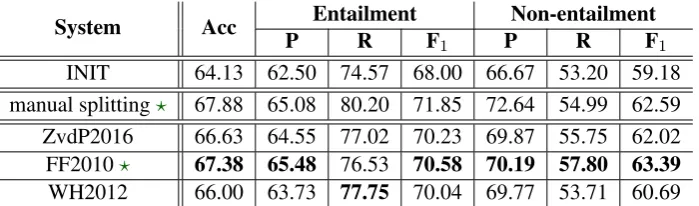
Table1shows accuracy, precision, recall and F1
-score for the entailment and non-entailment class on the RTE-3 dataset. As reflected in the results, reducing the opacity of compounds via the appli-cation of a compound splitter improves the subse-quent RTE performance. This holds for all com-pound splitters that we used in our experiments. It is also noticeable that the different compound splitters yield different results in the downstream task, with FF2010 being the most beneficial and significantly5outperforming the initial RTE setup without prior compound splitting (INIT) by up to four percentage points in accuracy and F1-score.
As expected, manual splitting performs best overall. The performance difference with FF2010 is however not statistically significant. This is not surprising because FF2010 reaches an accuracy of around 90% in intrinsic evaluations (Ziering and van der Plas,2016) and the small
mance is leveled out by the small size of the test set. Moreover, manual inspections revealed that FF2010 has a higher recall than manual splitting in the non-entailment class due to its undersplit-ting which results in less lexical overlap between T and H, pointing to the non-entailment class.
When we compare these results from the ex-trinsic evaluation with inex-trinsic evaluation results (in terms of splitting accuracy) reported in Zier-ing and van der Plas (2016), we see the same per-formance ordering with respect to the three com-pound splitters, while the current extrinsic evalua-tion on RTE differentiates between the best system (FF2010) and the two others in that only the for-mer reached statistically significant improvements over the INIT baseline.
To analyze the possible causes of difference in performance between the systems and to see the benefits of using RTE for compound splitting evaluation we performed a manual error analysis. First, we examined all entailment classifications that were correct using FF2010 and incorrect when using the INIT baseline. Using FF2010, the classi-fier was able to correctly classify an additional 36 entailing and 25 non-entailing T-H pairs. As ex-pected, most of the hypotheses in these pairs con-tained correctly split compounds where the RTE system could benefit from the increased trans-parency. Conversely, we also examined the 28 T-H pairs that the classifier missed to identify as entail-ing while they were correct in INIT. Most of the examples were cases in which there was almost no lexical overlap between T and H even with com-pound splitting.
Furthermore, we compared the correct entail-ment classifications of FF2010 with the other two splitters. For ZvdP2016, most errors can be at-tributed to oversplitting. Precisely, 25 out of its 37 (67.5%) misclassifications compared to FF2010 can be attributed to this problem. For exam-ple, ZvdP2016 oversplit the nameLandowskainto
Line Dow Ska6 that appeared in both T and H in an non-entailing pair, which artificially increased the coverage ratio of words in H and therefore pointed to the incorrect entailment classification. For WH2012, oversplitting is also a major con-tributor of RTE errors, however it appeares not as predominant as for ZvdP2016. 10 out of its 29 (34.5%) misclassifications compared to FF2010
6Misleading knowledge about verbal inflection automati-cally derived from a lemmatized corpus is responsible for the oversplitting by ZvdP2016.
can be attributed to oversplitting, while 4 (13.8%) missclassifications are due to undersplitting. For example, in an entailing T-H pair WH2012 cor-rectly split Amazonas-Regenwald ‘Amazon rain-forest’ in H intoAmazonas Regen Wald, however it oversplitAmazonasin T intoAmazon As‘Amazon ace’ and thus,Amazonasin H remained unaligned. To the contrary, FF2010 did not splitAmazonasin T, which lead to a higher token coverage ratio in H. Again, in the HDie EU senkt die Fangquoten‘The EU lowers the fishing quota’ of another entailing T-H pair, WH2010 correctly split Fang1quoten2
‘fishing quota’ in H intofangen1Quote2but failed
to splitEU-Quote in T, failing to cover both EU
andQuotein H.
Our closer inspections also showed that com-pound splitting does not always suffice to reveal a lexical match between T and H as shown in the following example:
T: Ben f¨ahrt1 einen Mercedes2 ‘Ben drives1 a
Mercedes2’
H: Ben istAuto3fahrer4 ‘Ben is acar3driver4’
Given a correct splitting of Autofahrer to
Auto Fahrer, a derivational morphology resource (Zeller et al.,2013) would be required to discover the relationship betweenfahrenandFahrerand a synonym database to find thatMercedes is a hy-ponym of Auto. This does not weaken the claim that RTE is useful for evaluating compound split-ters. It just shows that deeper, semantic compound analysis could improve RTE further.
Besides, the error analysis shed some light on the treatment of compound heads and modifiers. It seems advisable to weight the compound head and modifiers differently when computing the ratio of aligned tokens in H. As illustrated by the follow-ing example, coverage of the head should be more important for the entailment decision than of the modifiers. Given a correct split ofKinder1buch2
intoKind1Buch2, H1 and H2 have the same token
coverage ratio while only H1 is entailed by T.
T: Yuki kauft ein Kinder1buch2 ‘Yuki buys a
children’s1 book2’
H1: Yuki kauft einBuch‘Yuki buys abook’ H2: Yuki ist einKind‘Yuki is achild’
H that are fairly non-compositional with respect to all constituents (e.g., Maulwurf ‘mole’ (lit. ‘mouth throw’)) is counterproductive. However, since most compounds (in particular ad-hoc pro-ductions) are compositional, this is only a side is-sue. In fact, we did not observe any cases of non-compositional compounds in the course of our er-ror analysis.
In summary, compound splitting is a complex task that comprises many subtasks. The multiple evaluation methods available, both intrinsic and extrinsic, vary in their suitability to evaluate them. One of these subtasks concerns the ability of com-pound splitters to determine whether to split or not, which is an integral part of compound anal-ysis. While aspects such as oversplitting were not consistently evaluated in previous intrinsic evalu-ations, or compensated for by task-internal mech-anisms in SMT, RTE proved more strict in this re-spect. Moreover, the transparency of the models made it possible to better estimate the impact of splitting. Despite the small size of the dataset, we were able to show significant differences, partly due to the clear definition of this binary classifica-tion task.
On a side note, to the best of our knowledge, the result we obtained using the FF2010 com-pound splitter is the best result on the German RTE-3 dataset that has been reported using EOP. Notably, we obtain an accuracy which is almost three percentage points higher than the results of Noh et al. (2015), although they include further (language-specific) linguistic knowledge.
5 Conclusion
Inspired by the potential benefits of compound splitting from the RTE literature and supported by the transparency of the models and the clear defi-nition of this binary classification task, we set out to explore whether RTE is a suitable method to ex-trinsically evaluate the performance of compound splitting. We compared several compound split-ters on a German textual entailment dataset and found that compound splitting is helpful for RTE across the board. More importantly, we found that certain aspects of compound splitters, neglected in previous evaluations, such as oversplitting, had a large impact on this task and nicely differentiated the systems tested. We conclude that RTE repre-sents a suitable alternative to SMT for the extrinsic evaluation of compound splitters.
In future work, we would like to investigate the interaction between additional lexical resources (such as GermaNet (Hamp and Feldweg, 1997; Henrich and Hinrichs,2010) or DErivBase (Zeller et al.,2013)) and compound splitting, and the im-pact on the RTE performance.
Acknowledgments
We thank Sebastian Pad´o and Britta Zeller for their inspiring ideas about using compound splitting for improving RTE, and for their support in using the RTE framework. We are also grateful to the anonymous reviewers for their helpful feedback. This research was funded by the German Research Foundation (Collaborative Research Centre 732, Project D11).
References
Samuel R Bowman, Gabor Angeli, Christopher Potts, and Christopher D Manning. 2015. A large an-notated corpus for learning natural language infer-ence. InProceedings of the Conference on Empiri-cal Methods in Natural Language Processing. Ido Dagan, Oren Glickman, and Bernardo Magnini.
2006. The PASCAL Recognising Textual En-tailment Challenge. In Proceedings of the First International Conference on Machine Learning Challenges: Evaluating Predictive Uncertainty Vi-sual Object Classification, and Recognizing Tex-tual Entailment. Springer-Verlag, Berlin, Heidel-berg, MLCW’05.
Chris Dyer. 2009. Using a Maximum Entropy Model to Build Segmentation Lattices for MT. In Proceed-ings of NAACL-HLT 2009. NAACL ’09.
Fabienne Fritzinger and Alexander Fraser. 2010. How to Avoid Burning Ducks: Combining Linguistic Analysis and Corpus Statistics for German Com-pound Processing. InProceedings of the ACL 2010 Joint 5th Workshop on Statistical Machine Transla-tion and Metrics MATR.
Danilo Giampiccolo, Bernardo Magnini, Ido Dagan, and Bill Dolan. 2007. The Third PASCAL Recog-nizing Textual Entailment Challenge. In Proceed-ings of the ACL-PASCAL Workshop on Textual En-tailment and Paraphrasing. Stroudsburg, PA, USA, RTE ’07.
Birgit Hamp and Helmut Feldweg. 1997. GermaNet -a Lexic-al-Sem-antic Net for Germ-an. InProceedings of ACL workshop Automatic Information Extraction and Building of Lexical Semantic Resources for NLP Applications.
Maegaard, Joseph Mariani, Jan Odijk, Stelios Piperidis, Mike Rosner, and Daniel Tapias, edi-tors,Proceedings of the Seventh International Con-ference on Language Resources and Evaluation (LREC’10). European Language Resources Associ-ation (ELRA), Valletta, Malta.
Philipp Koehn and Kevin Knight. 2003. Empirical Methods for Compound Splitting. InEACL. Wessel Kraaij and Ren´ee Pohlmann. 1998. Comparing
the Effect of Syntactic vs. Statistical Phrase Index Strategies for Dutch. InProceedings ECDL’98. Martha Larson, Daniel Willett, Joachim K¨ohler, and
Gerhard Rigoll. 2000. Compound splitting and lexi-cal unit recombination for improved performance of a speech recognition system for German parliamen-tary speeches. In Sixth International Conference on Spoken Language Processing, ICSLP / INTER-SPEECH.
Bernardo Magnini, Roberto Zanoli, Ido Dagan, Kathrin Eichler, G¨unter Neumann, Tae-Gil Noh, Sebastian Pado, Asher Stern, and Omer Levy. 2014. The Ex-citement Open Platform for Textual Inferences. In Proceedings of the ACL 2014 System Demonstra-tions.
Quinn McNemar. 1947. Note on the sampling error of the difference between correlated proportions or percentages. Psychometrika12(2).
Sonja Nießen and Hermann Ney. 2000. Improving SMT quality with morpho-syntactic analysis. In COLING 2000.
Tae-Gil Noh, Sebastian Pad´o, Vered Shwartz, Ido Da-gan, Vivi Nastase, Kathrin Eichler, Lili Kotlerman, and Meni Adler. 2015. Multi-Level Alignments As An Extensible Representation Basis for Textual En-tailment Algorithms. In Proceedings of the Fourth Joint Conference on Lexical and Computational Se-mantics, *SEM 2015. Denver, Colorado, USA. Sebastian Pad´o, Tae-Gil Noh, Asher Stern, Rui Wang,
and Roberto Zanoli. 2015. Design and Realization of a Modular Architecture for Textual Entailment. Natural Language Engineering21(2).
Martin Riedl and Chris Biemann. 2016. Unsupervised Compound Splitting With Distributional Semantics Rivals Supervised Methods. InNAACL-HTL 2016. Helmut Schmid. 1995. Improvements In
Part-of-Speech Tagging With an Application To German. In In Proceedings of the ACL SIGDAT-Workshop. Helmut Schmid, Arne Fitschen, and Ulrich Heid.
2004. SMOR: A German Computational Morphol-ogy Covering Derivation, Composition, and Inflec-tion. InLREC 2004.
Marion Weller, Fabienne Cap, Stefan M¨uller, Sabine Schulte im Walde, and Alexander Fraser. 2014. Dis-tinguishing Degrees of Compositionality in Com-pound Splitting for Statistical Machine Translation. InComAComA 2014.
Marion Weller and Ulrich Heid. 2012. Analyzing and Aligning German compound nouns. InLREC 2012.
Britta Dorothee Zeller. 2016. Induction, Semantic Val-idation and Evaluation of a Derivational Morphol-ogy Lexicon for German. Ph.D. thesis, Heidelberg, Germany.
Britta Dorothee Zeller, Jan Snajder, and Sebastian Pad´o. 2013. DErivBase: Inducing and Evaluating a Derivational Morphology Resource for German. In ACL (1). The Association for Computer Linguistics.
Patrick Ziering and Lonneke van der Plas. 2014. What good are ’Nominalkomposita’ for ’noun com-pounds’: Multilingual Extraction and Structure Analysis of Nominal Compositions using Linguis-tic Restrictors. In Proceedings of COLING 2014, the 25th International Conference on Computational Linguistics: Technical Papers.