Original Article
Abnormality of intestinal cholesterol absorption in
Apc
Min/+mice with colon cancer cachexia
Biao Yu*, Xiao-Huan Peng*, Ling-Yu Wang, An-Bei Wang, Yan-Yan Su, Jia-Huan Chen, Xin-Wei Zhang, Da-Zhong Zhao, He Wang, Da-Xin Pang, Hong-Sheng Ouyang, Xiao-Chun Tang, Ming-Jun Zhang
Jilin Provincial Key Laboratory of Animal Embryo Engineering, College of Animal Sciences, Jilin University, Changc-hun, Jilin Province, China. *Equal contributors.
Received December 30, 2018; Accepted January 24, 2019; Epub March 1, 2019; Published March 15, 2019
Abstract: Colorectal cancer syndrome has been one of the greatest concerns in the world, particularly in developed countries. Several epidemiological studies have shown that dyslipidemia may be associated with the progression of intestinal cachexia, but there is little research on the function of the small intestine, which is involved in blood lipid metabolism, in dyslipidemia. In the present study, we aimed to explore the function of intestinal cholesterol absorption in the ApcMin/+ mouse model using an intestinal lipid absorption test. We found that both triglyceride
(TG) and total cholesterol (TC) uptake were inhibited in the intestine of ApcMin/+ mice with age and the intestinal
peroxisome proliferator-activated receptor α (PPARα) downregulated the processes of β-oxidation, oxidative stress response, and cholesterol absorption in APC-deficient mice. In addition, reduced expression levels of farnesoid X receptor (FXR) and apical sodium-dependent bile acid transporter (ASBT) indicated that bile acid metabolism might be associated with intestinal cholesterol absorption in ApcMin/+ mice. Thus, our data suggested that the intestine
plays an essential role in cholesterol uptake and that bile acid metabolism seems to cause a decrease in intestinal cholesterol uptake in ApcMin/+ mice.
Keywords: Adenomatous polyposis coli (APC), cholesterol absorption, dyslipidemia, peroxisome proliferator-acti-vated receptor α (PPARα), bile acid
Introduction
Colorectal cancer (CRC) syndrome has been one of the greatest concerns in the world, par-ticularly in developed countries [1]. A classic animal model of human familial adenomatous polyposis (FAP) is the C57BL/6J-ApcMin/+ mouse,
and this mouse has a truncated mutation in the adenomatous polyposis coli (APC) gene, which results in multiple intestinal adenoma polyps and is associated with the loss of muscle and fat accompanying hyperlipidemia [2, 3]. Hyper- lipidemia has been reported to be closely asso-ciated with the development of intestinal ade-noma polyps in the ApcMin/+ mouse [4]. Previous
studies have shown that a low level of intestinal lipoprotein lipase (LPL) mRNA expression may be involved in dyslipidemia and tumor progres-sion [2]. However, what we often ignore is the role of the small intestine in the process of blood lipid metabolism.
Epithelial cells are an important part of the lipid balance in the intestine. Not only can epithelial cells of the small intestine absorb approximate-ly 95% trigapproximate-lycerides (TGs), but they can also store TGs within cytosolic lipid droplets (CLDs) [5, 6]. In addition, the absorbed TGs are decom-posed in the lumen of the gut, resulting in FFAs that are activated, esterified and released into lymphatic circulation [7, 8]. CLDs play a core role in the control of enterocyte triglyceride-rich lipoprotein (TRL) secretion [9].
Previous studies have shown that peroxisome proliferator-activated receptor α (PPARα) can regulate the serum level of TGs in ApcMin/+ mice
intestine, which may represent risk factors for hyperlipidemia [10-12]. However, there are few studies on the roles of β-oxidation, the oxida-tive stress response and cholesterol absorp-tion in hyperlipidemia; therefore, the exact mechanism remains unclear.
Thus, whether PPARα signaling regulates intes-tinal cholesterol absorption in ApcMin/+ mice and the exact mechanism of its action are unclear. Therefore, we explored the intestinal choles-terol absorption ability of ApcMin/+ mice using an
intestinal lipid absorption test. The aim of this study was to reveal the potential reason for lipid absorption abnormalities in the intestine of ApcMin/+ mice.
Materials and methods
Animals
Four- to five-week-old wild-type male C57BL/6J (WT, n=20) and mutant male C57BL/6J-ApcMin/+
(ApcMin/+, Min, n=20) mice were purchased from
the Nanjing Biomedical Research Institute of Nanjing University (Nanjing, China). The mice were provided standard rodent chow and water
ad libitum and housed in cages (≤5 mouse per cage) that were placed in an SPF animal facility with the laboratory temperature maintained at 22°C and 40-60% humidity with a 12:12 light: dark cycle. All animal welfare and experimental procedures were performed strictly according to the National Institutes of Health guide for the
absorption. Blood was sampled via the tail vein at the baseline of 0 h and at 3 and 6 h, and the blood was centrifuged at 2000×g for 10 min-utes at 4°C. Fasting plasma total cholesterol (TC) and triglycerides (TGs) were analyzed using commercial kits from Biosino (Beijing, China) [13].
Intestinal permeability assay
FITC-dextran (4 kDa, Sigma, USA) was adminis-tered by oral gavage (60 mg/100 g body weight, 40 mg/mL) to the fasted mice. After 1 hour, blood was collected, stored on ice in the dark and centrifuged 1000×g for 15 minutes at 4°C. The serum was diluted with the same volume of PBS, and the fluorescence intensity was mea-sured using a fluorescence spectrophotometer (λex: 485 nm; λem: 535 nm, Infinite 200 Pro, Tecan, Switzerland) [14].
Gut transit test
Overnight-fasted mice were gavaged with 200 μl of Evans blue suspension (5% Evans blue and 5% gum arabic in PBS). Afterward, the mice had free access to food and water, and the time until the Evans blue was detected in the feces was recorded [13].
Oil red O staining
[image:2.612.92.380.83.311.2]For oil red O staining, the jejunum was isolated and fixed in 4% neutral-buffered formalin (Carl
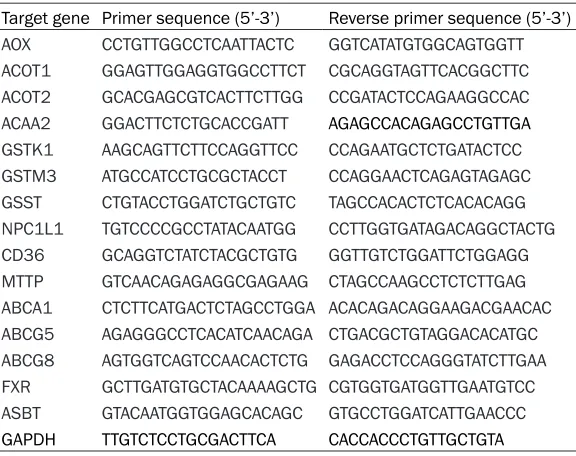
Table 1. Primer pairs used for the qRT-PCR analysis
Target gene Primer sequence (5’-3’) Reverse primer sequence (5’-3’)
AOX CCTGTTGGCCTCAATTACTC GGTCATATGTGGCAGTGGTT ACOT1 GGAGTTGGAGGTGGCCTTCT CGCAGGTAGTTCACGGCTTC ACOT2 GCACGAGCGTCACTTCTTGG CCGATACTCCAGAAGGCCAC ACAA2 GGACTTCTCTGCACCGATT AGAGCCACAGAGCCTGTTGA
GSTK1 AAGCAGTTCTTCCAGGTTCC CCAGAATGCTCTGATACTCC GSTM3 ATGCCATCCTGCGCTACCT CCAGGAACTCAGAGTAGAGC GSST CTGTACCTGGATCTGCTGTC TAGCCACACTCTCACACAGG NPC1L1 TGTCCCCGCCTATACAATGG CCTTGGTGATAGACAGGCTACTG CD36 GCAGGTCTATCTACGCTGTG GGTTGTCTGGATTCTGGAGG MTTP GTCAACAGAGAGGCGAGAAG CTAGCCAAGCCTCTCTTGAG ABCA1 CTCTTCATGACTCTAGCCTGGA ACACAGACAGGAAGACGAACAC ABCG5 AGAGGGCCTCACATCAACAGA CTGACGCTGTAGGACACATGC ABCG8 AGTGGTCAGTCCAACACTCTG GAGACCTCCAGGGTATCTTGAA FXR GCTTGATGTGCTACAAAAGCTG CGTGGTGATGGTTGAATGTCC ASBT GTACAATGGTGGAGCACAGC GTGCCTGGATCATTGAACCC
GAPDH TTGTCTCCTGCGACTTCA CACCACCCTGTTGCTGTA
care and use of laboratory animals (NIH Publications No. 8023, revised 1978). In addition, the procedures were approved by the In- stitutional Animal Care and Use Committee of Jilin Un- iversity under approved pro-tocol number 201707025.
Intestinal lipid absorption test
Figure 1. Gut barrier dysfunction in ApcMin/+ mice with colon cancer cachexia.
A. Gut permeability was measured between the ApcMin/+ mice and the WT
mice at 8, 14, and 20 weeks of age. Serum fluorescein dextran concentra -tions were measured one hour after gavage (n=5). B. Mice were gavaged with 200 μl of Evans blue, and gut transit was determined by recording the time until Evans blue appeared in the feces (WT=7, ApcMin/+=5). C. Cachexia
(red arrow) in the intestine at 14 and 20 weeks of age in ApcMin/+ mice.
In-testinal inflammation (black arrow) in the intestine at 20 weeks of age in ApcMin/+ mice. D. Lactescent serum of the ApcMin/+ mouse was observed at
20 weeks of age. Data are expressed as the Mean ± SEM. The differences between the mean values were assessed by Student’s t-tests and analyzed using GraphPad Prism software 7.0. *P<0.05; ***P<0.001; ns, not signifi -cant.
Roth GmbH, Vienna, Austria). Serial sections (5 μm) of the jejunum were removed and stained with oil red O and Mayer’s hematoxylin. Micro- scopic images were taken using a Nikon Eclipse E600 equipped with a Nikon Digital Sight DS-U1 unit (Spach Opt- ics Inc., New York, NY). Oil Red O staining of the jejunum was performed on frozen sections using standard protocols [15].
Real-time quantitative PCR analysis
Total RNA from the jejunum of mice was extracted using TRNzol-A reagent and reverse transcribed to cDNA according to the manufacturer’s instruc-tions using a FastQuant RT kit (Tiangen, Beijing, China). The primers used for gene amplifi-cation are presented in Table 1. qPCR was performed using a Bio-RadiQ5 instrument (Bio- Rad, USA). The 2-ΔΔCt method
was used to determine related gene expression, which was normalized to the amount of GAPDH mRNA. All experimen- ts were repeated three times
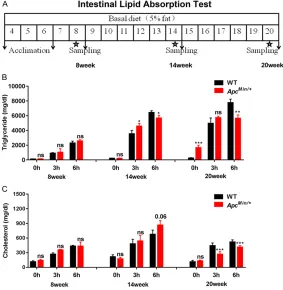
Figure 2. Intestinal lipid absorp-tion inhibiabsorp-tion occurs in ApcMin/+
mice. A. Study schematic of the intestinal lipid absorption test at 8, 14 and 20 weeks of age in mice. B and C. Plasm triglyceride (TG) and total cholesterol (TC) lev-els were determined by tail vein nick in the ApcMin/+ and WT mice
[image:3.612.90.373.416.706.2]for each gene and the data are expressed as the mean ± SEM.
Western blotting analysis
Equal amounts of protein samples were loaded into each lane of the gel for SDS-PAGE, followed by immunoblotting on a nitrocellulose brane (NC, Boster, China). Then, the mem-branes were incubated with an LPL antibody and a PPARα antibody (Boster, China) at 4°C. The membranes were incubated with a second-ary antibody (GAPDH, Beyotime, China) and imaged using a BeyoECL Plus kit (Beyotime, Beijing, China). To confirm the reproducibility of the results, at least three mice per group were used in each stage or treatment in this study.
Statistical analysis
All the data were analyzed using GraphPad Prism software 7.0 (La Jolla, CA, USA). The vari-ation was analyzed by Student’s t-tests, and the results are expressed as the Mean ± SEM.
P values <0.05 were considered statistically significant.
group: 6.19 ± 0.56 ng/μL versus 0.98 ± 0.2 ng/μL, P<0.001; Figure 1A). We noted that the time that Evans blue appeared in the feces gradually increased in the gut transit test at 8, 14 and 20 weeks of age (ApcMin/+mouse group
versus wild-type mouse group: 123.4 ± 10.71 minutes versus 116.57 ± 12.74 minutes,
P>0.05; 144.6 ± 7.6 minutes versus 121.71 ± 10.7 minutes, P<0.001; 183 ± 14.2 minutes versus 134.43 ± 8.42 minutes, P<0.001; respectively; Figure 1B). During the deteriora-tion of cachexia (red arrow), significant intesti-nal inflammation (black arrow) appeared at 20 weeks of age but not at 14 weeks of age in the
ApcMin/+mice (Figure 1C). A remarkable
lactes-cence in ApcMin/+ mice indicated that the mice
had suffered from severe hyperlipidemia (Figure 1D).
Intestinal lipid absorption inhibition occurs in ApcMin/+ mice
To evaluate the intestinal lipid absorption abili-ty of ApcMin/+ mice, in our study, mice were
fast-ed for 4 h prior to undergoing an intestinal lipid absorption test (Figure 2A). Next, we examined
Results
The intestines that were exam-ined in our study were taken from ApcMin/+ mice and
classi-fied as noncachectic (8 wee- ks of age), precachectic (14 weeks of age) and severely cachectic (20 weeks of age).
Gut barrier dysfunction in Ap-cMin/+ mice with colon cancer
cachexia
To objectively assess intesti-nal dysfunction in ApcMin/+
mice, the permeability of FITC-dextran (4 kDa) was investi-gated. It was remarkable that the concentration of FITC-dextran increased by nearly 1.5-fold at 14 weeks of age (ApcMin/+ mouse group versus
wild-type mouse group: 1.35 ± 0.29 ng/μL versus 0.96 ± 0.13 ng/μL, P<0.05) and ap- proximately 6.5-fold at 20 weeks of age (ApcMin/+mouse
[image:4.612.91.376.74.342.2]group versus wild-type mouse
Figure 3. Lipid droplets accumulate in the jejunum of ApcMin/+ mice. Oil red O
staining revealed the accumulation of lipid droplets (red arrow) in the intes-tine of ApcMin/+ mice at 14 weeks and 20 weeks of age. Magnification, ×200
the levels of serum triglycerides (TGs) and total cholesterol (TC) in ApcMin/+ and WT mice at 0-,
3-, and 6-hour time points at 8, 14 and 20 weeks after olive oil gavage, respectively. TG was higher in the ApcMin/+ mice than in the WT
mice at the 3-hour time point at 14 weeks (ApcMin/+ group versus WT group: 4567.55 ±
404.14 mg/dL versus 3541.24 ± 465.15 mg/ dL; P<0.05); however, TG was significantly lower in the ApcMin/+ mice than in the WT mice at the
6-hour time point at 14 weeks (ApcMin/+ group
versus WT group: 5667.14 ± 392.49 mg/dL versus 6305.72 ± 114.7; P<0.01). In contrast, TG was significantly higher in the ApcMin/+ mice
than in the WT mice at the 0-hour time point at 20 weeks (ApcMin/+ group versus WT group:
1659.99 ± 342.28 mg/dL versus 250.02 ± 62.15 mg/dL; P<0.001). However, TG was sig-nificantly lower in the ApcMin/+ group than in the
WT group at the 6-hour time point at 20 weeks
(ApcMin/+ group versus WT group: 5647.9 ±
459.72 mg/dL versus 7758.37 ± 488.01 mg/ dL; P<0.01). Additionally, there was no signifi-cant difference between the WT and ApcMin/+
mice at 8 weeks, the 0-hour time point at 14 weeks and the 3-hour time point at 20 weeks (Figure 2B). The TC of the ApcMin/+ mice was
sig-nificantly decreased at the 3-hour and 6-hour
time points at 20 weeks (ApcMin/+group versus
WT group: 269.7 ± 52.14 mg/dL versus 444.08 ± 54.89 mg/dL; 414.32 ± 33.58 mg/dL versus 519.56 ± 43.71 mg/dL; respectively; P<0.001), and there was no significant difference at 8 and 14 weeks between the two groups (Figure 2C).
Lipid droplets accumulate in the jejunum of ApcMin/+ mice
We further determined whether the intestinal lipid absorption inhibition resulted in lipid drop-lets accumulating in ApcMin/+ mice. Oil red O
staining of the jejunum confirmed that an increased number of lipid droplets accumulat-ed in the ApcMin/+ mice than in the WT mice at
the 14 and 20 weeks of age and that there was no significant difference at 8 weeks between the two groups (Figure 3). Our results indicate that intestinal lipid absorption inhibition occurs in ApcMin/+ mice with age.
APC deficiency results in the downregulation of intestinal PPARα target genes
To further understand the function of intestinal lipid metabolism in ApcMin/+ mice, the
[image:5.612.89.524.71.299.2]expres-sion of PPARα target genes was analyzed. As is
Figure 4. APC deficiency results in the downregulation of intestinal PPARα target genes. A. LPL and PPARα proteins were measured by western blot with specific antibodies in the intestine of the ApcMin/+ and WT mice (WT: wild type
mouse, Min: ApcMin/+ mouse, n=3). B-D. Aox, Acot1, Acot2, Acaa2, Gstk1, Gstm3, Gsst, Npc1l1, CD36, Mttp, Abca1,
Abcg5 and Abcg8 were measured by qRT-PCR in the intestine of ApcMin/+ and the WT mice (n=3). Data are expressed
CD36 plays an essential role in the uptake of FFAs and cholesterol from the intestinal lumen and is regulated by PPARα [16, 17]. In our study, decreased CD36, NPC1L1, ABCG5 and ABCA1 mRNA levels might have been involved in the cholesterol absorption inhibition in ApcMin/+
mice. To further determine whether bile acids can regulate cholesterol absorption, we
ana-Figure 5. Schematic of fatty acid β-oxidation, oxidative stress response and cholesterol absorption processes in the enterocytes of mouse. The main cholesterol importer NPC1L1 and the cholesterol exporters ABCG5/G8 are located at the apical membrane of enterocytes and facilitate the uptake of cholesterol across the brush border membrane. ACAT2 esterifies the ab -sorbed cholesterol, and MTTP transfers triglycerides and cholesteryl esters to ApoB48 in the smooth ER. The nascent chylomicrons leave the ER, are secreted through the Golgi complex to the basolateral side of the entero-cyte and reach the venous circulation through lymphatic vessels. In addition to the chylomicron pathway, a significant portion of intestinal xanthophylls are absorbed through an ABCA1/ApoA1 pathway and may be preferentially delivered to some tissues. The absorption of dietary cholesterol through the apical membrane into enterocytes is associated with β-oxidation and/ or oxidative stress response. NPC1L1: Niemann-Pick C1 like-1; ABCG5/G8: ATP-binding cassette transporter G5/G8; CD36: cluster of differentiation 36; apoB48: apolipoprotein B48; MTTP: microsomal triglyceride transfer protein; ACAT2: acyl-coenzyme A cholesterol acyltransferase 2; ER: endoplasmic re -ticulum; Golgi: Golgi apparatus; ABCA1: ATP-binding cassette transporter A1; HDL: high-density lipoprotein; AOX: acyl-CoA oxidase; ACOT1/2: acyl-CoA thioesterase 1/2; ACAA2: acetyl-CoA acyltransferase 2; GSTK1: glutathione S-transferase kappa 1; GSTM3: glutathione S-transferase mu 3; GSST: glu-tathione S-transferase theta; OS: oxidative stress; PPARα: peroxisome prolif -erator-activated receptor α; FXR: farnesoid X receptor; ASBT: apical sodium-dependent bile acid transporter; SHP: short heterodimer partner.
reported, a low level of LPL mRNA expression may be associated with dyslipidemia and involved in PPARα signaling in the intestine of
ApcMin/+ mice [2]. We repeated the experiment
and used a western blot analysis in the jejunum of the ApcMin/+ mice (Figure 4A). Moreover, we
determined the expression of intestinal PPARα target genes: β-oxidation, including acyl-CoA
oxidase (AOX), acyl-CoA thio- esterase 1 (ACOT1), acyl-CoA thioesterase 2 (ACOT2) and acetyl-CoA acyltransferase 2 (ACAA2); oxidative stress re- sponse (ROS), including gluta-thione S-transferase kappa 1 (GSTK1), glutathione S-tran- sferase mu 3 (GSTM3) and glutathione S-transferase the- ta (GSST); lipid absorption, including Niemann-Pick C1 like-1 (NPC1L1), cluster of dif-ferentiation 36 (CD36), mi- crosomal triglyceride transfer protein (MTTP), ATP-binding cassette subfamily A member 1 (ABCA1), ATP-binding cas-sette subfamily G member 5 (ABCG5) and ATP-binding cas-sette subfamily G member 8 (ABCG8). The expression of
Aox, Acot1, Acaa2, Gstm3, Gsst, Npc1l1, CD36, Mttp, Abca1 and Abcg5 was mark-edly downregulated in the jeju-num of the ApcMin/+ mice.
There was no change in the expression of Acot2, Gstk1
and Abcg8 between the two groups (Figure 4B-D). The results indicated that APC is very important for PPARα acti-vation in the jejunum. A sche-matic diagram of the fatty acid β-oxidation, oxidative stress response, and cholesterol ab- sorption processes in the enterocytes of mice is shown in Figure 5.
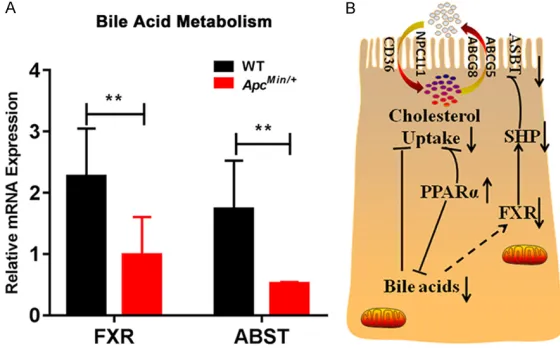
[image:6.612.92.372.72.344.2]lyzed the farnesoid X receptor (FXR) and apical sodium-dependent bile acid transporter (ASBT) mRNA levels between the two groups. The expression of FXR and ASBT was significantly downregulated in the jejunum of the ApcMin/+
mice (P<0.01) (Figure 6A). A schematic of bile acid metabolism in the enterocytes of mice is shown in Figure 6B. These data indicated that intestinal APC deficiency can regulate bile acid metabolism.
Discussion
In our preliminary experiment, we demonstrat-ed that ApcMin/+ mice exhibit intestinal cachexia
that is associated with the loss of body weight and is accompanied by abnormalities in hepat-ic lipid metabolism. The intestine is an essen-tial element in the biosynthesis of triglycerides and systemic metabolism [18]. However, res- earch on the intestinal lipid mechanism is still lacking in ApcMin/+ mice.
Our study showed gut barrier dysfunction with hyperlipidemia and tumor growth was present during cachexia. This dysfunction resulted in a significant increase in the permeability of
FITC-health of animals and that changes in lipid absorption may induce related diseases [21]. As is reported, PPARα has an essential role in the progression of intestinal diseases [22]. Thus, we also analyzed the expression of PPARα and related target genes (including genes involved in β-oxidation, the oxidative stress response and cholesterol absorption) in the jejunum. Our results showed that the expres-sion of Aox, Acot1, Acaa2, Gstm3, Gsst, Npc1l1, Mttp, Abca1 and Abcg5 was remarkably down-regulated in the jejunum of the ApcMin/+ mice.
Specifically, during the process of cholesterol absorption, the most obvious change was a sig-nificant decrease in CD36, which, as reported, is important in the uptake of free fatty acids (FFAs) and chylomicron formation and secre-tion from the proximal intestine [23, 24]. In addition, the mRNA levels of the main choles-terol importer NPC1L1 and the cholescholes-terol exporter ABCG5 decreased [25]. Interestingly, the mRNA expression of ABCA1, which is regu-lated by PPARα and associated with cholesterol absorption and high-density lipoprotein (HDL) production, was downregulated [26]. Therefore, all the results indicated that reduced levels of dextran (4 kDa) in the intes-tine along with a delay in gut transit with age. Similarly, research by Puppa et al. sug-gested that glucose tolerance, plasma IL-6, TGs, and body temperature are characteris-tic of endotoxemia, which is accompanied with a change in gut permeability in ApcMin/+
mice [19]. Another study re- vealed that some inflamma-tion occurring in intestinal epi-thelial cells can decrease gut homeostasis [20]. In fact, in- testinal lipid absorption plays an essential role in gut lip- id homeostasis. Our findings demonstrated that the lipid absorption ability dramatically decreased with age, as shown by marked lipid droplet accu-mulation in the jejunum of the
ApcMin/+ mice.
[image:7.612.90.370.74.249.2]Current research has shown that intestinal lipid metabo-lism plays a key role in the
Figure 6. Bile acids affected intestinal cholesterol absorption in ApcMin/+
mice. A. FXR and ASBT were measured by qRT-PCR in the intestines of Ap-cMin/+ and WT mice (n=3). Data are expressed as the mean ± SEM. The
dif-ferences between the mean values were assessed by Student’s t-tests and analyzed using GraphPad Prism software 7.0. **P<0.01. B. Bile acids may inhibit cholesterol uptake in the intestine of ApcMin/+ mice. Cholesterol
CD36, NPC1L1, ABCG5 and ABCA1 mRNA might be involved in cholesterol absorption in the jejunum of ApcMin/+ mouse.
Studies have shown that bile acids, as ligands for the bile acid receptor farnesoid X receptor (FXR), alter the transcription of several genes that are involved in triglyceride synthesis and lipid metabolism [27]. Early clinical studies have found that PPARα regulates bile acid syn-thesis, bile acid transport and cholesterol metabolism pathways [28]. In addition, PPARα has been confirmed to be activated in the intes-tine of ApcMin/+ mice. Furthermore, our results
indicated that decreased expression of FXR and ASBT in the jejunum modulates bile acid metabolism in ApcMin/+ mice. Thus, we
specu-late that the change in cholesterol absorption might be a consequence of a reduced amount of bile acids in the jejunumof ApcMin/+ mice.
In conclusion, our data suggested that the intestine plays an essential role in cholesterol uptake and that bile acid metabolism seems to cause a decrease in intestinal cholesterol uptake in ApcMin/+ mice.
Acknowledgements
This work was financially supported by the National Natural Science Foundation of China (Grant No. 31472053 and 31572345), Gra- duate Innovation Fund of Jilin University (Grant No. 2017094), Program for JLU Science and Technology Innovative Research Team (JL- USTIRT, No. 2017TD-28), and Fundamental Research Funds for the Central Universities.
Disclosure of conflict of interest
None.
Address correspondence to: Ming-Jun Zhang, Jilin Provincial Key Laboratory of Animal Embryo Engineering, College of Animal Sciences, Jilin University, 5333 Xi’an Road, Lvyuan District, Changchun 130062, Jilin Province, China. Tel: (86) 431-87836122; Fax: (86) 431-86758018; E-mail: [email protected]
References
[1] Takahashi H, Hosono K, Endo H, Nakajima A. Colon epithelial proliferation and carcinogene-sis in diet-induced obesity. J Gastroenterol Hepatol 2013; 28 Suppl 4: 41-7.
[2] Niho N, Takahashi M, Kitamura T, Shoji Y, Itoh M, Noda T, Sugimura T, Wakabayashi K. Con-comitant suppression of hyperlipidemia and intestinal polyp formation in apc-deficient mice by peroxisome proliferator-activated receptor ligands. Cancer Res 2003; 63: 6090-6095. [3] Niho N, Takahashi M, Shoji Y, Takeuchi Y,
Mat-subara S, Sugimura T, Wakabayashi K. Dose-dependent suppression of hyperlipidemia and intestinal polyp formation in Min mice by pio-glitazone, a PPAR gamma ligand. Cancer Sci 2003; 94: 960-4.
[4] Schwarz JM, Linfoot P, Dare D, Aghajanian K. Hepatic de novo lipogenesis in normoinsulin-emic and hyperinsulinnormoinsulin-emic subjects consum-ing high-fat, low-carbohydrate and low-fat, high-carbohydrate isoenergetic diets. Am J Clin Nutr 2003; 77: 43-50.
[5] Whitcomb DC, Lowe ME. Human pancreatic di-gestive enzymes. Dig Dis Sci 2007; 52: 1-17. [6] Lee B, Zhu J, Wolins NE, Cheng JX, Buhman
KK. Differential association of adipophilin and TIP47 proteins with cytoplasmic lipid droplets in mouse enterocytes during dietary fat ab-sorption. Biochim Biophys Acta 2009; 1791: 1173-80.
[7] Hussain MM, Pan X. Circadian regulators of in-testinal lipid absorption. J Lipid Res 2015; 56: 761-70.
[8] Holt PR, Balint JA. Effects of aging on intestinal lipid absorption. Am J Physiol 1993; 264: G1-6.
[9] Bouchoux J, Beilstein F, Pauquai T, Guerrera IC, Chateau D, Ly N, Alqub M, Klein C, Chambaz J, Rousset M, Lacorte JM, Morel E, Demignot S. The proteome of cytosolic lipid droplets isolat-ed from differentiatisolat-ed caco-2/TC7 enterocytes reveals cell-specific characteristics. Biol Cell 2011; 103: 499-517.
[10] de Vogel-van den Bosch HM, Bünger M, de Groot PJ, Bosch-Vermeulen H, Hooiveld GJ, Müller M. PPARalpha-mediated effects of di-etary lipids on intestinal barrier gene expres-sion. BMC Genomics 2008; 9: 231.
[11] van den Bosch HM, Bünger M, de Groot PJ, van der Meijde J, Hooiveld GJ, Müller M. Gene ex-pression of transporters and phase I/II meta-bolic enzymes in murine small intestine during fasting. BMC Genomics 2007; 8: 267.
[12] Bünger M, van den Bosch HM, van der Meijde J, Kersten S, Hooiveld GJ, Müller M. Genome-wide analysis of PPARalpha activation in mu-rine small intestine. Physiol Genomics 2007; 30: 192-204.
PPA-Ralpha signaling. J Lipid Res 2013; 54: 425-35.
[14] Yang R, Han X, Uchiyama T, Watkins SK, Yagu-chi A, Delude RL, Fink MP. IL-6 is essential for development of gut barrier dysfunction after hemorrhagic shock and resuscitation in mice. Am J Physiol Gastrointest Liver Physiol 2003; 285: G621-G629.
[15] Davis MR, Arner E, Duffy CR, De Sousa PA, Dahlman I, Arner P, Summers KM. Expression of FBN1 during adipogenesis: relevance to the lipodystrophy phenotype in marfan syndrome and related conditions. Mol Genet Metab 2016; 119: 174-85.
[16] Uchida A, Slipchenko MN, Cheng JX, Buhman KK. Fenofibrate, a peroxisome proliferator-acti -vated receptor alpha agonist, alters triglycer-ide metabolism in enterocytes of mice. Bio-chim Biophys Acta 2011; 1811: 170-6. [17] Nassir F, Wilson B, Han X, Gross RW, Abumrad
NA. CD36 is important for fatty acid and cho-lesterol uptake by the proximal but not distal intestine. J Biol Chem 2007; 282: 19493-501. [18] Yen CL, Nelson DW, Yen MI. Intestinal triacylg-lycerol synthesis in fat absorption and system-ic energy metabolism. J Lipid Res 2015; 56: 489-501.
[19] Puppa MJ, White JP, Sato S, Cairns M, Baynes JW, Carson JA. Gut barrier dysfunction in the Apc(Min/+) mouse model of colon cancer ca-chexia. Biochim Biophys Acta 2011; 1812: 1601-6.
[20] Okumura R, Takeda K. Roles of intestinal epi-thelial cells in the maintenance of gut homeo-stasis. Exp Mol Med 2017; 49: e338.
[21] Seyer A, Cantiello M, Bertrand-Michel J, Roques V, Nauze M, Bézirard V, Collet X, Touboul D, Brunelle A, Coméra C. Lipidomic and spatio-temporal imaging of fat by mass spectrometry in mice duodenum during lipid digestion. PLoS One 2013; 8: e58224.
[22] Zhou X, Cao L, Jiang C, Xie Y, Cheng X, Krausz KW, Qi Y, Sun L, Shah YM, Gonzalez FJ, Wang G, Hao H. PPARalpha-UGT axis activation re-presses intestinal FXR-FGF15 feedback signal-ling and exacerbates experimental colitis. Nat Commun 2014; 5: 4573.
[23] Howles PN, Carter CP, Hui DY. Dietary free and esterified cholesterol absorption in cholesterol esterase (bile salt-stimulated lipase) gene-tar-geted mice. J Biol Chem 1996; 271: 7196-202. [24] Febbraio M, Guy E, Coburn C, Knapp FF Jr,
Beets AL, Abumrad NA, Silverstein RL. The im-pact of overexpression and deficiency of fatty acid translocase (FAT)/CD36. Mol Cell Bio-chem 2002; 239: 193-7.
[25] Yamanashi Y, Takada T, Yoshikado T, Shoda J, Suzuki H. NPC2 regulates biliary cholesterol secretion via stimulation of ABCG5/G8-medi-ated cholesterol transport. Gastroenterology 2011; 140: 1664-1674.
[26] Colin S, Briand O, Touche V, Wouters K, Baron M, Pattou F, Hanf R, Tailleux A, Chinetti G, Staels B, Lestavel S. Activation of intestinal peroxisome proliferator-activated receptor-al-pha increases high-density lipoprotein produc-tion. Eur Heart J 2013; 34: 2566-74.
[27] Staels B, Handelsman Y, Fonseca V. Bile acid sequestrants for lipid and glucose control. Curr Diab Rep 2010; 10: 70-7.