
Recent Advances in Solid Waste Minimization
using Nanotechnology
Akshay Kumar1, Brijesh Kumar2,3
1
Centre for Nano Science & Technology, Amity Institute of Nanotechnology, Amity University Haryana, India 2
Amity School of Engineering and Technology, Amity Haryana, India 3
Amity Institute of Laser Technology and Optoelectronics, Amity University Haryana, India
Abstract: A continuum population burst has been observed from last decade which include some of the most populated developing nations including China and India. China and India together account nearly 36.41% of total world population, while the world population estimated 7.5 billion and expected to further rise 9.3-10 billion by 2050. With increasing the worldwide population the significant increase in solid waste generation has also been recorded which mainly because of over population growth rate, industrialization, urbanization and economic growth. The current global municipal solid waste generation levels are approx. 1.3billion tons per year and are expected to rise 2.2 billion by 2025. Higher the economic development and rate of urbanization, greater the municipal solid waste. The adverse effects may not only on human health but also include the flora and fauna, soil quality, ground water quality and air quality of the region. Therefore, there is an urgent need to reduce and eliminate adverse impacts of waste materials on human health and environment to support economic development and superior quality of life, regardless of the origin, content or hazard potential, solid waste must be managed systematically to ensure environmental best practices. In this review we have highlighted the applications and work in managing the municipal solid waste using nanotechnology to enable the manipulation and control the material’s properties which exploits when the material is produced at nanoscale. Nanoscale technology not only revolutionizes but also improves and optimize, existing industrial processes and materials as well. Although the review focuses on the use of nanotechnology to facilitate waste minimization and prevent cycling of hazardous waste in the environment, which relatively is a new approach, the remediation and impact on the solid waste minimization and environment using nanotechnology are also discussed.
Keywords: Antifouling coatings, zero-valent iron, nanoscale, waste management, Nanotechnology
I. INTRODUCTION
Increasing Global growth in production and processing provoke the uphill amount of wastes production and end-of-life products. Increasing human needs, degree of industrialization and urbanization, public habits, and local climate are the driving factors towards insurgence of solid waste in the environment cycle.
The developing countries like India and China have economical as well as the population issues. These issues are the causes of continuous increase in per capita solid waste. China and India together account for 36.41% of total world population, Waste generation rate in Indian cities ranges between 200 - 870 grams/day, depending upon the region’s lifestyle and the size of the city. The per capita waste generation is increasing by about 1.3% per year in India while figures are more complex for china which now produces about 30% of the world’s municipal solid waste. Another major aspect is dumbing non-recycle/ reusable waste in solid waste stream. Plastic is light weight, low cost of production, high throughput in less time and easy for manufacturing process. Plastic industry has been blooming globally from 80’s and since then the global rate of plastic production has increased exponentially from 2.3 million tons in 1950, 162 million in 1993 and 448 million tons by 2015.
According to the scientific reports and studies plastic starts degrading after 700 years of its dumping and usually takes a thousand years to fully bio-degrade, meanwhile, all the plastic that has ever been produced has not degraded and still in the environment stream.
II. POTENTIAL AND PITFALL OF NANOMATERIALS FOR WASTE MINIMIZATION
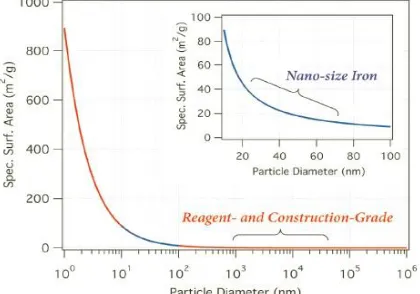
[image:2.612.201.411.307.454.2]Nanotechnology is the science of manipulating and controlling matter at atomic or molecular scale, this interdisciplinary field has proven its success by solving major problems which might not be possible at bulk. The success of nanotechnology evoked when the material is sputter down to nanoscale. Properties that become prominent at the nanoscale, like the size dependent properties, nanomaterials have higher surface area to volume ratios than the particles with higher dimensions of the same material. Exposing the more number of atoms at the surface increases their reactivity or catalytic activity. This size dependency at nanoscale is a quantum mechanical phenomenon arise due to confinement of charge particles in space called the quantum confinement effect. In technical terms quantum size effect comes into role when any dimension of particle fall below the exciton Bohr radius, which stems the 0D (quantum dots), 1D (quantum wire), 2D (quantum well) nanostructures. These confined structure have unique size dependent electrical, optical and surface properties [1] which can be tuned by the size of synthesized nanoparticles, hence the approach used for synthesis of nanoparticles primarily decides the properties. In addition to size dependency, intermolecular forces (van der waals) which are weakly affective in bulk, predominantly influence the self-organization, agglomeration and aggregation of nanoparticles and form the stable clusters that are not easily broken apart. Nanotechnology has the potential to create numerous new solutions to current social, economic and technological challenges. Nano devices and nanoscale materials have applications in water purification, energy conversion and storage, electronics, medicine and consumer products. Commonly used nanomaterials include nanomaterials of biological origin (Proteins and liposomes), carbon compounds (2D graphene, 1D carbon nanotubes and 0D carbon dots), oxides (copper oxide, silicon oxide, zinc oxide, titanium oxide, etc.), metal nanoparticles (silver, gold, platinum, etc.) and polymers.
Fig. 1: Dependency of particle size to surface area (Tratnyek 2006)
A.SOURCE REDUCTION TECHNIQUES AND STRUCTURAL-CHEMICAL TAILORING
smaller and consume less power than CRT display monitors. Using carbon nanotubes and 0D quantum dots in TV, computer displays may further diminish the environmental impacts by eliminating toxic heavy metals and these nanomaterials not only outperforming the previous technology but also reduces the feature size in chip, thereby reducing the material cost, eliminating environment impacts due to e-waste dumps and saving energy [5].
[image:3.612.210.403.187.327.2]One of the major features that nanotechnology offers is the ability to produce and manipulate substances at the nanoscale. There are two general techniques a nanomaterial can be processed; ‘top-Down’ approach and ‘bottom-up’ approach. The latter has been opted for manufacturing processes developed to minimize the solid wastes. Bottom-up approach enables atom by atom or nanoscale assembly of raw material into the desired product [6].
Fig. 2: Top down and bottom up approaches in nanotechnology process materials [7].
Thus epitaxial grown or bottom-up processed nanomaterial proven to be a good candidate for environment remediation and consume less resources. Another category at nanoscale is tailored and functionalized nanomaterials. Tailoring is the process of modifying the chemical substituents and structure during the material synthesis, this process offer many advantages specially when applied for environment benign processes. By incorporating nanoscale products and process during the material processing, Increases the life cycle assessment, durability, efficiency of final product and indirectly facilitates the solid waste miniaturization. Nanomaterials Coatings for Corrosion protection, antifouling agents, self-cleaning surfaces, are a few advances reported in limiting the solid waste in environment cycle. Certain metal oxide thin film coatings like ceria, vanadia or zirconia are reported to have effectively prevented the aluminium alloys from NaCl corrosion [8]. Coatings on Iron alloys like steel with Chromatin and other nanocomposite of polyaniline, ferrite and alkyd has proven to increase the durability of such alloys against the corrosion [9]. Main sources of house hold solid wastes are the rotten food and edible products causing the fouling of dumped waste, this fouling and rotting mainly caused by bacteria and other microbes. Some nano biocides are proven to be impactful candidates for killing and effecting the microbial life cycle. Researches show the potential of Ionic silver as an anti-fouling biocide agent [10] to preserve the edible household items for longer durations. Properties and biodegradability of Chemical functionalized organic nanoparticles has also been studied by authors who mark their optimization in material process for natural biodegradable products [11]. Other small but important source reduction techniques like self-cleaning surfaces [12], Flame Retardant Polymer Nanocomposites [13] has been in literature which not only enhances the life cycle assessment and quality of product but also prevent them to dump into the mainstream of municipal solid waste.
B. Opting Green Energy
where nanotechnology play it part. Nanomaterials with high aspect ratio, more surface area and highly active to thermal dissipation provide space for chemical reaction occurring endothermic or exothermic.
Fig. 3: Properties offered by nanoparticles as a catalyst [14].
Recently, iron and nickel nanoparticles as catalytic mixtures of iron carbonyl, Fe(CO)5 and nickel carbonyl, Ni(CO)4 has been
employed in the oxidation of cyclohexane for the conversion of biomass to biofuel boosts up the process by 40% of previously reported works [15]. With high stability, low production cost and ability to trap wide spectra of solar radiation with its wide band gap, photocatalysts such as TiO2 has been studied as an excellent oxidizing agent in biomass oxidation [16]. Apart from the catalytic
oxidation processes, microbial biomass energy has been seen as natural biofuel which include the extraction of ethanol based by-products from algae cultures scientists have extracted algal biofuel by using nanocatalysts without rapturing the membranes of algae [17]. Other most recent trends of nanotechnology in green energy are widely studied as their potential in hydrogen fuel storage/fuel cell [18] and solar cells [19].
C. Waste Treatment And Recycling Using Nanotechnology
Plastics contribute highest portion of municipal solid wastes and disposal of plastic products inland facilitate the water percolation and soil characteristics. To prevent such adverse effect recycling techniques has been employed and Researchers have identified some nanocomposites to improve biodegradable plastic wrap for food [20]. Polymer nanocomposites are the important class of composite materials and adding small amount of nanoparticles during polymerization enhances the plasticity without actually increasing the plasticising contents [21]. These polymer nanocomposites not only reduce the plasticizers concentration but also lower glass transition temperature, increase tensile strength and modulus, indicating increased plasticization. Some interesting studies have also report on synthesized silver nanoparticles using microwave reaction from the silver ions that were absorbed by aquatic plants [22].
According to the report of Portland Cement Association (PCA) 2.08 million metric tons of CO2 were released in environment from
the production of 2.31 million metric tons of cement in 2005 worldwide (based on the assumption that for each ton of cement, 0.9 tons of CO2 are released). Meanwhile, concrete and construction industry not only perturb the environment CO2 level but also
produces raw by-products as solid wastes. Among all the materials used in construction cement is the primary element that ensures the architecture stability and nowadays cement producing companies have been opting the nanofillers and nanocomposites to enhance the strength and durability of cement products. The addition of various types of nanomaterials to create cement-based nanocomposites also allows introducing novel properties, such as the ability to absorb air pollutants (cement that absorbs more carbon dioxide) or self-monitor the material behaviour over time [23]. The nanoprocessed reinforced steel products in construction industry are light weight, have increased tensile strength and high modulus, this added strength of reinforced steel results in a decrease in the amount of conventional steel necessary to accomplish the same task [24].
Reactivity and catalytic property of nanomaterials outperform the convention photocatalytic material as mentioned earlier and can be used for photodegradation of variety of toxic and persistent pollutant chemicals into less hazardous constituents. One example in support of that is the use of zero valent iron (ZVI) in waste water treatment.
Bulk form decrease in reactivity of ZVI has been seen due to precipitation of metal hydroxides and metal carbonates onto the iron surface [26] (Wang 1997). While at nanometer scale this surface area increases also nZVI selectively treat both iorganic and organic contaminants and neutralize odorous sulfide compounds. It enables the high precipitation of contaminants, by generating non-toxic iron oxide end product without losing the reactivity [27] (Li 2006). Although the properties of nZVI gives promising solution for solid waste remediation but the biocompatibility and safety from the disposal of these highly reactive compounds are uncertain in that regards the study have been made to intentionally modifying the surface of these nZVI particle to ensure the safe utilization and remediation [28-29] (Saleh 2007),( Hydutsky 2007). Besides inorganic nanoparticles scientist have been exploring the use of biological inspired organic polymers and dendrimers for solid waste treatments. Dendrimers are the three dimensional highly branched organic micromolecules with the braches consisting free end redical groups. These functional redical groups provide reactive sites and surface, studies shows their use as catalytic convertors [30] (Astruc 2001), removal of heavy metal ions from soil [31] (Xu 2005).
III.CONCLUSIONS
Nanotechnology has shown the way the deal with the problems that have arises because of rapid expansion of development of mankind. The solution provided by nanoscience are remarkable and have been successfully achieved that seems impossible to achieve with the conventional technology. With such outstanding chemical, physical, mechanical etc. properties nanomaterials outperform the bulk counterpart in every possible way. It not only offers the quantum effects but also gives the ability to manipulate the materials properties that have been desired for a particular application. With such small dimensions and ability of single material to perform multiple tasks makes it a future technology to rely on. However this multidisciplinary technology is standing at the verge of acceptance by the scientific community because the actual capabilities and potential of nanomaterials are yet to explore. However, nanotechnology defies the solid waste remediation in every sense but the potential effects of disposal of nanoproducts in environment indeed need to be study.
REFERENCES
[1] Jagiello, K., Chomicz, B., Avramopoulos, A. et al. Struct Chem, 2017, 28, (3), 635–643. [2] Panov, A. G. et al J.Phys.Chem.B, 2008, 104, 5706–5714.
[3] Baldé, C.P. et al. The global e-waste monitor – 2014, United Nations university, IAS-SCYCLE, Bonn, Germany, 2015. [4] Williams, E. D. et al, M. Environ. Sci. Technol. 2002, 36, 5504–5510.
[5] Socolof, M. L.; Overly, J. G.; Kincaid, L. E.; Geibig, J. R. Desktop Computer Displays:A Life-Cycle Assessment; Vol. I and II, Design for the Environment Computer Display Project. U.S. Environmental Protection Agency, 2001
[6] Youngbo Choi et al Nanotechnology 2016, 27, 345302.
[7] Sammar, Z. M. Nano Science and nano technology in Architecture, International Journal of Scientific & Engineering Research 2014, 5, (11).
[8] Hamdy, A. S. et al, Novel anti-corrosion nano-sized vanadia-based thin films prepared by sol-gel method for aluminum alloys. Journal of Materials Processing Technology 2007, 181, (1-3), 76-80.
[9] Alam, J. et al Corrosion-protective performance of nano polyaniline/ferrite dispersed alkyd coatings. Journal of Coatings Technology Research 2008, 5, (1), 123-128.
[10] Morones, J. R. et al, The bactericidal effect of silver nanoparticles. Nanotechnology, 2005, 16, (10), 2346-2353.
[11] Darwish, M. and Mohammadi, A. (2018). Functionalized Nanomaterial for Environmental Techniques. In Nanotechnology in Environmental Science (eds C. M. Hussain and A. K. Mishra 315-349. 10.1002/9783527808854.ch10
[12] Anundi, H. et al, High Exposures to Organic-Solvents among Graffiti Removers. International Archives of Occupational and Environmental Health, 1993, 65, (4), 247-251.
[13] Morgan, A. et al, Flame Retardant Polymer Nanocomposites. WileyInterscience: 2007. [14] Figure: nanocat.kaust.edu.sa
[15] V. Kesavan et al Chem. Int. Ed. 1999, 38, 3521.
[16] Kidwai M. et al “Ni nano particles: an efficient green catalyst for chemo selective reduction of aldehydes”, Tetrahed. Lett, 2006, 47 (25), 4161-4165. [17] Gibson K (2009), “Nanofarming Technology Harvest Biofuel Oils Without Harming Algae,” News Release, U.S. Department of Energy, Ames Laboratory,
Ames, IA, USA 2009.
[18] Annemieke W. C. van den Berg et al Materials for hydrogen storage: current research trends and perspectives Chem. Commun., 2008, 668–681. [19] Maria-Eleni Ragoussia et al New generation solar cells: concepts, trends and perspectives Chem. Commun., 2015, 51, 3957.
[20] Zhao, R. et al Emerging biodegradable materials; starch- and protein based bio-nanocomposites. Journal of Material Science, 2008, 43, 3058-3071.
[21] Meeker, J. D. et al Di(2-ethylhexyl) phthalate metabolites may alter thyroid hormone levels in men. Environmental Health Perspectives, 2007, 115, (7), 1029-1034.
[22] Chefetz, B. et al New Approach for the Removal of Metal Ions from Water: Adsorption onto Aquatic Plants and Microwave Reaction for the Fabrication of Nanomaterials. Journal of Physical Chemistry B, 2005, 109, (32), 15179-15181.
[23] Monica, J. H. et al Nanotechnology innovations for the construction industry, Progress in Materials Science, 2013, 58, 1056–1102. [24] http://www.mmfxsteel.com/index.shtml
[26] Wang, D. et al Synthesizing Nanoscale Iron Particles for Rapid and Complete Dechlorination of TCE and PCBs. Environ. Sci. Technol., 1997, 31, (7), 2154-2156.
[27] Li, X. et al Zero-valent Iron Nanoparticle for Abatement of Environmental Pollutants: Materials and Engineering Aspects. Critical Reviews in Solid State Materials Sciences 2006, 31, (4), 111-122.
[28] Saleh, N. et al Surface modifications enhance nanoiron transport and NAPL targeting in saturated porous media. Environmental Engineering Science 2007, 24, (1), 45-57.
[29] Hydutsky, B. et al Optimization of Nano- and Microiron Transport through Sand Columns Using Polyelectrolyte Mixtures. Environ. Sci. Technol. 2007, 41, (18), 6418-6424.
[30] Astruc, D. et al, Dendritic catalysts and dendrimers in catalysis. Chemical Reviews 2001, 101, (9), 2991-3023.
![Fig. 2: Top down and bottom up approaches in nanotechnology process materials [7].](https://thumb-us.123doks.com/thumbv2/123dok_us/1257346.653103/3.612.210.403.187.327/fig-approaches-nanotechnology-process-materials.webp)
![Fig. 3: Properties offered by nanoparticles as a catalyst [14].](https://thumb-us.123doks.com/thumbv2/123dok_us/1257346.653103/4.612.202.409.107.270/fig-properties-offered-nanoparticles-catalyst.webp)
