Whitepaper of NEWS 2010 Shared Task on
Transliteration Mining
A Kumaran
Mitesh M. Khapra
Haizhou Li
Microsoft Research India Bangalore, India
Indian Institute of Technology-Bombay Mumbai, India
Institute for Infocomm Research, Singapore
Abstract
Transliteration is generally defined as phonetic translation of names across languages. Ma-chine Transliteration is a critical technology in many domains, such as machine translation, cross-language information retriev-al/extraction, etc. Recent research has shown that high quality machine transliteration sys-tems may be developed in a language-neutral manner, using a reasonably sized good quality corpus (~15-25K parallel names) between a given pair of languages. In this shared task, we focus on acquisition of such good quality names corpora in many languages, thus com-plementing the machine transliteration shared task that is concurrently conducted in the same NEWS 2010 workshop. Specifically, this task focuses on mining the Wikipedia paired enti-ties data (aka, inter-wiki-links) to produce high-quality transliteration data that may be used for transliteration tasks.
1
Task Description
The task is to develop a system for mining single word transliteration pairs from the standard Wi-kipedia paired topics (aka, WiWi-kipedia Inter-Language Links, or WIL1) in one or more of the specified language pairs. The WIL’s link articles on the same topic in multiple languages, and are traditionally used as a parallel language resource for many NLP applications, such as Machine Translation, Crosslingual Search, etc. Specific WIL’s of interest for our task are those that con-tain proper names – either wholly or partly – which can yield rich transliteration data.
Each WIL consists of a topic in the source and the language pair, and the task is to identify parts of the topic (in the respective language titles) that are transliterations of each other. A seed data set (of about 1K transliteration pairs) would be pro-vided for each language pair, and are the only resource to be used for developing a mining sys-tem. The participants are expected to produce a
1
Wikipedia’s Interlanguage Links:
http://en.wikipedia.org/wiki/Help:Interlanguage_links.
paired list of source-target single word named entities, for every WIL provided. At the evalua-tion time, a random subset of WIL’s (about 1K WIL’s) in each language pair that are hand la-beled would be used to test the results produced by the participants.
Participants may use only the 1K seed data provided by the organizers to produce “standard” results; this restriction is imposed to provide a meaningful way of comparing the effective me-thods and approaches. However, “non-standard” runs would be permitted where participants may use more seed data or any language-specific re-source available to them.
2
Important Dates
SHARED TASK SCHEDULES
Registration Opens 1-Feb-2010
Registration Closes 13-Mar-2010
Training Data Release 26 -Feb-2010
Test Data Release 13-Mar-2010
Results Submission Due 20-Mar-2010
Evaluation Results
An-nouncement 27-Mar-2010
Short Papers Due 5-Apr-2010
Workshop Paper
Sub-mission Closes 5-Apr-2010
Workshop & Task
Pa-pers Acceptance 6-May-2010
CRC Due 15-May-2010
Workshop Date 16-Jul-2010
3
Participation
1. Registration (1 Feb 2010)
a. Prospective participants are to register to the NEWS-2010 Workshop homepage, for this specific task.
2. Training Data Release (26 Feb 2010)
a. Registered participants are to obtain seed and Wikipedia data from the Shared Task organizers.
3. Evaluation Script (1 March 2010)
a. A sample submission and an evaluation script will be released in due course. b. The participants must make sure that their
output is produced in a way that the evalua-tion script may run and produce the ex-pected output.
c. The same script (with held out test data and the user outputs) would be used for final evaluation.
4. Testing data (13 March 2010)
a. The test data would be a held out data of approximately 1K “gold-standard” mined data.
b. The submissions (up to 10) would be tested against the test data, and the results pub-lished.
5. Results (27 March 2010)
a. On the results announcement date, the evaluation results would be published on the Workshop website.
b. Note that only the scores (in respective me-trics) of the participating systems on each language pairs would be published, but no explicit ranking of the participating sys-tems.
c. Note that this is a shared evaluation task and not a competition; the results are meant to be used to evaluate systems on common data set with common metrics, and not to rank the participating systems. While the participants can cite the performance of their systems (scores on metrics) from the workshop report, they should not use any ranking information in their publications. d. Further, all participants should agree not to
reveal identities of other participants in any of their publications unless you get permis-sion from the other respective participants. If the participants want to remain anonym-ous in published results, they should inform the organizers at the time of registration. Note that the results of their systems would still be published, but with the participant identities masked. As a result, in this case, your organization name will still appear in the web site as one of participants, but it is not linked explicitly with your results.
6. Short Papers on Task (5 April 2010)
a. Each submitting site is required to submit a 4-page system paper (short paper) for its submissions, including their approach, data used and the results.
b. All system short papers will be included in the proceedings. Selected short papers will be presented in the NEWS 2010 workshop. Acceptance of the system short-papers would be announced together with that of other papers.
4
Languages Involved
The task involves transliteration mining in the language pairs summarized in the following ta-ble. Source Lan-guage Target Lan-guage Track ID
English Chinese WM-EnCn English Hindi WM-EnHi
English Tamil WM-EnTa
English Russian WM-EnRu
[image:2.595.302.529.278.372.2]English Arabic WM-EnAr
Table 1: Language Pairs in the shared task
5
Data Sets for the Task
The following datasets are used for each lan-guage pair, for this task.
Training Data Size Remarks
Seed Data (Pa-rallel)
~1K Paired names be-tween source and target languages. To-be-mined Wikipedia Inter-Wiki-Link Data (Noisy) Vari-able
Paired named entities between source and target languages ob-tained directly from Wikipedia
Test Data ~1K This is a subset of Wikipedia Inter-Wiki-Link data, which will be hand labeled.
Table 2: Datasets for the shared task
The first two sets would be provided by the or-ganizers to the participants, and the third will be used for evaluation.
[image:2.595.302.531.456.644.2]gle-word transliterations highlighted. Note that there could be 0, 1 or more single-word translite-rations from each WIL.
# English Wikipedia Title
Hindi Wikipedia Title 1 Indian National Congress भारतीयराष्ट्रीयकाांग्रेस 2 University of Oxford ऑक्सफ़र्ड
विश्वविद्यालय
3 Indian Institute of Science भारतीयविज्ञान
सांस्थान
4 Jawaharlal Nehru Univer-sity
जिाहरलालनेहरू विश्वविद्यालय Table 3: Sample English-Hindi Wikipedia title
pairs
# English Wikipedia Title
Russian Wikipedia Title
1 Mikhail Gorbachev Горбачёв, Михаил Сергеевич
[image:3.595.69.293.121.395.2]2 George Washington Вашингтон, Джордж 3 Treaty of Versailles Версальский договор 4 French Republic Франция
Table 4: Sample English-Russian Wikipedia title pairs
Seed transliteration data: In addition we pro-vide approximately 1K parallel names in each language pair as seed data to develop any metho-dology to identify transliterations. For standard run results, only this seed data could be used, though for non-standard runs, more data or other linguistics resources may be used.
English Names Hindi Names
Village विलॆज
Linden वलन्र्न
Market माकेट
[image:3.595.307.524.252.352.2]Mysore मैसूर
Table 5: Sample English-Hindi seed data
English Names Russian Names
Gregory Григорий
Hudson Гудзон
Victor Виктор
[image:3.595.89.271.611.679.2]baranowski барановский Table 6: Sample English-Russian seed data
Test set: We plan to randomly select ~1000 wi-kipedia links (from the large noisy Inter-wiki-links) as test-set, and manually extract the single
word transliteration pairs associated with each of these WILs. Please note that a given WIL can provide 0, 1 or more single-word transliteration pairs. To keep the task simple, we consider as correct transliterations only those that are clear transliterations word-per-word (morphological variations one or both sides are not considered transliterations) These 1K test set will be a subset of Wikipedia data provided to the user. The gold dataset might look like the following (assuming the items 1, 2, 3 and 4 in Tables 3 and 4 were among the randomly selected WIL’s from To-Mine-Data).
WIL# English Names Hindi Names
1 Congress काांग्रेस
2 Oxford ऑक्सफ़र्ड
3 <Null> <Null>
4 Jawaharlal जिाहरलाल
4 Nehru नेहरू
Table 7: Sample English-Hindi transliteration pairs mined from Wikipedia title pairs
WIL# English Names Russian Names
1 Mikhail Михаил
1 Gorbachev Горбачёв
2 George Джордж
2 Washington Вашингтон 3 Versailles Версальский 4 <Null> <Null>
Table 8: Sample English-Russian translitera-tion pairs mined from Wikipedia title pairs
Evaluation: The participants are expected to mine such single-word transliteration data for every specific WIL, though the evaluation would be done only against the randomly selected, hand-labeled test set. At evaluation time, the task organizers check every WIL in test set from among the user-provided results, to evaluate the quality of the submission on the 3 metrics de-scribed later.
Additional information on data use:
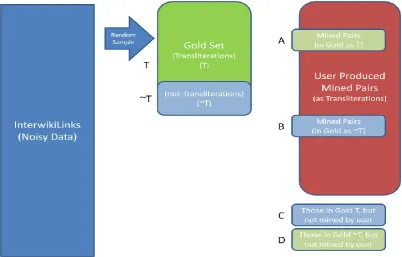
Figure 1: Overview of the mining task and evaluation
3. The hand-labeled test set is created by NEWS shared task organizers, and will be used for computing the metrics for a given submission.
4. We expect that the participants to use only the seed data (parallel names) provided by the Shared Task for a standard run to ensure a fair evaluation and a meaningful compari-son between the effectiveness of approaches taken by various systems. At least one such run (using only the data provided by the shared task) is mandatory for all participants for a given task that they participate in. 5. If more data (either parallel names data or
monolingual data), or any language-specific modules were used, then all such runs using extra data or resources must be marked as “Non-standard”. For such non-standard runs, it is required to disclose the size and characteristics of the data or the nature of languages resources used, in their paper. 6. A participant may submit a maximum of 10
runs for a given language pair (including one or more “standard” run). There could be more standard runs, without exceeding 10 (including the non-standard runs).
6
Paper Format
All paper submissions to NEWS 2010 should follow the ACL 2010 paper submission policy
format, blind review policy and title and author format convention. Shared task system short pa-pers are also in two-column format without ex-ceeding four (4) pages plus any extra page for references. However, there is no need for double-blind requirements, as the users may refer to their runs and metrics in the published results.
7
Evaluation Metrics
We plan to measure the quality of the mining task using the following measures:
1. PrecisionCorrectTransliterations (PTrans) 2. RecallCorrectTransliteration (RTrans) 3. F-ScoreCorrectTransliteration (FTrans).
Please refer to the following figures for the ex-planations:
A = True Positives (TP) = Pairs that were identi-fied as "Correct Transliterations" by the partici-pant and were indeed "Correct Transliterations" as per the gold standard
B = False Positives (FP) = Pairs that were identi-fied as "Correct Transliterations" by the partici-pant but they were "Incorrect Transliterations" as per the gold standard.
Translitera-D = True Negatives (TN) = Pairs that were iden-tified as "Incorrect Transliterations" by the par-ticipant and were indeed "Incorrect Translitera-tions" as per the gold standard.
1. RecallCorrectTransliteration (RTrans)
The recall is going to be computed using the sample as follows:
𝑅𝑇𝑟𝑎𝑛𝑠 = 𝑇𝑃
𝑇𝑃 + 𝐹𝑁=
𝐴
𝐴 + 𝐶=
𝐴 𝑇
2. PrecisionCorrectTransliteration (PTrans)
The precision is going to be computed using the sample as follows:
𝑃𝑇𝑟𝑎𝑛𝑠 = 𝑇𝑃
𝑇𝑃 + 𝐹𝑃=
𝐴 𝐴 + 𝐵 3. F-Score (F)
𝐹 =2 ∗ 𝑃𝑇𝑟𝑎𝑛𝑠 ∗ 𝑅𝑇𝑟𝑎𝑛𝑠 𝑃𝑇𝑟𝑎𝑛𝑠 + 𝑅𝑇𝑟𝑎𝑛𝑠
8
Contact Us
If you have any questions about this share task and the database, please contact one of the orga-nizers below:
Dr. A. Kumaran
Microsoft Research India Bangalore 560080 INDIA
Mitesh Khapra
Indian Institute of Technology-Bombay Mumbai, INDIA
Dr Haizhou Li
Institute for Infocomm Research Singapore, SINGAPORE 138632
Appendix A: Seed Parallel Names Data
File Naming Conventions:
o NEWS09_Seed_XXYY_1K.xml,
XX: Source Language
YY: Target Language
1K: number of parallel names
File Formats:
o All data would be made available in XML formats (Appendix A).
Data Encoding Formats:
o The data would be in Unicode, in UTF-8 encoding. The results are expected to be submitted in UTF-8 format only, and in the XML format specified.
File: NEWS2009_Seed_EnHi_1000.xml
<?xml version="1.0" encoding="UTF-8"?> <SeedCorpus
CorpusID = "NEWS2009-Seed-EnHi-1K" SourceLang = "English"
TargetLang = "Hindi" CorpusType = "Seed" CorpusSize = "1000" CorpusFormat = "UTF8">
<Name ID=”1”>
<SourceName>eeeeee1</SourceName>
<TargetName ID="1">hhhhhh1_1</TargetName> <TargetName ID="2">hhhhhh1_2</TargetName> ...
<TargetName ID="n">hhhhhh1_n</TargetName> </Name>
<Name ID=”2”>
<SourceName>eeeeee2</SourceName>
<TargetName ID="1">hhhhhh2_1</TargetName> <TargetName ID="2">hhhhhh2_2</TargetName> ...
<TargetName ID="m">hhhhhh2_m</TargetName> </Name>
...
<!-- rest of the names to follow --> ...
</SeedCorpus>
Appendix B: Wikipedia InterwikiLinks Data
File Naming Conventions:
o NEWS09_Wiki_XXYY_nnnn.xml,
XX: Source Language
YY: Target Language
nnnn: size of paired entities culled from Wikipedia (“25K”, “10000”, etc.)
File Formats:
o All data would be made available in XML formats (Appendix A).
Data Encoding Formats:
File: NEWS2009_Wiki_EnHi_10K.xml
<?xml version="1.0" encoding="UTF-8"?> <WikipediaCorpus
CorpusID = "NEWS2009-Wiki-EnHi-10K" SourceLang = "English"
TargetLang = "Hindi" CorpusType = "Wiki" CorpusSize = "10000" CorpusFormat = "UTF8">
<Title ID=”1”>
<SourceEntity>e1 e2 … en</SourceEntity> <TargetEntity>h1 h2 … hm</TargetEntity> </Title>
<Title ID=”2”>
<SourceEntity>e1 e2 … ei</SourceEntity> <TargetEntity>h1 h2 … hj</TargetEntity> </Title>
...
<!-- rest of the titles to follow --> ...
</ WikipediaCorpus>
Appendix C: Results Submission - Format
File Naming Conventions:
o NEWS09_Result_XXYY_gggg_nn_description.xml
XX: Source
YY: Target
gggg: Group ID
nn: run ID.
description: Description of the run
File Formats:
o All results would be submitted in XML formats (Appendix B).
Data Encoding Formats:
o The data would be in Unicode, in UTF-8 encoding. The results are expected to be submitted in UTF-8 format only.
Example: NEWS2009_EnHi_TUniv_01_HMMBased.xml
<?xml version="1.0" encoding="UTF-8"?> <WikipediaMiningTaskResults SourceLang = "English"
TargetLang = "Hindi"
GroupID = "Trans University" RunID = "1"
RunType = "Standard"
Comments = "SVD Run with params: alpha=xxx beta=yyy"> <Title ID="1">
<MinedPair ID="1">
<SourceName>e1</SourceName> <TargetName>h1</TargetName> </MinedPair>
<MinedPair ID="2">
<SourceName>e2</SourceName> <TargetName>h2</TargetName> </MinedPair>
<!—followed by other pairs mined from this title-->
</Title> <Title ID="2">
<MinedPair ID="1">
<MinedPair ID="2">
<SourceName>e2</SourceName> <TargetName>h2</TargetName> </MinedPair>
<!—followed by other pairs mined from this title-->
</Title> ...
<!-- All titles in the culled data to follow --> ...
</WikipediaMiningTaskResults>
Appendix D: Sample Eng-Hindi Interwikilink Data
<?xml version="1.0" encoding="UTF-8"?>
<WikipediaCorpus CorpusID = "NEWS2009-Wiki-EnHi-Sample" SourceLang = "English"
TargetLang = "Hindi"
CorpusType = "Wiki" CorpusSize = "3" CorpusFormat = "UTF8">
<Title ID="1">
<SourceEntity>Indian National Congress</SourceEntity> <TargetEntity>भारतीय राष्ट्रीय काांग्रेस</TargetEntity>
</Title>
<!-- {Congress, काांग्रेस} should be identified by the paricipants--> <Title ID="2">
<SourceEntity>University of Oxford</SourceEntity> <TargetEntity>ऑक्सफ़र्ड विश्वविद्याऱय</TargetEntity> </Title>
<!-- {Oxford, ऑक्सफ़र्ड} should be identified by the paricipants--> <Title ID="3">
<SourceEntity>Jawaharlal Nehru University</SourceEntity> <TargetEntity>जिाहरऱाऱ नेहरू विश्वविद्याऱय</TargetEntity>
</Title>
<!-- {Jawaharlal, जिाहरऱाऱ} and {Nehru, नेहरू} should be identified by the paricipants--> <Title ID="4">
<SourceEntity>Indian Institute Of Science</SourceEntity> <TargetEntity>भारतीय विज्ञान सांस्थान</TargetEntity>
</Title>
<!--There are no transliteration pairs here --> </WikipediaCorpus>
Appendix E: Eng-Hindi Gold Mined Data (wrt the above WIL Data)
<?xml version="1.0" encoding="UTF-8"?> <WikipediaMiningTaskResults
SourceLang = "English" TargetLang = "Hindi" GroupID = "Gold-Standard" RunID = ""
RunType = "" Comments = ""> <Title ID="1">
<MinedPair ID="1">
<SourceName>Congress</SourceName> <TargetName> काांग्रेस</TargetName> </MinedPair>
<SourceName>Oxford</SourceName> <TargetName> ऑक्सफ़र्ड</TargetName> </MinedPair>
</Title> <Title ID="3">
<MinedPair ID="1">
<SourceName>Jawaharlal</SourceName> <TargetName> जिाहरऱाऱ</TargetName> </MinedPair>
<MinedPair ID="2">
<SourceName>Nehru</SourceName> <TargetName> नेहरू</TargetName> </MinedPair>
</Title> <Title ID="4"> </Title>
</WikipediaMiningTaskResults>
Appendix F: English-Hindi Sample Submission and Evaluation
<?xml version="1.0" encoding="UTF-8"?> <WikipediaMiningTaskResults
SourceLang = "English" TargetLang = "Hindi" GroupID = "Gold-Standard" RunID = ""
RunType = "" <Title ID="1">
<MinedPair ID="1">
<SourceName>Congress</SourceName> <TargetName> काांग्रेस</TargetName> </MinedPair>
The participant mined all correct transliteration pairs </Title>
<Title ID="2">
<MinedPair ID="1">
<SourceName>Oxford</SourceName> <TargetName> ऑक्सफ़र्ड</TargetName> </MinedPair>
<MinedPair ID="1">
<SourceName>University</SourceName> <TargetName>विश्वविद्याऱय</TargetName> </MinedPair>
The participant mined an incorrect transliteration pair {University,विश्वविद्याऱय}
</Title> <Title ID="3">
<MinedPair ID="1">
<SourceName>Jawaharlal</SourceName> <TargetName> जिाहरऱाऱ</TargetName> </MinedPair>
The participant missed the correct transliteration pair {Nehru, नेहरू}
</Title> <Title ID="4">
<MinedPair ID="1">
<SourceName>Indian</SourceName> <TargetName>भारतीय</TargetName> </MinedPair>
The participant mined an incorrect transliteration pair {Indian, भारतीय}
</Title>
Sample Evaluation
T = |{(Congress, काांग्रेस), (Oxford, ऑक्सफ़र्ड), (Jawaharlal, जिाहरलाल),(Nehru, नेहरू)} | = 4 A = TP = | {(Congress, काांग्रेस), (Oxford, ऑक्सफ़र्ड), (Jawaharlal, जिाहरलाल)}| = 3
B = FP =
|
{(Indian, भारतीय), (University, विश्वविद्यालय) }|
= 2 C = FN =|
{(Nehru, नेहरू)}| = 1𝑅𝑇𝑟𝑎𝑛𝑠 = 𝑇𝑃
𝑇𝑃 + 𝐹𝑁 =
𝐴
𝐴 + 𝐶 =
𝐴 𝑇=
3
4= 0.75
𝑃𝑇𝑟𝑎𝑛𝑠 = 𝑇𝑃 𝑇𝑃+𝐹𝑃=
𝐴 𝐴+𝐵=
3
5= 0.6
0
𝐹 =2 ∗ 𝑃𝑇𝑟𝑎𝑛𝑠 ∗ 𝑅𝑇𝑟𝑎𝑛𝑠 𝑃𝑇𝑟𝑎𝑛𝑠 + 𝑅𝑇𝑟𝑎𝑛𝑠 =
2 ∗ 0.6 ∗ 0.75