ISSN Print: 2157-944X
DOI: 10.4236/fns.2018.95035 May 17, 2018 447 Food and Nutrition Sciences
Isolation, Purification, and Identification
of a Novel HX-Producing Strain and
Optimization of Its Fermentation Medium
Zhengkai Xue
1, Wenwu Zheng
2*1School of White Liquor, Luzhou Vocational and Technical College, Luzhou, China
2Department of Cardiology, The Affiliated Hospital of Southwest Medical University, Luzhou, China
Abstract
Hexanoic acid (HX) is a crucial flavor compound and precursor of ethyl ca-proate (EA), which determines the quality of Chinese Luzhou-flavor liquor (CLFL). The isolation, purification, identification, and optimization of fer-mentation conditions of HX-producing bacteria are essential for industrial CLFL production. In this study, one strain of HX-producing bacterium was isolated from six candidate bacterial strains and identified as Clostridium sar-tagoneforme. Then, the growth characteristics and HX production of C. sar-tagoneforme were investigated. Sodium acetate medium was identified as the optimal fermentation medium from four candidate media. C. sartagoneforme
yielded 800.85 ± 12.87 mg/100mL HX in sodium acetate medium. Then, to further optimize the formula of the fermentation medium, the carbon and ni-trogen sources and inorganic salt component of the fermentation medium were investigated using HX yields as an optimization index. Optimization was performed with a single-factor experiment and the Taguchi design method. The single-factor experiment showed that the highest HX outputs were ob-tained when the sodium acetate medium conob-tained 2.5 g/L yeast extract, 1.8 g/L KCl, 20 g/L sodium acetate, 15 mL/L ethanol, and 1.5 g/L glucose. In the orthogonal experiment designed using the Taguchi design method, HX yields reached 2018.29 ± 46.37 mg/100mL in sodium acetate medium that contained 3.5 g/L yeast extract, 1.8 g/L KCl, 25 g/L sodium acetate, and 15 mL/L ethanol.
Keywords
Isolation, Identification, Hexanoic Acid-Producing Strain, Fermentation Medium, Optimization
How to cite this paper: Xue, Z.K. and Zheng, W.W. (2018) Isolation, Purification, and Identification of a Novel HX-Producing Strain and Optimization of Its Fermenta-tion Medium. Food and NutriFermenta-tion Sciences, 9, 447-463.
https://doi.org/10.4236/fns.2018.95035
Received: February 27, 2018 Accepted: May 14, 2018 Published: May 17, 2018
Copyright © 2018 by authors and Scientific Research Publishing Inc. This work is licensed under the Creative Commons Attribution International License (CC BY 4.0).
http://creativecommons.org/licenses/by/4.0/
DOI: 10.4236/fns.2018.95035 448 Food and Nutrition Sciences
1. Introduction
Hexanoic acid (HX) is the precursor of ethyl caproate (EA), the main flavor component in Chinese Luzhou-flavor liquor (CLFL) according to the National Standard GB/T 10781.1-2006. EA is produced during the late fermentation stage of CLFL production in a mud pit, a fermentation con tainer, by spirit reaction with HX. EA yields are determined by HX quantity from excessive spirits in lees, or fermented grains. The improvement of HX yields in CLFL production is a crucial technical problem for CLFL industries. Numerous methods have been developed to increase HX output in traditional liquor production [1] [2] [3].
One of the simplest and most widely adopted methods for improving CLFL quality is prolonged fermentation time. The fermentation time for regular liquor production is 45 days from lees entry to lees exit. To improve HX yield, the fer-mentation time for a pit in good ferfer-mentation condition is extended to 60, 90, or even 180 days. The relative HX amount, EA content, and CLFL quality increase as fermentation time increases. Another widely adopted method for improving CLFL production is multiple fermentation rounds (double fermentation). In this method, lees are retained in the bottom of the fermentation pit and are mixed with new fermentation starter powders (e.g., daqu in Chinese) for another one or two fermentation periods. After two or three fermentation periods, the amounts of HX and other organic acids increase and the microbial biochemical reaction of spirits with HX or other organic acids is enhanced, thus increasing total acid and ester contents and improving liquor flavor. The traditional me-thods to improve CLFL quality, however, decrease production efficiency and in-crease production cost [4]-[9].
For several centuries, the attempts of CLFL makers to economically improve liquor quality have been unsuccessful. A breakthrough in CLFL production fi-nally occurred in the 1960s when EA was identified as the main flavor compo-nent of CLFL. The isolation, purification, and identification of HX-producing bacteria and the optimization of fermentation conditions are now routine work for the CLFL industry and researchers [10] [11] [12] [13].
In the past decades, several HX-producing microbes have been isolated and identified from CLFL pit mud. The HX production of these bacterial strains out-side of fermentation pits, however, is limited at 700 mg/mL HX [12].
In this study, we aimed to isolate and identify highly effective HX-producing bacteria. We also aimed to optimize fermentation conditions for the application of HX-producing bacteria in practical production.
2. Materials and Methods
2.1. Materials
2.1.1. Pit Mud
DOI: 10.4236/fns.2018.95035 449 Food and Nutrition Sciences 2.1.2. Reagent
Yeast extracts, KCl, glucose, sodium acetate, and absolute ethanol were pur-chased from Kelong Reagent Factory (China, Chengdu). The standard material 2-ethyl butyrate was purchased from Aladdin Reagent Co., Ltd. (China, Shang-hai).
2.1.3. Culture Medium
Isolation and enrichment culture medium:
The culture medium contained the following components: 5 g sodium acetate; 1 g yeast extracts; 10 mL 4% potassium dihydrogen phosphate; 5 mL 2% magne-sium sulfate; 20 mL 0.5% calcium sulfate; 10 mL 5% ammonium sulfate; and 1 mL 5 mg/L biotin. The culture medium was brought to 1000 mL with tap water and its pH was adjusted to 6.0 - 6.5. Then, 2% agar was added to solidify the me-dium before sterilization at 121˚C for 30 min in an autoclave. Prior to inocula-tion, 20 mL absolute ethanol was added to the medium.
Fermentation medium:
Four fermentation media were selected for screening HX-producing bacteria (Xue et al., 2014).
2.2. Methods
2.2.1. Isolation of HX-Producing Bacteria from Pit Mud
Pit mud → Preparation of seed solution → Enrichment culture Plate separation → Slope inoculation → Primary screening → Rescreening → Gas chromatography (GC) analysis → Strain preservation.
Preparation of Seed Solution
A total of 1 g pit mud was added to 9 mL liquid isolation medium in a stop-pered test tube. The tube was then placed in a 90˚C water bath for 10 min. After cooling, 150 μL absolute ethanol was added to the tube. The seed solution was then cultured at 34˚C and 0.08 MPa in a vacuum incubator until gas was pro-duced.
Enrichment Culture
A total of1mL HX-producing seed solution was pipetted and added to 9 mL liquid isolation culture medium in a stoppered tube. The tube was then placed in a 90˚C water bath for 10 min. After cooling to 70˚C, 150 μL absolute ethanol was added to the enrichment culture. The culture was then incubated under the above-mentioned conditions for 15 days.
Plate Separation
DOI: 10.4236/fns.2018.95035 450 Food and Nutrition Sciences
Slant culture
Colonies that possessed a regular morphology were selected and transferred to the surfaces of slant media and cultured in the above-mentioned conditions until the colonies of HX-producing bacteria appeared.
Preliminary Screening
Colonies with entire edges and slightly raised and smoothly rounded tops were selected. A loopful of bacteria was picked up, placed in a drop of water on a slide, and stained by Gram staining. The stained bacteria were observed under microscopy. Motile, Gram-positive, rod-shaped bacterial cells with ellipsoid spores were selected for future screening.
Rescreening
Individual colonies from six selected clones were picked and inoculated into 5 mL isolation culture medium under the above conditions for 6 days. The bacte-ria were then transferred to 50 mL of fermentation culture medium under the above conditions for 15 days. GC was used to investigate 15-day-old fermenta-tion broths to select the most efficient strain of HX-producing bacteria based on HX yields.
Pretreatment of fermented broth
The pH of1mL fermented esterifying liquid was adjusted to pH 3 with 1M hy-drochloric acid solution. The amount of hyhy-drochloric acid solution required to adjust the solution pH to 3 was recorded.
A total of 10 μL 2-ethyl butyrate, the internal standard solution, was added to 490 μL fermented esterifying liquid. The mixture was vortexed vigorously. Then, the mixture was acidified to pH 3 with 1 M hydrochloric acid solution at half the volume of the 1 mL esterifying liquid. The acidified mixture was vortexed vigo-rously and then centrifuged for 10 minutes at 12,000 r/min. The supernatant was drawn and filtered using a0.22-μM filter and stored at 4˚C for future use.
Conditions of GC analysis
Chromatographic column: LZP-930 Liquor special analysis column (pur-chased from the Chinese Academy of Sciences, Lanzhou Institute of Chemical Physics).
Chromatographic conditions:
Detector temperature: 200˚C, Vaporizer temperature: 200˚C, Injection mode: Split ratio: 50:1,
Column length: 25.0 mm, Inner diameter: 0.32 mm, Coating thickness: 1 μm,
Programmed temperature: 65˚C → 5 min → 3.5˚C /min → 145˚C, Duration of Analysis: 28 min.
2.2.2. Identification
1) Molecular Identification
DOI: 10.4236/fns.2018.95035 451 Food and Nutrition Sciences
Xue et al. (2014).
2) Characteristics of growth and HX-production
Thirty 15-mL anaerobic tubes were filled with 15 mL fermentation culture medium each and inoculated with the seed liquid of HX-producing bacteria at10% proportion. The inoculated media were cultured in a vacuum incubator at 34˚C and 0.08 MPa. Three anaerobic tubes were selected every 2 days for bac-terial counts and HX analysis.
3) Screening fermentation culture media for high yields of HX
Four fermentation culture media, as described by Z.K. Xue [12], were screened for high HX output.
2.2.3. Optimization of Fermentation Culture Media
1) Screening of carbon source, nitrogen source, and inorganic salt A single-factor experiment was used to change only one nutrient for the fer-mentation culture medium, e.g., the sodium acetate medium mentioned in sec-tion 1.2.3 of the present paper. The amounts of carbon sources (glucose, starch, lactose, and sucrose), nitrogen sources (yeast extract, beef extract, peptone, am-monium chloride, amam-monium sulfate, and urea), and inorganic salts (KCl, K2HPO4, KH2PO4, MgSO4, MnSO4, CaCO3) were the same as those in the
screened fermentation medium. 2) Single-factor experiment
A single-factor experiment was performed to determine the dosage range of the main components of fermentation culture medium A, e.g., glucose, yeast ex-tracts (used instead of beef extract due to cost), KCl, sodium acetate, and alco-hol. The experimental concentration gradient was composed of two to three concentration levels that increased or decreased the concentrations of the com-ponents of the sodium acetate culture medium.
3) Optimization of fermentation culture medium by Taguchi design me-thod
Based on the single-factor experiment, four ingredients, e.g., yeast extract, so-dium acetate, ethanol, and KCl, of the fermentation culture meso-dium at three le-vels (Table 1) were selected for further optimization. A scheme for the ortho-gonal test (Table 2), which includes three factors and three levels, was designed using the Taguchi design method in Minitab 17.
Table 1. Factors and levels.
Level
Factor
Yeast extract KCl Sodium acetate Ethanol
g/L mL/L
1 1.5 1.2 15 10
2 2.5 1.8 20 15
DOI: 10.4236/fns.2018.95035 452 Food and Nutrition Sciences Table 2. Orthogonal test for HX yields.
Group Yeast extract KCl Sodium acetate Ethanol
g/L mL/L
1 1.5 1.2 15 10
2 1.5 1.8 20 15
3 1.5 2.4 25 20
4 2.5 1.2 20 20
5 2.5 1.8 25 10
6 2.5 2.4 15 15
7 3.5 1.2 25 15
8 3.5 1.8 15 20
9 3.5 2.4 20 10
The total cell number, which is represented by the optical density (OD) of 10-day fermentation broth, was detected by a spectrophotometer. The caproic acid content of the 15-day fermentation broth was detected using GC.
4) Validation Experiments
Validation experiments were performed based on the optimal formula in Sec-tion 2.2.3. 3).
2.2.4. Data Processing
Data were processed using Excel 2007 (Microsoft Excel, USA), Minitab 17 (PA, USA), and SPSS 19 (Chicago, USA).
3. Results and Discussion
3.1. GC Analysis of Fermented Broth
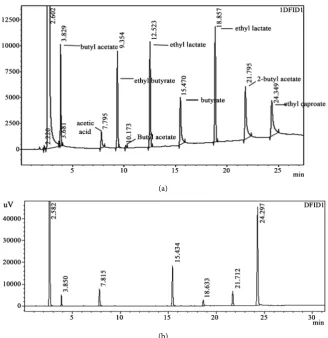
The HX chromatograms of the standard material and fermentation broth were generated as shown in Figure 1.
The chromatographic peak in Figure 1 demonstrated that the GC conditions in the present study were suitable for HX detection.
The HX yields of six clones in 15-day fermented broth are shown in Table 3. The HX yields of six clones were compared with one-way ANOVA in SPSS 17. The results indicated that the HX yields of clone 5 in 15-day fermented broth was significantly higher than those of clones 1, 2, 3, 4, and 6 (Sigtow-tailed = 0, 0, 0,
0 < 0.01). Therefore, clone 5 was selected for investigation.
3.2. Morphological Characterization of Clone 5
The results for the morphological characterization of clone 5 are shown in Fig-ure 2.
Clone 5 possesses the following characteristics:
DOI: 10.4236/fns.2018.95035 453 Food and Nutrition Sciences (a)
[image:7.595.209.538.67.406.2] [image:7.595.219.526.439.591.2](b)
Figure 1. GC chromatograms. (a) Standard material; (b) Fermentation broth.
(a) (b)
Figure 2. Morphological characterization of clone 5. (a) Colony characteristics of clone 5; (b) Bacterial cell characteristics of clone 5 (10 × 100).
Table 3. HX yields of six clones.
Clones 1 2 3 4 5 6
HX yields (mg/100mL)
189.56
198.99 ± 11 234.76
263.1 ± 26.29 206.33
260.3 ± 47.52 365.89
383.64 ± 16.4 585.78
609.22 ± 20.46 167.34
174.43 ± 7.11
196.35 286.69 295.89 386.78 623.45 181.55
DOI: 10.4236/fns.2018.95035 454 Food and Nutrition Sciences
2) Bacterial cell morphology: long rods; 3) Spore morphology: ellipsoidal;
4) Spore-bearing position: mostly located in the center of the cell with a small number of cells at one end;
5) Gram staining: G+.
3.3. Molecular Identification
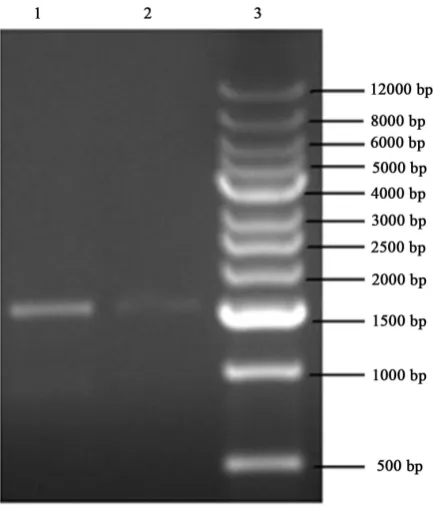
[image:8.595.265.482.234.489.2]The gel electrophoresis results of 16SrDNA amplified by PCR were listed in
Figure 3, the sequencing results for16SrDNA fragments is listed in Figure 4 and the taxonomic status of clone 5 b was shown in Figure 5.
Figure 3. The 16srDNA of clone 5.
DOI: 10.4236/fns.2018.95035 455 Food and Nutrition Sciences Figure 5. Taxonomic status of clone 5.
The sequence of the 16srDNA primer amplification product in Figure 4 was 1427 bp long, the aligned results in RDP (http://rdp.cme.msu.edu/) revealed that clone 5 had a 99% sequence similarity to that of Clostridium sartagoneforme
(Figure 5).
This is the first study to discover that C. sartagoneforme produces HX in CSFL pit mud.
3.4. Growth Curve and HX-Production
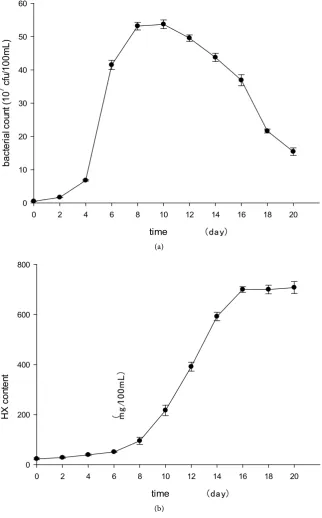
The results for HX-producing bacterial counts and HX contents are shown in
Figure 6.
By analyzing the curves in Figure 6, the following conclusions were drawn: 1) Based on the bacterial growth curve, the initial lag period lasted for 4 days. The total number of bacterial cells (TNBC) negligibly increased during this pe-riod. The logarithmic growth phase occurred during the sixth to eighth days of fermentation. The TNBC increased the fastest during this period. The stationary phase occurred on the eighth to tenth days of fermentation. The TNBC negligi-bly increased during this period. Bacterial decay occurred from the 10th day to the end of fermentation. The highest TNBC was 53.72 ± 1.32 (×107 cfu/mL) and
was observed on the 10th day.
2) Given that the fastest increase in HX production occurred during the eight to the 60th day of fermentation, the optimal fermentation period for HX pro-duction is 16 days.
3.5. Screening of HX-Producing Fermentation Culture Medium
The results of GC analysis for HX yield in the four candidate fermentation cul-ture media are shown in Table 4.
DOI: 10.4236/fns.2018.95035 456 Food and Nutrition Sciences (a)
[image:10.595.213.536.73.592.2](b)
Figure 6. The growth and HX-production curves. (a) The growth curve; (b) The HX-production curve.
Table 4. X yields in four candidate fermentation culture media.
Medium A B C D
HX yields (mg/100mL)
788.726
800.85 ± 12.87
189.110
196.87 ± 7.69
194.150
205.54 ± 12.32
374.65
391.99 ± 15.34
814.352 204.496 203.847 397.54
799.46 196.991 218.617 403.79
time (day)
0 2 4 6 8 10 12 14 16 18 20
bac ter ial c ou nt (10
7 c
fu /100m L) 0 10 20 30 40 50 60 time (day)
0 2 4 6 8 10 12 14 16 18 20
H
X
c
ont
ent
( mg
[image:10.595.57.537.651.725.2]DOI: 10.4236/fns.2018.95035 457 Food and Nutrition Sciences
yield in fermentation culture medium A was significantly higher than those in fermentation culture media B, C, and D. Moreover, HX yield in fermentation culture medium A was higher than those in fermentation culture media B,C, and D by 4.07,3.90, and 2.04 times, respectively.
3.6. Screening for Carbon Source, Nitrogen Source, and Inorganic
Salt
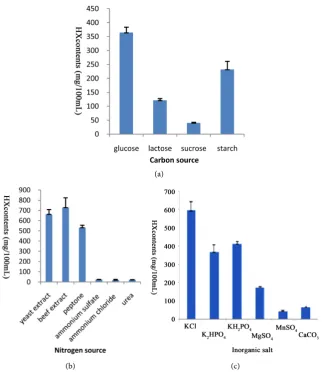
HX yields in fermentation liquids with various carbon sources, nitrogen sources, and inorganic salts are shown in Figure 7.
The following conclusions were drawn from the screening results for the op-timal carbon source, nitrogen source, and inorganic salt for fermentation culture medium A:
1) Among the four carbon sources, the highest HX output (Figure 7(a)) was achieved with 1 g/L glucose as the carbon source. ANOVA analysis revealed that HX output with glucose as the carbon source was significantly higher (P < 0.01) than those with lactose, sucrose, or starch as carbon sources.
(a)
[image:11.595.213.536.322.695.2](b) (c)
DOI: 10.4236/fns.2018.95035 458 Food and Nutrition Sciences
2) Among the six nitrogen sources, the highest HX output (Figure 7(b)) was achieved with 2.5 g/L beef extract as then nitrogen source. ANOVA analysis re-vealed that HX output in the fermentation liquid with beef extract as the nitro-gen source was significantly higher than those with (P = 0.048), ammonium sul-fate, ammonium chloride, and urea (P < 0.01) as nitrogen sources. HX yields with yeast or beef extracts as nitrogen sources were not significantly different (P = 0.23). Therefore, yeast extract was used as the nitrogen source for further op-timization because of economic reasons.
3) Among the inorganic salt sources, the highest HX output (Figure 7(c)) was achieved with 1.8 g/L KCL.ANOVA analysis revealed that the HX output with KCL was significantly higher than all the others (P < 0.01).
Therefore, the optimal carbon source, nitrogen source, and inorganic salt for HX production were glucose, beef extract, and KCl.
3.7. Single-Factor Experiment
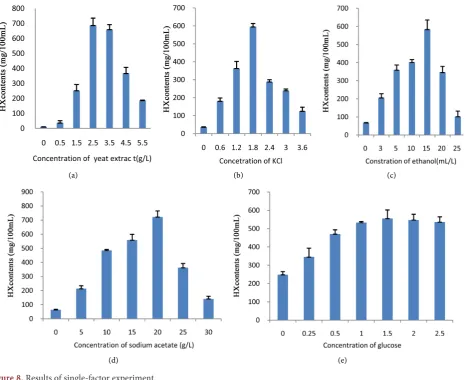
The HX contents in the 15-day fermentation liquid of the single-factor experi-ment are shown in Figure 8.
(a) (b) (c)
[image:12.595.68.535.339.719.2](d) (e)
DOI: 10.4236/fns.2018.95035 459 Food and Nutrition Sciences
The optimal concentration for each ingredient of the fermentation culture medium in HX production with strain K3 was 2.5 g/L yeast extract, 1.8 g/L KCl, 15 mL/L ethanol, 20 g/L sodium acetate, and 1.5 g/L glucose. The influence of each individual factor was calculated by subtracting the zero concentration from the highest HX production. Comparing the effects of individual factors revealed that sodium acetate was the most effective factor of HX production, whereas glucose was the most ineffective. Therefore, glucose was excluded from further optimization.
3.8. Total Cell Number of Fermentation Broth by Taguchi Design
Method
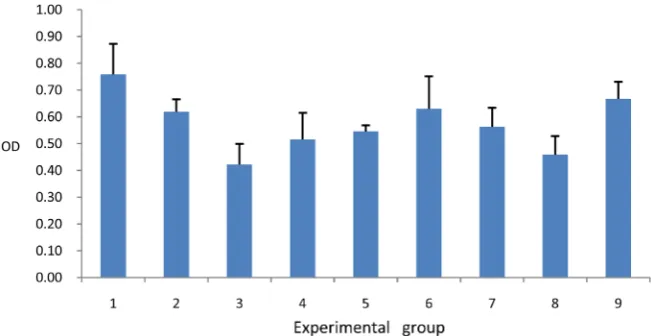
A spectrophotometer was used to detect the total cell number, which was represented by OD, in 10-day fermentation broth that was optimized via the Taguchi design method. The results are shown in Figure 9.
The OD in Figure 9 demonstrated that group 1 had the highest cell number among all experimental groups. Comparing the OD in all the experimental groups revealed that the OD values of groups 1, 2, 6, and 9 were not significantly different (P > 0.05). The OD values of these groups, however, are significantly higher than those of other groups (P < 0.05).
3.9. Optimization of HX Production by Taguchi Design Method
The GC detection results of the 16-day fermentation liquid are shown in Table 5.
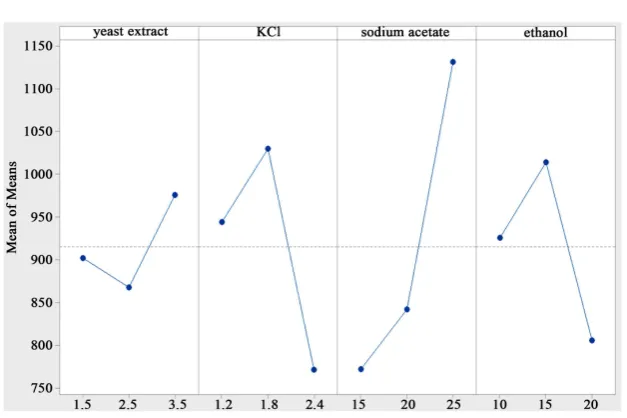
[image:13.595.210.536.535.703.2]Minitab 17 (Minitab Inc.; State College, PA) software was used to analyze the experimental results in Table 5 to obtain the response means of HX content, re-sponse means of SN ratios, mean main effect diagram, and the SN ratio of the main effect diagram. The location, dispersion, and adjustment factors were ana-lytically determined to obtain the optimal factor and level combination for the fermentation medium [14]. The results were showed in Table 6, Table 7, Figure 10, and Figure 11.
DOI: 10.4236/fns.2018.95035 460 Food and Nutrition Sciences Figure 10. Main effects diagram of each factor for HX content.
Figure 11. Main effects diagram of each factor for SN ratios.
Table 5. The HX content of the Taguchi design.
Test number
Factors HX content (mg/100mL) Y (mg/100mL) Yeast
extract (g/L) (g/L) KCl acetate (g/L) Sodium Ethanol (mL/L) 1 2 3
1 1.5 1.2 15 10 782 795 820 799
2 1.5 1.8 20 15 1050 1026 1050 1042
3 1.5 2.4 25 20 838 870 888 865.33
4 2.5 1.2 20 20 717 730 697 714.67
5 2.5 1.8 25 10 1169 1190 1269 1209.33
6 2.5 2.4 15 15 671 680 691 680.67
7 3.5 1.2 25 15 1283 1295 1383 1320.33
8 3.5 1.8 15 20 828 830 858 838.67
[image:14.595.211.538.543.729.2]DOI: 10.4236/fns.2018.95035 461 Food and Nutrition Sciences Table 6. Response means for HX content.
Level Factors
Yeast extract KCl Sodium acetate Ethanol
1 902.1 944.7 772.8 926.0
2 868.2 1030.0 842.1 1014.3
3 976.2 771.9 1131.7 806.2
Delta 108.0 258.1 358.9 208.1
Rank 4 2 1 3
Table 7. Response means for signal-to-noise ratios.
Level Factors
Yeast extract KCl Sodium acetate Ethanol
1 59.05 59.18 57.73 59.14
2 58.46 60.16 58.39 59.81
3 59.54 57.71 60.94 58.10
Delta 1.07 2.45 3.21 1.71
Rank 4 2 1 3
To identify the factors that significantly influence the mean value, the mean variance of the experimental results was analyzed further. The results are shown in Table 8.
Based on the analysis of response for the means of HX content (Table 6); re-sponse means for signal-to-noise ratios (SNR) (Table 7); main effect diagram for means of HX content (Figure 10); main effects diagram for SN ratios of each factor (Figure 11); results of variance analysis (Table 8), and with caproic acid yields as the index, yeast extract, KCl, sodium acetate, and ethanol all signifi-cantly influence HX content. The relative importance of these factors was as fol-lows: sodium acetate > KCl > ethanol > yeast extract. The optimal factor and level combination for HX output was level 3 yeast extract, level 2 KCl, level 3 so-dium acetate, and level 2 ethanol. Specifically, the optimal formula for maximum HX output was 3.5 g/L yeast extract, 1.8 g/L KCl, 25 g/L sodium acetate, and 15 mL/L ethanol. The predicted HX yield using this formula was 2112.346 mg/100mL.
3.10. Validation Experiment
[image:15.595.211.539.251.380.2]DOI: 10.4236/fns.2018.95035 462 Food and Nutrition Sciences Table 8. Analysis of variance of mean value.
Source DF AdjSS AdjMS F-value P-value
Yeast extract 2 47115 23557 233.07 0
KCl 2 288283 144142 1426.10 0
Sodium acetate 2 592738 296369 2932.20 0
Ethanol 2 173352 86676 857.55 0
Error 18 1819 101
Total 26 1103307
4. Conclusion
In the present study, an efficient HX-producing strain was isolated from 280-year-old pit mud. This strain yielded 609.22 ± 20.46 mg/100mL HX. Mor-phological identification indicated that the strain possessed the typical characte-ristics of HX-producing strains, such as G+ and spore formation. Bioinformatics
analysis revealed that the strain shared 99.1% sequence similarity with C. sarta-goneforme. Meanwhile, the four candidate fermentation culture media A, B, C, and D were tested on the basis of maximum caproic acid yield. Single-factor ex-periments were performed based on the selected fermentation culture medium A. The results of the single-factor tests showed that the maximum HX yields in 15-day-old fermentation broth were obtained with culture medium A that con-tained 2.5 g/L yeast extract, 1.8 g/L KCl, 20 g/L sodium acetate, and 15 mL/L ethanol. A further orthogonal experiment was designed using Taguchi methods in Minitab 17. The results demonstrated that the optimum formula for maxi-mum HX output was 3.5 g/L yeast extract, 1.8 g/L KCl, 25 g/L sodium acetate, and 15 mL/L ethanol. The validation experiment had a maximum HX yield of 2018.29 ± 46.37 mg/100mL.
Acknowledgements
This research was financially supported by the Science and Technology Support Plan Project of Sichuan Province (No. 2014FZ0018), the Social Development Project of Luzhou Municipal Science and Technology Bureau (2017-S-45 (3/3)), and the Key Fund Project of Sichuan Provincial Department of Education (18ZA025).
Conflicts of Interest
The authors declare that they have no competing interests.
References
[1] Zhang, F.L. (2008) Utilization of Caproic Acid Bacteria Pit Mud for Fermentation to Improve the Yield of Kouzi Liquor. Liquor-Making Science & Technology, 22, 823-830.
DOI: 10.4236/fns.2018.95035 463 Food and Nutrition Sciences
Liquor Making, 37, 25-27.
[3] Xia, P.Y., Xun-Liang, S.U. and Xi-Wang, X.U. (2005) Application of TH-AADY in the Production of Manmade Pit Mud. Liquor-Making Science & Technology, 136, 37-38.
[4] Barros, D.P.C.D., Pinto, F., Fonseca, L.P., Cabral, J.M.S. and Lemos, F. (2014) Ki-netic Model for the Esterification of Ethyl Caproate for Reaction Optimization.
Journal of Molecular Catalysis B: Enzymatic, 101, 16-22.
https://doi.org/10.1016/j.molcatb.2013.12.012
[5] Tan, Z., Bao, X., Du, H., Chen, Q., Han, X. and Li, J. (2014) Synthesis of Ethyl Ca-proate in Dbsa/Cyclohexane/Water Microemulsion System. Journal of Chinese In-stitute of Food Science & Technology, 14, 140-144.
[6] Sun, B.G., Sun, J.Y., Gong, L.L. and Sun, X.T. (2016) Perspectives on the Long-Term Development Trend and Research Emphasis of Chinese Baijiu (Chinese liquor).
Journal of Light Industry, 31, 6-11.
[7] Liu M., Tang, Y., Zhao, K., Ren, D., Yao, W. and Tian, X. (2015) Analysis of Action Bacteria Community and Diversity in the Pit Mud of Chinese Luzhou-Flavour Liq-uor. Acta Ecologica Sinica, 95, 2729-2735.
[8] Fan, W.L. and Xu, Y. (2014) Current Practice and Future Trends of Aroma and Flavor of Chinese Liquor (Baijiu). Journal of Food Safety and Food Quality, 2014, 3073-3078.
[9] Chen, Y., Luo, W., Rui, G., Xue, X., Guan, X., Song, L., et al. (2016) Improved Ethyl Caproate Production of Chinese Liquor Yeast by Overexpressing Fatty Acid Syn-thesis Genes with Opi1, Deletion. Journal of Industrial Microbiology & Biotechnol-ogy, 43, 1-10. https://doi.org/10.1007/s10295-016-1795-x
[10] Cui, H.H. and Cui, J.J. (2014) Isolation and Purification of Caproic Acid Bacteria from Shilixiang Aged Pit Mud and Study of Its Expand Training and Application.
Liquor Making, 41, 39-41.
[11] Hu, X.L., Du, H. and Xu, Y. (2015) Identification and Quantification of the Caproic Acid-Producing Bacterium Clostridium Kluyveri, in the Fermentation of Pit Mud Used for Chinese Strong-Aroma Type Liquor Production. International Journal of Food Microbiology,214, 116-122. https://doi.org/10.1016/j.ijfoodmicro.2015.07.032
[12] Xue, Z.K. (2014) Isolation and Identification of a Caproic Acid-Producing k-1 Strain from Luzhou-Liquor Pit Mud. Journal of Proteomics, 74, 2510-2521. [13] Huang, Z., Wei, C., Bian, M., Zong, X., Luo, H. and Zheng, R. (2012) Isolation and
Identification of Two Bacteria Strains from Pit Mud of Luzhou-Flavor Liquor. Liq-uor-Making Science & Technology,221, 36-38.