warwick.ac.uk/lib-publications
Original citation:
Larsen, Samuel Brüning, Masi, Donato, Jacobsen, Peter and Godsell, Janet (2018) How the reverse supply chain contributes to a firm’s competitive strategy : a str ategic alignment perspective. Production Planning & Control, 29 (6). pp. 452-463.
doi:10.1080/09537287.2017.1390178
Permanent WRAP URL:
http://wrap.warwick.ac.uk/102685
Copyright and reuse:
The Warwick Research Archive Portal (WRAP) makes this work by researchers of the University of Warwick available open access under the following conditions. Copyright © and all moral rights to the version of the paper presented here belong to the individual author(s) and/or other copyright owners. To the extent reasonable and practicable the material made available in WRAP has been checked for eligibility before being made available.
Copies of full items can be used for personal research or study, educational, or not-for profit purposes without prior permission or charge. Provided that the authors, title and full bibliographic details are credited, a hyperlink and/or URL is given for the original metadata page and the content is not changed in any way.
Publisher’s statement:
“This is an Accepted Manuscript of an article published by Taylor & Francis in Production Planning & Controlon 21/05/2018 available
online: http://doi.org/10.1080/09537287.2017.1390178
Versions:
The version presented here may differ from the published version or, version of record, if you wish to cite this item you are advised to consult the publisher’s version. Please see the ‘permanent WRAP URL’ above for details on accessing the published version and note that access may require a subscription.
1
How the reverse supply chain contributes to a firm’s competitive strategy: a strategic alignment perspective
The ongoing transition to a Circular Economy is changing the shape of Supply Chains. They are becoming more ‘Closed-Loop’, combining forward and reverse flows of products and materials. Reverse Supply Chains (RSCs), originally considered as a solution for handling waste or recovering residual value, can play a pivotal role in determining the competitive advantage of the firm. Firms do not always exploit the potential of the RSC, and the conditions allowing the exploitation remain unclear. This paper explores the alignment between the RSC and the competitive strategy of the firm. Results from seven case studies, focusing on original equipment manufacturers (OEMs), show how the RSC can play a strategic, tactical, or operational role for the firm. The paper applies for the first time the concept of strategic alignment to the RSC and practitioners can use the proposed framework to analyse the role of the RSC within their firm.
Key words: Reverse Supply Chain, Strategic Alignment, Competitive Advantage, Case Study
1. Introduction
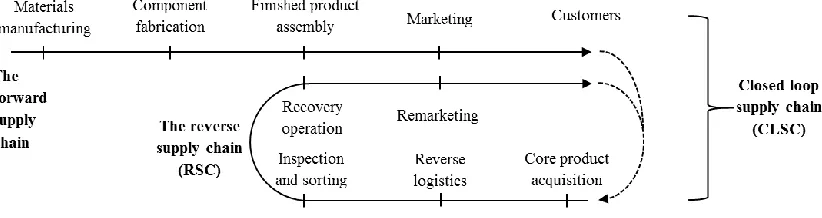
[image:2.612.101.512.484.593.2]Societal and environmental challenges (Ellen MacArthur Foundation 2015) are promoting the transition to a Circular Economy (CE) that proposes new patterns of production, consumption, and use based on circular flows of resources (Ghisellini et al. 2016). In this context, firms are increasingly involved in Closed-Loop Supply Chains (CLSCs) that maximize value creation over the entire life cycle of a product using dynamic recovery of value from different types and volumes of returns over time (Guide and Van Wassenhove 2009). A CLSC, shown in Figure 1, includes the forward and reverse supply chain of a firm (Guide and Van Wassenhove 2001). The Forward Supply Chain (FSC) manufactures materials, fabricates components, assembles the firm’s finished products, and markets these products to customers (Geyer and Jackson 2004). The Reverse Supply Chain (RSC) includes activities such as the collection of used products from customers, reverse logistics, inspections and sorting, recovery operations, and finally remarketing (Guide and Van Wassenhove 2006).
Figure 1. Model of the Closed-Loop Supply Chain
2
Guide and Van Wassenhove (2006) highlighted the value losses implied by this view and proposed a new model of CLSC with value creation as its basic tenet. Their model, which builds on the traditional reverse logistics research (Govindan et al.2015), analyses reverse flows from a ‘business perspective’ as ‘potentially profitable business propositions’ (Guide and Van Wassenhove 2009, p.12). In line with Guide and Van Wassenhove (2006), other researchers suggested that the RSC can contribute to the firm’s competitive strategy (e.g. Beamon and Fernandes, 2004; Jayaraman and Luo 2007; Loomba and Nakashima 2012; Stock et al. 2002), highlighting the need to understand how this contribution happens (Barber et al. 2012).
Understanding the mechanisms upgrading the role of the RSC for the competitive strategy of the firm can change practitioners’ perception and therefore promote the implementation of RSCs. More efficient and effective RSCs represent an advantage not only for firms, but also for broader society, dealing with issues of waste and resource scarcity (Diener and Tillman 2015). In light of the above, this paper aims to explore the alignment between the RSC and the competitive strategy of the firm.
The research focuses on OEMs because of their control over a high number of processes in a CLSC. OEMs are defined as focal firms that manufacture products designed in-house and are technically recoverable (Karlsson 2003; Larsen and Jacobsen 2016). OEMs typically produce spare parts for servicing the installed base of products, assemble all their products, but fabricate in-house only some components. All remaining components and all materials are sourced from suppliers. These firms generally have a primary market for their virgin products and spare parts, and a set of potential secondary markets for recovered products and spare parts.
The remainder of the paper is organized as follows: section 2 reviews the literature relevant for the research; 3 outlines the research methodology; 4 presents the results that are discussed in section 5. Finally, section 6 presents some conclusions and suggestions for further research.
2. Literature review
This study builds on two different streams of research: strategic alignment and CLSCs. The next section presents an overview of these two research streams and ends with a conceptual framework used as the basis for the empirical work.
2.1. Strategic alignment
The literature of strategic management is vast and continues to grow every year (see Mintzberg et al. [2009] for a review). Reviewing this literature is beyond the purposes of this study, which aims to explore the alignment between the RSC and the competitive strategy of the firm. Therefore, this review will present a model for the characterization of the competitive strategy of a firm, and will then focus on the literature on strategic alignment.
3
Strategic alignment can be simply defined as a fit between the competitive strategy and the various functional strategies generally encompassed by supply chain strategy and marketing strategy (Harrison et al. 2007). The concept of strategic alignment is not new and it initially focused on manufacturing strategy. Skinner (1969) was the first author investigating the link between manufacturing and competitive strategy, followed by other authors (e.g. Fine and Hax 1985; Hill 1985, 1989). The growing number of studies on this topic generated a number of comprehensive meta-level literature reviews (e.g. Anderson et al. 1989; Leong et al. 1990). This concept of strategic alignment is analogous to the concept of vertical alignment between operations and competitive strategy (Frohlich and Westbrook 2001) and distinct from horizontal alignment between operations across processes (Ghoshal and Bartlett 1995). This study focuses on the strategic or vertical alignment between RSCs operations and competitive strategy. The remainder of this review will analyse the key elements needed for the analysis of vertical alignment, such as key elements, processes, enablers, and practices.
The model proposed by Leong et al. (1990) is particularly relevant for the purposes of this study because it summarises the previous main studies on alignment and depicts the strategy process occurring within an environment that consists of markets and stakeholders, such as the public at large, stockholders, and government agencies. The model clarifies the key elements of the strategy process that include competitive strategy, business level strategy, functional strategies, and functional capabilities provided throughout the process. The functional strategies themselves consist of the process of strategy formulation and implementation. Strategy implementation involves decisions at the strategic, tactical and operational levels (see e.g. Gunasekaran et al. [2001] for a review of the related decisions).
Gattorna (1998, 2009) focused on the more specific objective of supply chain alignment; he proposed a four-stage framework for strategic alignment where supply chain strategy is developed to meet the requirements of customer segments, and is supported by the right culture and leadership style, aligned with four logics. Harrison et al. (2007) proposed an ‘Alignment Gap’ model, defining an alignment gap as an ‘inconsistency between strategy and process, which results in loss of value to both customer and shareholder’. This model identifies six different types of alignment gap, such as the ‘strategy gap’ between the competitive strategy and the various functional strategies, and the ‘supply chain process gaps’ between the plan, source, make and deliver processes. These models allow a clear view of the alignment process from different perspectives and clarify the key components involved in strategic alignment, but they devote less attention to the practices needed for the implementation of strategic alignment.
4
contextual conditions enabling business alignment, but none of the studies explicitly addresses the contribution of the RSC. Moreover, the empirical study by Skipworth et al. (2015) suggests that different alignment practices have different degrees of effectiveness based on the contextual conditions in which they operate, but the interplay between practices, contextual conditions and alignment levels is unclear.
Further research is needed because alignment in living supply chains is the exception rather than the rule. A survey carried out by Tamas (2000) found that only 13% of the 80 supply chain executives questioned believed that their companies’ supply chain practices are actually fully aligned with their business unit strategies. More recent studies confirmed that internal alignment is still an unresolved issue (Beth et al. 2003; Pagell 2004; Van Hoek and Mitchell 2006). Moreover, several researchers (see e.g. Baier et al. 2008) agree that the mechanisms for the achievement of alignment require further attention.
2.2. The role of the RSC and the CLSC
A CLSC consists of two distinguishably separate parts: the ‘forward’ and ‘reverse’ chains. During recent decades the RSC has attracted increasing interest from researchers and practitioners due to the increasingly stringent regulation on product returns and the increasing awareness of the economic potential of the residual value embedded in core products. The growing number of studies on this topic generated a number of comprehensive literature reviews, e.g. Guide and Van Wassenhove (2009), Govindan and Soleimani (2017), Govindan et al. (2015).
Guide and Van Wassenhove (2009) summarise the issues that researchers have investigated so far, namely individual activities in the RSC and on cost reductions, drivers of profitability in the RSC, coordination and incentive alignment issues, accounting issues, and integration between product returns management, remanufacturing operational issues, and development of markets for recovered items. Govindan et al. (2015) and Govindan and Soleimani (2017) identify various types of study subjects in reverse logistics and CLSC, such as network designing and planning, production planning and inventory management, or third party reverse logistic provider selection. The types of study identified in the two reviews of the literature highlight how researchers mainly focused on technical and operational challenges in the RSC domain.
A dedicated stream of research explicitly focuses on the strategic role of the RSC and on the potential of the RSC for the creation of value. For instance, Stock et al. (2002) argue that the RSC should be seen as an opportunity to build competitive advantage. Similarly, Loomba and Nakashima (2012) argue that the RSC should be part of a firm’s competitive strategy and Jayaraman and Luo (2007) relate the RSC to the creation of competitive advantage by contributing to a better corporate image, higher customer satisfaction, and lower costs. Schenkel et al. (2015) performed a systematic review of the literature on value creation in green, reverse, and CSLCs. They conclude that CSLCs can foster competitive advantage by creating four types of value: economic, environmental, information and customer.
Summing up, current studies on CLSCs suggest that the potential of the RSC for competitive advantage is clear, but the alignment between the RSC and the specific competitive strategy of the firm requires further investigation. In light of this gap, the current paper investigates the alignment between the RSC and the competitive strategy of the firm, focusing on the value creation mechanisms and the factors enabling alignment.
5
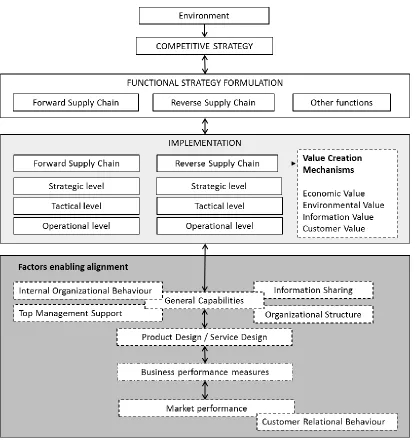
contextual factors enabling alignment proposed by Wong et al. (2012), and the value creation mechanisms of an RSC proposed by Schenkel et al. (2015). The model proposed by Leong et al. (1990) aims at characterising the alignment process, while this paper investigates the alignment between the RSC and the competitive strategy of the firm, the value creation mechanisms and the factors enabling alignment, without considering the processes used for their achievement. Leong’s process model, however, is useful since it offers a holistic view of the elements needed for the purposes of the paper.
Figure 2: Theoretical Framework for the analysis of mechanisms and factors enabling strategic alignment. Value creation mechanisms for the RSC and the factors enabling alignment are in dashed boxes (after Leong et al., 1990; Wong et al., 2012, Schenkel et al., 2015).
[image:6.612.101.515.168.608.2]6
This paper explores the alignment between the RSC and the competitive strategy of the firm by identifying the mechanisms through which the RSC can contribute to the firm’s competitive strategy and the contextual factors that enable these mechanisms. A case-based approach with seven OEMs was selected for three reasons. First, case studies enable the study of a phenomenon within its real-world setting using contextually rich data (Barratt et al. 2011). Second, the replication logic of multiple cases strengthens the external validity of the findings (da Mota Pedrosa et al. 2012; Miles et al. 2014; Yin 2014). Third, they allow the analysis of ‘why’ questions (Meredith et al. 1989; Voss et al. 2002) and therefore theory building (Voss et al. 2002). Consistent with the principles of realistic analysis (Pawson 2002; Pawson et al. 2005), the study considers the RSC as input triggering some value creation mechanisms that interplay with a set of enabling conditions.
3.1 Sampling logic and controls
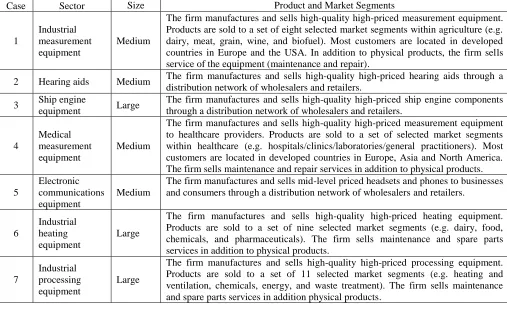
[image:7.612.52.559.411.721.2]The study has selected case firms that are OEMs (Karlsson 2003; Larsen and Jacobsen 2016) and that operate an RSC with a direct control over the RSC processes, design and management. The sample has been created with the purpose of achieving theoretical replication, with contrasting results for anticipatable reasons (Yin 2014). The contrasting results are the different degrees of alignment and different value creation mechanisms; the anticipatable reasons are the different alignment enablers that interplay with the value creation mechanisms. Therefore, the sample included firms with different features of size, industry, product type, forward and reverse supply processes, and market requirements. The authors selected firms operating in Denmark because the country is particularly proactive in terms of policies for value recovery. Table 1 details some key features of the case firms.
Table 1. Case firms
Case Sector Size Product and Market Segments
1
Industrial measurement equipment
Medium
The firm manufactures and sells high-quality high-priced measurement equipment. Products are sold to a set of eight selected market segments within agriculture (e.g. dairy, meat, grain, wine, and biofuel). Most customers are located in developed countries in Europe and the USA. In addition to physical products, the firm sells service of the equipment (maintenance and repair).
2 Hearing aids Medium The firm manufactures and sells high-quality high-priced hearing aids through a distribution network of wholesalers and retailers.
3 Ship engine
equipment Large
The firm manufactures and sells high-quality high-priced ship engine components through a distribution network of wholesalers and retailers.
4
Medical measurement equipment
Medium
The firm manufactures and sells high-quality high-priced measurement equipment to healthcare providers. Products are sold to a set of selected market segments within healthcare (e.g. hospitals/clinics/laboratories/general practitioners). Most customers are located in developed countries in Europe, Asia and North America. The firm sells maintenance and repair services in addition to physical products.
5
Electronic communications equipment
Medium
The firm manufactures and sells mid-level priced headsets and phones to businesses and consumers through a distribution network of wholesalers and retailers.
6
Industrial heating equipment
Large
The firm manufactures and sells high-quality high-priced heating equipment. Products are sold to a set of nine selected market segments (e.g. dairy, food, chemicals, and pharmaceuticals). The firm sells maintenance and spare parts services in addition to physical products.
7
Industrial processing equipment
Large
7
3.2 Data collection and analysis
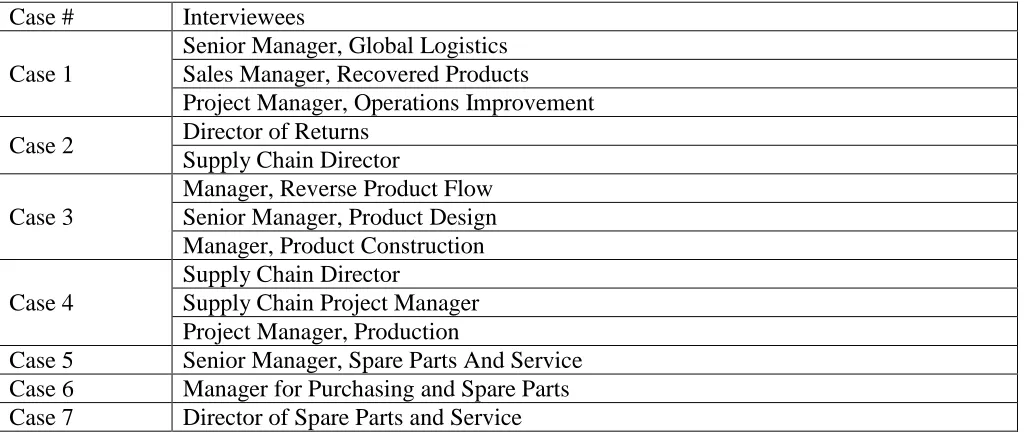
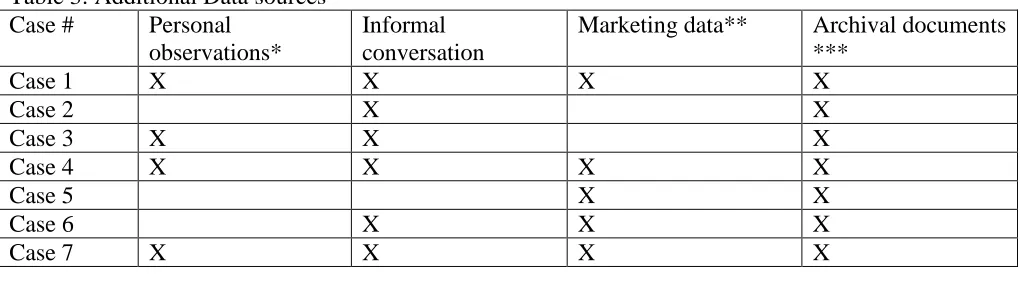
The study used semi-structured interviews as the primary data collection method. The interviews, which averaged one hour, were conducted as face-to-face meetings and were recorded. Interviewees were middle managers with responsibilities within supply chain and logistics management, returns management, spare parts and service, and related areas. Table 2 lists the interviewees for each case firm while Table 3 lists the additional data sources. The data were collected by one of the authors between 2013 and 2016.
The interviews were guided by a questionnaire divided into four overall subjects: 1) the firm’s products and markets, 2) firm’s FSC, 3) firm’s reverse flows and RSC-processes, 4) general advantages attained from operating the firm’s RSC, and 5) perceived contribution of the RSC to the firm’s competitive advantage. It is important to highlight that the questionnaire did not limit the competitive strategies to either cost leadership or differentiation, and explored the generic perception of firms on what generated an advantage over competitors.
The thematic analysis built on the modified framework suggested in Figure 2 and included three different steps: characterisation of the competitive strategy, analysis of role of the RSC, and analysis of the fit between the two. The analysis of the role of the RSC focused on the value creation mechanisms and the corresponding enabling conditions. These themes have been analysed using a pattern matching technique (Yin 2014), with the initial tentative patterns represented by the taxonomies of value creation mechanisms proposed by Schenkel et al. (2015) and the taxonomy of enabling conditions proposed by Wong et al. (2012). The authors conducted the thematic analysis of data independently and then compared results to reach an agreement on conflicts.
[image:8.612.52.569.436.654.2]Interview data have been triangulated with follow-up informal questions, inspection of plants, and analysis of written documents in the form of objective data and archival sources (Voss et al. 2002).
Table 2. Interviewees.
Case # Interviewees
Case 1
Senior Manager, Global Logistics Sales Manager, Recovered Products Project Manager, Operations Improvement
Case 2 Director of Returns Supply Chain Director
Case 3
Manager, Reverse Product Flow Senior Manager, Product Design Manager, Product Construction
Case 4
Supply Chain Director
Supply Chain Project Manager Project Manager, Production
8
Table 3: Additional Data sources Case # Personal
observations*
Informal conversation
Marketing data** Archival documents ***
Case 1 X X X X
Case 2 X X
Case 3 X X X
Case 4 X X X X
Case 5 X X
Case 6 X X X
Case 7 X X X X
* E.g. Plant tour, dedicated recovery operation section tour, and examining physical items (core/recovered products)
** E.g. Lists of market segments and product warranty policies *** E.g. Annual reports, product white papers, and corporate websites
4. Results
This section will first describe the competitive strategy of each case firm and then present the degrees of alignment that the RSC can have with respect to the firm’s competitive strategy.
4.1. Firms’ competitive strategies
The interviews and the analysis of the additional data sources allowed the identification of the competitive strategy for each of the firms.
Case firm 1 develops and produces measurement instruments and competes on differentiation, as
demonstrated by the position of the products in the market. The marketing campaign puts emphasis on the measurement accuracy, speed, and reliability of the firm’s products, using adjectives such as
‘rapid’, ‘reliable’, ‘easy’, and ‘accurate’.
Case firm 2 competes on differentiation and clearly highlights how the size, sound quality,
functionality, and wearing ease of its product are superior compared to other brands. The marketing campaign details the functionality abundance for using the hearing aids of this particular firm, without putting emphasis on prices. The Director of Returns stated that the prices for the firm’s products are much higher than the typical product.
Case firm 3 applies a differentiation strategy, specifically focused on durability, state-of-the-art
technology, and service. One interviewee, the Manager of Product Construction, highlighted how they consider their products as ‘the best’ in the market and how the equipment investment needed to
produce their product is ‘huge’ if compared to the industry standards. In addition, he remarked the
relevance of state-of-the-art technology explaining that the firm has to react ‘extremely quickly’ to
changes in the market in order to protect the brand and that they follow technological innovation by
‘moving all the time’. The differentiation strategy is also highlighted in several statements of the firm’s
webpage, where they provide evidence for being ‘top quality’ and ‘Number one in the world’ in their
sector.
Case firm 4 develops and produces measurement instruments for healthcare providers. The firm
9
instruments run with very little downtime, which is crucial within customer’s operations. The Supply Chain Director explained that ‘this is so important to our customers that in case of a repair it is not a
question of how long a repair will take, but a matter of how much time it will take to install the instrument the service technician has in his van. Then he can begin repairing the customer’s own
instrument’.
Case firm 5 applies a differentiation strategy. Indeed, its products embed state-of-the-art design and
technology with mid-level prices.
Case firm 6 applies a quality-based differentiation strategy. Customers typically use the firm’s products
for their high degree of production consistency and cost-efficiency. The Manager for Purchasing and Spare Parts uses an analogy to describe the firm’s products as the ‘Mercedes’ within each product group. The marketing campaign adopted on the website puts emphasis on the flexibility, quality, consistency and cost-efficiency of the products.
Case firm 7 competitive strategy is differentiation through high quality, state-of-the-art technology, and
service. The Director of Spare Parts and Service refers to a recent customer survey and states that
‘service is very important to our customers’. The firm’s website stresses the firm’s history and
commitment to quality, which goes beyond the industry’s customer quality standards. Quality is embedded in the firm’s management philosophy and is continuously implemented in, among others, processes, services, and skills.
Summing up, all the companies adopt a differentiation strategy, although they achieve differentiation by putting emphasis on different competitive priorities.
4.2. The degrees of alignment between the RSC and the firm’s competitive strategy
Having characterised the competitive strategy, analysis of the data highlighted the interplay between value creation mechanisms and enabling conditions, and the degree of alignment between value creation mechanisms and competitive strategies. The following sub-sections will detail the mechanisms and the key enabling conditions for the different cases.
4.2.1. The strategic role of the RSC
Case firms 2 and 3 use the RSC as a key component for the implementation of their competitive strategy.
Case firm 2 uses its RSC to enhance customer’s ease of using the firm’s products. The Director of
Returns states that they ‘use refurbished products for a swap-service, where the customer gets a
reworked product when he returns a defective product’. Customers value this service highly because
they want to minimise the ‘downtime’, namely the time without their hearing aid. The firm ‘places the
customer’s defective product in a global inventory for future needs for refurbished products’. The firm
also uses its return process as a value proposition for distributors, who value an easy return process. The Director of Returns Manager states that they ‘offer several opportunities for our distributors to
return products’, and confirmed that this is a way to compete for distributor relationships.
The RSC of Case firm 3 actively contributes to the creation of differentiation by fostering innovation and boosting service levels. The Senior Manager confirmed that the RSC actively supports innovation through ‘a complaint process’ that supports the identification of ‘an internal quality problem, a quality
issue with a supplier, or a design error’, and he considers this process as the most relevant result of the
10
perceived by both customers and distributors, confirmed by the emphasis on the return policy in most of the advertisement in the webpage of the firm.
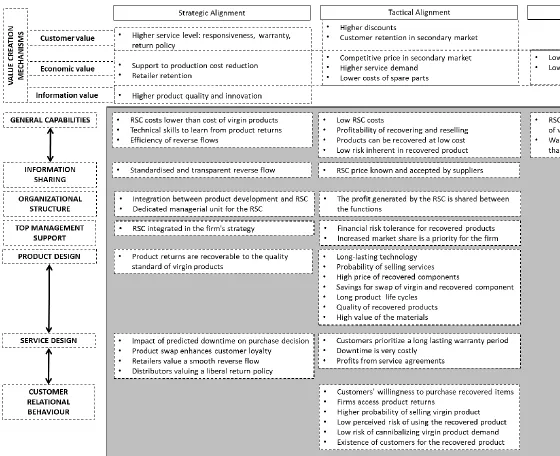
The authors labelled this role of the RSC as Strategic, indicating that the RSC is an essential component for the implementation of the competitive strategy of the firm and it assumes a strategic relevance that is comparable to that of the FSC. Figure 3 summarises the results of case firm 3 and shows how the empirical results detail and refine the theoretical framework proposed from the review of the literature. The figure shows how the study details the value creation mechanisms
It is important to highlight that this study characterised the role of the RSC as ‘mainly’ strategic, tactical or operational, namely mechanisms of operational and strategic alignment can co-exist in a situation mainly characterised by strategic alignment. This is the case of firm 2, where the mechanism 1 targets an operational objective (cost reduction) but it co-exists with other prevalent mechanisms targeting strategic objectives, that characterise the case, as in the case of strategic alignment.
11
4.2.2. The tactical role of the RSC
Case firms 1, 4, 6, and 7 use the RSC to target tactical rather than strategic objectives, such as entering secondary markets or low cost and less relevant segments of the market.
The RSC of Case firm 1 contributes with access to new markets, added sales of service, and reduced costs of spare parts. The Senior Manager for Global Logistics states that customers in emerging economies are not able to afford their products. Instead the firm addresses new markets through resale of recovered products. The Senior Manager states that ‘Western markets are saturated . . . We use the
RSC to recover product for sales in new markets, where customers cannot afford our new products’.
Furthermore, he states that product recovery ‘is an integrated part of our marketing strategy’. The Sales Manager for Recovered Products describes how the same logic applies to price sensitive customer segments in western markets. The Senior Manager further states that ‘We have only one
quality level on all products’, that the quality level for recovered products is reached through repair and
upgrades, and that the firm attaches the same warranty to recovered products as new customers. This effort reduces the perceived risk of purchasing a recovered product. The firm sells its recovered products at around 50-80% of the market’s virgin product full price. These low prices are, among others, enabled by sales of service contracts or ad hoc service for the products. The Sales Manager states that the firm charges the same price for a service contract for a recovered product as a virgin product.
Case firm 4 uses its RSC for two particular purposes: ‘We have two overall processes: Refurbishing
of instruments and for a few components’. The Supply Chain Director states ‘We take the products
back, refurbish them and then sell them in countries, call them emerging markets. For example, take back from Germany or the USA, and resale in e.g. Turkey and the former Eastern European country’.
For component reuse, he states that ‘It depends on the product’s price, whether we send them out
again’. The components are used ‘as spare parts in our service’. To ensure a return flow of products,
the firm gives ‘customers an offer on their used product’. An enabler of continuous recovery, resale, and reuse is a long life cycle of the firm’s products. The Supply Chain Director stated that ‘Our
product’s life cycles are extremely long’.
Case firm 6 uses its RSC to offer refurbishing as a service. A customer may say ‘we want our
product refurbished before it becomes out of order’. This refurbishing service is feasible because most
of the product’s costs is in the materials, e.g. titanium or black steel. Often only a gasket needs changing. The Manager for Purchasing and Spare Parts explains how ‘refurbishing can be cheaper
than simply replacing with a new product’. The service price ‘can be even less than half price’ for the
customer. This service lengthens a product’s life-span and enables retention of price-sensitive customers.
Case firm 7 uses its RSC to retain customers and reduce costs. The RSC takes back and refurbishes
customers’ existing products, which lengthens products’ life-span. Customers value this service. The Director of Spare Parts and Service states that ‘this flow is one of the great focus areas for the firm’. In addition to refurbishing customers’ products, the firm reduces the costs of spare parts used in servicing installed base, by refurbishing and reusing spare parts. The Director of Spare Parts and Service states that ‘we take back an item, refurbish, and send to a different customer’. Products contain high value materials, which makes reuse feasible. However, the feasibility decreases with large transport distances because of products’ weight and size.
12
is not comparable to the relevance of the FSC for the competitive strategy of the firm, but at the same time the RSC has its independent strategy and goals.
4.2.3. The operational role of the RSC
Case firm 5 uses its RSC to reduce costs. For defective products, which distributors return to the firm,
the firm’s policy is twofold depending on the value of the returned items. The Senior Manager for spare parts and service details that ‘for products with low [virgin product] manufacturing costs, the
distributor receives new products to replace the defective products’. More technology-heavy products
‘are renovated…’ so that they ‘exchange products returned from distributors with renovated products’.
He explains further that the firm’s return policy is a ‘prerequisite for being in this market’ rather than a competitive advantage. In addition to enabling the firm’s return policy, the RSC consolidates scrap and ships the scrap within a continent to the most low-priced certified waste handling firm. This reduces the scrapping costs, because the waste handling firm ‘charges nothing for handling the waste’.
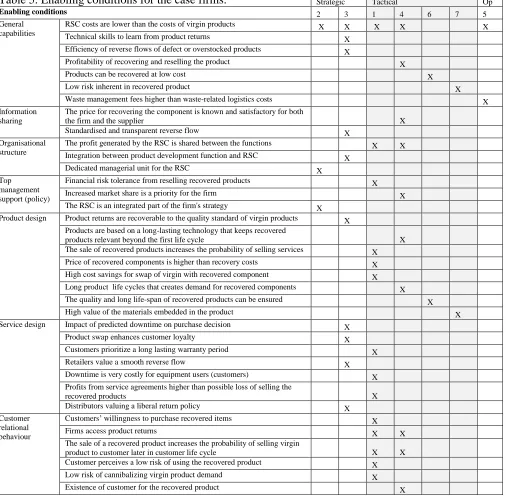
[image:13.612.51.569.356.626.2]The authors labelled this role of the RSC as Operational. In this case, the RSC targets operational objectives such as manufacturing cost reduction and residual value recovery. The relevance of the RSC is lower than the relevance of the FSC and the RSC does not have an independent strategy, but is a minor component of the FSC. Table 4 summarises the mechanisms and Table 5 the contextual factors detected for the case firms, while the modified theoretical framework is shown in Figure 4.
Table 4. Mechanisms for the case firms.
Strategic Tactical Op
Mechanisms 2 3 1 4 6 7 5
Customer value (Loyalty)
Customer retention in secondary segments of the
primary market X X
Customer value (Satisfaction)
Higher service level - responsiveness X
Higher service level - warranty X
Higher service level - return policy X
Higher discounts X
Economic value (Increased revenues)
Competitive price in secondary market X X
Competitive price in secondary segments of the
primary market X
Higher service demand X
Economic value (Cost reduction)
Support to production cost reduction X
Lower costs of spare parts used in servicing the
installed base X X X
Lower costs through remanufacturing X
Lower costs through waste recycling X
Economic value (Lower risk)
Retailer retention
X
Information value (Product
performance)
Higher product quality and innovation
X
5. Discussion
13
cost leadership or differentiation, and did not distinguish the levels of strategic, tactical and operational alignment.
The analysis of the RSC with the lens of strategic alignment highlights several patterns and regularities in the business configurations of the firms. A first consideration is regarding the resources needed for the implementation of the different types of alignment. Although all the firms of the sample adopt a differentiation strategy, the firms that use the RSC with a strategic role target a unique market segment, while the four case firms that target different market segments use the RSC with a tactical role. This result suggests that firms focusing on a unique market segment can exploit learning economies in the use of the RSC, and thus upgrade the role of the RSC from an operational to a strategic level.
In the case of operational alignment, the value creation mechanisms adopted are only economic. In the case of tactical alignment the firms also adopt customer value creation mechanisms, and finally in the case of strategic alignment value creation mechanisms related to information also appear. The result suggests an evolution in the types of value creation mechanisms adopted while shifting from operational to strategic alignment. The firms seem to rely on economic value creation mechanisms in the simple case of operational alignment and, when shifting to tactical and strategic alignment, they progressively rely on less tangible value creation mechanisms such as customer-related and information-related. Although less tangible, these more sophisticated value creation mechanisms have a higher potential of matching the competitive strategy of the firm.
The second theoretical contribution of the study is the analysis of the interplay between value creation mechanisms and enabling conditions. The value creation mechanisms identified in the empirical analysis match the mechanisms identified by Schenkel et al. (2015). Similarly, the identified enabling conditions match the types identified by Wong et al. (2012) and Leong et al. (1990), thus confirming the possibility of extending these models to the context of the RSC. The analysis of the interplay between value creation mechanisms and enabling conditions, however, is new. Previous studies investigating the enablers to alignment (see e.g. Wong et al. [2012]) did not relate enablers to alignment to specific value creation mechanisms. Likewise, previous studies on the value creation mechanisms for an RSC (see e.g. Schenkel et al. [2015]) did not analyse the relationship between value creation mechanisms and enabling conditions.
An analysis of the number of enabling conditions detected for strategic, tactical and operational alignment shows how limited the number of relevant enabling conditions is for operational alignment, if compared to the other two cases. This result suggests that strategic and tactical alignment, although desirable, are more difficult to implement, and the benefits of a value creation mechanism more aligned with the competitive strategy of the firm should be evaluated in light of the enabling conditions that its exploitation requires.
Enabling conditions related to the organizational structure play a key role for RSCs with both a strategic and a tactical role. More specifically, functional integration enables value creation mechanisms with a strategic relevance, while profit sharing between functions enables value creation mechanisms with a tactical relevance. The result confirms, for the RSC, the link between strategic alignment and integration (Wong et al. 2012) and suggests that lower levels of internal integration, such as integration only seen as profit sharing, imply a less strategic role for the RSC.
14
value creation mechanisms do not imply important changes in terms of product, since the RSC reinforces the FSC with highly interconnected roles. Enabling conditions related to service design to play a key role both in strategic alignment and tactical alignment. The result suggests that the RSC can better exploit its strategic potential in business models that integrate an important service component. A comparative analysis of the enabling conditions for strategic and tactical alignment also shows how the enabling conditions related to customer relational behaviour operate for tactical alignment but not for strategic alignment. This result suggests that a focus on the customer requirements of a specific segment of the market could heavily influence the role of the RSC and downgrade its contribution to the competitive strategy of the firm.
It is also necessary to comment on some elements that have not been detected by the empirical analysis. First, none of the case firms applies an explicit Cost Leadership strategy, but the results highlight several value creation mechanisms that could contribute to such a strategy, grouped under the economic value types in Table 4. Second, none of the case firms considers sustainability as a source of competitive advantage, but several mechanisms listed in Table 4 can created environmental value, as confirmed by the taxonomy proposed by Schenkel et al. (2015).
An analysis of the value creation mechanisms and the contextual factors that characterise an RSC is in line with the approach of the CE (Ellen MacArthur Foundation, 2015) that connects RSCs with the broader economic framework in which they operate. Indeed, Murray et al. (2017) define the CE as ‘an
economic model wherein planning, resourcing, procurement, production and reprocessing are designed and managed, as both process and output, to maximize ecosystem functioning and human
well-being’. The definition highlights how the focus of the CE is an entire economic model and how
15
Table 5. Enabling conditions for the case firms. Strategic Tactical Op
Enabling conditions 2 3 1 4 6 7 5
General capabilities
RSC costs are lower than the costs of virgin products X X X X X
Technical skills to learn from product returns X
Efficiency of reverse flows of defect or overstocked products X
Profitability of recovering and reselling the product X
Products can be recovered at low cost X
Low risk inherent in recovered product X
Waste management fees higher than waste-related logistics costs X
Information sharing
The price for recovering the component is known and satisfactory for both
the firm and the supplier X
Standardised and transparent reverse flow X
Organisational structure
The profit generated by the RSC is shared between the functions X X
Integration between product development function and RSC X
Dedicated managerial unit for the RSC X
Top management support (policy)
Financial risk tolerance from reselling recovered products X
Increased market share is a priority for the firm X
The RSC is an integrated part of the firm's strategy X
Product design Product returns are recoverable to the quality standard of virgin products X
Products are based on a long-lasting technology that keeps recovered
products relevant beyond the first life cycle X
The sale of recovered products increases the probability of selling services X
Price of recovered components is higher than recovery costs X
High cost savings for swap of virgin with recovered component X
Long product life cycles that creates demand for recovered components X
The quality and long life-span of recovered products can be ensured X
High value of the materials embedded in the product X
Service design Impact of predicted downtime on purchase decision X
Product swap enhances customer loyalty X
Customers prioritize a long lasting warranty period X
Retailers value a smooth reverse flow X
Downtime is very costly for equipment users (customers) X
Profits from service agreements higher than possible loss of selling the
recovered products X
Distributors valuing a liberal return policy X
Customer relational behaviour
Customers’ willingness to purchase recovered items X
Firms access product returns X X
The sale of a recovered product increases the probability of selling virgin
product to customer later in customer life cycle X X
Customer perceives a low risk of using the recovered product X
Low risk of cannibalizing virgin product demand X
16
17
6. Conclusions
This paper explores the alignment between the RSC and the competitive strategy of firms, and focuses on the interplay between value creation mechanisms and contextual factors enabling alignment. The results highlight how the RSC can have three distinct levels of alignment with the firm’s competitive strategy, labelled strategic, tactical and operational. The identified value creation mechanisms range from lower manufacturing costs to innovation through the analysis of product returns, while the enabling conditions range from internal capabilities to customer relational behaviours.
From a theoretical perspective, this study represents the first attempt to analyse the RSC with the lens of strategic alignment, and also the first analysis of the interplay between value creation mechanisms and enabling conditions. The findings of the study reinforce previous results (see e.g. Stock et al. [2002], Loomba and Nakashima [2012], Jayaraman and Luo [2007]) suggesting that the RSC can play a strategic role, and highlights the combination of value creation mechanisms and contextual conditions allowing a strategic role. The relevance of the interplay between mechanisms and contextual factors also confirms the validity of the approach of the CE (Ellen MacArthur Foundation, 2015) that connects CSLCs with the broader economic framework in which they operate.
From a practitioner perspective, the analysis of the interplay between value creation mechanisms and enabling conditions can guide the assessment of the current role of the RSC within a firm and provide guidelines for the implementation of RSC strategies aligned with the competitive strategy of the firm. A limitation of the study is that the sample only included firms using Differentiation as a competitive strategy. Therefore, further research can use a broader sample and include firms that compete with a Cost Leadership strategy. It is also important to highlight how the study focused on the interplay between value creation mechanisms and contextual conditions, without aiming at analysing all the potential value creation mechanisms. Building on this model, further research can explore the interaction between other value creation mechanisms proposed in the taxonomy of Schenkel et al. (2015) and the corresponding enabling conditions, thus progressively allowing the creation of a new theory on strategic alignment specifically targeting the RSC.
References
Anderson, J. C., G. Cleveland, and R. G. Schroeder. 1989. “Operations Strategy: A Literature Review.”
Journal of Operations Management 8 (2), 133-158.
Atasu, A., M. Sarvary, and L. Van Wassenhove. 2008. “Remanufacturing as a marketing strategy.”
Management Science 54(10): 1731-1746.
Baier, C., E. Hartmann, and R. Moser. 2008. “Strategic alignment and purchasing efficacy: an
exploratory analysis of their impact on financial performance.” Journal of Supply Chain Management, 44 (4), 36-52.
Barber, K. D., R. Beach, and J. Zolkiewski. 2012. “Environmental sustainability: a value cycle research agenda.” Production Planning & Control 23 (2-3), 105-119.
Barratt, M., T. Y. Choi, and M. Li. 2011. “Qualitative case studies in operations management: Trends, research outcomes, and future research implications.” Journal of Operations Management 29 (4), 329-342.
Beamon, B. M., and C. Fernandes. 2004. “Supply-chain network configuration for product recovery.”
Production Planning & Control 15 (3), 270-281.
18
da Mota Pedrosa, A., D. Näslund, and C. Jasmand. 2012. “Logistics case study based research: towards higher quality.” International Journal of Physical Distribution and Logistics Management 42 (3), 275-295.
Diener, D., and A. Tillman. 2015. “Component end-of-life management: Exploring opportunities and related benefits of remanufacturing and functional recycling.” Resources, Conservation and
Recycling102, 80-93.
Ellen MacArthur Foundation. 2015. “Towards a Circular Economy: Business Rationale for an Accelerated Transition.” Ellen MacArthur Foundation.
Eloranta, V., and T. Turunen. 2015. “Seeking competitive advantage with service infusion: a systematic literature review.” Journal of Service Management 26 (3), 394 – 425.
Ferguson, M. E., and L. Toktay. 2006. “The effect of competition on recovery strategies.” Production
and Operations Management15 (3), 351.
Fine, C. H., and A. C. Hax. 1985, “Manufacturing Strategy: A Methodology and an Illustration”,
Interfaces 15 (6), 28.
Fischer, A., and Pascucci, S. 2017. “Institutional incentives in circular economy transition: The case of material use in the Dutch textile industry”, Journal of Cleaner Production 155, 17-32.
Frohlich, M. T., and R. Westbrook. 2001. “Arcs of integration: An international study of supply chain strategies”. Journal of Operations Management 19, 185–200.
Gattorna, J. 1998. Strategic Supply Chain Alignment, Aldershot: Gower Gattorna, J. 2009. Dynamic Supply Chain Alignment, Aldershot: Gower
Geyer, R., and T. Jackson. 2004. “Supply loops and their constraints: the industrial ecology of recycling and reuse.” California Management Review 46 (2), 55-73.
Ghisellini, P., C. Cialani, and S. Ulgiati. 2016. “A review on circular economy: the expected transition to a balanced interplay of environmental and economic systems.” Journal of Cleaner Production 114, 11-32.
Ghoshal, S., and C.A. Bartlett, 1995. “Changing the Role of Top Management: Beyond Structure to Processes”. Harvard Business Review 1–2, 86–96.
Gnoni, M. G., Mossa, G., Mummolo, G., Tornese, F., and Verriello, R. 2017. “Supporting Circular Economy through Use-Based Business Models: The Washing Machines Case”, Procedia CIRP 64, 49-54.
Godsell, J., A. Birtwistle, and R. Van Hoek. 2010. “Building the supply chain to enable business alignment: lessons from British American Tobacco (BAT).” Supply Chain Management: An
International Journal 15 (1), 10–15.
Govindan, K., and H. Soleimani. 2017. “A review of reverse logistics and closed-loop supply chains: A Journal of Cleaner Production focus.” Journal of Cleaner Production 142, 371–384.
Govindan, K., H. Soleimani, and D. Kannan. 2015. “Reverse logistics and closed-loop supply chain: A comprehensive review to explore the future.” European Journal of Operational Research 240(3), 603-626.
Guide, V. D. R., and L. N. Van Wassenhove. 2001. “Managing product returns for remanufacturing.”
Production Operations Management 10(2), 143–155.
Guide, V. D. R., and L. N. Van Wassenhove. 2006. “Closed‐Loop Supply Chains: An Introduction to the Feature Issue (Part 1).” Production and Operations Management 15 (3), 345-350.
Guide, V. D. R., and L. N. Van Wassenhove. 2009. “OR FORUM - The evolution of closed-loop supply chain research.” Operations Research 57 (1), 10-18.
19
Harrison, A., J. Godsell, H. Skipworth, C. Wong, D. Julien, and N. Achimugu. 2007. “Developing Supply Chain Strategy: balancing shareholder and customer value.”
http://dspace.lib.cranfield.ac.uk/handle/1826/8008
Hill, T. 1985. Manufacturing Strategy: The strategic management of the manufacturing function, 1st ed, Basingstoke: Macmillan
Hill, T. 1989. Manufacturing Strategy - Text and Cases, 1st ed, Irwin: Homewood
Jayaraman, V., and Y. Luo. 2007. “Creating competitive advantages through new value creation: a reverse logistics perspective.” The Academy of Management Perspectives 21 (2), 56-73.
Karlsson, C. 2003. “The development of industrial networks: challenges to operations management in an extraprise.” International Journal of Operations & Production Management 23 (1), 44-61.
Larsen, S. B., and P. Jacobsen. 2016 “Revenue in reverse? An examination of reverse supply chain enabled revenue streams.” International Journal of Physical Distribution & Logistics Management 46 (8), 783-804.
Lee, H. L. 2002. “Aligning supply chain strategies with product uncertainties.” California Management
Review 44 (3), 105-119.
Leong, G. K., D. L. Snyder, and P.T. Ward. 1990. “Research in the process and content of manufacturing strategy”, Omega 18 (2), 109.
Loomba, A., and K. Nakashima. 2012. “Enhancing value in reverse supply chains by sorting before product recovery.” Production Planning & Control 23 (2-3), 205-215.
Masi, D., Kumar, V., Garza-Reyes, J.A., and Godsell, J. 2017. “Towards a more circular economy: Exploring the awareness, practices, and barriers from a focal firm perspective”. Production Planning &
Control (Accepted Manuscript)
Meredith, J., A. Raturi, K. Amoako-Gyampah, B. Kaplan. 1989. “Alternative research paradigms in operations,” Journal of Operations Management 8 (4), 297-326.
Miles, M., A. Huberman, A., and J. Saldaña. 2014. Qualitative data analysis: A methods sourcebook, Thousand Oaks: Sage Publications,
Mintzberg, H., B. Ahlstrand, and J. Lampel. 2009. Strategy safari: Your complete guide through the
wilds of strategic management. Upper Saddle River: Pearson Education Limited
Mollenkopf, D., and D. Closs. 2005. “The hidden value in reverse logistics.” Supply Chain
Management Review 9 (5), 34-43
Murray, A., K. Skene, and K. Haynes. 2017 “The circular economy: An interdisciplinary exploration of the concept and application in a global context,” J. Bus. Ethics, 140, 369–380, doi:10.1007/s10551-015–2693-2.
Pagell, M. 2004. “Understanding the factors that enable and inhibit the integration of operations and logistics,” Journal of Operations Management 22 (5), 459-487.
Pawson, R. 2002. “Evidence-based Policy: The Promise of `Realist Synthesis´”. Evaluation 8, 340– 358.
Pawson, R., T. Greenhalgh, G. Harvey, and K. Walshe. 2005. “Realist review--a new method of systematic review designed for complex policy interventions,” Journal of Health Services Research &
Policy 10 Suppl. 1 (July), 21–34.
Porter, M. 1985. Competitive Advantage: Creating and sustaining superior performance New York: Free Press.
Porter, M. 2008, Competitive strategy: Techniques for analyzing industries and competitors New York: Simon and Schuster.
20
Schenkel, M., M. Caniëls, H. Krikke, and E. Van Der Laan. 2015. “Understanding value creation in closed loop supply chains - Past findings and future directions.” Journal of Manufacturing Systems, 37 (April), 729–745
Skinner, W. 1969. “Manufacturing-missing link in corporate strategy.” Harvard Business Review 47 (3), 136-145.
Skipworth, H., J. Godsell, C. Wong, S. Saghiri, and D. Julien. 2015. “Supply chain alignment for improved business performance: an empirical study.” Supply Chain Management: An International
Journal, 20 (5), 511–533.
Stock, J., T. Speh, and H. Shear. 2002. “Many happy (product) returns.” Harvard Business Review, 80 (7), 16-17.
Tamas, M. 2000. “Mismatched strategies: the weak link in the supply chain?” Supply Chain
Management: An International Journal, 5 (4), 171-5.
Van Hoek, R., and A. Mitchell. 2006. “The challenge of internal misalignment.” International Journal
of Logistics: Research and Applications, 9 (3), 269-81.
Voss, C., N. Tsikriktsis, and M. Frohlich. 2002. “Case research in operations management.”
International Journal of Operations and Production Management 22 (2), 195-219.
Wong, C., H. Skipworth, J. Godsell, and N. Achimugu. 2012. “Towards a theory of supply chain alignment enablers: a systematic literature review.” Supply Chain Management: An International
Journal 17 (4), 419–437.