In Pursuit of Excellence in Science
Vol. 6, No. 2, December 2012 • ISSN : 1823-6782
ASM
Science Journal
6(2) 2012
RESEARCH ARTICLES
Anticonvulsant Activity of a-terpineol Isolated from Myristica Fragrans
in GAERS Model of Absence Epilepsy 95
M.R. Islam, S. Muthuraju, C.H. Tarmizi, M.M. Zulkifli, H. Osman, H. Mohamad and J.M. Abdullah
An Improved Estimator for the Population Mean Using Additional Information 103 M. Kumar, R. Singh and A.A. Adewara
Longitudinal Profiles of Bedrock Rivers around North Tabriz
and North Misho Faults: Implications for Geomorphic Fault Segmentation
(Eastern Azerbaijan Province, Iran) 107
A. Yousefi-Bavil
Fast Fabrication of Polyimide Membrane on Silicon Wafer 122
G. Sugandi and B.Y. Majlis
Advances on Bank Erosion Studies: A Review 128
M.A. Abdul-Kadir and J. Ariffin
Computational Studies on the Process of Peptide Bond Formation 138
H. Monajemia, M.N. Daud, S.M. Zain and W.A.T. Wan Abdullah
Challenges and Importance of Traceability of Halal Raw Materials in
Processed Meat Products: A Review 144
A.S. Babji, M. Ghassem, P.K. Hong and S.M.S. Maizatul
Contents
ASM Sc. J.
Volume 6(2), 2012
intro.indd 1
•
Price (2 Issues)
Malaysia: RM100 (Individual) RM200 (Institution)
INTERNATIONAL ADVISORY BOARD
Ahmed Zewail (Nobel Laureate)
Richard R. Ernst (Nobel Laureate)
John Sheppard Mackenzie
M.S. Swaminathan
EDITORIAL BOARD
Editor-in-Chief/Chairman: Md. Ikram Mohd Said
Abdul Latiff Mohamad
Chia Swee Ping
Ibrahim Komoo
Lam Sai Kit
Lee Chnoong Kheng
Looi Lai Meng
Mashkuri Yaacob
Mazlan Othman
Mohd Ali Hashim
Francis Ng
Radin Umar Radin Sohadi
Editor/Technical Editor: Kanesan Solomalai
Cover:
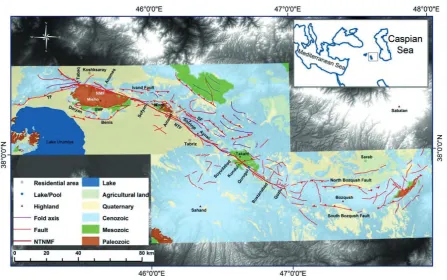
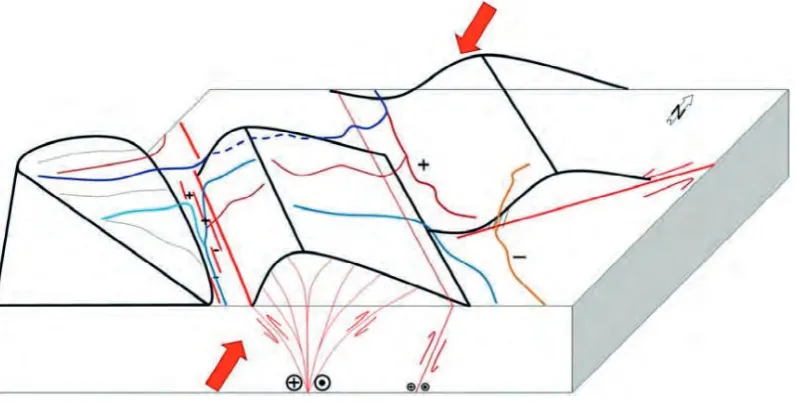
Both the figures/illustrations are depicted in the article (pp. 124–136) entitled Longitudinal Profiles of Bedrock Rivers around North Tabriz and North Misho Faults: Implications for Geomorphic Fault Segmentation (Eastern Azerbaijan Province, Iran). The North Tabriz and North Misho faults (NTNMF) are major faults with transcurrent tectonics. The interactions of the different segments of the NTNMF with each other and with other major faults in the adjacent region have caused different patterns of deformation in this tectonic regime. The difference in the deformation patterns affects the morphology of streams. The correlation between the parameters of longitudinal profiles and lithostructural information were examined in this research article to investigate the effects of the NTNMF on the longitudinal profiles of streams.
The figure (pp. 109) on the upper section of the cover design is the shaded relief Digital Elevation Model (DEM) with lithologic units and geologic structures (fault and fold axes) compiled for this study. Figure in the lower section of the cover (Figure 7, pp. 116) shows the schematic model for the correlation between stream concavity index and structural regime along NTNMF.
In Pursuit of E xcellence in Scienc
e
Vol. 6, No. 2, December 2012 • ISSN :
1823-6782
© Academy of Sciences Malaysia
All rights reserved. No part of this publication may be reproduced in any form or by any means without permission in writing from the Academy of Sciences Malaysia. The Editorial Board, in accepting contributions for publications, accepts no responsibility
for the views expressed by authors.
ASM Science Journal is listed and indexed in Scopus.
The Academy of Sciences
Malaysia (ASM)
The Academy of Sciences Malaysia (ASM) was established, under the Academy of Sciences Act 1994 which came into force on 1 February 1995, with the ultimate aim to pursue excellence in science. Thus the mission enshrined is to pursue, encourage and enhance excellence in the field of science, engineering and technology for the development of the nation and the benefit of mankind.
The functions of the Academy are as follows:
•
To promote and foster the development of science, engineering and technology•
To provide a forum for the interchange of ideas among scientists, engineers and technologists•
To promote national awareness, understanding and appreciation of the role of science, engineering and technology in human progress•
To promote creativity among scientists, engineers and technologists•
To promote national self-reliance in the field of science, engineering and technology•
To act as a forum for maintaining awareness on the part of the Government of the significance of the role of science, engineering and technology in the development process of the nation and for bringing national development needs to the attention of the scientists, engineers and technologists•
To analyse particular national problems and identify where science, engineering and technology can contribute to their solution and accordingly to make recommendations to the Government•
To keep in touch with developments in science, engineering and technology and identify those developments which are relevant to national needs to bring such developments to the attention of the Government•
To prepare reports, papers or other documents relating to the national science, engineering and technology policy and make the necessary recommendations to the Government•
To initiate and sponsor multi-disciplinary studies related to and necessary for the better understanding of the social and economic implications of science, engineering and technology•
To encourage research and development and education and training of the appropriate scientific, engineering and technical man power•
To establish and maintain relations between the Academy and overseas bodies having the same or almost similar objectives in science, engineering and technology as the Academy•
To advise on matters related to science, engineering and technology as may be requested by the Government from time to time; and•
To carry out such other actions that are consistent with the 1994 Academy of Sciences Act as may be required in order to facilitate the advancement of science, engineering and technology in Malaysia, and the well being and status of the Academy.The Academy is governed by a Council. Various Working Committees and Task Forces are charged with developing strategies, plans and programmes in line with the Academy’s objectives and functions.
The functions of the Council are:
•
To formulate policy relating to the functions of the Academy•
To administer the affairs of the Academy•
To appoint such officers or servants of the Academy as are necessary for the due administration of the Academy•
To supervise and control its officers and servants•
To administer the Fund; and•
To convene general meetings of the Academy to decide on matters which under this Act are required to be decided by the Academy.The Academy has Fellows and Honorary Fellows. The Fellows comprise Foundation Fellows and Elected Fellows. The Academy Fellows are selected from the ranks of eminent Malaysian scientists, engineers and technocrats in the fields of medical sciences, engineering sciences, biological sciences, mathematical and physical sciences, chemical sciences, information technology and science and technology development and industry.
The Future
Creativity and innovation are recognised the world over as the key measure of the competitiveness of a nation. Within the context of K-Economy and the framework of National Innovation System (NIS), ASM will continue to spearhead efforts that will take innovation and creativity to new heights in the fields of sciences, engineering and technology and work towards making Malaysia an intellectual force to be reckoned with.
intro.indd 1
RESEARCH ARTICLES
Anticonvulsant Activity of a-terpineol Isolated from Myristica Fragrans
in GAERS Model of Absence Epilepsy 95
M.R. Islam, S. Muthuraju, C.H. Tarmizi, M.M. Zulkifli, H. Osman, H. Mohamad and J.M. Abdullah
An Improved Estimator for the Population Mean Using Additional Information 103 M. Kumar, R. Singh and A.A. Adewara
Longitudinal Profiles of Bedrock Rivers around North Tabriz
and North Misho Faults: Implications for Geomorphic Fault Segmentation
(Eastern Azerbaijan Province, Iran) 107
A. Yousefi-Bavil
Fast Fabrication of Polyimide Membrane on Silicon Wafer 122 G. Sugandi and B.Y. Majlis
Advances on Bank Erosion Studies: A Review 128
M.A. Abdul-Kadir and J. Ariffin
Computational Studies on the Process of Peptide Bond Formation 138 H. Monajemia, M.N. Daud, S.M. Zain and W.A.T. Wan Abdullah
Challenges and Importance of Traceability of Halal Raw Materials in
Processed Meat Products: A Review 144
A.S. Babji, M. Ghassem, P.K. Hong and S.M.S. Maizatul
Contents
COMMENTARY
Impact of Climate Change on Water Resources:
Global and Malaysian Scenarios 149
A.S. Mohd Armi, A.S. Afiza and A. Mohd Ramzi
NEWS AND VIEWS
Electrons Making Waves in the Sky: The Ionosphere and Us 152
ANNOUNCEMENTS
Proceedings: Impact of Climate Change on Water Resources
and Their Consequences to Major Economic Sectors 153
Mahathir Science Award Foundation 154
Top Research Scientists Malaysia (TRSM) 155
α-Terpineol (R-2-4-Methyl-3-cyclohexenyl isopropanol) is a constituent of Myristica fragrans Houtt. (Family:
Myristicaceae) (Atta-ur-Rahman et al. 2000). The whole
plant, nutmeg, in addition to its common use as a kitchen spice, alternatively it has been used as a stimulant, an antidiarrhoeal, carminative, stomachic, tonic, and as an aphrodisiac (Evans 1996; Nadkarni 1998). Nutmeg showed a wide array of pharmacological actions including being an analgesic (Sonavane et al. 2001), antifungal
(Nadkarni 1998), antimicrobial (Takikawa et al. 2002),
anti-inflammatory (Olajide et al. 1999) as well as having
hepatoprotective (Morita et al. 2003) activities.
Numerous central nervous system activities have been reported for different methods of nutmeg extract. The chloroform extract of nutmeg possesses an analgesic effect against acetic acid-induced mice (Olajide et al. 1999),
the trimyristin and the acetone insoluble fraction of the hexane extract of nutmeg seed demonstrated anxiogenic and antidepressant activity in mice (Sonavane et al. 2002;
Dhingra & Sharma 2006). Recently, nutmeg oil showed the anticonvulsant activity against pentylenetetrazole
(PTZ)-induced seizure and hind limb tonic extension phase in the maximal electric shock (MES) seizure test (Wahab et al.
2009).
Medicinal plants have played and continue to play a valuable role in the drug discovery process (Abedin 1990; Heinrich 2000). Plant extracts can be an important source for the development of better and safer drugs for the treatment of epilepsy. Several plants that were reputed to possess antiepileptic properties in different folklore cultures have been found to exhibit anticonvulsant activities in different animal models (Raza et al. 2000). Epilepsy is
the commonest neurological condition affecting people of all ages, race and social class. There are an estimated 50 million people with epilepsy in the world, of whom up to 75% live in resource-poor countries with little or no access to medical services or treatment (Meinardi et al. 2001;
Bailer & White 2010). In general, the incidence of epilepsy in developed countries is taken to be around 40−70 per 100 000/year while the incidence of epilepsy in resource-poor countries is generally higher in the range of 100−190 per 100 000/year (Sander 2003; Sander & Shorvon 1996).
Anticonvulsant Activity of
α
-terpineol
Isolated from Myristica Fragrans in
GAERS Model of Absence Epilepsy
M.R. Islam1, S. Muthuraju1, C.H. Tarmizi1, M.M. Zulkifli1, H. Osman2, H. Mohamad3 and J.M. Abdullah1*
Epilepsy is a neurological disorder characterized by recurrent seizures resulting from excessive abnormal electrical discharges in the brain. Medicinal plants may play an invaluable role to discover the new antiepileptic drugs. The aim of the present study was to investigate the anticonvulsant activity of α-terpineol isolated from Myristica fragrans Hountt. The α-terpineol showed a significant inhibition of the seizure episodes and
spikes in absence seizures model of Genetic Absence Epilepsy Rats from Strasbourg (GAERS) rats by using electroencephalography records. It showed dose-dependent anticonvulsant activity that was comparable to the known antiepileptic drug of diazepam. It showed a rapid onset and relatively short duration of anticonvulsant effects. The present findings suggest that α-terpineol might possess antiepileptic activities against the partial seizures of human because it prevented seizures in well-established genetic absence seizure animal model of GAERS rats.
Key words: Epilepsy; electroencephalography; brain; plant extract; implantation; DSI telemetry
ASM Sci. J., 6(2), 95–102
1Department of Neurosciences, School of Medical Sciences, Universiti Sains Malaysia, 16150 Kubang Kerian, Kelantan, Malaysia.
2School of Chemical Sciences, Universiti Sains Malaysia, 11800 Minden, Pulau Pinang, Malaysia.
3Faculty of Sciences and Technology, Universiti Malaysia Terengganu, 21030 Kuala Terengganu, Malaysia.
ASM Science Journal, Volume 6(2), 2012
The entire available antiepileptic drugs are synthetic molecules associated with side effects and approximately 30% of the patients continue to have seizures with this therapy (Poole et al. 2000; Bailer & White 2010). Several
natural products including quinone derivatives, which are considered to screen better safety and efficacy profile, are known for their anticonvulsant effects (Hosseinzadeh and Parvardeh 2004). Recently we found that α-terpineol is the most abundant compound of nutmeg oil isolated from Myristica fragrans exhibited the inhibitory effect
on gamma amino butyric acid (GABA)A receptor in vitro (patent pending, Department of Neuroscience, University Sains Malaysia; Abdullah 2011). However, α-terpineol has not been tested so far for in vivo anticonvulsant properties,
though the plant extract is traditionally used against ‘such disorders’ (Wahab et al. 2009).
Greater insight into the pathophysiology underlying epilepsy can be achieved by the use and study of experimental animal models (Dedeurwaerderes 2005). Genetic Absence Epilepsy Rats from Strasbourg (GAERS) are strain of Wistar rats, originally bred in Strasbourg (Marescaux
et al. 1992), and are generally accepted as an experimental
animal model of human absence seizure, because GAERS share many clinical characteristics with typical human absence epilepsy (Danober et al. 1998). All GAERS show
idiopathic (genetic) generalized seizures characterized by paroxysmal unresponsiveness to environmental stimuli and cessation of ongoing activity. During the epileptic episodes, the electroencephalography (EEG) of GAERS displays the bilateral and synchronous spike and wave discharges (SWDs), predominantly over the fronto-parietal cortex (Van Hese et al. 2003). The number, duration, and
frequency of SWDs increase reaching a maximum at the age of four to six months by which time 100% of GAERS have developed SWDs (Pinault et al. 2001). GAERS
represent a useful animal model for the evaluation and development of new antiepileptic drugs, as it is known that drugs that are effective against human absence seizures also suppress SWDs in GAERS dose-dependently (Large et al.
2012). Therefore, the present study aimed to investigate the anticonvulsant activity of α-terpineol in GAERS rat model.
MATERIALS AND METHODS
Isolation of a-terpineol
The nutmegs were collected from Balik Bulau, Penang Island in Malaysia in July, 2009 (Figure 1). The dried kernels of the ripe seed of Myristica fragrans (nutmeg)
about 8 kg were used in this study. The kernels of nutmeg were chopped into small pieces and placed carefully into the water distiller up to the appropriate level. The distilled water was poured into the water distiller up to half full. At the end of the opening part, a small vial filled with hexane solvent was connected into the distiller. The boiling process
took approximately 6 to 8 hours. Once the water distiller was cooled, the mixture of hexane solvent containing essential oils in a small vial was concentrated using rotary evaporator to remove the waste of hexane. Then the pure essential oil of nutmeg was stored in a refrigerator at 8ºC. Structural elucidation of the compound was carried out by using gas chromatography-mass spectrometer (GC-MS; Agilent, Atlanta, GA, USA) with HP-5MS column (diameter 0.25 mm, length 30 m, film thickness 0.25 μm) and helium gas as the carrier. The inlet temperature of gas chromatography was set to 280ºC with splitless mode. 1 μl of sample was injected into the GC-MS system. Gas flow was set to 1.2 ml/min. The initial oven temperature was 70ºC, it was increased to 280ºC and trap low temperature at –30ºC, and the final temperature was maintained for 18 min. The automatic peak detection and mass spectrum was performed for a total runtime of 26 min (Goren et al. 2003).
During this period, a total of 16 components were detected from nutmeg oil and identified as α-pinene, β-terpinene,
α-phellandrene, 3-carene, α-terpinene, p-cymeme,
limonene, γ-terpinene, tyerpinolene, 2-norbornanol, borneol, 4-terpineol, α-terpineol, myristicin and elemicin (Table 1). The chromatogram of identified compounds is shown in Figure 2. The most abundant compound was α-terpineol (28.05%). The structure of α-terpineol is depicted in Figure 3.
Animals
A total 35 (thirty five) male GAERS rats, four to six months of age and weighing 187 g – 325 g were used in this study. The parent GAERS rats were gift a from Kyoto University, Japan. The animals were born and raised under environmentally controlled conditions (12 h light/ dark cycles, 20ºC–22ºC in the animal facility house of the USM Health Campus, with food and water ad libitum. All
animals were treated according to the guidelines approved by the Animal Ethics Committee of USM.
Chemicals
Diazepam (Hospira, Malaysia), α-terpineol (Department of Chemistry, USM) and 0.9% saline were used in this experiment.
Surgery: Implantation of DSI telemetry
Prior to surgery (5 min – 15 min), the animals were anesthetized with ketamin and xylazine (80 mg/kg and 7.5 mg/kg, respectively, i.p.) and additional ketamine (5 mg/ kg, i.p.) were given during surgery when a sensorial pain stimulus by squeezing the footpad, elicited motor reflexes (Dedeurwaerdere et al. 2005). After proper anesthesia,
M.R. Islam et al.: Anticonvulsant Activity of α-terpineol Isolated from Myristica Fragrans in GAERS Model
24.00 22.00 20.00 18.00 16.00 14.00 12.00 10.00 8.00 6.00 4.00 2.00
Time 22000.00
Abundance
20000.00 18000.00 16000.00 14000.00 12000.00 10000.00 8000.00 6000.00 4000.00 2000.00
Figure 1. Collecting zone of nutmeg in Penang Island, Malaysia, latitude: +5.35 (5°19’36”N) and longitude: +100.233 (100°12’03”E).
24.00 22.00 20.00 18.00 16.00 14.00 12.00 10.00 8.00 6.00 4.00 2.00
Time 22000.00
Abundance
20000.00 18000.00 16000.00 14000.00 12000.00 10000.00 8000.00 6000.00 4000.00 2000.00
Figure 2. Chromatogram of the essential oil of nutmeg showing peaks of chemical substances.
ASM Science Journal, Volume 6(2), 2012
a stereotaxic apparatus (Stoelting Model 51600; Illinois, U.S.A.). The surgical site and surrounding area were swabbed with 70% ethyl alcohol and scrubbed with a 4% chlorohexidine solution. A 3 cm – 4 cm mid-sagittal incision was made on the scalp and the skin reflected with hemostats to expose the entire dorsal portion of the skull. The periosteum was removed and homeostasis achieved with sterile cotton-tip applicators. Bregma was marked and two holes were bored through the skull with drilling (# 105 drill bit). Stainless steel electrodes (DSI Model F40-EET; St. Paul, MN, U.S.A.) insulated, except at the tip were implanted bilaterally into the brain over the frontal and parietal cortex. The other two electrodes were placed in the neck muscle of EMG recording to compare with the EEG spikes. A EEG electrodes were fixed to the skull of the rat with dental acrylic. The radio telemetry unit was placed subcutaneously into the pocket over and caudal to the scapula. Using blunt-ended scissors, a subcutaneous pocket was made caudally from the incision by pushing aside connective tissue and
then the skin was sutured. The method of telemetry implantation was followed from White et al. (2006; 2010).
The surgical procedures of our experiment were considered as minimum to mild pain scale according to the pain assessment, and it was managed by local anesthesia (Kohn
et al. 2007).
Spikes and Seizures Monitoring and Quantification
The EEG activity was acquired by DSI Dataquest telemetry software and analyzed off-line using DSI Neuro-Score software (St. Paul, MN, USA), configured for automatic detection and saving of spikes and seizures. The following was the setting for seizure detection: amplitude threshold, 3; seizures duration, > 2 s; detection threshold, 0; minimum frequency, 3 Hz; short burst detection, turned off; length of EEG kept before and after each seizure, 1 min. After implantation, baseline EEG was recorded for 1 week. Analysis of EEG was performed by a ‘blinded’ unbiased investigator. All seizure EEGs were revised manually.
Table 1. The constituents of nutmeg oil isolated from Myristica fragrans detected by GC-MS method.
Peak RT (min) Area % Library/ID Chemical formula
1 4.12 4.62 a-Pinene C10H16
2 4.75 1.39 b-Pinene C10H16
3 4.95 1.31 b-Terpinene C10H16
4 5.15 1.53 a-Phellandrene C10H16
5 5.24 2.50 3-Carene C10H16
6 5.33 5.66 a-Terpinene C10H16
7 5.46 1.19 p-Cymene C10H14
8 5.51 7.41 Limonene C10H16
9 5.96 7.06 a-Terpinene C10H16
10 6.41 8.23 Terpinolene C10H16
11 6.79 1.23 2-Norbornanol C7H12O
12 7.57 1.03 Borneol C10H18O
13 7.74 18.48 4-Terpineol C10H18O
14 7.93 28.05 a-Terpineol C10H18O
15 12.33 9.14 Myristicin C11H12O3
16 12.71 1.17 Elemicin C12H16O3
Table 2. Effect of α-terpineol on seizures of GAERS rat model.
Treatment No. of seizures (24 hrs) No. of spikes (24 hrs) % Protection of seizures % Protection of spikes
group Mean ± S.E.M. Mean ± S.E.M. Vs control Vs control
(mg/kg, i.p.) First 6 h of injection injection 18 h of First 6 h of injection injection18 h of
0.9% Saline (300 ul/kg) 1218.5±22.4 23749±498 0 0 0 0
a-terpineol (10 mg/kg) 1163.8±20.3 23508±475 7.15 5.40 0.81 0.62
a-terpineol (20 mg/kg) 1029.0±16.8* 20281±371* 53.41 20.12 54.42 18.95
a-terpineol (50 mg/kg) 917.2 ± 15.9* 17838±343* 93.73 32.52 94.76 33.0
Diazepam (10 mg/kg) 863.8±26.8* 16767±301* 94.68 38.25 97.39 39.69
M.R. Islam et al.: Anticonvulsant Activity of α-terpineol Isolated from Myristica Fragrans in GAERS Model
The amplitude threshold for spike detection was set at 4. The spike bursts lasting less than 3 s were not counted as seizures.
Statistical Analysis
The values were expressed as mean ± S.E.M. The statistical analysis was carried out by one way analysis of variance (ANOVA) followed by multiple comparison test of Dunnett’s t-test. P values<0.05 were considered as significant.
RESULTS
Behavioural Effects
The injections of α-terpineol isolated from Myristica fragrans, diazepam and 0.9% saline were given at day
6 after determining the baseline EEG. No mortality was observed in the treated animals. A dose of 10 mg/kg (i.p.) α-terpineol induced no behavioural effects. A dose of 20 mg/kg showed the rearing and sleep after 6 m – 7 min of injection and lasted for 2 h. A dose of 50 mg/kg resulted in rearing, sleep, no stimuli reflex within 3 min – 4 min of injection, and lasted up to 5 h in GAERS rats compared
to control animals. Diazepam (dose of 10 mg/kg, i.p.) treatment showed similar behavioural effects but was lasting longer up to 6 hrs; whereas 0.9% of saline treated animals induced no behavioural symptoms.
Antiepileptic Effects
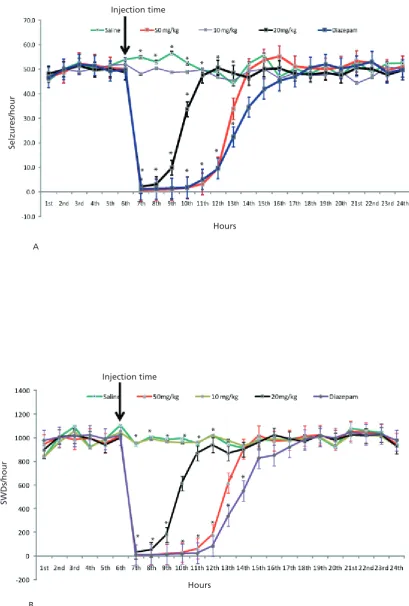
An intraperitoneal dose of 10 mg/kg α-terpineol was less effective to control seizures and spike and wave discharges (SWDs) in GAERS rats (Table 2 and Figure 5), but 20 mg/ kg and 50 mg/kg (i.p.) decreased the number of seizure episodes and number of SWDs (Table 2; Figures 4 and 5), and almost completely stopped seizures for 2 h and 5 h, respectively. Then the number of seizure episodes and SWDs gradually increase to non-treated control animals (Figure 5). Although 10 mg/kg was ineffective, however 50 mg/kg reduced seizure episodes and SWDs to 93.73% and 94.76%, respectively in first 6 h, and 32.52 and 33.0%, respectively after 18 h of injection in comparison to the control animals. The known antiepileptic drug diazepam (10 mg/kg, i.p.) showed the similar results and the seizures episodes and SWDs were reduced to 94.68% and 97.39%, respectively in first 6 h, and 38.25 and 39.69%, respectively at 18 h of injection in GAERS compared to the control group of animals. The saline treated animals showed no changes before and after treatments (Figure 5).
Figure 4. Electroencephalographic activity recorded before and after α-terpineol treatment (50 mg/kg, i.p.) from the same GAERS rat. Panel A was recorded prior to treatment; shows spikes and wave discharges (SWDs) surrounded by normal
ASM Science Journal, Volume 6(2), 2012
Hours
Hours A
B
Selzures/hour
SWDs/hour
Injection time
Injection time
Hours
Hours A
B
Selzures/hour
SWDs/hour
Injection time
Injection time
Figure 5. Time course of seizure frequency and effects of treatment on seizures and SWDs. A: Significantly lower seizure episodes were observed after treatment with 20 and 50 mg/kg, i.p. of α-terpineol compared to the control group. B: Effects of treatment on SWDs distribution; SWDs were also significantly reduced after treatment compared to the control
M.R. Islam et al.: Anticonvulsant Activity of α-terpineol Isolated from Myristica Fragrans in GAERS Model
DISCUSSION
The observations with of the present study indicated that α-terpineol possesses the dose-dependent anticonvulsant activity against the GAERS rats. GAERS are generally accepted as an experimental animal model of human absence epilepsy due to GAERS share many clinical characteristics with typical human absence epilepsy (Danober et al. 1998). GAERS is a useful animal model
for the evaluation and development of new antiepileptic drugs, since it is known that drugs effective against human absence seizures also suppress SWDs in GAERS dose dependently. The quantification of the occurrence of SWDs in GAERS is an important tool to assess the efficacy of new antiepileptic therapy for human absence epilepsy (Shaw 2007). Recently, one of our co-investigator found that the α-terpineol extracted from Myristica fragrans exhibited the
inhibitory effect on GABAA receptors in vitro on Xenopus oocyte. The conventional standard antiepileptic drugs (benzodiazepines, phenobartital, valproate, vigabatrin, gabapentin) generally enhance GABAA receptor inhibition (Loscher & Schemidt 1994; Czapiński et al. 2005). The
novel antiepileptic drugs (tiagabine, vigabatrin, gabapentin) also act selectively through the GABA-ergic system by the inhibition of GABA-aminotransferase or reducing the neuronal and glial uptake of GABA (Czapiński et al. 2005).
Nutmeg oil of Myristica fragrans exhibited
anticonvulsant activity against PTZ-induced seizures, MES test, lithium-pilocarpine-induced status epilepticus in mouse and rat models, and also showed an acceptable safely profile by acute toxicity and acute neurotoxicity tests (Sonavane et al. 2002; Wahab et al. 2009). Previous
studies on the constituents of nutmeg oils revealed several compounds such as linolool and pinene analogues have anticonvulsant activities in seizure susceptible mouse (Consroe et al. 1981; Elesabetsky & Brum 2003). Moreira et al. (2001) reported α-terpineol, another major constituent
of nutmeg oil, induced the dose-dependent and reversible blockade of the compound action potential propagation of the rat sciatic nerve that supports our present finding. In conclusion, the present study confirmed that α-terpineol was an important constituent of nutmeg oil and provided scientific evidence for traditional use for the treatment of epilepsy. Thus, it might be effective for the treatment of partial seizures in humans and α-terpineol was a possible candidate of new antiepileptic drugs for human absence seizures.
ACKNOWLEDGEMENTS
This work was supported by an institutional grant from U.S.M. Research University Individual grant (No. 1001/ PSKBP/812019), Universiti Sains Malaysia, Malaysia. Dr Rafiqul Islam (a TWAS-USM Post-doctorate Fellow from the Department of Anatomy and Histology, Bangladesh
Agricultural University, Mymensingh-2202, Bangladesh) is acknowledged for his work related mainly in conducting the experiment and analysis. We also wish to show our appreciation to the distributor of the GAERS rats used in this experiments, i.e. the Institute of Laboratory Animal, Graduate School of Medicine, Kyoto University, Yoshidakonoe-cho, Sakyo-ku, Japan.
Date of submission: December 2011 Date of acceptance: July 2012
REFERENCES
Abdullah, JM 2011, ‘Interesting Asian plants: their compounds and effects on electrophysiology and behaviour’, Malaysian J. Med. Sci., vol. 18, pp. 1–4.
Abedin, PH 1990, ‘Medicine from Plants’, Science, vol. 247, p. 513.
Atta-ur-Rahman, Choudhary, MI & Farooq, A 2000, ‘Antifungal activities and essential oil constituents of some spcies from Pakistan’, J. Chem. Soc. Pak., vol. 22, pp. 60–65.
Bailer, M & White, HS 2010, ‘Key factors in the discovery and development of new antiepileptic drugs’, Nature Review, vol. 9, pp. 68–82.
Consroe, P, Martin, A & Singh, V 1981, ‘Antiepileptic potential of cannabidiol analogs’, J. Clin. Pharmacol., vol. 21, pp. S428–S436.
Czapiński, P, Blaszczyk, B & Czuczwar, SJ 2005, ‘Mechanisms of action of antiepileptic drugs’, Curr. Top. Med. Chem., vol. 5, pp.3–14.
Danober, L, Deransart, A, Depaulis, A, Vergnes, M & Marescaux, C 1998, ‘Pathophysiological mechanisms of genetic absence epilepsy in the rat’, Progr. Neurobiol., vol. 55, pp. 27–57.
Dedeurwaerdere, S, Boon, P, De Smedt, T, Claeys, P, Raedt, R, Bosman, T, Van Hese, P, Van Maele, G & Vonck, K 2005, ‘Chronic levetiracetam treatment early in the life decreases epileptiform events in young GAERS, but does not prevent the expression of spike andwave discharges during adulthood’, Seizure, vol. 14, pp. 403–411.
Dhingra, D & Sharma, A 2006, ‘Antidepressant-like activity of n-hexane extract of nutmeg (Myristica fragrans) seed in mice’, J. Med. Foods, vol. 9, pp. 84–89.
Elesabetsky, E & Brum, LFS 2003, ‘Linalool as active component of traditional remedies: Anticonvulsant properties and mechanisms of action’, Curare, vol. 26, pp. 237–244.
Evans, WC 1996, Treese and Evans pharmacology, 14th edn, Harcourt Brace & Co. Asia, Singapore.
Goren, AC et al. 2003, ‘Analysis of essential oil of Coridothymus capitatus (L.) and its antibacterial and antifungal activity’, Z. Naturforsch, vol. 58, pp. 687–690.
ASM Science Journal, Volume 6(2), 2012
Hosseinzadeh, H & Parvardeh, S 2004, ‘Anticonvulsant effects of thymoquinone, the major constituent of Nigella sativa seeds in mice’, Phytomedicine, vol.11, pp. 56–64.
Kohn, DF, Martin, TE, Foley, PL, Morris, TH, Swindle, MM, Vogler, GA & Wixson, SK 2007, ‘Public statement: guidelines for the assessment and management of pain in rodents and rabbits’, J. Am. Assoc. Lab. Anim. Sci., vol. 46, pp. 97–108.
Large, CH, Sokal, DM, Nehlig, A, Gunthorpe, MJ, Sankar, R, Crean, CS, VanLandingham, KE & White, HS 2012, ‘The spectrum of anticonvulsant efficacy of retigabine (ezogabine) in animal models: Implications for clinical use’, Epilepsia, vol. 53, pp. 425–436.
Loscher, W & Schemidt, D 1994, ‘Strategies in antiepileptic drug development: Is rational drug design superior random screening and structural variation?’, Epilepsy Res., vol. 17, pp. 95–134.
Marescaux, C, Vergnes, M & Depaulis, A 1992, ‘Genetic absence epilepsy in rats from Strasbourg-A review’ J. Neural Transmission., vol. 35, pp. 37–69.
Meinardi, H, Scott, RA, Reis, R & Sander, JW 2001, ‘The treatment gap in epilepsy: the current situation and ways forward’, Epilepsia, vol. 42, pp.136–149.
Moreira, MR, Cruz, GM, Lopes, MS, Albuquerque, AA & Leal-Cardoso, JH 2001, ‘Effect of terpineol on the compound action potential of the rat sciatic nerve’, Braz. J. Med. Biol. Res., vol. 34, pp.1337–1440.
Morita, T, Jinno, K, Kawagishi, H, Arimoto, Y, Suganuma, H, Inakuma, T & Sugiyama, K 2003, ‘Hepatoprotective effect of myristicin from nutmeg (Myristica Fragrans) on lipopolysacharide/D-galactosamine-induced liver injury’, J. Agric. Food Chem., vol. 51, pp.1560–1565.
Nadkarni, K 1998, Indian material medica 3rd edn, Bombay Polpular Prakashan, Mumabai.
Olajide, OA, Ajiya, FF, Ekhelar, AI, Awe, SO, Makinde, JM & Alada, ARA 1999, ‘Biological effects of Myristica fragrans (nutmeg) extract’, Phytother. Res., vol. 13, pp. 344–345.
Pinault, D, Vergnes, M & Marescaux, C 2001, ‘Medium-voltage 5-9-Hz oscillations give rise to spike-and-wave discharges in a genetic model of absence epilepsy: in vivo dual extracellular recording of thalamic relay and reticular neurons’, Neuroscience, vol. 105, pp. 181–201.
Poole, K, Moran, N, Bell, G, Solomon, J, Kendall, S, McCarthy & McCormick, D 2000, ‘Patient’s perspectives on services for epilepsy: a survey of patient satisfaction, preferencesand information provision in 2394 people with epilepsy’, Seizure, vol. 9, pp. 551–558.
Raza, M, Choudhary, MI & Atta-ur-Rahman, 2000, ‘Medicinal plants with anticonvulsant activities', in Studies in natural product chemistry, ed Atta-ur-Rahman, vol. 22. pp. 507– 553.
Sander, JW 2003, ‘The epidemiology of epilepsy revisited’ Curr. Opin. Neurol., vol. 16, pp. 165–70.
Sander, JW & Shorvon, SD 1996, ‘Epidemiology of the epilepsies’, J. Neurol. Neurosurg Psychiatry, vol. 61, pp. 433–443.
Shaw Fu-Zen 2007, ‘7-12 Hz high-voltage rhythmic spike discharges in rats evaluated by antiepileptic drugs and flicker stimulation’, J. Neurophysiol., vol. 97, pp. 236–247.
Sonavane, GS, Palekar, RC, Kasture, VS & Kasture, SB 2002, ‘Anticonvulsant and Behavioral actions of Myristica fragrans seeds’, Indian J. Pharmacol., vol. 34, pp. 332– 338.
Takikawa, A, Abe, K, Yamamoto, M, Ishimaru, S, Yasui, M, Okubo, Y & Yokoigawa, K 2002, ‘Antimicrobial activity of nutmeg against Escherichia coli 0157, J. Biosci. Bioeng., vol. 94, pp. 315–320.
Van Hese, P et al. 2003, ‘Detection of spike and wave discharges in the cortical EEG of genetic absence epilepsy rats from Strasbourg’, Phys. Med. Boil., vol. 48, pp. 1685– 1700.
Wahab, A, Haq, U, Ahmed, A, Khan, RA & Raza, M 2009, ‘Anticonvulsant activities of nutmeg oil of Myristica fragrans’, Phytother. Res., vol. 23, pp. 153–158.
White, AM, Williams, PA, Ferraro, DJ, Clark, S, Kadam, SD, Dudek, FE & Staley, KJ 2006, ‘Efficient unsupervised algorithms for the detection of seizures in continuous EEG recordings from rats after brain injury’, Neurosci. Methods, vol. 152, pp. 255–266.
Consider a finite population U = U1, U2…..UN of N units.
Let y and x stand for the variable under study and auxiliary
variable respectively. Let (yi, xi), i = 1,2,3,..n denote the
values of the units included in a sample sn of size n drawn by
simple random sampling without replacement (SRSWOR). In order to have a survey estimate of the population mean
Y of the study character y, assuming the knowledge of the
population mean X of the auxiliary character x, the well
known ratio estimator is:
(1)
and the conventional product estimator is given by:
(2)
The mean square error (MSE) equations of these estimators are given by:
(3)
(4)
where,
Using information on the auxiliary variable and the variable of interest not yet drawn, Adewara (2006) proposed the following estimators:
(5)
and, (6)
where, x and y are the means of the auxiliary variables and variable of interest yet to be drawn.
The relationship between X, x and x* is:
(7)
While that between Y, y and y* is:
(8)
see Srivenkataramana and Srinath (1976).
The MSE expressions of ymr and ymp, respectively, are:
(9)
(10)
Singh and Agnihotri (2008) defined a family of ratio product estimators of population mean Y as:
(11)
where, a and b are known characterizing positive scalars
and δ is a real constant to be determined such that the MSE
of trp is minimum.
An Improved Estimator for the Population Mean
Using Additional Information
M. Kumar1, R. Singh1 and A.A. Adewara2
An improved estimator that made use of information on auxiliary variables and variables of interest which was not drawn up yet was proposed to estimate the population mean of the variable under study. Under simple random sampling without replacement, the mean square error up to the first order of approximation was derived. An empirical study was also carried out to show the properties and efficiency of the proposed estimator.
Key words:Auxiliary variable; ratio-type; product-type estimators; efficiency comparison
ASM Sci. J., 6(2), 103–106
1Department of Statistics, Banaras Hindu University (U.P.), India
2Department of Statistics, University of Ilorin, Ilorin, Kwara State, Nigeria
ASM Science Journal, Volume 6(2), 2012
Proposed Estimator
Adapting the Adewara (2006) method to Singh and Agnihotri (2008) estimator, we propose an improved estimator as:
(12)
where, a and b are either real numbers or the functions of
the known parameters of the auxiliary variable, x, such as
coefficient of variation (Cx), kurtosis [β2(x)] or correlation
coefficient (ρ). For details see Khosnevisan et al. (2007)
and Singh et al. (2007).
Let,
,
Such that:
and , ,
Expressing in terms of e’s, we have:
(13)
where,
We assume that |θe1|<1 so that (1 – θe1)–1 is expandable.
From Equation 13 to the first order of approximation we have:
(14)
Squaring both side of Equation 14 and neglecting terms of
e having power greater than two we have:
(15)
Taking expectation of both sides of Equation 15 we
get the MSE of tmrp to the first degree of approximation
as:
(16)
This is minimised for:
(say) (17)
Substitution of Equation 17 in Equation 16 yields the
minimum MSE of tmrp as:
(18)
Remark 1: If we take a=1,b=0 and δ = 1 in Equation 12, we
get the estimator ymr as proposed by Adewara (2006). If
we also take a = 1, b = 0 and δ, in Equation 12, we get the
estimator ymp proposed by Adewara (2006).
Efficiency Comparison
We have compared the efficiencies of the proposed estimator under optimum conditions with the estimators y,
yr, yp, ymr and ymp.
First we compared the MSE of the proposed estimator under optimum conditions with the sample mean y,
MSE (tmrp)min < MSE (y)
if,
<
On rearranging the terms, we got:
< 1 (19)
M. Kumar et al.: An Improved Estimator For the Population Mean Using Additional Information
Next we compared MSE of the proposed estimator
under optimum conditions with the MSE’s of ymr and ymp.
MSE (tmrp)min < MSE (ymr)
<
. (20)
This was always true.
Similarly,
MSE (tmrp)min < MSE (ymr)
<
. (21)
This was also always true.
Finally we compared the MSE of the proposed estimator
under optimum conditions with the MSE of yr and yp,
MSE (tmrp)min < MSE (yr)
<
(22)
As we have already shown that MSE (tmrp)min < MSE (ymr)
and Adewara (2006) has shown that MSE (ymr) < MSE (yr),
hence it is obvious that MSE (tmrp)min would be less than
MSE (yr).
Similarly we can write expressions for:
MSE (tmrp)min < MSE(yp)
<
(23)
Data Statistics
In this section, we tried to show that theoretical findings are correct by using two populations (1 and 2) earlier used by
Adewara (2006) and Khoshnevisan et al. (2007).
Table 1. Data used for the analysis.
Population N n Y X Cy Cx ρ
Population 1 2010 100 26.30 117.28 0.9468 0.7443 0.67
Population 2 20 8 19.55 18.8 0.3553 0.3943 –0.92
Table 2. Showing estimators with corresponding MSE’s.
Estimator Population 1 Population 2
y 5.8915 3.6175
yr 3.3263 –
yp – 0.6871
ymr 0.0092 –
ymp – 0.3054
ASM Science Journal, Volume 6(2), 2012
CONCLUSION
From Table 2, we concluded that the proposed estimator performed better than other competing estimators discussed in the paper.
Date of submission: October 2011 Date of acceptance: May 2012
REFERENCES
Adewara, AA 2006, 'Effect of improving both the auxiliary and variable of interest in ratio and product estimators', in Proc. Pakistan Acad. Sci., vol. 43, no. 4, pp. 275–278.
Khoshnevisan, M, Singh, R, Chauhan, P, Sawan, N & Smarandache, F 2007, 'A general family of estimators for estimating population mean using known value of some population parameter(s)', Far East Journal of Theoretical Statistics, vol. 22, no. 2, pp. 181–191.
Singh, HP & Agnihotri, N 2008, 'A general procedure of estimating population mean using auxiliary information in sample surveys', Statistics in Transition —new series, vol. 9, no. 1, pp. 71–87.
Singh, R, Cauhan, P, Sawan, N & Smarandache, F 2007, Auxiliary information and a priory values in construction of improved estimators, Renaissance High press.
Stream channels have been subjected to many studies that have aimed to decipher tectonics. Some have examined the relationship between a general tectonic regime, a drainage area, and the stream behaviour (Duvall et al. 2004; Carretier et al. 2006; Chen et al. 2006; Robel et
al. 2008), while others have examined streams flowing
on landscapes around specific faults (Kendrick et al.
2002; Dorsey & Roering, 2006; Whittacker et al. 2008).
The longitudinal profile is a direct tool used for the representation of streams. Conventional analysis of longitudinal profiles (i.e. analysis of elevation versus
distance and slope versus distance) are used by many
researchers for landscape evaluation and interpretation of tectonic activities (Hack 1957, Hack 1973; Keller and Rockwell 1984; Reed 1981; Demoulin 1998; Bishop
& Goldrick 2000; Bishop et al. 2005; Chen et al. 2006;
Goldrick & Bishop 2007; Phillips & Lutz 2008; Rehak
et al. 2008). Recently, a method based on the slope area
relationship has become common in longitudinal profile analysis. This method is used to assess the response of
drainage areas to tectonic signals (Snyder et al. 2000;
Kirby & Whipple 2001; Kirby et al. 2003; Duvall et al.
2004; Carretier et al. 2006; Wobus et al. 2006; Robl et
al. 2008; Whittacker et al. 2008) and, more specifically,
the effects of faults on drainage areas and landscape
evolution (Dorsey & Roering 2006; Demnsmore et al.
2007). In this study, the conventional analysis is chosen because of the available DEM’s precision (SRTM 90 m)
and in consideration of the remarks by Snyder et al. (2000)
and Goldrick and Bishop (2007) who reported scatter in slopes as a result of low resolution of DEMs, even for USGS 30 m DEM.
Longitudinal Profiles of Bedrock Rivers around
North Tabriz and North Misho Faults:
Implications for Geomorphic Fault Segmentation
(Eastern Azerbaijan Province, Iran)
A. Yousefi-Bavil
The North Tabriz and North Misho faults (NTNMF) comprise a dextral strike-slip fault system in a compressional-extensional regime of complex geometry, the displacements along the different segments of the main and subsidiary faults affect the longitudinal profiles of streams. This study presents detailed observations of longitudinal profiles that have been affected by deformation. Two domains are distinguishable along the NTNMF, as indicated by the response of the longitudinal profiles to related vertical displacements. The domain that surrounds the North Misho fault is characterised by concave longitudinal profiles and high H* values (the difference between the estimated elevation and the actual elevation of the intersection point on the profile). The domain that surrounds the North Tabriz fault is characterized by generally less concave or even slightly convex longitudinal profiles and either no knickpoint or low H* values. Sub-domains of each domain can also be recognised. The NTNMF affects the longitudinal profiles of streams by three mechanisms: (i) crushing the fault zone and lowering the base level; (ii) creating local, sometimes temporary, compressional-extensional or compressional-contractional regimes through subsidiary faults or interaction with other faults; and (iii) dividing major, probably more independent, deformational zones. This paper shows that within the study region, the stream responses to geological forces can be effectively controlled through lithostructural transitions in the tectonic regimes where flow occurs and through spatial relationships between the streams and geologic structures (such as faults, folds, fault-induced scarps, and landslides).
Key words: Strike-slip fault; longitudinal profiles; lithostructural transition; concavity index; H* values; stream-fault bearing; deformation patterns; tectonics
ASM Sci. J., 6(2), 107–121
ASM Science Journal, Volume 6(2), 2012
The North Tabriz and North Misho faults (NTNMF) are strike-slip faults within a transcurrent tectonic regime. The physiography of the adjacent region is strongly controlled by the activity of these faults and tectonomagmatic history of the region. This in turn, affects the characteristics of drainage networks and in the case of this study, stream longitudinal profiles. The study of longitudinal profiles along the strike of the faults can provide information about the patterns of vertical relative displacement. The DS form of the longitudinal profile can be used to distinguish the equilibrium profile from the disequilibrium profile. One is
a steepening response to a more resistant lithology, whereas the other is a transient channel steepening response due
to knickpoint propagation because of vertical relative displacement. Long-profile disequilibrium is resolved over time by the upstream passage of a wave of incision (a knickpoint). While resistant lithologies reduce the rate of knickpoint propagation, non-resistant lithologies allow rejuvenation to be readily propagated headwards and for graded (equilibrium) long profiles to be re-established (Bishop & Goldrick 2010). Moreover, the study of correlations between the parameters of longitudinal profiles and lithostructural information can provide estimates about the effect of deformation on the longitudinal profiles.
This study aims to distinguish the effects of different deformation patterns along the strike of the NTNMF on stream longitudinal profiles. In this regard, the following were determined: (i) the concavity index and H* values (see “Database and Method” section); (ii) the relationship between concavity and stream-fault bearing; and (iii) the
correlation between the results obtained in steps (i) and (ii)
and the lithostructural information.
Geologic and Climatic Setting
The North Tabriz fault is a major tectonic structure in a
geologically complex domain, which is situated in the
Alpine-Himalayan fold-thrust fault belt between the Caspian Sea and the Black Sea. This region is included
as a part of the east Anatolian-Iranian plateau (Koçyiğit et
al. 2001), as well as the Lesser Caucasus and the Talish
block (Golonka 2002). The Pliocene, this region southeast of the Black Sea and southwest of the Caspian Sea has been affected by three tectonic processes: (i) a force applies in a roughly northward direction because of counterclockwise rotation and convergence of the Arabian plate with respect
to Eurasia (Talebian & Jackson 2002; Vernant et al. 2004);
(ii) a relative relaxation in the westward direction as a result
of dextral North Anatolian and sinistral East Anatolian transform faults, with the consequent WSW escape of
the Anatolian Platelet (Koçyiğit et al. 2001); and (iii) the
collision of the Indian plate and Lut block with Eurasia, resulting in the formation of a system of NW-SE-trending transform faults (Golonka 2004) that imposes limits in the
south and east directions. As a result, this region has been
undergoing transcurrent deformation.
Lithostructure along NTNMF
According to Eftekharnejad (1975), the North Tabriz fault (NTF) is old and during the Early Devonian Ages, it had been dividing the Azerbaijan region into two different blocks. Geometrically, the North Tabriz and North Misho faults, also known collectively as the North Tabriz fault, generally extend in the NW-SE direction (Figure 1). They consist of different segments with slightly varying azimuths and dips. Their azimuth increases in the clockwise direction from ~101º to ~123º from the northwest, where the central part of North Misho fault (NMF) intersects with the Tasuj fault (TF) towards the southeast, at the west end of the Bozqush mountain
range. Their general dip has been suggested as vertical
(Berberian & Arshadi 1976; Aghanabati 2006); however
according to Moradi et al. (2008), their vergence varies
along the strike. The displacements along the different segments of this fault zone are combinations of right-lateral and reverse components (Berberian & Yeats 1999;
Vernant et al. 2004; Hesami et al. 2003; Karakhanian
et al. 2004). These faults, owing to their transcurrent
deformation and complex geometry, and through the interactions of various segments with other major faults or high-order faults and the interactions among themselves, have produced several areas of upthrow and subsidence on different scales. Thus, these faults control the lithology of
the adjacent region.
The NMF and South Misho fault (SMF), together with their subsidiary faults, have upthrown the heights of the Misho mountain range (Figure 1). The NMF divides older Proterozoic Mesozoic lithologies, which are mainly predominated by pelletic micaceous shale with fine grained sandstone, carbonate rocks, and embedded intrusive rocks from younger Cenozoic Quaternary lithologies, which mostly consist of marl, sandstone, volcanic breccia, conglomerate and Quaternary sediments. The northwest half of the NTF divides younger Quaternary sediments from generally older Mesozoic-Cenozoic lithologies,
which are predominated by marl, sandstone, and carbonate
A. Yousefi-Bavil: Longitudinal Profiles of Bedrock Rivers around North Tabriz and North Misho Faults
conglomerate have been exposed because of interactions of different NTF segments.
Climate
The annual amount of precipitation in northwest Iran (West Azerbaijan, East Azerbaijan, and Ardabil provinces) ranges from 194 mm and 866 mm. However, the precipitation in the area drained by the selected streams only ranges from 194 mm to 336 mm. The northwest part of the study region generally receives more than 284 mm, i.e. between 293 mm and 308 mm. In the central part of the study region,
the precipitation in the area drained by the selected streams
ranges from 269 mm to 336 mm. The Moro Mountain, however, receives only 284 mm – 293 mm. In the southeast part of the study region, the annual precipitation ranges from 269 mm to 308 mm. In short, most of the streams drain the area with annual precipitation of less than 293
mm, while the highest annual precipitation occurs in the
northwest and northeast parts of the study region.
Database and Method
Longitudinal profiles were derived from SRTM 90-m digital elevation modelling (DEM) data. A routine method was applied to extract the stream longitudinal profile data by routing flow on a stream network in an ArcInfo
environment. Then, using scripts in MATLAB, repeated
elevations in a profile were filtered so that each vertex in a profile had a unique elevation. Finally, the elevation data
was processed by cubic interpolation to obtain vertices
with a constant 10-m elevation interval along the profile.
As usual, elevation and downstream distance were the
parameters correlated to construct the longitudinal profile,
while slope and downstream distance were the parameters used in the logarithmic DS plot.
The intersection points of lithologic boundaries and faults with streams were extracted by digitizing and using geological maps of the study region (Asadian 1993;
Asadian et al. 1993; Asadian et al. 1994; Khodabandeh & Amini-fazl 1993; Khodabandeh & Amini-fazl 1995;
Behrouzi et al. 1997; Faridi & Hagh-farshi 2006).
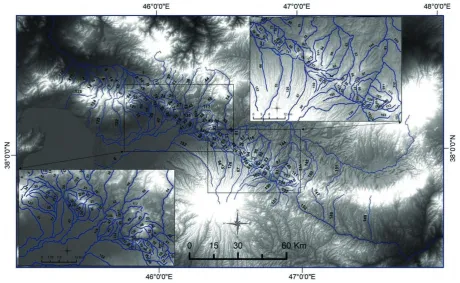
The routes of 153 channels were selected by considering the traces of the NTNMF and their subsidiary faults as well as physiographic landscapes (Figure 2). The lengths of the profiles ranged from 2 km to 264 km. The criteria for the selection of channels were as follows: (i) whether the NTNMF was crossed or not; (ii) the position of the stream divide and/or the outlet around the NTNMF; (iii) the presence of landscapes formed by the NTNMF and their subsidiary faults (i.e. relay zones, fault damage zones etc.); and (iv) the azimuth of the stream
route.
Figure 1. Shaded relief DEM with lithologic units and geologic structures (fault and fold axes) compiled for this study. Iranian 1:100 000 geologic maps were digitized. Shown are the North Misho fault (NMF), North Tabriz fault (NTF), Shirinje fault (SF), South Misho
ASM Science Journal, Volume 6(2), 2012
Following Bishop and Goldrick (2000) and Goldrick and Bishop (2007), the concavities of the longitudinal profiles were determined from λ. The constants λ and γ were determined from a linear regression of slope versus distance on a log-log plot (DS plot). Positive and negative λ values indicate concave and convex profiles, respectively. Using the DS plot, the knickpoints (disequilibrium steepening) along profiles crossing the NTNMF were
determined. Generally following Bishop et al. (2005), two
or three long profile vertices upstream of the knickpoint were projected linearly onto the intersection point of the fault and channel. Next, the elevation of the downstream projection of the reach above the knickpoint was estimated at the point where the NTNMF crosses the channel. Then, the difference between the estimated elevation and the actual elevation of the intersection point on the profile (i.e. H*) was calculated (Figure 3). In these profiles, the first knickpoint upstream of the NTNMF was considered as uplift triggered by the youngest activity of the NTNMF. The values of λ and H* are illustrated in Figure 4.
RESULTS
To facilitate recollection and visualization, the study region was divided into three zones along the strike of the NTNMF. The first zone (Z1) included the north and south slopes of the Misho mountain range. The second zone (Z2) included the area between the east boundary of the Misho
mountain range and Aji-chay River (channel 0). The third zone (Z3) extended from Aji-chay River to the west end of the Bozqush mountain range (Figure 4).
Correlation between λ, H*, and lithostructures
Misho mountain range (Z1). On the north slope of
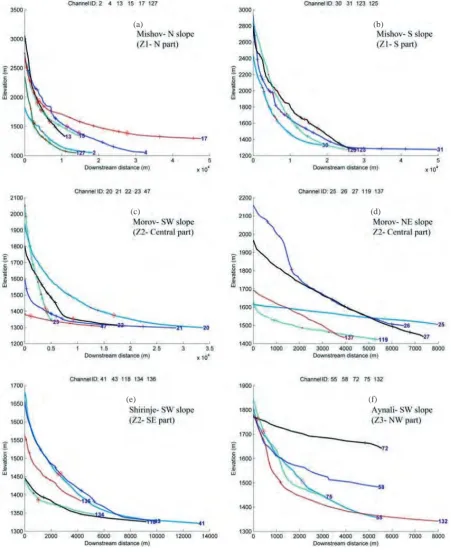
the Misho mountain range (northern Z1), considering the fairly constant, moderate gradient of the downstream part of longitudinal profiles that included Quaternary sediments and the presence of knickpoints with fairly high values of H* (Figures 4 and 5a) and in view of the lithostructural setting along the NMF (i.e. coexistence of faults and lithologic boundaries), the concavity of the profiles was attributed to (i) the enhanced but constant uplift whose rate increased towards the divide (Robl
et al. 2008) and (ii) the presence of more resistant units
upstream and less competent units downstream (Duvall
et al. 2004).
Interactions of the NTF, NMF, and Ivand faults east of the Misho mountain range (eastern Z1) had produced compression north of the NTF, where the northwestward change in the downstream direction of some streams was a manifestation of eastward uplift escalation. The northward extension of compression was a probable reason for
the increased concavity, where this extension produced
compensated vertical displacement around the NTF and thus steady state conditions along the profiles.
Figure 3. Longitudinal profile with disequilibrium steepening (knickpoint) caused by vertical relative displacements of fault, propagating headwards. Disequilibrium steepening appears as
a disordered outlier on the DS plot.
Figure 4. Map of concavity index (l) and difference (H*) between elevation predicted by linear projection and actual elevation at the fault-stream intersection point, as determined for
ASM Science Journal, Volume 6(2), 2012
The lesser concavity of the central and western parts
in comparison with the eastern part could be explained
by a wider, less smooth, and gentler steepening zone. This could be partly ascribed to not only the presence of a lithologic boundary (i.e. granite-pelletic micaceous shale with fine-grained sandstone) (channels 4 and 5) but also the interactions of central and western segments of the NMF with the Tasuj fault as well as the interaction of the central and southeast segments of the NMF that increased the rate and extent of uplift (channels 2, 3, and 13).
The presence of both long and short longitudinal profiles along the NMF allowed a comparison of the concavity for different lengths. The longer streams had a greater
concavity in comparison with the shorter ones. Considering that, lithologically, the changing parameter was shorter
flow on less resistant Plio-Quaternary lithologies (channels 7 and 15), the predominance of structural factors could be inferred from the decreased concavity near the NMF, where the deformation was more intensive due to displacements along the NMF and its subsidiary faults and uplift was more effective with respect to erosion.
There was no remarkable difference between the longitudinal profiles of the south and north slopes (Figures 4 and 5b). On the south slope of the mountain range (southern Z1), the relatively high concavity of some profiles could be attributed to (i) the enhanced uplift of upstream parts where major vertical displacements occurred north of major faults (i.e. SMF, Benis, and Daryan) and (ii) the very low gradation of downstream parts in the case of streams that flowed longer distances but away from active major faults and under more stable
conditions (Wobus et al. 2006). The elevated uplift around the conjunction of the NMF, SMF, and NTF (eastern Z1) as a result of their interaction, where the mountain front progressed southward and Quaternary sediments were elevating, was responsible for less concave profiles (Figure 4, channels 29, 30, 32, 34, and 35).
Moro and Shirinje Mountains (Z2). On the southeast
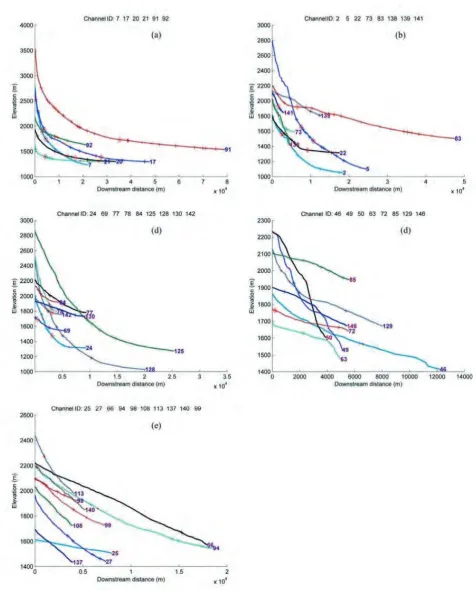
slope of the Moro Mountain (central Z2), the NTF bisected most profiles, so their divides and outlets lay not far away from it. In that regard, the creation of less concave profiles with a constant, relatively high gradation (Figure 5c), as well as the presence of knickpoints with moderate values of H*, could be explained by (i) more resistant lithologies with dense faulting upstream and (ii) ongoing uplift on both sides of the NTF, where Quaternary sediments were elevating and the mountain front progressed southwestward because of transpressional uplift (Figure 4, channels 23, 24, 47, and 135).
On the northeast slope of the mountain the presence of upstream steepening in some profiles and the prevalence of constant, moderate downstream gradation in nearly all profiles (Figure 5d) could be attributed to lithostructural
factors. For the reason that faults were generally also lithologic boundaries, dense faulting in the area with
resistant lithologies which experienced a compressional
regime would postpone the morphotectonic transition from a high-relief compressional regime to a low-relief stable or extensional regime along the longitudinal profiles (Figure 4, channels 25, 26, and 27).
Towards the southeast on the southwest slope of Shirinje Mountain (southeast Z2), the increase in concavity was probably a result of a compressional regime that was caused by interactions between the NTF and the Shirinje fault. There, the upstream uplift of moderately resistant
lithologies, which had mainly been established on those
faults and on a fold between them, was the main reason for the increase in concavity (Figures 4 and 5e). The elevated Quaternary sediments along the southwest side of the NTF indicated that uplift had been experienced there. This
explained the rough, moderate graded reaches around the
NTF as well as the presence of some streams with high values of concavity and onsets along the southwest side of the NTF (Figure 4, channels 43 and 118). Conversely, these profiles to some extent gave an estimate of the width of the fault zone. Nevertheless, the reduced occurrence and smaller values of H* were consistent with the obvious right-lateral deflection of some stream channels in this part of the NTF.
Aji-chay River- west end of Bozqush mountain range (Z3).
Northeast slope of Aynali Mountain (northwest Z3).
Major fault positions and lithology were factors that
caused quite a decrease in the concavity values on the
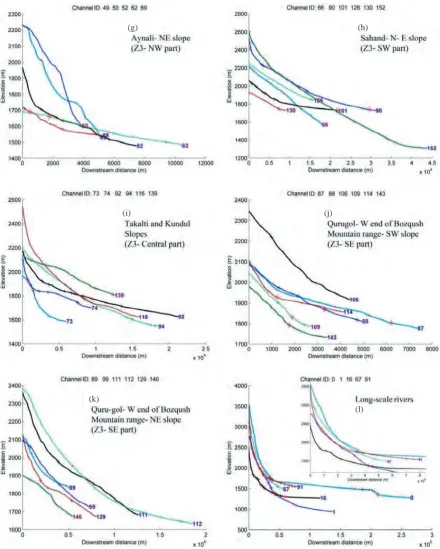
northeast and interior slopes of Aynali Mountain. There existed a restraining relay zone between the NTF and the Shirinje fault which had similar settings in terms of dip slip and strike-slip components. This zone together with high-order faults of the NTF created a compressional regime that enhanced the uplift. A moderately resistant lithology, with low dip layering (5°–25° northeast), probably had a delaying effect on the erosion process (Figures 4 and 5g).
Along the southwest slopes of the highlands that faced the NTF, between Aji-chay River and the west end of the Bozqush mountain range (Z3), draining tributaries were generally perpendicular or sub-perpendicular to the fault and did not leave the deformation zones formed by its segments and their high-order faults. The concavity values had decreased along this part of the NTF (Figures 4, 5f, 5i, and 5j).
Sahand Mountain (southwest Z3).
(a) (b)
(c) (d)
(e) (f)
Figure 5. Stream longitudinal profiles for different slopes along NTNMF. To avoid confusion, similar profiles are excluded from the plots. In addition, marginal profiles are included for individual slopes. The diamond: intersection points of the stream channel with
(g) (h)
(i) (j)
(k)
(l)
Figure 5 (cont.). Stream longitudinal profiles for different slopes along NTNMF. To avoid confusion, similar profiles are excluded from the plots. In addition, marginal profiles are included for individual slopes. The diamond: intersection points of the stream channel with