Original Research Article
Predictors of smokeless tobacco consumption among women: a
community based study in a slum of Kolkata
Aparajita Dasgupta, Manika Pal*, Bobby Paul, Lina Bandyopadhyay
INTRODUCTION
Tobacco use is the single most preventable cause of death globally.1 Over five million people die each year due to tobacco related illness- a figure expected to increase to more than eight million a year by 2030.2 Use of SLT contributes significantly to this figure. Siddiqi et al found death attributable to SLT use alone is over a quarter million globally.3 Nearly ninety percent of global tobacco
users live in South-East Asia, though it is perceived that SLT use is an under-studied problem in SE Asia.4
Back home, the scenario is not at all bright. India is the second largest consumer of tobacco globally, next only to China and accounts for approximately one sixth of world’s tobacco related deaths.5,6
Every year tobacco use kills about one million Indians.1 The tobacco problem in India is unique with consumption of diverse varieties of
ABSTRACT
Background: Tobacco consumption is one of the major preventable causes of death in India. Use of smokeless tobacco (SLT) is associated with oral and other cancers, adverse reproductive outcome and cardiovascular diseases. Prevalence of SLT consumption varies widely in different countries including India affecting people of different sex and age groups with varied socioeconomic, cultural and educational background.
Methods: A community based, observational, cross-sectional study was conducted in a slum of Kolkata with the aim of determining the prevalence of SLT use and its predictors among women aged 15 years and above, by simple random sampling 159 study participants were selected. Interviews of the participants were conducted using structured questionnaire. Data were summarised and adjusted with descriptive statistics and binary logistic regression analysis in SPSS (version 16).
Results: The prevalence of current SLT use was found to be 36.5%. On multivariable logistic regression, it was observed that there was significant association between SLT use and increasing age AOR (CI) 2.578 (1.131-5.876), lower SE status AOR (CI) 2.332 (1.076-5.054), lower educational level AOR (CI) 2.76 (1.163-6.295) and poor knowledge about SLT. AOR (CI) 2.191 (1.066-4.503). Quit attempt in last one year was 18.9% while missed opportunity for counselling by health care providers was 79%.
Conclusions: Emphasis on IEC activities and stringent legislation in addition to the existing strategies of the national program are recommended. All efforts should be made to bring the women from behind the curtain and educate them about hazards of SLT consumption.
Keywords: Smokeless tobacco, Community based study, Women residing in slum
Department of Preventive and Social Medicine, All India Institute of Hygiene and Public Health, Kolkata, West Bengal, India
Received: 22 March 2018
Revised: 13 April 2018
Accepted: 14 April 2018
*Correspondence:
Dr. Manika Pal,
E-mail: [email protected]
Copyright: © the author(s), publisher and licensee Medip Academy. This is an open-access article distributed under the terms of the Creative Commons Attribution Non-Commercial License, which permits unrestricted non-commercial use, distribution, and reproduction in any medium, provided the original work is properly cited.
smokeless and smoking forms and with wide variation of their geographic distribution across the country.7
Smokeless tobacco is a tobacco product that delivers nicotine without smoke and is used by chewing, sniffing etc. Examples of SLT are dip (gudakhu), snuff, chewing tobacco (zarda, dokta).
Smokeless tobacco causes oral cancer, oesophageal cancer, pancreatic cancer and oral leukoplakia. Cancer causing substance in SLT is TSNA (tobacco specific nitrosamine). SLT use is also associated with adverse reproductive outcome8, higher risk of cardiovascular disease, dental caries and oral sub-mucus fibrosis (OSF).9 SLT causes nicotine addiction
SLT use is culturally acceptable in India. It is often perceived as harmless pleasure by the Indians. Lack of awareness contributes to low number of quit attempts in India. Government of India has taken various initiatives of tobacco control by enacting comprehensive tobacco control legislation (Cigarette and Other Tobacco Product Act 2003).
The use of SLT is widespread in India. Lack of public awareness and incomplete knowledge about the harmful effects of smokeless tobacco are major obstacles in formulating effective tobacco control policies. Under-privileged people are mostly ignorant about the health hazards of tobacco and addictive potential of it.
Our current study was aimed at exploring the habit of SLT use among the women in a slum of Kolkata. The objectives of our study were as follows:
To determine the prevalence of SLT use among women aged 15 years and above.
To find out the predictors associated with SLT use.
METHODS
Study design and setting
A community based, descriptive, cross-sectional study was conducted for three months (May-July 2016) in a slum area on the southern fringe of Kolkata city. People residing in this slum are under-privileged and their lives are already shaped by social exclusion because of dual curse of poverty and illiteracy. The slum is located within the field practice area of an urban health centre which is associated with a post graduate training institute for preventive and social medicine. It provides research and community based training program as well as primary health care service to the community, catering to a population of about 36000 people within its service area of approximately 3.9 sq.km. The population of the slum was a mixture of diverse ethnicity and religion with its residents having migrated from various parts of the country. Apart from the Bengalees, people from,
north-eastern states of India and Bihar as well as from neighboring country, Bangladesh, were predominantly noticed.
Study population
A complete list of the women 15 years of age and above was first prepared from the register of family folders kept with the urban health centre. All non-institutionalized women aged 15 years and above residing in their households were considered eligible to participate in the study. Thereafter the sample was selected by simple random sampling method. A total of 159 women participated in the study.
Working definitions
Smokeless tobacco (SLT): Tobacco products that
deliver nicotine without smoke and having addictive potential.
Current SLT user: Participant who used SLT at least
once in previous one month.
Current Daily SLT user: Participant who used SLT at least once every day or most of the days over a period of one month or more.
Sample size
Considering the prevalence of SLT use of 43.5 % (GATS India 2009-10) among women in Tripura, the estimated sample size was calculated as follows
N=Z2×(PxQ)/L2
Z=1.96; P=43.5; Q=1-P=56.5; L=Allowable error (20% of P) =8.7
Considering 10% nonresponse rate, calculated sample size was 137 (125+12).
In our study 159 women participated out of 164 women we approached.
Study procedure
The purpose of the study was explained to the study participants; informed consent was obtained. Face to face interviews were conducted at participants’ home ensuring confidentiality. Structured questionnaire included socio-demographic characteristics, nature and habit of SLT use, questions on knowledge about SLT and attitude towards it. Knowledge on SLT was measured using seven questions with equal weightage and in the similar manner seven statements with equal weightage were used to assess attitude towards SLT.
regulations of SLT and also about the source of these information. Each correct response was awarded a score of 1 and 0 was given to incorrect response. A total score of 4 and above was considered to be ‘good’ knowledge while a score below 4 was considered ‘poor’.
Similarly, a set of seven different statements were used with an objective of assessing the participants’ attitude towards SLT and its use. These statements were about their willingness to give up the habit or helping others to give up, their reaction about quit-tobacco advertisement and their perception of need of such efforts in the society. Each positive response fetched 1 mark and 0 was given to negative responses. A score of 4 and above was considered ‘favourable’ attitude while a score of lower than 4 signified ‘unfavourable’ attitude.
Ethical approval
Written informed consent was obtained from each participant of the study. As the study was an observational one and no form of intervention was given, a formal ethical clearance was not sought. However, permission was obtained from the Department of Preventive and Social Medicine of the Postgraduate Medical Institute, under whose service jurisdiction the study area was located
Data analysis
Statistical package for social sciences (SPSS) version 16 was used for analysis of data.
Descriptive statistics were used to summarize the data. Measures of central tendency and dispersion were used to summarize numerical data and proportions to summarize categorical variables. Association between SLT use and predictor variables was estimated in univariate logistic regression and multivariable logistic regression. Odds
ratio (OR) with 95% CI (Confidence Interval) were computed. Explanatory variables found to be statistically significant in univariate logistic regression were entered into multivariable logistic regression. A Pvalue of <0.05 was considered statistically significant.
RESULTS
Out of 164 women who were approached and invited to participate, 159 agreed, giving a response rate of 96.95%. The mean age of study participants was 38.49 years (SD=11.3) and it ranged from 15 years to 60 years. Majority (88.7%) belonged to Hindu religion and 41.5% belonged to SC, ST, and OBC category. Nearly 65% of the participants had low educational level, either illiterate or below middle level. Majority of the participants (61%) belonged to lower Socio-economic class (class IV and V, BG Prasad classification, 2016)).
Prevalence of SLT use
The prevalence of Current SLT use in our study was found to be 36.5% (58 SLT users out of 159 participants) and that of Current Daily SLT use was 30.2% (48 SLT users out of 159 participants).
Quit attempts in last 1 year stood at 18.9% (11women had tried to give up the habit out of 58 SLT users). SLT users who were advised to quit by health care provider was only 13% in our study (6 out of 46 SLT users who had contact with health care provider in last 1 year).
Forty six out of 58 SLT users had contact with heath care provider at least once in last one year but did not get any health education about the harmful effects of tobacco. So, the missed opportunity for counselling by the health care provider in our study was 79%.
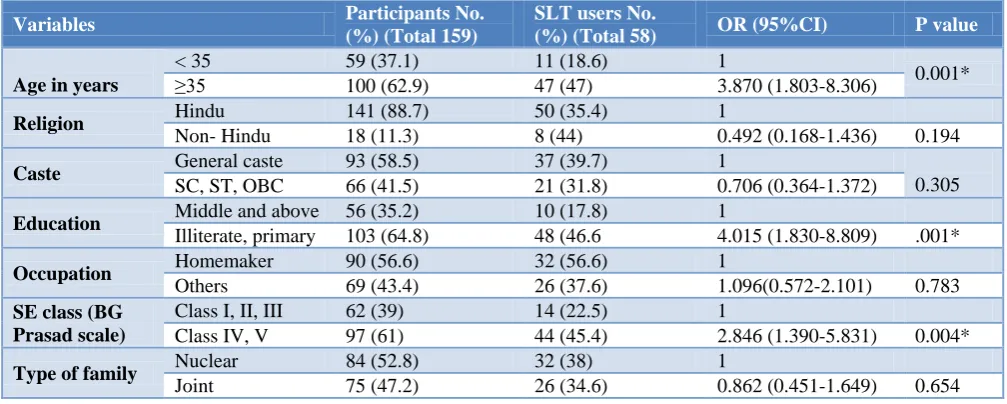
Table 1: Univariate logistic regression between SLT use and different predictor variables (n=159).
Variables Participants No.
(%) (Total 159)
SLT users No.
(%) (Total 58) OR (95%CI) P value
Age in years
< 35 59 (37.1) 11 (18.6) 1
0.001* ≥35 100 (62.9) 47 (47) 3.870 (1.803-8.306)
Religion Hindu 141 (88.7) 50 (35.4) 1
Non- Hindu 18 (11.3) 8 (44) 0.492 (0.168-1.436) 0.194
Caste General caste 93 (58.5) 37 (39.7) 1
0.305 SC, ST, OBC 66 (41.5) 21 (31.8) 0.706 (0.364-1.372)
Education Middle and above 56 (35.2) 10 (17.8) 1
Illiterate, primary 103 (64.8) 48 (46.6 4.015 (1.830-8.809) .001*
Occupation Homemaker 90 (56.6) 32 (56.6) 1
Others 69 (43.4) 26 (37.6) 1.096(0.572-2.101) 0.783
SE class (BG Prasad scale)
Class I, II, III 62 (39) 14 (22.5) 1
Class IV, V 97 (61) 44 (45.4) 2.846 (1.390-5.831) 0.004*
Type of family Nuclear 84 (52.8) 32 (38) 1
Joint 75 (47.2) 26 (34.6) 0.862 (0.451-1.649) 0.654
Variables Participants No. (%) (Total 159)
SLT users No. (%)
(Total 58) OR (95%CI) P value
Marital status Currently married 123 (77.4) 46 (37.4) 1
Others 36 (22.6) 12 (22.6) 0.837 (0.382-1.832) 0.656
Knowledge Good knowledge 88 (55.3) 22 (25) 1
Poor knowledge 71(44.7) 36 (50.7) 3.086 (1.579-6.032) 0.001*
Attitude Favourable 73 (45.9) 29 (39.7) 1
Unfavourable 86 (54.1) 29 (33.7) 0.772 (0.404-1.475) 0.433
*P value less than 0.05.
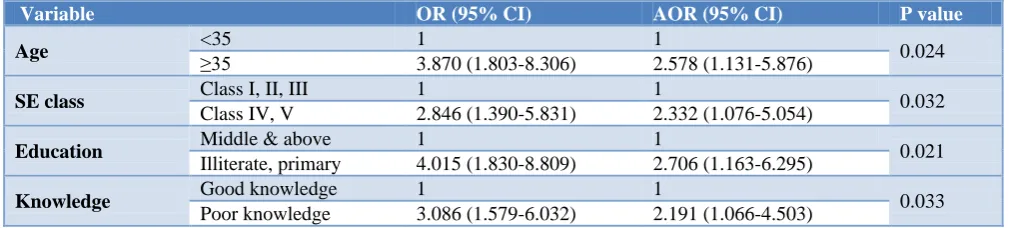
Table 2: Multivariable logistic regression between SLT use and four explanatory variables (n=159).
Variable OR (95% CI) AOR (95% CI) P value
Age <35 ≥35 1 1 0.024
3.870 (1.803-8.306) 2.578 (1.131-5.876)
SE class Class I, II, III 1 1 0.032
Class IV, V 2.846 (1.390-5.831) 2.332 (1.076-5.054)
Education Middle & above 1 1 0.021
Illiterate, primary 4.015 (1.830-8.809) 2.706 (1.163-6.295)
Knowledge Good knowledge 1 1 0.033
Poor knowledge 3.086 (1.579-6.032) 2.191 (1.066-4.503)
Factors influencing SLT use
The association between SLT use and several factors have been shown in Tables 1 and 2.
Women’s age, education, knowledge on SLT and social class were significantly associated with SLT use (Table 1).
In the multivariable logistic regression analysis, all the four explanatory variables retained their significance. Value of Nagelkerke being 0.247 with non-significant Hosmer-Lemeshow test supports good fit of the model.2 Women above 35 years of age had 2.57 times higher odds of using SLT compared to those below 35 years while those with poor knowledge are 2.19 times more likely to use SLT than those with good knowledge. Women who belonged to low SE class had 2.33 times higher odds of using SLT compared to those who belonged to higher SE class. Women who were illiterate or below middle level were 2.7 times more likely to use SLT than those having higher level of education.
DISCUSSION
In this study, it was found that the prevalence of smokeless tobacco consumption among women of 15 years and above was unacceptably high (36.5%) compared to the prevalence found in DLHS in Bengal (18.5% in the district of Kolkata). Prevalence of SLT use in our study is not consistent with the national prevalence either. GATS India survey 2009-2010, conducted by the International Institute of Population Sciences, Mumbai on behalf of MOHFW, GOI found the prevalence of 18.4%
10
among female current SLT user and 14.9% among
female daily SLT user.10 However, the prevalence found in our study is lower than those of North-Eastern states.8 In our study, quit attempt was lower (18.9%) in comparison to that found in GATS India survey (29%) among female. Furthermore, number of female SLT users who were advised to quit by health professional was also low in our study (13%) compared to that of GATS India survey (24.5%) among women. As health facilities and health care provider are considered as trusted source of knowledge and information, there were missed opportunities to counsel them who reported to have had at least one contact with health personnel (79%) in last one year.
In our study SLT use was found to be more prevalent among the least educated, poor women having minimal knowledge about the harmful effects of tobacco. This finding is consistent with the observations of study conducted by Rani et al.11 In our study SLT use was found to be more prevalent among women above 35 years of age. This is similar to the findings of the study conducted by Gupta et al who found that prevalence of tobacco use in women above 35 years was as high as 57% which was almost solely in smokeless form.12 He further showed that use of tobacco in any form excepting in some smoking form, is inversely related with educational level. This is in consistence with our study where we have shown that women with less educational background are more likely to be SLT user.
Limitations
collected for this study, relied mainly on the participants’ self-report who might under-report about their SLT use, hence the observed prevalence of SLT use might be underestimated. Therefore, it may be said that the study may have suffered from social desirability bias, recall bias and lack of generalisability in addition to small sample size.
Strength
It is a community based study. Such type of study was first of its kind conducted in that slum.
This study has brought out picture of the high prevalence of SLT use in marginalized population, i.e. the female slum dwellers. The findings of the study may be used in designing tobacco control strategies in the area of this study or other slum areas.
Recommendation
There is need for periodical survey in this regard in our field practice area. Every opportunity of contact of the health care providers with the slum dwellers should be exploited to educate them about the hazards of SLT use. Those who are already its victim, should be counselled and advised to give up this habit. Behaviour Change Communication (BCC) should be conducted periodically in the community. Stringent implementation of regulations of COTPA (Cigarettes and Other Tobacco Products Act), 2003 and monitoring, overall improvement of socio economic condition and education level of the residents of the area will go a long way to curb this social menace.
CONCLUSION
This study brings forth some hidden truth that when it is a matter of tobacco consumption, the females are not lagging behind their male counterpart. It is true that smoking is still not a very common picture among women in Indian society, but prevalence of SLT use was found alarmingly high among women in the slum area under study. As opposed to the habit of smoking tobacco which is much less socially acceptable, SLT consumption is not looked down upon as a social taboo. Thus, it becomes difficult to fathom the extent of the problem that has engulfed the society. The prevalence found in our study was much higher than the national average and that of DLHS in the district of Kolkata.
Funding: No funding sources Conflict of interest: None declared
Ethical approval: The study was approved by the Institutional Ethics Committee
REFERENCES
1. Jain ML, Chauhan M, Singh R. Compliance assessment of cigarette and other tobacco products act in public places of Alwar district of Rajasthan. Indian J Public Health. 2016;60:107-11.
2. GATS (Global Adult Tobacco Survey) 2nd Ed, Atlanta, GA; Centres for Disease Control and Prevention, 2011.
3. Siddiqi K, Shah S, Abbas SM, Vidyasagaran A, Jawad J. Global burden of disease due to smokeless tobacco consumption in adults: analysis of data from 113 countries. BMC Med. 2015;13:194. 4. Sinha DN, Gupta PC, Ray C, Singh PK.. Prevalence
of smokeless tobacco use among adults in WHO South East Asia. Indian J Cancer. 2012;49:342-6. 5. John RM, Rao RK, Rao MG, Moore J, Despande
RS. The economics of tobacco and tobacco taxation in India, Paris: international union against Tuberculosis and lung disease 2010. Available: https://www.global.tobaccofreekids.org/assets/globa l/pdfs/en/India_tobacco_taxes_report_en.pdf. Accessed 10 December 2017.
6. Mishra GA, Pimple SA, Shastri SS. An overview of tobacco problem in India. Indian J Med Paediat Oncol. 2012;33:139-45.
7. Thakur JS, Prinja S, Bhatnagar N, Rana SK, Sinha DN, Singh PK. Widespread inequalities in smoking & smokeless tobacco consumption across wealth qualities in States of India: Need for targeted interventions. Indian J Med Res. 2015;141:789-98. 8. Singh KJ, Singh N. Smokeless tobacco use among
male and female in Northeast state, India. Global J Med Res. 2016;16(3).
9. Mariann RP, Benowitz NL, FitzGerald GA, Corbridge S, Heath J. Impact of Smokeless Tobacco Products on Cardiovascular Disease: Implications for Policy, Prevention, and Treatment. Circulation. 2010;122:1520-44.
10. 10. GATS India survey 2009-2010, conducted by the International Institute for Population Sciences, Mumbai on behalf of MOHFW, GOI.
11. Rani M, Bonu S, Jha P, Nguyen SN, Jamjoum L. Tobacco use in India: Prevalence and predictors of smoking and chewing in a national cross sectional household survey. Tob Control. 2003;12(4):e4. 12. Mishra GA, Kulkarni SV, Gupta SD, Shastri SS.
Smokeless tobacco use in urban Indian women: Prevalence and predictors. Indian J Med Paediatric Oncol. 2015;36:176-82.