Convergence Of Cloud Computing, Internet Of
Things, And Machine Learning: The Future Of
Decision Support Systems
Gilberto Crespo-Perez, Dr. Angel Ojeda-CastroAbstract: The objective of this research was to develop a framework for understanding the Convergence of Cloud Computing, Machine Learning, and Internet of Things as the future of Decision Support Systems. To develop this framework, the researchers analyzed and synthesized 35 research articles from 2006 to 2017. The results indicated that when the data is massive, it is necessary to use computational algorithms and complex analytical techniques. The Internet of Things, in combination with the large accumulation of data and data mining, improves the learning of automatic intelligence for business. This is due to the fact that the technology has the intelligence to infer and provide solutions based on past experiences and past events. Index Terms: Artificial Intelligence, Business Analytics, Cloud Computing, Decision Support Systems, Internet of Things, Machine Learning, Neural Networks.
————————————————————
1
I
NTRODUCTIONDigital storage is now cheaper than ever (Kryder‘s Law). The cost per gigabyte is substantially lower as compared to the last three decades (1990 through 2010). As a result, more applications are taking advantage of this low costs, and are producing, storing, and archiving data at unprecedented rates (Grimmer, 2015; Page, Hijazi, Askan, Kantarci, & Soyata, 2016). In addition, social platforms and instant messaging applications are generating all kinds of multimedia data (e.g., text, images, videos, and audio). Similarly, complex data-intensive science fields (also known as e-science), such as astronomy, finance and economy, biology, climatology, and medicine are producing tremendous amounts of data (Al-Jarrah, Yoo, Muhaidatc, Karagiannidis, & Tahaa, 2015; Jordan & Mitchell, 2015). Noteworthy to mention, many argue that are living in the Internet of Things (IoT) era, where there are billions of sensors installed everywhere, such as in-home appliances, electronic devices, intelligent wear, clothes, pets, humans, and other living things.
Consequently, this requires registering almost any type of data into the Cloud in order to be processed and analyzed to produce dynamic, and real-time results (Al-Jarrah et al., 2015; Assem, Xu, Buda, & O‘Sullivan, 2016; Chen et al., 2015; Page, Hijazi, Askan, Kantarci, & Soyata, 2016; Tsai, Lai, Chiang, M. & Yang, 2014). With the unparalleled emerging of IoT technologies, it is expected that more than 50 billion electronic devices will be connected to the Internet and will be available at any time, as well as accessible from anywhere (Page, Hijazi, Askan, Kantarci, & Soyata, 2016). Therefore, this is a good opportunity to merge IoT data with big data, and data mining (Chen et al., 2015), to enhance the clever fields of Machine Learning and business intelligence. Thanks to Cloud computing technologies and their affordability, storage capacity, parallel processing power, and increasing connectivity speed continue to increment exponentially, and improve dramatically in their efficiency. As a result, data intensive and complex computational analytics tasks can be accomplished more effortlessly, and drastically faster than two decades ago. Accordingly, artificial intelligence and Machine Learning are becoming more frontrunners, and more attractive to businesses and academics in the realm of decision-making scenarios. The foundation of this article is based on the review of studies and proposals regarding Machine Learning and Decision Support Systems, and how emerging technologies and disciplines are the driving forces of these intelligent-based computer systems. This article begins with a section on methodology that explains how the research reviewed was selected and examined for this article. The section that follows is the literature review, which was grouped according to: (a) technology trends, (b) Machine Learning techniques, and (c) empirical disciplines that are the driving force for the development of automated and more intelligent independent-Decision Support Systems. Some personal opinions and reactions are included in this section. Finally, this article concludes with some ideas and possible future directions proposed by the authors.
2
M
ETHODOLOGYSeveral systematic searching approaches were conducted in order to narrow the scope to both of our primary topics, Decision Support Systems and Machine Learning. For this, ____________________________
Gilberto Crespo-Perez, MSCE, is currently pursuing a doctoral degree in Management Information Systems at Universidad del Turabo, Gurabo, Puerto Rico (USA). Mr. Crespo-Perez holds a Master’s degree in Computer Engineering from the University of Puerto Rico at Mayaguez, Puerto Rico (USA). He has
participated as investigator in local research
symposiums and investigation conferences. In
addition, Mr. Crespo-Pérez is a technology blogger at
www.sapientcoach.com (International Spanish &
English blog). Email: [email protected]
the authors adopted the snowballing method conducted by Andersson and Grönlund (2009), in order to obtain only related and relevant articles. Bibliographies from articles, such as Norris and Lloyd (2006), were searched and examined for cited articles in the papers we read. Additionally, a search strategy that comprises search terms, process, and literature resources similar to Wen, Li, Lin, Hu, & Huang (2012) were used. The investigation began the searching process through scholarly databases (e.g., ACM Digital Library, ProQuest, IEEE Xplore, Academic Search, Science Direct, and Google Scholar, among others), by looking for keywords like ‗Machine Learning-based DSS‘, ‗Cloud-based Machine Learning‘, ‗Decision Support System‘, ‗Machine Learning approaches‘, ‗business intelligence + decision making‘, ‗Machine Learning algorithms‘, ‗Internet of Things Approaches‘, and ‗IoT + DSSs‘, among many others. A time frame from years 2013 to 2017 was selected to limit the searching process in order to obtain the most recent research. However, some articles and books used are dated before this period, as some of them were also revised and included because they provided a foundational, fundamental, and/or pioneering contribution or definition. Prior to analyzing the articles, a research gap-sheet that contains the following components was used: references (APA style), general purpose, objectives or research questions, contribution, theoretical framework (model and/or theory), variables (independent, dependent and control/moderators), key findings, and focus of research. Each of the collected articles were included in the research gap-sheet, since it is a common practice among researchers to use tables to organize and compile information of collected papers (Albesher & Stone, 2016; Wen, Li, Lin, Hu, & Huang, 2012; DeLone and McLean, 1992). Using this approach, similar to that of Albesher & Stone (2016), helped to refine the searching process and facilitate the classification process.
3
L
ITERATURER
EVIEW3.1 Cloud Computing
Technology has evolved dramatically during the last decade. More specifically, the advent and maturity of Cloud computing has changed the way technology services are offered, and also how they are consumed. Cloud computing is defined by the National Institute of Standards and Technology (NIST); as ―a model for enabling ubiquitous, convenient, on-demand network access to a shared pool of configurable computing resources (e.g., networks, servers, storage, applications and services) that can be rapidly provisioned and released with minimal management effort or service provider interaction." (Miller, Curran, & Lunney, 2016). Thanks to different models and offering packages, Cloud computing service providers are making things once unattainable possible by transforming the way scientists and scholars are conducting their investigations by taking advantage of the huge storage, computational capacities, and processing power that these Cloud offerings are capable of doing for a very reasonable price (Bishop, 2013; Miller et al., 2016). Depending on the model of Cloud computing that scholars use, such as Software as a Service (SaaS), Platform as a Service (PaaS), Infrastructure as a Service (IaaS), and Everything as a Service (XaaS), scientists now have the opportunity to completely generate
the complex computational processes required by their investigations, with only an Internet connection, and by accessing these services with an Internet browser and a laptop computer (Page, Hijazi, Askan, Kantarci, & Soyata, 2016). Now, with the many possible Cloud computing deployment methods, private, public, hybrid and community, researchers can benefit from shared and collaborative provisioned infrastructures (Miller et al., 2016). Beyond the above-mentioned processing and storage capacities, Cloud computing also allows researchers to have confidence that their data is being ―securely‖ backed up, with a critical best practice within the scientific process. The flexibility of these technologies and services, for a certain amount of money, allows one to request that the service providers assign more resources (e.g.: processors, memory, and disks, etc.). This thereby increases computational capacities, literally right almost instantaneously. These benefits, and many other advantages of Cloud computing, allow researchers to obtain better and more accurate results in their investigations. Within the increasing popularity and research advances in Machine Learning, Cloud providers are including Machine Learning as a service (MLaaS) on their list of offerings by building and reshaping their business models (Miller et al., 2016). Consequently, these offerings have made a serious impact on the technology industry. As a result, Cloud computing service providers have started to offer powerful, cost-effective, reliable, and capable platforms for researchers and scholars by allowing them to combine multiple Machine Learning algorithms and techniques to increase accuracy, and to decrease computational effort in the training process of the systems built (Lavecchia, 2015; Miller et al., 2016).
3.2 IoT & Machine Learning
creating massive amounts of data, which have to be securely distributed, stored, managed, and analyzed. Consequently, the amount of data could potentially grow to be unmanageable; databases are becoming more complex, and the information overload is continually increasing (Page, Hijazi, Askan, Kantarci, & Soyata, 2016). At the same time, data is becoming more usable and relevant than ever. All of these brings new opportunities and challenges to decision makers regarding how to handle high-speed data input that can be used, and how to optimize business analytics and decision based on IoT data (Assem et al., 2016; Chen et al., 2015). One of the challenges is the quality of data, which is poor and comes from a variety of data sources inherently possessing different types and representation forms. Furthermore, some data is heterogeneous, structured, semi-structured or even completely unstructured (Chen et al., 2015). Here is where Machine Learning comes with different techniques, that when applied to IoT, will transform collected data into meaningful and useful information that can later be transformed into knowledge (Tsai, Lai, Chiang, & Yang, 2014)
3.3 Machine Learning (ML)
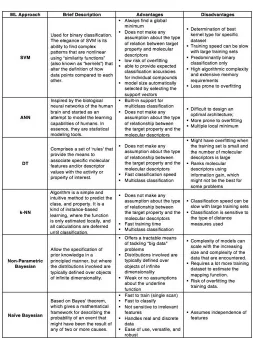
Machine Learning (ML) was first introduced in the late 1950s through the 1970s as an artificial intelligence technique (Mitchell, 2004; Turban, Sharda & Lenen, 2012; Reshi & Khan, 2014; Alsheikh, Lin, Niyato, & Tan, H.-P. 2014). According to Mitchell (1997), ML is a self-contained sequence of actions that permits computer programs to automatically learn and improve from historical data. It is predominantly concerned with the design and development of algorithms that allow computers to learn based on experience. Its main focus is also on how can one develop a program that automatically improves from experience. An additional concern is what are the fundamental statistical-computational laws that will govern all of these learning systems (Jordan & Mitchell, 2015). Since its conception, it has evolved to a more robust and sophisticated computational algorithm and these techniques that have been widely used in an extensive variety of tasks. Most of them include regression, intrusion detection, diagnosing and monitoring, classification and density estimation (Alsheikh, Lin, Niyato, & Tan, 2014; Assem et al., 2016; Wen et al., 2012). ML can be applied in a variety of fields such bioinformatics, statistics, neuroscience, computer engineering, mathematics, business management, medicine, and computer science, among others. It helps and provides the potential to automatically solve a wide range of complex decision making and analytical tasks (Assem et al., 2016; Reshi & Khan, 2014; Wen et al., 2012). The different approaches of ML, such as Support Vector Machine (SVM), artificial neural networks (ANN), decision trees (DT), K-nearest neighbors (k-NN), and Non-Parametric Bayesian techniques, are becoming increasingly popular in recent years (Johnson et al., 2016; Lavecchia, 2015). With the added aggressive penetration and acceptance of improved and new technologies, solutions providers are mixing their offerings to supply the market demands, and to stay up-to-date with the state-of-the-art technology trends. Likewise, researchers are exploring hybrid ML techniques where multiple methods are combined to increase predictions quality (Deo, 2015;
Lavecchia, 2015; Safdar, Zafar, Zafar, & Khan, 2017). Table 1 shows a brief description of the mentioned ML popular approaches.
TABLE 1
Machine Learning Popular Approaches
Source: Adapted from Iniesta, Stahl, & McGuffin, 2016; Kang, Schwartz, Flickinger, & Beriwal, 2015; Reshi & Khan,
2014; Safdar et al., 2017; and Turban, Sharda & Lenin, 2012.
which Machine Learning approach best-fits the developer‘s requirements when building an advanced intelligent Decision Support System (Libbrecht & Noble, 2015). This literature review found that the vast majority of the investigations fell under the category of supervised learning.
3.4 Decision Support System (DSS)
One of the many technology fields that has been present for a while is the Decision Support Systems (DSS), which has evolved to become business intelligence (BI). DSS can be traced back to early 1970s when Scott-Morton articulated it and defined it as an ―interactive computer-based system, which helps decision makers utilize data and models to solve unstructured problems‖ (Gorry & Scott-Morton, 1971). It is important to know that nowadays, DSS is a broader term used to describe any computerized information system that supports decision makers, which can be either an organization or an institution (Turban, Sharda & Lenen, 2012; Kautish, 2012). Researchers and academics in this technology field have studied and developed different computational processing algorithms and data analyzing systems and techniques, in order to assist people with their work and daily living habits. More specifically, scholars have been investigating how technology may assist humans with their business and scientific decision-making processes, in order to allow them to formulate faster, smarter, and well-informed decisions (Reshi & Khan, 2014; Turban, 2012). Informed decisions refer to actions taken after considering the vast majority of possible scenarios with the empirically observed and analyzed data. This information includes past and present facts. All of these becoming more accurate with each decision that is made. Decision makers need to be very precise and accurate with their choices, and this is not an easy task in the over saturated information era (Reshi & Khan, 2014). A wrong decision could mean paying a very high price, or provoking potentially serious consequences to any organization or institution. It is in this realm where information technology becomes useful to assist decision makers, or at least steers them in the right direction. In these cases, technology is smart enough to infer and provide solutions based on using past and present experience and knowledge that includes facts that could not be solved without human-like intelligence and assistance. When massive amounts of data or scenarios exist, Machine Learning emerges more robust and viable with computational algorithms and complex analyzing techniques.
3.5 Driving Disciplines
While conducting this research review, it was noticed that DSS is a multidisciplinary technology field that has been broadly studied, as Garry and Scott Morton (1971) first conceptualized, and has impacted many other disciplines, which include artificial intelligence, software engineering, database research, probability and statistics, psychology, simulation methods, and human computer interaction, among many others (Kautish & Thapliyal, 2012; Mitchell, 1997). As pointed by Safdar, et al. (2017), some of the most widely used Machine Learning-based techniques in medicine are neural networks. In medicine, neural networks are used for solving clinical problems, which primarily cover diagnosis and prognostic monitoring. These methods are
primary used to assimilate different patterns, and to be used as the knowledge base for computer-aided Decision Support Systems (CDSS) in order to provide recommendations at the time of decision making (Safdar, et al., 2017). Empirical sciences (a.k.a. e-Sciences or data-intensive sciences) such as astronomy, geology, meteorology, biology, climatology, medicine, e-commerce and, finance and economy are among the some of the most contributing and driving disciplines because of the huge amount of data that they are producing (Al-Jarrah et al., 2015; Jordan & Mitchell, 2015). This motivates and challenge researchers, statisticians, and application developers to construct more capable, complex, scientific, and intelligent algorithms and information systems to process and analyze the massive volume of generated data, in order to help decision makers, and make better and well-aimed choices (Al-Jarrah et al., 2015; Jordan & Mitchell, 2015). These data-intensive disciplines make the use of Machine Learning techniques to aid in the scientific discovery process, and are being used to discover unusual astronomical objects, to characterize complex patterns of the brain, and to learn models of gene expressions (Reshi & Khan, 2014). According to Reshi & Khan (2014), Machine Learning techniques are redesigning the practice of many empirical sciences, and consequently, these data-intensive sciences are holding sessions on Machine learning as part of the field‘s conferences. With the exponential growth of empirical scientific data, using Machine Learning and appropriate data modeling have exhibited a rising trend due to its ease in handling large datasets. Statistics and probabilistic, two of the major contributing science disciplines for Machine Learning (Libbrecht & Noble, 2015), can take advantage of the massive amount of data that comes from the above-mentioned sources that Decision Support Systems (DSS) can process. This can be used in order to produce more accurate outcomes, thanks to the quality and quantity of data available. At the same time, this can benefit business decision makers, since they can make better and more well-informed decisions. This massive data analysis and knowledge acquisition allows them to have an advantage among their competitors, because these systems are analyzing and taking into consideration a wide range of different scenarios and possibilities. DSS will support managerial decision makers with their organizational responses (e.g., strategy, alliances, new business models, real-time response, and increased productivity) to business environment factors and pressures (e.g., market conditions, competition, spending patterns, company capabilities, globalization, customer demand, and government regulations, among others) (Reshi & Khan, 2014; Turban, Sharda & Lenin, 2012).
4
D
ISCUSSION&
C
ONCLUSIONnecessary to use computational algorithms and complex analytical techniques. The Internet of Things, in combination with the large accumulation of data and data mining, improves the learning of automatic intelligence for business intelligence. Researchers have developed different computational algorithms and data analyses to help people in their work and daily living habits. On the other hand, technology helps human beings with their businesses by making the processes more efficient, faster and more intelligent. Additionally, technology has the intelligence to infer and provide solutions based on past experiences and past events. This can be accomplished through hybrid Machine Learning techniques where multiple methods are combined to increase the quality of the predictions (Deo, 2015; Lavecchia, 2015; Safdar, Zafar, Zafar, & Khan, 2017).
R
EFERENCES[1]. Al-Jarrah, O. Y., Yoo, P. D., Muhaidatc, S., Karagiannidis, G. K., & Tahaa, K. (2015). Efficient Machine Learning for Big Data: A review. Big Data Research. 2(3), 87–93.
[2]. Alsheikh, M. A., Lin, S., Niyato, D., & Tan, H.-P. (2014). Machine learning in wireless sensor networks: Algorithms, strategies, and applications. IEEE Communications Surveys and Tutorials.
16(4), 1–23.
http://doi.org/10.1109/COMST.2014.2320099
[3]. Andersson, A.S. & Grönlund, Å. (2009) ‗A conceptual framework for e-learning in developing countries: A critical review of research challenges. The Electronic Journal of Information Systems in Developing Countries, p.38.
[4]. Assem, H., Xu, L., Buda, T. S., & O‘Sullivan, D. (2016). Machine Learning as a service for enabling Internet of Things and people. Personal and Ubiquitous Computing. 20(6), 899–914. http://doi.org/10.1007/s00779-016-0963-3
[5]. Bishop, C. M. (2008). A new Framework for machine learning. Machine Learning. 5050(5050), 1–24. http://doi.org/10.1007/978-3-540-68860-0_1
[6]. Bishop, C. M. (2013). Model-based Machine Learning. Philosophical Transactions of the Royal Society a-Mathematical Physical and Engineering
Sciences. 371(1984).
http://doi.org/10.1098/rsta.2012.0222
[7]. Chen, F., Deng, P., Wan, J., Zhang, D., Vasilakos, A. V., & Rong, X. (2015). Data mining for the Internet of Things: Literature review and challenges. International Journal of Distributed
Sensor Networks, 2015(i).
http://doi.org/10.1155/2015/431047
[8]. Coglianese, C., & Lehr, D. (2017). Regulating by Robot: Administrative Decision Making in the Machine-Learning Era.
[9]. Deo, R. C. (2015). Machine Learning in medicine. Circulation. 132(20), 1920–1930. http://doi.org/10.1161/CIRCULATIONAHA.115.001 593
[10]. Dietterich, T. (1996). Machine Learning. ACM Computing Surveys. 28(4es), 3–es. http://doi.org/10.1145/242224.242229
[11]. Dietterich, T. G. (1997). Machine-learning research. AI Magazine. 18(4), 97. http://doi.org/10.1609/aimag.v18i4.1324
[12]. Grimmer, J. (2015). We are all social scientists now: How big data, machine learning, and causal inference work together. PS: Political Science &
Politics, 48(1), 80–83.
http://doi.org/10.1017/S1049096514001784
[13]. Guo, Z. (2016). Intelligent Decision-making Models for Production and Retail Operations. Springer.
[14]. Gusmeroli, S., Haller, S., Harrison, M., Kalaboukas, K., Tomasella, M., Vermesan, O., & Wouters, K. (2009). Vision and challenges for realizing the Internet of Things. Proceedings of the 3rd STI Roadmapping Workshop (Vol. 1). http://doi.org/10.2759/26127
[15]. Gutierrez, D. (2016). Big data industry predictions
for 2017. Retrieved from
http://insidebigdata.com/2016/12/21/big-data-industry-predictions-2017/
[16]. Holzinger, A. (2016). Interactive machine learning for health informatics: When do we need the human-in-the-loop? Brain Informatics, 3(2), 119– 131. http://doi.org/10.1007/s40708-016-0042-6
[17]. Iniesta, R., Stahl, D., & McGuffin, P. (2016). Machine Learning, statistical learning and the future of biological research in psychiatry. Psychological Medicine, (May), 1–11. http://doi.org/10.1017/S0033291716001367
[18]. Johnson, A. E. W., Ghassemi, M. M., Nemati, S., Niehaus, K. E., Clifton, D. A., & Clifford, G. D. (2016). Machine learning and decision support in critical care. Proceedings of the IEEE, 104(2), 444– 466. http://doi.org/10.1109/JPROC.2015.2501978
[19]. Jordan, M. I., & Mitchell, T. M. (2015). Machine Learning: Trends, perspectives, and prospects. Science, 349(6245), 255–260. http://doi.org/10.1126/science.aaa8415
[20]. Jordan, M. I., & Mitchell, T. M. (2015). Machine learning: Trends, perspectives, and prospects. Science, 349(6245), 255-260.
perspective. International Journal of Radiation Oncology Biology Physics, 93(5), 1127–1135. http://doi.org/10.1016/j.ijrobp.2015.07.2286
[22]. Kautish, S., & Thapliyal, P. M. P. (2012). Concept of decision support systems in relation with knowledge management – Fundamentals, theories, frameworks and practices. 1(2), 1–9.
[23]. Lavecchia, A. (2015). Machine-learning approaches in drug discovery: Methods and applications. Drug Discovery Today, 20(3), 318– 331. http://doi.org/10.1016/j.drudis.2014.10.012
[24]. Libbrecht, M. W., & Noble, W. S. (2015). Machine Learning applications in genetics and genomics. Nature Reviews Genetics, 16(6), 321–332. http://doi.org/10.1038/nrg3920
[25]. Malhotra, R. (2015). A systematic review of Machine Learning techniques for software fault prediction. Applied Soft Computing Journal, 27, 504–518. http://doi.org/10.1016/j.asoc.2014.11.023
[26]. Miller, S., Curran, K., & Lunney, T. (2016). Cloud-based Machine Learning for the detection of anonymous web proxies. 2016 27th Irish Signals and Systems Conference, ISSC 2016. http://doi.org/10.1109/ISSC.2016.7528443
[27]. Mitchell TM (1997) Machine Learning. McGraw Hill: New York
[28]. Norris, F.D. & Lloyd, B.A. (2006) ‗The scholarly literature on e-government: characterizing a nascent field‘, International Journal of Electronic Government Research, Vol. 2, No. 4, pp.40–56.
[29]. Page, A., Hijazi, S., Askan, D., Kantarci, B., & Soyata, T. (2016). Research directions in Cloud-based Decision Support Systems for health monitoring using Internet-of-things driven data acquisition. International Journal of Services Computing, 4(4), 18–34.
[30]. Reshi, Y. S., & Khan, R. A. (2014). Creating business intelligence through machine learning: An Effective business decision making tool. Information and Knowledge Management, 4(1), 65–75.
[31]. Safdar, S., Zafar, S., Zafar, N., & Khan, N. F. (2017). Machine Learning based Decision Support Systems (DSS) for heart disease diagnosis: a review. Artificial Intelligence Review. http://doi.org/10.1007/s10462-017-9552-8
[32]. Sharma, R., Mithas, S., & Kankanhalli, A. (2014). Transforming decision-making processes: A research agenda for understanding the impact of business analytics on organizations. European Journal of Information Systems, 23(4), 433–441. http://doi.org/http://dx.doi.org/10.1057/ejis.2014.17
[33]. Tsai, C. W., Lai, C. F., Chiang, M. C., & Yang, L. T. (2014). Data mining for Internet of things. IEEE Communications Surveys & Tutorials, 16(1), 77– 97.
[34]. Turban, E., Aronson, J. E., Liang, T. P., & Sharda, R. (2012). Decision Support System and Business Intelligence.
[35]. Wen, J., Li, S., Lin, Z., Hu, Y., & Huang, C. (2012). Systematic literature review of Machine Learning based software development effort estimation models. Information and Software Technology,
54(1), 41–59.
http://doi.org/10.1016/j.infsof.2011.09.002