Open Access
Research
Utility of a single adjusting compartment: a novel methodology for
whole body physiologically-based pharmacokinetic modelling
Hirotaka Ando*
1, Shigeru Izawa
1, Wataru Hori
2and Ippei Nakagawa
1Address: 1Discovery Research Laboratories, Kyorin Pharmaceutical Co., Ltd., Tochigi, Japan and 2PM Office Research Headquarters, Kyorin
Pharmaceutical Co., Ltd., Tokyo, Japan
Email: Hirotaka Ando* - [email protected]; Shigeru Izawa - [email protected]; Wataru Hori - [email protected]; Ippei Nakagawa - [email protected]
* Corresponding author
Abstract
Background: There are various methods for predicting human pharmacokinetics. Among these, a whole body physiologically-based pharmacokinetic (WBPBPK) model is useful because it gives a mechanistic description. However, WBPBPK models cannot predict human pharmacokinetics with enough precision. This study was conducted to elucidate the primary reason for poor predictions by WBPBPK models, and to enable better predictions to be made without reliance on complex concepts.
Methods: The primary reasons for poor predictions of human pharmacokinetics were investigated using a generic WBPBPK model that incorporated a single adjusting compartment (SAC), a virtual organ compartment with physiological parameters that can be adjusted arbitrarily. The blood flow rate, organ volume, and the steady state tissue-plasma partition coefficient of a SAC were calculated to fit simulated to observed pharmacokinetics in the rat. The adjusted SAC parameters were fixed and scaled up to the human using a newly developed equation. Using the scaled-up SAC parameters, human pharmacokinetics were simulated and each pharmacokinetic parameter was calculated. These simulated parameters were compared to the observed data. Simulations were performed to confirm the relationship between the precision of prediction and the number of tissue compartments, including a SAC.
Results: Increasing the number of tissue compartments led to an improvement of the average-fold error (AFE) of total body clearances (CLtot) and half-lives (T1/2) calculated from the simulated human blood concentrations of 14 drugs. The presence of a SAC also improved the AFE values of a ten-organ model from 6.74 to 1.56 in CLtot, and from 4.74 to 1.48 in T1/2. Moreover, the within-2-fold errors were improved in all models; incorporating a SAC gave results from 0 to 79% in CLtot, and from 14 to 93% in T1/2 of the ten-organ model.
Conclusion: By using a SAC in this study, we were able to show that poor prediction resulted mainly from such physiological factors as organ blood flow rate and organ volume, which were not satisfactorily accounted for in previous WBPBPK models. The SAC also improved precision in the prediction of human pharmacokinetics. This finding showed that the methodology of our study may be useful for functionally reinforcing a WBPBPK model.
Published: 8 August 2008
Theoretical Biology and Medical Modelling 2008, 5:19 doi:10.1186/1742-4682-5-19
Received: 15 April 2008 Accepted: 8 August 2008
This article is available from: http://www.tbiomed.com/content/5/1/19 © 2008 Ando et al; licensee BioMed Central Ltd.
Background
Various methods have been developed for predicting human pharmacokinetics, including Dedrick's approach, non-compartment analysis, and an in vitro-in vivo extrap-olation (IVIVE) approach used for drug discovery. Dedrick's approach is an animal scaling-up method, which is used to extrapolate human pharmacokinetic parameters from at least 2 animal species [1,2]. In con-trast, the IVIVE approach, which is also used to extrapolate clinical pharmacokinetic parameters, uses in vitro materi-als such as hepatocytes and microsomes to scale up to an actual target pharmacokinetic parameter such as organ clearance [3,4]. Among these options, two different mod-els have been used for many years. The compartment model, which has a long history, is still the preferred choice because it is easy to apply. However, this approach consumes considerable resources when an animal scale-up approach is used, as many animal experiments are required for proper analysis; also, the range of application is limited [5]. In contrast, whole body physiologically-based pharmacokinetic (WBPBPK) models for simulating human pharmacokinetics [6] enable the time-course of the tissue concentrations of various drugs to be simulated using data from only one species. A WBPBPK model can also be used for pharmacokinetic/pharmacodynamic (PK/ PD) analysis at a target site. However, such models have not been commonly used because they are complex. Thus, it would be advantageous to develop a WBPBPK model based on a simple concept that is easy to implement.
WBPBPK models have been much investigated. They exhibit comparatively satisfactory precision in predicting human pharmacokinetics [7,8]. They are generic, consist-ing of already well-known methods applicable to rational PK/PD simulation. However, they do not include solu-tions for correction when the data used as input parame-ters show considerable divergence (e.g. as a result of factors associated with in vitro and in vivo studies). There-fore, improvement in the precision of predictions cannot be expected from previous models. Recently, several WBPBPK models have also been analyzed using a single simplified method [9]. Unfortunately, the more simpli-fied versions do not account for the complexity of biolog-ical systems, as mixed models consist of individual organs as well as multiple organs considered together. Thus, it has remained difficult to apply PK/PD analysis at the level of a target organ, although this method can be useful since it is relatively simple.
It remains desirable to develop a generic, simple, and more precise WBPBPK model that is useful at the preclin-ical stage. Although generic WBPBPK models satisfy the conditions mentioned above (i.e. they can apply to PK/ PD analysis), the ones currently in use are difficult to apply to the analysis of various compounds owing to poor
predictive precision and the lack of solutions for correc-tion. However, if these faults could be rectified, the generic WBPBPK model would be a more useful method. To improve the precision of prediction, it is important to use the available experimental data more efficiently. For example, preclinical in vivo experiments on rats are essen-tial for Investigating New Drug (IND) applications. Such data are useful for predicting human pharmacokinetics using the generic WBPBPK model, even when the findings are derived from in silico or in vivo experiments [10]. They should ideally be used prior to the initiation of clin-ical trials by the pharmaceutclin-ical industry. However, it is possible that the aforementioned data are insufficient for satisfactory prediction, because a more convenient sup-plementary method for improving the precision of human pharmacokinetics prediction with only slight modifications is not currently available.
The aim of the present study was to construct a WBPBPK model that will enable human pharmacokinetics to be predicted with high precision using only in vivo data from rat studies and in vitro data from liver microsomes or hepatocytes, and will be supplemented by straightforward mathematical methods devoid of highly complex con-cepts. We also used the method developed here indirectly to investigate the potential reasons why the predictions achieved to date with precursors of the method have been poor. To these ends, we used the following procedures. 1. We speculated about the possible causes of poor precision of prediction and changed part of a generic WBPBPK model accordingly. 2. We developed a novel method and deployed it to identify and ameliorate the causes of poor prediction. The utility of the new method was demon-strated by comparing the precision with which it predicted pharmacokinetic parameters to evaluate its validity. 3. We elucidated the causes of poor precision of prediction using the developed method. Because this method involves only physiology-related parameters, it can show whether any of these parameters contribute to the lack of precision in prediction. This is the first investigation aimed at improving the precision of prediction by WBPBPK models by attempting to elucidate the reasons for the lack of such precision.
Materials and methods
Experimentation and data collection
[50,51] were used as zwitterionic drugs. Data collected from the published literature about these drugs are shown in Table 1. Kp values (steady state tissue-plasma partition coefficients) were also obtained from the literature and are described in the reference column of Table 1. Physico-chemical parameters such as molecular weight (M.W.), calculated logP (clogP), topological polar surface area (tPSA) and calculated molecular reflectability (cMR) were determined using ChemOffice Ultra 9.0 (Cambridge Soft-ware, USA).
All the observed human data in this study were obtained from the literature and were used as published or with the proper corrections. The total plasma clearance was cor-rected to the total blood clearance using the blood-plasma concentration ratio for calculations.
Model development Generic WBPBPK model
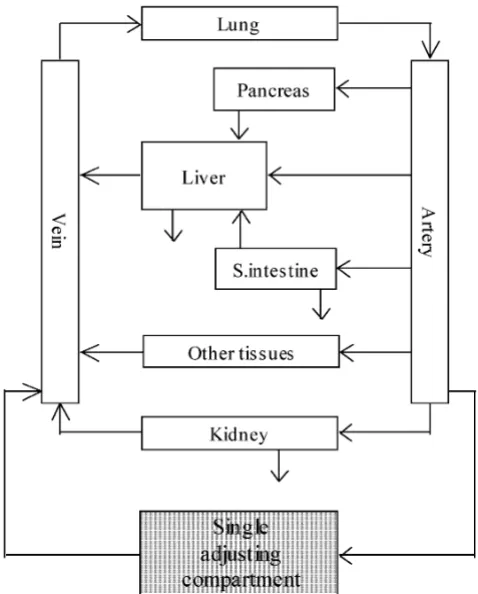
The simple WBPBPK model without membrane permea-tion was used (equapermea-tions 1–7). This model incorporated veins (v), arteries (a), lung, pancreas (panc), heart, liver (h), kidney (r), small intestine (gi), brain, adipose tissue, muscle and bone, as well as a single adjusting compart-ment (Figure 1). The well-stirred model was used for mod-elling each organ and tissue type. The rat Kp values were used without correction. Organ clearance was used to describe system clearance. It was assumed that the excret-ing organs were the liver, kidney and small intestine. Physiological input parameters (e.g. the blood flow rate in each organ or tissue [Qi] and the volume of the organ or
tissue [Vi]) were obtained from the literature [52].
A system of three ordinary linear differential equations was proposed for liver, kidney and small intestine, which are organs with elimination processes such as metabolism and excretion of bile and urine. The following equations were used [7]:
where C is the concentration, Q is the blood flow rate, V is the volume of tissue or organ, and Kp is the steady-state tissue-plasma partition coefficient.
Another system of linear ordinary differential equations was proposed for the lung and other organs, including a single adjusting compartment, with no elimination proc-ess. The following equations were used:
dCh dt
Ca Qh Qgi Qpanc Vh
Q gi C gi Vh Kpgi
Qpanc Cpanc Vh Kppa
=
(
− −)
+ ⋅⋅ +
⋅ ⋅ nnc
Qh Ch Vh Kph
Ca Qh fB CL h Vh Qh fB CL h
− ⋅ ⋅ −
⋅ ⋅
( )
+ ⋅
( int,int, )
(1)
dCr dt
Qr Ca Cr Vr Kpr
CLr Ca Vr
=
(
−)
⋅ −
⋅ (2)
dC gi dt
Q gi Ca C gi Vgi Kpgi
CL gi Ca Vgi
=
(
−)
⋅ −
⋅ (3)
dClung dt
Qtot Cv Clung Vlung Kplung
=
(
−)
⋅ (4)
dCi dt
Qi Ca Ci Vi Kpi
=
(
−)
⋅ (5)
Table 1: Pharmacokinetic parameters of various compounds used as inputs for each WBPBPK model simulation
Compound Rat Human References
CLtot
(mL/h/kg)
CLh
(mL/h/kg)
CLr
(mL/h/kg)
CLs
(mL/h/kg) T1/2
(h)
RBa fB CLtot
(mL/h/kg) T1/2
(h)
RBa fB
Tolbutamide 109 109 0 0 1.8 0.75 0.36 24.0 7.0 0.75 0.12 11–13 Diclofenac 1809 1176 633 0 0.14 0.55 0.009 447 1.2 0.55 0.009 12, 14–19 Midazolam 3024 1542 269 1213 0.53 1 0.066 473 2.8 0.80 0.043 12, 20–22 Diazepam 2492 2343 149 0 1.1 1.04 0.13 40.4 32.8 1.04 0.03 12, 23, 24 Phenytoin 1806 1246 181 379 0.37 0.99 0.23 187 13.2 0.61 0.20 11, 12, 14, 25, 26 Imipramine 2544 1649 895 0 3.5 1.67 0.01 424 16.5 1.67 0.14 12, 27–30 Lidocaine 4252 1276 2764 213 0.57 1.27 0.30 938 2.1 0.80 0.81 12, 31–35 Gatifloxacin 1101 341 574 186 1.8 1.07 0.68 252 6.5 1.07 0.75 36 Grepafloxacin 1079 917 151 11 3.4 1.34 0.44 245 11.6 1.1 0.45 37–39 Gemifloxacin 1300 163 599 432 1.6 1 0.57 500 7.0 1.2 0.30 40, 41 Pazufloxacin 970 90 721 159 0.88 1 0.74 384 1.8 1 0.77 38, 42–45 Enoxacin 1794 57 940 797 1.8 0.91 0.71 527 6.0 0.91 0.57 38, 46–48 Fleroxacin 285 57 195 34 2.6 1.29 0.40 120 9.5 1 0.77 36, 38, 49 Lomefloxacin 1243 973 270 0 4.0 1 0.69 252 7.1 1 0.79 50, 51
aR
where i represents the other organ.
Two linear ordinary differential equations were proposed for veins and arteries, and the following equations were used:
Pancreas and bone were not incorporated in the 8-organ model, and the adipose tissue and muscle were omitted from the 6-organ model.
The system of linear ordinary differential equations describing the WBPBPK model was solved numerically using the Runge-Kutta-Gill method [53].
A correction for intrinsic clearance in the liver was per-formed for acidic, neutral and basic compounds, using the in vitro intrinsic liver clearance of both rats and humans [12]. This correction was necessary because of the large species differences in metabolism. The following equa-tion was used for scaling up from the rat to the human model:
In this equation, sf represents a scaling factor, and the human:rat hepatic blood flow rate ratio was taken as 0.325.
Renal and secretion clearance corrections for the blood flow were performed for scaling up from a rat model to a human model because it has been reported that blood flow rate is useful for correcting some pharmacokinetic parameters [54-56]:
where CLorg represents clearance in the kidney or small
intestine, and Qj represents the blood flow rate in these organs.
Single adjusting compartment
A single adjusting compartment (SAC) was incorporated into the present model as a potential function that can off-set the lack of predictive precision. The SAC was incorpo-rated as a newly-developed virtual organ possessing the same functions as other organs in place of the "rest of the body" (carcass) previously used in WBPBPK modelling. However, the physiological parameters of the SAC were set up so that they could be adjusted arbitrarily. It was assumed that the lack of precision in simulating human pharmacokinetics has typically been caused by certain physiological factors. Thus, to describe the SAC, its blood flow rate (QSAC), organ/tissue volume (VSAC) and
steady-state tissue-plasma partition coefficient (KpSAC) were selected as input parameters. The SAC was also described using the well-stirred model (equation 5). Simulated rat pharmacokinetics were fitted to the observed pharmacok-inetics using QSAC, VS and a KpSAC, all of which could be changed arbitrarily. These SAC values used for fitting were fixed as data derived from rat studies.
When the QSAC of a rat was transformed to a human value, the following equation was used:
dCv dt
Qi Ci Vv Kpi
Qtot Cv Vv
= ⋅
⋅ ⎛ ⎝
⎜ ⎞
⎠
⎟ − ⋅
∑
(6)dCa dt
Clung Kplung C
Qtot Va a
=⎛ −
⎝ ⎜ ⎜
⎞
⎠ ⎟
⎟ (7)
CL CL CL
CL
human invivo rat invivo human invitro
int, , int, , int, , in
=
tt,rat invitro,
sf
⎛ ⎝
⎜⎜ ⎞⎠⎟⎟ ⋅
(8)
CL CL Q
Q
org human org rat
j human
j rat
, , ,
,
= ⎛
⎝
⎜⎜ ⎞⎠⎟⎟ (9)
Concept of the SAC-WBPBPK model Figure 1
where Qri is the blood flow rate in the isolated organ. P is a factor that depends on the individual model; P = 15 was used for this study. This value was fixed after optimising the 6- and 8-organ model simulations for correcting the QSAC, rat where the values were lager than the human Qtot.
This value is intrinsically different for each compound, but was assumed to be constant in order to give the model generality.
The following equation was used to transform rat to human VSAC:
Veins and arteries were not incorporated into the total vol-ume for each organ or tissue in a SAC. In addition, KpSAC, which was used as a parameter to describe the tissue dis-tribution of a SAC, was assumed to be the same as the value obtained from the rat. This method was used as an alternative compartment in place of the "rest of the body". The ability to be arbitrary is its main advantage. In con-trast, the "rest of the body" has only a fixed parameter, which could be a major cause of poor prediction.
Calculation of pharmacokinetic parameters
In general, the half-life (T1/2) and the total clearance (CLtot) are used to compare the precision of prediction of human pharmacokinetics among models [7-9]. Therefore, we used these parameters for this purpose. The T1/2 was calculated using equation 12, and kel (the terminal phase rate constant) was obtained by linear regression analysis of the log-transformed concentration-time data. The total area under the blood concentration-time curve (AUCinf) was obtained according to the following procedure. Blood AUC0-t values (where t is the time of the last blood concen-tration collected) were estimated using Simpson's rule [57], a more reasonable method than the trapezoidal method for calculating the AUC precisely. AUCt-inf was estimated by dividing the final blood concentration meas-ured by the terminal-phase rate constant. AUCinf is the sum of AUC0-t and AUCt-inf. CLtot was calculated according to equation 13.
Statistical analysis
The accuracy and precision of the calculated values were confirmed by considering the ratio of the observed to the predicted values. Average values were used to confirm accuracy, and the average-fold error (AFE) [24] and the within-2-fold error were used to confirm precision. The AFE was calculated using the following equation:
where N represents the number of data inputs used for the calculation.
In order to clarify the major cause of poor predictions by WBPBPK models, we confirmed the correlations between certain SAC input parameters and various physicochemi-cal parameters, which were physicochemi-calculated on the basis of the structures of the selected compounds.
Results
A generic WBPBPK model and the single adjusting com-partment (SAC)-WBPBPK model were constructed with parameters that depended on each compound. The preci-sion of predictions was confirmed for each model. The influence of the following two factors on the precision of simulation of human pharmacokinetics was investigated: the number of organs incorporated and the presence or absence of a SAC. The human blood concentration of each compound was simulated using the constructed model. The half-life (T1/2) and total clearance (CLtot) values were
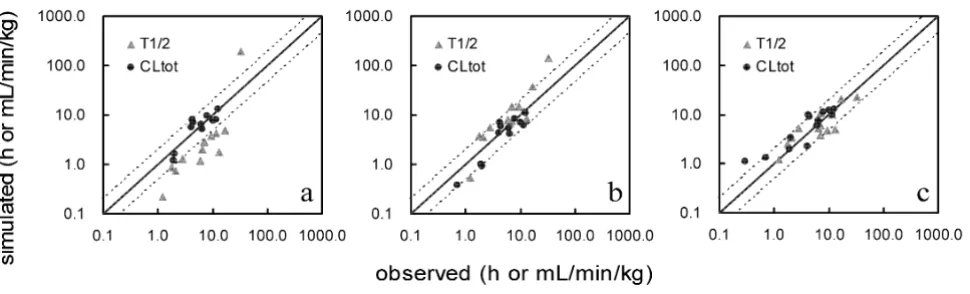
calculated from the simulated human blood concentra-tion. Figure 2a–c shows the relationship of the observed and predicted CLtot and T1/2 values when a SAC was not
incorporated and the number of organs changed. The pre-dicted values differed widely from the observed values. No satisfactory improvement in divergence was observed in spite of the addition of organs. Figure 3a–c shows the relationship observed when a SAC was incorporated and the number of organs altered. The predicted values resem-bled the observed values more closely in the model incor-porating a SAC than in the models lacking a SAC. The precision of the simulated values in each model was con-firmed by comparing the average fold error (AFE) and the within-2-fold error. These results (Table 2) showed that the precision of predictions of human T1/2 values decreased when some organs were removed from the model, regardless of the incorporation of a SAC. In the case of CLtot, the SAC-incorporated model yielded highly precise predictions in each of the three organ-number models, even the 6-organ model; the within 2-fold error was 92%. The AFE and within-2-fold error values were compared to those obtained from previous generic WBPBPK models and with those obtained by the conven-tional method for predicting human pharmacokinetics
Q Q P
Qri
Qtot human Qtot ra
SAC human, SAC rat, ,
, = − ⎛ ⎝ ⎜ ⎞ ⎠ ⎟ ⎡ ⎣ ⎢ ⎢ ⎤ ⎦ ⎥ ⎥⋅
∑
1 tt (10)V V V
V
SAC human SAC rat i human
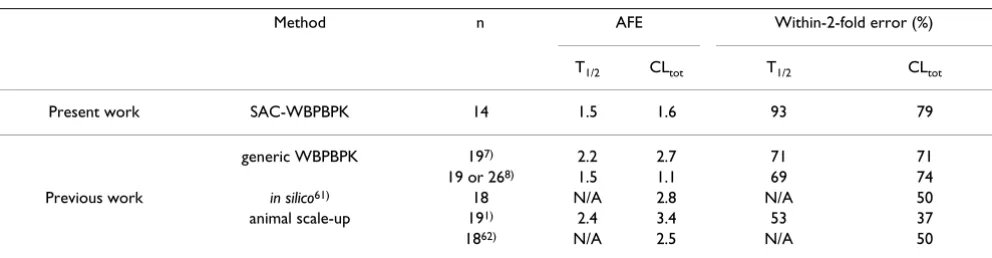
(Table 3). The predictions obtained with the SAC-WBPBPK model were more precise than those yielded by the other models.
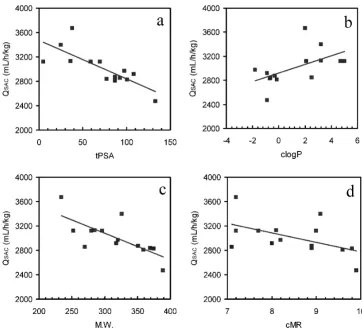
Significant correlations or non-significant trends were observed between QSAC, the blood flow rate of a SAC (Table 4), and four physicochemical parameters (tPSA, clogP, M.W. and cMR). The correlation coefficients between QSAC and tPSA, clogP, M.W. and cMR were 0.78, 0.57, 0.73 and 0.52, respectively (Figure 4a–d).
Discussion
Investigation of the lack of precision in simulations of human pharmacokinetics using the generic WBPBPK model
This study was conducted to clarify the main cause of the poor predictions obtained with the generic WBPBPK model and to enable a model to be constructed that could address this problem easily. We initially attempted to elu-cidate the divergence in the precision of predictions with the number of organs investigated, i.e. in the 6-, 8- and 10-organ models. Poor precision and discrepancies may be related to one or more of the following: active versus pas-sive transportation systems, species differences in metab-olism, and physiological factors such as blood flow rate,
Correlation between the observed and simulated pharmacokinetic parameters predicted without a SAC Figure 2
Correlation between the observed and simulated pharmacokinetic parameters predicted without a SAC. (a) Six-organ model without a SAC, (b) 8-organ model without a SAC, (c) 10-organ model without a SAC. The solid line repre-sents unity, whereas the dashed lines represent the 2-fold prediction error.
Correlation between the observed and simulated pharmacokinetic parameters predicted with a SAC Figure 3
tissue volume and the number of organs involved. Other factors could also be involved. The results of this series are shown in Figure 2: increasing the number of organs in the model improved the precision of prediction. These results indicate that failure to account for particular physiological factors may contribute to the poor predicted values from the generic WBPBPK model.
On the basis of the present findings, we inferred that not only species differences in active transportation systems, metabolism, etc., but also failure to account for the phys-iological parameters of each individual and each species, were responsible for the poor predicted values by previous WBPBPK models. Therefore, the precision with which human pharmacokinetics were predicted was examined by adding a single adjusting compartment (SAC), a newly developed virtual organ that could be expected to improve the precision of predictions if added to the generic WBPBPK model. The results are shown in Figure 3. Fitting of the simulated to the observed rat pharmacokinetics before scaling up to the human was successful and the AFE values of T1/2 and CLtot were lower than 1.1 for almost all
compounds. These findings supported our initial assump-tions, because the improvement in precision observed
with the model incorporating the SAC implicated the pre-vious failure to account for blood flow rate, tissue volume and tissue distribution.
The parameters for elucidating the precision of prediction were calculated (Table 2): the AFEs of CLtot and T1/2 were
greatly improved by incorporating a SAC into the 10-organ model. If the only major cause of poor predictive precision had been differences in the active transportation systems of different species, then it would not have been possible to correct for differences in predictive precision. However, inclusion of a SAC in the model corrected for the divergence resulting from active transportation sys-tems and metabolism, provided that no species differ-ences were involved. These findings did not contradict the assumptions made for the present series, because use of actual hepatic clearance values did not improve the preci-sion of predictions. It is therefore reasonable to conclude that the poor predictive value of the previous methods is due to their failure to account for physiological factors.
The predictions of CLtot were less precise for tolbutamide,
diclofenac, diazepam, grepafloxacin and lomefloxacin than for the other compounds tested, even when a SAC
Table 2: Human pharmacokinetic prediction results for 14 compounds
Parameter Group T1/2 CLtot
6 organs 8 organs 10 organs 6 organs 8 organs 10 organs
+ - + - + - + - + - +
-AFE acidic 5.45 38.7 2.26 16.6 1.36 13.5 1.39 305 1.07 26.5 2.56 14.7 neutral 3.58 36.6 2.97 2.12 1.64 2.25 4.01 68.5 1.47 14.8 1.38 10.8 basic 4.13 36.8 1.85 7.48 1.76 6.28 1.34 24.4 1.62 5.64 1.10 4.37 zwitterionic 2.80 14.4 1.41 5.10 1.36 3.85 1.40 33.3 1.48 7.40 1.63 5.67
AFE Overall 3.35 23.2 1.75 5.78 1.48 4.74 1.63 47.4 1.47 9.24 1.56 6.74
within-2-fold (%) 0 0 62 14 93 14 92 0 92 0 79 0
+: WBPBPK model with SAC, -: WBPBPK model without SAC.
Table 3: AFE values and within-2-fold errors from the present study and previous studies
Method n AFE Within-2-fold error (%)
T1/2 CLtot T1/2 CLtot
Present work SAC-WBPBPK 14 1.5 1.6 93 79
generic WBPBPK 197) 2.2 2.7 71 71
19 or 268) 1.5 1.1 69 74
Previous work in silico61) 18 N/A 2.8 N/A 50
animal scale-up 191) 2.4 3.4 53 37
1862) N/A 2.5 N/A 50
was incorporated into the 10-organ model. The diver-gence of prediction for the two acidic drugs is thought to have been caused by drug binding to plasma proteins, i.e. acidic drugs have a high affinity for plasma albumin, which leads to a lower contribution to tissue distribution. Consequently, most of the total pharmacokinetics of a drug can be described by a SAC and a clearance equation, together with a scaling-up equation to adjust for the results obtained from rats. However, a SAC acts only in a supporting role. The scaling-up equation also acts only in a supporting role. Therefore, the precision of prediction for the two acidic drugs tested here might have been worse than that for the other drugs. Specifically, in order to obtain precise predictions, the tissue distribution must have a large influence on the model.
Diazepam, a drug for which predictions show considera-ble divergence in precision, is known to be a substrate of human MDR1 [58]. Moreover, grepafloxacin is known to be a substrate of human MRP1 and rat Mrp2 [59,60]. However, there are no data regarding the contribution of rat Mdr1 to diazepam pharmacokinetics or of rat Mrp1 and human MRP2 in the case of grepafloxacin. In addi-tion, the differences between observed and predicted val-ues were smaller than those obtained when no SAC was incorporated. Previously reported findings, taken together with the results of the present study, indicate the involve-ment of both an active transportation system and species differences. However, these factors play only a minor role in the predictive precision of the generic WBPBPK model.
Table 3 compares the predictive precision of the SAC-WBPBPK model with previous methods. The best
within-2-fold error for predicting human T1/2 values was achieved
with the 10-organ model with a SAC, and the results were even better for CLtot. Regardless of the AFE values associ-ated with each of the previous methods (2 in both cases), the values for T1/2 and CLtot in the SAC-WBPBPK model showed more precise predictions; both were approxi-mately 1.5.
In summary, this series revealed that a major factor lead-ing to the poor precision observed with the generic WBPBPK model was the failure to account for human physiological parameters. The precision of a generic WBPBPK model was improved by incorporating a SAC, which included such physiological parameters. The results also indicated that the SAC-WBPBPK model will be more useful than previous WBPBPK models for predicting human pharmacokinetics, particularly in cases when pre-dictions are made with data obtained before the onset of clinical trials.
Indirect investigation of the lack of precision of simulations of human pharmacokinetics using SAC-related parameters
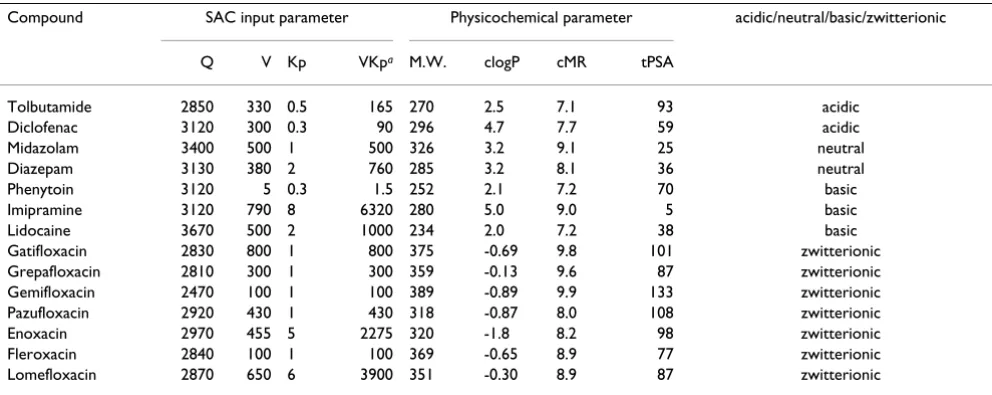
The input parameters for the SAC in this study were useful not only in terms of fitting the data to rat pharmacokinet-ics, but also for investigating factors that were missing from previous models. Initially, it was confirmed that QSAC, VSAC and KpSAC each correlated with various physic-ochemical parameters (Table 4). Significant correlations were confirmed between QSAC and three physicochemical parameters (topological polar surface area (tPSA), molec-ular weight (M.W.), and calculated logP (clogP)) and a non-significant trend was observed between QSAC and cal-culated molecular reflectability (cMR) (Figure 4). In
par-Table 4: Values of QSAC, VSAC, KpSAC, and various physicochemical parameters
Compound SAC input parameter Physicochemical parameter acidic/neutral/basic/zwitterionic
Q V Kp VKpa M.W. clogP cMR tPSA
Tolbutamide 2850 330 0.5 165 270 2.5 7.1 93 acidic
Diclofenac 3120 300 0.3 90 296 4.7 7.7 59 acidic
Midazolam 3400 500 1 500 326 3.2 9.1 25 neutral
Diazepam 3130 380 2 760 285 3.2 8.1 36 neutral
Phenytoin 3120 5 0.3 1.5 252 2.1 7.2 70 basic
Imipramine 3120 790 8 6320 280 5.0 9.0 5 basic
Lidocaine 3670 500 2 1000 234 2.0 7.2 38 basic
Gatifloxacin 2830 800 1 800 375 -0.69 9.8 101 zwitterionic Grepafloxacin 2810 300 1 300 359 -0.13 9.6 87 zwitterionic Gemifloxacin 2470 100 1 100 389 -0.89 9.9 133 zwitterionic Pazufloxacin 2920 430 1 430 318 -0.87 8.0 108 zwitterionic Enoxacin 2970 455 5 2275 320 -1.8 8.2 98 zwitterionic Fleroxacin 2840 100 1 100 369 -0.65 8.9 77 zwitterionic Lomefloxacin 2870 650 6 3900 351 -0.30 8.9 87 zwitterionic
ticular, for the correlations between QSAC and tPSA, a negative slope below the 0.1% significance criterion was observed. Generally, compounds with larger tPSA values are known to permeate the cell membrane with more dif-ficulty. The finding of large QSAC values indicated that the previous WBPBPK model does not take sufficient account of organs with high blood flow rates. On the other hand, small QSAC values indicate that the previous model was
unable to account for organs with low blood flow rates. The incorporation of a SAC in the model improved this issue. The negative-slope correlation between QSAC and
tPSA indicated the following: a compound with a low tPSA value (i.e. a compound that easily permeates the cell membrane and is therefore readily distributed among tis-sues) does not account for the factor of relative blood flow rate. Thus, high blood flow rates could affect the pharma-cokinetics of such a compound because cell membrane permeation is not a major factor. Accordingly, it is reason-able to assume that the physiological factor of blood flow
rate, such as blood flow-rate limitation, is related to the outcomes obtained from models. In contrast, for com-pounds associated with large tPSA values, membrane per-meability contributes more than blood flow rate because permeability is low. The problem caused by a large QSAC (small tPSA) could be resolved by incorporating a mem-brane permeation process into the WBPBPK model. How-ever, the problem caused by a small QSAC (large tPSA)
cannot be resolved easily: it is difficult to choose an ade-quate blood flow rate for each model because of variation among individuals. This factor could be the cause of poor predictions for large QSAC drugs. Therefore, we should keep these points in mind when we perform a proper human pharmacokinetics simulation. In short, previous models did not sufficiently account for the relationship between physiological factors and the unique distribution that is caused by an individual compound's physicochem-ical properties. Moreover, adding considerations such as a permeation process and individual differences in blood
Correlation of QSAC with physicochemical parameters Figure 4
flow rate for constructing a generic WBPBPK model could improve the precision of prediction.
The significant correlations that we found between clogP and QSAC are also considered reasonable, as was the case with tPSA, because when a drug is more lipophilic, its ability to permeate the cell membrane increases, resulting in a smooth distribution to certain tissues. Moreover, this factor is not related to the presence of an active transpor-tation system. However, the simple incorporation of organs did not account for a precise system, because drug metabolism contributes more when lipophilicity increases. On the other hand, the present findings indicate that differences in active transportation systems and metabolism between species did not play a major role in the model's predictions; the improvement in predictive precision when correcting for physiological factors by incorporating a SAC played a larger role. These conclu-sions were supported by the correlation between QSAC and M.W., and by the tendency of QSAC and cMR to reflect
molecular size. QSAC and cMR showed no significant cor-relations. However, the bias of cMR values of selected compounds in this study could explain why no significant correlations were found. The correlation between QSAC and cMR could be significant, provided the number of test compounds was increased. These results indicate that physiological limitations such as blood flow and mem-brane permeability were involved in improving the pre-dictive precision of the WBPBPK model. Furthermore, such physiological limitations were not accounted for suf-ficiently in previous WBPBPK models.
No significant correlations were observed between VSAC or KpSAC and the physicochemical parameters. However, VSAC and KpSAC tended to overestimate T1/2 as the values increased (data not shown). Moreover, the tendency toward overestimation was especially marked when the product of VSAC and KpSAC, which represented the degree of tissue distribution, was considered. These results indi-cate that the SAC was incorporated into this WBPBPK model as an organ with relatively slow drug transporta-tion and slow drug eliminatransporta-tion. Therefore, estimates of T1/2 tended to be longer when more of the drug is distrib-uted to a SAC. With regard to the generic WBPBPK model without a SAC, the precision of prediction of T1/2 was rel-atively good. However, the prediction of CLtot showed low precision. From these results, it is possible that the volume of distribution (Vd) value was not accurately predicted. This assumption indicates that the related factors VSAC and KpSAC in the SAC-WBPBPK model were not present in the previous generic WBPBPK model because, fundamentally, Vd is predicted using organ volumes and the Kp value of each organ. In the present study, the Kp value was not cor-rected by the blood free fraction (fB) in rat or human when the model was constructed. Therefore, the actual Kp
ues for humans were different from the experimental val-ues for the rat, which were used in the present study. Moreover, inter-individual differences in organ volume are not considered in the generic WBPBPK model. Accord-ingly, organ volume as a physiological parameter should have been accounted for in more detail, including the inter-individual variability of the data set, as well as drug-specific parameters such as Kp values.
The addition of a SAC, such as that developed for this study, to various generic WBPBPK models may enhance the precision of human pharmacokinetics simulations. This approach may also facilitate with the handling of cer-tain species differences (e.g. intrinsic clearance) because the SAC can be used as the "rest of the body (carcass)", i.e. as a non-specific compartment. Furthermore, this approach did not require arbitrary alterations of the actual experimental data, which distinguishes it from methods in which the observed data must be altered to fit the ani-mal (rat) findings. Thus, the present approach is a more rational methodology for prediction. In this regard, we will discuss the concept underlying the model presented here. Dedrick's animal scaling-up is an empirical approach. In contrast, a WBPBPK model entails a mecha-nistic approach. However, the generic WBPBPK model, which has been used at the preclinical stage, contains empirical factors such as Kp values, and a clearance pre-diction method for scaling up to the human. Moreover, if membrane permeation processes are incorporated into the model, we have to rely on empirical methods to scale up to human permeation rate constants. Nevertheless, the generic WBPBPK model is applicable for predicting human pharmacokinetics. That is because almost all parts of this system consist of actual human physiological parameters and are linked mechanistically. Therefore, the WBPBPK approach can elucidate kinetics in organs and is applicable for a variety of uses. The SAC approach is a hybrid of an empirical and a mechanistic approach. Using a SAC, we found that the primary cause of poor prediction was a failure to consider physiological systems. Therefore, a SAC approach is compatible with a mechanistic approach because it complements previous problems. On the other hand, a SAC is not just described as a physiolog-ical system. In this context, it is more empirphysiolog-ical than the generic WBPBPK model used previously. However, despite including an empirical factor, the SAC-WBPBPK model is more rational than the previous generic WBPBPK models. Moreover, our model addresses the cause of poor prediction in previous generic models, and does not need to manipulate observed experimental values to adjust to rat pharmacokinetics.
could be set as input parameters for a SAC, then the model would be unable to deal adequately with outliers. This problem has not yet been resolved, even when corrections were made using a scaling-up equation for human QSAC. This matter will require further study.
Conclusion
Incorporation of a SAC into a generic WBPBPK model, as performed in this study, significantly improved the preci-sion of predictions of human pharmacokinetics. For the first time, failure to account for certain physiological parameters was identified as a major problem in previous generic WBPBPK models, in addition to confounders such as species differences in terms of metabolism and the pres-ence/absence of active transportation systems (i.e. trans-porters). Moreover, the SAC-WBPBPK model performed better than all previous methods in terms of precision of prediction. Moreover, this newly developed model entails a simpler and more straightforward methodology than older models. It is likely that the present model will be useful not only for predicting clinical pharmacokinetics, but also for analyzing PBPK/PD at the preclinical stage in simulations of drug efficacy.
Competing interests
The authors declare that they have no competing interests.
Authors' contributions
HA conceived the idea, developed the model, performed the analysis, and drafted the manuscript. SI and WH assisted in the analysis and preparation of the manuscript. IN assisted in the analysis and preparation of the manu-script, and participated in helpful discussion. All authors read and approved the final manuscript.
Acknowledgements
The authors wish to thank Kyorin Pharmaceutical Co., Ltd. for allowing us to perform this study. We also thank Mr. Yoshiaki Kitamura for helpful dis-cussions. Dr. Paul S Agutter is thanked for improving and editing our man-uscript.
References
1. Boxenbaum H: Interspecies scaling, allometry, physiological time, and the ground plan of pharmacokinetics. J Pharmacoki-net Biopharm 1982, 10:201-227.
2. Tang H, Mayersohn M: Accuracy of allometrically predicted pharmacokinetic parameters in humans: role of species selection. Drug Metab Dispos 2005, 33:1288-1293.
3. Shiran MR, Proctor NJ, Howgate EM, Rowland-Yeo K, Tucker GT, Rostami-Hodjegan A: Prediction of metabolic drug clearance in humans: in vitro-in vivo extrapolation vs allometric scaling. Xenobiotica 2006, 36:567-580.
4. Gibson GG, Rostami-Hodjegan A: Modelling and simulation in prediction of human xenobiotic absorption, distribution, metabolism and excretion (ADME): in vitro-in vivo extrapo-lations (IVIVE). Xenobiotica 2007, 37:1013-1014.
5. Parrott N, Jones H, Paquereau N, Lavé T: Application of full phys-iological models for pharmaceutical drug candidate selec-tion and extrapolaselec-tion of pharmacokinetics to man. Basic Clin Pharmacol Toxicol 2005, 96:193-199.
6. Reddy MB: Physiologically Based Pharmacokinetic Modeling: Science And Applications Wiley Interscience: John Wiley & Sons, Inc; 2005. 7. Jones HM, Parrott N, Jorga K, Lavé T: A Novel Strategy for
Phys-iologically Based Predictions of Human Pharmacokinetics. Clin Pharmacokinet 2006, 32:511-542.
8. De Buck SS, Sinha VK, Fenu LA, Nijsen MJ, Mackie CE, Gilissen RA:
Prediction of Human Pharmacokinetics Using Physiologi-cally Based Modelling: A Retrospective Analysis of 26 Clini-cally Tested Drugs. Drug Metab Dispos 2007:1766-1780. 9. Björkman S: Reduction and lumping of physiologically based
pharmacokinetic models: prediction of the disposition of fen-tanyl and pethidine in humans by successively simplified models. J Pharmacokinet Pharmacodyn 2003, 30:285-307.
10. Rodgers T, Rowland M: Mechanistic approaches to volume of distribution predictions: understanding the processes. Pharm Res 2007, 24:918-933.
11. Sawada Y, Hanano M, Sugiyama Y, Iga T: Prediction of the disposi-tion of nine weakly acidic and six weakly basic drugs in humans from pharmacokinetic parameters in rats. J Pharma-cokinet Biopharm 1985, 13:477-492.
12. Ito K, Houston JB: Prediction of human drug clearance from in vitro and preclinical data using physiologically based and empirical approaches. Pharm Res 2005, 22:103-112.
13. Sugita O, Sawada Y, Sugiyama Y, Iga T, Hanano M: Physiologically based pharmacokinetics of drug-drug interaction: a study of tolbutamide-sulfonamide interaction in rats. J Pharmacokinet Biopharm 1982, 10:297-316.
14. El-hawari AM, Plaa GL: Role of the enterohepatic circulation in the elimination of phenytoin in the rat. Drug Metab Dispos 1978,
6:59-69.
15. The european agency for the evaluation of medicinal prod-ucts veterinary medicines and inspections. Committee for veterinary medicinal products, diclofenac, summary report. EMEA . 2003, September: 1–9.
16. Kumar S, Samuel K, Subramanian R, Braun MP, Stearns RA, Chiu SL, Evans DC, Baillie TA: Extrapolation of diclofenac clearance from in vitro microsomal metabokism data: role of acyl glu-curonidation and sequential oxidative metabolism of the acyl glucuronide. J Pharmacol Exp Ther 2002, 303:969-978. 17. Voltaren®. prescribing information. .
18. Grace RF, Edwards SR, Mather LE, Lin Y, Power I: Central and peripheral tissue distribution of diclofenac after subcutane-ous injection in the rat. Inflammopharmacology 2000, 8:43-54. 19. Shibata Y, Takahashi H, Chiba M, Ishii Y: Prediction of hepatic
clearance and availability by cryopreserved human hepato-cytes: an application of serum incubation method. Drug Metab Dispos 2002, 30:892-896.
20. Visser SAG, Wolters FLC, Gubbens-stibbe JM, Tukker E, graaf PH Van der, Peletier LA, Danhof M: Mechanism-based pharmacokinetic/ pharmacodynamic modeling of the electroencephalogram effects of GABAA receptor modulators: in vitro-in vivo cor-relations. J Pharmacol Exp Ther 2003, 304:88-101.
21. Woo GK, Williams TH, Kolis SJ, Warinsky D, Sasso GJ, Schwartz MA:
Biotransformation of [14C]midazolam in the rat in vitro and in vivo. Xenobiotica 1981, 11:373-384.
22. Björkman S, Wada DR, Berling BM, Benoni G: Prediction of the disposition of midazolam in surgical patients by a physiolog-ically based pharmacokinetic model. J Pharm Sci 2001,
90:1226-1241.
23. Inaba T, Tsutsumi E, Mahon WA, Kalow W: Biliary excretion of diazepam in the rat. Drug Metab Dispos 1974, 2:429-32. 24. Naritomi Y, Terashita S, Kimura S, Suzuki A, Kagayama A, Sugiyama
Y: Prediction of human hepatic clearance from in vivo animal experiments and in vitro metabolic studies with liver micro-somes from animals and humans. Drug Metab Dispos 2001,
29:1316-1324.
25. Poulin P, Theil FP: Prediction of pharmacokinetics prior to in vivo studies. II. Generic physiologically based pharmacoki-netic models of drug disposition. J Pharm Sci 2002,
91:1358-1370.
26. Itoh T, Sawada Y, Lin TH, Iga T, Hanano M: Kinetic analysis of phenytoin disposition in rats with experimental renal and hepatic diseases. J Pharmacobiodyn 1988, 11:289-308.
Publish with BioMed Central and every scientist can read your work free of charge
"BioMed Central will be the most significant development for disseminating the results of biomedical researc h in our lifetime."
Sir Paul Nurse, Cancer Research UK
Your research papers will be:
available free of charge to the entire biomedical community
peer reviewed and published immediately upon acceptance
cited in PubMed and archived on PubMed Central
yours — you keep the copyright
Submit your manuscript here:
http://www.biomedcentral.com/info/publishing_adv.asp
BioMedcentral
28. Rodgers T, Leahy D, Rowland M: Physiologically based pharma-cokinetic modeling 1: predicting the tissue distribution of moderate-to-strong bases. J Pharm Sci 2005, 94:1259-1276. 29. Okiyama M, Ueno K, Ohmori S, Igarashi T, Kitagawa H: Drug
inter-actions between imipramine and benzodiazepines in rats. J Pharm Sci 1988, 77:56-63.
30. Abernethy DR, Greenblatt DJ, Shader RI: Imipramine and desipramine disposition in the elderly. J Pharmacol Exp Ther
1985, 232:183-188.
31. Lili C, Shibata N, Yoshikawa Y, Takada K: Effect of glycerol-induced acute renal failure on the pharmacokinetics of lido-caine after transdermal application in rats. Biol Pharm Bull
2003, 26:1150-1154.
32. Keenaghan JB, Boyes RN: The tissue distribution, metabolism and excretion of lidocaine in rats, guinea pigs, dogs and man. J Pharmacol Exp Ther 1972, 180:454-463.
33. Shibasaki S, Kawamata Y, Ueno F, Koyama C, Itho H, Nishigaki R, Umemura K: Effects of cimetidine on lidocaine distribution in rats. J Pharmacobiodyn 1988, 11:785-793.
34. Ochs HR, Knüchel M, Abernethy DR, Greenblatt DJ: Dose-inde-pendent pharmacokinetics of intravenous lidocaine in humans. J Clin Pharmacol 1983, 23:186-188.
35. Burm AG: Clinical pharmacokinetics of epidural and spinal anaesthesia. Clin Pharmacokinet 1989, 16:283-311.
36. Kyorin Pharmaceutical Co., Ltd., in house data. .
37. Nakajima Y, Hattori K, Shinsei M, Matsunaga N, Iizasa H, Sasabe H, Akiyama H, Miyanmoto G, Nakashima E: Physiologically-based pharmacokinetic analysis of grepafloxacin. Biol Pharm Bull 2000,
23:1077-1083.
38. Bryskier A: Antimicrobial Agents: Antibacterials and Antifungals Washing-ton DC: ASM Press; 2005.
39. Akiyama H, Abe Y, Kusumoto N, Odomi M: Pharmacokinetics of Grepafloxacin (II)-Absorption, distribution and excretion after oral administration of [14C]grepafloxacin in rats. Jpn J Chemotherapy 1995, 43:107-124.
40. Ramji JV, Austin NE, Boyle GW, Chalker MH, Duncan G, Fairless AJ, Hollis FJ, McDonnell DF, Musick TJ, Shardlow PC: The disposition of gemifloxacin, a new fluoroquinolone antibiotic, in rats and dogs. Drug Metab Dispos 2001, 29:435-442.
41. LG Life Sciences. SB-265805. Prescribing Information . 2003, April 3.
42. Nakata M, Yamashiro Y, Shimakura M, Takahata M, Minami S, Watan-abe Y, Narita H: Pharmacokinetics of pazufloxacin mesilate in experimental animals. Jpn J Chemotherapy 1999, 47:65-75. 43. Hayakawa H, Hayashi K, Sakai H, Ishikura H, Takagi H, Nakajima Y,
Sogame Y: Absorption, distribution, excretion and metabo-lism of [14C] T-3761 in rats and mice. Jpn J Antibiot 1995, 48:671-685.
44. Nakashima M, Uemura K, Kosuge K, Uematsu T: Phase I clinical study of pazufloxacin mesilate. Jpn J Chemotherapy 1999,
47:141-175.
45. Hayakawa H, Takano Y, Sogame Y, Imaizumi H, Nakashima Y, Narita H: Disposition of 14C-pazufloxacin mesilate in rats and mice. Jpn J Chemotherapy 1999, 47:88-103.
46. Fujii T, Furukawa H, Yoshida K, Miyazaki H, Hashimoto M: Disposi-tion and metabolism of [14C]AT-2266 I. single administra-tion. Chemotherapy 1984, 32:117-135.
47. Nakamura S, Kurobe N, Kashimoto S, Ohue T, Takase Y, Shimizu M:
Absorption, distribution, excretion and metabolism of AT-2266 in experimental animals. Chemotherapy 1984, 32:86-94. 48. Kawai M, Nakanishi M, Maekawa N: Phase I study of AT-2266.
Chemotherapy 1984, 32:334-358.
49. Nagatsu Y, Mukai M, Takagi K, Uchida H: Absorption, distribution and excretion of 14C-fleroxacin in rats and rabbits. Chemother-apy 1990, 38:100-114.
50. Nagata O, Yamada T, Yamaguchi T, Okezaki E: Disposition and metabolism of NY-198 IV. absorption, distribution and excretion of 14C-NY-198 in rats and dogs. Chemotherapy 1988, 36:151-173.
51. Nakashima M, Uematsu T, Takiguchi Y, Mizuno A: Phase I study on NY-198. Chemotherapy 1988, 36:201-239.
52. Brown RP, Delp MD, Lindstedt SL, Rhomberg LR, Belilies RP: Physi-ological parameter values for physiPhysi-ologically based pharma-cokinetic models. Toxicology and Industrial Health 1997,
13(4):407-484.
53. Ito K, Sawada Y, Sugiyama Y, Hanano M, Iga T: Kinetic evaluation for measurement of in vivo receptor occupancy by psycho-tropic drug in brain: implication for human studies. Chem Pharm Bull (Tokyo) 1991, 39:1813-1819.
54. Ward KW, Smith BR: A comprehensive quantitative and quali-tative evaluation of extrapolation of intravenous pharma-cokinetic parameters from rat, dog, and monkey to humans. I. Clearance. Drug Metab Dispos 2004, 32:603-611.
55. Ward KW, Smith BR: A comprehensive quantitative and quali-tative evaluation of extrapolation of intravenous pharma-cokinetic parameters from rat, dog, and monkey to humans. II. Volume of distribution and mean residence time. Drug Metab Dispos 2004, 32:612-619.
56. Evans CA, Jolivette LJ, Nagilla R, Ward KW: Extrapolation of pre-clinical pharmacokinetics and molecular feature analysis of "discovery-like" molecules to predict human pharmacoki-netics. Drug Metab Dispos 2006, 34:1255-1265.
57. El-Gebeily M, Yushau B: Numerical Methods with MS Excel. TMME 2007, 4:84-92.
58. Adachi Y, Suzuki H, Sugiyama Y: Comparative studies on in vitro methods for evaluating in vivo function of MDR1 P-glycopro-tein. Pharm Res 2001, 18:1660-1668.
59. Tamai I, Yamashita J, Kido Y, Ohnari A, Sai Y, Shima Y, Naruhashi K, Koizumi S, Tsuji A: Limited distribution of new quinolone anti-bacterial agents into brain caused by multiple efflux trans-porters at the blood-brain barrier. J Pharmacol Exp Ther 2000,
295:146-152.
60. Sasabe H, Tsuji A, Sugiyama Y: Carrier-mediated mechanism for the biliary excretion of the quinolone antibiotic grepa-floxacin and its glucuronide in rats. J Pharmacol Exp Ther 1998,
284:1033-1039.
61. Brightman FA, Leahy DE, Searle GE, Thomas S: Application of generic physiologically based pharmacokinetic model to the estimation of xenobiotic levels in human plasma. Drug Metab Dispos 2006, 34:94-101.