VALIDATING SECURITY CONSTRAINTS FOR
E-COMMERCE WEB APPLICATIONS
Arti Sood
1, Raninder Kaur Dhillon
21
Department of Computer Science & Engineering, Guru Nanak Dev Engineering College,
Ludhiana, India
2
Assistant Professor, Department of Information Technology, Guru Nanak Dev Engineering College,
Ludhiana, India
ABSTRACT
Software engineering is the basis of development of any software. In the past few years, security of software is of high concern. Therefore detection of errors which can lead to insecurity is quite important. In this paper, efforts are made for detection of errors by designing an application for e-commerce websites which takes file as input, checks it and outputs its constraint status. This paper aims to analyze the security assets of e-commerce websites that are threatened and help in proper detection of errors by validating various security constraints as many a times developers may overlook the constraints unapplied.
Keywords: Component;
Security Assets, Security Constraints, Software Security, Software TestingI. INDRODUCTION
Software can have a huge impact in any aspect of society. Software systems play a vital role in our modern
society. Software engineering is an engineering discipline that is concerned with all aspects of software
production from requirement specification to maintaining the system after it has been launched into use. In
general software development processes consists of a particular set of software development practices which are
performed by the software development team in a predetermined order.
In today’s world where we are advancing towards e-commerce and business is happening over web/internet,
security is an area of major concern for all kinds of applications. As the technologies advance, there is a wide
increase in the threat to the security of software. Security is concerned with every phase of software
development, right from requirements specification to design, implementation, testing, and deployment of
software. Thus security of software has become an essential part, which has to be taken care of during the
process of a software development.
Whenever we start the development of software, along with its functional requirements there has always been a
need to think seriously about the security requirements as well. Security is vital to any software and terminates
only when only when the software retires. It is also important for the development team to successfully identify
and resolve all the security issues, during the development of software itself conforming that the deliverable
II. TESTING
Testing is the process of evaluating a system or its component(s) with intent to find whether it satisfies the
specified requirements or not. Testing is executing a system in order to find any gaps, errors, or missing
requirements in contrary to the actual requirements. Software testing is a formal process carried out by a
specialized testing team in which a software unit, several integrated units or an entire software package are
examined by running the programs on a computer [1]. It is a very important part of software engineering to
check the quality of the product in context to which it is engineered to operate.
It is used to validate and verify that a software product meets its specifications and technical requirements.
Software testing can be performed at any time during the software development process. Testing is performed in
context to detect software failures so that appropriate errors may be discovered and corrected. It is an
investigation done to find out the actual quality of the system developed, to check whether the given system
works as expected and meets the technical requirements [2]. Testing compares the present state & behavior of
system to the user expectations, specifications, standards, and target audience expectations as every software has
its own target audience.
Designing effective test cases is important but the strategy used to execute them is also as important. There are a
number of questions that arise while a system is being tested. To name a few of them, Should the entire program
be tested? , Or should tests be run on small cases of it? At what time the customer is involved?And so on. So, a
strategy for execution of testing is given by the project manager, testers and engineers involved in the project.
And after that too, there may be lot of cost involved in testing phase as compared to any other software
development activity.
As testing is an activity which is planned earlier and conducted in some step-by-step systematic approach, there
are templates of testing into which test cases are placed. A number of software testing strategies have following
things in common:
At different situations or times, the testing approach is different.
It starts from the component or unit level moving towards the integration of the whole system.
Debugging is a different term than testing. Debugging is usually at implementation phase and may be
accommodated within testing.
Testers, for large projects, and developers, for small projects conduct testing.
Strategy for software testing includes the low level as well as high level tests which ensure small segments of
code correctly working and major system functions against user requirements.
III.
IMPORTANCE
OF
TESTING
Software testing plays a vital role in the field of software engineering. Testing is critically important for any
software as without testing, software is, no doubt, developed but is at threat to be caught by any error at any
time also causing failures. Testing helps in delivering the software that meets user specifications, prevents
unexpected results and also improves the maintenance part of the application.
According to one survey software errors costs about 80% of the software development costs of a project that are
about 30-85 errors per 100 lines of code while the number reduces to 0.5-3.0 errors per 1000 lines of code after
testing is undertaken. This conveys that still 0.5 to 3 errors are there for one thousand lines of code which are
left undetected before delivering the product. Therefore, testing is considered as important as implementation
and other phases of software development.
IV.
RELATED
WORK
Security engineering with patterns is currently a very active area of research [4]. Security patterns -- an
adaptation of Design Patterns to security -- capture experts' experience in order to solve recurrent security
problems in a structured and reusable way [5]. Applying design pattern enables developers to reuse it to solve a
specified design issue [5, 6]. Recently [7] proposed a UML based validation method for security constraints.
This method uses Security Design Pattern (SDP) and Security Requirement Pattern (SRP) that a developer uses
to validate the security constraints [6, 7, 8]. A security pattern is reusable as a security package and incorporates
security information; permitting programming engineers to outline secure frameworks like a security expert.
This method leads to the identification of assets, threats, and countermeasures during an early stage of
development [6]. The appropriate application of the pattern and the existence of vulnerabilities, identified in the
early stage of the design model had been validated.
V.
PROPOSED
METHOD
OF
VALIDATING
FILES
For any software, testing is conducted in order to ensure that there is no error while the system runs. Securing
the system is as well important for the testers developing software. To make sure the security constraints are
applied to the software which is under development, validations are important. This paper proposes a validation
method for validating the security constraints for e-commerce websites.
This is important because if the validations are left unapplied, it can lead to the insecurity of software which
may lead to failure also. Secure software is important to assure the quality of the software. Therefore, there is
need of designing a system which can validate a file so that it can be easily known whether a given specified
security constraint is applied or not. The testing method used here is introduced as an application that validates a
file for various security constraints for a given security asset (module). It is an automated testing method for jsp
and sql files used for developing e-commerce websites.
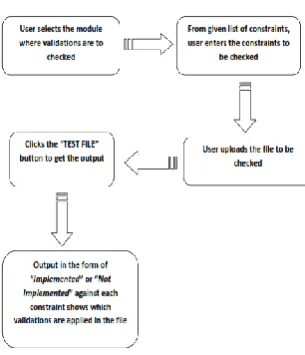
Figure 1 shows the various steps for validating various security constraints of a file. Before the steps were
implemented, first all the security assets (functions) of e-commerce websites that can be threatened are analyzed
in detail. These functions are used and implemented as different modules.
Step 1: In the first step, user selects the module where validations are to be applied.
Step 2: In the next step, from the list of constraints, the user enters the constraints that need to be validated in
that particular module.
Step 3: Finally the file (jsp or sql) is uploaded.
Step 4: After the file gets uploaded, it outputs the constraint status, showing if the security constraints are
implemented or not.
VI.
RESULTS
AND
DISCUSSION
This section presents the simulated results of validating the security constraints for web application testing.
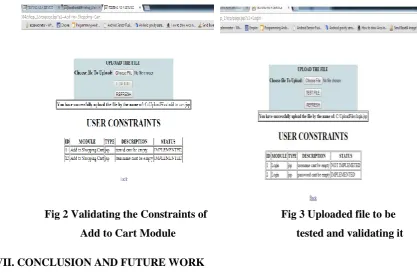
Figure 2 and Figure 3 below show some examples of the security assets that can be threatened. The security
assets considered in this paper are add to cart and login modules which are selected by the user to validate
various security constraints present in them.
Fig 2 Validating the Constraints of Fig 3 Uploaded file to be
Add to Cart Module tested and validating it
VII. CONCLUSION AND FUTURE WORK
Employing security patterns requires special training to the developers; it is a costly method as well. The
previous methods for detection of errors are expensive and are available as tools. In this paper, efforts are done
to detect the errors by validating security constraints as an application. It is also a less expensive method
compared to other methods.
This application is specially designed for validating the security constraints during the development of software
which also reduces the testing effort to a great extent. This application takes file as input, applies validations to
it and outputs its constraint status. The status indicates if the security constraints are implemented or not. The
USE model independent as it doesn’t depends on UML diagrams for generating security patterns. It checks the
security constraints status for the web related files.
The scope of the proposed work is limited to validating the constraint status of jsp and sql files only. This work
can be extended to implement testing as service so that multiple users can use this service.
REFERENCES
[1] Khaled M. Mustafa; Rafa E. Al-Qutaish and Mohammad I. Muhairat (2009), “ Classification of Software
Testing Tools Based on the Software Testing Methods”, Second International Conference on Computer
and Electrical Engineering, IEEE Computer Society Washington, DC, USA ©2009
[2] Chawla, Rshma and Dr. Mehta, Naveeta (2012), “Software Security Patterns In Security Engineering”,
IJRIM Volume 2, Issue 2 (February 2012) (ISSN 2231-4334).
[3] Khan, Ehmer M. and Khan, Farmeena (2014), “Importance of Software Testing in Software Development
Life Cycle” IJCSI International Journal of Computer Science Issues, Vol. 11, Issue 2, No 2, March 2014
[4] Bouaziz, Rahma; Kallel, Slim and Coulette, Bernard (2013), “An engineering process for security patterns
application in component based models”, 2013 Workshops on Enabling Technologies: Infrastructure for
Collaborative Enterprises.
[5] Huaxin, MU and Shuai, JIANG (2011), “Design Patterns in Software Development”, Software
Engineering and Service Science (ICSESS), IEEE 2011,Bejing.
[6] Moreira, Gabriel de Souza Pereira and Cardoso, Felipe Rafael Motta (2009), “Design patterns reuse for
real time embedded software development”, International Conference on Information Technology, New
Generations, ITNG 2009, Las Vegas, Nevada, 27-29 April 2009
[7] Kobashi, Takanori; Yoshioka, Nobukazu and Okubo, Takao (2013), “Validating Security Design Pattern
Applications Using Model Testing”, 2013 International Conference on Availability, Reliability and
Security. (ARES 2013), pp. 62-71, IEEE CPS, 2-6 Sep., Regensburg, Germany.
[8] Konrad, Sascha; Cheng, Betty H.C.; Campbell, Laura A. and Wassermann, Ronald (2003), “Using
Security Patterns to Model and Analyze Security Requirements”,In IEEE Workshop on Requirements for
High Assurance Systems, Proc. of RE03 Workshop on Requirements for High-Assurance Systems
(RHAS03), Monterey Bay, CA, Sept. 2003
[9] Petrova-Antonova, Dessislava; Ilieva, Sylvia and Stoyanova, Vera (2013), “TESSI: A Web Service
Testing Tool”, Research Challenges in Information Science (RCIS), IEEE Seventh International
Conference, 2013.
[10] Taterh, Swapnesh; Yadav, K.P. and Sharma, S.K. (2012), “Threat Modeling and Security Pattern used in
Design Phase of Secure Software Development life Cycle”, International Journal of Advanced Research in