© 2016 IJSRSET | Volume 2 | Issue 6 | Print ISSN: 2395-1990 | Online ISSN : 2394-4099 Themed Section: Engineering and Technology
Threshold Proxy Re-encryption Scheme and Decentralized
Erasure Code Based Cloud Storage and Data Forwarding
1
Mannem Pratyusha,
2V. Lakshma Reddy
1
* PG Scholar in Department of Computer Science & Engineerng , Pace Institute of Tech and Sciences, Vallur, Ongole, Andhra Pradesh, India
2Assistant Professor Department of CSE, PACE Institute of Technology and Sciences, Vallur, Ongole, Andhra Pradesh, India
ABSTRACT
Cloud storage system, consisting of a collection of storage servers, provides long-term storage services over the Internet. Storing data in a third party’s cloud system causes serious concern over data confidentiality. General encryption schemes protect data confidentiality, but also limit the functionality of the storage system because a few operations are supported over encrypted data. Constructing a secure storage system that supports multiple functions is challenging when the storage system is distributed and has no central authority. We propose a threshold proxy re-encryption scheme and integrate it with a decentralized erasure code such that a secure distributed storage system is formulated. The distributed storage system not only supports secure and robust data storage and retrieval, but also lets a user forward his data in the storage servers to another user without retrieving the data back. The main technical contribution is that the proxy re-encryption scheme supports encoding operations over encrypted messages as well as forwarding operations over encoded and encrypted messages. Our method fully integrates encrypting, encoding, and forwarding. We analyse and suggest suitable parameters for the number of copies of a message dispatched to storage servers and the number of storage servers queried by a key server. These parameters allow more flexible adjustment between the number of storage servers and robustness.
Keywords: Secure Storage System , Threshold Cryptography ,Decentralized Erasure Code, Proxy Re-Encryption.
I.
INTRODUCTION
AS become available in recent years, many services are high-speed networks and ubiquitous Internet access provided on the Internet such that users can use them from anywhere at any time. For example, the email service is probably the most popular one. Cloud computing is a concept that treats the resources on the Internet as a unified entity, a cloud. Users just use services without being concerned about how computation is done and storage is managed. In this paper, we focus on designing a cloud storage system for robustness, confidentiality, and functionality. A cloud storage system is considered as a largescale distributed storage system that consists of many independent storage servers.
Data robustness is a major requirement for storage systems. There have been many proposals of storing
parallel tasks of generating codeword symbols. A decentralized erasure code is suitable for use in a distributed storage system. After the message symbols are sent to storage servers, each storage server independently computes a codeword symbol for the received message symbols and stores it. This finishes the encoding and storing process. The recovery process is the same.
Storing data in a third party’s cloud system causes serious concern on data confidentiality. In order to provide strong confidentiality for messages in storage servers, a user can encrypt messages by a cryptographic method before applying an erasure code method to encode and store messages. When he wants to use a message, he needs to retrieve the codeword symbols from storage servers, decode them, and then decrypt them by using cryptographic keys. There are three problems in the above straightforward integration of encryption and encoding. First, the user has to do most computation and the communication traffic between the user and storage servers is high. Second, the user has to manage his cryptographic keys. If the user’s device of storing the keys is lost or compromised, the security is broken. Finally, besides data storing and retrieving, it is hard for storage servers to directly support other functions. For example, storage servers cannot directly forward a user’s messages to another one. The owner of messages has to retrieve, decode, decrypt and then forward them to another user.
In this paper, we address the problem of forwarding data to another user by storage servers directly under the command of the data owner. We consider the system model that consists of distributed storage servers and key servers. Since storing cryptographic keys in a single device is risky, a user distributes his cryptographic key to key servers that shall perform cryptographic functions on behalf of the user. These key servers are highly protected by security mechanisms. To well fit the distributed structure of systems, we require that servers independently perform all operations. With this consideration, we propose a new threshold proxy re encryption scheme and integrate it with a secure decentralized code to form a secure distributed storage system. The encryption scheme supports encoding operations over encrypted messages and forwarding operations over encrypted and encoded messages. The tight integration of encoding, encryption, and forwarding makes the storage system efficiently meet
the requirements of data robustness, data confidentiality, and data forwarding. Accomplishing the integration with consideration of a distributed structure is challenging. Our system meets the requirements that storage servers independently perform encoding and re-encryption and key servers independently perform partial decryption. Moreover, we consider the system in a more general setting than previous works. This setting allows more flexible adjustment between the number of storage servers and robustness.
Our contributions. Assume that there are n distributed storage servers and m key servers in the cloud storage system. A message is divided into k blocks and represented as a vector of k symbols. Our contributions are as follows:
1. We construct a secure cloud storage system that supports the function of secure data forwarding by using a threshold proxy re-encryption scheme.The encryption scheme supports decentralized erasure codes over encrypted messages and forwarding operations over encrypted and encoded messages. Our system is highly distributed where storage servers independently encode and forward messages and key servers independently perform partial decryption.
2. We present a general setting for the parameters of our secure cloud storage system. Our parameter setting of n=akC supersedes the previous one of n=ak√k, where C≥1.5 and a >√2[6]. Our result n=akC akc allows the of storage servers be much great than the number of blocks of a message.In practical systems, the number of storage servers is much more than k. The sacrifice is to slightly increase the total copies of an encrypted message symbol sent to storage servers.
Nevertheless, the storage size in each storage server does not increase because each storage server stores an encoded result (a codeword symbol), which is a combination of encrypted message symbols.
II.
METHODS AND MATERIAL
Related Works
2.1 Distributed Storage Systems
At the early years, the Network-Attached Storage (NAS) [7] and the Network File System (NFS) [8] provide extra storage devices over the network such that a user can access the storage devices via network connection. Afterward, many improvements on scalability, robustness, efficiency, and security were proposed [1], [2], [9]. A decentralized architecture for storage systems offers good scalability, because a storage server can join or leave without control of a central authority. To provide robustness against server failures, a simple method is to make replicas of each message and store them in different servers. However, this method is expensive as z replicas result in z times of expansion. One way to reduce the expansion rate is to use erasure codes to encode messages [10], [11], [12], [13], [5]. A message is encoded as a codeword, which is a vector of symbols, and each storage server stores a codeword symbol. A storage server failure is modeled as an erasure error of the stored codeword symbol. Random linear codes support distributed encoding, that is, each codeword symbol is independently computed. To store a message of k blocks, each storage server linearly combines the blocks with randomly chosen coefficients and stores the codeword symbol and coefficients. To retrieve the message, a user queries k storage servers for the stored codeword symbols and coefficients and solves the linear system. Dimakis et al. [13] considered the case that n=akC for a fixed constant a. They showed that distributing each block of a message to v randomly chosen storage servers is enough to have a probability 1- k/p –o(1) of a successful data retrieval, where v = b
ln k, b > 5a, and p is the order of the used group. The sparsity parameter v = b ln k is the number of storage servers which a block is sent to. The larger v is, the communication cost is higher and the successful retrieval probability is higher. The system has a light data confidentiality because an attacker can compromise
k storage servers to get the message.
Lin and Tzeng [6] addressed robustness and confidentiality issues by presenting a secure decentralized erasure code for the networked storage system. In addition to storage servers, their system consists of key servers, which hold cryptographic key shares and work in a distributed way. In their system, stored messages are encrypted and then encoded. To retrieve a message, key servers query storageservers for the user. As long as the number of available key servers
is over a threshold t, the message can be successfully retrieved with an overwhelming probability. One of their results shows that when there are n storage servers with n=ak√k, the parameter v is v = b ln k with b > 5a, and each key server queries 2 storage servers for each retrieval request, the probability of a successful retrieval is at least k/p –o(1) .
2.2 Proxy Re-Encryption Schemes
Proxy re-encryption schemes are proposed by Mambo and Okamoto [14] and Blaze et al. [15]. In a proxy re-encryption scheme, a proxy server can transfer a ciphertext under a public key PKA to a new one under
another public key PKB by using the re-encryption key
RKA→B. The server does not know the plaintext during
transformation. Ateniese et al. [16] proposed some proxy re-encryption schemes and applied them to the sharing function of secure storage systems. In their work, messages are first encrypted by the owner and then stored in a storage server. When a user wants to share his messages, he sends a re-encryption key to the storage server. The storage server re-encrypts the encrypted messages for the authorized user. Thus, their system has data confidentiality and supports the data forwarding function. Our work further integrates encryption, re-encryption, and encoding such that storage robustness is strengthened.
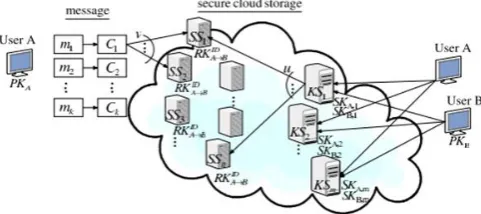
Figure 1. A general system model of our work
re-encryption schemes use pairing operations, there exist proxy re-encryption schemes without pairing [19].
2.3 Integrity Checking Functionality
Another important functionality about cloud storage is the function of integrity checking. After a user stores data into the storage system, he no longer possesses the data at hand. The user may want to check whether the data are properly stored in storage servers. The concept of provable data possession [20], [21] and the notion of proof of storage [22], [23], [24] are proposed. Later, public auditability of stored data is addressed in [25]. Nevertheless all of them consider the messages in the cleartext form.
3. Scenario
We present the scenario of the storage system, the threat model that we consider for the confidentiality issue, and a discussion for a straightforward solution.
3.1 System Model
As shown in Fig. 1, our system model consists of users, n storage servers SS1; SS2; . . . ; SSn, and m key servers KS1; KS2; . . . ; KSm. Storage servers provide storage services and key servers provide key management services. They work independently. Our distributed storage system consists of four phases: system setup, data storage, data forwarding, and data retrieval. These four phases are described as follows. In the system setup phase, the system manager chooses system parameters and publishes them. Each user A is assigned a public-secret key pair (PKA,SKA). User A distributes his secret key SKA to key servers such that each key server KSi holds a key share SKA,i, 1≤ i ≤ m. The key is shared with a threshold t.
In the data storage phase, user A encrypts his message M and dispatches it to storage servers. A message M is decomposed into k blocks m1; m2; . . . ; mk and has an identifier ID. User A encrypts each block mi into a ciphertext Ci and sends it to v randomly chosen storage servers. Upon receiving ciphertexts from a user, each storage server linearly combines them with randomly chosen coefficients into a codeword symbol and stores it. Note that a storage server may receive less than k message blocks and we assume that all storage servers know the value k in advance. In the dataforwarding
phase, user A forwards his encrypted message with an identifier ID stored in storage servers to user B such that B can decrypt the forwarded message by his secret key. To do so, A uses his secret key SKA and B’s public key
PKB to compute a re-encryption key RK ID
A→B and then
sends RKID A→B to all storage servers. Each storage
server uses the reencryption key to re encrypt its codeword symbol for later retrieval requests by B. The re-encrypted codeword symbol is the combination of ciphertexts under B’s public key. In order to distinguish re-encrypted codeword symbols from intact ones, we call them original codeword symbols and reencrypted
codeword symbols, respectively.
In the data retrieval phase, user A requests to retrieve a message from storage servers. The message is either stored by him or forwarded to him. User A sends a retrieval request to key servers. Upon receiving the retrieval request and executing a proper authentication process with user A, each key server KSi requests u
randomly chosen storage servers to get codeword symbols and does partial decryption on the received codeword symbols by using the key share SKA,i. Finally,
user A combines the partially decrypted codeword symbols to obtain the original message M. System recovering. When a storage server fails, a new one is added. The new storage server queries k available storage servers, linearly combines the received codeword symbols as a new one and stores it. The system is then recovered.
3.2 Threat Model
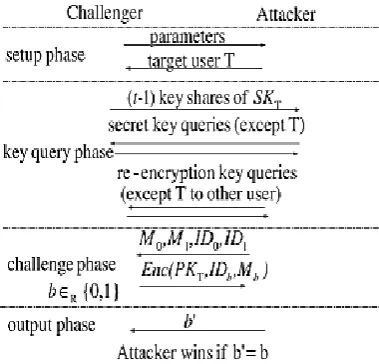
Figure 2. The security game for the chosen plaintext attack.
The challenger C provides the system parameters. After the attacker A chooses a target user T , the challenger gives him (t-1) key shares of the secret key SKT of the target user T to model (t-1) compromised key servers. Then, the attacker can query secret keys of other users and all reencryption keys except those from T to other users. This models compromised nontarget users and storage servers. In the challenge phase, the attacker chooses two messages M0 and M1 with the identifiers ID0 and ID1, respectively. The challenger throws a random coin b and encrypts the message Mb with T ’s public key PKT . After getting the ciphertext from the challenger, the attacker outputs a bit b0 for guessing b. In this game, the attacker wins if and only if b0 ¼ b. The advantage of the attacker is defined as |1/2-Pr[b’=b]|.
A cloud storage system modeled in the above is secure if no probabilistic polynomial time attacker wins the game with a nonnegligible advantage. A secure cloud storage system implies that an unauthorized user or server cannot get the content of stored messages, and a storage server cannot generate re-encryption keys by himself. If a storage server can generate a re-encryption key from the target user to another user B, the attacker can win the security game by re-encrypting the ciphertext to B and decrypting the reencrypted ciphertext using the secret key SKB. Therefore, this model addresses the security of data storage and data forwarding.
3.3 A Straightforward Solution
A straightforward solution to supporting the data forwarding function in a distributed storage system is as follows:when the owner A wants to forward a message to user B, he downloads the encrypted message and decrypts it by using his secret key. He then encrypts the message by using B’s public key and uploads the new ciphertext. When B wants to retrieve the forwarded message from A, he downloads the ciphertext and decrypts it by his secret key. The whole data forwarding process needs three communication rounds for A’s downloading and uploading and B’s downloading. The communication cost is linear in the length of the forwarded message. The computation cost is the decryption and encryption for the owner A, and the decryption for user B. Proxy re-encryption schemes can significantly decrease communication and computation cost of the owner. In a proxy re-encryption scheme,the owner sends a re-encryption key to storage servers such that storage servers perform the re-encryption operation for him. Thus, the communication cost of the owner is independent of the length of forwarded message and the computation cost of re-encryption is taken care of by storage servers. Proxy re-encryption schemes significantly reduce the overhead of the data forwarding function in a secure storage system.
III.
RESULTS AND DISCUSSION
Construction of Secure Cloud Storage Systems
Before presenting our storage system, we briefly introduce the algebraic setting, the hardness assumption, an erasure code over exponents, and our approach.
Bilinear map. Let G1 and G2 be cyclic multiplicative
groups2 with a prime order p and q ϵG1 be a generator. A map ẽ:G X G1→ G2 is a bilinear map if it is efficiently computable and has the properties of bilinearity and nondegeneracy: for any x,y ϵ Z*p, ẽ (gx ,gy )= ẽ (g ,g )xy and ẽ (g,g )is not the identity element in G2. Let Gen(1λ )be an algorithm generating,(g ẽ ,G1,G2,p), where is the length of p. Let
x ϵ R X denote that x is randomly chosen from the set X.
(g, gx, gy, gz, ẽ (g,g )r, where x, y, z ϵ R Z *
p . Formally, for any probabilistic polynomial time algorithm A, the following is negligible (in λ).
|Pr[A(g,gx, gygz,Qz)=b:x,y,z,r,ϵR Z *
p, Q0= ẽ (g,g )
xyz
;Q1= ẽ (g,g ) r
;b ϵ R{0,1}]-1/2|.
Erasure coding over exponents. We consider that the message domain is the cyclic multiplicative group G2 described above. An encoder generates a generator matrixG=[ gi,j] for 1≤ i ≤ k, 1 ≤ j ≤ n as follows: for
each row, the encoder randomly selects an entry and randomly sets a value from Z*p to the entry. The encoder repeats this step v times with replacement for each row. An entry of a row can be selected multiple times but only set to one value. The values of the rest entries are set to 0. Let the message be (m1,m2, . . .,mk) ϵ GK
2. The encoding process is to generate
(w1,w2, . . .,wn) ϵ G Gn2 , where mg1 ,mg 2 mg k for1 to n. The first step of the decoding process is tocompute the inverse of a k submatrix K of G. The final step of the decoding process is to compute An example is shown in Fig. 3. User A stores two messages m1 and m2 into four storage servers. When the storage servers SS1 and SS3 are available and the k k submatrix K is invertible, user A can decode m1 and m2 from the codeword symbols w1;w3 and the coefficients (g1,g2), which are stored in the storage servers SS1 and SS3.
Our approach. We use a threshold proxy re-encryption scheme with multiplicative homomorphic property. An encryption scheme is multiplicative homomorphic if it supports a group operation on encrypted plaintexts without decryption
D(SK, E(PK, m1) E(PK, m2)) = m1. m2
where E is the encryption function, D is the decryption function, and (PK,SK) is a pair of public key and secret key. Given two coefficients g1 and g2, two message symbols m1 and m2 can be encoded to a codeword symbol mg 11mg 22 in the encrypted form
C = E(PK, m1)g1 E(PK, m2)g2= E(PK, mg1 , mg 2)
Thus, a multiplicative homomorphic encryption scheme supports the encoding operation over encrypted messages. We then convert a proxy re-encryption scheme with multiplicative homomorphic property into a threshold version. A secret key is shared to key
servers with a threshold value t via the Shamir secret sharing scheme [26], where t k. In our system, to decrypt for a set of k message symbols, each key server independently queries 2 storage servers and partially decrypts two encrypted codeword symbols. As long as t key servers are available, k codeword symbols are obtained from the partially decrypted ciphertexts
4.1 A Secure Cloud Storage System with Secure Forwarding
As described in Section 3.1, there are four phases of our storage system.
System Setup. The algorithm SetUp(1r )generates the system parameters μ . A user uses KeyGen(μ) to generate his public and secret key pair and ShareKeyGen(.) to share his secret key to a set of m key servers with a threshold t, where k≤ t ≤ m. The user locally stores the third component of his secret key.
Data Storage. When user A wants to store a message of k blocks m1, m2, . . . mk with the identifier ID, he computes the identity token y= h and performs the encryption algorithm Enc(.) on and k blocks to get k original ciphertexts C1, C2, . . . , Ck. An original ciphertext is indicated by a leading bit b =0. User A sends each ciphertext Ci to v randomly chosen storage servers. A storage server receives a set of original ciphertexts with the same identity token from A. When a ciphertext Ci is not received, the storage server inserts Ci = (0,1,t, 1) to the set. The special format of (0,1,t, 1) is a mark for the absence of Ci. The storage server performs Encode(.) on the set of k ciphertexts and stores the encoded result (codeword symbol).
codeword symbol is indicated by the leading bit b =1. Let the public key PKB of user B be (gb1; hb2).
4.2 Analysis
We analyze storage and computation complexities, correctness, and security of our cloud storage system in this section. Let the bit-length of an element in the group G1 be l1 and G2 be l2. Let coefficients gi,j be randomly chosen from {0, 1}l3.
Computation cost. We measure the computation cost by the number of pairing operations, modular exponentiations in G1 and G2, modular multiplications in G1 and G2, and arithmetic operations over GF(p). These operations are denoted as Pairing, Exp1, Exp2, Mult1, Mult2, and Fp, respectively. The cost is summarized in Table 1. Computing an Fp takes much less time than computing a Mult1 or a Mult2. The time of computing an Exp1 is 1.5[log p] times as much as the
time of computing a Mult1, on average, (by using the square-and multiply algorithm). Similarly, the time of computing a Exp2 is 1.5[log p] times as much as the time of computing a Mult2, on average.
Correctness. There are two cases for correctness. The owner A correctly retrieves his message and user B correctly retrieves a message forwarded to him. The correctness of encryption and decryption for A can be seen in (1). The correctness of re-encryption and decryption for B can be seen in (2). As long as at least k storage servers are available, a user can retrieve data with an overwhelming probability. Thus, our storage system tolerates n k server failures. The probability of a successful retrieval. A successful retrieval is an event that a user successfully retrieves all k blocks of a message no matter whether the message is owned by
him or forwarded to him. The randomness comes from the random selection of storage servers in the data storage phase, the random coefficients chosen by storage servers, and the random selection of key servers in the data retrieval phase. The probability of a uccessful retrieval depends on (n, k, u, v) and all randomness.
The methodology of analysis is similar to that in [13] and [6]. However, we consider a different system model from the one in [13] and a more flexible parameter setting for n = akc than the settings in [13] and [6]. The difference between our system model and the one in [13] is that our system model has key servers. In [13], a single user queries k distinct storage servers to retrieve the data. On the other hand, each key server in our system independently queries u storage servers. The use of distributed key servers increases the level of key protection but makes the analysis harder.
Theorem 1. Assume that there are k blocks of a message, n storage servers, and m key servers, where n =akc, m≥ t ≥ k, c≥ 1.5 and a is a constant with a >√2.
For v =bkc-1 ln k and u = 2 with b > 5a, the probability
of a successful retrieval is at least 1- k/p- o(1).
Security. The data confidentiality of our cloud storage system is guaranteed even if all storage servers, nontarget users, and up to (t- 1) key servers are compromised by the attacker. Recall the security game illustrated in Fig. 2. The proof for Theorem 2 is provided in Appendix B, available in the online supplementary material.
Theorem 2. Our cloud storage system described in Section 4.1 is secure under the threat model in Section 3.2 if the decisional bilinear Diffie-Hellman assumption holds.
IV.
CONCLUSION
system. By using the threshold proxy re-encryption scheme, we present a secure cloud storage system that provides secure data storage and secure data forwarding functionality in a decentralized structure. Moreover, each storage server independently performs encoding and re-encryption and each key server independently performs partial decryption.
Our storage system and some newly proposed content addressable file systems and storage system [27], [28], [29] are highly compatible. Our storage servers act as storage nodes in a content addressable storage system for storing content addressable blocks. Our key servers act as access nodes for providing a front-end layer such as a traditional file system interface. Further study on detailed cooperation is required.
V.
REFERENCES
[1] J. Kubiatowicz, D. Bindel, Y. Chen, P. Eaton, D. Geels, R. Gummadi, S. Rhea, H. Weatherspoon, W. Weimer, C. Wells, and B. Zhao, "Oceanstore: An chitecture for Global-Scale Persistent Storage," Proc. Ninth Int’l Conf. Architectural Support for Programming Languages and Operating Systems (ASPLOS), pp. 190 201, 2000. [2] P. Druschel and A. Rowstron, "PAST: A
Large-Scale, Persistent Peer-to-Peer Storage Utility," Proc. Eighth Workshop Hot Topics in Operating System (HotOS VIII), pp. 75-80, 2001.
[3] A. Adya, W.J. Bolosky, M. Castro, G. Cermak, R. Chaiken, J.R. Douceur, J. Howell, J.R. Lorch, M. Theimer, and R. Wattenhofer, "Farsite: Federated, Available, and Reliable Storage for an Incompletely Trusted Environment," Proc. Fifth
Symp. Operating System Design and
Implementation (OSDI), pp. 1-14, 2002.
[4] A. Haeberlen, A. Mislove, and P. Druschel, "Glacier: Highly Durable, Decentralized Storage Despite Massive Correlated Failures," Proc. Second Symp. Networked Systems Design and Implementation (NSDI), pp. 143-158, 2005. [5] Z. Wilcox-O’Hearn and B. Warner, "Tahoe: The
Least-Authority Filesystem," Proc. Fourth ACM Int’l Workshop Storage Security and Survivability (StorageSS), pp. 21-26, 2008.
[6] H.-Y. Lin and W.-G. Tzeng, "A Secure Decentralized Erasure Code for Distributed Network Storage," IEEE Trans. Parallel and
Distributed Systems, vol. 21, no. 11, pp. 1586-1594, Nov. 2010.
[7] D.R. Brownbridge, L.F. Marshall, and B. Randell, "The Newcastle Connection or Unixes of the World Unite!," Software Practice and Experience, vol. 12, no. 12, pp. 1147-1162, 1982.
[8] R. Sandberg, D. Goldberg, S. Kleiman, D. Walsh, and B. Lyon, "Design and Implementation of the Sun Network Filesystem," Proc. USENIX Assoc. Conf., 1985.
[9] M. Kallahalla, E. Riedel, R. Swaminathan, Q. Wang, and K. Fu, "Plutus: Scalable Secure File Sharing on Untrusted Storage," Proc. Second USENIX Conf. File and Storage Technologies (FAST), pp. 29- 42, 2003.
[10] S.C. Rhea, P.R. Eaton, D. Geels, H. Weatherspoon, B.Y. Zhao, and J. Kubiatowicz, "Pond: The Oceanstore Prototype," Proc. Second USENIX Conf. File and Storage Technologies (FAST), pp. 1-14, 2003.
[11] R. Bhagwan, K. Tati, Y.-C. Cheng, S. Savage, and G.M. Voelker, "Total Recall: System Support for Automated Availability Management," Proc. First Symp. Networked Systems Design and Implementation (NSDI), pp. 337-350, 2004. [12] A.G. Dimakis, V. Prabhakaran, and K.
Ramchandran, "Ubiquitous Access to Distributed Data in Large-Scale Sensor Networks through Decentralized Erasure Codes," Proc. Fourth Int’l Symp. Information Processing in Sensor Networks (IPSN), pp. 111- 117, 2005.
[13] A.G. Dimakis, V. Prabhakaran, and K. Ramchandran, "Decentralized Erasure Codes for Distributed Networked Storage," IEEE Trans. Information Theory, vol. 52, no. 6 pp. 2809-2816, June 2006.
[14] M. Mambo and E. Okamoto, "Proxy Cryptosystems: Delegation of the Power to Decrypt Ciphertexts," IEICE Trans. Fundamentals of Electronics, Comm. and Computer Sciences, vol. E80-A, no. 1, pp. 54-63, 1997.
[15] M. Blaze, G. Bleumer, and M. Strauss, "Divertible Protocols and Atomic Proxy Cryptography," Proc. Int’l Conf. Theory and Application of Cryptographic Techniques (EUROCRYPT), pp. 127-144, 1998.
Storage," ACM Trans. Information and System Security, vol. 9, no. 1, pp. 1-30, 2006.
[17] Q. Tang, "Type-Based Proxy Re-Encryption and Its Construction," Proc. Ninth Int’l Conf. Cryptology in India: Progress in Cryptology (INDOCRYPT), pp. 130-144, 2008.
[18] G. Ateniese, K. Benson, and S. Hohenberger, "Key-Private Proxy Re-Encryption," Proc. Topics in Cryptology (CT-RSA), pp. 279-294, 2009. [19] J. Shao and Z. Cao, "CCA-Secure Proxy
Re-Encryption without Pairings," Proc. 12th Int’l Conf. Practice and Theory in Public Key Cryptography (PKC), pp. 357-376, 2009.
[20] G. Ateniese, R. Burns, R. Curtmola, J. Herring, L. Kissner, Z. Peterson, and D. Song, "Provable Data Possession at Untrusted Stores," Proc. 14th ACM Conf. Computer and Comm. Security (CCS), pp. 598-609, 2007.
[21] G. Ateniese, R.D. Pietro, L.V. Mancini, and G. Tsudik, "Scalable and Efficient Provable Data Possession," Proc. Fourth Int’l Conf. Security and Privacy in Comm. Netowrks (SecureComm), pp. 1-10,2008.
[22] H. Shacham and B. Waters, "Compact Proofs of Retrievability," Proc. 14th Int’l Conf. Theory and Application of Cryptology and Information Security (ASIACRYPT), pp. 90-107, 2008. [23] G. Ateniese, S. Kamara, and J. Katz, "Proofs of
Storage from Homomorphic Identification Protocols," Proc. 15th Int’l Conf. Theory and Application of Cryptology and Information Security (ASIACRYPT), pp. 319-333, 2009. [24] K.D. Bowers, A. Juels, and A. Oprea, "HAIL: A
High-Availability and Integrity Layer for Cloud Storage," Proc. 16th ACM Conf. Computer and Comm. Security (CCS), pp. 187-198, 2009. [25] C. Wang, Q. Wang, K. Ren, and W. Lou,
"Privacy-Preserving Public Auditing for Data Storage Security in Cloud Computing," Proc. IEEE 29th Int’l Conf. Computer Comm. (INFOCOM), pp. 525- 533, 2010.
[26] A. Shamir, "How to Share a Secret," ACM Comm., vol. 22, pp. 612- 613, 1979.
[27] C. Dubnicki, L. Gryz, L. Heldt, M. Kaczmarczyk, W. Kilian, P. Strzelczak, J. Szczepkowski, C. Ungureanu, and M. Welnicki, "Hydrastor: A Scalable Secondary Storage," Proc. Seventh Conf. File and Storage Technologies (FAST), pp. 197-210, 2009.