COMPARATIVE EVALUATION AND REGRESSION
ANALYSIS OF PVB, EVA, AND SG INTER LAYERED
LAMINATED GLASS HARDNESS
Ajitanshu Vedrtnam
1, S. J. Pawar
21
Research Scholor,
2Associate Professor, Department of Applied Mechanics,
MNNIT, Allahabad (India)
ABSTRACT
Hardness is one of the significant mechanical property of materials. For glasses used in architectural, automotive safety, and decorative applications, hardness (resistance to scratches, and indentation) also plays a vital role. The present work includes measurement of hardness of laminated glasses (LG) with different interlayer (Polyvinyl butyral (PVB), Ethyl vinyl acetate (EVA) and sanitary glass) and their different critical thicknesses (0.38, 0.76, 1.52 mm). Hardness is tested using Rockwell hardness test and Mohr’s hardness test. It is found that hardness of PVB reduces with increase in inter layer thickness. Similar trend is also observed for EVA and SG inter layered LG. The highest hardness is obtained for SG inter layered LG which is found to be near the hardness of monolithic glass. The effect of inter layer type and inter layer thickness on hardness is clearly observed from this brief study. The regression analysis also reflects that the hardness of LG depends on inter layer type and inter layer thickness. The significance F value concludes the dependability of hardness on inter layer material and thickness. Similarly, P value shows that the error in the analysis is within considerable limits.
Keywords: Hardness, Inter Layer, Laminated Glass, Regression, Rockwell Hardness Test, And
Mohs Hardness Test.
I.
INTRODUCTION
and its transition temperature as in case of PVB interlayer, which tends to became viscous above transition temperature.
Resistance of LG to plastic deformation by indentation, scratching, abrasion, or cutting is less discussed but quite relevant property. Glasses used for architecture purposes, windshields, window glasses, industrial applications and other applications where ever appearance and performance is significant, hardness of the glass is important. There are three main types of tests used to determine hardness. Scratch Test, in which various materials are rated on their ability to scratch one another. Mohs Hardness is commonly known as scratch test (mineralogist test) which is a rough measure of hardness of the minerals. The basis of this test is the observance of scratch produced on the material under consideration by another standard material. This test, however greatly enabling the identification of minerals, is not appropriate for perfect determination of the hardness of materials. This test is used mainly in mineralogy. Dynamic hardness tests, in which an object of standard mass and dimensions is bounced back from a surface after falling by its own weight from certain standard height. The height of the rebound is indicated a measure of hardness. Shore hardness is measured by this method. Static indentation tests are based on the relation of indentation of the specimen by a penetrator under a given load. The relationship of total test force to the area or depth of indentation provides a measure of hardness. The Rockwell, Brinell, Knoop, Vickers, and, ultrasonic hardness tests are of this type.
II.
LITRETURE
REVIEW
Literature survey indicates that very limited work has been done on hardness testing of LG. Bar et. al. [1] have formulated (synthesized) of two glass-nano composites viz. copper molybdate (CuMoO4) nanoparticles embedded in the xCuI-(1-x)(0.5CuO-0.5MoO3) glass-nano composites and Silver-molybdate (AgMoO4) nanoparticles embedded in the xAgI-(1-x)MoO3 and xAgI (1-x)(0.5Ag2O-0.5CuO) (with x = 0.1, 0.2, 0.3, 0.4 and 0.5) by melt-quenching technique. Vickers micro hardness measurement were carried out for glass-nanocomposites and concluded that the Vickers hardness (HV) is strongly dependent upon the composition and independent on applied load within limited range of load. An increase in hardness up to a certain load followed by constant hardness independent of load is observed. Sebastian and Khadar [2] have discussed the micro hardness of two glasses (60B2O3-(40-x) PbO-xMCl2) and (50B2O3-(50-x) PbO-xMCl2) with M=Pb, Cd for 20 different compositions. With wide range of applied loads, it was found that the micro hardness number for both glasses increases rapidly at lower loads, however, the increase in the micro hardness number takes place at a slower rate for higher load till a constant value above 200 g of load. Further after this critical value of load (200 g) the micro hardness number remains nearly constant. Gubicza [3] has performed continuous indentation tests on soda lime silica glasses and tetragonal zirconia poly crystal ceramic samples so as to determine Vickers hardness and fracture toughness. As a result of the measurement of Vickers hardness, fracture toughness was determined by Vickers hardness, the length of cracks arising at the corners of Vickers pattern, and some material parameters.
non-that LG strength and monolithic glass strength appeared to be equivalent at normal temperatures; and the strength of LG specimens approached that of layered glass specimens at elevated temperatures. Norville et. al. [6] tested two LG specimen of sizes 38 x 76 in. and 66 x 66 in. destructively, which showed that the strength of LG specimens was same or greater than that of monolithic specimens having the same rectangular dimensions and nominal thicknesses under similar load conditions. Swofford et. al. [7] presented a theoretical model that explains the behavior of LG considering effect of temperature, inter layer thickness, and inter layer composition. LG section moduli was considered as a function of the inter layer shear transfer capability and indicated that the inter layer increases section modulus of LG over that of monolithic glass, which reduces the flexural stresses in the outer glass fibers. It was also found that LG having the same geometry and nominal thickness has higher flexural strength then monolithic glass and LG strengths exceeds the strength of layered glass at high temperatures of about 49 °C. The model also indicated that, at load durations (less than 60 second), lower stresses will occur in LG. Nagalla et. al. [8]; Minor and Reznik [9], in their advanced theoretical work compared layered glass to monolithic glass and found that some aspect ratios of the layered glass experienced lower principal stresses than monolithic glass subjected to uniform and transverse loading in some ranges of the loading. It was also concluded that the strength factor of 0.6 used by some building codes for LG may be too low for many window geometries and design pressures.
III. EXPERIMENTATION
The samples of LG were prepared by 5 mm thick annealed float glasses with PVB/EVA inter layers having 0.38, 0.72, 1.52 mm thickness in between two glasses, using autoclave and lamination heat box. LG samples were also prepared with sanitary glass (SG) inter layer. The inter layer thickness for LG is selected, that is referred as “critical thickness”. Hardness was measured using Rockwell hardness test - ISO 716. Fig. 1 shows the front view of Rockwell hardness testing machine used. The machine conforms to British standards BS: 891 parts 1 & 2, 1964 and Indian standard IS:3804-1966. The Table 1 shows the technical specifications of Rockwell hardness tester.
Table 1:- Hardness Tester Specifications
Particular Value
Maximum test height 550 mm
Depth of throat 150 mm
Maximum depth of screw below base 240 mm Dimensions of machine base 170*475 mm
Net weight 71 kg
IV. RESULT AND DISCUSSION
In the present work, hardness of ten specimens (LG-PVB: 3 specimens, LG-EVA: 3 specimens, LG-SG: 3 specimens, and monolithic glass: 1 specimen) were determined and compared with fifty test, by conducting five test on each sample. Table 2 shows the results of hardness test.
Table 2:- C Scale Hardness Measurements
Material Inter layer
thickness (mm)
Applied max.
load (kg)
C-scale hardness
(five samples)
Average hardness
(Rounded to integer)
LG-PVB 1.52 187.5 83, 82, 80, 80, 83 81.6 (82)
0.76 187.5 79, 81, 80, 80, 79 79.7 (80)
0.38 187.5 78, 79, 76, 75, 76 76.8 (77)
LG-EVA 1.52 187.5 84, 89, 87, 88, 89 87.4 (88)
0.76 187.5 82, 86, 87, 87, 88 86.4 (86)
0.38 187.5 81, 78, 80, 81, 83 80.6 (81)
LG-Sanitary Glass (SG)
1.52 187.5 91, 94, 90, 91, 89 91
0.76 187.5 90, 91, 89, 89, 90 89.8 (90)
0.38 187.5 90, 87, 88, 89, 86 88
Monolithic Glass No interlayer 60 88, 89, 90, 91, 91 90
glass. Being a relative in nature, scratch hardness test do not show significant variation with the inter layer types and thicknesses, since it is dependent on nature of the surface only.
Table 3 shows a regression analysis applied for PVB, EVA, and SG inter layered LGs. It is found that the LG-PVB is having best R square fit value thus it indicate that hardness of LG is more significantly depends on LG-PVB thickness, followed by EVA and SG inter layer thicknesses, respectively.
Table 3:- Regression Statics.
Regression Statistics Inter layer
PVB EVA SG
Multiple R 0.802111 0.732804 0.646686
R Square 0.643382 0.537001 0.418203
Adjusted R Square 0.61595 0.501386 0.373449
Standard Error 1.496149 2.541307 0.388317
Observations 15 15 15
Table 4 shows the value of significance F, which is far below 0.05, so it can be safely concluded that hardness of LG depends on the inter layer material and thickness.
Table 4:- Analysis of Variance (ANOVA).
LG-PVB LG-EVA LG-SG
Regression df 1 1 1
SS 52.5 97.37619 1.409065
MS 52.5 97.37619048 1.409065
F 23.45361 15.07782 9.344554
Significance F 0.000321 0.001885814 0.009178
Residual df 13 13 13
SS 29.1 83.95714 1.960269
MS 2.238462 6.458241758 0.15079
Total df 14 14 14
SS 81.6 181.3333 3.369333
Table 5 shows that the P-value for all the inter layer materials are much below 0.05, so error is within considerable limits.
Table 5:- ANOVA.
Coefficients Standard
Error
t Stat P-value Lower
95 %
Upper
95 %
Lower
95 %
Upper
95 %
Intercept LG-PVB 75.9 0.819475 92.62033 1.01E-19 74.12963 77.67037 74.12963 77.67037 LG-EVA 79.9 1.391931 57.40226149 5.02E-17 76.89291542 82.90708 76.89292 82.90708 LG-SG -14.2153 4.941317 -2.87682 0.012972 -24.8903 -3.5402 -24.8903 -3.5402 X Variable 1 LG-PVB 3.947368 0.815085 4.842893 0.000321 2.186485 5.708252 2.186485 5.708252
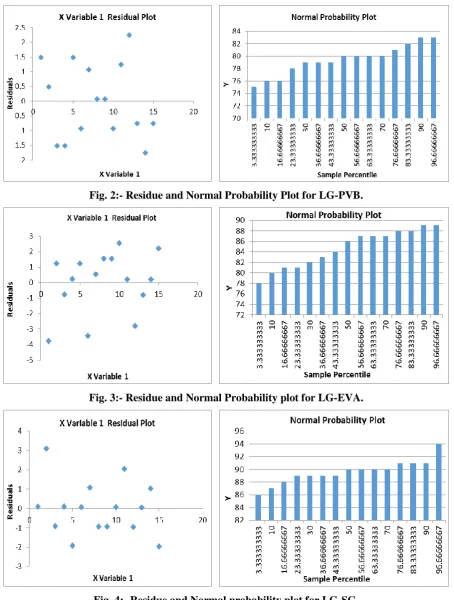
Figure 2-4 concludes that variation from mean value is within acceptable limits for all types of LGs.
Fig. 2:- Residue and Normal Probability Plot for LG-PVB.
Fig. 3:- Residue and Normal Probability plot for LG-EVA.
V. CONCLUSION
It is clear from the results that hardness of LG depends on inter layer thickness and it decreases as the inter layer thickness decreases. LG-SG have highest hardness, and LG-EVA have higher hardness than LG-PVB. The hardness of LG-SG is almost equivalent or slightly lesser than monolithic glass. It was also found that the scratch hardness is independent of inter layer thickness and depends on the nature of surface. Based on the hardness, LG-SG may be used instead of monolithic glass in case of costlier decorative applications but it will increase the weight and cost of the structure, however, the facture of glass can be improved. A comparative analysis can be done between glasses based on their cost, safety requirement, and weight consideration of the structure.
REFERENCE
[1]. A. K. Bar, T. Kar, and S. Bhattacharya, Vickers micro hardness measurement of glass-nano composites, Journal of Material Science and Mechanical Engineering, 1(1), 2014, 18-22.
[2]. S. Sebastian, and M. A. Khadar, Micro hardness indentation size effect studies in 60B2O3 -(40-x)PbO-xMCl2and 50B2O3-(50-x)PbO-xMCl2(M=Pb, Cd) glasses, Journal of Materials Science, 40, 2005, 1655 – 1659.
[3]. J. Gubicza, Characterization of glasses and ceramics by continuous indentation tests, Key Engineering Materials, 103, 1995, 217-220.
[4]. Pilkington Ltd., A Practical and Theoretical Investigation into the Strength of Laminated Glasses Under Uniformly Distributed Loading, Laboratory Report and Discussion, Pilkington ACI Operations Pty. Ltd., pp. 206.
[5]. M. P. Linden, J. E. Minor, and C. V. C. Vallabhan, Evaluation of laterally loaded laminated glass units by theory and experiment, Supplemental Report l, Glass Research and Testing Laboratory, Texas Tech University, Lubbock, Texas.
[6]. J. L. Swofford, H. S. Norville, K. W. King, Behavior and strength of laminated glass, Journal of Engineering Mechanics, 124(1), 1998, 46-53.
[7]. S. R. Nagalla, C. V. G. Vallabhan, J. E. Minor, and H. S. Norville, Stresses in layered glass units and monolithic glass plates, Glass Research and Testing Laboratory, Texas Tech University, Lubbock, TX. [8]. J. E. Minor and P. L. Reznik, Failure strengths of laminated glass, Journal of Structural Engineering,
116(4), 1990, 1030-1039.