Lincoln University Digital Thesis
Copyright Statement
The
digital
copy
of
this
thesis
is
protected
by
the
Copyright
Act
1994
(New
Zealand).
This
thesis
may
be
consulted
by
you,
provided
you
comply
with
the
provisions
of
the
Act
and
the
following
conditions
of
use:
you
will
use
the
copy
only
for
the
purposes
of
research
or
private
study
you
will
recognise
the
author's
right
to
be
identified
as
the
author
of
the
thesis
and
due
acknowledgement
will
be
made
to
the
author
where
appropriate
you
will
obtain
the
author's
permission
before
publishing
any
material
from
the
thesis.
Pest Risk Analysis for Developing Countries: The Case of Zambia
A thesis
submitted in partial fulfilment
of the requirements for the Degree of
Doctor of Philosophy
at
Lincoln University
by
Kajarayekha Kenneth Msiska
Lincoln University
Abstract of a thesis submitted in partial fulfilment of the
requirements for the Degree of
Doctor of Philosophy
Abstract
Pest Risk Analysis for developing countries: The case of Zambia
by
Kajarayekha Kenneth Msiska
International trade of plants and plant products is one of the major vectors for the introduction
and spread of exotic pests of plants. Some of these pests may affect agricultural production
and/or limit access to international export markets. Phytosanitary inspections of plants and plant
products at border ports are an important phytosanitary measure to ensure compliance with
importing countries’ requirements. Measures are formulated by undertaking Pest Risk Analysis
(PRA). In many developing countries however, the undertaking of PRAs is affected by limited
national phytosanitary capacity and resources. This thesis provides insights that may facilitate
more effective phytosanitary regulation, particularly the undertaking of PRAs where limited
data and expertise are available for this purpose. The Plant Quarantine and Phytosanitary
Service (PQPS), the National Plant Protection Organization (NPPO) of Zambia is a case in
point.
In light of the above, a simplified PRA procedure was developed, one that is internationally
acceptable and easily applied day-to-day with the resources available in a developing country
like Zambia. The developed procedure focused on Pest Risk Assessment, the second stage of a
PRA as guided by international standards. This stage is key to formulating phytosanitary
measures. The procedure is entirely qualitative and relates to particular risk elements. The risk
elements used in the simplified procedure were identified for inclusion after a detailed review
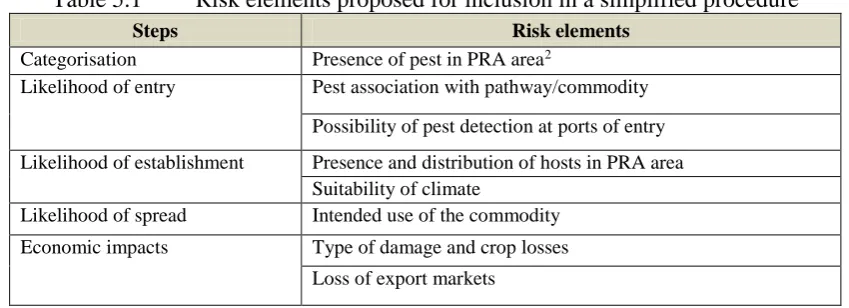
of PRAs conducted by NPPOs of various developed countries, including Australia, New
Zealand and the USA as well as one of the Regional Plant Protection Organizations (RPPO),
the European and Mediterranean Plant Protection Organization (EPPO). The review evaluated
the different steps of stage two of these PRAs, specifically, entry, establishment, spread and
consequences of the pest(s). Selection of risk elements for inclusion in the procedure was based
on their consistent usage in the PRAs reviewed. The procedure was developed to be easy to
The procedure developed in this study avoids the burden of misinterpretation of levels of risk
through ratings or scoring. As such, the procedure has the potential to be applied by the NPPOs
of other developing countries, including Zambia’s PQPS. The procedure can provide PQPS
with science-based PRAs to support the application of phytosanitary measures on imported
plants and plant products. Use of the procedure was then tested, using Zambia’s import of South
African maize (Zea mays) seed for sowing in a comparative study.
However, having a suitable PRA procedure is one thing but ensuring there is the capacity to
apply it routinely is another. Additional effort was therefore made to identify the essential PRA
process components necessary for a NPPO to have an internationally acceptable PRA system.
Essential components of a PRA system were determined through the aforementioned
comprehensive review of publicly available PRAs as well as NPPOs and RPPOs documented
procedures. The essential components included:
Presence of a PRA unit;
Collaboration with specialists from all relevant plant health fields, whether in the NPPO
or outside;
Access to published sources of PRA relevant information and the availability of
up-to-date data sets;
Objective, if not independent technical peer review of each PRA; and
Risk communication and consultation with stakeholders, including potential trading
partners(s).
As the case in point, the phytosanitary capacity of Zambia’s NPPO, the PQPS was examined in
relation to its PRA system. Two questionnaires were designed specifically for this purpose.
The questionnaires provided the means to survey PQPS staff to obtain information on:
Phytosanitary activities at border ports; International trade patterns;
The current PRA process; The availability of PRA experts; PQPS staffing;
The questionnaires were applied between November 2011 and June 2012 at the PQPS head
office in Lusaka and Zambia’s border ports. Border ports were Katima Mulilo, Chirundu,
Copperbelt, Mwami, Nakonde, Victoria Falls and the main airport, the Kenneth Kaunda
International Airport (KKIA).
Survey results showed that Zambia’s phytosanitary capacity is challenged in relation to PRA
processes. The Zambian NPPO does not have staff specifically tasked with conducting PRAs
and a PRA unit is not established in its structure. At the time of the survey, PQPS had a staff
comprising 26 Plant Health Inspectors (PHIs). Presently, PHIs located at the border ports
conduct ad hoc analyses of the risks associated with imported plants and plant products at the
same time they complete phytosanitary inspections.
In summary, there was little doubt that Zambia’s PRA process needs to be improved. The
phytosanitary capacity of its NPPO is lacking and ideally will require significant injection of
funds in the long term. In the absence of additional funding, however, improvements could still
be made to its PRA process. The effectiveness of Zambia’s phytosanitary regulatory system
will depend on its capacity to undertake PRAs. It is recommended that the effectiveness of
Zambia’s system could be improved by: (i) restructuring PQPS so as to utilise some of its
in-house tertiary qualified personnel located centrally in Head Office to focus on PRAs; (ii)
applying routinely the newly developed PRA procedure at Head Office to develop scientifically
justified measures to imports of plants and plant products; (iii) utilising the expertise of other
centrally located plant health specialists in the PRA process; (iv) clarifying the inspection roles
of PQPS border staff; and (v) establishing clearer communication channels with PHIs located
at the border ports thereby enabling them to respond consistently to Head Office directives
relating to phytosanitary measures required for imported plants and plant products.
Keywords: international trade, plants and plant products, pest introduction, national
phytosanitary capacity, pest risk analysis, risk elements, process components, phytosanitary
Acknowledgements
The journey of telling this story has not been a “magical red carpet” ride. But like all rides, to
steer them to a successful end, you need a good crew and a wise captain to go through and
overcome the rough phases. I am privileged to have had a good crew. They held me together
and here I am, at the end.
This PhD thesis draws on research supported financially by a Commonwealth Scholarship
under the New Zealand Ministry of Foreign Affairs and Trade, and the Faculty of Commerce
of Lincoln University. The support is gratefully acknowledged.
My PhD supervisors have been a constant source of wisdom, helpful criticism and advice,
encouragement and support throughout the period of my research. I acknowledge Associate
Professor Dr Hugh Bigsby, Dean of the Faculty of Commerce, who helped widen my view and
approach to this study. I appreciate that amidst his busy schedules he made time to ensure that
my studies were progressing in the correct direction and at the right pace. I also acknowledge
Associate Professor Dr Susan P. Worner for her support and understanding throughout this
journey. I am indebted to Dr E. Ruth Frampton whose considerable experience and insight
helped to shape my study topic, and through many discussions she stimulated consideration of
some truly practical phytosanitary ideas that brought a different perspective and focus to my
view of phytosanitary management. All of you gave me insightful feedback that led to an
improved version of the thesis. Many thanks for your guidance.
Many thanks also go to the Zambian Government for granting me the study leave, staff at the
Zambia Agriculture Research Institute (ZARI), particularly those in the Plant Quarantine and
Phytosanitary Service (PQPS), the NPPO of Zambia, for their cooperation and support during
my field work in Zambia. Similarly, the Zambia Meteorological Department (ZMD) and the
Ministry of Agriculture and Livestock (MAL) kindly allowed me access to data that proved
relevant to my research.
I also take this opportunity to acknowledge the friendship of the late Murray Kennedy
Edmonds. A great friend indeed. He welcomed me and my family into his home, made flat
white coffees and shared movies together. May His Soul Rest In Peace. I am also grateful to
Munya Machila, Kofi Frimpong, Hayford Ahiadu, Manasseh Irofiame and to my postgraduate
colleagues who are too numerous to mention. My sincere gratitude to all of you.
Lastly, I offer my heart-warming acknowledgement, love and blessings to my wife Miriam
(Mimi) and my children for their love, patience and understanding throughout this journey. You
are such great helpers and pillars to me. My deepest gratitude to Mrs Emily Joy “Khumbata”
Munthali Sikazwe for her unceasing motivating influence. I also thank my siblings and other
family members, the Msiskas, Chisizas, Sikazwes, Mhangos, Maimbos, Munthalis, Katolas,
Chirwas and Kanyanyas for their encouragement, support and prayers.
May I acknowledge all those that gave me direct and indirect advice, help, insight, comments,
and moral support. The perspectives and opinions offered here are of course, my own
responsibilities, as are any mistakes and errors of fact. The source of any illustration that is not
Dedication
This Thesis is dedicated to my late parents,
Mr JB Stennings “Nwenda’viwi” and
Mrs Grace “Mama Mthlabathi” Msiska, in their loving memory
and
Table of Contents
Abstract ... ii
Acknowledgements ... v
Dedication ... vii
Table of Contents ... viii
List of Tables ... xi
List of Figures ... xii
List of Abbreviations and Acronyms ... xiii
Chapter 1 General Introduction ... 1
1.1 Global context of pest risk analysis in relation to trade in agricultural products ... 1
1.2 Agriculture in Zambia ... 6
1.3 Problem definition ... 8
1.4 Research objective ... 9
1.5 Research approach ... 9
Chapter 2 Phytosanitary Regulatory Systems ... 11
2.1 Introduction ... 11
2.2 The World Trade Organization ... 11
2.3 The International Plant Protection Convention ... 13
2.3.1 Roles of contracting parties ... 14
2.3.2 International Standards for Phytosanitary Measures ... 15
2.3.3 Regional coordination to meet international standards ... 17
2.3.3.1 North American Plant Protection Organization ... 18
2.3.3.2 European and Mediterranean Plant Protection Organization ... 18
2.3.3.3 Inter-African Phytosanitary Council ... 18
2.3.4 National pest risk analysis procedures ... 19
2.3.4.1 Australian guidelines for import risk analysis ... 19
2.3.4.2 New Zealand risk analysis procedures ... 20
2.3.4.3 The United States of America guidelines for pathway-initiated pest risk assessments ... 21
2.3.4.4 Pest risk analysis procedures in developing countries ... 22
2.4 Phytosanitary Capacity... 22
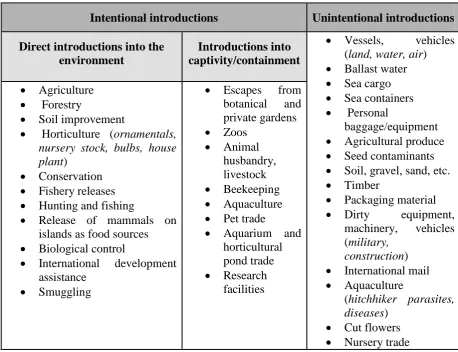
2.5 Pathways for pest introduction ... 24
Chapter 3 Pest Risk Analysis ... 27
3.1 Introduction ... 27
3.2 Pest risk analysis generic stages ... 28
3.2.1 Pest risk initiation ... 28
3.2.2 Pest risk assessment ... 29
3.2.2.1 Data required for pest risk assessment stage ... 29
3.2.2.2 Approaches for pest risk assessment stage... 30
3.2.2.3 Risk elements ... 31
3.2.2.4 Consequences and impacts ... 32
3.2.3 Pest risk management ... 33
Chapter 4 Review of Pest Risk Analysis Systems ... 36
4.1 Introduction ... 36
4.2 Research methodology ... 36
4.2.1 Identifying minimum requirements for pest risk analysis ... 36
4.2.1.1 Common pest risk analysis process components ... 40
4.2.1.2 Common risk elements ... 40
4.3 Results – Minimum requirements for a pest risk analysis ... 40
4.3.1 Common pest risk analysis process components ... 40
4.3.1.1 Pest risk analysis unit ... 40
4.3.1.2 Pest risk analysis experts ... 41
4.3.1.3 Source(s) of information ... 41
4.3.1.4 Technical peer review ... 42
4.3.1.5 Risk communication and consultation ... 43
4.3.2 Common risk elements ... 44
4.3.2.1 Pest categorisation/hazard identification... 48
4.3.2.2 Pest risk assessment stage ... 48
4.4 Discussion and conclusions ... 50
Chapter 5 A Pest Risk Analysis Procedure for Developing Countries ... 52
5.1 Introduction ... 52
5.2 Approach adopted for a simplified procedure ... 53
5.3 The procedure... 54
5.4 Documenting the pest risk analysis ... 56
5.5 Discussion and Conclusions ... 56
Chapter 6 Pest Risk Assessment Case Study ... 58
6.1 Introduction ... 58
6.2 Pest risk assessment ... 59
6.2.1 Pest categorisation ... 59
6.2.1.1 Closed-question approach ... 59
6.2.1.2 Descriptive approach ... 60
6.2.2 Detailed pest risk assessment ... 60
6.2.2.1 Closed-question approach ... 60
6.2.2.2 Descriptive approach ... 61
6.2.2.3 Comparison of the two approaches ... 61
6.3 Discussion and conclusions ... 73
Chapter 7 Zambia’s Phytosanitary Regulatory System ... 75
7.1 Introduction ... 75
7.2 Data collection ... 75
7.2.1 Plant Quarantine and Phytosanitary Service ... 76
7.2.2 Methods for data collection ... 76
7.2.2.1 Questionnaire design ... 77
7.2.2.2 Questionnaire one... 77
7.2.2.3 Questionnaire two ... 78
7.3 Results ... 80
7.3.1 Questionnaire one ... 80
7.3.1.1 Plant and plant product import patterns at border ports ... 80
7.3.1.2 Phytosanitary inspection on pathways at border ports ... 84
7.3.1.3 Cooperation with other border agencies ... 85
7.3.2 Questionnaire two ... 91
7.3.2.1 Common pest risk analysis process components ... 91
7.3.2.2 Common risk elements ... 93
7.4 Discussion and conclusions ... 95
Chapter 8 A More Effective Phytosanitary Regulatory System for Zambia ... 97
8.1 Introduction ... 97
8.2 Issues with Zambia’s phytosanitary regulatory system ... 97
8.2.1 Pest risk analysis process components ... 98
8.2.2 Pest risk analysis process ... 99
8.2.2.1 Pest risk analysis procedures ... 99
8.2.2.2 Pathway-initiated pest risk analyses ... 100
8.3 Improving Zambia’s phytosanitary regulatory system ... 100
8.3.1 PRA unit and experts ... 100
8.3.2 Sources of information ... 101
8.3.3 Pest risk analysis processes and procedures ... 101
8.3.4 Technical peer review ... 102
8.3.5 Risk communication and consultation ... 102
8.4 Limitations of the study ... 103
8.5 Final conclusions ... 103
8.6 Closing remarks ... 105
References... 107
Appendix A Frameworks for Pest Risk Analysis ... 124
Appendix B Arthropods associated with maize in South Africa ... 126
Appendix C Pathogens associated with maize in South Africa ... 129
Appendix D Weed pests associated with maize in South Africa ... 132
Appendix E Detailed pest risk assessment of pests associated with maize seed from South Africa following the descriptive approach – supporting information ... 133
Appendix F Location of Plant Health Inspectors (PHIs) in Zambia ... 138
Appendix G Questionnaire one: Zambian trade statistics and capacity of Zambia’s NPPO ... 139
Appendix H Questionnaire two: Pest risk analysis data collection ... 154
List of Tables
Table 1.1 Annual economic impact of plants as terrestrial invasive species ... 3
Table 2.1 Examples of pathway introductions... 25
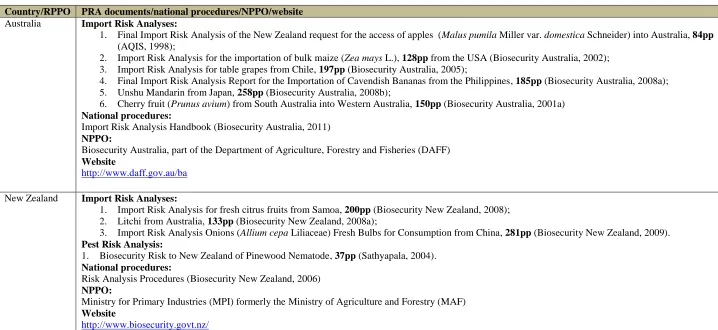
Table 4.1 Reviewed pest risk analysis documents ... 38
Table 4.2 PRA Units in NPPO structures ... 41
Table 4.3 Numbers of references cited in some selected PRAs ... 42
Table 4.4 Peer review of some selected PRAs ... 43
Table 4.5 Summary of initiation stage (stage one) of PRAs listed in Table 4.1... 44
Table 4.6 Summary of pest risk assessment stage (stage two) of PRAs listed in Table 4.1 ... 46
Table 4.7 Summary of pest risk management stage (stage three) of PRAs listed in Table 4.1 ... 47
Table 5.1 Risk elements proposed for inclusion in a simplified procedure ... 53
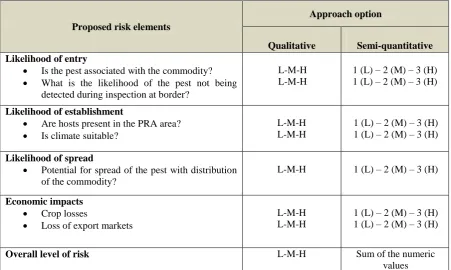
Table 5.2 Ratings for two PRA approach options for each selected risk element ... 54
Table 5.3 The decision steps for the proposed PRA procedure ... 55
Table 6.1 Responses for two qualitative PRA approaches for each selected risk element ... 58
Table 6.2 Detailed pest risk assessment of arthropod pests associated with maize in South Africa following the Closed-question procedure ... 62
Table 6.3 Detailed pest risk assessment of pathogen pests associated with maize in South Africa following the Closed-question procedure ... 66
Table 6.4 Detailed pest risk assessment of weed pests associated with maize in South Africa following the Closed-question procedure ... 70
Table 6.5 Detailed pest risk assessment of arthropod pests associated with maize in South Africa following the descriptive approach ... 70
Table 6.6 Detailed pest risk assessment of pathogen pests associated with maize in South Africa following the descriptive approach ... 71
Table 6.7 Risk Estimation Matrix used for the descriptive approach ... 72
Table 7.1 Questionnaire one respondents and their locations ... 79
Table 7.2 Imported plants and plant products and their countries of origin ... 82
Table 7.3 Destination of imported plants and plant products ... 83
Table 7.4 Transits of plants and plant products, and the country of origin ... 84
Table 7.5 Phytosanitary inspections on pathways at border ports ... 85
Table 7.6 Cooperation with other border port agencies... 86
Table 7.7 Staffing levels at border ports ... 87
Table 7.8 Training of PHIs in different plant health desciplines ... 88
Table 7.9 Laboratory equipment at the survey border ports ... 90
Table 7.10 Number of plant health specialists in PQPS and other sections of PPQD... 92
List of Figures
Figure 1.1 Organizational chart of the Ministry of Agriculture and Livestock showing the
position of PQPS in the structure ... 6
Figure 2.1 PRA framework adopted in Australia for conducting IRAs (Source: Biosecurity Australia (2001b)). ... 20
Figure 2.2 Risk analysis steps adopted in New Zealand (Source: Biosecurity New Zealand (2006)) ... 21
Figure 7.1 Imported quantities by border port ... 81
Figure 7.2 Smuggling Figure 7.3 Loading on passenger buses ... 85
Figure 7.4 Inspection facility at KKIA ... 88
List of Abbreviations and Acronyms
APHIS Animal and Plant Health Inspection Service [United States of America]
CABI CAB International
CARO Chief Agriculture Research Officer
COPE Centre of Phytosanitary Excellence [Kenya]
CPM Commission on Phytosanitary Measures
DAFF Department of Agriculture, Fisheries and Forestry [Australia]
EAPIC East Africa Phytosanitary Information Committee
EC European Community
EU European Union
EPPO European and Mediterranean Plant Protection Organization
EU European Union
FAO Food and Agriculture Organization of the United Nations
GMO Genetically Modified Organism
GRZ Government of the Republic of Zambia
HRA Human Resource and Administration
IAPSC Inter-African Phytosanitary Council
IPPC International Plant Protection Convention
ISPM International Standards for Phytosanitary Measures
IRA Import Risk Analysis
KEPHIS Kenya Phytosanitary Health Inspectorate Service
MAL Ministry of Agriculture and Livestock [Zambia]
MPI Ministry for Primary Industries [New Zealand]
NAP National Agricultural Policy [Zambia]
NAPPO North American Plant Protection Organization
NPPO National Plant Protection Organization
PCE Phytosanitary Capacity Evaluation
PHI Plant Health Inspector
PQPS Plant Quarantine and Phytosanitary Service
PPQD Plant Protection and Quarantine Division
PRA Pest Risk Analysis
RPPO Regional Plant Protection Organization
RSPM Regional Standards for Phytosanitary Measures
SADC Southern African Development Community
SCCI Seed Control and Certification Institute [Zambia]
SNDP Sixth National Development Plan [Zambia]
SPS Sanitary and Phytosanitary
STDF Standards and Trade Development Facility
WTO World Trade Organization
WTO-SPS Agreement World Trade Organization Agreement on the Application of Sanitary and Phytosanitary Measures
ZARI Zambia Agriculture Research Institute
Chapter 1
General Introduction
With international trade the introduction and spread of pests around the world are inevitable.
When a pest crosses borders, it tends to become a Government responsibility together with
significant industry bodies to help farmers contain pest incursions and their impact (Kuyela,
2012; Mutinta, 2012; Nyirenda & Maimbolwa, 2012). Crop losses caused by pests can be
substantial (Oerke, 2006). Governments through relevant departments including the National
Plant Protection Organizations (NPPOs) are charged to protect public health, agriculture and
the environment against the potential problems caused by the entry, establishment and spread
of exotic pests. Trade has been one of the conduits for pest introductions despite its obvious
economic advantages. With both expanding international trade and challenged phytosanitary
capacities, the potential risk posed by exotic pests is on the increase (Bright, 1999; Jenkins,
1996; Mooney & Hobbs, 2000; Vitousek, D'Antonio, Loope, Rejmanek, & Westbrooks, 1997)
and it is also acknowledged that huge amounts of money have been spent to contain and control
the impacts caused by the invasion of pests (Olson, 2006). It has been inferred that an upward
trend in the number of pest introductions is in direct proportion to the increase in trade (Loope
& Howarth, 2002). As such, the phytosanitary service delivery of a trading country has an
increasing role to play in curbing pest introductions and spread caused by international trade.
In promoting international safe trade of plants and plant products, NPPOs are required to
formulate appropriate and scientifically justified phytosanitary measures that are outcomes of
a Pest Risk Analysis (PRA).
1.1 Global context of pest risk analysis in relation to trade in
agricultural products
One of the key challenges facing most developing countries in Africa and other parts of the
world is being able to conduct a PRA taking into account resource limitations. Given that the
export of plants and plant products to lucrative international markets is a much desired foreign
exchange earner, a source of employment for individuals and income for households, there is a
need for developing countries including Zambia to avoid jeopardizing their domestic
agricultural production and export potential from pest introductions. It is, therefore, imperative
that NPPOs from developing countries stipulate appropriate phytosanitary measures on their
(FAO, 2004, 2007b). Understanding these guidelines and frameworks become critical for the
development of a phytosanitary intervention program.
However, Ikin (2002) reported that most developing countries in general are constrained in
undertaking PRAs by lack of capability. It is thus important that simple procedures matching
national capacities and resources of these countries are developed. In the absence of such
procedures, it is then possible that the agriculture sector of these countries is at risk of pest
introductions that could potentially impact negatively and consequently affect the export of
their plants and plant products. In the African context, one of the major challenges that affects
the undertaking of PRAs is the lack of data and scientists specialized in plant protection (IITA,
2011). Although it is the developing countries that are seen to suffer from these limitations,
some developed countries too have noted similar challenges with data acquisition. In the
European Union (EU) for example, such challenges are being addressed as a block of countries
rather than individually (Baker et al., 2009). It is clear that, however, PRA is one of the major
responsibilities of any NPPO as stipulated under Article IV, 2f of the International Plant
Protection Convention (FAO, 1997) irrespective of whether it is from a developed or
developing country. A key factor towards facilitating safe international trade, is that
phytosanitary measures that are developed are appropriate and science based.
There is ample evidence in the literature to suggest that some of the pest invasions and their
spread patterns have followed the increasing trends in trade (Hulme, 2009) and the cost can be
substantial. According to Pimentel et al. (2001) it was estimated that the annual costs of
arthropod pests on crops was $0.96 billion in the UK, $0.94 billion in Australia, $1.0 billion in
South Africa, $16.8 billion in India and $8.5 billion in Brazil. These are likely to be direct costs
while indirect costs are likely to be unknown but not insignificant. The cost is even higher in
the US, estimated to be in many billions of dollars (OTA, 1993; Pimentel, Zuniga, & Morrison,
2005).
Olson (2006) has also reported on the economic impacts of invasive species of plants, animals
and microbes. Table 1.1 draws on data compiled by Olson (2006) and shows the economic
Table 1.1 Annual economic impact of plants as terrestrial invasive species
Country Invasive species (Plants)
Australia (in $AU) 4 billion
Canada (in $CAN) 38.21 million
Germany (in Euro) 103 million
New Zealand (in $NZ) 100 million
United States (in $US) 34.5 billion
Adapted from Olson (2006)
Pests not only cause damage to crops (Pimentel et al., 2005) but also have significant impacts
on market access of plants and plant products. For instance, Australia only recently allowed the
importation of apples from New Zealand. A ban that had been in force since 1921 due to
regulations based on a perceived threat of fire blight caused by Erwinia amylovora (Arcuri, Gruszczynski, & Herwig, 2010). The European Union (EU) maintains restrictions on the
importation of wheat from the United States because of risks from Tilletia indica, the pathogen causing karnal bunt (Sansford, Baker, Brennan, Ewert, Gioli, Inman, Kelly, et al., 2008;
Sansford, Baker, Brennan, Ewert, Gioli, Inman, Kinsella, et al., 2008) although the restrictions
have been challenged based on claims that the pest would not be a threat to the EU (Jones,
2009). Zambia has not been spared from such market access challenges. Establishing export of
Zambian fruits and fresh vegetables to South Africa and the USA has been difficult due to the
presence of Asian fruit fly, Bactrocera invadens and other fruit fly species (PQPS, 2010; USDA-APHIS, 2008).
Ceddia, Heikkilä and Peltola (2008) argue that invasions are costly at a global scale and will
increase due to increasing globalisation of markets and increases in global trade, travel and
tourism. In spite of many countries promoting phytosanitary measures in an effort to minimize
pest introductions, pest invasions still occur (Brasier, 2008). More pests have been identified in
some parts of the world indicating pest introductions to increase, intensifying the need for
improved capacity to detect and identify new pest introductions (Waage & Mumford, 2008;
Waage et al., 2009). Like many countries, Zambia has repeatedly experienced new pest
introductions. For instance, since 1993, the larger grain borer (LGB), Prostephanus truncatus
has devastated maize and other important staple crops (e.g. cassava) of Zambia. Zambia spends
2012). The Asian fruit fly, B. invadens, is another example of a recently detected insect pest in Zambia (Matimelo et al., 2009).
Trying to contain the huge costs and impacts caused by introduced pests is a major challenge
for NPPOs of developing countries. As the saying goes in medical circles “prevention is better
than cure”, it is important that developing countries work towards minimizing pest introductions and their spread to avoid pest eradication programmes that are difficult to
implement. While there have been some successful eradication programmes such as on the
Bactrocera papayae (Asian papaya fruit fly) and Solenopsis invicta (red imported fire ant) in Australia (Maynard, Hamilton, & Grimshaw, 2004) and the angular leaf spot of strawberries,
caused by the bacterium Xanthomonas fragariae in the UK (Matthews-Berry & Reed, 2009), Burgiel, Foote, Orellana & Perrault (2006) highlighted the fact that developed countries in the
European Union have also had unsuccessful pest eradication attempts. It is simply not realistic
to expect a developing country with severe resource limitations to effectively eradicate pests
once they have been introduced into their territories. Successful eradication is usually possible
if the pest is detected early enough in a specific area and not yet widely spread. Undoubtedly,
adopting measures to minimize pest introductions in the first place is the best way. It also
requires that the personnel involved in phytosanitary inspections have the knowledge of the
pathways and their potential pest risk. To this effect, a well integrated phytosanitary system that
incorporates appropriate phytosanitary inspection methodologies at the border is desirable
(Surkov, Oude Lansink, Van Kooten, & Van Der Werf, 2008; Surkov, 2007).
Undoubtedly there is a need for countries trading in plants and plant products to invest in their
phytosanitary regulatory systems. New Zealand is a country that has done just that. Jay, Morad,
and Bell (2003) reported that of the total annual appropriation for biosecurity in New Zealand,
94.4% was for the then Ministry of Agriculture and Forestry (MAF), 3% for the Department of
Conservation, 2.4% for the Ministry of Fisheries and 0.2% to the Ministry of Health. This shows
a strong commitment to biosecurity and recognition of the different sectors involved in
protecting New Zealand from new pests and diseases reaching its territories. With limited
resources available in many developing countries, similar levels of commitment are not
apparent. Notably, very limited funding has been allocated to phytosanitary capacity in
developing countries (Waite & Gascoine, 2003). Phytosanitary activities may not be a priority
for funding despite potentially high impacts of pests on agricultural production and food
insecurity. Interestingly, even those administering phytosanitary regulatory services in
and disease introductions. Lack of resources is often raised as an issue in connection with
phytosanitary inspections at border ports. For example, in 2002 it was reported that the United
States Department of Agriculture (USDA) only had the capacity to conduct spot inspections of
less than 2% of all incoming shipments at borders (National Research Council of the United
States, 2002).
Strategies involving targeted inspections and testing of some pathways rather than inspection
of all plants and plant products are now considered to offer more effective ways of utilizing
limited resources. Such strategies would ensure that appropriate phytosanitary inspections are
conducted on all high risk plants and plant products but fewer checks on low risk plants and
plant products (European Commission, 2007; European Council, 2000). The risk levels of
different pathways vary. For example, propagative material (e.g. cuttings, seeds, seed potatoes,
plants in vitro, micropropagative plant material and other plants to be planted) would normally
be considered a higher risk than produce for consumption. Because such commodities are not
processed and their intended use is for propagation or planting, their potential to introduce or
spread pests is higher than that for other intended uses such as for immediate consumption.
Moreover, pathogens cannot be easily detected by visual screening since these organisms are
usually microscopic (Ebbels, 2003; FAO, 2009a). Understanding the risks involved would
make a targeted inspection approach more practical and manageable.
In Zambia, the Plant Quarantine and Phytosanitary Service (PQPS) is the NPPO. As outlined
by ZARI (2009), PQPS is one of the sections under the Plant Protection and Quarantine
Division (PPQD) within the Zambia Agriculture Research Institute (ZARI) and is mandated
under the Plant Pests and Diseases Act, CAP 233 of the Laws of Zambia to provide
phytosanitary service to the entire country. The other Divisions under ZARI include: Crop
Improvement and Agronomy (CIA), Soils and Water Management (SWM) and Farming
Systems and Social Sciences (FSSS). All the Divisions are headed by Chief Agriculture
Research Officers (CAROs) and beneath them are sections or units headed by team leaders. As
for the PPQD, apart from the PQPS, other sections are: biotechnology, entomology, pathology,
food storage and conservation units (ZARI, 2010). The organizational structure of the Zambian
Ministry of Agriculture and Livestock (MAL) with specific emphasis on the NPPO is shown in
Figure 1.1 Organizational chart of the Ministry of Agriculture and Livestock showing the position of PQPS in the structure
1.2 Agriculture in Zambia
Agriculture is an important part of Zambia’s economy. Of a total land area of 75 million
hectares, 25 million hectares is agricultural land, of which 20.6 per cent is arable (CSO, 2007).
Agriculture provides employment for 85 per cent of the labour force and serves as the main
source of income for the rural population, especially women, who constitute a higher proportion Minister
2 Deputy Ministers
2 Permanent Secretaries
Departments
Fisheries Policy and
Planning Veterinary HRA
Agribusiness and Marketing Agriculture SCCI ZARI
Director
Deputy Director Technical Services
Deputy Director Research Services
Technical Divisions
CARO CIA
Entomology section
Pathology section
FSCU section
PQPS section
CARO SWM
CARO PPQ
CARO FSSS
of the rural population and agricultural labour force (CIA, 2013b; Mucavele, 2009; NAP, 2004;
New Agriculturist, 2012). Various crops, including maize, wheat, sorghum, cassava, rice,
millet, groundnuts, soybeans, mixed beans, sunflower seed, vegetables, coffee, flowers,
tobacco, cotton and sugarcane are grown and researched in Zambia (DFID, 2002; ZARI, 2011).
However and as noted by Saasa (2003), maize is the principal staple food in Zambia. It
comprises the country’s dominant agricultural activity being the most popular crop, with
smallholder farmers contributing some 65 per cent of maize production and accounting for 25
per cent of the maize marketed. Farming systems in Zambia are greatly influenced by different
soil types and climatic conditions (agro-ecological zones). Although crops are grown in most
areas (SADC, 2008), soil type and climate determine the agricultural potential and productivity
of any given region in the country (ZARI, 2010).
Even though Zambia grows its own crops, it also imports and exports plants and plant products
for economic growth. Imports include seeds (e.g. maize, vegetable, potato) and various fresh
fruits, while exports mainly comprise surplus maize (grain and seed), fresh vegetables, flowers
and timber (Famine Early Warning Systems Networks 2012; PQPS, 2010; Sumelius, 2011;
ZDA, n.d). Apart from just as a source of employment, income, livelihood and food security,
Keyser (2007) highlighted how agriculture has been one of the most dynamic components of
Zambia’s economy as a foreign exchange earner.
With reference to the above, the importance of agriculture to the Zambian economy cannot be
overemphasised. This is recognized by the Government of the Republic of Zambia (GRZ) with
its National Agricultural Policy (NAP) and the Sixth National Development Plan (SNDP) of
2011 – 2015, where it clearly states that agriculture remains the priority sector in achieving
sustainable economic growth and reducing poverty in Zambia to become “a prosperous middle
income nation by 2030” (NAP, 2004; SNDP, 2011). In order to achieve this goal, Government
has since partnered with the donor community to help sustain its diversification agriculture
program. For example, as noted by Bonaglia (2008) the World Bank is among the donors that
have partnered with GRZ by providing a loan of US $ 37.2m that included phytosanitary
service delivery to ensure quality and efficiency in the system, and to improve smallholders'
access to markets and the competitiveness of their agricultural commodities (MACO, 2006). It
is this agriculture that Zambia through its NPPO has to protect from pest introductions caused
1.3 Problem definition
As a member of the WTO (WTO, 2012), Zambia has obligations under the WTO Agreement
of the Application of Sanitary and Phytosanitary Measures (SPS Agreement). The
WTO-SPS Agreement (WTO, 1995) clearly sets out the importance of WTO-SPS measures to protect
human, animal and plant life or health. Its purpose is to facilitate safe trade while allowing
countries to put in place any measures to protect human, animal and plant life or health. To this
effect, the WTO-SPS Agreement requires that any measures are technically justified, with
evidence that potential risks to human, animal and plant health exists, and only to the extent
necessary so as to allow safe trade (Devorshak, 2012a).
Existing literature on pest introductions, pathways and pest management focus on impacts pests
have had on agriculture, particularly, impacts on production, loss of market access and what
must be done in situations of resource constraint (Pimentel et al., 2005; Surkov, 2007; Waage
& Mumford, 2008). The literature also acknowledges the problems faced by developing
countries when challenged with risk-based approaches as required by the WTO-SPS
Agreement. Some authors for example Henson and Loader (1999) have further gone to identify
the specific challenges faced by these countries. The challenges include, amongst many, access
to resources such as scientific experts, finances, lack of access to information, etc. However,
there is a gap in the literature on the development of procedures for risk assessments tailored
for severely resource constrained developing countries like Zambia. It is this gap the research
seeks to address. In addition, work in the NPPO of Zambia has highlighted the desires of PHIs
to conduct relevant PRAs with a genuine enthusiasm to protect Zambia’s export potential and
domestic agriculture production from pest introductions. That experience has motivated the
author to pursue this study. Although a framework and guidelines for undertaking PRAs exist
in the International Standards for Phytosanitary Measures (ISPMs) under the International Plant
Protection Convention (FAO, 2004, 2007b), there is no standards operating procedure that can
be used by resource and capacity challenged NPPOs of a developing country. FAO (1997)
through the IPPC, Article VII stipulates that contracting parties shall have sovereign authority
to regulate, in accordance with applicable international guidelines, the entry of plants and plant
products and other regulated articles1. To this effect, developed countries with significant resources and influence in international fora for plant health, for example Australia, New
Zealand and United States of America have developed their own plant health national
1 Regulated article is “any plant, plant product, storage place, packaging, conveyance, container, soil and any other
procedures in accordance with international guidelines (Biosecurity Australia, 2011;
Biosecurity New Zealand, 2006; USDA-APHIS, 2000).
While the PRA procedure is of high importance, sufficient suitably trained staff and availability
of operating funds are important aspects of phytosanitary capacity. The CIA (2013b) reports
that Zambia has an area of 750,618 square kilometres with land boundaries of 5,664 kilometres
and a population of approximately 13 million people. It is a concern that the NPPO of Zambia
is severely constrained by insufficient staff and funding (ZARI, 2010, 2011) to protect this large
area. By way of comparison, New Zealand with a land area of 267,710 square kilometres and
an estimated population of 4,327,944 (CIA, 2013a), has over 1000 staff to protect an island
nation and an annual budget allocation of $500 million for biosecurity (Ministry for Primary
Industries, 2012). No wonder the World Bank (2006) has noted the NPPO of Zambia is under
pressure to perform, with severe under staffing, a lack of up-to-date pest lists and few trained
specialists to conduct PRAs.
1.4 Research objective
In understanding the importance of safe trade in agricultural products to a developing country
like Zambia, and experiencing first-hand the difficulties the NPPO of Zambia has in providing
an effective phytosanitary regulatory system, three questions drove this research. Specifically:
1. What is the minimum requirement for an internationally acceptable PRA process?
2. Is Zambia capable of meeting these requirements?
3. What needs to change?
In seeking answers to these questions, particular aspects of Zambia’s phytosanitary regulatory
systems are assessed with the overall objective of improving Zambia’s capacity to protect its
domestic agricultural production and potential export markets from unwanted pest
introductions.
1.5 Research approach
A staged approach was adopted to this research to investigate aspects of developing country
phytosanitary systems, and then to apply the findings to Zambia’s system. While the discrete
parts of the research are reflected in separate chapters within the thesis, the research was
conducted in two main stages, the first, relating to PRA processes and the second, to
Contextual information on phytosanitary regulatory systems in relation to the WTO and IPPC,
and pest risk analysis is summarized in Chapters 2 and 3, respectively. The next part of the
research involved a review of developed country systems, specifically those related to
undertaking pest risk analyses. The review was focused on the PRA systems in operations in
Australia, New Zealand and the United States of America – trading countries with
well-developed and internationally respected phytosanitary systems. The review in Chapter 4, was
carried out to identify important components of an internationally acceptable PRA process, as
well as particular elements of a PRA per se. Subsequently a PRA procedure was devised, as set out in Chapter 5. Use of the procedure was then tested, using Zambia’s import of South African
maize (Zea mays) seed for sowing in a comparative study.
Chapters 7 and 8 relate to phytosanitary capacity. An evaluation of Zambia’s phytosanitary
capacity is outlined in Chapter 7 while Chapter 8 discusses prospects for a more effective
phytosanitary regulatory system for Zambia, based on the assumption that an internationally
acceptable PRA process is the basis of a trusted trading country’s phytosanitary regulatory
Chapter 2
Phytosanitary Regulatory Systems
To quoteMumford (2002): “A National Plant Protection Organization that attempts to inspect everything is neither feasible, given the many open or uncontrolled borders, nor practical, as it may induce smuggling and result in even less management”.
2.1 Introduction
International trade liberalization and rapid globalization of the world economy means trade
policies and agreements need to be well considered by countries involved in trade. In relation
to agricultural trade, various international agreements and standards to which many countries
of the world are signatories exist. Those specifically related to plants and plant products, and
relevant to this study are the WTO-SPS Agreement, the International Plant Protection
Convention (IPPC) and the International Standards for Phytosanitary Measures (ISPMs).
While the WTO-SPS Agreement, IPPC and ISPMs facilitate safe trade, it is widely accepted
that developing countries (including Zambia) face challenges in applying and adhering to them
(Henson, Loader, Swinbank, Bredahl, & Lux, 2000; Jensen, 2002; Rabinowitz, 2006). Finger
and Schuler (1999) had already suggested that developing countries face even greater
challenges when fulfilling obligations under the WTO-SPS Agreement. Article 5.1 of the
Agreement implies that a country shall perform risk analysis taking into account risk assessment
techniques developed by the relevant international organizations. (WTO, 1995). It is against
this background that this research intends to address the pertinent issues surrounding PRA and
develop a procedure for developing countries like Zambia that matches their limited capacity
and resources yet meets the requirements of the WTO and the IPPC.
2.2 The World Trade Organization
WTO is the only international body that sets and oversees the global rules of trade between
nations. At the centre of the WTO is a set of agreements that are negotiated, signed and ratified
by governments of member countries. These Agreements are the legal ground rules for
international commerce (WTO, 1995, 2011). The WTO-SPS Agreement came into force on 1
January 1995 with the purpose to protect human, animal and plant life or health worldwide
(WTO, 1995). This agreement ensures that when SPS measures are applied, they are used only
restrict market access for other countries. Accordingly, to protect plant life and/or health, the
subject of this study, whatever phytosanitary measures are formulated require adequate analysis
and justification (James & Anderson, 1998).
While WTO member countries have the sovereign right to protect their territory from potential
threats of pest introduction, their measures must be based on the general principles of the
WTO-SPS Agreement. Under the WTO-WTO-SPS Agreement, 14 Articles or principles guide the
application of SPS measures (WTO, 1995). The five principles relevant to this thesis are:
Basic rights and obligations (Sovereignty)
Article 2 of the WTO-SPS Agreement stipulates that Members have the right to take sanitary
and phytosanitary measures necessary for the protection of human, animal or plant life or health,
provided they are based on scientific principles and are not maintained without sufficient
scientific evidence.
Transparency (and notification)
Members are required to provide information on their sanitary or phytosanitary measures and
to notify any changes to them. Members are also encouraged to publish their SPS measures on
the World Wide Web in order to improve transparency. This is key to the successful
implementation of Articles 5 and 7 and Annex B under the WTO-SPS Agreement (WTO, 1999).
Transparency is improved when notified measures result from risk analysis procedures that
comply with international guidelines.
Risk assessment
Article 5 of the WTO-SPS Agreement states that the method used to collect, analyse and present
scientific information to justify an SPS measure is called risk assessment. In the case of plant
life and health, an assessment is conducted to determine the need for phytosanitary measures,
taking into consideration biological and economic evidence such as the loss of production or
sales as a result of the introduction of a pest; the costs of control or eradication of a pest; and
the relative cost effectiveness of risk management options. The importing country is obliged to
demonstrate that a risk exists, even though both importing and exporting countries are required
to contribute to providing the necessary scientific information for the assessment (Devorshak,
2012a). The assessment process is a collaborative one with a clear appreciation of the findings
Harmonisation
Article 3 of the Agreement stipulates that Members shall base their SPS measures on
international standards, guidelines or recommendations. Members are encouraged to actively
participate in international and regional organisations that operate in respect to SPS matters.
Equivalence
Member countries must accept the sanitary or phytosanitary measures of other Members as
equivalent, even if these measures are different from its own or from those used by other
Members trading in the same product, if an exporting Member objectively demonstrates that its
measures achieve the importing Member’s appropriate level of sanitary or phytosanitary
protection. Generally, recognition of equivalence is achieved through bilateral consultations
and the sharing of technical information (WTO, 1995).
In short, Members must ensure that their sanitary or phytosanitary measures are based on an
assessment, as appropriate to the circumstances that takes into account risk assessment
techniques developed by the relevant international organisations with the objective of
minimising negative trade effects.
Implementation of the WTO-SPS Agreement can be a challenge for any country but more so
for developing countries. Nevertheless, some developing countries have made progress in this
regard. Mauritius is an example according to Neeliah and Goburdhun (2010). These authors
further state that while progress has been made in areas such as establishment of a national
accreditation body, a sanitary and phytosanitary enquiry point and a national SPS committee
that involves the public and private sectors, there remains a lack of capacity to undertake risk
assessments. Despite challenges faced particularly by developing countries, it has to be
recognized that the WTO-SPS Agreement is there for all countries to benefit, as it provides an
international framework for SPS measures among trading countries, irrespective of their
political and economic strength or technological capacity.
2.3 The International Plant Protection Convention
The International Plant Protection Convention (IPPC) is an international agreement that aims
to secure coordinated, effective action to prevent and to control the introduction and spread of
pests, of plants and plant products. Essentially, it relates to plants and plant products moving in
international trade. This Convention was adopted by the Sixth Session of the Food and
1997). The revision of the IPPC in 1997 takes into account the increasing globalisation of trade
in plants and plant products and incorporates the of WTO-SPS Agreement framework (FAO,
1997). As of 6 June 2013, the IPPC had 179 signatories as contracting parties and making up
its governing body, the Commission on Phytosanitary Measures (CPM). Zambia has been a
contracting party since 24 June 1986 (FAO, 2013b). The IPPC is explicitly referred to as one
of the “Three Sister” standard setting organizations under the WTO-SPS Agreement (WTO,
2013). In other words, the IPPC is recognized in the WTO-SPS Agreement as being the
appropriate world authority for plant health standards and are applied by contracting parties in
their roles to achieve the common goal, thus, prevent the introduction and spread of pests. The
other “Sisters” are the Codex Alimentarius Commission (CAC) and Office International des
Epizooties (OIE). The CAC is recognized for developing international food standards for the
purposes of protecting public health and minimizing disruption of international food trade while
the OIE is the world organisation for animal health(WTO, 2013).
2.3.1 Roles of contracting parties
The IPPC has 23 Articles that contracting parties recognize in relation to plant health (FAO,
1997). Article I sets out the purpose of the agreement which is to secure common and effective
action to prevent the introduction and spread of pests of plants and plant products, and to
promote appropriate measures for their control. Article IV of the IPPC stipulates the general
provisions relating to the organizational arrangements and responsiblities for their national
plant protection expected of contracting parties. These responsibilities include inspections of
plants and plant products moving in international traffic, surveillance of pests, phytosanitary
documentation, conduct of pest risk analyses, and training and development of staff. Each
country has a right to protect its territories against the introduction of regulated pests, provided
that these are scientifically justified, transparent and follow the agreed international guidelines
(FAO, 1997). These regulated pests can either be quarantine pests or regulated non-quarantine
pests. In respect to economic impacts, a quarantine pest has the potential for economic impacts
while a regulated non-quarantine pest has a known economically unacceptable impact (FAO,
2009b). Article VII of the IPPC confirms contracting parties’ sovereign right to prescribe and
adopt phytosanitary measures concerning the importation of plants, plant products, or other
regulated articles. This includes inspection, import prohibition and treatment of plants, as well
as prohibition or restriction of movement of plant pests. A contracting party is required to
develop and maintain adequate information on pest status (presence, distribution, absence) in
their country. It is clear that measures taken on imported materials have to be scientifically
examination and evaluation of available scientific information. Contracting parties should also
establish lists of pests that are of concern for them and those that require phytosanitary measures
(FAO, 1997).
The IPPC is a legally binding international instrument, but the ISPMs developed and adopted
under the Convention are merely guidelines (FAO, 1999). Countries are able to design their
own standards but such standards need to comply with the framework and guidelines of the
IPPC (Maynard et al., 2004). Despite the development of international standards, countries have
found it necessary to develop their own national standards.
2.3.2 International Standards for Phytosanitary Measures
The IPPC establishes provisions for the development of standards dealing with phytosanitary
concerns. The standards are recognized under the WTO-SPS Agreement and provide
mechanisms to reduce the risk of the introduction and spread of plant pests that may affect
agriculture and the environment (Maynard et.al., 2004). According to FAO (2012b), there are
currently 36 International Standards for Phytosanitary Measures (ISPMs). A full list of the
ISPMs is found on IPPC website (www.ippc.int).
In reviewing the full list of ISPMs, the majority of these were found to make reference to pest
risk analysis. To put this into perspective, of the 36 ISPMs, nine (specifically ISPM No. 6, 7,
12, 13, 15, 26, 27, 29 and 30) make no reference to pest risk analysis while the rest, 27, make
reference to pest risk analysis. Importantly, three ISPMs are related to pest risk analysis directly.
These are: ISPM No. 2 Framework for pest risk analysis;ISPM No. 11 Guidelines for pest risk analysis for quarantine pests, including analysis of environmental risks and living modified organisms; and ISPM No. 21 Pest risk analysis for regulated non-quarantine pests.
Devorshak (2012a) and FAO (1999) have classified ISPMs into four broad groups: reference,
concept, specific and pest risk analysis standards. As well as ISPM Nos 2, 11 and 21, ISPM No.
14 The use of integrated measures in a systems approach for pest risk management was considered a pest risk analysis standard (Devorshak, 2012a). Of particular relevance to this
ISPM No. 2 (FAO, 2007b): Framework for pest risk analysis
“This standard provides a framework that describes the pest risk analysis (PRA) process within
the scope of the IPPC. It introduces the three stages of pest risk analysis – initiation, pest risk
assessment and pest risk management. The standard focuses on the initiation stage. Generic
issues of information gathering, documentation, risk communication, uncertainty and
consistency are addressed.” (quoted from FAO, 2007b).
ISPM No. 11 (2004): Pest risk analysis for quarantine pests including analysis of the environment risks and the living modified organism (LMOs)
“The standard provides details for the conduct of pest risk analysis (PRA) to determine if pests
are quarantine pests. It describes the integrated processes to be used for risk assessment as well
as the selection of risk management options.
S1 It also includes details regarding the analysis of risks of plant pests to the environment and biological diversity, including those risks affecting uncultivated/unmanaged plants, wild
flora, habitats and ecosystems contained in the PRA area. Some explanatory comments on the
scope of the IPPC in regard to environmental risks are given in Annex 1.
S2 It includes guidance on evaluating potential phytosanitary risks to plants and plant products posed by living modified organisms (LMOs). This guidance does not alter the scope
of ISPM No. 11 but is intended to clarify issues related to the PRA for LMOs. Some explanatory
comments on the scope of the IPPC in regard to PRA for LMOs are given in Annex 2.” (quoted
from FAO, 2004).
ISPM No. 2 was first adopted in 1995, revised and endorsed by CPM in 2007. The ISPM No. 2
it describes the process of pest risk analysis for the purpose of preparing phytosanitary measures
by NPPOs and provides a framework for conducting PRAs – three generic stages, namely, pest
risk initiation, pest risk assessment and pest risk management. Several reasons are outlined for
initiating a PRA including PRA initiated by a pathway, PRA initiated by a pest and review of
phytosanitary policies earlier PRAs. It is made clear that in pest risk assessment (Stage 2), only
quarantine pests are subjected to detailed assessment following categorisation as pest. The
standard also discusses important aspects common to all PRAs, those covered are uncertainty,
ISPM No. 11 (FAO, 2004) provides more comprehensive guidance on pest risk analysis. It
contains similar details regarding stage 1 and stage 3 of PRA, as those given in ISPM No. 2.
However, it provides a much more detailed guide to stage 2. The first step in stage 2 is clearly
stipulated to be pest categorisation. For a pest to be categorized as quarantine elements to take
into consideration are: identity of pest, presence or absence in PRA area, regulatory status,
potential for establishment and spread in PRA area, potential for economic consequences in
PRA area. The next step in stage 2, detailed pest risk assessment, involves consideration of
many factors which fall into four groups. The first of the four, assessment of entry, is to take account of: probability of the pest being associated with the pathway at origin, probability of
survival during transport or storage, probability of pest surviving existing pest management
procedures, and probability of transfer to a suitable host. Probability of establishment, the second, focuses on the factors listed in the ISPM as: availability of suitable hosts, alternate hosts
and vectors in the PRA area, suitability of environment, cultural practices and control measures,
and other characteristics of the pest affecting the probability of establishment. Those factors to
consider in the third grouping, probability of spread, include: presence of natural barriers, the potential for movement with commodities or conveyances, intended use of the commodity,
potential vectors of the pest in the PRA area and potential natural enemies of the pest in the
PRA area. The fourth group of factors relate to the assessment of potential economic consequences and include: direct pest effects and indirect pest effects. ISPM No. 11 has two supplements, one (S1) on the analysis of environmental risk and a second (S2) on pest risk
analysis for living modified organisms (LMOs).
2.3.3 Regional coordination to meet international standards
FAO (2013a) through the IPPC encourages the establishment of Regional Plant Protection
Organizations (RPPOs). Currently, there are ten RPPOs (FAO, 2013a). The North American
Plant Protection Organization (NAPPO), the European and Mediterranean Plant Protection
Organization (EPPO) and the Inter-African Phytosanitary Council (IAPSC) are examples of
RPPOs that are relevant to this study. Regional organizations are seen as a means to improve
coordination to achieve the objectives of the IPPC (FAO, 1997), and may be involved in the
development of Regional Standards for Phytosanitary Measures (RSPMs). A particular RPPO
can develop RSPMs but these RSPMs are applicable only by countries in that region (FAO,