University of New Hampshire
University of New Hampshire Scholars' Repository
Doctoral Dissertations Student Scholarship
Spring 2019
Evaluation of Structural Contribution of Asphalt
Mixtures Through Improved Performance Indices
RASOOL NEMATIUniversity of New Hampshire, Durham
Follow this and additional works at:https://scholars.unh.edu/dissertation
This Dissertation is brought to you for free and open access by the Student Scholarship at University of New Hampshire Scholars' Repository. It has been accepted for inclusion in Doctoral Dissertations by an authorized administrator of University of New Hampshire Scholars' Repository. For more information, please [email protected].
Recommended Citation
NEMATI, RASOOL, "Evaluation of Structural Contribution of Asphalt Mixtures Through Improved Performance Indices" (2019).
Doctoral Dissertations. 2460.
Evaluation of Structural Contribution of Asphalt Mixtures through Improved
Performance Parameters
BY
RASOOL NEMATI
B.S. Civil Engineering, University of Mazandaran
M.S. Civil Engineering, University of Science and Research (IAU), Tehran Branch
DISSERTATION
Submitted to the University of New Hampshire
in Partial Fulfillment of
the Requirements for the Degree of
Doctor of Philosophy
in
Civil and Environmental Engineering
I
This dissertation was examined and approved in partial fulfillment of requirements for the degree
of Doctor of Philosophy in Civil and Environmental Engineering by:
Dissertation Director, Eshan V. Dave
Associate Professor, Civil and Environmental Engineering, University of New Hampshire
Jo E. Sias
Professor, Civil and Environmental Engineering, University of New Hampshire
Majid Ghayoomi
Associate Professor, Civil and Environmental Engineering, University of New Hampshire
Rajib B. Mallick
Professor, Civil and Environmental Engineering, Worcester Polytechnic Institute
Andrew F. Braham
Associate Professor, Civil Engineering, University of Arkansas
On April 11, 2019
II
DEDICATION
To Moloud, my lovely wife, for all of her support, patience and kindness during this journey and to
III
ACKNOWLEDGMENT
First and foremost, I would like to acknowledge my adviser Dr. Eshan Dave for all of his endless
support, patience, motivation and immense knowledge. This Ph.D. would have never been
accomplished without your trust in me and providing excellent guidance to my research.
I would also like to sincerely thank Dr. Jo Sias for her exceptional mentorship and feedback that
was put into my Ph.D. I am grateful that I had the chance of working with and learning from you
as your student.
Besides, I would like to thank my committee members, Dr. Majid Ghayoomi, Dr. Rajib Mallick
and Dr. Adndrew Braham for their invaluable input to me thesis.
Many thanks to all my colleagues in the asphalt research group at UNH: Dr. Reyhaneh
Rahbar-Rastegar, Dr. Mirkat Oshone, Dr. Mohammad Elshaer, Dr. Yaning Qiao, Chris Decarlo, Katie
Haslett, Runhua Zhang, Chibuike Ogbo and Danial Mirzaiyanrajeh. We have always had a friendly
environment and you mean more than friends to me.
Last but not least, I would like to thank my parents and sister as well as my parents and
IV TABLE OF CONTENTS
DEDICATION... II
ACKNOWLEDGMENT ... III
List of Figures ... VII
List of Tables ... VIII
ABSTRACT ... IX
1. Introduction ... 1
1.1 Background and Motivation ... 2
2. Literature Review ... 5
2.1 AASHTO 1993 Design Guide ... 6
2.2 AASHTO 1993 Design Factors ... 6
2.2.1 Equivalent Single Axle Load (ESAL) ... 6
2.2.2 Reliability ... 7
2.2.3 Present Serviceability Index (PSI)... 7
2.2.4 Structural Number (SN) ... 7
2.2.5 Soil Resilient Modulus (Mr) ... 8
2.3 Layer Coefficient ... 8
2.4 Layer Coefficient Calibration ... 8
2.4.1 Pavement Structural Response ... 9
2.4.2 Pavement Performance ... 9
2.4.3 Mechanistic-Empirical Design Approach ... 9
2.4.4 Material Properties Characterization ... 9
2.4.5 Falling Weight Deflectometer ... 11
2.5 Review of Layer Coefficients used by Other Agencies ... 11
3. Materials, Methods and Research Approach ... 14
3.1 Materials ... 15
3.2 Laboratory Evaluation Methods ... 16
3.2.1 Resilient Modulus (Mr) ... 16
3.2.2 Complex Modulus (E*) ... 16
3.2.3 Semi-Circular Bend (SCB) ... 17
3.2.4 Direct Tension Cyclic Fatigue (S-VECD) ... 18
V
3.3 Research Approach ... 20
3.3.1 Effects of Mixture Type and Design on Performance Indices ... 20
3.3.2 Evaluation and Development of Performance Index Parameters ... 21
4. Statistical Evaluation of the Effects of Mix Design Properties on Performance Indices of Asphalt Mixtures (Appendix: Paper1) ... 23
4.1 Abstract ... 24
4.2 Significance of the Study ... 24
5. Evaluation of Laboratory Performance and Structural Contribution of Cold Recycled Versus Hot Mixed Intermediate and Base Course Asphalt Layers in New Hampshire (Appendix: Paper2) . 25 5.1 Abstract ... 26
5.2 Significance of the Study ... 26
6. Nominal Property Based Predictive Models for Asphalt Mixture Complex Modulus (Dynamic Modulus and Phase Angle) (Appendix: Paper3) ... 27
6.1 Abstract ... 28
6.2 Significance of the Study ... 28
7. Development of a Complex Modulus Based Rutting Index Parameter for Asphalt Mixtures) (Appendix-Paper4) ... 29
7.1 Abstract ... 30
7.2 Significance of the Study ... 30
8. Development of a Rate-Dependent Cumulative Work and Instantaneous Power Based Asphalt Cracking Performance Index (Appendix-Paper 5) ... 31
8.1 Abstract ... 32
8.2 Significance of the Study ... 32
9. Development of a Damage Growth Rate-Based Fatigue Failure Criterion for Asphalt Mixtures Using Simplified-Viscoelastic Continuum Damage Model ... 33
9.1 Introduction ... 34
9.2 Material and Testing ... 34
9.3 Field Conditions ... 35
9.4 Results of the Direct Tension Cyclic Fatigue Test ... 36
9.5 Development of the Damage-Growth Rate based Fatigue Failure Criterion ... 38
VI
9.7 Evaluation of the Study Mixtures through the Proposed Failure Criterion ... 42
9.7.1 Evaluating the Field Performance of the Study Mixtures through New Fatigue Cracking Performance Criteria(CNSf) ... 43
9.7.2 Evaluating the Laboratory Performance of the Study Mixtures through Different Failure Criteria ... 44
9.8 Summary and Conclusion ... 45
10. Methodology to Develop the Layer Coefficients for AASHTO 1993 Design Approach ... 47
10.1 Introduction ... 48
10.2 Resilient Modulus Based Layer Coefficients ... 49
10.3 Field Distress Data Analysis ... 50
10.4 Back-Calculation of Layer Coefficients from Field IRI measurements ... 53
10.5 Incorporating the Laboratory Performance Test Results in Development of Layer Coefficients ... 59
10.6 Correlation of the Layer Coefficients with Mixture Properties ... 62
10.7 Mixture Property Based Predictive Model for Layer Coefficients ... 66
10.8 Summary, Conclusion and Future Work ... 69
11. Summary, Conclusion, Recommendations and Future Extensions ... 71
11.1 Summary ... 72
11.2 Conclusions ... 72
11.3 Recommendations ... 74
11.4 Future Extensions ... 75
12. References ... 77
Appendices ... 81
Appendix: Paper 1 (Chapter 4) ... A
Appendix: Paper 2 (Chapter 5) ... B
Appendix: Paper 3 (Chapter 6) ... C
Appendix: Paper 4 (Chapter 7) ... D
VII
List of Figures
FIGURE 1. ESTIMATING LAYER COEFFICIENT OF DENSE-GRADED ASPHALT
CONCRETE BASED ON RESILIENT MODULUS. ... 10
FIGURE 2. RESILIENT MODULUS TEST RESULT AND SETUP ... 16
FIGURE 3. COMPLEX MODULUS TEST RESULT AND SETUP ... 17
FIGURE 4. SEMI-CIRCULAR BEND TEST RESULT AND SETUP ... 18
FIGURE 5. DAMAGE CHARACTERISTIC CURVE AND DIRECT TENSION CYCLIC FATIGUE TEST SETUP ... 19
FIGURE 6. DISK-SHAPED COMPACT TENSION TEST RESULT AND SETUP ... 19
FIGURE 7. THE DISSERTATION OBJECTIVES AND OVERALL RESEARCH APPROACH ... 20
FIGURE 8. NORMALIZED FIELD FATIGUE CRACKING ... 36
FIGURE 9. DAMAGE CHARACTERISTIC CURVES (DCC) ... 37
FIGURE 10. Nf @ GR =100 FATIGUE FAILURE CRITERIA ... 37
FIGURE 11. DR FATIGUE FAILURE CRITERION ... 37
FIGURE 12. Sapp FATIGUE FAILURE CRITERION ... 38
FIGURE 13. A) PSEUDO STIFFNESS VERSUS DAMAGE ACCUMULATION (C VS S), B) PSEUDO STIFFNESS VERSUS LOADING CYCLE (C VS N) ... 39
FIGURE 14. 𝐶𝑁𝑆𝑓VERSUS Nf PLOTS ... 41
FIGURE 15. STATISTICAL CORRELATION BETWEEN THE FIELD CRACKING LENGTH AND THE PROPOSED FATIGUE CRITERION ... 42
FIGURE 16. PROPOSED (𝐶𝑁𝑆𝑓) FATIGUE FAILURE CRITERION AGAINST NUMBER OF LOAD REPETITIONS TO FAILURE (Nf) PLOTS FOR THE STUDY MIXTURES. ... 43
FIGURE 17. NORMALIZED FIELD CRACK LENGTH FOR DIFFERENT MIXTURES IN TERMS OF METER PER KILOMETER ... 44
FIGURE 18. NORMALIZED FIELD FATIGUE CRACKING PERFORMANCE VERSUS PROPOSED FATIGUE FAILURE THRESHOLD (𝑁𝑓@ 𝐶𝑁𝑆𝑓 = 100). ... 44
FIGURE 19. COMPARISON OF ASPHALT MIXTURE LABORATORY PERFORMANCE USING DIFFERENT FAILURE CRITERIA (FOR EACH CRITERIA BEST PERFORMING MIXTURE IS USED AS NORMALIZING FACTOR). ... 45
FIGURE 20. RESILIENT MODULUS BASED LAYER COEFFICIENTS ... 50
FIGURE 21. IRI VERSUS TIME FOR DIFFERENT MIXTURES AND PROJECTS: A) ARGG MIXTURES, B) 12.5MM NMAS MIXTURES, C) 9.5 MM NMAS MIXTURES. ... 53
FIGURE 22. BINDER PERFORMANCE GRADE SPECIFICATION MAP FOR NEW HAMPSHIRE ... 55
FIGURE 23.FLOWCHART TO BACK-CALCULATE THE LAYER COEFFICIENTS FROM FIELD IRI DATA ... 56
VIII
List of Tables
TABLE 1. LAYER COEFFICIENTS USED BY OTHER AGENCIES ... 13
TABLE 2. STUDY MIXTURES DESIGN CHARACTERISTICS ... 15
TABLE 3. SUMMARY OF CHAPTER 4 CONTRIBUTIONS TO DISSERTATION OBJECTIVES. ... 24
TABLE 4. SUMMARY OF CHAPTER 5 CONTRIBUTIONS TO DISSERTATION OBJECTIVES. ... 26
TABLE 5.SUMMARY OF CHAPTER 6 CONTRIBUTIONS TO DISSERTATION OBJECTIVES. ... 28
TABLE 6.SUMMARY OF CHAPTER 7 CONTRIBUTIONS TO DISSERTATION OBJECTIVES. ... 30
TABLE 7.SUMMARY OF CHAPTER 8 CONTRIBUTIONS TO DISSERTATION OBJECTIVES. ... 32
TABLE 8.SUMMARY OF CHAPTER 9 CONTRIBUTIONS TO DISSERTATION OBJECTIVES. ... 34
TABLE 9. MIXTURES CHARACTERISTICS ... 35
TABLE 10. PEARSON’S CORRELATION COEFFICIENTS FOR THE S-VECD BASED PARAMETERS. ... 40
TABLE 11. MIXTURE RANKING ORDER IN ACCORDANCE TO DIFFERENT FAILURE CRITERION ... 41
TABLE 12. MIXTURE RANKING ORDER IN ACCORDANCE TO DIFFERENT FAILURE CRITERION ... 45
TABLE 13. DEFINING THE INITIAL SERVICEABILITY VALUE BASED ON CONSTRUCTION QUALITY AND IRI VALUES ONE YEAR AFTER CONSTRUCTION ... 52
TABLE 14. GENERAL DESIGN ASSUMPTIONS TO BACK-CALCULATE A-VALUES FROM FIELD DATA ... 54
TABLE 15. RESILIENT MODULUS BASED LAYER COEFFICIENTS OF THE HOT MIXED BINDER AND BASE COURSE MIXTURES ... 54
TABLE 16. BACK-CALCULATED LAYER COEFFICIENTS FROM THE FIELD IRI DATA ... 58
TABLE 17. LAYER COEFFICIENTS AT DIFFERENT RELIABILITY LEVELS FOR ARGG AND NON-ARGG WEARING COURSE ASPHALT MIXTURES BASED ON FIELD IRI DATA ... 59
TABLE 18. DEVELOPMENT OF AVERAGED PERFORMANCE BASE INCORPORATED A-VALUES FOR THE STUDY MIXTURES ... 61
TABLE 19. CORRELATION MATRIX INCLUDING ARGG MIXTURES ... 64
TABLE 20. CORRELATION MATRIX INCLUDING ONLY NON-ARGG MIXTURES ... 65
TABLE 21. aave-value AND amin-value FOR NON-ARGG MIXTURES... 66
IX
ABSTRACT
Evaluation of Structural Contribution of Asphalt Mixtures Through Improved Performance Indices
By
RASOOL NEMATI
University of New Hampshire, May, 2019
A variety of approaches are available to design the pavement structures. These approaches are generally divided into two main categories as empirical and mechanistic-empirical (M-E) methods. The most widely used empirical method is the AASHTO 1993 design approach which uses material specific coefficients (layer coefficients) to quantify the structural capacity provided by each pavement layer. These coefficients are experimentally developed values from the AASHO road test which was conducted in early 1960s and are based on statistical regressions. Almost no fundamental or engineering mixture properties or explicit failure criterion were used in their original development. On the other hand, the M-E approaches use fundamental mixture properties such as complex modulus (E* and phase angle) to determine the pavement’s structural response. However, M-E approaches require extensive data for local calibration and as a results many state agencies are still using the empirical approach.
One of the major modifications in the AASHTO 1993 design approach has been to update the layer coefficients (a-value) of the asphalt mixtures using different mechanistic and performance based measures. The layer coefficients have significant influence in determining the layer thickness which translates into the structural contribution of the layers as well as the long term performance of the pavement and consequently the construction and maintenance costs. Therefore, it is critical to determine reliable a-values that are most relevant to the regional conditions and locally used materials.
1
2 1.1 Background and Motivation
Asphalt mixture as the top most layer in the pavement structure is prone to different types of structural distresses such as rutting, fatigue and thermal cracking. Depending on the loading and climatic conditions, the asphalt layer thickness in flexible pavements can vary from 5 cm to over 30 cm. To enhance reliability of pavement designs and to ensure high return on investment for agencies, it is paramount to use performance driven design philosophies. This dissertation explores use of laboratory performance testing informed asphalt mixture structural coefficients to improve reliability of AASHTO 1993 empirical pavement design system.
It is well known that the type and magnitude of structural responses (deformations, stresses and strains) vary throughout the pavement so there is need for different types of asphalt mixtures, each designed to handle specific types and magnitude of responses within the structure. This not only increases the design reliability but can also result in considerable savings in financial resources by optimizing material properties in each layer.
Within the pavement structure, and depending on the design thickness, the asphalt course is generally divided into three sublayers namely the base, intermediate (binder) and surface (wearing) layers. The wearing course is usually made of smaller aggregate size and higher binder content to prevent both functional and structural distresses. The intermediate and base courses contain relatively coarser aggregates and lower binder content. The intermediate layer is placed directly under the wearing course to facilitate the construction of the wearing course and to distribute the traffic loads onto a larger area. This layer increases the overall pavement structural capacity and helps prevent the wearing course from different types of premature distresses. The asphalt base layer is very similar to the intermediate course in terms of the performance expectations. Base layers are used in addition to the intermediate layer in cases where the load magnitudes and repetitions call for a relatively thicker pavement. In this case the base layer provides a strong foundation for the overlaying lifts to prevent or reduce the risk of rutting and fatigue related distresses.
3
agencies still prefer to use the empirical design approaches with some enhancements in the design equations to address their specific traffic and climatic circumstances. One of the major modifications in the AASHTO 1993 design approach has been to update the layer coefficients (a-value) of the asphalt mixtures using different mechanistic and performance based measures. The layer coefficients have significant influence in determining the layer thickness which translates into the structural contribution of the layers as well as the long term performance of the pavement and consequently the construction and maintenance costs. Therefore, it is critical to determine reliable a-values that are most relevant to the regional conditions and locally used materials.
Motivated by need for development of performance incorporated layer coefficients for asphalt mixtures used in New Hampshire, the primary objectives of this research are set up as:
1. Evaluation of the effect of mixture type and nominal design properties on various lab measured pavement performance indices.
2. Assessment of the current lab based performance indices in their suitability for use with New Hampshire flexible pavements. If needed, develop improved indices to better distinguish the mixtures performances.
3. Development of a methodology to update the layer coefficients for AASHTO 1993 design approach on the basis of laboratory performance tests and field performance data.
In order to accomplish the objectives of this dissertation, a number of research efforts have been undertaken and several of these have culminated into peer-review journal articles. This doctorate dissertation is organized in 11 chapters. A short summary of each chapter is provided in this section and full manuscripts are either attached as appendices to this document or have been discussed within the thesis under designated chapter number and title.
4
5
6 2.1 AASHTO 1993 Design Guide
Currently, New Hampshire Department of Transportation (NHDOT) uses the AASHTO 1993 guide to design the structure of pavements. This design guide is based on the American Association of State Highway Officials (AASHO) road test that was performed in the late 1950s and early 1960s in Ottawa, Illinois.
The primary goal in this test was to come up with a relationship between the number of axle load repetitions and the pavement performance during the pavement service life. The AASHO test was conducted on six different loops and the loading started in October 1958 and ended in November 1960 [1]. The main variables in this road test were the hot mix asphalt, base and subbase thicknesses as well as the different axle configurations that were applied on different test loops. The observations and data obtained from this test were converted into different parts of a design equation which relates the number of applied axle loads to the required thickness of the pavement. AASHO road test resulted in major findings in the pavement engineering science such as the relationship between the load and the damage called as Fourth Power Law. It also introduced important factors such as Serviceability, Equivalent Single axle load (ESAL) and the Structural Number (SN). The first AASHO design guide was published in 1961 as the “AASHO Interim Guide for the Design of Rigid and Flexible Pavements”. Since the equations derived from AASHO test were based on limited data from two years of loading and only one climatic condition (Ottawa, Illinois), the design guide was significantly updated in 1972 and 1993 to meet different nationwide requirements and climatic conditions. The latter update is called as the AASHTO 1993 design guide and has not changed since then. Although major steps have been taken to switch from this empirical guide to a mechanistic-empirical pavement design guide (MEPDG) in the past three decades, the high costs and lack of available database for regionally calibrating such design guide has become an issue for many of the state DOTs. Hence, AASHTO 1993 design equation (Equation.1) is still being used as a reliable pavement structure design tool in many states in US as well as many other countries around the world [2].
𝑙𝑜𝑔𝑤18 = 𝑍𝑅𝑆0+ 9.36 𝑙𝑜𝑔(𝑆𝑁 + 1) − 0.2 + 𝑙𝑜𝑔[
𝛥𝑃𝑆𝐼 4.2−1.5]
0.4+(𝑆𝑁+1)5.191094 + 2.32𝑙𝑜𝑔𝑀𝑟− 8.07 Equation (1)
Where:
𝑙𝑜𝑔𝑤18: Logarithm of number of the allowable equivalent single axle loads (8.2kN) in design period
𝑍𝑅: Z-statistic, determined based on reliability level of the design
𝑆0: Standard deviation of the design
𝛥𝑃𝑆𝐼: Allowable serviceability loss at end of design life
𝑀𝑟: Resilient Modulus of subgrade soil
2.2 AASHTO 1993 Design Factors
2.2.1 Equivalent Single Axle Load (ESAL)
7
configurations vary among different vehicle types, the damage induced by them would be different. One of the important achievements by the AASHO road test was the concept of Equivalent Axle Load Factor (EALF) which basically converts the amount of induced damage from any type of vehicle to an equivalent damage caused by an 18kip (80kN) single axle load. Then the summation of equivalent damage over the pavement design life is considered as the Equivalent Single Axle Load (ESAL) which is the only traffic factor in the design [1].
2.2.2 Reliability
This parameter is defined as the probability that the design will perform its intended function over the pavement design life and changes based on the type and importance of the road. Reliability is indeed the factor of safety of the pavement design that is implemented in the AASHTO 1993 design guide. In other words, reliability of the design is used to ensure that the actual ESALs over the design life will not exceed the estimated ESALs. For instance, a 50% reliability means that the actual ESALs will be equal to the estimated ESALs at the end of the design period.
2.2.3 Present Serviceability Index (PSI)
The serviceability of a pavement is essentially evaluated by the ride quality experienced with the road users. The serviceability index is ranked from 5 to 1 as the best and worst ride quality respectively. This factor is mainly used as a tool to determine the proper time for the correct type of maintenance, rehabilitation or even reconstruction of the pavement by the pavement management system (PMS). The initial serviceability of the pavement is a function of pavement type and construction quality and the typical value for the flexible pavements is considered as 4.2 whereas the adopted value for the terminal serviceability for this type of pavement is typically 2 for new designs.
2.2.4 Structural Number (SN)
Structural number of pavement is defined as a criteria to measure the ability of pavement to withstand the applied load. The primary purpose of any pavement design is to protect the subgrade soil from the stresses due to the loading, as well as penetration of surface water into the subgrade soil which can significantly decrease its modulus and result in different types of damages. Therefore, the structural number of a pavement is a function of type, thickness, and drainage capability of different materials used in the pavement structure. The weaker the subgrade soil the higher the required structural number will be for the same loading and climatic conditions. Equation. 2 defines the structural number for a pavement structure with “n” layers.
𝑆𝑁 = ∑𝑛𝑖=1𝑎𝑖 × 𝐷𝑖 × 𝑚𝑖 Equation (2)
Where:
𝑆𝑁: Structural number
𝑎𝑖: Layer coefficient of the ith layer
𝐷𝑖: Thickness of the ith layer
8
2.2.5 Soil Resilient Modulus (Mr)
The resilient modulus of the soil is an important factor in AASHTO 1993 design guide. The resilient modulus of the subgrade soil is subjected to significant changes due to weather conditions during the year. Therefore, the effective resilient modulus which is the representative modulus value for different weather conditions is calculated based on the damage that could occur to the pavement during different seasons with different subgrade soil modulus. This value is the only subgrade soil property that is considered in AASHTO 1993 and because of that is highly influential in determining the structural number (SN) of the overall design.
2.3 Layer Coefficient
As it was mentioned earlier one of the important factors that contributes to the Structural Number is the type of material that is covered in the form of the layer coefficient (a-value). As the definition provided by AASHTO design guide, layer Coefficient is the empirical relationship between the structural number of a pavement structure and layer thickness, which indicates the relative ability of a material to function as a structural component of a pavement [2]. Layer coefficients (a-value) were originally derived as the regression coefficients in relating the SN to the thickness of different layers in AASHTO road test. In other words, for a given pavement structure the SN value was first determined through using equation 1 and then based on the configuration of the pavement the calculated SN value was correlated to different layer thicknesses through equation 2 and finally the regression coefficients (a-values) were determined. The main factors affecting the a-value are:
Material type and properties
Layer thickness and location
Failure criterion
Loading level
In terms of asphalt material, the layer coefficient is not only based on the asphalt material properties and thickness but it is highly affected by the underlying material’s properties.
2.4 Layer Coefficient Calibration
9 2.4.1 Pavement Structural Response
Some mechanistic based studies have tried to use the concept of equivalent deflection by assigning a reference mixture with a defined thickness and compare other mixtures to that by determining the required thickness to result in the identical deflection to that of the reference mixture under same loading magnitude. Similarly, the identical maximum vertical stress on top of subgrade soil for different types of hot mix asphalt mixtures has widely been used to recalculate the a-values. Maximum tensile strain at the bottom of asphalt layer has also been used to determine the layer coefficient of recycled mixes. The thickness of the recycled layer to result in the equivalent number of load repetitions to failure (Nf) of the standard reference hot mix asphalt on the same subgrade soil is used to determine the layer coefficient since the SN is equal for both cases [4].
2.4.2 Pavement Performance
AASHTO pavement performance analysis has also been used as another practical method for layer coefficient calibration. This method monitors the serviceability indicators (rut depth, cracks, patching, IRI and etc.) and calculates the PSI. The rate of change in serviceability for a given pavement structure with known thicknesses for different layers is then converted to SN value. Running the regression analysis on the SN (Equation 2) results in the new layer coefficients. This method has been successfully used by NCAT to recalibrate the a-value of the asphalt layer used by Alabama Department of Transportation (ALDOT). Using the IRI value and converting that to PSI for the known cross sections, researchers in NCAT suggested a new layer coefficient of 0.54 instead of o.44 for the hot mixed asphalt which can reduce the construction costs by approximately 18% [3, 5].
2.4.3 Mechanistic-Empirical Design Approach
A more sophisticated way to calibrate the a-value is to use the mechanistic-empirical method (MEPDG). This method which has been used by Washington State is highly data intensive and is recommended to be used by the agencies that are in the process of transforming from the empirical to the mechanistic-empirical design approach and have enough database available for the calibration. Once the database is available, the calibration can be simply done by designing the required thickness through MEPDG approach and then calibrate the a-value in the AASHTO design method to obtain the same thickness for the structure. Using this method by WSDOT the a-value of hot mixed asphalt increased from 0.44 to 0.50 which significantly reduces the construction costs [5].
2.4.4 Material Properties Characterization
Among all the factors that influence the layer coefficients, the material type and properties have the highest impact, and to account for these factors, AASHTO 1993 design guide proposes the resilient modulus (Mr) of the material [2] since it is not only a measure of stiffness but also can be an indicator of strength of the material.
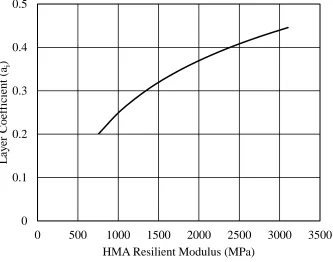
10
and 3100 MPa. AASHTO 1993 design guide proposes the value of 0.44 as the layer coefficient for Mr corresponding to 3100 MPa [1].
ai = 0.4 log(Mr)-0.951 Equation (3)
Figure 1. Estimating layer coefficient of dense-graded asphalt concrete based on resilient modulus.
Research conducted at University of Wisconsin for recalibrating the a-values of commonly asphalt mixes used by Wisconsin Department of Transportation (WisDOT) implemented the Mr measurement in lab. The test was performed in accordance to the AASHTO T-294-94 standard at 20 °C. Using equation 3 new layer coefficients were derived. The main concern stated by researchers was that the resilient modulus measurements for different types of mixtures at the aforementioned temperature were so close and as a result the a-values were turned out to be nearly the same. As a solution and for better differentiating the mixtures, a triaxial testing apparatus was used to measure the rutting at 52 °C and 64 °C. The researchers proposed the correlation of the a-value with the combination of resilient modulus, rutting performance and any other available damage factor to calculate the new a-values [6].
Among many state agency DOTs that use empirical design methods, South Carolina is using the AASHTO 1972 design guide and is trying to switch into the mechanistic-empirical (MEPDG) design method. Research was performed to enhance the precision of the a-values used for the asphalt base mixtures in South Carolina. The procedure included running the dynamic modulus test on the mixtures and prediction of the Mr value from the (E*) master curve at the frequency of 1.59 Hz at 20°C which is indeed equal to 0.1 second of loading on the specimen (same loading time for Mr test in accordance to ASTM D7369). Once the Mr was predicted, equation 3 was
0 0.1 0.2 0.3 0.4 0.5
0 500 1000 1500 2000 2500 3000 3500
L
ay
er
C
oe
ffic
ient
(ai
)
11
utilized to calculate the new a-values that were increased from the initial value of 0.34 to above 0.44 [7].
2.4.5 Falling Weight Deflectometer
According to the AASHTO 1993 design guide a more reliable way to determine the layer coefficients is to back calculate the moduli from Falling Weight Deflectometer (FWD) test on the road in lieu of lab testing since there might be a variation between the lab made samples and the mixture placed in the field [2] and also FWD is considered as a way to simulate the dynamic loading of a moving wheel in a wide range of loading level which is a more realistic way of loading.
Perhaps, New Hampshire Department of Transportation (NHDOT) has been one of the leading State DOTs in the nation to use FWD for recalibration of layer coefficient values for pavement materials. Research conducted in 1994 by Janoo on a segment of I-93 between exit 18 and 19 through construction of ten test sections with different combination of materials for the same structural number. The primary purpose of testing was to evaluate the a-value used for the Reclaimed Stabilized Base (RSB) that had been used during the construction, since the sections constructed with this type of material revealed higher surface deflections compared to other sections of the road. The results from FWD and back calculated moduli confirmed the hypotheses of using the incorrect a-value for this type of material as well as some other material in the design and the new a-value for RSB was assigned which decreased from 0.17 to 0.14. The layer coefficient of the asphalt material used by NHDOT ranges between 0.34-0.38 and back calculations from FWD in this research resulted in a-value of 0.37 for the wearing course [8].
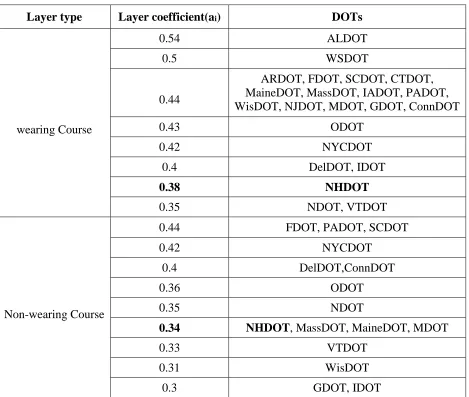
2.5 Review of Layer Coefficients used by Other Agencies
12
13 Table 1. Layer coefficients used by other agencies
Layer type Layer coefficient(ai) DOTs
wearing Course
0.54 ALDOT
0.5 WSDOT
0.44
ARDOT, FDOT, SCDOT, CTDOT, MaineDOT, MassDOT, IADOT, PADOT, WisDOT, NJDOT, MDOT, GDOT, ConnDOT
0.43 ODOT
0.42 NYCDOT
0.4 DelDOT, IDOT
0.38 NHDOT
0.35 NDOT, VTDOT
Non-wearing Course
0.44 FDOT, PADOT, SCDOT
0.42 NYCDOT
0.4 DelDOT,ConnDOT
0.36 ODOT
0.35 NDOT
0.34 NHDOT, MassDOT, MaineDOT, MDOT
0.33 VTDOT
0.31 WisDOT
14
15 3.1 Materials
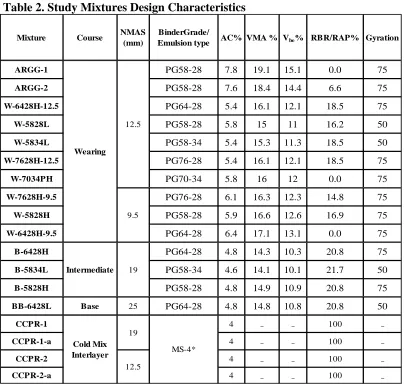
In order to evaluate the structural contribution of the asphalt mixtures in this dissertation, a variety of 18 asphalt mixtures were investigated. The mixtures include two asphalt rubber gap graded (ARGG), four cold central plant recycled (CCPR) mixtures as well as other different types of conventional and polymer modified hot mixed asphalt (HMA) mixtures as wearing, intermediate, and base course layers. The study mixtures are selected to represent a wide range of aggregate size and gradation, binder type, recycled asphalt pavement (RAP) amount and recycled binder ratio (RBR), and gyration level commonly used on New Hampshire highways. Information on the study mixtures is summarized in Table 2. It should be mentioned that the RBR and RAP percentages are used for HMA and CCPR mixtures respectively and all of the HMA mixtures are designed at 4% air void level.
Table 2. Study Mixtures Design Characteristics
* MS-4 is a special type of emulsion that is specified by the NHDOT bureau of material which is explained in Paper2-Chapter 5 of the dissertation.
Mixture Course NMAS
(mm)
BinderGrade/
Emulsion type AC% VMA % Vbe% RBR/RAP% Gyration
ARGG-1 PG58-28 7.8 19.1 15.1 0.0 75
ARGG-2 PG58-28 7.6 18.4 14.4 6.6 75
W-6428H-12.5 PG64-28 5.4 16.1 12.1 18.5 75
W-5828L PG58-28 5.8 15 11 16.2 50
W-5834L PG58-34 5.4 15.3 11.3 18.5 50
W-7628H-12.5 PG76-28 5.4 16.1 12.1 18.5 75
W-7034PH PG70-34 5.8 16 12 0.0 75
W-7628H-9.5 PG76-28 6.1 16.3 12.3 14.8 75
W-5828H PG58-28 5.9 16.6 12.6 16.9 75
W-6428H-9.5 PG64-28 6.4 17.1 13.1 0.0 75
B-6428H PG64-28 4.8 14.3 10.3 20.8 75
B-5834L PG58-34 4.6 14.1 10.1 21.7 50
B-5828H PG58-28 4.8 14.9 10.9 20.8 75
BB-6428L Base 25 PG64-28 4.8 14.8 10.8 20.8 50
_ 100 _
Cold Mix Interlayer 19 12.5 MS-4* 100 _ 4 _ _
4 _ _
_
4 _ _ 100
4 _ _ 100
16 3.2 Laboratory Evaluation Methods
3.2.1 Resilient Modulus (Mr)
In order to determine the preliminary layer coefficients for the mixtures the resilient modulus (Mr) test was conducted at 25°C on three disk-shaped replicates in accordance to ASTM D7369-11 standard test method [9]. The test method involves a haversine loading protocol with 0.1s of loading and 0.9s of rest period in 105 cycles where the last five cycles are used to calculate the resilient modulus. The preliminary a-values are then calculated using Equation 3 which is recommend by AASHTO 1993 design guide. It should be mentioned that all replicates have been compacted at 6±0.5% air void level. This air-void level was chosen for all experimental evaluation in this dissertation. The air void level choice was informed by NHDOT’s typical air-void level for in-place pavements after initial consolidation from traffic loading. In other words, 6% air void level represents a large amount of asphalt pavements in New Hampshire.
Figure 2. Resilient modulus test result and setup
3.2.2 Complex Modulus (E*)
Complex modulus test is performed in accordance to AASHTO T342 standard [10] using an Asphalt Mixture Performance Tester (AMPT) machine on 150×100 mm cylindrical specimens with a target air-void of 6±0.5%. The test is conducted on three replicate specimens at different temperatures (4.4°C, 21.1°C and 37.8°C) and loading frequencies (25, 10, 5, 1, 0.5, 0.1 Hz) to characterize the linear viscoelastic properties of the asphalt mixtures; dynamic modulus |E*| and phase angle (δ). The dynamic modulus and phase angle master-curves are constructed at a reference temperature of 21.1°C using appropriate shift factors. The |E*| master-curve indicates the stiffness of the mix in a broad range of frequencies at the reference temperature. The master-curve is an excellent tool to compare different mixtures in terms of the stiffness and the rutting susceptibility of the mix. Also, the mixtures can be assessed and ranked in terms of their potential for fatigue and low temperature cracking based on their stiffness. Usually the mixtures with higher stiffness and relatively flatter master-curve are more prone to crack. The phase angle master-curve on the other hand reflects the extent of viscous and elastic properties of the mix at a given temperature and frequency with higher phase angle indicating a better crack resistance of the mix and vice versa.
0 0.0005 0.001 0.0015 0.002 0.0025 0 0.05 0.1 0.15 0.2 0.25 0.3 0.35 0.4 0.45
0 0.1 0.2 0.3 0.4 0.5 0.6 0.7 0.8 0.9 1 1.1
17
Figure 3. Complex modulus test result and setup
3.2.3 Semi-Circular Bend (SCB)
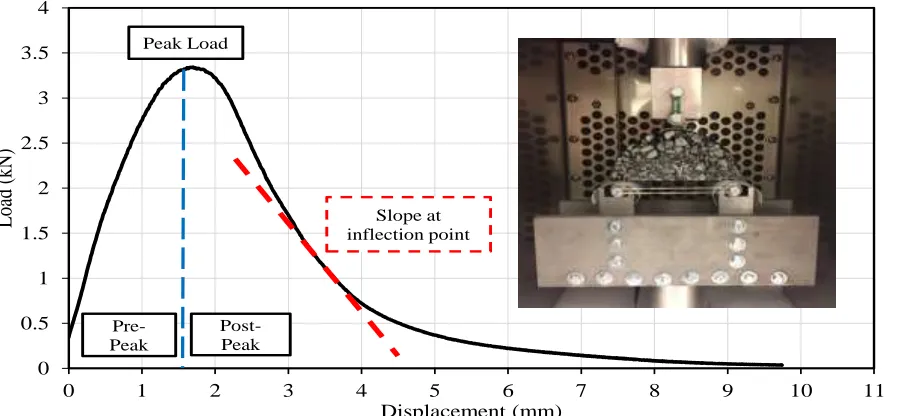
Semi-Circular Bend test is performed to determine the medium temperature fracture properties of asphalt mixtures in accordance to AASHTO TP 124 standard [11]. The test is conducted in a line-load displacement rate of 50mm/min at 25°C for 4 replicates at a target air void level of 6±0.5%. Fracture energy (Gf) defined as the amount of energy required to create unit fracture surface is determined from area under the load-displacement curve through Equation 4 and the Illinois flexibility index (FI) which normalizes the fracture energy by the post peak slope at inflection point can be determined through equation (5) [12]. While the fracture energy of different mixtures could be the same, the post peak slope is shown to be a good indicator of fracture propagation rate throughout the mixture, hence it is a good discriminating factor for mixture fracture resistance ranking.
𝐺
𝑓=
𝐴𝑟𝑒𝑎 𝑢𝑛𝑑𝑒𝑟 𝑙𝑜𝑎𝑑−𝑑𝑖𝑠𝑝𝑙𝑎𝑐𝑒𝑚𝑒𝑛𝑡 𝑐𝑢𝑟𝑣𝑒 (𝐹𝑎𝑟𝑐𝑡𝑢𝑟𝑒 𝑤𝑜𝑟𝑘)𝐹𝑟𝑎𝑐𝑡𝑢𝑟𝑒 𝐴𝑟𝑒𝑎 Equation (4)
𝐹𝐼 =
𝐺𝑓𝑆𝑙𝑜𝑝𝑒 𝑎𝑡 𝑝𝑜𝑠𝑡 𝑝𝑒𝑎𝑘 𝑖𝑛𝑓𝑙𝑒𝑐𝑡𝑖𝑜𝑛 𝑝𝑜𝑖𝑛𝑡 Equation (5)
St
res
s
an
d
St
rai
n
Time (s)
Stress Strain
Phase lag (s)
Peak stress Peak strain
𝑫𝒚𝒏𝒂𝒎𝒊𝒄 𝑴𝒐𝒅𝒖𝒍𝒖𝒔 = 𝑷𝒆𝒂𝒌 𝑺𝒕𝒓𝒆𝒔𝒔
18
Figure 4. Semi-Circular Bend test result and setup
3.2.4 Direct Tension Cyclic Fatigue (S -VECD)
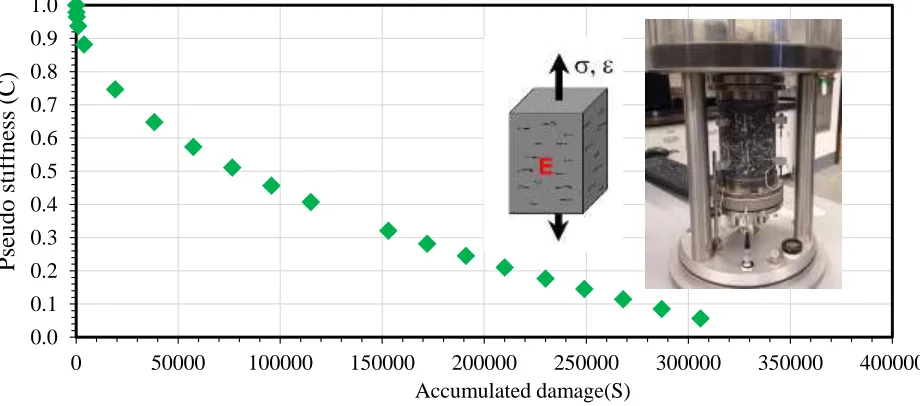
The uniaxial fatigue test is performed in accordance with AASHTO TP 107 [13] using Simplified Viscoelastic Continuum Damage (S-VECD) theory. The test is conducted on four replicates each at a different strain level under cyclic tension and constant crosshead testing mode. The main outcome of this test is the damage characteristic curve (DCC) which is a mixture property that is independent of loading mode and temperature and indicates the trend of reduction of pseudo stiffness (C) as damage grows.
Currently, there are three accepted fatigue criteria based on the S-VECD approach: GR and DR and Sapp. GR is the rate of averaged dissipated pseudo strain energy which indicates the decrease in the mixture’s energy storage capacity due to each loading cycle [14]. The number of cycles to failure at GR equal to 100 (Nf @ GR=100) is usually used to rank mixtures. DR is the average reduction in pseudo stiffness per loading cycle and indicates the decrease in material integrity in terms of stiffness as the load is applied. DR values usually range from 0.3 to 0.7 with higher values indicating better fatigue resistance [15]. Sapp is the accumulated damage when C is equal to 1-DR [16].
𝐺
𝑅=
∫0𝑁𝑓𝑤𝑐𝑅𝑁2
𝑓 Equation (6)
𝐷
𝑅=
∫0𝑁𝑓(1−𝐶)𝑁𝑓 Equation (7)
𝑆𝑎𝑝𝑝 =100001 × (𝐶1
11× 𝐷
𝑅)
1
𝐶12 Equation (8)
Where:𝑤𝑐𝑅: total released pseudo strain energy, C: Pseudo stiffness, Nf: number of loading cycles to failure, C11 and C12: Model coefficients of the damage characteristic curve
0 0.5 1 1.5 2 2.5 3 3.5 4
0 1 2 3 4 5 6 7 8 9 10 11
Load (kN)
Displacement (mm)
Pre-Peak
Post-Peak Peak Load
19
Figure 5. Damage characteristic curve and direct tension cyclic fatigue test setup
3.2.5 Disk-Shaped Compact Tension Test (DCT)
The disk-shaped compact tension (DCT) test was performed in accordance to the ASTM D7313 standard testing method [17] on three replicates. The test is developed to determine the low temperature fracture properties of the asphalt mixtures and is conducted at a crack mouth opening displacement (CMOD) rate of 1 mm/min. In general, the testing temperature is determined by 10°C+PGLT. The two index parameters that are used to analyze the DCT test results are the fracture energy (Gf) and the fracture strain tolerance (FST) [18]. The FST is determined by dividing Gf by the fracture strength (Sf).
Figure 6. Disk-shaped compact tension test result and setup
0.0 0.1 0.2 0.3 0.4 0.5 0.6 0.7 0.8 0.9 1.0
0 50000 100000 150000 200000 250000 300000 350000 400000
Pseu d o stif fn ess (C) Accumulated damage(S) 0 0.5 1 1.5 2 2.5 3 3.5 4
0 1 2 3 4 5 6
L o ad (k N ) CMOD (mm) F F
CMOD, Δ
20 3.3 Research Approach
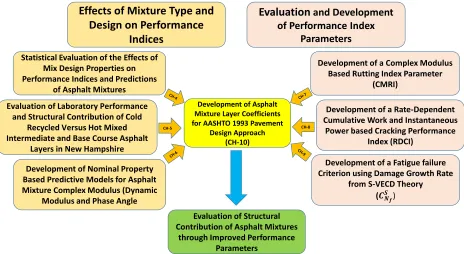
In order to fulfill the dissertation objectives a number of research efforts were undertaken to determine the asphalt mixture performance characteristics and their correlations with the structural contribution of asphalt mixtures commonly used in New Hampshire. These studies are divided into two major categories, where each category includes three efforts that form different chapters of this dissertation (Ch. 4, 5, 6, 7, 8 and 9). Finally the ultimate goal of evaluation of the structural contribution of the asphalt mixtures in form of layer-coefficients for the AASHTO 1993 design approach is realized on basis of inputs from all previous chapters. The two major categories and their respective sub-studies that are indicated in Figure 7 and will be briefly discussed next:
Figure 7. The dissertation objectives and overall research approach
3.3.1 Effects of Mixture Type and Design on Performance Indices
As a first step in determining the structural contribution of the asphalt mixtures in the pavement, it is necessary to understand the effect of individual mixture design parameters such as aggregate size and gradation, and mixture volumetrics such as air void, binder content, voids in the mineral aggregate, etc. Also, due to the advancements in asphalt mixture materials production and placement, different types of mixtures such as wearing, intermediate and base course may be used within the structure of the pavement where each of these courses have their own specific functionality in the pavement. For example, with respect to base courses, both hot and cold mixtures are often used while each of these mixture types may exhibit significantly different performance. Therefore, it is important to investigate and evaluate the implications of using different mixture types in the pavement. Because of these reasons, a comprehensive evaluation of
Evaluation of Laboratory Performance and Structural Contribution of Cold
Recycled Versus Hot Mixed Intermediate and Base Course Asphalt
Layers in New Hampshire
Development of a Fatigue failure Criterion using Damage Growth Rate
from S-VECD Theory ( )
Development of a Rate-Dependent Cumulative Work and Instantaneous
Power based Cracking Performance Index (RDCI)
Development of a Complex Modulus Based Rutting Index Parameter
(CMRI)
Development of Nominal Property Based Predictive Models for Asphalt Mixture Complex Modulus (Dynamic
Modulus and Phase Angle Statistical Evaluation of the Effects of
Mix Design Properties on Performance Indices and Predictions
of Asphalt Mixtures
Development of Asphalt Mixture Layer Coefficients for AASHTO 1993 Pavement
Design Approach (CH-10)
CH-5
Evaluation of Structural Contribution of Asphalt Mixtures
through Improved Performance Parameters
Effects of Mixture Type and Design on Performance
Indices
Evaluationand Development of Performance Index
Parameters
21
the study mixtures was conducted through performing mechanistic and performance tests to characterize the mixtures and determine the significant factors in terms of nominal properties of the mixtures through advanced statistical techniques. Also, the effect of mixture types and production methods (hot versus cold mixtures) were investigated through modeling the pavement structure and implementing advanced pavement mechanistic analysis software tools such as FlexPAVETM. The results from the testing and analysis are provided in chapters 4 (Appendix paper 1) and 5 (Appendix paper 2) of the dissertation and are submitted as manuscripts in peer reviewed journals.
As one of the most important properties of asphalt mixtures, the complex modulus has been widely used in order to characterize the mixtures linear viscoelastic (LVE) properties as these properties are directly used in the M-E pavement design approaches. For this reason, many regression based models have been developed to predict the asphalt mixture dynamic modulus. However, most of these models are highly dependent on variables such as binder dynamic shear modulus, aggregate gradation etc. which still need significant lab effort and expensive equipment which may not always be readily available in the lab. Also, limited work has been conducted to predict the mixture’s phase angle. Based on the findings from chapters 4 and 5, predictive models for asphalt mixture complex modulus (E* and phase angle) were developed in chapter 6 (Appendix paper 3). These models use only nominal properties of the mixtures such as nominal maximum aggregate size, air void, binder type and content as well as percentage of recycled material in the mixture. Usage of these properties that are readily available during the mixture design procedure, eliminates the need for even simple laboratory based variables such as gradation in the predictive models. Also, these locally calibrated models can be used in pre-evaluating the mixtures performance and their contribution to the overall capacity of the pavement structure. The results from this study is published in a peer review journal.
3.3.2 Evaluation and Development of Performance Index Parameters
Different testing methods and index parameters are available to evaluate and rank the mixtures performance with respect to particular distress types. In order to evaluate and determine the structural contribution of the asphalt mixtures, it is important to investigate the discriminability of these tests and indices and their correlation with the field distress.
22
parameter was developed in chapter 7 (Appendix paper 4) which is able to rank the mixtures performance with high reliability while indicating a high correlation with the Hamburg wheel test track as well as field rut depth for different mixtures. In order to evaluate the mixtures rutting susceptibility during the mixture design phase, the complex modulus predictive models (developed in chapter 6) can be used to construct the master-curves and determine the value of the rutting index parameter.
There are a variety of cracking performance index parameters such as and Gf, FI, GR DR and Sapp that are used to rank and evaluate the mixtures cracking performance in the lab. However, these indices may not always be able to distinguish the mixtures performance with respect to field distress conditions or different levels of aging. In chapter 8 of the dissertation, a study was conducted to evaluate the ability of FI in discriminating the asphalt mixtures’ performance and their sensitivity to different aging levels. The statistical analysis revealed that FI may not be able to distinguish the long term aging levels of mixtures while indicating a relatively high coefficient of variation (COV) between the replicates. Therefore, in this dissertation a rate-dependent cracking index (RDCI) parameter which is based on cumulative work and instantaneous power from the SCB test results was developed. This index revealed to be capable of categorizing the mixtures in a broader differentiated groups with respect to cracking with nearly 10% lowered COV in average for the studied mixtures. This index also revealed to be able to well distinguish different long term ageing levels. The full description of this study is included in Appendix paper 5.
The capability of S-VECD based index parameters (GR,DR and Sapp) were investigated in chapter 9 of the dissertation. A set of 6 different mixtures (outside of study mixtures) that are placed on same cross sections of I-93 highway were analyzed through S-VECD approach to determine if the indices are able to rank the mixtures with respect to available field fatigue distress data. The analysis revealed that neither of the indices can reliability rank the mixtures. Therefore, a new fatigue failure criterion based on damage growth rate (𝐶𝑁𝑆𝑓) is proposed and investigated. The new criterion indicated to not only be able to rank the mixtures but it also is highly correlated with the magnitude of fatigue distress in 5 years after construction. The results of this study are presented in Chapter 9 of the dissertation
In order to develop the layer coefficients, the findings from previous chapters in terms of index parameters were combined with the layer coefficients back-calculated from the field distress data such as International Roughness Index (IRI). As a result, three different types of layer coefficients called as aIRI-value, aave-value, amin-value were determined in Chapter 10. The aIRI-value is
23
4.
Statistical Evaluation of the Effects of Mix Design
24
The content of this chapter of dissertation is in form of a peer-reviewed journal article. Manuscript for the article is provided in the appendix to this dissertation. Abstract and significance of this article within the overall scope of this dissertation as described next.
4.1 Abstract
A variety of testing and performance index parameters are available to assess the asphalt mixture performance with respect to different structural distresses. However, due to continuous improvements in asphalt material production and construction techniques, it is necessary to regularly evaluate the correlation of the performance index parameters with mixture design properties. It is also important to determine the correlation between index parameters from different tests to help save time and financial resources by making engineering based adjustments to the mixture design before conducting multiple tests. This study explores the statistical correlation between mixture design properties and performance index parameters as well as the correlations among the performance index parameters from different tests. A total of 14 commonly used asphalt mixtures in New Hampshire were evaluated using the complex modulus (E*), resilient modulus (Mr), direct tension cyclic fatigue (S-VECD), Illinois semi-circular bend (SCB-IFIT), and disk-shaped compact tension (DCT) tests to assess the correlations between various performance indices and mix design properties. The results indicate that the aggregate fractions that pass 4.75 mm and 75 µm sieve sizes, the binder useful temperature interval, and recycled asphalt content significantly affect most of the index parameters. Medium to high correlations were observed between S-VECD, DCT and SCB with respect to different index parameters.
4.2 Significance of the Study
The structural contribution of asphalt mixtures in the pavement structure is a direct function of mixture design properties such as aggregate size and gradation, binder type and content, air void percentage and any additives in the mixture. For that reason, a thorough understanding of the effect of each of the mixture’s components with respect to a specific type of distress is of high interest to pavement engineers. Moreover, the increasing traffic demand along with use of higher amounts of recycled material in the mixtures have led to need for performance based asphalt mixture design procedures such as performance engineered mix design. However, the time and costs associated with conducting multiple performance tests during mix design iterations may be one of the biggest challenge in routine use of such approaches. Therefore, it is necessary to determine the correlations between different performance index parameters and make engineering based adjustments to the mixture design prior to conducting multiple time consuming and expensive tests. The research conducted in this portion of dissertation allows to improve the understanding of correlations between asphalt mix properties (such as, aggregate size and binder grade) to lab measured performance properties. A mapping of the work in this portion of dissertation to overall thesis objectives in provided in Table 3.
Table 3. Summary of chapter 4 contributions to dissertation objectives.
Chapter Paper Contribution to the objectives
25
5.
Evaluation of Laboratory Performance and Structural
Contribution of Cold Recycled Versus Hot Mixed
Intermediate and Base Course Asphalt Layers in New
26
The content of this chapter of dissertation is in form of a peer-reviewed journal article. Manuscript for the article is provided in the appendix to this dissertation. Abstract and significance of this article within the overall scope of this dissertation as described next.
5.1 Abstract
Depending on the local conditions and structural design of the pavement, multiple asphalt concrete layers including base, intermediate, and wearing courses are used. Typically, the base and intermediate layers have larger aggregate sizes and lower total asphalt binder contents as compared to the wearing course. Recently, cold recycled (CR) asphalt mixtures have gained attention as an alternative to the typical base, and to some extent intermediate courses, because of economic and environmental advantages. Challenges with CR include the potential high variability of recycled asphalt pavement (RAP) and lack of knowledge in terms of structural contribution and long term performance of such layers. This study investigates 4 different types of CR and 4 hot mixed plant produced asphalt mixtures (3 intermediate courses and 1 base course) that are typical mixtures used in New Hampshire. The laboratory performance evaluation is conducted through the resilient modulus (Mr), complex modulus (E*), semi-circular bend (SCB) and direct tension cyclic fatigue (S-VECD) tests. Pavement performance prediction is carried out using the results from S-VECD approach in the FlexPAVETM software. The test results indicate that the performance of CR is highly affected by the amount of oil distillate percentage in the emulsion as well as the amount of recovered binder in the RAP. While having a relatively lower rutting resistance capability, the CR mixtures maintained an acceptable fatigue performance. As compared to CR mixtures, hot-mixed intermediate and base course mixtures indicated better rutting performance while having lower resistance to cracking.
5.2 Significance of the Study
Due to the advancements in technology, different asphalt mixture production methods such as warm and cold mixtures have been produced and used in different layers. However, due to the temperature sensitivity of asphalt binders, the production method can significantly influence the mixtures properties and performance. Therefore, the structural contribution of mixtures within the pavement will be a direct function of mixture production method which is investigated in the research contribution that is presented in Paper 2. The research conducted in this portion of dissertation allows to improve the understanding of the effect of mixture production methods (cold versus hot) in the performance of asphalt mixtures. A mapping of the work in this portion of dissertation to overall thesis objectives is provided in Table 4.
Table 4. Summary of chapter 5 contributions to dissertation objectives.
Chapter Paper Contribution to the objectives
27
6.
Nominal Property Based Predictive Models for Asphalt
28
The content of this chapter of dissertation is in form of a peer-reviewed journal article. Manuscript for the article is provided in the appendix to this dissertation. Abstract and significance of this article within the overall scope of this dissertation as described next.
6.1 Abstract
Dynamic modulus (|E*|) and phase angle (δ) are necessary for determining the response of asphalt mixtures to in-service traffic and thermal loadings. While a number of |E*| and δ predictive models have been developed, many of them require lab measured properties (e.g. binder complex modulus). The majority of previous work has focused only on prediction of |E*|, limited models exist for prediction of δ. This research utilized generalized regression modelling of lab measurements (from 81 asphalt mixtures) to develop and verify prediction models for |E*| and δ using only nominal asphalt mix properties that are readily available during the initial mixture design and specification process.
6.2 Significance of the Study
Although |E*| and δ can be effectively used to predict the long term performance of asphalt mixtures using mechanistic analysis, there are limitations related to equipment requirements, specimen fabrication complexity, data analysis and other expenses in terms of human resources and time requirements. These limitations have severely restricted wide-spread usage of mechanistic-empirical and mechanistic pavement analysis and design. Although there are different regression based predictive models for dynamic modulus, a limited work has been conducted to predict the phase angle. Moreover, most of the available models use variables that still need significant lab testing such as the ones that are used in the Pavement ME software. A distinguishing factor for research and the prediction models presented in this study as compared to previous research is that here only nominal properties of asphalt mixtures, such as nominal maximum aggregate size, air void content, asphalt content, the percentage of recycled asphalt pavement (RAP) and recycled asphalt shingles (RAS) and asphalt binder performance grade (PG) are used in model development. Therefore, development of complex modulus predictive models based on the aforementioned properties was deemed important as the performance indices can be estimated during materials selection and pavement design process. Also, such models can be used to assess how each mix constituent and volumetric property impacts complex modulus. A mapping of the work in this portion of dissertation to overall thesis objectives in provided in Table 5.
Table 5.Summary of chapter 6 contributions to dissertation objectives.
Chapter Paper Contribution to the objectives
6 3
Direct contribution to objective 1 Indirect contribution to objectives
29
7.
Development of a Complex Modulus Based Rutting
30
The content of this chapter of dissertation is in form of a peer-reviewed journal article. Manuscript for the article is provided in the appendix to this dissertation. Abstract and significance of this article within the overall scope of this dissertation as described next.
7.1 Abstract
Different testing methods have been used to evaluate the rutting susceptibility of asphalt mixtures. Among them, loaded wheel testers, such as the Hamburg Wheel Tracking Test (HWTT), has shown to have promising correlation with the field rutting. Moreover, since rutting distress within pavement structure has a direct correlation with mixtures’ structural response to loading, the complex modulus (|E*| and phase angle) master-curves can be potentially used to estimate the mixtures rutting performance. This research introduces and investigates 5 different complex modulus based parameters to evaluate the rutting performance of asphalt mixtures. These parameters are developed based on two critical points on the |E*| and phase-angle master-curves. The first point is related to the frequency corresponding to peak phase angle and the second point is related to the reduced frequency on the master-curve which reflects the HWTT testing conditions. The results from investigating 22 asphalt mixtures indicate that there is a strong correlation between the rutting and the rate of drop in |E*| with respect to changes in frequency between the two selected critical points.
7.2 Significance of the Study
Many state highway agencies such as New Hampshire Department of Transportation do not have any specific requirements for evaluating the rutting susceptibility of the mixtures other than the general ones put forth by the AASHTO R30 standard Superpave mixture design which specifies the minimum number of gyrations for a given traffic level. However, in general, the mixtures that are designed to have an acceptable cracking performance are softer and might be prone to rutting in warmer climatic conditions which can significantly affect the ride quality, highway safety and maintenance and rehabilitation costs. Considering the limitations of the equipment as well as the state agency requirements, there is need for a reliable index parameter to provide a preliminary evaluation of the mixtures rutting susceptibility. The significance of this study is to be able to identify a complex modulus based rutting parameter that can then be used in layer coefficient prediction for purposes of mechanistically informed empirical design approach. The research conducted in this portion of dissertation allows for usage of viscoelastic properties of mixtures in predicting viscoplastic based distress modes such as rutting without need to perform destructive testing which can result in major savings in time and cost. A mapping of the work in this portion of dissertation to overall thesis objectives in provided in Table 6.
Table 6.Summary of chapter 7 contributions to dissertation objectives.
Chapter Paper Contribution to the objectives
31
8.
Development of a Rate-Dependent Cumulative Work
32
The content of this chapter of dissertation is in form of a peer-reviewed journal article. Manuscript for the article is provided in the appendix to this dissertation. Abstract and significance of this article within the overall scope of this dissertation as described next.
8.1 Abstract
Use of the semi-circular bending (SCB) test has gained popularity for evaluating cracking performance of asphalt mixtures. An Illinois Flexibility Index Test (I-FIT) variant of SCB has shown the ability to distinguish mixtures through use of the flexibility index (FI) parameter. While this index has been able to rank the mixtures with respect to performance, a high coefficient of variation (COV) among the replicates has often been observed. Furthermore, parameters such as total fracture energy and FI do not incorporate rate-dependency of fracture processes which are very important for viscoelastic materials such as asphalt mixtures at low and intermediate temperatures. In light of these observations, a rate dependent cracking index (RDCI) is proposed that utilizes cumulative fracture work potential and instantaneous power calculated from the I-FIT test to assess impulse of the mixture. A total of 18 wearing course mixtures were analysed using the RDCI and resulted in an average overall reduction of 10.6% in COV as compared to FI while maintaining similar ranking of mixtures. In general, RDCI was able to better discriminate the 18 mixtures as compared to FI. Evaluation of five mixtures at three aging levels showed robustness of RDCI in capturing effects of aging on fracture behaviour of asphalt mixtures.
8.2 Significance of the Study
One of the main goals of this dissertation is to evaluate the current commonly used performance indices to determine the repeatability and reliability of such indices in discriminating the mixtures performance. This will allow the state highway agencies to improve their specifications by selecting the appropriate test, index parameter and the thresholds associated with that parameter to improve the quality of the mixtures. For this reason the flexibility index as a widely used index parameter by many of the state transportation department agencies, was investigated. The research conducted in this portion of thesis allows for direct application of the rate dependency of asphalt mixtures in characterizing the mixtures’ fracture properties which can result in further improvements in designing dynamic based loading tests as opposed to monotonic based ones to better simulate the realistic traffic conditions. A mapping of the work in this portion of dissertation to overall thesis objectives in provided in Table 7.
Table 7.Summary of chapter 8 contributions to dissertation objectives.
Chapter Paper Contribution to the objectives
8 5
Direct contributions to objective 2 Indirect contributions to
33