Diabetes is the world’s fastest growing chronic disease and affects people of all ages. Reliable statistics are not readily available for South Africa, but data held by companies that supply insulin suggest that approximately 200 000 people in South Africa use injectable therapies to treat their diabetes. Health outcomes are affected if the incorrect injection technique is used, and this is a frequent occurrence which can be remedied.
Injection technique recommendations:
a gap needing to be filled
All injectable agents rely on the correct injection technique for optimal effect. Despite this, current diabetes guidelines do not include detailed advice on the subject. The UK National Institute for Health and Care Excellence1 makes a brief reference to providing education on injectable devices to people with diabetes, while its 2011 quality standard for insulin
therapy 2recommends a structured programme of
education, including site selection and care. The document also stresses that healthcare professionals who initiate and manage people on insulin must complete appropriate training and be able to demonstrate their competency.
In the section on “Injectable therapies for the safe administration and use of insulin and glucagon-like peptide 1 (GLP-1) receptor agonists” in The 2012 SEMDSA guideline for the management of type 2 diabetes (revised),3 it is recognised that patient education is the cornerstone of effective diabetes care. A short inference is made that one of the topics that should be covered by diabetes self-management education is “insulin injection technique and sites of injection”.
Apart from these brief and indeterminate references, currently there is no comprehensive evidence-based,
practical document that outlines best practice for the insulin injection technique for people who are living with diabetes in South Africa.
Introducing the Forum for Injection Technique
The Forum for Injection Technique (FIT) was formed in 2010, initially in the UK by experienced diabetes specialist nurses following publication of the international “New injection recommendations for patients with diabetes” in Diabetes & Metabolism that year.4FIT has grown into an international effort. The South African chapter joined in 2012, with the support of Becton Dickinson and Company. This growing body of professionals aims to establish and promote best practice in injection techniques for everybody involved in diabetes care, and to help people with diabetes who require injectable therapies to achieve the best possible health outcomes. It specifically attempts to achieve this by ensuring that the correct therapeutic dose is delivered to the correct site, using the correct technique, every time.
The first South African FIT injection technique recommendations are now available, and can be reviewed and downloaded from the FIT website.5 Its main objectives are to improve quality of care and health outcomes, minimise complications experienced by patients owing to poor injection practices, and increase the cost-effectiveness of resources devoted to diabetes care.
Improving the injection technique of practice
nurses
Diabetes nurse educators who work within a team have been able to build knowledge and skills through supervision, but creating and maintaining these invaluable human resources is time-consuming and made difficult by limitations such as funding.
Injection technique guidelines for diabetes:
sharp and to the point
Injection Technique Working Group of The Diabetes Education Society of South Africa (DESSA) Davel H, RN, Chronic Disease Management, Diabetes Specialist Nurse, Accredited Diabetes Educator Berg GI, BPharm, MSC Diploma in Diabetes Management (UK); DESSA Chair Allie R, RN(ICU); Diabetes Specialist Nurse, Accredited Diabetes Educator Van der Merwe L, RN, RM, Palliative Nurse, PGDM(UK), Diabetes Specialist Nurse, Accredited Diabetes Educator Correspondence to: Jeannie Berg, e-mail: [email protected]
To fill gaps in the provision of care, increasingly practice nurses have been taking on the role of teaching and coaching the practicalities of the injection technique to people living with diabetes. Many practice nurses work in relative isolation, and may not have access to specialist supervision or support. As they try to fulfil a number of roles, it is possible that practice nurses may lack the knowledge and expertise to be able to fully support people with diabetes on insulin and GLP-1 therapy, particularly as accessing training and education is becoming increasingly difficult, often because of financial or time constraints.
Therefore, raising awareness about the consequences of an incorrect injection technique is important in all aspects of diabetes care because many healthcare professionals do not always link erratic blood glucose control with a poor injection technique.
FIT advocates that in order to effectively educate people with diabetes, healthcare professionals must possess the appropriate knowledge and skills. FIT is committed to supporting the implementation of its recommendations for those involved in diabetes care, including practice nurses, and recognises the need to develop and make accessible new and innovative educational approaches.
A snapshot of the current injection technique
practice
Use of the correct injection technique is central to optimal glycaemic control in those on injectable therapies. However, international evidence suggests that the injection technique is often flawed, and while there is no comparative local data, there is reason to believe that findings from European studies reflect the South African situation too.
Strauss et al examined the insulin injection technique in 1 002 people with either type 1 or type 2 diabetes across seven European countries.6
They considered significant factors, including injection site rotation habits, the incidence of lipohypertrophy, needle length, the timing of injections and the use of a lifted skin fold. Subsequently, Frid et al7 examined the injecting habits of 4 300 people with diabetes using insulin, 999 of whom were from the UK. Both studies revealed worrying practices in relation to the injection technique, with little improvement in the technique being developed over the years.
UK data from the 2009 Insulin Injection Technique Questionnaire7 showed that:
• Fifty-two per cent of people used needles that were longer than 6 mm.
• Sixty per cent had not changed the needle size used since starting injectable therapy.
• Seventy-five per cent did not follow any site rotation routine.
• Fifty-four per cent reported lipohypertrophy at some point.
• Twenty-eight per cent admitted injecting into areas of lipohypertrophy.
• Forty-five per cent experienced bleeding or bruising. • Forty-three per cent released the skin fold too soon. • Seventeen per cent used an incorrect technique to
lift the skin fold.
• Only 41% reported frequent and adequate
inspection of their injection sites.
A poor injection technique links to erratic
glycaemic control
Diabetes injectable agents rely on the correct injection technique for optimal effect. Using an incorrect technique, including use of inappropriate needle length, failure to rotate the injection sites, as well as the reuse of needles, can lead to injectable therapies being absorbed in an unpredictable manner.
This can cause immediate problems, such as hypoglycaemia (when insulin is injected into the muscle where it is absorbed at a fast rate), and/or hyperglycaemia (when the insulin is injected into an area where it is poorly absorbed).8,9
It is well known that poor glycaemic control increases the risk of long-term complications, including kidney failure, blindness and limb amputation.10,11
The subcutaneous layer is the recommended site for injectable insulin and GLP-1.12 Injecting into the subcutaneous layer allows the insulin to be absorbed at a more predictable rate which can result in better glycaemic control.13
Lipohypertrophy, which is the accumulation of fatty, rubbery tissue in the subcutaneous layer caused by repeatedly injecting into the same area, is a major problem associated with use of a poor injection technique. Lipoatrophy, which is the wasting of subcutaneous fat, can also develop over time.
It has been estimated that approximately half of people with diabetes will experience lipohypertrophy at some time in their lives.7 Generally, it is understood that injecting into areas of lipohypertrophy or lipoatrophy results in variable absorption and erratic glycaemic control.
In a Spanish study, Blanco, Hernandez, Strauss and Amaya examined the prevalence and risk factors of lipohypertrophy in people who inject insulin. The study found that almost two thirds of people had lipohypertrophy (76.3% of those with type 1 diabetes, and 56.1% of those with type 2 diabetes), and this was strongly associated with a failure to rotate injection sites. The correct rotation of injection sites was the strongest protective factor against the development of lipohypertrophy. Only 5% of people who rotated
correctly developed lipohypertrophy.15 Needle
reuse was identified as another causative factor of lipohypertrophy, and the risk rose significantly when needles were used more than five times.15
Glycaemic variation occurred in 49% of people with lipohypertrophy, compared to 6.5% in those without it. On average, people with lipohypertrophy required 56 units of insulin per day, compared to 41 units for those without it. Blanco Hernandez, Strauss and Amaya calculated that the 15-unit difference in the total daily dose of insulin equated to an annual additional cost of €122 million to the Spanish health system, and suggested that potential cost savings could be made if insulin doses were reduced. More importantly, addressing poor injection technique would improve the quality of life of patients using injectable therapies as less glycaemic variability leads to fewer diabetes-associated complications.15
Detecting lypohypertrophy
The detection of lipohypertrophy requires both visual inspection and palpation of the injection sites, as some lesions are more easily felt than seen. It is important to teach people with diabetes how to examine themselves for lipohypertrophy in the same way that a healthcare professional would advise self-examination to patients to detect signs of breast or testicular cancer. People who use injectable therapies need to understand lipohypertrophy and its possible impact on their glycaemic control. They must be able to prevent and recognise it, and understand what to do should it develop. Healthcare professionals should check injection sites as part of routine care, at least annually. It is not adequate to simply ask individuals about their injection sites, as problems such as lipohypertrophy tend to develop gradually, and patients may be unaware of the problem. An experienced nurse can be taught how to identify lipohypertrophy through visual inspection, as well as palpation. Healthcare workers must encourage patients to adopt systematic site rotation as this can help to reduce the risk of lipohypertrophy developing.
Teaching the correct injection technique
A number of factors contribute to good injection technique, including injection site selection, injection
site care, the injection process from start to finish, needle length, the use of lifted skin folds (if appropriate) and the rotation of injection sites. There are additional considerations in the case of insulin, including the resuspension of cloudy insulin, as absorption rates vary at different sites.4
These issues are addressed in the FIT injection technique
recommendations.5 Some of the most critical
recommendations are summarised herein.
Preferred sites
Generally, therapeutic agents are self-injected into one of the four preferred sites; the abdomen, thighs, buttocks and arms. Absorption rates from these different areas depend on the pharmacokinetics of the injected agent. The rate of absorption of GLP-1 receptor agonists does not appear to be site specific, nor do those of the rapid-acting and long-acting insulin analogues.16 However, the rate of absorption of human insulin is affected by the site. The abdomen is the preferred site for the injection of soluble insulin, where it is absorbed faster.17 The thighs and buttocks are the preferred site for neutral protamine hagedorn insulin, as absorption is slowest in these sites.18 It is suggested that the abdomen is used in the morning, and the thigh or buttock in the evening, when pre-mixed insulin is injected.19
Rate of absorption
Other factors that can speed up absorption and potentially increase the risk of hypoglycaemia include immersion in a hot environment, e.g. having a hot bath after the injection, which increases blood flow to the injection area.20 Massage or exercise which occurs immediately after the injection may speed up absorption because of increased circulation to the injection site. Therefore, individuals must avoid injecting into the thigh after cycling or jogging. Injecting intramuscularly also speeds up absorption. Factors which can slow down absorption and cause a rise in blood glucose levels are cold environments (as they reduce blood flow), large volumes of insulin, and injections into damaged, unhealthy tissue.21
Needle length
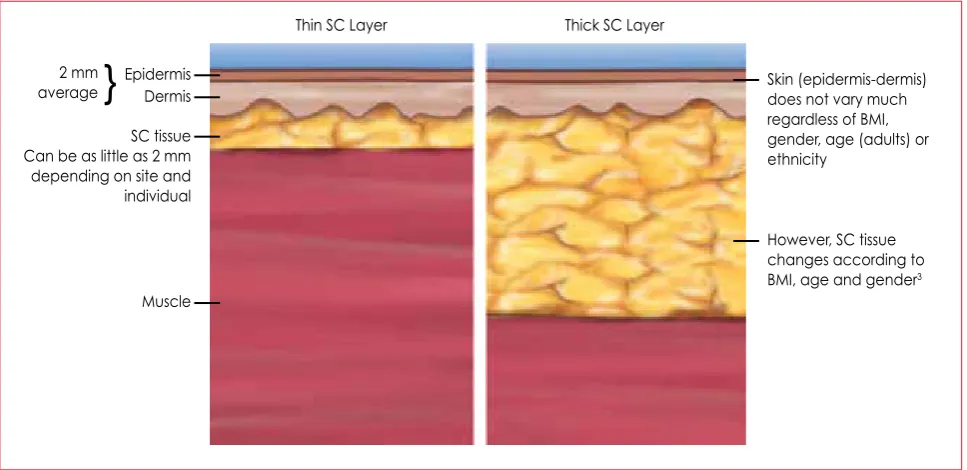
Figure 1 is a diagram of the skin and underlying tissue layers.
A shallow intradermal injection results in unpredictable insulin absorption, and there is a risk of leakage and an allergic reaction. Intramuscular injection increases the risk of the injected agent being absorbed too quickly owing to a richer blood supply to the muscle, leading to an increased risk of hypoglycaemia and greater glycaemic variability.
Injections into muscle are more painful and can cause bruising.
There is a misconception that patients with greater subcutaneous tissue depth, particularly overweight and obese people, require a longer needle. In fact, it makes no difference whether or not agents are injected into shallow or deep subcutaneous tissue as they are absorbed at similar rates. Previously, when
only longer needles were available, the only option for those with little subcutaneous depth was to use a lifted skin fold or an angled injection to avoid intramuscular injection. Nowadays, with the availability of shorter needles (4, 5 and 6 mm), individuals can inject at a 90-degree angle without a lifted skin fold. A small minority of people with diabetes, such as children or very lean adults, may still need to perform a lifted skin fold when using the shortest needles. There is no clinical reason to recommend needles that are longer than 8 mm in adults.4,15
Lifted skin folds
Teaching how to perform a lifted skin fold is not easy. They are often carried out incorrectly. There is the risk of giving an intramuscular injection if too much flesh is pinched up. Recommendations suggest lifting the skin away from the underlying muscle with two fingers
Thin SC Layer Epidermis
Dermis
Muscle SC tissue Can be as little as 2 mm depending on site and individual
Skin (epidermis-dermis) does not vary much regardless of BMI, gender, age (adults) or ethnicity
However, SC tissue changes according to BMI, age and gender3
Thick SC Layer 2 mm
average
}
Figure 1: A diagram of the skin and underlying tissue layers
BMI: body mass index, SC: subcutaneous
and a thumb (Figure 2). Furthermore, people should be advised to keep the needle in the skin (with the lifted skin fold if necessary) for 10 seconds after the plunger has been completely depressed.
Sequence for injecting
The optimal injection sequence, as recommended by FIT,5 should be:
• Performing a lifted skin fold (if necessary).
• Inserting the needle into the skin at a 90-degree angle.
• Administering insulin.
• Leaving the needle in the skin for at least 10 seconds after the insulin has been injected.
• Withdrawing the needle from the skin.
• Releasing the lifted skin fold if applicable, i.e. if a skin fold was performed.
Resuspension of insulin
Cloudy insulin must be properly resuspended before use. This is achieved by rolling the vial, cartridge or pen 10 times. Following this, it must be gently inverted 10 times before a visual check is made to ascertain that it is a uniform milky-white colour.5
Single use of needles
Most insulin needles (pen needles or syringes) are approved for single use. Therefore, they should only be used once. However, it is widely recognised that the reuse of pen needles and syringes is common in adults and children.5 There is evidence that needle reuse relates to an increased risk of lipohypertrophy. Blanco,
Hernandez, Strauss and Amaya15 demonstrated
a clear trend towards an increased incidence of lipohypertrophy the more times a needle was reused, particularly when the needle was reused more than five times.
The needle may become distorted and bent with reuse, and there may be loss of lubrication. This can lacerate the skin2 and result in a more painful injection.24
Site rotation
Systematic site rotation helps to reduce the risk of lipohypertrophy developing. Dividing the injection site into quadrants or halves, and using one section per week, rotating within that section from day to day, and then moving in a clockwise direction to a new area each week, proved to be effective (Figures 3 and 4).4,5
Site selection
The injection site should be inspected and palpated by the individual prior to injection. Where lipohypertrophy is detected, the person should be advised not to inject into the site until the tissue returns to normal, which
may take several months. Abnormalities should be documented and sites monitored at every subsequent review. It is important to note that, when switching from areas of lipohypertrophy where insulin is likely to be poorly absorbed to injecting into normal tissue, the improved, quicker insulin absorption may require a reduction in the dose. The extent to which a dose should be reduced will depend on the individual and should be guided by frequent blood glucose testing. The reduction may be as much as 50%.25
Ongoing review of the injection technique
Giving good advice at initiation of the injectable therapy is vital, but problems relating to the use of a poor injection technique often arise later. Therefore, it is important that the injection technique is revisited, and that injection sites are examined as part of routine, ongoing management. Starting injectable therapy, especially insulin, is a daunting prospect for most people. Patients with type 1 diabetes may struggle to come to terms with their diagnosis, and those with type 2 diabetes may experience feelings of failure.26 Additionally, with so much new information to absorb, it is unsurprising that people with diabetes forget some Figure 3: Structured rotation plan for the abdomen and thighs
Diagram courtesy of Lourdes Saez-de Ibarra and Ruth Gaspar, diabetes nurses and specialist educators from La Paz Hospital, Madrid, Spain
Figure 4: Depiction of how to divide the injection site into quadrants or halves, using one section per week and moving in a clockwise direction
of the practicalities associated with a good injection technique. There is evidence to show that revisiting education on the injection technique is often rare. In one study, approximately 30% of participants did not recall being educated on the length of the needle, for how long to hold a lifted skin fold, the angle of needle entry or the resuspension of cloudy insulin.7
It is critical to reassess how people with diabetes are injecting themselves on a regular basis. Erratic blood glucose levels are often observed in people at consultations. Healthcare practitioners often scrutinise blood glucose monitoring diaries to determine which lifestyle patterns may be the cause.
However, a quick assessment of the person’s injection technique may indicate the cause of erratic blood glucose levels. It would be a positive development if healthcare professionals regularly reassessed the injection technique as part of routine follow-up, as, regardless of a therapy’s efficacy, if it is not administered properly, it will not have an optimal effect.
Conclusion
People who use injectable therapies should be taught the correct injection technique when injectable therapies are initiated, but the subject must also be revisited and reviewed on subsequent consultations. Healthcare professionals have a responsibility to acquire knowledge, skills and competencies with regard to current best injection technique practice, in order to support people who use injectable therapies effectively and safely. FIT was created to provide resources and support, and it remains committed to establishing and promoting best practice in injection techniques, raising awareness of existing research relating to injection techniques, and highlighting the impact that this may have on health outcomes for people with diabetes who use injectable therapies.
References
1. National Institute for Health and Care Excellence type 2 diabetes: newer agents. NICE [homepage on the Internet]. c2014. Available from: http://www.nice.org.uk/cg87 2009
2. National Institute for Health and Care Excellence. Diabetes in adults quality standard: quality statement 6: insulin therapy. NICE [homepage on the Internet]. 2011. c2014. Available from: http://bit. ly/1a13ydp
3. The 2012 SEMDSA guideline for the management of type 2 diabetes (revised). JEMDSA. 2012;17(2 Suppl 1): S1-S94.
4. Frid A, Hirsch L, Gaspar R, et al. New injection recommendations for patients with diabetes. Diabetes Metab. 2010;36 Suppl 2:S3-S18. 5. The Forum for Injection Technique. FIT [homepage on the Internet].
c2013 Available from: www.fit4diabetes.com.
6. Strauss K, De Gols H, Hannet I, et al. A pan-European epidemiologic study of injectable therapy injection technique in patients with diabetes. Pract Diab Int. 2002;19:71-76.
7. Frid A, Hirsch L, Gaspar R, et al. The Third Injection Technique Workshop in Athens (TITAN). Diabetes Metab J. 2010;36 Suppl 2:S19-S29.
8. Polak M, Beregszaszi M, Belarbi N, et al. Subcutaneous or intramuscular injections of insulin in children: are we injecting where we think we are? Diabetes Care. 1996;19(12):1434-1436.
9. Birkebaek NH, Solvig J, Hansen B, et al. A 4-mm needle reduces
the risk of intramuscular injections without increasing backflow to
skin surface in lean diabetic children and adults. Diabetic Care. 2008;31(9):e65.
10. TREND-UK. An integrated career and competency framework for
diabetes nursing. 3rd ed. London: SB Communications Group; 2011.
11. Intensive bloodglucose control with sulphonylureas or insulin compared with conventional treatment and risk of complications in patients with type 2 diabetes (UKPDS 33). UK Prospective Diabetes Study (UKPDS) Group. Lancet. 1998;354(9178):837-853.
12. Frid A. Fat thickness and insulin administration: what do we know? Infusystems International. 2006;5:17-19.
13. Hofman PL, Lawton SA, Peart JM, et al. An angled insertion technique using 6-mm needles markedly reduces the risk of intramuscular injections in children and adolescents. Diabet Med. 2007;24(12):1400-1405.
14. Vardar B, Kizilci S. Incidence of lipohypertrophy in diabetic patients and a study
of influencing factors. Diabetes Res Clin Pract. 2007;77(2):231-236.
15. Blanco M, Hernandez MT, Strauss KW, Amaya M. Prevalence and risk factors of lipohypertrophy in insulin-injecting patients with diabetes. Diabetes Metab. 2013;39(5):445-453.
16. Mudaliar SR, Lindberg FA, Joyce M, et al. Injectable therapy aspart (B28 asp-insulin): a fast-acting analog of human injectable therapy: absorption kinetics
and action profile compared with regular human injectable therapy in healthy
nondiabetic subjects. Diabetes Care. 1990; 1999;22(9):1501-1506.
17. Frid A, Linde B. Clinically important differences in injectable therapy absorption from the abdomen in IDDM. Diabetes Res Clin Pract. 1993;21(2-3):137-141. 18. Henriksen JE, Vaag A, Hansen IR, et al. Absorption of NPH (ispohane) injectable
therapy in resting diabetic people with diabetes: evidence for subcutaneous injection in the thigh as preferred site. Diabet Med. 1991;8(5):453-457. 19. Guerci B, Sauvanet JP. Subcutaneous insulin: pharmacokinetic variability and
glycemic variability. Diabetes Metab. 2005;31(4 Pt 2):4S7-4S24.
20. De Meijer PH, Lutterman JA, van Lier HJ, van’t Laar A. The variability of the absorption of subcutaneously injected injectable therapy. Diabet Med. 1990;7(6):499-505.
21. Ferrannini E, Linde B, Faber O. Effect of bicycle exercise on insulin absorption
and subcutaneous blood flow in the normal subject. Clin Physiol. 1982;2(1):59-70.
22. Gibney MA, Arce C, Byron K, Hirsch L. Skin and subcutaneous adipose layer thickness in adults with diabetes at sites used for insulin injections: implications for needle length recommendations. Curr Med Res Opin. 2010;26(6):1519-1530. 23. Pledger J, Hicks D, Kirkland F, Down S. Importance of injection technique in
diabetes. Journal of Diabetes Nursing. 2012;16:160-165.
24. Chantelau E, Lee DM, Hemmann DM, et al. What makes injectable therapy injections painful? BMJ. 1991;303(6793):26-27.
25. Overland J, Molyneaux L, Tewari S, et al. Lipohypertrophy: does it matter in daily life? Diabetes Obes Metab. 2009;11(5):460-463.