_____________________________________________________________________________________________________ *Corresponding author: E-mail: [email protected];
Fresh Garlic Extract has a Synergistic Effect with
Antibiotics on ESBLs Producing
E. coli
Urinary
Isolates
Wedad M. Abdelraheem
1*1Department of Medical Microbiology and Immunology, Faculty of Medicine, Minia University, 61511,
EL-Minia, Egypt.
Author’s contribution
The sole author designed, analysed, interpreted and prepared the manuscript.
Article Information
DOI: 10.9734/JAMB/2019/v14i430072 Editor(s): (1)Dr. Ike, Anthony C., Department of Microbiology, University of Nigeria, Nsukka, Enugu State, Nigeria. Reviewers: (1)Maria Demetriou, Democritus University of Thrace, Greece. (2)Dr. Ronald Bartzatt, University of Nebraska, USA. (3)Dr. Muhammad Qasim, Kohat University of Science and Technology, Pakistan. Complete Peer review History:http://www.sdiarticle3.com/review-history/47146
Received 27 October 2018 Accepted 06 February 2019 Published 22 February 2019
ABSTRACT
Aim: Extended spectrum beta-lactamases (ESBLs)-producing bacteria often exhibit a multidrug- resistant phenotype limiting the therapeutic options available to the clinician. This study was conducted to investigate the antibacterial susceptibility pattern of ESBL producing E. coli isolates and evaluation of the antibacterial activity of Garlic extract against it.
Study Design: The study was carried out using antibiotics powder and Garlic extract.
Place and Duration of Study: At the microbiology lab, Faculty of Medicine, Minia University between January 2017 to August 2018.
Methods: The study was carried on 55 ESBL producing E. coli isolates isolated from patients with urinary tract infections (UTI). Screening and confirmation for ESBL was done according to clinical and laboratory standard institute guidelines (CLSI) guidelines. The antibacterial sensitivity to a panel of antibiotics and Garlic was performed by tube dilution method.
Results: The results of antibacterial susceptibility testing of ESBLs-producing E. coli isolates in our study showed a higher degree of resistance to the tested antibiotics. In the present study, Garlic showed an inhibitory effect on ESBLs- producing E. coli with concentrations ranging from 10-50
mg/ml and a mean of 30 mg/ml. Garlic extract produce a synergistic effect with all tested antibiotics against all tested ESBL producing E. coli isolates. A Significant decrease in ESBLs genes expression (SHV, TEM and CTX-m) was reported after treatment with Garlic extract (P value: ˂0.001).
Conclusion: The combinations of antibiotics and Garlic may be more useful than individual agents, so we recommended that further researches should be undertaken to evaluate the combination of Garlic with antibiotics towards ESBL producing E. coli.
Keywords: E. coli; ESBLs; garlic; MIC; susceptibility; UTI.
1. INTRODUCTION
Antibiotic resistant mutants producing extended spectrum beta-lactamases (ESBLs) have emerged among Gram negative bacilli, predominantly Escherichia coli (E. coli) [1].
ESBLs are plasmid-mediated enzymes that hydrolyze penicillins, extended-spectrum cephalosporins, monobactams, and are inhibited by beta-lactamase inhibitors such as clavulanic acid, sulbactam, and tazobactam [2].
ESBLs producing bacteria continue to be associated with higher rates of mortality, morbidity, and health care costs. ESBLs arise because of mutations in the TEM, SHV, CTX-M and OXA genes, which are commonly found in the Enterobacteriaceae family [3].
ESBLs-producing bacteria often exhibit a multidrug- resistant phenotype, including resistance to aminoglycosides and fluoroquinolones, further limiting the therapeutic options available to the clinician [4]. Infectious Diseases Society of America listed ESBLs-producing E. coli as one of the drug-resistant microbes to which new therapies are urgently needed [5].
Allium sativum commonly known as Garlic belongs to the Amaryllidaceae family. The inhibitory and lethal activity of Garlic extract against many pathogenic fungi and bacteria has been investigated by several researchers [6,7].
Garlic has been found to exhibit a wide spectrum of antibacterial activity against Gram negative and Gram positive bacteria, including species of
Escherichia, Salmonella, Staphylococcus, Streptococcus, Klebsiella, Proteus, Bacillus, and
Clostridium [8,9,10]. Garlic contains at least 33 sulfur compounds such as alliin, allicin, ajoene, allyl propyl, diallyltrisulfide, s-allyl cysteine, S-allylmercaptocysteine, and others, which are responsible for its antibacterial activity [11].
This study was conducted to investigate the antibacterial susceptibility pattern of ESBLs- producing clinical E. coli isolates and evaluation of the antibacterial activity of Garlic extract against ESBL producing E. coli isolates.
2. MATERIALS AND METHODS
The study was carried out at the Microbiology and Immunology department, Faculty of Medicine, Minia University, in the period from January 2017 to August 2018. The study was carried out on 55 ESBLs- producing E. coli
isolates out of 130 E. coli isolates isolated from patients with urinary tract infections.
2.1 Phenotypic Detection of ESBLs
Production
ESBLs detection was performed by initial screening test and phenotypic confirmatory test as recommended by CLSI guidelines.
2.1.1 Screening by Minimal Inhibitory Concentration (MIC) test
Minimum inhibitory concentration of the isolates was determined by broth dilution method for ceftazidime and ceftriaxone. The values of concentration range of antibiotics tested were as followed: 0.25 µg/mL to 128 µg/ml. According to NCCLS guidelines, isolates with MIC ≥2 µg/mL for ceftazidime or ceftriaxone were recorded as potential ESBLs producers [12].
2.1.2 Confirmation by combination disc method
µg and ceftazidime30 µg) and combination discs (ceftriaxone 30 µg with clavulanate 10 µg and ceftazidime 30 µg with clavulanate 10 µg) were placed on each plate. After 18 hours incubation at 37℃, each plate was examined. The diameters of the inhibition zone were measured. According to NCCLS guidelines, an organism was interpreted as ESBLs producer if there was an increase of ≥5mm of the inhibition zone of the Combination disc when compared with the corresponding cephalosporin disc [12].
2.2 Antibacterial Susceptibility Testing
The antibiotic sensitivity test to a panel of antibiotics was performed by tube dilution method using antibiotic powders (Oxoid, UK). Two-fold serial dilutions of antibiotics were prepared. The MIC range varied with different drugs. All MIC ranges were followed according to the NCCLS guidelines [12].
2.3 Preparation of Garlic (A.sativum)
Extract
The Garlic cloves were peeled, cut into pieces, and 100 g was mixed in 50 mL sterile distilled water. The mixture was crushed finely using a juicer. The resulting paste was centrifuged for 20 minutes and the supernatant was then sterilized by the 0.22 µm filter (Thermo Fisher Scientific, Germany). The final concentration of Garlic in aqueous solution was determined to be 50% (w/v) by subtracting the weight of the precipitate from the weight of the original Garlic bulbs. The Garlic extract was stored at -20°C until used.To achieve various concentrations, the extract was diluted with sterilized distilled water [13].
2.4 ESBLs E. coli Genes Expression
Semi-quantitative RT-PCR was performed to study the effect of garlic on the mRNA expression of the ESBLs E. coli genes (SHV, TEM and CTX-M) after RNA isolation and complementary DNA (cDNA) synthesis. Total RNA was extracted from overnight cultures. Cells were then cultured for 8 h at 37°C with shaking; with or without garlic (30 mg/ml; mean MIC). Total RNA extraction was performed according to manufacture instructions of QIAamp RNA Minikit (Qiagen, Valencia).
Total RNA was then quantified using a spectrophotometer (Genova, UK).
cDNAs were synthesized using cDNA Synthesis kit (Thermo Fisher Scientific, Inc) in a thermal
cycler at 42°C for 60 min followed by 70°C for 5 min using random hexamer primer according to the manufacturer’s instructions. qPCR was done using Maxima SYBR Green qPCR kit (Thermo Fisher Scientific, Inc) in an ABI 7500 instrument (Applied Biosystems, USA). Each PCR reaction was performed in a 25-µ volume containing 50 ng of cDNA (2 µl), SYBR Green master mix (12.5 µl), 0.3 µM each primer (1µl), 50x reference dye low (0.5 µl) and PCR-grade water (up to 25 µl). The reaction condition was 95°C for 10 minutes as initial denaturation, followed by 40 cycles of: 95°C for 15 seconds denaturation, annealing 60°C for 30 seconds, and extension 72°C for 30 seconds.
We analyzed PCR results with relative quantification to E. coli 16S rDNA gene as a reference gene. Gene specific primers used were listed in Table 1. We calculated the fold changes of mRNA levels using the comparative cycle threshold (ΔΔCt) method as follows: ΔCt = mean value Ct (cDNA of interest) - mean value Ct (reference), ΔΔCt = ΔCT test sample – Average Δ CT control sample. The fold change in gene expression normalized to reference gene and relative to the control sample, the negative value of this subtraction (-ΔΔCT) becomes the exponent of 2 (R = 2-ΔΔCT). Then the relative expression levels of cDNA were confirmed by using free data analysis tools.
2.5 Statistical Analysis
All statistical analyses were performed using the SPSS program for Windows (version 20 statistical software; Texas instruments, IL, USA). The Pearson’s chi-square test was used to determine the significance. A two-tailed p-value of ˂ 0.05 was considered statistically significant.
3. RESULTS
3.1 ESBLs Detection
About 76% (99/130) of E. coli were suspicious of ESBLs production by screening test. The suspicious isolates of ESBLs production were further confirmed by combination disc method. Only 55/130 (42.3%) E. coli were confirmed as ESBLs producer.
3.2 Antibacterial Susceptibility Pattern of
ESBLs- E. coli Isolates
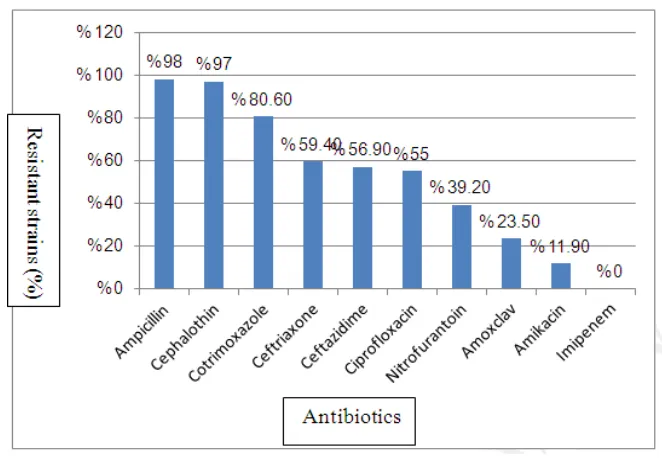
All isolates were sensitive to imipenem. Co-resistance was detected to non-beta lactam antibiotics (Cotrimoxazole, ciprofloxacin and nitrofurantoin).
3.3 Antibacterial Activity of Garlic Extract
Antibacterial activity of different concentrations of Garlic extract for all ESBLs- E. coli isolates show that the lowest concentration that inhibit the growth of all tested organisms were at 40 mg/ml concentration and the activity was linear with increasing the concentrationas shown in Fig. 2.
Mean MIC was 30 mg/ml. MIC50 was 25 mg/ml,
MIC90 was 37.5 mg/ml and 100% of the isolates
inhibited at MIC 40 mg/ml.
Table 2 shows the mean MIC of different antibiotics when tested alone and in combination with Garlic extract. A significant decrease in the
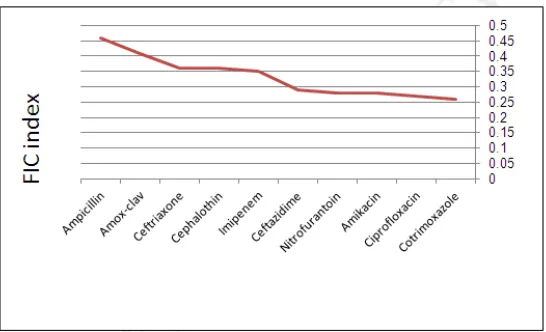
mean MIC was detected for all tested antibiotics when combined with Garlic. There is no antagonistic effect was reported for Garlic when combined with antibiotics, instead a synergistic effect was detected for all tested antibiotics when combined with Garlic against all tested isolates.
Fractional inhibitory concentration (FIC) for all tested antibiotics and Garlic showing value less than 0.5 showing synergy) as shown in Fig. 3.
The combined effect is analyzed by using measurements of the MIC to calculate the FIC Index according to the formulas:
FIC Index=FICA+FICB
Where,
FICA=MICA+B/MICA, FICB=MICB+A/MICB.
Table 1. Primers used for PCR reaction
Gene Primer sequence Reference
SHV 3'CGCCTGTGTATTATCTCCCT-5'
5-'CGAGTAGTCCACCAGATCCT-3'
Bali et al. 2010
TEM 3'-TTTCGTGTCGCCCTTATTCC-5'
5'-ATCGTTGTCAGAAGTAAGTTGG-3'
CTX-M 3'-CGCTGTTGTTAGGAAGTGTG-5'
5'-GGCTGGGTGAAGTAAGTGAC-3' 16S rDNA (reference gene) 3'-AGAGTTTGATCCTGGCTCAG-5'
5-'CTTGTGCGGGCCCCCGTCAATTC-3'
Magray et al. 2011
Gen Bank no for SHV, TEM and CTX-M were EF125011, AB282997 and DQ303459 respectively
Fig. 2. Antibacterial activity of different concentrations of garlic extract against ESBL E. coli
isolates
Table 2. Comparison between mean MIC of tested antibiotics alone and in combination with garlic extract against ESBLs- E.coli
Antibiotic Mean MIC Antibiotic Alone (µg/ml)
Mean MIC Garlic Alone (mg/ml)
Mean MIC Antibiotic / Garlic (µg/ml)/( mg/ml)
P value
Ampicillin 1024
30
64/12 ˂0.0001
Cephalothin 512 32/10 0.0001
Cotrimoxazole 32/1216 8/152/10 0.004
Ceftriaxone 128 8/9 0.001
Ceftazidime 512 16/8 0.001
Ciprofloxacin 32 2/7 0.004
Nitrofurantoin 256 32/5 0.001
Amox-clav 32/16 8/8/5 0.05
Amikacin 16 2/5 0.006
Imipenem 0.5 0.125/3 0.04
P value ˂0.05 was significant. The mean MIC for all tested antibiotics was significantly decreased when combined with garlic than when tested alone
Table 3. Fold changes in ESBLs genes expression with and without garlic extract
ESBLs genes Fold change without Garlic (mean±SD)
Fold change with Garlic (mean±SD)
P-value
SHV 253.7±68.2 21.3±10.2 ˂0.001
TEM 178.9±50.0 12.7±3.8 ˂0.001
CTX-M 85.6±23.6 34.8±7.9 ˂0.001
SD (standard deviation), fold changes decrease was significant, P value was ˂0.05
The MICA +B value is the MIC of compound A in the presence of compound B, and vice versa for MICB+A. FIC Index results are interpreted as synergistic if FIC Index <0.5, additive if 0.5 >FIC Index <4, or antagonistic if FIC Index >4.
3.4 ESBLs E. coli Genes Expression
A comparison between ESBLs genes (SHV, TEM and CTX-M) expression with and without Garlic extract was done. A Significant decrease in ESBLs genes expression was reported after treatment with Garlic extract as shown in Table 3.
4. DISCUSSION
In recent years, the problem of increasing resistance to antibiotics has threatened the entire world. Resistance to extended spectrum β-lactams among Gram negative bacteria is increasingly associated with ESBLs [14].
In our study the occurrence of ESBLs producers in urinary isolates of E. coli was found to be 42.3%, this high prevalence rates agree with that reported in other studies, Al-Agamy et al. [15], Thabit et al. [16], Khater and Sherif [17] and Elsayed et al. [18] in Egypt reported that the prevalence of ESBLs producers in urinary isolates of E. coli was 60.9%, 53%, 53.3% and 36% respectively. Also many studies in different countries reported a high prevalence rate of ESBLs producers in urinary isolates of E. coli
[1,19,20,21] contrary to the relatively low prevalence rates of ESBLs producers in urinary isolates of E. coli in Europe: 5.8-18.2% [22], India: 20.4% [23], UK from 4.6 to 6.6% [24], USA: 27.4% [25], Taiwan: 33.3% [26].
This may be due to the fact that the prevalence of ESBLs among clinical isolates varies greatly worldwide and are rapidly changing over time.
The results of antibacterials susceptibility testing of ESBLs- E. coli isolates in our study showed a higher degree of resistance to ampicillin (98%), cephalothin (97%), ceftazidime (56.9%) and
ceftriaxone (59.4%), this is in agreement with other studies [18,21,27].
The overall resistance to various antibiotics was as followed: amikacin (11.9%), nitrofurantoin (39.2%), ciprofloxacin (55%) and cotrimoxazole (80.6 %).
Although clavulanic acid is an inhibitory compound which is expected to hinder the activity of ESBLs, 23.5% of ESBLs- E. coli
isolates in our study were resistant to Amox-Clav, so the usefulness of β-lactam/β-lactamase inhibitors have been decreased. It is worth noting that the considerable reduction in the activity of the commonly used drugs in treatment of UTI, this is because ESBLs-producing organisms show cross-resistance with non β-lactam antibiotics. ESBLs, plasmid-mediated enzymes are transferable between bacterial species and are also capable of incorporating genetic material coding for resistance to other antibiotics.
A higher percentage of resistance among ESBLs- E. coli to non-beta lactam antibiotics was reported in different studies that have shown that ESBLs-producing organisms was an alarming trend of associated resistance to other classes of antibacterial agents [18,21,23,28].
All our isolates were sensitive to Imipenem. Although carbapenems are widely regarded as the drugs of choice for treatment of infection caused by ESBLs-producing organisms, production of β-lactamases capable of hydrolyzing carbapenems has been reported in Enterobacteriaceae mostly in Enterobacter and Serratia [29]. In E. coli, the first report of carbapenem resistance appeared in 1999 [30].
with antibiotics, and resistance has not been reported, more preclinical and clinical studies should be done to assess the use of an antibiotic/Garlic combination for bacteria that are difficult to eradicate.
In the present study, Garlic showed an inhibitory effect on ESBLs- E. coli with concentrations ranging from 10-40 mg/ml and a mean of 30 mg/ml, comparable results reported by Wali and Awad, [31] where the range of Garlic MIC was: 6.2 to 100 mg/ml and a mean of 37 towards their ESBLs- E. coli isolates.
Also Iwalokun et al. [32] reported a mean Garlic MIC of 20 mg/ml towards multi-drug resistant E. coli. In addition, Abubakar, [33] reported Garlic MIC values of 50 and 100 mg/ml towards a standard laboratory E. coli strain and a nosocomial E. coli isolate, respectively; However, lower results have been demonstrated for commensal and pathogenic E. coli isolates with Garlic MIC ranging between 3 and 12 mg/ml in a study carried by Ross et al. [34]. Shayan et al. [35] reported that The MIC of Garlic ranged from 2.5 mg/ml to 10 mg/ml with a mean of 5 against AmpC and ESBL producing E. coli in their study in Iran.
The disparity of antibacterial potency for Garlic observed among studies might be attributed to the geographical variation which affects the intensity and range of antibacterial effects of Garlic.
There was a significant decline in the mean MIC values for each of antibiotics tested (ampicillin, cephalothin, cotrimoxazole, ceftriaxone, ceftazidime, ciprofloxacin, nitrofurantoin, amikacin and imipenem) and Garlic when combined against all tested ESBL- E. coli urinary isolates compared to their values when tested alone (P value ˂0.05).
Wali and Awad, [31] reported that there was a significant decline in the MIC values of nitrofurantoin when combined with Garlic for all tested ESBL producing E. coli isolates compared to their MICs alone. These findings further support the idea that Garlic combination with antibiotics holds promising effects. Synergism has been observed between Garlic and vancomycin against vancomycin resistant enterococci [36]. Also Garlic has also shown synergy with streptomycin against streptomycin resistant E. coli [37]. Li et al. [13] reported a synergistic effect of Garlic with certain antibiotics
against Methicillin resistant S.aureus (MRSA) and Pseudomonas.
Also we studied the effect of Garlic extract on ESBLs genes (SHV, TEM and CTX-M) expression. A Significant decrease in all ESBLs genes expression was reported after treatment with Garlic extract.
5. CONCLUSIONS
Garlic extract produce a synergistic effect with all tested antibiotics against all tested ESBL producing E. coli isolates. The combinations of antibiotics and Garlic may be more useful than individual agents. Various studies would have to be carried out to determine the antibacterial activity and side effects of Garlic extract in vitro and in vivo. Garlic appears to satisfy all the criteria for antibacterial agents, being cheap and safe. Since there is increasing resistance to most of antibacterial agents, search for new antibacterial is very important in recent times.
CONSENT
Written informed consents were obtained from all patients.
ETHICAL APPROVAL
The study was approved by the Ethical Committee of Minia University, Faculty of Medicine.
COMPETING INTERESTS
Author has declared that no competing interests exist.
REFERENCES
1. Aminzadeh Z, Sadat Kashi M, Sha'bani M. Bacteriuria by extended-spectrum beta-lactamase-producing Escherichia coli and
Klebsiella pneumoniae: Isolates in a governmental hospital in South of Tehran, Iran. Iran J Kidney Dis. 2008;2(4):197-200. 2. Thomson KS. Extended-spectrum-beta-lactamase, AmpC, and Carbapenemase issues. J Clin Micrk2obiol. 2010;48(4): 1019-25.
tigecycline. Med Princ Pract. 2012;21(6): 543-7.
4. Diaz PQ, Bello HT, Dominguez MY, Trabal NF, Mella SM, Zemelman RZ, et al. Resistance to gentamicin, amikacin and ciprofloxacin among nosocomial isolates of
Klebsiella pneumoniae subspecie pneumoniae producing extended spectrum beta-lactamases. Rev Med Chil. 2004;132(10):1173-8.
5. Talbot GH, Bradley J, Edwards JE Jr., Gilbert D, Scheld M, Bartlett JG, et al. Bad bugs need drugs: An update on the development pipeline from the Antibacterial Availability Task Force of the Infectious Diseases Society of America. Clin Infect Dis. 2006;42(5):657-68.
6. Adetumbi MA, Lau BH. (Garlic)-A natural antibiotic. Med Hypotheses. 1983;12(3): 227-237.
7. Uzodike EB, IgweI C. Efficacy of Garlic (Allium sativum) on S. aureus
conjunctivitis. JNOA. 2005;12:20-22. 8. Shah PJ, Williamson MT, Rathod SJ.
Antibacterial activity of aqueous garlic extract on beta-lactamase-producing acinetobacter isolates from skin and soft tissue infections. Asian J Pharm Clin Res. 2016;9(6):15l2-156.
DOI:http://dx.doi.org/10.22159/ajpcr.2016.v 9i6.13960
9. Idris AR, Afegbua SL. Single and joint antibacterial activity of aqueous Garlic extract and Manuka honey on extended-spectrum beta-lactamase-producing
Escherichia coli. Trans R Soc Trop Med Hyg. 2017;111(10):472-8.
10. Chowdhury AK, Ahsan M, Islam SN, Ahmed ZU. Efficacy of aqueous extract of Garlic & allicin in experimental shigellosis in rabbits. Indian J Med Res. 1991;93:33-6. 11. Borlinghaus J, Albrecht F, Gruhlke MC, Nwachukwu ID, Slusarenko AJ. Allicin: Chemistry and biological properties. Molecules. 2014;19(8):12591-618.
12. CLSI. Performance standards for antibacterial susceptibility testing; twenty-sixth informational supplement M100S. Wayne, PA: Clinical and Laboratory Standard Institute; 2016.
13. Li G, Ma X, Deng L, Zhao X, Wei Y, Gao Z, Jia J, Xu J, Sun C. Fresh garlic extract enhances the antibacterial activities of antibiotics on resistant strains In vitro.
Jundishapur J Microbiol. 2015;8(5): e14814.
DOI: 10.5812/jjm.14814
14. Kimura S, Ishii Y, Tateda K, Yamaguchi K. Predictive analysis of ceftazidime hydrolysis in CTX-M-type β-lactamase family members with a mutational substitution at position 167. Int. Jk. Antimicrob.Agents. 2007;29:326-331. 15. Al-Agamy HM, Ashour SM, Wiegand I.
First description of CTX-M β-lactamase-producing clinical Escherichia coli isolates from Egypt. International Journal of Antibacterial Agents. 2006;27:545–548. 16. Thabit AG, El-Khamissy TR, Ibrahim MA,
Attia AE. Detection of extended spectrumbeta-lactamase enzymes (ESBLS) produced by Escherichia coli
urinary pathogens at Assiut University Hospital. Bull. Pharm. Sci, Assiut University. 2011;34(2):93-103.
17. Khater ES, Sherif HW. Rapid detection of extended spectrum beta-lactamase (ESBL) producing strain of Escherichia coli in urinary tract infections patients in Benha University Hospital, Egypt. British Microbiology Research Journal. 2014;4(4): 443-453.
DOI: 10.12816/0004942
18. Elsayed TI, Ismail HA, Elgamal SA, Gad AH. The occurrence of multidrug resistant
E. coli which produce ESBL and cause urinary tract infections. Journal of Applied Microbiology and Biochemistry. 2017;1: 2576-1412.
DOI: 10.21767/2576-1412.100008
19. Mahesh E, Ramesh D, Indumathi VA, et al. Risk factors for community acquired urinary tract infection caused by ESBL-producing bacteria. JIACM. 2010;11:271-6. 20. Hasan E, Aizza Z, Saqib M, Muhammad M. Urinary tract infections caused by extended spectrum β-lactamase (ESBL) producing Escherichia coli and Klebsiella pneumonia. Bangladesh JBCP. 2011;31: 1423-1431.
21. Alyamani EJ, Khiyami AM, Booq RY, Majrashi MA, Bahwerth FS, Rechkina E. The occurrence of ESBL‑producing
Escherichia coli carrying aminoglycoside resistance genes in urinary tract infections in Saudi Arabia. Ann Clin Microbiol Antimicrob. 2017;16:1.
DOI 10.1186/s12941-016-0177-6
22. Bouchillon SK, Johnson BM, Hoban DJ. Determining incidence of extended spectrum β-lactamase producing Enterobacteriaceae, Vancomycin resistant
centres from 19 countries: Int. J. Antimicrob. Agents. 2004;24:119-124. 23. Rajan S, Prabavathy J. Antibiotic
sensitivity and phenotypic detection of ESBL producing E. coli strains causing urinary tract infection in a Community Hospital, Chennai, Tamil Nadu, India. Webmed Central Pharmaceutical Sciences. 2012;3(11):WMC003840. 24. Toner L, Papa N, Sani H, Dev H,
Lawrentschuk N, Al‑Hayek S. Extended-spectrum beta‑lactamase‑producing Enterobacteriaceae in hospital urinary tract infections: Incidence and antibiotic susceptibility profile over 9 years. World J Urol. 2016;34:1031–1037.
DOI 10.1007/s00345-015-1718-x
25. Al Mously N, Al Arfaj O, Al Fadhil L, Mukaddam S. Antibacterial susceptibility patterns of ESBL Escherichia coli isolated from community and hospital-acquired urinary tract infections. J Health Spec. 2016;4:133-9.
26. Fan NC, Chen HH, Chen CL, Ou LS, Lin TY, Tsai MH, et al. Rise of community-onset urinary tract infection caused by extended-spectrum ß-lactamase-producing
Escherichia coli in children. J Microbiol Immunol Infect. 2014;47:399‑405.
27. Rafay AM, Al-Muharrmi Z, Toki R. Prevalence of extended spectrum β-lactamases producing isolates over a
1-year period at a University Hospital in Oman. Saudi Med J. 2007;28(1):22- 27.
28. Singh N, Pattnaik D, Neogi DK, Jk2ena J, Mallick B. Prevalence of ESBL in
Escherichia coli isolates among ICU patients in a tertiary care hospital. Journal of Clinical and Diagnostic Research. 2016;10(9):19-22.
DOI: 10.7860/JCDR/2016/21260.8544 29. Nordmann P, Poire l. Emerging
carbapenemases in gram-negative aerobes. Clin Microbiol Infect. 2002;8:321-331.
30. Stapleton PD, Shannon KP, French GL. Carbapenem resistance in Escherichia coli
associated with plasmid-determined CMY-4 beta-lactamase production and loss of an outer membrane protein. Antimicrob Agents Chemother. 1999;43:1206-1210. 31. Wali IE, Awad AM. Combined activity of
garlic and nitrofurantoin against
Escherichia coli and Enterococcus species recovered from urinary tract infections. African Journal of Microbiology Research. 2014;8(7):644-651.
DOI: 10.5897/AJMR2013.6431
32. Iwalokun BA, Ogunledun A, Ogbolu DO, Bamiro SB, Jimi-Omojola J. In vitro
antibacterial properties of aqueous Garlic extract against multidrug-resistant bacteria and Candida species from Nigeria. J. Med. Food. 2004;7:327-333.
33. Abubakar E. Efficacy of crude extracts of Garlic (Allium sativum Linn.) against nosocomial Escherichia coli,
Staphylococcus aureus, Streptococcus pneumoniae and Pseudomonas aeruginosa. J. Med. Plant Res. 2009;3: 179-185.
34. Ross ZM, O’Gara EA, Hill DJ, Sleightholme HV, Maslin DJ. Antibacterial properties of garlic oil against human enteric bacteria: Evaluation of methodologies and comparisons with garlic oil sulfides and garlic powder. Appl. Environ. Microbiol. 2001;67:475–80. DOI: 10.1128/AEM.67.1.475–480.2001 35. Shayan S, Bokaeian M, Shahraki S, Saeidi
S. Prevalence of AmpC and ESBL producing E. coli and antibacterial effect of
Allium sativum on clinical isolates collected from Zahedan Hospitals. Zahedan J Res Med Sci. 2014;16(4):6-10.
36. Jonkers D, Sluimer J, Stobberingh E. Effect of garlic on vancomycin-resistant enterococci. Antimicrob. Agents Chemother. 1999;43:3045.
37. Palaksha MN, Ahmed M, Das S. Antibacterial activity of garlic extract on streptomycin-resistant Staphylococcus aureus and Escherichia coli solely and in synergism with streptomycin. J. Nat. Sci. Biol. Med. 2010;1:12–15.
_________________________________________________________________________________
© 2019 Abdelraheem; This is an Open Access article distributed under the terms of the Creative Commons Attribution License
(http://creativecommons.org/licenses/by/4.0), which permits unrestricted use, distribution, and reproduction in any medium,
provided the original work is properly cited.
Peer-review history: