SYSTEMATIC MAP PROTOCOL
Evidence of the impacts of metal mining
and the effectiveness of mining mitigation
measures on social–ecological systems in Arctic
and boreal regions: a systematic map protocol
Neal R. Haddaway
1,2*, Steven J. Cooke
3, Pamela Lesser
4, Biljana Macura
1, Annika E. Nilsson
1, Jessica J. Taylor
3and Kaisa Raito
5Abstract
Background: Mining activities, including prospecting, exploration, construction, operation, maintenance, expansion, abandonment, decommissioning and repurposing of a mine can impact social and environmental systems in a range of positive and negative, and direct and indirect ways. Mining can yield a range of benefits to societies, but it may also cause conflict, not least in relation to above-ground and sub-surface land use. Similarly, mining can alter environ-ments, but remediation and mitigation can restore systems. Boreal and Arctic regions are sensitive to impacts from development, both on social and environmental systems. Native ecosystems and aboriginal human communities are typically affected by multiple stressors, including climate change and pollution, for example.
Methods: We will search a suite of bibliographic databases, online search engines and organisational websites for rel-evant research literature using a tested search strategy. We will also make a call for evidence to stakeholders that have been identified in the wider 3MK project (https ://osf.io/cvh3u /). We will screen identified and retrieved articles at two distinct stages (title and abstract, and full text) according to a predetermined set of inclusion criteria, with consistency checks at each level to ensure criteria can be made operational. We will then extract detailed information relating to causal linkages between actions or impacts and measured outcomes, along with descriptive information about the articles and studies and enter data into an interactive systematic map database. We will visualise this database on an Evidence Atlas (an interactive, cartographic map) and identify knowledge gaps and clusters using Heat Maps (cross-tabulations of important variables, such as mineral type and studied impacts). We will identify good research practices that may support researchers in selecting the best study designs where these are clear in the evidence base.
Keywords: Evidence synthesis, Extractive industries, Knowledges, Knowledge systems, Local knowledge, Resource extraction, Metal mines
© The Author(s) 2019. This article is distributed under the terms of the Creative Commons Attribution 4.0 International License (http://creat iveco mmons .org/licen ses/by/4.0/), which permits unrestricted use, distribution, and reproduction in any medium, provided you give appropriate credit to the original author(s) and the source, provide a link to the Creative Commons license, and indicate if changes were made. The Creative Commons Public Domain Dedication waiver (http://creat iveco mmons .org/ publi cdoma in/zero/1.0/) applies to the data made available in this article, unless otherwise stated.
Background
On the impacts of mining
Mining activities, including prospecting, exploration, construction, operation, maintenance, expansion, aban-donment, decommissioning and repurposing of a mine can impact social and environmental systems in a range
of positive and negative, and direct and indirect ways. Mine exploration, construction, operation, and main-tenance may result in land-use change, and may have associated negative impacts on environments, includ-ing deforestation, erosion, contamination and alteration of soil profiles, contamination of local streams and wet-lands, and an increase in noise level, dust and emissions (e.g. [1–5]). Mine abandonment, decommissioning and repurposing may also result in similar significant envi-ronmental impacts, such as soil and water contamination
Open Access
*Correspondence: [email protected]; [email protected]
1 Stockholm Environment Institute, Stockholm, Sweden
[6–8]. Beyond the mines themselves, infrastructure built to support mining activities, such as roads, ports, railway tracks, and power lines, can affect migratory routes of animals and increase habitat fragmentation [9, 10].
Mining can also have positive and negative impacts on humans and societies. Negative impacts include those on human health (e.g. [11]) and living standards [12], for example. Mining is also known to affect traditional prac-tices of Indigenous peoples living in nearby communities [13], and conflicts in land use are also often present, as are other social impacts including those related to pub-lic health and human wellbeing (e.g. [14–17]. In terms of positive impacts, mining is often a source of local employment and may contribute to local and regional economies [18, 19]. Remediation of the potential envi-ronmental impacts, for example through water treatment and ecological restoration, can have positive net effects on environmental systems [20]. Mine abandonment, decommissioning and repurposing can also have both positive and negative social impacts. Examples of nega-tive impacts include loss of jobs and local identities [21], while positive impact can include opportunities for new economic activities [22], e.g. in the repurposing of mines to become tourist attractions.
Mitigation measures
‘Mitigation measures’ (as described in the impact assess-ment literature) are impleassess-mented to avoid, eliminate, reduce, control or compensate for negative impacts and ameliorate impacted systems [23]. Such measures must be considered and outlined in environmental and social impact assessments (EIAs and SIAs) that are conducted prior to major activities such as resource extraction [24, 25]. Mitigation of negative environmental impacts in one system (e.g. water or soil) can influence other systems such as wellbeing of local communities and biodiver-sity in a positive or negative manner [23]. A wide range of technological engineering solutions have been imple-mented to treat contaminated waters (e.g. constructed wetlands [26], reactive barriers treating groundwater [27], conventional wastewater treatment plants). Phy-toremediation of contaminated land is also an area of active research [28].
Mitigation measures designed to alleviate the negative impacts of mining on social and environmental systems may not always be effective, particularly in the long-term and across systems, e.g. a mitigation designed to affect an environmental change may have knock on changes in a social system. Indeed, the measures may have uninten-tional adverse impacts on environments and societies. To date, little research appears to have been conducted into mitigation measure effectiveness, and we were unable to
find any synthesis or overview of the systems-level effec-tiveness of metal mining mitigation measures.
Mining in the Arctic
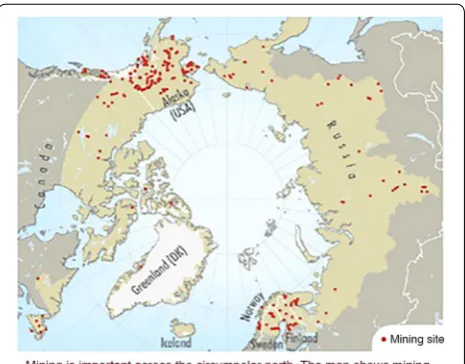
Boreal and Arctic regions are sensitive to impacts from mining and mining-related activities [29, 30], both on social and environmental systems: these northern lati-tudes are often considered harsh and thus challenging for human activities and industrial development. However, the Arctic is home to substantial mineral resources [31, 32] and has been in focus for mining activities for several 100 years, with a marked increase in the early 20th cen-tury and intensifying interest in exploration and exploi-tation in recent years to meet a growing global demand for metals (Fig. 1). Given the region’s geological features and society’s need for metals, resource extraction is likely to dominate discourse on development of northern lati-tudes in the near future. As of 2015, there were some 373 mineral mines across Alaska, Canada, Greenland, Ice-land, The Faroes, Norway (including Svalbard), Sweden, Finland and Russia (see Table 1), with the top five miner-als being gold, iron, copper, nickel and zinc [33].
Many topics relating to mining and its impacts on envi-ronmental and social systems are underrepresented in the literature as illustrated by the following example. The Sami people are a group of traditional people inhabiting a region spanning northern Norway, Sweden, Finland and Russia. Sami people are affected by a range of exter-nal pressures, one of which pertains to resource extrac-tion and land rights, particularly in relaextrac-tion to nomadic reindeer herding. However, there is almost no published research on the topic [34].
The literature on the environmental and social impacts of mining has grown in recent years, but despite its clear importance, there has been little synthesis of research knowledge pertaining to the social and environmental impacts of metal mining in Arctic and boreal regions. The absence of a consolidated knowledge base on the impacts of mining and the effectiveness of mitigation measures in Arctic and boreal regions is a significant knowledge gap in the face of the continued promotion of extractive industries. There is thus an urgent need for approaches that can transparently and legitimately gather research evidence on the potential environmental and social impacts of mining and the impacts of associated mitigation measures in a rigorous manner.
Stakeholder engagement
This systematic map forms a key task within a broader knowledge synthesis project called 3MK (Mapping the impacts of Mining using Multiple Knowledges, https ://osf.io/cvh3u /). The stakeholder group for this map includes representatives of organisations affected by the
broader 3MK project knowledge mapping project or who have special interests in the project outcome. We define stakeholders here as all individuals or organisations that might be affected by the systematic map work or its find-ings [35, 36], and thus broadly includes researchers and the Working and Advisory Group for this project.
Invitations to be included in this group were based on an initial stakeholder mapping process and solicit-ing expressions of interest (see Stakeholder Engagement Methodology Document, https ://osf.io/cvh3u /). This group included government ministries and agencies such as the Ministry of Enterprise and Innovation, the Min-eral Inspectorate (Bergstaten) and County Administra-tive Boards, the mining industries’ branch organisation (Svemin) and individual companies such as LKAB Min-erals and Boliden AB, Sami organisations, including the Sami Parliament, related research projects, and repre-sentatives of international assessment processes, such as activities within the Arctic Council. Stakeholders were invited to a specific meeting (held at Stockholm Envi-ronment Institute in September 2018) to help refine the scope, define the key elements of the review question, finalise a search strategy, and suggest sources of evidence, and also to subsequently provide comments on the struc-ture of the protocol .
Objective of the review
The broader 3MK project aims to develop a multiple evidence base methodology [37] combining systematic review approaches with documentation of Indigenous and local knowledge and to apply this approach in a study of the impacts of metal mining and impacts of mitiga-tion measures. This systematic map aims to answer the question:
What research evidence exists on the impacts of metal mining and its mitigation measures on social and environmental systems in Arctic and boreal regions?
The review question has the following key elements:
Population: Social, technological (i.e.
industrial contexts, heavily altered environments, etc.) and environmental systems in circumpolar Arctic and boreal regions.
Intervention/exposure: Impacts (direct and indirect, positive and negative) associ-ated with metal mining (for gold, iron, copper, nickel, zinc, Table 1 List of minerals mined across Arctic and boreal
countries (Alaska (US), Canada, Greenland, Iceland, The Faroes, Norway (including Svalbard), Sweden, Finland and Russia) and the number of mines according to a 2015 survey [33]
Main metal mined Number
of mines
Gold 144
Iron 58
Copper 45
Nickel 39
Zinc 27
Diamonds 15
Uranium 8
Potash 7
Silver 6
Molybdenum 4
Lead 4
Chromium 3
Titanium 2
Tin 2
Tungsten 1
Palladium 1
Nobelium 1
Platinum 1
Lithium 1
Rare earth oxides 1
Antimony 1
Manganese 1
silver, molybdenum and lead) or its mitigation measures. We focus on these metals as they represent approximately 88% of Arctic and boreal mines (according to relevant coun-try operating mine data from 2015, [33]), and contains the top 5 minerals extracted in the region (gold, iron, copper, nickel and zinc). Furthermore, these minerals include all met-als mined within Sweden, the scope of a related workstream within the broader 3MK pro-ject (https ://osf.io/cvh3u /).
Comparator: For quantitative research; the absence of metal mining or metal mining mitigation meas-ures—either prior to an activ-ity or in an independent, con-trolled location lacking such impacts. Additionally, alterna-tive mining systems is a suita-ble comparator. For qualitative research; comparators are typi-cally implicit, if present and will thus not be required.
Outcome: Any and all outcomes observed in social and environmental systems described in the litera-ture will be iteratively identi-fied and catalogued.
Data type: Both quantitative and qualita-tive research will be included.
Methods
The review will follow the Collaboration for Environ-mental Evidence Guidelines and Standards for Evidence Synthesis in Environmental Management [38] and it con-forms to ROSES reporting standards [39] (see Additional file 1).
Searching for articles
Bibliographic database searches
We will search bibliographic databases using a tested search string adapted to each database according to the necessary input syntax of each resource. The Boolean version of the search string that will be used in Web of
Science Core Collections can be found in Additional file 2.
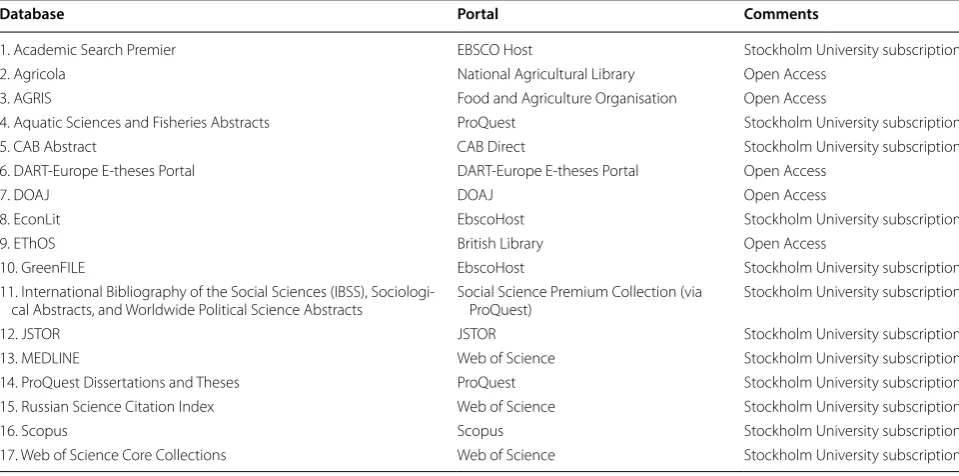
We will search across 17 bibliographic databases as show in Table 2. Bibliographic database searches will be performed in English only, since these databases cata-logue research using English titles and abstracts.
Web‑based search engines
Searches for academic (i.e. file-drawer) and organisa-tional grey literature (as defined by [40]) will be per-formed in Google Scholar, which has been shown to be effective in retrieving these types of grey literature [41]. The search strings used to search for literature in Google Scholar are described in detail in Additional file 3.
Search results will be exported from Google Scholar using Publish or Perish [42], which allows the first 1000 results to be exported. These records will be added to the bibliographic database search results prior to duplicate removal.
Organisational websites
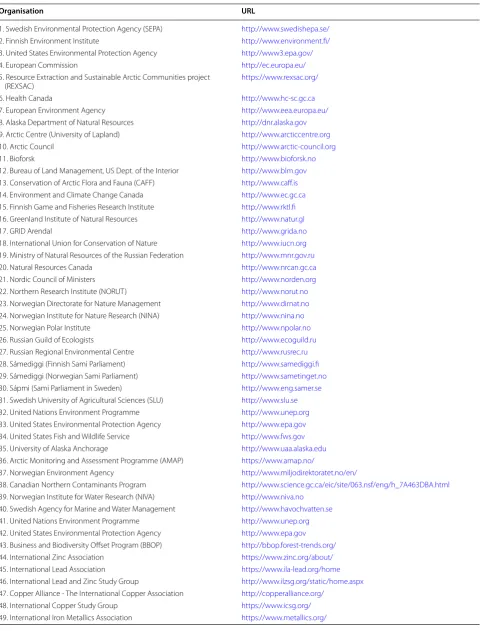
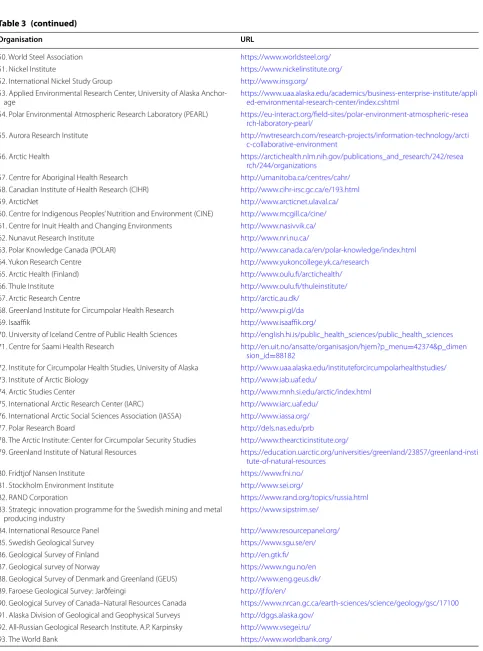
In order to identify organisational grey literature, we will search for relevant evidence across the suite of organi-sational websites listed in Table 3. For each website, we will save the first 100 search results from each search string as PDF/HTML files and screening the results in situ, recording all relevant full texts for inclusion in the systematic map database. The search terms used will be based on the same terms used in the Google Scholar searches described above but will be adapted iteratively for each website depending on the relevance of the results obtained. In addition, we will hand search each website to locate and screen any articles found in publications or bibliography sections of the sites. All search activities will be recorded and described in the systematic map report.
Bibliographic searches
Relevant reviews that are identified during screening will be reserved for assessment of potentially missed records. Once screening is complete (see below), we will screen the reference lists of these reviews and include relevant full texts in the systematic map database. We will also retain these relevant reviews in an additional systematic map database of review articles.
Estimating the comprehensiveness of the search
the draft search string, we will examine why these stud-ies may have been missed and adapt the search string accordingly.
Search update
We will perform a search update immediately prior to completion of the systematic map database (i.e. once coding and meta-data is completed). The search strat-egy for bibliographic databases will be repeated using the same search string, restricting searches to the time period after the original searches were performed. New search results will be processed in the same way as origi-nal search results.
Assembling a library of search results
Following searching, we will combine results in a review management platform (e.g. EPPI-Reviewer) and dupli-cates will be removed using a combination of automated removal and manual screening.
Article screening and study eligibility criteria Screening process
We will screen records at three levels: title, abstract and full text. Screening will be performed using a review management platform (e.g. Rayyan, EPPI Reviewer, Colandr).
Consistency checking
A subset of 10% of all titles and abstracts will be screened by two reviewers, with all disagreements discussed in detail. Refinements of the inclusion criteria will be made in liaison with the entire review team where necessary. A kappa test will be performed on the outputs of screen-ing of this subset and where agreement is below k = 0.6, a
further 10% of records will be screened and tested. Only when a kappa score of greater than 0.6 is obtained will a single reviewer screen the remaining records. Consist-ency checking on a subset of 10% will be undertaken at full text screening in a similar manner, followed by dis-cussion of all disagreements. A kappa test will be per-formed and consistency checking repeated on a second subset of 10% where agreements is below k = 0.6.
Con-sistency checking will be repeated until a score of greater than 0.6 is obtained.
Eligibility criteria
The following inclusion criteria will be used to assess rel-evance of studies identified through searching. All inclu-sion criteria will be used at full text screening, but we believe that data type and comparator are unlikely to be useful at title and abstract screening, since this informa-tion is often not well-reported in titles or abstracts.
Eligible population: We will include social,
technological and Table 2 List of bibliographic databases to be searched for evidence along with the platform and subscription
through which they will be accessed
Database Portal Comments
1. Academic Search Premier EBSCO Host Stockholm University subscription
2. Agricola National Agricultural Library Open Access
3. AGRIS Food and Agriculture Organisation Open Access
4. Aquatic Sciences and Fisheries Abstracts ProQuest Stockholm University subscription
5. CAB Abstract CAB Direct Stockholm University subscription
6. DART-Europe E-theses Portal DART-Europe E-theses Portal Open Access
7. DOAJ DOAJ Open Access
8. EconLit EbscoHost Stockholm University subscription
9. EThOS British Library Open Access
10. GreenFILE EbscoHost Stockholm University subscription
11. International Bibliography of the Social Sciences (IBSS),
Sociologi-cal Abstracts, and Worldwide PolitiSociologi-cal Science Abstracts Social Science Premium Collection (via ProQuest) Stockholm University subscription
12. JSTOR JSTOR Stockholm University subscription
13. MEDLINE Web of Science Stockholm University subscription
14. ProQuest Dissertations and Theses ProQuest Stockholm University subscription 15. Russian Science Citation Index Web of Science Stockholm University subscription
16. Scopus Scopus Stockholm University subscription
Table 3 List of organisational websites that will be searched for organisational grey literature
Organisation URL
1. Swedish Environmental Protection Agency (SEPA) http://www.swedi shepa .se/
2. Finnish Environment Institute http://www.envir onmen t.fi/
3. United States Environmental Protection Agency http://www3.epa.gov/
4. European Commission http://ec.europ a.eu/
5. Resource Extraction and Sustainable Arctic Communities project
(REXSAC) https ://www.rexsa c.org/
6. Health Canada http://www.hc-sc.gc.ca
7. European Environment Agency http://www.eea.europ a.eu/
8. Alaska Department of Natural Resources http://dnr.alask a.gov
9. Arctic Centre (University of Lapland) http://www.arcti ccent re.org
10. Arctic Council http://www.arcti c-counc il.org
11. Bioforsk http://www.biofo rsk.no
12. Bureau of Land Management, US Dept. of the Interior http://www.blm.gov
13. Conservation of Arctic Flora and Fauna (CAFF) http://www.caff.is
14. Environment and Climate Change Canada http://www.ec.gc.ca
15. Finnish Game and Fisheries Research Institute http://www.rktl.fi
16. Greenland Institute of Natural Resources http://www.natur .gl
17. GRID Arendal http://www.grida .no
18. International Union for Conservation of Nature http://www.iucn.org
19. Ministry of Natural Resources of the Russian Federation http://www.mnr.gov.ru
20. Natural Resources Canada http://www.nrcan .gc.ca
21. Nordic Council of Ministers http://www.norde n.org
22. Northern Research Institute (NORUT) http://www.norut .no
23. Norwegian Directorate for Nature Management http://www.dirna t.no
24. Norwegian Institute for Nature Research (NINA) http://www.nina.no
25. Norwegian Polar Institute http://www.npola r.no
26. Russian Guild of Ecologists http://www.ecogu ild.ru
27. Russian Regional Environmental Centre http://www.rusre c.ru
28. Sámediggi (Finnish Sami Parliament) http://www.samed iggi.fi
29. Sámediggi (Norwegian Sami Parliament) http://www.samet inget .no
30. Sápmi (Sami Parliament in Sweden) http://www.eng.samer .se
31. Swedish University of Agricultural Sciences (SLU) http://www.slu.se
32. United Nations Environment Programme http://www.unep.org
33. United States Environmental Protection Agency http://www.epa.gov
34. United States Fish and Wildlife Service http://www.fws.gov
35. University of Alaska Anchorage http://www.uaa.alask a.edu
36. Arctic Monitoring and Assessment Programme (AMAP) https ://www.amap.no/
37. Norwegian Environment Agency http://www.miljo direk torat et.no/en/
38. Canadian Northern Contaminants Program http://www.scien ce.gc.ca/eic/site/063.nsf/eng/h_7A463 DBA.html
39. Norwegian Institute for Water Research (NIVA) http://www.niva.no
40. Swedish Agency for Marine and Water Management http://www.havoc hvatt en.se
41. United Nations Environment Programme http://www.unep.org
42. United States Environmental Protection Agency http://www.epa.gov
43. Business and Biodiversity Offset Program (BBOP) http://bbop.fores t-trend s.org/
44. International Zinc Association https ://www.zinc.org/about /
45. International Lead Association https ://www.ila-lead.org/home
46. International Lead and Zinc Study Group http://www.ilzsg .org/stati c/home.aspx
47. Copper Alliance - The International Copper Association http://coppe ralli ance.org/
48. International Copper Study Group https ://www.icsg.org/
Table 3 (continued)
Organisation URL
50. World Steel Association https ://www.world steel .org/
51. Nickel Institute https ://www.nicke linst itute .org/
52. International Nickel Study Group http://www.insg.org/
53. Applied Environmental Research Center, University of Alaska
Anchor-age https ://www.uaa.alask a.edu/acade mics/busin ess-enter prise -insti tute/appli ed-envir onmen tal-resea rch-cente r/index .cshtm l
54. Polar Environmental Atmospheric Research Laboratory (PEARL) https ://eu-inter act.org/field -sites /polar -envir onmen t-atmos pheri c-resea rch-labor atory -pearl /
55. Aurora Research Institute http://nwtre searc h.com/resea rch-proje cts/infor matio n-techn ology /arcti c-colla borat ive-envir onmen t
56. Arctic Health https ://arcti cheal th.nlm.nih.gov/publi catio ns_and_resea rch/242/resea rch/244/organ izati ons
57. Centre for Aboriginal Health Research http://umani toba.ca/centr es/cahr/
58. Canadian Institute of Health Research (CIHR) http://www.cihr-irsc.gc.ca/e/193.html
59. ArcticNet http://www.arcti cnet.ulava l.ca/
60. Centre for Indigenous Peoples’ Nutrition and Environment (CINE) http://www.mcgil l.ca/cine/
61. Centre for Inuit Health and Changing Environments http://www.nasiv vik.ca/
62. Nunavut Research Institute http://www.nri.nu.ca/
63. Polar Knowledge Canada (POLAR) http://www.canad a.ca/en/polar -knowl edge/index .html
64. Yukon Research Centre http://www.yukon colle ge.yk.ca/resea rch
65. Arctic Health (Finland) http://www.oulu.fi/arcti cheal th/
66. Thule Institute http://www.oulu.fi/thule insti tute/
67. Arctic Research Centre http://arcti c.au.dk/
68. Greenland Institute for Circumpolar Health Research http://www.pi.gl/da
69. Isaaffik http://www.isaaffi k.org/
70. University of Iceland Centre of Public Health Sciences http://engli sh.hi.is/publi c_healt h_scien ces/publi c_healt h_scien ces
71. Centre for Saami Health Research http://en.uit.no/ansat te/organ isasj on/hjem?p_menu=42374 &p_dimen sion_id=88182
72. Institute for Circumpolar Health Studies, University of Alaska http://www.uaa.alask a.edu/insti tutef orcir cumpo larhe alths tudie s/
73. Institute of Arctic Biology http://www.iab.uaf.edu/
74. Arctic Studies Center http://www.mnh.si.edu/arcti c/index .html
75. International Arctic Research Center (IARC) http://www.iarc.uaf.edu/
76. International Arctic Social Sciences Association (IASSA) http://www.iassa .org/
77. Polar Research Board http://dels.nas.edu/prb
78. The Arctic Institute: Center for Circumpolar Security Studies http://www.thear ctici nstit ute.org/
79. Greenland Institute of Natural Resources https ://educa tion.uarct ic.org/unive rsiti es/green land/23857 /green land-insti tute-of-natur al-resou rces
80. Fridtjof Nansen Institute https ://www.fni.no/
81. Stockholm Environment Institute http://www.sei.org/
82. RAND Corporation https ://www.rand.org/topic s/russi a.html
83. Strategic innovation programme for the Swedish mining and metal
producing industry https ://www.sipst rim.se/
84. International Resource Panel http://www.resou rcepa nel.org/
85. Swedish Geological Survey https ://www.sgu.se/en/
86. Geological Survey of Finland http://en.gtk.fi/
87. Geological survey of Norway https ://www.ngu.no/en
88. Geological Survey of Denmark and Greenland (GEUS) http://www.eng.geus.dk/
89. Faroese Geological Survey: Jarðfeingi http://jf.fo/en/
90. Geological Survey of Canada–Natural Resources Canada https ://www.nrcan .gc.ca/earth -scien ces/scien ce/geolo gy/gsc/17100
91. Alaska Division of Geological and Geophysical Surveys http://dggs.alask a.gov/
92. All-Russian Geological Research Institute. A.P. Karpinsky http://www.vsege i.ru/
environmental systems in Arctic and boreal regions based on political bounda-ries as follows (this encom-passes various definitions of boreal zones, rather than any one specific defini-tion for comprehensiveness and ease of understand-ing): Canada, USA (Alaska), Greenland, Iceland, the Faroe Islands, Norway (including Svalbard), Swe-den, Finland, and Russia.
Eligible intervention/exposure: We will include all impacts (positive, negative, direct and indirect) associated with any aspect of metal mining and its mitigation meas-ures. We will include research pertaining to all stages of min-ing, from prospect-ing onwards as fol-lows: prospecting, exploration, con-struction, operation, maintenance, expan-sion, abandonment, d e c o m m i s s i o n -ing, reopening and
repurposing. Eligible mines will include those of gold, iron, copper, nickel, zinc, silver, molybdenum and lead.
Eligible comparator: For quantitative research; the absence of metal min-ing or metal minmin-ing mitiga-tion measures—either prior to an activity or in an inde-pendent, controlled loca-tion lacking such impacts. For qualitative research; comparators are typically implicit, if present and will thus not be required.
Eligible outcome: Any and all outcomes
(i.e. measured impacts) observed in social, techno-logical and environmental systems will be included.
Eligible data type: We will include both quan-titative and qualitative research.
Eligible study type: We will include both pri-mary empirical research and secondary research (reviews will be catalogued in a separate database). Modelling studies and commentaries will not be included.
Table 3 (continued)
Organisation URL
94. Uppsala University Department of Earth Sciences https ://www.geo.uu.se/resea rch/geoph ysics /ongoi ng-resea rch/miner al-explo ratio n/
95. World Gold Council https ://www.gold.org/
96. International Molybdenum Association (IMOA) https ://www.imoa.info/index .php
97. University of Eastern Finland http://www.uef.fi/en/etusi vu
98. Luleå University of Technology https ://www.ltu.se/?l=en
99. Saami Council
100. The European Network for Sustainable Quarrying and Mining https ://ensqm .weebl y.com/
101. Finnish Network for Sustainable Mining https ://www.min-guide .eu/miner al-polic y/netwo rk-susta inabl e-minin g-1814
102. NGO Mining Working Group https ://minin gwg.com/
103. Cultural Survival https ://www.cultu ralsu rviva l.org/
104. Federal Agency for Mineral Resources http://gover nment .ru/en/depar tment /53/
For all articles excluded at title and abstract or full text levels, reasons for exclusion will be provided in the form of one or more a priori exclusion criteria as follows:
• Exclude, not Arctic or boreal (population).
• Exclude, no primary data (i.e. commentary, model-ling article or similar) (study type).
• Exclude, no comparator [for quantitative studies only].
• Exclude, not mining or mining mitigation measures (intervention/exposure).
• Exclude, not relevant metal mining (intervention/ exposure) [this category is related to the above inter-vention/exposure exclusion criteria but will only be selected where all other criteria are met, facilitating expansion of the map in the future].
• Exclude, not an existing mine (planned or unrealised mining activity).
Full text retrieval
We will attempt to retrieve full texts of relevant abstracts using Stockholm University and Carleton University library subscriptions. Where full texts cannot be readily
retrieved this way (or via associated library inter-loan networks), we will make use of institutional access pro-vided to our Advisory Team members, including: Uni-versity College London, KTH, UniUni-versity of Lapland, and SLU. Where records still cannot be obtained, requests for articles will be sent to corresponding authors where email addresses are provided and/or requests for full texts will be made through ResearchGate.
Study validity assessment
This systematic map will not involve an assessment of study validity (an optional part of systematic maps), although some extracted meta-data and coding will relate to internal validity.
Demonstrating procedural objectivity
None of the review team has authored or worked on research within this field prior to starting this project, but members of the Advisory Team and project Working Group will be prevented from providing advice or com-ments relating specifically to research papers to which they may have contributed.
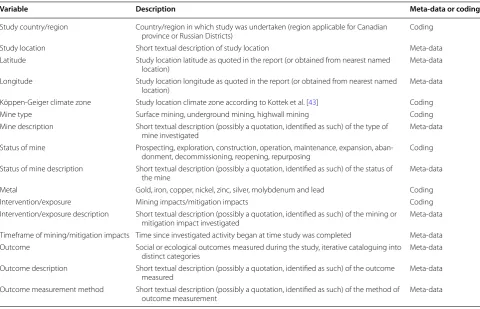
Table 4 Variables that will be extracted as meta-data (descriptive information) and codes during systematic mapping
Variable Description Meta-data or coding
Study country/region Country/region in which study was undertaken (region applicable for Canadian
province or Russian Districts) Coding
Study location Short textual description of study location Meta-data Latitude Study location latitude as quoted in the report (or obtained from nearest named
location) Meta-data
Longitude Study location longitude as quoted in the report (or obtained from nearest named
location) Meta-data
Köppen-Geiger climate zone Study location climate zone according to Kottek et al. [43] Coding Mine type Surface mining, underground mining, highwall mining Coding Mine description Short textual description (possibly a quotation, identified as such) of the type of
mine investigated Meta-data
Status of mine Prospecting, exploration, construction, operation, maintenance, expansion,
aban-donment, decommissioning, reopening, repurposing Coding Status of mine description Short textual description (possibly a quotation, identified as such) of the status of
the mine Meta-data
Metal Gold, iron, copper, nickel, zinc, silver, molybdenum and lead Coding
Intervention/exposure Mining impacts/mitigation impacts Coding
Intervention/exposure description Short textual description (possibly a quotation, identified as such) of the mining or
mitigation impact investigated Meta-data
Timeframe of mining/mitigation impacts Time since investigated activity began at time study was completed Meta-data Outcome Social or ecological outcomes measured during the study, iterative cataloguing into
distinct categories Meta-data
Outcome description Short textual description (possibly a quotation, identified as such) of the outcome
measured Meta-data
Outcome measurement method Short textual description (possibly a quotation, identified as such) of the method of
Data coding strategy
We will extract and code a range of variables, outlined in Table 4. All meta-data and coding will be included in a detailed systematic map database, with each line repre-senting one study-location (i.e. each independent study conducted in each independent location).
Meta-data extraction and coding will be performed by multiple reviewers following consistency checking on an initial coding of subset of between 10 and 15 full texts, discussing all disagreements. The remaining full texts will then be coded. If resources allow we may contact authors by email with requests for missing information.
Study mapping and presentation
We will display the results of the systematic mapping using a ROSES flow diagram [44]. We will narratively synthesise the relevant evidence base in our systematic map using descriptive plots and tables showing the num-ber of studies identified across the variables described above. For more complex data, we will use heat maps to display the volume of evidence across multiple variables (see “Knowledge gap and cluster identification strategy”, below).
We will display the contents of our systematic map database in an Evidence Atlas; an interactive, web-based geographical information system showing all meta-data and coding on a cartographic map.
Knowledge gap and cluster identification strategy
We will use interactive heat maps (pivot charts) to dis-play the volume of evidence across multiple dimensions of meta-data in order to identify knowledge gaps (sub-topics un- or under-represented by evidence) and knowl-edge clusters (sub-topics with sufficient evidence to allow full synthesis). Examples of meta-data variables that will be used together include (this is an indicative rather than exhaustive list):
• Study location (country or broad region) versus out-come.
• Study location (country or broad region) versus mine type.
• Study location (country or broad region) versus data/ study type.
• Outcome versus mine type. • Outcome versus data/study type.
Additional files
Additional file 1. ROSES form for systematic map protocols. Additional file 2. Boolean format search string for database searches. Additional file 3. Google Scholar search strategy.
Additional file 4. Benchmark list of relevant articles for comprehensive-ness checking of search strategy.
Authors’ contributions
NRH drafted the manuscript. All authors read and approved the final manuscript.
Author details
1 Stockholm Environment Institute, Stockholm, Sweden. 2 Africa Centre for
Evi-dence, University of Johannesburg, Johannesburg, South Africa. 3 Canadian
Centre for Evidence-Based Conservation and Environmental Management, Ottawa, Canada. 4 Faculty of Social Sciences, University of Lapland, Rovaniemi,
Finland. 5 Division of Environmental Communication, Department of Urban
and Rural Development, Swedish University of Agricultural Sciences, Uppsala, Sweden.
Acknowledgements
We thank the project Advisory Team for comments on the project and the draft: the team consisted of Dag Avango, Steven Cooke, Sif Johansson, Rebecca Lawrence, Pamela Lesser, Björn Öhlander, Kaisa Raito, Rebecca Rees, and Maria Tengö. We also thank the 3MK stakeholder group for valuable input. We also thank Mistra EviEM for co-funding the first Advisory Group meeting and publication fees for the systematic map.
Competing interests
The authors declare they have no competing interests.
Availability of data and materials Not applicable.
Consent for publication Not applicable.
Ethics approval and consent to participate Not applicable.
Funding
This manuscript is part of a project (3MK: Mapping the impacts of Min-ing usMin-ing Multiple Knowledges) funded by a Formas Open Call Grant (2017-00683).
Publisher’s Note
Springer Nature remains neutral with regard to jurisdictional claims in pub-lished maps and institutional affiliations.
Received: 13 November 2018 Accepted: 6 February 2019
References
1. Appleton J, Weeks J, Calvez J, Beinhoff C. Impacts of mercury contami-nated mining waste on soil quality, crops, bivalves, and fish in the Naboc River area, Mindanao, Philippines. Sci Total Environ. 2006;354:198–211. 2. Dudka S, Adriano DC. Environmental impacts of metal ore mining and
processing: a review. J Environ Qual. 1997;26:590–602.
3. Sonter LJ, Moran CJ, Barrett DJ, Soares-Filho BS. Processes of land use change in mining regions. J Clean Prod. 2014;84:494–501.
•fast, convenient online submission •
thorough peer review by experienced researchers in your field • rapid publication on acceptance
• support for research data, including large and complex data types •
gold Open Access which fosters wider collaboration and increased citations maximum visibility for your research: over 100M website views per year •
At BMC, research is always in progress.
Learn more biomedcentral.com/submissions
Ready to submit your research? Choose BMC and benefit from:
5. Warhate S, Yenkie M, Chaudhari M, Pokale W. Impacts of mining activities on water and soil. J Environ Sci Eng. 2006;48:81–90.
6. Mchaina D. Environmental planning considerations for the decommis-sioning, closure and reclamation of a mine site. Int J Surf Min Reclam Environ. 2001;15:163–76.
7. Navarro M, Pérez-Sirvent C, Martínez-Sánchez M, Vidal J, Tovar P, Bech J. Abandoned mine sites as a source of contamination by heavy metals: a case study in a semi-arid zone. J Geochem Explor. 2008;96:183–93. 8. Veiga MM, Hinton JJ. Abandoned artisanal gold mines in the Brazilian
Amazon: a legacy of mercury pollution. In: Natural resources forum. Wiley Online Library. 2002. p. 15–26.
9. Anttonen M, Kumpula J, Colpaert A. Range selection by semi-domesti-cated reindeer (Rangifer tarandus tarandus) in relation to infrastructure and human activity in the boreal forest environment, northern Finland. Arctic. 2011:1–14.
10. Johnson CJ, Boyce MS, Case RL, Cluff HD, Gau RJ, Gunn A, Mulders R. Cumulative effects of human developments on arctic wildlife. Wildl Monogr. 2005;160:1–36.
11. Stephens C, Ahern M. Worker and community health impacts related to mining internationally: a rapid review of the literature. 2001.
12. Loayza N, Rigolini J. The local impact of mining on poverty and inequality: evidence from the commodity boom in Peru. World Dev. 2016;84:219–34. 13. Gibson G, Klinck J. Canada’s resilient north: the impact of mining on
aboriginal communities. Pimatisiwin. 2005;3:116–39.
14. Hilson G. An overview of land use conflicts in mining communities. Land Use Policy. 2002;19:65–73.
15. Hossain D, Gorman D, Chapelle B, Mann W, Saal R, Penton G. Impact of the mining industry on the mental health of landholders and rural com-munities in southwest Queensland. Aust Psychiatry. 2013;21:32–7. 16. Nakazawa K, Nagafuchi O, Kawakami T, Inoue T, Yokota K, Serikawa Y, Cyio
B, Elvince R. Human health risk assessment of mercury vapor around arti-sanal small-scale gold mining area, Palu city, Central Sulawesi, Indonesia. Ecotoxicol Environ Saf. 2016;124:155–62.
17. Zhang X, Yang L, Li Y, Li H, Wang W, Ye B. Impacts of lead/zinc mining and smelting on the environment and human health in China. Environ Monit Assess. 2012;184:2261–73.
18. Fleming DA, Measham TG. Local job multipliers of mining. Resour Policy. 2014;41:9–15.
19. Knobblock EA, Pettersson Ö. Restructuring and risk-reduction in min-ing: employment implications for northern Sweden. Fenn Int J Geogr. 2010;188:61–75.
20. Jain R, Cui Z, Domen J. Environmental impacts of mining. In: Jain R, Cui Z, Domen J, editors. Environmental impact of mining and mineral process-ing: management, monitoring, and auditing strategies. Amsterdam: Elsevier; 2016. p. 53–157.
21. Keeling A, Sandlos J. Ghost towns and zombie mines: the historical dimensions of mine abandonment, reclamation, and redevelopment in the Canadian North. In: Bocking S, Martin B, editors. Ice Blink: Navigating Northern Environmental History; 2011. p. 377–420.
22. Mitchell CJ, O’Neill K. The Sherriff Creek Wildlife Sanctuary: further evidence of mine-site repurposing and economic transition in northern Ontario. Extr Ind Soc. 2017;4:24–35.
23. Jain R, Cui Z, Domen J. Environmental impact of mining and mineral processing: management, monitoring, and auditing strategies. Oxford: Butterworth-Heinemann; 2016.
24. The Sustainable Development Working Group (SDWG) of the Arctic Council. Circumpolar Information Guide on Mining for Indigenous Peo-ples and Northern Communities. 2011.
25. Worldwide Environmental Law Alliance. Guidebook for evaluating mining project EIAs. Eugene: Environmental Law Alliance Worldwide; 2010. 26. Gandy CJ, Davis JE, Orme PHA, Potter HAB, Jarvis AP. Metal removal
mechanisms in a short hydraulic residence time subsurface flow com-post wetland for mine drainage treatment. Ecol Eng. 2016;97:179–85. 27. Obiri-Nyarko F, Grajales-Mesa SJ, Malina G. An overview of permeable
reactive barriers for in situ sustainable groundwater remediation. Chem-osphere. 2014;111:243–59.
28. Mahar A, Wang P, Ali A, Awasthi MK, Lahori AH, Wang Q, Li RH, Zhang ZQ. Challenges and opportunities in the phytoremediation of heavy metals contaminated soils: a review. Ecotoxicol Environ Saf. 2016;126:111–21. 29. Bennett JR, Shaw JD, Terauds A, Smol JP, Aerts R, Bergstrom DM, Blais JM,
Cheung WW, Chown SL, Lea M-A. Polar lessons learned: long-term man-agement based on shared threats in Arctic and Antarctic environments. Front Ecol Environ. 2015;13:316–24.
30. Larsen JA. The boreal ecosystem. Amsterdam: Elsevier; 2013. 31. Buixadé Farré A, Stephenson SR, Chen L, Czub M, Dai Y, Demchev D,
Efimov Y, Graczyk P, Grythe H, Keil K. Commercial Arctic shipping through the Northeast Passage: routes, resources, governance, technology, and infrastructure. Polar Geogr. 2014;37:298–324.
32. Haley S, Klick M, Szymoniak N, Crow A. Observing trends and assessing data for Arctic mining. Polar Geogr. 2011;34:37–61.
33. SNL Financial. (2014). SNL metals & mining. http://www.snl.com/Secto rs/
Metal sMini ng/Defau lt.aspx. Accessed 06 June 2018.
34. Lawrence R, Larsen RK. The politics of planning: assessing the impacts of mining on Sami lands. Third World Q. 2017:1–17.
35. Freeman RE. Strategic management: a stakeholder perspective, vol. 13. Boston: Pitman; 1984.
36. Haddaway NR, Kohl C, da Silva NR, Schiemann J, Spök A, Stewart R, Sweet JB, Wilhelm R. A framework for stakeholder engagement during systematic reviews and maps in environmental management. Environ Evid. 2017;6:11.
37. Tengö M, Brondizio E, Malmer P, Elmqvist T, Spierenburg M. A multiple evidence base approach to connecting diverse knowledge systems for ecosystem governance. AMBIO. 2014;10:1007.
38. Collaboration for Environmental Evidence. 2018. Guidelines and Stand-ards for Evidence synthesis in Environmental Management. Version 5.0 (AS Pullin, GK Frampton, B Livoreil & G Petrokofsky, Eds). http://www.envir
onmen talev idenc e.org/infor matio n-for-autho rs. Accessed 6 June 2018.
39. Haddaway NR, Macura B, Whaley P, Pullin AS. ROSES RepOrting standards for Systematic Evidence Syntheses: pro forma, flow-diagram and descrip-tive summary of the plan and conduct of environmental systematic reviews and systematic maps. Environ Evid. 2018;7:7.
40. Haddaway NR, Bayliss HR. Shades of grey: two forms of grey literature important for reviews in conservation. Biol Conserv. 2015;191:827–9. 41. Haddaway NR, Collins AM, Coughlin D, Kirk S. The role of Google Scholar
in evidence reviews and its applicability to grey literature searching. PLoS ONE. 2015;10:e0138237.
42. Harzing AW. Publish or perish. 2007.
43. Kottek M, Grieser J, Beck C, Rudolf B, Rubel F. World Map of the Köppen-Geiger climate classification updated. Meteorologische Zeitschrift 2006;15:259–63. https ://doi.org/10.1127/0941-2948/2006/0130. 44. Haddaway NR, Macura B, Whaley P, Pullin AS. ROSES flow diagram for
![Table 1 List of minerals mined across Arctic and boreal countries (Alaska (US), Canada, Greenland, Iceland, The Faroes, Norway (including Svalbard), Sweden, Finland and Russia) and the number of mines according to a 2015 survey [33]](https://thumb-us.123doks.com/thumbv2/123dok_us/9124752.1905577/3.595.56.290.147.457/minerals-countries-greenland-iceland-including-svalbard-finland-according.webp)