The Pathogen-Host Interactions database (PHI-base):
additions and future developments
Martin Urban
1,*, Rashmi Pant
2, Arathi Raghunath
2, Alistair G. Irvine
3, Helder Pedro
4and
Kim E. Hammond-Kosack
11Department of Plant Biology and Crop Science, Rothamsted Research, Harpenden, Herts, AL5 2JQ, UK,
2Molecular Connections Private Limited, Basavanagudi, Bangalore 560 004, Karnataka, India,3Department of
Computational and Systems Biology, Rothamsted Research, Harpenden, Herts, AL5 2JQ, UK and4European
Bioinformatics Institute, European Molecular Biology Laboratory, Wellcome Trust Genome Campus, Hinxton, Cambridge, CB10 1SD, UK
Received September 19, 2014; Revised October 30, 2014; Accepted October 30, 2014
ABSTRACT
Rapidly evolving pathogens cause a diverse array of diseases and epidemics that threaten crop yield, food security as well as human, animal and ecosys-tem health. To combat infection greater comparative knowledge is required on the pathogenic process in multiple species. The Pathogen-Host Interactions database (PHI-base) catalogues experimentally veri-fied pathogenicity, virulence and effector genes from bacterial, fungal and protist pathogens. Mutant phe-notypes are associated with gene information. The included pathogens infect a wide range of hosts in-cluding humans, animals, plants, insects, fish and other fungi. The current version, PHI-base 3.6, avail-able at http://www.phi-base.org, stores information on 2875 genes, 4102 interactions, 110 host species, 160 pathogenic species (103 plant, 3 fungal and 54 animal infecting species) and 181 diseases drawn from 1243 references. Phenotypic and gene function information has been obtained by manual curation of the peer-reviewed literature. A controlled vocabulary consisting of nine high-level phenotype terms per-mits comparisons and data analysis across the tax-onomic space. PHI-base phenotypes were mapped via their associated gene information to reference genomes available in Ensembl Genomes. Virulence genes and hotspots can be visualized directly in genome browsers. Future plans for PHI-base include development of tools facilitating community-led cu-ration and inclusion of the corresponding host tar-get(s).
INTRODUCTION
Existing and emerging infectious diseases are a major con-cern to plant, animal and human health, threaten global food security and increasingly affect the biodiversity of nat-ural ecosystems (1,2). Although the diseased state is rare, myriads of micro-organisms and invertebrate pests have evolved the ability to infect another species, gain sufficient sustenance to colonize their chosen host(s) and then to re-produce and disseminate efficiently to reinitiate the infec-tion process. In most pathogen, pest and host-parasite encounters, the host survives and the disease symp-toms are limited to specific cell layers, tissues or organs. Only a few pathogenic species routinely kill their selected host(s). With the advent of molecular cloning methods 30 years ago, the functional analysis of genes in host-pathogen interactions became feasible. The aim of many of these stud-ies is to identify the molecules and mechanisms involved in the disease formation process in an effort to develop reme-dial strategies to increase agricultural crop yield, to improve animal or human health or to maintain biodiversity within natural ecosystems. Since the publication of the first func-tional gene analyses in the early 1980s, which included the molecular characterization of theavrAavirulence gene from the bacterial pathogen Pseudomonas syringae pv. glycinea
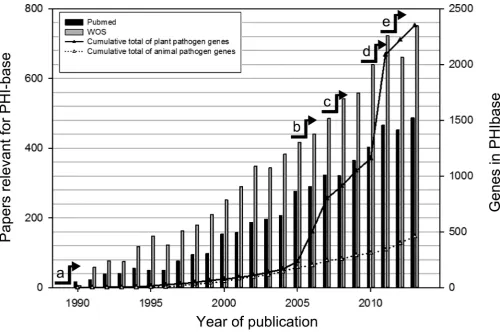
(PHI-base accession PHI:963) (3,4), many more genes in-volved in pathogen-host interactions have been identified and the number of publications has steadily increased (Fig-ure1). Further key events in the history of functional gene analysis of pathogen-host interactions include: in 2005, the listing of>1500 active genome sequencing projects by the Genomes Online Database (GOLD)(5); in 2007, the report of a genome-wide functional analysis study of pathogenic-ity genes in the rice blast fungus Magnaporthe grisea; in 2010, publication of the first host-induced gene silencing (HIGS) study involving an obligate biotrophic species(6); in 2011, the genome-wide functional analysis of all
transcrip-*To whom correspondence should be addressed. Tel: +44 1582 763133; Fax: +44 1582 760089; Email: [email protected]
C
The Author(s) 2014. Published by Oxford University Press on behalf of Nucleic Acids Research.
This is an Open Access article distributed under the terms of the Creative Commons Attribution License (http://creativecommons.org/licenses/by/4.0/), which permits unrestricted reuse, distribution, and reproduction in any medium, provided the original work is properly cited.
Figure 1. Growth of the number of published articles screened by keyword search for PHI-base and the number of phenotypically curated genes. This figure was generated from literature records retrieved at PubMed and Web of Science using the search terms ‘(fung*or yeast) and (gene or factor) and (pathogenicity or virulen* or avirulence gene*)’. Key events in the history of functional gene analysis of pathogen-host interactions include: a, identification of the first avirulence gene (4); b,>1500 genome sequencing projects listed in the GOLD database(5); c, genome-wide functional analysis of pathogenicity genes in the rice blast fungusMagnaporthe oryzae; d, the first host-induced gene silencing (HIGS) study involving an obligate biotrophic species (6); e, genome-wide functional analysis of all transcription factors and protein kinases predicted in the cereal infecting fungusFusarium graminearum(7,8).
tion factors and protein kinases in the cereal infecting fun-gusFusarium graminearum(7,8).
Established in 2005, the pathogen-host interactions database (PHI-base) contains expertly curated molecular and biological information on genes proven to affect the outcome of pathogen-host interactions. Phenotypes can be assigned to the outcome of such interactions. Within PHI-base, genes are catalogued when their function in the pathogenic process has been tested through gene disruption and/or transcript level alteration experiments. These genes are termed pathogenicity genes if the effect on the phe-notype is qualitative (disease/no disease). They are called virulence/aggressiveness genes if the effect is quantitative. Another category of genes increasingly catalogued in PHI-base are effector genes formerly known as avirulence genes. Effector genes either activate or suppress plant defence re-sponses.
There are five key motivations to improve the data con-tent of PHI-base and its taxonomic coverage: (i) In the post-genomics era and with the ever cheaper cost of whole-genome sequencing there is intense interest in compara-tive pathogen genomics to identify functionally homolo-gous genes, as well as species-unique genes. (ii) The breadth
and efficiency of both forward and reverse genetics anal-ysis in plant- and animal-infecting pathogenic species has accelerated the pace of discovery, with generated mutants subject to intense investigation and scrutiny. In many inter-action studies, model host species are used increasingly to save costs, but which may or may not yield results equiv-alent to those obtained in the natural host species. Thus, comparisons with known interactions in the natural host can be informative. (iii) Many gene sequences linked to a pathogenic process lack sufficient formal descriptive anno-tation, such as that provided by Gene Ontology (GO) (9). PHI-base provides a repository for such gene annotation. (iv) Increased species coverage across a wider taxonomic range permits the PHI-base data to be usedin silicoto pre-dict with a higher level of confidence the repertoire of viru-lence associated genes in more species. (v) Finally, and most importantly, researchers require free and easy access to dif-ferent types of interaction information to facilitate hypoth-esis generation and knowledge discovery.
Here, we report on a major increase in PHI-base gene content, new database features, integration with comple-mentary databases and use cases. The original release of PHI-base was published in the NAR database issue in
2006 (10). A second NAR article in 2008 reviewed ad-ditional data and new features available within PHI-base version 3.0 (11). Since then usage of PHI-base has grown and the PHI-base website receives about 1500 hits per quarter, excluding internal users, with users located in
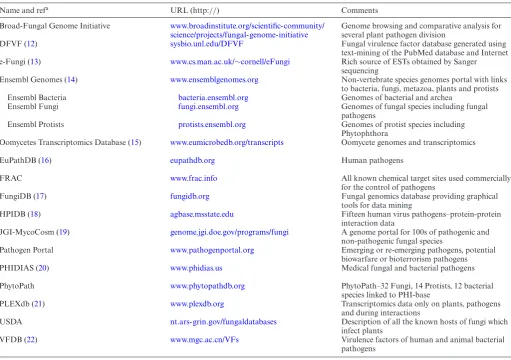
∼89 countries. Several other databases provide informa-tion which partially overlap with either the species data or biological information provided within PHI-base. These resources include the Fungal Virulence Factor Database (DFVF)(12), the e-Fungi project (13), Ensembl Genomes (14), the Oomycetes Transcriptomics Database (15), the Eu-karyotic Pathogen Database Resources (EuPathDB) (16), FungiDB (17), the Host-Pathogen Interaction database on human viruses (HPIDB) (18), JGI-MycoCosm (19), PHIDIAS (20), PLEXdb (21) and the database on virulence factors of pathogenic bacteria (VFDB) (22). These com-plementary resources and their specialisms are summarized in Table1. When used collectively, these databases provide prospective and existing users of PHI-base with a substan-tially enriched environment to pursue a wide range of simple to advancedin silicoanalyses on pathogenic organisms and the underlying pathogenic processes.
NEW FEATURES
An expanded taxonomic range and controlled vocabulary
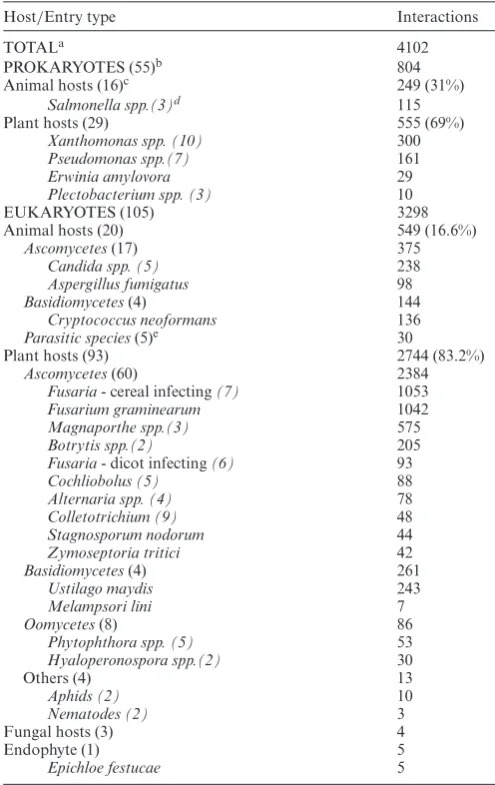
Version 3.0 released in 2007 contained information on bac-terial, fungal and oomycete pathogens, as well as plant en-dophytes. Version 3.6 now also includes pathogenic plant infecting nematode and aphid pests and animal/human infecting parasites (Table 2). Between these versions of PHI-base, the total number of pathogenic species has risen from 95 to 160. The number of bacterial pathogens tripled over the same period. In addition, the number of obligate biotrophic species has increased from three to seven. To help PHI-base users become rapidly familiar with the bi-ology of the wider range of pathogens and pests available, a full list of the pathogenic species covered in PHI-base ver-sion 3.6 is provided in Supplementary Table S1 along with their NCBI taxon identifier and both the natural and ex-perimental host(s). The number of documented host species naturally infected by each pathogen and the identity of ob-ligate biotrophs among the species is also described. This level of detail is provided to assist users in the selection of pathogenic species to include in comparative genomic anal-ysis. An up-to-date version of Supplementary Table S1 is maintained on the PHI-base ‘About’ website, reflecting the data for each new release.
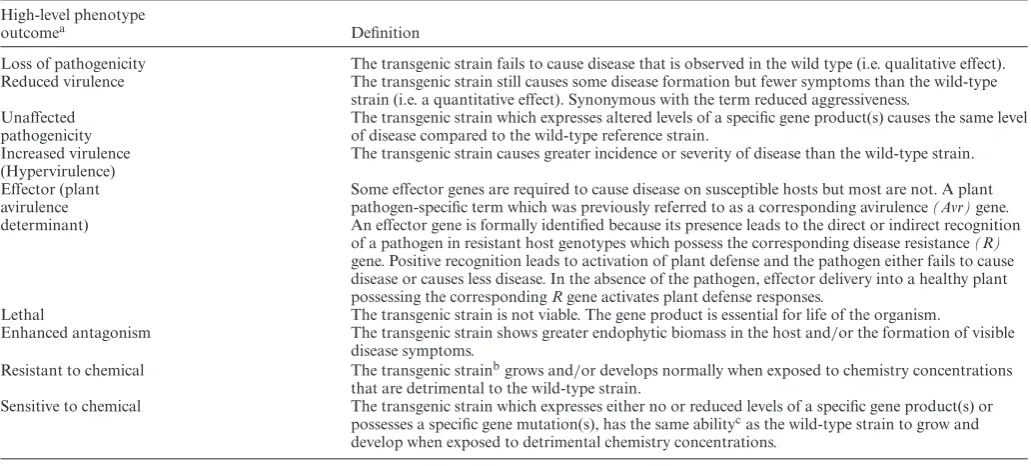
A new addition requested by users is the consistent use of a controlled vocabulary of high-level phenotyping terms (Table 3). Currently, nine phenotyping terms are used to permit consistent data retrieval, comparative phenomics across a wide taxonomic range and statistical analysis. Only one term is assigned per host-pathogen interaction. An in-teraction is defined as the function of one gene, on one host and one tissue type. The PHI-base phenotype terms selected are routinely used in research articles but mapping to GO terms is not supported due to their high-level nature. Since 2008, several new techniques for investigating gene prod-uct function have become more widely adopted. For exam-ple, for some obligate plant infecting pathogens, including
BlumeriaandPucciniaspecies which infect specific cereal hosts, a novel technique called host-induced gene silenc-ing (HIGS) is used. In HIGS, an antisense construct is ex-pressed from the host species and used to transiently silence a specific pathogen gene during the infection process, which if successful, results in an altered phenotypic outcome (23). The eight entries PHI:2896 to PHI:2903 were obtained for theBlumeria graminisf. sp.hordei–barley interaction using the new HIGS technique.
Additional content and species coverage
PHI-base version 3.6 contains information on 2875 genes, 4102 interactions, 110 host species and 160 pathogenic species. The pathogen species include 103 plant, 3 fun-gal and 54 animal infecting species. The organisms in the database cause 181 different diseases and were obtained from 1243 peer-reviewed references. The functional gene information included was curated from studies published between 1987 to the end of 2013. Details of the host and pathogen species coverage is given in Table2and Supple-mentary Table S1. One-third of the prokaryote interactions now involve a human pathogen, with the highest number of 115 interactions fromSalmonella species. For plant fecting bacteria the highest numbers are 300 and 161 in-teractions fromXanthomonasandPseudomonasspecies, re-spectively. The fungal pathogen interactions are dominated by the Ascomycetes (67 species) followed by the Basid-iomycetes (8 species), providing 2759 and 405 interactions, respectively. The fungal interactions are also predominantly from plant infecting species (2645 interactions) compared to animal/human infecting species (519 interactions). The number of interactions from the eight oomycete species is far lower at 86, which are all from plant infecting species. The newly curated plant infecting nematodes and aphids and animal/human infecting parasites provide 43 interac-tions from 9 species. The new data is summarized by host type and pathogen species taxonomy in Table2. The plant pathogen species providing the greatest number of interac-tions are the cereal infecting fungiFusarium graminearum,
Magnaporthe oryzae and Ustilago maydis, Xanthomonas
bacteria and the dicotyledonous infecting fungusBotrytis cinereaandPseudomonasbacteria. For animal/human in-fecting species the greatest number of interactions are pro-vided by the fungiCandida albicansandCryptococcus neo-formansand the bacteriumSalmonella entrica(Table2).
The nine new high-level phenotypic outcome terms are defined in Table3. These have been included in the advanced search to permit researchers to explore the database across a wide range of taxonomically diverse species which exhibit very varied pathogenic lifestyles. Only the entry types ‘ef-fector’ and ‘enhanced antagonism’ are limited to plant in-fecting species. In total, 84 interactions from a total of 23 species have the outcome ‘increased virulence (hyperviru-lence)’. This expanding number is noteworthy and suggests that negative regulation of key pathogenicity processes com-monly occurs during the infection and colonization of both plant and animal hosts. Also of interest are the 1224 inter-actions (29.8% of the entire database content) with the out-come ‘unaffected pathogenicity’. The majority of these have been reported for plant pathogens. These negative outcomes
Table 1. Multispecies databases and websites involving plant, human and/or animal infecting pathogens which contain information complementary to the data in PHI-base
Name and refa URL (http://) Comments
Broad-Fungal Genome Initiative www.broadinstitute.org/scientific-community/ science/projects/fungal-genome-initiative
Genome browsing and comparative analysis for several plant pathogen division
DFVF (12) sysbio.unl.edu/DFVF Fungal virulence factor database generated using text-mining of the PubMed database and Internet e-Fungi (13) www.cs.man.ac.uk/∼cornell/eFungi Rich source of ESTs obtained by Sanger
sequencing
Ensembl Genomes (14) www.ensemblgenomes.org Non-vertebrate species genomes portal with links to bacteria, fungi, metazoa, plants and protists Ensembl Bacteria bacteria.ensembl.org Genomes of bacterial and archea
Ensembl Fungi fungi.ensembl.org Genomes of fungal species including fungal pathogens
Ensembl Protists protists.ensembl.org Genomes of protist species including Phytophthora
Oomycetes Transcriptomics Database (15) www.eumicrobedb.org/transcripts Oomycete genomes and transcriptomics
EuPathDB (16) eupathdb.org Human pathogens
FRAC www.frac.info All known chemical target sites used commercially
for the control of pathogens
FungiDB (17) fungidb.org Fungal genomics database providing graphical tools for data mining
HPIDB (18) agbase.msstate.edu Fifteen human virus pathogens–protein-protein interaction data
JGI-MycoCosm (19) genome.jgi.doe.gov/programs/fungi A genome portal for 100s of pathogenic and non-pathogenic fungal species
Pathogen Portal www.pathogenportal.org Emerging or re-emerging pathogens, potential biowarfare or bioterrorism pathogens PHIDIAS (20) www.phidias.us Medical fungal and bacterial pathogens
PhytoPath www.phytopathdb.org PhytoPath–32 Fungi, 14 Protists, 12 bacterial species linked to PHI-base
PLEXdb (21) www.plexdb.org Transcriptomics data only on plants, pathogens and during interactions
USDA nt.ars-grin.gov/fungaldatabases Description of all the known hosts of fungi which infect plants
VFDB (22) www.mgc.ac.cn/VFs Virulence factors of human and animal bacterial pathogens
aReference provided where available.
are usually presumed by the authors to indicate the gene product does not have a role in the pathogenic process under investigation or has arisen due to genetic redundancy, i.e. the function of a highly homologous gene replaces the func-tion of the missing gene product under experimental evalu-ation. In some studies, the inclusion of double-gene deletion results has been able to clarify the situation. For example, theCandida albicansgenePDE1(PHI:857) has been impli-cated in virulence. ThePDE1mutant alone is unaffected in pathogenicity. However, the double-gene deletion ofPDE1
andPDE2shows a more severe effect than deletion of the
PDE2 (PHI:856) gene on its own (24). In Magnaporthe oryzae(formerly calledM. grisea) deletion of the individ-ual genesMoRgs1(PHI:2192) andMoRgs4(PHI:2195) led to a reduced-virulence phenotype, but the double-gene dele-tionrgs1 rgs4mutant has a more severe ‘loss of pathogenic-ity’ phenotype (25). In the animal pathogenVibrio cholerae, the effect of a triple mutation on biofilm formation and virulence was used to test the combined function of tatA
(PHI:2415),tatB(PHI:2416),tatC(PHI:2417) and revealed this small gene family was required for virulence in mice (25). Going forward, the use of the ‘unaffected pathogenic-ity’ category in comparative species analyses will be
partic-ularly informative when the genes involved are present in only one copy per species. This approach will reveal which genes function in a species-specific or taxon clade-specific manner.
The high-level phenotypic outcomes for all interactions are summarized in Table 4. A total of 120 PHI-base ac-cessions have been assigned the high-level phenotypic out-come ‘Essential (lethal)’. In these studies, mainly two types of experimental data were reported. First, inAspergillus fu-migatusa promoter replacement strategy was employed to construct conditional mutants. For these mutants the ad-dition of ammonium into the nitrogen source switches off gene expression and this allows functional gene tests of es-sential genes (26). Secondly, in genome-wide gene replace-ment studies inGibberella zeaeno transformants were re-covered in repeated experiments, while transformants were recovered for many other genes. Thus, authors considered that the gene’s function was ‘essential for life’ (7,8).
A ‘mixed outcome’ of phenotypes can be assigned when the transgenic mutants generated are tested on either multi-ple host species or different tissues/organs of the same host species. Different outcomes on hosts belonging to different kingdoms potentially indicate a differential host
Table 2. Interactions in PHI-base version 3.6 grouped by either host species or pathogen species
Host/Entry type Interactions
TOTALa 4102
PROKARYOTES (55)b 804
Animal hosts (16)c 249 (31%)
Salmonella spp.(3)d 115
Plant hosts (29) 555 (69%) Xanthomonas spp. (10) 300 Pseudomonas spp.(7) 161 Erwinia amylovora 29 Plectobacterium spp. (3) 10
EUKARYOTES (105) 3298
Animal hosts (20) 549 (16.6%) Ascomycetes(17) 375
Candida spp. (5) 238 Aspergillus fumigatus 98 Basidiomycetes(4) 144
Cryptococcus neoformans 136 Parasitic species(5)e 30
Plant hosts (93) 2744 (83.2%) Ascomycetes(60) 2384
Fusaria- cereal infecting(7) 1053 Fusarium graminearum 1042 Magnaporthe spp.(3) 575 Botrytis spp.(2) 205 Fusaria- dicot infecting(6) 93 Cochliobolus (5) 88 Alternaria spp. (4) 78 Colletotrichium (9) 48 Stagnosporum nodorum 44 Zymoseptoria tritici 42 Basidiomycetes(4) 261
Ustilago maydis 243 Melampsori lini 7 Oomycetes(8) 86
Phytophthora spp. (5) 53 Hyaloperonospora spp.(2) 30
Others (4) 13
Aphids (2) 10
Nematodes (2) 3
Fungal hosts (3) 4
Endophyte (1) 5
Epichloe festucae 5
aOnly highly represented taxon groups are listed. For a complete list of
species in the database see Supplementary Table S1.
bThe table is divided into prokaryote and eukaryote host species. The
species count number is listed in brackets.
cHost species are further divided into animal and plant host.
dLeft-indented genera and species infect or belong to taxonomic group
listed non-indented above. Only main representatives organisms are listed.
eParasitic species are Leishmania infantum, L. mexicana, Toxoplasma
gondii,Trypanosoma bruceiandT. cruzi.
ment. For example,Fusarium oxysporumis able to systemi-cally infect tomato plants and immune-compromised mice. The PHI-base entries PHI:215, PHI-285 and PHI:315 re-veal a differential requirement for cell-signalling and cell wall formation of three genes during the pathogenesis of plant and animal hosts.
Integration with other database sources
PHI-base is a gene-centric database. Each gene has its own PHI-base accession number. One advantage of this design is that phenotypic information is directly linked to a spe-cific gene. This phenotypic information can then easily be mapped to genomes. Additional information, such as GO
terms and protein structure information, is then extracted from other databases. In our current curation we priori-tise the use on UniProt accessions (27) to facilitate subse-quent bioinformatics analysis. During the curation process, our biocurators map reported EMBL or GenBank acces-sions to existing UniProt identifiers, where these exist. How-ever, for species where protein accessions are not available in UniProt at the time of curation and authors did not pro-vide GenBank accession numbers in their studies only lim-ited or no information on the gene/protein can be provided in PHI-base until this information becomes available.
Whole-genome information is increasingly available for plant and animal pathogens. We have mapped phenotypes in PHI-base via their gene accessions to reference genomic sequences available in Ensembl Genomes sites for fungi, protist (including oomycetes) and bacteria (26). In total, 1550 out of 2047 interactions involved in plant pathogene-sis from pathogens with an available reference genome have been mapped to Ensembl Genomes. The remainder of the PHI-base accessions are either associated with only genetic data or the genome sequence information is still missing, or are associated with previously reported sequences and isolates that differ from those in the published reference genomes. Work is continuing to resolve these cases.
Functional analysis of PHI-base accessions
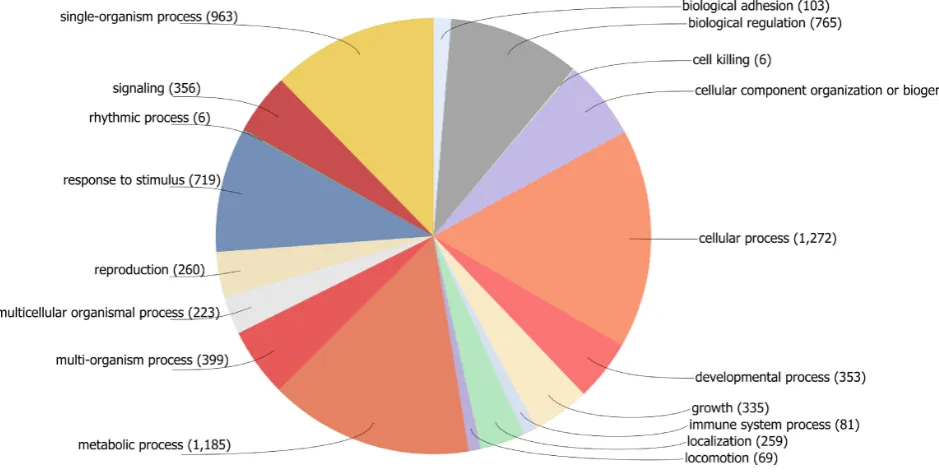
The entire contents of PHI-base are available to users from the ‘Download’ section, where sequence information is available for 2527 PHI-base accessions. We surveyed the content of PHI-base accessions by cataloguing the protein accessions using their GO classification using Blast2GO software and standard parameters (28). GO terms were as-signed to 63% of PHI-base accessions (Figure2). For a total of 37% (929 proteins), no GO annotation could be made. Many of these accessions are species-specific proteins and are effectors. The major GO categories assigned included (i) metabolic processes, (ii) cellular processes, such as cell communication, and (iii) single-organism processes, such as cell proliferation, filamentous growth and pigmentation. Microbial pigments in pathogens are known to provide pro-tection against ultraviolet radiation, host-defence products and other stresses encountered during host invasion.
The category ‘cell killing’ was only assigned to six acces-sions and included Pseudomonas effectors and theVibrio choleraeenterotoxin. This low number is an unexpected re-sult because for many of the host-pathogen interactions cat-alogued in PHI-base at some point host cell death occurs, i.e. in interactions involving pathogens with a necrotrophic or hemibiotrophic lifestyle.
TECHNICAL DEVELOPMENTS, CURATION AND OUT-REACH
Data curation and release management
In the NAR 2008 article (11) we provided the details of the curation procedure in use. This procedure is still in place. However, due to the increasing volume of literature requir-ing curation (Figure1) we now use additional procedures. Primarily, papers are found in the literature databases Web of Science and PubMed using the keyword search terms:
Table 3. Definitions for the nine high-level phenotype outcomes used in PHI-base
High-level phenotype
outcomea Definition
Loss of pathogenicity The transgenic strain fails to cause disease that is observed in the wild type (i.e. qualitative effect). Reduced virulence The transgenic strain still causes some disease formation but fewer symptoms than the wild-type
strain (i.e. a quantitative effect). Synonymous with the term reduced aggressiveness. Unaffected
pathogenicity
The transgenic strain which expresses altered levels of a specific gene product(s) causes the same level of disease compared to the wild-type reference strain.
Increased virulence (Hypervirulence)
The transgenic strain causes greater incidence or severity of disease than the wild-type strain.
Effector (plant avirulence determinant)
Some effector genes are required to cause disease on susceptible hosts but most are not. A plant pathogen-specific term which was previously referred to as a corresponding avirulence(Avr)gene. An effector gene is formally identified because its presence leads to the direct or indirect recognition of a pathogen in resistant host genotypes which possess the corresponding disease resistance(R) gene. Positive recognition leads to activation of plant defense and the pathogen either fails to cause disease or causes less disease. In the absence of the pathogen, effector delivery into a healthy plant possessing the correspondingRgene activates plant defense responses.
Lethal The transgenic strain is not viable. The gene product is essential for life of the organism.
Enhanced antagonism The transgenic strain shows greater endophytic biomass in the host and/or the formation of visible disease symptoms.
Resistant to chemical The transgenic strainbgrows and/or develops normally when exposed to chemistry concentrations
that are detrimental to the wild-type strain.
Sensitive to chemical The transgenic strain which expresses either no or reduced levels of a specific gene product(s) or possesses a specific gene mutation(s), has the same abilitycas the wild-type strain to grow and
develop when exposed to detrimental chemistry concentrations.
aCompared to wild-type reference strain (i.e. a direct isogenic strain comparison).
bMolecular studies on natural field isolate population are also considered, once the natural target site has been identified. cOn rare occasions increased sensitivity to chemistry has been observed.
Table 4. Number of interactions per phenotypic group in animal and plant hosts
Entry type Animal hosta Plant host
Loss of pathogenicity 73 404
Reduced virulenceb 542 1056
Increased virulence 33 51
Essential (lethal) 46 74
Unaffected pathogenicityc 80 1144
Effector 0 533
Enhanced antagonism 0 4
Resistance to chemistry 5 30
Sensitive to chemistryd 1 7
aAnimal and plant-attacking pathogens are listed with their taxonomy ID and lifestyle in Supplementary Table S1. bThe three missing entries in this category have other host types.
cOne entry in this category has a fungal host dOne entry in this category has a fish host.
(fung*or yeast) and (gene or factor) and (pathogenicity or virulen* or avirulence gene*) (29). Text mining is not em-ployed due to the fact that relevant information has to be extracted by analysing figures, tables and text in the peer-reviewed articles. This task can only be done by trained biocurators with a strong understanding of the research area. PHI-base relies heavily on support of the scientific community to suggest relevant articles for curation and for the subsequent quality control of entries. The PHI-base team does not have any individual member solely dedicated to data curation. Instead, team members curate data on a part-time basis and when the need arises. In an effort to close a curation gap for articles published between 1984 and 2014, a collaboration was established with the cura-tion scientists at Molecular Conneccura-tions, Bangalore, India. The biocurators give priority to author assigned gene func-tion over computafunc-tional transferred annotafunc-tion, such as GO terms. The author-assigned function is frequently
ex-tracted from either title or abstract. Experts from the sci-entific community are invited on a regular basis to verify new records before uploading into the database and provide quality control.
Mapping PHI-base phenotypes to Ensembl Genomes
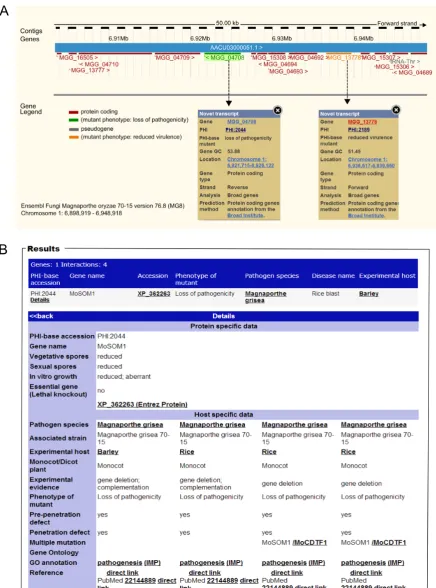
Through the cross-referencing with Ensembl Genomes (http://ensemblgenomes.org) PHI-base annotations can now be visualized directly in their genomic context, identi-fying features, such as pathogenicity islands through a sim-ple system of colour coding using the nine high-level phe-notyping terms. This new way to explore the data in PHI-base is shown in Figure3. The phenotyping term ‘mixed outcome’ is also used to identify genes where a range of in-teraction outcomes have been identified depending on the host species and/or tissue type evaluated.
Figure 2. GO terms assigned to PHI-base accessions in Version 3.6 mapped to a biological process.
APPLICATIONS OF PHI-BASE
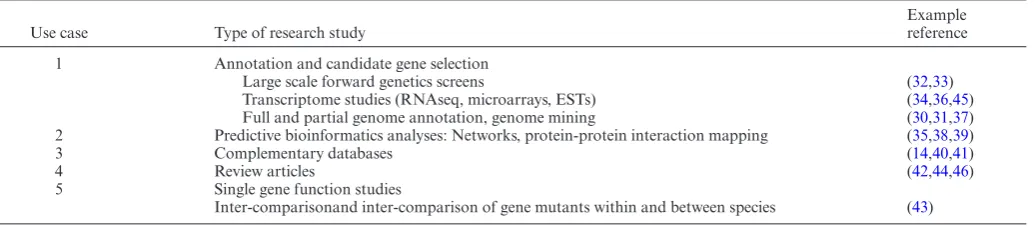
PHI-base use has been cited in over 100 peer-reviewed publications. These publications are listed in year order in the ‘About’ section of the database. Recently published PHI-base use cases include genome mining and compar-ative genomics (30,31), the selection and functional test-ing of candidate virulence factors in newly sequenced fun-gal and nematode pathogens of agricultural importance (10,11) and studies investigating the subtle differences be-tween pathogen and biocontrol species (23). In Table5the main uses of PHI-base are given along with literature ex-amples (14,30–46). In the past 4 years we have observed a gradual shift in PHI-base use, with an increase in the number of larger comparative gene function studies and in-vestigations reporting thein silicoprediction of virulence-associated genes.
FORTHCOMING DEVELOPMENTS
Tools for community-led curation
A big challenge facing all biological databases is the grow-ing quantity of data and the relative difficulty of obtain-ing resources to curate the knowledge that derives from it. For the pathogen-host interaction community the scale of the problem is considerable (Figure 1). One solution is to encourage community-based curation, particularly by the authors of scientific publications, who may be moti-vated to have their work correctly represented within the database, and who are the experts in their own specialist do-mains (although they may not be expert in the conventions in use within the database). Inclusion of studies in base also improves their visibility and accessibility. PHI-base has a curation model PHI-based on community contribu-tion, although hitherto, this has involved certain collabo-rators curating many papers in their own area of expertise,
after prior training in the data entry tools. A more scalable model would allow all users to directly curate their own pa-pers without prior training. A new easy-to-use web-based interface for direct access by the wider community is cur-rently in development.
The PHI-base web-based curation tool will facilitate cu-ration of pathogen-host interactions from peer reviewed lit-erature into PHI-base by the authors doing the experimen-tal analyses. This curation tool will be based on the recently developed Canto tool, an online tool that supports func-tional gene annotation (47). Canto is part of the Generic Model Organism Database project, which provides a suite of open software for managing genetic data (http://www. gmod.org). Canto has proven effective for the community-based curation of data for the fission yeast database, Pom-Base (http://www.pombase.org) (48). The PHI-base cura-tion tool will use ontological data from a variety of sources, most notably from the Open Biological and Biomedical On-tologies Foundry (http://www.obofoundry.org) (49). How-ever, some terminology is specific to the nature of the inter-actions captured in PHI-base, so will require the develop-ment of new controlled vocabularies for this purpose. For example, an ‘interaction evidence’ ontology will be created to specify the evidence for pathogen-host interactions, thus complimenting the gene-centric data from the GO. Also, in addition to the controlled high level vocabulary above de-scribing the phenotype of the pathogen (Table4), a similar controlled vocabulary can be created to describe the affect the interaction has on the host organism. To ensure quality and consistency of the curated data, all annotations will still be approved by a curator or expert with knowledge of the species and the captured data.
Figure 3. Inspection of gene function using the Ensembl genome browser. (A) Displayed is a small chromosomal region inMagnaporthe oryzaeshowing two genes involved in pathogenicity (as annotated in PHI-base) in their genomic context (viewable in the Ensembl browser, in the transcript display). A colour code indicates the annotated role of each gene, green ‘loss of pathogenicity’ and orange ‘reduced virulence’. (B) By selecting each colour-coded MGG transcript ID, information is revealed on the associated gene deletion study curated in the PHI-base database.
Table 5. PHI-base uses that have often appeared in the peer-reviewed literature
Use case Type of research study
Example reference
1 Annotation and candidate gene selection
Large scale forward genetics screens (32,33) Transcriptome studies (RNAseq, microarrays, ESTs) (34,36,45) Full and partial genome annotation, genome mining (30,31,37) 2 Predictive bioinformatics analyses: Networks, protein-protein interaction mapping (35,38,39)
3 Complementary databases (14,40,41)
4 Review articles (42,44,46)
5 Single gene function studies
Inter-comparisonand inter-comparison of gene mutants within and between species (43)
Tools for data mining
We are currently developing a new tool for the analysis and extraction of whole genomic data from plant pathogens as part of the PhytoPath project (http://www.phytopathdb. org) using the data warehousing framework BioMart (50), allowing users to mine genomic data (for sequence and an-notation) across multiple species based on PHI-base anno-tations in conjunction with other annoanno-tations. The tool is expected to be launched before the end of 2015.
Other activities
Our intention is to extend the taxonomic range available within PHI-base to∼200 host-infecting species within the next 2 years. At this level of species coverage detailed analy-ses within and between specific groups of pathogens with different infection strategies, host ranges, taxonomic as-signments or between pathogenic and closely related non-pathogenic, endophytic or symbiotic lifestyles should be feasible.
In the next phase of curation a greater emphasis will be placed on the effector literature which should increase the number of interactions from bacterial, oomycete and ob-ligate biotrophic species. To accompany this development, the curation of the corresponding host target(s), i.e. initial molecular partner in the host has commenced and this im-portant information should soon be available. For example, various bacterial effectors including AvrRpm1 (PHI:977) and AvrRpt2 (PHI:979) are delivered into the plant cyto-plasm via the bacterial type III secretion system. These ef-fectors interact with the Arabidopsis protein RIN4 (51). These protein interaction data sets are of growing impor-tance in the analysis of pathogen, pest and host-parasite interactions as they typically represent communi-cation events that have co-evolved between biological king-doms. For example, Arabidopsis mutants harbouring T-DNA insertions within different host targets of specific ef-fectors were found to exhibit an enhanced disease resistance (edr) phenotype to both powdery and downy mildews (52). In addition, by the inclusion of the corresponding host tar-gets, more effectors from obligate biotrophic species can be curated into PHI-base. These effectors are rigorously tested for their role in pathogenicity using a range of other techniques, but not those involving the generation of stable pathogen transformants.
Database access and feedback
PHI-base can be freely accessed at http://www.phi-base. org. The complete database can be downloaded from the ‘Download’ section. Prior to downloading the entire database to create local Basic Local Alignment Search Tool databases or for other bioinformatics applications (Table5), users are asked to fill in a registration form. This allows PHI-base to monitor the number of academic and indus-trial users, a requirement by our sponsors.
User support can be obtained from this email: [email protected]. Please use this email address if you wish to provide new data for inclusion in PHI-base, if you are an expert willing to assist with curation, for the nomination of peer-reviewed papers to be curated, or if you can provide suggestions for improvement to the PHI-base website.
To increase the awareness of PHI-base developments within the community and for users to be notified when new releases occur, we have developed a PHI-base user mailing list ([email protected]). Users can subscribe from a link on the PHI-base website in the ‘Help’ section, or directly by going tohttps://www.lists.rothamsted.ac.uk/ mailman/listinfo/users.
SUPPLEMENTARY DATA
Supplementary Dataare available at NAR Online.
ACKNOWLEDGEMENTS
The authors would like to thank all the species experts who contributed database annotations from their field of ex-pertise into PHI-base and the members of our Scientific Advisory Board, Dr Michael Csukai (Syngenta, Jealott’s Hill, UK), Professor Jonathan Jones (The Sainsbury Lab-oratory, UK), Dr Leighton Pritchard (The James Hutton, UK) and Professor Pietro Spanu (Imperial College, UK). Dr Jan Taubert (formerly Rothamsted Research) is thanked for his expert support in maintaining the PHI-base parser. We thank Drs Paul Kersey, Uma Maheswari and Dan Staines at the European Bioinformatics Institute (Cam-bridge) for helpful discussions and for significantly improv-ing the pathogen species content within Ensembl Genomes.
FUNDING
This work is supported by the UK Biotechnology and Biological Sciences Research Council (BBSRC)
[BB/I/001077/1, BB/K020056/1]. PHI-base receives addi-tional support from the BBSRC as a Naaddi-tional Capability [BB/J/004383/1]. Funding for open access charge: UK Biotechnology and Biological Sciences Research Council (BBSRC) [BB/K020056/1].
Conflict of interest statement.None declared.
REFERENCES
1. Dangl,J.L., Horvath,D.M. and Staskawicz,B.J. (2013) Pivoting the plant immune system from dissection to deployment.Science,341, 746–751.
2. Fisher,M.C., Henk,D.A., Briggs,C.J., Brownstein,J.S., Madoff,L.C., McCraw,S.L. and Gurr,S.J. (2012) Emerging fungal threats to animal, plant and ecosystem health.Nature,484, 186–194.
3. Napoli,C. and Staskawicz,B. (1987) Molecular characterization and nucleic acid sequence of an avirulence gene from race 6 of
Pseudomonas syringae pv. glycinea.J. Bacteriol.,169, 572–578. 4. Staskawicz,B.J., Dahlbeck,D. and Keen,N.T. (1984) Cloned
avirulence gene ofPseudomonas syringae pv. glycineadetermines race-specific incompatibility onGlycine max (L.).Merr. Proc. Natl. Acad. Sci. U.S.A.,81, 6024–6028.
5. Liolios,K., Tavernarakis,N., Hugenholtz,P. and Kyrpides,N.C. (2006) The Genomes On Line Database (GOLD) v.2: a monitor of genome projects worldwide.Nucleic Acids Res.,34, D332–D334.
6. Nowara,D., Gay,A., Lacomme,C., Shaw,J., Ridout,C., Douchkov,D., Hensel,G., Kumlehn,J. and Schweizer,P. (2010) HIGS: host-induced gene silencing in the obligate biotrophic fungal pathogen Blumeria graminis.Plant cell,22, 3130–3141.
7. Son,H., Seo,Y.S., Min,K., Park,A.R., Lee,J., Jin,J.M., Lin,Y., Cao,P., Hong,S.Y., Kim,E.K.et al.(2011) A phenome-based functional analysis of transcription factors in the cereal head blight fungus, Fusarium graminearum.PLoS Pathog.,7, e1002310.
8. Wang,C., Zhang,S., Hou,R., Zhao,Z., Zheng,Q., Xu,Q., Zheng,D., Wang,G., Liu,H., Gao,X.et al.(2011) Functional analysis of the kinome of the wheat scab fungusFusarium graminearum.PLoS Pathog.,7, e1002460.
9. Gene Ontology Consortium. (2013) Gene Ontology annotations and resources.Nucleic Acids Res.,41, D530–D535.
10. Winnenburg,R., Baldwin,T.K., Urban,M., Rawlings,C., Kohler,J. and Hammond-Kosack,K.E. (2006) PHI-base: a new database for pathogen host interactions.Nucleic Acids Res.,34, D459–D464. 11. Winnenburg,R., Urban,M., Beacham,A., Baldwin,T.K., Holland,S.,
Lindeberg,M., Hansen,H., Rawlings,C., Hammond-Kosack,K.E. and Kohler,J. (2008) PHI-base update: additions to the pathogen host interaction database.Nucleic Acids Res.,36D572–D576. 12. Lu,T., Yao,B. and Zhang,C. (2012) DFVF: database of fungal
virulence factors.Database,2012, doi:10.1093/database/bas032. 13. Hedeler,C., Wong,H.M., Cornell,M.J., Alam,I., Soanes,D.M.,
Rattray,M., Hubbard,S.J., Talbot,N.J., Oliver,S.G. and Paton,N.W. (2007) e-Fungi: a data resource for comparative analysis of fungal genomes.BMC Genom.,8, 426.
14. Kersey,P.J., Allen,J.E., Christensen,M., Davis,P., Falin,L.J., Grabmueller,C., Hughes,D.S., Humphrey,J., Kerhornou,A., Khobova,J.et al.(2014) Ensembl Genomes 2013: scaling up access to genome-wide data.Nucleic Acids Res.,42, D546–D552.
15. Tripathy,S., Deo,T. and Tyler,B.M. (2012) Oomycete Transcriptomics Database: a resource for oomycete transcriptomes.BMC Genom.,13, 303.
16. Aurrecoechea,C., Brestelli,J., Brunk,B.P., Fischer,S., Gajria,B., Gao,X., Gingle,A., Grant,G., Harb,O.S., Heiges,M.et al.(2010) EuPathDB: a portal to eukaryotic pathogen databases.Nucleic Acids Res.,38, D415–D419.
17. Stajich,J.E., Harris,T., Brunk,B.P., Brestelli,J., Fischer,S., Harb,O.S., Kissinger,J.C., Li,W., Nayak,V., Pinney,D.F.et al.(2012) FungiDB: an integrated functional genomics database for fungi.Nucleic Acids Res.,40, D675–D681.
18. Kumar,R. and Nanduri,B. (2010) HPIDB–a unified resource for host-pathogen interactions.BMC Bioinformatics,11(Suppl. 6), S16. 19. Grigoriev,I.V., Nikitin,R., Haridas,S., Kuo,A., Ohm,R., Otillar,R.,
Riley,R., Salamov,A., Zhao,X., Korzeniewski,F.et al.(2014)
MycoCosm portal: gearing up for 1000 fungal genomes.Nucleic Acids Res.,42, D699–D704.
20. Xiang,Z., Tian,Y. and He,Y. (2007) PHIDIAS: a pathogen-host interaction data integration and analysis system.Genome Biol.,8, R150.
21. Dash,S., Van Hemert,J., Hong,L., Wise,R.P. and Dickerson,J.A. (2012) PLEXdb: gene expression resources for plants and plant pathogens.Nucleic Acids Res.,40, D1194–D1201.
22. Chen,L., Xiong,Z., Sun,L., Yang,J. and Jin,Q. (2012) VFDB 2012 update: toward the genetic diversity and molecular evolution of bacterial virulence factors.Nucleic Acids Res.,40, D641–D645. 23. Lee,W.S., Hammond-Kosack,K.E. and Kanyuka,K. (2012) Barley
stripe mosaic virus-mediated tools for investigating gene function in cereal plants and their pathogens: virus-induced gene silencing, host-mediated gene silencing, and virus-mediated overexpression of heterologous protein.Plant Physiol.,160, 582–590.
24. Wilson,D., Tutulan-Cunita,A., Jung,W., Hauser,N.C., Hernandez,R., Williamson,T., Piekarska,K., Rupp,S., Young,T. and Stateva,L. (2007) Deletion of the high-affinity cAMP phosphodiesterase encoded byPDE2affects stress responses and virulence inCandida albicans.Mol. Microbiol.,65, 841–856.
25. Zhang,L., Zhu,Z., Jing,H., Zhang,J., Xiong,Y., Yan,M., Gao,S., Wu,L.F., Xu,J. and Kan,B. (2009) Pleiotropic effects of the twin-arginine translocation system on biofilm formation, colonization, and virulence inVibrio cholerae.BMC Microbiol.,9, 114.
26. Hu,W., Sillaots,S., Lemieux,S., Davison,J., Kauffman,S., Breton,A., Linteau,A., Xin,C., Bowman,J., Becker,J.et al.(2007) Essential gene identification and drug target prioritization inAspergillus fumigatus. PLoS Pathog.,3, e24.
27. UniProt Consortium. (2014) Activities at the Universal Protein Resource (UniProt).Nucleic Acids Res.,42, D191–D198.
28. Gotz,S., Garcia-Gomez,J.M., Terol,J., Williams,T.D., Nagaraj,S.H., Nueda,M.J., Robles,M., Talon,M., Dopazo,J. and Conesa,A. (2008) High-throughput functional annotation and data mining with the Blast2GO suite.Nucleic Acids Res.,36, 3420–3435.
29. Baldwin,T.K., Winnenburg,R., Urban,M., Rawlings,C., Koehler,J. and Hammond-Kosack,K.E. (2006) The pathogen-host interactions database (PHI-base) provides insights into generic and novel themes of pathogenicity.MPMI,19, 1451–1462.
30. Hane,J.K., Anderson,J.P., Williams,A.H., Sperschneider,J. and Singh,K.B. (2014) Genome sequencing and comparative genomics of the broad host-range pathogenRhizoctonia solaniAG8.PLoS Genet.,
10, e1004281.
31. Danchin,E.G., Arguel,M.J., Campan-Fournier,A.,
Perfus-Barbeoch,L., Magliano,M., Rosso,M.N., Da Rocha,M., Da Silva,C., Nottet,N., Labadie,K.et al.(2013) Identification of novel target genes for safer and more specific control of root-knot nematodes from a pan-genome mining.PLoS Pathog.,9, e1003745. 32. Jeon,J., Park,S.Y., Chi,M.H., Choi,J., Park,J., Rho,H.S., Kim,S.,
Goh,J., Yoo,S., Choi,J.et al.(2007) Genome-wide functional analysis of pathogenicity genes in the rice blast fungus.Nat. Genet.,39, 561–565.
33. Cai,Z., Li,G., Lin,C., Shi,T., Zhai,L., Chen,Y. and Huang,G. (2013) Identifying pathogenicity genes in the rubber tree anthracnose fungus Colletotrichum gloeosporioidesthrough random insertional
mutagenesis.Microbiol. Res.,168, 340–350.
34. Vargas,W.A., Martin,J.M.S., Rech,G.E., Rivera,L.P., Benito,E.P., Diaz-Minguez,J.M., Thon,M.R. and Sukno,S.A. (2012) Plant defense mechanisms are activated during biotrophic and necrotrophic development ofColletotricum graminicolain maize.Plant Physiol.,
158, 1342–1358.
35. Sperschneider,J., Gardiner,D.M., Taylor,J.M., Hane,J.K., Singh,K.B. and Manners,J.M. (2013) A comparative hidden Markov model analysis pipeline identifies proteins characteristic of cereal-infecting fungi.BMC Genom.,14, 807.
36. Thakur,K., Chawla,V., Bhatti,S., Swarnkar,M.K., Kaur,J., Shankar,R. and Jha,G. (2013) De novo transcriptome sequencing and analysis for Venturia inaequalis, the devastating apple scab pathogen.Plos One,8, e53937.
37. Lefebvre,F., Joly,D.L., Labbe,C., Teichmann,B., Linning,R., Belzile,F., Bakkeren,G. and Belanger,R.R. (2013) The transition from a phytopathogenic smut ancestor to an anamorphic biocontrol agent
deciphered by comparative whole-genome analysis.Plant Cell,25, 1946–1959.
38. Schleker,S., Garcia-Garcia,J., Klein-Seetharaman,J. and Oliva,B. (2012) Prediction and comparison of Salmonella-human and Salmonella-Arabidopsis interactomes.Chem. Biodiv.,9, 991–1018. 39. Liu,X., Tang,W.H., Zhao,X.M. and Chen,L. (2010) A network
approach to predict pathogenic genes forFusarium graminearum. PLoS One,5, e13021.
40. Kour,A., Greer,K., Valent,B., Orbach,M.J. and Soderlund,C. (2012) MGOS: development of a community annotation database for Magnaporthe oryzae.MPMI,25, 271–278.
41. Bleves,S., Dunger,I., Walter,M.C., Frangoulidis,D., Kastenmuller,G., Voulhoux,R. and Ruepp,A. (2014) HoPaCI-DB: host-Pseudomonas and Coxiella interaction database.Nucleic Acids Res.,42,
D671–D676.
42. Van De Wouw,A.P. and Howlett,B.J. (2011) Fungal pathogenicity genes in the age of ‘omics’.Mol. Plant Pathol.,12, 507–514. 43. Doehlemann,G., Reissmann,S., Assmann,D., Fleckenstein,M. and
Kahmann,R. (2011) Two linked genes encoding a secreted effector and a membrane protein are essential forUstilago maydis-induced tumour formation.Mol. Microbiol.,81, 751–766.
44. Dickman,M.B. (2007) Subversion or coersion? Pathogenic
deteminants in fungal phytopathogens.Fungal Biol. Rev.,21, 125–129. 45. Zhang,Y., Zhang,K., Fang,A., Han,Y., Yang,J., Xue,M., Bao,J.,
Hu,D., Zhou,B., Sun,X.et al.(2014) Specific adaptation of
Ustilaginoidea virensin occupying host florets revealed by comparative and functional genomics.Nat. Commun.,5, 3849. 46. Cools,H.J. and Hammond-Kosack,K.E. (2013) Exploitation of
genomics in fungicide research: current status and future perspectives.Mol. Plant Pathol.,14, 197–210.
47. Rutherford,K.M., Harris,M.A., Lock,A., Oliver,S.G. and Wood,V. (2014) Canto: an online tool for community literature curation. Bioinformatics,30, 1791–1792.
48. Wood,V., Harris,M.A., McDowall,M.D., Rutherford,K., Vaughan,B.W., Staines,D.M., Aslett,M., Lock,A., Bahler,J., Kersey,P.J.et al.(2012) PomBase: a comprehensive online resource for fission yeast.Nucleic Acids Res.,40, D695–D699.
49. Smith,B., Ashburner,M., Rosse,C., Bard,J., Bug,W., Ceusters,W., Goldberg,L.J., Eilbeck,K., Ireland,A., Mungall,C.J.et al.(2007) The OBO Foundry: coordinated evolution of ontologies to support biomedical data integration.Nat. Biotechnol.,25, 1251–1255. 50. Kasprzyk,A. (2011) BioMart: driving a paradigm change in
biological data management.Database,2011, bar049.
51. Jones,J.D. and Dangl,J.L. (2006) The plant immune system.Nature,
444, 323–329.
52. Weßling,R., Epple,P., Altmann,S., He,Y., Yang,L., Henz,Stefan R., McDonald,N., Wiley,K., Bader,Kai C.et al.(2014) Convergent targeting of a common host protein-network by pathogen effectors from three kingdoms of life.Cell Host Microb.,16, 364–375.