Collaborating Establishment School of Business & Creative
Technologies
Practice of Change Management for the improvement of
Complementary Basic Education: The Case of Malawi
A Thesis submitted to the University of Bolton in partial
fulfillment of the requirements for the award of a Doctor of
Philosophy in Change Management
Kondwani Precious Mwangala P.O. Box 692
Lilongwe, Malawi
2
Declaration of Original Authorship
I confirm that this thesis is my own original and authentic work, and the use of all
material from other sources has been properly and fully acknowledged. This work has
not been presented elsewhere for assessment.
__________________ ____________________
Kondwani Precious Mwangala
3 I dedicate this work to my respected father, Regnard Browne Mwangala, whose pursuit
for knowledge challenged me to aspire for more learning, to my mother, Missie Mwangala who worked hard to see me get the things I needed in life, and to my beloved
wife, Ida Hope who has been a source of absolute support and continues to challenge me in many ways, and my two children, Leticia Mtendere and Leroy Joshua so that they
4
Abstract
Managing change in education is a complex process. The Malawi education sector has many current trends including Complementary Basic Education (CBE). The practice of Change Management (CM), however, is subtle in education literature and as such limited on how it can be used for the improvement of CBE.
This study explores how CM can be practiced in order to improve the CBE programme in Malawi. The inherent characteristics that call for a CBE specific CM framework are its positioning within the education system, stakeholder role complexities,
implementation model and size of the programme. The study approaches CBE as a single case holistic. Through a cross-sectional approach, it concentrates on the 2006-2011 period. Key informants, community members and learners were interviewed individually and through focus groups. Content analysis is used to analyse the data. While there is a growing body of literature on CM in education, there is limited
applicability to the CBE programme. This study proposes the 3 Step CM Model as a clearly defined framework for practicing CM in CBE and a clear road map for managing change to all stakeholders in CBE.
Results from a comparative analysis of CM theories from literature are fused with empirical data to construct a clearly defined change management framework for CBE. Three themes of Planning Change, Implementing Change and Institutionalising Change are discovered as key categories of CM in CBE. Thereafter, a 3 step-CM framework, as intimated above, is constructed based on these themes and overlaps of CM theories as revealed from literature. Factors that influence CM in CBE are categorized under the three steps to provide an elegant CM framework with managerial terms. Factors like Strategy, Evaluation and Communication are exposed as those on which other CM steps hinge on.
5
Acknowledgements
Accomplishing this PhD has been a massive journey, which has changed my
perspectives of the world and life. My foremost thanks go to Dr. Julian Coleman, my Director of Studies, a very special person who provided immense support,
encouragement and guidance throughout this study. I would also like to thank Dr. Reddy Kondal Kandadi, my second supervisor and Dr. Ida Mbendera, local supervisor for their help and advice. I would like to thank Mr. Ken Longden who opened the doors of my research career and German Technical Cooperation (GIZ) for the financial
support provided towards this research.
Many thanks to all players in the CBE for giving me support in conducting this research. The knowledge gained through my research in the programme has become the core of this PhD, and enlightened my thinking and perception about Change Management. I would like to thank colleagues from Cohort 1 of the University of Bolton, Malawi PhD programme for immensely contributing to this research, and to Prof. Peter Bush and Dr. Matthew Shafaghi for examining me through a rigorous and intellectually stimulating Viva.
Thanks to colleagues who went before me on this journey; Dr. Levison Chiwaula for critiquing my initial research proposal, Dr. Mariam Kadzamira for the tough and intriguing questions, Dr. Ngcimezile Mweso for the colloquium discussions, Dr. Paul Kamlongera and Dr. Damazio Mfune for critiquing and editing my final write up.
I would like to express gratitude to my family for providing me this opportunity to study. I am grateful for my parents support, which has enabled me to come this far. Finally, I express my gratitude to my wonderful wife, Ida Hope, for her absolute support, patience and encouragement. To my daughter Leticia Mtendere for always asking when I will finish studying. To my son, Leroy Joshua, who brought joy the moment he entered the world. I am indebted to you all for your support, understanding and for being there for me.
6
List of Acronyms
ADC Area Development Committee ALE Adult Learning and Education
BELMAS British Educational Leadership, Management & Administration Society C1-C4 A list of Criteria adopted for data analysis in this dissertation
CBE Complementary Basic Education
CDEC Cambridge Distance Education Consultancy
CM Change Management
CREATE Consortium for Research on Education Access Transitions and Equity CSO Civil Society Organisation
DPP Democratic Progressive Party
ECDPM European Centre for Development Policy Management EFA Education for All
EQUIP Education Quality Improvement Programme F1-F15 A list of factors influencing CM in CBE FFG Facilitator Focus Group
FGD Focus Group Discussion FPE Formal Primary Education FPEP Free Primary Education Policy G Goal of this dissertation
GoM Government of Malawi HBR Harvard Business Review
JEPC Jharkhand Education Project Council LCMC Learning Centre Management Committee
LCMCFG Learning Centre Management Committee Focus Group LFG Learner Focus Group
MDG Millennium Development Goal MET Ministry of Education and Training MIS Management Information System
MoESS Ministry of Education Science and Sports MoEST Ministry of Education Science and Technology NFE Non Formal Education
OTL Opportunity to Learn
P Research Problem of this dissertation PEN Poverty Eradication Network
Q1 First Question of this dissertation Q2 Second Question of this dissertation Q3 Third Question of this dissertation Q4 Forth Question of this dissertation
R1-R7 List of Characteristics indicating the relevance of Case Study Methodology SDNP Sustainable Development Network Programme
UDF United Democratic Front UN United Nations
UNDP United Nations Development Programme
7
UNICEF United Nations Children’s Fund UNPY United Nations Programme on Youth VDC Village Development Committee VTI Vocational Training Institution
8
Table of Contents
Abstract ... 4
Acknowledgements ... 5
List of Acronyms ... 6
List of Tables ... 12
List of Figures ... 13
1.0 INTRODUCTION ... 14
1.1 Title ... 14
1.2 Research Context and Background ... 14
1.2.1 Complementary Basic Education (CBE) Programme ... 15
1.3 Motivation for this research ... 16
1.3.1 Change in Complementary Basic Education ... 17
1.3.2 Current Challenges in CBE ... 18
1.3.3 The significance of Change Management in CBE... 20
1.4 Problem Statement... 21
1.4.1 Research Goal and Objectives ... 22
1.5 Research Methodology ... 23
1.6 Research Focus and Boundaries ... 23
1.6.1 Positioning of the Thesis ... 23
1.6.2 Related subject areas ... 24
1.6.3 Applicability of the framework ... 24
1.6.4 Theoretical and Practical contribution ... 24
1.7 Thesis Structure ... 26
1.7.1 Chapter 2: Literature Review ... 27
1.7.2 Chapter 3: Research Methodology ... 27
1.7.3 Chapter 4: Research Findings and Analysis ... 27
1.7.4 Chapter 5: Conclusions and Recommendations ... 28
1.7.5 References ... 28
1.7.6 Appendices ... 28
Appendix I – Research Instruments ... 28
Appendix II – Conference Paper ... 28
9
2.0 LITERATURE REVIEW ... 29
Introduction ... 29
2.1 Defining Change Management ... 29
2.1.1 Types of Change ... 29
2.1.2 Planned Change Vs. Emergent Change ... 31
2.1.3 What is Change Management? ... 32
2.2 Change Management in Education ... 33
2.2.1 CM in Education Literature ... 33
2.2.2 Need for Change Management in Education ... 34
2.2.3 Why Change Management in Education is resisted ... 35
2.2.4 Factors affecting educational change... 38
2.2.5 Current Trends in Education ... 40
2.3 CBE in Malawi ... 48
2.3.1 Change Management Problems and Challenges in CBE ... 51
2.4 Change Management Theories and Frameworks ... 53
2.5 Discussion of limitations in the current CM theories ... 57
2.5.1 Kurt Lewin’s Three-Step Model ... 58
2.5.2 The Prosci ADKAR model ... 60
2.5.3 Kotter’s Strategic Eight-Step Model ... 61
2.6 Need for a CM framework for CBE ... 65
2.7 Conceptual framework for practicing CM in CBE ... 66
2.7.1 A comparative analysis of CM theories ... 66
2.8 Research Questions... 73
Summary ... 73
3.0 RESEARCH METHODOLOGY ... 74
Introduction ... 74
3.1 Change Management Research: Problem, Goal and Questions ... 74
3.2 Research Paradigm ... 76
3.2.1 Positivist Paradigm ... 78
3.2.2 Pragmatism ... 79
3.2.3 Critical Theory ... 80
10
3.3 Determination of a research method ... 82
3.3.1 Mixed Method Research ... 82
3.3.2 Quantitative Research ... 83
3.3.3 Qualitative Research ... 84
3.4 Methodology ... 85
3.4.1 Action Research ... 85
3.4.2 Ethnography ... 86
3.4.3 Grounded Theory ... 87
3.4.4 Case Study ... 89
3.5 Research Design ... 93
3.5.1 Study Questions ... 94
3.5.2 Study Propositions ... 94
3.5.3 Study’s Units of Analysis ... 95
3.5.4 Data collection ... 96
3.5.5 Data analysis: Content Analysis (first 3 steps) and Grounded Theory (step 4) ... 105
3.5.6 Data Analysis Protocols ... 110
3.5.7 Study Limitations ... 112
3.5.8 Research Ethics: Considerations and Protocols ... 112
3.6 Research Timeline ... 114
Summary ... 114
4.0 RESEARCH FINDINGS AND ANALYSIS ... 116
Introduction ... 116
4.1 Findings, Analysis and Discussion ... 116
4.1.1 Planning Change ... 119
4.1.2 Implementing Change ... 137
4.1.3 Institutionalising Change ... 156
4.1.4 Strategy (F13) ... 173
4.1.5 Evaluation (F14) ... 178
4.1.6 Communication (F15) ... 182
4.2 Model for practicing CM in CBE (3 step CM Framework) ... 187
Summary ... 191
11
Introduction ... 193
5.1 Research Problem, Goal and Objectives... 193
5.2 Theoretical and Practical Contributions ... 195
5.2.1 A Comprehensive list of CM factors ... 196
5.2.2 Integration of CM factors and Interrelationships ... 197
5.2.3 A 3 Step CM Framework for CBE ... 199
5.3 Research Methodology and Validity of findings ... 200
5.4 Limitations ... 201
5.5 Further Research ... 202
5.5.1 Application of the findings ... 203
5.5.2 Expansion and Enrichment of the findings ... 203
5.5.3 Consecutive Research (Comparative Study) ... 203
Summary ... 203
6.0 REFERENCES AND BIBLIOGRAPHY ... 205
APPENDICES ... 241
Appendix I - Research Instruments ... 241
Appendix II - Conference Paper ... 246
12
List of Tables
Table 1: Comparison between Formal Primary Education (FPE) and CBE ... 17
Table 2: Change Management in Education Literature search ... 34
Table 3: Record of how CM models fair in this study ... 56
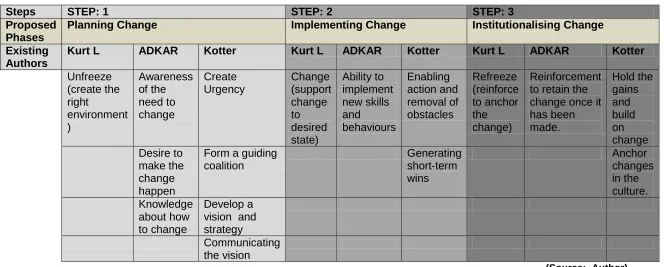
Table 4: Application and Synthesis of Freeze Change, Prosci ADKAR & Kotters Models ... 68
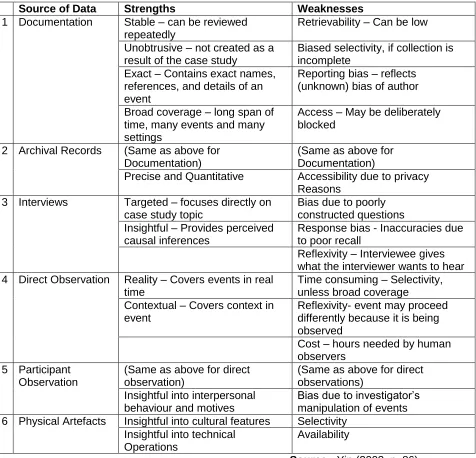
Table 5: Sources of case study data - Strengths and Weaknesses ... 97
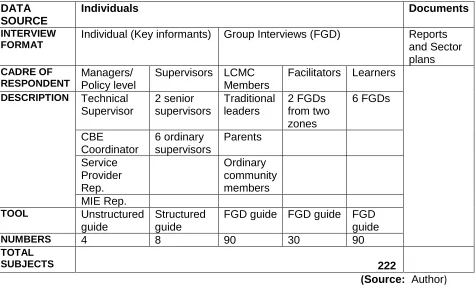
Table 6: Data Sources ... 98
Table 7: Research Timeline ... 114
Table 8: The three core categories with constituent CM Factors ... 117
Table 9: Planning Change core category: Constituent Factors and substantiating codes ... 121
Table 9. 1: Sensitization (F1): Substantiating concepts and codes ... 123
Table 9. 2: Identification of gatekeepers (F2): Substantiating concepts and codes ... 127
Table 9. 3: Promoting a recognisable Identity (F3): Substantiating concepts and codes ... 131
Table 9. 4: Skills Development (F4): Substantiating concepts and codes... 135
Table 10: Implementing Change core category: Constituent Factors and substantiating codes ... 139
Table 10. 1: Showcasing CBE (F5): Substantiating concepts and codes ... 141
Table 10. 2: Joint planning of activities (F6): Substantiating concepts and codes ... 145
Table 10. 3: Conducting synergy meetings (F7): Substantiating concepts and codes ... 149
Table 10. 4: Division of Labour (F8): Substantiating concepts and codes ... 153
Table 11: Institutionalising Change core category: Constituent Factors and substantiating codes ... 157
Table 11. 1: Establishing Accountability Structures (F9): Substantiating concepts and codes ... 159
Table 11. 2: Linkages (F10): Substantiating concepts and codes ... 163
Table 11. 3: Guidebook (F11): Substantiating concepts and codes ... 167
Table 11. 4: Translation (F12): Substantiating concepts and codes ... 171
Table 12: Strategy core category: Substantiating concepts and codes ... 175
Table 13: Evaluation core category: Substantiating concepts and codes ... 179
13
List of Figures
Figure 1: Reasons for not finishing all 3 years of CBE ... 19
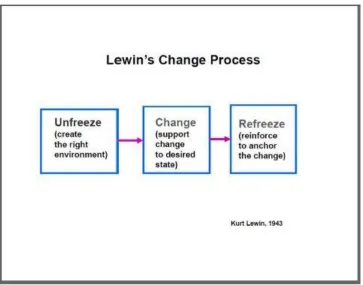
Figure 2: Lewin's freeze change model process ... 58
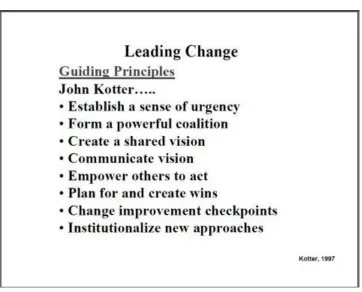
Figure 3: John Kotter's guiding principles for leading change ... 62
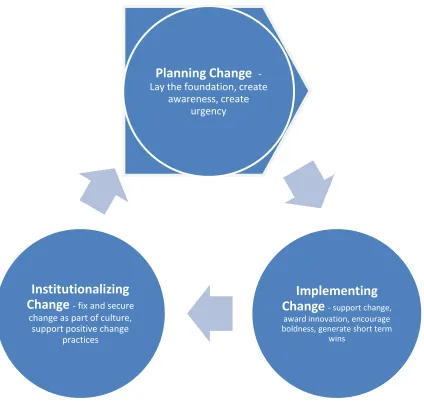
Figure 4: Framework for practicing CM in CBE ... 72
Figure 5: A thematic representation of the core CM categories and their interrelationships ... 118
Figure 6: 3 Step CM Framework for CBE ... 189
14
1.0 INTRODUCTION 1.1 Title
Practice of Change Management for the improvement of Complementary Basic Education1: The case of Malawi.
The central argument of this study is that CM has to go hand in hand with the implementation of CBE because traditionally, CM has not been considered in the implementation of such a programme.
1.2 Research Context and Background
Illiteracy figures differ with regions and nations but, globally, they continue to grow at a very alarming rate. In 1950, for example, there were an estimated 700 million illiterate people in the world; in 1970 there were 742 million, and, by 1985, over 890 million people had no opportunity of having any basic literacy skill (Hall & Stock, 1985). UNESCO (2001) confirms that at the beginning of the 21st Century, there were 1 billion illiterate adults.
The Millennium Development Goals (MDG) report of 2012 has set achieving universal primary education as its second priority. The target is to ensure that by 2015, Children everywhere are able to complete a full course of primary schooling (UNESCO, 2008). Although this seems like a difficult feat to achieve, the report says that in almost all the regions of the world, the net enrolment ratio in 2006 exceeded 90 percent and as such, many countries were close to achieving universal primary enrolment.
The report further says that in Sub Saharan Africa, around 38 million children of school age are still out of school. This demonstrates that although there have been some successes towards achieving universal primary education at the global level, reaching
1
Complementary Education approaches are defined as models that work in support of the formal system, offering students an alternative route to achieving the same educational outcomes as students in the Government schools. The programs are designed to feed students into the Government system at various entry points and are large enough to exhibit many of the same characteristics as mainstream schools. However, by using similar (though often reduced) curriculum as the Government schools, providing instruction in the students’ native language, and ensuring that the teacher and learning
15
Sub Sahara African children, most of whom are socially marginalized, poorer and with little access to basic education, still remains a challenge.
Since there has been a large number of Sub Sahara African Children remaining out of school, different efforts have been made to make sure that these poor and marginalized children get enrolled and remain in school. Nevertheless, many of them have dropped out because of numerous challenges in this part of the world. Some of the challenges are poverty and HIV and AIDS. In Malawi, the absence of an age appropriate literacy policy has led to late enrollment and learner repetitions. This has, in turn, discouraged learners and caused them to give up on school. The dropping out has made it difficult for most of them to complete their education. Others, though, have persevered and returned to school. This returning to school has had its own implications like increased numbers of over-age children in primary school and late completion of education. Hillman AL and Jenkner E (2004) have argued, however, that the fact that these children are provided with an education far outweighs these implications of increased numbers of over-age children and late completion because education is what they need most.
1.2.1 Complementary Basic Education (CBE) Programme
In the spirit of providing education to its masses, and in tandem with what other Sub Sahara African countries were doing towards achieving the MDG of universal primary education, the Government of Malawi (GoM) through the MoEST, introduced the CBE programme in September 2006. Moore, DeStefano & Gillies (2008) state that the CBE Programme is one of the ‘Basic Education Approaches’ aimed at encouraging the attainment of basic education among children of school going age.
16
from September 2007 to September 2010, and phase 3 from September 2008 to September 2011. At the time of the study, phase 4, which started in September 2012, was still in progress.
MoEST (2011) states that CBE is an accelerated learning programme which helps children who have missed out on schooling to catch up with their peers. CBE is for children who are not in school. They might have never gone to school or they might have dropped out before attaining the skills of basic literacy and numeracy. CBE targets children between the ages of 9 and 13. Those who are younger than 9 would be
encouraged to attend formal school while those who are between the ages of 14 and 17 could attend CBE classes if there are sufficient places (MoEST, 2011). Those who are above 17 years do not qualify. MoEST (2008) emphasises that in Malawi every person who is above 18 years qualifies for the adult literacy programme that helps to reduce illiteracy among adults.
Apart from just improving literacy, the CBE programmes’ main goal is to generate in the children and youth the interest to go back to school (MoEST, 2011). The hope is that when these targeted children and youth begin to attend CBE classes, their interest in school would be rejuvenated and would thus return to the formal school to proceed with their education. Through this approach, the programme helps increase literacy levels among young people.
1.3 Motivation for this research
The provision of education through complementary initiatives like CBE has increasingly gained momentum (Hoppers, 2006). This is a change in the education sector. While there has been an interest to provide education using this new approach, stakeholders involved in these initiatives do not fully participate for lack of a clear guide on how they can take up their roles in such initiatives (Bush, 2008). Current research in education concentrates more on illiteracy, free primary education and general education
17
Malawi and other places is lacking (Arcticlesbase, 2011; Harris, 2007; Credaro, 2006; Bennet, Crawfold and Riches, 1992). This research is therefore motivated by the change that is CBE, the current challenges within the CBE programme and the significance of CM in CBE.
1.3.1 Change in Complementary Basic Education
Mitchell (2002) has defined CM as a strategic activity aimed at getting the best outcomes from the change process. It is about managing changes that are part of a strategy (Backroad Connections, 2004). In this regard, as part of the strategy for the running of the CBE programme, there are some variations with the formal primary
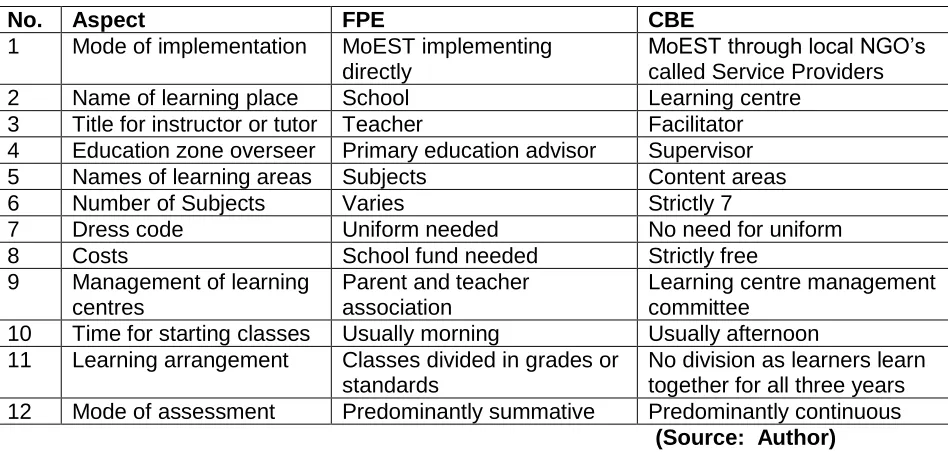
education introduced in the programme upon its establishment in September 2006. The table below outlines the changes:
Table 1: Comparison between Formal Primary Education (FPE) and CBE
No. Aspect FPE CBE
1 Mode of implementation MoEST implementing directly
MoEST through local NGO’s called Service Providers 2 Name of learning place School Learning centre
3 Title for instructor or tutor Teacher Facilitator 4 Education zone overseer Primary education advisor Supervisor 5 Names of learning areas Subjects Content areas 6 Number of Subjects Varies Strictly 7
7 Dress code Uniform needed No need for uniform 8 Costs School fund needed Strictly free
9 Management of learning centres
Parent and teacher association
Learning centre management committee
10 Time for starting classes Usually morning Usually afternoon 11 Learning arrangement Classes divided in grades or
standards
No division as learners learn together for all three years 12 Mode of assessment Predominantly summative Predominantly continuous
(Source: Author)
18
differences (Swan, 2007; GoM, 2008). This is why a CBE specific CM framework is desirable.
Lighthall, (1973) states that educational change is a process of coming to grips with the multiple realities of people who are the main participants in implementing change. It is not right to underestimate the power of the existing culture (Rudduck, 1986). For this reason, this study looks at the CBE with all the variations outlined to ascertain how best the programme can be managed.
1.3.2 Current Challenges in CBE
The absence of a clearly defined CM approach in CBE has resulted into two main challenges, which are dropout cases and lack of evaluation.
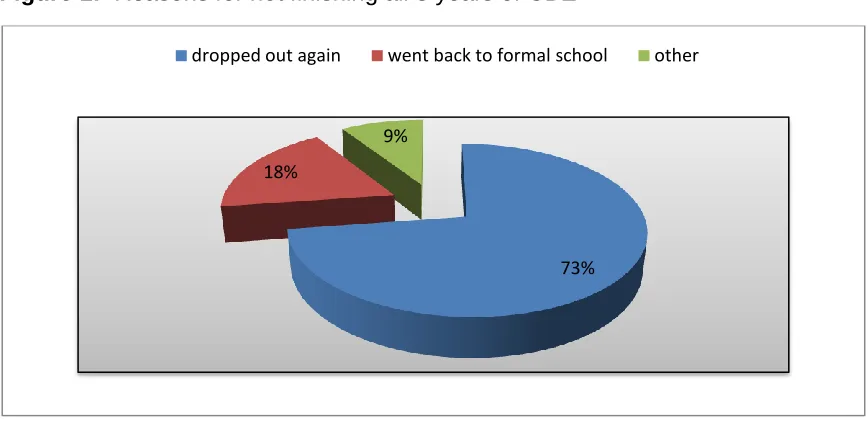
Dropouts: CBE approaches are primarily concerned with increasing uptake of Primary education by providing an opportunity for the learners to go back to the formal school (Moore, DeStefano &Gillies, 2007). Without an appropriate CM strategy, this primary concern cannot be achieved because, the targeted children and youth will not patronize CBE as they will not have confidence in the programme (SDNP, 2007; E-Lead, 2012). Already, a study conducted by WRM (2009),
19
Figure 1: Reasons for not finishing all 3 years of CBE
(Source: WRM 2009, p. 42)
Research shows that there is a direct link between learner retention and the practice of properly defined CM approaches in education (Childress, Elmore & Grossman, 2006; Malawi News, 9-15 July, 2011, p. 7). Recent studies (E-Lead, 2012) argue that the ability to understand and implement CM is a skill that is absolutely mandatory for any educator because it provides an opportunity for responding positively to changes that take place in education. They confirm that CM helps students to remain in school especially because it inspires their
confidence, that of teachers and parents (SDNP, 2007; E-Lead, 2012). This is so because they are provided with a clear road map of what and how changes are being introduced. If CM adapted from the general field of management is able to achieve this, a CBE specific CM strategy can definitely do more for the CBE programme. This is because it will take into consideration the differences
between CBE and formal education. It will also be participatory as it will incorporate community members, parents and even the learners because they are key players in CBE approaches (Australian Government, n.d.). The involvement of these categories of people will assure sustainability. E-Lead (2012) emphasises that the ability to implement and sustain change is what, in the end, principals can and must do for their students.
73% 18%
9%
20
Lack of Evaluation: Another result of the lack of properly defined CM approaches is that programmes or projects do not get evaluated (Sirkin, Keenan and Jackson, 2005). The lack of CM in CBE is seen in the fact that the programme itself has not been
reviewed since its inception. Without evaluations, programmes like CBE cannot improve (Silver, 2004; Louw, 2012). This study hopes that a clearly defined CM approach will motivate change managers to deliberately set aside resources for evaluating the programme. It has been observed that change in education is resisted by the people it affects because managing it requires considerable lengths of time (Kotter, 2007). E- lead (2012) states that some educators avoid change in education because managing it takes planning, evaluation, passion, critical thinking, and, perhaps most importantly, time. If CM in the formal school is avoided, it leaves CBE with no-where to learn from.
1.3.3 The significance of Change Management in CBE
The introduction of CBE approaches is a commendable initiative that can help in solving the challenge of non-school attendance. However, the lack of a properly defined CM strategy for CBE creates a gap in this effort because projects which address non-school attendance find themselves with no proper foundation for managing change (O’Donoghue and Dimmock, 1997). Although the National Education Sector Plan for 2008-2017 mentions CBE as one of the strategic initiatives (MoEST, 2008), there is no standalone CBE policy guide, which may provide CM guidance in the context of the programme in Malawi. Additionally, most of the educational management literature consulted (Mitchell, 1998; Berggren & Soderlund, 2011) only reflect a broad consensus on what constitutes best practice in the field of CM, mostly adapted from the general field of management. There is need for a properly defined, CBE specific, CM model or strategy because the programme has a lot of differences from the formal education system. It is also usually different
from the general business world where most of the CM theories and approaches are implemented.
21
have divergent priorities and usually disagree about how to improve education (Christensen, Marx, and Stevenson, 2006). Childress, Elmore and Grossman (2006) emphasise that school systems are vastly more complex than businesses, yet the knowledge about how to manage them is sparse. If knowledge about how to manage formal school systems which have managed to adapt some CM principles from the general field of management is sparse, then CBE, being a newer
approach, is found deficient. A clearly defined Change Management approach for CBE will help improve the programme by reducing dropout rates and providing an opportunity for the programme to be evaluated.
1.4 Problem Statement
Based on the outline of context, background and motivation for this research above, the author doubts whether the introduction of CBE appreciated that its running would be different from how the formal school runs. Did the CBE facilitators really appreciate that the teaching environment in CBE will be different from the teaching environment in the formal school? How about the learners? Were they aware that their learning
environment in CBE will be different from what they had been used to in the formal school? How about the community members and parents as important stakeholders of the CBE programme? Did they know that the demands of CBE on them would be different from those of the formal school? From all this, the author asks: Would the knowledge and willingness of using CM principles to manage these variations make any difference in the running of the CBE programme?
This dissertation studies ways in which Change Management was practiced in the context of the CBE programme and then proposes a clear CM strategy for CBE in Malawi. The research problem has two major components: 1) Finding core factors that depict the practice of Change Management in the CBE programme, and 2) based on the factors, developing a framework for practicing Change Management in the CBE programme. Precisely, the dissertation aims to answer the following research problem (P): How can Change Management be practiced in order to improve
22
The central observation the study makes is that, in Malawi, CM has not traditionally been considered to run side by side with the implementation of non formal education programmes like CBE. The proposition, therefore, is that the implementation of CBE as a non formal education initiative requires a clear Change Management guide for
effectiveness. To that end, in this study, the researcher develops a CM framework which would be useful in the implementation of the CBE programme in Malawi.
Given the variation that exists between the formal school and CBE, the study analyses and evaluates already available concepts in this field, in order to enhance the
framework for practicing CM to improve the CBE programme in Malawi. Although the framework is developed based on the CBE programme in Malawi, it has potential to benefit other cognate programmes whose aim is to address non school attendance.
1.4.1 Research Goal and Objectives
The Goal (G) of this investigation is to address the research problem (P) by developing a clearly defined framework for practicing Change Management to improve
Complementary Basic Education Programme.
Within this context, the following objectives will be fulfilled:
1. To provide a thorough critical review of current literature of CM in education and identify gaps in its applicability to the CBE programme in Malawi.
2. Conducting empirical studies of the CBE programme to establish if there was any attempt to adopt CM concepts and techniques in order to accomplish the
programme goals.
3. To evaluate and discuss the usage of CM approaches from the general field of management in CBE.
23
The study looks at the CBE programme as it run in all three phases from September 2006 to September 2011 in Ntchisi and Chikhwawa districts.
1.5 Research Methodology
The Interpretivist research paradigm is adopted for this study because it allows for a rigorous examination of the CBE programme in Malawi which, in turn, helps to achieve the objectives and solve the defined problem. Data is collected using case study methodology. Yin (1994) confirms that case study methodology, a qualitative research approach, is often preferred in answering ‘’How’’ and ‘’Why’’ questions. Moreover, there is widespread acknowledgement that qualitative research is a legitimate and valuable approach in management research. The qualitative methodologies are often applied in various management subject areas (Ardichvilli et al., 2003; Croasdell, 2002; Avison et al., 1999; Myers, 1997; Markus, 1997; Benbasat et al., 1987).
Content Analysis is employed to analyse the empirical data from the case. Various coding techniques are used extensively to analyse the empirical data and to develop a framework for practicing CM for the improvement of CBE (Hsieh & Shannon, 2005; Dey, 1993). A detailed description and rationale for the adopted research paradigm and methodologies are provided in Chapter 3.
1.6 Research Focus and Boundaries
The following subsections provide a brief overview of the research focus, related subject areas, applicability of the proposed framework and contributions.
1.6.1 Positioning of the Thesis
24
framework can also provide specific strategies and best practices to guide the practice of CM in other CBE approaches.
1.6.2 Related subject areas
Related subject areas like Organisational Theory, Organisational Learning and Organisational Culture have been investigated in the perspective of Change Management. In some other research contexts, these issues may be treated as individual research subjects rather than being part of the CM subject arena.
1.6.3 Applicability of the framework
The framework for practicing CM developed through this research project addresses the subject of Change Management in the perspective of the CBE programme in Malawi. The CBE programme is a flexible way intended for providing a second chance of attaining basic education to a specific category of youth and children, thereby addressing non-school attendance. Hence certain aspects and components of the proposed framework might not be relevant for some complementary education approaches whose aim is not to rejuvenate the interest for schooling in the learners. However, the framework might be applicable to some complementary education approaches that seek to help reduce illiteracy because they operate outside the frame of formal schooling.
1.6.4 Theoretical and Practical contribution
25
This study helps to fill the gap on the unavailability of CM literature for CBE in Malawi as a subsystem of the Formal Primary Education (FPE). This will be a good springboard for other researchers to conduct studies in relation to the subject of CM in education. It also makes propositions on how models and principles from the field of CM that have been applied to the broader field of management and education can be applied to CBE approaches. This will be possible through this study because of the development of a framework for practicing CM to improve the CBE programme in Malawi. The study will inform education practitioners at all levels that change happens and that this realization in itself creates an environment where the change gets accepted and adapted quickly without impinging on the educational success of both learners and educators. Johnson (1998) stresses that people should be ready to survive when change happens because whatever parts of us we choose to use, we all share something in common and that is a need to find our way in the maze and succeed in changing times. The government of Malawi has the intention of taking CBE to the whole of Malawi. Through this study, therefore, the Ministry of Education Science and Technology (MoEST) and other relevant stakeholders are informed on the importance of CM in CBE.
26
CBE is a continuous programme. The hope therefore is that this study will inform GoM through MoEST and other stakeholders like the donor community, on what the teachers, learners and community members needed to know about CBE beforehand. The study informs the different stakeholders about the importance of communicating change. This study is critical because the Ministry of Education (2004) declares that apart from CBE, little has been done to adequately address the basic education needs of out of school children and youth. The CBE programme therefore seems to be one of the important ways out of Malawi’s high illiteracy rate. In this regard, CBE needs to be done well. Regardless of whether the findings of this study will be implemented, they still provide relevant information on how the programme can be improved. Since GoM plans to take the programme to more districts in Malawi, an opportunity to rectify the shortfalls that are realized through this study will be given before the programme rolls out.
The Malawi education sector, which has the mandate to provide education to the
masses, has every reason to take the CBE programme as one of the critical elements of Malawi’s effort in attaining Education for All (EFA) as CBE will contribute so much
towards achieving that goal (UNESCO, 2008). It is a fact that every government programme is just an idea until it gets implemented on the ground. As such, Service Providers in the CBE programme will also learn from the study. Service Providers are different organisations such as World Relief Malawi (WRM) who have been entrusted by GoM through MoEST to implement the CBE programme in selected Districts of Malawi. These will be informed by the study on how best the programme can be implemented, and help fill the gaps in communicating the changes that have to be implemented.
1.7 Thesis Structure
27
1.7.1 Chapter 2: Literature Review
This chapter provides a critical review of current literature in the field of Change Management with a focus on its application in education. The review encompasses books, refereed journal articles, conference papers, published case studies and other CM literature. The chapter defines CM and examines various views on the subject. It also reveals current trends in education and how they interface with CM by outlining rationale, recent developments, challenges, and research directions in the perspective of CM in education. The chapter also critically analyses CM theories and frameworks in order to form hypothetical foundations and validate research questions related to CBE. The critical analysis also forms a basis for the development of a conceptual framework for practicing CM to improve the CBE programme in Malawi.
1.7.2 Chapter 3: Research Methodology
This chapter provides an in-depth discussion of the ontological, epistemological and methodological foundations of this research study. It provides arguments and justifications for the selection of the research paradigm, methodologies for data collection and analysis. The chapter also gives criteria for sample selection and
provides a description of the CBE programme as a unit of analysis. An overview of the participants in this research study is also presented in this chapter.
1.7.3 Chapter 4: Research Findings and Analysis
In this chapter, the findings of the empirical study are analysed, discussed and evaluated against the current CM literature. Here, the relationships between the findings from literature review and empirical study will be established. Based on the established relationships, a comprehensive set of factors and framework for practicing CM to improve CBE will be developed. This will be an enhancement of the conceptual framework proposed in the literature review section.
28
1.7.4 Chapter 5: Conclusions and Recommendations
This chapter provides a summary of findings and critically discusses their implications. The chapter also discusses the knowledge contribution made by this CM study. It also provides limitations of the findings. This chapter also outlines some proposals for further research to evaluate and enhance the findings of this empirical study.
1.7.5 References
List of all references consulted in the course of this research study is provided here. 1.7.6 Appendices
Appendix I – Research Instruments A. Key informant interview guide
Copy of the key informant interview guide is provided here. B. Focus Group discussion guide
Copy of the Focus Group Discussion guide is provided here. Appendix II – Conference Paper
Copy of a peer reviewed conference paper from this study is provided here.
Summary
This chapter provided a precise background to the Change Management arena by giving the context and background of this dissertation. The chapter outlined the
research problem and set the goal and objectives of this study. It also describes the set boundaries for this research study, followed by theoretical and practical contributions to the body of knowledge. The chapter concludes with a brief summary of what the
29
2.0 LITERATURE REVIEW
Introduction
Based on a critical review of current literature on CM, this chapter defines CM and examines various views on the subject. It also reveals current trends in education and how they interface with CM by outlining rationale, recent developments, challenges, and research directions in the perspective of CM in education. The chapter critically
analyses CM theories and frameworks in order to form hypothetical foundations and validate research questions related to CBE. The critical analysis also forms a basis for the development of a conceptual framework for practicing CM to improve the CBE programme in Malawi. The chapter concludes by developing research questions based on the broad research problem.
2.1 Defining Change Management
This section outlines the types of change programmes used by organizations and the different approaches to change. It also reviews some definitions of CM from current literature.
2.1.1 Types of Change
Before getting into the details of Change Management, it is useful to provide an
30
Structural Change: These programmes treat the organisation as a set of functional parts—the “machine” model. During structural change, top management, aided by consultants, attempts to reconfigure these parts to achieve greater overall performance. Mergers, acquisitions, consolidations, and divestiture of operating units are all examples of attempts at structural change.
Cost Cutting: Programmes such as these focus on the elimination of
nonessential activities or on other methods for squeezing costs out of operations. Activities and operations that get little scrutiny during profitable years draw the attention of cost cutters when times are tough.
Process Change: These programmes focus on altering how things get done. Examples include reengineering a loan approval process, the company’s approach to handling customer warranty claims, or even how decisions are made. Process change typically aims to make processes faster, more effective, more reliable, and/or less costly.
Cultural Change: These programmes focus on the “human” side of the
organisation, such as a company’s general approach to doing business or the relationship between its management and employees. A shift from command-and-control management to participative management is an example of cultural change, as is any effort to reorient a company from an inwardly focused “product push” mentality to an outward-looking customer focus.
The above explanations provide some important insights on the types of change. However, they seem to suggest that no two, three or four types of change can be implemented together. For instance, can cultural change and process change be implemented together? How about cost cutting, process change and cultural change or any other combination for that matter? A better alternative is to consider what Beer and Nohria (2000) have coined ‘’Theory E” and “Theory O” respectively, as two basic goals that drive change initiatives. While Theory E is about near-term economic improvement and Theory O is about improvement in organisational capabilities, these can be
31
improve organisational capabilities (Theory O) let it be used, just as it can be used if what’s needed is economic improvement (Theory E). This is important to consider because the changes in CBE fall into all the four types for both economic and
organisational capabilities improvement. This calls for a Change Management model that is all encompassing.
2.1.2 Planned Change vs. Emergent Change
Change that happens in organisations comes in different ways. Burnes, (1992) talks of Planned Change and Emergent Change. Planned Change is when managers plan to bring change by introducing new ways of conducting their operations. Emergent Change is when everyone in the organisation is caught unawares by the change that comes as a result of other forces that no one has control of.
However, there are times when Planned Change and Emergent Change overlap. Such instances require organisations to deal with both. Also, there are situations where Emergent Change brings about the need for planning. A case in point is the CBE as a programme (Planned Change), which is a response to increased dropout rates
(Emergent Change). Managing these changes require approaches that consider both factors because every change that comes to an organisation has to be managed. Even after planned change, emergent change cannot be avoided because
organisations can never be the predictable, well oiled machines envisaged by the classical approach (Pascale & Sternin, 2005). Burnes (1992) emphasises that
organisations are usually very unpredictable and, as such, managers have to always be prepared because they are not in control of their own fate. They are often affected in varying ways by the environment in which they operate. This is true with the education sector and more so, with the CBE Programme. For this reason, a well defined change management approach that can facilitate planned change and help respond to
emergent change as and when either arises is desirable. UNESCO (2000) calls for organisational structures that remain abreast of educational development so as to prepare well and adequately for change. Planning for such unpredictable
32
unfolding environments with which organisations interact (Mintzberg, 1994; McGrath, 1995).
In many circumstances however, such Change Management initiatives represent a new way of thinking because rules are still evolving and with uncertain rules, the traditional model for devising and executing a game plan is very difficult to enact (Orliskowski & Hofman, 1997). This study therefore will propose an approach that CBE can use in practicing CM for both planned and emergent changes.
2.1.3 What is Change Management?
Traditionally, management is defined as the process of planning, organising, leading and controlling the use of resources to accomplish performance goals (Schermerhorn, 2005). The first three characteristics of management, i.e. planning, organising, and leading hold true to the subject of Change Management. However, the fourth
characteristic, i.e. controlling is debatable. As much as one can plan, organise and lead change, it is debatable if one can control change because sometimes change is
unexpected and unplanned (Johnson, 1998; Pryor et al., 2008). However, the term Change Management has been widely used in the field to denote several theories, concepts and practices and may not necessarily denote the controlling aspect. Below are selected definitions of Change Management:
A strategic activity aimed at getting the best outcomes from the change process (Mitchell, 2002).
It is about managing changes that are part of a strategy (Norton, 2002; Backroad Connections, 2004).
Change management is about people and processes that work for people (Hammer, 1993; Dawson, 2008).
33
definition of CM, as a strategic activity aimed at getting the best outcomes from the change process, because as a strategic activity, it involves people and processes in the managing of change. Moreover, the improvement of CBE is the best outcome that this study is targeting.
2.2 Change Management in Education
This section provides a brief description on the status of Change Management in education literature. It also outlines the importance of Change Management in
education, factors affecting educational change and moves on to discuss current trends in education. The section concludes by citing CM problems and challenges in CBE.
2.2.1 CM in Education Literature
Change Management in Education is not an area where a lot of scholars have
researched. An investigation of research literature in the area has revealed that CM is a subtle field of study in the Educational Management Literature (Hellawell, 1985; Fullhan, 1988-1992; The Open University, 1993; McLennan, 1995; Hallinger and Heck, 1996; Whitaker, 1996; Posch, 1996; Binkley, 1997; Bolam, 1997). Most of the publications consulted reflect a broad consensus on what constitutes best practice in the field of Change Management, much of which is adapted from the general field of management (Mitchell, 1998).
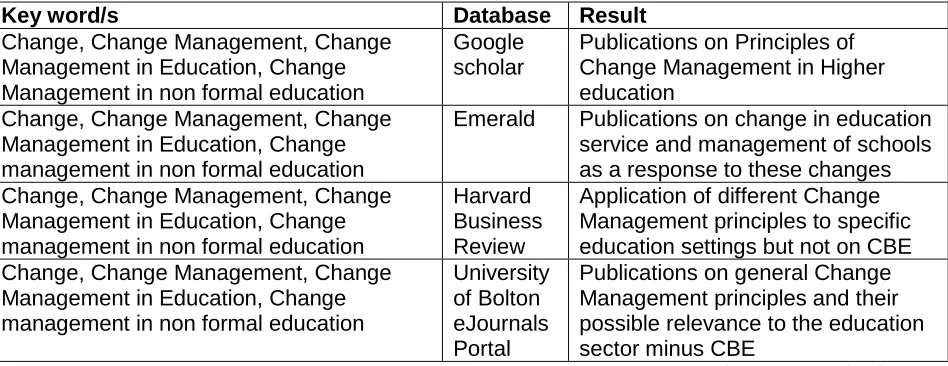
34
Table 2: Change Management in Education Literature search
Key word/s Database Result
Change, Change Management, Change Management in Education, Change Management in non formal education
Google scholar
Publications on Principles of Change Management in Higher education
Change, Change Management, Change Management in Education, Change management in non formal education
Emerald Publications on change in education service and management of schools as a response to these changes Change, Change Management, Change
Management in Education, Change management in non formal education
Harvard Business Review
Application of different Change Management principles to specific education settings but not on CBE Change, Change Management, Change
Management in Education, Change management in non formal education
University of Bolton eJournals Portal
Publications on general Change Management principles and their possible relevance to the education sector minus CBE
(Source: Author)
Mitchell (1998) remarks that most of the valuable material on Change Management in Education was gathered by Mike Wallace (1991; 1992). Wallace, who conducted a qualitative research in nine British schools where change is managed effectively
established common leadership patterns in these schools. Garvin and Roberto (2005) support this view point when they emphasise that leaders can make change happen only if they have a coherent strategy for persuasion. As much as persuasion can facilitate Change Management, the need for clearly set guidelines for other team
members to follow in managing change cannot be overemphasised (Palmisano, 2004).
2.2.2 Need for Change Management in Education
35
and Coulson, 1976). Hassan (2006) suggests that the introduction of restructuring strategies succeed when the top line is fully involved. It is important for Educators and Institution Managers to anticipate, prepare for and initiate change in their education systems. Pryor et al., (2008) stress that in today’s world of constant, complex change, organisational leaders who react rapidly and responsibly are successful, those who anticipate and invent the future are even more successful because they are the leaders in their organisations and industries.
Whitaker (1993) says that changes in educational practice tend to come from
practitioners themselves rather than through regulation. As such, the anticipation for change will better prepare them to decide how to integrate the external changes into their education systems and use them to better provide the education service. Yet, it follows that this desire may not materialize unless there is a clear ‘strategy’ for
government and all the key stakeholders in the education sector to use. Although they do not give a specific example, CREATE (2010) advocates a strategy which appreciates the context, dynamics, characteristics and lessons in the education model being
implemented. Further, Lighthall (1973) states that educational change is a process of coming to grips with the multiple realities of people who are the main participants in implementing change.
2.2.3 Why Change Management in Education is resisted
36
Change can be resisted (Ford & Ford, 2009). However, having a clearly defined Change Management strategy in the running of CBE can help stakeholders involved in this programme not to resist change. Plant (1987) says that there is systematic and behavioural resistance to change. Systematic resistance to change tends to occur when there is lack of knowledge, information, skill and management capacity while behavioral resistance is emotionally centered and derives from the reactions,
perceptions and assumptions of individuals and groups in the organisation. People who resist change make different propositions (Plant, 1987; Lutzenberger, 2006; Ford & Ford, 2009). Plant (1987, p. 63) lists the following propositions that people make against change:
- We tried that once before and it did not work - We don’t have time
- Let’s get back to reality - We don’t have the resources
- You can’t teach an old dog new tricks - Not that again!
- We have managed so far without it - Lets form a working party
- It won’t work until things settle down
- We’ve always done it this way and no one has complained
Whitaker (1993) indicates that all these phrases have a familiar ring to them and can be used as part of our own resistance strategy during some events in our own lives. There are many reasons for organisational resistance to change (Garvin & Roberto, 2005; Sirkin, Keenan & Jackson, 2005). However, Plant (1987) lists the following as reasons for organisational resistance to change:
37
- Threat to core skills and competence - Threat to status
- Threat to power base - No perceived benefits
- Low trust organisational culture - Poor relationships
- Fear of failure
- Fear of looking stupid - Reluctance to experiment - Custom bound
- Reluctance to let go - Strong peer group norms.
With a clearly defined CM strategy for CBE, resistance will be tamed because all
stakeholders will appreciate the what, the how and the when of change (Ostroff, 2006). A clearly defined CM strategy will address both systematic and behavioral resistance to change (Maltz, 2008).
Tosey (1993) argues that the greater the effort invested in change, the less may be achieved. However, change can achieve much if clearly defined CM strategies are in place (Garvin & Roberto, 2005; Papulova & Papulova, 2006). There are different ways in which Change Management can be practiced. It is imperative therefore, for change managers to know the models they can use from already available models (Campbell, 2008). Whatever particular form change takes and whatever objectives it seeks to achieve, organisations cannot expect to achieve success unless those responsible for managing it understand the different approaches on offer and match them to their circumstances and preferences. Burnes (1992) sums it up well when he declares that understanding the theory and practice of Change Management is not only an optional extra but an essential requisite for survival.
38
continuous process that will go hand in hand with the running of the programme (Pettigrew, 1985).
2.2.4 Factors affecting educational change
Change Management in education has to be done appropriately. For this to be possible, it is important for the education practitioners to know the factors that affect change in education. Education managers are in essence one of the groups expected to manage change. Various researchers have cited improvement, rigidity, polarization, inheritance and separation as the important factors that affect educational change (Whitaker, 1993; Mpondi, 2004; Lyon et al., 2009; Hargreaves et al., 2012). Whitaker, (1993, p. 6), whose classification is the basis that the other researchers have used outlined the following about these factors:
1. Improvement – There is a continuous desire for continuous progress and improvement in the way the education service is provided. Some factors that necessitate continuous improvement are:
a) Competition – a concern with rivalry – of winning, or at least not losing – can cloud attention to the more fundamental purposes of education.
b) Recrimination – not succeeding in ones learning has become a cause for blame.
c) Reform – much change in education has had a reform element around it.
2. Rigidity – One of the difficulties facing those charged with the management of schools is the rigid context of education envisaged by the reformers. Educational change is approached in strictly rational terms as a choice between opposing alternatives, only one of which is right.
39
4. The inheritance factor – the tendency by some quarters to cling to structures from the past prompts others to want to propose different changes.
5. Separation/integration – the realization that education does not only happen in the classroom but also motivates and inspires others to want to propose changes that will facilitate the learning process. The idea is to encourage educationists to look beyond the somewhat restricted notions of pedagogy – specifically the art and science of teaching children because it is possible for it to produce
androgogy, – which is the art and science of helping adults to learn.
These factors, which Whitaker outlined, had a bearing on why the CBE programme was introduced.
Improving the way the educational service is provided was definitely one of the reasons why CBE was introduced. It can also be assumed that this improvement was
necessitated by the desire to compete, because one of the motivations was to meet the Education for All (EFA) goals. It was also necessitated by the realization that the numbers of dropouts from formal primary school kept increasing (Chimombo 2005). The need to reform was there, especially when one considers the fact that the CBE programme is meant to be continuous.
Rigidity of the formal school was also one of the reasons why CBE was introduced (JEPC, n.d; CDEC & UNICEF, 2009). The feeling was that a lot of children and youth drop out of the formal school because it is not that flexible to accommodate some of the demands which the learners have in their day-to-day lives. This, then, meant that there would be no room to cling to structures from the past.
40
when the Democratic Progressive Party (DPP) had just started ruling the country. Ironically, United Democratic Front (UDF) which was in power before DPP was blamed for allowing a lot of primary school learners to drop out. As a result, some people have argued that the CBE programme was one of the ways used by the DPP to gain political mileage over UDF.
CBE does uphold the fact that learning does not only happen in the classroom. One of the content areas in the CBE programme, Livelihoods, depends much on the expertise of local artisans who do their crafts in the villages. Unlike the social learning theories (Lave & Wenger, 1991), and theories of experiential learning (Kolb, 1984) which view learning as a social activity self-directed by the learner, CBE is about collaborative learning which promotes a sharing of information in relationships (even outside the classroom). Jackson & MacIsaac (1994) affirm that these relationships promote new growth for each learner. Instead of challenging learners to construct their own meaning and application about new knowledge, educators are encouraged to use group projects, team building exercises and other collaborative assignments to enhance learners’ knowledge and skills (Candy, 1991; Ball 2011).
2.2.5 Current Trends in Education
Researchers have cited so many current trends in education (Willis & Mehlinger, 1996; Cotton, 2001; Stevenson, 2002; Molebash, n.d). However, trends that are related to Malawi and therefore relevant to CBE and this study are Illiteracy, Free Primary
Education, Dropouts and Non Formal Education (UNESCO, 1984; Jones, 1997; Abadzi, 2003; UNICEF, 2010; Chabbott, 2010).
A. The problem of Illiteracy
Jones (1997) states that many trends in the education sector are related to illiteracy. Either they are a cause (like the problem of dropouts), or they are an effect (like
41
assumptions that illiteracy shall remain highest in Africa because of the high population growth and civil unrest (UNPY, 2011).
However, to fault high population and civil unrest as a cause of illiteracy is not entirely correct. The researcher argues that the challenge has to do more with lack of proper planning to meet the demand for education in those circumstances. CM in education becomes critical especially in cases like these, where people who need education are not in the usual school setting, or are more than the system can absorb at a given time (UNDP, 2010). The change in this regard is the civil unrest or high population, which would have a bearing on education provision. As a result, a way of managing the education provision in the face of civil unrest or high population has to be found. UNDP (2009) emphasises that planning is required for these masses to be provided with education. If more schools and more avenues for accessing education are created, more people will become literate. There have been situations where education is provided in refugee camps or places where people have sought asylum, just to deal with the challenge of illiteracy (Pascual, 2003). Regardless of high population and civil unrest, the main thing should be to create an Opportunity to Learn (OTL). Porter (1993) says that the term OTL is often associated with the creation of equitable conditions that promote learning for all students within the school or classroom. However, the term can also refer to the absence of barriers that prevent learning even outside the classroom (Mereku, 2005).
Although Malawi has not experienced civil unrest, the subject of OTL has taken centre stage because of dropouts. These dropouts have come about mainly due to problems of planning in the face of population growth (Finn, 1989; McCaul et al., 1992; Blue & Cook, 2004).
B. Free Primary Education
42
argues that this policy resulted in the rising of primary school students’ enrolment from 1.9 million in 2003 to 2.9 million by 2005.
CM in education also becomes critical when FPEP is used as a means of achieving literacy. Todnem (2005) suggests that before a decision for free schooling is made, it is critical to look at how that radical change will be managed. The researcher proposes that concerns like number of classrooms and trained teachers need to be addressed in order to meet all demands for FPEP.
Although FPEP significantly improved the enrolment rate in the Malawian primary
schools, it brought many other challenges including major infrastructure problems and a decline in quality (GoM, 2004). Chang (2006) actually emphasises that there already was a problem of infrastructure even before the introduction of FPEP. As a
consequence, a lot of learners’ interest to remain in school decreased and many others dropped out (Hunt, 2008). Therefore, Government of Malawi’s commitment to providing the children and youth with a general education gets challenged. Thompson (1981) emphasises that education equips learners with tools needed to ‘investigate and
enquire,’ to ‘think, conclude and understand.’ Subsequently, when learners drop out, a country is left with people without such skills rendering them illiterate. The irony is that without proper CM in education, FPEP, which is meant to help improve education
standards by increasing the number of children attaining basic education, ends up doing the opposite by contributing to illiteracy.
C. The Challenge of Dropouts
43
Drop out causes are numerous (UNESCO, 1984; Kavetuna, 2009; Chabbott, 2010). GoM (2004) has stated that some common causes for dropping out of school in Malawi have been school fees (especially before the introduction of FPEP), distances covered to access a school and lack of parental encouragement especially when the parents themselves are illiterate. In recent times, HIV and AIDS have brought another
dimension to school attendance. Malcolm (2008, p. 2) confirms that when talking about dropouts, it should be appreciated that there are various causes:
The reasons for dropping out are complex and numerous but authors mainly attribute this to one or a combination of issues like poverty, HIV/AIDS, gender and factors affecting school quality. The Ministry of Education however blames high dropout rates on poor school quality noting that ‘the poor quality of education has tended to contribute to the very high rate of dropouts and repeaters, particularly at primary level.’ This has resulted in extremely low levels of internal efficiency of the primary system.
As a result of these factors, education in Malawi has not benefited everyone who would have benefited from it. Some quarters have argued that education in Malawi has only supported the reproduction of social elites and neglected a more populist model, which would have increased the population of those attaining a formal basic education
(VanDijk, 2009; Kalebe-Nyamongo, 2012). This is so because the education system has benefited just a minority.
If children and youth continue to drop out of primary schools for whatever reason, there will not be the appropriate calibre of people to go into secondary schools. The
44
one’s level of education determines ones understanding of the different global concepts, including development.
Against this background, there have been different efforts, both locally and
internationally, aimed at providing universal access to basic education. These efforts have led to a noteworthy increase of programmes that are geared toward providing education as a way of dealing with the problem of dropouts (Burton, n.d; UNICEF, 2010). Adult literacy programmes, mobile schools and CBE are examples of such efforts. The main objective of these programmes that come under the umbrella of Non-Formal Education (NFE) is to offer a second chance to those who, for some reason, could not benefit from the regular school system at the ordained moment. This is
particularly beneficial for the poor and marginalized because most of these programmes are considered high-poverty schools as they operate in poor areas (Carhill, Suarez-Orozco & Paez, 2008).
Although there have been these efforts, Rogers (2004) has noted that the attention given to NFE during the 1990s was reluctant and far from wholehearted. It was being looked at as the ‘poor and badly dressed guest’ at the education table whose presence was hardly desired and who no one knew quite how to approach (Rogers, 2004). He goes on to say that the post-jomtien2 era has focused almost exclusively on formal education and government and agencies have shown little interest in NFE with notable exceptions of agencies being concerned about social conditions of marginalized
children and young persons, such as United Nations Children’s fund (UNICEF) and Save the Children (SCF). It appears however that in the present post-dakar3 decade, the tide is turning once again. There are signs that NFE at different levels and for different beneficiary groups is gaining new momentum. The CBE is one such example. The positive thing with NFE initiatives like CBE is that they have become a widely accepted trend. They have become an important component in achieving EFA goals (Osman, 2005). Rogers (2004) affirms that since NFE education points to educational
2
In 1990 there was a World Declaration on Education for all Conference in Jomtien, which was largely looking at the promotion of Formal Education
3
45
opportunities outside of the formal education silo, i.e. education as defined by
governments and donors, the education sectors maintenance of the need for innovative and flexible modes of education would be lost if non-formal education is abandoned. This fact is the basis for the author’s consideration that CBE is an innovative and flexible mode of dealing with the challenge of dropouts, especially when one considers the variations that the CBE has from the formal schooling system.
NFE programmes like CBE are necessary in responding to the challenge of dropouts (MoESS, 2008). What is remarkable about CBE is that it follows innovative and flexible modes of education, which are appropriate and acceptable in different communities. Yet without a deliberate CM approach to these innovative and flexible modes of education, we will find ourselves going back to the same situation, where such programmes do not register significant success. Woods (2010) states that potential benefits are more likely to be realized when a new project or initiative is combined with a process of Change Management. Pascale and Sternin (2005) affirm that Change Management has been essential in addressing elevated dropout rates in Argentina’s rural elementary schools.
Complementary Basic Education has become a convenient way of increasing literacy levels and providing basic education at community level (Rose, 2007). It is also
registering change in terms of people’s attitudes, values and beliefs especially as they reflect on their culture and way of life because it is taking education out of the classroom to the people’s villages and homes (MoEST, 2011). In doing so, the government,
through CBE, has encouraged the community to take responsibility of educating its own people and thus complementing its efforts in dealing with the problem of drop outs and reducing illiteracy.
D. Non-Formal Education in Africa particularly Malawi