1: Biochemistry Department, Medicine Faculty, Tehran University of Medical Sciences, Tehran, Iran.
Assessment of Correlation Between miR-210
Expression and Pre-Eclampsia Risk:
A Meta-Analysis
Mehdi Koushki
#1, Nasrin Amiri Dash Atan
#2, Hossein Omidi-Ardali
1,
Mostafa Rezaei Tavirani*
2Abstract
Background: Pre-eclampsia (PE) is a pregnancy disorder characterized by hypertension and proteinuria. The evidence has suggested that microRNAs (miRs) are associated with pre-eclampsia pathogenesis; however, these results are inconsistent. The aim of this study was to assess the association between miR-210 expression and PE risk.
Methods: Previous studies were selected using PubMed, Scopus, MEDLINE, EMBASE, Science Direct, Google
Scholar, Directory of Open Access Journals (DOAJ), and Scientific Information Database (SID). This meta-analysis includes 12 studies associated with miR-210 and pre-eclampsia and necessary information was extracted.
Results: The standardized mean differences [(SMD (0.32) 95% CI (014–0.49), p=0.97] and heterogeneity were
determined with the chi-square test (Q=3.63 df =11 p= 0.97), which found no heterogeneity between these studies. Additionally, publication bias was evaluated by Egger’s and Begg´s tests. Visual inspection of the funnel plot graphically, and statistically with Egger’s weighted regression [(p= 0.35) (95% CI -0.90 – 2.29)] and Begg’s rank correlation (p= 0.21), found no important publication bias between studies within the meta-analysis.
Conclusions:Our findings suggest that miR-210 contributes to the pathogenesis of PE; therefore, miR-210 could
serve as a novel biomarker to predict PE pathophysiology. Further studies are required in this field to characterize the mechanism involved in this process.
Keywords: Meta-analysis, MiR-210, Pre-eclampsia.
Introduction
Pre-eclampsia (PE) is a disorder of pregnancy characterized by hypertension and proteinuria (1). It affects 5-8% of all pregnancies and is the leading cause of maternal and infant morbidity and mortality worldwide (2). The major etiology of PE is unknown, but the disease develops in placenta and trophoblast dysfunction (3, 4). Defects of trophoblast cell function, such as reduced proliferation and aberrant differentiation, are associated with PE (5). Risk factors for PE are prior hypertension, obesity, advanced maternal age, kidney disease, autoimmune diseases, and diabetes mellitus (6). Diagnostic criteria for PE include hypertension developing after 20 weeks of
gestation, proteinuria, maternal organ dysfunction, and utero-placental dysfunction (7). Early-onset PE usually develops before 34 weeks of gestation, while late-onset PE is defined as PE that develops after 34 weeks of gestation (8). Expression of some genes is dysregulated during the disease. These genes could be useful as biomarkers and their identification could further our understanding of PE (9). microRNAs (miRNAs) are a class of noncoding RNAs 20-22 nucleotides in length that regulate gene expression through mRNA degradation and translation inhibition (10). These molecules are involved in numerous cellular events including development, differentiation,
apoptosis, oncogenesis, hypoxia response, and others (11). One miRNA identified in placentas of pregnant women with PE is miR-210 (12, 13). Recent research revealed that miR-210 is up-regulated in PE patients. In addition, repression of trophoblast cell invasion by miR-210 was reported (14). Therefore, miR-miR-210 could be a potential biomarker for prognosis and diagnosis of PE (15). miR-210, a member of hypoxia-induced miRs, also known as hypoxia-miRs, is ubiquitously expressed in a variety of cells including mammary epithelial and trophoblast cells (16). The extraordinary stability of miRs makes them appropriate diagnostic biomarkers for some diseases. Aberrant miR-210 expression is present not only in solid tumors and harmed organs, but is also secreted into the circulation, allowing detection in plasma (17). To date, no data on the predictive value of miR-210 in PE has been reported; therefore, the aim of this meta-analysis is to assess the predictive value of miR-210 as a novel PE biomarker.
Materials and methods
Meta-analysis search strategyWe searched PubMed, EMBASE, Pro-Quest, Scopus, Google Scholar, MEDLINE, the Directory of Open Access Journals (DOAJ), the Asian Science Citation Index (ASCI), and the Scientific Information
Database (SID) for eligible studies in English up to May 2015. The search keywords were (microRNA 210 OR miR-210) AND pre-eclampsia and (placenta miR-210 [ti/ab] AND pre-eclampsia [ti/ab]).
Other resources
Grey literature, conference abstracts, reference lists relevant to inclusion criteria, and key journals were searched for additional studies.
Study inclusion/exclusion criteria
Studies were included if they: 1) were published in English, 2) included pregnant women with pre-eclampsia, or 3) measured levels of miR-210 in plasma and placenta, and excluded if they 1) were about miRNAs other than miR-210 or 2) were review articles or letters, brief reports, abstracts, or comments with limited data.
Data extraction
All studies were surveyed independently by two reviewers. Data extracted from these studies included the authors, country, year of publication, sample, sample size, patient and control ages, systolic and diastolic blood pressures, fold changes in miR-210 expression, miR-210 detection methods, and weeks of gestation.
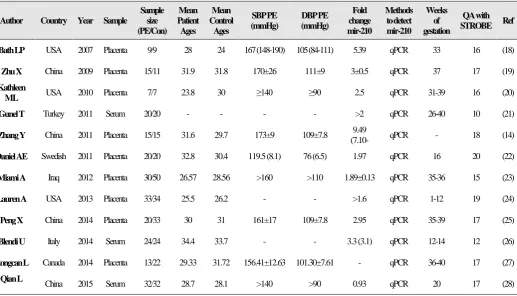
Table 1. Selected studies and their characteristics.
Author Country Year Sample
Sample size (PE/Con) Mean Patient Ages Mean Control Ages SBP PE (mmHg) DBP PE (mmHg) Fold change mir-210 Methods to detect mir-210 Weeks of gestation QA with
STROBE Ref
Bath LP USA 2007 Placenta 9/9 28 24 167 (148-190) 105 (84-111) 5.39 qPCR 33 16 (18)
Zhu X China 2009 Placenta 15/11 31.9 31.8 170±26 111±9 3±0.5 qPCR 37 17 (19)
Kathleen
ML USA 2010 Placenta 7/7 23.8 30 ≥140 ≥90 2.5 qPCR 31-39 16 (20)
Gunel T Turkey 2011 Serum 20/20 - - - - >2 qPCR 26-40 10 (21)
Zhang Y China 2011 Placenta 15/15 31.6 29.7 173±9 109±7.8 9.49
(7.10-13.93)
qPCR - 18 (14)
Daniel AE Swedish 2011 Placenta 20/20 32.8 30.4 119.5 (8.1) 76 (6.5) 1.97 qPCR 16 20 (22)
Miami A Iraq 2012 Placenta 30/50 26.57 28.56 >160 >110 1.89±0.13 qPCR 35-36 15 (23)
Lauren A USA 2013 Placenta 33/34 25.5 26.2 - - >1.6 qPCR 1-12 19 (24)
Peng X China 2014 Placenta 20/33 30 31 161±17 109±7.8 2.95 qPCR 35-39 17 (25)
Blendi U Italy 2014 Serum 24/24 34.4 33.7 - - 3.3 (3.1) qPCR 12-14 12 (26)
Rongcan L Canada 2014 Placenta 13/22 29.33 31.72 156.41±12.63 101.30±7.61 - qPCR 36-40 17 (27)
Qian L
China 2015 Serum 32/32 28.7 28.1 >140 >90 0.93 qPCR 20 17 (28)
Quality assessment
Two reviewers used the Strengthening the Reporting of Observational Studies in Epidemiology (STROBE) guidelines to assess the methodological quality of the primary studies(29). Twenty-two questions were asked; each yes answer received one point, and each no or unclear answer received zero points. After each article was assessed, its total score was calculated. The highest quality studies received the highest scores (Table 1, QA with STROBE).
Statistical analysis
We analyzed the data using Mantel-Haenszel fixed effects in meta-analysis. Standardized mean difference (SMD) (Cohen’s d) values with 95% confidence intervals (CIs) were calculated using STATA statistical software version 12.0 (STATA
Corporation, College Station, TX, USA). The statistical heterogeneity was measured using the Higgins I-square. P<0.05 with I2>50% was considered representative of significant statistical heterogeneity. Publication bias is a major concern for many meta-analysis studies; three methods were used to assess this. The funnel plots as visuals were calculated. The Begg’s rank correlation and the Egger’s weighed regression methods were also used to assess publication bias. P<0.05 was considered representative of statistically significant publication bias. The meta-analysis was also performed using STATA version 12.0.
Results
Selection of studies
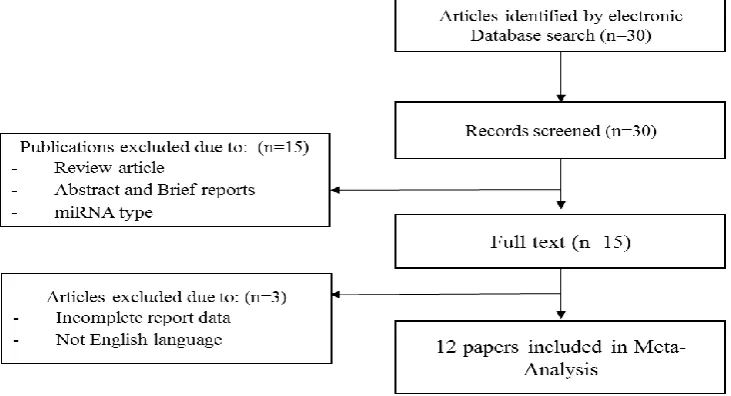
Using the inclusion and exclusion criteria described in Materials and Methods, 12 studies were selected (Fig. 1).
Fig.1. Selection of studies
Study characteristics
We identified 12 PE studies that reported changes in miR-210 levels. Table 1 lists the studies and their characteristics. The PE and control groups included 238 and 277 subjects, respectively. Of these 12 studies, nine used placentas and three used sera. The mean ages in the PE and control groups ranged from 23.8 to 34.4 years. The mean fold miR-210 expression changes in the studies ranged from >1.6 to 9.49-fold. Pre-eclampsia pathology occurred at all gestation times from 1-40 weeks. All the studies used qPCR to measure miR-210 expression (Table 1).
The overall results of miR-210 level and pre-eclampsia risk
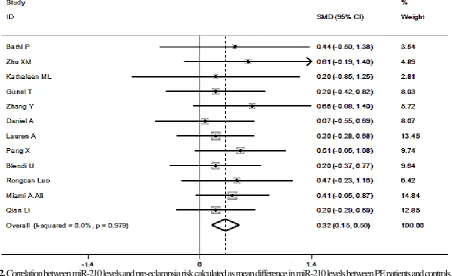
Figure 2 (Fig. 2) presents the results of the overall SMD for the correlation between miR-210 levels and PE risk calculated as the mean difference between the intervention and control groups. The overall SMDs were evaluated for miR-210 level [SMD (0.32), 95% CI (0.14 – 0.49), p= 0.97]. The result showed the miR-210 expression level may be predictive and serve as a diagnostic tool for PE. No statistically significant heterogeneity between studies was found using the chi-square test [(Q=3.63 df =11, p= 0.97),
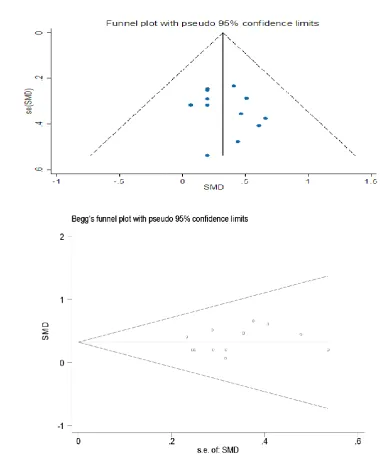
(I2= 0.0%)] or by visual inspection of the Galbraith plot (Fig. 3). Visual inspection of the funnel plot found no evidence of publication bias (Fig. 4A). Publication bias was also not found using either the Begg’s rank correlation (p= 0.21) or Egger’s weighted regression methods [(p=
0.35), 95% CI (-0.90 –2.29)] (Fig. 4B). Taken together, these findings suggest an association between miR-210 expression and PE pathophysiology. Our results indicate that miR-210 could serve as a novel biomarker to predict PE pathophysiology.
Fig. 2. Correlation between miR-210 levels and pre-eclampsia risk calculated as mean difference in miR-210 levels between PE patients and controls.
Fig. 3. Heterogeneity analysis with a Galbraith plot. Visual inspection of the Galbraith plot showed no evidence of publication bias. In this plot all the studies (circles) are inside the -2 and +2 lines; therefore, no heterogeneity exists between these studies.
A)
B)
Fig. 4. Publication bias shown graphically (A) as a funnel plot and statistically (B) with the Begg’s rank correlation and Egger’s weighted regression methods. Visual inspection of the funnel plot and the Begg’s rank correlation (p= 0.21) and Egger’s weighted regression [(p= 0.35), 95% CI (-0.90 – 2.29)] methods found no publication bias between studies within the meta-analysis.
Discussion
The association between PE and altered miRNA expression suggests the possibility of a functional role for miRNA in this disease. Aberrant miRNA expression has been recently reported in PE patient placentas and sera (30). The most commonly identified placental miRNA in PE is miR-210, which is a hypoxia-responsive miRNA. The aim of this meta-analysis was to investigate a possible association between miR-210 levels and PE. We used 12 studies related to miR-210 and PE. The meta-analysis was performed using a fixed-effect model and no clear
heterogeneity was seen. The standardized mean differences [(SMD= 0.32) 95% CI (0.14–0.49)] showed that miR-210 could serve as a novel biomarker to predict PE. Publication bias was not evident using either the Begg’s rank correlation or Egger’s weighted regression methods, suggesting that the results are correct. These results provide evidence that miR-210 offers promise as a biomarker to predict PE pathophysiology. Pre-eclampsia is characterized by hypertension, proteinuria, and edema in pregnancy (1, 31). Pineless et al. screened 157 miRNAs from
patients with PE and small-for-gestational age (SGA) neonates, and controls, and found that miR-210 and miR-182 levels were increased in PE patient placentas. They also showed that a rise in miR-210 expression in maternal plasma may be a predictive biomarker for non-invasive prenatal PE diagnosis (18). Ura et al.
reported 12 upregulated and seven downregulated miRNAs in PE patient sera, with miR-210 as one of the upregulated miRNAs (26). Zhang Y et al.
demonstrated that an increase in miR-210 expression inhibits migration and invasion of trophoblast cells and eventually, hypoxia-induced upregulated miR-210 can alter trophoblast behavior (14). MiR-210 is upregulated in hypoxic conditions and high miR-210 expression is a possible modulator of mitochondrial dysfunction during PE. Thus, miR-210 may have a fundamental role in placental mitochondrial function in PE patients (32).
Muralimanoharan et al. demonstrated that high miR-210 expression is related to a decrease in mitochondrial respiration, and upregulated reactive oxygen species in PE showed a role for miR-210 in placental dysfunction (33). It was also shown that miR-210 expression can be used to predict PE development 8 to 12 weeks before the clinical onset of symptoms; therefore, miR-210 may be a target in therapeutic strategies for at-risk (24). This meta-analysis provides a comprehensive report regarding the important role of miRNA-210 as a novel biomarker in PE.
Our meta-analysis has several strengths: 1) We obtained the most comprehensive data on the
correlation between miR-210 expression and PE risk, 2) our search strategy was highly detailed, spanned multiple databases, and included published data with English language, 3) no evidence of publication bias was found, and 4) the methodological quality of the selected trials was assessed using scaled STROBE guidelines.
Our meta-analysis also has limitations: 1) owing to the small number of studies for specific outcomes of miR-210 we were not able to better evaluation the correlation between miR-210 expression and PE risk. Given this limitation, our findings should be interpreted with caution, and demonstrate the need for detailed future intervention studies with miR-210 levels as primary outcomes.
In conclusion, miR-210 expression differed between PE patients and healthy controls. Further studies are needed to characterize the association between miR-210 and PE. It will be interesting to determine whether the differential miRNA expression profiles in placentas correlate with those in maternal plasma, especially because these may serve as diagnostic markers for PE.
Acknowledgements
This project was supported by the Proteomics Research Center of Shahid Beheshti University of Medical Sciences.
Conflict of interest
The authors declare no conflicts of interest.
References
1. Sibai B, Dekker G, Kupferminc M. Pre-eclampsia. The Lancet. 2005;365(9461):785-99. 2. Zhou A, Xiong C, Hu R, Zhang Y, Bassig BA, Triche E, et al. Pre-Pregnancy BMI, Gestational Weight Gain, and the Risk of Hypertensive Disorders of Pregnancy: A Cohort Study in Wuhan, China. PloS one. 2015;10(8):e0136291.
3. Baumwell S, Karumanchi SA. Pre-eclampsia: clinical manifestations and molecular mechanisms. Nephron Clinical Practice. 2007;106(2):c72-c81. 4. Dildy GA, Belfort MA, Smulian JC, editors. Preeclampsia recurrence and prevention. Seminars in perinatology; 2007: Elsevier.
5. Meekins J, Pijnenborg R, Hanssens M, McFadyen I, Asshe Av. A study of placental bed spiral arteries and trophoblast invasion in normal and severe pre‐eclamptic pregnancies. BJOG: An International Journal of Obstetrics & Gynaecology. 1994;101(8):669-74.
6. Al-Jameil N, Khan FA, Khan MF, Tabassum H. A brief overview of preeclampsia. Journal of clinical medicine research. 2013;6(1):1-7.
7. Tranquilli A, Dekker G, Magee L, Roberts J, Sibai B, Steyn W, et al. The classification, diagnosis and management of the hypertensive disorders of pregnancy: a revised statement from the ISSHP.
Pregnancy Hypertension: An International Journal of Women's Cardiovascular Health. 2014;4(2):97-104. 8. Tranquilli AL, Brown MA, Zeeman GG, Dekker G, Sibai BM. The definition of severe and early-onset preeclampsia. Statements from the International Society for the Study of Hypertension in Pregnancy (ISSHP). Pregnancy Hypertension: An International Journal of Women's Cardiovascular Health. 2013;3(1):44-7.
9. van Beek E, Ekharta TH, Schiffers PM, van Eyck J, Peeters LL, de Leeuw PW. Persistent abnormalities in plasma volume and renal hemodynamics in patients with a history of preeclampsia. American journal of obstetrics and gynecology. 1998; 179(3):690-6.
10.Chen D-b, Wang W. Human placental microRNAs and preeclampsia. Biology of reproduction. 2013;88(5):130.
11.Gilbert JS, Nijland MJ, Knoblich P. Placental ischemia and cardiovascular dysfunction in preeclampsia and beyond: making the connections. Expert review of cardiovascular therapy. 2008;6(10):1367-77.
12.Chan SY, Loscalzo J. MicroRNA-210: a unique and pleiotropic hypoxamir. Cell cycle. 2010;9(6):1072-83.
13. Devlin C, Greco S, Martelli F, Ivan M. miR‐210: More than a silent player in hypoxia. IUBMB life. 2011;63(2):94-100.
14. Zhang Y, Fei M, Xue G, Zhou Q, Jia Y, Li L, et al. Elevated levels of hypoxia‐inducible microRNA‐ 210 in pre‐eclampsia: new insights into molecular mechanisms for the disease. Journal of cellular and molecular medicine. 2012;16(2):249-59.
15. Hromadnikova I, Kotlabova K, Doucha J, Dlouha K, Krofta L. Absolute and Relative Quantification of Placenta-Specific MicroRNAs in Maternal Circulation with Placental Insufficiency– Related Complications. The Journal of Molecular Diagnostics. 2012;14(2):160-7.
16. Martelli F, Ivan M, Greco S, Devlin C. miR-210: More than a silent player in hypoxi. 2011.
17. Lawrie CH, Gal S, Dunlop HM, Pushkaran B, Liggins AP, Pulford K, et al. Detection of elevated levels of tumour‐associated microRNAs in serum of patients with diffuse large B‐cell lymphoma. British journal of haematology. 2008;141(5):672-5.
18. Pineles BL, Romero R, Montenegro D, Tarca AL, Han YM, Kim YM, et al. Distinct subsets of microRNAs are expressed differentially in the human placentas of patients with preeclampsia. American journal of obstetrics and gynecology. 2007;196(3):261. e1-. e6.
19. Zhu X-m, Han T, Sargent IL, Yin G-w, Yao Y-q. Differential expression profile of microRNAs in human placentas from preeclamptic pregnancies vs normal pregnancies. American journal of obstetrics and gynecology. 2009;200(6):661. e1-. e7.
20. Mayor-Lynn K, Toloubeydokhti T, Cruz AC, Chegini N. Expression profile of microRNAs and mRNAs in human placentas from pregnancies complicated by preeclampsia and preterm labor. Reproductive sciences. 2011;18(1):46-56.
21. Gunel T, Zeybek Y, Akcakaya P, Kalelioglu I, Benian A, Ermis H, et al. Serum microRNA expression in pregnancies with preeclampsia. Genet Mol Res. 2011;10(4):4034-40.
22. Enquobahrie DA, Abetew DF, Sorensen TK, Willoughby D, Chidambaram K, Williams MA. Placental microRNA expression in pregnancies complicated by preeclampsia. American journal of obstetrics and gynecology. 2011;204(2):178. e12-. e21. 23. Miami AAF. MicroRNA 210 expression profile from human placentas of preeclamptic. Mustansiriya Medical Journal33-29:)2(11;2012. 24. Anton L, Olarerin-George AO, Schwartz N, Srinivas S, Bastek J, Hogenesch JB, et al. miR-210 inhibits trophoblast invasion and is a serum biomarker for preeclampsia. The American journal of pathology. 2013;183(5):1437-45.
25. Xu P, Zhao Y, Liu M, Wang Y, Wang H, Li Y-x, et al. Variations of microRNAs in human placentas and plasma from preeclamptic pregnancy. Hypertension. 2014;63(6):1276-84.
26. Ura B, Feriotto G, Monasta L, Bilel S, Zweyer M, Celeghini C. Potential role of circulating microRNAs as early markers of preeclampsia. Taiwanese Journal of Obstetrics and Gynecology. 2014;53(2):232-4.
27. Luo R, Wang Y, Xu P, Cao G, Zhao Y, Shao X, et al. Hypoxia-inducible miR-210 contributes to preeclampsia via targeting thrombospondin type I domain containing 7A. Scientific reports. 2016;6. 28. Li Q, Long A, Jiang L, Cai L, Xie L, Gu Ja, et al. Quantification of preeclampsia-related microRNAs in maternal serum. Biomedical reports. 2015;3(6):792-6.
29. von Elm E, Altman DG, Egger M, Pocock SJ, Gotzsche PC, Vandenbroucke JP. Declaración de la Iniciativa STROBE (Strengthening the Reporting of Observational studies in Epidemiology): directrices para la comunicación de estudios observacionales. 2007.
30. Hu Y, Li P, Hao S, Liu L, Zhao J, Hou Y. Differential expression of microRNAs in the placentae of Chinese patients with severe pre-eclampsia. Clinical Chemistry and Laboratory Medicine. 2009;47(8):923-9.
31. Redman CW, Sargent IL. Latest advances in understanding preeclampsia. Science. 2005;308(5728):1592-4.
32. Park MH, Galan HL, Arroyo JA. Effect of Hypoxia on Endothelial Nitric Oxide Synthase, NO Production, Intracellular Survival Signaling (p‐ ERK1/2 and p‐AKT) and Apoptosis in Human Term Trophoblast. American Journal of Reproductive Immunology. 2011;65(4):407-14.
33. Muralimanoharan S, Maloyan A, Mele J, Guo C, Myatt LG, Myatt L. MIR-210 modulates mitochondrial respiration in placenta with preeclampsia. Placenta. 2012;33(10):816-23.