Analysis of Image Denoising using Wavelet
Threshold Method
Sudama Sahu1, Bhupendra Verma2
PG Student, Dept. of ECE, Nagaji Institute of Technology & Management, Datia, India1 Assistant Professor, Dept. of ECE, Nagaji Institute of Technology & Management, Datia, India2
ABSTRACT: We address the image denoising problem, where zero-mean white and homogeneous Gaussian additive noise is to be removed from a given image. Wavelet is a powerful tool for denoising a variety of signals. Here an image has been taken for denoising purpose with the help of HAAR Wavelet Transform. The noisy image is first decomposed into five levels to obtain different frequency bands. Then hard and soft thresholding method is used to remove the noisy coefficients by fixing the optimum thresholding value. In this paper, analysis of a gray image is carried out with additive white Gaussian Noise at zero mean that are applied on the image to produce noisy images. Selection of the denoising algorithm is application dependent. Hence, it is necessary to have knowledge about the noise present in the image so as to select the appropriate denoising algorithm. Here we put results of different approaches of wavelet based image denoising methods using several thresholding techniques such as hard and soft thresholding. A quantitative measure of comparison is provided by SNR (signal to noise ratio) and mean square error (MSE).
KEYWORDS: Image Enhancement, Wavelet Denoising,Hard Threshold, Soft Threshold, Additive white Gaussian Noise.
I.INTRODUCTION
Images are often corrupted with noise during acquisition, transmission, and retrieval from storage media. Many dots can be spotted in a Photograph taken with a digital camera under low lighting conditions. Figure 1 is an example of such a Photograph. Appearance of dots is due to the real signals getting corrupted by noise (unwanted signals). On loss of reception, random black and white snow-like patterns can be seen on television screens, examples of noise picked up by the television. Noise corrupts both images and videos. The purpose of the denoising algorithm is to remove such noise.
Image denoising is needed because a noisy image is not pleasant to view. In addition, some fine details in the image may be confused with the noise or vice-versa. Many image-processing algorithms such as pattern recognition need a clean image to work effectively. Random and uncorrelated noise samples are not compressible. Such concerns underline the importance of denoising in image and video processing.
Images are affected by different types of noise. The work presented herein focuses on a zero mean additive white Gaussian noise (AWGN). Zero mean does not lose generality, as a non-zero mean can be subtracted to get to a zero mean model. In the case of noise being correlated with the signal, it can be de-correlated prior to using this method to mitigate it. The problem of denoising can be mathematically presented as follows,
= +
Where Y is the observed noisy image, X is the original image and N is the AWGN noise with variance . The objective is to estimate X given Y. A best estimate can be written as the conditional mean = [ | ]. The difficulty lies in determining the probability density function ( | ). The purpose of an image-denoising algorithm is to find a best estimate of X. Though many denoising algorithms have been published, there is scope for improvement.
A. Introduction to the Wavelet Transform
A wave is usually defined as an oscillating function in time or space. Sinusoids are an example. Fourier analysis is a wave analysis. A wavelet is a “small wave” that has its energy concentrated in time and frequency. It provides a tool for the analysis of transient, non-stationary, and time-varying phenomena. It allows simultaneous time and frequency analysis with a flexible mathematical foundation while retaining the oscillating wave-like characteristic. A simple high level introduction to wavelets can be found in the articles by Daubechies et al. [1]-[2]. A signal or a function f(t) can often be better analyzed if it is expanded as
( ) = , , ( ) + , , ( )
Where both j and k are integer indices. , ( )represents the wavelet expansion functions, and , ( ) represents the
scaling functions. They usually form an orthogonal basis. This expansion is termed as wavelet expansion. The term related to the scaling coefficients captures the average or coarse representation of the signal at the scale j0. The term related to the wavelet coefficients captures the details in the signal from scale j0 onwards. The set of expansion coefficients ( , and , ) is called the discrete wavelet transform (DWT) of f(t). The above expansion is termed as
the inverse transform. Multi resolution analysis (MRA) and Quadrature mirror filters (QMF) are also important for evaluating the wavelet decomposition. In multi resolution formulation, a single event is decomposed into fine details. A quadrature mirror filter consists of two filters. One gives the average (low pass filter), while the other gives details (high pass filter). These filters are related to each other in such a way as to be able to perfectly reconstruct a signal from the decomposed components.
Figure: Wavelet filter bank for one level image decomposition
II. RELATED WORKS
The VisuShrink method, introduced by Donoho [3], uses a threshold value T that is proportional to the standard deviation of the noise. It follows the hard thresholding rule. The threshold in VisuShrink is also referred to as universal threshold and it is defined as:
= 2 log
Where σ is the noise variance present in the signal and M represents the signal size or number of samples.
An estimate of the noise level σ is defined based on the median absolute deviation that is given by:
= ⁄0.06745
Where subband
A threshold chosen based on Stein’s Unbiased Risk Estimator (SURE) [4,5] is called as SureShrink. It is a combination of the universal threshold and the SURE threshold. This method specifies a threshold value for each resolution level j in the wavelet transform which is referred to as level dependent thresholding. The goal of SureShrink is to minimize the mean squared error that is defined as:
= 1 ( , )− ( , )
,
where z(x, y) is the estimate of the image and s(x, y) is the original image without noise and M × M is the image size. The SureShrink suppresses the noise by threshold- ing the empirical wavelet coefficients. The SureShrink threshold t*
is defined as:
∗= min , 2 log
where t denotes the value that minimizes Stein’s Unbi-ased Risk Estimator, σ is the noise variance, and M is the size of
the image. SureShrink follows the soft threshold-ing rule. The thresholding employed in this case is adap-tive, i.e., a threshold level is assigned to each dyadic resolution level by the principle of minimizing the Stein’s Unbiased Risk Estimator for threshold estimates.
The BayesShrink [6] minimizes the Bayesian risk, and hence its name, BayesShrink. It uses soft thresholding and is subband-dependent, which means that the thresh- olding is done at each band of resolution in the wavelet decomposition. Like the SureShrink procedure, it is smoothness-adaptive. The Bayes threshold, tB, is defined as:
= ⁄
where is the noise variance and is the signal vari-ance without noise. The noise variance is estimated from the subband .
about the neighbor wavelet coefficients. Recently, there has been a fair amount of research to select the threshold for image denoising from the noisy image using wavelet [7-8].
The choice of a threshold is an important point of interest. It plays a major role in noise removal of images because denoising most frequently produces smoothed images, reducing their sharpness. Generally, the choice should be taken to preserve the edges of the denoised image. Our proposed image denoising method is based on thresholding that not only removes noise but also preserves the edges. It is discussed in next section.
III. METHODOLOGY
Before discussing our proposed work, we will review the wavelet transform in brief. Suppose = , = 1,2,3, … , = 1,2,3, … , }is an image of M x N pixels, which is corrupted by independent and identically distributed (i.i.d) zero mean, white Gaussian noise with standard deviation . The noise signal can be denoted as ~ (0, ). This noise may corrupt the signal in a transmission channel. The observed, noise contaminated, image
is = , = 1,2,3, … , = 1,2,3, … . . , . Therefore, the noised image can be expressed as:
= +
The object of a de-noising process is to estimate image x from the noised image y, so that the Mean Square Error (MSE) to be minimum. Let and denote the two dimensional DWT and its inverse respectively. Then, the original signal, its noised version and the noise have a matrix form in the transform domain that includes the subband coefficients.
= , = , =
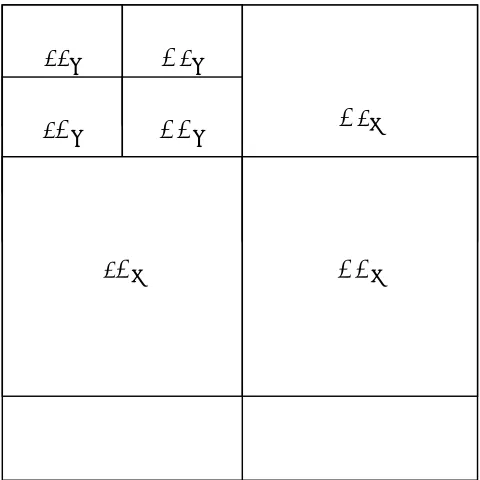
Figure 3 shows the two level DWT of a 2-D image, which consists of the subbands (low frequency or approximation coefficients), (horizontal details), (vertical details), (diagonal details) and the first level details , , .
Therefore first equation in the spatial domain, becomes in the transform domain as follows: Y = X + V
where X, Y and V are the transform domains of the original image, its noised version and the noise respectively. The orthogonal property of the transform insures that the noise in the transform domain is also of Gaussian nature. The de-noising algorithms, which are based on thresholding, suggest that each coefficient of every detail subband is compared to a threshold level and is either retained or killed if its magnitude is greater or less respectively. The approximation coefficients are not submitted in this process, since on one hand they carry the most important information about the image and on the other hand the noise mostly affects the high frequency subbands.
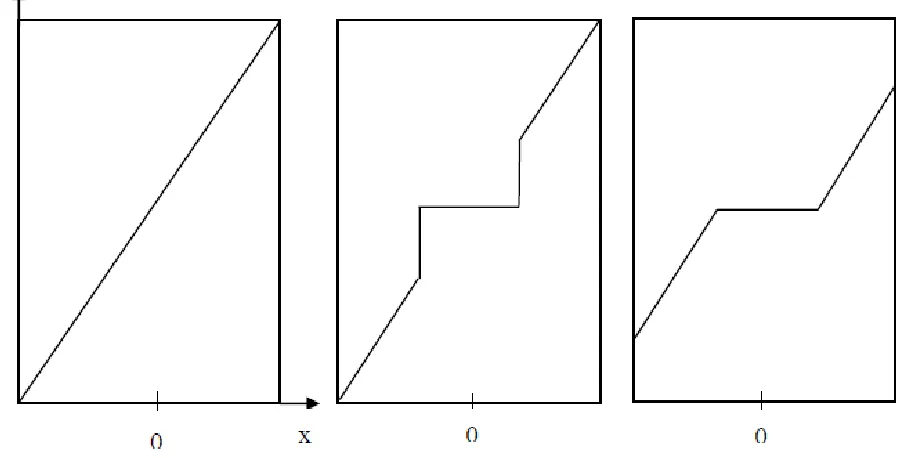
The type of the threshold is either hard or soft. Figure 4 indicates the two types of thresholding, which can be expressed analytically as follows.
i. Hard Threshold
If the absolute value of a coefficient is less than a threshold, then it is assumed to be 0, otherwise it is unchanged. Mathematically it is
= ( ) .∗( ( ) > ) ,
Where Y represents the noisy coefficients, is the threshold, represents the estimated coefficients.
ii. Soft Threshold
Hard thresholding is discontinuous. This causes ringing / Gibbs effect in the denoisedimage. To overcome this, Donoho [9] introduced the soft thresholding method. If the absolute value of a coefficient is less than a threshold , then is assumed to be 0,otherwise its value is shrunk by .
Mathematically it is
= ( ).∗ ( ( ) > ).∗( ( )− ) ,
This removes the discontinuity, but degrades all the other coefficients which tend to blur the image.
Figure 4. Threshold types: (a) Original signal; (b) Hard; (c) Soft
Steps involved in this research work:
details is thresholded using hard threshold and soft threshold. As a result of inverse wavelet transform, we get the noise free image within vertical, horizontal and diagonal details.
2. Calculation of the statistical parameters for residual image is obtained in the terms such as: (a) mean (b) median (c) mode (d) standard deviation (e) mean absolute deviation and (f) median absolute deviation.
3. Calculation of the performance parameters for analyzing noisy images and denoised images is performed in the terms such as: (a) RMSE (b) SNR (c) PSNR (d) MSE and (e) SSIM.
IV. RESULT
Table 1: Mixed Noise Performance for different value of noise variance
Noise Variance Mixed Noise Performance Parameter
SNR PSNR SSIM MSE RMSE 0.002 42.3810 48.0291 0.0095 17302.0191 131.5371 0.004 42.3822 48.0206 0.0092 17306.9425 131.5559 0.006 42.3831 48.0120 0.0091 17310.4605 131.5692 0.008 42.3802 48.0036 0.0090 17299.1187 131.5261 0.02 42.3764 47.9544 0.0093 17283.7735 131.4678
Table 2: PSNR value of the denoised image for different value of noise variance
Mixed Noise Variance
PSNR
Wavelet Denoising by hard threshold Wavelet Denoising by soft threshold 0.002 48.0291 47.9173
0.004 48.0206 47.9086 0.006 48.0120 47.9000 0.008 48.0036 47.8915 0.02 47.9544 47.8410
Table 2: SSIM value of the denoised image for different value of noise variance
Mixed Noise Variance
SSIM
Wavelet Denoising by hard threshold Wavelet Denoising by soft threshold 0.002 0.0095 0.0127
0.004 0.0092 0.0117 0.006 0.0091 0.0108 0.008 0.0090 0.0108
0.02 0.0093 0.0107
Table 2: MSE value of the denoised image for different value of noise variance
Mixed Noise Variance
MSE
Wavelet Denoising by hard threshold Wavelet Denoising by soft threshold 0.002 17302.0191 16862.4883
Table 2: SNR value of the denoised image for different value of noise variance
Mixed Noise Variance
SNR
Wavelet Denoising by hard threshold Wavelet Denoising by soft threshold 0.002 42.3810 42.2692
0.004 42.3822 42.2699 0.006 42.3831 42.2699 0.008 42.3802 42.2682 0.02 42.3764 42.2660
Table 2: RMSE value of the denoised image for different value of noise variance
Mixed Noise Variance
RMSE
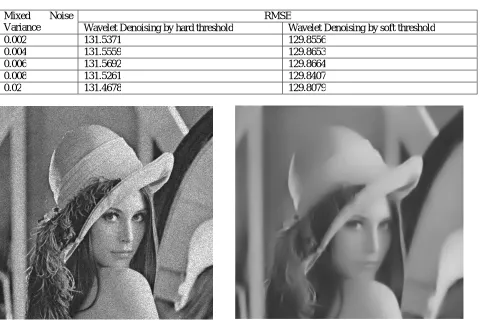
Wavelet Denoising by hard threshold Wavelet Denoising by soft threshold 0.002 131.5371 129.8556
0.004 131.5559 129.8653 0.006 131.5692 129.8664 0.008 131.5261 129.8407 0.02 131.4678 129.8079
(c). Denoised image by soft threshold method
VI.CONCLUSION
It is necessary to image denoising processing to improve the quality of image. Much practical noise can be approximated as white noise with Gauss distribution, and removal of superposition of Gauss white noise has become an important direction in image denoising research. Since the concept of wavelet threshold has been proposed, for its optimal estimate in the Besov space, much attention has been paid on it and various algorithms based on it have been developed. Wavelet thresholding used for denoising is according to the adjustion of wavelet coefficients in the wavelet domain. Then we can clear the noise by setting threshold. In this paper, wavelet transform is used in the image denoising. Two typical images are used to verify the validity of the new algorithm, and the results show that the new algorithm can improve the signal to noise ratio compared with the traditional algorithm.
REFERENCES
[1]. Dane Mackenzie. “WAVELETS: Seeing The Forest and the Trees,” Internet: http://www.beyonddiscovery.org/content/view.page.asp?I=1959,
2001 [May 6, 2010].
[2]. Anonymous. “The Portal to Science, Engineering and Technology. Resonance Publications, Inc.,” Internet:
http://www.resonancepub.com/wavelets.htm [May 06, 2010].
[3]. David L. Donoho. “De-noising by soft-thresholding.” IEEE Trans. on Information Theory, Vol 41, No. 3, May 1995.
[4]. David L. Donoho and Iain M. Johnstone. “Adapting to Unknown Smoothness via Wavelet Shrinkage.” Journal of the American Statistical
Association, Vol. 90, No. 432, pp. 1200-1224, Dec. 1995.
[5]. V. Balakrishnan, Nash Borges, and Luke Parchment. “Wavelet Denoising and Speech Enhancement.” Research paper, Johns Hopkins
University, Baltimore, MD, 2001.
[6]. S. G. Chang, B. Yu and M. Vetterli, “Adaptive Wavelet Thresholding for Image Denoising and Compression,” IEEE Transactions on Image
Processing, Vol. 9, No. 9, 2000, pp. 1532-1546. doi:10.1109/83.862633
[7]. F. N. Yi, et al., “A Wavelet Threshold of a New Method of Image Denoising,” Science & Technology Information, 2008.
[8]. V. Nigam, S. Luthra and S. Bhatnagar, “A Comparative Study of Thresholding Techniques for Image Denoising,” 2010 International