An Enhanced Quality Approach for Ecommerce
Website using DEA and High Utility Item Set
Mining
Varsha Kulkarni
1, Vilas Jadhav
2.
1 PG Scholar, Dept. of Computer Engineering, MGMCET, Kamothe, Navi Mumbai, India 2Professor, Dept. of Computer Engineering, MGMCET, Kamothe, Navi Mumbai, India
ABSTRACT: Today, E-commerce is booming everywhere. Customer’s satisfaction is an important issue in every Business-to-Consumer website. Sometimes it is difficult to evaluate performance of website and to find utility for the product. It depends on customer to visit, see or purchase any product. Entrepreneur is unaware of its nature. Here, we have adopted DEA (Data Envelopment Analysis) method which is working on dataset. DEA is used to evaluate performance of DMU’s (Decision Making Units). Here, we have taken up Utility Pattern Growth algorithm for finding High utility item sets. Our scheme E-commerce website Quality and Utility Analysis System (EQUAS) will analyse the website and will results in popularity of website to an entrepreneur. Our scheme will contribute to the improvement of overall quality of website and promote the healthy development in e-commerce. The goal of utility mining is to discover all the high utility item sets whose utility values are beyond a user specified threshold in a transaction database. Utility Mining identifies the item sets with highest utilities, by considering profit, quantity, cost or other user preferences. DEA analyzes quality by calculating user popularity rates and utility item set mining investigates profit earning items.
KEYWORDS: data envelopment analysis (DEA), decision making units (DMU’s), E-commerce website Quality and Utility Analysis System (EQUAS).
I. INTRODUCTION
II. RELATED WORK
Zijuan Liu [1] chose input oriented BCC model which is ideal for modelling of purchase situations. It is done by comparing with hypothetical DMU’s to calculate constant rates. It highlights difference between CCR and BCC model. It defined input oriented BCC model. Vincent S. Tseng et Al [2] explains about discovery of high utility item sets like profit to eliminate unpromising items. It is mainly used for transactional databases. Here, they used UP-Growth and UP-Growth+ algorithms. They can effectively used for long transactions. Jyothi Pillai, O.P.Vyas [3] explained efficiency of utility mining in the field of data mining. Utility mining discovers item sets that frequently occur. Chuen Tse Kuah et al formalized significance of DEA and its different models. The popularity of DEA is due to its ability to measure relative efficiencies of multiple-input and multiple-output DMUs without prior weights on the inputs and outputs. Corrado lo Storto [4] evaluated website quality from user viewpoint using DEA. The framework is implemented to compare websites that sell products online. Jyothi Pillai, O.P.Vyas [5] defined emerging technologies in mining. It illustrated utility mining in terms of profit, cost and other expressions of user experiences. Vincent S. Tseng [6] defined UP-Growth(Utility Pattern Growth) algorithm for discovering high utility item sets and removing unpromising items by providing threshold like profit, quantity etc. A tree structure called UP-Tree is created to to generate candidate item sets to avoid repeated scanning of database. Smita R. Londhe et al [7] tried to avoid space consumption and execution time for long transactions by defining two algorithms namely, Growth and UP-Growth+ algorithms. Adinarayanareddy B et al [8] mainly focus on Up- Growth algorithm and their production of large number candidate item sets which requires more space and affects mining performance.
III.PROPOSED ALGORITHM
A. Design Considerations:
All the ports which are required should be free.
B. Description of the Proposed Algorithm:
We have designed E-commerce website Quality and Utility Analysis System (EQUAS). We have implemented this system using software Java 1.6 and database SQL server 2005. Our aim is to build a quality evaluation system which will diagnose datasets on the basis of their efficiency and investigates profit earning items. Our reference paper has built a system which uses BCC model. A BCC model is input oriented and used for evaluation purpose. A model is established based on input data and output data of derived from CCR [2]. DEA is used to evaluate efficiency of E-commerce website. In order to find unpromising items and to overcome the drawback of excess scanning of database, utility mining is also performed along with DEA. Proposed model will calculate inefficiencies in units and results will be used for improvement of website. In this the unit of analysis represents a production unit. We conceptualize consumer-website interaction during online shopping as a production process in which the customer conducts a purchase and inputs are converted into outputs.
Finding Utility
Figure 1: Proposed System
IV.SYSTEM FLOW
1. An e-commerce website will be developed on which DEA will work to analyze quality of the website and utility mining will be performed to calculate the profit earned by the website.
2. Collecting web log data from datasets to find out value of input and output variables through DMU. 3. Calculating unit inefficiencies to analyze website functionality.
4. Calculating conversion rates from one page to another and obtaining average value of each conversion rate 5. Organizing web log data to calculate profit by using item set and its unique identifier.
6. Remove unpromising data by extracting only utility item sets whose threshold is greater than or equal to minimum threshold.
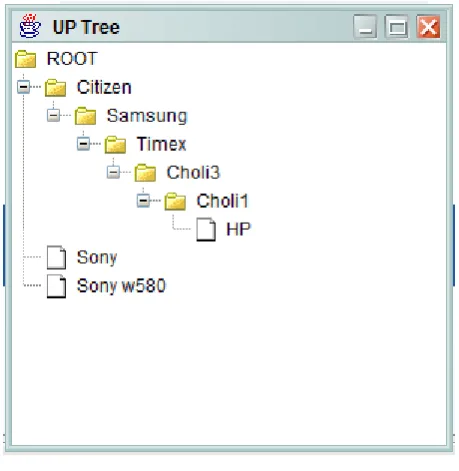
7. Applying UP-Growth algorithm to generate UP-Tree which is representation of information of high utility item sets.
V. RESULTS
We can divide the result into two parts. One is the quality analysis system developed by using DEA and another one is utility mining based on transactional database. First is to enhance background performance of the system and another is to increase the profit. We can see that rate of people who tends to purchase product is lower than product list. So, here we have scope to enhance our website quality. Some ways are arrange products properly, transaction should not be complex. Also here in second graph Transaction unit (TU) and Transaction weighted unit (TWU) are shown.
Figure 2: Result of DEA Figure 3: TU and TWU calculation
After calculation of TU and TWU we have inserted user defined threshold. It is owner specified means website owner can put in some value. System categorizes items into promising and unpromising items. Suppose threshold is 40000 then result could be:
Figure 4: Output representation
VI.CONCLUSION AND FUTURE WORK
The overall performance of an e-commerce website can be analysed by this proposed technique. Using our approach EQUAS, we can verify website quality based on log data and utility mining helps to eliminate unpromising data by
0 20000 40000 60000
TU
TWU 0
0.2 0.4 0.6 0.8
Total
REFERENCES
1. Zijuan Liu, “Diagnosing Ecommerce website quality Based on DEA,” 2nd International Conference on Computer Science and Network
Technology, 13565627, 762 – 765, 2012.
2. Vincent S. Tseng, Bai-En Shie, Cheng-Wei Wu, and Philip S. Yu, “Efficient Algorithms for Mining High Utility Item sets from
Transactional Databases,” IEEE TRANSACTIONS ON KNOWLEDGE AND DATA ENGINEERING, VOL. 25, NO. 8, AUGUST 2013.
3. Chuen Tse Kuah, Kuan Yew Wong, Farzad Behrouzi, “A Review on Data Envelopment Analysis (DEA),” 2010 Fourth Asia International
Conference on Mathematical/Analytical Modelling and Computer Simulation, 978-1-4244-7196-6, 168 – 173, 2010.
4. Corrado lo Storto, “Evaluating ecommerce websites cognitive efficiency: An integrative framework based on data envelopment analysis,”
Applied Ergonomics, 44, 1004-1014, 2013.
5. Jyothi Pillai, O.P.Vyas, “Overview of Item set Utility Mining and its Applications,” International Journal of Computer Applications (0975
– 8887) Volume 5– No.11, August 2010.
6. Vincent S. Tseng , Cheng-Wei Wu , Bai-En Shie , and Philip S. Yu, “UP-Growth: An Efficient Algorithm for High Utility Item set
Mining,” KDD’10, July 25–28, 2010.
7. Smita R. Londhe, Rupali A. Mahajan, Bhagyashree J. Bhoyar, “Overview on Methods for Mining High Utility Item set from
Transactional Database,” International Journal of Scientific Engineering and Research (IJSER), Volume 1 Issue 4, December 2013.
8. Adinarayanareddy B, O Srinivasa Rao, MHM Krishna Prasad, “An Improved UP-Growth High Utility Item set Mining,” IJCA, Volume
58– No.2, 25-28, November 2012.
BIOGRAPHY
Varsha Kulkarni is pursuing her Master degree of Engineering in Computer engineering from MGM’s college of Engineering and Technology, Kamothe, Navi Mumbai, India. She also received Bachelor of Engineering in Computer engineering from MGM’s college of Engineering and Technology, Kamothe, Navi Mumbai, India. Her research interests are data mining, web mining, web technology, website designing etc.