Type of the Paper (Article)
1
Efficient
Conversion
of
Glucose
into
2
5-Hydroxymethylfurfural via a simple catalyst
3
γ-AlOOH at a Mild Reaction Condition
4
Zhe Tang, Ruiyu Jiang, Hui Cang, Jianhui Su*
5
School of Chemistry & Chemical Engineering, Yancheng Institute of Technology, Yancheng, Jiangsu Province,
6
224051, P. R. China; [email protected]; [email protected]; [email protected]; [email protected]
7
* Correspondence: [email protected]; Tel.:86-0515-8829-8611
8
Abstract: A simple solid acid catalyst γ-AlOOH was employed to synthesize
9
5-hydroxymethylfurfural (HMF) from glucose in the dimethyl sulfoxide. Various reaction
10
parameters, such as catalyst loading, temperature, reaction duration and solvent, were
11
investigated. A high HMF yield of 61.24 % was obtained at the mild reaction condition of 130 °C for
12
3 h. More importantly, the catalyst γ-AlOOH could be reused for several times without the loss of
13
its significant catalytic activities. After five reaction runs, a HMF yield about 57.23 % was obtained.
14
In addition, the results demonstrated that the γ-AlOOH also had high catalytic activities on the
15
degradation of other polysaccharides, like Maltose, Sucrose and Cellulose, into HMF using ionic
16
liquid 1-butyl-3-methylimidazolium chloride, DMSO and a small amount of water as the reaction
17
solvents. For instance, a high HMF yield of 50.26 % was obtained at 170 °C for 2.5 h on the
18
decomposition of Cellulose.
19
Keywords: Heterogeneous Catalysis; Carbohydrates; HMF; Boehmite
20
21
1. Introduction
22
The diminishing of petroleum sources, the growth of energy demand combined with growing
23
concerns about global warming and environmental pollution had made the efficient utilization of
24
renewable lignocellulosic biomass to be hot and significant in both academic study and industrial
25
application [1, 2]. In the utilization of lignocellulosic biomass, the conversion of glucose, which is the
26
most abundant component in lignocellulosic biomass and the most available and low-cost six carbon
27
monosaccharide [3], into value-added chemicals is significantly important [4, 5]. Among the various
28
value-added chemicals, HMF is considered as one of the “top 10” platform chemicals, which can be
29
used as a raw materials to synthesize ocean of fine chemicals and other materials to replace or at
30
least minimize the utilization of fossil- based products, such as 2,5-diformylfuran and
31
2,5-furandicarboxylic acid, 2,5- dimethyl- furan [6-8]. Recently, an review of the potential application
32
of HMF has been summarized by Rosatella group [9].
33
Both homogeneous and heterogeneous catalysis were attempted to produce HMF from glucose.
34
The used homogenous catalysts mainly contained metal salts, ionic liquid, mineral acid, inorganic
35
and organic acid [10-14] .Compared with homogeneous catalysis, heterogeneous catalysis has been
36
increasingly seem as the most promising one to convert glucose into HMF in terms of separation and
37
recycling of catalysts [15,16]. In recent decades, numerous environmental benign heterogeneous
38
solid acid catalysts, such as zeolite-based catalysts, Al2O3-based catalysts, SO42--based catalysts,
39
doped catalyst, Nb-based catalysts, carbon-based catalysts, polymer-based catalysts and
40
phosphate-based catalysts, have devolved to synthesis of HMF from glucose under various reactions
41
systems, including ionic liquid system, organic solvents, biphasic system and water-contained
42
systems [17-24]. Although relatively high HMF yields about 25-70 % were obtained in the catalytic
43
systems, they tend to need high reaction temperatures about 160-200 ºC or complicate preparations
44
of catalysts, which arouse the side reaction easily occur or hard to be applied in industry. Hence, it
45
was necessary to seek a catalytic system used a simple catalyst under a mild reaction temperature.
46
It is generally argued that the process of producing HMF from glucose includes two continuous
47
steps: isomerization of glucose into fructose and dehydration of fructose into HMF. And it It is
48
generally argued the isomerization of glucose into fructose is the crucial and rate-determining step
49
in the process of glucose conversion [25-27]. The isomerization of glucose into fructose can be more
50
easily promoted by Lewis acid, bases and enzymes. Brønsted acid is more effective to improve
51
fructose dehydrated into HMF [28, 29]. Moreover, it was also demonstrated that Lewis acid also own
52
moderate catalytic activity on the dehydration of fructose into HMF [30, 31]. In addition, some
53
solvents also owned some capacity to improve the dehydration of fructose into HMF, such as ionic
54
liquids and aprotic organic solvents [32, 33]. Compared with the high price of ionic liquids, the
55
aprotic organic solvents-DMSO is the low-cost and common used solvents. Therefore, we have
56
reason to believe that using DMSO, and Lewis acid catalysts as the reaction system can be effective
57
to promote the conversion of glucose into HMF.
58
It was known that Boehmite (γ-AlOOH) was one of Al2O3 precursors and one of typical Lewis
59
acid catalysts. More importantly, it is easily prepared and own high hydrothermal stability [34-38].
60
The property is quite important, since water will be produced on the process of dehydration of
61
fructose into HMF. The reaction results meant that the catalysts used on the conversion of glucose
62
into HMF must own excellent high hydrothermal stability in order to keep catalytic stability. From
63
the angle of γ-AlOOH with easy preparation and high hydrothermal stability, Takagaki et al. [39]
64
used γ-AlOOH as the catalysts on the transformation of sugars (C3-C6 sugars) into fine chemicals,
65
like dihydroxyacetone and glyceraldehyde. Although the aim of the reaction was not to produce
66
HMF, ca. 18 % HMF yield was also detected on transformation of glucose. In a word, all the results
67
indicated γ-AlOOH possesses the potential to efficiently and stably produce HMF from glucose.
68
In the work, γ-AlOOH were papered and used as catalysts to produce HMF from glucose
69
assisted by DMSO as reaction solvent under the mild reaction condition of 130 °C. Various reaction
70
parameters, including reaction durations, reaction temperature, catalytic loading, reaction solvent,
71
were investigated. In addition, the conversions of other polysaccharides, like Maltose, Sucrose and
72
Cellulose, into HMF were also investigated preliminarily.
73
2. Materials and Methods
74
2.1 Materials
75
HMF (99 %) was purchased from Aladdin Reagent Co. Ltd. (Shanghai China). All other
76
reagents were analytic grades, purchased from Sinopharm Chemical Reagent Co. Ltd. and used as
77
received.
78
2.2. Catalysts preparation
79
In a typical synthesis, 15 mmol Al(NO3)3·9H2O were added into 50 mL deionized water. Then,
80
30 mmol NH4HCO3 was slowly added under a violent stirring. After formation of a clear solution, 25
81
% ammonia water was slowly added until the pH was up to 9. Afterwards, the mixture reaction
82
system was transferred into a 100 mL Teflon-lined stainless autoclave, sealed and then heated at 150
83
°C for 12 h. Subsequently, the autoclave was cooled to the room temperature naturally. The product
84
was collected through a centrifugation and washed several times with deionized waters. Finally, the
85
sample was obtained by drying the product in a vacuum at 80 °C for 24 h.
86
2.3. Catalysts characterization
87
The phase structure of the sample was checked by Panalytical X-ray Power Diffraction
88
sample was further detected by Fourier transform infrared spectra (FT-IR, Nexusftir, Nieolet) in
90
order to confirm its composition.
91
The textural property of the sample was investigated via nitrogen adsorption- desorption
92
experiments measured by a Micromeritics ASAP 2020 system. The specific surface areas and pore
93
size distributions of the samples were calculated using Brunauer-Emmett-Teller (BET) equation and
94
Barrett-Joyner-Halenda (BJH) method respectively. The morphology and microstructure of the
95
samples were further observed by the transmission electron microscopy (TEM, JEM-2100UHR,
96
JEOL). The thermal gravimetric analyses (TGA) of the samples were carried out at a heating rate of
97
10 °C /min under Air-atmosphere (Model: SDT Q600).
98
Lewis and Brønsted acidic sites were investigated via FT-IR pyridine adsorption technique
99
(Py-FTIR, Nicolet, USA) [40]. IR spectra recorded at a resolution of 4 cm-1ine the range of 1700-1400
100
cm−1. Prior to measurement, the samples were degassed in air at 150°C for 5 h, cooled down and
101
then adsorbed in the saturated pyridine atmosphere at room temperature for 5 h. After adsorption,
102
the infrared spectrum was recorded with the sample temperature fixed at 100 °C while outgassing.
103
The amount of Lewis acid sites was determined on the basis of the integral absorbance of the
104
characteristic band at 1450 cm-1 by using integrated molar extinction coefficients, 2.22 cm mmol-1 [41,
105
42].
106
2.4. Typical procedure of HMF from glucose
107
The experiments were carried out in the tube of 18 mm ×180 mm with a lid. In the typical
108
process, 100 mg glucose and 100 mg catalyst were added into 2.5 g DMSO under vigorous stirring.
109
After forming a homogeneous solution, the mixtures were heated at 130 °C for 3 h under an 800 rpm
110
magnetic stirring. Afterwards, the reaction mixtures were quickly cooled to the room temperature
111
by an addition of 20 ml cold deionized water. Then, the forming mixtures were centrifuged at 10000
112
rpm for 5 min and weighed. The above clear liquid was collected. After diluted 150-200 times by the
113
deionized water, the solution was sent to be analyzed.
114
2.5. Analysis
115
HMF was detected by High Performance Liquid Chromatography (HPLC, Agilent 1200)
116
equipped with an ultraviolet detector (UV-9600, Beijing Purkinje General Instrument CO. Ltd.,
117
China) at the ultraviolet wavelength of 284 nm and the External Standard Method. Glucose and
118
other carbohydrates, such as fructose, disaccharides, were also checked by High Performance Liquid
119
Chromatography (HPLC, Agilent 1200) outfitted with a refractive index with an ion exclusion
120
column (300 mm × 7.8 mm, Aminex HPX-87H) at 60 °C. The other compounds were detected by the
121
Gas Chromatography (GC1690, Jiedao, China) and the External Standard Method. The yield of HMF
122
and conversion of glucose were calculated according to the following equations:
123
Glucose conversion=100 %-( mole of glucose in the product) / (mole of starting glucose)×100%
124
HMF yield =(mole of HMF)/( mole of starting glucose)×100%.
125
3. Results and Discussion
126
3.1. Characterization of the catalyst
127
The phase structure of the sample was checked by power XRD (shown in the Fig.1). All its
128
diffraction peaks can be assigned to an orthorhombic γ-AlOOH (JCPDS Card 021-1307). No peaks
129
from other phases were observed, indicated the high purity of the catalyst. Further evidence on the
130
formation of γ-AlOOH was derived from the result on its FT-IR. In the Fig.2, it can be seen that the
131
bands at 3310, 3090, 1072 and 1162 cm-1 were assigned to the νas(Al)O–H , νs(Al)O–H, δs Al–O–H and
132
δas Al–O–H vibrations, respectively. While, the bands at 751, 630, and 484 cm-1 belonged to the
133
10 20 30 40 50 60 70 80 0
1000 2000 3000 4000 5000 6000
(171) (002)
(151) (200) (031) (120) (020)
In
te
n
s
it
y
(a
.u
)
2 ( degree)
135
Fig. 1 XRD pattern of the sample
136
4000 3500 3000 2500 2000 1500 1000 500 0
20 40 60 80 100 120
484 630 751 1072 1162
3090 3310
T
ra
n
s
im
it
ta
n
c
e
(%
)
Wavenumber(cm-1)
137
Fig. 2. FT-IR spectrum of the sample
138
139
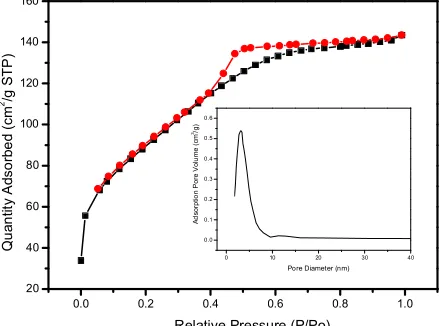
The textural property of the catalyst γ-AlOOH was measured by N2 adsorption and desorption
140
experiment. In the Fig.3, it can be seen that the N2 absorption and desorption isotherm of the
141
γ-AlOOH was characteristic of a type IV isotherm with a type H2 hysteresis loop above 0.4 P/P0,
142
indicating there existed meso-pores. And its pore size distribution (the inset) demonstrated that
143
besides a wide pore size at 10.15 nm, the pore size of the γ-AlOOH was mainly centered at 2.87 nm.
144
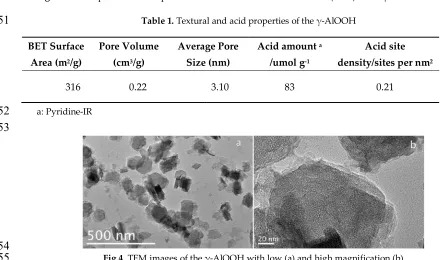
The detailed textural property of the γ-AlOOH can be seen in the Table 1. The results were
145
confirmed by its TEM. In the Fig. 4, the γ-AlOOH was composed by a great number of irregular
146
nanosheets. After a carefully observation of its high-magnification TEM image, it was discovered
147
that the surfaces of the nanosheets were not smooth and have a great number of small pores.
148
0.0 0.2 0.4 0.6 0.8 1.0 20
40 60 80 100 120 140 160
0 10 20 30 40
0.0 0.1 0.2 0.3 0.4 0.5 0.6
A
d
s
o
rp
ti
o
n
P
o
re
V
o
lu
m
e
(
c
m
3/g
)
Pore Diameter (nm)
Q
u
a
n
ti
ty
A
d
s
o
rb
e
d
(
c
m
2 /g
S
T
P
)
Fig. 3. N2 adsorption and desorption isotherms and Pore size distribution (inset) of the γ-AlOOH
150
Table 1. Textural and acid properties of the γ-AlOOH
151
BET Surface Area (m2/g)
Pore Volume (cm3/g)
Average Pore Size (nm)
Acid amount a /umol g-1
Acid site density/sites per nm2
316 0.22 3.10 83 0.21
a: Pyridine-IR
152
153
154
Fig.4. TEM images of the γ-AlOOH with low (a) and high magnification (b)
155
156
Thermogravimetric analysis of the γ-AlOOH was also investigated under the air atmosphere.
157
In the Fig.5, three stages of the weight loss were observed. Stage 1 was 30-190 °C, attributed to the
158
volatilization of the adsorbed waters on the surfaces of the γ-AlOOH [34]. But the weight loss was
159
slight, less than 2 %. Stage 2 ranged from 190 to 710 °C was the main process of the weight loss, up
160
to 41 %. The weight loss was to the transformation from the dehydration of γ-AlOOH into γ-Al2O3
161
[35]. Stage 3 above 710 °C was to the crystal transformation from γ-Al2O3 into α-Al2O3 [37]. The
162
weight loss was also very slight and can be neglected, less than 0.5 %. The results indicated that if
163
only the reaction temperature was not high than 190 °C, the γ-AlOOH was stabilized and wouldn’t
164
be changed into other phase or decomposed.
165
0 100 200 300 400 500 600 700 800
50 60 70 80 90 100
710 oC
190 oC
W
e
ig
h
t
(%
)
Temperature(oC)
166
Fig. 5. Thermogravimetric analysis of the γ-AlOOH under air condition
167
3.2. Conversion of glucose into HMF
168
In order to identify the products and calculate the carbon balance on the conversion of glucose,
169
oceans of technologies were adopted, such as GC, HPLC and GC-MS. Besides the HMF, some other
170
compounds were found, such as glucose, fructose, formic acid, levulinic acid, glyceraldehyde and
disaccharides. However, except that the yields of formic acid, levulinic acid and glyceraldehyde
172
were up to 6.5 %, 4.5 % and 3.8 % respectively. The yields of other compounds were very low, less
173
than 1 %. The detailed information can be seen in the Fig.8. However, in the work, the conversion of
174
glucose was 98.56 % (Entry 2 of Table 1), which meant that many other byproducts were not
175
detected. The result was well consisted with numerous previous researches [23, 24]. Although
176
countless byproducts were hard to be checked and identified in the present technologies, these could
177
be also proved via the color change of the reaction from colorless at begin to black at end. Hence, in
178
order to clearly illustrate the changes of the components in the reaction, the products were classified
179
into four types in the work, which were HMF, Glucose, Others (glucose, fructose, formic acid,
180
levulinic acid, glyceraldehyde and disaccharides), and Unidentified. The detailed results were listed
181
in Table 2. It should to be noted that the yield of Unidentified was equal to the difference of the
182
conversion of glucose minus the yields of HMF and Others.
183
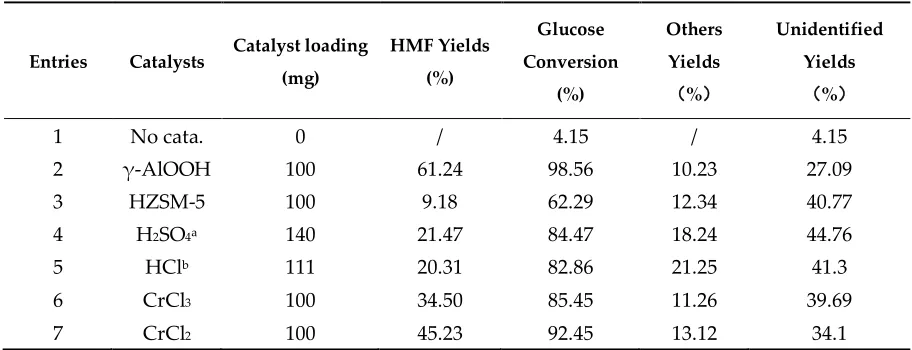
Table 2. Conversion of glucose into HMF catalyzed by different catalysts
184
Entries Catalysts Catalyst loading
(mg)
HMF Yields
(%)
Glucose
Conversion
(%)
Others
Yields
(%)
Unidentified
Yields
(%)
1 No cata. 0 / 4.15 / 4.15
2 γ-AlOOH 100 61.24 98.56 10.23 27.09
3 HZSM-5 100 9.18 62.29 12.34 40.77
4 H2SO4a 140 21.47 84.47 18.24 44.76
5 HClb 111 20.31 82.86 21.25 41.3
6 CrCl3 100 34.50 85.45 11.26 39.69
7 CrCl2 100 45.23 92.45 13.12 34.1
a: 25 wt % sulphuric acid; b: 25 wt % hydrochloric acid
185
The reaction condition: 0.1 g glucose; 2.5 g DMSO; 130 °C; 3 h.
186
187
From the Table 2, it can be seen that γ-AlOOH had excellent catalytic activity for the
188
conversion of glucose into HMF. Without any catalyst, HMF was hard to be detected and the
189
conversion of glucose was only to 4.15 % (Entry 1). However, after adding 0.1 g γ-AlOOH into the
190
reaction system, the yield of HMF remarkably increased into 61.24 %, the conversion of glucose also
191
tremendously increased to 98.56 %. The results indicated the catalytic activity was principally
192
stemmed from the γ-AlOOH and the DMSO was chiefly acted as the solvent for dissolve glucose
193
and products. Furthermore, on the purpose of evaluating the catalytic performance of the γ-AlOOH,
194
three kinds of catalysts were designed like heterogeneous solid catalyst HZSM-5, homogeneous
195
Bronsted catalysts H2SO4, HCl and homogeneous Lewis catalysts CrCl3 and CrCl2. Among these
196
catalysts, the γ-AlOOH was the best catalyst with the highest yield and selectivity of HMF,
197
suggesting that the γ-AlOOH not only can be efficient to catalyze glucose converted into HMF, but
198
also can effectively inhibit the side reaction occur. Among all the catalysts, only the γ-AlOOH
199
produced 27.09 % of the Unidentified yields. While in others catalysts, the Unidentified yields were
200
not less than 34 %.
201
However, from many previous [25-30], it can be inferred that the excellent catalytic activity on
202
the conversion of glucose might be attributed to its Lewis acid sites, since γ-AlOOH was typical
203
Lewis acid sites catalyst [34-38] and Lewis acid sites own high isomerization of glucose into fructose
204
and moderate dehydration of fructose into HMF. Fig. 6 shows the pyridine adsorbed Fourier
205
transform infrared spectra (Py-FTIR) of the γ-AlOOH. In the Fig.6, there appeared only absorption
206
Brønsted acid sites (at 1540 cm-1) were occurred. The results proved that γ-AlOOH was a Lewis acid
208
catalyst without Brønsted acid sites. Furthermore, Table 3 listed the performances of the conversion
209
of fructose into HMF using different catalysts. It can be seen that without any catalysts, only 15.88 %
210
HMF yield was obtained. Afterwards, when γ-AlOOH was added into the system, HMF yield was
211
increased into 48.55 %, indicated the γ-AlOOH has moderate dehydrate of fructose into HMF.
212
While, based on the reaction contained two continuous steps of isomerization of glucose into
213
fructose (Rate determining step) and dehydration of fructose into HMF, and the high HMF yield
214
(61.24 %) on the conversion of glucose at the same reaction condition, it meant that the γ-AlOOH
215
owned excellent isomerization of glucose into fructose.
216
1800 1700 1600 1500 1400 1300
60 70 80 90 100 110 120 130 140
R
e
fl
e
c
ta
n
c
e
(
%
)
Wavenumber (cm-1)
1592 1486
1445
217
Fig. 6. Py-FTIR spectra of the γ-AlOOH
218
219
Table 3. Conversion of fructose into HMF under different catalysts
220
Entries Catalysts Catalyst loading (mg) HMF Yields (%) Fructose Conversions (%)
1 No catalyst 0 15.88 61.43
2 γ-AlOOH 100 48.55 82.36
The reaction condition: 0.1 g fructose; 2.5 g DMSO; 130 °C; 3 h.
221
3.3. Conversion of polysaccharides into HMF
222
In order to confirm the high hydrothermal stability of γ-AlOOH, the spent γ-AlOOH at 130 °C
223
for 3 h was also checked by XRD and FT-IR (shown in Fig.7). In both measurements, the conditions
224
of spent catalyst were almost same with that of the fresh catalyst. Just the full width at half
225
maximum (FWHM) of the spent γ-AlOOH was slightly narrower than that of the fresh γ-AlOOH,
226
indicated that after the reaction at 130 °C for 3 h, the crystalline grain of the γ-AlOOH was grown
227
up slightly. All the results confirmed that γ-AlOOH was quite stable in the water-contained
228
reaction system. Compared with the conversion of glucose into HMF, the degradation of
229
polysaccharides into HMF need more water than that of the conversion of glucose into HMF, since
230
the reaction still contained the hydrolysis of polysaccharides, besides the isomerization of glucose
231
and dehydration of fructose, which suggests that the γ-AlOOH possibly might be one of effective
232
catalyst to produce HMF from the polysaccharides, a raw reaction material to produce HMF with of
233
more cheap, extensive and close to biomass. In order to verify the supposal, the common
234
polysaccharides, Maltose, Sucrose and Cellulose, were used raw materials. The reaction procedure
235
of the degradation of polysaccharides was the same with that of conversion of glucose into HMF in
236
section 2.4. Just the reaction parameters were change as following: 0.1 g γ-AlOOH; 0.1 g
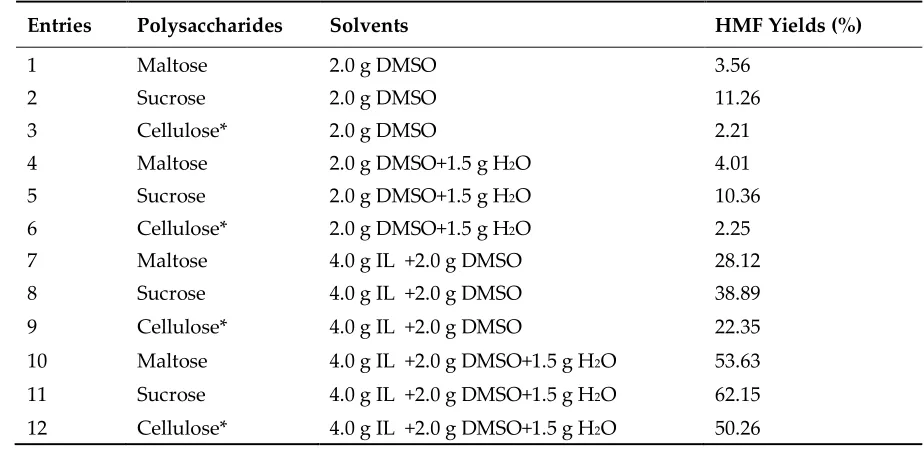
polysaccharides; 170 °C; 2.5 h, different solvents. The results of HMF yields from Maltose, Sucrose
238
and Microcrystalline Cellulose were listed in Table 4. It can be seen that after added 1.5 g H2O into
239
the reaction solvents ionic liquid 1-butyl-3-methylimidazolium chloride and DMSO, all the HMF
240
yield were increased significantly, up to 53.63 %, 62.15 % and 50.26 %, corresponding to Maltose,
241
Sucrose and Microcrystalline Cellulose respectively. The results confirmed our above supposal that
242
the γ-AlOOH was one of effective catalyst to produce HMF from the polysaccharides. However,
243
one of significant difference from the conversion of glucose into HMF was that the reaction solvents
244
must contain ionic liquid 1-butyl-3-methylimidazolium chloride. Without IL, HMF yields in all
245
reaction raw materials were very low, not more than 3 %. This might be ascribed to the dissolution
246
of polysaccharides in IL. In many previous works, they demonstrated that ionic liquids, including
247
1-butyl-3-methylimidazolium chloride, own high dissolution of cellulose, since it can react with
248
-OH and β-oxygen ether bonds in the polysaccharides to form hydrogen bonds [43-45]. But the
249
detailed reason, the effect of reaction condition on the conversion of polysaccharides into HMF,
250
such as reaction temperature, reaction duration, catalyst load, solvents, H2O and other parameters,
251
were studied in our future work.
252
0 10 20 30 40 50 60 70
0 1000 2000 3000 4000 5000 6000 7000
(171) (002)
(151) (200)
(031)
Spent Catalyst
In
te
n
s
it
y
(a
.u
)
2 ( degree)
Fresh Catalyst (020)
(120)
(a)
4000 3000 2000 1000
20 40 60 80 100 120 140
(630) (751) (1072) (1162) (3090)
T
ra
n
s
im
it
ta
n
c
e
(%
)
Wavenumber(cm-1)
Fresh Catalyst Spent Catalyst
(3310)
(b)
253
Fig. 7. XRD patterns (a) and FT-IR spectra (b) of the γ-AlOOH before and after the reaction
254
Table 4. Conversion of polysaccharides into HMF catalyzed by different catalysts
255
Entries Polysaccharides Solvents HMF Yields (%)
1 Maltose 2.0 g DMSO 3.56
2 Sucrose 2.0 g DMSO 11.26
3 Cellulose* 2.0 g DMSO 2.21
4 Maltose 2.0 g DMSO+1.5 g H2O 4.01
5 Sucrose 2.0 g DMSO+1.5 g H2O 10.36
6 Cellulose* 2.0 g DMSO+1.5 g H2O 2.25
7 Maltose 4.0 g IL⸷+2.0 g DMSO 28.12
8 Sucrose 4.0 g IL⸷+2.0 g DMSO 38.89
9 Cellulose* 4.0 g IL⸷+2.0 g DMSO 22.35
10 Maltose 4.0 g IL⸷+2.0 g DMSO+1.5 g H
2O 53.63
11 Sucrose 4.0 g IL⸷+2.0 g DMSO+1.5 g H2O 62.15
12 Cellulose* 4.0 g IL⸷+2.0 g DMSO+1.5 g H2O 50.26
*: Cellulose was the microcrystalline cellulose
256
⸷: IL was the ionic liquid 1-butyl-3-methylimidazolium chloride
257
3.4. Effect of the solvents on the conversion of glucose into HMF
259
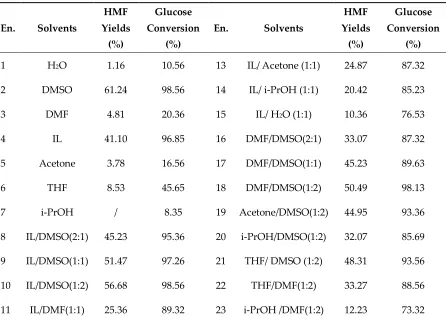
The solvent was a vital factor for the conversion of glucose into HMF. Seven common reagents,
260
such as H2O, DMSO, DMF, IL (1-butyl-3-methylimidazolium chloride), Acetone, THF and i-PrOH,
261
and their mixtures were used as the solvents in the tests. The results were listed in the Table 5.
262
From Entries 1-7, it was revealed that DMSO and IL were the best solvents among the signal
263
solvents. However, compared with 41.10 % HMF yield in IL, the HMF yield in DMSO was up to
264
61.24 %. The result was different from the conclusions in a great number of previous works [51-53],
265
which showed that IL or IL mixtures were the best solvents for the conversion of glucose into HMF.
266
In order to obviously understand the effect of solvents on synthesis of HMF from glucose, four
267
kinds of their mixtures were adopted as the solvents, including IL-DMSO mixtures (Entries 8-10),
268
IL-other reagents mixtures (Entries 11-15), DMSO-other reagents mixtures (Entries 16-21) and other
269
reagents mixtures (Entries 22-24). It was demonstrated that that among all those solvents, the
270
DMSO was the optimum solvent on the conversion of glucose into HMF, in which the HMF yield
271
was up to 61.24 %. Furthermore, it was found that in the mixtures, with the increase of DMSO, the
272
HMF yield was mounted immediately. For examples, in the IL and IL-DMSO mixtures (Entries
273
4,8-10), when the mass rates of DMSO and IL increased from 0:1 into 1:2, 1:1 and 2:1, the HMF yield
274
increased from 41.10 % into 45.23 %, 54.47 % and 56.68 %. And in the DMSO and DMSO-DMF
275
mixtures (Entries 3, 16-18), the mass rates of DMSO and DMF increased from 0:1 into 1:2, 1:1 and 2:1,
276
the HMF yield soared from 2.81 % into 33.07 %, 45.23 % and 50.49 %. The performance of DMSO
277
might be attributed to their strong polarities [33]. Firstly, it can acts as a promoter or catalyst in the
278
conversion of sugars. Secondly, it interacts strongly with HMF through solvation, and thereby
279
restricts the contact of HMF with intermediates and water molecules, preventing the undesired side
280
reactions. Finally, owing to its high solubility for sugars including starch, and the product HMF, it
281
is possible to conduct reaction even at high substrate concentrations [54-56].
282
Table 5. Effect of the solvents on the conversion of glucose into HMF
283
En. Solvents
HMF Yields
(%)
Glucose Conversion
(%)
En. Solvents
HMF Yields
(%)
Glucose Conversion
(%)
1 H2O 1.16 10.56 13 IL/ Acetone (1:1) 24.87 87.32
2 DMSO 61.24 98.56 14 IL/ i-PrOH (1:1) 20.42 85.23
3 DMF 4.81 20.36 15 IL/ H2O (1:1) 10.36 76.53
4 IL 41.10 96.85 16 DMF/DMSO(2:1) 33.07 87.32
5 Acetone 3.78 16.56 17 DMF/DMSO(1:1) 45.23 89.63
6 THF 8.53 45.65 18 DMF/DMSO(1:2) 50.49 98.13
7 i-PrOH / 8.35 19 Acetone/DMSO(1:2) 44.95 93.36
8 IL/DMSO(2:1) 45.23 95.36 20 i-PrOH/DMSO(1:2) 32.07 85.69
9 IL/DMSO(1:1) 51.47 97.26 21 THF/ DMSO (1:2) 48.31 93.56
10 IL/DMSO(1:2) 56.68 98.56 22 THF/DMF(1:2) 33.27 88.56
12 IL/THF(1:1) 30.12 93.53 24 Acetone /DMF(1:2) 18.07 81.32
Note: the rates in brackets of Entries 8-24 were that mass rates of before and after compounds and all total
284
masses were 2.5g; IL was 1-butyl-3-methylimidazolium chloride.
285
The reaction condition: 0.1 g glucose; 0.1g glucose; 2.5 g DMSO; 130 °C; 3 h.
286
3.5. Effect of the reaction duration on the conversion of glucose into HMF
287
In order to understand the possible reaction mechanism, the effect of reaction durations was
288
investigated from 0.1h to 10 h. From the Fig.8, it can be seen that the amount of fructose was
289
immediately up to the maximum of 8.5% at 0.1 h. Afterwards, with the increase of reaction times,
290
the number of fructose decreased quickly and significantly and closed to 0 % at 4 h. The result
291
indicated the fructose was intermediate products on the conversion of glucose, and the reaction rate
292
of dehydration of fructose into HMF was much faster than that of conversion of glucose into
293
fructose. The quantity of disaccharide, derived from the intermolecular condensation of optical
294
isomers of glucoses, was very few. The maximum quantity of disaccharide was not more than 1.5 %.
295
The amounts of other three byproducts-Glyceraldehyde, levulinic acid and Formic acid, stemmed
296
from retrograde aldol condensations of fructose or glucose and decomposition of HMF respectively,
297
were also not much high. All their maximum contents were not more than 6.5 %. Hence, the main
298
byproducts were the Unidentified, such as soluble polymers and insoluble humins. Although the
299
structures and formation mechanisms of the Unidentified were not explicit, numerous works [49, 50]
300
argued that the Unidentified compounds were ascribed to the polymerization of HMF and
301
intermediate dehydration products of fructose, in which HMF primarily played as crossing-linking
302
agents. According to the results and conclusions, the possible reaction mechanism was proposed
303
and showed in the Sch. 1.
304
0 1 2 3 4 5 6 7 8 9 10
0 10 20 30 40 50 60 70 80 90 100 110
(%
)
Time (h)
Yield of HMF Yield of Fructose
Yield of Fromic Acid Yield of Disacharides
Conversion of Glucose Yield of Glyceraldehyde
Yield of Undentified products Yield of Levulinic Acid
(a)
0 2 4 6 8 10
-1 0 1 2 3 4 5 6 7 8 9 10
(b)
(%
)
Time (h)
Yield of Fructose Yield of Fromic Acid Yield of Disacharides Yield of Glyceraldehyde Yield of Levulinic Acid
305
Fig.8. Effect of reaction durations on conversion of glucose (a) and the yields of the major byproducts (b)
306
Glucose O HO
OH
OH HO
OH
O OH HO
OH OH
O O HO
HMF
HCOOH
Isomerization Dehydration Decomposition
Polymerization
Unclear byproducts
(solution polymer and insolution humins) Fructose
HO OH O Glyceraldehyde
Retrol-aldol
Condensation
O COOH Formic acid
Levulinic acid
307
Furthermore, it was also discovered from the Fig.8 that the conversion of glucose increased
309
with the mounting of reaction times. In the starting 2 h, the conversion increased greatly from 10.5 %
310
at 0.1 h to 93.26% at 2 h. Afterwards, the conversion increased slowly and gradually closed to 100 %.
311
However, the variation trend of HMF was different; whose quantity firstly increased then
312
decreased. When the reaction time was not more than 3 h, the yield of HMF mounted gradually and
313
was up to the maximum at 3 h of 61.24 %. But when the reaction time was over 3 h, the yield of
314
HMF was declined remarkably from 61.24 % at 3 h to 55.21 % at 4 h and 47.31 % at 6 h and
315
gradually tended to be a steady value of 40 %. Hence, the optimum reaction time was 3 h.
316
0.0 0.1 0.2 0.3 0.4 0.5 0.6 30
40 50 60 70 80 90 100 110
Selectivity of HMF
(%
)
The amount of catalysts (g)
Conversation of Glucose
Yield of HMF
317
Fig.9. Effect of the catalyst loading on the conversion of glucose
318
3.6. Effect of the catalytic loading and reaction temperature
319
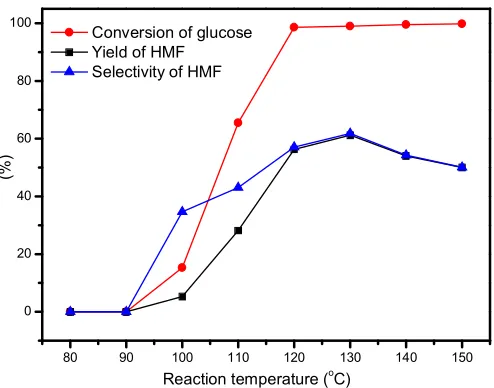
Effect of the catalytic loading and reaction temperature were also investigated. Fig.9 revealed
320
the changes of the reaction products on the variation of catalyst loadings at 130 °C for 3 h. It was
321
found from Fig.9 that when the catalyst loading was not more than 0.1 g, the conversion of glucose
322
soared with the increase of catalyst loading from 72.35 % at 0.03 g to 95.86 % at 0.10 g. However,
323
after the catalyst loading was over 0.1 g, the conversion of glucose increased slowly and closed to
324
100 %. The yield and selectivity of HMF were also varied with the increase of catalyst loading.
325
When the catalyst loading was not more 0.1 g, the yield and selectivity of HMF was soared with the
326
increase of catalyst loading. When the catalyst loading was to 0.1g, the yield and selectivity of HMF
327
were both to the maximum, up to 61.24 % and 63.88 %. Afterwards, further increase of catalyst
328
loading would lead the yield and selectivity of HMF to decrease gradually. The results indicated
329
when the catalyst loading was over 0.1 g, the excessive catalyst would arouse more side reaction
330
occur, such as decomposition of HMF or polymerizations of HMF and glucose, and produced
331
countless undesired byproducts, such as soluble oligosaccharides and insoluble oligomers.
332
It was discovered when the reaction temperature was low than 100 °C, the conversion of
333
glucose was nearly not happening. No HMF was detected. And when reaction temperature was
334
more than 100 °C, the conversion rate of glucose increased significantly. Especially at range from
335
100 to 130 °C, the conversion of glucose was skyrocketed from 15.53 % at 100 ºC to 98.56 % at 130 °C.
336
Afterwards, further increase of temperature would trigger the conversion of glucose close to 100 %.
337
However, the variation of HMF didn’t follow the trend. When the reaction temperature was over
338
100 °C, HMF yield was soared and gradually closed to the maximum, up to 61.24 %. Afterwards,
339
further increase of temperature would arouse HMF decline quickly, which indicated excessive
340
reaction temperature would trigger countless sides reactions occur and produced numerous side
341
products.
80 90 100 110 120 130 140 150 0
20 40 60 80 100
(%)
Reaction temperature (oC)
Conversion of glucose Yield of HMF
Selectivity of HMF
343
Fig.10. Effect of the reaction temperature on the conversion of glucose
344
345
3.7. Recycling Experiments
346
Recycling experiments are an important factor in terms of the practical production of HMF.
347
Fig.11 shows the results of recycling experiments. It was found that the catalyst γ-AlOOH owned a
348
well stabile catalytic activity. After five reaction runs, HMF yield and selectivity were only a slight
349
decrease, and kept at 57.23 % and 59.25 %, respectively.
350
1 2 3 4 5
0 10 20 30 40 50 60 70 80 90 100 110 120 130
(
%
)
Runs Numbers
HMF Yield
Glucose Conversion HMF Selectivity
351
Fig. 11 Recycling experiments of the catalyst
352
4. Conclusions
353
In the work, a simple solid catalyst γ-AlOOH was prepared and used to catalyze glucose
354
transform into HMF. The γ-AlOOH owned the high catalytic activity and the well catalytic stability.
355
A high HMF yield of 61.24 % was obtained at the mild reaction condition of 130 °C for 3 h in the
356
solvent of DMSO. More importantly, the catalyst γ-AlOOH could be reused for several times
357
without the loss of its significant catalytic activities. After five reaction runs, a HMF with 57.23 %
358
yield and 59.25 % selectivity was obtained. Furthermore, the degradation of other polysaccharides
359
(Maltose, Sucrose and Cellulose) catalyzed by the γ-AlOOH were also investigated under the mixed
360
systems of ionic liquid 1-butyl-3-methylimidazolium chloride, DMSO and a small amount of water.
361
For instance, a high HMF yield of 50.26 % was obtained at 170 °C for 2.5 h on the decomposition of
362
Cellulose.
Author Contributions: conceptualization, Zhe Tang and Jianhui Su; methodology, Ruiyu Jiang; software, Hui
364
Cang; validation, Zhe Tang, Jianhui Su. and Ruiyu Jiang.; formal analysis, Zhe Tang.; investigation, Jianhui Su.;
365
resources, Hui Cang; data curation, Jianhui Su; writing—original draft preparation, Zhe Tang; writing—review
366
and editing, Jianhui SU; visualization, Ruiyu Jiang; supervision,Jianhui SU; project administration, Zhe Tang;
367
funding acquisition, Hui Cang”.
368
Funding: This research was funded by the talent instruction Projects of Yancheng Institute of Technology
369
(KJC2014015, XJ201724), Provincial Education Program of Jiangsu (17KJD530002), Qing Lan Project of Jiangsu
370
Province and Industry University Research Cooperation Project (BY2016065-36), "Six Talent Peaks Project" of
371
Jiangsu Province (XCL-064) and Natural Science Foundation of Jiangsu Province-General Program
372
(BK20171273).
373
Acknowledgments: The authors are grateful for the help of the colleagues from the Analysis and Testing
374
Center of Yancheng institute of technology.
375
Conflicts of Interest: The authors declare no conflict of interest.
376
References
377
1. Goldemberg J. Ethanol for a sustainable energy future. Science 2007, 31, 808-810
378
2. Caes B. R.; Teixeira R. E.; Knapp K. G.; Raines R. T. Biomass to Furanics: Renewable Routes to
379
Chemicals and Fuels. ACS Sustainable Chem. Eng. 2015, 3, 2591- 2605
380
3. DaVià L.; Gonzalez-Yañez C.R. E.O.; Davies T.E.; Lopez-Sanchez J.A. Visible light selective
381
photocatalytic conversion of glucose by TiO2. Appl.Catal. B-Environ. 2017, 202, 281-288
382
4. Eblagon K. M.; Pereira M.F.R.; Figueiredo J. L. One-pot oxidation of cellobiose to gluconic acid
383
Unprecedented high selectivity on bifunctional gold catalysts over mesoporous carbon by integrated
384
texture and surface chemistry optimization. Appl.Catal. B-Environ. 2016,184, 381-396
385
5. Shamsul N.S.; Kamarudin S.K.; Rahman N.A. Study on the physical and chemical composition of agro
386
wastes for the production of 5-hydroxymethylfurfural. Bioresour. Technol. 2018,247, 821-828
387
6. Mukherjee A.; Dumont M.; Raghavan V. Review: Sustainable production of hydroxymethylfurfural
388
and levulinic acid: Challenges and opportunities. Biomass Bioenerg. 2015, 72, 143-183
389
7. Zhang Z. H.; Deng K. Recent Advances in the Catalytic Synthesis of 2,5-Furan- dicarboxylic Acid and
390
Its Derivatives. ACS Catal. 2015, 5, 6529 -6544
391
8. Siankevich S.; Fei Z.; Yan N.; Dyson P.J. Application of Ionic Liquids in the Downstream Processing of
392
Lignocellulosic Biomass. CHIMIA International Journal for Chemistry 2015, 69, 592-596
393
9. Rosatella A. A.; Simeonov S. P; Frade R.F.M.; Afonso C.A.M. ChemInform Abstract:
5-394
Hydroxymethylfurfural (HMF) as a Building Block Platform: Biological Properties, Synthesis and
395
Synthetic Applications. Green Chem. 2011, 13, 754-793
396
10. Zakrzewska M. E.; Bogel-Łukasik E.; Bogel-Łukasik R. Ionic Liquid-Mediated Formation of
397
5-HydroxymethylfurfuralsA Promising Biomass-Derived Building Block. Chem. Rev. 2011,111, 397-417
398
11. Yang Y.; Hu C.W.; Abu-Omar M. M. Conversion of glucose into furans in the presence of AlCl3 in an
399
ethanol-water solvent system. Bioresour. Technol. 2012, 116, 190-194
400
12. Matsumiya H.; Hara T. Conversion of glucose into 5-hydroxymethyl- furfural with boric acid in
401
moltenmixtures of choline salts and carboxylic acids. Biomass Bioenerg. 2015, 72, 227-232
402
13. Tong X.; Li M.; Yan N.; Ma Y.; Dyson P. J.; Li Y. Defunctionalization of fructose and sucrose:
403
Iron-catalyzed production of 5-hydroxymethylfurfural from fructose and sucrose. Catal. Today 2011,
404
175, 524-527
405
14. Jain A.; Shore A.M.; Jonnalagadda S.C.; Ramanujachary K.V.; Mugweru A. Conversion of fructose,
406
glucose and sucrose to 5-hydroxymethyl-2-furfural over mesoporous zirconium phosphate catalyst.
407
Appl. Catal. A 2015, 489,72-76
408
15. Zhang X.; Wilson K.; Lee A.F. Heterogeneously catalyzed hydrothermal processing of C5-C6 sugars,
409
Chem. Rev. 2016,116, 12328-12368
410
16. Dhepe P.L.; Fukuoka A. Cellulose conversion under heterogeneous catalysis. ChemSusChem 2008,1,
411
969–975.
412
17. Dijkmans J.; Gabriels D.; Dusselier M.; de Clippel F.; Vanelderen P.; Houthoofd K.; Malfliet A.;
413
Pontikes Y.; Sels B. F. Productive sugar isomerization with highly active Sn in dealuminated β zeolites
414
18. Li H.; Fang Z.; Luo J.; Yang S. Direct conversion of biomass components to the biofuel
416
methyllevulinate catalyzed by acid-base bifunctional zirconia-zeolites. Appl.Catal. B-Environ. 2017 ,
417
200, 182-191
418
19. Catrinck M. N.; Ribeiro E. S.; Monteiro R.S.; Ribas R. M.; Barbosa M.H.P.; Teófilo R. F. Direct
419
conversion of glucose to 5-hydroxymethylfurfural using a mixture of niobic acid and niobium
420
phosphate as a solid acid catalyst. Fuel 2017, 210, 67-74
421
20. Hu L.; Zhao G.; Tang X.; Wu Z.; Xu J.X.; Lin L.; Liu S. J. Catalytic conversion of carbohydrates into
422
5-hydroxymethylfurfural over cellulose-derived carbonaceous catalyst in ionic liquid. Bioresour.
423
Technol. 2013,148, 501-507
424
21. Sun Z.; Wang S. T.; Wang X. H.; Jiang Z. J. Lysine functional heteropolyacid nanospheres as
425
bifunctional acid-base catalysts for cascade conversion of glucose to levulinic acid. Fuel 2016, 164,
426
262-266
427
22. Chen D. W.; Liang F. B.; Feng D. X.; Xian M.; Zhang H. B.; Liu H. Z.; Du F. L. An efficient route from
428
reproducible glucose to 5-hydroxymethylfurfuralcatalyzed by porous coordination polymer
429
heterogeneous catalysts. Chem. Eng. J. 2016, 300, 177-184
430
23. Lopes M.; Dussan K.; Leahy J. J.; DaSilva V. T. Conversion of d-glucose to 5-hydroxymethylfurfural
431
using Al2O3-promoted sulphated tin oxide as catalyst. Catal. Today 2017, 279, 233-243
432
24. Liu J.; Li H.; Liu Y.; Lu Y. M.; He J.; Liu X. F.; Wu Z. B.; Yang S. Catalytic conversion of glucose to
433
5-hydroxymethylfurfural over nano-sized mesoporous Al2O3-B2O3 solid acids. Catal. Commun. 2015,
434
62, 19-23
435
25. Graça I.; Iruretagoyena D.; Chadwick D. Glucose isomerisation into fructose over
436
magnesium-impregnated NaY zeolite catalysts. Appl.Catal. B-Environ. 2017 ,206, 434-443
437
26. Delidovich I.; Palkovits R. Fructose production via extraction-assisted isomerization of glucose
438
catalyzed by phosphate. Green Chem. 2016, 18, 5822-5830
439
27. Li F.; Shi G. F.; Wang G. Y.; Guo T. C.; Lei X. M. Catalytic conversion of raw Dioscorea composita
440
biomass to 5-hydroxymethylfurfural using a combination of metal chlorides in N,
441
N-dimethylacetamide solvent containing lithium chloride. Res. Chem. Intermed. 2016, 42, 6757-6767
442
28. Xia H.; Hu H.; Xu S.; Xiao K.; Zuo S. Catalytic conversion of glucose to 5-hydroxymethyfural over
443
Fe/β zeolites with extra-framework isolated Fe species in a biphasic reaction system. Biomass Bioenerg.
444
2018,108, 426–432
445
29. Hou Q. D.; Zhen M.N.; Liu L.; Chen Y.; Huang F.; Zhang S.Q.; Li W. Z.; Ju M.T. Tin phosphate as a
446
heterogeneous catalyst for efficient dehydration of glucose into 5-hydroxymethylfurfural in ionic
447
liquid. Appl.Catal. B-Environ. 2018, 224,183-193
448
30. Jiang L.; Zhou L.; Chao J.; Zhao H.; Lu T.; Su Y.; Yang X.; Xu J. Direct catalytic conversion of
449
carbohydrates to methyl levulinate: Synergy of solid Brønsted acid and Lewis acid. Appl.Catal.
450
B-Environ. 2018, 220 , 589–596
451
31. Wei W.; Wu S. Depolymerization of cellulose into high-value chemicals by using synergy of zinc
452
chloride hydrate and sulfate ion promoted titania catalyst. Bioresour. Technol. 2017, 241,760–766
453
32. Li Y.N.; Wang J. Q.; He L. N.; Yang Z. Z.; Liu A. H.; Yu B.; Luan C.R. Experimental and theoretical
454
studies on imidazolium ionic liquid-promoted conversion of fructose to 5-hydroxymethylfurfural.
455
Green Chem. 2012,14, 2752-2758
456
33. Gomesa F.N.D.C.; Mendesb F.M.T.; Souza M.M.V.M. Synthesis of 5-hydroxymethylfurfural from
457
fructose catalyzed by phosphotungstic acid. Catal.Today 2017, 279; 296-304
458
34. Sanchez-Valente J.; Bokhimi X.; Hernandez F. Physicochemical and catalytic properties of sol gel
459
aluminas aged under hydrothermal conditions. Langmuir 2003, 19(9), 3583 - 3588
460
35. Chiche D.; Digne M.; Revel R.; et al. Accurate determination of oxide nanoparticle size and shape
461
based on X-Ray powder pattern simulation: application to boehmite AlOOH. J. Phys. Chem. C 2008,
462
112 (23,8524-8533
463
36. Tang Z.; Liu Y. Q.; Li G.C.; Hu X. F.; Liu C. G. Ionic liquid assisted hydrothermal fabrication of
464
hierarchically organized γ-AlOOH hollow sphere. Materials Research Bulletin. 2012, 47(11), 3177-3184
465
37. Wang Y. G.; Bronsveld P. M.; DeHosson J. T. M. Ordering of octahedral vacancies in transition
466
38. Tang Z.; Hu X. F.; Liang J. L.; Zhao J. C.; Liu Y. Q.; Liu C. G. Manipulating the morphology and
468
textural property of γ-AlOOH by modulating the alkyl chain length of cation in ionic liquid. Materials
469
Research Bulletin. 2013, 48(6), 2351-2360
470
39. Takagaki A.; Jung J.C.; Hayashi S. Solid Lewis acidity of boehmite g-AlO(OH) and its catalytic activity
471
for transformation of sugars in water. RSC Adv. 2014, 4, 43785-43791
472
40. Li G.C.; Liu Y. Q. ; Tang Z. ; Liu C.G. Effects of rehydration of alumina on its structural properties,
473
surface acidity; and HDN activity of quinolone. Appl. Catal. A 2012, 437–438, 79-89
474
41. Emeis C. A. Determination of Integrated Molar Extinction Coefficients for Infrared Absorption Bands
475
of Pyridine Adsorbed on Solid Acid Catalysts. J. Catal. 1993, 141, 347–354.
476
42. Saravanan K.; Tyagi B.; Shukl Ram S.; Bajaj H.C. Esterification of palmitic acid with methanol over
477
template-assisted mesoporous sulfated zirconia solid acid catalyst. d. Appl.Catal. B-Environ. 2015, 172–
478
173, 108-115
479
43. Hu Z., Liu B.; Zhang Z.; Chen L.. Conversion of carbohydrates into 5-hydroxymethylfurfural
480
catalyzedby acidic ionic liquids in dimethyl sulfoxide. Industrial Crops and Products 2013, 50 , 264– 269
481
44. Holm J.; Lassi U.; Hernoux-Villie`re A. Task-specific ionic liquid [SBMIM]Cl in one-step dissolution
482
and hydrolysis of fibre sludge. Biomass Bioenerg. 2013, 56, 432-436
483
45. Wiredu B.; Amarasekara A. S. Synthesis of a sulfonic acid functionalized acidic ionic liquid modified
484
silica catalyst and applications in the hydrolysis of cellulose. Catal. Commun. 2014,48,41–44
485
46. Amarasekara A. S.; Williams L. D.; Ebede C.C. Mechanism of the dehydration of D-fructose to
486
5-hydroxymethylfurfural in dimethyl sulfoxide at 150 degrees C: an NMR study. Carbohydr. Res. 2008,
487
343, 3021-3024
488
47. Tsilomelekis G.; Josephson T.R.; Nikolakis V.; Caratzoulas S. Origin of 5-hydroxymethylfurfural
489
stability in water/dimethyl sulfoxide mixtures.ChemSusChem 2014, 7, 117-126
490
48. Morales G.; Paniagua M.; Melero J.A.; Iglesias J. Efficient production of 5-ethoxymethylfurfural from
491
fructose by sulfonic mesostructured silica using DMSO as co-solvent. Catal. Today 2017,279, 305-316
492
49. Lane D. R.; Masca M.; Stroeve P. Experimental studies towards optimization of the production of
493
5-(chloromethyl)furfural (CMF) from glucose in a two-phase reactor. Renew Energ. 2016, 85, 994-1001
494
50. Zhang L.X.; Xi G.Y.; Chen Z.; Qi Z.Y.; Wang X. C. Enhanced formation of 5-HMF from glucose using a
495
highly selective and stable SAPO-34 catalyst. Chem. Eng. J. 2017, 307, 877-883
496
51. Paul S. K.; Chakraborty St. Microwave-assisted ionic liquid-mediated rapid catalytic conversion of
497
non-edible lignocellulosic Sunn hemp fibres to biofuels. Bioresource Technology 2018, 253 , 85–93
498
52. Siankevich S.; Fei Z.; Scopelliti R.; Laurenczy G.; Katsyuba S.; Yan N.; Dyson P. J.. Enhanced
499
Conversion of Carbohydrates to the Platform Chemical 5-Hydroxymethylfurfural Using Designer
500
Ionic Liquids. ChemSusChem 2014, 7(6), 1647-1654
501
53. Zhou J.; Tang Z.; Jiang X.; Jiang R.; Shao J.; Han F.; Xu Q. Catalytic Conversion of Glucose into
502
5-Hydroxymethyl-Furfural Over Chromium-Exchanged Bentonite in Ionic Liquid-Dimethy Sulfoxide
503
Mixtures. Waste Biomass Valor. 2016, 7, 1357–1368
504
54. Kaijun Dong; Jun Zhang; Weimin Luo; Lin Su Zhilin Huang. Catalytic conversion of carbohydrates
505
into 5-hydroxymethyl furfural over sulfonated hyper-cross-linked polymer in DMSO. Chem. Eng. J.
506
2018,334 , 1055–1064
507
55. Dou Y; Zhou S; Oldani C; Fang W; Cao Q. 5-Hydroxymethylfurfural production from dehydration of
508
fructose catalyzed by Aquivion@silica solid acid. Fuel 2018,214 , 45–54
509
56. Morales G.; Paniagua M.; Melero J.A.; Iglesias J. Efficient production of 5-ethoxymethylfurfural from