Bayesian Semi-Supervised Chinese Word Segmentation
for Statistical Machine Translation
Jia Xu†, Jianfeng Gao∗, Kristina Toutanova∗, Hermann Ney†
Computer Science 6† Microsoft Corporation∗ RWTH Aachen University One Microsoft Way
D-52056 Aachen, Germany Redmond, WA 98052, USA {xujia,ney}@cs.rwth-aachen.de {jfgao,kristout}@microsoft.com
Abstract
Words in Chinese text are not naturally separated by delimiters, which poses a challenge to standard machine translation (MT) systems. In MT, the widely used approach is to apply a Chinese word seg-menter trained from manually annotated data, using a fixed lexicon. Such word segmentation is not necessarily optimal for translation. We propose a Bayesian semi-supervised Chinese word segmenta-tion model which uses both monolingual and bilingual information to derive a seg-mentation suitable for MT. Experiments show that our method improves a state-of-the-art MT system in a small and a large data environment.
1 Introduction
Chinese sentences are written in the form of a se-quence of Chinese characters, and words are not separated by white spaces. This is different from most European languages and poses difficulty in many natural language processing tasks, such as machine translation.
It is difficult to define “correct” Chinese word segmentation (CWS) and various definitions have been proposed. In this work, we explore the idea that the best segmentation depends on the task, and concentrate on developing a CWS method for MT, which leads to better translation performance.
The common solution in Chinese-to-English translation has been to segment the Chinese text using an off-the-shelf CWS method, and to apply a standard translation model given the fixed seg-mentation. The most widely applied method for MT is unigram segmentation, such as segmenta-tion using the LDC (LDC, 2003) tool, which re-quires a manual lexicon containing a list of Chi-nese words and their frequencies. The lexicon and
c
2008. Licensed under the Creative Commons Attribution-Noncommercial-Share Alike 3.0 Unported li-cense (http://creativecommons.org/licenses/by-nc-sa/3.0/). Some rights reserved.
frequencies are obtained using manually annotated data. This method is sub-optimal for MT. For ex-ample, d(paper) and d(card) can be two words or composed into one worddd(cards). Sinced ddoes not exist in the manual lexicon, it cannot be generated by this method.
In addition to unigram segmentation, other methods have been proposed. For example, (Gao et al., 2005) described an adaptive CWS system, and (Andrew, 2006) employed a conditional ran-dom field model for sequence segmentation. How-ever, these methods are not specifically devel-oped for the MT application, and significant im-provements in translation performance need to be shown.
In (Xu et al., 2004) and (Xu et al., 2005), word segmentations are integrated into MT sys-tems during model training and translation. We re-fine the method in training using a Bayesian semi-supervised CWS approach motivated by (Goldwa-ter et al., 2006). We describe a generative model which consists of a word model and two alignment models, representing the monolingual and bilin-gual information, respectively. In our methods, we first segment Chinese text using a unigram seg-menter, and then learn new word types and word distributions, which are suitable for MT.
Our experiments on both large (NIST) and small (IWSLT) data tracks of Chinese-to-English trans-lation show that our method improves the per-formance of a state-of-the-art machine translation system.
2 Review of the Baseline System
2.1 Word segmentation
In statistical machine translation, we are given a Chinese sentence in characters cK
1 = c1. . . cK
which is to be translated into an English sentence
eI
1 =e1. . . eI.In order to obtain a more adequate
mapping between Chinese and English words,cK
1
is usually segmented into wordsfJ
1 =f1. . . fJ in
preprocessing.
In our baseline system, we apply the commonly
used unigram model to generate the segmenta-tion. Given a manually compiled lexicon contain-ing words and their relative frequencies Ps(f0j),
the best segmentationfJ
1 is the one that maximizes
the joint probability of all words in the sentence, with the assumption that words are independent of each other1:
fJ
1 = argmax
f0J0
1
P r(f0J0
1 |cK1 )
≈ argmax
f0J0
1
J0
Y
j=1
Ps(f0j),
where the maximization is taken over Chinese word sequences whose character sequence iscK
1 .
2.2 Translation system
Once we have segmented the Chinese sentences into words, we train standard alignment models in both directions with GIZA++ (Och and Ney, 2002) using models of IBM-1 (Brown et al., 1993), HMM (Vogel et al., 1996) and IBM-4 (Brown et al., 1993).
Our MT system uses a phrase-based decoder and the log-linear model described in (Zens and Ney, 2004). Features in the log-linear model in-clude translation models in two directions, a lan-guage model, a distortion model and a sentence length penalty. The feature weights are tuned on the development set using a downhill simplex al-gorithm (Press et al., 2002). The language model is a statistical ngram model estimated using modi-fied Kneser-Ney smoothing.
3 Unigram Dirichlet Process Model for CWS
The simplest version of our model is based on a unigram Dirichlet Process (DP) model, using only monolingual information. Different from a stan-dard unigram model for CWS, our model can in-troduce new Chinese word types and learn word distributions automatically from unlabeled data.
According to this model, a corpus of Chinese wordsf1, . . . fm, . . . , fM is generated via:
G|α, P0∼DP(α, P0) fm|G∼G
where G is a distribution over words drawn from a Dirichlet Process prior with base measureP0 and
concentration parameterα.
We never explicitly estimate G but instead integrate over its possible values and perform Bayesian inference. It is easy to compute the
1The notational convention will be as follows: we use the
symbolP r(·)to denote general probability distributions with (nearly) no specific assumptions. In contrast, for model-based probability distributions, we use the generic symbolP(·).
probability of a Chinese word given a set of al-ready generated words, while integrating overG. This is done by casting Chinese word generation as a Chinese restaurant process (CRP) (Aldous, 1985), i.e. a restaurant with an infinite num-ber of tables (approximately corresponding to Chi-nese word types), each table with infinite number of seats (approximately corresponding to Chinese word frequencies).
The Dirichlet Process model can be viewed in-tuitively as a cache model (Goldwater et al., 2006). Each wordfjin the corpus is either retrieved from
a cache or generated anew given the previously ob-served wordsf−j:
P(fj|f−j) = N(fjN)++αPα0(fj), (1)
whereN(fj)is the number of Chinese wordsfj in
the previous context.Nis the total number of Chi-nese words,P0is the base probability over words,
andα influences the probability of introducing a new word at each step and controls the size of the lexicon. The probability of generating a word from the cache increases as more instances of that word are seen.
For the base distributionP0, which governs the
generation of new words, we use the following dis-tribution (called thespelling model):
P0(f) = P(L)P0(f|L)
= λL
L!e−λuL (2) where 1u is the number of characters in the docu-ment, i.e. character vocabulary size, andLis the number of Chinese characters of wordf. We note that this is a Poisson distribution on word length and a unigram distribution on characters given the length. We usedλ= 2andα = 0.3in our experi-ments.
4 CWS Model for MT
As a solution to the problems with the conventional approach to CWS mentioned in Section 1, we pro-pose a generative model for CWS in Section 4.1, and then extend the model to a more general but deficient model, similar to a maximum entropy model in which most features are derived from the submodels of the generative model.
4.1 Generative Model
The generative model assume that a corpus of par-allel sentences (c1K,e1I) is generated along with a
hidden sequence of Chinese wordsf1J and a
hid-den word alignment b1I for every sentence. The
alignment indicates the aligned Chinese wordfbi
for each English wordei, wheref0indicates a
Without assuming any special form for the prob-ability of a sentence pair along with hidden vari-ables, we can factor it into a monolingual Chi-nese sentence probability and a bilingual transla-tion probability as follows:
P r(c1K, e1I, f1J, b1I)
=P r(cK1 , f1J)P r(eI1, bI1|f1J)
=P r(f1J)δ(f1J, c1K)P r(eI1, bI1|f1J),
where δ(fJ
1, cK1 ) is 1 if the characters of the
se-quence of words f1J are c1K, and to 0
other-wise. We can drop the conditioning on c1K in P r(eI
1, bI1|f1J), because the characters are
deter-ministic given the words.
The joint probability of the observations (c1K, eI1) can be obtained by summing over all
possible values of the hidden variablesfJ
1 andbI1.
In Sections 4.1.1 and 4.1.2, we will describe the modeling assumptions behind the monolingual Chinese sentence model and the translation model, respectively.
4.1.1 Monolingual Chinese sentence model We use the Dirichlet Process unigram word model introduced in section 3. In this model, the parameters of a distribution over words G are first drawn from the Dirichlet priorDP(α, P0). Words
are then independently generated according to G. The probability of a sequence of Chinese words in a sentence is thus:
P r(fJ
1) ≈
J
Y
j=1
P(fj|G) (3)
4.1.2 Translation model
We employ the Dirichlet Process inverse IBM model 1 to generate English words and alignment given the Chinese words. In this model, for every Chinese wordf (including thenullword), a distri-bution over English wordsGf is first drawn from
a Dirichlet Process prior DP(α, P0(e)), where P0(e)we used the empirical distribution over
En-glish words in the parallel data. Then, given these parameters, the probability of an English sentence and alignment given a Chinese sentence (sequence of words) is given by:
P(eI1, bI1|f1J, Gf) = I
Y
i=1
1
J + 1P(ei|Gfbi)
This is the same model form as inverse IBM model 1, except we have placed Dirichlet Process priors on the Chinese-word specific distributions over English words.2
2f
bi is the Chinese word aligned toei andGfbi is the distribution over English words conditioned on the wordfbi. Similarly,eajis the English word aligned tofjin the other di-rection andGeaj is the distribution over Chinese words
con-ditioned oneaj.
In practice, we observed that using a word-alignment model in one direction is not sufficient. We then added a factor to our model which in-cludes word alignment in the other direction , i.e. a Dirichlet Process IBM model 1. We ignore the de-tailed description here, because the calculation is the same as that of the inverse IBM model 1. Ac-cording to this model, for every English worde (in-cluding thenullword), a distribution over Chinese wordsGe is first drawn from a Dirichlet Process
priorDP(α, P0(f)). Here, for the base
distribu-tionP0(f)we used the same spelling model as for
the monolingual unigram Dirichlet Process prior. The probability of a sequence of Chinese words
fJ
1 and a word alignmentaJ1 given a sequence of
English wordseI
1 is then:
P(f1J, aJ1|eI1, Ge) = J
Y
j=1
1
I+ 1P(fj|Geaj)
4.2 Final Model
We put the monolingual model and the transla-tion models in both directransla-tions together into a sin-gle model, where each of the component models is weighted by a scaling factor. This is similar to a maximum entropy model. We fit the weights of the sub-models on a development set by maximiz-ing the BLEU score of the final translation.
P(cK1 , eI1, f1J, aJ1, bI1) (4)
≈ Z1P(fJ
1)λ1·P(eI1, bI1|f1J)λ2
·P(f1J, a1J|eI1)λ3,
where Z is the normalization factor.
In practice we do not re-normalize the proba-bilities and our model is thus deficient because it does not sum to 1 over valid observations. How-ever, we found the model work very good in our experiments. Similar deficient models have been used very successfully before, for example, in the IBM models 3–6 and in the unsupervised grammar induction model of (Klein and Manning, 2002).
5 Gibbs Sampling Training
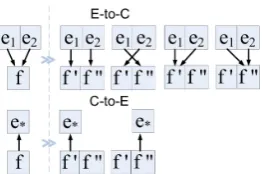
Figure 1: Case I, transition from a no-boundary to a boundary state,f tof0f00.
Figure 2: Case II, transition from a boundary to a no-boundary state,f0f00tof.
Markov chain result from sampling each compo-nent of the state conditioned on the current value of all other variables.
In our problem, the observations are D = (d1, ..dn, .., dN), where dn=(cK1 , eI1) indicates a
bilingual sentence pair, the hidden variables are the word segmentationsfJ
1 and the alignments in two
directionsaJ
1 andbI1.
To perform Gibbs sampling, we start with an initial word segmentation and initial word alignments, and iteratively re-sample the word-segmentation and alignments according to our model of Equation 4.
Note that for efficiency, we only allow limited modifications to the initial word alignments. Thus we only use models derived from IBM-1 (instead of IBM-4) for comparing different word segmenta-tions. On the other hand, re-sampling the segmen-tation causes re-linking alignment points to parts or groups of the original words.
Hence, we organize our sampling process around possible word boundaries. For each char-acterckin each sentence, we consider two
alterna-tive segmentations:ck+indicates the segmentation
where there is a boundary afterck andck−
indi-cates the segmentation where there is no boundary afterck, keeping all other boundaries fixed. Letf
denote the single word spanning characterckwhen
there is no boundary after it, andf0,f00denote the
two adjacent words resulting if there is a bound-ary: f0 includesckandf00 starts just to the right,
with character ck+1. The introduction of f0 and f00 leads toM new possible alignments in the
E-to-C direction b+k1, . . . , b+kM, such as in Figure 1. Together with the boundary vs no-boundary state at each character position, we re-sample a set of alignment links between English words and any of the Chinese wordsf,f0, andf00, keeping all other
word alignments in the sentence pair fixed. (See Figures 1 and 2.)
Table 1: General Algorithm of GS for CWS. Input:Dwith an initial segmentation and alignments Output:Dwith sampled segmentation and alignments forn= 1toNˆ
fork= 1toKthatck∈dn CreateM+1 candidates,cba+
k,mandcba−k, where
cba+k,m: there is a word boundary afterck
cba−
k: there is no word boundary afterck Compute probabilities
P(cba+
k,m|dhnk−)
P(cba−
k|dhnk−)
Sample boundary and relevant alignments Update counts
Thus at each step in the Gibbs sampler, we con-sider a set of alternatives for the boundary after
ck and relevant alignment links, keeping all other
hidden variables fixed. At each step, we need to compute the probability of each of the alternatives, given the fixed values of the other hidden variables. We introduce some notation to make the presen-tation easier. For every positionkin sentence pair
n, we denote bydhnk− the observations and
hid-den variables for all sentences other than sentence
n, and the observations and hidden variables in-side sentence n, not involving character position
ck. The fixed variables inside the sentence are the
words not neighboring position k, and the align-ments in both directions to these words.
In the process of sampling, we consider a set of alternatives: segmentation ck+ along with the
product space of relevant alignments in both direc-tionsb+k1, . . . , b+kM, anda+k, and segmentationc−k
along with relevant alignmentsbk− anda−k. For
brevity, we denote these alternatives bycbak,m+
andcbak−.
We describe how we derive the set of alterna-tives in section 5.2 and how we compute their probabilities in section 5.1.
Table 1 shows schematically one iteration of Gibbs sampling through the whole training corpus of parallel sentences, where Nˆ is the number of parallel sentences.
5.1 Computing probabilities of alternatives For the Gibbs sampling algorithm in Table 1, we need to compute the probability of each alternative segmentation/alignments, given the fixed values of the rest of the datadhnk−. The probability of the
[image:4.595.117.247.207.250.2]in-tegrating over all of the possible values of the dis-tributionsG,Gf andGe.
Let cbak denote an alternative hypothesis
in-cluding boundary or no boundary at position k, and relevant alignments to English words in both directions of the one or two Chinese words result-ing from the segmentation atk. The probability of this configuration given by our model is:
P(cbak|dhnk−)∝Pm(cbak|dhnk−)λ1 (5)
·Pef(cbak|dhnk−)λ2·Pfe(cbak|dhnk−)λ3,
where Pm(cbak|dhnk−) is the monolingual
word probability, and Pfe(cbak|dhnk−) and
Pef(cbak|dhnk−) are the translation probabilities
in the two directions.
We now describe the computations of each of the component probabilities.
5.1.1 Word model probability
The word model probability Pm(cabk|dhnk−)
in Equation 5 is derived from Equations 3 and 1: There are two cases, depending on whether the hypothesis specifies that there is a boundary after characterck, in which case we need the
probabili-ties of the two resulting wordsf0, andf00, or there
is no boundary, in which case we need the proba-bility of the single wordf. (See the initial states in Figures 1 and 2, respectively.)
Let N denote the total number of word tokens in the rest of the corpusdhnk−, andN(f)denote
the number of instances of wordf indhnk−. The
probabilities in the two cases are
Pm(c+k|dhnk−)∝
N(f0) +αP 0(f0) N+α ·
N(f00) +αP 0(f00) N+α
Pm(c−k|dhnk−)∝ N(f) +N+αPα0(f)
HereP0(f)is computed using Equation 2.
5.1.2 Translation model probability
The translation model probabilities depend on whether or not there is a segmentation boundary atck and which English words are aligned to the
relevant Chinese words.
In the first case, assume that there is a word boundary incabk, and that English words{e0}are
aligned tof0 and words {e00}are aligned tof00 in
the E-to-C direction according to the alignmentbk,
and thatf0is aligned toe∗0andf00is aligned toe∗00
in the C-to-E direction according to the alignment
ak(see the initial state in Figure 1). Here we
over-loaded notations and usebk andakto indicate the
alignments of the relevant Chinese words at posi-tionkto any English words. LetI denote the total
number of English words in the sentence, andJ+1 denote the number of Chinese words according to this segmentation. We also denote the total num-ber of English words aligned to eitherf0 orf00 in
the E-to-C direction byP.
The translation model probability in the E-to-C direction is thus:
Pef(c+k, bk, ak|dhnk−)∝
1 (J+ 2)P
Y
e0
P(e0|f0, dh
nk−)
Y
e00
P(e00|f00, dh
nk−)
Here we computeP(e|f, dhnk−)as:
P(e|f, dhnk−) = N(e, fN() +f) +αPα0(e),
where the counts are computed over the fixed as-signmentsdhnk−.
The translation probability in the other direction is similarly computed as:
Pfe(c+k, bk, ak|dhnk−)∝
1
I+ 1 2
P(f0|e∗, dhnk−)P(f00|e∗, dhnk−)
AndP(f|e, dhnk−)is computed as:
P(f|e, dhnk−) = N(f, eN() +e) +αPα0(f),
where the counts are computed over the fixed as-signmentsdhnk−.
In the second case, if the hypothesis in evalua-tion does not have a word boundary at posievalua-tionk, the total number of Chinese words would be one less, i.e.J instead ofJ+ 1in the equations above, and there would be a single set of English words aligned to the wordfin the E-to-C direction, and a single worde∗aligned tof in the C-to-E direction
(see the initial state in Figure 2. The probability of this hypothesis is computed analogously.
5.2 Determining the set of alternative hypotheses
As mentioned earlier, we consider alternative alignments which deviate minimally from the cur-rent alignments, and which satisfy the constraints of the IBM model 1 in both directions. In order to describe the set of alternatives, we consider two cases, depending on whether there is a boundary at the current character before sampling at positionk. Case 1. There was no boundary atckin the
If there is no boundary at ck, there is a
sin-gle wordf spanning that position. We denote by
{e} the set of English words aligned tof at that state in the E-to-C direction and by e∗ the
En-glish word aligned to f in the C-to-E direction. Since every state we consider satisfies the IBM one-to-many constraints, there is exactly one En-glish word aligned tofin the C-to-E direction and the words{e}have no other words aligned to them in the E-to-C direction.
In this case, we consider as hypothesis cbak−
the same segmentation and alignment as in the pre-vious state. (see Table 1 for an overview of the alternative hypotheses.)
We consider M different hypotheses which in-clude a boundary at k in this case, whereM de-pends on the number of words {e} aligned to f
in the previous state. Because we are breaking the word f into two words f0 andf00 by placing
a boundary at ck, we need to re-align the words
{e} to either f0 or f00. Additionally we need to
align f0 and f00 to English words in the C-to-E
direction. The number of different hypotheses is equal to2P whereP = |{e}|. These alternatives
arise by considering that each of the words in{e}
needs to align to eitherf0 orf00, and there are2P
combinations of these alignments. For example, if
{e}={e1, e2}, after splitting the wordf there are
four possible alignments, illustrated in Figure 1: I. (f0, e1) and (f00, e2), II. (f0, e2) and (f00, e1),
III.(f0, e
1)and(f0, e2), IV.(f00, e1)and(f00, e2).
For the alignment ak in the C-to-E direction, we
consider only one option, in which both resulting words f0 and f00 align to e
∗. These alternatives
formcbak,m+in Table 1.
Case 2. There was a boundary atckin the previous
state (see Figure 2).
In this case, for the hypothesesc+k we consider only one alternative, which is exactly the same as the assignment of segmentation and alignments in the previous state. Thus we haveM = 1in Table 1.
Letf0 andf00 denote the two words at position
k in the previous state,{e0} and{e00}denote the
sets of English words aligned to them in the E-to-C direction, respectively, ande∗0 ande∗00denote the
English words aligned tof0 andf00 in the C-to-E
direction.
We consider only one hypothesis cbak− where
there is no boundary atck. In this hypothesis, there
is a single word f = f0f00 spanning position k,
and all words{e0} ∪ {e00}align tof in the
E-to-C direction. For the E-to-C-to-E direction we consider the “better” of the alignments(f, e0
∗) and(f, e00∗)
where the better alignment is defined as the one having higher probability according to the C-to-E word translation probabilities.
Table 2: Complete Algorithm of Gibbs Sampler for CWS including Alignment Models.
Input:D,F0
Output:AT,FT
fort= 1toT
Run GIZA++ on(D, Ft−1)to obtainAt
Run GS on(D, Ft−1, At)to obtainFt
5.3 Complete segmentation algorithm
So far, we have described how we re-sample word segmentation and alignments according to our model, starting from an initial segmentation and alignments from GIZA++. Putting these pieces to-gether, the algorithm is summarized in Table 1.
We found that we can further improve perfor-mance by repeatedly aligning the corpus using GIZA++, after deriving a new segmentation us-ing our model. The complete algorithm which in-cludes this step is shown in Table 2, whereFt
in-dicates the word segmentation at iterationtandAt
denotes the GIZA++ corpus alignment in both di-rections. The GS re-segmentation step is done ac-cording to the algorithm in Table 1.
Using this algorithm, we obtain a new segmen-tation of the Chinese data and train the translation models using this segmentation as in the baseline MT system. To segment the test data for transla-tion, we use a unigram model, trained with maxi-mum likelihood estimation off of the final segmen-tation of the training corpusFT.
6 Translation Experiments
We performed experiments using our models for CWS on a large and a small data track. We evalu-ated performance by measuring WER (word error rate), PER (position-independent word error rate), BLEU (Papineni et al., 2002) and TER (translation error rate) (Snover et al., 2006) using multiple ref-erences.
6.1 Translation Task: Large Track NIST We first report the experiments using our mono-lingual unigram Dirichlet Process model for word segmentation on the NIST machine translation task (NIST, 2005). Because of the computational re-quirements, we only employed the monolingual word model for this large data track, i.e. the fea-ture weights wereλ1 = 1, λ2 = 0, λ3 = 0.
There-fore, no alignment information needs to be main-tained in this case.
The bilingual training corpus is a superset of corpora in the news domain collected from differ-ent sources.
Table 3: Statistics of corpora in task NIST.
Data Sents. Words[K] Voc.[K] Cn. En. Cn. En. Chars 2M 56M 49.5M 65.4 211
Base 39.2M 95.7
GS 40.5M 95.4
[image:7.595.91.273.92.185.2]02 878 23.1 28.0 2.04 4.34 03 919 24.6 29.2 2.21 4.91 04 1788 49.8 60.7 2.61 6.71 05 1082 30.8 34.2 2.30 5.39
Table 4: Translation performance [% BLEU] with the baseline(LDC) and GS method on NIST.
MT-eval LDC(Base) GS
2005 32.85 33.26
2002 34.32 34.36
2003 33.41 33.75
2004 33.74 34.06
characters. The LDC and GS word segmentation methods generated 39.2 and 40.5 million running words, respectively.
The scaling factors of the translation models de-scribed in Section 2.2 were optimized on the devel-opment corpus, MT-eval 05 with 1082 sentences. The resulting systems were evaluated on the test corpora MT-eval 02-04. For convenience, we only list the statistics of the first English reference.
Starting from the baseline LDC output as ini-tial word segmentation, we performed Gibbs sam-pling (GS) of word segmentations using 30 itera-tions over the Chinese training corpus.
Since BLEU is the official NIST measure of translation performance, we show the translation results measured in BLEU score only. As shown in Table 4, on the development data MT-eval 05, the BLEU score was improved by 0.4% absolute or more than 1% relative using GS. Similarly, the ab-solute BLEU scores are also improved on all other test sets, in the range of 0.04% to 0.4%.
We can see that even a monolingual semi-supervised word segmentation method can outper-form a supervised one in MT, probably because the training/test corpora contain many unknown words and words have different frequencies in our MT data from they do in the manually labeled CWS data.
[image:7.595.108.260.221.285.2]6.2 Translation Task: Small Track IWSLT We evaluate our full model, using both monolin-gual and bilinmonolin-gual information, on the IWSLT data. As shown in Table 5, the Chinese training corpus was segmented using the unigram seg-menter (Base) described in Section 2.1 and our GS method. Since the unigram segmenter performs better in our experiments, we took it as the base-line and the method for initialization in later ex-periments. We see that the vocabulary size of the Chinese training corpus was reduced more signif-icantly by GS than by the baseline method, even
Table 5: Statistics of corpora in task IWSLT.
Test Sents. Words[K] Voc. Cn. En. Cn. En. Chars 42.9K 520 420 2780 9930
Base 394 8800
GS 398 6230
Dev2 500 3.74 3.82 1004 821 Dev3 506 4.01 3.90 980 820 Eval 489 3.39 3.72 904 810
Table 6: Translation performance with different CWS methods on IWSLT[%].
Test Method WER PER BLEU TER
Dev2 Unigram (Base) 38.2 31.2 55.4 37.0
GS 36.8 30.0 56.6 35.5
Dev3 Unigram (Base) 33.5 27.5 60.4 32.1
GS 32.3 26.6 61.0 31.4
Eval Characters 49.3 41.8 35.4 47.5
LDC 46.2 40.0 39.2 45.0
ICT 45.9 40.4 40.1 44.9
Unigram (Base) 46.8 40.2 41.6 45.6 9-gram 46.9 40.4 40.1 45.4
GS 45.9 40.0 41.6 44.8
though they resulted in a similar number of run-ning words. This shows that the distribution of Chinese words is more concentrated when using GS.
The parameter optimizations were performed on the Dev2 data with 500 sentences, and evaluations were done both on Dev3 and on Eval data, i.e. the evaluation corpus of (IWSLT, 2007).
The model weightsλof GS from Section 5.1.2 were optimized using the Powell (Press et al., 2002) algorithm with respect to the BLEU score. We obtainedλ1 = 1.4,λ2 = 1andλ3 = 0.8 as
optimal values andT = 4 as the optimal number of iterations of re-alignment with GIZA++.
For a fair comparison, we evaluated on various CWS methods including translation on characters , LDC (LDC, 2003), ICT (Zhang et al., 2003), uni-gram, 9-gram and GS. Improvements using GS can be seen in Table 6. Under all test sets and evalua-tion criteria, GS outperforms the baseline method. The absolute WER decreases with 1.2% on Dev3 and with 1.1% on Eval data over baseline.
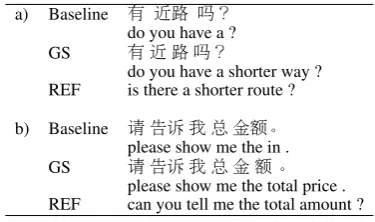
[image:7.595.309.520.234.346.2]Table 7: Segmentation and translation outputs with baseline and GS methods.
a) Baseline d dd dd do you have a ?
GS ddd dd
do you have a shorter way ? REF is there a shorter route ? b) Baseline dddddddd
please show me the in .
GS dddddddd
please show me the total price . REF can you tell me the total amount ?
7 Conclusion and future work
We showed that it is possible to learn Chinese word boundaries such that the translation performance of Chinese-to-English MT systems is improved.
We presented a Bayesian generative model for parallel Chinese-English sentences which uses word segmentation and alignment as hidden vari-ables, and incorporates both monolingual and bilingual information to derive a segmentation suitable for MT.
Starting with an initial word segmentation, our method learns both new Chinese words and dis-tributions for these words. In a large and a small data environment, our method outperformed the standard Chinese word segmentation approach in terms of the Chinese to English translation quality. In future work, we plan to enrich our monolingual and bilingual models to better represent the true distribution of the data.
8 Acknowledgments
Jia Xu conducted this research during her intern-ship at Microsoft Research. This material is also partly based upon work supported by the Defense Advanced Research Projects Agency (DARPA) under Contract No. HR0011-06-C-0023.
References
Aldous, D. 1985. Exchangeability and related topics. In ´Ecole d’´et´e de probabilit´es de Saint-Flour,
XIII-1983, pages 1–198, Springer, Berlin.
Andrew, G. 2006. A hybrid markov/semi-markov con-ditional random field for sequence segmentation. In
Proceedings of EMNLP, Sydney, July.
Brown, P. F., S. A. Della Pietra, V. J. Della Pietra, and R. L. Mercer. 1993. The mathematics of statistical machine translation: Parameter estimation. Compu-tational Linguistics, 19(2):263–311, June.
Gao, J., M. Li, A. Wu, and C. Huang. 2005. Chi-nese word segmentation and named entity recogni-tion: A pragmatic approach. Computational Lin-guistics, 31(4).
Goldwater, S., T. L. Griffiths, and M. Johnson. 2006. Contextual dependencies in unsupervised word seg-mentation. InProceedings of Coling/ACL, Sydney, July.
IWSLT. 2007. International workshop on spoken language translation home page. http://www.slt.atr.jp/IWSLT2007.
Klein, D. and C. D. Manning. 2002. A generative constituent-context model for improved grammar in-duction. InProceedings of ACL, pages 128–135. LDC. 2003. Linguistic data
consor-tium Chinese resource home page. http://www.ldc.upenn.edu/Projects/Chinese. NIST. 2005. Machine translation home page.
http://www.nist.gov/speech/tests/mt/index.htm. Och, F. J. and H. Ney. 2002. Discriminative training
and maximum entropy models for statistical machine translation. InProceedings of ACL, pages 295–302, Philadelphia, PA, July.
Papineni, K. A., S. Roukos, T. W., and W. J. Zhu. 2002. Bleu: a method for automatic evaluation of machine translation. InProceedings of ACL, pages 311–318, Philadelphia, July.
Press, W. H., S. A. Teukolsky, W. T. Vetterling, and B. P. Flannery. 2002. Numerical Recipes in C++. Cambridge University Press, Cambridge, UK. Snover, M., B. Dorr, R. Schwartz, L. Micciulla, and
J. Makhoul. 2006. A study of translation edit rate with targeted human annotation. InProceedings of AMTA, pages 223–231, Cambridge, MA, August. Vogel, S., H. Ney, and C. Tillmann. 1996. HMM-based
word alignment in statistical translation. In
Proceed-ings of COLING.
Xu, J., R. Zens, and H. Ney. 2004. Do we need Chinese word segmentation for statistical machine translation? InProceedings of the SIGHAN
Work-shop on Chinese Language Learning, pages 122–
128, Barcelona, Spain, July.
Xu, J., E. Matusov, R. Zens, and H. Ney. 2005. Inte-grated Chinese word segmentation in statistical ma-chine translation. In Proceedings of IWSLT, pages 141–147, Pittsburgh, PA, October.
Zens, R. and H. Ney. 2004. Improvements in phrase-based statistical machine translation. InProceedings
of HLT/NAACL, Boston, MA, May.
Zhang, H., H. Yu, D. Xiong, and Q. Liu. 2003. HHMM-based Chinese lexical analyzer ICTCLAS.
InProceedings of the Second SIGHAN Workshop on
![Table 6: Translation performance with differentCWS methods on IWSLT[%].](https://thumb-us.123doks.com/thumbv2/123dok_us/783822.1091361/7.595.328.506.91.178/table-translation-performance-differentcws-methods-iwslt.webp)