Scholarship@Western
Scholarship@Western
Electronic Thesis and Dissertation Repository
4-11-2011 12:00 AM
The Structural Importance of Consumer Networks
The Structural Importance of Consumer Networks
Seung Hwan (Mark) Lee University of Western Ontario Supervisor
June Cotte
The University of Western Ontario
Graduate Program in Business
A thesis submitted in partial fulfillment of the requirements for the degree in Doctor of Philosophy
© Seung Hwan (Mark) Lee 2011
Follow this and additional works at: https://ir.lib.uwo.ca/etd Part of the Marketing Commons
Recommended Citation Recommended Citation
Lee, Seung Hwan (Mark), "The Structural Importance of Consumer Networks" (2011). Electronic Thesis and Dissertation Repository. 109.
https://ir.lib.uwo.ca/etd/109
This Dissertation/Thesis is brought to you for free and open access by Scholarship@Western. It has been accepted for inclusion in Electronic Thesis and Dissertation Repository by an authorized administrator of
THE STRUCTURAL IMPORTANCE OF CONSUMER NETWORKS
(Thesis format: Integrated-Article)
by
Seung Hwan (Mark) Lee
Richard Ivey School of Business
A thesis submitted in partial fulfillment of the requirements for the degree of
Doctor of Philosophy
The School of Graduate and Postdoctoral Studies The University of Western Ontario
London, Ontario, Canada
ii
THE UNIVERSITY OF WESTERN ONTARIO School of Graduate and Postdoctoral Studies
CERTIFICATE OF EXAMINATION
Supervisor Examiners
______________________________ ______________________________
Dr. June Cotte Dr. Jacob Goldenberg
Supervisory Committee ______________________________ Dr. Mark Cleveland
_______________________ ______________________________ Dr. Allison Johnson Dr. Dante Pirouz
________________________ ______________________________
Dr. Matthew Thomson Dr. Matthew Thomson
The thesis by
Seung Hwan (Mark) Lee
entitled:
The Structural Importance of Consumer Networks
is accepted in partial fulfillment of the requirements for the degree of
Doctor of Philosophy
iii Abstract
This dissertation contains three essays that investigate how a consumer’s social
network position (i.e., a person’s location within a web of relationships) plays an
important role in the way that consumer influences and exchanges information with
others. Using social capital theory as the conceptual framework, I demonstrate that a
consumer’s location within a network (network centrality) has an effect on their ability to
influence others and, conversely, on others’ ability to influence them. I also show that
network positions influence the type of information that is sought from others
(information about the self or information about others). Moreover, I demonstrate that
people’s perceptions of their own social capital may not coincide with their actual stores
of social capital, revealing how this discrepancy may yield certain social benefits and
social costs. Together, the findings of this research contribute to our understanding of
consumer networks and further emphasize the relevance and importance of social
network positions and social capital.
Essay 1 provides a framework for understanding the association between network
centrality and the flow of consumer influence. Overall, people see themselves as opinion
leaders when they perceive that they are central (i.e., popular) within their networks.
However, these self-assessments are sometimes at odds with the perceptions of the rest of
the network members. Counter-intuitively, the findings demonstrate that consumers who
perceive themselves to be central in networks are quite susceptible to the influence of
iv
Essay 2 further extends the investigation of network centrality to
information-seeking behavior. The results demonstrate that network centrality is positively related to a
consumer’s rate of seeking information from other network members. Interestingly,
people occupying degree central positions tend to seek information about their own
consumer behavior (i.e., feedback), while people occupying betweenness central
positions tend to seek information about the behavior of other consumers.
Finally, Essay 3 focuses on the instrumental and detrimental role of the
individual’s materialism in social network development. Based on an experimental study
and a separate longitudinal field study of a social network, I demonstrate that
materialistic consumers are susceptible to a perceptual network fallacy (a mismatch
between individuals’ perceptions of their social networks versus their actual social
networks, as rated by others) over time. Results from the longitudinal field study
demonstrate that materialistic individuals overestimated the number of friends they had in
their social networks in two separate time periods. Further, materialistic individuals
overestimated the growth of their social networks over time. A follow-up experimental
study reveals that materialistic consumers overestimated the extent to which others
desired to develop friendships with them. Using the latest social network analysis
techniques, I demonstrate the unique advantages and disadvantages of occupying central
positions in social networks.
Keywords: Social Networks, Social Capital, Network Centrality, Opinion Leadership,
Susceptibility to Interpersonal Influence, Information-Seeking, Materialism, Perceptual
v
Co-Authorship Statement
I hereby declare that this thesis incorporates some material that is a result of joint
research. Essay 1 was in the Journal of Consumer Psychology co-authored with Dr. June
Cotte and Theodore J. Noseworthy. As the first author, I was in charge of all aspects of
the project including formulating research questions, literature review, research design,
data collection, analyzing the data, and preparing the first complete draft of the
manuscript. With the above exception, I certify that this dissertation and the research to
which it refers, is fully a product of my own work. Overall, this dissertation includes 3
original papers, with the first essay already published in an academic journal.
Essay 1 – Status: Published
vi
I certify that I have obtained permission from the copyright owners to include the
above published materials in my thesis (Please see Appendix B). I certify that the above
material describes work completed during my Ph.D. at Ivey School of Business,
University of Western Ontario. I declare that my thesis does not infringe on copyright nor
violate any proprietary rights. Further, I declare that this is a true copy of my thesis,
including any final revisions, as approved by my thesis committee and the School of
Graduate and Postdoctoral Studies, and that this thesis has not been submitted for a
vii
Acknowledgments
I would like to thank everyone who has encouraged and inspired me during my
doctoral study. First and foremost, I would like to express my sincere gratitude to my
advisor, Professor June Cotte, for her continuous support of my research work and for her
knowledge, guidance, and patience. Her leadership and her fount of moral support have
provided me with the skills and confidence to continue at the next stage of my career. I
have learned so much from her and she has been a wonderful mentor.
I would also like to thank my thesis committee for their instrumental support.
Professors Matt Thomson and Allison Johnson provided me with invaluable advice and
comments on my progress here at Ivey, as well as on my plans for the future. My warm
thanks also go out to Professor Alison Konrad and Professor Marjorie Armstrong-Stassen
for their ability to fuel my motivation to pursue a career in academia. During my years in
the program, I have collaborated with many colleagues and professors for whom I have
great regard, and I wish to extend my utmost thanks to all those who have helped me in
my development as an academic. Particularly, I would like to thank my colleagues (and
co-authors), Theodore J. Noseworthy and Israr Qureshi, for their friendship and support.
Most importantly, my deepest gratitude goes to my grandmother for her
unflagging love and support throughout my life. Having raised me since I was six months
old, my grandmother has cared for me and provided me with opportunities to succeed.
Despite many hardships, she has been the one person who has never left my side and has
always encouraged me to succeed. To that end, I dedicate this work to my loving
viii
Table of Contents
CERTIFICATE OF EXAMINATION ………... ii
Abstract ………... iii
Co-Authorship Statement ………... v
Acknowledgements ………... vii
Table of Contents ………... viii
List of Tables, Figures, & Appendices ………... x
Prelude ………... 1
Introduction ………... 4
Network Centrality: Degree & Betweeness Centrality Social Capital Theory Social Capital & Network Centrality Dissertation Format & Overview ………... 17
Overview of Methodology: Social Network Analysis ………... 19
References ………... 21
Essay 1: “The Role of Network Centrality in the Flow of Consumer Influence” Introduction ………... 25
Influence in Networks Opinion Leadership Opinion Leadership & Centrality Susceptibility to Interpersonal Influence Susceptibility to Interpersonal Influence & Centrality Study 1 ………... 35
Study 2 ………... 47
General Discussion ………... 51
ix
Essay 2: “Asking About You and Asking About Me: Information-Seeking in Networks”
Introduction ………... 63
Information-Seeking in Networks Theoretical Development Study 3 ………... 68
Study 4 ………... 80
General Discussion ………... 84
References ………... 88
Essay 3: “The Instrumental and Detrimental Role of Materialism in Development of Social Networks: Drivers of Perceptual Network Fallacy” Introduction ………... 91
Theoretical Framework ………... 95
Materialism is Instrumental to Network Development Materialism is Detrimental to Network Development Study 5 ………... 99
Study 6 ………... 107
General Discussion ………... 118
References ………... 124
Final Thoughts & Directions for Future Research ………... 127
x
List of Tables, Figures, & Appendices
TABLES
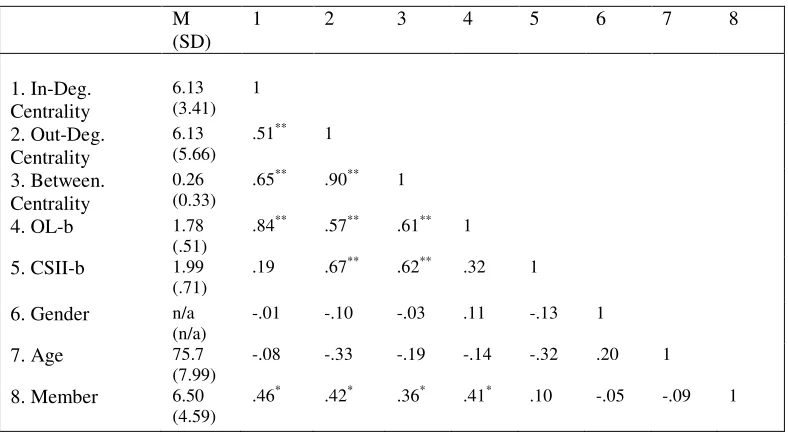
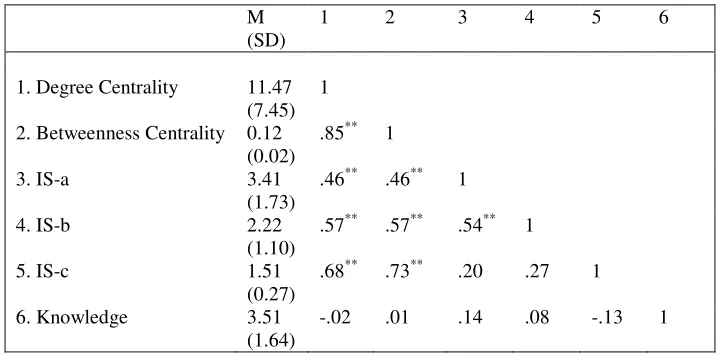
Table 1: Overall Means, SD, and Correlations – Study 1 ……….43
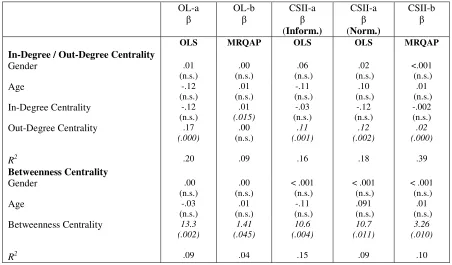
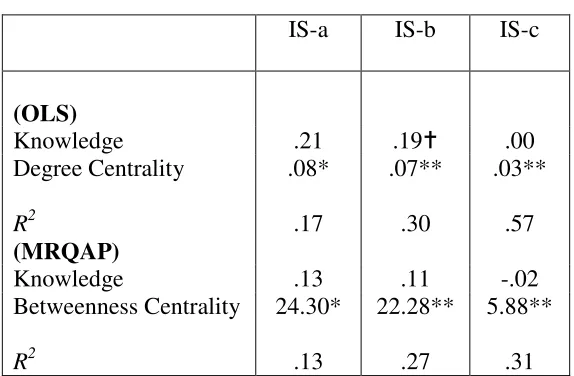
Table 2: OLS/MRQAP Regression Results – Study 1 ……….46
Table 3: Overall Means, SD, and Correlations – Study 2 ……….50
Table 4: OLS/MRQAP Regression Results – Study 2 ……….51
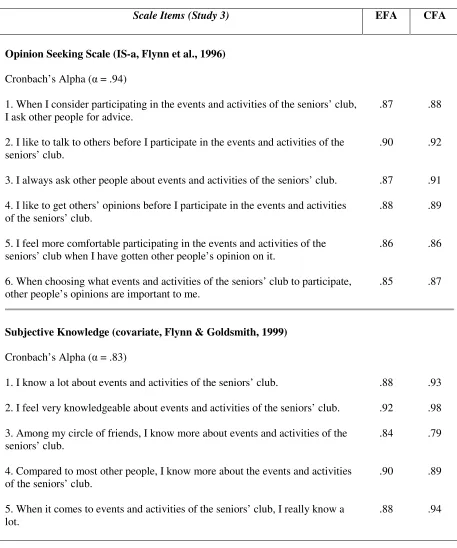
Table 5: Scale Items for Essay 2 ……….72
Table 6: Overall Means, SD, and Correlations – Study 3 ……….76
Table 7: OLS/MRQAP Regression Results – Study 3 ……….77
Table 8: Overall Means, SD, and Correlations – Study 4 ……….82
Table 9: OLS/MRQAP Regression Results – Study 4 ……….84
Table 10: Overall Means, SD, and Correlations – Study 5 ……….102
Table 11: Treatment Means and SD – Study 6 ……….115
FIGURES Introduction Figure 1: A Network Diagram ……….8
Figure 2: Seniors Activity Club Network Diagra ……….48
Figure 3: College Dormitory Network Diagram ……….103
Figure 4: Experimental Stimuli ……….110
Figure 5: Mat x Convo on Friendship Desirability (Self) ……….116
Figure 6: Mat x Convo on Friendship Desirability (Partner) ……….116
Appendix A: Degree Centrality Histograms for the Network Studies ……….136
Prelude
The decline in the effectiveness of traditional media methods has generated a
burgeoning interest in the study of social networks (individuals’ social groups). Indeed, a
number of studies have suggested that buyers tend to value the opinions of their peers
more so than formal marketing channels, such as advertisements and promotional events
(Berkman & Gilson, 1986; Flynn, Goldsmith, & Eastman, 1996; Price & Feick, 1984).
As a result, consumers rely increasingly on their social networks as resources for product
information, evaluations, and recommendations to help with their purchase decisions
(Brown & Reingen, 1987; Gershoff, Broniarczyk, & West, 2001).
Given the important role of social networks in consumer decision-making,
network research has been gaining momentum in the marketing literature (Van den Bulte
& Wuyts, 2007). Marketing research has explored, but has been limited to, the areas of
diffusion and adoption of products and services (Brown & Reingen, 1987; Rogers, 1995;
Watts & Dodds, 2007; Van den Bulte & Joshi, 2007), opinion leadership (Becker, 1970;
Burt, 1999; Kratzer & Lettl, 2009), word-of-mouth communications (Duhan et al., 1997;
Brown & Reingen, 1987; Reingen & Kernan, 1986), belief sharing and systems (Sirsi,
Ward, & Reingen, 1996; Ward & Reingen, 1990), lead users (Kratzer & Lettl, 2009),
branding use and preferences (Reingen et al., 1984; Ward & Reingen, 1990), information
transmission (Franzen & Nakamoto, 1993; Goldenberg, Libai, & Muller, 2001),
consumer transactions (DiMaggio & Louch, 1998), and virtual and P2P communities
(Dholaki, Bagozzi, & Pearo, 2004; Song & Walden, 2007). Amid the handful of research
structuralpositions in networks (i.e., a position that an individual occupies in their social
group) and, consequently, its influence on consumer behavior (Van den Bulte & Wuyts,
2007). This lack of emphasis on the structural properties of networks suggests that we are
still unsure of the social benefits and costs associated with occupying particular network
positions. To explore that gap, my work focuses on the attributes and outcomes of
attaining and maintaining certain network positions (for example, being popular in a
network).
This dissertation features three essays that are designed to explore the influence of
network positions on consumer behavior. Namely, what benefits or costs do consumers
gain by occupying certain positions in their social networks? What are the characteristics
of the consumers who occupy these exclusive positions? Finally, what characteristics lead
to attainment and maintenance of these positions? These over-arching questions function
as the guiding roadmap for this dissertation. Thus, the focus of this research is to
investigate how structural positions in networks (in particular, how central a person is in
a network) play an integral role in the way consumers interact, influence, or exchange
information with one another. It aims to contribute to the extant literature by being one of
the first studies in the marketing literature to integrate the structural positions of networks
with consumer-behavior concepts. But more importantly, this dissertation offers key
insights to both academics and marketers, as the studies reveal linkages between network
positions and the social benefits (and costs) borne from those positions. With this
knowledge, researchers can further delve into understanding the impact of a particular
revise their traditional strategy towards a more network-oriented strategy, updating their
Introduction
A network is a composite of specific entities and the pattern of relationships that
bind these entities together (Iacobucci & Hopkins, 1992). A social network is a specific
kind of network, one in which the nodes are social entities (often referred to as “actors”)
or a defined set of persons (Ibarra, 1993). In general, a typical network has two main
properties: a set of defined actors, and a collection of relationships that tie these actors
together (Wasserman & Faust, 1994).
People can be linked with other people in a variety of ways. One such way is
through building and maintaining ties in their friendship networks (Baldwin et al., 1997).
Friendship ties are often characterized by a high frequency of interactions, which has
been found to be useful in providing emotional and financial support, as well as in
providing an avenue for information and resource exchange (Gibbons & Olk, 2003). In
marketing, friendship networks are important to consumers because they serve as a
medium for disseminating and exchanging product information and referrals (Brown &
Reingen, 1987; Rogers, 1995).
Friends are important because they act as a word-of-mouth channel for consumer
information (Ryu & Han, 2009). They also provide guidance (for information search) and
support (in the form of decision-making confirmation/disconfirmation), and they engage
others in product and service experiences (Anderson, 1998; Flynn et al., 1996). Thus,
friendship networks are important because they facilitate access to information,
of social networks are known to exist (e.g., work networks), the focus of this dissertation
is to examine the role of structural positions in social networks bound by friendships.
Granovetter (1985) argued that economic transactions are embedded in the
structure of a social network. That is, social structure determines our choice of economic
trading partners and the way we interact with them. Social structure also constrains who
has access to what information, thus affecting the flow of information that takes place
within a social network. For instance, members in structurally advantageous positions
(Burt, 1992) can choose to release and withhold information, giving them unique
advantages over others in a network. Individuals occupying these advantageous positions
can gain greater brokerage opportunities, have better access to information and resources,
be better able to coordinate information-sharing, and have greater control and power over
their network (Burt, 1992; Gibbons & Olk, 2003; Mehra, Kilduff, & Brass, 2001). In
short, these individuals may accrue greater benefits as a result of occupying a specific
network position (Baldwin, Bedell, & Johnson, 1997; Podolny & Baron, 1997).
Social network positions are important to consumers because the patterns of
interactions and connections that exist within a group of individuals may provide better
opportunities or advantages for individuals, above and beyond their personal
characteristics. In other words, the structure of relationships (who one is tied to and how
one is tied to them) may provide individuals with benefits because “social advantage is
created by a person’s location in a structure of relationships” (Burt, 1992, p.4). Within a
consumer’s social network, there are certain network positions that can provide
individuals with a more optimum social structure that offers privileged access to
can enhance or restrict who has access to what information, subsequently affecting
individual behavior (Carley, 1986; Sirsi et al., 1996). One of the ways in which
consumers can achieve such a position is to become central in the network (Burt, 1992;
Freeman, 1979).
Network Centrality: Degree Centrality and Betweenness Centrality
Network centrality is defined as the interconnectedness between the individual
and other members in the network (Freeman, 1979). It contributes to the understanding of
communication and to the information flow within a network structure (Ibarra, 1993).
Individuals who are central in their networks tend to be more active (i.e., continuously
working to maintain and manage contacts), have shorter paths of contact to others within
their broad social network, and have more ties with other central members in the network
(Faust, 1997). Network centrality has also been used as a measure of one’s popularity,
prominence, and/or power in a network (Borgatti, 2005; Freeman, 1979). Individuals who
are centrally located in a network tend to have higher access to others and have a larger
number of people who are willing to share information and resources with them; they
tend to possess unique social advantages for acquiring information and resources (Cross,
Borgatti, & Parker, 2001; Mehra et al., 2006). Centrality also implies greater control over
resource and information acquisition because central individuals can choose from a
greater number of alternative members in the network in order to satisfy their wants and
positive outcomes, such as information access, enhanced reputation, social support, and
opportunities to influence others (Kratzer & Lettl, 2009; Mehra, Kilduff, & Brass, 1998).
Network centrality is measured by examining the number of direct relationships
the individual has with others or by assessing the extent to which an individual links
otherwise unconnected cliques or individuals (Freeman, 1979). Thus, centrality can be
defined by the number of ties (quantity of ties) or the configuration of ties (strategic
location of ties) that a network member might have. While multiple measures of
centrality are known to exist in the network literature, this dissertation focuses on the two
most commonly used types of network centrality: degree centrality and betweenness
centrality. Degree centrality is the total number of nodes to whom one is directly
connected. Betweenness centrality is the frequency with which a node falls between pairs
of nodes on the shortest paths connecting them. A more detailed explanation of the two
centrality measures is provided below.
Degree centrality. Degree centrality is the extent to which a person is connected
to others in a social network (Brass & Burkhardt, 1992). It is measured by the number of
relationship ties a focal actor has in his/her network (Wasserman & Faust, 1994).
Individuals with high degree centrality have been shown to have relatively quicker access
to information, more accurate perceptions of the network, and greater power and
influence over the network (Brass & Burkhardt, 1993; Casciaro, 1998). An actor with
high degree centrality occupies a structural position that acts as a source for large
1994). In contrast, a peripheral actor (low in degree centrality) maintains very few
relations and thus is structurally located in the outside margins of the network structure.
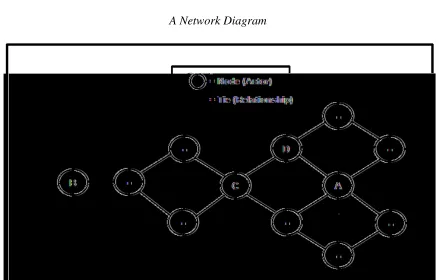
In Figure 1, Actor A has the highest degree centrality since he is connected to
more people than anyone else in the network (Actor A = 6 direct ties, degree centrality
score of 6). The second most-connected person in the network is Actor D with 5 direct
ties. The person with the lowest degree centrality is Actor B, who is connected to only
one other person, giving him a degree centrality score of 1 (peripheral actor). Therefore,
degree centrality is calculated by the sum of direct ties an individual has with other
members in the network.
Figure 1
Degree centrality can be further defined in terms of in-degree centrality and
out-degree centrality. Out-degree centrality is the extent to which the focal actor has
identified others as a close friend. In-degree centrality is the extent to which others in the
network have identified the focal actor as a close friend. These two assessments yield
different characteristics. Degree centrality reflects one’s popularity within a network
(Freeman, 1979). Out-degree centrality is concerned with an individual’s perception of
his or her own popularity, whereas in-degree centrality is concerned with the individual’s
actual popularity, as rated by others in the network (Freeman, 1979).
Betweenness centrality. Betweenness centrality is defined as the extent to which a
person falls between pairs of other people on the shortest path (geodesics) connecting all
other individuals in the network (Freeman, 1979). That is, an individual is high in
betweenness centrality if he/she strategically holds a position in a network such that
he/she provides links to otherwise unconnected individuals. Thus, betweenness centrality
“allows access to people who are disconnected from each other” (Mehra et al., 2001,
p.121). A person with high betweenness centrality represents a critical junction point
since, if one were to remove the betweenness central person from the network, the
common tie between individuals and/or between cliques would likely break (Burt, 1999).
A presence of a high betweenness central actor indicates that a node can reach
other nodes in a network using a shorter path. In other words, if one were to remove the
node with the largest betweenness centrality, the path between other pairs of nodes would
be lengthened. For example, if persons A and C are connected only through person D
any resources (such as information) that flow between A and C. Therefore, D would be in
a position to play the part of a ‘broker’ or a ‘gatekeeper’ of information between A and C
(Scott, 2000).
As brokers of the network, individuals who are high in betweenness can influence
the network by withholding or distorting information in transmission. That is, they have
greater control and influence over how the flow of information occurs in networks (Burt,
1999). Furthermore, people in these positions can withhold, disclose, and/or modify
information in order to manipulate others’ perceptions and attributions of power (Brass &
Burkhardt, 1992). These advantages provide them with better access to information
opportunities within their social network.
Betweenness centrality is calculated by assigning higher values to those who link
unconnected regions in the network (Borgatti, 2005; Freeman, 1979). In Figure 1, Actor
C occupies the highest betweenness position. This is because Actor C represents a point
of failure where, if we were to remove him from the network, the common link that
connects the two major subgroups would be broken. Therefore, despite Actor C having
only four direct ties to the entire network, Actor C’s unique network position is vital
since he represents the critical point of failure.
Social Capital Theory
Occupying a central position (either degree or betweenness) reflects greater social
capital (Burt, 2000). Over several decades, scholars in various academic disciplines have
Ciabattari, 2007; Coleman, 1988; Fukuyama, 1995; Ibarra, 1995; Inglehart, 1997; Knoke,
1999; Lin, 2001; Portes & Sensenbrenner, 1993; Putnam, Leonardi, & Nanetti, 1993;
Stam & Elfring, 2008; Woolcock, 1998). While varying definitions have existed across
many disciplines, the consensus seems to be that social capital is derived from the
network of relations that exist among actors (Coleman, 1988). In this section, I first
review the literature on social capital theory and then provide an overview of how social
capital is linked to network centrality.
Coleman (1988) conceptualizes social capital as individuals’ ability to exploit
social structure (network ties, configuration, and formation). That is, social capital is not
a personal asset, such as human capital (e.g., skills, qualifications, and knowledge, etc.)
(Coleman, 1988); it is not the property of the individual but rather a form of capital that is
embedded in their ties to others in the network (Burt, 2000). Social capital is different
from other forms of capital (human, cultural, etc.) because it resides in social
relationships, whereas, other types of capital reside within the individual (Burt, 2000). It
is important to acknowledge that social capital cannot be the possessed goods of the
individual; rather, it is the resources that are accessible through an individual’s direct and
indirect ties (Burt, 1992). Therefore, social capital is a function of social relationships
(Burt, 2000). Given that social capital is embedded in the structure of social networks, it
is important to examine network compositions (unique combination of nodes and ties);
social capital provides individuals with the opportunity to achieve their objectives (e.g.,
using your social capital to find better deals on products) through their social
relationships (Coleman, 1988). Thus, in this dissertation, I focus on the structural
Extending from Coleman’s framework, Nahapiet and Ghoshal (1998, p.243)
define social capital as the “sum of the actual and potential resources embedded within,
available through, and derived from the network of relations possessed by an individual
or social unit.” Social capital is the social connections among a group of people and the
values residing within and between these social connections (Borgatti, Jones, & Everett,
1998). That is, individuals and/or subgroups in a network can accrue social capital by
leveraging certain connections they have with one another within that network (Paxton,
1999). While it has been established in the literature that social capital can be created at
varying levels of a social structure (Paxton, 1999; Putnam et al., 1993), the focus here is
on the micro (i.e., individual) level of social capital. Thus, the emphasis lies on the
benefits accrued from the relationship ties within the network rather than at the macro
level (inter-network analysis).
Individuals in a network build social capital by interacting with one another,
which in turn develops trust and norms of future behavior (Blau, 1964). Social capital
arises from the mutual obligations and reciprocity that provide individuals with social and
economic advantages (Constant, Sproull, & Kiesler, 1996). Thus, social capital tends to
be high in social networks that have greater norms, reciprocity, and social trust, such as
friendship networks (Coleman, 1988; Gamm & Putnam, 1999; Putnam, 1995). As
individuals build relationships with one another, this process creates a network of
interdependent social exchanges wherein certain individuals become important partners
for exchanges of resources and information, as well as instrumental and social support
(Burt, 1992). Hence, individuals can accrue disproportionate social capital, depending on
implies that certain network positions may be more advantageous than others because
individuals can garner higher social capital through their unique sets of social
relationships and, in consequence, garner greater personal benefits (Burt, 1992).
Social capital theory suggests that who a person is connected to and how these
individuals are connected to each other enable people to accrue greater social capital
(Burt, 1992). Given that advantages may arise from the “who” and the “how” of these
network connections, network centrality may lead to greater social capital (Brass and
Burkhardt, 1992). Individuals located in degree and betweenness central positions will
accrue greater social capital because they occupy positions that allow them to take
advantage of their network structure for information and resources (Coleman, 1990). This
finding suggests that where people are located (i.e., network position) and the social
structure of a network function together as a way to increase one’s social capital
(Nahapiet & Ghoshal, 1998).
Social Capital & Network Centrality
Burt (2000) posits that social capital is a function of individuals’ structural
position within the network, not of the characteristics or the identity of the individual.
Burt also suggests individuals in central positions (degree or betweenness) tend to accrue
the greatest amount of social capital because they occupy positions that are structurally
advantageous in acquiring social benefits (Mehra et al., 2001). Individuals in degree
central positions accrue their social capital from their increased ability to reach or
opportunities to interact with one another to develop trust and create norms for future
behavior, which in turn builds social capital through mutual obligation (Blau, 1964).
Based on Coleman’s theory of social capital (1988), individuals in highly
interconnected, dense networks tend to generate advantages by developing shared
meanings and trust within the immediate network. A cohesive network characterized by
high density and mutuality among ties fosters important interactions, all of which
facilitate the development of cultural norms and the flow of information exchange
(Coleman, 1988; Ibarra & Andrews, 1993). Individuals in these positions are linked to
more people; thus, they garner more opportunities to exchange resources with others
(Brass & Burkhardt, 1992). Having a close network of friends facilitates the transfer of
complex knowledge, increasing the willingness and motivation to invest time and effort
in sharing knowledge with others (Reagans & McEvily, 2003). That is, individuals
occupying this position will have the social advantages of receiving greater amounts of
quality information. Thus, social capital may be generated from occupying a degree
central position.
Building on Granovetter’s (1973) “strength of weak ties” theory (i.e., weak links
provide individuals with information advantage), Burt (1992) theorizes about the
advantages that arise from spanning disconnected clusters within the social network.
According to Burt, individuals spanning these clusters build social capital for themselves
because one will receive non-redundant information and ideas from unconnected parts of
the network. Individuals in high betweenness positions build social capital because they
connect members from different parts of the network (Mehra et al., 2001). Since they link
betweenness central individuals are in an advantageous position to become a major
channel of information and influence (Ibarra, 1993; Kratzer & Lettl, 2009). They will
have the social advantages of receiving diverse information from diverse sources (Mehra
et al., 2001). In addition, occupying a betweenness central position provides individuals
with more diverse and timely access to information, greater control over resources, and
greater visibility to others in the network (Burt, 1992). These individuals enjoy the
advantages of having better access to information and more control over others by
building relationships with unconnected clusters in the network (Podolny & Baron,
1997). Thus, social capital may also be generated from occupying a betweenness central
position.
Recent research suggests that individuals can occupy a hybrid central position
(e.g., a position high in degree and betweenness centrality) (Burt, 2005; Reagans &
McEvily, 2003; Schilling & Phelps, 2007). Occupying a hybrid position provides
individuals with the greatest amount of social capital, since degree centrality provides
individuals with the trust and collaboration of their immediate network combined with
betweenness centrality, which provides non-redundant information from different parts of
the social network (Burt, 2005; Reagans & McEvily, 2003). Occupying a hybrid position
may provide individuals with the maximum benefits that can be used to generate social
advantages.
Given that occupying central positions may lead to the accumulation of social
capital, the primary objective of this dissertation is to investigate how network centrality
plays an integral role in the way consumers build social capital benefits from these
emphasizes the important role of network centrality (the structural element) in social
networks and the resulting exchange in social capital. It focuses on how certain positions
in networks play an integral role in the way consumers influence and exchange
information with one another. Overall, this dissertation directly contributes to the
marketing literature in two ways. First, using social capital theory as the theoretical
framework, I demonstrate that where the consumer is located within a network (network
centrality) affects an individual’s ability to influence others within in the network. I also
show that network positions influence the type of information that is sought from others
(information about the self or information about others). Second, I demonstrate that
people’s perception of their social capital may not coincide with their actual store of
social capital, and show that this discrepancy may yield different personal outcomes. The
lack of exploration in the properties of social networks suggests that despite the large
amount of consumer research devoted to social relationships, the link between network
positions and the social benefits associated with occupying these structural positions
remains relatively unknown. In response, this dissertation contains three essays that
Dissertation Format and Overview
Essay 1 provides a framework for understanding the association between network
centrality and the flow of influence in a consumer network. I demonstrate that a
consumer’s position in a social network is related to both opinion leadership and
susceptibility to interpersonal influence. In two field network studies (a network of
students and a network of seniors), the results show that people see themselves as opinion
leaders when they perceive that they are popular (i.e., central) in the network. However,
these self-assessments are sometimes at odds with the perceptions of the rest of the
network. Counter-intuitively, the findings demonstrate that consumers who are central in
networks are quite susceptible to the influence of others. These findings extend the field’s
knowledge by demonstrating an association between network centrality and the flow of
consumer influence.
Essay 2 follows by examining this association between network centrality and the
information-seeking behavior of consumers. I further build on the argument that social
capital generates information-exchange benefits. In two network studies (a seniors’ club
and a food and culinary club), the data reveal the importance of both the number of social
ties and the position of those ties in the flow of information through a social network. The
results demonstrate that network centrality is positively related to seeking information
from other network members. Interestingly, the findings further reveal that people who
occupy degree central positions tend to seek information about their own consumer
information about the consumer behavior of others. Extending Essay 1, this essay further
recognizes the social benefits associated with occupying central positions.
While Essays 1 and 2 examined the effect of network position on the creation and
sharing of social capital, Essay 3 examines the formation of social networks and one
particular influence on that formation. Specifically, the latter essay investigates the
instrumental and detrimental role of individuals’ materialism in the development of social
networks. First, findings from a longitudinal field study of an emerging social network
reveal that materialism is instrumental to an individual’s social network development
(i.e., materialistic people made more social connections over time, i.e., network
centrality). However, a caveat is that this benefit was perceptual, not actual. That is, there
appeared to be a discrepancy between consumers’ perceptual social network versus their
actual social network, a phenomenon I call the perceptual network fallacy. Materialistic
individuals overestimated the number of friends they had in their social network in two
separate time periods. Further, materialistic individuals overestimated the growth of their
social network over time. A follow-up experimental study (with a different sample)
shows that individuals overestimated their friendship desirability (their own desirability
as a friend to others) after a discussion about product possessions. Together, this research
makes conceptual advances to the field of social networks and also offers marketing
implications and suggestions for understanding the role of materialistic consumption in
Overview of Methodology: Social Network Analysis
Social network analysis (SNA) has emerged as an important technique for
understanding the structures of relationships and the effects of relationship on behavior
(Wasserman & Faust, 1994). Rogers and Kincaid (1981, p.24) define SNA as “a method
of research for identifying the communication structure of a system, in which relational
data about communication flows are analyzed by some type of interpersonal relationships
as the unit of analysis.” Social network analysis seeks to reveal the way that patterns and
structures of relationships can explain behavior and outcomes beyond individual or group
differences (Wasserman & Faust, 1994).
One of the main strengths of network analysis is that it enables researchers to
locate the structural positions (e.g., network centrality) of individuals in a social network
(Valente & Davis, 1999). Network analysis investigates the quantitative structural
properties of networks that cannot be extracted from a study of individuals or dyadic
relationships (Webster & Morrison, 2004). Further, the collected network data allows
researchers to trace the connections between individuals (linkages and ties), which cannot
be realized through a traditional sample survey methodology. Other marketing studies
that have attempted to capture relational data using traditional sample survey
methodology and retrospective data suffer from inaccurately describing the properties of
networks and connections between individuals (Reingen & Kernan, 1986). In the
marketing literature, researchers studying networks have typically gathered information
on the characteristics of networks, such as size, frequency of interaction, or relationship
information is gathered from all members of the network. One of the strengths of this
dissertation is its unique focus on the structural properties of consumer networks, an
important but often overlooked determinant of behavior.
There are clear advantages to using network analysis to evaluate the patterns of
relationships. Reingen and Kernan (1986) suggest that with network data, researchers are
able to explicate and include interpersonal relationship components in the analysis, the
lack of which is a shortcoming of other methodologies. Another advantage of SNA
comes from its ability to identify key actors in networks (Borgatti, 2006), such as the
most central actor in the network, which is a key position of interest in this dissertation.
As outlined previously, a review of consumer research journals yields only a small
number of articles that utilize this unique network methodology (e.g. Kratzer & Lettl,
2009; Reingen & Kernan, 1986). Therefore, in addition to its theoretical contributions,
this dissertation also provides a contribution to the marketing literature from a
methodological standpoint. Furthermore, this dissertation goes beyond the static view of
networks (e.g., a cross-sectional network studies) by conducting a longitudinal network
study (Essay 3) to examine the development of an individual’s social network as it occurs
References
Anderson, E. W. (1998). Customer satisfaction and word of mouth. Journal of Service Research, 1, 5-17.
Baldwin, T. T., Bedell, M. D., & Johnson, J. L. (1997). The social fabric of a team-based MBA program: Network effects on student satisfaction and performance.
Academy of Management Journal, 40, 1369-1397.
Becker, M. H. (1970). Sociometric location and innovativeness: Reformulation and extension of the diffusion model. American Sociological Review, 35, 267-282. Berkman, H., & Gilson, C. (1986). Consumer behavior: Concepts and strategies. Boston,
MA: Kent Publishing Co.
Blau, P. M. (1964). Exchange and Power in Social Life. New York, NY: Wiley. Borgatti, S. P. (2005). Centrality and network flow. Social Networks, 27, 55-71.
Borgatti, S. P. (2006). Identifying set of key players in a social network. Computational & Mathematical Organization Theory, 12, 21-34.
Borgatti, S. P., Jones, C., & Everett, M. G. (1998). Network measures of social capital.
Connections, 21, 27-36.
Brass, D. J., & Burkhardt, M. E. (1992). Centrality and power in organizations. In N. Nohria & R. Eccles (Eds.), Networks and organizations: Structure, form, and action (pp. 191-215). Boston, MA: Harvard Business School Press.
Brass, D. J., & Burkhardt, M. E. (1993). Potential power and power use: An investigation of structure and behavior. Academy of Management Journal, 36, 441-470.
Brehm, J., & Rahn, W. (1997). Individual-level evidence for the causes and consequences of social capital. American Journal of Political Science, 41, 999-1023.
Brown, J. J., & Reingen, P. H. (1987). Social ties and word-of-mouth referral behavior.
Journal of Consumer Research, 14, 350-362.
Burt, R. S. (1992). Structural holes: The social structure of competition. Cambridge, MA: Harvard University Press.
Burt, R. S. (1997). The contingent value of social capital. Administrative Science Quarterly, 42, 339-365.
Burt, R. S. (1999). The social capital of opinion leaders. The ANNALS of the American Academy of Political and Social Science, 566, 37-54.
Burt, R. S. (2000). The network structure of social capital. Research in Organizational Behavior, 22, 345-423.
Burt, R. S. (2005). Brokerage and closure. New York, NY: Oxford University Press. Carley, K. M. (1986). An approach for relating social structure to cognitive structure.
Journal of Mathematical Sociology, 12, 137-189.
Casciaro, T. (1998). Seeing things clearly: Social structure, personality, and accuracy in social network perception. Social Networks, 20, 331-351.
Ciabattari, T. (2007). Single mothers, social capital, and work-family conflict. Journal of Family Issues, 28, 34-60.
Coleman, J. S. (1988). Social capital in the creation of human capital. American Journal of Sociology, 94, 95-120.
network. Social Networks, 23, 215-235.
Dholakia, U. M., Bagozzi, R. P., & Pearo, L. K. (2004). A social influence model of consumer participation in network- and small-group-based virtual communities.
International Journal of Research in Marketing, 21, 241-263.
DiMaggio, P., & Louch, H. (1998). Socially embedded consumer transactions: For what kinds of purchases do people most often use networks? American Sociological Review, 63, 619-637.
Duhan, D. F., Johnson, S. D., Wilcox, J. B., & Harrell, G. D. (1997). Influences on consumer use of word-of-mouth recommendation sources. Journal of the Academy of Marketing Science, 25, 283-295.
Faust, K. (1997). Centrality in affiliation networks. Social Networks, 19, 157-191. Flynn, L. R., Goldsmith, R. E., & Eastman, J. K. (1996). Opinion leaders and opinion
seekers: Two new measurement scales. Journal of the Academy of Marketing Science, 24, 137-147.
Franzen, J. K., & Nakamoto, K. (1993). Structure, cooperation, and the flow of market information. Journal of Consumer Research, 20, 360-375.
Freeman, L. C. (1979). Centrality in social networks: Conceptual clarification. Social Networks, 1, 215-239.
Fukuyama, F. (1995). Trust. The social virtues and the creation of prosperity. London: Penguin Books.
Gamm, G., & Putnam, R. P. (1999). The growth of voluntary associations in America, 1840-1940. Journal of Interdisciplinary History, 29, 511-557.
Gershoff, A. D., Broniarczyk, S. M., & West, P. M. (2001). Recommendation or
evaluation? Task sensitivity in information source selection. Journal of Consumer Research, 28, 418-438.
Gibbons, D., & Olk, P. M. (2003). Individual and structural origins of friendship and social position among professionals. Journal of Personality and Social Psychology, 84, 340-351.
Goldenberg, J., Libai, B., & Muller, E. (2001). Talk of the network: A complex systems look at the underlying process of word-of-mouth. Marketing Letters, 12, 211-223. Granovetter, M. (1985). Economic action and social structure: The problem of
embeddedness. American Journal of Sociology, 91, 481-510.
Granovetter, M. S. (1973). The strength of weak ties. American Journal of Sociology, 78, 1360-1380.
Iacobucci, D., & Hopkins, N. (1992). Modeling dyadic interactions and networks in marketing. Journal of Marketing Research, 29, 5-17.
Ibarra, H. (1993). Network centrality, power, and innovation involvement: Determinants of technical and administrative roles. Academy of Management Journal, 36, 471-501.
Ibarra, H. (1995). Race, opportunity, and diversity of social circles in managerial networks. Academy of Management Journal, 38, 673-703.
Ibarra, H., & Andrews, S. B. (1993). Power, social influence, and sensemaking: Effects of network centrality and proximity on employee perceptions. Administrative Science Quarterly, 38, 277-303.
Knoke, D. (1999). Organizational networks and corporate social capital. In S. M. Gabbay (Ed.), Corporate social capital and liability. Boston, MA: Kluwer.
Kratzer, J., & Lettl, C. (2009). Distinctive roles of lead users and opinion leaders in the social networks of schoolchildren. Journal of Consumer Research, 36, 646-659. Lin, N. (2001). Social capital: A theory of social structure and action. New York, NY:
Cambridge University Press.
Mehra, A., Dixon, A. L., Brass, D. J., & Robertson, B. (2006). The social network ties of group leaders: Implications for group performance and leader reputation.
Organization Science, 17, 64-79.
Mehra, A., Kilduff, M., & Brass, D. J. (1998). At the margins: A distinctiveness approach to the social identity and social networks of underrepresented groups. Academy of Management Journal, 41, 441-452.
Mehra, A., Kilduff, M., & Brass, D. J. (2001). The social networks of high and low self-monitors: Implications for workplace performance. Administrative Science Quarterly, 46, 121-146.
Nahapiet, J., & Ghoshal, S. (1998). Social capital, intellectual capital, and the organizational advantage. Academy of Management Review, 23, 242-266. Paxton, P. (1999). Is social capital declining in the United States? A multiple indicator
assessment. American Journal of Psychology, 105, 88-127.
Podolny, J. M., & Baron, J. N. (1997). Resources and relationships: Social networks and mobility in the workplace. American Sociological Review, 62, 673-693.
Portes, A., & Sensenbrenner, J. (1993). Embeddedness and immigration: Notes of the social determinants of economic action. American Journal of Sociology, 98, 1320-1350.
Price, L. L., & Feick, L. F. (1984). The role of interpersonal sources in external search: An informational perspective. In T. C. Kinnear (Ed.), Advances in Consumer Research (Vol. 11, pp. 250-253). Ann Arbor, MI: Association for Consumer Research.
Putnam, R. P. (1995). Bowling alone: America's declining social capital. Journal of Democracy, 6, 65-78.
Putnam, R. P., Leonardi, R., & Nanetti, R. (1993). Making democracy work: Civic traditions in modern Italy. Princeton, NJ: Princeton University Press.
Reagans, R., & McEvily, B. (2003). Network structure and knowledge transfer: The effects of cohesion and range. Administrative Science Quarterly, 48, 240-267. Reingen, P. H., Foster, B. L., Brown, J. J., & Seidman, S. B. (1984). Brand congruence in
interpersonal relations: A social network analysis. Journal of Consumer Research, 11, 771-783.
Reingen, P. H., & Kernan, J. B. (1986). Analysis of referral networks in marketing: Methods and illustration. Journal of Marketing Research, 23, 370-378.
Rogers, E. M. (1995). Diffusion of innovations (3rd ed.). New York, NY: The Free Press. Ryu, G., & Han, J. K. (2009). Word-of-mouth transmission in settings with multiple
opinions: The impact of other opinions on WOM likelihood and valence. Journal of Consumer Psychology, 19, 403-415.
Scott, J. (2000). Social network analysis: a handbook. London, UK: Sage Publications. Sirsi, A. K., Ward, J. C., & Reingen, P. H. (1996). Microcultural analysis of variation in
sharing of causal reasoning about behavior. Journal of Consumer Research, 22, 345-372.
Song, J., & Walden, E. (2007). How consumer perceptions of network size and social interactions influence the intention to adopt. International Journal of E-Business Research, 3, 49-66.
Sparrowe, R. T., Liden, R. C., Wayne, S. J., & Kraimer, M. L. (2001). Social networks and the performance of individuals and groups. Academy of Management Journal, 44, 316-325.
Stam, W., & Elfring, T. (2008). Entrepreneurial orientation and new venture performance: The moderating role of intra- and extraindustry social capital.
Academy of management Journal, 51, 97-111.
Uzzi, B. (1996). The sources and consequences of embeddedness for the economic performance of organizations: The network effect. American Sociological Review, 61, 674-698.
Valente, T. W., & Davis, R. L. (1999). Accelerating the diffusion of innovations using opinion leaders. The ANNALS of the American Academy of Political and Social Science, 566, 55-67.
Van Den Bulte, C., & Joshi, Y. V. (2007). New product diffusion with influentials and imitators. Marketing Science, 26, 400-421.
Van Den Bulte, C., & Wuyts, S. (2007). Social networks and marketing. Cambridge, MA: Marketing Science Institute.
Ward, J. C., & Reingen, P. H. (1990). Sociocognitive analysis of group decision making among consumers. Journal of Consumer Research, 17, 245-262.
Wasserman, S., & Faust, K. (1994). Social network analysis: methods and applications. Cambridge, MA: Cambridge University Press.
Watts, D. J., & Dodds, P. S. (2007). Influentials, networks, and public opinion formation.
Journal of Consumer Research, 34, 441-458.
Webster, C. M., & Morrison, P. D. (2004). Network analysis in marketing. Australian Marketing Journal, 12, 8-18.
Essay 1
The Role of Network Centrality in the Flow of Consumer Influence1
How do consumers influence one another? In the past, studies have generally
followed one of two traditions. At the micro-level, researchers have studied how
individual actors interact with other actors to transmit information and influence one
another (Katz & Lazarsfeld, 1955). At a more macro-level, researchers have studied how
the structure of channels and networks direct the flow of information and influence
(Brown & Reingen, 1987; Granovetter, 1973).Our study is situated in the latter tradition.
We examine the structural elements of social networks as they determine how consumers
interact, influence or exchange information with one another. With the recent burgeoning
of interest in peer-to-peer networks, we believe it is an apt time to revisit social network
theory for a nuanced study of how influence manifests in a consumer network.
Influence in Networks
Katz and Lazarsfeld’s (1955) model of a two-step flow of communication stands
as one of the seminal models for marketing research (Burt, 1999; King & Summers,
1970). Information is passed on from marketers to market influencers (e.g., opinion
leaders), which subsequently is passed on to other consumers within the influencer’s
respective network. The model rests on two rudimentary assumptions: (1) the market
1
A version of this essay has been published. This is a reprint. Permission from Elsevier has been granted (see Appendix A). Citation is listed below.
influencer has the ability to diffuse information, and (2) the market influencer has access
to a network of people by which to exercise this ability. As such, research in this field has
diverged, with the dominant stream focusing on the ability and characteristics of market
influencers to pass on the information, and the other stream focusing on how the
structural aspects of networks affect information exchange and word-of-mouth (e.g.,
Brown & Reingen, 1987; Reingen & Kernan, 1986; Sirsi, Ward, & Reingen, 1996).
Given the emphasis put on both streams in the past 60 years, surprisingly little
attention has been devoted to integrating the two. Our research aims to incorporate the
ability of the influencer with the structure of the network by examining how the structural
positions of actors within social networks are associated with opinion leadership and
susceptibility to influence. As interpersonal influence is a social phenomenon, the extent
to which individuals are influenced by others should be dependent not only on the
relationship components of social networks, but also on the actor’s structural position
within their network. In a novel way, we demonstrate that the structural position of an
actor in a network is not only related to their ability to be opinion leaders, but also to the
extent to which they are more susceptible to interpersonal influence.
The literature on both opinion leadership and consumer susceptibility to
interpersonal influence has largely ignored, at least from an empirical standpoint, the
structural dimensions of consumers’ networks. Previous network researchers have
predominantly focused on the relationship components of networks such as strength
(weakness) of ties, homophily, and reference groups (e.g., Brown & Reingen, 1987;
Granovetter, 1973). This happened despite scholars emphasizing the importance of social
with other consumers inside their network (Burt, 1999). This lack of emphasis on the
properties of social networks suggests that despite the large amount of research devoted
to the topic, we are still unsure whether the influence on others is related to structural
position, and if consumers become more susceptible to interpersonal influence when they
occupy certain structural positions in their network. To address this gap, our research
focuses on how a favorable network position (i.e., being in the center of a network) is
associated with opinion leadership as well as susceptibility to interpersonal influence.
Social Networks and Marketing
Social networks are composites of interactions and connections that exist amongst
a group of individuals (Iacobucci & Hopkins, 1992). Interactions within a social network
are governed by two primary components: (1) individual-to-individual relationships and
(2) the structural dimension encompassing those relationships (Gibbons & Olk, 2003).
People can be linked with other people in a variety of ways. One way is through building
and maintaining ties in their friendship networks (Baldwin, Bedell, & Johnson, 1997).
Friendship ties are often characterized by a high frequency of interactions, have been
found to be useful in providing emotional and financial support, as well as being an
avenue for information and resource exchange (Gibbons & Olk, 2003). In marketing,
friendship networks are important to consumers because they provide an avenue to
disseminate and exchange product information and referrals (Brown & Reingen, 1987).
Diffusion of innovation theory posits that new ideas, practices, and objects
communications (Gatignon & Robertson, 1985). Individuals within a friendship networks
act as a word-of-mouth channel and as role models to inspire others to imitate their
behavior (Ryu & Han, 2009). Such friends provide advice and guidance for the search,
purchase, and use of products, they provide support with decision making
(confirmation/disconfirmation), and they engage others in the consumption experience
(Flynn, Goldsmith, & Eastman, 1996).
Network theories have been applied to a wide range of marketing issues,
including diffusion and adoption of products and services (Brown & Reingen, 1987),
word-of-mouth communications (Brown & Reingen, 1987; Reingen & Kernan, 1986),
branding use and preferences (Reingen, Foster, Brown, & Seidman, 1984; Ward &
Reingen, 1990), information acquisition (Granovetter, 1973), and relationship marketing
(Achrol, 1996). We also know from network research that common membership in
cohesive subgroups is associated with common brand use and preference, and that
consumers with structurally equivalent positions in social networks have similar brand
preferences (Reingen et al., 1984; Sirsi et al., 1996; Ward & Reingen, 1990). It is not just
about being in a network, but where one is located in that network: one’s structural
network position.
Structural Network Position
Research has shown that an individual can occupy structural positions within a
network that afford greater access to information, resources, and opportunities (Burt,
brokerage opportunities and are better at coordinating information sharing across other
actors within the network (Burt, 1992; Mehra et al., 2001). Because these individuals are
well connected with others, they are in a better position to leverage their relationships to
influence others and diffuse information. However, individuals in these positions may
also have difficulty coordinating their relationships. Because unproductive contacts tend
to expire over time, individuals must sustain a minimum interaction frequency to
maintain ties and preserve their structural position (Burt, 2000). The increased
responsibility of maintaining ties may require consumers to become more susceptible to
influence as they work to protect their structural position.
One way to occupy a structurally advantageous position is to be central in one’s
network (Gibbons & Olk, 2003). Individuals who are central tend to be more active
(continuously working to maintain contacts) and have more ties with other central
members in the network (Faust, 1997). Centrality can be defined as either the number of
ties (quantity) or the configuration of ties (strategic location). In our research, we are
concerned with both degree centrality (a quantity measure) and betweenness centrality (a
location measure).
Degree centrality is defined by the number of ties that are directly linked to the
focal person (Freeman 1979; Wasserman & Faust, 1994). It reflects one’s popularity
within a network (Van Den Bulte & Wuyts, 2007). Degree centrality can be further
defined in terms of in-degree centrality and out-degree centrality. Out-degree centrality
is the extent to which the focal actor has identified others as a close friend. In-degree
centrality is the extent to which others in the network have identified with the focal actor
concerned with an individual’s self-perception of his or her own popularity, whereas
in-degree centrality is concerned with the individual’s popularity as rated by others in the
network (Van Den Bulte & Wuyts, 2007).
Betweenness centrality is defined as the extent to which a person falls between
pairs of other people on the shortest path connecting individuals in the network (Freeman,
1979; Mehra et al., 2001). For instance, an individual is high in betweeness centrality if
he/she strategically holds a position in a network such that he/she provides links to
otherwise unconnected individuals. A person high in betweenness centrality represents a
potential point of failure, whereby if one were to remove this person from the network,
the common ties between individuals and cliques could break (Burt, 1999).
We believe that consumers in these central positions have different characteristics
than those who are on the periphery of the social network, and this has important
implications for marketing. Specifically, we expect individuals in these positions to be
more likely to exert influence, and yet be highly influenced by others. We examine these
issues of influence through opinion leadership and susceptibility to interpersonal
influence. In the following sections, we briefly review the literature on opinion leadership
and consumer susceptibility to interpersonal influence, and discuss how network
centrality may relate to these important marketing variables.
Opinion Leadership
Opinion leaders can influence the purchase behavior of other consumers because
consult a greater number of sources (e.g., media) more frequently than the average
consumer (Flynn et al., 1996). Opinion leaders also play a critical role in diffusing
information across social systems and usually engage in word of mouth (WOM)
behaviors with a particular predisposition towards an issue (Gatignon & Robertson,
1985). People are willing to listen to, and be influenced by, opinion leaders because they
are in a desirable social position, and are often seen as a competent, unbiased source of
information.
Katz (1957) originally conceptualized opinion leadership as a combination of
factors. These factors include tendency, competence, and location. Tendency refers to
how opinion leaders need to have an affinity to influence others, competence refers to an
appropriate level of experience, and location refers to the need to be somewhat socially
connected inside a network (Burt, 1999; Flynn et al., 1996; King & Summers, 1970). In
this research, we focus on the location factor, unpacking the association between network
centrality (both degree and betweenness centrality) and opinion leadership.
We expect degree centrality to be associated with opinion leadership for three
reasons. First, individuals with high degree centrality have more ties to other individuals,
from whom they can gain network information and resources. The more direct the ties
that individuals accumulate, the more informed and aware they become about each
individual member (Carley & Krackhardt, 1996). Consequently, they gain access to more
diverse information about the network. Even though the information gathered may be
redundant, it can be verified or disconfirmed. This ability to continuously update existing
information allows central people to accumulate higher quality information (Coleman,
receivers (Gibbons & Olk, 2003). Second, we believe that having a greater number of ties
will be associated with opinion leadership. In order to influence others, there has to be
nodes of people to whom the focal actor can distribute the information (Katz &
Lazarsfeld, 1955). Thus, we expect that people with larger number of ties will also have
greater influence than those with smaller number of ties. Third, individuals who are high
in degree centrality usually have a greater self-perception of having power in their
network (Brass & Burkhardt, 1993). Consistent with identity-based motivation theory
(Oyserman, 2009), we expect central people to engage in identity-congruent actions.
Thus, an elevated perception of power provides these individuals with the confidence
necessary to be more outspoken about a variety of topics. For these three reasons, it is
likely that there will be a positive association between degree centrality and
opinion-leadership.
People high in betweenness centrality are known as the gatekeepers of
information due to their unique broker position (Gibbons & Olk, 2003). Individuals
occupying this position have the ability to share, withhold, or manipulate information as
they pass it on to others (Burt 1999). Given this enhanced opportunity to diffuse and
coordinate information, these individuals are privileged by their ability to span and
integrate different clusters of people and subgroups within the network. The most
effective opinion leaders are not necessarily the leaders of the network, but brokers
within the network (Burt, 1999). These are the people who are more expressive with their
ideas, more likely to have their ideas be valued by others, and less likely to have their
ideas ignored by others (Burt, 2004). Therefore, we expect betweenness centrality to be