Development in Professional
Studies (Health)
Development of a new Balanced
Evaluation Framework for Service
Improvement
A project submitted to Middlesex University in
partial fulfilment of the requirement for the degree
of Doctor of Professional Studies (Health)
IPH5180
Susannah Cook
BSc (Hons) MmedSc (Occupational Health)
School of Health and Social Sciences
Middlesex University
August 2009
Contents
Chapter 1: Introduction ... 1
1.1 Background and Context ... 1
1.2 The History of Service Improvement relevant to the Healthcare Sector ... 2
1.3 Evaluating Service Improvement... 4
1.4 The Balanced Evaluation Framework (‗BEF‘) ... 7
1.5 Summary ... 9
Chapter 2: Literature Review, Terms of Reference and Objectives ... 12
2.1 Introduction ... 12
2.2 Terms of Reference and Objectives ... 12
2.3 Literature Searches... 14
2.4 Measurement of Service Improvement Initiatives ... 15
2.5 Evaluation Frameworks ... 17
2.6 Evaluation and Measurement ... 20
2.7 Quantitative and Qualitative Measurement ... 23
2.8 Evaluation and Sustainability ... 24
2.9 Summary ... 26
Chapter 3: Research Methods, Considerations and Discussion
on Planning Approach ... 28
3.1 Ontology and Epistemological Considerations ... 28
3.2 Rigour in Qualitative Research: Validity, Trustworthiness, Reliability and Authenticity ... 34
3.3 Sampling Methodology ... 36
3.4 Method of Data Collection ... 37
3.5 Triangulation of Data ... 44
3.6 Method of Data Analysis ... 45
3.7 Ethics Associated with the Research Strategy ... 47
3.8 Summary ... 52
Chapter 4: Project Activity and Findings ... 54
4.1 Development... 54
4.2 Selection ... 57
4.3 Data Collection and Analysis ... 62
4.4 Findings of Primary Data ... 64
4.5 Results of Themes of Expression from Focus Groups ... 65
4.6 Re-presenting the Framework ... 77
4.7 Vignette: Developing the Colposcopy Service in a Large NHS Trust ... 80
4.8 Summary ... 83
Chapter 5: Discussion of Results ... 86
5.1 Introduction ... 86
5.2 Influences in Thinking ... 87
5.3 Understanding of Measurement and Evaluation ... 91
5.4 Evaluation and Measurement – Interdependent and Exclusive ... 92
5.5 Could the framework be used in practice and is there further development ... 92
5.6 Vignette: Demonstration of How Push/Pull is Used in the Implementation of Improvement ... 98
5.7 Re-Presenting the Framework ... 100
5.8 Unintended Consequences ... 106
Chapter 6: Conclusions and Recommendations ... 109
6.1 Terms of Reference ... 109
6.2 Overview of Significant Findings ... 109
6.3 Conclusions and Recommendations ... 111
6.4 How Does this Research Inform the Future? ... 112
Chapter 7: Critical Reflections ... 113
7.1 A Personal Critique of the Work ... 113
7.2 My Role as the Worker Researcher ... 114
7.3 My Own Learning During the Project ... 114
7.4 Contribution as a Leader ... 115
7.5 Communication and Spread of the Framework ... 118
7.6 Ending the Doctoral Programme ... 120
References ... 122
Figures
Figure 3.1: Action Research Four Stage Spiral ... 33
Figure 3.5: Triangulation Approaches to Data Capture and
Analysis ... 44
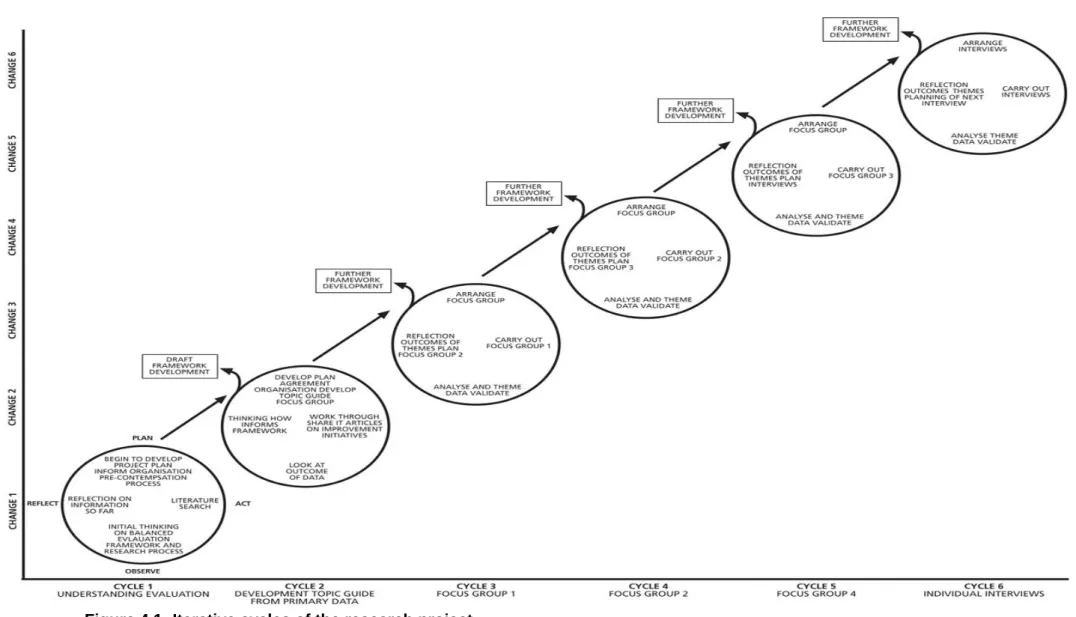
Figure 4.1: Iterative cycles of the research project ... 55
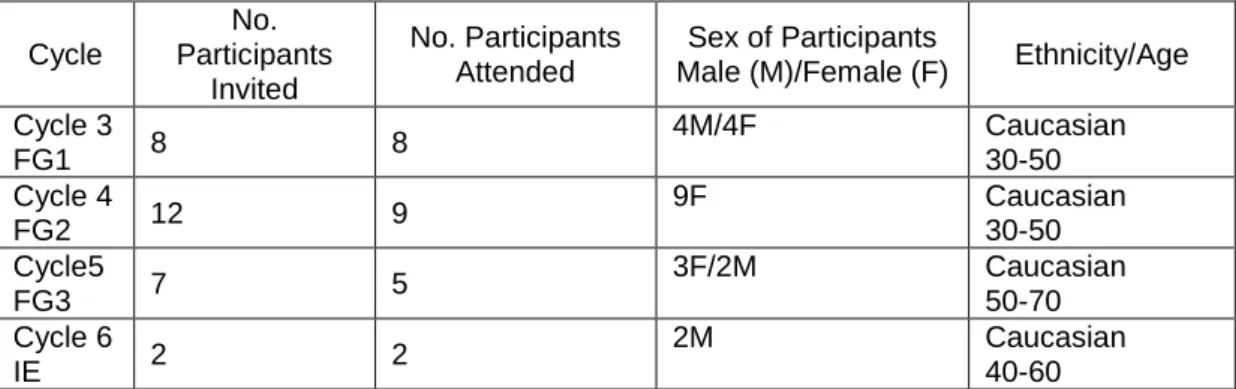
Table 4.2.1: Summary of Number of Participant Selection Invited and Those who Attended the Focus Groups ... 59
Table 4.4.1: Findings from ShareIT Articles... 64
Table 4.5.1: Themes emerging from the focus group ... 75
Table 4.5.3: Themes from Focus Groups ... 76
Table 4.5.4: Definition of Terms ... 76
Figure 4.7: Final Version of evaluation framework... 84
Figure 5.2: Basic Improvement Methodology (Associates Process
Improvement, 1996) Implementing Changes ... 88
Tables
Table 3.1: Philosophical Assumptions from Three Research
Perspectives (Vaishnavi and Kuechler, 2006) ... 29
Table 3.2: Lincoln and Guba Authenticity Criteria as Guide to
Project’s Validity ... 36
Table 3.4: Advantages and Disadvantages of Focus Group for
Consideration ... 40
Table 3.6: Phases of Transcript Analysis ... 46
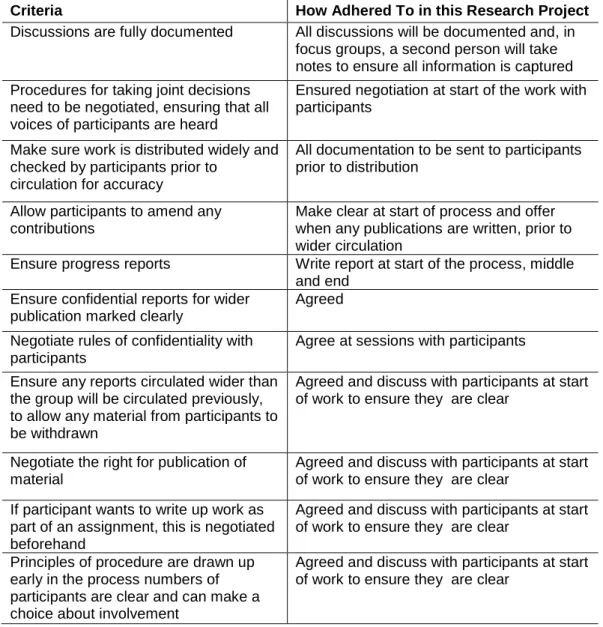
Table 3.7: Principles of Procedure in Action Research ... 52
Table 4.2.1: Summary of Number of Participant Selection Invited and those who Attended the Focus Groups ... 59
Table 4.4.1: Findings from ShareIT Articles... 64
Table 4.5.1: Themes emerging from the focus group ... 75
Table 4.5.3: Themes from Focus Groups ... 76
Table 4.5.4: Definition of Terms ... 76
Table 4.7: Results of EFQM Excellence Model Applied to
Colposcopy Services in South Tees ... 82
Table 5.1: Comparison of PDSA and Transtheoretical Model ... 89
Table 5.2: Comparison of the Strengths and Weaknesses of the
Two Models ... 90
Appendices
Appendix 1: Framework of Critiqued Articles ... 136
Appendix 2: Trust Report ... 142
Appendix 3: Ethical Approval Information (Trust Policy/
COREC/Risk Assessment) ... 153
Appendix 4 : Research Methods ... 165
Appendix 5: Topic Guide ... 169
Appendix 6: Initial Thinking ... 170
Appendix 7: Participants’ Letter and Agenda ... 172
Appendix 8: Notes from Focus Group Meetings ... 175
Appendix 9: Emerging themes ... 179
Appendix 10: Flipchart Evidence and Rough Iterations of
Framework ... 198
Abstract
The study of service improvement within healthcare is no longer in its infancy. A plethora of books and journal publications have presented their own interpretations of the meanings, significance and application of service improvement. Despite such endeavours, there are still few studies that look at how we measure the impact of such service improvement to quantify the practical effect of improvement.
At organisational level, organisations and project leaders often undertake evaluation in a piecemeal way, as part of a project or initiative. Whilst this can help assess the benefits or otherwise of a particular piece of work, the findings of the evaluation often remain within the project and are not disseminated across the wider organisations. This, in turn, means that opportunities for learning are diminished.
This project builds on previous work and adds a new and unique contribution to the body of service improvement knowledge. It critically reviewed existing evaluation frameworks to inform the development of a unique balanced framework for service improvement initiatives, which is accessible and usable for change agents and their colleagues to evaluate effectiveness.
The project began with an examination of the political environment surrounding the evaluation of service improvement, followed by a review of both existing service improvement evaluation frameworks. The review yielded few resources and highlighted a gap in the body of knowledge. Following this, primary data was collected from the organisation, which led to the following research questions:
– What is understood by measurement and evaluation?
– Are measurement and evaluation, interdependent, or mutually exclusive? – What elements are missing from the current evaluation models presented? – Could an evaluation framework model work in practice?
This led to a qualitative action research, which used focus-group meetings and one-to-one discussions to provide observation, reflection and feedback, in order to develop an understanding of measurement and evaluation, in relation to organisational improvement and to provide a robust evaluation framework for organisational use.
The findings were analysed, using thematic analysis and revealed the need for an evaluation framework that is user-friendly, replicable and incorporates the views of users and carers. On the basis of the findings, recommendations are made for the improvement of practice and also the need for further longitudinal research, in relation to embedding and evaluating the impact of the framework within the organisation.
Acknowledgements
My first big thank-you goes to my husband, Robin and daughters Millicent and Henrietta, as, without their care, time, encouragement and tolerance, this doctoral programme would not have been possible.
I owe a great debt to Dr Maxine Conner and Mrs Sue Holden for their unfailing time, patience, coaching and guidance throughout the programme.
Thanks to South Tees NHS Trust and the particular staff and patients who played a large part in the focus-group debate throughout the development of the Improvement Framework.
Thanks also to Dr Irv Rubin, Mr Dave Yarrow, Mr Clive Spencer, Dr Dave Ashton and Mrs Shona Davie for their vigorous debate and encouraging support.
A special thanks to Dr Rob McSherry and Dr Richard Bellamy, for taking time out of their busy schedules to advise me on the research methodology and data analysis of the results.
Finally, thanks to Dr Gordon Weller, Professor Hemda Garelick and Dr Lesley Vernon at Middlesex University, for their support throughout the doctoral programme.
Chapter 1
Introduction
1.1 Background and Context
The drive to improve services and products and to achieve ―improvement‖ in organisations that deliver them, is relentless and permeates all walks of life. Since the mid 1990s, both within the United States of America (USA) and The United Kingdom (UK), there has been increasing interest in service improvement within the healthcare sector. Following its introduction, the iterative components of improvement theory (Deming, 1994) have been adapted for use in healthcare. Early improvement frameworks were developed from manufacturing, for example, European Foundation Quality Management (EFQM, 1999) and Process Redesign (Hammer and Champey, 1993), which focused upon mechanistic processes suited to industrial settings. The adaptation of such frameworks excluded the people aspect of change, therefore, lacked evaluation. This highlights the deficiency of ―fit-for-purpose‖ evaluation frameworks that recognise the human elements of improvement. This study seeks to address these deficiencies.
When I began working in service improvement within the National Health Service (NHS), I started to review the literature surrounding service improvement, in order to adapt and implement existing tools and techniques. The review highlighted that most of the literature focuses on the adaptation and implementation of service improvement initiatives, while limited information is available on the evaluation stage of the process. As a consequence, much of the published literature questions the sustainability and impact of service improvement at intra-organizational level (Rogers, 1995; Piredit, 2000), which has, undoubtedly, led to scepticism among healthcare professionals. Intra organisational improvement is improvement within organisations and inter-organisational change is aimed at interventions used to raise performance across different organisations and themed groups (Conner and Scott, 2005).
In May 2003, I was appointed as Service Improvement Lead (with a specialist interest in Tools and Techniques for Service Improvement) at a large regional hospital in the north of England. This was the first role of this type established within the organisation, thus, it enabled me, at a strategic level, to introduce service improvement tools and techniques. Growing expertise in this area led to
my development of a theoretical model, which is one where the initiation, implementation and evaluation (Prochaska and Velicer, 1997) of service improvement initiatives, go hand in hand and are inextricably linked. I recognised, however, that evaluation of improvement initiatives, at a local level, was, at best, ad hoc and, at worst, non-existent. This is understandable, given that evaluation is often complex, but to overlook its importance can leave many of us asking the question, ―has it made a difference?‖ This led to the focus of my research,
namely:
The development of an intra-organizational evaluation framework that can be used to establish the effectiveness of a service improvement initiative.
In essence, the outcome of this project is a Balanced Evaluation Framework (‗BEF‘), available to individuals and teams involved in initiating improvement, to aid them in achieving their goals. In this way, resources are allocated in the most effective way and each individual project is tailored to achieve its desired outcomes. Developing strategies that work effectively within an organisation is a crucial and complementary stream of work, which is necessary if transformation of healthcare in the United Kingdom (UK) is to take place (Modernisation Agency, 2002). Consequently, questions are raised relating to the meaning of service improvement in healthcare.
1.2 The History of Service Improvement relevant to the Healthcare Sector The science of Service Improvement is a mix of disciplines, which aims to build a culture that is supportive of improvement, using principles and thinking from psychology and organisational development. The objective is to combine the tools and techniques of quality improvement with effective organisational development (Granville, 2006).
Service Improvement has its origins in the early 20th century and in the work of Fredrick Taylor (Taylor, 1911), who applied scientific theory to the study of ―work‖, also known as ―scientific management‖. This measured improvement as an output, using quantitative ―harder‖ systems tools and techniques, to ensure a predictable and desired outcome, however, other than increased wages through efficient output, Taylor did not consider the humanistic needs of the worker. Mary Follett-Parker‘s work(1926 cited in Graham 1994) contrasted with the scientific management of Taylor, she was known for her work with groups, focused on
democratic group organisation in place of bureaucratic hierarchy. Mary Follett-Parker was one of the first to integrate the idea of organisational conflict into management theory, the social dimensions of business in Follett‘s writings being the contribution of managers to culture. The Hawthorne studies, in the 1930s, one study focused on a relay assembly factory (Mullins,1999) where the research highlighted that workers could be motivated by their feelings when more attention was paid to their performance (increased esteem). This was demonstrated by a particular work team increasing production when more interest was shown to them by the management. This introduced the importance of the social/humanistic dimension in motivating workers and work organisation (Mayo, 1933). Maslow (1943) considered the hierarchy of needs of an individual, in terms of motivating their performance and satisfying their needs. This links with the work of Hertzberg (1959), who provided the first investigation in to organisational motivation, job satisfaction and the concept that we cannot deal with motivation just at an individual level, but must look at the organisation. The concept of combining a scientific and humanistic approach to work organisation was developed by Trist and Bamforth in the 1960s using their socio-technical systems approach to organising the work of long wall coal mining (Trist and Bamforth, 1951). In order to understand the change or improvement fully, it may be argued that it is vital to consider the qualitative ―softer‖ (Skyttner, 1998) humanistic theories of improvement, which considers the outcomes rather than the outputs. Given the occurrence of both technical and human dimensions in most problem situations, a hybrid of scientific quantitative ―hard‖ systems and ―soft‖ qualitative methodologies will give the best understanding of the impact of the initiative (Checkland, 1981; Checkland and Scholes, 1990; Kirk, 1995). Soft tools are used to explore alternative solutions (creativity, lateral thinking), harder tools used to analyse these exploratory issues to make then realistic for implementation
.
The qualitative ―softer‖ approach would ensure that human dimensions are incorporated at an early stage of the process, allowing all groups to be involved in developing a solution. In the soft systems (see p70) overview, quantitative and more scientific techniques can be employed to optimise aspects of the solution and should be considered when evaluating improvement. When considering the models in relation to ideographic and nomothetic terms, in this instance nomothetic would relate to a scientific positivist approach and ideographic would suggest a concept not quantifiable in a positivist sense but nonetheless worthy of consideration from a constructivist stance; none appear to put both aspects together cohesively.Early development in healthcare saw significant change on an individual hospital basis. Following the improvement in the manufacturing industry, healthcare improvement became nationalised and saw the start of an improvement science. The evolution of improvement methodologies throughout the 19th century was aided by the work of the Institute of Healthcare Innovation (IHI, 2001), which was driven by the growing accountability demanded by the American public and their desire to know why patients were harmed by care that was intended to help them. This led to the report, ‗Crossing the Quality Chasm: A New Health System for the 21st Century‘ (Institute of Medicine, 2001), which described the immense difference between what we know to be good healthcare and the healthcare that some people actually receive. The project work was led by Don Berwick in the USA healthcare sector, practising paediatrician and Chief Executive Officer of the IHI, who began by examining improvement of healthcare provisions. It saw the start of system changes, both simple and radical, demonstrating great potential for positive change in the American Healthcare System (Institute of Medicine, 2001). The improvement models from this work went on to be adapted and implemented in the UK, to improve the NHS. A task force was set up by the Department of Health, which produced the NHS plan, ‗A Plan for Investment, a Plan for Reform‘, (DH, 2000). This saw the establishment of the Modernisation Agency in April 2001, a UK counterpart of the IHI, whose role was to take a lead in making the radical and sustainable changes required to improve healthcare delivery in the UK. This saw the establishment of service improvement as a core element of business across the NHS. The NHS Institute of Innovation and Improvement (2006) defines their service improvement mission statement as:
a method of improving health outcomes and raising the quality of delivery in the NHS by accelerating the uptake of proven innovation and improvements in healthcare delivery models and processes, medical devices and healthcare leadership
(NHS, 2006, p 3)
1.3 Evaluating Service Improvement
As the focus on service improvement grew, so did the need for robust evaluation. Over the century, the discipline of evaluation research has developed from social research, particularly in health and education (Inglis & Matykiewicz, 2005). Rossi and Freeman (1993) trace back its history to the 1930s/1940s, where public health and education programmes underwent rigorous assessment, using social
research methods, such as experimental and quasi-experimental methods. Post-war, the emergence of public policy and government programmes facilitated a growing requirement for evaluation methods to be used to validate, assess and review the implementation of policy. The 1970s witnessed an increasingly critical approach to evaluation theory that has continued to the present day. Different approaches to evaluation have emerged as the discipline has evolved.
There are numerous definitions of evaluation; the following definitions have been identified to make a distinction:
Formative evaluation is process orientated, occurring before and during programme implementation. It focuses on understanding and learning from processes, to make sense of the outcomes. It is context-specific and takes account of the environment in which evaluation occurs.
Summative evaluation is performance-orientated, occurring at the end of a programme and, retrospectively, measuring outcomes against pre-defined objective criteria. There is less account taken of the environmental and contextual factors that may have influenced outcomes and an emphasis towards performance management.
(Inglis & Matykiewicz, 2005, p 87) In the NHS, there is a tradition of using summative evaluation to inform policy, however, there is increasing recognition of the benefits of formative evaluation for learning and development. This is particularly relevant to service improvement (Bate and Robert, 2003). Laurillard (1993) offers a working definition of formative evaluation, which helps to clarify evaluation in relation to the purpose of this project:
Formative evaluation describes the evaluation programme with the objective of providing information for improvement during the design and implementation phases and allows for the opportunity to change the processes involved in implementation. This typically includes the use of qualitative process data
(Chapter 5, p 2) In terms of service improvement, however, evaluation is often seen as
measurement of improvement, as in this definition, given by the Modernisation Agency (2002):
Measurement for improvement: where a few specific measures, linked to the programme objectives and aims, demonstrate whether the changes are making improvements
In asking health professionals to consider what is meant by ‗measurement‘, it is frequently performance measurement that is quoted, such as targets set by the Standards for Better Health (DH, 2006) and the NHS Balanced Scorecard (Kaplan and Norton, 1992), which, at intra-organizational level, cannot be evidenced as delivering service improvement discussed in chapter 5. Having worked for a number of years researching and applying tools and techniques for service improvement within the health service, it is the evaluation of such service improvement initiatives that has become of great interest to me.
It has become evident that, at an intra-organizational level, there is very little measurement carried out to demonstrate that a service improvement intervention has made a significant difference to the service that patients receive. There is a need to develop tools that can be used to evaluate at a local level. Political targets are determined, to indicate the achievement of an improved experience for patients. The government has set many targets and performance-indicators, aimed at extra-organizational level, but this does not reflect the work at intra-organizational level, which can lead to distorted clinical priorities and unintended consequences. This is supported by Fitzgerald et al (2007), who state that:
evidence provides strong support for the view that targets alone do not produce service improvements
(p 73) This was also highlighted by Jones (2002) who examined attitudes towards quality measurement, which had been stated as a requirement of health improvement in The New NHS Plan (1997). Jones‘s (2002) study concluded:
The study identified existence of favourable attitudes toward the ethos of benchmarking …. However, there appeared to be inertia towards the implementation of benchmarking at unit and operational levels.
(Jones, 2002, p 163) Considering Jones‘s (2002) study, it would appear that from an ethical and professional perspective, we are accountable for ensuring that money not committed to direct care delivery or health improvement contributes to the development and improvement of service provision. The Department of Health: Code of Conduct for NHS Managers (2002) and professional bodies, like the Nursing Midwifery Council NMC (2002), argue that employees are dedicated to ensuring this, but feel there is little evidence available to show the impact being made on patients and carers.
When considering how to apply the work of the IHI, what is often debated amongst healthcare professionals is that market forces drive American healthcare but that the NHS is driven by public sector service values (McSherry and Pearce, 2007). Recognising this must influence our thinking when considering improvement in the NHS. Murdoch (2006) argues that the British National Health Service is a socialized medical system, which, for 50 years, has provided healthcare that remains free at the point of delivery, however, while politicians and commentators tend to draw attention to differences between 'market-driven medicine' in the USA and 'socialized medicine' in the NHS, there are remarkable similarities. Skidmore (1999) states, for example, that working Americans routinely have health insurance deducted from their salary; likewise, ‗national insurance‘ is deducted from the pay of British employees. Another example is that of salaried GPs being paid by tariff, based on demographics in the UK, whilst American physicians are paid by patients. Whilst there are similarities, the underlying principles behind the NHS should not be forgotten when considering service improvement measures. Service improvement, as argued by Reinertsen (2005), Rogers et al (1999) and NHS Scotland (2006), should focus on improved patient care as the overriding aim of improvement activities. Whole-system evaluation appears to be lacking and, as a consequence, it is difficult to find evidence of success across whole services from improvement interventions. To ensure that we fulfil the notion of whole systems evaluation, the dichotomy between measurement and evaluation needs to be considered; this is the basis for this research.
1.4 The Balanced Evaluation Framework (‘BEF’)
It has been recognized that service improvement is vital to the delivery of patient care and at both intra and inter-organizational level, however, the literature surrounding improvement initiatives does not place sufficient emphasis on evaluation of this improvement. Measurement is an essential element of any quality-change programme, but it is problematic, particularly in healthcare, due to multifunctional elements and complexity, such as professionalism, ethics, invisible costs and human dimensions. Consequently, it is often neglected because it is complex, multi-professional, people-specific and high-risk. Data collection and analysis can be integral to the quality programmes themselves and is important in terms of evaluating their impact (Walston and Kimberely, 1997). Academics, such
as Ferlie et al (2002), have started to develop a methodology for defining useful quality measures within the healthcare sector, however, the work is limited, because it is incomplete and in need of further development.
According to Bate et al (2005), large-scale modernization and improvement of the health service is under way and there are numerous improvement projects being initiated and implemented, with many individuals involved in delivering them. There is, however, a need to ensure that evidence of improvement can be measured, not only for the organization as a whole, but also for the satisfaction of teams and individuals participating in improvement work, often in addition to a heavy workload. The development of this framework will provide a tool for such staff to evaluate improvement efforts and be transferable across the healthcare sector.
The proposed contribution of this research to professional knowledge involves offering a framework using both quantitative and qualitative measurement techniques, which, as I have demonstrated through the literature review (see Chapter 2), is the ―missing link‖ in many intra-organisational service improvement initiatives. This often leads to the question as to whether significant and sustainable improvement has been achieved.
Not only is this project important for its contribution nationally and internationally, it also fits with the Improvement Strategy 2005/2006 (James Cook University Hospitals, 2005) for my organisation. The scope of the improvement agenda for the organization is predominantly cross-divisional and cross-directorate in nature. Each division will have its own change programme that may be necessary to help achieve local objectives. One of the key elements of this implementation plan will be to introduce measures for regular reporting that will indicate whether improvement has been effective, as described in the trust‘s Improvement Strategy Paper. The purpose of this document is to highlight the Trusts future direction for improvement. This framework will aid with the implementation and sustainability of improvement projects through evaluation. Royal College of Nursing stated:
We have to deliver value for money services and ensure financial stability...we must modernise innovate and improve...in a way that supports and sustains our NHS today and tomorrow.
(Royal College of Nursing, 2007, p 1)
Quantifiable results are important because the nature of the healthcare industry lends itself to some confusion over measurement. Many executives will say that they are sure their improvement programmes are working, but that improvements are in intangible areas such as healthier patients and improved staff morale (Breedlove, 1994). By contrast, measurement provides hard numbers that can be interpreted as fact; it can be described as a process of quantifying objects or events by assigning numbers to them in a consistent fashion. Measurement allows objects or events to be compared mathematically, either one to another, or to an established criterion.
There are a number of steps involved in any improvement work; firstly assessing and understanding the improvement idea or innovation, secondly, understanding people and the improvement environment and finally, implementation of improvement on the ground and demonstrating that improvement makes a difference (Conner & Scott, 2005). There are some improvement projects where a pilot step is appropriate. A pilot step is an opportunity to demonstrate capabilities of an improvement on a small area in a controlled manner. It can also serve to inform or resolve any issues during the planning phase, however, although this step may be appropriate to some improvement initiatives, there are some projects where it could not be applied. The implementation of the Clinical and Management Information System (CaMIS) for booking patients‘ dates for admittance to hospital, for example, could not be carried out as a pilot. Although small ‗Plan-Do-Study-Act‘ cycles could be run, it was not possible to simulate the full implementation, as it was a difficult academic and applied improvement.
The proposed framework developed in this study will bring together all the steps in the improvement process, in an attempt to ensure sustainability, spread of improvement and effective practice across the National Health Service (NHS) and be transferrable to many other health care related settings.
1.5 Summary
As a conclusion to my doctoral programme, this project integrates my experience and learning into a cohesive body of knowledge that makes an important contribution to my professional development and understanding of leading healthcare improvement. It offers a new contribution to the service improvement body of knowledge by bringing together the quantitative and qualitative elements of evaluation, in order to provide a unique Balanced Evaluation Framework
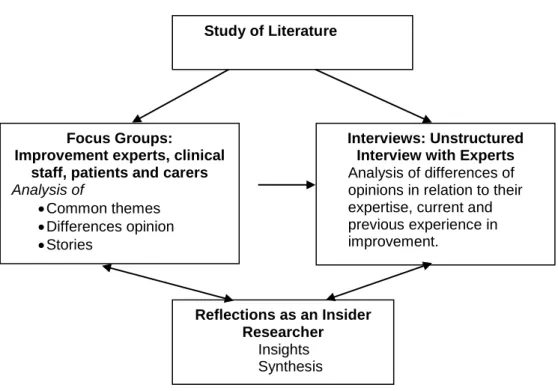
―BEF‘‖ for service improvement initiatives within the NHS. Figure 1.5 shows the connections between the major parts, which are outlined. In this figure, the outlines of the research process are described:
Following, is a short orientation of the research process.
Chapter 1 provides an introduction to the project, looking at the history of service improvement and the theory behind evaluation. This is followed by Chapter 2, which presents a review of the literature and details the terms of reference and aims of the project. It consists of a presentation of research papers previously published in conferences and journals around evaluation frameworks. Chapter 3 containsdiscussions on relevant research approaches and methods. The general outlines of how methods are applied throughout the thesis are presented. The planning approach is discussed. This is followed by Chapter 4, which discusses the project activity and findings. It presents the rationale and development of a ‗BEF‘ for service improvement initiatives. Chapter 5 returns to the underlying assumptions around the problem background and connects with the results discussed in chapter 4. Chapter 6 presents an overall conclusion and recommendation for the whole project. Chapter 7 presents a critical reflection of the project, returning to the previous chapters.
Chapter 2
Literature Review, Terms of Reference and Objectives
2.1 Introduction
This chapter reviews and critiques the literature relating to the area of study. By embarking on such a pursuit, the project was guided, firstly, by discovering the current research related to the project, secondly, outlining what and how much has been studied and finally, identification of the deficits within the literature. Besides providing a background for the study, the review provides necessary reference and support, in order for the research to be credible. The topics discussed include the aims and objectives of the study and search engines used, measurement of service improvement initiatives, evaluation frameworks, evaluation and measurement, quantitative and qualitative measurement, evaluation and sustainability.
2.2 Terms of Reference and Objectives
The project aims to critically review existing evaluation frameworks, to inform the development of a new balanced framework for service improvement (see chapter 5).It will address the following research questions:
What is understood by measurement and evaluation?
Are measurement and evaluation, interdependent or exclusive?
What elements are missing from the current evaluation model developed (see chapter 4, section 4.1.1)?
Could the Balanced Evaluation Framework model work in practice?
In answering these questions, the aim of the project is to develop a ‗BEF‘ for service improvement initiatives (explained in section 1.5). In order to establish the latter, it is imperative to review the relevant literature. The term ―balanced‖ pertains to both quantitative and qualitative evaluation at different stages of an improvement project, to give a thorough and fair assessment of the improvement initiative, in a quest for ‗improving excellence‘. The conceptual model (figure 2.1) shows the overlap of elements required to ‗improve excellence‘ through
evaluation. The project was developed to address three research questions relating to the aim of the project.
The project was designed to achieve the following objectives:
To consider the political environment surrounding the evaluation of service improvement and understand the purpose of evaluation of service improvement initiatives
To review previously developed evaluation frameworks for service improvement initiatives
To develop an understanding of what is meant by evaluation and measurement
The outcome of the project being the production of a measurement framework for practitioners, which will be applicable to the NHS environment, to aid accurate demonstration of service improvement initiatives at intra-organisational level. The research will lead to the provision of a unique ‗BEF‘ which will incorporate the humanistic and qualitative elements of change. Enabling a systematic approach to monitoring the sustainability of improvement initiatives at intra-organisational level, thus enabling practitioners to improve their efficiency and effectiveness in practice
over time, while developing ongoing real-time learning, as they strive to implement improvement into practice.
The policy context of the NHS, like many other public service organisations, is strongly influenced by political forces. However, the current economic climate married with ever increasing public expectation, and concerns such as those raised in Mid-Staffordshire have raised the political ‗heat‘. This makes the relevance of reports such as the final report of the Next Stage Review (NSR) led by Lord Darzi (DH, 2008) published June 2008 all the more critical. The purpose of the report was to build on progress made by delivering the NHS Plan and the government reform agenda, to identify the way forward for a 21st Century NHS which is clinically driven, patient centred, responsive to local communities and to deliver high quality care for everyone. The Department of Health (DH) now wishes to commission a major new wave of research to evaluate the NHS‘s readiness to deliver the NSR, and the implementation and impact of its key elements. This provides an opportunity for an evaluation framework at both intra and inter organisational level to aid organisations their teams and individuals to ensure that any improvement can be evidence based and that there is a continual assessment of the intervention using information from initiatives such as Commissioning for Quality and Innovation payment framework (CQUIN) (DH 2009/10) and Productivity and Efficiency programmes against the DH required vision. Whichever political party is in power the need to demonstrate organisational improvement will be feature of policy context as the NHS faces up to the economic challenges it faces over the coming years.
2.3 Literature Searches
The first strategy for the review entailed using search engines, www.modern.nhs.uk and www.dh.gov.uk; secondly, electronic databases were searched, using ‗Emerald‘ (a search engine). The search was refined from 4662 articles to 252 and finally to 14 key articles. Thirdly reference lists were checked from relevant selected documents.
Studies considered for inclusion in the review if the following criteria was met:
English language literature
Articles which discussed evaluation frameworks within the context of the NHS or healthcare practice
If the above criteria was not met articles were excluded from the review
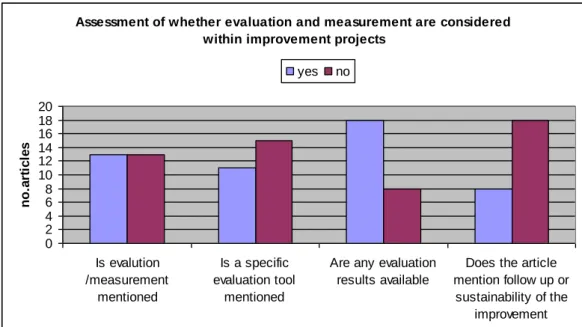
Undertaking a detailed critical analysis of frameworks has been a significant and difficult piece of project work as there is not a wide body of knowledge on this subject. A table was created to allow a methodical critique of each article in relation to different frameworks discussed (appendix 1). The following categories formed the table:
the use of measurement and evaluation terminology the use of quantitative and qualitative methodologies details on continual evaluation and sustainability
In synthesising the data, the following themes have been identified and are discussed below.
2.4 Measurement of Service Improvement Initiatives
Development of organisational service improvement initiatives have been conceptualised, using many different terms and models. The start of this work can be traced to Lewin (1951), who described a three-step large-scale change process of unfreezing, change, re-freezing, the change intervention needing both resource and time, first to change from the existing state, then re-freeze into a new position. Frequently cited in research on measuring healthcare quality (Donabedian, 1992; Burns, 1995), is Avis Donabedian‘s (1980) model of ‗Structure, Process and Outcome (SPO). Donabedian defines structural measures of quality as the professional and organisational resources associated with the provision of care, such as staff credentials and the operating capacities process, referring to the thing done to and for the patient by practitioners in the course of treatment. Donabedian (1980) also distinguishes between two types of outcome, technical and interpersonal. Prochaska and DiClemente‘s (1986) trans-theoretical model concentrates on the interpersonal aspects of improvement, which builds on what Donabedian (1980) had earlier termed, ‗interpersonal‘. Their model involved the emotional, cognitive and behavioural aspects of change. It was made up of the following five formative stages; pre-contemplation, contemplation, preparation, action and maintenance.
In summary, the number of tools and techniques available to aid improvement are vast, such as the ‗balanced score card‘, a strategic framework developed by Kaplan and Norton (1992), the ‗European Foundation for Quality Excellence‘ (EFQM) and the ‗TQM model‘ (Jackson, 1999;Stahr et al, 2000; Jackson, 2001; Langley et al, 1996), ‗Plan-Do-Study–Act‘ (Deming, 1986), ‗Behaviour-Minder‘ (Rubin, 2001), ‗Review, Agree, Implement, Demonstrate model‘ (RAID) (Halligan and Donaldson, 2001) and ‗Lean Thinking‘ (Womack et al, 1991).
Although there are a plethora of tools and models available to aid improvement, collectively, but not singularly, the tools offer the opportunity for ‗double loop learning‘ (Argyris and Schon, 1978) and comprehensive evaluation. However, healthcare professionals in this research found it difficult to identify whether improvement is taking place and what exactly is improving, due to the complexities of its nature. This does not negate the need for evaluation to be performed (Modernisation Agency, 2005; DH, 2005). Champey (2003) reports that organisations fail to implement 70% of their new strategic initiatives. Without proper means to measure improvement projects within the NHS, healthcare professionals risk losing track of their mission, goals, objectives and, above all, priorities. This is supported by Jackson (1999), in relation to the business excellence model who states,
its fundamental principle that measures need to be taken in order to monitor progress means that new activities cannot be pursued until the effect of activities undertaken to address previous areas for improvement are determined
(p 64).
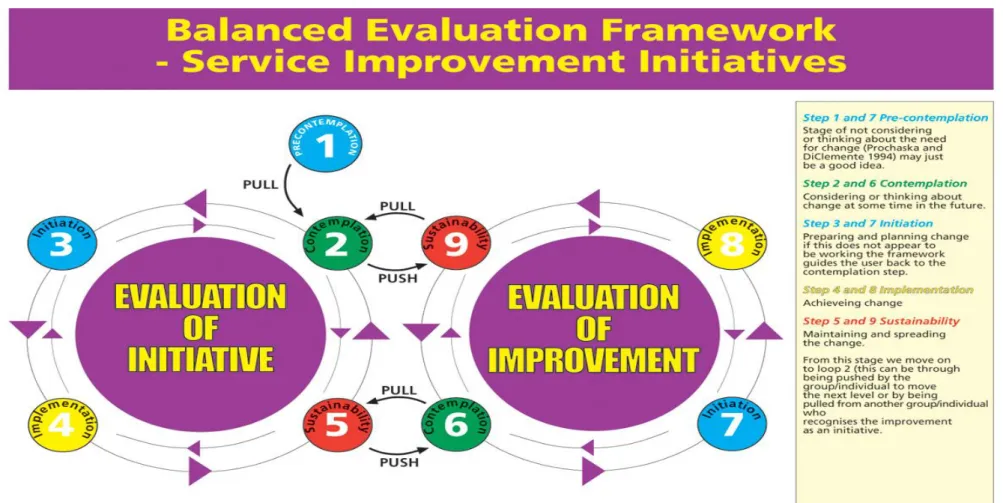
In the absence of reliable measurement, this research highlights a gap in the evaluation of improvement and seeks to create an evaluation framework (see section 4.1), which will allow service improvement initiatives to be measured from initiation to implementation, to demonstrate sustainability of improvement initiatives and to maintain organisational direction, in relation to service improvement.
The literature search has concentrated on discovering what measurement tools related to service improvement initiatives there are, within the NHS, which could indicate sustainability and improvement. Synthesis of the literature indicates that healthcare professionals have experienced difficulty in identifying whether change has led to improvement and what exactly is improving, due to the complex of its nature of healthcare, but it remains an expectation of government that this be
performed (Chow, Chua and Goh, 2002). Healthcare measurement involves a variety of factors that, from research, appear to have proven difficult to be monitored (Chow, Chua and Goh, 2002). It involves more than just procedures, or a measurement of skills, knowledge and a determination of outcomes at community level, it also needs to consider the ―softer‖ qualitative aspects of improvement (Deming, 1993), such as evaluation of human dimensions of behaviours. Work by Rubin (1992) focused on working with healthcare organisations who share a simple but powerful premise; ‗―Staff” infections in the
boardroom culture of a healthcare organization are as potentially lethal as “staph” infections in the culture of the organisation‟s treatment room‟ (Rubin, 1996, p 1). The major focus of Rubin‘s current work was based up on the relationship between performance management, feedback systems and the creation of healthy, non-toxic, caring organisational cultures. It is often the evaluation of this human dimension of change that is lacking.
The success of a service improvement initiative in the field of healthcare should not be conducted without sufficient reliable data that should include the participation of teams, organizations and individuals. Without the proper means to measure improvement, projects within the NHS are at risk of losing track of their mission, goals, objectives, aims and, above all, priorities. In this regard, an effective evaluation framework will maintain organizational direction (Appendix 2: South Tees Hospitals NHS Trust, Trust Report, 2005). The following section will look at the evaluation frameworks currently available and highlight any weaknesses.
2.5 Evaluation Frameworks
The search highlighted that there were few comprehensive evaluation frameworks and those that had been developed were developed nationally, to be implemented locally at intra-organisational level (Chang, Lin, Norcott, 2002; Chow-Chua and Goh, 2002) rather than being developed at local level for local implementation. The literature fell into two categories, those which compared existing frameworks and those which developed new frameworks based on knowledge of previous frameworks, through critical appraisal of existing findings and building on highlighted weaknesses (Yusof et al, 2006; Davies and Kochar, 2000; Okumus, 2003; Chow Chua and Goh, 2002).
The literature compared frameworks, predominantly using Balanced Score Card (BSC) as a comparator. BSC is a strategic evaluation framework, developed by Kaplan and Norton (1992), which has become one of the most widely- used performance management systems within organisations, including the Department of Health and Healthcare Commission (Deffenbaugh, 2004), British Telecom and private organisations. The key principle underpinning it is a study of cause and effect. In the literature, BSC was compared with Performance Assessment Framework (PAF), Singapore Quality Award (SQA) and performance frameworks (based on BSC) for the UK, Canada, Australia and the USA. The literature highlighted that, although the BSC is used widely, it can be time-sensitive, costly and complicated. This was supported by the study of Chow-Chua and Goh (2002) that looked at combining BSC and SQA; limitations were highlighted as to the length of time it would take to implement such a framework. Additionally, it may be argued that such an approach does not measure values and beliefs, therefore, negates the impact of organisational culture, described by Deal and Kennedy (1982) as, ‗the way things get done around here‘. The fact that BSC is the
predominantly used tool supports the evidence that frameworks for evaluating the improvement are few.
Literature that looks at developing assessment frameworks includes those addressing clinical outcomes (Lin and Norcott, 2002) and those addressing outputs (Davies and Kochar, 2000; Rowe and Calnan, 2006; Okumus, 2003) and a few addressing both output and outcome (Yusof et al, 2006). Rowe and Calnan (2006) highlighted the need to ‗understand trust and its importance in terms of its clinical impact on health outcomes‘ and recognise that there are still gaps present,
in terms of research into the associated outcomes, demonstrating a lack of clear evaluation of initiatives. Arah et al (2003) emphasise the need for further development of frameworks for health-system performance, to address some conceptual and operational issues concerning quality and effectiveness. They also state that:
indicators of effectiveness should be clearly linked to realistic, pre-determined and unambiguous system-wide targets or outcomes‟ and that „performance frameworks should not replace actual performance but find a niche in a regulated performance environment and stimulate a culture of continuous improvement.
Shapiro and Wilcox (1999) address outputs, predominantly, but do incorporate outcome measurements, stating that ‗healthcare is one of the most problematic areas of price and output measurement‘ and present a framework for output measurement. Outcomes are addressed in relation to survey evidence from patients but demonstrate:
Substantial difficulties, leading to apparently inconsistent valuations … nonetheless owing to the scarcity of data on willingness to pay there appears to be little alternative to survey based approach.
(Shapiro and Wilcox, 1999, p 335)
Details of what was measured varied between quantitative and qualitative measurement. How measurement was carried out, in terms of tools used, was not evident.
Examination of the literature indicates that there are few frameworks for evaluation of healthcare improvement interventions and that those available are dated, or often specific to areas, for example, Health Information Systems (Mohd
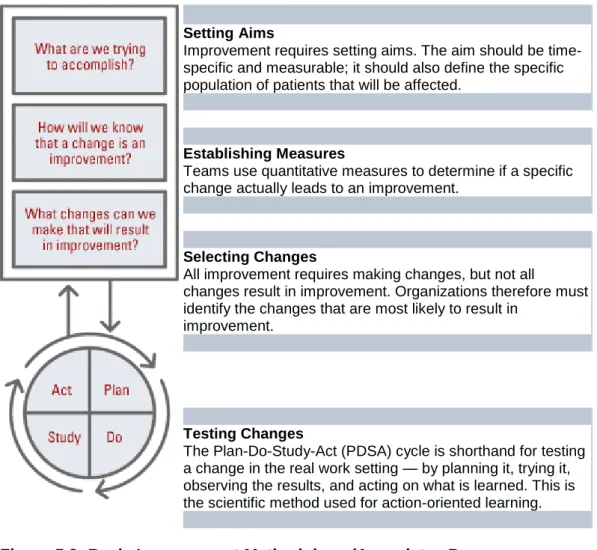
et al, 2006), rather than evaluating the whole process of implementing an improvement initiative. The literature highlights a gap, being that both quantitative measurement and qualitative measurement of service improvement initiatives did not exist within a single framework. Where qualitative measurement is incorporated, it appears to be, mainly, a questionnaire/survey-based approach. Following this extensive review, I found myself questioning my own theoretical mental model, referred to in Chapter 1, because it did not fit with the evaluation paradigm. I was surprised, however, to find a relationship between trans-theoretical (Prochaska and Velicer, 1997) and Plan-Do-Study-Act (Associates Process Improvement, 1996), as adaptations of theories in their own right. This will be explored further in chapter 5.
My conclusion is that evaluation of improvement initiatives is not yet robust and mainstreamed. The finding from this literature search is supported by the work of Okumus (2003), who studied frameworks that were used to implement strategies in organisations. His findings state:
... some frameworks combine several elements under one factor whilst others refer to each of these factors and that factors can be classified differently e.g. communication can also be termed interaction (Skivington and Daft, 1991).The resources are scattered and subjective to needs and highlight a need for a comprehensive evaluation framework which considers both quantitative and qualitative measurement of a service
improvement initiative which considers the initiative from start to end and considers continual evaluation and sustainability.
(Okumus, 2003, p 874)
2.6 Evaluation and Measurement
Organisations have been established for the sole purpose of determining ‗healthcare improvement‘, such as the Institute for Healthcare Improvement (IHI), founded in 1990. Their intention is to make efficient healthcare improvement, not just in the United States, but also outside it. The Institute teams up with various healthcare organisations and conduct ‗education, research, clinical trials and demonstration projects‘, in order to set up goals that healthcare services will follow
and will eventually lead to performance improvement. IHI works towards improved health status including communities through greater access to care, clinical outcomes, improvement and cost-reduction. The IHI is particularly focused on reducing the instances of waste in healthcare work and resources. They believe that healthcare problems are solved by finding and removing waste. The IHI believes in efficiency, in performance-improvement, whilst ensuring quality healthcare, by reducing waste and delay, which is caused by the mismatch between supply and demand. The IHI is successful in leading improvement projects using the collaborative models. ‗Collaboratives‘, rely on cooperation, in order to implement and evaluate service improvement initiatives across multiple sites (New Jersey University of the Health Sciences, 1998).
What is evident from the literature are the difficulties and complexities in relation to measurement in healthcare, when compared with business organisations, where data can be easily presented, provided and recorded. Healthcare deals with situations and activities that may be difficult to record, are interpreted by the subjective mind and, as a consequence, situations are individually acquired, with idiosyncrasies unique to the human experience, rather than business organisations that will have a set of process orientated measurements with managed variance.
Although healthcare involves several factors that are difficult to quantify, measuring improvement must, nonetheless, be performed. Inevitably, the measurement of performance improvement, or service improvement initiatives, leads to quality healthcare, as well as the focus and realization of goals. The NHS emphasized that measurement for improvement is supposed to make the positive changes efficient and effective. They emphasize how objectives and measures
need to be connected and how they should reflect ‗other initiatives in the health community‘. This link has been emphasized in their models of improvement
(NHS, 2005).
The literature highlights the interchangeable use of evaluation and measurement. Lin and Norcott (2002) use evaluation to describe overall frameworks and measurements for the implementation, however Rowe and Calnan (2006) and Arah et al (2003) discuss measurement in relation to process and outcomes. Chow Chua and Goh (2002) state the need for measurement as ‗a critical aid to performance evaluation‟. Nechochea and Fort (2003) believe in the capability of measurement and evaluation to ‗strengthen performance improvement practices‘
and assess their effectiveness of intervening in the field. They identified that measurement and evaluation of service improvement initiatives in the healthcare field is increasingly complicated and difficult, due to diversity, which they name as ‗geographical settings, cultures, and health systems, coupled with a scarcity of resources‘. A primary complexity is the range of situations where healthcare is
delivered; this complexity leads to variability in context and practice. An inability to utilise a single standard approach has underpinned why many individuals have been unsuccessful.
The United States Department of Health and Human Services (DHHS) (1998) states that performance measurement is a necessity, as it will ‗clarify goals, document the contribution towards achieving those goals, and document the benefits received from the investment in each program‟. The DHHS emphasized how important it is to keep a record of, or track performances in the health field as a means to determine whether the set goals or the Health Service‘s mission and visions are being followed. The DHHS concur with Necochea and Fort (2003), in believing that measurement would not be effective or made possible if it does not have sufficient sound data that will be used ‗to reliably measure public health or human service outcomes‘. The DHHS reinforces that data acquisition in health
services is complex, limited and difficult at times, which is why researchers must look into other aspects of healthcare that will depend on measuring outcomes, or finding out how they had come to be. The study of procedure and the measures directly leading to such outcomes may be the most appropriate method (DHHS, 1998). As mentioned previously, what will make measurement and evaluation in the health practice possible is a set of standards (which at the same time, sets the standards), which will be performed through research on the perspectives of the service providers, as well as the patients themselves.
The DHHS report (1998) that the United States local governments have already employed a method of performance measurement. In their experience, they emphasize that measuring improvement in health service needs to be, ‗specific and result oriented, meaningful and understandable, adequate in data, valid, reliable and responsive‘ (DHHS, 1998). If those implementing service
improvement initiatives take note in establishing these guidelines, then a credible measurement report may be established. This will allow health systems to determine if there has been progress or, in a certain sense, if goals are being met. Monitoring performance leads to several implications about the state and welfare of a nation‘s health system and allow them to continue improving.
Measuring individual performance and behaviour, through a test of skills and knowledge, may be an alternative way to study a service improvement initiative. Although again, it is merely studying the theory of the healthcare, rather than the practice, or the application of the theory (training, skills and knowledge), which may be studied through the evaluation of better, or high-quality care. This will take into account a health practitioner‘s interventions, relationships with colleagues and the environment as a whole. There are two specific considerations related to health evaluation, to ensure the robust measurement of an improvement initiative, these being the behaviour itself, as well as its outcome. While behaviour may be measured at an individual level, through the correct following of a certain order, in a clinical procedure, outcome is measured in a more ‗systems and organizational level‘, as it will deal with the effects of the said behaviour on the patient. When one is looking at, therefore, at multi-layered measures; one may, for example, look at the impact at patient-level first, then aggregate this to look at trends at team-level, which, in turn, would inform system development at organisational level. Necochea and Fort (2003) highlight that measuring outcomes is also more complicated, as there are several factors, or ‗interventions‘ that may affect this.
Although measurement and evaluation are used, interchangeably, to describe how we assess the benefits of service improvement initiatives, it is clear that positive change or improvement should be nurtured, in order to contribute to the continuous betterment of a working individual. With the aid of measurement for improvements, one may be able to pinpoint how changes take place, what changes are important and what are not. Sorting out changes yields benefits, especially, in service improvement. Measurements for improvement (Institute of innovation 2005) are about identifying the right information that will identify
progress, growth and development, as well as agents to help justify that improvement has occurred. Measurements of improvement confirm and quantify what, otherwise, are an abstract feeling of change. It allows those implementing the change to show, through quantitative data, that such change have, indeed, taken place and provide visual and hard data of such evidence of growth, to demonstrate a change. Measurement for improvement allows individuals to track and reward change, as well as identify the lack, thereof (NHS, 2005). The contribution of ‗Measuring Service Improvement‘ is also, in a greater sense, for economic needs. Healthcare resources are limited, therefore, must be deployed in the best and most effective manner, such that an identifiable performance-measure ensues. ‗Performance Measurement‘ is also a way to allow local agencies and government programmes to come together. In this way, the National Health Service may take notice and may, indeed, track progression nationally.
My critical appraisal of the literature has led to the conclusion that evaluation and measurement are crucial, but not evident in practice. There is a need to seek clarity over what is understood by evaluation and measurement, to enable a robust evaluation framework to be developed. The literature also demonstrates the lack of empirical evidence around the usefulness of available evaluation frameworks and this is an area that will need to be considered after the development of the proposed evaluation framework for this project.
2.7 Quantitative and Qualitative Measurement
Effective evaluation needs to be present at all levels of the intervention and must involve both quantitative and qualitative evaluation, to gain a true understanding of impact. The literature search identified that the notion of measurement and evaluation is mentioned, but often, subjective judgments are based on experience and lacks any detail of the type of measurement and tools to be used. An example of this is the articles by Chow-Chua and Goh (2002) and Arah et al
(2003), where measurement was stated as critical in aiding better performance and frameworks were presented, but no details were present on what tools would assess quantity and quality. In many cases, quantitative measurement is mentioned without qualitative and vice-versa; quite often, no mention of either is present. Shapiro, Shapiro and Wilcox (1999) do mention both quantitative and qualitative measures and go into some detail about using patient surveys for
qualitative information and statistical analysis for quantitative measures, although the framework is more biased towards quantitative measurement, as it looks at specific price and output measurement. Where measurement or evaluation is considered, there is little empirical evidence about the effectiveness of these methods (Ovretiet, 2002). Many healthcare executives are familiar with the variety of improvement processes available, but few are aware of the key measurement methods that can be utilised to identify unique improvement opportunities in their organisations and assess the impact of their improvement efforts (Breedlove, 1994). In developing a robust evaluation framework, both quantitative and qualitative measurement must be incorporated.
2.8 Evaluation and Sustainability
One of the many challenges facing any organisation is identifying areas of effective practice, then ensuring all areas that would benefit from such knowledge are supported through an adoption process. My personal experience would support the evidence suggesting that all organisations are capable of delivering excellence in isolated pockets (Kaplan and Norton, 1992), but the challenge that remains is ensuring that spread is an inherent part of the improvement process (Senge, 1994), to create a learning organisation. According to Peter Senge (1990), learning organizations are:
… organizations where people continually expand their capacity to create the results they truly desire, where new and expansive patterns of thinking are nurtured, where collective aspiration is set free, and where people are continually learning to see the whole together.
(Senge, 1990, p 3)
Argyris and Schon (1978) state that, for organisational learning to occur, learning agents‘ discoveries, interventions and evaluations must be embedded in organisational memory (see chapter 5).
Prochaska et al (1992) talk of the theoretical model of behavioural change (see section 2.4). Its stages represent ordered categories along a continuum of motivational readiness to change. They highlight that measurement issues are very important and one of the critical steps for the application of the model involves the development of short, reliable and valid measures of the key constructs. Accurate measurement requires a series of unambiguous items that the individual can respond to, accurately, with little opportunity for distortion.
From a corporate governance perspective, once a practice or service model is proven to be clinically and financially effective, it is imperative that it is transferred to appropriate areas within the organisation. This enables staff to base decisions on up-to-date evidence, thereby, improving the quality of care delivered and reducing variations in practice (Conner and Scott, 2004).
Continual evaluation and sustainability are lacking, in relation to monitoring improvement. Okumus (2003) and Shapiro et al (1999), appear to be isolated, regarding their work in this area, which suggests a gap in the body of knowledge, in relation to evaluation of improvement initiatives, therefore, an area for consideration in the development of a framework for service improvement initiatives to maintain steady progress. This is further supported by Breedlove (1994), who states that healthcare organisations are looking to quality programmes as a key to survival, but many financial managers are unaware of the measurement methods to quantify results of quality management efforts.
The principles of Roger‘s (1995) work were grounded in technology, critically analysing how ideas spread, particularly within industry and marketing. Roger (1995) places emphasis on opinion leaders, the significance they have in implementing change and how they need to be identified, to gain maximum impact. Gladwell (2002) and Shapiro (2003) have developed subsequent work, which contributes to the spread agenda emphasising the importance of both people and the environment in which spread takes place. This provides the basis for a different approach to be utilised for improvement work as, historically, it is willing, or senior people, more often described as ‗champions‘ (Modernisation Agency, 1994) who are expected to lead and spread such work; these ‗champions‘ are described by Rogers (1995) as early adopters.
Early adopters are a more integrated part of the local social system ... the early adopter is considered by many as the „individual to check with‟ before using a new idea .... the early adopter is respected by his or her peers and is the embodiment of successful, discrete use of new ideas. The early adopter decreases uncertainty about a new idea by adopting it, then conveying a subjective evaluation of the innovation to near peers through interpersonal networks.
(Rogers, 1999, p 264)
The principles of spread and sustainability (Rogers, 1995), coupled with the identified lack of consideration toward sustainability (Fraser, 2002), when undertaking improvement projects has highlighted a gap in service improvement,
which needs to be addressed, to ensure that initiatives are maintained. This gap will be addressed in the development of the ‗BEF‘ for the project.
2.9 Summary
The research yielded few resources, most of which are dated and concentrate on specific areas, such as public participation methods (Robert and Bate 2003), rather than evaluating the whole process of implementing an improvement initiative. This implies that the ‗Evaluation‘, or ‗Measurement of Service Improvement Initiatives‘ in healthcare is not yet present and mainstreamed. The resources are scattered and subjective to needs. In summary, this critical review of the literature has shaped and influenced the development of the project. This research will attempt to develop a ‗BEF‘ that may be used by various healthcare services. The research revealed that the NHS had been attempting to put efforts into Measuring Performance Improvement, however, the information relating to it remains incomplete and difficult to assess. The literature review has also identified the difficulties and complexities in the particular measurement of healthcare. It is not as easy as measuring improvement in a business organisation, where data can be easily presented, provided and recorded. Healthcare deals with situations and activities that may be difficult to record, as they pass the subjective minds therefore these situations are individually acquired and developed feature with idiosyncrasies unique to the human experience. These idiosyncrasies develop from differing personal constructs, which are developed through experiences. Benner (1984, p 3) explains experience as ‗…
results when preconceived notions and expectations are challenged, refined, or disconfirmed by the actual situation‘. Each individual will have differing
experiences, therefore, each person will have a unique view of each experience, leading to idiosyncrasies. It is through these experiences that expertise develops; Benner (1984) describes this in relation to the expert nurse:
... who perceives the situation as a whole, uses past concrete situations as paradigms, and moves to t