Managing Global Software Projects through
knowledge sharing
– A Case Study Project
with reference to co-located and
globally-distributed software teams
Balaji P
Abstract - The purpose of this research paper is to propose a knowledge sharing framework to manage software projects where employees working in different work location. To support the arguments made based on review literature, the paper presents the holistic framework of knowledge sharing in a software development company and also provides a model to solve the problem of knowledge sharing objections. The paper then applies the framework to study the existence of knowledge sharing process in a software development company to examine the effectiveness of knowledge sharing.
Index Terms - Global Project Management Through Knowledge Sharing, Knowledge sharing in organisations, Knowledge sharing in software development industry, organizational culture in knowledge sharing, awareness, trust, willingness, knowledge sharing, project management and knowledge sharing.
—————————— ——————————
1.
I
NTRODUCTIONDue to a changing business environment today, organisations are facing challenges of global competitiveness. Furthermore, organisations are confronted more and more with issues such fast technological changes, product lifecycle shortened, downsizing, and high market volatility. In order to cope with these challenges, organizations need to be able to manage highly distributed diversified knowledge. Challenges rely on the identification of crucial knowledge that improves the business process. Knowledge is central but even more so is the understanding of the knowing process, and the learning and knowledge transfer/sharing process. Companies understanding the need to harness knowledge are aware about the crucial issue of creating a work environment that fosters knowledge sharing mechanisms and learning capabilities within and across organisations. It is well recognized that knowledge-sharing mechanisms are highly complex processes to promote in the organization. Indeed knowledge-sharing hostility is perceived rather as a phenomenon that widely dominates organizational reality.
The biggest challenge to developing a global delivery system is getting all team members to work efficiently and effectively together. Sharing knowledge and expertise is crucial in any team and in a team where members work in different countries.
2.
N
EED FOR THE STUDYThe biggest challenge to developing a global delivery system is getting all team members to work efficiently and effectively together. Sharing knowledge and expertise is crucial in any team, and in a team where members work in different countries and time zones and speak different languages, communication is not something that can be left to chance.
Previous studies focused on the knowledge sharing which is very generic and there were no studies conducted specific to growing software development industry. The researcher identified this as an important research gap, and researcher focused efforts in this direction. The research efforts are motivated by the above identified research gaps and the researcher decided to study how to manage global software projects through knowledge sharing by conducting a case study project with reference to co-located and globally-distributed software team.
Knowledge sharing within projects, across projects, and over time can improve both the efficiency and effectiveness of project management. However, it is not easy to do so. There are many types of knowledge and knowledge sharing methods. Further, many factors can encourage or inhibit sharing. The large number of possible combinations
————————————————
Balaji P is an research student at Vinayaka Missions University(Phd In Management) y, Salem, Tamil Nadu, India E-mail:
IJSER © 2011
of knowledge types, sharing methods, and affecting factors has to be analysed and understood, and the right methods deployed utilization and continuous creation of knowledge are the most important managerial challenges organizations face today. While the technology for collecting, storing, and accessing information continues to grow exponentially, the ability to effectively and efficiently use this information to enhance job performance, as well as deliver quality products and services remains elusive. The social challenge of fostering human interaction and Knowledge Sharing (KS) to encourage thinking rather than sophisticated copying remains a constant.
The management challenge is to create an environment that truly values KS. The personal challenge--often downplayed--is to be open to the ideas of others, willing to share ideas, and maintain a thirst for new knowledge. Knowledge in organizations manifests itself in one of two forms-explicit and tacit. Explicit knowledge can be easily articulated, captured, and transferred. Tacit knowledge is intangible and not easily transferable, and therein the problem exists. How do we share and transfer the tacit knowledge that resides in an organization.
3.
L
ITERATURER
EVIEWIt is well recognised today that knowledge is one of the most competitive resource for the dynamic global business environment (Sharif, 2005). Indeed, in recent years companies have strongly focused on organising creating, transferring, searching, sharing Knowledge under the roof so-called Knowledge Management (Hildreth, 2002).
On the other side, the multidisciplinary academic world such as philosophy, sociology, computer sciences have generated a large amount of publications on various perspectives and dimensions of knowledge management (Davenport, 1996, Davis, 2002). It is usually agreed that there is no common definition of knowledge but let’s recall some of the popular definitions. “Knowledge is justified true belief that increases an individual’s capacity to take action” (Ayer, 1956). Davenport (2000) defines knowledge as “a fluid mix of framed experience, values, contextual information and expert insight that provides a framework for evaluating and incorporating new experiences and information”. According to (Brooking, 1999) knowledge is defined “as information in context with understanding to applying that knowledge”.
The wide-based knowledge definitions highlights there are several forms of knowledge; tacit, explicit, implicit and systemic knowledge at the individual, group and organisational levels (Davenport, 2000, Dixon, 2002a, Polanyi, 1958, Nonaka, 1995, Inkpen, 1996). Explicit knowledge has a tangible dimension that can be easily captured, codified and communicated. It and can be shared through discussion or by writing it down and stored into repositories, documents, notes, etc. Examples might include a telephone directory, an instruction manual, or a report of research findings. Incontrast, tacit knowledge is linked to personal perspectives, intuition, emotions, beliefs,
know-how, experiences and values. It is intangible and not easy to articulate, so it tends to be shared between people through discussion, stories and personal interactions. The management of explicit or tacit knowledge consists of performing one or several of the knowledge processes such as transferring, creating, integrating, combining and using knowledge. It is acknowledged that knowledge sharing is a nebulous concept very important for harnessing knowledge (Petersen, 2002, little, 2002) and thus enquires a holistic approach. Studies have focused either on knowledge sharing inter-organisations (Husman, 2001) or inter-units in a firm (Davis, 2002).
Knowledge sharing is not well defined in the literature partially because the research area has not been very active. Knowledge sharing has been defined as providing one’s knowledge to others as well as receiving knowledge from others (Dixon, 2002b, Davenport, 2000, Bircham- Connolly, 2005). A more pragmatic description of knowledge sharing is “the process through which one unit is affected by the experience of another” (Argote, 2003). We adopt the following definition of (Willem, 2002), “Knowledge sharing process is defined as exchange of knowledge between at least two parties in a reciprocal process allowing reshaping and sense-making of the knowledge in the new context”. Today, many organisations are concerned about how organizational members share their knowledge and accordingly have set up some incentives to motivate them to make their knowledge available to the organisation or to retrieve knowledge stored in the corporate repositories when needed (Gupta, 2004).
The literature study shows us that they are several models for knowledge sharing (Petersen, 2002). The sharing knowledge forms with direct interaction between people or indirect interaction through the document creation. However, analysis of knowledge sharing practices shows that reluctance to share is dominating the organisational reality (Husted, 2002, Willem, 2003).
Factors affecting the behaviour of knowledge sharing have been quite heavily investigated (Wasko, 2000, Ardichvili, 2003). However, most of studies have focused either on social or technological dimensions. Few studies integrating the both dimensions have been conducted (Fu, 2005).
4.
G
APS IN THE LITERATUREFrom the review of the literature, it is possible to draw some overall conclusions:
1. Knowledge management is one of the key areas for sustained support, enhanced business and to be on top of the client’s competitors.
2. There are several forms of knowledge; tacit, explicit, implicit and systemic knowledge at the individual, group and organisational levels.
3. How can we empower our teams to confidently execute projects end to end? What prevents us from executing flawlessly?
4. What barriers exist to ensuring a proper and on-going flow of knowledge during the project's execution? 5. Improving knowledge transfer between offshore
and onsite project management
6. Some people object to sharing as they feel that others will steal their ideas that reward rightly theirs. This is a fallacy. Knowledge sharing isn’t about blindly sharing everything; giving away your ideas; or being open about absolutely everything. You still need to exercise judgment
5.
O
BJECTIVESThe main objective of the study is to measure the existence of the knowledge sharing process and effectiveness of knowledge sharing process for managing global software projects and the following research objectives are proposed: 1. To study the knowledge sharing process of IT companies (percentage analysis at the preliminary stage)
2. To identify the contribution of employees (Offshore / Onshore) in the knowledge sharing process and effectiveness of knowledge sharing (T-test)
3. To find the influences of organizational elements of IT companies on the knowledge sharing process and effectiveness of knowledge sharing (ANOVA)
4. To classify the perception of employees on knowledge sharing process and effectiveness of knowledge sharing in the organization (Cluster test)
5. To ascertain the association between various organizational elements and the knowledge sharing process and effectiveness of knowledge sharing (Chi-square analysis)
6. To establish the relationship between knowledge sharing process and effectiveness of knowledge sharing to construct an empirical model to sharply estimate the successful knowledge sharing process and effective knowledge sharing (Discriminant analysis)
6.
K
EY STAGES OF THE MODELThe first stage is to identify demographic and organizational variable like work location, age, gender, designation and experience of the employees.
Secondly stage, it is necessary to identify the knowledge sharing elements like knowledge sharing with internal team members, knowledge sharing with co-located team members, knowledge sharing with non-team members, share knowledge on general overviews, share knowledge on specific requirements, share knowledge on process techniques, share knowledge on progress reports, share knowledge on results, communication frequency, job security and recognize knowledge as assert.
Third stage, it is necessary to identify effectiveness of knowledge sharing like, Improving competitive advantage, Improving customer focus, Innovations, Inventory reduction, Employee development, Cost reduction, Revenue growth, Better decision-making, Intellectual property rights, Faster response to key issues, Improving quality and Improving delivery
7.
M
ETHODS ANDM
ATERIALThe biggest challenge to developing a global delivery system is getting all team members to work efficiently and
effectively together. Sharing knowledge and expertise is crucial in any team, and in a team where members work in different countries and time zones and speak different languages, communication is not something that can be left to chance.
The following hypotheses were framed for the research study.
Hypothesis 1: There is no significant influence of contribution of employees in the knowledge sharing process
Hypothesis 2: There is no significant influence of contribution of employees in the effectiveness of knowledge sharing
Hypothesis 3: There is no significant influence of the organizational elements of IT companies on knowledge sharing process
Hypothesis 4: There is no significant influence of the organizational elements of IT companies on effectiveness of knowledge sharing process
Hypothesis 5: The perception of employees do not differ with respect to knowledge sharing process
Hypothesis 6: The perception of employees do not differ with respect to effectiveness of knowledge sharing process Hypothesis 7: There is no significant association between organizational elements and knowledge sharing process Hypothesis 8: There is no significant association between organizational elements and effectiveness of knowledge sharing
Hypothesis 9: There is no significant relationship between knowledge sharing process and the effectiveness of knowledge sharing.
A sample of 300 respondents in total has been selected to conduct case study on managing global software projects through knowledge sharing.
A. Collection of Primary Data
The primary data were collected through a survey conducted using questionnaire and interview methods.
B. Collection of Secondary Data
The secondary data’s were collected from Books, Magazines, News Papers, Reports prepared by research scholars, Internet, various National and International Journals.
C. Nature of Research
It is basically a case study based research – This involves forming a group to study their cultural behaviour, collection of data for testing hypotheses and answering the questions concerning the current status of the subject of the study. This study determines and reports the way things are. Among the other things, the present study provides a report of what has happened and what is happening
D. Pilot Study and Pre-Testing
A pilot study was conducted during the month of January 2008. In this regard nearly 60 questionnaires were distributed and all were collected back as completed
IJSER © 2011
questionnaires. On the basis of doubts raised by the respondents, the questionnaire was redrafted to its present form.
8.
L
IMITATIONS OF THE STUDY1. The study is limited to focus on the Managing Global Software Projects in a selected IT company. The result of this study is applicable only to the IT companies.
2. The study is confined to only the eleven knowledge sharing elements and twelve effectiveness of knowledge sharing elements, Key stages of the model for software development company, though there are many more elements or subsystems in practice.
3. The study was based on a systematic sampling of 300 respondents and their responses might be passive or impulsive, purely based on their experience and mood which is likely to change instantly.
4. The study is based on the perception of the project managers, project leads and software engineers.
9.
D
ISCRIMINANT ANALYSIS OF KNOWLEDGE SHARING MODELThe K-means cluster analysis is applied to classify the respondents on the basis of knowledge sharing elements and effective knowledge sharing in a selected company. This clearly identified the existence of three predominant heterogeneous groups with different characteristic features. The associations among them are also verified and in this juncture it is important to note the cluster justification and number of clusters is required with mathematical proof, therefore a suitable and appropriate statistical tool discriminate analysis is used. It empirically gives out the results to construct the knowledge sharing model in global software projects.
A. Cluster justification of knowledge sharing
elements
The three clusters “Gregarious employees”, “Saturated employees”, “Unenthusiastic employees” of knowledge sharing elements are justified through the application of discriminant analysis with the following results.
TABLE I - TESTS OF EQUALITY OF GROUP MEANS FOR CLUSTER JUSTIFICATION OF KNOWLEDGE SHARING ELEMENTS
Wilks' Lambda F df1 df2 Sig. Q3 (KS with internal team members) .878 20.566 2 297 .000 Q4 (KS with co-located team members) .972 4.207 2 297 .016 Q5 (KS with non-team members) .983 2.627 2 297 .074 Q6 (Share knowledge on general overviews) .911 14.419 2 297 .000 Q7 (Share knowledge .873 21.546 2 297 .000 on specific requirements) Q8 (Share knowledge on process techniques) .996 .538 2 297 .584 Q9 (Share knowledge on progress reports) .867 22.717 2 297 .000 Q10 (Share knowledge on results) .754 48.450 2 297 .000 Q11 (Communication frequency) .944 8.773 2 297 .000 Q13 (Job Security) .776 42.960 2 297 .000 Q14 (Recognize knowledge as assert) .499 149.235 2 297 .000 Source: computed
TABLE - II TEST RESULTS OF EQUALITY OF GROUP MEANS FOR CLUSTER
JUSTIFICATION OF KNOWLEDGE SHARING ELEMENTS
Box's M 213.180
F Approx. 1.529
df1 132
df2 209463.328
Sig. .000
Tests null hypothesis of equal population covariance matrices.
Source: computed
From the above table I and II it is found that the eleven variable of elements possessed significant F value except for knowledge sharing with non team members and knowledge sharing on process techniques which are statistically significant at 5% level. This shows that the F values 20.566, 4.207, 14.419, 21.546, 22.717, 48.450, 8.773, 42.960, 149.235 are significant in proving the contribution of nine variables classifying the respondent perception. It also implies the responded do not differ in their opinion on sharing of knowledge with non team members as well as process techniques and CMMI methods and other testing procedures. They do not discriminant the employee’s perception. It is further confirmed by the box M test with F value 1.529 and the M value 2.13180. These values are statistically significant in proving the contribution of nine variables in the formation of clusters. It is followed by two discriminant functions which are used as the tool to classify the sample unit.
TABLE-III EIGENVALUES OF KNOWLEDGE SHARING ELEMENTS
Function Eigenvalue % of Variance Cumulative % Canonical Correlation 1 1.881(a) 56.9 56.9 .808 2 1.423(a) 43.1 100.0 .766
a First 2 canonical discriminant functions were used in the analysis.
TABLE-IV WILKS' LAMBDA OF KNOWLEDGE SHARING ELEMENTS Test of Function(s) Wilks' Lambda Chi-square df Sig. 1 through 2 .143 567.433 22 .000 2 .413 258.416 10 .000 Source: computed
From the above table III and IV it is found that a two discriminant function with individual variances 56.9, 43.1 and canonical coloration values 0.808 and 0.766 are statistically significant. The existence of these two function are further consolidated further through Wilks’ Lambda value 0.143 and 0.413 with high statistically significant. This per formally concludes the two discriminant functions are useful in identifying different characteristics of the clusters.
The following table generates the discriminant function for the knowledge sharing and they are explicitly written as Z1 and Z2
TABLE-V STANDARDIZED CANONICAL DISCRIMINANT FUNCTION
COEFFICIENTS OF KNOWLEDGE SHARING ELEMENTS Function
1 2
Q3 (KS with internal team members) .234 .504 Q4 (KS with co-located team members)
.025 -.272 Q5 (KS with non-team members) .086 .065 Q6 (Share knowledge on general
overviews) -.323 .243
Q7 (Share knowledge on specific
requirements) -.238 .407
Q8 (Share knowledge on process
techniques) .019 .003
Q9 (Share knowledge on progress
reports) -.025 .527
Q10 (Share knowledge on results)
-.481 -.554 Q11 (Communication frequency) .278 .210
Q13 (Job Security) -.254 .620
Q14 (Recognize knowledge as assert)
.929 -.045
Source: computed
The following structure matrix indicates the significance of the variables.
TABLE-VI STRUCTURE MATRIX OF KNOWLEDGE SHARING ELEMENTS Function 1 2 Q1 4 .729(*) -.064 Q6 -.192(*) .139 Q1 3 -.173 .405(*) Q1 0 -.273 -.362(*) Q9 -.041 .324(*) Q7 -.084 .304(*) Q3 .128 .275(*) Q1 1 .109 .161(*) Q4 -.003 -.141(*) Q5 .047 .098(*) Q8 .007 -.050(*)
Pooled within-groups correlations between discriminating variables and standardized canonical discriminant functions Variables ordered by absolute size of correlation within function.
* Largest absolute correlation between each variable and any discriminant function
Source: computed
Z1=0.234xQ3+0.025xQ4+0.086xQ5-0.323xQ6- 0.238xQ7+0.019xQ8-0.025xQ9-0.481xQ10+0.278xQ11-0.254xQ13+0.929xQ14
The respective questions are replaced with values Z1=0.234x1+0.025x1+0.086x1-0.323x5-0.238x1+0.019x1-0.025x1-0.481x1+0.278x1-0.254x1+0.929x5
Z1=2.674
The second discriminant function for the knowledge sharing are calculated as follows
Z2=0.504xQ3-0.272xQ4+0.065xQ5+0.243xQ6+0.407xQ7 +0.003xQ8+0.527xQ9-0.554xQ10+0.210xQ11+0.620xQ13 -0.045xQ14 Z2=0.504x5-0.272x5+0.065x5+0.243x1+0.407x5+0.003x5 +0.527x5-0.554x5+0.210x5+0.620x5-0.045x1 Z2=7.748
This numerical enumeration sharply estimates the knowledge sharing process situation through the responses of 300 employees. The following in equality.
2.674 < Z<7.748
Indicates the limitations for knowledge sharing process. The numerical analysis clearly says that the knowledge
IJSER © 2011 sharing process is perfect among the employees if the z values lies between 2.674 and 7.748. Any z value beyond these numerical limitation tells about a poor knowledge sharing process in the perception of employees.
B. Cluster justification of effectiveness of
knowledge sharing
The three clusters “Dynamic participants”, “Saturated participants”, “Moderate participants” of effectiveness of knowledge sharing elements are justified through the application of discriminant analysis with the following results.
TABLE-VII TESTS OF EQUALITY OF GROUP MEANS OF KNOWLEDGE SHARING EFFECTIVENESS Wilks' Lambda F df1 df2 Sig. Q25A (Improving competitive advantage) .771 44.153 2 297 .000 Q25B (Improving customer focus) .900 16.477 2 297 .000 Q25C (Innovations) .905 15.522 2 297 .000 Q25D (Inventory reduction) .938 9.754 2 297 .000 Q25E (Employee development) .873 21.580 2 297 .000 Q25F (Cost reduction) .857 24.682 2 297 .000 Q25G (Revenue growth) .692 66.115 2 297 .000 Q25H (Better decision-making) .910 14.670 2 297 .000 Q25I (Intellectual property rights) .985 2.255 2 297 .107 Q25J (Faster response to key issues) .788 39.955 2 297 .000 Q25K (Improving quality) .971 4.376 2 297 .013 Q25L (Improving delivery) .968 4.864 2 297 .008 Source: computed TABLE-VIII TEST RESULTS OF KNOWLEDGE SHARING EFFECTIVENESS
Box's M 143.253 F Approx. .865
df1 156 df2 207807.590 Sig. .887
Tests null hypothesis of equal population covariance matrices. Source: computed
From the above table 5.81 and 5.82 it is found that the twelve elements possessed significant F value except for the Intellectual property rights which are statistically significant at 5% level. This shows that the F values 44.153, 16.477, 15.522, 9.754, 21.580, 24.682, 66.115, 14.670, 39.955, 4.376, 4.864 are significant in proving the contribution of eleven variables of variables classifying the respondent perception. It also implies the responded do not differ in their opinion on effectiveness of knowledge sharing with Improving competitive advantage, Improving customer focus, Innovations, Inventory reduction, Employee development, Cost reduction, Revenue growth, Better decision-making, faster response to key issues, improving quality and improving delivery. They do not discriminant the employee’s perception. It is further confirmed by the box M test with F values 0.865 and the M value 143.253. These values are statistically significant in proving the contribution in the formation of clusters. It is followed by two discriminant functions which are used as the tool to classify the sample unit.
TABLE-IX EIGENVALUES OF KNOWLEDGE SHARING EFFECTIVENESS Function Eigenvalue % of Variance Cumulative % Canonical Correlation 1 1.882(a) 54.6 54.6 .808 2 1.568(a) 45.4 100.0 .781
a First 2 canonical discriminant functions were used in the analysis.
Source: computed
TABLE-X WILKS' LAMBDA OF KNOWLEDGE SHARING EFFECTIVENESS Test of Function(s) Wilks' Lambda Chi-square df Sig. 1 through 2 .135 583.474 24 .000 2 .389 274.908 11 .000 Source: computed
From the above table 5.83 and 5.84 it is found that a two
discriminant function with individual variances 54.6, 45.4 and canonical coloration values 0.808 and 0.781 are statistically significant. The existence of these two function are further consolidated further through Wilks lamda value 0.135 and 0.389 with high statistically significant. This per formally concludes the two discriminant functions are useful in identifying different characteristics of the clusters. The following table generates the discriminant function for the knowledge sharing and they are explicitly written as Z1
TABLE-XI STANDARDIZED CANONICAL DISCRIMINANT FUNCTION COEFFICIENTS OF KNOWLEDGE SHARING EFFECTIVENESS
Function
1 2
Q25A (Improving competitive advantage) .798 .312
Q25B (Improving customer focus) .309 .307
Q25C (Innovations) .127 -.428
Q25E (Employee development) .574 .236
Q25F (Cost reduction) .474 -.505
Q25G (Revenue growth) -.145 -.813
Q25H (Better decision-making) -.064 .494
Q25I (Intellectual property rights) .171 .062
Q25J (Faster response to key issues) .805 -.211
Q25K (Improving quality) -.270 .092
Q25L (Improving delivery) .187 .060
Source: computed
TABLE-XII STRUCTURE MATRIX OF KNOWLEDGE SHARING EFFECTIVENESS Function 1 2 Q25A .377(*) .138 Q25J .357(*) -.138 Q25E .271(*) .068 Q25F .246(*) -.183 Q25L .127(*) .039 Q25K -.114(*) .057 Q25I .084(*) .034 Q25G -.029 -.532(*) Q25C .036 -.255(*) Q25H -.030 .249(*) Q25B .153 .206(*) Q25D -.059 .194(*)
Pooled within-groups correlations between discriminating variables and standardized canonical discriminant functions Variables ordered by absolute size of correlation within function.
* Largest absolute correlation between each variable and any discriminant function Source: computed Z1=0.798xQ25A+0.309xQ25B+0.127xQ25C-0.219xQ25D+0.574xQ25E+0.474x Q25F-0.145xQ25G-0.064xQ25H+0.171xQ25I+0.805xQ25J-0.270xQ25K+0.187xQ25L
The respective questions are replaced with values
Z1= 0.798x5+0.309x1+0.127x1-0.219x1+0.574x5+0.474x5-0.145x1-0.064x1+0.171x5+0.805x5-0.270x5+0.187x5 Z1=13.703 Z2=0.312xQ25A+0.307xQ25B- 0.428xQ25C+0.423xQ25D+0.236xQ25E-0.505xQ25F- 0.813xQ25G+0.494xQ25H+0.062xQ25I-0.211xQ25J+0.092xQ25K+0.060xQ25L Z2= 0.312x1+0.307x5-0.428x5+0.423x5+0.236x1-0.505x1-0.813x5+0.494x5+0.062x1-0.211x1+0.092x1+0.060x1 Z2=-0.039
From the above calculation the Z1 and Z2 are not matching between 4.549 and 13.157 so effectiveness of knowledge sharing is insignificant and it can be concluded that the effectiveness of knowledge sharing does not exist.
C. The empirical relationship between knowledge
sharing elements and effectiveness of knowledge sharing
The present research aimed at ascertaining the process of knowledge sharing in a global project development and its total effectiveness for the increase in the individual efficiency, organizational efficiency and productivity. The gaps in the literature clearly identified the various elements of knowledge sharing like sharing with internal team members, sharing with project developments with co-located team members and sharing with non team members besides these elements the literature also identified knowledge sharing on general views, specific requirements, process techniques, progress reports, total results and proper communication to onsite or offshore project team members. In this process of knowledge sharing is expected to have its relationship with job security, team reorganization, increasing competence advantage and improving customer focus. The research empirically proved knowledge sharing increases innovations and reduces inventory along with employee development, quality development and growth in the revenue. In this final stage it is indispensable to establish the relationship between knowledge sharing process and the effectiveness of knowledge sharing. Therefore the total average scores of the elements in the appendix Q3 to Q11 and Q14 to 15 are segmented, similarly the total average scores of twelve elements of knowledge sharing effectiveness are tested for the existence of correlation. The result of the test of the hypothesis is presented below.
TABLE-XIII CORRELATIONS FOR RELATIONSHIP BETWEEN KNOWLEDGE SHARING ELEMENTS AND EFFECTIVENESS OF KNOWLEDGE
SHARING
TKSE TEKS
TKSE Pearson Correlation 1 .125
Sig. (2-tailed) .030
N 300 300
TEKS Pearson Correlation .125 1
Sig. (2-tailed) . 030
N 300 300
Source: computed
From the above table it is found that the co-relation, coefficient r=0.125 and p value=0.030 are statistically significant at 5% level. This leads to the rejection of hypothesis at 5% level and concluded that there is a significant relationship between knowledge sharing process and effectiveness of knowledge sharing. The
IJSER © 2011
knowledge sharing improves the customer focus, competitive advantage and innovative technologies. It has residual effectives over reduction of inventory, development of employee, cost reduction and revenue growth. The better decision making, intellectual property rights, faster response are also obtained in the organization in particular the knowledge sharing improved the perceptiveness in the quality and perfect delivery system without procrastination
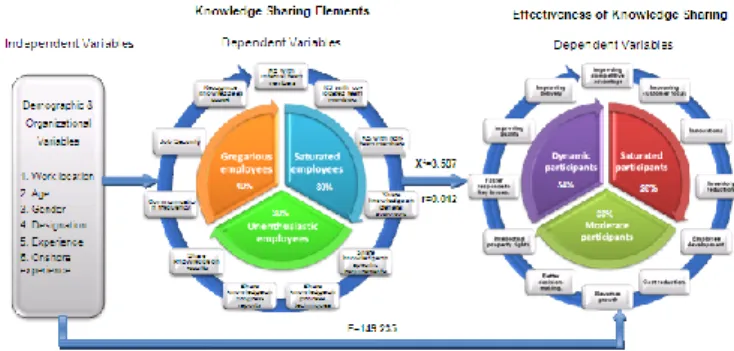
Figure 1 Knowledge Sharing Elements and Effectiveness of Knowledge Sharing Model
The factor analysis followed by cluster analysis is empirically applied on the block of knowledge sharing process and its effectiveness is classified into three different groups of employee’s perception. The classification of knowledge sharing process and its effectiveness with respect to employee’s responses are identified as Strong, Moderate and Weak Cluster. This shows that there exist three different groups of employees in IT Industry based on their perception on onshore and off shore knowledge sharing. The research further ascertained three prominent classifications in knowledge sharing needs namely career development Oriented Cluster, Sufficiently attained Cluster and Perfect Cluster respectively. The study further revealed the two prominent factors Innovative Competition and Organisational Dynamics in identifying the knowledge sharing. The knowledge sharing Practices in IT Industry are exactly classified into three groups Culminated Cluster, knowledge Oriented Cluster and Learning Cluster. The employee’s perception again revealed the existence of three major factors Transformational Practices, Employee Up gradation and Policy Enforcement.
The study mainly focused on the knowledge sharing elements like Objectives, Needs and Practices. The Karl Pearson’s Co-efficient of Correlation established a significant relationship among the various elements of knowledge sharing. In particular, the knowledge sharing is materialised with the help of onshore and offshore sub ¬¬systems. The study highlighted on team approach and Development, Performance Assessment System and Career Growth Opportunities. An empirical relationship by Stepwise Discriminant Analysis is established for clusters of knowledge sharing effectiveness. An ingenious exploitation of Karl Pearson’s Co-efficient of Correlation showed a parametric relationship between customer focus, competitive advantage with Career Growth of the
employees.
10.
S
UMMARY OF FINDINGS,
SUGGESTIONS AND CONCLUSIONSThe main aim of the thesis emerged as an exploration of the managing global software projects through knowledge sharing process. It was soon realised that there are several knowledge sharing elements and its effectiveness influencing managing global software projects. Knowledge sharing processes have been studied in the literature for their impact on managing global software projects. However, no published work to examine on managing global software projects through knowledge sharing process.
The decision to focus on the key resources leaving the organization and the knowledge leaves along with the employee which affect the delivery of software development reflected an observation evident from the recent literature.
It is often said that it is essential to create a "knowledge sharing culture" as part of a knowledge management initiative. An isolated knowledge management program looked after by a privileged few is a paradox in itself and will not survive for long. Only effective collaboration and communication which spans across the whole company structure will give knowledge management the boost it really needs. In order to enrich a company’s current culture the change must start at the individual. Every employee has a sphere of influence along with their own individual knowledge, and this is where he believes a knowledge sharing culture can begin.
A. Findings pertaining to objective 1
It is found that the current status of knowledge sharing process in IT companies is in introduction and nascent stage (26%) where as 24% of the employee perception is that the current status of knowledge sharing process is in growth stage. This clearly shows the importance of knowledge sharing process and IT companies is towards establishing the knowledge sharing process.
The IT companies employees identified lack of information is the key problems of globally-distributed development teams. 17% of the respondents said that loss of crucial knowledge due to key employee leaving the organization is the problem of globally distributed team so it is critical to implement mechanism to retain the knowledge of employees so that when employee leave the organization the knowledge retained within organization. Poor sharing of knowledge in the organization is another key problem of globally-distributed development teams (18%).
The perception of IT companies employees on knowledge sharing thinking is that it is strategic part of business (25%). 22% of the respondents are never heard about knowledge sharing, 14% of the respondents thing something they are already doing but not under the same name, 19% of the respondents feels that it is just a management fad. 20% of
the respondents things that something that could be beneficial for the organization.
Storing knowledge is another key factor in global software project organization. 31% of the respondents said that knowledge storage is quite important relevant and latest. 31% of the respondents feels that knowledge storage is quite important but not updated regularly and 38% of the respondents said that knowledge storage is just trivial, a part of formalities and of no use.
It is found that 27% of IT company’s employees obtained relevant knowledge within few days and 25% of the responded derived knowledge within few minutes. Percentage analysis further revealed 23% obtained the required knowledge within few hours.
The survey results ascertain that the perception of IT companies employee on new knowledge creation is the job of internal quality department (29%) where as 24% of the IT companies employee said that it is everyone’s job and everybody contributes to it, 23% of the respondents said that top management takes active interest in it and supports it continuously and 24% of the respondents said that it is part of our organizational philosophy and culture. The research revealed the knowledge sharing strategy of IT companies where as 24% of the respondents said that knowledge sharing is a business strategy, 18% of the respondents said that they use transfer of knowledge and best practices as the knowledge sharing strategy, 20% of the respondents said that knowledge sharing strategy is customer focused knowledge, 19% of the respondents said that knowledge sharing strategy is personal responsibility for knowledge and 20% of the respondents said knowledge sharing strategy is innovation and knowledge creation. The survey result also ascertained the approach of senior manager towards knowledge sharing implementation, 25% of the respondents said that senior management see knowledge sharing as very important and provides full support, 7% of the respondents said that senior management see it as very important but hardly supports it, 26% of the respondents said that senior management sees it as a waste and hardly bothers and 22% of the respondents said that senior management was very supportive in the beginning but now lost interest.
One of the major issues of investigation has been the impact of cultural background on the information sought in managing global software projects on knowledge sharing. In general 27% of the respondents think that knowledge management is the task of a few designated ones and there is no need for knowledge sharing. The biggest challenge to developing a global delivery system is getting all team members to work efficiently and effectively together. Sharing knowledge and expertise is crucial in any team, and in a team where members work in different countries and time zones and speak differentlanguages. With respect
to biggest cultural barrier in knowledge management 18% of the respondents are at the opinion that functional silos is the biggest cultural barrier in knowledge management, 14% of the respondents said lack of participation is the biggest cultural barrier in knowledge management, 15% of the participants said not willing to share knowledge is the biggest cultural barrier in knowledge management, 14% of the respondents said lack of trust is the biggest cultural barrier in knowledge management, 11% of the respondents said knowledge sharing is not a part of daily work, 14% of the respondents said lack training and 15% of the responders said lack of rewards/ recognition for knowledge sharing.
The another conclusion on the Communities of Practice and the survey result ascertain that 94% of the respondents said “Yes” to globally-distributed development teams actively create and support Communities of Practice*(CoP’s)” in their organization which shows that Communities of Practice exits in IT companies and employee is actively participating to build knowledge sharing process.
Biggest hurdle in effective implementation of knowledge management is that changing people’s behaviour from knowledge hoarding to knowledge sharing (17%). 16% of the respondents are at the opinion that Lack of understanding of KS and its benefits is the biggest hurdle in effective implementation of knowledge management, 11% of the respondents are at the opinion that determining what kind of knowledge to be managed & making it available is the biggest hurdle in effective implementation of knowledge management, 12% respondent Justifying the use of scarce resources for KM, 16% of the respondents are at the opinion that lack of top management commitment to KM is the biggest hurdle in effective implementation of knowledge management, 13% of the respondents are at the opinion that overcoming technological limitations is the biggest hurdle in effective implementation of knowledge management and 13% of the respondents are at the opinion that attracting & retaining talented people is the biggest hurdle in effective implementation of knowledge management.
B. Findings pertaining to objective 2
One of the major issues of investigation has been the opinion of respondents on knowledge sharing and job security in global project management cases the employees of IT companies strongly disagree with the personal evaluations and expressed a neutral opinion on internal team members and their knowledge sharing, collocated team members and their participant in knowledge sharing. They are rational in identifying the influence of non team members, project goals and problems as well as personal evaluations. Therefore it can be concluded that the employee of IT companies are not fully involved in the knowledge sharing process amid the globalised phenomenal.
IJSER © 2011
management is not influenced by one parameter that it is a compositional of various aspects of relationship among the employees during offshore and onshore interaction process. The present study predominantly concentrate twelve factors of effectiveness of knowledge sharing process namely improving competitive advantage, improving customer focus, innovations, Inventory reduction, employee development, cost reduction, revenue growth, better decision-making, intellectual property rights, faster response to key issues, improving quality and improving delivery. This ascertains the employees of IT companies strongly disagree with the personal evaluations and expressed a neutral opinion in improving competitive advantage, improving customer focus and innovations. The research also revival that the employees of IT companies maintain themselves equidistant for Inventory reduction, employee development. It is also ascertain the perception of employees over cost reduction, revenue growth, better decision-making is also neutral in the opinion. It is identified that the employees rational in their acquaintance intellectual property rights, faster response to key issues, improving quality and improving delivery. Therefore it can be concluded that the employee of IT companies expressed equal importance on the 12 variables in achieving the best result in global software projects.
C. Findings pertaining to objective 3
The survey result found that onshore located employees strongly disagree with knowledge sharing corresponding to job security than the employees in the offshore location. This implies the onshore located employees have deep disagreement for knowledge sharing and it is relationship with job security. They feel the knowledge retaining is not at all affected their secured job. It is also found that other knowledge sharing process do not differ with respect to the opinion of onshore and offshore employees. In fact that they have the same opinion on knowledge sharing process in their organization
The employees of age group from 25 to 35 years, between 35 to 45 years and between 45 to 55 years are on the same opinion on knowledge sharing process. Therefore it can be conclude that the age group is not impacting the knowledge sharing process with in IT companies.
The gender male and female employees of IT companies are at the same opinion on knowledge sharing process. Therefore it can be concluded that the gender is not impacting the knowledge sharing process.
It is found that project manager, team lead, senior software engineer and software engineer of IT companies are on the same opinion on knowledge sharing process. Therefore it can be concluded that the different designation is not impacting the knowledge sharing process.
The survey result also ascertain that The IT companies employee work experience between 1 to 5 years, 6 to 10 years, 11 to 15 years and 16 to 20 years are on the same opinion on knowledge sharing process. Therefore it can be
concluded that the work experience is not impacting the knowledge sharing process.
The onshore work experience are grouped in to four category, less than 3 months, 3 to 6 months, above 6 months and no onshore experience. The survey result shows that the employees of IT companies are on the same opinion on knowledge sharing process. Therefore it can be concluded that the onshore work experience is not impacting the knowledge sharing process.
It is found that offshore located employees strongly disagree with knowledge sharing corresponding to improving delivery than the employees in the onshore location. This implies the offshore located employees have deep disagreement for effectiveness of knowledge sharing and it is relationship with delivery. The employee of IT companies feels that improving delivery is not related with effective knowledge sharing in achieving the best result. It is also found that the other eleven variables of effectiveness of knowledge sharing factors namely improving competitive advantage, improving customer focus, innovations and Inventory reduction, employee development, cost reduction, revenue growth, better decision-making, intellectual property rights, faster response to key issues and improving quality do not differ with respect to the opinion of onshore and offshore employees. In fact that they have the same opinion on the role of effectiveness of knowledge sharing process in their organization
The survey result found that age group between 23 to 30 years strongly disagree with effectiveness of knowledge sharing corresponding to better decision making than the employees in the age groups between 35 to 45 years and 45 to 50 year. This implies the age group between 23 to 30 years employees have deep disagreement for effectiveness of knowledge sharing and it is relationship with delivery. They feel improving delivery is not related with effectiveness of knowledge sharing in achieving the best result. It is also found that other eleven effectiveness of knowledge sharing factors namely improving competitive advantage, improving customer focus, innovations and Inventory reduction, employee development, cost reduction, revenue growth, intellectual property rights, faster response to key issues, improving quality and improving delivery do not differ with respect to the opinion of age groups between 23 to 30 years, between 36 to 45 years and between 46 to 50 years employees. In fact that they have the same opinion on the role of effectiveness of knowledge sharing process in their organization
It is found that male gender strongly disagree with effectiveness of knowledge sharing corresponding to revenue growth than the female gender this implies the male gender employees have deep disagreement for effectiveness of knowledge sharing and it is relationship with revenue growth. They feel revenue growth is not related with effectiveness of knowledge sharing in achieving the best result. It is also found that other eleven
variables of effectiveness of knowledge sharing factors namely improving competitive advantage, improving customer focus, innovations and Inventory reduction, employee development, cost reduction, better decision-making, intellectual property rights, faster response to key issues, improving quality and improving delivery do not differ with respect to the opinion of male and female employees. In fact that they have the same opinion on the role of effectiveness of knowledge sharing process in their organization
This research has demonstrated that experience groups between 1 to 5 years and 6 to 10 years strongly disagree with effectiveness of knowledge sharing corresponding to employee development than the employees experience groups in 11 to 15 years and 16 to 20 years. This implies the employee experience groups between 1 to 5 years and 6 to 10 years have deep disagreement for effectiveness of knowledge sharing and it is relationship with employee development. They feel improving delivery is not related with effective knowledge sharing in achieving the best result. It is also found that other eleven effectiveness of knowledge sharing factors namely improving competitive advantage, improving customer focus, innovations, Inventory reduction, cost reduction, revenue growth, better decision-making, intellectual property rights, faster response to key issues, improving quality and improving delivery do not differ with respect to the opinion of software engineer, senior software engineer, team lead and project manager designation employees. In fact that they have the same opinion on the role of effectiveness of knowledge sharing process in their organization
The onshore work experience of IT companies employees are grouped in to four category, less than 3 months, 3 to 6 months, above 6 months and no onshore experience, it is found that the employees of IT companies with all onshore work experience group are on the same opinion of effectiveness of knowledge sharing process. D. Findings pertaining to objective 4
The survey result classified the employees of IT companies based on their response, first group consist of 120 employees (40%) with agreements for member responsibilities, preliminary findings, unexpected outcomes, or clear recommendations. Therefore this group of employees is known as gregarious employees.
The second group is a composition of 88 employees (30%) of with agreement for knowledge sharing with internal team members, knowledge sharing with non team members, sharing knowledge on progress reports such as status updates, resource problems or personnel evaluations, communication with your Onsite/Offshore project team members and recognizes knowledge as a part of their asset base. Therefore this group is known as saturated employees.
The third group is neutral in their opinion on knowledge sharing and it also comprises 30% of their employees
therefore this heterogeneous group of employees is known as unenthusiastic employees.
The research question on how many heterogeneous groups employees with different perception on effectiveness of knowledge sharing in global project management context. The result found that the first cluster consist of 101 employees (34%) with agreements for improving competitive advantage, employee development, improving customer focus, faster response to key issues, better decision-making, improving delivery and intellectual property rights. Therefore this group of employees is known as dynamic participants.
The second group is a composition of 84 employees (28%) with agreement for revenue growth, innovations, cost reduction and faster response to key issues. Therefore this group is known as saturated participants.
The third group is neutral in their opinion on effectiveness of knowledge sharing and it also comprises 38% of the employees, therefore this heterogeneous group of employees is known as moderators.
E. Findings pertaining to objective 5
This research has demonstrated that 36% employees working on single project at offshore location are highly gregarious. There is no entry of onshore working more than one project are saturated employees. This implies the work location is not affecting the knowledge sharing process. In fact it is not associated with different location where the employees are duty bound to share their knowledge. It is also found that 35% participants working on single project at offshore location are moderate participants. There is no entry of onshore working more than one project are saturated participants. This implies that the work location is not affecting the effectiveness of knowledge sharing.
It is found that 36% employees working reporting to one project manager are highly gregarious. This ascertains the association between knowledge sharing process and no of reporting manager. It is also found that 34% participants reporting with one project manager are moderate participants. There is no entry for employees who’s reporting manager three, four and five are gregarious participants, saturated and moderate participants. This implies number of reporting manager is not affecting the effectiveness of knowledge sharing.
The research found that 11% employees are at the opinion that currently knowledge sharing does not exists are highly gregarious. 7% employees are at the opinion that current knowledge sharing is in growth stage are saturated employees. It is also found that 12% participants are at the opinion that knowledge sharing is at introduction stage are moderate participants. 7% participants are at the opinion that knowledge sharing is in growth stage are dynamic participants. This implies the current status of knowledge sharing is not affecting the effectiveness of knowledge
IJSER © 2011
sharing.
The research demonstrated that 10% employees are at the opinion that problems of globally-distributed development teams is information overload are highly gregarious. 4% employees are at the opinion problems of globally-distributed development teams is information that overload are saturated employees. It is also found that 10% employees are at the opinion that problems of globally-distributed development team is lack of Information are moderate participants. 4% employees are at the opinion that problems of globally-distributed development teams is poor sharing of knowledge in the organization are saturated participants. This implies the problem of globally-distributed development teams is not affecting the effectiveness of knowledge sharing.
The survey found that the development team perception on knowledge sharing is a very important phenomenal to materialize the knowledge sharing process. It is also found that 10% employees perception of knowledge sharing is strategic part of their business are moderate participants. 3% employee’s perception of knowledge sharing is something they are already doing it but not under the same name are saturated participants. This implies perception of knowledge sharing is not affecting the effectiveness of knowledge sharing.
It is found that 14% employees feels storing knowledge is quite important but not updated regularly are highly gregarious. 8% of employees feels storing knowledge is quite important but not updated regularly are saturated employees. This implies that stored knowledge is not affecting the knowledge sharing process. It is also found that 14% participants feels storing knowledge is just trivial, a part of formalities and of no use are moderate participants. 7% of participants feels storing knowledge is its quite important, relevant and latest are saturated participants. This implies that stored knowledge is not affecting the effectiveness of knowledge sharing.
It is found that 11% of employee feels it takes few minutes to get the relevant knowledge are highly gregarious. 7% of employee feels it takes few minutes to get the relevant knowledge are saturated employees. This implies time taken to get the relevant is not affecting the knowledge sharing process. It is also found that 11% of employee feels it takes few minutes to get the relevant knowledge are moderate participants. 4% of employee feels it takes few hours to get the relevant knowledge are saturated participants. This implies time taken to get the relevant knowledge is not affecting the effectiveness of knowledge sharing.
The research result on the association between knowledge sharing process and knowledge creation, It is found that 13% of employee view it as everyone’s job and everybody contributes to it are highly gregarious and 4% of them are saturated employees. This implies knowledge creation is not affecting the knowledge sharing process. It is
also found that 14% of employees are at the opinion that it’s the job of DFG and TQM department are moderate participants. 6% of employee’s view it as everyone’s job and everybody contributes to it are saturated participants. This implies knowledge creation is not affecting the effectiveness of knowledge sharing.
It is found that 12% of employee view knowledge sharing as business strategy are highly gregarious and 4% of employee views that personal responsibility for knowledge as KS strategy are saturated employees. This implies knowledge sharing strategy is not affecting the knowledge sharing process also the development team perception on knowledge sharing strategy is a very important phenomenal to materialize the effectiveness of knowledge sharing.
This research has demonstrated that 12% of gregarious employee responded approach of senior manager was very supportive in the beginning but now lost interest and 4% of saturated employees responded approach of senior management sees it as a waste and hardly worry. This implies perception on approach of senior management is not affecting the knowledge sharing process. It is also found that 13% of the employees responded that approach of senior management is very important are moderate participants and 6% of employees responded senior management was very supportive in the beginning but now lost interest are saturated participants. This implies perception on approach of senior management is not affecting the effectiveness of knowledge sharing.
It is found that 11% of employees think knowledge management is each and everybody’s job, everybody has the best of knowledge and also the prevailing notion is that the knowledge management is the task of a few designated ones and there is no need for knowledge sharing are highly gregarious. 6% of employees have an open, encouraging and supportive culture are saturated employees. This implies development team’s culture not affecting the knowledge sharing process. It is also found that 11% of participants think knowledge management is each and everybody’s job and so everybody has the best of knowledge and also the prevailing notion is that the knowledge management is the task of a few designated ones and there is no need for knowledge sharing are highly dynamic. 6% of saturated participants think their basic values & purpose emphasise on sharing of knowledge. This implies development team’s culture not affecting the effectiveness of knowledge sharing.
It is found that 38% of employees actively create communities of practice are highly gregarious. 2% of employees do not actively create communities of practice are unenthusiastic employees. This implies communities of practice not affecting the knowledge sharing process. It is also found that 36% of participants actively create communities of practice are moderate participants. 1% of participants do not create communities of practice are dynamic participants. This implies communities of practice are not affecting the effectiveness of knowledge sharing.
Association between knowledge sharing process and cultural barrier ascertain that 8% of employee’s feels cultural barrier functional silos are highly gregarious. 1% of employees feel cultural barrier of knowledge sharing is not a part of daily work are saturated employees. This implies cultural barrier not affecting the knowledge sharing process. It is also found that 7% of moderate participant’s responded lack of participation is the main reason for cultural barrier. 2% of saturated participants feel that knowledge sharing is not a part of daily work. This implies cultural barrier not affecting the effectiveness of knowledge sharing.
It is found that 8% of employees perception is that lack of top management commitment to knowledge management are highly gregarious. 2% of employee’s perception is that changing people’s behaviour from knowledge hoarding to knowledge sharing are saturated employees. This implies current hurdles not affecting the knowledge sharing process. It is also found that 8% of employee’s perception is that biggest hurdle in effective implementation of KS is lack of understanding of KS and its benefits are moderate participants. 3% of saturated employees perception is that biggest hurdle in effective implementation of KS is determining what kind of knowledge to be managed & making it available. This implies current hurdle not affecting the effectiveness of knowledge sharing.
F. Findings pertaining to objective 6
Cluster justification of knowledge sharing elements and effectiveness of knowledge sharing proved that a poor knowledge sharing process exists in the perception of employees and effectiveness of knowledge sharing does not exist.
G. Recommendations
One of the objectives of this thesis was to discover the key success factors on managing global software projects through knowledge sharing for IT companies. From the findings discussed above it is possible to make some recommendation.
1. Implement mechanism to retain the knowledge of employees so that when key employee leave the organization the knowledge retained within organization
2. Create awareness on knowledge sharing and its benefits for both onshore and offshore employees
3. The age group between 23 to 30 years employees have deep disagreement for effectiveness of knowledge sharing and it is relationship with delivery. It is recommended to create more awareness on relationship between knowledge sharing and effectiveness delivery for these age group
4. Create more awareness among male gender on effectiveness of knowledge sharing and it is relationship with revenue growth
5. The employee experience groups between 1 to 5 years and 6 to 10 years have deep disagreement for effectiveness of knowledge sharing and it is relationship with employee development. It is recommended to create more awareness program for these employee groups.
6. The work location is not affecting the knowledge sharing process, it is recommended to implement common knowledge sharing practice for both onshore and offshore to minimize the cost spent on creating knowledge sharing awareness and training program.
7. The survey found that storing knowledge is quite important but not updated regularly, it is recommended to implement procedure and process to have regular knowledge update and also motivating and rewarding the knowledge sharing.
R
EFERENCES[1] T. Davenport and L. Prusak, "Working Knowledge: How Organizations Manage What They Know," Harvard Business
School Press, Boston, MA., 1998.
[2] Thomas H. Davenport and Lawrence Prusak, "Working knowledge. How organizations manage what they know, 2nd Edition," Cambridge, MA: Harvard Business School Press.
ISBN 1578513014, 2000.
[3] P. Hendriks, Why Share Knowledge? The Influence of ICT on the
Motivation for Knowledge Sharing.: Knowledge & Process
Management, 6 (2), 91-100, 1999.
[4] E. Hall et al., "When groups consist of multiple nationalities: towards a new understanding of implications," Organization
Studies, Vol. 19 No. 2, pp. 181-205, 1976.
[5] Andrew Cox, "What are communities of practice? A comparative review of four seminal works," Journal of Information Science 31 (6), pp. 527–540, 2005.
[6] M. Sharratt and A. Usoro, "Understanding knowledge-sharing in online communities of practice," Electronic Journal of Knowledge
Management 1 (2), pp. 187-196, 2003.
[7] Chiu, C.M, Hsu, M.H.&Wang, and E.T.G, Understanding knowledge sharing in virtual communities: An integration of social capital and social cognitive theories.: Decision Support Systems, 42. 1872-1888, 2006.
[8] G.P. Huber, "Transfer of Knowledge in Knowledge Management System: Unexplored Issues and Suggested Studies.," European
Journal of Information Systems(10), pp. 72-79, 2001.
[9] P. Grossman, "Toward a theory of teacher community," Teachers
College Record. ISBN 075067864X, pp. 942–1012, 2001.
[10] N Ahituv, M Zviran, and C Glezer, Top Management Toolbox for
Managing Corporate IT.: Communications of The ACM 42, April
1999.
[11] A. Riege, "Three-dozen Knowledge-sharing Barriers Managers Must Consider," Journal of Knowledge Management, 9 (3), pp. 18-35, 2005.
[12] A. Riege, "Three-dozen knowledge-sharing barriers managers must consider," Journal of Knowledge Management 9 (3), pp. 18-35, 2005.
[13] E Carmel, "Thirteen assertions for globally dispersed software development research. HICSS: Proceedings of the 30th Hawaii
IJSER © 2011 International Conference on System Sciences: Information System Track-Organizational Systems and Technology ," in IEEE
Computer Society, , Washington, DC, USA, 1997, pp. 3: 445.
[14] Thomas H Dvenport, "Thinking for a living-How to get better performance and results from knowledge workers," Harvard Business School Press, Boston Mass, 2005.
[15] Michael Polyani and Amartya Sen, "The Tacit Dimension," University Of Chicago Press; Reissue edition. ISBN 0226672980, 2009.
[16] A. Kankahalli, F. Tanudidjaja, J. Sutanto, and B.C.Y. Tan, "The Role of IT in Successful Knowledge Management Initiatives," Communication of the ACM, 46 (9), pp. 69-73, 2003.
[17] D. Miller and J. Shamsie, "The resource-based view of the firm in two environments: The Hollywood film studios from 1936 to 1965," Academy of Management Journal 39 (3), pp. 519–543, 1996. [18] A. Hwang, A. Francesco, and E. Kessler, "The relationship
between individualism-collectivism, face, and feedback and learning processes in Hong Kong, Singapore, and the United States," Journal of Cross-cultural Psychology, Vol. 34 No. 1, pp. 72-91, 2003.
[19] C. Chow, F. Deng, and J Ho, "The openness of knowledge sharing within organizations: a comparative study in the United States and the People’s Republic of China," Journal of Management Accounting Research, Vol. 12, pp. 65-95, 2000.
[20] Chih-Hsiung Tu, "The management of social presence in an online learning environment," International Journal on E-learning April– June, pp. 34–45, 2002.
[21] I. Nonaka and H. Takeuchi, The knowledge-creating company: How Japanese companies create the dynamics of innovation.: Oxford University Press, New York., 1995.
[22] J.C. Thomas, W.A. Kellogg, and T. Erickson. (2001) IBM Systems Journal 40 (4): 863–884. [Online]. http://alumni.media.mit.edu/~brooks/storybiz/thomas.pdf [23] J. Pfeffer and R. Sutton, "The Knowing Doing Gap: How Smart
Companies Turn Knowledge into Action," Harvard Business School Press, Boston, MA., 2000.
[24] S. Kim and H. Lee, "The impact of organizational context and information technology on employee information sharing capabilities," Public Administration Review, May/June 2006, pp. 370-385, 2006.
[25] J. Zhang, S.R. Faerman, and A.M. Cresswell. (2006) The effect of organizational/technologicl factors and the nature of knowledge on knowledge sharing. [Online]. http://www.hicss.hawaii.edu [26] Paul Hildreth and Chris Kimble. (2002) Information Research 8
(1). [Online]. http://informationr.net/ir/8-1/paper142.html
[27] H. Ginsburg, J. Posner, and R. Russell, "The development of knowledge concerning written arithmetic: a cross-cultural study," International Journal of Psychology, Vol. 16 No. 1, pp. 13-35, 1981. [28] Paul Duguid, "The Art of Knowing: Social and Tacit Dimensions
of Knowledge and the Limits of the Community of Practice," The Information Society (Taylor & Francis Inc.), pp. 109–118, 2005. [29] Robert Putnam, "Social Capital: Measurement and
Consequences," ISUMA (spring), pp. 41–51, 2001.
[30] T.E.J. Engstrom. (2003) Sharing knowledge through mentoring: Performance improvement 42 (8). [Online]. http://www.ispi.org [31] J.D. Mayer, M.A. Faber, and X.Y. Xu, "Seventy-five Years of
Motivation Measures (1930-2005): A Descriptive Analysis," Motivation and Emotion (31:1), pp. 83-103, 2007.
[32] M.C. Rumizen, "Report of the second comparative study of
knowledge creation conference," Journal of Knowledge Management 2 (1), pp. 77-81, 1998.
[33] M. Miles and A. Huberman, "Qualitative Data Analysis: An Expanded Sourcebook," Sage Publications, Thousand Oaks, CA., 1994.
[34] ProjectManagementInstitute. (2011) Project Management Institute. [Online]. http://www.pmi.org/