Some Observations and Suggestions
Nimal A. Fernando
Asian Development Bank, Philippines Email: [email protected]
ABSTRACT
Risk is an integral part of financial intermediation. Hence, risk management must be at the heart of finance. However, it is disturbing to note that systematic risk management is still not as widespread as it should be in the microfinance industry. Except for a few flagship microfinance institutions (MFIs), which constitute the core of the industry, most MFIs do not pay adequate attention to systematic risk management.
The microfinance industry has grown rapidly during the last decade in breadth, depth, and scope of outreach. The rapid growth seems to continue, given the massive unserved and underserved market. The growth of the industry has changed the risk profile of MFIs. Yet many MFIs seem to continue to seek growth without much attention to attendant risks. Surprisingly, many MFIs appear to neglect even the basic credit risk management which helped MFIs achieve high growth rates historically.
The growing interest of many MFIs in agricultural microfinance must be seen in the broader context of risk management in the industry. Financing agriculture is more risky than financing trade or industry; it is also more risky than financing nonagricultural microenterprises. However, MFIs interested in agricultural microfinance should be more concerned about their internal structures and capabilities rather than the widely discussed, and often cited, pervasive risks in agriculture and their ramifications for the MFIs’ pursuit of growth in agricultural microfinance.
MFIs should recognize the inherent risks in agriculture. However, if they build their institutional capacity to effectively deal with risks generally associated with financial services for poor and low-income households, their prospects for success in agricultural microfinance would certainly be much brighter. In addition, no amount of sophisticated and modern technical tools and analysis can help achieve effective risk management in respect of nonagricultural or agricultural microfinance if risk management is not embedded into the institutional culture and its value is not shared by all employees. Achieving this goal remains one of the most challenging tasks in risk management which MFIs need to address. To help in this effort, we need to bring into the discussion—now dominated largely by issues related to introducing sophisticated systems and technical tools of risk management—the institutional cultural issues and issues related to cognitive biases in executive decision-making behavior.
INTRODUCTION
The breadth, depth, and scope of outreach of the microfinance industry have grown significantly during the last two decades. The Asia and Pacific region accounts for the bulk of this growth. According to the Microcredit Summit Campaign (2006:24), by 31 December 2005, some 3,133 microcredit institutions reported reaching 113.26 million clients with a current loan, and about 97 million of these clients were in the Asia and Pacific region. Of the total number of clients reached by these institutions, about 82 million were among the poorest when they started with the program, and 91% or about 74 million of the poorest families reported are in Asia where over two-thirds of the world’s poor people live. The erstwhile microenterprise-credit-only institutions are now providing a broader range of credit products. Their loans are no longer confined to short-term working capital loans but now also include loans with relatively longer maturities, and those intended for other purposes such as acquiring fixed assets. Some microfinance institutions (MFIs) even venture into the financing of agricultural operations. Other MFIs have expanded their deposit services, thus contributing to the expansion of the scope of outreach. Grameen Bank, for example, has achieved impressive results in mobilizing voluntary savings through its new deposit products offered under the Grameen Pension Scheme to the members, and other deposit products offered to both members and nonmembers (Rutherford 2006).
The last two decades have also seen a significant increase in the diversity of institutions providing financial services to the poor and low-income households. The previous predominance of non-government organizations (NGO) in the retail markets of many countries has been challenged by new developments such as the transformation of some pioneering NGOs into fully or partially regulated financial entities, the emergence of specialized microfinance banks, the entry of commercial banks into microfinance, and the increased involvement of cooperatives and rural banks. The increasing involvement of nonfinancial institutions such as telecommunication companies in microfinance is adding to this diversity.
One of the significant changes in the microfinance industry has been the growth in commercial and semi-commercial borrowings, including loans denominated in foreign currency to finance operations. According to Abrams and Stauffenberg (2007, p. 1), in the last three years, the volume of international private lending for microfinance has exploded: in 2005 alone, outstanding loans doubled to nearly $1 billion. Structured finance transactions are also becoming important in the microfinance market. In 2006, Bangladeshi MFI BRAC securitized the $180 million equivalent of its portfolio.
As will be shown later, although MFIs and the industry have suffered serious setbacks in some countries, the industry has been relatively stable in most countries. A number of institutions such as BRAC and the Association for Social Advancement in Bangladesh, the SKS Microfinance and Spandana in India, and the Compartamos in Mexico have managed to sustain their growth rates remarkably well without sacrificing portfolio quality. The incredible resilience of the industry was illustrated during the Asian financial crisis in the late 1990s and the aftermath of the tsunami which struck Asia in 2005. However, it must be recognized that the changes in markets, products and services, delivery models, and technology used in the industry have had, and continue to have, profound implications on the overall risk profile of the industry over time. MFIs or others which provide microfinance services can no longer afford to focus only on credit and liquidity risks and consider other types of risk on an ad hoc basis, often in a reactive manner. Risks in microfinance must be managed in a systematic manner and the importance of risk management will further increase as the industry matures further and microfinance markets become more competitive (Powers 2005).
This paper briefly outlines the different categories of risks that MFIs face and discusses what type of risks are becoming more important, why there is greater need for risk management now than before, and what has been the industry experience, so far, in microfinance risk management. The paper also outlines some principles for risk management in microfinance, in general, and in agricultural microfinance, in particular. The main objective
of the paper is to further advance the discussions related to microfinance risk management including that of agricultural microfinance; the recommended tools and techniques for use by MFIs is not meant to be a comprehensive discussion.
For the purposes of this paper, microfinance risk is defined broadly as ”the potential for events or ongoing trends to cause future losses or declines in future income of an MFI or deviate from the original social mission of an MFI.” We have included the deviation of the social mission in our definition because such deviation can occur without necessarily causing losses or declines in future income and, in our view, the risk of mission drift is one of the most significant risks in microfinance. This is not considered part of the risk profile of conventional financial institutions because they do not have a social mission.
CATEGORIES OF MICROFINANCE RISK
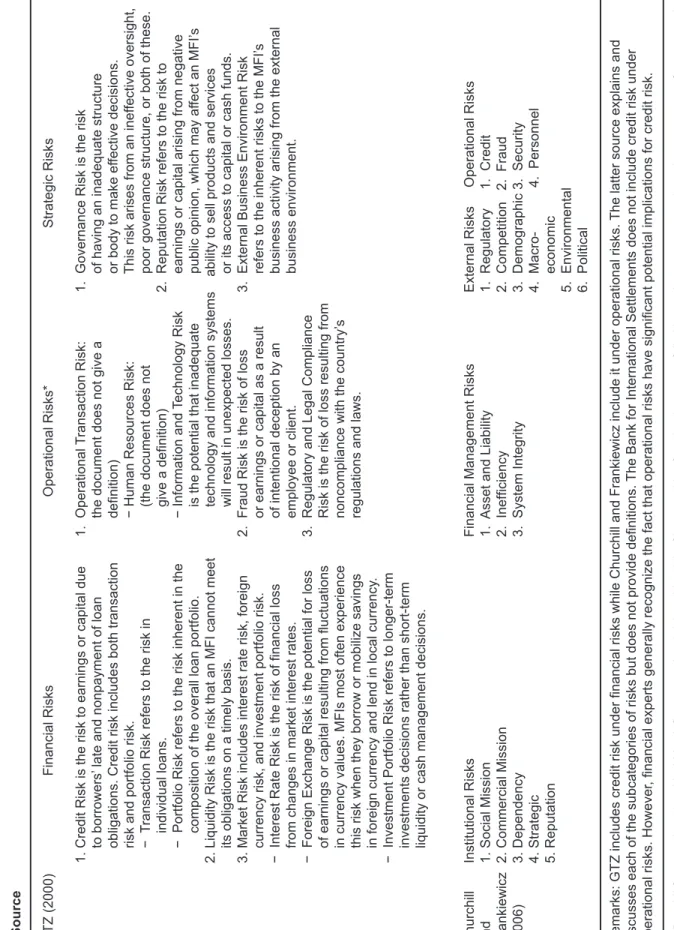
At the initial stages of growth in the microfinance industry, most MFIs were concerned only about financial risks. Even in the financial risk category, their focus was almost exclusively on credit risk. When the demand for loans began to rise exponentially, MFIs also began to be concerned about a particular type of liquidity risk wherein the MFIs would run out of enough cash to meet the demand for loans. The industry evolution has brought additional risks. In a publication released in 2000, Deutsche Gesellschaft für Technische Zusammenarbeit (GTZ) cited three major risk categories: financial, operational, and strategic. GTZ also listed subcategories of risk under each main category. More recently, Churchill and Frankiewicz (2006) listed four risk categories, namely: institutional risks, operational risks, financial management risks, and external risks. As shown in Table 1, they also identify subcategories of risks in each primary category.
RECENT CHANGES
IN MICROFINANCE RISK PROFILE As the industry evolved over the last two decades, the profile of microfinance risk has
changed. Traditionally identified risks, such as credit and liquidity risks, have increased in intensity. And additional risks in such areas as social mission, foreign exchange, competition, and system integrity have surfaced and are assuming greater importance. Some of these risks seem to be less-known and have yet to receive the attention they deserve from MFI managers.
Many people agree that the initial success of MFIs can be largely attributed to the management of credit risks. Successful MFIs have managed to maintain high levels of loan recovery rates, generally over 95%. These remarkably high loan recovery ratios triggered the initial wave of donor funds and the subsequent inflow from a variety of social investors which they could use to expand their operations. While many successful MFIs continue to contain credit risks within desired levels, they face greater challenges than before as indicated by the increased volatility of their portfolio at risk (PAR) ratios. The sources of these challenges include the increased competition in the market, the addition of new credit products with longer-term structures, the shift to individual lending, the increased scale of operations, and the geographical expansion and efforts to deepen the outreach.
Credit risk also has other dimensions. Initially, microfinance credit risk was assumed to have been confined almost entirely to risk associated with the possible default by borrowers of MFIs. This is reflected in the definition of credit risk as “the risk to earnings or capital due to borrowers’ late and nonpayment of loan obligations.” However, a broader definition of credit risk also includes the risk of default by other financial institutions, which have payment obligations to MFIs (Bruett 2004). This is particularly true with respect of MFIs which continue as NGOs. Such payment obligations may arise because MFIs use those institutions as depository institutions, investment outlets, or for money transfers. Also, such risks may arise due to the agency services that MFIs provide to other financial institutions. MFIs suffer losses when these institutions are unable or unwilling to meet their payment obligations. However, MFIs tend to overlook this dimension of credit risk although it is real, as evident in some cases. For example, when
Table 1: T
ypology of risk in microfinance
Source GTZ (2000)
Financial Risks
Operational Risks*
Strategic Risks
1. Credit Risk is the risk to earnings or capital due
1. Operational
Transaction Risk:
1. Governance Risk is the risk
to borrowers’
late and nonpayment of loan
the document does not give a
of having an inadequate structure
obligations. Credit risk includes both transaction definition) or body to make ef fective decisions. risk and portfolio risk. − Human Resources Risk: This risk arises from an inef fective oversight, − Transaction Risk refers to the risk in (the document does not poor governance structure, or both of these. individual loans. give a definition) 2. Reputation Risk refers to the risk to − Portfolio Risk refers to the risk inherent in the − Information and T echnology Risk earnings or capital arising from negative composition of the overall loan portfolio. is the potential that inadequate public opinion, which may af fect an MFI’ s 2. Liquidity Risk is the risk that an MFI cannot meet technology and information systems ability to sell products and services
its obligations on a timely basis.
will result in unexpected losses.
or its access to capital or cash funds.
3. Market Risk includes interest rate risk, foreign 2. Fraud Risk is the risk of loss 3. External Business Environment Risk currency risk, and investment portfolio risk. or earnings or capital as a result refers to the inherent risks to the MFI’ s − Interest Rate Risk is the risk of financial loss of intentional deception by an business activity arising from the external
from changes in market interest rates.
employee or client. business environment. − Foreign Exchange Risk is the potential for loss 3. Regulatory and Legal Compliance of earnings or capital resulting from fluctuations Risk is the risk of loss resulting from in currency values. MFIs most often experience noncompliance with the country’ s
this risk when they borrow or mobilize savings
regulations and laws.
in foreign currency and lend in local currency
. − Investment Portfolio Risk refers to longer-term investments decisions rather than short-term
liquidity or cash management decisions.
Churchill Institutional Risks Financial Management Risks External Risks Operational Risks and 1. Social Mission 1. Asset and Liability 1. Regulatory 1. Credit Frankiewicz 2. Commercial Mission 2. Inefficiency 2. Competition 2. Fraud (2006) 3. Dependency 3. System Integrity 3. Demographic 3. Security 4. Strategic 4. Macro- 4. Personnel 5. Reputation
economic 5. Environmental 6. Political
Remarks: GTZ includes credit risk under financial risks while Churchill and Frankiewicz include it under operational risks. The latter source explains and discusses each of the subcategories of risks but does not provide definitions. The Bank for International Settlements does not include credit risk under operational risks. However , financial experts generally recognize the fact that operational risks have significant potential implications for credit risk. * Basel II framework updated in 2005 defines operational risk as “the risk of loss resulting from inadequate or failed internal processes, people an d systems or from external events.”
the National Bank (central bank) of Cambodia suspended the license of the Farmers’ Bank in 1997, the bank ceased operations and ACLEDA (which was an NGO-MFI at the time) was not able to recover $267,932 that it held on account with the Farmers’ Bank (Clark 2006, p.101). Similarly, a number of cooperative rural banks in Sri Lanka lost access to their deposits when a commercial bank that held a significant amount of their deposits ran into difficulties and its accounts were frozen and operations were suspended by the central bank. Credit risks are more acute today than in the early stages for those MFIs which have accumulated a significant amount of reserves, part of which in turn is kept in other financial institutions in the form of deposits or investments.
Aside from generally recognized default risks by clients, another type of credit risk arises when MFI clients deposit their savings in other financial institutions which are weak and not covered by a credible deposit protection scheme. Clients may not have ready access to their funds and thus lose a source of loan repayment for their MFI loan if the bank where they keep their deposits runs into difficulties (Bruett 2004). In such cases, loan recovery rates may suddenly fall.
Another risk whose importance has grown significantly in recent years is the foreign exchange risk. About five years ago, very few MFIs borrowed in foreign currency because they relied largely on donor grants and long-term concessional loans given in local currency through national apex agencies or such other mechanisms. However, foreign currency loans now constitute an important source of financing for the loan capital requirements of an increasing number of MFIs—most notably the dynamic, better-performing ones. A recent survey by the Consultative Group to Assist the Poor (CGAP 2006, p.1) estimated that of a total of $1.2 billion in foreign investment in MFIs, $750 million is debt capital and at least 92% of this debt capital is in hard currency. Some MFIs also mobilize deposits in foreign currency. These foreign currency loans and deposits create foreign exchange risks for those MFIs whose principal assets are microloans denominated in local currency. Devaluation of the local currency in relation to the foreign currency may generate substantial losses to an MFI. Devaluation, however, is not the only possible source of foreign exchange risks. The
MFI with foreign currency loans are also exposed to convertibility and transfer risks. In these cases, MFIs may have the financial capacity to make their foreign currency payments, but may not be able to do so because of national government restrictions or prohibitions on making foreign currency available for sale or transferring foreign currency outside the country (CGAP 2006).
Interest rate risks have also grown in importance in recent years. The partial shift in borrowing from commercial or semi-commercial sources at fixed rates of interest to variable interest rates has contributed to this. At the early stages, when MFIs borrowed funds, such borrowings consisted almost entirely of fixed interest rate loans. Given that variable rates are likely to rise while MFI loans are mostly at fixed interest rates, and considering the difficulty of making upward adjustments in microcredit interest rates, the variable interest rates on debt capital generally expose MFIs to potentially greater interest rate risks.
Mission drift risk has also increased with the maturity of the industry. While the increased commercialization of an MFI operation does not necessarily mean that it will move away from its original social mission to provide services to the unserved and underserved poor, MFIs are now under tremendous pressure to move upmarket given the changes in markets and ownership, and the greater internal and external pressure to achieve reasonably high level of returns on equity. Such movements, which could occur in lending as well as in deposit services, can potentially be at the expense of the services to the original target groups.
Many MFIs are also now subject to greater operational risk than before due to a number of factors. First, some MFIs have become regulated financial institutions and therefore, subject to regulatory and compliance risk. Second, most MFIs have expanded their geographical coverage and their operational areas include those more prone to calamities, security problems, and other such risks. Some types of operational risks generally increase with distance from the head office, and control difficulties are more pronounced at branches located in remote areas. Furthermore, the employees in these areas are more likely to remain in the same positions for too long—a situation that can potentially create other complications. Third, the scale of cash operations of most MFIs has increased
and many MFI staff members have easy access to the cash resources. Fourth, many MFIs have increased their reliance on new information and communication technology. MFIs face operational risk whenever this technology malfunctions or breaks down. In addition, technological investments expose MFIs to technology risk which occurs when these investments do not produce the anticipated cost savings in economies of scale or scope, or do not result in anticipated increases in revenue.
The importance of liquidity risks has also grown owing to a number of reasons. First, the average term structure of loans has increased in most MFIs because of increases in loan sizes, introduction of new loan products with longer maturities, and other related factors. Second, the demand for loans continues to grow at high rates. Third, short-term liabilities seem to have increased in importance in the liability structure. Thus, some MFIs are funding medium- to long-term loans with relatively short-term liabilities which consist, among others, of passbook savings.
Two other types of risk have assumed greater importance in the microfinance industry in recent years. These are the competition risks and political risks. The competition risks have increased—a natural outcome of the growing level of competition in the market as the industry matures over time. Although some early entrants have consolidated their position in the market and continue as market leaders, they have lost their near-monopoly position to new players. In some countries such as the Philippines, the new players include nonfinancial institutions like telecommunication companies, while in some others they include incumbent commercial banks and new nonbank financial institutions. The competition has made client retention more difficult. In Bolivia, market competition significantly affected the niche market players such as BancoSol in the late 1990s and led to significant operational and financial problems.
MFIs also face much greater political risks than before. Such risks, ironically, appear to be greater for the leading MFIs which follow sustainable growth paths. In a number of countries, populist governments have imposed or attempted to impose interest rate caps on microcredit (CGAP 2004; Fernando 2006). High interest rates charged by MFIs to achieve financial sustainability have come under increasing criticisms from politicians
in countries such as Bangladesh, Cambodia, India, and Sri Lanka in recent years. Politicians make repeated requests to some leading MFIs to provide debt forgiveness to borrowers in distress and reduce interest rates on microcredit. In some countries, the central or local governments have introduced new subsidized microcredit schemes. Politicians are also increasingly questioning the need to continue granting tax exemptions to NGO-MFIs which make profits. These factors together indicate greater potential political risks than before for the microfinance industry, in general, and the leading MFIs, in particular. Rhyne and Otero (2006, p. 57) predict the greater prominence of political risks in the next decade, as microfinance grows further and becomes more visible.
Another risk that has gained more importance in recent years is the reputation risk. Among other factors, the increase in regulatory burden has contributed to this. Reputation is critically important for MFIs of all types. MFIs with a strong positive reputation can attract better staff and more clients and maintain customer loyalty. They can market their services at lower costs and expand their geographic coverage relatively easily. In addition, relative to those with less solid reputations, these MFIs can have better access to larger amount of funds from various sources, including social investors and semi-commercial and commercial sources.
RISKS IN
AGRICULTURAL MICROFINANCE Agriculture is widely considered to be inherently more risky than industry or trade because it is more easily, directly, frequently, and severely affected by such factors as inclement weather, pests, diseases, and other natural calamities. The poorer farmers suffer disproportionately from these than the nonpoor. Returns in agriculture are not only more volatile but also generally much lower than those in most commercial and nonfarm microenterprises. Hence agricultural microfinance is more risky than agricultural finance in general and non-agricultural microfinance in particular. Agricultural microfinance, for example, becomes more risky when the agricultural activities of poor farmers are concentrated in specific geographic locations, thereby resulting in high covariant risks
that make localized MFIs more vulnerable to local disasters. If poor households are engaged in the monoculture of crops, they pose greater risks of vulnerability. In addition to these, poor farmers face greater market and price risks than the nonpoor because of their relative inability to mitigate such risks. In some countries, government-operated crop and livestock insurance schemes exist to protect the small and marginal farmers, among others. However, in practice, such schemes do not protect these groups due to a variety of reasons. Also, if poor farmers do not own the land they cultivate and rely on share tenancy, the lenders to such farmers tend to face greater risks.
Other factors make agricultural microfinance more risky. Many agricultural activities may require relatively longer-term loans than microenterprises although poor farm households may not have the ability to make frequent repayments due to their cash-flow pattern dictated by the cropping cycle. The precision of crop schedules and the need to use inputs in a systematic manner to achieve optimum returns from those inputs also add to the risks in agricultural finance (CGAP 2005a, p.3). For example, if planting is not done at the right time or fertilizer-responsive varieties are not used together with fertilizer as required, the farmers may not achieve the desired results and thus be unable to generate the surpluses needed to meet debt service requirements. Or farmers may simply resort to higher-risk, higher-return cropping strategies in their pursuit of higher incomes (CGAP 2005a, p. 2). In general, information asymmetries may be greater for poor farm households than microenterprise operators, thus contributing to higher credit risks for agricultural microfinance.
MFIs financing agriculture may also run greater political risks because of the greater tendency of politicians to identify small and marginal farmers as an important constituency to achieve their political and social objectives. Politicians are, for example, more likely to push for debt forgiveness for poor and marginal farmers than for microenterprise operators. Similarly, they are more likely to promise heavily subsidized government microcredit for poor farmers than other economically active poor households.
Scope diversification generally reduces the overall risks faced by a financial institution. However, this is true only if the diversification
results in the addition of relatively less risky operations. Because agricultural microfinance, as pointed out above, is a relatively more risky operation for a typical MFI, it may be logical to conclude that in general agricultural microfinance increases the overall risks the MFIs face. Therefore, if an MFI is planning to add agricultural finance to its existing scope of operations, one can generally expect it to face a greater overall level of risk than before.
Although agricultural activities are risky, financing poor households which are engaged in agricultural activities may pose lesser risks if the sources of their household income are sufficiently diversified. Thus, from a risk point of view, we need to recognize that there is a subtle difference between microfinance for agriculture and microfinance for the agricultural operations of poor households with diversified sources of income.
THE INDUSTRY EXPERIENCE WITH LOSSES
There is a dearth of information and data on losses incurred by MFIs due to the absence of comprehensive risk management systems. However, available anecdotal and other evidences tend to indicate the various instances when many MFIs, including some flagship institutions, suffered significant losses due to insufficient attention to risk management. This is illustrated in the following examples:
ACLEDA’s1 1996 liquidity crisis
As ACLEDA’s business expanded much more rapidly than the capital available to finance the growing portfolio, a liquidity crisis developed. The list of prospective borrowers lengthened, with waiting time to borrow reaching three months and then growing further to six months. With little excess liquidity in any branch and the great difficulty of transporting cash among branches
1 ACLEDA (Association of Local Economic Development
Agencies) was a nongovernment MFI in Cambodia at this time. It became a specialized bank in August 2000 and a full-fledged commercial bank in December 2004.
owing to the dangerous terrain, ACLEDA began to disburse only as much as it collected daily from borrowers, making installment payments in each branch. ACLEDA’s portfolio growth rates, which hit an all-time high mid-year, decreased throughout the last seven months of 1996. Lending capital for small enterprise loans—the largest share of the portfolio—decreased most. Recently opened branches were unable to expand their operations and ACLEDA had to put on hold opening new branches until additional funding could be found (Clark 2006, pp. 98–99).
Serious delinquency crisis of 2001 at ACLEDA In 2001, in 11 mature branches, the aggregate write-off in the case of microloan portfolio increased to 10.20% from 4.02% in the previous year and, in the case of small loan portfolio, to 5.50% from 2.52% also in the previous year. In two of these branches both the PAR over 30 days and write-off rates in respect of microlending exceeded 20%. Detailed data revealed that four branches accounted for 72% of the total delinquency in the microcredit portfolio (Box 1).
Box 1: ACLEDA’s balloon loan and its burst
Lending to agricultural customers was not a new venture for ACLEDA. In 1996, ACLEDA developed a balloon loan product as part of its rural financial services to serve farmers. The defining feature of the loan is that the principal is paid at the end of the loan term, not at regular intervals throughout the loan term. ACLEDA’s balloon loans required regular interest payments throughout the term unlike in other microcredit
organizations in Cambodia which required payment of both principal and interest only at the end of the
loan term. Although ACLEDA’s product was relatively less risky, it still involved a great deal of risk. Unlike a loan with regular installments of principal and interest, a repayment schedule of a balloon loan does little
to predict the likelihood of the borrower’s ability to repay the loan at some point in the future because it is
generally pegged to a future lump-sum return on investment, such as a harvest.
While trade, services, and manufacturing accounted for the dominant share of the portfolio, by the end of 1997, 25% of ACLEDA’s microcredit customers borrowed for agriculture. By 2001, 14% of ACLEDA’s microcredit portfolio was exclusively in agriculture. Several rural branches, such as Pursat and Kampong Cham, invested over half of their portfolio in crop loans. Battambang branch had 29% of its portfolio in crop loans. In Pursat branch, 85% of the portfolio was concentrated in balloon loans.
In late 2000, ACLEDA’s portfolio quality began to deteriorate and then plummeted throughout 2001. Pursat, Battambang, Kampong Cham, and Kampong Thom each held contaminated portfolios above 20%, and each had sizeable portfolios concentrated in balloon loans. And loan losses began to mount. Because ACLEDA was considered a flagship MFI in the country, the rapidly deteriorating portfolio was beginning to attract lots of public attention, and ACLEDA acted promptly.
Although the acuteness of the crisis was indisputable, ACLEDA’s analysis revealed three saving graces. First, ACLEDA was adequately provisioned. The loan loss reserve was equivalent to 80% of the outstanding balances of all loans with installment payments overdue for 30 days or more. Second, while some branches plummeted into default, others barely blinked. Several branches where delinquency
spiked quickly brought their portfolio under control. The total portfolio of the branches in crisis represented
about one third of ACLEDA’s overall portfolio for the period. However, the geographical diversity of a national network left some glimmer of hope that the crisis could be contained. Third, the most serious default was in the micro portfolio, which represented 30% of the total portfolio, but 80% of the borrowers. ACLEDA’s analysis showed that balloon loans were a major cause of massive delinquency. Over half of the write-off rate of 10% in the microloan portfolio was attributed to balloon loans. By the end of 2001, the write-offs for balloon loans were almost seven times greater than the entire outstanding balloon loan
portfolio at the end of the year. The quest for rapid growth and heavy reliance on new and inexperience
staff were also major factors for the crisis. However, in-depth analysis of the crisis confirmed that the
deteriorating portfolio quality was primarily a management issue: one that was exacerbated by agricultural lending and the balloon loan.
Delinquency crisis at NWTF2 from 1992 to 1994
Loan collection rate dropped to 87.2% in 1992 from 95.1% a year ago and the PAR increased from 6.8% to16.3%. The number of active clients dropped to 2,950 in 1994 from 6,340 in 1992. It took nearly five years for NWTF to recover from this crisis (Chan 2003).
Liquidity crisis at NWTF
At one time, NWTF also faced a severe liquidity crisis because of deficiencies in demand projections. NWTF did not have adequate funds to meet the demand for loans and had to ration credit and deal with discontented clients.
Delinquency crisis at the Center for Community
Transformation (CCT)3 in 1998
CCT was a small MFI in the Philippines, with plans for growth. In 1998, CCT experienced a serious delinquency crisis. The PAR exceeded 16% and the number of active clients declined substantially.
PROSHIKA’s delinquency crisis
PROSHIKA, one of the major MFIs in Bangladesh, has been experiencing a severe crisis since its PAR (over 30 days) increased from 6.0% in 1999 to 15.0% in 2000 and 18.0% in 2001. The PAR was brought down to 9.03% in 2002 but increased again to 14.75% in 2003 and 24.49% in 2004. Its write-off ratio was 15.72% in 2001 and 11% in 2002.
Liquidity problems
in Bank Dagang Bali (Indonesia)
This bank was considered one of the most successful microfinance intermediaries in the region
and had a history of over two decades of successful operations. This family-owned bank was not able to comply with the regulatory requirements of Bank Indonesia (the Central Bank) in the early 2004 and had serious liquidity problems due to bad management and poor governance. The Central Bank liquidated it in 2004.
Political crisis in microfinance in Andhra Pradesh in India in 2006
A major crisis broke out in March 2006 for MFIs in this state when the authorities in the Krishna district closed down about 50 branches of two major MFIs in the district. The chief minister of the State said that the MFIs were exploiting the poor through exorbitant interest rates and unethical means of loan recovery. The affected MFIs were able to open the closed branches after some time (Shylendra 2006, p. 1959).
Delinquency crisis at K-Rep in 19974
K-Rep, a flagship MFI in Kenya, experienced a rapid growth in its loan portfolio during the 1991–96 period. And K-Rep’s PAR (over 30 days) increased from 5.0% in 1995 to 18.3% in 1997. Although K-Rep brought its PAR down to 2.74% by the end of 2002, it has shown an increasing trend since then. The ratio had increased to 9.42% by the end of 2005 (www.mixmarket.org).
Crisis at Finansol in 1995–1996
Finansol was a regulated microfinance company in Colombia. From 1995 to 1996, it ran into serious liquidity and capital inadequacy problems (among many other problems) due to poor governance, fraud, and a sharp fall in loan collection (Box 2). Bolivia’s microfinance industry crisis
during 1998–2000
During the 1996–98 period, Bolivia experienced an oversupply of microcredit mainly due to excessively aggressive growth strategies that a
2 NWTF (Negros Women for Tomorrow Foundation) was
an NGO-MFI in the Philippines at this time. In 2005, NWTF started operating a microfinance thrift bank, the Dungganon Bank.
3 CCT is an NGO-MFI in the Philippines.
4 At this time, K-Rep was a nongovernment MFI. K-Rep was
number of consumer loan companies adopted. This led to serious over-indebtedness among borrowers of MFIs. Among the severely affected MFIs was BancoSol (Rhyne 2001). As a result of the crisis, the number of active borrowers of BancoSol decreased from 81,553 at the end of 1997 to 50,904 at the end of 2002 and its PAR over 30 days increased from 3.03% in 1998 to 9.58% in 2000 and 10.16% in 2001. This crisis also severely affected another MFI, Prodem.
RISK MANAGEMENT
Risk management is the process of controlling the likelihood and potential severity of an adverse event: it is about systematically identifying, measuring, limiting, and monitoring risks faced by an institution. Risk management is important simply because “risk…pervades finance as gravity pervades physics” and to “survive and prosper in financial markets, participants must manage risk in ways that increase their wealth” (Von-Pischke 1991, p. 25). Risk management strategies attempt to address risk ex ante.
An MFI may adopt certain elements of risk management although it may not have a comprehensive risk management system. According to the Federal Reserve Bank (quoted in GTZ 2000, p. 5), comprehensive risk management includes practices designed to limit risk associated with individual product lines and systematic, quantitative methods to identify, monitor, and control aggregate risks across a financial institution’s activities and products. A comprehensive approach to
risk management reduces the risk of loss, builds credibility in the market place, and creates new opportunities for growth (GTZ 2000, p. 5). Because effective risk management ensures institutional sustainability and facilitates growth, it has significant implications for MFIs with a social mission to serve an increasing number of poor households.
With the increasing level of maturity in the industry, many microfinance stakeholders seem to realize more now, than was the case about 10 years ago, that risk management is at the heart of the microfinance industry as it is in the broader banking industry. If an MFI is keen to continue its operations, it must take risk management seriously and put in place systematic measures for the purpose. However, it appears that comprehensive risk management has not yet become the norm in the microfinance industry of most countries. The Industry Experience
with Risk Management
The microfinance industry in most countries has an NGO origin. This factor seems to largely explain why many MFIs have not adequately incorporated risk management systems and procedures in their organizations. In addition, the excessive reliance of many, if not most MFIs, on grants and external concessional funds (including those provided by numerous government agencies) has also contributed to the inadequate importance given to risk management in the microfinance industry.
Box 2. Corposol/finansol crisis
Corposol, a microfinance institution in Colombia, acquired a commercial finance company, Finansol, in 1993 and adopted an aggressive growth strategy. Corposol had majority ownership in Finansol which issued
microloans while the former provided client training. These institutions were internationally celebrated for
their growth and success in servicing a large number of microenterprises. However, Finansol’s delinquency rates increased from 9% in 1994 to 17% in 1995 to a peak of 33.5% at the end of 1996. These weaknesses developed into a full-blown crisis by mid-September 1996.
In 1996 Finansol was forced to establish a new management team and recapitalize itself. In September 1996, the Colombian Superintendency of Companies ordered the official liquidation of Corposol. Finansol was restructured and renamed as FINAMERICA in 1997. At the end of 2005, it had 26,723 active borrowers and an outstanding loan portfolio of $37.7 million. Its portfolio at risk over 30 days was 2.99% and risk coverage was 88.00% (www.mixmarket.org).
Recent changes in the industry landscape— particularly the prevalence of more market-oriented approaches; the increased level of industry maturity; and the requirements and concerns of financial regulators and supervisors, donors, international microfinance networks, social and commercial investors, and microfinance rating companies—have driven an increasing number of MFIs to pay more attention to risk management than in the past. However, as GTZ (2000, p. 7) noted, although many MFIs have grown rapidly, serving more customers and larger geographic areas, and offering a wider range of financial services and products, “their internal risk management systems are often a step or two behind the scale and scope of their activities.”
Although reliable data and information are not available to support the claim, this may be an understatement of the inadequacy of risk management in the microfinance industry. A more accurate statement may be that many MFIs are many steps behind in risk management relative to the scale, scope, nature, and complexity of their activities and the market environment in which they operate.
Most MFIs do not yet have comprehensive risk management systems. The norm in the industry
appears to consist largely of efforts to manage certain types of risk but not the overall risk of the institution in a systematic manner. Surprisingly, many MFIs seem not to have made a systematic effort to manage even credit risk.5 This is evident not
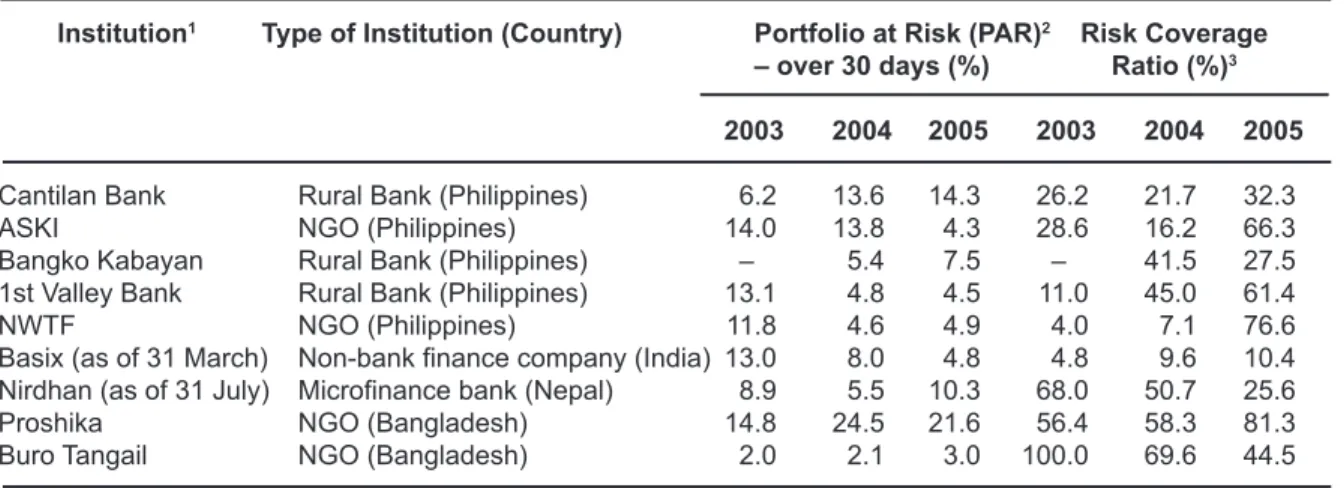
only in the lack of reliable, accurate, and timely data on many MFIs’ loan collection rates and portfolio quality, but also in the absence of systematic efforts to analyze their loan portfolios from a credit risk management point of view. Moreover, many MFIs, including those with a number of years of operational history, have awfully low risk coverage ratios despite having high or moderately high PAR, as shown in Table 2.
There appears to be a sharp imbalance in most MFIs between their growth plans and the level of attention given to the risk management demands generated by those growth plans. Most MFIs seem to be overly ambitious about their growth plans. The growth optimism that prevails in most MFIs is further reinforced by their excessive reliance on past successes as powerful indicators of the future. The past successes seem to have driven many MFIs into an overconfident mode about their ability to achieve consistently better performance in the future. Many MFIs do not seem to fully recognize 5 The effective management of credit risk is critically important for MFIs because they depend excessively on interest income
from loans, and loans are their main asset. High administrative costs also make MFIs more vulnerable to defaults.
Table 2. Portfolio at risk and risk coverage ratio—(selected Asian MFIs).
Institution1 Type of Institution (Country) Portfolio at Risk (PAR)2 Risk Coverage
– over 30 days (%) Ratio (%)3
2003 2004 2005 2003 2004 2005
Cantilan Bank Rural Bank (Philippines) 6.2 13.6 14.3 26.2 21.7 32.3 ASKI NGO (Philippines) 14.0 13.8 4.3 28.6 16.2 66.3 Bangko Kabayan Rural Bank (Philippines) – 5.4 7.5 – 41.5 27.5 1st Valley Bank Rural Bank (Philippines) 13.1 4.8 4.5 11.0 45.0 61.4 NWTF NGO (Philippines) 11.8 4.6 4.9 4.0 7.1 76.6 Basix (as of 31 March) Non-bank finance company (India) 13.0 8.0 4.8 4.8 9.6 10.4 Nirdhan (as of 31 July) Microfinance bank (Nepal) 8.9 5.5 10.3 68.0 50.7 25.6 Proshika NGO (Bangladesh) 14.8 24.5 21.6 56.4 58.3 81.3 Buro Tangail NGO (Bangladesh) 2.0 2.1 3.0 100.0 69.6 44.5
1 As of end of each year, unless otherwise stated.
2 PAR = outstanding balance, loans overdue > 30days/adjusted gross loan portfolio.
3 Risk Coverage Ratio = Adjusted Loan Loss Reserve/PAR > 30 days. If loans are based on adequate marketable collateral, this ratio does not have to be high.
the critical role of risk management for the successful implementation of their growth plans in an increasingly competitive market environment.6
This factor, more than any others, has contributed to inadequacies in risk management in most MFIs.
The microfinance industry has also not made much progress on disaster risk management. According to Pantoja (2002, p. 30), “disaster risk is one of the most critical yet neglected external risks faced by MFIs, which for the most part, continue to deal with it in an ad hoc manner.” As a result, in disaster situations, MFIs become “organizations in distress as well as potential instruments of recovery” (Nagarajan 1998). However, recent disasters such as the 1998 flood in Bangladesh, hurricane Mitch in Central America in 1998, and the December 2005 tsunami in Asia, among other events, have drawn greater attention to the issue of disaster risk management.
The industry experience also tends to suggest that inadequate attention to risk management is not confined to a particular type of organization such as unregulated, primarily credit-only MFIs, or small-scale unit banks such as rural banks. While regulated microfinance commercial banks appear to pay a great deal of attention to systematic risk management, the evidence (for example, the eventual liquidation of Bank Dagang Bali) suggests that even such banks and nonbank financial institutions can suffer from significant inadequacies.
While inadequacies continue to exist, an increasing number of MFIs are making efforts to improve some of their risk management practices. For example, as compared with about five years ago, more MFIs now seem to have comprehensive credit manuals, follow more aggressive loan loss provisioning policies, and carry out frequent detailed analysis of their loan portfolios. An increasing number of MFIs have also come to realize that the internal audit department plays a preeminent role in risk management.
As Clark (2006, p. 110) noted in respect of ACLEDA, as it “grew from a staff of 27 to a staff of
over 1,000, and from 5 branches to 27, internal audit became a prominent feature on the organizational chart. The technology and the computerized MIS (management information system) made pattern recognition possible within a short period of time. Financial audit, IT (information technology) audit and operations audit are on the ACLEDA internal audit department’s menu. Reporting directly to the Audit and Risk Committee of the Board, the internal audit department works together with each department—human resources, credit management, marketing, finance, treasury, the IT department, and each branch in ACLEDA’s network.”
Some regulated medium- and large-scale MFIs such as the SKS Microfinance in India have integrated risk management into their institutional culture more effectively than most small-scale regulated MFIs. Also, a small core group of medium- and large-scale NGO-MFIs—consisting of flagships, such as the BRAC, ASA, and Buro-Tangail in Bangladesh, among others—has made concerted efforts to improve risk management. However, the lack of research on these efforts and outcomes makes it difficult to discuss the recent improvements in details. It appears that risk management has improved in MFIs alongside strategic technical or investment links with strong networks or for-profit investors.
Whether the industry has made significant progress in addressing risks associated with agricultural microfinance is an important question. In fact, attempting to answer this question is more difficult than assessing the general progress in microfinance risk management, for two main reasons. First, very little reliable published data are available on the agricultural portfolios of MFIs. Second, very little research work has been carried out on risk management practices used by MFIs in respect of agricultural microfinance. The CGAP (2005b) research on agricultural microfinance activities carried out by few MFIs, however, has produced encouraging results.
The ACLEDA Bank, learning from its delinquency crisis of 2001, has made significant 6 In addition to organizational factors, the cognitive biases of decision-makers explain this lack of emphasis. As noted by Watkins
and Bazerman (2003, p. 76), a few of the most common cognitive biases include: (i) the tendency to harbor illusions that things are better than they really are, (ii) assuming that potential problems will not actually materialize or that their consequences will not be severe enough to merit preventive measures, and (iii) giving weight to evidence that supports our preconceptions and discounting evidence that calls those preconceptions into question. And these biases are self-serving.
improvements to managing risks associated with agricultural microfinance and other operations. Even though the bubble burst in 2001 with respect to its balloon loans for agriculture, it did not discontinue this service but instead adopted a policy to limit the balloon loans to 10% of the branch portfolio unless the branch history proves superior portfolio quality (Clark 2006, p. 208).7 Some MFIs
continue to operate successfully despite a heavy concentration of their portfolio in agriculture. For example, EMT (now AMRET) in Cambodia had over 70% of its total portfolio in agriculture at the end of 2002. EMT’s PAR over 60 days was only 0.1%. This agricultural concentration at EMT continues. According to the latest rating report by M-Cril, AMRET not only had 70% of its total portfolio of $9.2 million in agriculture, but also had 35% of its portfolio in crop loans at the end of June 2005. The PAR over 60 days as of the same date was 0.06%. By the end of 20058, AMRET’s
total loan portfolio was about $11 million, PAR over 30 days 0.07%, write-off ratio 0.03%, and risk coverage ratio 773.00%, according to the data reported in the MIX Market website (www. mixmarket.org).
SOME GENERAL PRINCIPLES ON MICROFINANCE RISK MANAGEMENT
Based on an examination of current trends in microfinance risk management, one general observation stands out: Most MFIs pay more attention to crisis management than to risk management, and the attention to risk management is highly uneven across and within MFIs. Given this, MFIs must make concerted efforts to put in place comprehensive risk management systems appropriate to their institutions. Although institutional variations make general recommendations less relevant, it is possible to outline a number of general principles that MFIs need to follow in developing risk management systems and procedures.
1. Risk management must be an integral part of the institutional culture, whether an institution is an NGO, a nonbank financial institution, a specialized MFI, or a cooperative.9 Otherwise,
many employees would be prone to take risk management lightly. It is important to inculcate the realization that it would be far wiser and more prudent to manage risk than to cope with risk, and that risk management is a collective and continuous activity which engages everyone in an organization in varying degrees (Box 3). However, risk management should essentially be a top-down activity: it should begin at the top of the organization and systematically go down to embrace all other layers of the organization.
2. The one-size-fits-all approach is inappropriate for microfinance risk management. In the microfinance industry, many MFIs tend to adopt measures that other more successful or larger MFIs have adopted. While such strategies seem to have partly worked in developing or introducing new products and services and even some delivery models, the same strategy cannot be effectively adopted for overall risk management primarily because of the institution-specificity of the overall risk profiles. Hence, each institution must develop tailor-made risk management systems and procedures appropriate to its own risk profile, organizational type, the applicable legal and supervisory requirements, scope, scale, and complexity of the products and services, service delivery modalities used by the institution, and the liability structure, among other things. 3. A comprehensive approach that covers all types
of risk to which the institution is exposed, or likely to be exposed, is indispensable. The system, at a minimum, has to be sufficiently forward-looking to accommodate institutional growth and social mission objectives for the short to medium term. The main rationale for
7 In El Salvador, Banco ProCredit has successfully increased its exposure to agricultural loans in recent years under a systematic risk management system (Buchenau and Meyer 2007).
8 AMRET is the second largest MFI in Cambodia and had 106,926 active borrowers, and 28 branches (district offices), at the end of June 2005. A remarkable characteristic of AMRET is its low average outstanding loan per client ($87).
9 This may sound naïve, or, in a sense, redundant given that modern financial intermediaries are essentially in the risk-management business. However, we need to bear in mind that most MFIs do not regard their operations in this manner. Hence, the need to emphasize this as a guiding principle.
a comprehensive approach stems from the fact that most risks are interrelated. For example, the liquidity risk of an MFI could easily lead to credit risk if borrowers begin to lose confidence in the MFI’s ability to serve their demand for loans on a continuing basis. Similarly, credit risk may aggravate liquidity risk.
4. The chief executives and board of directors of MFIs must explicitly recognize the potential impact of cognitive biases and organizational pressures on risks. These two factors could easily lead to an executive over-optimism in their organizations. Such over-optimism could in turn result in the underestimation of potential risk, particularly of new initiatives and growth strategies.10
5. Risk management should not be seen as something that must be put in place merely to meet the regulatory and supervisory requirements of financial authorities. Risk management needs to be seen more as a critically important way to ensure financial soundness, operational efficiency, growth, and stability of the institution to achieve its mission. Thus, those MFIs that are not subject to prudential regulation must also have an appropriate risk management system and procedures.
6. It is important to recognize that risk management is not the management of financial ratios based on balance sheets and income statements. While such ratios play an important role
10 Lovallo and Khaneman (2003) present an excellent analysis of how cognitive biases and organizational pressures lead to
executives’ over-optimism. They point out that most people are highly optimistic most of the time and show a typical tendency to take credit for positive outcomes and to attribute negative outcomes to external factors, irrespective of their true cause. They also cite competitor neglect as another common cognitive bias and point out that “In making forecasts, executives
tend to focus on their own company’s capabilities and plans and are thus prone to neglect the potential abilities and actions
of rivals” (p. 60). Bazerman and Chugh (2006, p. 90) point out that cognitive blinders could “prevent a person from seeing, seeking, using, or sharing highly relevant, easily accessible, and readily perceivable information during the decision-making process.” They describe this as “the phenomenon of bounded awareness.”
Box 3. Embedded risk management at Banco ProCredit (Ecuador)
Sociedad Financiera Ecuatorial was a finance company providing microfinance services in Ecuador. In September 2004, it was transformed into a commercial bank, Banco ProCredit (BP), which is a member of the international group ProCredit Holdings.
The BP, in accordance with the directives of the Superintendency of Banks and Insurance, implemented an integrated risk management plan to support the Management and the Board of Directors in the analysis, monitoring, and control of risk to which the business is exposed. Risk management has been embedded into the institutional culture of BP which focuses on ensuring effective integrated management of the types of risk associated with a financial institution specializing in serving micro- and small
enterprises. Integrated risk management at the BP involves all employees of the bank who base their decisions and actions on recommendations from the Integrated Risk Management Committee (IRMC) which, in turn, takes into account suggestions made by the various departments.
In 2004, the bank's Board of Directors approved a risk management manual, which sets forth the policies, procedures, and methodologies used to identify, measure, control, and monitor risks. The IRMC, appointed by the Board of Directors, develops and proposes integrated risk management strategies, policies, and procedures and determines the bank's risk profile and level of exposure to the various types
of risk.
The BP also has an Integrated Risk Management Department (IRMD) and a Unit (IRMU). These are responsible for the operational aspects of risk management and, among other things, analyze all risks identified, monitor compliance, recommend appropriate provisioning levels, and make recommendations to the Management regarding use of resources to minimize risk exposure.
in an effective risk management system, a comprehensive system goes well beyond those.
7. MFIs need to consider risk management not as an activity to which attention needs to be paid periodically but as a continuing process to which unbroken and unwavering attention is required as an integral part of their daily operations.
8. The primary responsibility for putting in place an effective risk management system and procedures must rest with the board of directors and the chief executive officer of an MFI; the board and the chief executive, in addition to others, must also share implementation responsibilities. The direct link between governance and risk management must also be recognized.
9. Some elements of risk management in microfinance must go well beyond one’s own institutional boundaries and must include, to the extent possible, measures that would help the MFI clients to manage their risks more effectively. This is one of the fundamental differences between risk management in conventional financial institutions and MFIs. For some MFIs, such measures may include financial literacy programs and basic health education for the clients. Three factors justify such wider measures: (i) poor households suffer from multiple disadvantages which prevent them from fully utilizing their access to financial services, (ii) most MFIs provide loans without collateral and run greater risk if their client households’ economic activities do not perform as expected, and (iii) MFIs have a social mission.
10. Risk management practices should be market-oriented. For example, some MFIs have attempted to manage their credit and competition risks through a memorandum of understanding with their potential competitors while others (NWTF is an example) have asked their borrowers/members for a commitment not to shift to the competitors. These are not market-oriented practices.
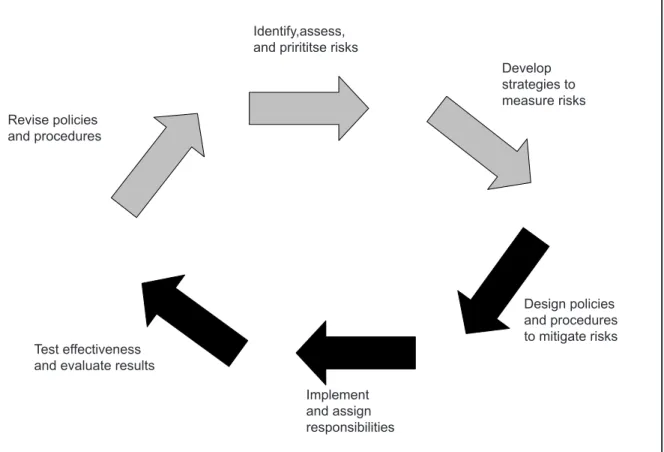
11. A comprehensive risk management system must include a “feedback loop” (Figure 1) from the highest to the lowest levels of the MFI, often including the board of directors, among
others (GTZ 2000, p. 36; Campion 2000, p. 8).
MANAGING AGRICULTURAL MICROFINANCE RISKS
As argued earlier, MFIs involved or planning to increase their involvement in agricultural microfinance must pay much greater attention to risk management than others. Some recent developments in many rural economies have probably increased further the risk in agricultural operations. Dismantling guaranteed prices for many farm products and liberalizing trade have generally led to declines in farm output prices. In many countries, the cost of production in small-holder agriculture may have increased, thus reducing the profit margins from farming. Agricultural production in many developing countries are also moving more toward high-value crops for which scale economies are more important to take advantage of the new markets and marketing arrangements. In terms of responding to this increased demand for high-value crops, poor households often find themselves at a relatively disadvantaged position vis-à-vis the nonpoor farm households.
However, at the same time, other factors may have had a positive impact on the prospects of agricultural microfinance. For example, most rural households today are pluriactive and have nonfarm sources of income due to the significant economic transformation that has taken place in many rural economies. According to the Rural Asia study of ADB (2000), the rural non-farm economy accounts for 20–40% of total rural employment, and 25–50% of total rural income in Asia. In East Laguna in the Philippines, the share of nonfarm income in total household income had increased from 13 % to 64%, according to some studies (Rigg 2006, p. 183). A similar picture of rural economic diversification and a progressive shift from farm to nonfarm livelihoods is evident in the Central Plains of Thailand (Rigg 2006, p. 183).
A survey of rural households in 240 villages across 16 states in India showed that during the period 1971–1999, the share of nonfarm incomes in total rural incomes rose from 19% to 48% (Foster and Rosenzweig 2004, pp. 517–518). In many countries, many poor farm households are essentially part-time rather than full-time
farmers. These households are less vulnerable to external shocks than those depending exclusively on agriculture and pose significantly lower levels of risk to the lenders. In this context, it may be possible to argue that although the agricultural operations of poor households may have become more risky in recent times, the risk in agricultural microfinance may have declined due to the significant diversification of the sources of income of many rural households engaged in agriculture, among other things. But risks have not disappeared from agricultural microfinance.
Although agricultural microfinance is more risky and difficult than nonagricultural microfinance, a small number of MFIs seem to have been engaged in agricultural microfinance with relatively encouraging results. Their collective as well as individual experiences make it possible
to suggest some general principles and strategies from a risk management point of view, which MFIs would do well to consider when planning to either venture into agricultural microfinance or merely increase their current involvement in agricultural financing.
1. It is difficult, if not impossible, for an individual MFI to change the external environment in which the agricultural economy operates. Hence, the most fundamental principle that MFIs must follow is to take this external environment as more or less given when making plans for entry into agricultural microfinance. This implies that MFIs must look primarily into their internal capacity to handle agricultural microfinance.11 MFIs with weak internal
systems and overall organizational capacity 11 The Banco ProCredit El Salvador has adopted this principle to expand its urban operations into rural areas (Buchenau and
Meyer 2007).
Identify,assess,
and prirititse risks
Develop strategies to measure risks Design policies and procedures to mitigate risks Implement and assign responsibilities Test effectiveness
and evaluate results Revise policies
and procedures
Figure 1: Risk management feedback loop
should not consider agricultural microfinance until such internal capacity is built.
2. Adopting specific limits on the share of agricultural loans at institutional and branch levels are important. Over time, branches should be allowed to gradually increase their agricultural loans to this limit based on the quality of the portfolio and the adequacy of needed human resources. ACLEDA Bank adopted this method with impressive results and has been able to expand its involvement in agricultural microfinance in recent years. Successful MFIs do not lend only to agriculture and most set a limit to the share of their agricultural portfolio (Gonzalez-Vega 2003, p. 60).
3. Increasing the degree of diversity of agricultural lending can be accomplished, for one, by lending to a wide variety of farming households, including clients engaged in more than one crop or livestock activity (CGAP 2005a). Another way would be to finance the farming operations of households with diverse sources of income. This is one of the strategies that the Caja Los Andes (now Banco Los Andes ProCredit) in Bolivia adopted. Efforts to achieve geographical diversification of agricultural lending to reduce exposure to possible covariant risks are essential.
4. Human resource capabilities required to carry out agricultural microfinance need to be built. Credit officers need to be equipped with special training in agricultural credit appraisal and management before embarking on a program to expand agricultural financing. MFIs are advised not to assign responsibility for agricultural financing to new staff or staff with inadequate field experience and knowledge of farming operations.12 As the experience
of many farm credit institutions bear out,
collection difficulties have arisen because they had adopted unrealistic assumptions in credit analysis to begin with and did not make risk-based adjustments in the forecasts of crop yields and prices. In addition to cognitive biases in decision-making, such deficient practices reflect the lack of knowledge of farming conditions and inadequate or inappropriate training. Successful agricultural lending requires credit analysts to take into account worst-case scenarios and forecasts about future conditions likely to affect the production and price outcomes, among other things, rather than relying on unrealistic “normal year” assumptions (Von-Pischke 2003; 1991; 1989).13 Caja Los Andes employs loan officers
with thorough knowledge of agricultural inputs, risks, and business models and local culture. Loan officers are thoroughly trained in lending methodology before they undergo on-the-job training under the close supervision of a branch manager for at least one year. Calpiá in El Salvador (now Banco ProCredit) has also adopted a similar approach to human resource development for agricultural finance (Navajas and Gonzales-Vega 2003).
5. MFIs need to make agricultural credit decisions including decisions on loan sizes, based on the household debt capacity14 rather
than the expected surpluses of the loan-financed agricultural investment. Caja Los Andes in Bolivia (CGAP 2005a) and Banco ProCredit El Salvador, for example, use this practice. The entire household’s ability and willingness to repay is assessed and loan amounts and repayment schedules are determined accordingly, based on the household cash flow that incorporates all revenue and expenses of the entire household as a single unit. In analyzing household debt 12 The use of ill-prepared and newly hired staff to carry out field operations has been a major cause of delinquency problems at
many MFIs. This was the root cause of the delinquency crisis of NWTF during 1992–1994. The same factor was responsible, to a large extent, for the serious delinquency crisis (2001) in the ACLEDA Bank. In 2000, ACLEDA hired 182 new staff, most of them credit officers. An additional 320 new staff joined it in 2001. In 2001, for each staff member who had worked for more than a year for ACLEDA, there were two who had worked less than one year (Clark 2006, p. 206).
13 When loan officers at Banco ProCredit El Salvador calculate a farmer’s crop productivity, they take the weighted average of
1) the higher yield ever reported, 2) the most recent yield, and 3) the worst yield recorded. And the formula assigns the first two variables a score of 1 each, and the last variable a score of 2. The sum is then divided by 4. Prices are imputed as the minimum expected market price (Buchenau and Meyer 2007, p. 16).
14 Von-Pischke (1991, p. ix) defines debt capacity as “sustainable borrowing power.” It is created by a loan applicant’s estimated