Evaluation of Work-Based Learning
Programme 2011-14: Apprenticeships
Appendices
SOCIAL
RESEARCH NUMBER:
30/2016
PUBLICATION DATE:
16/03/2016
Philip Wilson, Amy Woolger, Matthew Cutmore
(York Consulting)
Huw Bryer, Nia Bryer (Old Bell 3)
Mark Winterbotham (IFF Research)
Rhys Davies (Cardiff University)
Views expressed in this report are those of the researchers and not necessarily those
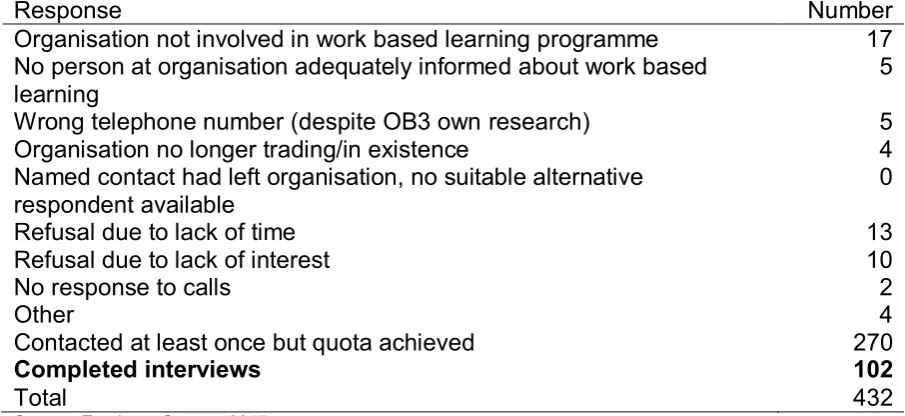
of the Welsh Government.
For further information please contact:
Siân Williams
Knowledge and Analytical Services
Welsh Government
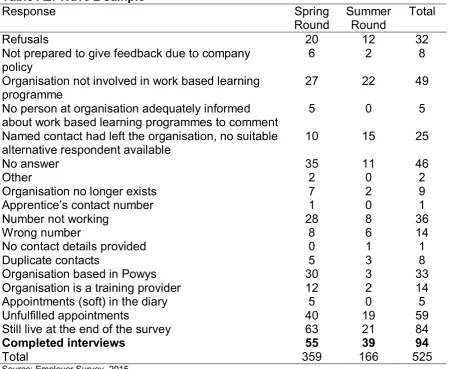
Cathays Park
Cardiff
CF10 3NQ
Tel: 02920 823991
Email:
APPENDICES:
A: EVALUATION METHODOLOGY
B: BIBLIOGRAPHY
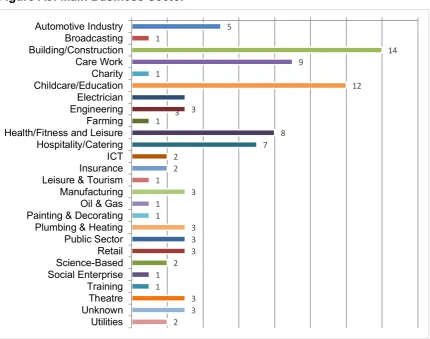
C: ESF DATA BY CONVERGENCE AND COMPETITIVENESS AREAS
D: STAKEHOLDER/PROVIDER TOPIC GUIDE
E: EMPLOYER SURVEY QUESTIONNAIRE
F: EMPLOYER SURVEY TABLES
G: CURRENT APPRENTICESHIP QUESTIONNAIRE
H: CURRENT APPRENTICESHIP TABLES
I: APPRENTICESHIP LEAVER QUESTIONNAIRE
J: APPRENTICESHIP LEAVER TABLES
K: EMPLOYER CASE STUDY TOPIC GUIDES
Appendix A: Methodology
1.
The Welsh Government commissioned York Consulting, in association with Old Bell
3, the University of Cardiff and IFF Research to carry out an evaluation of the WBL
Programme 2011-15. The evaluation commenced in early November 2013 and
continued until November 2015.
[image:4.595.60.543.352.768.2]2.
In summer 2010, the (then) Welsh Assembly Government issued an invitation to
tender to deliver its WBL programmes between August 2011 and July 2014 (later
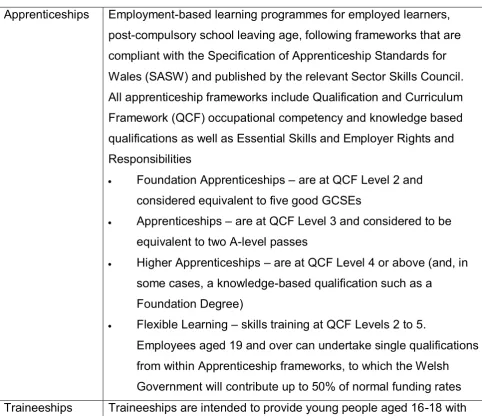
extended to March 2015). WBL 2011-15 covers three main areas (as set out in
Table 1.1), elements of which receive funding from the European Social Fund. The
Steps to Employment programme was subsequently excluded from the evaluation.
Table A.1: Coverage of the Evaluation
Apprenticeships
Employment-based learning programmes for employed learners,
post-compulsory school leaving age, following frameworks that are
compliant with the Specification of Apprenticeship Standards for
Wales (SASW) and published by the relevant Sector Skills Council.
All apprenticeship frameworks include Qualification and Curriculum
Framework (QCF) occupational competency and knowledge based
qualifications as well as Essential Skills and Employer Rights and
Responsibilities
Foundation Apprenticeships – are at QCF Level 2 and
considered equivalent to five good GCSEs
Apprenticeships – are at QCF Level 3 and considered to be
equivalent to two A-level passes
Higher Apprenticeships – are at QCF Level 4 or above (and, in
some cases, a knowledge-based qualification such as a
Foundation Degree)
Flexible Learning – skills training at QCF Levels 2 to 5.
the skills needed to get a job or progress to learning at a higher level,
including an Apprenticeship or Further Education (eligible young
people aged 18 may also participate). Traineeships are offered at the
following levels:
Engagement Traineeship – for youth learners who are assessed
as needing to address one or more barriers to further learning or
employment and/or need to confirm or contextualise an
occupational focus prior to entering further learning or
employment;
Level 1 Traineeships – for youth learners who are assessed as
being occupationally focused and able to follow a programme of
study leading to a Level 1 qualification;
Bridge-to-Employment Traineeships – for youth learners who
are assessed as occupationally focused where a progression
opportunity is not readily available. This provision is short-term
whilst progression is secured.
Traineeships include the identification of the barriers faced by the
young person; carrying out a work placement, community project or
voluntary work; centre-based learning opportunities, to provide the
learner with the range of skills they need to progress.
Steps to
Employment
This was designed to provide access to training and work placement
opportunities for people aged 18 or over who are not in full time
education or employment. This was delivered at two levels:
Work Focused Learning – for learners who wish to address any
barriers to learning or who need to confirm an occupational
focus in order to take part in employment, further learning or
Routeways to Work. This included work placements, community
projects, voluntary work and centre-based learning enabling the
learner to achieve qualifications up to and including Level 2 and
test knowledge at Level 3;
Routeways to Work – for learners with an occupational focus
or sectors identified by the Department for Work and Pensions
and Jobcentre Plus. Where an employer has been identified, the
learner will be offered an interview on completion of the training.
Steps to Employment was withdrawn for new entrants on 31 July
2013 and replaced with the Work Ready programme
1.
Evaluation Overview
3.
The aims of the overall evaluation were to:
Assess the effectiveness of the contracting and delivery for WBL 2011-15.
Satisfy WEFO’s evaluation requirements for projects receiving ESF funding.
Carry out specific evaluation of the delivery of Traineeships.
Assess the delivery of outputs, outcomes and impacts.
Assess the extent to which the programme has secured the participation of
individuals according to protected characteristics.
Review how Essential Skills Policy has been embedded in the delivery of WBL
and how this has contributed to the achievement of WBL 2011-15 objectives.
4.
The approach to carrying out the apprenticeship stage of this evaluation was
designed to use multiple methods to achieve these evaluation aims. The methods
included:
Interviews with key stakeholders in the WBL programme.
Interviews with lead contractors and consortia leads.
Survey of employers.
1 Work Ready is available for over 18s receiving benefits. Following a needs assessment, participants receive tailored
E-surveys of current apprentices.
Telephone surveys of apprenticeship leavers.
Counterfactual Impact Evaluation.
Review of programme data.
5.
Each of these is outlined in detail below.
Interviews with key stakeholders in the WBL programme
6.
Interviews with five Welsh Government officials responsible for different aspects of
apprenticeships provision between 2011 and 2015.
7.
Interviews with five external stakeholders to the programme, including Careers
Wales, NTFW, Skills for Justice, Estyn and ConstructionSkills.
8.
The topic guide is included at Appendix D.
Interviews with lead contractors and consortia leads.
9.
Interviews with ten learning provider consortia leads/lead contractors.
10. The topic guide is included at Appendix D.
Surveys of employers
11. The employer survey work was undertaken in two waves. The original intention
was to achieve 100 interviews in Wave 1 (split 50/50 between apprenticeship and
Traineeship employers) with a similar split in Wave 2. The questionnaire is included
at Appendix E
12. Wave 1: A total of 432 contacts were provided to Old Bell 3 (OB3) across two
databases (first sent 23rd September 2014 with 214 contacts, second sent 6th
October 2014 with 218 contacts).
14. A total of 102 interviews were completed (response rate of 23.6%), with all
employers contacted at least once.
[image:8.595.57.510.194.402.2]15. A summary of the responses and reasons for refusal or inability to participate are
outlined below:
Table A1: Wave 1 sample
Response
Number
Organisation not involved in work based learning programme
17
No person at organisation adequately informed about work based
learning
5
Wrong telephone number (despite OB3 own research)
5
Organisation no longer trading/in existence
4
Named contact had left organisation, no suitable alternative
respondent available
0
Refusal due to lack of time
13
Refusal due to lack of interest
10
No response to calls
2
Other
4
Contacted at least once but quota achieved
270
Completed interviews
102
Total
432
Source: Employer Survey, 2015.
16. The second wave was conducted during the spring of 2015. The contact database
for this survey was made up of the 270 contacts who were ‘left-over’ from the first
wave, plus an additional 91 contacts provided to OB3 in April 2015; following
de-duplication, the database contained a total of 359 records.
17. Employers based in Powys (30 in all) were not approached initially due to their
over-representation in the first wave.
18. The second wave commenced during w/c 13th April 2015 and was halted on 24th
April 2015 due to a low response rate; the Welsh Government provided a further
166 contacts during July 2015 for the survey to recommence on 13th August 2015.
19. The survey completed on the 9th September 2015; 94 completed interviews were
achieved over the course of the second wave (both spring and summer of 2015),
and all contacts were contacted on at least five occasions.
Table A2: Wave 2 sample
Response
Spring
Round
Summer
Round
Total
Refusals
20
12
32
Not prepared to give feedback due to company
policy
6
2
8
Organisation not involved in work based learning
programme
27
22
49
No person at organisation adequately informed
about work based learning programmes to comment
5
0
5
Named contact had left the organisation, no suitable
alternative respondent available
10
15
25
No answer
35
11
46
Other
2
0
2
Organisation no longer exists
7
2
9
Apprentice’s contact number
1
0
1
Number not working
28
8
36
Wrong number
8
6
14
No contact details provided
0
1
1
Duplicate contacts
5
3
8
Organisation based in Powys
30
3
33
Organisation is a training provider
12
2
14
Appointments (soft) in the diary
5
0
5
Unfulfilled appointments
40
19
59
Still live at the end of the survey
63
21
84
Completed interviews
55
39
94
Total
359
166
525
Source: Employer Survey, 2015.
21. In total, 196 interviews were completed over the course of 2014 and 2015
(response rate of 28%), with 95 of these coming from employers of apprentices, and
101 coming from employers of those on a traineeship. Frequency tables for the
apprenticeship data are attached at Appendix F.
22. The statistical significance for the apprenticeship element of the survey is between
+/-6.1 and +/-10.1 percentage points at the 95 per cent confidence level.
Demographics
23. Of the 95 employers of apprentices that completed interviews, 37 were in
non-convergence areas and 58 in non-convergence areas.
represented Local Authorities in the survey, followed by Carmarthenshire (7),
Monmouthshire (6), Powys (6) and Rhondda Cynon Taf (6) (Figure xx).
Figure A1: Employer Respondents by Local Authority
Source: Employer Survey, 2015. Base: All Apprentices (95).
Respondents were asked: In which local authority are you based? Closed question, single response.
2
4
4
13
7
2
1
2
5
6
5
4
5
6
6
13
2
8
Blaenau Gwent
25. Just over a third of employers surveyed had between ten and 49 employees (35),
with a further third employing up to ten employees (32) (Figure A2).
Figure A2: Number of Employees
Source: Employer Survey, 2015. Base: All (95).
Respondents were asked: How many employees does your organisation have at the location where you are based?
Closed question, single response. 32
35
21
6
1
Up to 10 Between 10 and 49 employees
Between 50 and 249 employees
250 and over employees
27. There was representation from a wide range of industrial sectors. The most
common respondent sectors were Building/Construction (14), Care Work (9),
Childcare/Education (12), Health/Fitness and Leisure (8) and Hospitality/Catering
(7) (Figure A3).
Figure A3: Main Business Sector
Source: Employer Survey, 2015. Base: All (95).
Respondents were asked: What is the organisation’s main business? Open question.
5 1
14 9
1
12
3 3 1
8 7 2
2 1
3 1
1
3 3 3 2 1 1
3 3 2
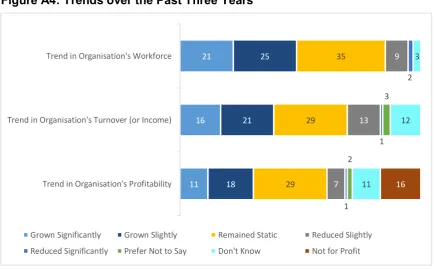
28. Employers participating in the survey were balanced in terms of their recent growth
in terms of workforce, turnover and profitability. Nearly a half of employers (46) said
that their workforce had grown over the past three years, while 35 said that it had
remained static (Figure A4). Over a third (37) also said that their organisation’s
turnover (or income) had grown over the past three years, while 29 said that it had
remained static. The same number of employers said that their organisation’s
profitability had grown, as said that it had remained static (29). Sixteen
[image:13.595.99.534.269.538.2]organisations were not for profit.
Figure A4: Trends over the Past Three Years
Source: Employer Survey, 2015. Base: All (95).
Respondents were asked: Over the past three years or so, what has been the overall trend in your organisation’s workforce/turnover (or income)/profitability? Has it…?
Closed questions, single responses.
29. The employers surveyed had relationships with over 14 training providers.
11 16
21
18 21
25
29 29
35
7 13
9
1
1 2
2
3
11
12 3
16 Trend in Organisation's Profitability
Trend in Organisation's Turnover (or Income) Trend in Organisation's Workforce
E-surveys of current apprentices
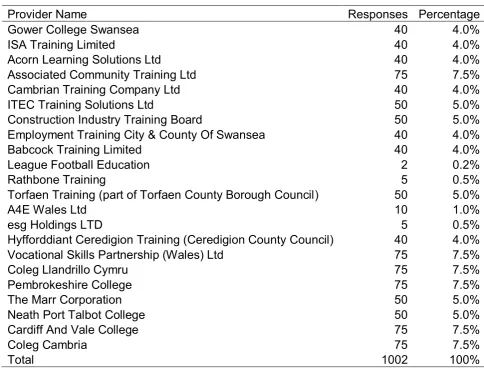
[image:14.595.61.546.193.565.2]30. All training providers were requested by the Welsh Government to undertake a
minimum number of interviews based on their respective size of contract (Table
A3).
Table A3: Current Apprenticeships: e-survey sampling
Provider Name
Responses Percentage
Gower College Swansea
40
4.0%
ISA Training Limited
40
4.0%
Acorn Learning Solutions Ltd
40
4.0%
Associated Community Training Ltd
75
7.5%
Cambrian Training Company Ltd
40
4.0%
ITEC Training Solutions Ltd
50
5.0%
Construction Industry Training Board
50
5.0%
Employment Training City & County Of Swansea
40
4.0%
Babcock Training Limited
40
4.0%
League Football Education
2
0.2%
Rathbone Training
5
0.5%
Torfaen Training (part of Torfaen County Borough Council)
50
5.0%
A4E Wales Ltd
10
1.0%
esg Holdings LTD
5
0.5%
Hyfforddiant Ceredigion Training (Ceredigion County Council)
40
4.0%
Vocational Skills Partnership (Wales) Ltd
75
7.5%
Coleg Llandrillo Cymru
75
7.5%
Pembrokeshire College
75
7.5%
The Marr Corporation
50
5.0%
Neath Port Talbot College
50
5.0%
Cardiff And Vale College
75
7.5%
Coleg Cambria
75
7.5%
Total
1002
100%
32. Providers were given the following instructions:
Survey of Current Apprentices – instructions to learning provider staff
Introduction
This survey is part of wider research on behalf of the Welsh Government into Work
Based Learning including Apprenticeships and Traineeships.
We are looking for a cross section of current apprentices (by sector, age, gender, level)
to complete the questionnaire. The attached note indicates the number of responses
required from your current apprentices.
We expect that the survey will take approximately ten minutes to complete using the
following link to a bilingual questionnaire:
SNAP Survey Link:
https://www.snapsurveys.com/wh/s.asp?k=142616192332
Please explain the following to learners on starting:
York Consulting an independent research company is conducting a survey on behalf of
the Welsh Government about Apprenticeships and their experiences so far.
Your provider has asked you to complete this questionnaire link and has not passed your
details to York Consulting.
Participation in this study is completely voluntary, though we very much hope you will
take part. All your answers will be treated in the strictest confidence, it will not be possible
to identify individual responses.
This survey will take approximately 10 minutes to complete.
Using the survey
Apprentices need to click on the link which will bring up the survey in an internet browser.
They will then need to choose the language they would like the survey delivered in
(Welsh or English). On completion of the survey apprentices need to select ‘submit’.
Participant Characteristics
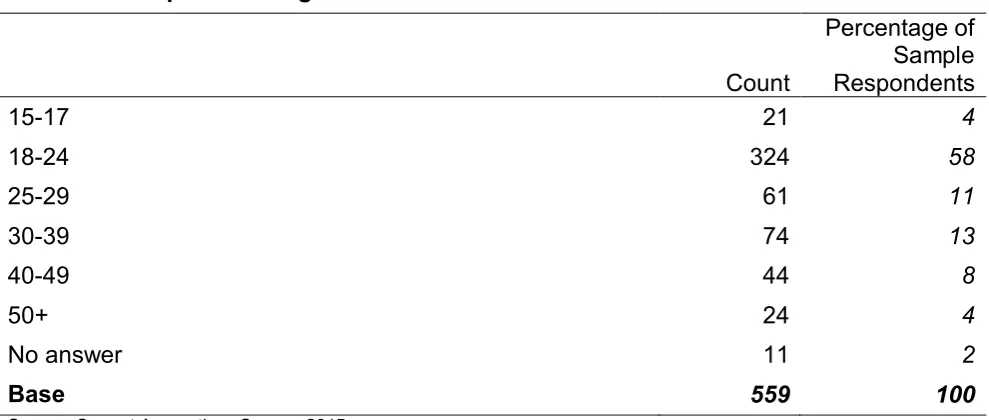
[image:16.595.60.555.245.455.2]34. The balance between male and female respondents was slightly more in favour of
males; with 303 males (55 per cent) and 246 females (45 per cent) taking part. The
youngest respondent was 15, while the oldest was 67. The average age was 26.
Just over half of respondents (58 per cent) are within the 18-24 age bracket (Table
A4).
Table A4: Respondents Age Brackets
Source: Current Apprentices Survey, 2015. Base: All (559).
Respondents were asked their age. Closed question, multiple response.
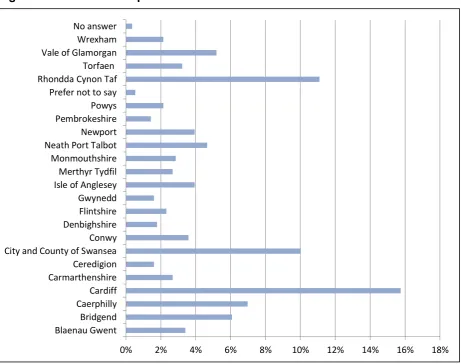
35. Over three-quarters of respondents identified as Welsh (77 per cent), while 92
identified as English (17 per cent). A minority (19 participants) identified as ‘Other’,
7 of these respondents were Eastern European. There was a spread of
respondents across Wales with all local authorities represented (Figure A5).
Count
Percentage of
Sample
Respondents
15-17
21
4
18-24
324
58
25-29
61
11
30-39
74
13
40-49
44
8
50+
24
4
No answer
11
2
Figure A5: Counties Respondents Live In
Source: Current Apprentices Survey, 2015. Base: All (559).
Respondents were asked for the county they live in. Closed question, single response.
36. The majority of respondents said that their first language was English (93 per cent).
Just less than a quarter of apprentices could speak Welsh (23 per cent), read Welsh
(23 per cent) and write Welsh (21 per cent). Approximately one third of apprentices
reported being able to understand Welsh (31 per cent)
Blaenau Gwent
Bridgend
Caerphilly
Cardiff
Carmarthenshire
Ceredigion
City and County of Swansea
Conwy
Denbighshire
Flintshire
Gwynedd
Isle of Anglesey
Merthyr Tydfil
Monmouthshire
Neath Port Talbot
Newport
Pembrokeshire
Powys
Prefer not to say
Rhondda Cynon Taf
Torfaen
Vale of Glamorgan
Wrexham
No answer
Telephone surveys of apprenticeship leavers
37. A sample of learners on Apprenticeships was supplied to IFF by York Consulting –
all were learners who left courses in 2011-2014, though this was checked with
respondents at the beginning of the interview.
38. The questionnaire, which can be found in Appendix I, was largely based on one
used for the Traineeship strand of this evaluation, which itself was based on the
2012 Welsh ESF Leavers Survey. All interviewing took place from IFF’s telephone
centre in London. Fieldwork ran from 4th June until 27th July 2015. Interviews were
conducted by telephone using computer-aided telephone interviewing (CATI).
39. The focus of this survey was Apprenticeships that had been completed in 2014.
Following de-duplication and removal of records without a valid telephone number
(either no number or an incorrect number of digits), the usable sample was 1,739
records: 1,024 Foundation Apprenticeships, 568 Apprenticeships and 147 Higher
Apprenticeships.
40. No quotas were set for the interviewing rather the aim was to achieve as many
interviews as possible from the sample provided.
41. A total of 520 interviews were conducted in the fieldwork period.
42. The average interview length was 23 minutes and 29 seconds. The complete
breakdown of sample outcomes is shown below.
Table A5: Response rates for Apprenticeship survey
Outcome
Number of
participants
Total Sample
1,739
Achieved interviews *
520
Unobtainable / wrong number
375
No recall of learning
46
Learner indicated that still on the course
33
Called 9 or more times and no definite outcome / still live at the
end of fieldwork *
652
Refusals *
113
Overall response rate (per cent)
30
Effective response rate (per cent)
[items with asterisk]
40
Source: Apprenticeship Survey, 2015
44. The participant sample was highly biased towards male respondents compared to
their proportion of the universe and the sample (Table A6). For other variables the
difference was less, although there was a slightly higher percentage of white
respondents, respondents without a learning difficulty and/or disability and for those
on a Foundation Apprenticeship.
Table A6: Comparison of universe with starting sample and achieved sample
Per-centage
of LLWR
70,834
Per-centage
of 1739
loaded
records
Per-centage
of 520
achieved
Per-centage
point
change on
LLWR
Gender
Male
42
52
51
+9
Female
58
48
49
-9
Ethnicity
White
97
97
98
+1
Not white
3
3
2
-1
Work limiting health condition:
Learner considers themself to have a
learning difficulty and/or disability
4
2
3
-1
Learner does not consider themself to
have a learning difficulty and/or
disability
96
98
97
+1
Learning Type
Foundation Apprenticeship
54
59
57
+3
Apprenticeship
38
33
37
-1
Higher Apprenticeship
8
8
6
-2
[image:19.595.60.544.474.767.2]Employer case studies
[image:20.595.61.537.324.541.2]45. Case studies with ten employers involved with apprenticeships were undertaken
(Table A7). Interviews were also undertaken with apprentices where they were
present and available at the time of the visit. Reasons for not interviewing an
apprentice included not being available at the time of interview or having left their
job.
46. Employers were randomly selected from those responding to the employer survey,
who said they had apprenticeship participants and were prepared to participate in
further research. The topic guides for the case studies are at Appendix K.
Table A7: Case Studies
Employer Reference
Sector
Young People interviewed
A
Retail
2
B
Fabrication
1
C
Public Sector
2
D
IT
1
E
Engineering
1
F
Leisure
1
G
Construction
0
H
School
0
I
Nursery
1
J
Catering
0
Source: Case Studies, 2014
Counterfactual Impact Evaluation
47. This phase of activity involved comparing the responses to the apprenticeship
leavers’ survey with respondents with similar characteristics from the Annual
Population Survey (APS). Propensity score matching (PSM) was used to ensure a
good match between the two samples.
Review of programme data
Lifelong Learning Wales Record (LLWR) data.
Project Outcome Reports (submitted by Welsh Government to the Welsh
European Funding Office (WEFO)).
Reporting
49. The key reporting stages of this evaluation were as follows:
Initial phase (focused on WBL contracting)
Traineeships report
Appendix B: Bibliography
Commission for Developing Scotland’s Young Workforce (2014) Education
Working for All
Department for Business, Innovation and Skills (2013) The Future of
apprenticeships in England: Next Steps from the Richard Review
Department for Business, Innovation and Skills (2013a) The Future of
apprenticeships in England: Implementation Plan
Department for Employment and Learning Northern Ireland (2004) Skills
Strategy for Northern Ireland
Department for Employment and Learning Northern Ireland (2006)
Success through Skills - The Skills Strategy for Northern Ireland: A
Programme for Implementation
Department for Employment and Learning Northern Ireland (2011)
Success through Skills - Transforming Futures
Department for Employment and Learning Northern Ireland (2014)
Securing our Success: The Northern Ireland Strategy on apprenticeships
Richard, D. (2012) The Richard Review of apprenticeships in England
Turner, R. (2014). Evaluation of Work-Based Learning Programme
2011-15: First report on contracting arrangements and Traineeship delivery
UK Parliament (2012), A brief history of apprenticeships, Available online
at:
http://www.publications.parliament.uk/pa/cm201213/cmselect/cmbis/83/83
04.htm
[Last Accessed: 9/12/15]
Welsh Assembly Government (2008). Skills that Work for Wales: A Skills
for Employment Strategy and Action Plan. Cardiff: Welsh Assembly
Government.
Welsh Government. (2013). Learner Outcome Measures for Further
Education, Work-Based Learning and Adult Community Learning:
2011/12, SDR 53/2013 (March 2013). Cardiff: Welsh Government.
Welsh Government (2013a) The Specification of apprenticeship Standards
for Wales (SASW)
Welsh Government. (2014b). First Release: Learner Outcome Measures
for Further Education, Work-Based Learning and Adult Community
Learning: 2012/13, SDR57/2014 (April 2014). Cardiff: Welsh Government.
Welsh Government. (2014c). First Release: Further Education,
Work-Based Learning and Community Learning in Wales, 2012/13,
SDR206/2014 (November 2014). Cardiff: Welsh Government.
Welsh Government (2014d) Project Business Plan (Supplementary) 80660
World Class Apprenticeships for Economic Renewal v1.3
Welsh Government (2014e) Qualified for Life; An Education Improvement
Plan for 3 to 19-year-olds in Wales
Report start date: 01/08/2011 Definitions: WCA=World Class Apprenticeships at Level 2 and Level 3
Report end date: 31/01/2015 HA=Higher Apprenticeship Progress Output (Impact Indicator) Report
Numbers Percentages
Convergence Competitive Total Convergence Competitive Total Convergence Competitive Total Convergence Competitive Total Convergence Competitive Total Convergence Competitive Total All Apps All Apps All Apps WCA WCA WCA HA HA HA All Apps All Apps All Apps WCA WCA WCA HA HA HA
37,161 23,334 60,495 34,661 21,887 56,548 2,500 1,447 3,947 37,161 23,334 60,495 34,661 21,887 56,548 2,500 1,447 3,947
0 0 0 0 0 0 0 0 0 0% 0% 0% 0% 0% 0% 0% 0% 0%
19,662 11,813 31,475 19,303 11,626 30,929 359 187 546 53% 51% 52% 56% 53% 55% 14% 13% 14%
16,354 10,842 27,196 14,357 9,659 24,016 1,997 1,183 3,180 44% 46% 45% 41% 44% 42% 80% 82% 81%
1,102 661 1,763 965 585 1,550 137 76 213 3% 3% 3% 3% 3% 3% 5% 5% 5%
43 18 61 36 17 53 7 1 8 0% 0% 0% 0% 0% 0% 0% 0% 0%
2,670 1,550 4,220 2,448 1,464 3,912 222 86 308 7% 7% 7% 7% 7% 7% 9% 6% 8%
34,491 21,784 56,275 32,213 20,423 52,636 2,278 1,361 3,639 93% 93% 93% 93% 93% 93% 91% 94% 92%
37,161 23,334 60,495 34,661 21,887 56,548 2,500 1,447 3,947 100% 100% 100% 100% 100% 100% 100% 100% 100%
0 0 0 0 0 0 0 0 0 0% 0% 0% 0% 0% 0% 0% 0% 0%
0 0 0 0 0 0 0 0 0 0% 0% 0% 0% 0% 0% 0% 0% 0%
0 0 0 0 0 0 0 0 0 0% 0% 0% 0% 0% 0% 0% 0% 0%
0 0 0 0 0 0 0 0 0 0% 0% 0% 0% 0% 0% 0% 0% 0%
0 0 0 0 0 0 0 0 0 0% 0% 0% 0% 0% 0% 0% 0% 0%
0 0 0 0 0 0 0 0 0 0% 0% 0% 0% 0% 0% 0% 0% 0%
664 1,318 1,982 570 1,182 1,752 94 136 230 2% 6% 3% 2% 5% 3% 4% 9% 6%
36,497 22,016 58,513 34,091 20,705 54,796 2,406 1,311 3,717 98% 94% 97% 98% 95% 97% 96% 91% 94%
94 50 144 94 50 144 0 0 0 0% 0% 0% 0% 0% 0% 0% 0% 0%
9,105 5,242 14,347 9,027 5,202 14,229 78 40 118 25% 22% 24% 26% 24% 25% 3% 3% 3%
17,289 10,838 28,127 17,041 10,710 27,751 248 128 376 47% 46% 46% 49% 49% 49% 10% 9% 10%
7,593 4,768 12,361 6,306 4,069 10,375 1,287 699 1,986 20% 20% 20% 18% 19% 18% 51% 48% 50%
2,897 2,255 5,152 2,058 1,716 3,774 839 539 1,378 8% 10% 9% 6% 8% 7% 34% 37% 35%
183 181 364 135 140 275 48 41 89 0% 1% 1% 0% 1% 0% 2% 3% 2%
16,480 10,007 26,487 15,871 9,633 25,504 609 374 983 44% 43% 44% 46% 44% 45% 24% 26% 25%
20,681 13,327 34,008 18,790 12,254 31,044 1,891 1,073 2,964 56% 57% 56% 54% 56% 55% 76% 74% 75% Appendix C: ESF Apprenticeships Data by Convergence and Competitiveness
GENDER
Male
Female
EXISTING
None
Below NQF Level 2
At NQF Level 2
At NQF Level 3
At NQF Level 4-6
At NQF Level 7-8
Economically inactive (excluding those in full time
In full time education
Not known
ETHNIC GROUPING
Yes
No
DISABILITY
Yes
No
EMPLOYMENT STATUS
Employed (excluding self employed)
Self-employed
Unemployed (up to one year)
Long-term unemployed (over one year)
AGE
*11-14
15-24
25-54
55-64
65+
No. of participants
Report start date: 01/08/2011 Definitions: WCA=World Class Apprenticeships at Level 2 and Level 3
Report end date: 31/01/2015 HA=Higher Apprenticeship Progress Output (Impact Indicator) Report
Numbers Percentages
Convergence Competitive Total Convergence Competitive Total Convergence Competitive Total Convergence Competitive Total Convergence Competitive Total Convergence Competitive Total All Apps All Apps All Apps WCA WCA WCA HA HA HA All Apps All Apps All Apps WCA WCA WCA HA HA HA
1,449 0 1,449 1,395 0 1,395 54 0 54 4% 0% 2% 4% 0% 2% 2% 0% 1%
1,750 0 1,750 1,623 0 1,623 127 0 127 5% 0% 3% 5% 0% 3% 5% 0% 3%
2,513 0 2,513 2,293 0 2,293 220 0 220 7% 0% 4% 7% 0% 4% 9% 0% 6%
3,931 1 3,932 3,633 1 3,634 298 0 298 11% 0% 6% 10% 0% 6% 12% 0% 8%
0 7,103 7,103 0 6,612 6,612 0 491 491 0% 30% 12% 0% 30% 12% 0% 34% 12%
2,990 0 2,990 2,766 0 2,766 224 0 224 8% 0% 5% 8% 0% 5% 9% 0% 6%
1,147 0 1,147 1,062 0 1,062 85 0 85 3% 0% 2% 3% 0% 2% 3% 0% 2%
2,401 0 2,401 2,236 0 2,236 165 0 165 6% 0% 4% 6% 0% 4% 7% 0% 4%
1,962 0 1,962 1,835 0 1,835 127 0 127 5% 0% 3% 5% 0% 3% 5% 0% 3%
0 3,396 3,396 0 3,262 3,262 0 134 134 0% 15% 6% 0% 15% 6% 0% 9% 3%
2,207 0 2,207 2,115 0 2,115 92 0 92 6% 0% 4% 6% 0% 4% 4% 0% 2%
1,251 0 1,251 1,156 0 1,156 95 0 95 3% 0% 2% 3% 0% 2% 4% 0% 2%
0 1,596 1,596 0 1,461 1,461 0 135 135 0% 7% 3% 0% 7% 3% 0% 9% 3%
2,557 0 2,557 2,411 0 2,411 146 0 146 7% 0% 4% 7% 0% 4% 6% 0% 4%
0 3,320 3,320 0 3,086 3,086 0 234 234 0% 14% 5% 0% 14% 5% 0% 16% 6%
2,293 0 2,293 2,161 0 2,161 132 0 132 6% 0% 4% 6% 0% 4% 5% 0% 3%
0 2,237 2,237 0 2,128 2,128 0 109 109 0% 10% 4% 0% 10% 4% 0% 8% 3%
4,560 3 4,563 4,241 3 4,244 319 0 319 12% 0% 8% 12% 0% 8% 13% 0% 8%
3,879 0 3,879 3,620 0 3,620 259 0 259 10% 0% 6% 10% 0% 6% 10% 0% 7%
2,271 0 2,271 2,114 0 2,114 157 0 157 6% 0% 4% 6% 0% 4% 6% 0% 4%
0 2,523 2,523 0 2,354 2,354 0 169 169 0% 11% 4% 0% 11% 4% 0% 12% 4%
0 3,155 3,155 0 2,980 2,980 0 175 175 0% 14% 5% 0% 14% 5% 0% 12% 4%
0 0 0 0 0 0 0 0 0 0% 0% 0% 0% 0% 0% 0% 0% 0%
352 349 701 341 329 670 11 20 31 1% 1% 1% 1% 2% 1% 0% 1% 1%
277 270 547 250 245 495 27 25 52 1% 1% 1% 1% 1% 1% 1% 2% 1%
36,532 22,715 59,247 34,070 21,313 55,383 2,462 1,402 3,864 98% 97% 98% 98% 97% 98% 98% 97% 98% Outside Wales
MIGRANT STATUS
Yes - EU
Yes - non-EU
No
Powys
Rhondda Cynon Taff
Swansea
Torfaen
Vale of Glamorgan
Wrexham
Gwynedd
Merthyr Tydfil
Monmouthshire
Neath Port Talbot
Newport
Pembrokeshire
Cardiff
Carmarthenshire
Ceredigion
Conwy
Denbighshire
Flintshire
GEOGRAPHY
Isle of Anglesey
Blaenau Gwent
Bridgend
Caerphilly
Report start date: 01/08/2011 Definitions: WCA=World Class Apprenticeships at Level 2 and Level 3
Report end date: 31/01/2015 HA=Higher Apprenticeship Progress Output (Impact Indicator) Report
Numbers Percentages
Convergence Competitive Total Convergence Competitive Total Convergence Competitive Total Convergence Competitive Total Convergence Competitive Total Convergence Competitive Total All Apps All Apps All Apps WCA WCA WCA HA HA HA All Apps All Apps All Apps WCA WCA WCA HA HA HA
20,864 9,983 30,847 20,052 9,574 29,626 812 409 1,221 20,864 9,983 30,847 20,052 9,574 29,626 812 409 1,221
0 0 0 0 0 0 0 0 0 0% 0% 0% 0% 0% 0% 0% 0% 0%
10,990 5,059 16,049 10,859 4,999 15,858 131 60 191 53% 51% 52% 54% 52% 54% 16% 15% 16%
9,270 4,618 13,888 8,625 4,293 12,918 645 325 970 44% 46% 45% 43% 45% 44% 79% 79% 79%
582 301 883 547 277 824 35 24 59 3% 3% 3% 3% 3% 3% 4% 6% 5%
22 5 27 21 5 26 1 0 1 0% 0% 0% 0% 0% 0% 0% 0% 0%
1,435 633 2,068 1,359 611 1,970 76 22 98 7% 6% 7% 7% 6% 7% 9% 5% 8%
19,429 9,350 28,779 18,693 8,963 27,656 736 387 1,123 93% 94% 93% 93% 94% 93% 91% 95% 92%
20,864 9,983 30,847 20,052 9,574 29,626 812 409 1,221 100% 100% 100% 100% 100% 100% 100% 100% 100%
0 0 0 0 0 0 0 0 0 0% 0% 0% 0% 0% 0% 0% 0% 0%
0 0 0 0 0 0 0 0 0 0% 0% 0% 0% 0% 0% 0% 0% 0%
0 0 0 0 0 0 0 0 0 0% 0% 0% 0% 0% 0% 0% 0% 0%
0 0 0 0 0 0 0 0 0 0% 0% 0% 0% 0% 0% 0% 0% 0%
0 0 0 0 0 0 0 0 0 0% 0% 0% 0% 0% 0% 0% 0% 0%
0 0 0 0 0 0 0 0 0 0% 0% 0% 0% 0% 0% 0% 0% 0%
363 582 945 334 539 873 29 43 72 2% 6% 3% 2% 6% 3% 4% 11% 6%
20,501 9,401 29,902 19,718 9,035 28,753 783 366 1,149 98% 94% 97% 98% 94% 97% 96% 89% 94%
9,264 4,061 13,325 9,110 3,976 13,086 154 85 239 44% 41% 43% 45% 42% 44% 19% 21% 20%
11,600 5,922 17,522 10,942 5,598 16,540 658 324 982 56% 59% 57% 55% 58% 56% 81% 79% 80%
GENDER
Male
Female
Economically inactive (excluding those in full time
In full time education
Not known
ETHNIC GROUPING
Yes
No
DISABILITY
Yes
No
EMPLOYMENT STATUS
Employed (excluding self employed)
Self-employed
Unemployed (up to one year)
Long-term unemployed (over one year)
No. of participants Qs gaining qualifications
AGE
*11-14
15-24
25-54
55-64
65+
Report start date: 01/08/2011 Definitions: WCA=World Class Apprenticeships at Level 2 and Level 3
Report end date: 31/01/2015 HA=Higher Apprenticeship Progress Output (Impact Indicator) Report
Numbers Percentages
Convergence Competitive Total Convergence Competitive Total Convergence Competitive Total Convergence Competitive Total Convergence Competitive Total Convergence Competitive Total All Apps All Apps All Apps WCA WCA WCA HA HA HA All Apps All Apps All Apps WCA WCA WCA HA HA HA
890 0 890 874 0 874 16 0 16 4% 0% 3% 4% 0% 3% 2% 0% 1%
954 0 954 903 0 903 51 0 51 5% 0% 3% 5% 0% 3% 6% 0% 4%
1,365 0 1,365 1,289 0 1,289 76 0 76 7% 0% 4% 6% 0% 4% 9% 0% 6%
2,083 0 2,083 1,987 0 1,987 96 0 96 10% 0% 7% 10% 0% 7% 12% 0% 8%
0 2,980 2,980 0 2,851 2,851 0 129 129 0% 30% 10% 0% 30% 10% 0% 32% 11%
1,683 0 1,683 1,608 0 1,608 75 0 75 8% 0% 5% 8% 0% 5% 9% 0% 6%
651 0 651 622 0 622 29 0 29 3% 0% 2% 3% 0% 2% 4% 0% 2%
1,384 0 1,384 1,343 0 1,343 41 0 41 7% 0% 4% 7% 0% 5% 5% 0% 3%
1,127 0 1,127 1,093 0 1,093 34 0 34 5% 0% 4% 5% 0% 4% 4% 0% 3%
0 1,502 1,502 0 1,457 1,457 0 45 45 0% 15% 5% 0% 15% 5% 0% 11% 4%
1,306 0 1,306 1,293 0 1,293 13 0 13 6% 0% 4% 6% 0% 4% 2% 0% 1%
639 0 639 608 0 608 31 0 31 3% 0% 2% 3% 0% 2% 4% 0% 3%
0 749 749 0 708 708 0 41 41 0% 8% 2% 0% 7% 2% 0% 10% 3%
1,338 0 1,338 1,295 0 1,295 43 0 43 6% 0% 4% 6% 0% 4% 5% 0% 4%
0 1,413 1,413 0 1,329 1,329 0 84 84 0% 14% 5% 0% 14% 4% 0% 21% 7%
1,546 0 1,546 1,491 0 1,491 55 0 55 7% 0% 5% 7% 0% 5% 7% 0% 5%
0 874 874 0 853 853 0 21 21 0% 9% 3% 0% 9% 3% 0% 5% 2%
2,498 1 2,499 2,385 1 2,386 113 0 113 12% 0% 8% 12% 0% 8% 14% 0% 9%
2,091 0 2,091 2,010 0 2,010 81 0 81 10% 0% 7% 10% 0% 7% 10% 0% 7%
1,309 0 1,309 1,251 0 1,251 58 0 58 6% 0% 4% 6% 0% 4% 7% 0% 5%
0 1,082 1,082 0 1,041 1,041 0 41 41 0% 11% 4% 0% 11% 4% 0% 10% 3%
0 1,382 1,382 0 1,334 1,334 0 48 48 0% 14% 4% 0% 14% 5% 0% 12% 4%
0 0 0 0 0 0 0 0 0 0% 0% 0% 0% 0% 0% 0% 0% 0%
216 153 369 213 150 363 3 3 6 1% 2% 1% 1% 2% 1% 0% 1% 0%
176 126 302 166 112 278 10 14 24 1% 1% 1% 1% 1% 1% 1% 3% 2%
20,472 9,704 30,176 19,673 9,312 28,985 799 392 1,191 98% 97% 98% 98% 97% 98% 98% 96% 98%
3 0 3 3 0 3 0 0 0 0% 0% 0% 0% 0% 0% 0% 0% 0%
899 544 1,443 854 534 1,388 45 10 55 4% 5% 5% 4% 6% 5% 6% 2% 5%
12,789 6,034 18,823 12,648 5,964 18,612 141 70 211 61% 60% 61% 63% 62% 63% 17% 17% 17%
6,760 3,154 9,914 6,546 3,075 9,621 214 79 293 32% 32% 32% 33% 32% 32% 26% 19% 24%
175 124 299 1 1 2 174 123 297 1% 1% 1% 0% 0% 0% 21% 30% 24%
238 127 365 0 0 0 238 127 365 1% 1% 1% 0% 0% 0% 29% 31% 30%
QUALIFICATIONS GAINED
None/Not NQF
Below NQF Level 2
At NQF Level 2
At NQF Level 3
At NQF Level 4-6
At NQF Level 7-8
Outside Wales
MIGRANT STATUS
Yes - EU
Yes - non-EU
No
Powys
Rhondda Cynon Taff
Swansea
Torfaen
Vale of Glamorgan
Wrexham
Gwynedd
Merthyr Tydfil
Monmouthshire
Neath Port Talbot
Newport
Pembrokeshire
Cardiff
Carmarthenshire
Ceredigion
Conwy
Denbighshire
Flintshire
GEOGRAPHY
Isle of Anglesey
Blaenau Gwent
Bridgend
Caerphilly
Report start date: 01/08/2011 Definitions: WCA=World Class Apprenticeships at Level 2 and Level 3
Report end date: 31/01/2015 HA=Higher Apprenticeship Progress Output (Impact Indicator) Report
Numbers Percentages
Convergence Competitive Total Convergence Competitive Total Convergence Competitive Total Convergence Competitive Total Convergence Competitive Total Convergence Competitive Total All Apps All Apps All Apps WCA WCA WCA HA HA HA All Apps All Apps All Apps WCA WCA WCA HA HA HA
219 108 327 208 104 312 11 4 15 219 108 327 208 104 312 11 4 15
0 0 0 0 0 0 0 0 0 0% 0% 0% 0% 0% 0% 0% 0% 0%
146 72 218 140 70 210 6 2 8 67% 67% 67% 67% 67% 67% 55% 50% 53%
70 35 105 65 33 98 5 2 7 32% 32% 32% 31% 32% 31% 45% 50% 47%
3 1 4 3 1 4 0 0 0 1% 1% 1% 1% 1% 1% 0% 0% 0%
0 0 0 0 0 0 0 0 0 0% 0% 0% 0% 0% 0% 0% 0% 0%
19 7 26 18 7 25 1 0 1 9% 6% 8% 9% 7% 8% 9% 0% 7%
200 101 301 190 97 287 10 4 14 91% 94% 92% 91% 93% 92% 91% 100% 93%
219 108 327 208 104 312 11 4 15 100% 100% 100% 100% 100% 100% 100% 100% 100%
0 0 0 0 0 0 0 0 0 0% 0% 0% 0% 0% 0% 0% 0% 0%
0 0 0 0 0 0 0 0 0 0% 0% 0% 0% 0% 0% 0% 0% 0%
0 0 0 0 0 0 0 0 0 0% 0% 0% 0% 0% 0% 0% 0% 0%
0 0 0 0 0 0 0 0 0 0% 0% 0% 0% 0% 0% 0% 0% 0%
0 0 0 0 0 0 0 0 0 0% 0% 0% 0% 0% 0% 0% 0% 0%
0 0 0 0 0 0 0 0 0 0% 0% 0% 0% 0% 0% 0% 0% 0%
2 5 7 2 5 7 0 0 0 1% 5% 2% 1% 5% 2% 0% 0% 0%
217 103 320 206 99 305 11 4 15 99% 95% 98% 99% 95% 98% 100% 100% 100%
0 0 0 0 0 0 0 0 0 0% 0% 0% 0% 0% 0% 0% 0% 0%
40 9 49 40 9 49 0 0 0 18% 8% 15% 19% 9% 16% 0% 0% 0%
86 61 147 84 60 144 2 1 3 39% 56% 45% 40% 58% 46% 18% 25% 20%
73 24 97 66 22 88 7 2 9 33% 22% 30% 32% 21% 28% 64% 50% 60%
19 12 31 18 11 29 1 1 2 9% 11% 9% 9% 11% 9% 9% 25% 13%
1 2 3 0 2 2 1 0 1 0% 2% 1% 0% 2% 1% 9% 0% 7%
107 51 158 105 51 156 2 0 2 49% 47% 48% 50% 49% 50% 18% 0% 13%
112 57 169 103 53 156 9 4 13 51% 53% 52% 50% 51% 50% 82% 100% 87%
GENDER
Male
Female
EXISTING
None
Below NQF Level 2
At NQF Level 2
At NQF Level 3
At NQF Level 4-6
At NQF Level 7-8
Economically inactive (excluding those in full time
In full time education
Not known
ETHNIC GROUPING
Yes
No
DISABILITY
Yes
No
EMPLOYMENT STATUS
Employed (excluding self employed)
Self-employed
Unemployed (up to one year)
Long-term unemployed (over one year)
No. of participants FE entering further learning
AGE
*11-14
15-24
25-54
55-64
65+
Report start date: 01/08/2011 Definitions: WCA=World Class Apprenticeships at Level 2 and Level 3
Report end date: 31/01/2015 HA=Higher Apprenticeship Progress Output (Impact Indicator) Report
Numbers Percentages
Convergence Competitive Total Convergence Competitive Total Convergence Competitive Total Convergence Competitive Total Convergence Competitive Total Convergence Competitive Total All Apps All Apps All Apps WCA WCA WCA HA HA HA All Apps All Apps All Apps WCA WCA WCA HA HA HA
11 0 11 10 0 10 1 0 1 5% 0% 3% 5% 0% 3% 9% 0% 7%
5 0 5 5 0 5 0 0 0 2% 0% 2% 2% 0% 2% 0% 0% 0%
15 0 15 14 0 14 1 0 1 7% 0% 5% 7% 0% 4% 9% 0% 7%
15 0 15 15 0 15 0 0 0 7% 0% 5% 7% 0% 5% 0% 0% 0%
0 32 32 0 32 32 0 0 0 0% 30% 10% 0% 31% 10% 0% 0% 0%
27 0 27 24 0 24 3 0 3 12% 0% 8% 12% 0% 8% 27% 0% 20%
9 0 9 9 0 9 0 0 0 4% 0% 3% 4% 0% 3% 0% 0% 0%
17 0 17 17 0 17 0 0 0 8% 0% 5% 8% 0% 5% 0% 0% 0%
21 0 21 21 0 21 0 0 0 10% 0% 6% 10% 0% 7% 0% 0% 0%
0 21 21 0 20 20 0 1 1 0% 19% 6% 0% 19% 6% 0% 25% 7%
11 0 11 11 0 11 0 0 0 5% 0% 3% 5% 0% 4% 0% 0% 0%
4 0 4 3 0 3 1 0 1 2% 0% 1% 1% 0% 1% 9% 0% 7%
0 5 5 0 4 4 0 1 1 0% 5% 2% 0% 4% 1% 0% 25% 7%
13 0 13 12 0 12 1 0 1 6% 0% 4% 6% 0% 4% 9% 0% 7%
0 11 11 0 10 10 0 1 1 0% 10% 3% 0% 10% 3% 0% 25% 7%
23 0 23 22 0 22 1 0 1 11% 0% 7% 11% 0% 7% 9% 0% 7%
0 12 12 0 11 11 0 1 1 0% 11% 4% 0% 11% 4% 0% 25% 7%
18 0 18 17 0 17 1 0 1 8% 0% 6% 8% 0% 5% 9% 0% 7%
19 0 19 17 0 17 2 0 2 9% 0% 6% 8% 0% 5% 18% 0% 13%
11 0 11 11 0 11 0 0 0 5% 0% 3% 5% 0% 4% 0% 0% 0%
0 10 10 0 10 10 0 0 0 0% 9% 3% 0% 10% 3% 0% 0% 0%
0 17 17 0 17 17 0 0 0 0% 16% 5% 0% 16% 5% 0% 0% 0%
0 0 0 0 0 0 0 0 0 0% 0% 0% 0% 0% 0% 0% 0% 0%
0 2 2 0 2 2 0 0 0 0% 2% 1% 0% 2% 1% 0% 0% 0%
1 1 2 1 1 2 0 0 0 0% 1% 1% 0% 1% 1% 0% 0% 0%
218 105 323 207 101 308 11 4 15 100% 97% 99% 100% 97% 99% 100% 100% 100%
Outside Wales
MIGRANT STATUS
Yes - EU
Yes - non-EU
No
Powys
Rhondda Cynon Taff
Swansea
Torfaen
Vale of Glamorgan
Wrexham
Gwynedd
Merthyr Tydfil
Monmouthshire
Neath Port Talbot
Newport
Pembrokeshire
Cardiff
Carmarthenshire
Ceredigion
Conwy
Denbighshire
Flintshire
GEOGRAPHY
Isle of Anglesey
Blaenau Gwent
Bridgend
Caerphilly
Evaluation of Work-Based Learning 2011-15
Stakeholder Consultations – Final Phase (Apprenticeships)
Introduction
The Welsh Government has commissioned York Consulting, in association with Old Bell 3,
Cardiff University and IFF Research to evaluate its Work-Based Learning programmes
delivered between 2011 and 2015. The specific elements covered by the evaluation are:
Apprenticeships (including Foundation Apprenticeships, Apprenticeships and Higher
Apprenticeships);
Traineeships (including Engagement Traineeships, Level 1 Traineeships and Bridge
to Employment Traineeships);
Steps to Employment (Work Focused Learning and Routeways to Work). This was
closed to new entrants from 31 July 2013.
The aims of the evaluation are to:
1. assess the effectiveness of the contracting and delivery for WBL 2011-15;
2.
satisfy WEFO’s evaluation requirements for projects receiving ESF Funding;
3. carry out specific evaluation of the delivery of Traineeships;
4. assess the delivery of outputs, outcomes and impacts;
5. assess the extent to which the programmes have secured the participation of
individuals according to protected characteristics;
6. review how Essential Skills Policy has been embedded in the delivery of WBL and
how this has contributed to the achievement of WBL 2011-15 objectives.
The evaluation will run from November 2013 to November 2015.
This phase of the evaluation focuses on Apprenticeships and involves:
A survey of 500 current participants;
A survey of 520 Apprenticeship leavers;
A survey of 100 employers;
Consultations with 10 programme stakeholders;
Consultations with 10 provider stakeholders;
Ten qualitative case studies of employers and participants.
Evaluation of Work-Based Learning 2011-15
Stakeholder Consultations – Final Phase (Apprenticeships)
Background to Interviewee’s Involvement
For each interviewee, it will be important to establish the specific nature of their involvement
with the current Work-based Learning programme.
First of all, can you tell me a little bit about your involvement with the Work-based
Learning 2011-15 Programme?
Which elements of the Programme are you familiar with?
How long have you been working in this field?
What is your role now and how has it changed over time?
The areas of questioning to be covered in the remainder of the interview should be tailored
to reflect the type of involvement established during the initial discussion.
General process
1) How effective have the systems and structures been for:
- contracting?
- programme management?
- programme delivery?
2) How well have the systems and structures drawn on learning from previous programmes and other work based learning programmes?
3) What, if anything, has helped to improve the effectiveness of:
- contracting?
- programme management?
- programme delivery?
4) Have issues have been encountered with:
- contracting?
- programme management?
- programme delivery?
5) How well have any contracting or programme management and delivery issues been responded to? Seek specific examples.
a) by WG?
b) by consortia?
Evaluation of Work-Based Learning 2011-15
Stakeholder Consultations – Final Phase (Apprenticeships)
6) How well does the WBL programme support WG objectives?
7) What key changes could improve programme delivery?
Contracting and Consortia approaches
8) How effective have contracting and consortia approaches been in delivering the WBL 2011-15 programme?
a) What aspects of the contracting/consortia working have worked well and why?
b) What aspects of the consortia working have worked less well and why?
c) How well have lead contractors/consortia leads engaged the right organisations to enable delivery to meet the needs of different learner groups?
d) Which learner groups, if any, have been less well served by the contractors/consortia? How well have providers tailored their delivery to the needs of particular learner groups? What issues have been encountered in tailoring provision? How have these issues been overcome?
e) To what extent have Third Sector and other organisations been engaged in the programme to support the needs of particular learner groups? What issues have been encountered in engaging these organisations? How are these being overcome?
f) What examples are there of good practice in programme delivery? Focus on – meeting learner needs, ensuring appropriate progression routes, providing support to learners, engaging with employers.
Programme performance
(note to researchers: we are interested in any differences
identified by respondents in delivering Foundation Apprenticeships, Apprenticeships and
Higher Apprenticeships)
Apprenticeships
9) What are the trends in take-up, progression and achievement for Apprenticeships?
a) How do trends in take-up and performance vary by region, consortia, provider, sector, target groups etc?
b) How do these vary across the protected participant characteristics?
10) How effective are providers in breaking down vocational stereotypes in offering learning opportunities? What issues are encountered in breaking down vocational stereotypes?
11) What issues are being encountered in relation to the motivation of learners on the programme? What approaches are being used by providers to motivate and engage learners in programme activities? How effective are these approaches?
Evaluation of Work-Based Learning 2011-15
Stakeholder Consultations – Final Phase (Apprenticeships)
13) What evidence is there of good practice in the programme? Seek specific examples.
a) How is good practice being captured?
b) How is good practice being used to improve overall programme delivery?
14) How does programme performance compare to other similar programmes?
15) Are issues encountered as a result of similar programmes? (for example Jobs Growth Wales?)
a) What approaches have been put in place to minimise duplication and overlap with other programmes?
16) How clear are potential participants, employers, guidance providers about the purpose of Apprenticeships?
a) How effectively has confusion been minimised in the market place?
b) How do Careers Wales identify providers for individuals? How effective are links between Careers Wales and providers? How could these links be improved?
17) What are the destinations and progression routes of participants in: Apprenticeships?
a) For Apprenticeships, what evidence is there that the jobs involved are sustainable in the long term following framework completion?
b) What factors are impacting on retention of apprentices?
c) How have economic conditions impacted on destinations and progression routes for participants in Apprenticeships?
d) To what extent are individuals progressing on to other WG programmes as a result of achieving their Apprenticeship?
Evaluation of Work Based Learning 2011-15
Employer Survey
1.1.
CODED INFORMATION: OB3 Reference_______________________________________________________________________________
1.2.
CODED INFORMATION: PROVIDER NAME
Associated Community Training Ltd
esg (Skills) Limited
A4e Wales Ltd
Gower College Swansea
Acorn Learning Solutions Ltd
ISA Training Limited
Babcock Training Limited
ITEC Training Solutions Limited
Cardiff and Vale College
League Football Education
Cambrian Training Company Ltd
Neath Port Talbot College /Skills Academy Wales
Coleg Cambria
Pembrokeshire College
Hyfforddiant Ceredigion Training (CeredigionCounty Council)
Rathbone Training
Employment Training, City and County of Swansea
Torfaen Training (part of Torfaen County Borough Council)
Grŵp Llandrillo Menai
Vocational Skills Partnership (Wales) Ltd
The Construction Industry Training Board(Construction Skills)
Other/Unknown
1.3.
CODED INFORMATION: SECONDARY PROVIDER NAME (ONLY AVAILABLE FOR SOME ORGANISATIONS)_______________________________________________________________________________
1.4.
CODED INFORMATION: Contact Name_______________________________________________________________________________
1.5.
CODED INFORMATION: Employer Name_______________________________________________________________________________
1.6.
CODED INFORMATION: Contact Number_______________________________________________________________________________
1.7.
CODED INFORMATION: Contact E-mail_______________________________________________________________________________
1.8.
CODED INFORMATION: Strand
Traineeship
Apprenticeship1.9.
CODED INFORMATION: Sub-strand
Engagement
Bridge to Engagement
Level 1
Foundation
Apprenticeship
HigherGood morning/afternoon.
Hello, my name is <xxxx> from Old Bell 3. I’m part of the team that has been commissioned by the Welsh
Government to assess the effectiveness of their Work Based Learning programmes, including
1.10.
May I speak to <{Q1.4}>
Named person speaking
Transferred
Not in currently (ask for best time and date to call
back)
Person left the organisation (ask whether there would
be an alternative person who could deal with questions about work based learning)
Never heard of the person/wrong number (check
whether there would be an alternative person who could deal with questions about work based learning)
Other (specify)
Note name of alternative contact
_______________________________________________________________________________
Note best time and date to call back_______________________________________________________________________________
Please specify other response received_______________________________________________________________________________
REASSURANCES IF NECESSARY:
It’s in connection with a survey we are conducting on behalf of the Welsh Government.
Old Bell 3 is an independent market research company.
All of our work is carried out according to the strict Code of Conduct of the Market
Research Society.
Everything you tell us will be treated in the strictest confidence.
The Welsh Government will not know which employers have responded and the report we
provide to them will not allow you to be identified.
If you would like more information about the research we are conducting, please call Nia
Bryer at Old Bell 3 on 01558 822922 or Alison Spence at the Welsh Government on 02920
821636.
1.11.
I understand that your organisation has been involved in {Q1.8} since 2011. Is this right?
Yes
No
Unsure
1.12.
This has involved your organisation taking on one or more Apprentices who are also receiving/received support from {Q1.2}. Does that ring a bell?
Yes
No
Unsure1.13.
This has involved your organisation providing a work placement for a young person who receives/received support from {Q1.2}. Does that ring a bell?
Go to Q1.13 Yes
Go to Q6.1Thank and close No
Go to Q6.1Thank and close Unsure1.14.
It should take no more than 20 minutes. Is now a good time?
record date and time Fine to continue
No - definite appointment
No - soft appointment
3.2.
I would like to ask you a little about your specific involvement in {Q1.8}.Which strand of Traineeships has your organisation been involved in? MULTIPLE RESPONSE CODE ALL
Engagement
Level 1 Traineeships
Bridge to Employment
Don't know/Don't recall Record date and time________________________________________________________________________________
Record date and try again________________________________________________________________________________
REASSURANCES IF NECESSARY THROUGHOUT THIS SECTION:
Old Bell 3 is an independent market research company.
All of our work is carried out according to the strict Code of Conduct of the Market Research Society.
Everything you tell us will be treated in the strictest confidence.
The Welsh Government will not know which employers have responded and the report we provide to them
will not allow you to be identified.
If you would like more information about the research we are conducting, please call Nia Bryer at Old Bell 3
on 01558 822922 or Alison Spence at the Welsh Government on 02920 821636.
Section A: Background to Involvement
2.1.
First of all, can I ask you how you first found out about {Q1.8}. Was it through…READ OUT AND CODE FIRST ANSWER
Internet Search
Local press
Local radio
Direct marketing from training provider
Direct marketing from Welsh Government
Contact with Careers Wales
Through industry forum or group
Other employers
From staff within your organisation
Other (please specify)
[DO NOT READ OUT] Don't know3.1.
I would like to ask you a little about your specific involvement in {Q1.8}.Which level of Apprenticeships has your organisation been providing? MULTIPLE RESPONSE CODE ALL
Foundation Apprenticeships (Level 2)
Apprenticeships (Level 3)
Higher Level Apprenticeships (Level 4)
Don't know/Don't recall3.6.
What was the status of the apprentices before they started on the Apprenticeship? Were they:
New staff
Existing staff
Both new and existing staff
Don't know/Don't recall
Yes
No
Don't KnowHow long have you been involved in Level
1 Traineeships?
____________________________________________
Please specify how you first found out about the provision:
_______________________________________________________________________________
2.2.
After you first found out about {Q1.8} did you try to get hold of additional information about it?
Yes
No
Don't Know/Can't rememberHow long have you been involved in Bridge
to Employment Traineeships?
____________________________________________
2.3.
[ASK IF 2.2=YES]Who or where did you get the additional information from?
_______________________________________________________________________________
2.4.
How easy or difficult was it to get information about {Q1.8}? Was it … [READ OUT]
Very easy
Quite easy
Quite difficult
Very difficult
[DO NOT READ OUT] Don't know2.5.
How clear was the information you were given or found out about {Q1.8}? Was it … [READ OUT]
Very clear
Quite clear
Quite unclear
Very unclear
[DO NOT READ OUT] Don't know2.6.
How accurate was the information you were given about {Q1.8}? Was it … [READ OUT]
Very accurate
Quite accurate
Quite inaccurate
Very inaccurate
[DO NOT READ OUT] Don't know2.7.
Had your organisation worked with or received training from {Q1.2} before being involved with {Q1.8}?
Yes
No
Don't Know/Can't remember2.8.
What was the main reason your organisation got involved in {Q1.8}?
[READ OUT. SINGLE CODE]
To help with recruitment
To provide new opportunities for young people
To increase the workforce capacity of the business
To achieve Corporate Social Responsibility goals
To train new entrants to the workforce
To increase the qualifications of the existing workforce
Other
Don't know/Don't recallEngagement Traineeships?
____________________________________________
Please specify what this reason was:
_______________________________________________________________________________
2.9.
Prior to your current learners, what previous involvement had your organisation had with work based learning programmes? MULTIPLE RESPONSE CODE ALL
Previous involvement with other Welsh-Government funded work-based learning programmes e.g. Skillbuild
Previously received funding or support from other European funded work-based learning programmes
Previously delivered in-house training programmes for new recruits
No previous involvement in work based learning
Other
Don't know / can't rememberBridge to Employment Traineeships
____________________________________________
Please specify what previous involvement did you have:
_______________________________________________________________________________
Section B: Nature of Involvement in Work Based Learning
Programme
3.3.
[NOTE RESPONSE IN YEARS AND MONTHS. NOTE DON'T KNOW IF NOT KNOWN]How long have you been involved in
Foundation Apprenticeships?
____________________________________________
How long have you been involved inApprenticeships?
____________________________________________
How long have you been involved in HigherLevel Apprenticeships?
____________________________________________
How long were you involved withFoundation Apprenticeships?
____________________________________________
How long were you involved withApprenticeships?
____________________________________________
How long were you involved with HigherLevel Apprenticeships?
____________________________________________
How long have you been involved inEngagement Traineeships
____________________________________________
How long were you involved withEngagement Traineeships?
____________________________________________
How long were you involved with Level 1Traineeships?
____________________________________________
How long were you involved with Bridge toEmployment Traineeships?
____________________________________________
3.4.
Since 2011, how many people in your organisation have participated in:Foundation Apprenticeships?
____________________________________________
Apprenticeships?____________________________________________
Higher Level Apprenticeships?____________________________________________
Level 1 Traineeships?____________________________________________
3.5.
What was the status of the apprentices before they started on the Foundation Apprenticeship? Were they:
New staff
Existing staff
Both new and existingstaff
Don't know/Don't recall
3.7.
What was the status of the apprentices before they started on the Higher Level Apprenticeship? Were they:
New staff
Existing staff
Both new and existing staff
Don't know/Don't recall3.8.
Would these staff have been hired or kept on without the Foundation Apprenticeship?
Yes, all
Yes, a few
Don't know/Don'trecall
Yes, most
No
Yes, all
Yes, most
Yes, a few
No
Don't know/Don't recall3.10.
Would these staff have been hired or kept on without the Higher Level Apprentices