2
A Realistic, Longitudinal Evaluation of W
ork-based Lear
ning of Qualified Nurses
© 2008 The University of the West of England, Bristol
ISBN: 978-1-86043-438-9
Project funded by the University and The Burdett Trust for Nursing.
The Burdett Trust for Nursing SG House
41 Tower Hill London, EC3N 4SG Tel: 020 7597 3000
www.burdettnursingtrust.org.uk
Authors:
Lesley J. Moore, MA Social Ethics, RN, Dip. of Nursing (Wales),Cert Ed (FE) RNT,
Lesley is a senior lecturer in nursing. As a nurse, Lesley has worked in both the NHS and military sectors. Her teaching, which has been informed by her research includes ethics, work-based
learning and governance. In the year 2000 Lesley was awarded a Florence Nightingale Scholar
-ship and in 2005 became a Churchill Fellow, National Teaching Fellow and a Fellow of the Royal Society of Arts.
Current research projects include:
• 2005-08 A Longitudinal, Realistic Evaluation of Work-based Learning for Qualified Nurses. • 2006-09 National Teaching Fellowship: Testing the international transferability of specific IT learning objectives from the University of Kentucky.
Jane C. Bridger PhD, MSc (Nursing), PGDip (Public Health) BA(Hons) Nurse Education RGN, RNT
Jane is currently a research associate with University of the West of England, Bristol. She is also Senior Research Officer for the Primary Care Research Network South West. Jane’s principal clinical interest is the management of kidney disease, which was the specialist area she
addressed in her PhD thesis, which has informed the work of NICE. Jane has been involved with a variety of research projects including those with the Royal College of Nursing, and latterly with the UK Kidney Research as an expert adviser, and is now developing more broad research experiences in primary care.
Other contributors during the data collection stage:
C. Underhill E. Haycock
Steering group, see Appendix B
Contact details:
Lesley J. Moore
University of the West of England, Bristol. Faculty of Health and Life Sciences. Glenside Campus,
Blackberry Hill, Stapleton Road, Bristol,
BS16 1DD
3
A Realistic, Longitudinal Evaluation of W
ork-based Lear
ning of Qualified Nurses
A Realistic, Longitudinal Evaluation of
Work-based Learning of Qualified Nurses
“…work-based learning is as a technology through which
selves become enterprising, seeking betterment and
fulfilment in the work context in ways that can be both
personally and organisationally effective. Work-based
learning therefore becomes the indicator both of
self-management and a culturally sanctioned way in which
employees in restructured workplaces can make a
‘project of themselves’ and at the same time add value to
the organisation.”
4
A Realistic, Longitudinal Evaluation of W
ork-based Lear
5
A Realistic, Longitudinal Evaluation of W
ork-based Lear
ning of Qualified Nurses
Forward
Awareness of the importance of work-based learning (WBL) as a valid way of
advancing practice and enhancing patient care is not just happening in the UK for as Jackson (2006) identifies it is important for raising the international standards of health care. The modernization agendas of the British National Health Service (NHS) are
challenging traditional ways of learning and thinking; a move away from teacher-centred to one of a learner-centred approach (DH, 2001a & b), which recognises knowledge exchange and the importance of the knowledge economy. McKee and Burton (2005) argue that there needs to be a maturity of independent learning if healthcare workers are to succeed in their careers. This means that the existing workforce may need to
undergo some radical transformations in order to develop the internal locus of control for learning and supporting change in the complex world of work. Sceptics have pondered on whether work-based learning can enable such transitions (Boud & Solomon 2001). In response to such scepticism this evaluation provides evidence and guidance to inform future policy and workforce development.
The release of the following evaluation report of work-based learning for nurses is timely when Lord Darzi’s current report and previous NHS white papers make reference to the growing need for workforce development to meet the needs of the 21st. Century and the new NHS (Darzi, 2007 & 2008, DH 1997, 1998, 2000, 2001b). It is my view that the future of the NHS is dependent upon investment in the workforce. We need to be innovative, ambitious and focused on delivering a transformed and transformational workforce through learning in the workplace.
Although this evidence relates to nurses experiences of WBL the findings, conclusions, and recommendations can be applied to any workforce requiring development and which is conscious of sustainability. The evidence gained from this project applies to both the NHS and Higher Education Institutions, as the project was built on previous multidisciplinary developmental work to accredit and implement WBL (Moore 2003). Using the evaluation model of Pawson and Tilley (1997), this project has been able to identify enabling and disabling factors in the context, mechanisms and outcomes that impacted the WBL experience for learners.
When faced with managing learning in a very different mode, the findings revealed that learners were able to develop a range of intrapersonal, interpersonal and organizational skills that enhanced their sense of ‘value’ and empowerment in themselves as well as that perceived by colleagues and managers. Learners were more effective
6
A Realistic, Longitudinal Evaluation of W
ork-based Lear
ning of Qualified Nurses
other new roles. They were valued by their colleagues for the shared learning that occurred.
Managers who had completed WBL themselves both understood and facilitated a very positive experience, which resulted in perceived greater tangible outcomes in the capability of the learners they managed, and the care that was delivered.
Conclusions drawn included that this managerial support was very influential in providing focused and successful WBL experiences, which were often initiated by an appraisal and personal development plan. The tools that are integrated within WBL, e.g. the learning contract, learning sets and learning needs analysis, helped to fashion a WBL experience that was fruitful for the individual learner, their colleagues and organization. This is because the work focused nature of the learning experience enabled the
development of new services, service redesign and enhanced patient education, all of which had positive impacts on patient care. However, where the wide-ranging personal and organizational commitment required to support WBL was not in place, for example ‘space’ and time for learning and reflection were not available, or there was a lack of organizational support for the process, the learning experience could be compromised. This usually depended upon the personal commitment of the learner and their
understanding of the demands of WBL, as well as the availability of support from other sources, for example academic facilitators and mentors.
This project has been able to demonstrate the evidence to support the utilization of WBL as an effective tool for workforce development and tangibly enhanced patient care. Thus WBL can be utilised to “ensure staff have consistent and equitable opportunities to update and develop their skills” (Darzi, 2008, p.14). Therefore I have much pleasure in supporting this research and its outcomes and endorsing the potential this mode of learning offers a continually evolving multi-disciplinary workforce in an evermore challenging health and social care sector.
7
A Realistic, Longitudinal Evaluation of W
ork-based Lear
ning of Qualified Nurses
Contents list
Authors’ biographies
Forward
Summary
Chapter 1 Background.
1.1 Introduction
1.2 Why the need for partnerships between the NHS & HE?
1.3 What is a learning organisation?
1.4 Meeting the educational challenges.
1.5 Why the need for emphasis on WBL in the NHS?
1.6 Local projects:
1.6.1 Developmental Project,
1.6.2 Longitudinal evaluation of WBL.
Chapter 2 Contextual findings.
2.1 Introduction
2.2 Flexible approach to learning.
2.3 Enabling practice development.
2.4 Legitimizing personal development.
2.5 Enabling collegial working.
Chapter 3 Mechanisms findings.
3.1 Introduction
3.2 Pivotal role of managers.
3.3 Integrating learning tools of WBL.
3.4 The value of ‘time’ to learn.
3.5 Facilitating the learning process.
Chapter 4 Outcomes findings.
4.1 Introduction
4.2 A transformed learner
4.2.1 Confidence.
4.2.2 Self-directed, independent learner
4.2.3 Effective use of learning tools.
4.2.4 Effective net worker and collaborator.
4.2.5 Greater sense of holism.
8
A Realistic, Longitudinal Evaluation of W
ork-based Lear
ning of Qualified Nurses
4.3 Learning for self and the workplace.
4.4 Organisational recognition of learning.
4.5 Organisational impacts of WBL.
Chapter 5 - Conclusions and recommendations.
5.1 Conclusions 5.2 Recommendations
References.
Appendices A - The Research Methodology
B - Steering Group Members
C - Agreed perspectives of Pawson and Tilley’s (1997) framework.
D - Example of an individual WBL.
E - Example of group, interdisciplinary WBL. F - Example of integrating WBL – BSc award. G - Further actions identified.
H - IT resources/learning objects shared during the project
74 76 79
85
85 86
88
98 103 104
105 106 107 109 110
9
A Realistic, Longitudinal Evaluation of W
ork-based Lear
ning of Qualified Nurses
Summary
Internationally, work-based learning has been hailed as a way of improving the global standards of healthcare (Jackson 2006). However, a review of British literature has revealed that there have been no reports of “robust evaluation of methods of delivery of WBL, assessment of learning, and evaluation of impact of WBL within the UK health sector,” (Hardacre & Schneider 2007b, p.5).
This three year, longitudinal evaluation study has been conducted to provide evidence of the effectiveness of WBL in the healthcare context.
Method
Pawson and Tilley’s (1997) evaluation framework was used for the design. The aims were to:
• Explore and examine the impact of work-based learning on practice.
• Explore the sustainability of the preferred mechanisms that have supported the out comes in practice.
• Report on the learning that has been sustained and developed over time.
• Explore the nurses’ experience of work-based learning and changing contexts.
The data collection methods included:
• Examination of documentation such as: student evaluations; learning contracts; formative and summative feedback; assignments; portfolio evidence; reflective logs. • Examination of evidence from the original developmental study, including case studies. • Semi-structured interviews (30 minutes duration), or where appropriate focus groups with managers, learners, workplace (mentors) and academic facilitators.
The respondents came from the HE faculty, Acute and Primary Care Trusts (5), and the Nursing Home sector.
Results
Data pertaining to the context perspectives identified a range of enabling and disabling themes, namely:
10
A Realistic, Longitudinal Evaluation of W
ork-based Lear
ning of Qualified Nurses
• Enabling collegial working.
The enabling and disabling mechanisms were grouped into four themes:
• Pivotal roles of managers.
• Integrating learning tools of WBL. • The value of ‘time’ to learn. • Facilitating the learning process.
The outcomes were vast and were grouped into the following themes:
• A transformed learner.
• Learning for self and the workplace. • Organisational recognition of learning. • Organisational impacts of WBL.
Conclusion
There was evidence from the data collected that there were some solid infrastructures in place to support the cyclical learning process with overt outcomes. However, this was not reciprocal across all organisations.
Both the HE and NHS are in transitions regarding becoming learning organisations and working as true partners to enhance knowledge exchange. However, there are still issues which need to be resolved if WBL is to be sustained in the health and social care sector. As the prototype was designed by a multidisciplinary team it could be argued that
lessons learnt and issues arising from this project could be applicable to the other disciplines.
The issues reported could change as organisations progress with partnership working to support WBL, but need to be monitored on a regular basis.
Recommendations
The following recommendations have arisen from the evidence and need to be
considered by all parties involved in the partnership working for WBL. Some of these recommendations are being addressed by some NHS Trusts. The recommendations are:
1. There is still a need for some organisations to embed the mechanisms of appraisal, for example PDP into staff development processes.
11
A Realistic, Longitudinal Evaluation of W
ork-based Lear
ning of Qualified Nurses
3. A list of facilitators/mentors should be developed who have completed WBL and are willing to be facilitators/mentors within the workplace (for example the establishment of WBL Alumni within the Trusts).
4. Likewise, Academia needs to develop and maintain a pool of academic facilitators to engage in WBL.
5. Further debate needs to take place locally regarding different ways of mentoring. Consider more coaching, group mentoring, and mentors from other disciplines to provide different perspectives.
6. There is a need to explore what different parties feel is effective mentorship preparation, and ways of providing feedback to both learners and mentors.
7. Managers need to acknowledge and support the need for protected time for mentoring and separate time for assessing.
8. Managers need to be more mindful of their pivotal role in the support of their work-based learners - the need for protected time for learners, need to open the door to shadowing opportunities.
9. While the generic module handbook is comprehensive managers/mentors do not appear to be accessing this resource. Therefore they need to consider how they could be prepared for their role as mentor/facilitator for the WBL orientated process, perhaps through a WBL process.
10. There is a need for systems in place to enhance the reflection, problem-solving, triple loop learning, networking, collaborative and self-management capabilities of learners.
11. There is a need for more robust mechanisms to celebrate the achievements of WBL. Means to be considered include: collegial learning and sharing; on-line tools;
organisational dissemination through, for example, forums, newsletters, conferences, seminars.
12. Academic facilitators need to engage more in the learning cycle so there is greater awareness of impacts on patient care/individual/organization, and any further educational needs arising – need to reflect themselves.
13. Schools within Academia need to develop their own communities of practice for WBL in order to provide support for new academic facilitators.
12
A Realistic, Longitudinal Evaluation of W
ork-based Lear
ning of Qualified Nurses
15. Knowledge exchange needs developing and could be facilitated through a model of learning sets and academics in practice. An example could be the development of a WBL project constructed by a manager and academic in conjunction with clinical teams who may include undergraduate and post graduate learners working towards improving health care. This offers a model to bridge the theory/practice gap for all parties, and promotes interdisciplinary learning, thereby responding to and anticipating the needs of patients and the organisation.
16. Module leaders need to audit impacts of WBL on the development of the learner. Collaboration with module leaders responsible for 40 credits and 60 credits research modules, or further research could explore the links between WBL outcomes and action research with a view to developing the outcomes into work worthy of dissertations..
17. There is a need for module leaders and learners to become adept at all levels in the organisations at maximising the use of a wide range of appropriate learning tools/ objects that can support WBL. These are available within local and external
partnerships which are mainly free to access on-line, except for a minority that are negotiated as part of an accredited learning package, such as Learning Through Work (Appendix H for further examples shared).
18. There is a need for managers and learners to acknowledge the need for and make space in work time to access IT for learning purposes.
19. Local NHS and independent care organisations and the university need to work closely together to enable the mutual development of the philosophy of WBL and the attributes of learning organisations. Hence these learning organisations will be supporting self-assessment and measuring capabilities of staff against frameworks such as the Skills for Health competencies, appraisals and PDPs.
13
A Realistic, Longitudinal Evaluation of W
ork-based Lear
ning of Qualified Nurses
1.0 Chapter One – Background
1.1. Introduction
Within the last decade there has been an increasing emergence and emphasis on the paradigm of organisational and personal learning for the British workforce with a focus on partnerships with educationalists, especially the National Health Service (NHS), (Fryer 1997, DfEE 1998, DH 2001b). The main focus of this partnership activity is work-based learning (WBL), described as: Learning for work; Learning at work; and Learning from work (Seagraves et al, 1996) and also referred to by some researchers as situated learning (Lave & Wenger 1991). Internationally, WBL has been hailed as a way of
improving the global standards of healthcare (Jackson 2006), and suggested by Boud & Solomon (2001) as a challenge for a “New Higher Education.”
Within the past decade there have been a plethora of reports of partnership working to implement models of WBL but to date there is no reported evidence of “robust
evaluation of methods of delivery of WBL, assessment of learning, and evaluation of impact of WBL within the UK health sector,” (Hardacre & Schneider 2007b, p.5). This evaluation study has been conducted to provide evidence of the effectiveness of WBL in the healthcare context.
1.2. Why the need for partnerships between the NHS and
Higher Education (HE)?
Dearing (1997) recognised that Higher Education Institutions (HEIs) needed to work in partnership with employers to develop the ethos of learning in the workplace. This ethos can be nurtured by careful facilitation and support from skilled academics, mentors and managers (Swallow et al 2004, Caley 2006, Moore 2007).
The maturation of such partnerships could provide an important bridge between the boundaries of the workplace and education and support the development of inter-pro -fessional workforce development (Fryer 1997). Boud & Solomon (2001) also argue that partnerships where academics visit the workplace can contribute to knowledge
exchange and help to reconstruct Higher Education, the curricula and lead to new research in the future.
14
A Realistic, Longitudinal Evaluation of W
ork-based Lear
ning of Qualified Nurses
difference. For those learners seeking academic accreditation, the partnership at this level is between the learner, manager and/or mentor, and the academic facilitator. With each role come responsibilities and a commitment to support a learning culture.
Garnett (2005) identified the need for universities to work closely with employers to unlock the potential for WBL programmes to contribute “to the human, structural and customer capital of the employer.” (p.85). Critten & Moteleb (2007) suggest that within the tripartite WBL relationship of learner, mentor and manager, it is often the
organisation that is the sleeping partner in enhancing and articulating the capital gained from WBL. The successful learner may gain “…academic credit in exchange for their ‘human capital, and academia accumulates structural capital” (Critten & Moteleb 2007, p.141). It is the social capital, the sense making of knowledge and experience gained by the learner that may not be utilised and disseminated by the employing organisation (Gopee, 2002). Possible reasons for this may include traditional understandings of WBL, learners working in isolation to organisational needs and organisations not used to working as a learning organisation.
1.3. What is a learning organisation?
According to Senge (1990 pg 14) such an organisation is:
“…continuously expanding its capacity to create its future. For such an organisation, it is not enough merely to survive. “Survival learning” or what is more often termed “adaptive learning” is important – indeed it is necessary. But for a learning organization, “adaptive learning” must be joined by “generative learning,” learning that enhances our capacity to create.”
15
A Realistic, Longitudinal Evaluation of W
ork-based Lear
ning of Qualified Nurses
Table 1: Aspects of a Learning Organisation.
• Senior managers must provide a role model.
• Identify and employ influential members of staff as agents of change.
• Treat each error as a learning opportunity.
• Encourage cross-team-working.
• Teams need to record their experience.
• Teams must reflect on their experiences together.
• Reward collaboration.
• Encourage discussion across and within teams.
• Ensure that systems exist to capture learning.
• Review and document performance.
• Encourage calculated risk taking and experimentation.
• Delegate responsibility.
• Ensure that people share in the success of the enterprise.
• Value individual, team and organisational learning.
• Communication is vital to ensure a culture of shared beliefs.
(Clarke 2001)
16
A Realistic, Longitudinal Evaluation of W
ork-based Lear
ning of Qualified Nurses
the organization (Firth-Cozens 1998, Yorke 1999, Garnett et al 2001, Senge et al 1999, Moore 2005). Senge (1990, p.69) refers to systems thinking as the “fifth discipline” of learning. He regards this as a “conceptual cornerstone” which with the disciplines of personal mastery, mental models (assumptions, generalisations), building a shared vision and team learning, underpins the development of a proactive workforce. Collectively the disciplines are:
“…concerned with a shift of mind from seeing parts to seeing wholes, from seeing people as helpless reactors to seeing them as active participants in shaping their reality, from reacting to the present to creating the future.”
(Senge 1990, p. 69)
It is this shift that will be a challenge to traditional ways of working and learning. In building capacity and a capable workforce an employing organisation will need to utilise many internal and external resources including the means of accreditation. An important internal system for employers is the means to review current capacity and capabilities of the workforce and to address any developmental needs so that the organisation can address change (Ellström et al 2008).
Davies (1998) predicted that “interactive partnerships between the worlds of management and work-based learning…open and virtual university networks and frameworks” will be the future of life-long learning (p.66). This suggests a mature partnership where IT learning materials (learning objects) are designed to support work-based learning and there is readiness of the workforce to engage with IT. The advances in technology are also challenging universities to reposition curricula to be more work focussed and include more ‘diverse spaces of opportunities’ (Savin-Baden 2008, p.144). In the future this could lead to a sharing of spaces to promote dialogue, reflection and true partnerships based on trust. These developments demand curricula that facilitate ‘work-based university learning:’
“That learning which…[utilises] opportunities, resources and experience in the workplace. It will, in general, have outcomes relevant to the nature and purpose of the workplace… The learning achieved will include appropriate underpinning knowledge and will be tailored to meet the needs of the student and the placement.”
(Margham, 1997, cited by Hunt, 2000, p.2)
17
A Realistic, Longitudinal Evaluation of W
ork-based Lear
ning of Qualified Nurses
independent learning that can develop the skill of enquiry and promote the learner’s locus of control for education and development (Moore 2007).
Caley (2006, p.21) suggests that by blending the educational theories and approaches the outcome for the learner is a “more rounded learning experience.” They become more creative, flexible and enquiring. However, this process does demand more
constructive and regular feedback which can challenge traditional roles of mentors (Caley 2006). Such changes in mentoring roles need to be recognised in workloads if the learning ethos is to be developed in the workplace.
1.4. Meeting the educational challenges.
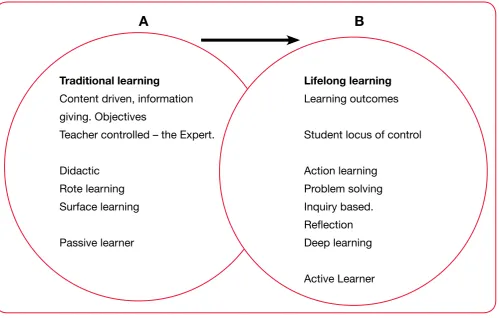
Whilst WBL may not be new (Garnett 2005), it is the paradigm shift towards promoting the autonomous and responsible learner that is. It is challenging the cultures of both HE and the NHS (Boud & Solomon 2001, Caley 2006, Moore 2007), see Diagram 1.
A scoping exercise by Hunt (2000) of British universities for examples of WBL found many varied models, many of which reflected traditional, behaviourist ways of learning such as training sessions, study days, and courses, which invariably meant that learners were dependent on experts, such as teachers and instructors. In such situations
creativity and self-expression may not be encouraged and as a result learners could remain quite passive, see Diagram 1, Paradigm A (Caley, 2006, Moore, 2007).
Educational researchers such as Caley (2006) have argued for a more constructivist approach to learning. This embraces the action learning paradigm, which includes the social learning from the organizational context. This can be a challenge to employers, academics and mentors who hold a traditional definition of learning and tensions can arise when the learner attempts to take the locus of control for learning (Moore 2006a & 2007).
18
A Realistic, Longitudinal Evaluation of W
ork-based Lear
ning of Qualified Nurses
Diagram1: Paradigm Shifts in Learning - Higher Education.
Traditional learning
Content driven, information giving. Objectives
Teacher controlled – the Expert.
Didactic Rote learning Surface learning
Passive learner
Lifelong learning
Learning outcomes
Student locus of control
Action learning Problem solving Inquiry based. Reflection Deep learning
Active Learner
A
B
1.5. Why the need for more emphasis on WBL in the NHS?
[image:18.595.62.562.110.428.2]The need for WBL and associated infrastructures features in many Department of Health (DH) white papers as a new way of learning from current and new practices, and an important means of supporting radical change within the NHS (DH 1997, 1998, 1999, 2000, 2001a & b). Key features of WBL identified by Foster (1996) would appear to be attractive to organisations facing radical change. As Table 2 indicates there would need to be many changes in the systems and learning culture of the NHS.
Table 2: Features of Work-based Learning.
• It is performance-related, focusing on tasks arising in the workplace.
• It is problem-based, focused on tackling complex work-based problems in management or care.
19
A Realistic, Longitudinal Evaluation of W
ork-based Lear
ning of Qualified Nurses
Recent criticisms of learning in the British NHS workplace suggest that there needs to be significant change to enable the learning to be more effective (Davies & Nutley 2000). Evidence suggests that there is a need for a major cultural shift in traditional attitudes of learning to value more informal, independent and team learning methods (Lester 1999, Moore 2003, McKee & Burton 2005).
An investment by NHS employers in the development of this ethos, amongst the workforce could contribute to the vision of Darzi (2008) of equity in education and learning for change; the vision of a capable and sustainable workforce.
The evaluation being reported here reflects an attempt to put in place a structure to enable this vision to be realised.
1.6. Local Projects.
1.6.1 Developmental Project.
In 2000 a local Acute Trust and a Primary Care Trust approached the Health and Social Care Faculty of the University of the West of England (UWE), Bristol to work in
partnership to scope practice for WBL opportunities and develop and validate a proto-type to support and accredit WBL.
The outcomes of this developmental project included:
• A process model to guide the learner from the initial appraisal, through the planned experiential/blended learning, gathering of evidence for assessment to the final feedback into the appraisal (Diagram 2).
• A suite of generic WBL modules, the learning outcomes of which could be interpreted specifically according to the learner’s need. The suite ranged • It is team-based, tackling problems requiring effective co-operation between people with different roles and expertise.
• It is concerned with performance enhancement, and updating and upgrading of experience, which is now a normal feature of most people’s work experience.
• It is innovating, focusing on new techniques or approaches which create many opportunities for learning and provide experience of managing change.
20
A Realistic, Longitudinal Evaluation of W
ork-based Lear
ning of Qualified Nurses
from academic level 1 to Masters. The assessment was to be negotiated by the learner from a menu.
• Reflective exercises within the learning contract and learning needs analysis. The learning needs analysis supported stage 1b of the process as Personal Development Plans (PDP) arising from the fact that appraisals were not common practice at the time.
• Reflective logs, contributing to a portfolio of achievement.
• A comprehensive module handbook to be available to the learner, academic facilitators and mentors.
• Case studies of individual and team WBL, and examples of the potentiality of spiralling of learning,(Appendices D-G).
During the implementation period of this project the Faculty was successful in becoming part of the Universities for Industries (Ufi), Learning Through Work, HE initiative. Advice from clinical advisors was that this could be an alternative support mechanism for the learners.
1a. Thinking -Personal development plan (PDP)
1b. Enquiry and intent
4. Demonstration - assessment, evaluation and accreditation.
2. Exploration and negotiation
3. Development and implementation
PORTFOLIO OF LEARNING
Key: Process Storage Evidence
21
A Realistic, Longitudinal Evaluation of W
ork-based Lear
ning of Qualified Nurses
The first professionals to use the prototype and the Learning Through Work initiative for at least three years following the validation of the academic modules were nurses, hence the focus for the longitudinal evaluation.
1.6.2 Longitudinal evaluation of WBL
This realistic, longitudinal evaluation project, undertaken between 2005 and 2008, builds on the three year developmental project to introduce frameworks to support work-based learning. It was jointly funded by the Faculty and the Burdett Trust for Nursing, and designed in partnership with representatives from the NHS workplace. The design was based on the context plus mechanisms = outcomes configuration of the realistic evaluation framework of Pawson & Tilley (1997).
The aim of the evaluation project was to focus on and explore the changing contexts in both HE and NHS practice, the mechanisms that could be described as blocking and others as enabling, the outcomes of learning and change achieved and how far the prototype had embedded. The agreed objectives reflected a need for a design that maximised the depth and breadth of data, using a triangulation methodology. The objectives were to:
• Explore and examine the impact of work-based learning on practice.
• Explore the sustainability of the preferred mechanisms that have supported the outcomes in practice.
• Report on the learning that has been sustained and developed over time.
• Explore the nurses’ experience of work-based learning and changing con texts.
A more detailed account of the design can be found in Appendix A. The data collection methods included:
• Examination of documentation such as student evaluations, learning contracts, formative and summative feedback, assignments, portfolio evidence, reflective logs.
• Examination of evidence from the original developmental study, including case studies.
22
A Realistic, Longitudinal Evaluation of W
ork-based Lear
ning of Qualified Nurses
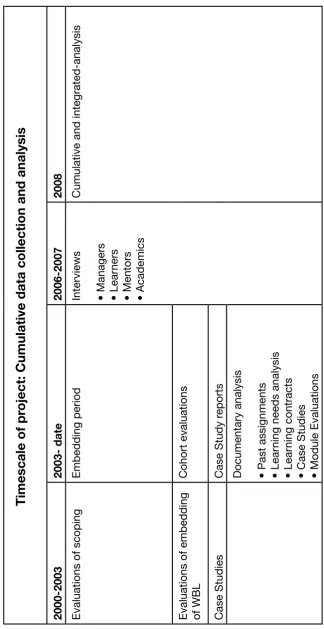
The timescale and activities of the project is indicated in Table 3. The respondents came from the HE Faculty, Acute and Primary Care Trusts (5), and the Nursing Home sector. The final number of respondents included 28 learners (nurses), 9 academics (one
physiotherapist and eight nurses) and 17 managers/mentors. Some of the managers had been work-based learners themselves but did not contribute to the learner sample if they were not currently learners.
A plotting exercise of the cumulative analysis identified similar findings from the methods used, adding validity to the project (Polit et al 2006). These were coded and grouped into four main categories:
• The learning experience of WBL,
• Learner/academic/organisational outcomes,
• Engagement with WBL and enabling infrastructure,
• Changing ways of working and learning.
Further analysis of the data using the categories as an infrastructure revealed specific themes which reflected the Pawson and Tilley (1997) framework. These themes also reflected the enabling and disabling features that were expressed by respondents during their experience of work-based learning and were also evident in the documentary
analysis, see Diagram 3. These thematic findings are presented in the following three chapters according to the framework. Utilising data from interviews and documentary evidence, the enabling and disabling features are presented and whether they were facilitative or whether the context and mechanisms impeded progress of learning and change. The themes further reflect the personal, collegial and organisational
perspectives identified during data analysis.
23
A Realistic, Longitudinal Evaluation of W
ork-based Lear
ning of Qualified Nurses
2000-2003
2003- date
2006-2007
[image:23.595.108.433.103.733.2]2008
Evaluations of scoping
Embedding period
Interviews • Managers • Lear
ners
• Mentors • Academics
Cumulative and integrated-analysis
Evaluations of embedding of WBL
Cohort evaluations
Case Studies
Case Study r
eports
Documentary analysis • Past assignments • Lear
ning needs analysis
• Lear
ning contracts
• Case Studies • Module Evaluations
Timescale of pr
oject: Cumulative data collection and analysis
24
A Realistic, Longitudinal Evaluation of W
ork-based Lear
ning of Qualified Nurses
SELF/COLLEGIAL/ORGANISA
TION
ACTIVE
EXTERNAL
INTERNAL
ENABLING
Themes Flexible approach to learning Enabling practice development Legitimising
personal
development
Enabling collegial working
Themes Pivotal role of managers. Integrating learning tools of WBL. The values of ‘time’ to learn. Facilitating the learning process. Themes A transformed learner
.
Learning for self and the workplace. Organisational recognition of learning. Organisational impacts of WBL.
Situational Analysis SWOT SNOB
CONTEXT
MECHANISMS
OUTCOMES
Themes Flexible approach to learning Enabling practice development Legitimising
personal
development
Enabling collegial working
Themes Pivotal role of managers. Integrating learning tools of WBL. The values of ‘time’ to learn. Facilitating the learning process. Themes A transformed learner
.
Learning for self and the workplace. Organisational recognition of learning. Organisational impacts of WBL.
EXTERNAL
INTERNAL
DISABLING
SELF/COLLEGIAL/ORGANISA
TION
PASSIVE
25
A Realistic, Longitudinal Evaluation of W
ork-based Lear
ning of Qualified Nurses
2.0 Chapter Two
Contextual Findings.
2.1. Introduction.
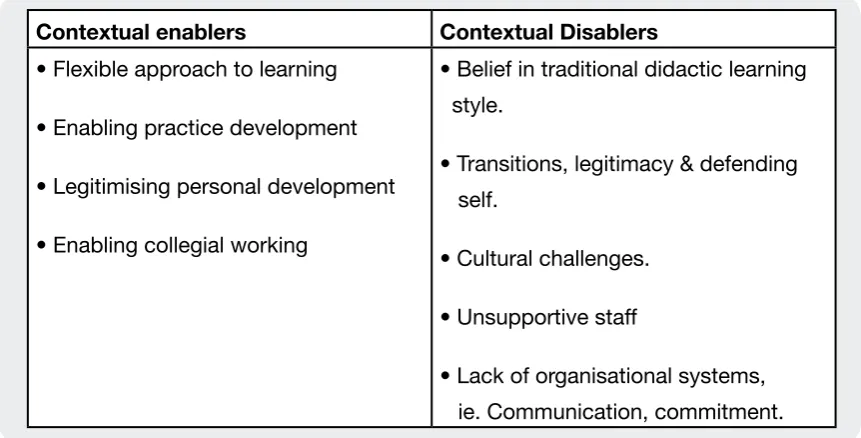
[image:25.595.82.513.267.486.2]This chapter presents the findings relating to the context surrounding the WBL experiences that have been established to date, and identified quantitative and qualitative themes that had both enabling and disabling facets (Table 4), namely:
Table 4: Enabling and disabling facets within the contextual evidence.
Contextual enablers Contextual Disablers
• Flexible approach to learning
• Enabling practice development
• Legitimising personal development
• Enabling collegial working
• Belief in traditional didactic learning style.
• Transitions, legitimacy & defending self.
• Cultural challenges.
• Unsupportive staff
• Lack of organisational systems, ie. Communication, commitment.
Throughout the period of the developmental and evaluation projects the Trusts and Faculty staff were at various levels of interpreting and implementing national policies (Table 5), and engaging in national IT inititiatives such as the Ufi project, Learning Through Work.
Table 5: Significant NHS change policies and initiatives.
• Agenda for Change.
• Knowledge and Skills Framework (KSF). • Skills for Health.
26
A Realistic, Longitudinal Evaluation of W
ork-based Lear
ning of Qualified Nurses
Initially, within the Faculty, the recruitment of module leaders and academic facilitators to undertake WBL modules was slow. This may be attributed to the many challenges and tensions for academics, identified by Boud & Solomon (2001), that this new way of working and learning can induce. Evidence from the module evaluations, reflections and assignments, and the interviews suggest that the challenges are similar in practice as paradigm shifts affect practice and education (Moore 2006 & 2007). Table 6, indicates some of those challenges that both facilitators and learners have faced.
As module leaders were identified across the Schools of the Faculty, communities of practice involving academic facilitators were encouraged. At the moment it is the Nursing School that has taken the lead on this means of support.
Table 6: The contextual challenges for the facilitators and learners.
• Scepticism and dealing with tribalism.
• Widening the perception of knowledge transfer.
• Academic understanding of tacit knowledge and ways of making it explicit. • Letting go of teacher control and power.
• Embracing student centred approaches and locus of control. • Facilitating action learning in the workplace.
• Promoting space for reflection and dialogue. • Developing double and triple loop learning. • Sowing the seeds for a learning organisation.
• Constantly reviewing learning resources and tool kits.
A WBL forum was formed to aid the academic facilitators’ understanding of changes in clinical practice and the principles of WBL. The need for the forum was identified by early module evaluations. The foci for discussions in the early forums included:
27
A Realistic, Longitudinal Evaluation of W
ork-based Lear
ning of Qualified Nurses
Other information, such as the CHAIN network and developments of the Skills for Health and management tools located on the Institute of Health Improvement website were shared. The network is proving to be a good information bridge between academic and practice knowledge. Such space could be made available in the future to mentors and managers within educational and clinical partnerships as a form of informal learning and support.
To aid a culture of openness and attract other academics to this way of learning any tensions and areas of good practice arising from the forums was further explored on Faculty staff development days.
Analysis of the learning contracts and the evidence submitted by the learners indicates an awareness of policies, but reference to a similar supporting culture as in the Faculty appeared to be minimal in practice settings. A minority of senior learners had been invited to share their work-based learning experience at NHS management meetings.
2.2. Flexible approach to learning
The first theme identified is the flexibility offered because of the work-based learning structure, and this theme is common to all sections of the framework.
“…I think it is sort of a flexible approach and its ability for you to pick up on an area that is your own interest. So, you have got the support in learning and developing in an area that is very specific to you. Do you know what I mean? So, you can plan your learning objectives and your own outcomes, but you see it in a supportive way, so that you have got the guidance there and you know sort of direction really.”
(Learner 27)
However, it was clear that flexibility enables some and challenges others.
“And…you know…some have done brilliantly in terms of really getting hold of what it was about, why they were doing it and how they’ve approached the work and made it a positive learning experience…not just for them but for their colleagues…and really… sort of… pushed the boat…and others have just made such heavy weather of it and haven’t really grasped the concept of what
28
A Realistic, Longitudinal Evaluation of W
ork-based Lear
ning of Qualified Nurses
about… I can’t do with that. And I think that’s been interesting. That’s been… some of it’s cultural as well as age and previous experience but some find it a real.”
(Manager 6)
Further analysis of all the data identified that in order to enhance the workplace context for this flexible way of learning there were significant needs (Table 7).
The learners who found WBL hard work may not have developed the organisational skills that independent, experiential learning that WBL demands. However, there is strong evidence that as learners engage more with WBL by undertaking more modules their attitudes and organisational skills improve, as well as an appreciation of the flexibility of WBL.
Table 7: Contextual needs (cumulative data)
• Need for self-awareness.
• Need for awareness of the organisation. • Need for academic support for transitions. • Need to value experiential learning.
• Need for access to internal and external facilitators. • Need for knowledge of the WBL process.
• Need for more synergy between service and university. “Um, it means I take a subject from my
work environment and investigate it in an in-depth, out of the box thinking, so that I can present it in a different way or just understand what it has to do with the way in which I work, does that make sense?”
(Learner 17)
Manager 9 argued that flexibility was not to be seen as meaning that the WBL process was not as challenging as other ways of learning, as it made similar demands on the learner.
“…it’s so flexible, it was all that stuff about, ‘Oh, we don’t have to send people on modules, they don’t need so much time.’ I think they need as much time, I think its harder and it makes more demands on the student. The outcome is better but if you chop all the resources out and if you cut
facilitation hours or the students don’t have the hours to do it then I don’t think it will work.”
(Manager 9).
-29
A Realistic, Longitudinal Evaluation of W
ork-based Lear
ning of Qualified Nurses
abling practitioners to maximise the outcomes of the WBL experience, one key point being practice development. A key part of practice development was the WBL structures in place to underpin it.
2.3. Enabling practice development
Within the 3 years since the implementation of the WBL project there appears to be significant
changes in the utilisation of frameworks underpinning practice development, for example, Appraisal, Personal Development Plans (PDPs) and the Knowledge Skills Framework (KSF). Evidence of the use of these systems were clearly identified in the data and were seen as part of the culture of learning by many respondents. The following quote illustrates how national systems are being utilised in practice development, but this was not broached by all managers:
“Well I think appraisal should be the key thing, certainly with Agenda for Change and a Knowledge and Skills Framework I think it’s going to be more and more crucial…appraisals…to professional
development. And the two, in the past, really haven’t gone hand in hand. They’ve…if I’ve done an appraisal they’ve talked about how good or bad you are and in the end you say: “Oh, there’s this course I’d like to go on. Can I go on it? I’ve been a good girl…” and actually the appraisal is turning that round and saying ‘This is what you can do. This is what your KSF is for this Band-5 and you are doing X,Y and Z of it but you’re not doing A, B and C. So, this is the work-based learning. You’ve got to get on and do it and we’ll see you in six months.’ So, I think that is going to be much more keyed in, so I think there’ll be much more focus on work-based learning because that’s the only way I think you can deliver it, the knowledge and skills framework. You can’t do it any other way, particularly.” (Manager 6)
It was clear from the data that appraisals or their equivalent such as individual
performance review (IPR), and the PDPs were considered important to enable learners to focus their enquiry appropriately at the initial stages of planning their WBL experience (Moore 2003). All learners had received advice regarding the learning process within their module handbooks. From the 28 learners 19 had been appraised by managers who were interested in and supportive of their PDPs. The appraisal was seen as the catalyst for WBL and subsequent change in practice:
30
A Realistic, Longitudinal Evaluation of W
ork-based Lear
ning of Qualified Nurses
“I think I had an appraisal in the October and it came out of that, what I could do, I had been working as a specialist nurse for nearly four years, what the next steps were and how I could develop.…a very good manager because she could see what I was giving to my role here, but was very concerned about what I might be getting back.” (Learner 4)
This particular quote identifies the value of the appraisal in enabling the manager to know and support staff in developing practice. However, it has to be a process undertaken consistently at all levels, but currently there is a gap that needs to be addressed:
“I have got an appraisal, um, well I have had part of it done already, but they had to cut off half way through, a few weeks ago before I went on holiday. I have got to have that other half done in a few weeks time and that’s the first appraisal that I have had in nearly three years, which, it is always difficult keeping appraisals on track, I
appreciate that. But equally I have to give appraisals to other people, the expectation of my colleagues is that they will have regular
appraisals. I don’t think it has made much difference to me based on the support I have had from my academic facilitator. I think if I was more junior, or less confident to get on and do it, I think that I would have probably struggled.”
(Learner 4)
A preliminary stage of the appraisal process, which can enhance it’s effectiveness is the personal learning needs analysis (LNA). The LNA is also an integral part of the PDP and the WBL processes which should enable the learner to consider both own and
organisational needs.
31
A Realistic, Longitudinal Evaluation of W
ork-based Lear
ning of Qualified Nurses
Two learners stated in their LNA for the WBL module that they had not had an appraisal recently, but had been promoted to clinical managers in the last 3 years. Within this new role they were expected by their senior managers to conduct regular appraisals, but there appears to be a gap in the organisation where appraisal for these managers was lacking. Having experienced WBL they saw the value of the appraisal and PDP
supporting the individual and the organisation and were committed to support these important mechanisms. This does suggest that perhaps senior managers may benefit from WBL themselves.
Many managers had undertaken WBL modules themselves and as a consequence of perceiving its value, they promoted WBL when appraising staff. However, staff did not always respond to the encouragement:
“…I am the only person that I know that has done it, in the last couple of years. But certainly as a manager of a fairly senior team in the last couple of years when I have done appraisals for example, I have pointed them in that particular direction. Have a look at work based learning, see what it can offer you, you know it is a good option and you know it is not so structured and you can choose something that interests you…I am not sure whether it is so freely funded now, it was when I did it…, but I have certainly pointed a few people in that direction and I know that none of my team have taken me up on it and that is because they are lazy basically when it comes to development, they want it but actually when it comes to taking the bull by the horns they are not very good.”
(Learner 23)
32
A Realistic, Longitudinal Evaluation of W
ork-based Lear
ning of Qualified Nurses
This lack of readiness to engage in WBL was evident in both the Acute and Primary Care sectors.
It may reflect the need for further investment of resources and development of a capable workforce. Stephenson (2001) defines capability as:
“…an all round human quality, an integration of knowledge, skills, personal qualities and understanding used appropriately and
effectively – not just in familiar and highly focused specialist contexts but in response to new and changing circumstances.”
(p.87)
The concept of capability is valuable in that capable people are committed to “…get things done” (McGill & Beaty 1995, p. 21). They learn from experiences as individuals, and with others in a diverse, complex, changing society and workplace (McGill & Beaty 1995, Stephenson 1992, Eraut et al 2002.). However, Hase et al (1998), cited by
Stephenson (2001) identified three important elements of capability, which need to be nurtured, namely: mindful openness to change; self-management of learning potential and; a problem-solving approach. This reflects a readiness to learn (Ellström 2008), to ask questions and explore; a form of informal learning which is reliant on good
workplace relationships, teamwork and support (Eraut 2004). The ‘deliberate action and reflection’ of the problem-solving approach was seen by Bromme & Tillema (1995, p.262) as an important bridge between theory and practice. However, to support this bridge there is a need for rigorous frameworks and systems to be in place.
One key message from participants was the importance of organisational support:
“You know there was a good network out there of professionals that I could contact and my biggest influence and support was the GP who visits the home, he was extremely supportive and he came and told me what his problems were, you know with the same thing. He is, actually, on a committee and I was telling him what I had found out, so and like I said to you about using the computer and also the questionnaire I set up, he helped me with. The GP and I had one for the hospital based staff as well, so um, in that respect I got a lot of support there and how to word things. You know what was relevant to ask them and the hospital staff couldn’t wait to write things down. You know what problems they had. So it was basically the network of people I actually work with on an every day basis that were very supportive.”
33
A Realistic, Longitudinal Evaluation of W
ork-based Lear
ning of Qualified Nurses
If the learning opportunity had been negotiated through the medium of appraisal and PDPs then the engagement of the manager was more likely to be supportive.
Additionally, such collaboration gave further legitimacy to the process.
“We sat down for a meeting at the beginning and we talked about what we needed from our job and what we needed from any
training that we would have and a lot of the nurse practitioners within the group had been in the job for a long time and hadn’t really had any formal training. So it was a time that we all sat down and said what we would like out of the work based learning and then a plan was formulated for a sort of…itinerary I suppose of all the training that we would be given, or teaching that we would be given.” (Learner 15)
This reflects a team ready to use WBL as a vehicle of change in managing learning in the context of work. Garrick and Usher (2000, p. 9) further add that:
“…work-based learning is as a technology through which selves become enterprising, seeking betterment and fulfilment in the work context in ways that can be both personally and organisationally effective. Work-based learning therefore becomes the indicator both of self-management and a culturally sanctioned way in which
employees in restructured workplaces can make a ‘project of themselves’ and at the same time add value to the organisation.”
The ‘personally and organisationally effective’ suggests an important synergy between individuals and the employing organisation which is dependent on the capability to learn; an important driver in a supportive environment (Mayo & Lank 1994). Examination of evaluations of team cohorts undertaking WBL suggest various levels of being organised, but many agreed that WBL was an effective way of legitimising personal development.
2.4. Legitimising personal development
34
A Realistic, Longitudinal Evaluation of W
ork-based Lear
ning of Qualified Nurses
“I think…she needed to be convinced of the validity of the project. So I think, while I chose it she needed to be convinced that it was valid and you need somebody whose enquiring, you wouldn’t want a manager who would just agree to anything. So I think she needed to be very clear on what I was doing and say I think this would be valid for practice because when you’re a student undertaking the module you have a lot of motives going on and they are not all practice related, so I think you need somebody who is on the trust side I suppose, speaking for the trust.”
(Learner 10)
A key part of the legitimacy of WBL for the managers was its relevance to the workplace from personal, collegial and organisational perspectives as indicated in the following quote:
“…and you know there are modules where people come to me and want to do and its just isn’t, I can’t see a clinical relevance to them…I haven’t got the money to let people go off and do modules that aren’t directly, however interesting they might be, and however much they might want to do it and how skilled (…name) and it might have a reference to cancer at some point somewhere, but if its not clinically relevant and its not going to move on in our practice, I can’t let people do it. Whereas this I can, this I can say particularly if they come to me and say, actually I am quite interested in this topic.” (Manager 2)
The range of activities was varied, but the most popular focused on reviewing current guidelines, inquiry and literature reviews. This suggests a positive picture of change management and evidence-based practice.
However, legitimacy has another perspective, and for the academic facilitators interviewed, it was concerns about academic legitimacy and the standards achieved given the flexible and student orientated nature of WBL:
“I think some people feel unsafe with it because they worry about standards. Quite rightly they can worry about standards…I don’t think that there is necessarily a shared understanding completely and that is partly because sometimes they are very different. So, you might have the module where the content is reasonably prescribed, “I don’t think you can just pick it as an
option. I think that people that choose it would be choosing it because they generally felt that that was going to be relevant to work.”
35
A Realistic, Longitudinal Evaluation of W
ork-based Lear
ning of Qualified Nurses
people do it themselves but work through a syllabus and you might have something where people literally they do their own thing with it. So it can be any of the above and that does give some people cause for concern really.” (Academic 1)
Such concerns are well documented and could contribute to healthy intellectual scepticism (Boud & Solomon, 2001). However, it could be argued that perhaps these concerns were more about who was in control of the learning process, and who could determine what was valid to learn. This could be viewed as a challenge to the
academics identity as they realise they may need to develop a new expertise (Boud & Solomon, 2001). With WBL, the academic plays much more of a supportive, facilitative and guiding role enabling the student to achieve the learning outcomes that have been agreed at the beginning of the WBL learning journey, and thus their established role is challenged (Boud & Solomon 2001, Moore 2007).
Learner 11 reiterated the point about support being in place to enable success through the WBL process.
“Yeh, I think you have got to be quite organised though and I think the support has got to be very organised, and you have got to have the support there …I think if you haven’t, it can be quite difficult and if people know they have got that, then yeh, I would definitely recommend it to them, but I think the systems have got to be in place.”
(Learner 11)
Support for the purposes of WBL also included Information Technology (IT) provision. As Graph 2 below indicates the majority of learners had access to computers in the workplace. Further documentary analysis identified that the majority were working in the Acute Trusts and the access was generally to input patient data and not to use for educational purposes.
Two cohorts of nurses had accessed the IT Learning Through Work resources through their home computers and gave positive evaluations.
“I think people can see the flexibility of it, they can see the responsiveness of it and all the rest of it, but it is still contentious in the heads of the some people about the academic quality, the rigour, whatever you want to call it you know.”
36
A Realistic, Longitudinal Evaluation of W
ork-based Lear
ning of Qualified Nurses
One nurse had tried to access the resource in the workplace but this was met with negative responses by her manager. Other learners had reflected on the negative attitudes from colleagues and managers, such as wasting time and suspicious of staff exploring the internet in worktime. This suggests an unreadeness to support IT learning in the workplace and a need for a cultural shift in recognising and understanding how staff will learn from IT learning objects in the future. Others working in the community at the time did not have a choice of using computers in worktime as this was not available.
For practitioners in the south west of England, access to computers in the workplace, and the acceptance that this could be a valuable learning mechanism has been slow. Possible reasons could be historical where managers may be wary due to earlier failure of the clinical IT project, Wessex Regional Information Systems Plan in 1992. A more likely fact may be that the south west region was one of the last regions to join the Connecting for Health IT initiative which is behind the planned schedule (The National Audit Office, 2008).
It can be argued that work-based learning offered a mechanism for legitimising personal and organisational development and, also contributing to an enabling culture and
collegial working.
37
A Realistic, Longitudinal Evaluation of W
ork-based Lear
ning of Qualified Nurses
2.5. Enabling collegial working
Another means of support that clearly emerged from the data was that of colleagues, and this was a major theme identified within the data. It was clear that this was for multiple reasons, including peer support, as well as the more obvious knowledge to be gained from peers.
“Getting together as a group and deciding on group objectives as nurse practitioners was quite useful because it made you feel like, even though our jobs are very different, we are able to find a level where we are all the same. So that was very beneficial. It was beneficial in the way that it made you stand back and evaluate yourself, evaluate where you are in your job, and say, ‘what can I do to make me move forward?’…Although for me personally there had been a lot of that over the last year.”
(Learner 15)
In developing a capable, creative and advanced workforce that can manage the challenges of change it is recognised that space and time to develop the skills of reflection leading to greater reflexivity are crucial if sense is to be gained from the messiness of practice (Schön 1983, Lester 1999, Glaze 2001, Johns 2002, Meyer et al 2007, Savin-Baden 2008, Taylor 2008).
Conversely, situations were described where it was felt that there was a definite absence of sharing, which could be a challenge in a work orientated learning experience.
“Some of the learners have not shared at all and yet are doing well on the course and they seem to be reflecting and they’re submitting really good pieces of work clearly based on their practice and… but when you talk to their colleagues and their senior colleagues they’re not getting anything at all. So that worries me slightly. What’s happening there? Is that an individual who is busy getting stuff for themselves so they can go elsewhere or what? Why aren’t they bringing that…or why are they not being perceived to be sharing that back into practice, yet on paper it looks fantastic and they are clearly thinking and reflecting… going back….So something’s changing but we’re not sure what.”
(Manager 6)
“It is such a rich learning environment here and lots of very knowledgeable (specialist) nurses here, and it is quite a pro-active, well a very proactive team so that helps.”
38
A Realistic, Longitudinal Evaluation of W
ork-based Lear
ning of Qualified Nurses
“But in order to learn you need to be able to exchange ideas so if you keep it close to yourself then you’re not
going to be able to do that…exchange ideas…and there is a benefit from doing it in a group.”
(Manager 5)
If there is a lack of engagement by the learner in the workplace, this could potentially
compromise the effectiveness of what they are trying to achieve. The evidence suggests that if knowledge is shared there is a positive rippling effect within organisations.
“Yeah. Yeah…and other people can learn. I think the colleagues from here that they’re working with can actually then see what’s happening and start either thinking, ‘Gosh, that’s something I’d really like to do because I find that really inter-esting,’ or just sharing some of the ideas and being able to just in a natural course of work, and what people do and how they’re interacting with patients saying, ‘Oh yeah, there’s something else I picked up and this has worked really well,’ or you know those kinds of things.”
(Manager 8)
In conclusion, the cumulative evidence suggests, there is some shift in how the context for WBL is viewed and what needs to be in place if it is to be sustained. The significant policies and the implications appear to be embedding still and impacting in some organisations, and understood at different levels of the workforce. Where learning is sustained, the work context is one of a rich learning environment where colleagues are willing to share learning and support appropriate opportunities to learn. This in itself is a powerful and positive mechanism for learning. Managers would appear to have a key role in moving the workforce to engage in developing a learning organisation; their pivotal role is identified as an important theme in the following chapter. The key values of the enabling context of WBL are summarised in Table 8.
Table 8: The values of an enabling context of WBL.
• WBL – flexible format, integrating work and learning. • A way of increasing organisational awareness.
• A way of manifesting and maximising relevant learning for practice. • A way of engaging others in learning.
• Active, supportive communication systems.
• A way of managing self and organisational change. • A structured learning process.
39
A Realistic, Longitudinal Evaluation of W
ork-based Lear
ning of Qualified Nurses
3.0 Chapter Three:
Mechanisms findings.
3.1 Introduction
Data from the documentary analysis and interviews regarding both enabling and disabling mechanisms was grouped into the following four themes:
• Pivotal role of managers.
• Integrating learning tools of WBL.
• The value of ‘time’ to learn.
• Facilitating the learning process.
3.2 Pivotal role of managers
It became clear early in the analysis that managers at all levels in the organisations were pivotal to the enabling and disabling processes that underpinned WBL in the workplace.
However, there was substantial evidence that whilst many managers approved of WBL some kept their distance:
“The other lassie actually had a difficult relationship with her manager and so did get her manager’s agreement, her manager wasn’t difficult in making the agreement but her manager was quite distant from the process, and that was ok for her…it wouldn’t have been okay if we didn’t have quite a tight kind of relationship in relation to facilitation because I think in that sense I kind of had to play academic
facilitator and try and wear a bit of a manager’s hat just so she could have some of that input really because the manager wasn’t able to show willing.”
(Manager 9)
40
A Realistic, Longitudinal Evaluation of W
ork-based Lear
ning of Qualified Nurses
“It’s about using influence to convince your manager that is what we need to do. It’s also where the manager needs to sort of, so they don’t go off down the wrong road, take the wrong turning, you have to bring them back and get them focussed on, so it’s a two way process I think.”
(Manager 7)
This ‘two way’ process was important when learners needed to negotiate and learn about management of choices and resources as indicated below:
“…I think they need to be behind what you want to do really, because like my interest was trying to develop links nurse groups and I felt that this was a really good way of trying to develop and for me to learn as well… but it could have been that she might have had something else that she felt that I might have needed to develop. So, you know that it could have been that she might have had some sort of motivation in me doing the course, rather than me developing me as a person but also giving something back to the organisation through the link nurses. So, I think it is about the choice, isn’t it, because you can sometimes say, ‘Yeah, you can do this but I would like you to do this in that area,’ whereas I was able to lead what it was that I want