Evaluation of the Support for Enterprising
Communities Pilot Project
Fergus Lyon, Mel Evans, Mark Ramsden, and Julie Burch.
David Smallbone and Catherine Ellis were involved in the design of the evaluation.
Research Report No 653
Evaluation of the Support for Enterprising
Communities Pilot Project
Fergus Lyon, Mel Evans, Mark Ramsden, and Julie Burch.
David Smallbone and Catherine Ellis were involved in the design of the evaluation.
The views expressed in this report are the authors’ and do not necessarily reflect those of the Department for Education and Skills.
Contents
Page
Executive Summary Key Findings and Recommendations 3 - 8
1 Evaluation Objectives 9 - 10
2. Defining social enterprise 10 - 11
3. An overview of social enterprise support provision 11 - 14
4. Methodology 15 - 16
5. Evaluation of approaches developed by the pilot projects 17 - 21
6. Lessons Learned 22 - 33
7. Conclusions and recommendations 34 - 36
Case Studies
Tackley All in One Development 11
Oldham Community Leisure Ltd 11
Sunderland Home Care Associates Ltd 18
Bolton Nursery Ltd 19
Ferryhill Lakes & District Development Education Resource
Centre Ltd. (LADDER) 20
Fairmount School 21
Coaley Village Shop 23
Wellbeing and Beyond 24
Cresswell 10-55 Club 25
Asantoa 25
Croyden Care Co-operative 26
Trimdon Little Tykes Nursery 28
Seaham and District Training Trust 29
Range Accessories & Spennymore Mobility Club 32
Wotton Electric Picture House 33
Appendix 1. References
Appendix 2. Brief description of social enterprises supported Appendix 3. Abbreviations and definitions used
Executive Summary
Key findings
• Social enterprises have a wide range of impacts on deprived areas and groups in terms of services provided, employment and building social capital. Appropriate support can expand their impact considerably
• The long term prospects of social enterprises are strengthened through improved pricing strategies and marketing. These issues are similar to other small businesses but support needs to be adapted to a social enterprise context.
• Building skills and confidence is best delivered through counselling and advice, with group training being more appropriate for developing technical or sector specific skills.
• There is a need to further develop the skills and experience of those delivering support to social enterprises through training programmes and sharing experiences.
• Co-ordination of the wide range of support for social enterprises requires a trusted broker that does not also compete in the provision of support
Introduction
This report evaluates a set of pilot projects supporting social enterprises. It was co-ordinated by Department for Education and Skills with the DTI Small Business Service/Social Enterprise Unit, Office of the Deputy Prime Minister and the Active Communities Unit in the Home Office.
Social enterprises are defined by the Government, as “businesses with primarily social objectives whose surpluses are principally reinvested for that purpose in the business or in the community, rather than being driven by the need to maximise profit for shareholders and owners. “ (DTI, 2002).
Existing support provision
There is a wide range of support provision for social enterprises, including:
• Specialist social enterprise support organisations, voluntary and community sector support organisations.
• Sector specialist organisations operating at regional or national scales.
• Mainstream business support organisations such as Business Link
Operators, enterprise agencies and
• Colleges, further/higher education institutions and training
organisations funded by Learning and Skills Council, often offering sector specific training.
• Public sector bodies such as Regional Development Agencies, local authorities and county councils are also involved through setting local policies and provision of funding support.
• Support from private sector solicitors, accountants and specialists consultants is very important, although banks involvement with lending is minimal at present.
However, the level of support varies dramatically with geographical gaps and duplications occurring particularly where there has been short term funding for specific support measures.
Evaluation methodology
The project has developed a range of participatory evaluation tools and criteria. These are designed to include the views of the recipients of the support, and to track the changes in behaviour within supported social enterprises. Changes in the performance of social enterprises were measured with a view to evaluating both social and economic services offered, employment impacts and wider benefits to the communities in which the social enterprises operate. Those delivering and receiving support were given the opportunity to contribute to the design of the evaluation and the analysis of the results.
Summary of impacts
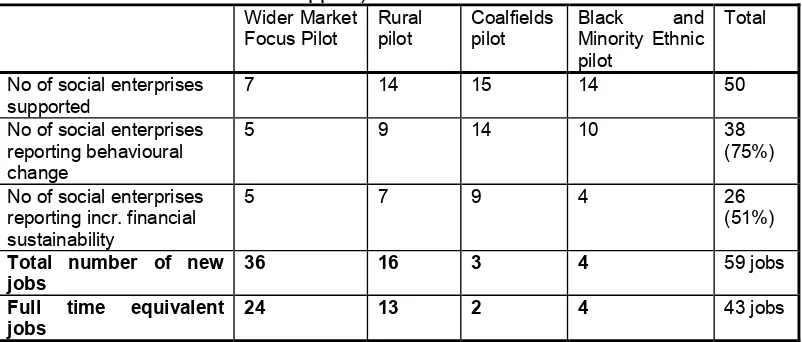
Table 1. Preliminary quantitative impacts attributed to the support (three months after the end of the support)
Wider Market
Focus Pilot Rural pilot Coalfields pilot Black and Minority Ethnic pilot
Total
No of social enterprises
supported 7 14 15 14 50
No of social enterprises reporting behavioural change
5 9 14 10 38
(75%)
No of social enterprises reporting incr. financial sustainability
5 7 9 4 26
(51%)
Total number of new
jobs 36 16 3 4 59 jobs Full time equivalent
jobs
24 13 2 4 43 jobs
NB These figures refer to the impacts that recipients felt were partly attributed to the support, or where support had encouraged the changes to be made sooner and to a greater extent.
Lessons and recommendations
Support required
1. Social enterprises involved in this project had not actively sought out social enterprise support but benefited from the support after being identified and approached by support providers.
Recommendation 1. There should be more proactive promotion of social enterprise approaches to existing voluntary organisations and those thinking of starting an organisation
2. Skills such as bookkeeping, marketing and pricing services were found to be lacking. These issues are also commonly found in mainstream micro-business. Training and advice needs to be adapted to meet the needs of social enterprises as they may be representing a wide range of different stakeholders, reinvesting their surplus and combining social and environmental aims. Rural social enterprises face particular constraints in relation to the limited size of their local markets. In coalfield areas, this is aggravated by concentrations of considerable poverty.
Recommendation 2. Social enterprises in their early stages require micro-business financial skills adapted for a social enterprise context
3. The pilot projects found that confidence building was particularly important for those setting up organisations or under financial pressure. This was particularly important for voluntary staff and board members who may not have previous business experience.
4. Many of the larger social enterprises were involved (or attempting to be involved) in delivering services for local authorities. In principle, social enterprises can offer additional value over conventional businesses because of their wider social aims. However, local authority staff may not recognise this or be unclear of the legal position when considering higher priced offers. Social enterprise also require financial support and advice in preparing bids.
Recommendation 4. Procurement of contracts from local authorities offers potential for rapid growth of social enterprises although there is a need to raise awareness of the social enterprise model amongst local authority officers.
5. Social enterprises were found to bring a wide range of social benefits and contribute to social inclusion. These impacts need to be recorded and presented to customers and policy makers in order to demonstrate the value of using the social enterprises’ services in future. Social auditing is one approach for doing this.
Recommendation 5. Social enterprises should be encouraged to demonstrate their wider positive impacts to customers, and policy makers
Delivery of support
6. In each of the pilot projects distinctions were made in the type of support. Three types of support were identified as being important: enterprise counselling, social enterprise specific support, and sector specific advice. The pilot projects found that one to one enterprise counselling support had a greater impact than group training programmes, although such counselling requires frequent visits and continuity. While social enterprise experience and knowledge of different types of social enterprise models is significant, this project has shown that it is more important for support providers to have good counselling skills, the ability to listen and empathy. Counselling approaches tend to be more expensive than less intensive forms of support and may require the limited resources for social enterprise support to be targeted.
Recommendation 6. Building up management skills is best carried out through counselling and advice.
7. Support from someone with knowledge of technical aspects of the social enterprise forms and management is particularly important for those organisations that are starting or aiming to grow rapidly. This support can come from a specialist adviser or from the person delivering counselling or sector specific support.
8. Sector specific support is easier to deliver through group training and was found to be provided to employees and volunteers by existing training programmes delivered by colleges, universities and other training organisations. Smaller social enterprises reported difficulties in covering for staff undertaking training away from the workplace.
Recommendation 8. Support for training providers in those sectors with a strong social enterprise presence (such as childcare) should be continued with additional resources allocated to social enterprises to offset fees and to replace those undertaking training.
9. There is a need to build the skills and experience of those individuals offering advice and training to social enterprises. In particular those offering sector specific training and advice (such as in the childcare sector) should have a greater understanding of the needs of social enterprises in their sector. The partnership approach of sector specialists working in tandem with social enterprise specialists was found to be useful in terms of building capacity of sector specialists.
Recommendation 9. Develop the skills and capacity of those support providers working with social enterprises through developing courses, accreditation programmes and including social enterprise issues in existing further and higher education programmes
10. A variety of networking activities were trialled by the pilot projects. More formal workshops were found to be more readily accessible during evenings. Informal interaction around training programmes and through co-location in an incubation unit was also found to be of considerable value.
Recommendation 10. Networking should be encouraged in all support programmes as it has the potential to build up skills and identify new opportunities.
11. Existing support is patchy and fragmentary, both geographically and with respect to support types. There are also areas where there is duplication at particular times as new projects start and old ones are still operating. The patterns of support provision appear to be shifting constantly with a wide variety of funding streams, and therefore require ongoing mapping.
Recommendation 11. Regular mapping of gaps and duplications within a sub-region is required
enterprises or voluntary/community organisations wanting to develop social enterprise approaches.
Recommendation 12. The support options available to social enterprises need to be clearly presented, using trusted brokerage systems. There may be a need for parallel brokers from sector specific organisations that are often the first point of contact with support infrastructure.
13. The impact of social enterprise support includes services, jobs and wider community benefits, many of which take time to be established. Therefore both quantitative and qualitative impact measures or indicators are required, collected over a longer timeframe. The extent to which employment, services and the wider benefits to the community, benefit disadvantaged groups also needs to be considered. Even where organisations do not survive, over the longer term, considerable benefit may remain in terms of skills and social capital.
1. Introduction
1.1 The central aim of Support for Enterprising Communities Pilot Project was to assess the quantity, quality, and accessibility of the broad enterprise support available to social enterprises to achieve their objectives. Where this is lacking alternative approaches were examined by each of the pilots.
1.2 There has been growing interest in the roles of social enterprises to provide goods and services, jobs, skills and community development benefits, particularly to deprived urban and rural areas. They are also considered to have the potential to offer new ways of delivering public services. While there are a wide range of public sector funded programmes aimed at supporting social enterprises, this project had the following aims:
• Help stimulate a more effective, sustainable and diverse social enterprise sector
• Ensure that new and fledgling social enterprises can access development support that is appropriate, accessible and timely
• Identify ways in which existing provision should be bent or adapted
1.3 Each of the 4 projects had a primary focus on one of the following contexts/areas:
• A wider market focus and a ‘national’ (England) support resources pool – Co-operatives UK working in partnership with The Guild (Norwich Ltd.), Co-operative and Mutual Solutions, Co-active Ltd., Economic Partnerships Ltd and Mutual Advantage. This pilot supported 7 larger social enterprises who have the potential and willingness to seize wider/bigger market opportunities. Participating social enterprises are based in Luton, Croydon, Devon, Northumberland, Oldham and Plymouth
• A rural area – Plunkett Foundation in partnership with Co-operative and Mutual Solutions – supported 14 Rural Social Enterprises in Oxfordshire and Lancashire.
• An urban, or inner-city area – Community Action Network and Amazon Initiative - supported 14 BME Social Enterprises led by women in the West Midlands area.
1.4 The project was co-ordinated by the Department for Education and Skills who have a particular interest in issues of skills development and the extent to which the projects are contributing to overcoming social disadvantage and enabling economic growth. Other collaborating government departments include the DTI Small Business Service (Social Enterprise Unit and Social Inclusion team), Neighbourhood Renewal Unit in ODPM, and the Active Communities Unit in the Home Office.
1.5 The terms of reference for the evaluation were:
• To develop a cost-effective evaluation methodology, working in close partnership with both pilot project managers and the DFES.
• To investigate approaches to resolving barriers and challenges facing social enterprises, including the development of good practice
examples.
• To identify any current gaps in public policy for social enterprise.
• To analyse positive and negative lessons that can be drawn from the pilot projects.
2. Defining social enterprise
2.1 The Government defines Social enterprises as “businesses with primarily social objectives whose surpluses are principally reinvested for that purpose in the business or in the community, rather than being driven by the need to maximise profit for shareholders and owners. “ (DTI, 2002).
2.2 In other words, they are businesses based around values that explicitly emphasise the meeting of social needs rather than the building of share-holder value (SEL, 2000). They are also involved in trading activity. However, the terms ‘social aims’ are interpreted in different ways, as is the definition of ‘trading activity’. The latter concept can be hard to distinguish from grant income in cases where social enterprises receive funds from local authorities to deliver services (Smallbone and Lyon, 2004).
2.3 The term ‘social enterprise’ is closely connected to the broader notion of a social economy, which the report from Policy Action Team 3 defines as composed of :
"organisations that are independent from the state and provide services, goods, trade for a social purpose and are non-profit distributing." (H.M. Treasury, 1999).
communities. Viewed as a new dynamic force, the social economy becomes more than the sum of its parts as implied by the Treasury definition previously referred to (Smallbone et al, 2001).
2.5 The voluntary sector refers to those organisations that are not in the public sector, are not profit making, have networks of members/supporters and work with volunteers. It overlaps with the social economy and the distinction between the two terms is becoming increasingly blurred as many voluntary organisations start to trade and deliver services under contract rather than using grants. This movement towards social enterprise allows them to raise their own income from more diverse sources and become less dependent on grants.
Case study 1: Tackley All in One Development
Tackley All in One Development provides a range of different services for the community of Tackley Village and surrounding areas that would not otherwise be provided by the private or public sectors . The building complex contains a grocery shop, café, Post Office, library, a range of IT facilities including internet access, and accommodation for a variety of functions such as meetings, and social events. “It is a 21st century model of the traditional village hall, providing a focal point for community activities and services”. The building is purpose built and the organisation has been trading since February 2004.
The enterprise employs three staff or the full-time equivalent of two. The staff consist of one full-time manager and two half time assistants. These resources are augmented by around 50 volunteers who each contribute an average of approximately two hours per week.
Case study 2 - Oldham Community Leisure Ltd
3. An overview of social enterprise support provision
This section provides an overview of existing knowledge concerning the support for social enterprises in England. The pilot projects aimed to draw on their action research to build up knowledge concerning the issues facing social enterprises, constraints in existing provision and ways of overcoming these constraints.
3.1 Specialist Social Enterprise Support Organisations
Social enterprise specific support infrastructure are involved in encouraging people to start up social enterprises (DTI, 2003; Smallbone et al, 2001) and aim to complement other national programmes promoting social entrepreneurship. Examples of specialist organisations include:
• Co-operative Development Agencies (CDAs)
• Council for Voluntary Service (CVS) and their local branches
• Rural Community Councils, particularly important when there are no other forms of local development agency (ACU, 2003)
• School for Social Entrepreneurs
• Succeeding Together Programme in Scotland (Communities Scotland,
2003)
The support offered to existing social enterprises includes information, advisory services counselling and training. Social enterprises report that they prefer working with these forms of support providers as they find them easier to relate to and more empathic (NEF, 2002; CEEDR, 2002). The Active Communities Unit (2003) found that these types of SESO can specialise in:
• Specific activities (training, volunteer management, funding, ICT etc),
• Particular sectors (childcare, youth work, labour markets)
• Representing particular communities of interest (women, disabled, rural, black and minority ethnic groups)
In a study of rural social enterprise support in 2002, specialist social enterprise support organisations were the most commonly reported form of support, used by 44% of the social enterprise interviewed (CEEDR, 2002). Many of the CDAs were established in the 1970s and 1980s although they went through a period of decline in the early 1990s, before the recent upsurge in interest amongst policy makers and funders.
3.2 Mainstream Business Support
Both surveys by Shaw et al (2001) and CEEDR (2002) found that 8% of social enterprises had recent support from Business Link, while the Beeline survey in London found that 10% had support from this source (SEL, 2002). While this appears a low figure, it is higher than the national average penetration levels of Business Link to all businesses over the same time period (5%) (Michaelis et al, 2001). Recent analysis of Business Link Operator management information indicates that penetration amongst all business population has increased significantly since 2000/01 rising to 14 per cent of existing businesses in 2001/02 to a forecast of 22 per cent in 2003/04 (SBS, 2004). The extent to which this increase is reflected amongst social enterprises is not known. However, the Government recognises that Business Link services may not yet be as accessible or appropriate as they could be and there is a need to change attitudes and approaches in the long term (DTI, 2003).
Business training for social enterprises is provided by enterprise agencies and further/higher education institutions such as colleges, as well as by a wide range of private training providers and specialist SESOs. Both Shaw et al (2001) and CEEDR (2002) found that a third of social enterprises had been receiving training of one kind or another. However, Smallbone et al (2001) report on the difficulty that some social enterprises find in identifying appropriate training, whilst SEL (2000) reported on the need for more credible and sympathetic trainers.
3.3 Public Sector Organisations
Regional Development Agencies, county councils, and local authorities are all playing a range of roles in supporting social enterprises. Most Regional Development Agencies do not have a specific social enterprise policy but are playing an increasing role through their policies relating to regeneration, voluntary sector, mainstream business support, labour markets, and community interest companies /Community Development Finance Institutions (SEC, 2003). Where there are specific programmes, activities include co-ordinating support and establishing regional strategies (NEF, 2002), gathering information on the scale of the sector and supporting centres of expertise (Howarth and Sear, 2001).
authorities having specific procurement policies that aim to encourage social enterprises.
Finally, the lowest tier of governance, parish and town councils, have the potential to support social enterprises, although CEEDR (2002) found that there were very few cases of support provided in their study in the East Midlands.
3.4 Private sector
Social enterprises also get support from their solicitors, accountants and specialist consultants, accessed through market mechanisms. Accountants are the most common form of private sector support, advising on financial management and sources of funding, as well as helping with the accounts. Solicitors are involved in advising on regulatory issues and constitutions. The nature of social enterprises means that they are more reliant on solicitors than conventional businesses at the start-up stage. CEEDR (2002) found that approximately a quarter of all social enterprises had used private consultants, ranging from property advisors to specialists providing training for managers and other staff. While many were unwilling or unable to pay for services there was recognition of getting value for money from those who had decided to pay for external support. Social enterprises can also benefit from free professional services mainly from larger firms as part of their corporate community involvement programmes (Kerr, 2001). The wider market focus pilot project in this study indicated the need to raise awareness of social enterprise specific needs amongst professionals, particularly accountants and solicitors.
3.5 Banks and financial institutions
Only 4% of the CEEDR (2002) sample of 176 social enterprises in the East Midlands reported having finance from banks. The survey found a diversity of views on the service provided by banks, with good or bad service being attributed to the nature of the relationship with individuals in a branch rather than the general policy of the bank. Social enterprises may also be unwilling to use bank loans due to the perceived personal liability of Board members and lack of assets to use as collateral. There is a desire on the part of some social enterprises to use a bank with an ‘ethical policy’, although many felt it more important to have a branch nearby.
cumulative “improvement in performance”.
Community Development Finance Institutions (CDFIs) have increased in number and scale over the past three years. They can improve access to conventional debt finance and provide ‘patient capital’ or soft loads (Bank of England, 2003). However, the Bank of England report (2003) recognises that social enterprises may be making non-standard applications with resulting higher transaction costs in providing finance. Many of the CDFI are local or regional in remit although there are national providers such as Industrial Common Ownership Finance, Charity Bank, Local Investment Fund, and Tridos Bank (NEF, 2002).
3.6 Sector representative organisations
4. Methodology of the evaluation
This evaluation aimed to measure three key factors:
• the impact of the support on the social enterprises
• the impact on the local community and
• the impact of the pilot projects on support provision in general through identifying ways that support could be adapted.
The short time frame between the end of the project and the evaluation presented difficulties as social enterprises may have changed their behaviour but insufficient time may have elapsed before this could impact on performance. Furthermore, the impact on support provision will also take time to be realised. Therefore, this evaluation identifies the initial impacts and indicators of future impact.
The cost effective evaluation methodology has been shaped by the need to include a wide range of hard (quantitative) and soft (more qualitative) impacts. It has also been shaped by the need to take a more participatory approach than is taken by other evaluations. Developing participation was a crucial aspect of this evaluation and was encouraged through involving all stakeholders from the start in the design of the methodology, getting the more powerful organisations and individuals to listen to others, allowing participants to play a role in selecting criteria and involving participating organisations in the collection and analysis of data. The data collection methods involved open ended interviews and focus groups/workshops that allowed respondents to express their views. All social enterprises and support providers were given the opportunity to respond to the evaluation report.
Impacts of social enterprise on their localities
A review was carried out that examined the different approaches and indicators used in conventional evaluations and other evaluations methods such as social auditing. Based on the literature review and initial findings of the pilot projects, a number of indicators were identified. These include the social enterprises’ perceptions of the process of support provision, the changes in operations and behaviour of social enterprises and the reduction in the constraints they face.
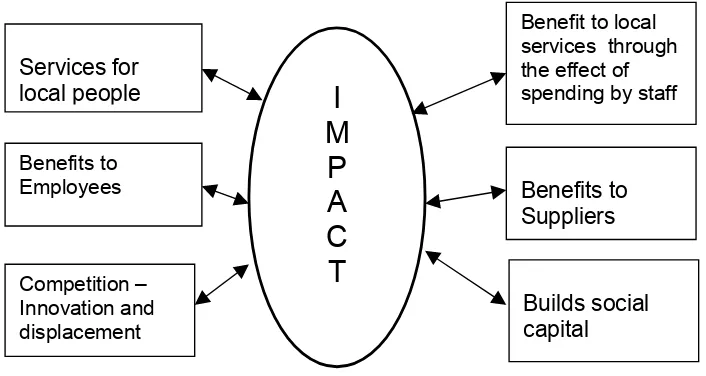
The support provided resulted in a number of changes to social enterprise performance although the early stage of the evaluation meant that these changes may come about a later stage. The types of change in performance and impact are summarised in the figure below.
suppliers. Social enterprises can also play a key role in building social capital and community cohesion through the services they provide, through employing people, training and mentoring individuals and through contributing to community development activities.
Figure 1. The multiple impact and stakeholder model
Services for local people
Benefits to Employees
Competition – Innovation and displacement
Builds social capital Benefits to Suppliers Benefit to local services through the effect of spending by staff
I
5 Summary of evaluation results for the four pilot projects
The pilot projects made a contribution in terms of building skills and encouraging behavioural change of social enterprise staff, through change in performance of social enterprise and through the development of social enterprise support approaches. Details of each pilot project are given below.
5.1 Wider Market Focuspilotproject
This pilot project selected seven social enterprises from across the country that had the intention to grow fast, with five of them concentrating on growth through delivering services for local authorities. Support was divided into longer term ‘process facilitation support’ and expert specialist support. The former was found to be lacking due to lack of skills and the resources required for long term advice.
The impact of the support was felt in terms of improving the quality of services, building skills of individuals (even for the two organisations that had not been able to start operating), sustaining the existing growth and employment of three social enterprises already expanding and creating 41 full and part time jobs.
Regarding existing provision, expert support was reported to be patchy and a need was identified for an accredited professional development programme for social enterprise advisers. Business Link and other mainstream support was found to be useful but the report recommends that such support needs to be ‘moderated’.
Case study 3: Sunderland Home Care Associates Ltd
Sunderland Home Care Associates Ltd is an employee owned company. They provide domiciliary care principally under contract to Sunderland Social Services Department, but also to Sunderland University Disability Support Team. They are looking for innovative ways to achieve economies of scale and to expand community care delivered by employee owned businesses. They are planning to set up a number of franchises where they can inspire workers to run their own organisations.
5.2 Rural social enterprise pilot project
This project, led by Plunkett Foundation and CMS, provided advisory support to 14 organisations covering issues of organisational structure, management and legal structures, with the latter requiring specialist knowledge.
The impact of the support included building the financial management and sector specialist skills of staff and volunteers. This resulted in changes to the operation of 9 organisations that would not have taken place so soon or to such an extent. Seven enterprises had increased incomes and were more financially sustainable and six social enterprises had increased employment with nine full time and seven part time jobs created. Other impacts include an increase in local spending and improved provision of services
Case study 4 Bolton Nursery Ltd
Bolton Nursery is a company limited by guarantee with charitable status. It provides day care for children from 3 months to schooling age. It also provides an after school club and a holiday club.
The nursery had been running for many years on a voluntary and community basis, relying on the voluntary efforts of mothers. Up until its establishment as a social enterprise in July 2004, the Nursery had poor facilities and the
numbers of children attending had been in decline. Parents were looking into the possibility of setting it up as a commercial venture and were referred to Cooperative and Mutual Solutions.
The adviser worked with the committee, meeting regularly and ‘being at the end of the telephone’. They appreciated his approach and use of ‘layman’s’ language’. The support was considered instrumental during start up with advice on legal and management issues. Combined with other support, the input from CMS has led to an increase in the number of children using the service from 11 to 85, and has created five new full time jobs. It has moved to new premises and now employs five full-time and three part-time staff.
The increased turnover and spending on employment will have indirect multiplier effects on the local economy. Freeing up parents’ time provides better opportunities for parents to find paid employment, increasing incomes and providing a further boost to the local economy.
5.3 Areas of Industrial Decline (Ex-coalfield areas) pilot project
networking workshops. While the support was highly regarded by all but one social enterprise, the cost implications of such a level of intensive support was not addressed. The pilot project has shown the importance of working closely with (and building the capacity of) sector specialist organisations such as the Early Years Childcare Services who are offering business support.
The impact of the support included greater financial security for nine of the organisations, mainly due to revised pricing strategies and developing new opportunities. One full time and two part time jobs were created in two organisations with three others planning to grow and seven stating that the support had safeguarded their existing jobs. There were also impacts on the local community through improved services, local spending and building the skills of community members.
Case Study 5 Ferryhill Lakes & District Development Education Resource Centre Ltd. (LADDER)
LADDER is a community facility based in a housing estate. The largest target group is children and young people, where play opportunities for younger children are offered and a youth group for the 11+ age group exists. Many courses for young people have been set up, such as Food Hygiene, First Aid, IT Skills, Holistic Therapies and SAGE Accountancy. Advice on CV-writing is also available. In addition, a credit union operates out of the premises, which offers affordable loans to the local community. Set up in 2001, LADDER employs 3 part-time and 1 full-time staff. The Board has 12 members, of which 6 volunteer on a regular basis. Seven young members also volunteers. The organisation has a very diversified funding pool, with over 20 different funding agencies supporting them. The organisation grew organically from a resident’s association to what it is today, with over 13,500 people visiting the centre over the last year.
LADDER were looking to source more non-grant income from Service Level Agreements and improve the profitability of its cafe. Support was delivered via:
six advice sessions with 1 employee and three key volunteers facilitating two strategy workshops with all the board members, staff attending a workshop with other social enterprises
telephone support when needed.
The advice was considered to be highly appropriate and helped them balance the need to make a surplus without compromising on the social aims of the organisation.
5.4 Black, minority and ethnic fledgling social enterprises pilot
Amazon Initiatives and Community Action Network worked with 14 social enterprises in the West Midlands, with an emphasis on those that are managed by Black and Minority Ethnic (BME) women. The support included training and advice delivered at the place of work or within the Amazon Incubator units, in order to have a non threatening environment. Where possible, external support providers (such as Business Link and other trainers) were brought in to deliver the support. Different approaches to training were explored although the social enterprises were more appreciative of the one to one support.
A review of the existing support provision found that there was a considerable amount available. However, BME women may find it harder to access unless providers ‘proactively engage’ with them. BME support organisations may play a role in working with fledgling social enterprises and then signposting them to mainstream support later.
The impact on the social enterprises included raising business skills, increased income in four organisations, improved financial management ensuring that services will be secure in the future. Three social enterprises had increased their employment with a total of four full time jobs and the support was partly responsible for this.
Case study 6: Fairmount School
Fairmount School is a tuition-fee based grammar school based in Coventry, offering children from the ages of 7 – 16 an alternative learning environment. It opened in 1999 and currently offers learning in small class sizes. Its primary aim is to reach out to those pupils who have not been able to cope, for a variety of reasons, in mainstream school settings. Special support is given to children suffering from dyslexia and other learning difficulties, as well as those who need one-to-one teacher-attention.
Through the training and advice, the school founder learned to recognise the importance of designing a well-developed long-term business and management plan. Confidence has been built up through the training and being able to ‘drop in’ to the Amazon Initiatives office. She has also been referred on to other organisations for support in marketing her business. Due to the support, the school has grown faster and been able to reinvest a surplus in new activities.
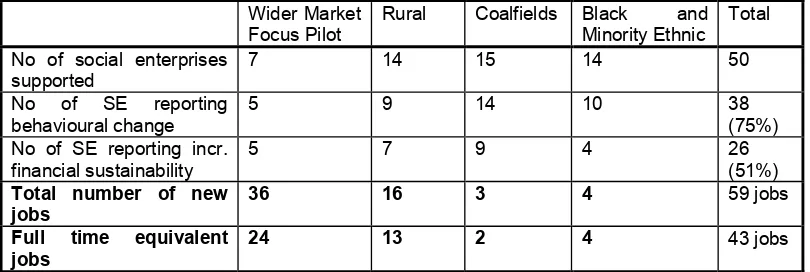
5.6 Overall impact
table below.
Table 1. Preliminary quantitative impacts attributed to the support (three months after support ceased)
Wider Market
Focus Pilot Rural Coalfields Black and Minority Ethnic Total No of social enterprises
supported
7 14 15 14 50
No of SE reporting
behavioural change 5 9 14 10 38 (75%)
No of SE reporting incr.
financial sustainability 5 7 9 4 26 (51%)
Total number of new
jobs 36 16 3 4 59 jobs Full time equivalent
jobs 24 13 2 4 43 jobs
6. Lessons
The pilot project approach has allowed the development and testing of different approaches with a total of 50 social enterprises. Staff from each pilot project commented on the usefulness of the support. In this section, the evidence is used to draw-out lessons that have been learnt so that future policy and structures can be improved.
A key finding from this project is the potential contributions social enterprises can make to social inclusion and economic development. In many situations, social enterprises have been established to address market failure. For example, in the Plunkett study several village shops have been established because commercial shops were not, or did not appear to be, commercially viable.
Case study 7: Coaley Village Shop
Public transport in Coaley, Gloucestershire is very poor and access to amenities in urban areas is limited. Until the shop was established in 2003, there was no shop in the village. Many local people, especially the elderly and those without access to private transport, found it difficult to obtain groceries and services.
The Village Shop sells a range of groceries, provides a meeting place, a café, a book and video library, and computing facilities with internet access. It does not employ any staff but relies on approximately 50 volunteers. The management consists of 8 volunteers plus a secretary. The support was used to improve the management of volunteers and identify their skill gaps. This has lead to an increase in volunteers and increased sales. The support was also used to identify future support as the management team were confused by the large number of providers.
6.1 What support is needed Becoming a social enterprise
There is a particular challenge relating to encouraging social enterprises to start up. The types of social enterprise participating in this project demonstrate the wide range of social and economic benefit they can have, although social entrepreneurs may not be present without encouragement and confidence building.
Case Study 8 Wellbeing & Beyond
In order to meet the needs of giving targeted personal fitness and health advice to women, this organisation was being set up as a company limited by guarantee. The training “package” offers women healthy lifestyle advice, which includes one-to-one in yoga and pilates sessions as well as planning healthy eating routines.
The thirty consultations with Amazon Initiatives helped build confidence. The founder was supported in marketing, pricing the services and in looking for diversified training packages. Networking has been particularly helpful to the business, bringing together a “cluster” of health professionals.
There is potential for activity presently undertaken on a voluntary, community and grant dependent basis to be increasingly conducted on a social enterprise footing. However, this shift in emphasis requires encouragement. For some voluntary and community sector organisations, the language of enterprise and entrepreneurship is disliked and may appear to contradict their objectives. This suggests that new, more pro-active, methods must be developed to reach all potential social entrepreneurs.
There are issues regarding the demand for support from social enterprises. Community/voluntary activists may be unaware of the commercial potential of their activity and the possibility of creating social enterprises. This may go some way to explaining the difficulty some pilot projects have in recruiting social enterprises. This may simply reflect poor knowledge of the support available and the need to improve publicity, identify potential social enterprises and demonstrate the benefits of social enterprises to the general public. Organisations representing the voluntary sectors may be in a good position to work in partnership with other social support agencies to promote and encourage social entrepreneurship.
people into starting businesses may result in a higher closure rate, and a negative impact in terms of damaged confidence on those who have been pushed into starting and not succeeded.
Case Study 9: Cresswell 10-55 Club
The club offers after school childcare for primary school children in the former coal mining community of Cresswell. It struggles to sustain itself as the
number of children using it are declining. There is a limited market due to poverty and its rural location. There is also some competition from local schools offering activities after school. The support from Bethany Development helped them remain open and built up the skills of staff. However, the founder and committee member felt that he might not have started the organisation if he had realised what was entailed when
encouraged to start it up by the County Council’s Early Years programme:
“They asked me to be involved and like a lamb to the slaughter…When Early Years set us up, they did not explain that I was taking on a business…. They made it sound like a little club. No one said I would employ staff and be responsible…. You get in deeper and before you know it you are accountable. It is best for Cresswell that they kept quiet but I would hate to see others in my position”.
General micro-business skills
Under the Bethany pilot project, it was found that almost all the organisations were lacking in micro-business technical skills such as identification of break even income/cost levels, how to set prices and how to be financially sustainable without grant income. For more complicated social enterprises there is a need to examine the costs and income of each of the services separately. These issues were felt to be common for both social enterprises and mainstream commercial micro-businesses.
Case Study 10 Asantoa
Asantoa is a printing service business based in Birmingham that has a distinctive social arm: all profits from the business go towards community development projects in Ghana, Zimbabwe and Jamaica. The printing side of the enterprise started in February 2003 and the founder, besides working full-time herself, employs 5 part-full-time employees. In addition to sales of goods and services, 20% of the organisation’s funding is raised through donations and fundraising events.
Support for marketing services, pricing, and identifying new opportunities was needed by most of the social enterprises. The importance of this may be greater for those organisations in rural areas. Their opportunities may be more constrained because they are dealing with small catchments, isolation and poor access to transport. In rural coalfield areas, these constraints are combined with considerable concentrations of poverty. In rural areas where there is more of mix of wealthier and poorer people, this results in a greater ability to pay for services that can be used to cross subsidise other services.
Management and decision making
Social enterprises face specific needs with regard to managing people and decision making. The democratic structure of many social enterprises can involve a large number of staff/entrepreneurs/decision makers. This may be characterised by a more drawn-out process of decision making and there is potential for conflict and tension between the different members. An important role of the advisor is to be able to provide a focus for agreement and reassurance. The task is exacerbated by the fact that a large proportion of staff tend to be volunteers or work on a part-time basis. Therefore, staff time is limited, there is increased possibility that attention will become diverted away from the enterprise, and the pace of developments will be slow. Hence the role of an advisor must be to provide leadership where necessary and ensure dynamism is not dissipated. At the same time, the advisor must be prepared for the pace of change to be acceptable to enterprise staff.
Public procurement opportunities
Case study 11: Croydon Care Cooperative
The organisation aimed to build care homes for older people replacing six homes currently being operated by London Borough of Croydon and secure a contract from the council to deliver the care. However, the local authority has not given it’s approval and the organisation is thinking of changing it’s role to managing centres only or being a pressure group.
Mutual Advantage co-ordinated the support and their main role was to act as a facilitator, referring the management committee to other providers and social enterprises. Support also concentrated on engaging existing local authority staff and families of residents in the design of new facilities to get their acceptance. Indirectly, the support has had a wider community benefit by demonstrating the benefits of involving all stakeholders. However, the experience has had a negative effect on many volunteers due to the disappointment and delays; some of these have resigned from their positions.
This case has been important for learning about local authority procurement and the support required for voluntary board members. It also identifies the need for the local authorities to have a clear procurement strategy agreed by its lawyers and greater understanding about procuring from social enterprises. Social enterprises may also need support for bid preparation so that they can compete with large organisations.
Confidence building
Confidence building was mentioned by most social enterprises as one of the most important roles of an adviser. This requires longer term involvement of advisers and cannot be easily measured as an outcome of the support as it is less tangible. Without this support, organisations felt they may have stopped operating, or would not have started. This is particularly important for volunteer board members who may not have previous business experience or do not want to manage an enterprise. Lack of confidence is noted as a major difference between social enterprises and mainstream commercial businesses.
Demonstrating impact
6.2 Delivering support to social enterprises
In each of the pilot projects distinctions were made in the type of support. Three types of support were identified as being important: enterprise counselling, social enterprise specific support, and sector specific advice.
Counselling
Social enterprise counselling requires advisers who can build up a relationship, tailor support to the needs of the organisation, empathise with the recipient’s concerns and social aims, and be available ‘at the end of the phone’. Social enterprises reported concerns about the lack of continuity of advisors from some support providers. Training was considered less popular as it was not specific to their needs.
The Wider Market Focus pilot refers to this as process facilitation. Whilst experience of social enterprises is useful, the Bethany Development pilot project has shown that an adviser with excellent coaching and mentoring skills can have a considerable positive impact, even if they did not previously have specific social enterprise experience. In this case the social enterprises appreciated the empathetic approach and found that their confidence was built up by working with someone who listened to them, was easy to talk to and acted as a sounding board. This was particularly important in the start up stages where the social enterprises stated that they needed the reassurance, enthusiasm, inspiration and hand holding.
Case study 12: Trimdon Little Tykes Nursery
To meet childcare needs this childcare co-operative for 2-12 year olds was established by three founder members/employees. After operating for a few years, they required advice on running a business and bookkeeping. The Bethany Development offered counselling or advice with monthly meetings and through being available on the end of the phone at other times.
The quality of advisors was noted to be highly variable and dependent on the skills and experience of the individual. With the rush to appoint more advisors, organisations have had to recruit people with a predominantly voluntary sector background without an understanding of running an enterprise, or rely on mainstream advisors who do not understand the social aims of the social enterprises. It was also reported that a shift in funding into social enterprise support was drawing experienced managers out of social enterprises into support organisations.
Social enterprise specific advice
Social enterprise specific advice is required by organisations in the process of starting up or in transition to a new legal form. This may include guidance on legal and organisational structures and is especially important as the organisational structure forms the foundations of the enterprise and determines its future direction.
Sector specific advice
The industry specific advice requires people with knowledge of a particular sector as well as knowledge of business development techniques. In many cases the sector specialist advisers are the first point of contact, but these individuals frequently do not have the business skills available to support organisations wanting to reduce their reliance on grant income. The evaluation identified a number of sector specialist organisations offering support to social enterprises, particularly in the field of child care. Training and awareness raising for advisers in these organisations was considered a priority.
Segmented approach
There is a need for a more segmented approach that offers different services according to the need of the organisation. In the Midlands area it was found that certain groups such as women and black minority ethnic groups require particular types of support with an emphasis on cultural sensitivity. There is a suggestion that support, for women and ethnic minority businesses, is best served by small agencies who are able to offer a more personalised service. Social enterprises in rural areas may have specific requirements that are related to the industrial sector in which they operate.
Expectations
Networking
Networking events of this project were considered beneficial by most of the social enterprises involved. These can be informal linkages or more formal event. Evening events were found to be more popular than day time events as volunteers in employment can attend. One organisation (Seaham and District Training Trust) noted that a single connection made at a networking event had resulted in them making a huge expansion, demonstrating the serendipitous nature of networking. One to one mentoring relationships were harder to develop as social enterprise employees and volunteers felt they did not have the time.
Case study 13: Seaham and District Training Trust
The Trust seeks to reduce social exclusion through addressing social, economic and environmental issues in deprived communities in the East Durham area. It offers training provision and also has start-up funding available for community initiatives. Specific target groups include the elderly, youth and the homeless. The organisation was set up 21 years ago, and it has 18 full-time paid workers. The organisation is 100% self-sustaining through the services offered and is not grant dependent. Bethany Development provided training and advice on social enterprise for the team. This enabled them to refresh their vision as an organisation, identify new opportunities, and encouraged them to think in a more dynamic way by considering the “entire picture”.
The support also included an evening networking event with other social enterprises and support providers. This single opportunity was considered the most crucial piece of support given to them by Bethany Development because of the large project (X-Park) that has come out of this.
Targeting
The pilot projects all tested relatively intensive forms of counselling support. The extent to which such levels of intensity can be scaled up to a national scale was not investigated. With the existing level of resources for social enterprise, such approaches would entail the need for targeting support at those organisations deemed more likely to grow and have a big impact. This may be at the expense of a wide but shallow approach reaching more social enterprises and communities. Furthermore, selecting who is to have support and who is not raises particular challenges.
means conclusions on targeting cannot be drawn.
6.3 Co-ordinating and building the capacity of social enterprise support
Gaps and duplication
Research under the pilot projects suggests that the present infrastructure for supporting social enterprises is fragmented and patchy. It was found that there are considerable differences in the extent of support in different areas, with more support for start up phases and less for ongoing support to help organisations reach financial sustainability based on a range of income sources.
Alongside the gaps in support, there also appears to be overlap and duplication with different agencies and initiatives competing to support social enterprise activity. Whilst this competition can drive innovation, it can also lead to a complex array of competing support that social entrepreneurs find confusing. Many interviewees commented that it takes considerable time and effort to negotiate and find their way through the complicated web of support.
Balancing clarity and segmentation
The design of provision of specific support services for social enterprises, should take into consideration the existing confusion felt by social enterprises due to the range of public sector funded support providers. There appears to be a trade off between the need to simplify support structures and increase coherence by rationalising the number of different support providers, and the need for specific knowledge to enable support to be tailored to the requirements of individual enterprises. Two pilot projects identified models which balanced the need for simplified structures with the need for specialist support.
Brokerage
Comments from social enterprise interviewees suggest that there is variation in quality of support offered between Business Link Operators in different areas. In the case studies it was found that Business Link was being used by many social enterprises who were positive about their involvement in meeting specialist needs common to both mainstream and social enterprises, such as export support and human resources issues. There was a more critical view of BLOs’ attempts to offer more process support, particularly where they were using in-house advisors rather than acting as a broker.
Skills of trainers and advisers
The Plunkett Foundation and Wider Market Focus pilots recommend the establishment of a common core programme of training for those supporting social enterprise. This would help to improve the quality of support to social enterprises and reduce patchiness. In the case of Business Link Operators, this would provide staff with the best knowledge to assess the needs of social enterprises and refer them to an appropriate support provider.
6.4 Lessons for evaluation of social enterprise support
Multiple indicators
This evaluation has demonstrated the importance of looking at a wide range of economic and social indicators. These may include jobs, services, building the skills of volunteers, multiplier effects and social cohesion. Key individuals with social entrepreneurial attitudes can be catalysts for other activities and therefore have a wider impact.
Case study 14: Range Accessories Ltd and Spennymore Mobility Club
After becoming disabled, Ray O’Neil drew on his experience of training marksmanship for the Army to start Range Accessories. This is a company limited by guarantee that employs those with mobility difficulties in therapeutic work for the manufacture of accessories for non-lethal muzzle loading guns used in re-enactment events and target shooting. The surplus from the business will go to the Spennymore Mobility Club which offers support, advice and information to people with mobility problem, as well as events and outings for its 25 members. This has improved the quality of life for the members through enabling an expansion of crucial social networks amongst immobile people.
Since starting in June 2004, two people are employed part time and there are six volunteers involved in therapeutic work. Furthermore, Range Accessories support local suppliers in this deprived area through subcontracting the manufacture of precision engineering. Without the assistance and reassurance from Bethany Development, the founders feel that the organisation would not have started.
Longer term impact assessments
The impact of the support was noted by all social enterprises with most recipients noting that the support allowed them to accelerate the rate of change and/or allowed the scope of change to be extended. The support has also been important for ensuring that the social enterprises can deliver (and therefore keep) existing large contracts. However, there is a need for longer term assessments of impact of this support as the evaluation took place soon after the support was provided.
Case study 15: Wotton Electric Picture House
After the old "Town Cinema" suddenly closed in October 2002, a group of local residents came together to refurbish and re-open it as a community cinema. This provides an important focal point for the community in the rural town of Wotton-under-Edge and the surrounding Gloucestershire area. A limited company has now been formed to manage and operate the cinema. The cinema has not yet begun trading and employing people, so support was delivered to volunteer board members in evening meetings.
7. Conclusions and recommendations
Support required
1. Social enterprises involved in this project had not actively sought out social enterprise support but benefited from the support after being identified and approached by support providers.
Recommendation 1. There should be more proactive promotion of social enterprise approaches to existing voluntary organisations and those thinking of starting an organisation
2. Skills such as bookkeeping, marketing and pricing services were found to be lacking. These issues are also commonly found in mainstream micro-business. Training and advice needs to be adapted to meet the needs of social enterprises as they may be representing a wide range of different stakeholders, reinvesting their surpluses and combining social and environmental aims. Rural social enterprises face particular constraints in relation to the limited size of their local markets. In coalfield areas, this is aggravated by concentrations of considerable poverty.
Recommendation 2. Social enterprises in their early stages require micro-business financial skills set in a social enterprise context
3. The pilot projects found that confidence building was particularly important for those setting up organisations or those under financial pressure. This was particularly important for voluntary staff and board members who may not have previous business experience.
Recommendation 3. Confidence building is especially valuable and requires longer term involvement of advisers
4. Many of the larger social enterprises were involved (or attempting to be involved) in delivering services for local authorities. In principle, social enterprises can offer additional value over conventional businesses because of their wider social aims. However, local authority staff may not recognise this or be unclear of the legal position when considering higher priced offers. Social enterprise also requires financial support and advice in preparing bids.
Recommendation 4. Procurement of contracts from local authorities offers potential for rapid growth of social enterprises although there is a need to raise awareness of the social enterprise model amongst local authority officers.
Recommendation 5. Social enterprises should be encouraged to demonstrate their wider positive impacts to customers, and policy makers
Delivery of support
6. In each of the pilot projects distinctions were made in the type of support provided. Three types of support were identified as being important: enterprise counselling, social enterprise specific support, and sector specific advice. The pilot projects found that one to one enterprise counselling support had a greater impact than group training programmes, although such counselling requires frequent visits and continuity. While social enterprise experience and knowledge of different types of social enterprise models is significant, this project has shown that it is more important for support providers to have good counselling skills, the ability to listen and empathy. Counselling approaches tend to be more expensive than less intensive forms of support and may require the limited resources for social enterprise support to be targeted.
Recommendation 6. Building up management skills is best carried out through counselling and advice.
7. Support from someone with knowledge of technical aspects of the social enterprise forms and management is particularly important for those organisations that are starting or aiming to grow rapidly. This support can come from a specialist adviser or from the person delivering counselling or sector specific support.
Recommendation 7. Specialist social enterprise advice is needed for developing legal structures and organisational forms
8. Sector specific support is easier to deliver through group training and was found to be provided to employees and volunteers by existing training programmes delivered by colleges, universities and other training organisations. Smaller social enterprises reported difficulties in covering for staff undertaking training away from the workplace.
Recommendation 8. Support for training providers in those sectors with a strong social enterprise presence (such as childcare) should be continued with additional resources allocated to social enterprises to offset fees and to replace those undertaking training.
Recommendation 9. Develop the skills and capacity of the those support providers working with social enterprises through developing courses, accreditation programmes and including social enterprise issues in existing further and higher education programmes
10. A variety of networking activities were trialled by the pilot projects. More formal workshops were found to be more readily accessible during evenings. Informal interaction around training programmes and through co-location in an incubation unit was also found to be of considerable value.
Recommendation 10. Networking should be encouraged in all support programmes as it has the potential to build up skills and identify new opportunities.
11. Existing support is patchy and fragmentary, both geographically and with respect to support types. There are also areas where there is duplication at particular times as new projects start and old one are still operating. The patterns of support provision appear to be shifting constantly with a wide variety of funding streams and therefore require ongoing mapping.
Recommendation 11. Regular mapping of gaps and duplications within a sub-region is required
12. Social enterprises reported that they felt confused by the variety of support but also wanted specific support that was tailored to their needs. This issue should be overcome through the brokerage system, with Business Link Operators signposting organisations to appropriate support providers. In future BLOs will no longer be providing business support services themselves but their role as a broker will present challenges as they are not perceived as the ‘first point of contact’ by many social enterprises or voluntary/community organisations wanting to develop social enterprise approaches.
Recommendation 12. The support options available to social enterprises need to be clearly presented, using trusted brokerage systems. There may be a need for parallel brokers from sector specific organisations that are often the first point of contact with support infrastructure.
13. The impact of social enterprise support includes services, jobs and wider community benefits, many of which take time to be established. Therefore both quantitative and qualitative impact measures or indicators are required, and needs to be collected over a longer timeframe. The extent to which employment, services and the wider benefits to the community, benefit disadvantaged groups also needs to be considered. Even where organisations do not survive, over the longer term, considerable benefit may remain in terms of skills and social capital.