Rochester Institute of Technology
RIT Scholar Works
Theses
Thesis/Dissertation Collections
2006
Huayru
Cristian Mogrovejo
Follow this and additional works at:
http://scholarworks.rit.edu/theses
This Thesis is brought to you for free and open access by the Thesis/Dissertation Collections at RIT Scholar Works. It has been accepted for inclusion in Theses by an authorized administrator of RIT Scholar Works. For more information, please [email protected].
Recommended Citation
ROCHESTER INSTITUTE OF TECHNOLOGY
HUAYRU
A THESISSUBMITTEDTO
THE FACULTY OF THECOLLEGE OF IMAGINGARTS ANDSCIENCES
IN CANDIDACY FOR THEDEGREE OF
MASTEROFFINEARTS
INDUSTRIALDESIGNDEPARTMENT
BY
CRISTIAN MOGROVEJO
ROCHESTER,NEW YORK
Approvals
Chief Advisor,
Professor David Morgan:
Date:
Associate Advisor,
Professor Stan Rickel:
Date:
Associate Advisor,
Professor Santiago Ordonez:
Date:
School Chairperson,
Professor Patti Lachance:
Date:
David Morgan
Stan Rickel
Santiago Ord6nez
Patti Lachance
I, Cristian Mogrovejo, hereby grant permission to the Wallace Memorial Library ofRIT
to reproduce my thesis in whole or in part. Any reproduction will not be for commercial
use of profit.
Date:
Cristian Mogrovejo
Copyright 2006
by
Cristian MogrovejoAllrightsreserved
Tomy
family
CONTENTS
LIST OF ILLUSTRATIONS v
Chapter
1. THESIS SUMMARY 1
Componentsofthesis
Necessity
ofthesis GoalsLimitations
2. THE ORIGINALHUAYRU 4
Thepurpose ofthegame
Theplayers
Materialelements
Anexperienceplayingtheoriginal game Conceptsassociatedto thegame
3. DESIGNOFTHE NEW HUAYRU 15
Designofboard
Designofdie
Designof counters Designofcards
Theconcepts
4. ABOUT PRODUCTION 38
5.CONCLUSIONS 42
Accomplishmentof objectives Further development
A finalthought
ILLUSTRATIONS
Figure Page
1.IndigenousmanfromtheAndes 1
2.
Cemetery
atSigsig
43. Ancient dice.Archaelogical Museum.Universidad de Cuenca 6
4.Diceschemes 7
5. Ancient die. ArchaeologicalMuseum.Universidadde Cuenca 7
6. Configurationsofholesonboards 8
7. Huayru set atdonFelix'
sPlace 9
8.DieandboardatdonFelix'splacein
Sigsig
109.Configurationof paths ofdon Felix's board 10
10.Graphic
Mindmapping
1311. TextMindmapping 14
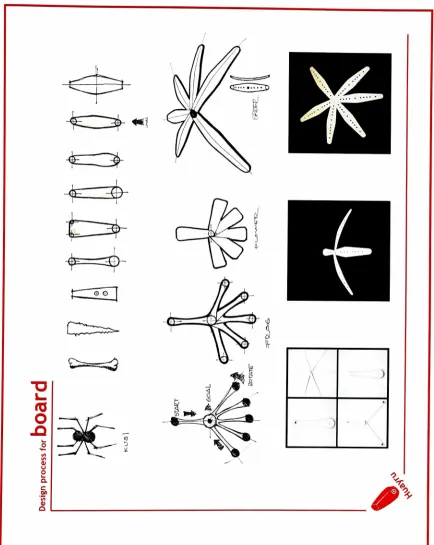
12. Designprocessforboard1 17
13. Designprocessforboard2 18
14. Designprocessforboard 3 19
15.Designprocessfordie1 21
16. Designprocessfordie2 22
17.Designprocessforcounters 1 24
18. Designprocessforcounters2 25
19. Designprocessforcards1 29
20. Designprocessforcards2 30
21. Designprocessforcards3 31
22.Conceptsin Instruction Manual 35
23. Rules inInstructionManual 36
24.Conceptsapplied 37
25.Technicalspecifications 1 39
26. Technicalspecifications2 40
27. Technicalspecifications3 41
28.Original HuayruatSigsig,Ecuador 43
29.NewHuayruatRochester, NY,U.S.A 43
CHAPTER 1 THESISSUMMARY
Cultureis notstatic;humansocietieschangeinresponsetovariations ontheirnatural surroundings, politics,
technology
development,
migrationdynamics,
etc. Traditionsand values within cultures are affectedby
these changes; those things thatcouldhavemade sense topractice ortobelieve inat some pointintime,couldeventuallychangedramatically
ordisappear.
Individualswith a recalcitrant sense of cultural conservationism would arguethat those changesingeneral are negative andshouldbeavoided. I stronglydisagreewiththis
[image:8.516.49.202.254.364.2]perspective. Ibelievethatchangesinculture shouldbeunderstood andaccepted,and
they
are notnecessarily harmful.Moreover,
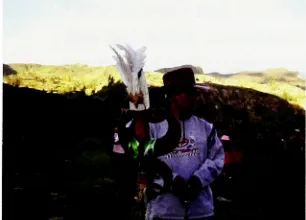
Ithinkthat theiracceptance or rejection shouldbea choicelefttoeachindividualinvolved.Fig. 1.IndigenousmanfromtheAndes
This imageshowsanindigenousperson fromtheAndesmountain rangewearingwhat seem tobea"cowboy"hatand a"skateboarding"sweater,bothobjects are representative ofa
foreignculture.
Why
hechoseto wearthoseitems insteadoftraditionalclothing such as a strawhatand a ponchois his decisionand shouldberespected.Ontheother
hand,
Ialsobelieve that,whether a cultureloses itstraditionsornot,preservingknowledgeaboutthemispositive.
Knowing
aboutthepast couldhelp
understandthepresent and provide valuable resourcesforfacing
thefuture.Knowing,
forexample, that theindigenousmanfromtheimage couldbe wearing a strawhatand a ponchois awaytobetter
understandhimandhisculturalenvironment.
Forthis project,Iwilldesignaboardgamebasedon
Huayru,
atraditionalritual game playedby
someindigenouspeople fromtheAndesmountain rangeforcenturies.Mostly
playedcurrentlyat
funerals,
thistraditionis consideredtobeinextinction: "NooneplaysHuayruanymore"
said an elderfromanindigenous community in
Sigsig,
Ecuador. The disappearanceofthis traditionisdueto themultiple changes andtransitions thattheseindigenous conglomerates experiencedthrough time. Itisnotamong myobjectivesto reintroducethepractice ofthe ritual;
instead,
Iwillaimtorescueits memoryandtransmitknowledge aboutit
by
designing
adifferentgame usingtheelements oftheoriginal asIwill
try
toemphasizetheroleofdesignpractice inkeeping
thememoryoftraditionalknowledge.
Asopposedtoacademiccompendiums,museumexhibits,articles inspecializedmagazines,etc., anobject, suchas agame,hasthepotential ofreachingaconsiderably
broaderand morediverse audience.
Thisproject will also constitute acommentaryonthecapabilitythatobjectshaveto transmit
culturalknowledge and values.Howmuch oftheconceptsbehindthedesignofthecowboy
hatandthesweaterisabsorbed
by
the indigenousman fromtheimage?TheproductIwilldevelop
willtransmit totheuser as much oftheconcept utilizedfor itscreation asispossible.Now,
why did Ichoose a game?Primitive societyperformsits sacredrites, its sacrifices, consecrations,and mysteries, all of which servetoguaranteethewell-beingoftheworld, ina spirit of pureplay
truly
understood.Nowin myth andritualthegreatinstinctive forcesof civilizedlife havetheirorigin:
lawandorder, commerce andprofit,craft andart, poetry,wisdomand science. All
are rootedintheprimeval soil of play. (Huizinga
1970,
23)
Throughthestudyofgames, anthropologists have beenabletofindvaluable information
abouthumanconglomerates andtheirculturalbehavior. Thisisthecasewiththegame called
Huayru. The data foundaboutit hasrevealedimportantcluesthat
help
tobetterunderstandthenature and religiousvision ofSouth Americanpre-Hispanic people.
Playing
Huayrurepresentstothem,notonlyawaytospendtimeand avoidmonotony, butalso a complex
interactionwiththeirspiritualworldprojectedthrough theirculturalvalues.
Moreover,
manyoftheelementsofthegame reflect aparticularwaytounderstandtheworldfroman
aesthetic, religious andpoliticalpointofview(Ordonez
2004,
4).Componentsofthesis
This thesisbegins with anoverviewoftheoriginal game. This sectionwillconstitute an
exposition ofmyfindings
during
theresearch stage. Iwill explaintheoriginalHuayrugameintermsofthe significance, elements,rules andconcepts associated withit. Allthe
informationprovidedinthis analysis willbe used as afoundationthatwillguidethedesign decisions forthenewgame.
Following,
therewillbeadescriptionofthedesignprocess,whichwillleadto thepresentation ofthedesignofthenew game. Thissection willdescribe how I appliedthe
differentelements oftheoriginalHuayru inan attemptto preserve itsmemoryandproject
knowledgeaboutit.
Finally,
thereader willfind mycommentariesandrecommendations about productionNecessity
ofthesisIndigenouspeoplefromtheAndesaregradually
losing
theirtraditions. Diversefactors,
suchasemigration,trading, technological
imports,
religiousrestrictions, etc., canbeunderstood asreasonsforthisloss. Thisprojectisan effortto preserveknowledgeabout one ofthese
traditionsindangerof extinction: Huayru. This is mycontribution as adesignerto the
understandingof cultures. SeveraltimesI have beenasked: "When dopeopleplaythis game?"
My
responseusually is:"Mostly during
funeralsnowadays."The firstreaction tothis
answer is amazement,even amusement.
Then,
immediately
afterlistening
tothereasonswhythey
do it andthesignificance oftheritual, people show respect andinterest.Also,
thisprojectisanopportunityformetodemonstratethatdesignpractice canbenefitfrom knowledgeof
history
andtheancient.Whenfacing
designproblems,most ofthe timedesignersrefertonew orfuturetrends togetinspiration. Sometimesthis leadsto the
production of"moreofthe same"
objects.
Taking
alookatthepast could provide examplesofhowproblems were solved and could open opportunities for designto havemore cultural
value.
Latin Americanartists and crafters often relyontherichnessof
forms,
colors and materialsthat
identify
object production oftheircultures.By
usingtheseautochthonous recognizabledetails intheirwork,
they
expectto gain accessto internationalmarkets withtheircrafts. I believe that, becauseofthispractice, concepts and spiritual values ofthesecultures getlost and are neglected.This newgame,whichwillcome out asthe product ofthisproject,willuseboth: concept and aestheticfromtheAndes.
Goals
Thegoals ofthisproject arebothgeneral and specific.The general goalwillbeto
demonstratethatdesignpractice canplayanimportantrole inthepreservation oftraditional
knowledge. Thespecific goalwillbeto designaboardgamebasedonHuayru withthe
potential of
introducing
to the general publicbasicnotions aboutthis traditionand,withthem, some aspects ofthepre-Hispanic cultures.Itwillaimtorescuethegame's memory.
Limitations
Time is the main limitation for this project. There are three main stages to consider in the
gamedesignprocess: "1:
deciding
ontheoverallformofthe package, 2: producingprototypeversions for all materials required, 3: Field
testing
and revising thepackage"
(Ellington,
Addinall,
and Percival1982,
28). After presenting a prototype version of the new game,CHAPTER2
THEORIGINAL HUAYRU
Inmyefforts tointroduce whatIunderstand abouttheoriginal game of
Huayru,
Ipresent, to beginwith,somedefinitionsfound intexts Iused as reference:Asmalltruncatedpyramid-shapedobject,carvedinwood,boneorstone, or moldedinclay.Thefaces andbasesoftheseobjectshaveengravingswhich were interpretedin differentways when played as aEuropeandie. Inpre-Hispanictimes,
suchitemswere producedto
dialog
withthehuaca1.They
persistintotheXXth2 century as afunerary
ritual and as a game of chance. Thepre-Hispanicdispersionof thisclass of object comprisestheTahuantinsuyu3andisa usefulfeatureto determine Incapresenceinregions withlittle monumental construction. (Gentile
1998, 75)
Huayruisa ritual of pre-Hispanic origin expandedto the
Territory
ofTahuantinsuyo
during
theperiod ofIncaexpansion and associatedto there-structure of moments of changeinabroadrange of spaces oftheAndeansociety.Presently,
its practicehasbeenreducedtofunerary
contexts. (Ordonez2004,
4,
mytranslation)
CemeteryatSigsig
Theseshort and general definitionsgive an
introductory
idea. We havetobare inmindthefactthat thegamehas been studied
by
manyauthors, withdifferentspecific purposes and from diversepoints ofview.Thus,
it iscomplexandchallengingtocomment onevery detailfound. It isalso remarkablethequantityof versions ofthegame andthedifferencesbetween
them;thisis dueto thechangesthat thepeople whopracticed,orpractice
it,
have experiencedthrough theirculturalhistory.However,
it isimportanttogather as much knowledgeas possibleinordertointroduce aproperlysupporteddesignsolution.Following,
Ipresent asummaryof whatIsuggest arethemost relevant aspects ofthe game fromallthesourcesIwas abletousefortheresearch. Thesesources consistprimarilyof research articles writtenby
anthropologistsinterestedinthe topicand afieldresearch conductedinSigsig,
Ecuador (asmall cantonlocatednearthecityofCuencawherethe traditionis stillin practice) inJune-July
2005.1
Thistermreferstoelements consideredtobesacred
by
pre-Hispanic cultures. 2Thecitationdatesfrom 1998. Thegameisstill playedinthe21stcentury. 3
The purpose ofthegame
Huayruwas usedforthreepurposes:
1)
to distributetheexpenses ofthe funeralceremonytogivefood anddrinksto the contestants;2)
toallocate (thatis,
reconfirmthe
distribution)
ofthebelongingsofthedeceased;
and3)
to foretellthewill ofthesoulofthedeceased.
(Brownrigg
1989,
29,
mytranslation)
Huayru hasreachedourdaysas a
funerary
ritual.Among
thefunctions itservesduring
thesecontemporaryceremonies wefind:
-Helpthesoul ofthedeceased reachtheafterworld
-Makepeoplepray forthesoul
-Distributehis belongings
-Determinewhopays fortheexpenses oftheceremony
(alcohol,
food,
etc)-Determinewhether or notthespirithas "unfinished
business"
ontheworldofthe
living
-To
keep
people awakethrough thenight -Asplain entertainmentOutofthestrict
funerary
context, wefindthat thegame usedtoservediverseobjectivesfortheritual worldoftheAndes.
They
are amongothers:-Tolegitimizethe transactionofmaterial possessions.
-To act as a mediatorinconflicts.
-Torelieve tensionsgeneratedinthe transitionbetweentwodifferentstages oflife.
-To getthefavorofthegodsinagriculture relatedrituals.
Theplayers
Fromthesourcesconsulted, itcanbenoticed avarietyof versionsabout who was supposed
toplay Huayru. InthetimesoftheInca
Empire,
it seemsthatthegame wasrestrictedto the"nobility."
Currently
inthefunerary
contexttheplayersare:-Any oneinvitedtothefuneral
-Any one who isnot
family
ofthedead -Menonly-Peopleover 10years oldonly
-Childrentoo
Materialelements
The die
Acarved object made ofboneorwood. It hastheshape of atruncated
pyramid with
five,
six or sevenlateralsides, atop
and abase. This faces showcarvedcircles of medium sizethatdeterminethepoints; thesecircles are always surrounded
by
smaller circleswithadot intheir centers, crosses, etc.Theseelements createanimpressionofdisorder. (Cerecedaand others
1987,
166,
mytranslation)
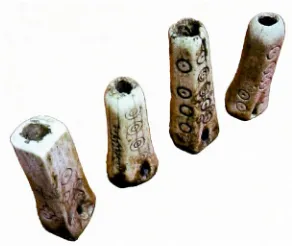
Fig. 3. Ancient dice. Archaelogical Museum.
Universidad deCuenca
Asnoticed
by
comparingthisdescriptionwiththe definitionofHuayrupresentedinthebeginning
ofthis section, therearemanyversionsofHuayru dice. Noticethatthey
couldbemade of abroad varietyofmaterials,have differentnumbers ofsides andhave differentrules associatedwithit. Here Ipresent asummary listofthe datacollected aboutit:
-Materials: itcouldbemade, amongothers,of: llama
bone,
cowbone,
yucca, ceramic, stone,tapioca,wood.
-Numberof sides:
four, five,
six, seven. It seemsthat thiscan varydepending
on thetimeandarea wherethegame waspracticed. Themost commondice have sixlateralsides, a
top
andabase.
-Shapes ofthesymbols:
Crosses,
concentric circles,dots,
circleswithdots inthe middle,holes,
blackpaintedholes,
coloredlines,
representations ofthesunandthe moon, etc.-Size: its heightvariesfrom 6to 12cm,itswidthfrom 2to4. This may be not exact and
definitive,
butgives a generalideaofproportions.-Gamerulesassociated withthedie: Inmost ofthecasesstudied, thereis afaceofthe die
withnomarks; some callit "llampu". This sidegenerallysignifies"badluck". Inthe
majorityofversionsof
Huayru,
ifthedie falls inan upright positiontheplayer(orteam) [image:13.516.58.204.191.314.2]3* 3!D5 J-AKPECi
"THROOWTO JU-_ R0CRW7W4
[image:14.516.44.267.55.186.2]"
Fig. 4. Diceschemes
-Ancientdice madeofbone havetwospecial characteristics:
they
display
beautifulpolished surfacesthatare aproduct ofaging;they
alsodisplay
somekindof perforationinthebaseofthefacethatmarks thenumberfive. Thisperforation seemsto bean arterialcavityofthe
bone;
isamysterysofarwhatits functionis,
andwhy it is located inthatparticularface;
maybethiscavity hasa ritualfunction (Santiago
Ordonez,
personalcommunication, June 2005). Thiscouldbea powerful detailtokeep
inmindduring
theprojectforthe designproposal ofthedie.
[image:14.516.40.125.343.499.2]Theboard
Oneoftheformalparts ofthegameimplies countingthepoints achieved
by
throwing
thedieandrepresented
by
kernelsofdifferentcolors orlittlepebbles. This counting ismade on aboardthatconsists of a system of circular
indentations,
withfivebig
circles called"casa",
which arethe start andfinishspots. Betweenthese "casas"therearefoursmaller circlesthat
drawa pathbetween"casas" (Ordonez
2004,
85).Here,
Iprovide somedetailsabouttheboards:-Materials: wood, agaveleaves. ForsomeinstancesofHuayrunoboardwasnecessary;
drawing
thepaths andthecircles onthegroundwasenough (Cerecedaand others1987,
162).-Sizes: Some oftheboardsstudied
by
anthropologists (HartmannandOberem1984, 72)
measure 22.5cmby
14cm. Thisgives us anideaoftheproportions.-Shapesanddispositionof elements:there are several versions ofthedispositionsofthe holes andthepathsdescribed
by
them.Among
themwefind:o w
ooo ? o
O O A *
o o o * W
P e o .
|
Fig.6.Configurationsofholesonboards
Thecounters
Bertonio
(1879)
in his Vocabulariode la Lengua Aymaraprovidesthefollowing
translationfromanindigenous languageto Spanish:
Huayrusitha,
Piscasitha:jugarcon vnas piedrecitasadelantandolasensushoytos[sic]. segunlospuntosdevnamanerade dadograndeenvnosdestosjuegos
van adelantandolaspiedras alderredoroencirculo; en otrosdando vueltacomorio. (citedin Cerecedaand others
1998,
84)
Here,
Iprovidemytranslationin English fromthisdefinitioninold styleSpanish:Huayrusitha,
Piscasitha: toplaywithlittlepebbles,makingthemgoforwardthroughlittleholes accordingtothepointsgiven
by
abig
die. Insomeofthesegames,theselittle pebbles [image:15.516.46.269.299.414.2]Fromthisantiquedefinitionofthegame wehave a generalideaoftherolethecounters play.
Thesecountersare usedto
keep
record ofthepoints anddetermine
a winner.In some cases thewinnerisdetermined
by
thenumber ofcountershe/shecangather; inothers,by
a"finish"
spot ontheboardwherethewinner counterhasto land.
By
looking
at allthe sources Iwas ableto gather, theselittlecounterscouldbe among others:-Littlepebbles
-Cornkernels -Broadbeans
-Kidneybeans
-Coloredcornkernels
Anexperienceplayingtheoriginal game
Giventheamount and
diversity
ofHuayru versions,whichvaryaccordingtothearea ortime wereitis,
orwas, played, it is difficulttopresent a set of rulesthatmake sense and atthesametimesummarize all.
Here,
Idescribea particularHuayru game, the onethatIwas able to experience,notby
reading articles orvisitingmuseums, buttheonethatwas explaineddirectly
tomeby
thepeople who practicethe traditioncurrently.Iwas able toplaythis Huayrumatch out ofthefunerary
context giventheobviousdifficultiesoffinding
arealfuneral.
Fig.7.Huayruset atdonFelix's Place
"Venga,
venga nomas, yatraenelHuayrupara quevea"
-"Come,justcome, someone will soon
bring
theHuayru so you can see it"- (donFelix,
personalcommunication,July,
2005).Don Felix istheoldest member ofa
family
ina ruralcommunitynearSigsig. Ifoundhimsittingon a stoolintheyardofhissmallhousealmostinthemiddle ofthemountains. I had
askedhisneighborsfor informationaboutthegame and
they
ledmetohisplace.Don Felixhas thegame piecesforrent. Hehadno problemsshowingmethegame, and even
[image:16.516.36.151.375.528.2]a usagepatinaand wereremarkablywell crafted.
My
hostmadehis daughterset all thepiecesjust likeitis donein
funerals;
she lita candle and gave us a cornkerneland akidney
bean. The boardwas placed on an estera(somekindof strawmat)wherethediewas [image:17.516.37.244.112.306.2]supposedtobethrown.
Fig. 8. DieandboardatdonFelix'splaceinSigsig
The die hadsixsides, fiveofthemmarked with concentric circles: oneinone
side, twointhe other,three,fourandfive. Oneofthesides orfacesdidnothave anymark; don Felixtoldme
that thatitsname wasLluchu(naked).The face with one markhadsomekindof arrow
drawnon
it;
myhosttoldmethat thisparticularfacewas calledtheHuayru face.The boardofthisparticular sethadthe
following
disposition:.\
;.'.'. ' '.',
'
:
;
1 2
Fig. 9. Configurationofpaths
ofdonFelix'sboard
Thegamebegun:
-First, each onehadtothrow thedie inturnsuntil someone got aHuayru face. Itwasme,soI startedthegame withthekernel in spot 1. Spot 2 wasfor don Felix. Spot Xwasthegoal.
-Inmyfirstthrow thedie gave meaone; thatisaHuayru face. So Iwas ableto take a short
cut,shownin thediagramabove asthepath ontheleft.
My
hostgot athree, so he hadto take theother pathmovinghis kernelthree spots.- After
playing andmovingthekernels forward forawhile,Iwas aboutto win;allI needed was atwo to reachthegoal. Igot a
five,
soIwasinstructedtoreturntothe startingpoint. I hadto gettheexact numberinordertowin.-Ifsomeone hadthrownthedie soit landed inan upright position or"standing" hewould have becomethewinnerinstantly.
-Ifsomeonehadgot anemptyfaceorLluchu (whichcouldbetranslatedas
"naked"),
he wouldhave lostaturn. This is bad luck.-Ifsomeonehad got aHuayrufaceatanytime,hewouldhave beenableto movethe Kernel to thenext
big
circle. Thesebig
circles were called"casas".-Wekept playingthisway foraboutten minutes,there was no winner.
Afterthe match,don Felixand I hada short conversation.Hetold methat thegame was
played
by
twoteams, andthenumber of playersdidnotreallymatter.Eachteamhadtoname a"kallay"
or captain.
Children,
women,men, anyone wasinvited. Whoever lost hadto paysomemoneythatwasthendonatedtothewidow andleadtheprayersforthesoul. This Huayrugamesethad been inthedon Felix's
family
foryears.Conceptsassociatedto thegame
As Icommented
before,
thebroadtimeframe,
thedifferentplacesanddifferentcommunitieswhereHuayrutakesplace, makeit acomplextopictoconfront.
However,
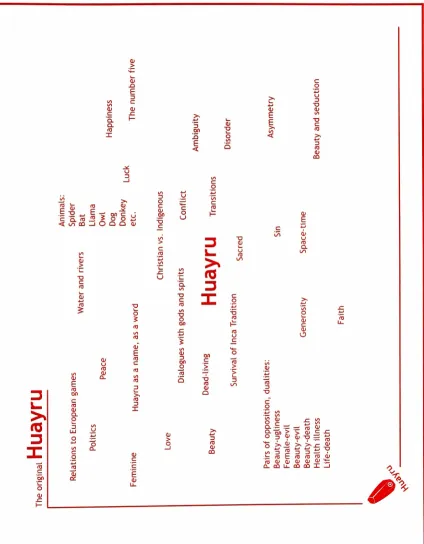
it is thiscomplexitythat givesit itsrichness inaconceptuallevel. Here it isalistof some ofthe
concepts connectedto the game,with an efforttolist onlythemostcommon:
-Dialogueswith gods and spirits
-Relations toEuropeangames
-Survival ofInca Tradition
-Generosity
-Waterand rivers
-Huayruasaname,asaword
-Feminine
-Politics
-Pairsofopposition, dualities: Beauty-ugliness Female-evil Beauty-evil Beauty-death Healthillness Life-death -Space-time -Dead-living -Beauty -Love
-Christian vs. Indigenous
-Luck
-Disorder
-Ambiguity
-Asymmetry
-Beauty and seduction
-Peace -Happiness -Animals: Spider Bat Llama Owl
Dog
Donkey
-Thenumberfive
-Transitions
-Conflict
-Sacred
-Faith
-Sin
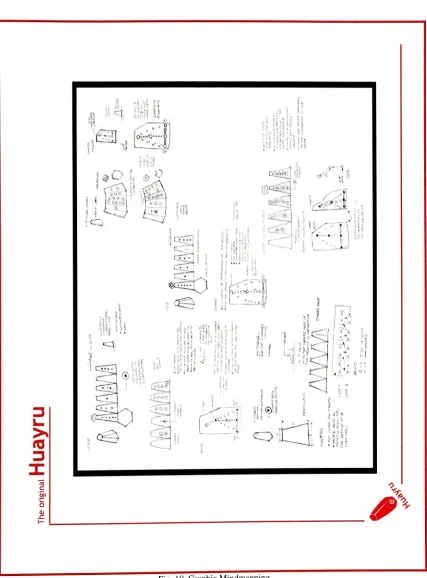
Aftergathering informationabouttheoriginalgame,the idea istoutilizeit efficientlytoface
thedesignchallenge. Iwill use thisinformationina
Mindmapping
exercise. Asabrainstorming
methodindesign,
Mindmapping
facilitatestheconsideration ofideasrelated toa certain conceptduring
ideationstages. Acentral conceptischosen andideasrelatedto itarethenwritten
down;
allthisideas arethenusedtoinspirethesolution ofthe designproblem.
Forthis project,thecentral conceptis "theoriginal
Huayru",
and entriesontheMindmapsaredatatakenfromtheresearch.
By
usingthis method, Iintendto make thedesignofthenewHuayru haveastrong connection withtheoriginaltradition.The
following
illustrationsshow examples of mind mappingexercises usedfor
ideation;
they
canbe made of eithergraphics ortext.
During
thenextchapter-DesignoftheNew Huayru-1present explanationsabouthowtheseentries oftheMindmapsinspirethedesignsolution.
c
on c o
[image:20.516.42.469.69.647.2]&
%
Fig. 10. GraphicMindmapping
> 01 E a. a. x 5 on 5 0J O e < Q 111 E E >. c o Xj U =1 01 =1 (0 CD u
1
fc-It o o hi < i/ioo _i O O O 0>
3 o c Oi on t5 c o u 01 E > 10 s r C ra
I
a o on c OJ o 01 E (0 cD
01 E to on c (0 Q. U1 10 c u. 3 X>
a. o ra LU3
O .-> ol/l a. _l
z
co 0)c
ro m c
c
0) E
on a: Oi
u. U-O 01 Oi =1 on O 5 a 01 a (0 Oi CD r o 1/1 o Q. Oi ^ c L/l (1) CL > c .c
O 3 ID Oi"O m 5* ill >. >. 01
F
ffl m B ro <D (0 0) 0) Oi 01 01 It Q. CO Ll_CO CD I _l
[image:21.516.43.467.86.630.2]^
\
Fig. 11. TextMindmapping
CHAPTER 3
DESIGNOF THE NEWHUAYRU
Designofboard
We know nowthatsome versions oftheoriginalHuayru aregenerallyplayed
by
twoteamsof anundeterminednumber of players each.
Every
member oftheteamhas hischanceto throwthedietomakethecounter move. Forthenewgame, this rule was changed: thenumber of playersistwotofiveand each playerhas hisown space ontheboard.
Oneoftheprincipal considerationsthatinfluencedthisrule change istheimportanceofthe
numberfive forthe
indigenous,
especiallyinconnection to thegame andfunerary
rituals. Numbers ingeneralplayanimportantrole intheoriginalgame,notonly forthemechanicalaspects of
it,
butalso as concepts and symbolic values. Wecouldidentify
a special attention givento the numberfive insome indigenoustraditionslike funerals: thesouls are supposed toremainfivedays withintheliving,
thefunerary
rituals are supposedtolast fivedays,
etc. Five isthewinningnumber intheHuayrudie;
theface markedwiththatnumber,ortheinferiornumbersthat add
five,
permittowinthegame(Ordonez2004,
10).Also,
theideaofmakingthenumbers of playersbetwo tofive it ismore convenient. Itis easiertogatherthatamount of playersthangatheringtwo teamswithequal amount of members.The structureforthe
board,
wheretheIndividual Paths eventuallymeet and leadto the CommonPath,
was envisionedusing a characterfromatraditionalIncamythasinspiration.Inthis myth,wecould
identify
someideasrelatedtoHuayru,
ideasthatwepreviously listedas part oftheresearch.
V. Cereceda
(1987)
in herwork: Aproximaciones aunaEsteticaIndigena: de la BellezaalTinku,
usesthefollowing
storyto explainherpoints ofview abouttheIndigenousunderstandingof concepts such asbeauty:
Themyth oftheillnessofInka
Tupaj
YupankiDuring
therule ofInkaTupaj
Yupanki,
strangesignalsappearedinthesky, theearth andthe sea. Peoplehadtoconsult aboutthem to thewak'a,thelocalgods, wantingtofind outwhatthey
meant. Thewak'athenpredictedtheinvasionanddestructionoftheInca Kingdomby
foreigners. This omenworriedso muchtheIncaruler, thathe became seriously illafterhearing
thenews.The Incaruler wasthen takento a place with pleasantweathernearthecapital ofthe
kingdom (Cuzco). Several
healing
rituals and sacrifices wereheldtheretrying
to preservehishealth. Thewak'awere consultedagain aboutthefutureofthe
Inca,
this timethey
predictedthathewould survive.Sincethatmoment,thisplacewithpleasant weatherwascalledMana
Wanunqa,
which means "Hewillnotdie."
Worried aboutthehealthof
Tupaj
Yupanki,
hisbrother,
theprince TupacAmaru,
went withhimto ManaWanunga.
There,
heand agroupof members ofthenobility,played severalgames.
Oneofthose
days,
whileTupac Amaruwasplaying,henoticed agroupofbeautiful ladiescontemplatingthegames.
Suddenly,
he fell in lovewiththemostbeautifulofthem:Kusichimpu. Afterawhile, theprince foundamomentto declare his lovetoher butwas
rejected. Desperate
by
the rejection,Tupac Amaru decidedto wanderinpain.Reflecting
insadness abouthis impossible
love,
hefoundaspringand sattocry.Suddenly,
theprincesaw a spiderthat thenativescalledKusiKusi,
and whichthey
considera good premonition. While staringat
it,
he noticedthepresence oftwo serpents(maleandfemale)
that werecoming from amongtheflowersofthebeautifulspring.The male serpentwas
trying
tocouplewiththealways reluctantfemale. He founda whiteflowerandtouchedherwithit. The touchoftheflowermadethefemaleserpent succumbtothewishes ofthe
male. Exitedaboutthis
discovery,
Tupac Amaru tookanother ofthesewhiteflowers andwentto touchittohis beloved
Kusichimpu,
whothenyieldedto hisdesires.Since then, theprincewas calledAmaru aftertheserpents.Amaru meansserpent inquechua
-oneofthelanguagesspoken
by
theIncas- (Cerecedaand others1987,
139).During
theanalysis ofthe story, the authormakesthe readernotetheimportanceof games asmediatorsbetweenthelife andthedeathoftheInca. This isone ofthereasonswhythis
myth was chosen as inspiration forthedesignoftheboardinthefirst place.
Allthecharacters andelements onthe taleare important
by
themselvesand couldbeprovidersofinformationaboutIncatraditionsandcultural vision.
When reflecting aboutthespider Kusi
Kusi,
Cereceda(1987)
emphasizesthefactthatit isa goodomenand acts as aprelude forthediscovery
oftheflowerby
Tupac Amaru. Theauthoralso makesus noticethecloserelationship between KusiandKusichumpu.
"Kusi" could
mean
"happiness",
andis theword usedto nameboth: thebeautifullady
andthespider. Theother part ofthename ofthis beautiful
lady
is"Chinpu,"whichmeans"halo."
Now,
ifwethinkabouttheanatomyof aspideras acentral circlefromwherelimbs
irradiate,
it ispossibletomake alink between itsshapeandtheshapeof ahalo (Chinpu).
Thespider was selectedas inspiration forthedesignoftheboard
because,
hereinthe story,itacts as amediatorinaconflict, andrelatesto theideaof
beauty
givenitscloserelationshipwiththebeautiful lady. Noticethat
"conflict", "beauty",
"feminine"
and
"luck"
are all
concepts associated withtheoriginal
Huayru,
asIstatedintheinitialpart ofthisproject. Kusiisalso partof anIncatale thatdealswiththeimportanceof games fortheir society.Is
3SJ
5 i^u BW <
0
1
o ^S3Ml^0$
[image:24.516.42.483.73.635.2]^
\
Fig. 12. Designprocessfor board
Fig. 13. Designprocessfor board 2
Fig. 14. Designprocessfor board3
Designofdie
Thedie is probablyone ofthemost representative elements ofthe originalHuayru.
Therefore,
Idecidedtokeep
most ofitsoriginalcharacteristicsforthe designofthedie inthenew Huayru.
TheoriginalHuayrudieisthe"material"elementthatpersists ofthegame, almost with no
changethrough time. Wecan observe samples ofHuayru dice inmuseums,private
collections and as part of someindigenous families'
legacy. The basicformsand most ofthe
characteristics are commondenominators.Forthedesignofthedie inthenew
Huayru,
Itried topreserve most ofthesecharacteristics. The die forthenewHuayru isa geometricinterpretationoftheformsoftheoriginaldiceobserved. Ipreservedthenumber ofsides, the
"denomination"
of each ofthefacesand most ofthe game rules associated withit.
Original Huayru dice are made of avarietyofmaterials, asI previously described. I decided
to use woodforthedieofthenew game. Woodis a warmmaterial, andit is easytoget and
shape
(especially
ifwe consider production). Wood has alsothecharacteristic potential of"aging
well."Themoreincontactit is withexternalfactorsthemoreitchanges.Ifthese
externalfactors aremostlytheoilsofthehandsthatwillmanipulatethediewhenplayingthe
game, thenthewood ofthediewill acquire a"usage
patina,"
a
finishing
detailaddedby
theusersthemselves.
The ideaoftheconcentric circles,used inmostoftheobserved original piecestodetermine
thedenominationofthe
faces,
ispreservedforthenewproposal. Theconcentricdisposition of circleswasparticularly significantfortheritual world oftheAndes.Many
oftheformsoftheornaments observedinoriginaldice mayevenbeenrelatedto thestudyofastronomy
(Ordonez
2004,
90).Fig. 15.Designprocessfor die
Fig. 16. Designprocessfor die
Designof counters
The designofthecounters wasinspired
by
theHuayruru seed(RhynchosiaPyramidalis),
aseedfound insometreesoftheSouth Americanrain
forest,
which isconsideredby
some asan amulet and a symbol of goodfortune and protection. Ifoundthat theRynchosia
Pyramidalisis still wellknownand used
by
localcraftersin South America.Ihadabroad varietyof objectsto choosefromas inspiration forthedesignofthe counters of
thenewHuayru: corn
kernels,
manykindsofbeans,
pebbles, etc. Itwould nothave beendifficultformetochoose one ofthese objects, analyze itwithinthecontextofthegame and
present a designsolutionproperlyjustified.
However,
IselectedtheHuayruruseed asinspiration,
eventhoughit was not usedforthepractice ofthe original gameitself. This decisionwas made giventhehighconceptual value ofthisseedforthe world oftheAndesandthe
indirect,
yetstrong, relationshipbetween itandthewholeideaoftheoriginalHuayru.Moreover,
intheireffortstounderstandthegame and its implications forthepeople oftheAndeancultures, some authors recurto theobviousrelationship betweenthe wordsHuayruru
- Huayru. Ordonez
(2004)
commentsthat thepeculiarcombinationof colors andthestrikingcontrastfound intheHuayruruseed (blackvs. shinyred) makeitexceptional, out ofthe
ordinaryandbeautifulfortheindigenous (Ordonez
2004,
29). Thisuniqueness makesit a sacred elementforthepeople oftheAndes. Theauthor usestheparticularities ofthis seedtoillustratetherelationship betweentheoriginalHuayru andconceptssuch as
beauty
andthesacred intheAndeanworld. Theconnectionsbetween HuayruandHuayruruareindeed
undeniable.
According
to thestudyofOrdonez(2004),
theoriginal game ofHuayruplaysan importantrole inthe transitionbetweentwoopposed statesof
being,
suchasliving
anddead. Thisoppositionmay bewell represented
by
the twocontrastingcolors oftheHuayruruseed.Theindeterminatestate of a soulbetweenthemomentofdeathandtheafterworld couldbe
representedsomehow
by
the linethatdividesthered andblackzones. Thisinteresting
analogymakes theseed aneven stronger referentialelementforthedesignofthecounters.
Morespecifically, Iadoptedthecombinationof colorsblack
-redforthe
finishing
ofthepieces. Iusedceramic astheproductionmaterial; itgavemethechancetomakeeach
individualcounterslightly
different,
just as onewouldfind Huayruru seedsinnature. Thecounters aredesigned tobe hand molded,providinganopportunity fortheintroductionofa
sense of"human
touch"
to the new game.This is especially importantgiventhe ideaalways
present inthenewHuayru: asoulintransition.
Ialsoborrowedthecolorcombination oftheHuayruru seed andappliedit intheentire game
asachromatic identity.
Fig. 1 7. Designprocessforcounters
[image:31.516.37.487.68.641.2]Fig. 18. Designprocessforcounters2
Designof cards
Designing
a new version oftheoriginalHuayrurepresents multiplechallenges,especially ifweconsider one oftheobjectives targeted
by
thisproject:transmission ofknowledge aboutthecultures oftheindigenouspeople oftheAndes.
Theoriginalgame, asgenerallyconceived
by
thepeople who practicedit,
dependson chanceexclusively. Thereseems tobenotactic orstrategy involved.
Considering
theplainmechanical aspects ofeveryversion ofHuayru studied so
far,
itcanbeobservedthatoutcomesdepend onlyonthewaythediefalls. This fact leavesus with alimitedrange of
possibilities of
introducing,
in adirectand simpleway, culturalinformationforthenewplayersusing onlytheoriginal rules as vehicles.
Also,
theelements oftheoriginalHuayru(board,
counters,die)
donotdisplay
intheir shapes and visualnature,adirect andliteralreferencetopre-HispanicAndeanculture. It may bedifficultfora"stranger" merely
by
seeing, or evenplayingthegame,torecognize itsorigin,even
less,
acquireknowledgeaboutitscultural surroundings. Withinthis context, wecouldmake ananalogyto ChessorParcheesi forexample: theseareverypopulargames giventhe
qualityof entertainment
they
provide;however,
notmanypeopleknow abouttheirorigins.Severalchangesto theshapes and aesthetics oftheoriginal gamehave beenintroduced for
this new version.
However,
by
themselves,these changesdonot make thegame stand outfromothers asAndeanto theeyes of apossible broadrange ofplayers.
Therefore,
changesto therules and mechanics are adoptedhereas a solution.
Fortunately,
Huayru has extremelyabundant culturalaspects relatedto
it,
whichwe could usetomakethese changes valid andproperlysupported. Themost significant changes areintroducedwiththe
Identity
Cards,
asexplainedbelow.
InthenewHuayru players are supposedto
help
a soul restinpeace and reachtheafterworld.Theplayerthatdoesit first
by
reachingthegoalhasthefavorofthissoul andwinsthegame.Now,
inordertodo so,everyonehastohavea"companion"
giventohim/her
by
anIdentity
Card. Eachone ofthesecards represents acharacter chosenfromtheritual worldofthe
Andes. Itcontains informationaboutit and specialinstructionstofollowwheneverthe
playerslandon a specialholeontheboard.
Inorderto avoidconfusion,giventhegreatvarietyofcharactersthatcouldbechosenfrom
thespiritualworld oftheAndes anditscomplexities; itseemstobea goodideato set
parametersfortheirselection:
Thesecharacters should somehowrelatetotheideaofdeath and,wheneverpossible,have
someconnection withsomeofthevarious versionsoftheoriginalHuayru.
Sixcharactershave beenchosenasexamplesforthisproject.
However,
therecouldbe manyIdentity
Cardsthat canbeaddedtothe game,openingchances for collectingandgiving morepossibilities fortransmissionofculturalinformation.
Following,
there isan explanation ofthecriteria we usedforthe selection.
Brownrigg
(1989),
in herarticle "Un Juego dePishcaalHuayruenQuingeo,
Azuay,"describes
thefunerary
ritualsheldby
a smallcommunitywheretwogamestookplace atthesametime: Huayruandthe"GameofAnimals." Inthis particular caseHuayru was played in
ordertodistributetheexpenses ofthe ceremony, legalizethedistributionofthebelongingsof the
deceased,
andto findout whether or nothewas satisfied and inpeace. Thegame ofanimals was played
by
six members ofthefamily,
each oneinteracting
withthepeople atthefuneralinthe
following
way:Gata (Cat): thisrole consisted ofactingas a cat and stealing food fromthepeopleto
distributeitamong theother animals.
Cuscungu (Owl): hadto screamlikeanowl,
because,
accordingtothetradition,
they
screamto announcethatsomeonehas died.
Gallu (Rooster): hadto sing like a rooster.
Burro (Donkey): hadtoimitatethesounds of a
donkey
andhadto take theclothingofthedeceased fromtheriver whereitwas washed accordingto the
funerary
tradition.He also hadtoattack and chase all ofthesingle women atthefuneral.
Rezador (Theone who prays): hadto sayprayers forthedeceasedinthenativelanguage
(Quichua).
Mayoral: thisrole wastogossipand screaminsultsagainstwidowsinthe
funeral,
especiallyagainstthewidowofthedeceased
(Brownrigg
1989, 26)
Thearticle describestheentirefuneral ceremony in
detail,
with special emphasis onthesetwogames. Italso describeswhattheconsequences ofplayingthemwereforthecommunity
during
and aftertherituals.Thecharacters ofthe"Gameof
Animals"
are good choices torepresentthroughthe
Identity
Cards ofthenew Huayru because
they
relatecloselytothe ideaofdeathwhich was selectedas the"theme."
Also,
thereis anobviousrelationship betweenthe"Game ofAnimals" and
theversion oftheoriginalHuayrupresented
by
Brownrigg,
giventheinteraction betweenthesetwo games
during
therituals.Eventhough thisexampleofthe
funerary
rituals atthissmallcommunity mayseemisolated,
itsimportance fortheknowledgeandunderstandingofindigenoustraditions ingeneralcan
notbedenied.
Withtheintroductionofthe
Identity
Cards playershave thechancetolearnaboutAndeantraditions.
Also,
thesecharactersmake thenewHuayru evidently Andean. Who is goingtotake the soultoits finalrest and winits
favor, Gata,
Cuscungu, Burro,
Gallu...?Thetextoneachofthe
Identity
cards is asfollows:Gata
Insomecommunities ofthe
Andes,
Gata(Cat)
stealsfood fromthosewho attend afuneral.Gata hasstolen allthefood fromthe
family
ofthissoulintransit. Thespirit is inpain, thefunerals are wanting. Go backto start.
Cuscungu
Cuscungu means "Owl"inquechua, thenativelanguagestill spoken
by
some communities oftheAndes. Itis believedthatwhen a cuscungu screamsit isan announcement of someone's
death. Thesoulispleased
by
thescreaming ofthecuscungu. It brought manypeople toprayinthe funeral.Throwagain.
Gailu
Insome villages ofthe
Andes,
Gallu(Rooster)
singsduring
funeralsas part oftheceremony.Thesinging oftheGallu isan announcement of anew
beginning
forthesoul youare
trying
totake totheafterworld. Goaheadthreespaces.Burro
Aspart oftheceremonies,Burro (Spanish for
"Donkey")
attacksthesinglewomenattendingfunerals. Italso carriestheclothingofthedeadtobewashed intheriver forpurification.The
behaviorofBurrohasthe soul preoccupied. He hasattackedmanywomentoday. You are out
ofthegame.
Rezador
Rezadormeans"theone who
prays"
in Spanish. Heattendsthefunerals and praysforthe
soul ofthedead.The soulispleased. Gameover,you win.
Mayoral
During
thefuneralceremoniesin somevillages oftheAndes,
Mayoralinsultsthewidowswho attend. Mayoralhas beentooloud and aggressivethistime. Gobacktenspaces.
Itisimportanttonoticethat someofthesecharacters owntheirexistence and namesto
Spanishcolonies. We knowthatdonkeysand cats are not considered native speciesfrom
South
America;
they
werebroughtby
theconquistadors.Nevertheless, they
have becomepart ofthecontemporaneous cosmovisionoftheAndes. Forthis project, theworld ofthe
Andesisunderstoodfromabroadperspective intermsoftimeand space. Somecharacters
thatmeetthecriteriaforthedesignofthe
Identity
Cardscanbe Inca (like Kusi forexample);others can becontemporaneous like
Burro,
etc.1/1
u
c
on (Stone-Miller1995)
(Sondereguer2003)
E9
o
g>3
Oi
Q
^
^
Fig.19. Designprocessforcards1
[image:36.516.41.475.70.646.2]U
<u
o
o
Iftp
^.&
<35
^81
'M^
^TLi
[image:37.516.45.478.77.619.2]0) o
Fig. 20. Designprocessforcards2
Fig.21. Designprocessforcards3
[image:38.516.41.474.65.656.2]Theconcepts
Huayru relatestoso manyconcepts andhas somany
functions
forthe ritual world oftheAndes,
thatit maybenearlyimpossible
tointroduce
and explainthemoneby
onehere.Thegame ofHuayru is linkedtoritualmomentsin whichthewinningor
loosing
factortranscends theplaincompetition and getsdeep
intoprocesses such aslegalization
andtransactionofmaterialpossessions, relations of spacelinkedto thesocialorganizationofthe
Andes,
aesthetics, agriculturalcults, simulation of
astronomic movements,cultto the ancestorsandtherelationsbetweenthe world of
the
living
andtheworld ofthedead. (Ordonez2004,
4,
my
translation)
Fromalltheseideasrelatedtotheoriginal game anditsfunctions inthespiritual world ofthe
Andes,
I chose the "relation between the world oftheliving
and the world ofthe dead" asinspiration forwhat we can callthe"theme." InthenewHuayru theobjective ofthegame is
to
help
thesoul of adeceasedpersontorestinpeace and reachtheafterworld.Mostofthestudies used as reference forthisproject,define Huayruas a practice that,
nowadays, is strictly
funerary
and analyzeit withinthiscontext.The varietyof authorsthathave studiedthegame andthevarietyof versions andfunctions
they
present, makethisaconceptuallysubstantialtopic;
but,
atthesametime, difficulttoanalyze as a whole. Ihave attackedthis problemintheideation stageoftheprojectby
making listsofthemostremarkable aspects ofthegame,and
by
using theminsomekindofbrainstorming
exercise. Here I havechosen some studiesonly inordertoprovide anideaofHuayruas afunerary
ritual.
A. M. Hocquenghem
(1987)
presentsinformationabouthowsome oftheindigenous intheAndeshave
historically
perceiveddeath.According
toone ofthesome ancient Andeanmyths quoted
by
the author, peopleused tocomebacktotheworld oftheliving
justafter five daysofbeing
dead. Hisfamily
usedtowaithimwithfoodand presentsgetting readytowelcomehim. Then heusedtofeel
happy
forbeing
alive againand, this time, foreternity.The storytellsthatthis "resurrection"caused manyproblems speciallyrelatedto
overpopulation. Peoplestartedtofeelthelackoffoodandland forcrops,
they
sufferedalot.According
to themyth, oneday
a mandiedandhisfamily
waswaiting for himthefive daysit was supposedto takehimto come
back,
but it tookhimsix. 'That sixthday
he found hisfamily
awaiting inanger, hiswifethrew acorontatohim,
andthejust arrived souldisappearedin theairlike afly. Sincethat
day,
thedeaddon'tcomebackanymore"(Hocquenghem
1987,
96,
mytranslation).This myththatItried tocondensein few
lines,
tellsalotaboutsomeideasrelatedtodeathembraced
by
the indigenous.First,
we canunderstand nowthatthey
believe in"souls"and
spirits;then, wecouldsaythatit is important forthemthatthissoul reaches a state of rest.
Weknownowthat,thegame ofHuayru is
immediately
associatedwiththefunerary
rituals,and insomeindigenouscommunities it isstill animportantpartofthem.
Many
theoriescanbe,
andhavebeen,
coinedtotry
to understand whythegameended upbeing
usedexclusivelyinthisway.Itis
not a concern ofthis project, to
studythese theories in
depth; instead,
wewill
describe
thegame as part oftherituals,trying
tojustify
the selection ofthe themeofthisnewversion.
Hocquenghem
(1987)
presents alsodescriptions
madeby
some otherauthors, aboutfunerary
rituals insome regionsoftheAndes:
During
thefive daysof afuneral,
peopleplayHuayru. Theplayers ofHuayruplace
facing
eachother,one at each side ofthecorpse andthrow an object made of
boneor wood.Thisobjecthasapyramidalshape withfouror six markedsides,
depending
onthearea whereit isfound.
The facesofthissort ofdieare marked andare
determined
by
different
names andsigns,whenthediehassix sides, thereis also anempty face. The
belongings
ofthedeceased,
his animals,are at play. First hiscattle areplayed, thenhis birdsand
finally
hiscuyes(guineapigs).Ifthedie fallsina verticalposition, thatplayerhas goodluckand wins. Ifthedie fallsshowingone ofitsmarkedsides, theplayerhastopaytheamount of marksin money. This money
thenwillbeusedto
buy
thealcoholtobeconsumedby
those who attendthefuneral.Ifthedie falls showingthenaked
face,
theplayerhastobepunished and getshitonthefingers. Playersare supposedto
help
thesoultoreachheaven,
andthedeceasedthanks them
by
givingthemhispossessions. (Hocquenghem1987, 152,
mytranslation)
Notice here howimportantthegameistothefuneralritualand, with
it,
to ideasoflifeanddeath. Therearemanydescriptionsofthe game as
funerary
ritualamongthebibliography
wewere ableto gather, somedifferfromothers,buttheessential concepts remain.
Whenworkingonthefield research,Ihadtheopportunitytobemore
directly
incontact withtheworld of
Huayru;
theideaofdeathwasespeciallypresent.During
thefirstday
I foundanelder member ofthe indigenous communityand approachedtohimwith aHuayru diethatI
just hadbought intown. Iwantedto ask
him,
firstofall, whether or nothe could recognizetheobjectin my hands. Thereaction oftheinterviewedwas unexpected: heavoided
talking
aboutit claimingnottoknowaboutthesubject andasking metoleave. Was itbecausetheidea ofdeathwas symbolized and containedintheobjectI held? Was itbecauseIappeared
as complete foreignerpresenting somethingthatbelongsto themonly?Or hesimplywas
being
honestanddid not recognizetheobject.Iwillprobablyneverknow,
butthisoccurrence was a powerful prefacefortheexperienceIwas abouttohave
during
my stayatSigsig.
Atfirstsight, andespeciallyafterthis
introductory
experience, thetopicof research seemedtobedifficulttotalkor find informationabout.
However,
the more peopleIinterviewed,
themore openInotice
they
weretotalking
aboutthegame and explainingrules and ideas behindit. The ideaofdeathand spirits was alwaystherewhileImade
interviews,
photographedthevarious originalHuayrusetsI
found,
or simplytalking
to people.They
told me whatthey
knewwithno apparentdifficulty. Ieven hadthechancetoattendadramatizationof afuneral
by
afamily
thatowned a set ofHuayru;
thiswas ofcourse, a resource wehad to take advantageof,giventheobviousdifficulty
ofattending a realfuneral. The game ritual wassimilarto thosedescribedinthewritten sources Ihave beenusing.There are smalldetails
thatvaried, but again, theessentialideas were still used.
The sole ideaofplaying
during
afuneral maysound"strange" and would shock morethanone.
However,
it issomethingthatis still accepted and practicedby
someindigenousoftheAndes.
During
research atSigsig,
I didnothavetheopportunitytoexperience afuneralwhereHuayru was used as part oftheritual,but Iwitnessed afuneralwhere adifferentgame
was
taking
place: Itwas around 10aminahousenearthecentral park ofthesmalltownwhenIsaw some peopleattendinga
funeral,
probablysleepless.They
weresittingaroundatable,
talking
andplayinga card game. Was itpossiblethatpeople changed thegamebutpreservedtheideaof playing?Thiswas laterconfirmed
by
a member oftheindigenouscommunity:
"Nowadays,
almost no one plays Huayruinfunerals;
they
playcards andthingslikethat"
(personalcommunication,
June,
2005). The newHuayru doesnot pretendtobeawaytoconvincethesepeopleto playtheoriginal game again;instead it aims to"tella
story"
abouttraditions, regardless ofthecultural and socialbackgroundofitsplayers.
Also,
theconstantlyrecurrent ideasoftheoriginal game used as a conflict resolutiontoolandas awaytodeterminethedistributionofpossessions, made meintroducea suggestion for
playingthenewHuayru: players coulddeterminesome prizeforthewinneror some
punishmentfortheloser.Remember
how,
forsome instancesofHuayruduring funerary
rituals, peopledetermine who paysfortheexpenses oftheceremonyas apunishment,or
determinewho getsthebelongings ofthedeceasedas prize. Thisalso addsplayvalueto the
game;it makesitmore "fun."
Inconclusion;thestrongconnection withtheoriginal game andideasaboutdeath inthe
spiritual world ofthe
Andes,
thefactthat thegameis still played as afunerary
ritual andmy personal experienceduring
theresearchareusedas support fortheuseofthedeathconcept.The player oftheNew Huayruwill get anideaofhow deathwas,and still
is,
facedby
theindigenous. Thenew Huayrurepresentsa means ofexplainingthat therearedifferentwaysto
understandideaslikethese inaculturally diverseworldand,to a certainextent,provide a chancefortheoriginal gameto survive.
^
Huayru
^8P isa game of chancebasedon a pre-Hispanictraditionalgame,withthesame
name,playedbysomeindigenouscommunities
inSouth America. Huayru letsyouhavea glimpse atthe traditionsandspiritualworld of
itspeople.
Theoriginal gamehasundergone
manychangesduringitsexistence. Nowadays,
it isplayedmostly in funeralsas a ritualthat
allows peopletobein touchwiththesoul of
thedeceased,helpingitbe inpeace. People
playthisgameinfuneralstodeterminewho paysfortheexpenses oftheceremony,to
distributethebelongingsofthedeceased,and
toforetellthespirit's will about unfinished
business.In the timesoftheInca Empire itwas playedbyrulers and princes.Itwas also played
inspecialtimesoftheyeartoaskthespirits
forhelpwiththecropsforexample.Playing Huayruwasforthemawaytosolve conflicts and relievetensions,away tobe intouchwith
thesacred andthebeautiful.
Withthisnew gameitis inyour
handstokeepa spiritinpeace onits wayto theafterworld.Someone has just diedand you and yourfriends havetokeephissoulin
peace.Thesoul will guidethedieand
determinethe winner, theonethathas its favors. Specialcharactersguide youinthe
journey. Thesecharacters arerepresented by IdentityCardsthatspeaktoyou aboutthe traditionsofthegreatAndes.Playwith
Gata, Gallu,maybeKusiand see which one
connects youbetterwiththespirit.
Theoriginal game was also used
bytheindigenousas awaytolegitimizethe transactionsbetweenpossessions.Ifyouwin
the game,you wintheotherplayers'
IdentityCardsand can usetheminfuture Huayrumatches.Therearemanyidentity cards which you can collect andtrade through themediation oftheHuayru ritual. Ifyou wanttogofurther,decidewhatthe
winner getsbeforeplaying.Doyouhavea conflict with somebody?Isitgetting hardto
solve?Leave itto thespirits.Leave it
toHuayru.
There isa simple path and simple rulesto
follow,butrememberthateach move you
makehas beenmadeforcenturies. So,obey
therules and respectthem, for everyorderof
thediemight mean morethanmere chance.
Have fun.
-TheHuayru team...me.
One ofthosedays,whiteTupac Amaruwas
playing,henoticed agroup of beautiful
ladies contemplatingthegames. Suddenly,
he fellinlovewiththemostbeautiful of
them:Kusichimpu. Afterawhile, theprince
founda momenttodeclarehislovetoher, butwas rejected. Desperatebythe rejection,TupacAmarudecidedtowanderin
pain.Reflectinginsadness abouthis impossiblelove,he foundaspringand sattocry.
Suddenly,theprince saw aspider,whichthe
natives calledKusiKusiandhaveas a good premonition.Encouragedbythegood omenof the spider, theprince seducedtheLadywith a whiteflower;Kusichumpusuccumbed.
This boardwas createdusing Kusi Kusiasinspiration.
Youwill count yourpointswitha Huayruru,a magical seedfor the Andespeople.TheHuayruruseedis
consideredanamulet and
representsbeauty.
TheIdentityCardswillhelpyoustay in
touchwiththesouland withtheancestors.
Theywill attract or repel goodluck. They
represent characterstakenfromthe
spiritual worldof the Andes.
The dieyou willbe rollinghas
been rollingforcenturies. This wooden versionof ithasthe
samebasicshapeof theancient
diceandpreservestheirrules.
Fig.22. Concepts in Instruction Manual
[image:42.516.59.429.376.632.2]i>Common Path
Individual Paths
PREPARINGTHE BOARD
-Theboardconsists of six modules calledPaths.
-Thesepaths are stacked and can
bespread.
-Eachplayerhastochoose oneIndividual
Path;theseare marked withBlackcircles.
-Thetop Path,theone marked withthe
redcircle, is theCommon Path.
-Thefirst holeofeachIndividual Path is
each player'sstartingpoint.
-Thelast holeofthecommon pathisthegoal.
Whoeverreachesitfirst,wins. -Everyfifth holein theentireboardis
called"Casa."
-EveryCasa ismarkedbya colored circle.
SELECTING THEIDENTITYCARD
-Eachplayerhastorollthedieonetime.
-Theplayerthatgetsthehighest
scoredealstheIdentity Cards, onetoeachplayer.
-Eachidentitycardhasa special ruletobe followedbytheplayer wholandsonthecenterCasaof
the Common Path.
PlayerscanbringtheirownCards froma
different Huayruset ortheirparticular
collections.
In thatcase:
-Playersmustsurrendertheircards
andletthe dealershufflethemwith
therest.
-Thewinnergetstheother
players'
Cards.
READING THE DIE
Faceup:
Upright=Win Thespiritiswithyou
moveonespace
movetwospaces
[
e ffl
movethree
movefour
movefive. Throwagain
B 3eJ? | jfyou ?et a5onthe fjrst turn Llampu.Bad tuck! Losea turn. d Conflictswiththespirit
GAME PLAY
-Theobjectiveis tomove theHuayruru through theboard,from the starting hole to thegoal
usingthedie.
-Eachplayer chooses aHuayruruand placesit
onthestartingpointofhis Individual Path.
-Every playerhas two initialthrows,theone withthe highestscore playsfirst,playwill continue withtheplayertohisright.
-IfyourHuayrurulandsontheredCasaofthe
CommonPath,refertoyourIdentityCard
andfollow itscommand.
Thesecommandsaredifferent for
eachplayer,dependingonthenature of each character.
-Ifthedietellsyoutomove more spaces
thanyou needtoreachthe goal, stayatthe
spot where you are and waitforyour nextturn.
[image:43.516.38.462.120.632.2]-Ifyoulandon ahole alreadyoccupiedby anotherplayer,goback to the beginning.
Fig. 23. Rules inInstructionManual
OI
u _c _
C OJ 4-/ 3
0) it c it
5; -C
. 0) ro
OU I- Q Z
ro
5
c
0)
JO C ra E ^
O o O) ro (U ro
QUCOllj_Z
r-O -tr1 *-' -. J=
- OJ
LO
* c E * "S
O < I- < O o;
#'
[image:44.516.43.480.73.633.2]\
Fig. 24. Conceptsapplied
CHAPTER
4 ABOUTPRODUCTION
Inorderfortheobjectto betterachievethegoal of
transmitting
knowledgeabouttheoriginaltraditional game,itsproduction methods should make itas accessible to thepublic asit is
possible.
Also,
thesematerials and methods should provide opportunitiesforthereinforcementofconcepts andideasrelatedtotheoriginalHuayru.
Ipropose materialsthatare notdifficultto acquire, such as wood andclay, and processesthat
donot presentexcessivelycomplexchallenges. Theseconsiderations makethegame cost
effective and provideopportunities forthe production of aconsiderably large amount of units
in a giventime. Thisenhancesthepotentialforthe game totransmititsmessage: themore
Huayrugamesavailable, the more people willknowaboutit. Theshape ofthe
board,
forexample, is achieved
by
plywoodbending,
which requires simpletools and shorttimes. Thedierequires simpleimplementsforitsproduction aswell, suchas lathesandhand carving
tools. Thecounters arehandmade and handpainted, theirshapesdonot require excessive
attentionto
detail,
which makes themfasttoproduce.Now,
it canbearguedthattheuse ofhightechnology
mass production methods andmaterials,such as injectionmoldedpolymers, would reduce costs andincreaseproduction
quantities. This may betrue
but,
forthespecific caseofthenewHuayru,
thesemethodswould sacrificeitsconnections withtheoriginalHuayru.
Proposing
hand- madecounters,forexample,is awaytoadd ahumanisticcharacterto thegame.
By
makingevidentthe touch ofthehandofthe crafter,my intention istoreinforcetheimportanceof"people"forthe
understandingoftheexperience ofplaying Huayru.
Also,
theproductionmethodsIproposecouldeasily be handled
by
craftersfromtheAndes region.Thisprovidesanopportunitytotakeadvantage oftheirknowledgeaboutlocalcrafts,and givestheobject even more
authorityto
"speak"
aboutAndeantraditions.
Ibelieve I haveachieved an adequatepotentialforproduction,without sacrificingthe
conceptstobetransmitted.Itwouldbe difficult forthenewHuayrutopresentideasabout
traditional
knowledge,
forexample, ifit were made of plasticby
some automated process.rN
o
O
cn
c
"D
.. C
5sQJ cn-O
o-n
o o cn cn c o c C
f
t =3
>-P a. UQ
Wl
.'1-E
S fc ? F CO
i_ *->
o
CO
I
c
h-
^
[image:46.516.43.487.69.622.2]\
Fig. 25. Technicalspecifications
o2 01a.g1
5x>
SZ'E
o o
oWO
~r
a. p
fO
i/i ai5 OJ
[image:47.516.41.477.62.622.2]JC
^
\
Fig. 26. Technicalspecifications2
01T3 C o o =
fO 01 fO N
Sc"0
ro
sro
5 c
[image:48.516.45.475.77.631.2]^
\
Fig. 27. Technicalspecifications3
CHAPTER5
CONCLUSIONS
Accomplishment
of objectivesLet usfirstrememberthegoalsIproposed to achievewiththisproject:
Thegeneral goalisto
demonstrate
thatdesignpractice canplayanimportantroleinthepreservationoftraditional
knowledge.
The specific goalistodesignaboardgamebasedonHuayruwiththepotentialof
introducing
to thegeneral public basicnotions aboutthis tradition and, withthem,some aspectsofthepre-Hispaniccultures. Itaimstorescuethe
game's memory.
Letus now comment onthem:
I haveutilized designpracticeto present an object capable ofpreservingtraditional
knowledge.
During
testing,
Inoticed playersinterestednotonly intheobject as adesignpiece,but also inwhatitmeans. I hadtheopportunityto tellstories about
Incas,
myths aboutindigenouscommunities andfactsthatIwas abletoexperienceinsmallEcuadorianvillages.
I have alwayshadastrong interestforHistorical
Anthropology
andknowledgeaboutcultures oftheworld;withthisprojectI hadtheopportunitytocombinethisinterestofmine, withdesignpractice.
This,
by
itself,
constitutes a personal achievement.ThenewHuayru hasthepotential of
introducing
notions abouttheoriginaltraditionalgame.Whethertold
by
myselfinperson,by
theinstructionmanual presentedinthegame packageor
by
the simple exercise ofplay, traditions as powerful asfuneralswerebeing
explainedinafriendly,
funandeasyway.During
theresearchstage,Iexperienced somedifficulty
inexplainingtheoriginal gametopeople, mainly because allI hadwere academictexts written
by
anthropologist and most ofthemin Spanish. Once I hadmodels and prototypesforthenew
Huayru,
itwas much easierformetodo so.ThenewHuayru introducesknowledge about some aspects of pre-Hispaniccultures,
especiallythrough thecharacte