City, University of London Institutional Repository
Citation
:
Curran, P. J. (2010). The Higher Education Workforce Framework 2010. London: HEFCE.This is the published version of the paper.
This version of the publication may differ from the final published
version.
Permanent repository link: http://openaccess.city.ac.uk/11923/
Link to published version
:
Copyright and reuse:
City Research Online aims to make research
outputs of City, University of London available to a wider audience.
Copyright and Moral Rights remain with the author(s) and/or copyright
holders. URLs from City Research Online may be freely distributed and
linked to.
City Research Online: http://openaccess.city.ac.uk/ [email protected]
The higher
education
workforce
framework
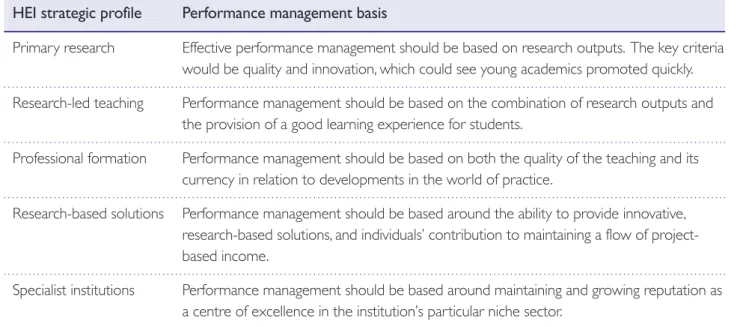
2010
Overview report
© HEFCE 2010
The copyright for this publication is held by the Higher Education Funding Council for England (HEFCE). The material may be copied or reproduced provided that the source is acknowledged and the material, wholly or in part, is not used for commercial gain. Use of the material for commercial gain requires the prior written permission of HEFCE.
The images used in this publication are copyright of Education Photos.
TM
ENVIR
ONMENTALLY FRIENDLY
Alternative formats
The higher education workforce
framework 2010: overview report
To
Heads of HEFCE-funded higher education institutions
Of interest to those responsible for
Human resources, Institutional planning and finance
Reference
2010/
05
Publication date
February 2010
Enquiries to
Amy Norton
tel 0117 931 7025
e-mail [email protected]
Rachel Pennington
tel 0117 931 7394
e-mail [email protected]
Alison Johns
tel 0117 931 7069
e-mail [email protected]
Contents
Page
Forewords
2
The ability, skills and dedication of its staff are often the most important determinants of the success of a higher education
institution. Outstanding staff in adequate surroundings will simply outperform adequate staff in outstanding
surroundings. Individual higher education institutions know this well and work hard to recruit and develop talent. However, at the level of the higher education sector, do we know the characteristics of our workforce and how they vary between institutions and over time by such factors as age, qualifications, discipline and nationality? Are we certain that, following recent investment, our human resource policies, procedures and practices, and also our leadership, are comparable with the very best? Is our workforce well prepared for life in a much more competitive and challenging economic environment?
The Higher Education Workforce Steering Group was established to address such questions. Over the past two years we have analysed data, consulted widely, commissioned and published five consultants’ reports – and now publish this outline report, giving an overview of the wealth of information contained in our main report, ‘The higher education workforce framework 2010: main report’ (HEFCE 2010/05a).
I trust that whatever your involvement with the higher education sector you will find this report of interest.
Professor Paul Curran
Chair, Higher Education Workforce Steering Group
Higher education in England delivers outstanding results at national and international levels; at its heart is a high-quality workforce
characterised by excellence, creativity and innovation.
This report has been
produced in testing economic times. The challenge for higher education will be to maintain the momentum achieved in recent years in a more constrained spending environment. Universities and colleges face tough financial conditions and yet they are crucial to delivering the country’s twin aims of a vibrant economy and a just society.
It is essential that universities and colleges are able to attract, retain and motivate talented staff if they are to remain successful within a changing national and global higher education environment. Staff in higher education must continue to adapt and change in response to the new expectations placed on them if we are to maintain the highest quality of higher education and research.
This report highlights the key achievements of higher education, the most pressing challenges for people working in our universities and colleges and the conditions required for a healthy and sustainable workforce; it also raises a number of key questions that we would like to see discussed in more detail.
• There is a clear public interest in supporting a sustainable, high-quality higher education (HE) workforce that has the capacity and capability to maintain the English HE sector’s world-class performance.
• Higher education relies on its ability to attract, retain and motivate talented staff. It is important that each higher education institution (HEI) can position itself as an ‘employer of choice’ for the most able staff and is able to engage, develop, motivate and reward its staff competitively.
• The future workforce requirements for the HE sector will be largely influenced by the factors driving change for the English HE sector
nationally and globally. Staff in HE must continue to adapt and change in response to these factors and the new expectations on staff, in order to maintain a high-quality higher education sector.
• Strategic human resource management1has a key role to play in supporting HEIs to develop a sustainable, fit for purpose and high-quality workforce for the future, thus contributing importantly to institutional success.
• Anticipated reductions in public and private funding will affect HE in a number of ways including: affordability of future pay rises;
affordability of employers’ pensions contributions; uncertainty over funded student growth; and increased volatility of international student fee income. Staffing structures and costs will need to be examined in order to respond to these pressures and to meet changing demands from students, employers and other stakeholders.
• In the drive to seek efficiencies and in a context of increasing demand (both of research, enterprise and teaching), HEIs face the challenge of maintaining standards and their international reputation for excellence in learning, teaching,
research and enterprise as well as positioning themselves to play an important role in the UK’s economic recovery.
• The changing nature of the HE marketplace, and the consequent increase in institutional strategic diversity in an increasingly international context, will require greater diversity in organisational capabilities and workforce requirements, placing a renewed emphasis on workforce planning.
• Views are divided among our consultees about whether sector-wide or other common frameworks (such as national pay bargaining, the single pay spine, the ‘post-1992’ academic contract and Model Statutes in the ‘pre-1992’ sector) act as enablers or barriers to HEIs/workforces becoming more flexible and agile.
• There is a greater willingness for HEIs to embrace cultural and behavioural change in equality and diversity, in line with the stronger legal framework in this area. Many HEIs are undertaking excellent work to address equality issues, but persistent patterns of under-representation and disadvantage, such as the gender pay gap, remain. Some of the areas covered most recently by legislation – such as sexual orientation, religion and age – also require more attention as we move the equality agenda forward.
• Effective performance management and high-quality leadership, governance and management are essential in forming the foundation of a successful, high-quality HE workforce.
The report concludes with five questions for debate by the sector, in response to the issues and trends identified in the report:
1. How can the sector become more flexible at a time of change while maximising the talent and
commitment of its people?
Key points
2. How can HE pay and reward remain
competitive, adequately rewarding people for their contribution, and equitable while also being affordable and not threatening the sector’s future financial sustainability?
3. National pay bargaining has continued to receive broad support across the sector’s employers and trade unions. What is the optimum industrial relations model for the sector to create an
environment where the sector’s sustainability and success is driven by a motivated, well rewarded and engaged workforce?
4. How can the sector best support (and subsequently implement) the aims of the Employers’ Pensions Forum to achieve sustainable pensions for the HE workforce in future?
5. To what extent do the existing contracts and university statutes require change to optimise performance management, workforce flexibility and to enable institutions to meet the diverse expectations of staff, students and employers?
1. This report provides an overview of the higher education (HE) workforce in England2. It offers an
analysis that recognises the key achievements of the sector, the critical contributions of the HE workforce, its most pressing challenges and the conditions required for a healthy and sustainable workforce.
2. This work was commissioned by the then Secretary of State for Innovation, Universities and Skills, in his annual grant letter in January 20083. In
that letter he invited HEFCE to produce a workforce report, to examine labour market trends within the sector and to focus on the HE workforce’s capacity and capability to respond to government priorities.
3. This report is structured around the key issues for the HE workforce that we have identified through research and consultation, and begins by setting out the current context for HE in England in 2010. The report presents an example of new financial models and investment patterns by HEIs and the implications for workforce planning. A range of specific challenges are then examined in turn, covering HE pay and pensions arrangements, the supply and demand of academic staff and the challenges of maintaining a high-quality workforce for the future. The report ends with an analysis of the role that strategic human resource management (HRM) can play in supporting higher education institutions (HEIs) at both local and national levels to meet the challenges of the future. The more detailed context and research that underpins this document can be read in ‘The higher education workforce framework 2010: main report’ (HEFCE 2010/05a) which is published at www.hefce.ac.uk under Publications.
Purpose
4. We regard this report’s primary purposes as: to advise Government about the key issues for the HE workforce; to provide evidence to inform future policy decisions; and to assist in institutional strategic
planning. Additionally, this report draws out some of the most pertinent questions about the future of the HE workforce which we believe merit greater debate and discussion in the sector.
5. HEIs are diverse and autonomous bodies with responsibility for the recruitment, retention and reward of their own staff. There is a clear public interest in supporting a sustainable and high-quality HE workforce that has the capacity and capability to maintain the English HE sector’s world-class
performance. The Council has drawn on a wide range of information and analysis to produce this report. We have endeavoured to capture and describe the diverse nature of HEIs in England and to
acknowledge that the most effective approach to change will be based on the local response to change by each HEI, depending on the specific circumstances and drivers that affect an individual institution; we have also identified the issues and priorities that HEIs across the sector have in common and the trends affecting the whole sector. We have consulted informally yet extensively through interactions with our steering group, the HE representative bodies, professional groups, sector bodies and trade unions. The issues and pressures facing the HE workforce of the future have been strongly stated by the sector, and we have registered a general willingness by HEIs to identify and tackle them. This report aims to present a balanced representation of the facts to support an informed debate within the sector.
Context
6. Higher education in England has delivered outstanding results at national and international levels with the excellence, creativity and innovation of its workforce deserving considerable credit for this success. The measures for HE’s performance are wide-ranging. For example: HEIs in the UK have provided ideas and services to business and community partners worth £2.812 billion in 2007-08, the highest level on
Introduction
2 The report covers the whole workforce: academic and professional/support staff and those staff usually outside of national pay frameworks.
record and a rise of 6.5 per cent on the year before4;
87 per cent of UK HE research activity reviewed by the 2008 Research Assessment Exercise was of international quality; the UK remains the second-favourite destination for international students (after the USA); the UK produces 9 per cent of the world’s scientific papers and 13 per cent of the most highly cited, despite having only 1 per cent of the world’s population; and in the 2009 National Student Survey 81 per cent of respondents said they were satisfied with their course5. Lord Mandelson, Secretary of State
for Business, Innovation and Skills, commented in his first speech about HE in July 2009 that:
‘our universities have been the source of a huge amount of the progressive and critical thinking on Government, education, social welfare and economics that has shaped 20th-century society’.
7. The success that HE has had in adapting, modernising and growing over the past two decades provides a strong foundation for the future. But to remain successful, HE and its workforce must continue to respond and adapt to a changing environment and expectations.
The economic challenge
8. The economic landscape in 2009 was very different to that of the recent past, with the first global recession since World War II. The reduction in overall public funding and the changes in the world economy mean that the period of rapid growth in public funding that HE has enjoyed over the past decade is unlikely to return for some time. It will be essential for HEIs to reduce costs and seek new income if they are to meet this challenge and create resource for future investment. They may do this by increasing efficiencies, focusing activity on areas of strength and exploring new markets.
9. The knock-on effects of public and private
funding reductions will impact on HE in a number of ways including: affordability of future pay rises; affordability of further increases in employers’
pensions contributions; uncertainty over funded student growth; increased risk of international
student fee income fluctuation; and increased margins on credit. Staffing structures and costs will need to evolve in order to respond to these pressures and to meet changing demands from students, employers and other stakeholders. Reductions in funding will increase the challenge for HEIs to deliver the full range of political and public policy priorities that are expected of them.
10. Many HEIs have already begun to implement voluntary severance/redundancy schemes and others have indicated their intentions to do so. The offer of voluntary terms has been the preferred option, but HEIs are now having to contemplate compulsory redundancies. The challenge will be to do this while retaining the commitment, engagement and creativity of staff, vital for the sector’s continued success but also to carry through successful organisational change programmes. Equality impact assessments of HEIs’ redundancy or restructuring processes will be important to prevent discriminatory outcomes and ensure compliance with anti-discrimination legislation. Additionally, HEIs are often significant (sometimes the largest) employers in their localities, so pressures on pay and, potentially, jobs will have varying impacts on all regions of the country.
Sustaining excellence
11. HEIs’ international reputation for excellence in learning, teaching and research is crucial to their competitive position and their ability to play an important role in the UK’s economic recovery. The risk to UK HE is that this international reputation for excellence, if lost or diminished, would take many years to recover.
12. The Financial Sustainability Strategy Group report on the financial sustainability of learning and teaching in English higher education6highlights the
need to protect the quality of the student learning experience, and the sustainability of institutions. The
4 Figure from ‘The Higher Education-Business and Community Interaction Survey: 2007-08’ (HEFCE 2009/23). All HEFCE publications are available at www.hefce.ac.uk under Publications.
report identifies that threats to sustainability are being felt particularly in three aspects of the student
learning experience: accessibility of staff to students; physical infrastructure for teaching and learning; and student support services. Without action to address all three of these areas of cost pressure, the report argues, it is inevitable that the quality and fitness for purpose of UK higher education, and its reputation and international competitive position, will be affected adversely.
13. High-quality teaching is fundamental to higher education. The Government and HEFCE have consistently encouraged universities to recognise and reward good teaching because it is the most vital part of the student experience of higher education. This point was reiterated by the Government in its response to the recommendations of the Innovation, Universities, Science and Skills Committee on Students and Universities7where it further
encouraged institutions to reward and recognise teaching in their performance arrangements and human resource strategies.
Technological advances and opportunities
14. Advancing technologies and technology-based services will change public experiences and
expectations for accessing and sharing knowledge, requiring HEIs to rethink the ways in which they add value. A good information and communications technology (ICT) infrastructure is essential but the real challenge is for institutions to exploit ICT more effectively than their competitors (both national and international). In particular this means more online learning, better management systems, improved tools for collaborative research, more online content and more effective tools to find and use this content.
15. Technology also has the capacity to revolutionise the managerial and administrative functions of an HEI, enabling it to operate enhanced process efficiency or highly effective information and data systems (for example for student data or grant applications).The exploitation of ICT to realise cost savings and improve value for money needs leadership and culture change.
There are many opportunities to consider; the technical risks are modest but the risks to an organisation through adopting new business and pedagogic processes can be considerable. Nonetheless, funding and economic pressures require such change.
16. There are three primary ways in which the implementation and future development of ICT will impact on the HE workforce:
• the continuing need for updated skills and ICT capacity, both for academic staff (who will have pedagogic and scholarly expectations to meet around ICT use and development) and professional/support staff who will require competency in core ICT systems
• the way in which ICT will inform and shape future workforce planning, either because ICT will drive business process automation/efficiency which will facilitate shared services or workforce efficiency, or because ICT planning and
forecasting tools will enable more accurate workforce planning in the future
• cultural change and leadership, required to lead HEIs into new ways of working in an ICT-enabled institution. The Joint Information Systems
Committee (JISC) and the Leadership Foundation for Higher Education (LFHE) have already recognised this as a key challenge for the future and have signed a joint ‘memorandum of
understanding’ to support the strategic use of ICT by HE senior management and future leaders.
New strategic
models:
implications for
HE workforce
planning
17. The competitive and multi-faceted nature of the HE marketplace has produced different income and investment patterns in HEIs. Professor Alison Richard’s speech to Universities UK’s annual
conference in September 2008 articulated the benefits of a diverse HE sector in the UK:
‘…our institutions clearly vary in how we combine our portfolios around a single, broadly shared purpose. Our diversity is reflected in our students, their age range and ratio of part-time to full-time students, the places they come from in the UK and overseas, the courses they study and
how they learn, and what they then go on to do. As institutions we differ, proudly, in age, size, history, governance, course offerings, emphasis on research and teaching, and balance of academic and professional or pre-professional training. That diversity is a real strength for students, for society, and also for our individual institutions.’8
18. PA Consulting’s report ‘The Future Workforce for Higher Education’9, offers a model for understanding
the varied ‘marketplace’10in which HEIs are
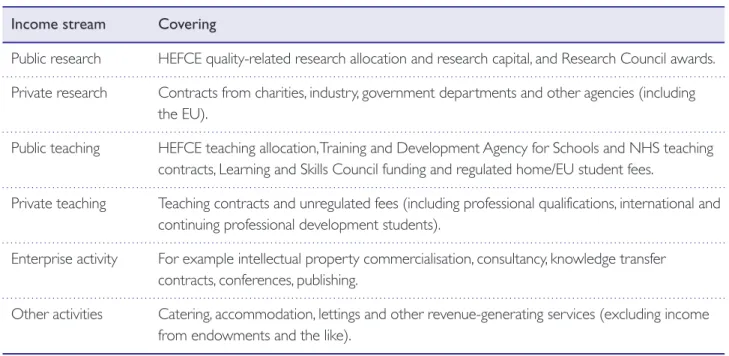
operating, by identifying and mapping the six main income streams. These are summarised in Table 1.
Table 1
The six main income streams for English HE
Income stream Covering
Public research HEFCE quality-related research allocation and research capital, and Research Council awards.
Private research Contracts from charities, industry, government departments and other agencies (including the EU).
Public teaching HEFCE teaching allocation, Training and Development Agency for Schools and NHS teaching contracts, Learning and Skills Council funding and regulated home/EU student fees.
Private teaching Teaching contracts and unregulated fees (including professional qualifications, international and continuing professional development students).
Enterprise activity For example intellectual property commercialisation, consultancy, knowledge transfer contracts, conferences, publishing.
Other activities Catering, accommodation, lettings and other revenue-generating services (excluding income from endowments and the like).
8 Professor Alison Richard, speech to Universities UK Annual Conference, ‘Quality, talent and diversity in the UK university system’ (10 September 2008).
9 ‘The Future Workforce for Higher Education: a report to HEFCE by PA Consulting Group’ (February 2010) can be read at www.hefce.ac.uk under Publications/Research & evaluation.
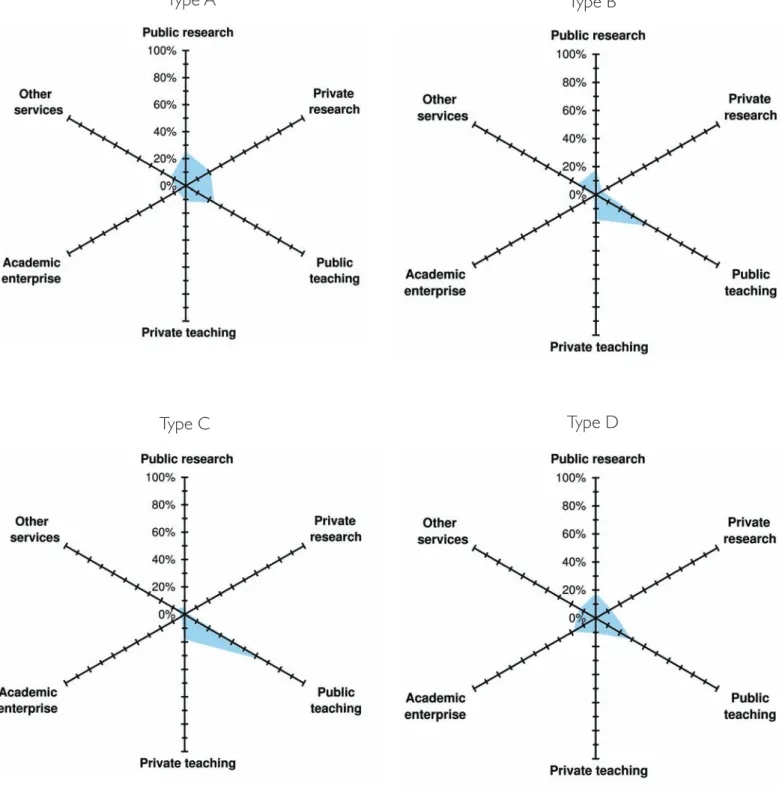
Figure 1
Illustrative examples of institutional strategic profiles based on income
Type A
Type B
Type C
Type D
19. Mapping the diversity of the HE sector by income streams clearly shows that HEIs operate in many and diverse markets, each with different funders and with different prospects and conditions for success. Analysis of institutional income data from the Higher Education Statistics Agency (HESA) enabled PA to observe patterns in institutions’ income streams. Figure 1 illustrates the diversity of the sector: each of
20. To clarify the observed patterns in HE income streams, PA identified (through discussions and workshops with sector representatives) five distinct categories of HE activities, each of which maps to the income streams identified in Table 1. These can be described as11:
a. Primary research– the development and dissemination of advanced research results into the public domain, contributing to the
development of national and international intellectual capital; funded mainly from the public and (some) private research streams (aligns with Type A in Figure 1).
b. Research-led teaching– discipline-based, undergraduate and postgraduate programmes taught by staff who are actively involved in public and private research, with the style and content of teaching strongly influenced by current research; funded mainly from public teaching sources, plus overseas student fees (aligns with Type B in Figure 1).
c. Professional formation– teaching provision explicitly geared to preparing or developing students for work in areas of professional practice, often including substantial elements of practical, work-based experience; funded partly through public teaching grants and also through private individual and corporate fees and contracts (aligns with Type C in Figure 1). d. Research-based solutions– development of
practical and commercial solutions, drawing directly on advanced research findings, to technically complex problems posed by business or government clients; funded mainly from business and government clients for academic enterprise, and also some private research (aligns with Type D in Figure 1).
e. Specialist and niche provision– applied teaching (often mainly postgraduate) and research services directed towards particular areas of practice such as creative arts, agriculture or bio-medical
specialities; variously funded from each of the core streams, depending on the institution (hence no diagrammatic example is presented in Figure 1).
21. The changing nature of the HE marketplace and the consequent increase in institutional strategic diversity will require greater diversity in organisational capabilities and supporting workforce requirements and a renewed emphasis on workforce planning.
Implications for workforce requirements
22. One of the key challenges for the future HE environment is the continued turbulence, instability and increasingly fast pace of change being
experienced. In contrast to the relative stability12of the historical, predominantly publicly funded model of HE, the future environment looks far less
predictable; the financial/strategic models that succeed today are likely to develop further in 10-15 years’ time. Consequently, institutional strategies and financial models and the workforce capabilities needed to sustain them will be subject to continuous challenge and review. Workforce strategies will need to be agile and flexible to adapt to new conditions and demands.
23. The National Union of Students (NUS) affirms that the new generation of students increasingly seek speed, control and greater personalised learning, (learner-centred teaching, taking account of personal learning styles) delivered at a time and place to suit them. Students are confident with technology, in a way that not all the workforce necessarily is. Changing student requirements and the critical importance of technology to the learning and teaching process are critical workforce development priorities for the future.
24. The demand for a more flexible higher education system will particularly be driven by the need to provide different forms of HE delivery – different to the full-time, three-year model aimed at young students due to anticipated increased demands for non-traditional student markets; for example mature students in work interested in ensuring their skills are fit for current and future needs. Alongside this, the key pressures on working patterns include the need for HEIs to deliver multi-mode teaching (for example e-learning, distance learning and experiential
learning) at times and in ways that suit students. In
11 There is a more detailed exposition of the strategic and workforce implications of these strategic investment patterns in ‘The higher education workforce framework 2010: main report’ (HEFCE 2010/05a).
the longer term other pressures, for example climate change and carbon emission reduction, are
challenging the current norm for teaching hours and ‘term’ times, which would require different and shifting work patterns for employees.
25. A shift towards greater workforce flexibility, institutional agility and new patterns of income raises questions for HEIs. The examples shown in Figure 1 place demanding requirements on the HE workforce of the future13and raise questions about the
application and interpretation of sector-wide arrangements and frameworks. These questions are discussed in turn in paragraphs 26 to 37.
How do HEIs ensure they retain the elements
valued by the sector, staff and students, balanced
against a need to become more flexible?
26. The changes required to everyday working practices to operate new financial models can place challenging and uncomfortable demands on the workforce. For example, responding to students’ demands for more flexible and personalised learning will potentially require teaching staff to work different hours, which may be in direct contrast with the flexibility staff might want. HEIs will need to consider different ways of adapting to change while retaining their most important capabilities.
Are the current sector-wide employment
agreements and frameworks enablers or
barriers to greater flexibility?
27. There are a range of sector-wide or other common frameworks across HE such as national pay bargaining, the single pay spine, the ‘post-1992’ academic contract and Model Statutes in the ‘pre-1992’ sector. Various HEIs and some members of sector professional associations are of the view that sector-wide frameworks and agreements constrain flexibility and create either administrative, cost or employee relations ‘burdens’ to resolve. The counter view is that the frameworks are fit for purpose because they can beimplementedflexibly, which makes them neither a barrier nor an enabler. Others feel that
various customs and practices that have built up over years are now so engrained within institutional culture that they form the most challenging barrier to increased workforce flexibility. It is perhaps this lack of consensus that has contributed to the maintenance of the status quo, but issues and questions raised by our stakeholders suggest that the time is now right for debate.
28. Professor Paul Ramsden’s report ‘The Future of Higher Education Teaching and the Student Experience’14suggests that:
‘Universities and colleges, supported by national professional associations for academics, should develop more flexible employment contracts that recognise different patterns of work. We should recognise that the academic workforce is part of the wider workforce; increased fluidity and transferability between sectors is desirable, not only for research purposes but also to ensure high-quality teaching and a common
understanding of the connections between higher education and employment skills.’
29. Views are mixed within post-1992 universities and HE colleges about the extent to which the teaching contract is a barrier, with some arguing that institutional culture and management capacity are more important than the detail contained in
contracts. The University and College Union (UCU) feels strongly that the post-1992 academic contract is an important standard and safeguard that protects academics’ time for teaching and other scholarly activity. The UCU fears that if the contract were to be changed, workloads would increase and academics’ career progression expectations would not be met. Others in the post-1992 community feel strongly that the contract is a problem that must be solved, because they see it as outdated, focusing too heavily on teaching inputs rather than the wider range of educational, research and enterprise outcomes towards which HEIs are striving. For those who find themselves in competition with private sector
13 See section 3 of ‘The Future Workforce for Higher Education: A report to HEFCE by PA Consulting Group’ (available at www.hefce.ac.uk under Publications/Research & evaluation) for a more detailed analysis of workforce requirements by strategic type.
providers, the contract is also problematic due to the lack of flexibility over the costing and pricing of teaching time and delivery because there are specified numbers of maximum hours an academic can teach in a year.
30. While there has been some movement away from the standard teaching contract in post-1992 HEIs and colleges, increasingly others have managed to re-shape their standard teaching contracts around their
changing requirements (for instance, implementing different modes of working to accommodate more employer engagement teaching activity).
31. The situation is more complex for ‘chartered’ institutions15where the employment conditions of academic staff are governed by a long and complex employment statute known as the ‘Model Statute’, dating back to the Education Reform Act 1988.
32. In 2002 a working group made up of the Universities and Colleges Employers Association (UCEA) and Universities UK (UUK), chaired by Professor Graham Zellick, developed proposals to update the Model Statute and this was approved by the Privy Council in 2003. Although a few HEIs have adopted the revised Model Statute, it is debatable whether this is actually an improvement on the original version in terms of compliance with employment law. When we consulted with sector groups, the Model Statutes were often cited as being out of pace with employment law and a significant barrier to the effective performance management of academic staff.
33. As with all statutes, the Model Statute can only be changed by application to the Privy Council. However, in recent years a number of HEIs have moved the provisions of their Model Statutes to ordinances, thereby allowing modifications by the institution without needing Privy Council approval. The advantage of this is that HEIs can make more timely changes to their procedures as and when employment law changes. For instance the legal requirements for disciplinary and grievance
procedures have changed twice in the past five years.
34. The key challenge for these HEIs is the time, complexity and expense they face if they wish to amend their Model Statutes (at the same time as protecting the essential freedoms for academic enquiry and delivery of research) as well as the need to secure trade union agreement and finally Privy Council approval. When we discussed this issue with the UCU in October 2009, it expressed discomfort over any potential changes to Model Statutes, with a concern that new arrangements could damage the relationship between an academic and their
institution in terms of academic freedoms. However, if Model Statute provisions are moved out of Privy Council control, HEIs are still required to adhere to the principles of academic freedom and this must be set out in their charter or statutes.
Case study
University of Exeter
The University of Exeter initiated work to revise its university statutes in 2008. It aimed to update them to reflect recent employment law and best practice (for example, the 2009 Advisory, Conciliation and Arbitration Service statutory code of practice on disciplinary and grievance procedures), as well as moving the employment elements that had previously been in the statutes permanently into university ordinances.
The new ordinances include a range of
employment policies and have been extended to cover all staff groups, rather than just academic staff as had been the case previously. This process has involved working in partnership with all the recognised trade unions, going through a consultative process where each new policy was examined in detail at both local branch and regional level. This led to the university being given Privy Council approval for the new statutes in the summer of 2008.
The new ordinances provide more flexibility for the university, because they can be kept up to date or modified in future with approval from the university’s own governance rather than from Privy Council.
What could be the potential cost to the HE
workforce of having more flexible working
conditions?
35. Part of the uniqueness of the higher education sector is its academic staff and the freedom they have to pursue scholarship, create new knowledge and work in a highly collegial, committed and peer-regulated way. These elements of the normal academic working environment are thought, by unions and employers alike, to represent the ‘psychological contract’ that exists between the academic workforce and their employers; where a range of freedoms, customs, practices and expectations form an important, unwritten, relationship between the individual and the
organisation. If the sector changes inappropriately it runs the risk of damaging the psychological contract and undermining what has made the sector so successful.
36. Throughout our consultations, people have highlighted the need for more flexible working to enable HEIs to be more responsive to a variety of drivers, principally the changing needs of the student population. Flexible working has been a reality in HE for many years and there are strong compliance reasons for HEIs to meet employee demands for flexible working under employment legislation.
37. However, there needs to be more discussion and consensus around the increased demand for flexible working by employees (for example, to assist in family or caring responsibilities) against flexible, or
Higher
education pay
This section examines the background to
the current HE pay arrangements,
including HEIs’ achievements in
Context
38. In the late 1990s, Lord Dearing’s National Committee of Inquiry into HE and Sir Michael Bett’s independent review of HE pay and conditions found that HE pay was lagging behind the rest of the economy. In 1997, Dearing found that ‘recent evidence suggests that the majority, but by no means all, of staff in higher education are paid substantially below comparable private and public sector rates’16.
Bett’s subsequent review in 1999 of HE pay and conditions found that: ‘The average earnings for pre-1992 university academic staff have increased since 1981 by 30 per cent less than the average for non-manual employees throughout the UK economy and by 18 per cent less than the average for non-manual staff.’17Work by the sector to redress this imbalance
resulted in a cumulative total of the HE pay awards in the years 2001-2008 of at least 36.5 per cent, with a higher increase for the lowest points on the pay spine. This represents a major investment by HEIs to ensure that staff are rewarded competitively.
39. The Joint Negotiating Committee for HE Staff (JNCHES) was set up in 2001 as a partnership between UCEA (representing all HE sector
employers) and the trade unions. The employers and trade unions achieved positive reforms to the
bargaining process in September 2008 and a ‘New JNCHES’ agreement and constitution was launched18. It agreed new national negotiating
arrangements for the sector and facilitated the subsequent Framework Agreement for the Modernisation of Pay Structures in HE.
40. This agreement was the platform to: modernise pay arrangements in the sector to improve the recruitment and retention of staff; ensure equal pay for work of equal value; tackle problems of low pay; recognise and reward the contribution that
individuals make; and underpin the opportunities for career and organisational development.
41. The Framework Agreement for the
modernisation of pay structures in HE was a major
Figure 2
HE mean and median salaries for academic and professional and support staff from
2003-04 to 2008-09
Source: HESA individualised staff record, 2003-04 to 2008-09.
16 Lord Dearing, ‘Report of the National Committee of Enquiry into Higher Education’ (1997) paragraph 71. For the full report see https://bei.leeds.ac.uk/partners/NCIHE
17 Sir Michael Bett, ‘Independent Review of Higher Education Pay and Conditions’ (1999) paragraph 155. 18 Press release, ‘New JNCHES: Joint Statement’ (29 September 2008), available at
www.ucea.ac.uk/filemanager/root/site_assets/new_release_docs/new_jnches_-_29_september_2008.pdf 0
£10,000 £20,000 £30,000 £40,000 £50,000 £60,000
Permanent academic (excluding clinical) staff mean
Permanent academic (excluding clinical) staff median
Professional and support staff mean
Professional and support staff median
2003-04 2004-05 2005-06 2006-07 2007-08 2008-09
Salar
y
milestone in JNCHES’ work and led to a significant period of pay and grading reform across UK HE. When Oakleigh Consulting evaluated public policy and investment in HRM in HE in 200919, it found
the implementation of the Framework Agreement to be one of the major influences on HRM this decade, with a particularly positive impact on HRM practice.
Implementation of the Framework
Agreement
42. The scale of work and achievement of the sector in implementing the Framework Agreement has been significant, and most HEIs in the UK have now implemented it. As would be expected in a process of introducing job evaluation and new grading
arrangements, the implementation costs were significant, the median being 3 per cent of an HEI’s pay bill. HEIs used HEFCE’s Rewarding and Developing Staff funding, among other funding streams, to cover their costs.
43. Although the Framework Agreement has brought considerable benefits, especially the use of job
evaluation to tackle issues of equal pay for work of equal value, some dissatisfaction has been expressed by various sector organisations, particularly with the pay levels of the lowest points on the new national pay spine. Like other public sector pay frameworks, (such as that in local government), these lowest levels are commonly paid more than the local labour market, which is leading some HEIs to outsource some functions (catering and security, for example) purely on cost grounds. Some sector organisations we consulted were beginning to question whether the national pay spine was creating inflexibility within institutional pay systems and interfering with their ability to control costs effectively. They felt this might lead to future fragmentation or even a break-up of the pay spine. Others, though, felt that the pay spine
offered enough flexibility (for example by being able to place grades at locally determined points on the spine, allowing for market supplements and contribution points, as well as the opportunity to negotiate with trade unions locally on specific issues) and would support its continuing use.
Future sector pay arrangements
44. Some of the HE stakeholders and representative bodies who made submissions to this report20
highlighted both national pay bargaining and trade union relations as being key management challenges for the future.
45. Throughout our consultations with HEIs and sector bodies, we have noted widespread support for the current national pay bargaining arrangements at this time. This support has become more coherent across the sector throughout the 2009-10 pay
negotiations but its long-term future remains open to debate. There remains a view in the sector that the optimum bargaining arrangements have yet to be settled upon. HEIs and sector bodies continue to discuss the pros and cons of national negotiations, and the view has been put forward that with the current and future economic uncertainty, local bargaining might be an opportunity for individual HEIs to renegotiate the entire employment
relationship with their workforces and establish more sustainable, bespoke arrangements. Some HEIs feel that local bargaining would give them more control and autonomy over their own staff costs. This view is countered by the benefits cited of: saving costs (individual HEIs do not need to invest in building local negotiating capacity among their managers); ensuring pay equity (there is still a gender pay gap in HE21); transparency and fairness across the whole
sector; and being able to maintain good relations with local trade union branches. It also avoids the potential
19 ‘Evaluation of the impact of public policy and investments in human resource management in higher education since 2001: A report to HEFCE by Oakleigh Consulting’ (June 2009), available at www.hefce.ac.uk under Publications/Research & evaluation.
20 The Association of Heads of University Administration, The Leadership Foundation for HE, GuildHE, Universities Human Resources (formerly the Universities Personnel Association), the British Universities Finance Directors Group and the Universities and Colleges Employers Association.
for pay ‘leapfrogging’ or pattern bargaining (where a pay agreement negotiated at one institution is used as a lever to secure similar agreements at other HEIs). Nervousness was expressed about the prospect of a ‘pay league table’ being created, or an increase in trade union disputes at a local level if HEIs negotiated individually.
Affordability
46. Although HE pay had undoubtedly ‘caught up’ over the past decade, pay increases in May and October 2008 gave a combined increase of 8 per cent which was well ahead of the country as a whole, with a median whole-economy pay increase of 3.5 per cent over the 12 months of 200822. Members of UCEA
estimate that staff costs are likely to rise by at least 4.5 per cent in 2009-10 (taking into account a 2 per cent increase to the Universities Superannuation Scheme (USS)23employers’ contributions for
pre-1992 HEIs, incremental pay rises of around 2 per cent, and 0.5 per cent for the 2009-10 agreed increase to all points on the pay spine)24. With staff costs
typically amounting to an average of 57 per cent of total institutional expenditure, any reductions in HEIs’ income or further increases to pay and other staff costs raise serious concerns about affordability.
47. Questions are being raised by institutions about the future sustainability of the incremental pay increases that around two-thirds of HE staff on average receive annually; these are paid in addition to the nationally negotiated increases to all points on the pay spine25although many HEIs are moving towards
making these increments contribution- or
performance-related. Some HEIs acknowledge that expectations about future pay increases, including increments, will need to be managed.
48. The pressures on affordability for HEIs stem from the impact of the global economic recession on the UK. This will result in pressure on public funding due to the Treasury’s need to service public borrowing as a priority for the medium term, as well as reduced income from the private sector and charities, and the pressures of managing an increasingly fixed cost base with increasingly variable income. This is exacerbated by the risk of greater volatility in international student fee income and reductions to the value of HEIs’ investments as a result of the recession.
22 ‘Pay Prospects 2010: Planning for Recovery’, Incomes Data Services Pay Report 1034 (October 2009).
23 The USS is the principle scheme for academic and administrative staff, predominantly in pre-1992 HEIs, and was established in 1974. 24 Employers’ side statement to New JNCHES staff side (27 April 2009), updated following the 2009-10 pay agreement.
HE pensions
‘Pay and pensions are seen by all to be an
essential part of the sector’s remuneration
package. Employers recognise that the
quality of pension provision in HE has a
significant impact on both the recruitment
and retention of high-quality staff at all
levels, so it’s only sensible to look at all the
pension options and ensure sustainable and
effective arrangements for the future.’
UCEA briefing and Q&A, May 2008
26
.
Affordability
49. There are a number of different pension schemes operating in the HE sector in the UK, each with different arrangements. Most of them provide defined benefits. They are all under pressure and most were in deficit by the end of 2008-09.
50. There are two main pension schemes for academic and academic-related staff in HE: the USS and the Teachers’ Pension Scheme (TPS)27. Other
staff will be members of one of the 48 institution-specific (mostly defined benefit) self-administered trusts (SATs)28or a Local Government Pension
Scheme (LGPS)29. Clinical academics are likely to be
members of the NHS pension scheme. The picture across the sector is therefore varied and complex, often with a variety of different pension schemes operating within one HEI, each with its own rules, risks and contribution rates.
51. A fundamental and sector-led review of HE pensions is under way (see paragraphs 54 to 56). A great deal of sector-led development work is currently focused on USS, because it is owned and operated within the sector, but other major schemes, such as TPS and the LGPSs, are of equal priority and arguably pose greater risk because the sector has less control over them (although TPS has been through some reform in recent years). Deficits within the other publicly operated schemes are also substantial in some cases and creating large liabilities for HEIs.
52. At present, pension contributions are
insufficient to meet the future liabilities arising from increased longevity, falling investment income and the current rate of salary increase. As pension costs increase in the future, either employer or employee contributions, or both, will need to rise, or benefits will need to be reduced.
53. The employer’s contribution to USS increased in October 2009 from 14 to 16 per cent and further increases in the future are seen as a significant risk unless the scheme is reformed. The 2 per cent increase in 2009 adds an additional £130 million to the sector’s USS pension contributions (which from October 2009 total £723 million30annually), and
this is clearly a huge cost to be carried by the sector. The USS employee contribution rate remains capped at 6.35 per cent of salary.
Sectoral responses
54. UUK, GuildHE and UCEA have established the Employers’ Pension Forum (EPF) to consider the pension needs of the HE sector. The extent and breadth of the EPF’s work is significant, with two major reports already completed. The Hewitt Report of October 200731provided a useful context for
pensions in HE and advocated the formulation of a 10-year pensions strategy for the sector. Using funding from HEFCE’s Leadership, Governance and Management (LGM) Fund, pensions specialist Peter Thompson published a report32examining the
available options in some detail. In summary, the results of consultation with HEIs are:
• defined benefit provision is still appropriate for the sector
• there are strong concerns about affordability
• cost increases must be shared between employers and employees
• retirement ages should be raised in line with life expectancy
• all employees should have the same pension provision
• a career average scheme might be a suitable fall-back if final salary proves unsustainable
27 The TPS is the principle pension scheme for academic and professional/support staff in post-1992 HEIs. TPS and the NHS pension schemes are unfunded schemes, so do not have deficits.
28 SATs are pension schemes operated by individual HEIs, usually for support staff in pre-1992 HEIs.
29 The LGPS is another pension scheme of which academic and professional/support staff from post-1992 HEIs might be members. 30 Source: UCEA input to the ‘USS Review: Employers Paper on the costs of contribution rates’ (20 March 2009). Figures are approximate, could vary by ±£10 million and are included for illustrative purposes.
31 Hewitt Consulting, ‘Strategic enquiry into the pensions arrangements for the higher education sector’, UUK (2007). Available from www.ucea.ac.uk under Pay & Reward/Pensions.
• 50 per cent of respondents were interested in offering a ‘menu’ of pension benefits to their employees
• some facilitation of scheme collaboration or merger would be helpful if feasible.
55. Taking these views into account, the EPF and its USS sub-group have committed to:
• a review of USS (planned to report in April 2010 and seeking to implement changes in October 2010)
• a feasibility study on the options for SATs, which will examine options for merging some/all of the schemes to save administrative costs or to change the models on which the schemes operate.
56. HEFCE’s LGM Fund is sponsoring a
UUK/GuildHE/UCEA project to take forward work around the review of USS in particular and other HE pension schemes to ensure the long-term
sustainability of the pensions offered within the HE sector. They will provide HEIs with options in relation to type of pension offered and will support reforms of all the pension schemes in the HE sector, where reforms are necessary and appropriate. This will include reform of the USS over the next two years. They will also:
• provide guidance to the sector on the legislative and scheme specific changes that impact on the HE sector
• improve communication and understanding of pensions issues and challenges within the sector
• disseminate information relating to the outcomes of the project, including development of
consultation mechanisms.
Employee relations
Context
57. Pensions are not currently part of the national pay negotiations. Schemes have their own
arrangements for making changes to members’ terms and conditions; for example, the USS is controlled by its board of Trustees, nominated by the main
academic and academic-related staff union, UCU, UUK, funding council and co-opted nominees.
Trustees are appointed by UCU. Changes to the scheme must be made by negotiation through a sub-committee of the USS board called the Joint
Negotiating Committee. The Joint Negotiating Committee is a decision-making body comprising equal numbers of representatives of employers and UCU, with an independent chair.
Moving forward
58. There has been a trend among employers to talk in terms of ‘staff costs’ within the national pay negotiations in an effort to negotiate affordable pay and benefits increases that take into account the full range of costs of employing staff (employing additional staff, promotions, pensions, contribution pay, and annual increments and any increases to the single pay spine). Employers are emphasising that increases to the salary bill equate to increases in overall staff costs (including pension contributions) and must remain affordable.
Supporting a
sustainable HE
workforce for
the future
‘HE has never been more exciting, or
offered greater career opportunities. With a
world-renowned reputation for excellence,
HE really is one of the UK’s great success
stories. For this to be sustained, sound
business management, forward-thinking HR,
and good employee relations all need to play
their part.’ Professor Sir William Wakeham,
(immediate past) Chair, UCEA, and former
Vice-Chancellor, University of
Southampton
33.
60. Higher education, perhaps more than any other sector, relies on its ability to attract, retain and motivate talented staff. Higher education requires the brightest minds: highly committed, innovative and creative people with a desire to develop and share knowledge with future generations. Governments around the world view HE as the key to their country’s economic development and success. Therefore, it is important that HEIs are regarded as ‘employers of choice’ for the most able staff and are able to engage, motivate and reward their staff competitively.
61. In this section we look in more detail at the supply and demand issues for academic staff and discuss how to sustain quality for the future.
Supply and demand of staff
62. This section presents core data about the current HE workforce. It presents and analyses key supply and demand trends for the academic workforce by
subject. Key issues around recruitment, retention and contract status are also discussed. This section covers:
• size and shape of the HE workforce
• supply of academic staff
• future demand for academic staff
• recruitment and retention
• contract status.
Size and shape of the HE workforce
63. Table 2 shows that the overall number of staff employed in HE in England in academic year 2008-09 has grown by more than 22,500 to over 314,000, a rise of 7.7 per cent since 2005-06. During the same period, overall student numbers have risen by more than 69,000 to 2.01 million34, a rise of 3.6 per
cent. The proportions of staff with academic, professional and support and combined roles have remained stable.
Table 2
Staff in English HEIs by role
Role 2005-06 2008-09
Number of staff % Number of staff %
Academic role only 132,415 45 143,395 46
Professional/support and academic roles 7,740 3 9,190 3
Professional/support role only 152,280 52 162,375 52
Total with academic roles 140,155 N/A 152,585 N/A
Total with professional/support roles 160,020 N/A 171,565 N/A
Total 292,435 100 314,960 100
Note: Rounding of percentage points means the 2008-09 proportions sum to more than the total.
Source: HESA individualised staff record, 2005-06 to 2008-09.
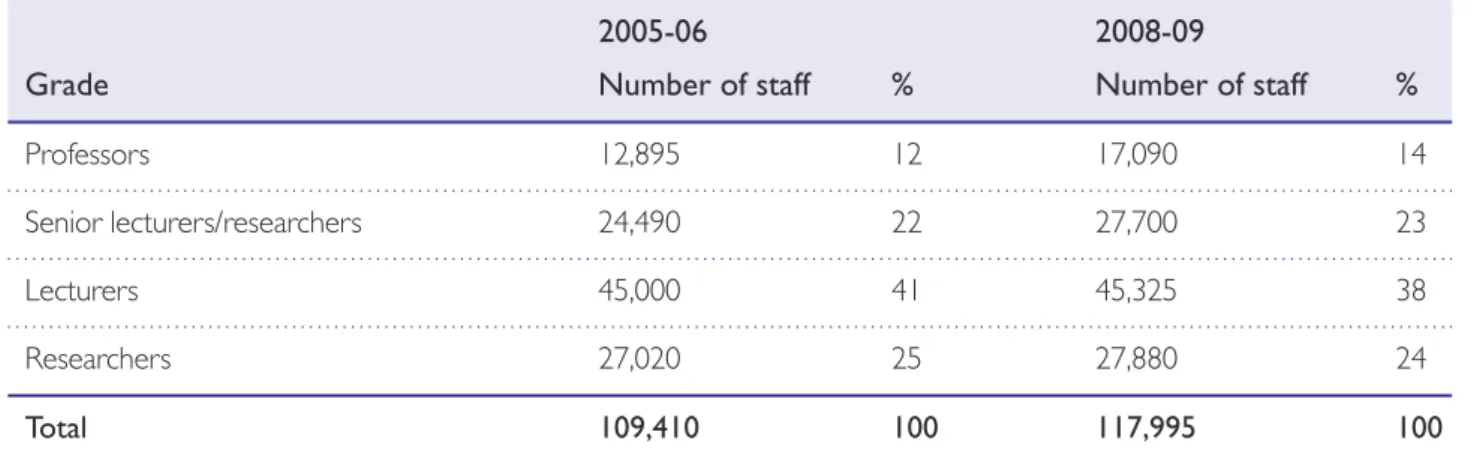
64. Table 3 illustrates rapid growth (a 33 per cent increase since 2005-06) in the numbers and
proportions of academic staff at the grade of professor. HEIs are increasingly using ‘position on the new national pay spine’ to categorise their staff and career structures rather than the formerly common
definitions of ‘grade’35. Previously the reporting of the
number of professors was an underestimate because some large HEIs did not identify their professors separately. These changes may therefore partially account for the increased proportion of professors. From the 2008-09 data collection onwards, HESA will be requesting data about institutional pay structures, which will aid better presentation and understanding of pay and grading data.
65. Figure 3 illustrates that the age profile of permanent academic staff in England has remained broadly stable over the past 14 years, with some increase in the proportion of staff aged 60 and over in the last four years (an increase of three percentage points since 2005-06). Fears of a retirement ‘time-bomb’ for the academic staff population in general are not supported by the data. However, there are some subject areas with slightly higher than average age profiles, notably education, mathematical sciences and social/political/economic studies36.
66. Three-quarters of the academic staff population are aged over 40 and one-quarter of all academic staff are aged over 55. The average age of an academic in England has increased from 43.4 in 2005-06 to 43.9
in 2008-0937(this compares to an average age in the
wider UK workforce of 40.9 in 2008-0938). Overall,
there has been just a 1 per cent increase in the proportion of academic staff aged over 55 over the past four years (this follows the general trend in the UK workforce).
67. The impact that a (slowly) ageing workforce could have, coupled with the probability of a future lifting or abolishing of the retirement age, could lead to risks for HEIs around low staff turnover and a potential lack of opportunities for people in their early careers to progress. The impending retirement of the ‘baby-boomer’ generation is a key concern of many of our comparator countries, cited by the Association of Commonwealth Universities report ‘Human Resource Management in Commonwealth Universities’39and
the HEFCE-commissioned report ‘International experiences of human resource management in higher education’40. Both these reports highlight the
challenge to the global ‘war for talent’ from a potential en-masse retirement of this generation, although they do acknowledge the differing impacts this will have in different geographical areas (for instance, Australia does not operate a default statutory retirement age).
68. Due to the limited numbers of staff in HE aged under 30, some consideration is being given in the sector to formal apprenticeships and more informal trainee schemes, which encourage younger people to enter the HE workforce in specific roles that do not require formal qualifications41.
35 The expected substantial rise in the use of locally determined grades for academic staff between 2004-05 and 2007-08 has caused HEFCE to revise its methods of staff classification in terms of grade, details of which are given at Annex A of ‘Staff employed at HEFCE-funded HEIs: update’ (HEFCE 2007/36).
36 ‘The higher education workforce framework 2010: main report’ (HEFCE 2010/05a) provides information about the proportion of permanent academic staff aged 55 and over by subject area.
37 Source: HESA staff record 2005-06 to 2008-09.
38 Source: Office for National Statistics, Labour Force Survey 2007-08.
39 ‘Human Resource Management in Commonwealth Universities’, Association of Commonwealth Universities (May 2008). 40 Dowds, N, ‘International experiences of human resource management in higher education’ (February 2010), available at www.hefce.ac.uk under Publications/Research & evaluation.
0% 10% 20% 30% 40% 50% 60% 70% 80%
Academic year
Pr
opor
tion of staff
90% 100%
1995-96 1996-97 1997-98 1998-99
1999-2000 2000-01 2001-02 2002-03 2003-04 2004-05 2005-06 2006-07 2007-08 2008-09
60 and over
50-59
40-49
30-39
Under 30
Table 3
Staff in English HEIs with academic roles by grade
2005-06 2008-09
Grade Number of staff % Number of staff %
Professors 12,895 12 17,090 14
Senior lecturers/researchers 24,490 22 27,700 23
Lecturers 45,000 41 45,325 38
Researchers 27,020 25 27,880 24
Total 109,410 100 117,995 100
Source: HEFCE analysis of the HESA individualised staff record, 2005-06 to 2008-09.
Figure 3
Permanent academic staff by age group
Supply of academic staff
69. There are three main routes to an academic career:
• newly qualified PhD students
• staff joining from the private and public sectors, especially in the sciences, engineering,
information technology (IT), law, health, education and business, where such recruitment ensures that teaching and research link to the wider economic and social context (usually in their mid-careers)
• staff recruited from overseas, including those from outside the European Union and related countries who require work permits.
Newly qualified PhD students
70. Newly qualified postgraduates are an important source of recruits into the academic workforce. There has been overall growth in the numbers of students qualifying with PhDs and much of this growth has been fuelled by international students (Figure 4). There are concerns for HEIs because the high-calibre postgraduates they seek to recruit are graduating with an increased level of undergraduate student debt and can often command higher salaries (especially in science, technology, engineering and mathematics (STEM) subjects) in the private sector. Some of our consultees highlighted the need for HEIs to properly value, respect and support their PhD students as full members of the HE community, which they perceived was the case in competitor countries such as the USA.
New academic staff
71. HEFCE analysis indicates a similar trend is reflected in the nationality of new academic starters42
to the sector; there has been a drop in the numbers of UK-domiciled staff and a rise in the numbers of international staff (Figure 5). The top two subjects for
international staff show a trend towards the biological and physical sciences (between 14 and 18 per cent of staff in these subject areas are now recruited from overseas). The increased internationalisation of the academic workforce has a generally positive impact on the sector, for example a greater diversity of the workforce, increased opportunities for international collaboration and partnerships, and opportunities for HEIs to recruit internationally excellent teaching and research staff. The 2009 World Bank report ‘The challenge of establishing world-class universities’ notes that: ‘World-class universities are able to select the best students and attract the most qualified professors and researchers.’43
72. However, there are also some disadvantages associated with the increase in international staff, for instance a potential to over-rely on international academic staff in some subjects which could
ultimately affect UK higher education’s international competitiveness and long-term sustainability in some subject areas. This is because international staff tend to return to their home countries after their early careers have been built up in the UK, leaving gaps in knowledge and experience44.
International academic staff recruitment
73. Although there may be concerns about the potential over-reliance on international staff, it is important to protect HEIs’ ability to recruit the best people from a worldwide recruitment pool. Research published in 2005 by the Higher Education Policy Institute (HEPI)45showed that between the period
1995-96 to 2002-03 there was substantial net immigration – on average 1.4 academics arrived for every one who left. Both immigration and (especially) emigration rates have tended to increase throughout the period even as the total staffing complement of the sector has increased. This serves to illustrate the greater mobility in the HE workforce.
42 New academic starters are defined as academic staff with at least one active academic contract of at least 0.25 FTE, where the contract is less than two years old and the staff member is under 30 years old.
43 Salmi, J, ‘The challenge of establishing world-class universities’, The World Bank (2009) page 20. 44 ‘Talent Wars: the international market for academic staff’, Universities UK (July 2007).
Figure 4
PhD qualifiers by domicile
Figure 5
Proportion of new academic starters by domicile
0 2,000
2003-04
Number of PhD qualifiers
2004-05
Academic year
2005-06 2006-07 2007-08 2008-09 4,000
6,000 8,000 10,000 12,000
UK
Non EU
Other EU
0 1,000 2,000 3,000 4,000 5,000 6,000
2003-04
Number of ne
w star
ters
2004-05
Academic year
2005-06 2006-07 2007-08 2008-09
UK
Non EU
Other EU
Source: HEFCE analysis of the HESA individualised staff record, 2003-04 to 2008-09.
Note: The drop in UK PhD qualifiers between 2006-07 and 2007-08 corresponds to a drop in UK PhD entrants in 2004-05. There is no evidence to suggest that this decline is significant.
74. November 2008 saw the introduction of the points-based immigration system by the UK Border Agency (UKBA) which has presented some
unintended impacts. For instance, all posts now have to meet the ‘resident labour market test’ which is to demonstrate that no EU worker could undertake the post that is being filled by someone from outside the EU; this entails HEIs having to advertise all jobs with their local Job Centre Plus branches for up to four weeks (or one week where the salary is £40,000 or above). There have also been difficulties in engaging external examiners from outside the EU. The difficulties arise from the need to engage specific individuals in the relevant field and the consequent inappropriateness of advertising. At the time of writing, the UKBA has provided no practical solutions that satisfy the conditions of the points-based system, but it is aware of this issue.
75. HEIs operate in global competition with each other for staff (particularly academic staff ) and researchers are increasingly operating in an
international context. Evidence from HEIs and their representative bodies suggests that the critical importance of English HEIs being able to operate fully as international institutions, with the discretion to recruit world-leading staff, has not yet been fully recognised by the UKBA. HEIs understand that new immigration processes require additional time and support to implement and they report advantages to the new points-based system, which requires
educational providers to properly register with the UKBA and will provide more protection to international students from bogus or poor-quality providers in the UK. UUK will continue to raise these issues on behalf of the sector as the new system becomes fully functional.
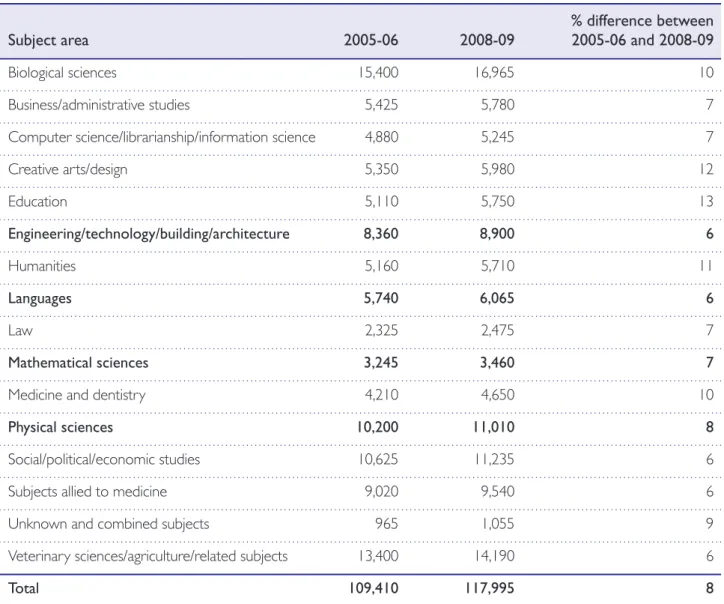
Table 4
Academic staff by subject area
% difference between
Subject area 2005-06 2008-09 2005-06 and 2008-09
Biological sciences 15,400 16,965 10
Business/administrative studies 5,425 5,780 7
Computer science/librarianship/information science 4,880 5,245 7
Creative arts/design 5,350 5,980 12
Education 5,110 5,750 13
Engineering/technology/building/architecture 8,360 8,900 6
Humanities 5,160 5,710 11
Languages 5,740 6,065 6
Law 2,325 2,475 7
Mathematical sciences 3,245 3,460 7
Medicine and dentistry 4,210 4,650 10
Physical sciences 10,200 11,010 8
Social/political/economic studies 10,625 11,235 6
Subjects allied to medicine 9,020 9,540 6
Unknown and combined subjects 965 1,055 9
Veterinary sciences/agriculture/related subjects 13,400 14,190 6
Total 109,410 117,995 8