Open Access
Research article
Insights about the process and impact of implementing nursing
guidelines on delivery of care in hospitals and community settings
Barbara Davies*
1, Nancy Edwards
1,2, Jenny Ploeg
3and Tazim Virani
4,5Address: 1School of Nursing, Faculty of Health Sciences, University of Ottawa, Ottawa, Canada, 2Department of Epidemiology and Community
Medicine, Faculty of Medicine, University of Ottawa, Canada, 3School of Nursing, Faculty of Health Sciences, McMaster University, Hamilton,
Canada, 4Department of Health Policy, Management and Evaluation, Faculty of Medicine, University of Toronto, Toronto, Canada and 5Tazim
Virani & Associates, Health & Social Services Research and Management Consultants, Canada
Email: Barbara Davies* - [email protected]; Nancy Edwards - [email protected]; Jenny Ploeg - [email protected]; Tazim Virani - [email protected]
* Corresponding author
Abstract
Background: Little is known about the impact of implementing nursing-oriented best practice guidelines on the delivery of patient care in either hospital or community settings.
Methods: A naturalistic study with a prospective, before and after design documented the implementation of six newly developed nursing best practice guidelines (asthma, breastfeeding, delirium-dementia-depression (DDD), foot complications in diabetes, smoking cessation and venous leg ulcers). Eleven health care organisations were selected for a one-year project. At each site, clinical resource nurses (CRNs) worked with managers and a multidisciplinary steering committee to conduct an environmental scan and develop an action plan of activities (i.e. education sessions, policy review). Process and patient outcomes were assessed by chart audit (n = 681 pre-implementation, 592 post-implementation). Outcomes were also assessed for four of six topics by in-hospital/home interviews (n = 261 pre-implementation, 232 post-implementation) and follow-up telephone interviews (n = 152 pre, 121 post). Interviews were conducted with 83/95 (87%) CRN's, nurses and administrators to describe recommendations selected, strategies used and participants' perceived facilitators and barriers to guideline implementation.
Results: While statistically significant improvements in 5% to 83% of indicators were observed in each organization, more than 80% of indicators for breastfeeding, DDD and smoking cessation did not change. Statistically significant improvements were found in > 50% of indicators for asthma (52%), diabetes foot care (83%) and venous leg ulcers (60%). Organizations with > 50% improvements reported two unique implementation strategies which included hands-on skill practice sessions for nurses and the development of new patient education materials. Key facilitators for all organizations included education sessions as well as support from champions and managers while key barriers were lack of time, workload pressure and staff resistance.
Conclusion: Implementation of nursing best practice guidelines can result in improved practice and patient outcomes across diverse settings yet many indicators remained unchanged. Mobilization of the nursing workforce to actively implement guidelines and to monitor the delivery of their care is important so that patients may learn about and receive recommended healthcare.
Published: 2 February 2008
BMC Health Services Research 2008, 8:29 doi:10.1186/1472-6963-8-29
Received: 19 April 2007 Accepted: 2 February 2008
This article is available from: http://www.biomedcentral.com/1472-6963/8/29
© 2008 Davies et al; licensee BioMed Central Ltd.
Background
The gap between research evidence and clinical practice is one of the most persistent problems in the provision of quality health care. Approximately 30 to 40% of patients do not receive health care according to current scientific evidence and some patients receive unnecessary or harm-ful care [1,2]. In primary care, only 3% to 49% of patients receive recommended care according to a systematic review of studies of quality of care [3]. As one strategy to help health professionals and decision-makers address this gap, professional and government organizations are producing clinical guidelines with credibly appraised summaries of research results and recommendations for health care. The Guidelines International Network (GIN) was founded in 2002 and by 2004 there were 52 member organizations from 27 countries yet only two members were nursing organizations: The Joanna Briggs Institute for Evidence Based Nursing & Midwifery in Australia and the Royal College of Nursing Institute in the United King-dom [4]. In the United States, The Agency for Healthcare Research and Quality (AHRQ) sponsors the National Guideline Clearinghouse which contains 105 nursing guidelines developed by 14 organizations in Canada, China, the United Kingdom and the United Sates [5].
One might question whether or not discipline-specific guidelines are required. We take the position that while health care is delivered to patients from a multidiscipli-nary perspective, the responsibilities of each team mem-ber need to be informed by the best available research evidence and some of this evidence is discipline-specific. The nursing profession represents a large proportion of health care providers and a potential workforce to address gaps in the provision of recommended health care.
The effectiveness of guideline implementation in nursing and allied health professions has received relatively little research attention. A Cochrane review summarized the results of 18 intervention studies of which 13 included physicians and nurses, and only 4 specifically targeted nurses [6]. The authors concluded that there is limited evi-dence supporting the effectiveness of guidelines for improved care in "professions allied to medicine" [6]. A systematic review of research evidence in nursing was con-ducted but only four studies met the inclusion criteria and the authors concluded that little is known about how to increase research use in nursing [7].
In contrast, there is a considerable body of physician-ori-ented and multi-disciplinary research with 235 studies reviewed by Grimshaw and colleagues (2004) of the effec-tiveness and costs of guideline development, dissemina-tion and implementadissemina-tion strategies [8]. Physicians were the focus in 74% of these studies while the other studies targeted a multidisciplinary team. Results were promising
in that eighty-six percent of studies reported improve-ments in care, however there were substantial variations in the results. Grimshaw and team concluded that further research is needed to support decisions about which guideline dissemination and implementation strategies are likely to be effective. No differences were found in effects according to the number of elements such as reminders, education, audit and feedback although Grim-shaw et al. and others have suggested that using multifac-eted strategies may be more effective than single interventions since they address multiple barriers to implementation [8-10]. While these systematic reviews help to advance our understanding of the potentially potent ingredients of guideline implementation pro-grams, they summarize evidence from highly controlled research studies with targeted guidelines and pre-planned implementation settings. However, provincial govern-ment decision-makers who are determining whether or not to invest in nursing best practice guideline implemen-tation programs, also need evaluation results from natu-ralistic implementation programs in diverse settings where decisions regarding which guidelines should be implemented and which recommendations from each guideline is a priority for implementation are determined by practitioners rather than by researchers.
In nursing, there are few empirical studies about the qual-ity of care and it is crucial to examine the interrelation-ships between evidence-based nursing care processes and outcomes [11]. A state of the science review of nursing-sensitive outcomes describes a rapidly developing field yet many unresolved issues including what, when and how to measure indicators of nursing care [12]. Data about nurs-ing practice is needed to answer questions about health human resource requirements and what nurses need to do to maximize their impact on the delivery of health care and patient outcomes.
In summary, there is a very limited evidence base for either the design of nursing guideline implementation interventions or for measuring the process and outcome of nursing care. An opportunity arose with the production of new nursing guidelines for a naturalistic study that examined implementation of various guidelines across settings to provide insights which are often absent from other studies where the protocol is tightly prescribed, only one guideline is implemented and it is implemented across homogeneous settings. The context for the study is described below.
Context: The Registered Nurses' Association of Ontario Initiative
prac-tice guidelines funded by the provincial government. Pri-ority topics are selected using focus groups, surveys and an open web-based invitation to nurses. An expert panel is convened for each topic with representatives from differ-ent health care sectors (hospital, public health, long-term care), and responsibilities (administration, education, practice, research). Guidelines undergo extensive review by multidisciplinary stakeholders. Further details about the methodology for guideline development are described elsewhere [13,14]. To date, 30 guidelines have been pub-lished in English with twelve guidelines also translated into French [15]. Each guideline includes recommenda-tions for practice such as patient assessment, patient edu-cation, medication monitoring, supportive care and referral to community services
We report on the real-time implementation of six guide-lines during 2002–2004: asthma, breastfeeding, delirium-dementia-depression (DDD), foot complications in dia-betes, smoking cessation and venous leg ulcers [15]. Spe-cific objectives of this evaluation study were to document the process of best practice guideline implementation by topic, to describe facilitators and barriers to implementa-tion and to determine the impact of indicators related to process and patient outcomes. The evaluation of these six guidelines with respect to patient referrals is reported else-where [16].
Methods
A one-year prospective before and after implementation project was conducted with three months allotted for the baseline data collection, six months for implementation and three months for the follow-up data collection. The one-year time-frame was determined by the requirements
of the government contract funding. The approach used was to evaluate guideline implementation as it naturally occurred in clinical settings. Ethics approval was received from the University of Ottawa Health and Social Sciences Ethics Review Board and from participating organiza-tions. Following a call for proposals and a peer review process, eleven health care organisations were selected to implement one of the six guidelines. Organizations selected included four acute care teaching hospitals, two community hospitals, one chronic care hospital, one mental health teaching hospital, two home visiting nurs-ing agencies and one regional public health unit. Sites began implementation of four topics in 2002 (asthma, breastfeeding, delirium-dementia-depression, and smok-ing cessation) and two topics in 2003 (foot complications in diabetes, and venous leg ulcers).
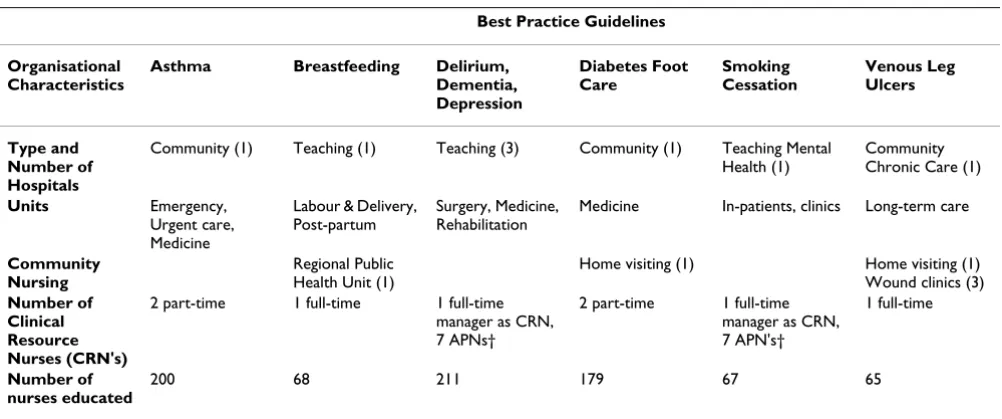
Each site committed in-kind resources including at least 10% of an administrator's time and paid educational time for nurses. Project funding supported the release of one full-time equivalent clinical resource nurse (CRN) for a year which included the implementation as well as the pre-implementation and post-implementation data col-lection. Some organizations elected to allocate this fund-ing to more than one CRN as described in Table 1.
Intervention
[image:3.612.55.556.511.720.2]Initial workshops coordinated by the RNAO were held with three to five key stakeholders from each site (e.g. CRN, manager, administrator). Leaders from each guide-line development panel gave structured presentations about the guideline recommendations with the support-ing research evidence. A Toolkit [17,18] with a two-hour training session describing strategies for implementation
Table 1: Characteristics of organisations participating in the implementation of nursing guidelines
Best Practice Guidelines Organisational
Characteristics
Asthma Breastfeeding Delirium, Dementia, Depression
Diabetes Foot Care
Smoking Cessation
Venous Leg Ulcers
Type and Number of Hospitals
Community (1) Teaching (1) Teaching (3) Community (1) Teaching Mental
Health (1)
Community Chronic Care (1)
Units Emergency, Urgent care, Medicine
Labour & Delivery, Post-partum
Surgery, Medicine, Rehabilitation
Medicine In-patients, clinics Long-term care
Community Nursing
Regional Public Health Unit (1)
Home visiting (1) Home visiting (1)
Wound clinics (3)
Number of Clinical Resource Nurses (CRN's)
2 part-time 1 full-time 1 full-time
manager as CRN, 7 APNs†
2 part-time 1 full-time manager as CRN, 7 APN's†
1 full-time
Number of nurses educated
200 68 211 179 67 65
of clinical practice guidelines was provided. The Toolkit was developed by an expert panel including members who have published on evidence-based nursing practice and theoretically-informed guideline implementation research [19-22]. The Toolkit was based on a model with six essential elements: guideline identification; stake-holder identification, assessment and engagement; envi-ronmental readiness; use of effective implementation strategies; evaluation of guideline implementation; and identification of resource requirements [18].
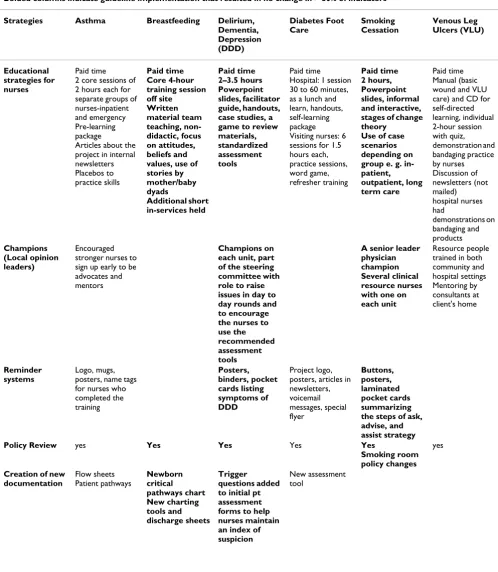
At each organization, a multidisciplinary steering com-mittee reviewed the Toolkit and planned the implementa-tion of the selected guideline in their setting. As recommended in the Toolkit, an environmental assess-ment of barriers and facilitators was undertaken, stake-holders were identified and specific implementation strategies were identified in a written action plan. Paid education sessions (range 2–9 hours) were provided by the CRNs for nurses and other health care providers. These sessions were interactive, incorporated problem solving, case studies and skill practice sessions. Table 2 describes implementation strategies including nurses' education, champions or local opinion leaders, reminder systems, policy review, creation of new documentation, multi-disciplinary involvement and patient education. In addition, monthly problem-solving teleconferences with all CRNs were held to discuss ongoing facilitators and bar-riers to guideline implementation. These teleconferences were led by experienced RNAO-based nursing consult-ants.
Process and Patient Outcomes
In order to select key outcomes, a rapid three-way consul-tation occurred with the leader of the specific guideline development panel, decision-makers from each imple-mentation site and a member of the research team. Crite-ria guiding final selection of outcomes included: outcomes with the strongest research evidence, outcomes feasible to measure in a short time frame, and outcomes relevant to priorities at participating organizations. Chart abstraction forms were adapted from tools used in previ-ous research when available [23-27] and assessed for face validity and relevance by the decision-makers and research team.
Consecutive patient charts that met the inclusion/exclu-sion criteria were audited pre- and post-implementation. In addition, for one topic (asthma), patient techniques for use of medication inhaler device were observed [27]. In four out of six topics (asthma, breast-feeding, diabetes foot care, and smoking cessation), patients were inter-viewed in hospital or at home about recent nursing care and again, either four or eight weeks later by telephone, about their access to specialist and community resources
[16]. For the topic of delirium-dementia-depression, par-ticipating units were concerned about ethical issues and the feasibility of obtaining informed proxy consent from family members within the three-month time frame for baseline data collection. The CRNs described a vulnerable population with many clients unable to give consent, sub-stitute decision-makers difficult to access and some clients with no substitute decision makers. For the venous leg ulcers guideline, the home visiting nurse agency was will-ing to assist with the chart audit process but declined to participate in obtaining client interviews due to limited time and multiple obligations.
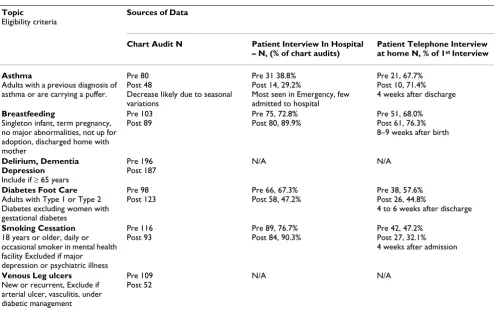
Patient eligibility criteria were defined for each guideline (Table 3). Our goal was to enrol 50 patients on each of the participating units in an eight week time frame. Response rates were calculated using the number of eligible patient charts as the denominator for the initial patient interview in hospital/home. The number of initial patient inter-views was then used as the denominator for calculating the response rate for follow-up interviews since only those completing the first interview were eligible to be re-inter-viewed. Overall missing data were less than 10%.
The data collection process was supervised centrally by an experienced Project Manager who frequently communi-cated with the CRNs to maintain the quality of data col-lection. The CRNs extracted pilot data from five to 10 charts at each organization to develop an effective system for obtaining charts and to assess the feasibility of coding categories. Part-time data collectors were then trained and supervised by the CRN locally to conduct the chart audits. The Project Manager reviewed data from all sites on an ongoing basis and contacted local CRNs about missing data or inconsistencies.
Descriptive statistics and bivariate statistics (independent t-tests, Pearson chi-square) were used to describe charac-teristics of the sample, and to compare before and after measures of clinical outcomes within study sites. Fisher's exact test was used when expected frequencies were small.
Qualitative Interviews
Semi-structured interview schedules were developed by the co-investigators and administered to all CRNs, admin-istrators and selected staff nurses immediately after the implementation. The staff nurses (2–3 per unit) were identified by the CRN to include those who had a favour-able as well as those who had a less favourfavour-able experience with the guideline implementation.
Table 2: Implementation strategies
Bolded columns indicate guideline implementation that resulted in no change in > 80% of indicators Strategies Asthma Breastfeeding Delirium,
Dementia, Depression (DDD) Diabetes Foot Care Smoking Cessation Venous Leg Ulcers (VLU) Educational strategies for nurses Paid time 2 core sessions of 2 hours each for separate groups of nurses-inpatient and emergency Pre-learning package
Articles about the project in internal newsletters Placebos to practice skills Paid time Core 4-hour training session off site Written material team teaching, non-didactic, focus on attitudes, beliefs and values, use of stories by mother/baby dyads Additional short in-services held Paid time 2–3.5 hours Powerpoint slides, facilitator guide, handouts, case studies, a game to review materials, standardized assessment tools
Paid time Hospital: 1 session 30 to 60 minutes, as a lunch and learn, handouts, self-learning package Visiting nurses: 6 sessions for 1.5 hours each, practice sessions, word game, refresher training Paid time 2 hours, Powerpoint slides, informal and interactive, stages of change theory
Use of case scenarios depending on group e. g. in- patient, outpatient, long term care
Paid time Manual (basic wound and VLU care) and CD for self-directed learning, individual 2-hour session with quiz, demonstration and bandaging practice by nurses Discussion of newsletters (not mailed) hospital nurses had demonstrations on bandaging and products Champions (Local opinion leaders) Encouraged stronger nurses to sign up early to be advocates and mentors
Champions on each unit, part of the steering committee with role to raise issues in day to day rounds and to encourage the nurses to use the recommended assessment tools
A senior leader physician champion Several clinical resource nurses with one on each unit
Resource people trained in both community and hospital settings Mentoring by consultants at client's home Reminder systems Logo, mugs, posters, name tags for nurses who completed the training Posters, binders, pocket cards listing symptoms of DDD Project logo, posters, articles in newsletters, voicemail messages, special flyer Buttons, posters, laminated pocket cards summarizing the steps of ask, advise, and assist strategy Policy Review yes Yes Yes Yes Yes
Smoking room policy changes
yes
Creation of new documentation Flow sheets Patient pathways Newborn critical pathways chart New charting tools and discharge sheets Trigger questions added to initial pt assessment forms to help nurses maintain an index of suspicion
implementation to describe priority recommendations selected for implementation and reasons why some rec-ommendations were not selected. Examples of these inter-view schedules as well as our approach used to conduct and analyze interview data are provided in an available monograph [28].
The Project Manager and trained interviewers conducted the interviews which were audio-taped with the consent of each respondent. Analysis of the interviews was con-ducted using QSR-N5. Interviews were initially coded by one individual using a coding guide. Content analysis was
Multi-disciplinary involvement
Respirologists very supportive but emergency physicians reluctant due to concern for nurses' workload
"Little involvement of other
disciplines" Conflict with dieticians in public health unit about 6 months excusive breast feeding
Steering group formed with both hospital and community reps but did not have an active ongoing role
Strong senior physician champion 'interdisciplinar y work was amazing...the camaraderie between the disciplines and meeting everyone else from the different sites was one of the major benefits"
Steering committee Community physician support
Patient Education
Patient education toolkits with placebos, teaching booklets and laminated cards on all units
Patient education and referral resources
[image:6.612.55.554.89.296.2]Patient education brochure initiated but not completed Table 2: Implementation strategies (Continued)
Table 3: Best Practice Guideline Topics: Eligibility Criteria, Sources of Data, Response Rates
Topic
Eligibility criteria
Sources of Data
Chart Audit N Patient Interview In Hospital – N, (% of chart audits)
Patient Telephone Interview at home N, % of 1st Interview
Asthma
Adults with a previous diagnosis of asthma or are carrying a puffer.
Pre 80 Post 48
Decrease likely due to seasonal variations
Pre 31 38.8% Post 14, 29.2%
Most seen in Emergency, few admitted to hospital
Pre 21, 67.7% Post 10, 71.4% 4 weeks after discharge
Breastfeeding
Singleton infant, term pregnancy, no major abnormalities, not up for adoption, discharged home with mother
Pre 103 Post 89
Pre 75, 72.8% Post 80, 89.9%
Pre 51, 68.0% Post 61, 76.3% 8–9 weeks after birth
Delirium, Dementia Depression
Include if ≥ 65 years
Pre 196 Post 187
N/A N/A
Diabetes Foot Care
Adults with Type 1 or Type 2 Diabetes excluding women with gestational diabetes
Pre 98 Post 123
Pre 66, 67.3% Post 58, 47.2%
Pre 38, 57.6% Post 26, 44.8%
4 to 6 weeks after discharge
Smoking Cessation
18 years or older, daily or occasional smoker in mental health facility Excluded if major depression or psychiatric illness
Pre 116 Post 93
Pre 89, 76.7% Post 84, 90.3%
Pre 42, 47.2% Post 27, 32.1% 4 weeks after admission
Venous Leg ulcers
New or recurrent, Exclude if arterial ulcer, vasculitis, under diabetic management
Pre 109 Post 52
N/A N/A
[image:6.612.57.551.406.718.2]conducted looking for prominent themes and patterns across respondents for each guideline [29].
Results
Chart audits and patient interviews
Completion rates for chart audits were greater than 95% for all eligible cases. Response rates varied for initial and follow-up patient interviews, as displayed in Table 3, with an average of 61.1%. Language barriers and refusals low-ered the response rates at the initial interviews. For the fol-low-up interviews, the response rates decreased due to drop-outs, difficulty contacting patients after discharge, discharge of patients to other facilities and death. In addi-tion, for the asthma guideline, lower response rates were due to an extremely busy emergency department
discharg-ing potential patients before they could be interviewed for the study.
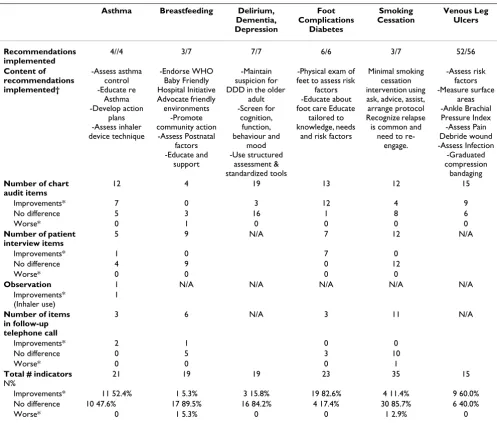
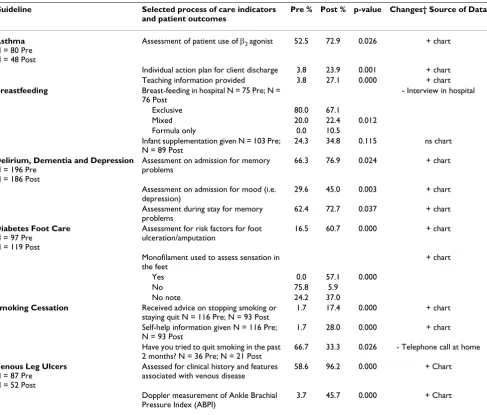
As described in Table 4, there were statistically significant improvements across all topics with improvements in more than half of the indicators for asthma (52.4%), dia-betes foot care (82.6%) and venous leg ulcers (60.0%). Table 5 displays the details of selected outcomes pre- and post-guideline implementation according to chart audit data.
[image:7.612.55.552.286.709.2]Overall, with respect to chart audit data, there were statis-tically significant improvements in nearly half of the indi-cators (46.7%, 35/75). It is interesting to note that improvements were found in items related to: patient
Table 4: Description of recommendations and proportion of indicators which improved or not from pre to post implementation
Asthma Breastfeeding Delirium, Dementia, Depression
Foot Complications
Diabetes
Smoking Cessation
Venous Leg Ulcers
Recommendations implemented
4//4 3/7 7/7 6/6 3/7 52/56
Content of recommendations implemented†
-Assess asthma control -Educate re
Asthma -Develop action
plans -Assess inhaler device technique
-Endorse WHO Baby Friendly Hospital Initiative Advocate friendly
environments -Promote community action
-Assess Postnatal factors -Educate and
support
-Maintain suspicion for DDD in the older
adult -Screen for
cognition, function, behaviour and
mood -Use structured
assessment & standardized tools
-Physical exam of feet to assess risk
factors -Educate about foot care Educate
tailored to knowledge, needs
and risk factors
Minimal smoking cessation intervention using ask, advice, assist, arrange protocol Recognize relapse is common and
need to re-engage.
-Assess risk factors -Measure surface
areas -Ankle Brachial Pressure Index
-Assess Pain Debride wound -Assess Infection
-Graduated compression
bandaging
Number of chart audit items
12 4 19 13 12 15
Improvements* 7 0 3 12 4 9
No difference 5 3 16 1 8 6
Worse* 0 1 0 0 0 0
Number of patient interview items
5 9 N/A 7 12 N/A
Improvements* 1 0 7 0
No difference 4 9 0 12
Worse* 0 0 0 0
Observation 1 N/A N/A N/A N/A N/A Improvements*
(Inhaler use)
1
Number of items in follow-up telephone call
3 6 N/A 3 11 N/A
Improvements* 2 1 0 0
No difference 0 5 3 10
Worse* 0 0 0 1
Total # indicators
N%
21 19 19 23 35 15
Improvements* 11 52.4% 1 5.3% 3 15.8% 19 82.6% 4 11.4% 9 60.0%
No difference 10 47.6% 17 89.5% 16 84.2% 4 17.4% 30 85.7% 6 40.0%
Worse* 0 1 5.3% 0 0 1 2.9% 0
assessment/risk classification 37%; patient education 29%; medication and treatments 14%; symptom moni-toring 9%; supportive care 6%; and other 6%. Statistically significant improvements were also found in pre- and post-observation scores of asthma patients' correct use of an inhaler device (p =.014). With respect to patient inter-view data, it is notable that statistically significant improvements were found in all seven indicators for dia-betes foot care as reported in Table 4.
No statistically significant differences were found > 80% of the indicators for three guidelines (breastfeeding, DDD, smoking cessation). In addition, two statistically significant negative results were found for two of these guidelines. Specifically, fewer mothers were exclusively
breastfeeding their infants in hospital (80.0% pre-imple-mentation, 67.1% post-implementation; p = 0.012) and fewer mental health patients reported that they had tried to quit smoking post-guideline implementation (66.7% pre-implementation, 33.3% post-implementation; p = .026).
[image:8.612.64.551.99.514.2]The concordance of nursing practices with indicators measured varied considerably post-implementation. The lowest level was 17.4% for the provision of smoking ces-sation advice to smokers in a mental health organization and the highest level was 96.2% for the patients in the chronic care hospital and the clients receiving commu-nity-based nursing services for the care of their venous leg ulcers (Table 5).
Table 5: Selected clinical outcomes at pre and post guideline implementation ‡
Guideline Selected process of care indicators and patient outcomes
Pre % Post % p-value Changes† Source of Data
Asthma
N = 80 Pre N = 48 Post
Assessment of patient use of β2 agonist 52.5 72.9 0.026 + chart
Individual action plan for client discharge 3.8 23.9 0.001 + chart
Teaching information provided 3.8 27.1 0.000 + chart
Breastfeeding Breast-feeding in hospital N = 75 Pre; N = 76 Post
- Interview in hospital
Exclusive 80.0 67.1
Mixed 20.0 22.4 0.012
Formula only 0.0 10.5
Infant supplementation given N = 103 Pre; N = 89 Post
24.3 34.8 0.115 ns chart
Delirium, Dementia and Depression
N = 196 Pre N = 186 Post
Assessment on admission for memory problems
66.3 76.9 0.024 + chart
Assessment on admission for mood (i.e. depression)
29.6 45.0 0.003 + chart
Assessment during stay for memory problems
62.4 72.7 0.037 + chart
Diabetes Foot Care
N = 97 Pre N = 119 Post
Assessment for risk factors for foot ulceration/amputation
16.5 60.7 0.000 + chart
Monofilament used to assess sensation in the feet
+ chart
Yes 0.0 57.1 0.000
No 75.8 5.9
No note 24.2 37.0
Smoking Cessation Received advice on stopping smoking or staying quit N = 116 Pre; N = 93 Post
1.7 17.4 0.000 + chart
Self-help information given N = 116 Pre; N = 93 Post
1.7 28.0 0.000 + chart
Have you tried to quit smoking in the past 2 months? N = 36 Pre; N = 21 Post
66.7 33.3 0.026 - Telephone call at home
Venous Leg Ulcers
N = 87 Pre N = 52 Post
Assessed for clinical history and features associated with venous disease
58.6 96.2 0.000 + Chart
Doppler measurement of Ankle Brachial Pressure Index (ABPI)
3.7 45.7 0.000 + Chart
† According to recommendation + indicates improvement with p < 0.05, – indicates worse care with p < 0.05, ns indicates no significant difference in care
Even in the three guidelines with statistically significant improvements in > 50% of indicators, there were still sub-stantial gaps in the provision of evidence-based recom-mendations at post-intervention as follows: Only 23.9% of hospital patients with asthma had an action plan at dis-charge; only 60.5% of hospital and community-based patients with diabetes had a documented assessment of risk factors for foot ulcers; and only 45.7% of patients with venous leg ulcers from long-term care and a commu-nity-based nursing service received a Doppler Assessment of Ankle BrachialPressure Index (Table 5).
Qualitative interviews
Participation in the qualitative interviews by the CRNs, nurses and administrators was strong from all units with an overall participation rate of 87.4% (83/95) with a range of 75%–100% per guideline. The proportion of rec-ommendations implemented varied by guideline topic from 43% (e.g. 3/7) to 100% (e.g. 7/7). A very brief syn-opsis of the content of recommendations is described in Table 4 with a full description of recommendations avail-able [15]. For three guidelines, the CRNs reported at mid-point that their implementation action plan addressed all clinical recommendations (asthma, DDD and diabetes foot care). However, for the other three topics the CRNs explained reasons why certain recommendations were not a priority as described below.
Breastfeeding
The prenatal components which included a comprehen-sive assessment to facilitate a breastfeeding plan and small informal group education classes were not implemented because "these are very expensive and would require too much personnel time and it is felt not possible at this time". Also, the recommendation to conduct an in-person follow-up and assessment if a mother and baby were discharged within 48 hours of birth was not implemented due to perceived lack of available public health nurses. Controversy arose about the recommendation for exclusive breastfeeding for the first six months of life from the hospital nutrition/die-tetic staff. According to the CRN, these nutritionists fol-lowed other national guidelines recommending exclusive breastfeeding for only four months.
Smoking Cessation
The CRN reported that three recommendations were not implemented: provide intensive smoking cessation inter-ventions, implement interventions with pregnant women and encourage smokers and non-smokers to have smoke-free homes. Reasons for non-implementation included lack of time for nurses to do intensive smoking cessation counselling and the availability of experts at a nicotine dependence clinic within the organization. The pregnant women population was not applicable to the participat-ing mental health organization. With respect to the quest
for smoke-free homes of patients/clients, the CRN stated
"We felt that it was something that we did not have a lot of con-trol over, some clients live in rooming houses and boarding houses and collective group settings."
Venous Leg Ulcers
Of the 56 recommendations, 52 were implemented. Rec-ommendations not implemented related to secondary treatment options including venous surgery, electrical stimulation, hyperbaric oxygen, and therapeutic ultra-sound. The CRN explained that "these are second wave treat-ment option, so the first part of our process has really been trying to educate the nurses around the guidelines, care and so that sort of comes after the initial care."
Overall Facilitators
Participants' perceptions (CRNs, managers, staff nurses) of the most important facilitators were remarkably similar across implementation sites, with the most common including the education sessions, support from champi-ons such as the CRN, APNs, and physicians, organiza-tional and administrative support (e.g., staff replacement time to attend educational sessions), and involvement of multiple stakeholders (Table 6). Participants agreed that the following also facilitated BPG implementation: team work and collaboration, RNAO support, specific resources such as Asthma Education Centre, and availability of sup-plies (e.g., wound compression supsup-plies, Doppler ultra-sounds).
Overall Barriers
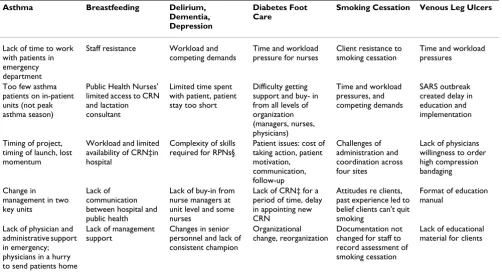
Participant perceptions of the most important barriers to implementation included some common barriers across all topics and sites such as workload and time pressures, competing demands, staff resistance and lack of buy-in, lack of support from other organizational levels, and organizational change. Other barriers were specific to the implementation sites, such as short patient stays, lack of support from physicians, and lack of changed documenta-tion (Table 7). A need for the ongoing analysis of stake-holders' views and barriers was suggested by the CRN
"Although considerable time was spent conducting a stake-holder analysis, the committee recognized that as changes occurred, more work was required in analyzing, revising and engaging stakeholders."
Discussion
Table 6: Participants' perceptions of most important facilitators for implementation
Asthma Breastfeeding Delirium, Dementia, Depression
Diabetes Foot Care
Smoking Cessation Venous Leg Ulcers
Education sessions Education sessions Education sessions Education sessions Education sessions Education sessions Administrative
support and buy-in
Nurses' paid time for attending education sessions
Support of CRNs‡, APNs† on units
Ease of
implementation, easy to use tools
Organizational support and readiness
Buy-in of nursing staff
Support of CRN‡ Support of CRN‡ Steering committee
with representation from all units
Support of CRN‡ Champions including physician
Support of CRNs‡ and other educators
Having education as mandatory program outside of work hours
Partnership between hospital and public health settings Organizational and management support Organizational commitment and management support
Management support Organizational support and resources
Having credible person in department to facilitate
implementation
Rooming-in Having all
stakeholders on board, managers, APNs†, nurses, champions
Involving staff at start of process
Ongoing access to information
Increased number of VLU patients
† APNs or Advanced Practice Nurses ‡ CRN or Clinical Resource Nurse
Table 7: Participants' perceptions of most important barriers to implementation
Asthma Breastfeeding Delirium, Dementia, Depression
Diabetes Foot Care
Smoking Cessation Venous Leg Ulcers
Lack of time to work with patients in emergency department
Staff resistance Workload and competing demands
Time and workload pressure for nurses
Client resistance to smoking cessation
Time and workload pressures
Too few asthma patients on in-patient units (not peak asthma season)
Public Health Nurses' limited access to CRN and lactation consultant
Limited time spent with patient, patient stay too short
Difficulty getting support and buy- in from all levels of organization (managers, nurses, physicians)
Time and workload pressures, and competing demands
SARS outbreak created delay in education and implementation
Timing of project, timing of launch, lost momentum
Workload and limited availability of CRN‡in hospital
Complexity of skills required for RPNs§
Patient issues: cost of taking action, patient motivation, communication, follow-up Challenges of administration and coordination across four sites
Lack of physicians willingness to order high compression bandaging
Change in management in two key units
Lack of communication between hospital and public health
Lack of buy-in from nurse managers at unit level and some nurses
Lack of CRN‡ for a period of time, delay in appointing new CRN
Attitudes re clients, past experience led to belief clients can't quit smoking
Format of education manual
Lack of physician and administrative support in emergency; physicians in a hurry to send patients home
Lack of management support
Changes in senior personnel and lack of consistent champion
Organizational change, reorganization
Documentation not changed for staff to record assessment of smoking cessation
Lack of educational material for clients
† APNs or Advanced Practice Nurses ‡ CRN or Clinical Resource Nurse § RPN or Registered Practical Nurses
were statistically significant improvements in more than half of the indicators for the asthma, diabetes foot care and venous leg ulcer guidelines. These improvements are notable given the relatively short time frame of one-year for project completion.
[image:10.612.56.558.425.700.2]small proportion of patients actually receiving guideline-based recommended care. In this study, feedback on the pre-intervention study results was not provided to the agency or staff. Comparative data of nursing practice and patient outcomes is important for health service delivery to determine the quality and quantity of care provided. Systematic reviews of audit and feedback conclude that telling people what they have been doing does impact on change and improve professional practice [30].
Recent studies of nursing practice including subsequent work of our own suggest that it is possible to obtain data in a reliable and valid way [31-33]. Electronic gathering and dissemination systems that document patients' responses to treatment, obtain real-time outcome feed-back and support access to electronic resources including RNAO guidelines using hand-held computers at point of care are promising tools to support guideline implemen-tation [34].
The implementation strategies used in this study reflect those generally classified as multi-faceted interventions by Grimshaw and colleagues [8]. We observed two unique strategies applied to each of the three guideline imple-mentations resulting in improvements in more than 50% of the indicators. Firstly, these nurses' received an oppor-tunity for hands-on skill practice sessions (trial use of pla-cebo devices for asthma medication, practice sessions for foot assessment of people with diabetes, and practice ses-sions for bandaging for people with venous leg ulcers). Skill practice has been identified as an element of interac-tive workshops which may also include role-play or case discussion. Interactive workshops can result in moder-ately large changes in professional practice compared to didactic lecture-only sessions which are unlikely to change behaviour [35]. However, it is noteworthy that case study discussions were used in education sessions for the three other guidelines without subsequent changes in professional practice (breastfeeding, DDD and smoking cessation). The skill practice component appears to be a vital element and warrants attention.
The second unique implementation element used with the three guidelines with substantial practice changes was the development of patient education toolkits and bro-chures. The CRN for the asthma guideline suggested that the new patient information tool provided an opportu-nity to reinforce previous teaching provided to nurses. The CRN for diabetes foot care reported that patients appreci-ated the education suggesting a positive feedback process from clients may have encouraged implementation of the guideline. It is noteworthy that all seven process and out-come indicators from the patient interviews increased sig-nificantly from pre to post-implementation for the topic of diabetes foot care.
For other guideline topics, positive feedback from patient education was less likely in part due to the nature of the guideline topic and in part due to the application in the selected clinical context. While the diabetes guideline was directly applicable to the day-to-day care in the medical hospital in-patient units and the ongoing care of home visiting nurses, the smoking cessation guideline required a considerable shift in the norms at the participating men-tal health facility where previously, cigarettes had been provided as a positive reward for good patient behaviour. With respect to the breastfeeding guideline, the post-par-tum nurses did not receive feedback about the impact of their hospital-based teaching because public health nurses assumed care once the mother and infant were dis-charged from the hospital. The public health nurses did not receive feedback about long-term breast-feeding out-comes because their teaching was concentrated in the early post-partum period. The uptake of guidelines such as breastfeeding or smoking cessation with a preventive focus appears to be slower, a finding that is consistent with Rogers contention that preventive innovations have a particularly slow rate of adoption because individuals have difficulties perceiving the relative advantage and the consequences are distant in the future [36].
Management support was reported as an important facili-tator for all guideline implementations except for breast-feeding. We report in this study and in previous evaluations of RNAO guidelines [37], that one of the most important facilitators for implementation of a guideline is management support and commitment. In addition, key barriers documented in previous work and in this report include lack of administrative support and changes in management. We note that "leadership support for evi-dence-based practice culture" is an explicit organizational element of Stetler's conceptual framework [38] and that leadership is a sub-element of "context" of the Promoting Action on Research Implementation in Health Services (PARIHS) framework [39]. However, management sup-port and leadership are not listed as an implementation strategy in either our implementation Toolkit [17,18] or with the current EPOC Cochrane systematic reviews of consumer, professional or organizational change. We conceptualise "managerial leadership for research use" as a multidimensional process of influence to enable nurses to use research evidence in clinical practice [40,41]. An integrative review of 12 published studies found that managerial support, policy revisions, auditing, role mod-elling and valuing research facilitated nurses' use of research evidence [41]. We suggest that managerial leader-ship is an important element for guideline implementa-tion in nursing
databases with sufficient detail or data about nursing process of care to be used in the evaluation of these RNAO guidelines. Thus, we endeavoured to rapidly adapt exist-ing published tools and develop new tools (chart audit, observation and interview questionnaires) to measure the processes of nursing care that are meaningful and action-able by nursing managers and senior administrators. These data collection tools were assessed for content validity and applicability and are available on the web with the RNAO Cycle 3 guidelines [15] and may provide a launching point for other teams evaluating gaps in nurs-ing care. Subsequent psychometric testnurs-ing of the asthma observation tool found mean inter-rater reliability indicies of .82 [27]. Other related articles, monographs and user-guides describing measures for evaluating the implementation of nursing best practice guidelines are available [27,28,33,42,43].
An environmental scan of facilitators and barriers as rec-ommended in the implementation Toolkit [17,18] was conducted by the CRNs for each guideline implementa-tion in order to plan the intervenimplementa-tion strategies in consul-tation with a multidisciplinary steering committee. However, knowing that a barrier(s) exists is only the first step. There are no quick fixes for many of the barriers identified by CRNs. For example, overcoming nurses' resistance to the breastfeeding guideline recommenda-tions, addressing competing demands for time as reported for the DDD guideline and tackling long-standing issues of client resistance to smoking cessation are all complex issues. Tailored interventions to overcome identified bar-riers to change have been evaluated in a review of 15 stud-ies with mixed results because it was not clear whether all barriers or important barriers were identified and addressed by pre-selected strategies [44]. Pragmatic evalu-ations of guideline implementation in nursing are neces-sary to document important barriers for the design and evaluation of tailored strategies that fit real-world imple-mentation.
A note of caution is required about the evaluation of rec-ommendations that are sensitive to patient preferences and nurses' values. As one report advises [45], perform-ance measures require attention to avoid defining high testing rates as good quality of care, since they may not take into consideration patient preferences for care options. Patient preferences and nursing values and beliefs are reported to influence evidence-based nursing [19] and may have contributed to the two statistically sig-nificant negative outcomes found in this study. With respect to breastfeeding, the CRN reported that tension existed about the extent to which staff should encourage individual mothers to breastfeed versus elicit mothers' choices to bottle-feed their infant. With respect to smok-ing cessation, client resistance to smoksmok-ing cessation was
reported as an important barrier by nurses. Evidence-based practice is defined to "integrate the best research evidence with clinical expertise and patient values [46]." There is a need to identify patient and provider values implicit in guideline recommendations and these values should be reported along with the research evidence for the recommendations [47].
Lack of time and workload considerations were reported as barriers across all guideline implementation initiatives. Cost considerations such as staffing for increased work-load due to new procedures recommended in guidelines are critical for decision-makers [8], yet few authors have attempted to estimate these costs. In the subsequent Cycle 4 evaluation projects, cost estimates were derived for implementation of the pressure ulcer guideline and this report is available on request from the authors [48]. The cost of implementation during the initial six month start-up phase and in the subsequent 18 months were deter-mined using a balanced score card approach. Education and capital costs were high in the initial period, while patient operating costs accounted for the largest set of expenditures in the latter period. Future studies are needed to compare the cost implications of guideline implementation across settings and among different types of guidelines
Study Limitations
Organizations in this evaluation study volunteered to par-ticipate and are therefore a self-selected group. Their vol-unteer status may have stimulated guideline recommendation uptake and we note that these organiza-tions may reflect the early adopters and innovation cham-pions [36]. Indeed the CRNs in our study appeared to possess characteristics of early adopters with well devel-oped interpersonal and negotiating skills, often holding key linking positions in their organization. Other limita-tions include the lack of concurrent control groups and the lack of inter-rater reliability testing of chart auditors. Thus, we cannot be certain that the observed changes would have happened without the intervention. Future studies with concurrent control groups and thorough process evaluations are recommended. Periodic feedback to CRNs, managers and staff nurses regarding the status of implementation, assessment of ongoing barriers and the design of repeated opportunities to infuse this informa-tion in a tailored implementainforma-tion plan are suggested for future research.
Study Strengths
Specifically, these strategies include the opportunity to practice skills in interactive educational sessions for nurses, the development and use of patient educations tools, and the importance of managerial leadership for nurses' use of research-based guidelines. The lessons learned in this evaluation project may be helpful in plan-ning future guideline implementations and in planplan-ning future research.
With funding from the Canadian Health Services Research Foundation, the Canadian Institutes of Health Research and the Canadian Nurses Foundation, we are currently conducting follow-up studies to examine the long-term impact of nursing guideline implementation on clinical and process outcomes. This follows from the comments of CRNs and managers who observed that it takes longer than the six months allocated to the intervention to make clinical changes. In addition, our longitudinal study examines the predictors of sustained implementation of guideline recommendations [49].
In Canada, there is a strong public and political agenda to continuously strive towards high quality health care. The 10-year action plan to strengthen health care includes a priority to share best practices and provide information to make progress transparent to citizens [50]. The nursing profession, a major group of healthcare providers, needs to share intervention strategies and evaluation results to improve health care delivery. Developing, implementing and evaluating best practice guidelines in nursing are essential elements in high quality health care.
Conclusion
Clinical practice guidelines have the potential to improve the quality of care received by patients and thereby improve patient outcomes. Yet there is a lack of evidence about the impact of nursing best practice guidelines and the most effective strategies to implement such guidelines. We found that a multi-faceted intervention for the imple-mentation of nursing guidelines about asthma, breastfeed-ing, delirium-dementia-depression, reducing foot complications in diabetes, smoking cessation and venous leg ulcers can result in some improvement in practice and patient outcomes across diverse healthcare settings yet many outcomes remained unchanged. Promising ele-ments for future initiatives are identified including inter-active education with skill practice sessions, attention to patient education, involvement of managerial leadership and electronic gathering and dissemination systems offer-ing both real-time feedback and access to guidelines.
Competing interests
All authors declare that they have no competing interests. Tazim Virani was contracted by the RNAO to lead the overall initiative and work in collaboration with the other
authors in pilot testing and evaluating the best practice guidelines.
Authors' contributions
BD and NE were Co-Principal Investigators and conceived and designed the evaluation of this project. TV led the implementation strategies, reviewed the action plans of the Clinical Resource Nurses and was involved in provid-ing input in draft measures and protocols. BD, NE, JP designed data collection measures and protocols. All authors contributed to the interpretation of data and the preparation of this manuscript.
Funding
We acknowledge project funding from the Government of Ontario. Dr. Edwards holds a Nursing Chair funded by the Canadian Health Services Research Foundation, the Canadian Institutes of Health Research and the Govern-ment of Ontario. Dr. Davies held a Career Scientist award funded by the Ontario Ministry of Health and Long-Term Care at the time of this study. Dr. Ploeg held an Investiga-tor Award from the Canadian Institutes of Health Research and St. Joseph's Health Care, Hamilton, Ontario. Tazim Virani holds a doctoral fellowship funded by the Ontario Ministry of Health and Long-term Care and awarded by the RNAO. The views expressed in this publi-cation are those of the authors and not those of the RNAO or the Government of Ontario.
Acknowledgements
We acknowledge the leadership of Doris Grinspun at RNAO for the nurs-ing best practice guideline initiative. We thank evaluation team collabora-tors Maureen Dobbins and Jennifer Skelly from McMaster University and Heather McConnell from RNAO. We are grateful for assistance from research staff including Diana Ehlers, Barbara Helliwell, Marilyn Kuhn, Elana Ptack, and Isabelle St. Pierre.
We especially thank the participating health care organizations and the fol-lowing clinical resource nurses: Genevieve Courant, Sandy Haist, and Karen Ray.
References
1. Grol R, Wensign M, Eccles M: Improving patient care. The implementa-tion of change in clinical practice Edinburgh: Elsevier; 2005.
2. McGlynn EA, Asch SM, Adams J, Keesey J, Hicks J, DeCristofaro A, Kerr EA: The quality of health care delivered to adults in the United States. N Engl J Med 2003, 348:2635-2645.
3. Seddon ME, Marshall MN, Campbell SM, Roland MO: Systematic review of studies of quality of clinical care in general practice in the UK, Australia and New Zealand. Qual Health Care 2001,
10:152-158.
4. Ollenschlager G, Marshall C, Qureshi S, Rosenbrand K, Burgers J, Makela M, Slutsky J: Improving the quality of healthcare using international collaboration to inform guideline programmes by founding the Guidelines International Network (G-I-N).
Qual Saf Health Care 2004, 13:455-460.
5. Coopey M, Nix MP, Clancy CM: Translating research into evi-dence-based nursing practice and evaluating effectiveness. J Nurs Care Qual 2006, 21:195-202.
6. Thomas L, Cullum N, McColl E, Rousseau N, Soutter J, Steen N:
7. Thompson DS, Estabrooks CA, Scott-Findlay SS, Moore K, Wallin L:
Interventions aimed at increasing research use in nursing: a systematic review. Implement Sci 2007, 2:15.
8. Grimshaw JM, Thomas RE, MacLennan G, Fraser C, Ramsay CR, Vale L, Whitty P, Eccles MP, Matowe L, Shirran L, Wensing M, Dijkstra R, Donaldson C: Effectiveness and efficiency of guideline dissem-ination and implementation strategies. Health Technol Assess
2004, 8(6):1-72.
9. Davis DA, Thomson MA, Oxman AD, Haynes RB: Changing physi-cian performance a systematic review of the effect of contin-uing medical education strategies. JAMA 1995, 274:700-705. 10. Wensing M, Van der Weijden T, Grol R: Implementing guidelines
and innovations in general practice which interventions are effective? J Gen Pract 1998, 48(427):991-997.
11. Maas ML, Delaney C: Nursing process outcome linkage research: issues, current status, and health policy implica-tions. Med Care 2004, 42(Suppl 2):40-48.
12. Doran D: Nursing-Sensitive Outcomes State of the Science Boston: Jones and Bartlett; 2003.
13. Grinspun D, Virani T, Bajnok I: Nursing best practice guidelines: The RNAO project. Hosp Q 2001, 5(2):56-60.
14. Registered Nurses' Association of Ontario: Guideline Methodol-ogy Report. Toronto 2006 [http://www.rnao.org/researchunit/]. 15. Registered Nurses Association of Ontario: Nursing Best
Practice Guidelines [http://www.rnao.org/
Page.asp?PageID=861&SiteNodeID=133]
16. Edwards N, Davies B, Ploeg J, Virani T, Skelly J: Implementing nurs-ing best practice guidelines impact on patient referrals. BMC Nurs 2007, 6:4.
17. Registered Nurses' Association of Ontario: Toolkit: Implementation of clinical practice guidelines. Toronto 2002 [http://www.rnao.org/ Page.asp?PageID=861&SiteNodeID=133].
18. DiCenso A, Virani T, Bajnok I, Borycki E, Davies B, Graham I, Harri-son M, Logan J, McCleary L, Power M, Scott J: A toolkit to facilitate the implementation of clinical practice guidelines in health-care settings. Hosp Q 2002, 5:55-60.
19. DiCenso A, Guyatt G, Ciliska D: Evidence-Based Nursing: A guide to clin-ical practice St. Louis, MO: Elsevier; 2005.
20. Graham ID, Logan J: Innovations in knowledge transfer and continuity of care. Can J Nurs Res 2004, 36:89-103.
21. Davies B: Sources and models for moving research evidence into clinical practice. JOGN Nurs 2002, 31:558-562.
22. ICEBeRG: Designing theoretically-informed implementation interventions. Implement Sci 2006, 1:4.
23. Lorimer K, Harrison M, Graham I, Friedberg E, Davies B: Venous leg ulcer care How evidence-based is nursing practice? J Wound Ostomy Continence Nurs 2003, 30(3):132-142.
24. Lorimer K, Harrison M, Graham I, Friedberg E, Davies B: Assessing venous leg ulcers population characteristics and practices in a home care community. Ostomy Wound Manage 2003,
49(5):32-43.
25. World Health Organization & Wellstart International: The Baby-Friendly Hospital Initiative, monitoring and reassessment: Tools to sustain progress Geneva: World Health Organization; 2001.
26. Edwards N, Sims-Jones N, Hotz S, Cushman R: Development and testing components of a multifaceted intervention program to reduce the incidence of smoking relapse during pregnancy and postpartum of both women and their partners. Final Report to Health Canada 1997:1-112. (Prepared in both English and French)
27. Davies B, Danseco E, Cicutto L, Higuchi KS, McConnell H, Edwards N, MacPherson A, Clarke D: Nursing Best Practice Guidelines Evaluation User Guide: Inhaler Device Assessment Tool for Promoting Asthma Control in Children. 2006 [http:// www.nbpru.ca]. University of Ottawa: Nursing Best Practice Research Unit
28. Edwards N, Davies B, Griffin P, Ploeg J, Skelly J, Danseco E, Helliwell B: Evaluation of nursing best practice guidelines Interviewing nurses and administrators. 2004 [http://aix1.uottawa.ca/~ned wards/chru/english/pdf/m04.01.pdf]. (CHRU Publication #M04-1), University of Ottawa: Community Health Research Unit
29. Miles MB, Huberman AM: Qualitative Data Analysis: An Expanded Sour-cebook 2nd edition. Thousand Oaks, CA: Sage Publications; 1994. 30. Jamtvedt G, Young JM, Kristofferson O'Brien M, Oxman A: Does
telling people what they have been doing change what they
do? A systematic review of the effects of audit and feedback.
Qual Saf Health Care 2006, 15:433-436.
31. Doran D, Harrison MB, Laschinger H, Hirdes J, Rukholm E, Sidani S, McGillis Hall L, Tourangeau A, Cranley L: Relationship between nursing interventions and outcome achievements in acute care settings. Res Nurs Health 2006, 29:61-70.
32. Doran D, Harrison MB, Laschinger HS, Hirdes JP, Rukholm E, Sidani S, McGillis Hall L, Tourangeau AE: Nursing-sensitive outcomes data collection in acute care and long-term care settings.
Nurs Res 2006, 55:S75-S81.
33. Edwards N, Danseco E, Heslin K, Ploeg J, Santos J, Stansfield M, Davies B: Development and testing of instruments to assess physical restraint use. Worldviews Evid Based Nurs 2006, 3:73-85. 34. Doran D, Sidani S: Outcomes-focused knowledge translation A
framework for knowledge translation and patient outcomes improvement. Worldviews Evid Based Nurs 2007, 4:3-13. 35. O'Brien MA, Freemantle N, Oxman AD, Wolf F, Davis DA, Herrin J:
Continuing education meetings and workshops: effects on professional practice and health care outcomes. Cochrane Database of Systematic Reviews 2001. Art. No.: CD003030. 36. Roger EM: Diffusion of innovations 5th edition. New York: Free Press;
2003.
37. Ploeg J, Davies B, Edwards N, Gifford W, Elliot-Miller P: Factors influencing best-practice guideline implementation: Lessons learned from administrators, nursing staff and project lead-ers. Worldviews Evid Based Nurs 2007, 4(4):210-219.
38. Stetler C: Role of organization in translating research into evi-dence-based practice. Outcomes Manag 2003, 7:97-103. 39. Rycroft-Malone J, Kitson A, Harvey G, McCormack B, Seers K, Tichen
A, Estabrooks C: Ingredients for change revisiting a conceptual framework. Qual Saf Health Care 2002, 11:174-180.
40. Gifford W, Davies B, Edwards N, Graham I: Leadership strategies to influence the use of clinical practice guidelines. Can J Nurs Leadersh 2006, 19:72-88.
41. Gifford W, Davies B, Edwards N, Griffin P: Managerial leadership for nurses' use of research evidence An integrative review of the literature. Worldviews Evid Based Nurs 2007, 4(3):126-145. 42. Edwards N, Davies B, Ploeg J, Dobbins M, Skelly J, Griffin P,
Ralphs-Thibodeau : Evaluating best practice guidelines. Can Nurse
2005, 101:19-23.
43. Dobbins M, Davies B, Danseco E, Edwards N, Virani T: Changing nursing practice: Evaluating the usefulness of a best-practice guideline implementation toolkit. Can J Nurs Leadersh 2005,
18:34-48.
44. Shaw B, Cheater F, Baker R, Gillies C, Hearnshaw H, Flottorp S, Rob-ertson N: Tailored interventions to overcome identified bar-riers to change: effects on professional practice and health care outcomes. Cochrane database of Systematic Reviews 2005,
20(3):. Art No.: CD005470.
45. Walter LC, Davidowitz NP, Heineken PA, Covinsky KE: Pitfalls of converting practice guidelines into quality measures. Les-sons learned from a VA performance measurement. JAMA
2004, 291:2466-2470.
46. Sackett DL, Straus S, Richardson W, Rosenberg R: Evidence-based medicine: How to practice and teach EBM London: Harcourt; 2002. 47. Schunemann HJ, Fretheim A, Oxman AD: Improving the use of
research evidence in guideline development 10. Integrating values and consumer involvement. Health Res Policy Syst 2006,
4:22.
48. Edwards N, Downey A, Griffin P, Lang A, Eldred S, Danseco E, Perrier A: Costing Models for the Implementation of RNAO Best Practice Guidelines. Cycle 4 Technical Report. University of Ottawa; 2005.
49. Davies B, Edwards N, Ploeg J, Virani T, Skelly J, Dobbins M: Deter-minants of the sustained use of research evidence in nursing.
Final Report: Canadian Health Services Research Foundation & Cana-dian Institutes for Health Research. Ottawa; 2006.
50. Health Canada Health Care Renewal. A 10-year plan to
strengthen health care [http://www.hc-sc.gc.ca/hcs-sss/delivery-prestation/fptcollab/2004-fmm-rpm/index_e.html]
Pre-publication history
Publish with BioMed Central and every scientist can read your work free of charge "BioMed Central will be the most significant development for disseminating the results of biomedical researc h in our lifetime."
Sir Paul Nurse, Cancer Research UK
Your research papers will be:
available free of charge to the entire biomedical community
peer reviewed and published immediately upon acceptance
cited in PubMed and archived on PubMed Central
yours — you keep the copyright
Submit your manuscript here:
http://www.biomedcentral.com/info/publishing_adv.asp
BioMedcentral