City, University of London Institutional Repository
Citation
:
Northcott, S. (2013). Social support after a stroke. (Unpublished Doctoral thesis, City, University of London)This is the accepted version of the paper.
This version of the publication may differ from the final published
version.
Permanent repository link:
http://openaccess.city.ac.uk/19586/Link to published version
:
Copyright and reuse:
City Research Online aims to make research
outputs of City, University of London available to a wider audience.
Copyright and Moral Rights remain with the author(s) and/or copyright
holders. URLs from City Research Online may be freely distributed and
linked to.
City Research Online: http://openaccess.city.ac.uk/ [email protected]
1
Table of Contents
List of tables ... 9
List of figures ... 11
Acknowledgements ... 12
Declaration ... 13
Abstract ... 14
Chapter One: Introduction ... 15
1.1 Stroke and aphasia ... 16
1.1.2 Definitions, prevalence and importance ... 16
1.1.2 Shifting conceptions of health ... 18
1.2 Concept of social support ... 21
1.2.1 Historical perspective ... 21
1.2.2 Functional social support ... 22
1.2.3 Social networks ... 27
1.2.4 Structure and function: two different concepts? ... 28
1.3 Social support and health ... 29
1.3.1 Social support and physical health ... 29
1.3.2 Social support and mental health ... 31
1.4 Proposed mechanisms through which social support effects health 32 1.4.1 Cohen and Wills (1985): a theoretical framework for analysing social support ... 33
1.4.2 Behavioural and psychological pathways ... 35
1.4.3 Physiological pathways ... 37
1.4.4 Social support: direct or indirect effect? Innate and universal? .. 39
1.5 How do concepts of social support relate to the stroke population? 40 1.6 Learning from models of loss ... 43
1.6.1 Stroke as a psycho-social transition ... 44
1.6.2 Dual Process Model of bereavement (DPM) ... 45
1.6.3 Models of grief and the role of social support ... 46
1.6.4 How the bereavement literature may relate to social support after a stroke ... 48
1.7 Relationship between theoretical models and current thesis ... 50
1.8 Summary ... 51
Chapter Two. Social support after a stroke: a systematic review ... 53
2.1 Rationale for conducting a systematic review ... 53
2
2.3 Methods ... 56
2.3.1 Eligibility criteria ... 56
2.3.2 Additional considerations in selecting qualitative studies ... 58
2.3.3 Additional considerations in selecting quantitative studies ... 60
2.3.4 Information sources and search strategy: qualitative and quantitative ... 61
2.3.4 Screening and data collection: qualitative and quantitative ... 61
2.3.5 Critical appraisal: qualitative studies ... 62
2.3.6 Critical appraisal: quantitative studies ... 64
2.3.7 Data Analysis: qualitative ... 68
2.3.8 Data Analysis: quantitative ... 70
2.3.9 Reporting results: combining qualitative and quantitative ... 70
2.4 Results ... 70
2.4.1 Study selection ... 70
2.4.2 Study characteristics ... 73
2.4.3 Risk of bias within studies ... 75
2.4.4 Synthesis of results ... 90
2.5 Qualitative meta-ethnographic synthesis ... 90
2.5.1 Family ... 92
2.5.2 Friends, acquaintances and the wider social network ... 99
2.5.4 The value of friendships and activities ... 109
2.5.5 The role of new friends and stroke/aphasia groups ... 110
2.5.6 Functional support ... 113
2.5.7 Social support, adjustment and successfully living with stroke and aphasia ... 114
2.6 Synthesis of results: quantitative studies ... 115
2.6.1 What happens to social support and social network following a stroke? ... 115
2.6.2 Relationship between social support and other variables ... 120
2.7 Synthesis of qualitative and quantitative findings ... 135
2.8 The question of aphasia ... 137
2.9 Gaps in the literature ... 140
2.9 Research questions for current thesis ... 142
2.10 Summary and conclusion ... 143
Chapter Three. Methodology ... 146
3.1 Design ... 146
3.2 Participants ... 148
3.3 Procedure ... 149
3
3.3.2 Stage Two: qualitative interviews ... 151
3.4 Stage One: Measures ... 154
3.4.1. Perceived social support: MOS Social Support Survey ... 154
3.4.2 Social network: Stroke Social Network Scale ... 155
3.4.3. Psychological distress: General Health Questionnaire-12 ... 158
3.4.4. Activities of daily living: Barthel Index ... 159
3.4.5. Extended activities of daily living: Frenchay Activities Index 160 3.4.6. Aphasia: Frenchay Aphasia Screening Test ... 161
3.4.7. Stroke severity: National Institute of Health Stroke Scale (NIHSS) ... 162
3.4.8. Health-related Quality of life: Stroke and Aphasia Quality of Life 39g ... 163
3.4.9. Other information collected ... 163
3.5 Data Analysis: Stage One ... 164
3.6 Stage Two: Sampling procedure for qualitative interviews ... 164
3.6.1 Designing a sample ... 164
3.6.2 Selection criteria ... 165
3.6.3 Deciding who to interview ... 167
3.7 Stage Two: Data Collection ... 169
3.7.1 Content of the interviews ... 169
3.7.2 Style of interviews ... 171
3.8 Stage Two: Data Analysis ... 173
3.9 Stage Two: Ensuring quality and lack of bias ... 174
3.10 Including people with aphasia (PWA) ... 175
3.10.1 Stage One: Questionnaires ... 175
3.10.2 Stage Two: Qualitative interviews ... 177
3.11 Ethical considerations ... 181
3.12 Summary ... 184
Chapter Four. Participant characteristics and descriptive statistics .. 186
4.1 Participant characteristics: Stage One ... 186
4.2 Participants characteristics: Stage Two ... 190
4.3 Descriptive statistics for stroke-related and other variables ... 193
4.4 Perceived social support following a stroke ... 199
4.5 Social networks following a stroke ... 201
4.6 Comparison of those with aphasia and those without aphasia on social support and social network scores six months post stroke ... 202
4.5 Summary ... 204
4
5.1 Methods ... 206
5.1.1 Multiple regression ... 206
5.1.2 Multiple regression assumptions ... 207
5.1.3 Multiple regression analyses ... 212
5.1.4 Summary of methods ... 213
5.2 Results: What concurrent factors predict perceived social support six months post stroke (RQ4)? ... 214
5.2.1 Univariate analyses (RQ4) ... 214
5.2.2 Mutliple regression assumptions (RQ4) ... 216
5.2.3 Standard multiple regression results (RQ4) ... 219
5.3 Results: What baseline factors predict perceived social support six months post stroke (RQ5)?... 222
5.3.1 Univariate analyses (RQ5) ... 222
5.3.2 Mutliple regression assumptions (RQ5) ... 223
5.3.3 Standard multiple regression results(RQ5) ... 225
5.4 Results: What concurrent factors predict social network six months post stroke? (RQ6) ... 227
5.4.1 Univariate analyses (RQ6) ... 227
5.4.2 Mutliple regression assumptions (RQ6) ... 229
5.4.3 Standard multiple regression results (RQ6) ... 232
5.5 Results: What baseline factors predict social network six months post stroke? (RQ7) ... 234
5.5.1 Univariate analyses (RQ7) ... 234
5.5.2 Multiple regression assumptions (RQ7) ... 235
5.5.3 Standard multiple regression results (RQ7) ... 237
5.6. Summary ... 238
5.6.1 Overall summary ... 240
Chapter Six. Friendship following a stroke ... 242
6.1 Stage One: quantitative data on friendship and groups ... 243
6.1.1 Is there a reduction in contact with friendships post stroke? .... 243
6.1.2 Is there a reduction in group involvement post stroke? ... 247
6.2 Stage Two: qualitative data on friendship ... 248
6.2.1 Perceived causes of friendship loss post stroke ... 248
6.2.2 What factors help to protect friendships? ... 256
6.2.3 How is friendship loss and change perceived by the individual? ... 259
6.2.4 Unpacking the relationship between depression and loss of friends ... 260
5
6.3 Combining qualitative and quantitative data: complementary
evidence? ... 262
6.4 A personal reflection on the process of gathering qualitative data .. 263
6.5 Summary of findings ... 266
Chapter Seven. What happens to family relationships after a stroke? ... 267
7.1 Spouse/ partners ... 267
7.1.1. Marital stability: quantitative evidence ... 267
7.1.2 Changes to the marital relationship: qualitative evidence ... 268
7.2 Children ... 271
7.2.1 Contact with children: quantitative evidence ... 272
7.2.2 Contact with children: qualitative evidence ... 274
7.3 Relatives ... 278
7.3.1 Contact with relatives: quantitative evidence ... 279
7.3.2 Relatives: Qualitative evidence ... 281
7.4 Summary ... 284
Chapter Eight. Drawing the elements together: a social network typology ... 286
8.1 What is a typology? ... 286
8.2 Why create a social network typology?... 287
8.3 Establishing a typology: methods ... 288
8.3.1 Data used to assign participants to different categories in current project ... 289
8.3.2 Relationship between existing social network typologies and the present study ... 290
8.4 Establishing a typology: results of literature search ... 291
8.4.1 Studies included ... 291
8.4.2 What existing typologies have in common ... 296
8.4.3 Methodological concerns in the included studies ... 299
8.4.4 Relationship between literature and typology development ... 301
8.5 Defining the typology in the current project ... 303
8.6 Pre-stroke categorization ... 305
8.7 What happens to the different network types post stroke? ... 307
8.7.1 Diverse ... 311
8.7.2 Friends-based ... 315
8.7.3 Family-based ... 317
8.7.4 Restricted-supported ... 319
8.7.5 Restricted-unsupported ... 320
8.7.6 Summary of the main shifts that take place post stroke ... 321
6
8.8.1. Cluster analysis: methods ... 322
8.8.2 Cluster analysis: results ... 326
8.8.3 Cluster analysis: summary ... 330
8.9 Social network typology: overall summary ... 331
Chapter Nine. Who provides what? The relationship between social support and social network ... 333
9.1 Assessing the relationship between social network and functional support: quantitative methods ... 333
9.2 Assessing the relationship between social network and functional support: quantitative results ... 335
9.3 The relationship between network members and functional support: qualitative evidence ... 337
9.3.1 Functional support provided by spouse/ partner ... 338
9.3.2 Functional support provided by children ... 340
9.3.3 Functional support provided by relatives ... 343
9.3.4 Functional support provided by friends ... 345
9.3.5 Functional support provided by groups ... 352
9.4 Summary of the support functions reported as most valuable post stroke: qualitative evidence ... 353
9.4.1 Feeling that someone cares and is concerned ... 353
9.4.2 ‘Responsive’ tangible support ... 354
9.4.3 Acceptance ... 356
9.4.4 Social companionship ... 356
9.4.5 Other support functions ... 357
9.5 Accounting for the discrepancies between the qualitative and quantitative findings ... 358
9.5 Summary of main findings ... 360
Chapter Ten. Discussion ... 363
10.1 Social support and social networks: descriptives and predictive models ... 363
10.1.1 Functional social support ... 363
10.1.2 Social networks ... 368
10.2 The impact of stoke on family relationships ... 373
10.2.1 Spouse ... 373
10.2.2 Children ... 374
10.2.3 Relatives ... 377
10.3 The impact of stroke on friendships and the wider network ... 379
10.4 Social support and aphasia ... 384
10.5 Social network typology post stroke ... 387
7
10.7 Theoretical models ... 390
10.7.1 Dual Process Model of bereavement (DPM) ... 390
10.7.2 Do any of the theoretical models explain the loss of friends and the wider network? ... 392
10.8 Strengths ... 395
10.8.1 Inclusion of people with aphasia ... 395
10.8.2 Study design ... 397
10.8.3 Sample ... 399
10.8.4 Trustworthiness of results ... 401
10.9 Limitations ... 402
10.9.1 Choice of measures/ areas not covered ... 402
10.9.2 Sample limitations ... 404
10.10 Clinical implications ... 405
10.11 Future research ... 412
10.12 Conclusion ... 415
References ... 417
9
List of tables
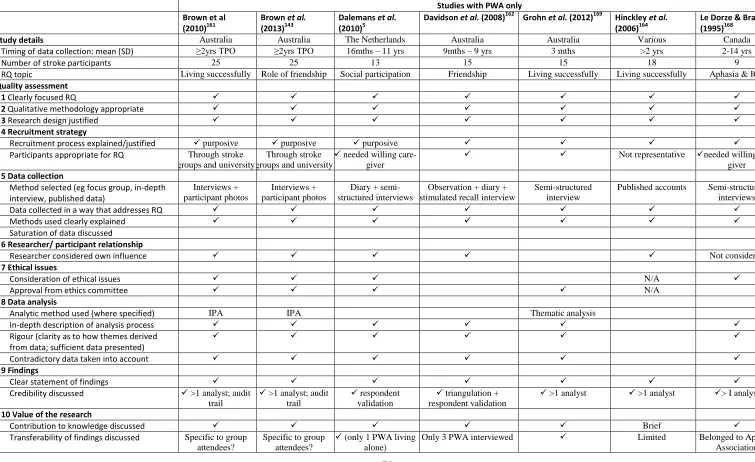
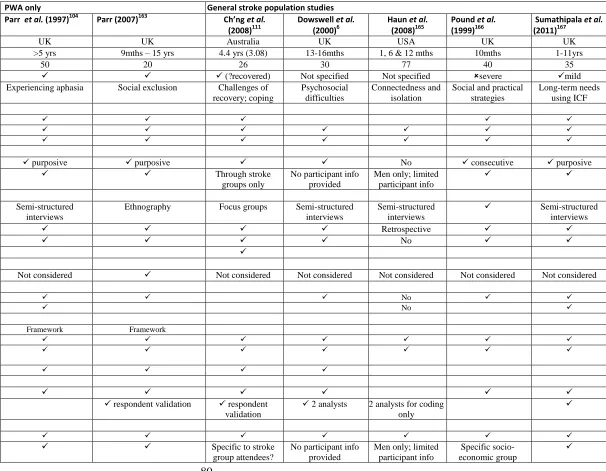
Table 2.1 Study details and critical appraisal of qualitative studies (based
on CASP) …p79
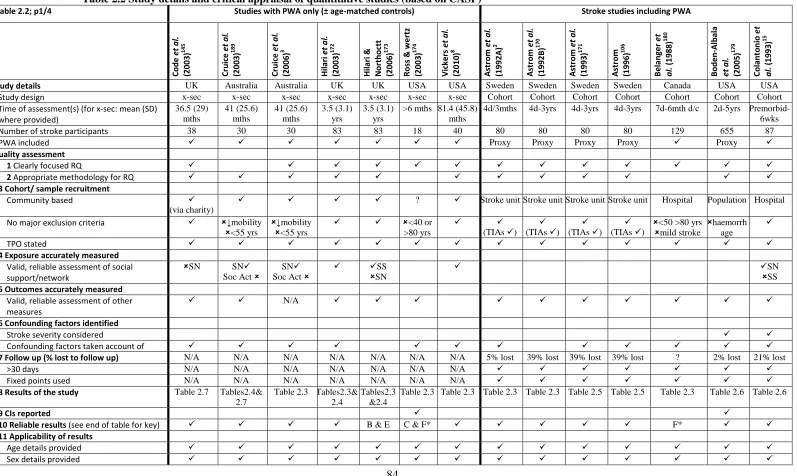
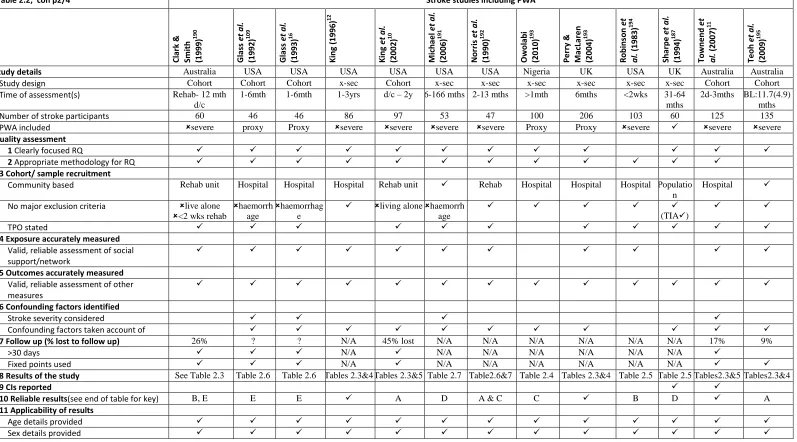
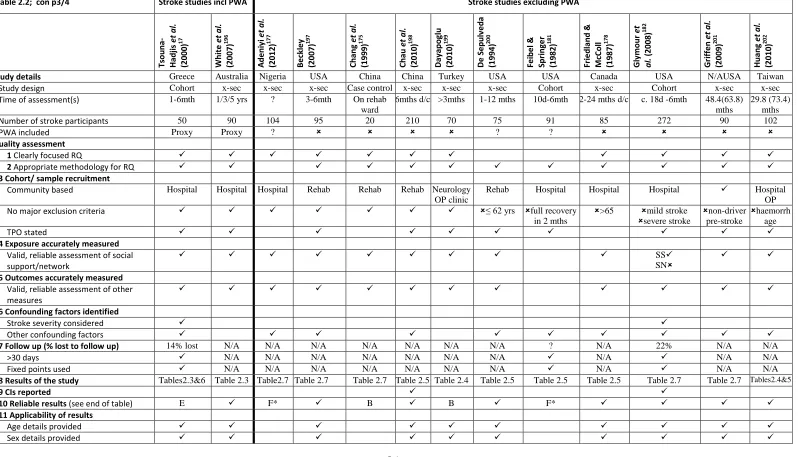
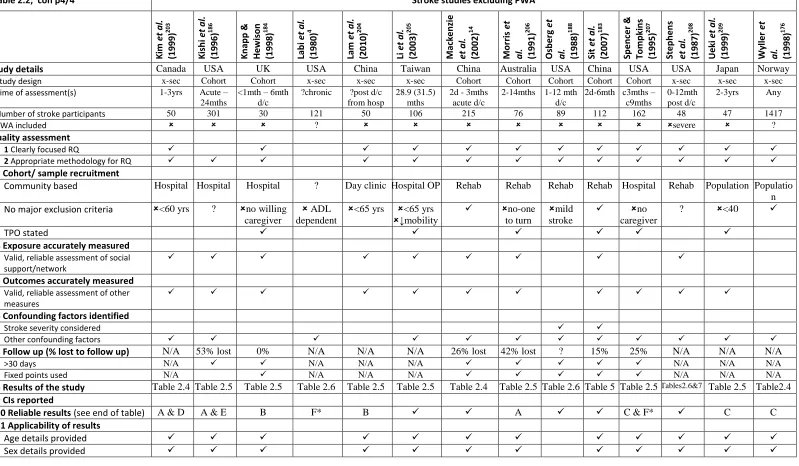
Table 2.2 Study details and critical appraisal of quantitative studies (based
on CASP)…p84
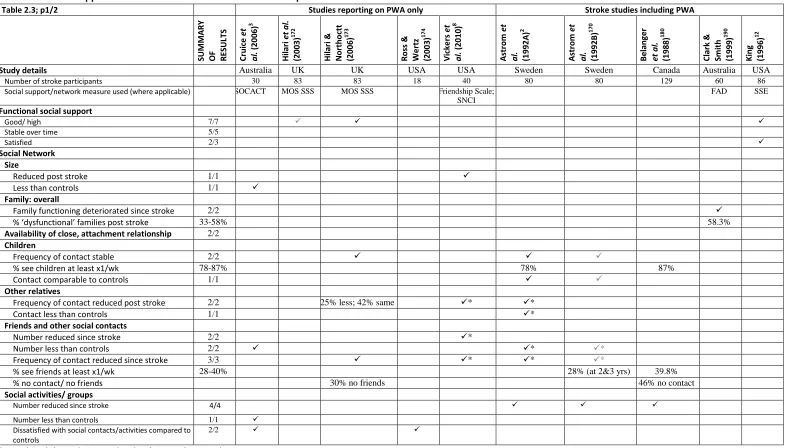
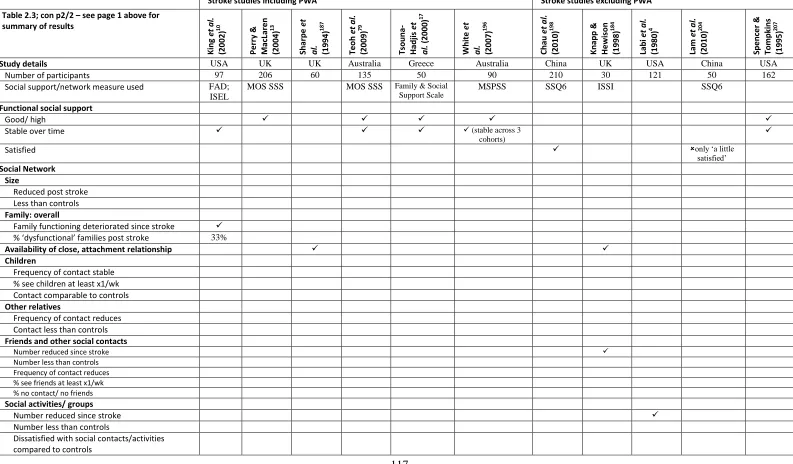
Table 2.3 Social support and social network after a stroke: descriptive
statistics …p116
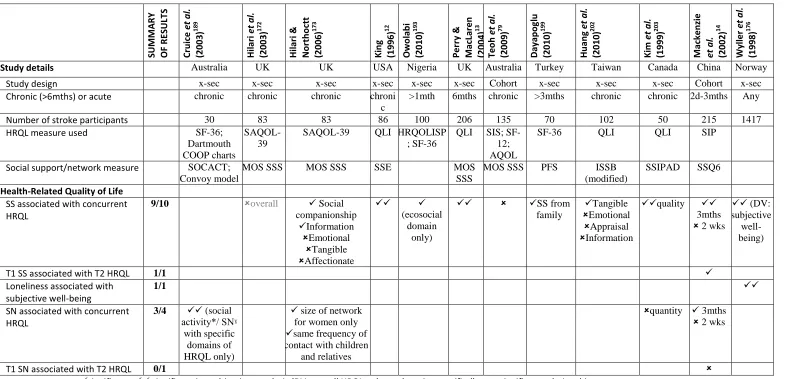
Table 2.4 Relationship between health-related quality of life (HRQL) and
social support after a stroke …p123
Table 2.5 Relationship between social support and depression or
depressive symptoms after a stroke …p127
Table 2.6 Relationship between social support and physical variables
(including Activities of Daily Living and neurological deficits)
after a stroke …p131
Table 2.7 Relationship between social support and aphasia, cognition,
fatigue, self-esteem and community integration …p134
Table 4.1 Participant characteristics for Stage One …p189
Table 4.2 Participant characteristics for Stage Two …p193
Table 4.3 Stroke-related and other variables: descriptive statistics …p194
Table 4.4 Perceived social support: descriptive statistics …p199
Table 4.5 Stroke Social Network Scale: descriptive statistics …p201
Table 4.6 Social support and network at six months post stroke:
comparing participants with aphasia to those without …p203
Table 5.1 Concurrent predictors of perceived social support six months
10
Table 5.2 Baseline predictors of perceived social support six months post
stroke …p225
Table 5.3 Concurrent predictors of social network six months post stroke
…p232
Table 5.4 Baseline predictors of social network six months post stroke
…p237
Table 6.l Friends factor: descriptive statistics for baseline, three months
and six months post stroke …p244
Table 6.2 Groups factor: descriptive statistics for baseline, three months
and six months post stroke …p247
Table 7.1 Children factor: descriptive statistics for baseline, three months
and six months post stroke …p273
Table 7.2 Relatives factor: descriptive statistics for baseline, three months
and six months …p280
Table 8.1 Summary of existing social network typologies …p293
Table 8.2 Network types by delineating characteristics …p328
Table 9.1 Baseline: relationship between social network and functional
support …p335
Table 9.2 Six months: relationship between social network and functional
11
List of figures
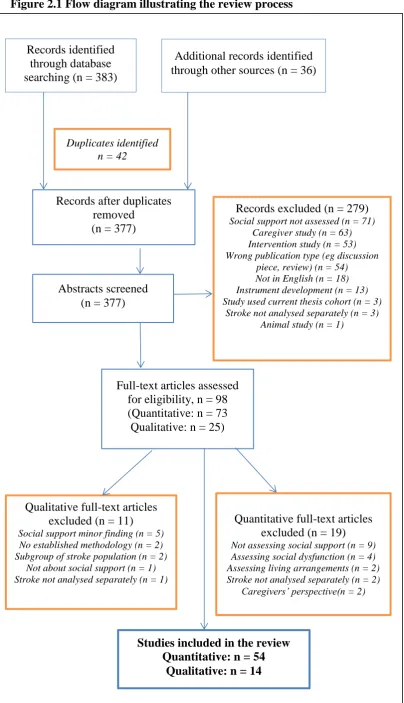
Figure 2.1 Flow diagram illustrating the review process …p72
Figure 3.1 Timeline of assessments …p153
Figure 3.2 Sampling matrix …p168
Figure 4.1 Participant flow in the project …p188
Figure 4.2 Distribution of participants in the sampling matrix …p192
Figure 6.1 The number of close friends, before and after the stroke …p246
Figure 8.1 Patterns of change in social network type, before and after
stroke …p309
Figure 8.2 Network type of all participants, before and after stroke …p310
Figure 8.3 Plots of the agglomeration coefficients against the number of
clusters formed: three methods of hierarchical cluster analysis
…p327
Figure 8.4 Mean scores of the social network factors by cluster type
12
Acknowledgements
This research would not have been possible without the help of many people. I am very grateful to all those who supported me throughout my PhD, and would like to mention the following people in particular.
Firstly, thank you to the participants who took part in this project and were so generous with their time. I was often humbled by the thoughtful and sincere way in which they responded to questions. Thank you, too, to the stroke unit team at St Mary’s hospital, who were supportive of this research, and made me feel welcome on their ward. Thank you also to Alice Lamb, who collected data at the stroke unit at the Royal Free Hospital, London.
A heart-felt thank you to my supervisor, Katerina Hilari. It feels like a long journey that we have gone on together in completing this PhD, starting with Katerina encouraging me to embark on an MSc, and then inspiring me to start the PhD. It was a fantastic opportunity to work on this project together, and I have learnt so much from our supervisions. Thank you for all the insightful guidance.
Thank you, also, to Jane Ritchie, who was the other big influence in my academic journey over these last few years. I loved learning about qualitative research, and could not have found a more inspiring, humane or perceptive teacher.
I am also grateful to Shashivadan Hirani, for his advice and enthusiasm when working on cluster analysis. Thank you also to Nicola Botting, Jane Marshall and Madeline Cruice, who have all given me suggestions and advice at various times, and shown interest in the progress of the study.
I also want to acknowledge the Consortium for Healthcare Research of the Health Foundation whose grant funded the project.
13
Declaration
The author grants powers of discretion to the University Librarian to allow
the thesis to be copied in whole or in part without further reference to the
author. This permission covers only single copies made for study purposes,
14
Abstract
Background
The social consequences of having a stroke can be severe, with social isolation a reported problem. It is little explored, however, what factors predict who will feel well supported and retain a strong social network after a stroke, nor is it well understood why friendships and other social contacts are lost.
Aims
This thesis explored: 1) how social support and social network change over time following a stroke, and whether this is different for those with aphasia; 2) what factors predict perceived social support and social network six months post stroke; 3) why people lose contact with friends, and whether there are any protective factors; 4) how the changing dynamics within the family unit are perceived by the stroke survivor.
Design and setting
Repeated measures cohort study. Participants were recruited from two acute stroke units and assessed at two weeks (baseline), three months and six months post stroke. A subset of participants was selected for in-depth qualitative interviews 8 – 15 months post stroke.
Measures and methods
Stroke Social Network Scale; MOS Social Support Survey; General Health Questionnaire; National Institute of Health Stroke Scale; Frenchay Aphasia Screening Test; Frenchay Activities Index; and the Barthel Index. Multiple regression, ANOVA, correlation and t-tests were used as appropriate.
Results
87 participants were recruited of whom 71 were followed up at six months. At six months, 56% of participants were male, 16% had aphasia, and the average age was 69 years old. 29 participants took part in qualitative interviews. Perceived social support at six months was not significantly different from pre-morbid levels; social network, however, did significantly reduce (p = .001). Those with aphasia had comparable levels of perceived social support but significantly reduced social networks (p < .05) compared to those without aphasia. Concurrent predictors of perceived social support at six months were: a person’s social
network, their marital status, and their level of psychological distress (adjusted R2 = .37).
There was only one baseline predictor of social support at six months: perceived social
support prior to the stroke (adjusted R2 = .43). Concurrent predictors of social network at
six months were: perceived social support, ethnic background, aphasia and extended
activities of daily living (adjusted R2 = .42). There were two baseline predictors: pre-morbid
social network and aphasia (adjusted R2 = .60).
There was a significant reduction in the Friends factor of the social network measure (p < .001). The main reasons for losing friends were: changing social desires especially a sense that many participants were ‘closing in’ on themselves; aphasia; loss of shared activities; reduced energy levels; physical disability; environmental barriers; and unhelpful responses of others. Family were generally robust members of the social network post stroke. The spouse was the main provider of all support functions. Nonetheless, beneath the apparent stability of the quantitative data there were changes in how family relationships functioned, including some distressing role shifts, for example, receiving rather than providing support.
Conclusion
15
Chapter One: Introduction
Stroke is the most common cause of adult disability in England1, and the
social consequences of having a stroke can be severe. Studies have found
that following a stroke people take part in fewer social activities2-4, and
contact with friends and the wider network is vulnerable5-8. There is also
evidence that poor social support post stroke is associated with
psychological distress9-11, reduced health-related quality of life12-14, and
worse physical recovery15-17.
This PhD explores functional and structural aspects of a person’s social
support system over the first 12 months following a stroke, using both
qualitative and quantitative methodologies. Factors which predict who will
feel well-supported and have a strong social network are analysed. The
impact of the stroke on the family unit, as well as on friendships and the
wider network, are also explored. Finally, a social network typology is
developed, and the support provided by different network members is
examined. Both those with and without aphasia were recruited into the
project, allowing a direct comparison to be made between their different
experiences.
This introductory chapter will cover the following topics: health service
priorities in relation to the stroke population; brief historical overview of the
concept of social support; the link between social support and health; and
theoretical models which could potentially explain the role of social support
following a stroke. A systematic literature review of social support after a
16
1.1
Stroke and aphasia
1.1.2 Definitions, prevalence and importance
A stroke is caused by disruption of the blood supply to the brain. There are
two main types of stroke: ischaemic, where a clot narrows or blocks a blood
vessel resulting in brain cells dying from lack of oxygen; and haemorrhagic,
where a blood vessel bursts and damage is caused by bleeding in the brain.18
Ischaemic strokes are more common, accounting for around 85% of strokes.
A further 10% of strokes are due to primary haemorrhage and 5% due to
subarachnoid haemorrhage19.
According to the National Audit Office, each year around 110,000 people in
England have a stroke and of these, around 30% will die in the first month,
making stroke the biggest cause of death after heart disease and cancer20.
Of those who survive, it is estimated that around one third will have a
long-term disability21, and about 5% will be admitted to long-term residential
care22. Although those who are older are more at risk, around 25% of those
who have a stroke are under 6520. Further, it is estimated that each year
10,000 people under 55 years of age, and 1,000 people under 30 years of
age will have a stroke23. In total there are more than 900,000 stroke
survivors living in England, and of these, 300,000 are living with moderate
to severe disability, making stroke the leading cause of adult disability20.
The impact of having a stroke on individuals’ lives is described as
‘devastating and lasting’ in the National Stroke Strategy1
. The nature of the
disability following a stroke is determined by which part of the brain has
17
following a stroke include difficulties with movement, balance, walking,
reduced sensation, swallowing, cognitive difficulties, incontinence, and
reduced energy levels. These can impact on an individual’s ability to carry
out activities of daily living, for example, dressing, feeding, and maintaining
personal hygiene. They may also restrict participation in social activities and
limit community integration.
Another common sequela of stroke is aphasia. Indeed, it is estimated that
around one third of stroke survivors will have aphasia24, and for 15% of
stroke survivors aphasia will persist in the long-term25. Aphasia is a
language disability, caused by damage to the communication centres of the
brain. Although the most common cause of aphasia is stroke, it can also be
caused by other brain damage, such as traumatic brain injury or tumour.
Aphasia can affect all language modalities, thus a person with aphasia may
have difficulty speaking, understanding, reading or writing. As observed by
Connect, a charity for people living with aphasia, the consequences of
having aphasia can affect day to day life and relationships profoundly:
‘Everyday activities such as having a conversation, answering the phone,
watching television, may suddenly become a source of profound frustration
and anxiety both for the person with aphasia and for their families, friends
and carers.’26
The emotional impact of having a stroke is considerable. A systematic
review of depression post stroke estimated that around 33% of stroke
survivors show depressive symptoms27. For people with aphasia this figure
18
10-15% of the general elderly population (aged over 65) have depression,
with more severe depression affecting around 3-5%29.
A further consideration is the cost of care. The financial cost to the NHS and
the economy has been estimated at £8billion in 2008-9, of which £3billion
was direct care costs to the NHS, making it more costly than heart disease.
Informal care (for example, nursing home fees paid for by family members)
and cost to the wider economy (for example, through lost productivity)
accounted for a further £5billion.30
In summary, given the physical, emotional and financial costs to the
individual, their family and the nation, stroke should be a high priority for
the health service. In fact, in 2005, the National Audit Office noted that the
Department for Health had focused on cancer and heart disease in terms of
setting priorities and allocating resources, and had accorded stroke a lower
priority. Since then, however, the National Stroke Strategy (2007) has been
published, outlining a ‘quality framework against which local services can
secure improvements’ (p10)1
, and setting out actions and measures to
improve services over a ten-year time frame. A more recent report from the
National Audit Office (2010) documented significant improvement in stroke
care since the publication of the National Stroke Strategy, including better
emergency response and acute hospital care. Still, there are concerns that
long-term support of stroke survivors remains inadequate30.
1.1.2 Shifting conceptions of health
Over the last half decade, there has been a shift in the way society views
health. Rather than conceptualising health in the traditional medical model,
19
towards the positive concept of well-being, including physical, mental and
social components31. Thus, for example, the World Health Organisation’s
current definition of health, first stated in 1948, is as follows:
‘Health is a state of complete physical, mental and social well-being and not
merely the absence of disease or infirmity.’32
This broader conception of health is mirrored in many of the aims of the
National Stroke Strategy. For example, the main aim of healthcare
intervention after the acute stage is ‘to achieve a good quality of life and
maximise independence, well-being and choices’ (p34)1. Similarly, the
National Clinical Guidelines of the Royal College of Physicians (RCP)
states that: ‘the goal of healthcare is to help a person integrate back into the
community in the way that they want’ (p126)33. Thus there is consensus that
the aim of healthcare goes beyond assisting physical recovery. Further, best
practice in stroke care recognises the long-term needs of the stroke
population, with recommendations that stroke survivors are reviewed
annually to monitor physical and emotional needs1.
Another shift in how healthcare is provided is the increasing importance
accorded to the patient’s perspective on both their health and treatment
priorities. In 1999, the Patient Partnership Strategy aimed to improve
service delivery in part through involving patients in making informed
decisions about their care34. More recently, one of the key recommendations
in the RCP National Clinical Guidelines is that the views of stroke patients
and their carers should be taken into consideration when evaluating a
service33. The National Stroke Strategy has as one of its top ten priorities
20
there is a consensus that stroke survivors become ‘informed partners’ in
their own rehabilitation pathway. This process has arguably contributed to
the holistic nature of the health service aims described above.
If the aim of health service interventions is improving quality of life and
well-being, then it follows that consideration should be given to the social
support systems surrounding the stroke survivor. Of note is that as far back
as 1948, ‘social well-being’ was considered integral to health in the WHO
definition38. The National Stroke Strategy acknowledges the importance of
both close family as well as the wider social network as important
components in living successfully with stroke. The central supportive role of
the carer is emphasised, such that the health and well-being of the carer is an
aim of service delivery in itself (p44)1. Further, one of the top ten priorities
is participation, in particular, provision of ‘assistance to overcome physical,
communication and psychological barriers to engage and participate in
community activities.’1 (p8)
Conceptualising health in such a broad and far reaching way has
implications for how services need to be configured. If the aim of healthcare
intervention is participation, then this will potentially affect how leisure,
transport, housing, education and employment are organised. The RCP
observe that ‘Most healthcare focuses on improving a person’s capacity to
undertake activities. The wider task of achieving community integration
also depends upon additional factors such as availability of suitable and
accessible social settings and appropriate training for community providers
of leisure and social activities’ (p126)33
. Both the RCP and the National
21
specialist voluntary sector services and peer support groups may play an
important role. It is anticipated that the findings from this thesis will inform
health service provision in this broadest sense, including the interface
between health, social care, and the third sector.
1.2
Concept of social support
1.2.1 Historical perspective
Back in 1624 the English poet John Donne wrote ‘No man is an island,
entire of itself’35. Before him, stretching back to Aristotle and his exposition
on the role and value of friendship36, philosophers and artists have mused on
the meaning of social connections and the seemingly innate need to belong.
Thus reflections on the meaning of social bonds are not a modern
phenomenon. Nonetheless, current understanding of social support and
social networks is informed by developments in sociology, psychoanalytic
theory, anthropology and psychology that have taken place over the last 150
years. The major developments in this area are briefly outlined below.
Emile Durkheim (1858-1917)
Over 100 years ago, Durkheim (1897, trans 1952)37 argued that even an
apparently ‘individual’ act such as suicide could be explained by failure of
social integration. He found that suicide rates were lower in societies where
individuals were more embedded or integrated into the social groups around
them. Durkheim theorised that in understanding suicide it was therefore
important to understand the role of social integration and the ways in which
an individual may be influenced by social relationships. It has been argued
22
social ties and mortality, and more generally, considering the explanatory
power of social context in relation to an individual’s behaviour.38
John Bowlby (1907-1990)
Berkman (2000) recently described Bowlby as ‘one of the most important
psychiatrists of the twentieth century’39 for his influential work in the 1960s
and 70s on attachment. Bowlby believed that there is a universal human
need to form close, affectionate bonds, and that this is a ‘primary
motivational system’40
(ie not secondary to physical needs such as hunger).
His attachment theory suggested that the healthy psychological development
of an infant was dependent on the infant experiencing a warm, intimate and
continuous relationship with a responsive carer. From this secure base, the
infant would be given the safety and emotional security to explore the
world. These intimate bonds created in childhood would then form the basis
of subsequent loving and lasting adult relationships. In particular, Bowlby
saw marriage as the equivalent ‘secure base’ or ‘protective shell’ from
which the individual could flourish in the world41. Berkman suggests the
strength of his theory lies ‘in its articulation of an individual’s need for
secure attachment for its own sake, for the love and reliability it provides,
and for its own “safe haven”.’ (p844)39
1.2.2 Functional social support
From Bowlby to concepts of functional support
Influenced by the work of Bowlby, in 1974 Weiss developed a model of
social provision: different functions which he suggested were essential if an
23
provisions of support, performing both expressive and instrumental
functions for the individual. These were: attachment (as described by
Bowlby); social integration (or a sense of belonging to a group); guidance
(for example, receiving advice when needed); reliable alliance (a belief that
others can be relied upon); reassurance of worth (feeling valued by others);
and opportunity for nurturance (the belief that one is needed by others).
Two years later, in 1976, Cobb defined social support as follows43:
‘Social support is defined as information leading the subject to believe that
he or she is loved, esteemed and belongs to a network of mutual obligation’.
By the 1980s a number of theorists were defining a variety of supportive
functions that were hypothesised to be of importance, such as House
(1981)44. In their review of the social support literature in 1985, Cohen and
Wills documented the most common supportive functions that had been
assessed in the studies reviewed (p313)45. These were:
Esteem support: which Cohen and Wills define as supporting a
person to feel esteemed, accepted and valued. This type of support is
now usually referred to as ‘Emotional support’, and is also termed
expressive support, and self-esteem support. Commonly it may also
refer to feeling loved, valued, and cared for; encouragement; feeling
there is someone to confide in who will be understanding; sympathy;
and reinforcement of positive self-appraisal46-49.
Instrumental support: defined by Cohen and Wills as ‘provision of
24
(2000) defines instrumental support as ‘help, aid, or assistance with
tangible needs such as getting groceries, getting to appointments,
phoning, cooking, cleaning or paying bills’39
. It may also mean
personal care. This sort of support is also known as practical support,
tangible support or material support.
Informational support: Cohen and Wills define this as help in
‘defining, understanding, and coping with problematic events.’ More
commonly, it is understood to mean feedback, guidance, advice, or
provision of information that may help provide a solution to a
problem.48, 50 It may also include help in deciding which course of
action to take39. It is sometimes referred to as advice support.
Social companionship: defined by Cohen and Wills as spending time
with others, for example, in leisure and recreational activities.
Sherbourne and Stewart define a similar concept, ‘positive social
interaction’, as ‘the availability of other persons to do fun things
with.’48
Received versus perceived functional social support
A further development in the field has been to disentangle received support
(sometimes known as enacted support) from perceived support. Ditzen and
Heinrich (2013)51 define received support as ‘an intended and observable
act of help (including all functional types)’ whereas perceived support is
‘understood as a general expectation of being supported.’ While received
25
understood to remain relatively stable52. Thoits (2011)53 suggests that the
perception of being supported is ‘probably generalised from daily, mostly
invisible supportive exchanges occurring over time’. By invisible, she
means commonplace support exchanges that are so minor as to be taken for
granted. By contrast, with received support, the supportive act becomes
visible.
It is of interest that perceived support is only weakly associated with actual
support received: in a meta-analysis of 23 studies, Haber et al. (2007)54
found the association to be r = .35.54 They observe that perceived support is
more strongly and consistently associated with physical and mental health
than received support. Thoits (2011)53 suggests that this is because visible
support (ie received support) may be less acceptable and welcome,
particularly if it cannot be reciprocated. Sherbourne and Stewart (1991)48
also point out that ‘received support is confounded with need’, and that ‘the
fact that a person does not receive support during a given time period does
not mean that the person is unsupported.’
Lack of conceptual clarity and consistency
There is a lack of consensus regarding terminology and definitions. For
example, emotional support has been conceptualised in a variety of ways. It
is instructive to take three measures of social support that have been widely
used in recent stroke studies (see Chapter Two), and compare how they
define emotional support.
In the Social Support Questionnaire, developed by Sarason (1983)52, the
conceptual basis for defining ‘emotional support’ is Bowlby’s work.
26
care about, love and value the participant. By contrast, in the Medical
Outcomes Study Social Support Survey (MOS SSS)48 the emotional support
items probe whether there is someone to whom the person can confide about
worries and problems, and who will listen and be understanding. This is a
narrower definition of emotional support that does not include the concept
of feeling valued or loved. Finally, in the Family Social Support Scale,
developed by Tsouna-Hadjis et al. (2000)17 specifically for their study,
emotional support is defined as: ‘involvement of family members’ for
example, how many hours they spend with the stroke survivor.
These three diverse definitions of emotional support illustrate how this term
lacks consistency in the literature. A similar analysis could be undertaken
with any of the other support functions described above. A number of
writers have commented on the lack of conceptual clarity in studies of social
support, arguing that this situation makes it hard to compare and interpret
results, assess how social support links to other outcomes, or gain insight
into the social support process45, 49, 55.
For the present thesis, functional social support was measured using the
MOS Social Support Survey48. This measure categorises five functions of
support: emotional, informational, tangible, social companionship and
27
1.2.3 Social networks
The development of social network theory
As identified earlier, one of the earliest writers to consider the relationship
between social structures and individual behaviour was Durkheim. In terms
of collecting fieldwork in order to investigate social networks, influential
early works were written by anthropologists, such as Bott (1957)56 and
Barnes (1954)57. Subsequent developments in the study of social networks
have come from a variety of disciplines, including sociology, psychology,
mathematics, and health sciences.
Defining a social network
A ‘social network’ can be conceptualised as the structural element when
considering interpersonal relationships. Bowling (1997)49 defines a social
network as ‘the web of identified social relationships that surround an
individual and the characteristics of those linkages’. Thus each individual is
seen as a node in the network, with each exchange between network
members constituting a link. Aspects of social network structure identified
in the literature 39, 49, 58 include: size of network; geographic dispersion;
density (how much network members are in each other’s networks),
homogeneity (the extent to which network members are similar to one
another) and composition of members (for example, whether the members
are friends, neighbours, children, other relatives). Characteristics of
individual network ties may include: frequency of contact (face to face,
phone, mail, social media), reciprocity, and duration (length of time people
28
frequency of participation in community or religious organisations, or some
other indication of community integration.
Conceptual clarity
As with functional support, definitions and conceptions of social network
vary from author to author. Thus Pinquart and Sorensen (2000)59 use ‘social
network’ as an umbrella term to cover both structural and functional
support. Due et al. (1999)55 make a distinction between ‘social network’
(defined as linkages between individuals who feel affection and/or are close
family) and ‘formal relations’ (defined as ‘a dentist, teacher or lawyer…
along with acquaintances like neighbours and the parents of one’s best
friend’). They use ‘structure’ as the umbrella term to cover both concepts.
More commonly social network is defined as including both close and
‘weak’ ties, although the exact dimensions of the social network measured
varies from scale to scale (see McDowell and Newell (1996)60 or Bowling
(1997)49 for an overview). The terms ‘social integration’, ‘social structure’
‘social quantity’ and ‘embeddedness’ are also sometimes used
interchangeably with ‘social network’.
In the present study, the term social network was used to describe structural
aspects of social relationships, such as composition of network, frequency
of contact and proximity.
1.2.4 Structure and function: two different concepts?
Social networks can be seen as the structure through which perceived social
29
‘[Social] networks have a variety of functions of which the provision of
social support is but one’62
. Seeman and Berkman (1988)63 confirm that the
two concepts are independent, finding that the characteristics of someone’s
network and social support are not so highly correlated as to make them
interchangeable. This is supported by a literature review by Cohen and
Wills (1985)45 where they note that the correlation between the two
concepts ranges from r = .20 to .30. They explain this finding by pointing
out that ‘adequate functional support may be derived from one very good
relationship, but may not be available to those with multiple superficial
relationships’.
1.3
Social support and health
1.3.1 Social support and physical health
Back in 1979, Berkman and Syme measured the social networks of 4,775
adults in Alameda County, California64. Their study was the first to measure
social networks using a complex measure (ie not a single-item indicator
such as marital status). Their results were compelling: those with strong
social networks had a reduced mortality risk of nine years. House et al.
(1982)65 conducted a similar study in Michigan (2754 adults), where they
also measured social network, but included a baseline medical examination
in order to control for various health factors, such as high blood pressure.
They were able to replicate the Berkman and Syme results. These
30
which has consistently come to the same conclusion: social relationships
appear to be protective for a person’s health.
A number of recent reviews in this area have drawn together this evidence39,
6667, 68
. In particular, Holt-Lunstad and Smith (2012)66 conducted a
meta-analysis following a systematic search of all prospective studies that
measured both social relationships and illness-related mortality. They
included 148 studies, with 308,849 participants, who were followed up on
average for 7.5 years. Participants with stronger social networks had a 50%
increased likelihood of survival compared with participants with weaker
social relationships. They suggest that since most of the studies tracked
initially healthy individuals, it is unlikely that these results can be explained
by reverse causality. They then transformed the data to make it comparable
with other risk factors, and found that ‘the influence of social relationships
is equivalent or greater than that of most leading health indicators including
physical activity, overweight and obesity, tobacco use, alcohol abuse,
immunizations for influenza and air pollution (p43).’ They observe that
having few social ties was the equivalent of smoking 15 cigarettes a day.
Holt-Lunstad and Smith (2012) also compared the comparative influence of
functional support versus structural support. Complex measures of social
integration were found to have the highest effect sizes (associated with 91%
increased survival rate, OR: 1.91). Binary measures, such as living alone,
had the lowest (OR: 1.19). Generally, structural aspects had stronger effect
sizes than functional aspects. In terms of functional support, perceived
31
There is also evidence that those with restricted social ties are more at risk
of developing an illness, and less likely to survive or make a good recovery
following the onset of diseases67, 69 for example myocardial infarction70 or
cancer71. To complete the circle, those who are disabled are likely to have
smaller social networks72, 73, as are those who are older73-75. The
longitudinal work of Wenger (1994)75 suggests illness and the frailties
associated with advancing age are causes for people to develop more
restricted social networks75.
1.3.2 Social support and mental health
Considerable evidence has accumulated to suggest that social support, and
to a lesser extent aspects of the social network are associated with mental
health in both the general population 53, 73, 76, and the chronically ill
population77, 78.
In terms of risk of developing depression, a recent study (Teo et al., 2013)79
followed up a cohort of 4,642 American adults ten years after baseline
social support data were collected. Their outcome variable was past-year
depression at follow up, and they controlled for a variety of baseline
covariates (including sex, age, physical and mental health, alcohol misuse).
They assessed social isolation (whether lived with partner, and frequency of
contact with family, friends and neighbours); supportive quality of
relationships (based on questions such as: “How much does your spouse or
partner really care about you?” which would seem close to many definitions
of emotional support); and straining aspects of relationships (for example,
32
composite measure: overall quality of relationships, combining both
supportive and straining aspects of relationships. They found that the
strongest predictor of depression was baseline overall relationship quality
(OR: 2.60); then social strain (OR 1.99); then lack of social support (OR
1.79). Those with the highest quality of social relationships (top decile) had
a 6.7% chance of developing depression, whereas those with the lowest
quality (bottom decile) had a 14% chance. Of interest was that social
isolation did not predict future depression.
A review by Pinquart and Sorensen (2000)59 examined the link for older
people between social relationships and three aspects of subjective
well-being (SWB): life satisfaction, self-esteem and happiness. They included
129 studies looking at aspects of social network (such as size of network or
frequency of contact); and 55 studies examining ‘quality’ of relationships
(defined as ‘emotional support or feeling close to someone’, thus likely to
be measures of functional support). Again, they found that quality of contact
explained more variance than quantity of contact in all three aspects of
SWB, particularly life satisfaction (3.4 times more variance explained).
1.4
Proposed mechanisms through which social
support effects health
Although it is widely accepted that social relationships are associated with
both mental and physical health, there is still considerable controversy about
the mechanisms through which this occurs53, 68. This section will firstly
33
explore possible behavioural, psychological and physiological pathways.
The debate over whether the effect is ‘direct’ or ‘indirect’ will also be
summarised.
1.4.1 Cohen and Wills (1985): a theoretical framework for analysing social support
Cohen and Wills (1985)45 discuss the mechanism through which social
support associates with good mental and physical health. They put forward
two models:
1. Stress buffering, where social support reduces stress, which in turn has a
positive impact on health and well being
2. Direct effect, where social support directly impacts on health and
well-being.
In the ‘direct effect’ model they describe a scenario where a person is not
experiencing acute stress. In this scenario, they hypothesise that the person
will benefit most from ‘social networks’. They suggest that large social
networks promote a sense of social integration which leads to well-being.
In the ‘stress-buffering’ scenario, a person is experiencing an acutely
stressful situation. Here they hypothesise that the person will benefit most
from perceived social support, particularly the functions of emotional and
informational support. They define stress as arising ‘when one appraises a
situation as threatening or otherwise demanding and does not have an
appropriate coping response’. They then go on to suggest various
mechanisms by which perceived social support may alleviate this stressful
34
perception that others can and will provide necessary resources may
redefine the potential for harm posed by a situation’. Thus social support
may prevent a stress response occurring in the first place. However, even if
stress is experienced, appropriate support may reduce the likelihood of
stress resulting in poor health through reducing the perceived importance of
the problem, by facilitating healthy behaviours, by providing a solution, or
by tranquillising the neuro-endocrine system. They term this type of social
support ‘stress-buffering’.
Cohen and Wills, 28 years later
The Cohen and Wills model is still influential, described in recent
theoretical overviews53, 68, 76, and also forming the basis of hypothesis
testing in recently published studies80.
Many aspects of the Cohen and Wills hypothesis have stood the test of time.
Functional support, particularly emotional support has been shown to be
beneficial in times of stress51, 76, 81. Further, well-developed social networks
have been repeatedly found to be associated with reduced mortality and
morbidity and to a lesser extent psychological well-being (see 1.3 above).
Other parts of the hypothesis are now more controversial, however. Firstly,
there has been considerable evidence in the last 20 years that functional
support does relate to good mental health and to a lesser extent physical
health even for those not experiencing acute stress59, 66, 82. There is also
doubt as to whether the association between functional support and health/
well-being is mediated solely through the stress response68, 80.
Nonetheless, the main thrust of their hypothesis still stands: people may
35
opposed to ‘ordinary’ life. This is likely to have implications for the stroke
population.
1.4.2 Behavioural and psychological pathways
Following from this early work of Cohen and Wills (1985) the mechanisms
through which social relationships influence health and well-being has been
the subject of study and also controversy. In a recent review Thoits (2011)53
drew together evidence on this topic. She identified seven possible
mechanisms:
1. Social influence/ social comparison
People have been found to modify their own behaviour in order to match the
norms of the group. Thus attitudes to risk behaviours versus health
behaviours (for example, alcohol consumption, drug use, exercising) are
likely to be influenced by a person’s ‘reference group’.39, 83
2. Social control
Social control is where the influence of the social group is more explicit, ie
family or friends encourage, pressure or persuade an individual to adopt a
healthier lifestyle83-85.
3. Behavioural guidance, purpose and meaning (mattering)
Thoits (2011)53 defines roles as ‘positions in the social structure (for
example, husband-wife, parent-child, doctor-patient, friend-friend) to which
are attached reciprocal sets of normative rights and obligations.’ Roles, with
36
Thoits argues that roles confer ‘behavioural guidance’, thus roles imply
expected behaviours, ‘and in conventional roles this means conventional
(non-deviant) behaviour’ (p148).
There is also the argument that knowing one is important to others gives life
purpose and meaning, which in turn influences both psychological
well-being and self-care83, 85, 86.
4. Self-esteem
Thoits (2011) cites evidence that an individual’s evaluation of their own
performance in valued roles is reliably associated with global self-esteem.
Similarly, feeling that one ‘matters’ and is connected to others in reciprocal
supportive relationships is thought to influence self-esteem39. Self-esteem is
in turn associated with increased life-satisfaction87, and improved mental
health outcomes88. Thus self-esteem is considered to be one route
‘mediating’ the relationship between social support and physical and mental
health. There is some evidence of this both for the general elderly
population89, and for those with a chronic illness 90.
5. Sense of control or mastery
Thoits (2011) argues that successful role performance also links to concepts
of self-efficacy, and the belief that a person has control over their life. There
is some evidence in the literature of the mediating role that self-efficacy
may play between social support and psychological health, including in
stressful situations91.
37
A sense of belonging, or feeling included by a group, and the sense that
there are others with whom one can have enjoyable social experiences with,
have been shown to be associated with good mental and physical health.
Feeling attached to one’s community is also considered to be beneficial 39, 53,
92
. Cohen and Wills (1985)45 suggest that feeling integrated and embedded
in one’s social network ‘provide(s) positive experiences… positive affect, a
sense of predictability and stability in one’s life situation, and a recognition
of self-worth,’ which they suggest is beneficial for health and well-being.
7. Functional social support
Thoits (2011) discusses the potential mechanism whereby functional social
support may influence health in non-acute situations. She suggests that
‘routine or everyday emotional, informational and instrumental acts are
helpful in themselves’. These reciprocal patterns of giving and receiving are
what leads to the perception of feeling supported, feeling one matters and is
valued. This, she suggests, leads to improved self-esteem, self-efficacy and
psychological health, indirectly affecting physical health. She contrasts this
to functional support received in times of acute stress, where social support
becomes more ‘visible’ and deliberate, focused on the individuals’ situation,
and expectations of reciprocity are temporarily suspended.
1.4.3 Physiological pathways
Ditzen and Heinrich (2013)51 review the physical mechanisms through
which social support has been found to influence health. Firstly, social
38
often been measured through indirect markers such as cardiovascular
reactivity. An early experiment was conducted by Kamarck et al. (1990)93.
Participants were exposed to a public speaking task. Half the participants
were told support was available if needed, although no support was in fact
provided. Nonetheless, those who perceived themselves to be supported had
lower blood pressure both before and during the public speaking event. In
similar tasks, this protective effect was more pronounced when the
participants knew the support person well (for example a close friend)94.
Further, the more stressful the task became the more noticeable the effects
of social support95. There is thus evidence of social support ‘buffering’ the
physiological impact of a stressful event in laboratory situations. In
everyday life, too, ambulatory blood pressure has been found to be lower
when with ‘supportive’ network members such as family than with
strangers96.
There is also evidence linking social support to both the immune system and
the endocrine system. Lack of support is associated with elevated levels of
stress hormones (norepinephrine, epinephrine, and cortisol)97, and
compromised immune systems (see DeVries et al., 2007 98, for an
overview).
Evidence also comes from animal studies. Berkman et al. (2000)39 cite
research suggesting that animals living in isolated circumstances experience
accelerated aging. Thus monkeys housed on their own have more extensive
atherosclerosis than less isolated animals; and rats who were separated from
their mothers in early life had a number of markers of early aging, such as
39
led Berkman (1988)99 to put forward the proposition that being socially
isolated is ‘a chronically stressful condition to which the organism
responded by aging faster’.
1.4.4 Social support: direct or indirect effect? Innate and universal?
The mechanisms outlined by Thoits (2011)53 in section 1.4.2 describe how
the effect of social support on health may be mediated through a variety of
pathways such as lifestyle, self-esteem, self-efficacy, and other
psychological mediators, which in turn are thought to work through the
physiological pathways described in section 1.4.3. However, there is
increasing evidence that social support may also directly impact on health
via the cardiovascular, neuroendocrine or immune systems. This is
discussed in a recent review by Uchino et al. (2012)68. They summarise the
results from laboratory studies which have found that social support alters
physiological processes during stressful tasks, but not psychological
processes (ie ‘supported’ participants may have had reduced blood pressure
compared to non-supported participants, but reported similar levels of
distress, anger or stress). Similarly, there are studies which have found that
social support is associated with cardiovascular activity100, 101 and immune
function102 even after controlling for a range of psychological processes,
such as stress, life satisfaction and depression. While the failure to find
psychological mediators may be due to measurement error or design issues,
an alternative explanation is that, at least in part, social support may directly
40
The argument that there is something intrinsically health-giving about social
relationships may tie in with those who suggest the need to form meaningful
attachments is a universal, innate characteristic. Baumeister and Leary
(1995)103, like Bowlby, argue that there is likely to be an evolutionary basis
for this basic human need: those able to form and maintain bonds would
have been more able to care for their children, hunt for food, and protect
themselves from adversity. Their literature review found that this need to
feel meaningfully connected to others appears to be universal across
cultures; that dissolution of bonds is generally avoided, and where it occurs
is a cause of emotional distress; and that lack of belonging leads to
psychological and physical health problems, as documented above. From
this they put forward the following hypothesis: ‘the need to belong is a
fundamental human motivation… the belongingness hypothesis is that
human beings have a pervasive drive to form and maintain at least a
minimum quantity of lasting, positive, and significant interpersonal
relationships.’
1.5
How do concepts of social support relate to the
stroke population?
In understanding how social support may operate post stroke, it is perhaps
helpful to re-examine the proposed mechanisms whereby social support is
thought to influence mental and physical health in section 1.4.2 above. The
psychological benefits of ‘norm-referencing’ may be lost post stroke, as
41
with their non-disabled peers. It may also be harder, both physically and
arguably psychologically, to take part in pre-stroke social or community
activities. Further, the purpose, meaning, self-esteem and self-efficacy
associated with successful accomplishment of social roles is likely to be
challenged post stroke: the pain associated with lost roles is documented in
the stroke literature6, 104. Even the benefits of receiving functional support
may be compromised. Functional support is likely to become more ‘visible’
and less reciprocal post stroke. Thoits (2011)53 cites evidence suggesting
that ‘deliberate helpfulness’, particularly when accompanied by inability to
reciprocate, can lead to feeling indebted, dependent, over-controlled or
incompetent. Thus arguably many of these ‘beneficial’ pathways are
compromised post stroke.
As a person struggles to continue in community roles, or take part in
community activities, it may be expected that there will be some shrinkage
of the social network. Further, the role shifts in the family unit, combined
with difficulty in accepting help and becoming ‘dependent’, may be
expected to lead to family disharmony. Thus a stroke may be anticipated to
constitute a ‘threat’ to successful social relationships, which is of concern
given the importance of feeling meaningfully connected to others described
above (see 1.3.1, 1.3.2 and 1.4.4).
So what social support might help a person following a stroke? Turning first
to the Cohen and Wills45 model, it might be predicted that functional
support, particularly emotional support, may help to ‘buffer’ the negative
psychological and social consequences of the stroke. For the chronically ill,
self-42
worth90. Where functional support, particularly tangible support, must
become ‘deliberate’, ‘visible’ and unreciprocated post stroke, there is the
concern that it may carry some negative psychological costs. However,
there is limited evidence that this need not be the case so long as it is
responsive (defined as support which made the recipient feel understood,
valued and cared for)105. Further, it may be hypothesised that where a stroke
survivor succeeds in reciprocating support, or is able to resume former (or
new) social roles, even if only partially, this may help them to feel more
satisfied with their social relationships.
So what is the role of the wider network post stroke? The Cohen and Wills
model suggests that the benefits of the wider network are most apparent
when an individual is not facing an acutely stressful situation. The issue of
when a person ceases to be ‘stressed’ by having a stroke is not clear cut. In a
recent systematic review, rates of depression were estimated at 33% in the
acute (within one month) and medium term (between one and six months),
and rose to 34% in the long-term (post six months)27. A study looking at
generalised anxiety disorder post stroke found the prevalence rate to be 28%
in the acute stages, and this rate did not significantly decrease through the 3
years of follow up106. Nonetheless, in theory part of adjusting to post stroke
life in the long-term might be considered to be reintegration into the wider
community, or at least finding companionship and a sense of belonging,
with the social and psychological benefits this would confer.
Thoits (2011)53 suggests that an additional role of the extended social
network is to provide access to experientially similar others (for example,
43
who has). Alternatively, peer support groups may provide this function.
Thoits suggests that ‘experientially similar others’ may be in a better
position to understand and empathise and may be able to validate that what
a person is experiencing is ‘normal’. They may also be in a better position
than other network members to provide valuable information, advice or
guidance, and potentially can act as role models, giving hope. Thoits53
makes the persuasive case that they are less likely to be threatened or
distressed by the person’s emotions and worries. She compares this to
significant others, who, she suggests ‘are invested in the problem being
resolved as quickly as possible to alleviate their own and their loved one’s
distress. Invested supporters therefore may minimise the threatening aspects
of the problem, insist on maintaining a positive outlook, or pressure the
person to recover or problem solve before he or she is ready.’ She therefore
argues that while significant others may be best placed to provide love,
concern and companionate presence, ‘experientially similar’ others also
have a valuable and distinct role in supporting an individual following a
stressful event.
1.6
Learning from models of loss
Lacking from the above analysis is a framework in which to view a person’s
post stroke adjustment. In order to understand the role of social support
more fully, it may be helpful to consider whether a model exists which
might explain the ‘journey’ a person is likely to go on following this
stressful life event. In the stroke literature, models of loss and grief have