International Journal of Innovative Technology and Exploring Engineering (IJITEE) ISSN: 2278-3075, Volume-8 Issue-6, April 2019
Abstract: Cloud computing has become a rapid growing industry that fundamentally expanded the realm of possibilities organizations can accomplish with technology. Moreover to the entire cost minimization, there exist several deliberated goals in deploying cloud systems in the telecom sector. Telecom cloud adoption can create and deliver business value by achieving the present business most proficiently and successfully, generating novel business strategy to provide the present services or generating completely novel businesses. This paper presents a Benefits, Costs, Opportunities and Risks (BOCR) decision model for cloud strategy selection in the telecom sector which helps business leaders to cautiously evaluate their institutions to estimate the level of cloud adoption most closely match, and explains the methodology of how the organizations balance the cloud to generate business value which assures long-term development and benefits. The research reveals that even though there are many decision support model for cloud computing exist, the proposed model reflect the distinctiveness of telecom service providers by considering their distinctive assets and capabilities. Our study contributes to cloud computing business research by providing a holistic decision model for telecom which can guide on the selection of different cloud computing strategies.
Index Terms: cloud computing, cloud business model, telecom cloud strategies, BOCR Mode, strategic management.
I. INTRODUCTION
In the history of Information Technology the computational power was an expensive and scarce resource. The advent of cloud computing makes the computational power abundant and cheap. Cloud computing offers different information technology solutions as a service rather than as a product through connected networks [1] [2]. A cloud computing environment provides computation capacity, networking, and storage on-demand, typically through virtual networks and/or virtual machines [3].
As the provider of connecting network, the Communication Service Providers (CSPs) possessspecific benefits against other organizations in the Cloud markets and occupies the essential role in value production on the back of Cloud systems. Moreover, threecloud business models are utilized to portray the CSPs extension towards the cloud systems that influences the company value chains as well as user value propositions, i.e., service optimizer, service trendsetter and service reformer.
Service Optimizers are employed to accomplish the present business most profitably and proficiently in cloud and
Revised Manuscript Received on April 18, 2019.
Binesh Jose , School of Management Studies,NIT Calicut,Kozhikode,
India.
T Radha Ramanan , School of Management Studies,NIT
Calicut,Kozhikode, India.
S D Madhu Kumar, CSED, NIT Calicut,Kozhikode, India.
maximize the customer value propositions. Further, CSPs utilize Cloud to acquire more profit through enhancing the presents items and services and maximize the client’s experiences to preserve the present and draw the attention of more clients. Service trendsetters utilize the cloud to considerably enhance the customer value by influencing the CSPs’ specific resources in the distribution of present services leads to novel revenue streams through novel business models. The potential of the CSP is to improve its responsibility in value chain to distribute either as a trader or collaborator, in horizontal as well as vertical Cloud-based services to huge industries, Small-and-Medium Sized Businesses (SMBs), and vertical companies [4]. Furthermore, cloud can assist the CSP effort to produce important novel revenues through producing novel business/payments schemes to distribute the present items and services, to employing novel channels to draw attention of the earlier or adjacent clients segments. Besides, service reformers depend on cloud to progress completely distinct value proportions, and to produce novel user requirements and segments, through improving the end-user experience. With this approach, the reformer can produce radically novel businesses and utilize cloud to produce a novel request and “own” a novel market through draw attention of novel user segments and producing completely novel revenue streams [5].
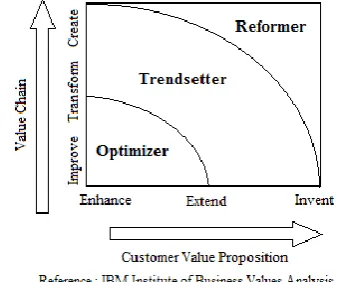
[image:1.595.337.506.490.631.2]Figure 1: Telecom cloud enablement framework [5]
Figure 1 illustrates a cloud Enablement Framework which recognizes the three organizational samples using the level the CSP used to improve, broaden or originate user value propositions and enhances, modifies, or produces its responsibility in the industry value chain [6].
A BOCR Decision Model for Telecom Cloud
Strategy Selection
Whether CSPs choose to become optimizers, trendsetters, or reformers using different factors containing the details of how much the industry need to or ready to invest the risk to assume and the characteristics of their partner ecosystems. This study proposes a BOCR model which helps telecom cloud adopter tocarefully assess their organizations to determine which cloud strategy (optimizers, trendsetters or reformers) they most closely match and how they can balance the cloud to generate business value that support long-term development and profits.
This article is structured as follows: Next section on literature review discuss the theoretical references, general philosophies, and existing cloud decision models. Section on framework and methodologies represents the research framework and methods that guided the BOCR analysis. Result section presents findings followed by discussions which explain inference of our work. Conclusion section highlights the most significant results of this study which include contributions and directions.
II. LITERATUREREVIEW A. Cloud Computing
Generally, many formal definitions have been proposed by academia and the IT sector [7], the explanations given by National Institute of Standards and Technology (NIST) having the ideas normally defined in the cloud community [8]. For NIST, Cloud Computing allows convenient access on-demand basis, to a set of configurable computer systems (eg networks, servers, storage, applications and services) that can be quickly acquired and released with minimal effort or interaction with the service provider. The Cloud computing Service can be hired in three ways:software as a service, software as a service, and platform as service and these cloud service methods are deployed to consumers over four major delivery models based on required security & privacy, level of controland number of end users. The most commonly used cloud delivery models are public, private, hybrid and community clouds [9][10].
B. Telecom Cloud
Cloud computing services, platforms and infrastructure can benefit telecom service providers.Cloud computing has the efficiency to influence the service providers' overallfunctional costs through minimizing the hardware and software needs of its current networks and platforms by using technologies like NFV and SDN [10].It also provides industries to specify an infrastructure and augment computing capacity on request. The attained elasticity supports fast formulations of solutions and permits the service providers to extent the infrastructure through demand and subsequently to enhance time to market the novel services. Additional benefits for businesses consists of enhanced system efficiency, minimized operational expense, minimized software expense, instantaneous software updates, hardware /device independence, global data access, and data reliability.
Moreover, it givesservice providers a perfect model to create controlled services since the industries already contain the scalable engine to build scalable services. By assuming a peer-to-peer location (service for the end user) on value chain of the cloud computing, further, the service provider
enhance and augment important Quality of Service (QoS) to user-to-application experiences [11].This network-based approach to guarantee the service can locate the service providers to gain profit from the software revenue market corresponding to the applications usage.
Due to the classical data center expense running about 25% of overall IT finances, the service providers face a lot to difficulties to determine the cost-effective business resolutions and methods to function the data centers [3]. In addition, the data center paradigm allows fast improvement, scalability, and promotion to the center of the industrial operations, leads to substantial commercial of scales. OpEx and CapEx investments are recognized using the standardization of systems and software components. A data center minimizes the requirements of extra hardware devices, network, storage, software and services, autonomous server, operating systems, middleware provisioning, and security problems. However, all these requirements are expensive and highly time consuming operations [12].
Cloud computing framework improves the server utilization. This hardware reduction interprets to a spectacular drop in fewrelatedfunctionsexpenses: cooling, power, real estate rack space.
Migrating to the cloud framework has issues regarding the service providers. Dealing with standards, security, performance, data compliance aligned with availability problems, process and functions are some institutional and technological risks which are recommended to be accomplished to establish a secure and efficient cloud computing system.
C. Cloud decisionparadigm
International Journal of Innovative Technology and Exploring Engineering (IJITEE) ISSN: 2278-3075, Volume-8 Issue-6, April 2019
Table 1: Summary of widely using MCDA Methods
Methods Strength Weakness
Technique for Order Preferences by Similarity to Ideal Solutions (TOPSIS) [15]
Has a simple
process; easy to use
and program;
number of steps remains the same regardless of the number of attributes
Its use of Euclidean Distance does not
consider the
correlation of
attributes; difficult to weight and keep
consistency of
judgment Simple Additive Weighting (SAW) [16]
Ability to
compensate among criteria; intuitive to decision makers; calculation is simple does not require complex computer programs.
Estimates revealed
do not always
reflect the real situation; result obtained may not be logical.
PROMETHEE [17 ]
Easy to use; does
not require
assumption that
criteria are
proportionate.
Does not provide a clear method by which to assign weights
ELECTRE. [17 ]
Takes uncertainty and vagueness into account
Its process and outcome can be difficult to explain in layman’s terms; outranking causes the strengths and weaknesses of the alternatives to not
be directly
identified. Multi
Attribute Utility Theory (MAUT) [18 ]
Takes uncertainty into account; can incorporate
preferences.
Needs a lot of input; preferences need to be precise.
Analytic Hierarchy Process (AHP) [19]
Easy to use;
scalable; hierarchy structure can easily adjust to fit many sized problems; not data intensive
Issues due to
interdependency between criteria and alternatives; rank reversal.
Fuzzy Set [19]
Theory Allows for imprecise input; takes into account insufficient
information.
Difficult to
develop; can
require numerous simulations before use.
Table 1 describeand compare the severalMulti-Criteria Decision Analysis (MCDA) methods by synthesizing and presenting the current literature.
III. RESEARCHMETHODOLOGY&FRAMEWORK A. Research Methodology
In this study we use multiple attribute decision-making (MADM) which involve the selection of the “best” substitute for predefined substitutes defined by means of several attributes.
Besides, Analytic Network Process (ANP) is defined as an overview of Analytic Hierarchy Process (AHP) [20]. The fundamental structure has an impact on the network of clusters and systems including in the clusters. Furthermore, pairwise comparisons as well as judgment are utilized to compute the priorities as similar in AHP. Due to the communication and dependence of higher-order components in the hierarchy of lower-order components, the decision issues are nothierarchically formulated. In addition to the significance of the condition required to compute the significance of the substitutes, the significance of the substitutes itself computes the significance of the condition are also considered to form a hierarchy. Moreover, feedback provides the aspect of future into present to estimate the process required to obtain the expected future.
The basicscale employed to judge in this analysis is between 1 to 9 where 1 represent equal importance , 3 indicates slightly higher importance of one over another , 5 represents strong importance , 7 indicates very strong importance , 9 represent extreme importance , and 2,4,6 & 8 represents intermediate values. The vector of priorities is the matrix’s principal eigenvector and used to provide relative priority of the condition which is evaluated using a ratio scale. Inconsistency is coupled with weights and the matrix consistency index, CI is stated in the Eq. (1).
max
/( 1) n n
CI (1)
In addition, Table 2 represents the consistency ratio (CR), attained through creating the ratio of CI and the exact one
in the group of numbers. All of them are the average of arbitrary CI determined by n10 for huge samples. The
[image:3.595.328.525.493.543.2]values form arbitrarily produced reciprocal matrices through the scale such as 1/9, 1/8, …, 1/2, 1, 2,…, 8, 9and calculate the corresponding eigenvalues average which is utilized to create the Random Consistency Index (RI) [19].
Table 2: Random Index of ANP/AHP
Order 1 2 3 4 5
R I 0 0 0.52 0.89 1.11
Order 6 7 8 9 10
R I 1.25 1.35 1.40 1.45 1.49
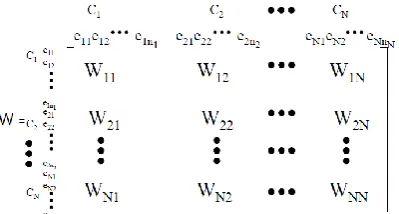
for expense and risks. Eventually, rate the BOCR values according to the strategic condition (condition which underlie the evaluations of the merits of all decisions created) through the ratings form of the ANP to attain priority ratings for the 4 vectors. Furthermore, normalize and utilize the weights to integrate the vectors of B, O, C, and R of results for all substitutes in BOCR to attain the total priorities. The ratings are utilized to weight and minus the expenses and risks from the total of weighted benefits and prospects. Further, the priorities attained from the pairwise comparison matrices are recorded in the super-matrix columns. Figure 2 shows the super-super-matrix specifying the impact priority of the component in the left of matrix of the component at top of matrix according to a specific control condition.
Figure 2 : The Supermatrix of a ANP Network
Further, we conducted A PEST analysis on BOCR components to examine how external factors can affect a business's activities and performance [21]. This study followed Pareto principle(as wellreferred as the 80/20 rule)explains that, for most of the events, approximately 80% of the consequences generates in 20% of the reasons. The highly correlated variables removed based on Pearson correlation coefficient (Above 0.7) [22]
B. Research Framework and Variables
The decisionmaking framework to optright cloud computing strategies was created using the BOCRmodel.
In addition, three-tier architecture was modeled as a feature of this model containing strategic condition, sub condition, and decision model to assist instinctive and fast decision making for decision-makers. From all the above recognized factors of prior research, concerning cloud computing implementation strategies were noted in the initial; analysis. Furthermore, few factors were ignored such as “migration complexity” and “firm size” factors after reconsidering with the professionals. The bestquoted research model was utilized to assemble the variables to compute the strategic decision factors as well as attributesanalyzed in the associated researches in cloud computing adoption. All the strategic conditions and sub conditions were examined as follows.
1. Reputation
2. Organizational factors a. Employee Relation b. Technological innovations c. Values
d. Culture
3. Financial success 4. Stakeholder interests
C. Data collection
[image:4.595.73.273.246.353.2] [image:4.595.312.544.256.455.2]Data collection procedures of this study comprised of two stages. The data were collected between April 2018 and January 2019 through interviews in person, over the telephone, over the email and video conferencing. During the first stage, the data collected to identify the strategic criteria, and benefits, cost, opportunity and risk of cloud computing in telecom industries. The data collected from 240 participants who have decent exposure to telecom cloud computing, from 8 different global markets, covering key markets in the Americas, EMEA and Asia-Pacific regions and detaileddemographic information is presented in Table 3.
Table 3:Demographic details of samples
Consideration Category Ratio (%)
Work Experience Up to 10 year 20
10-20 years 50
More than 20 year 30
Highest Educational qualification
Undergraduates 15
Graduates 55
Masters 25
PhD or above 05
Age Up to 30 years 15
30-50 Years 65
Above 50 years 20
Gender Male 70
Female 30
Region America 55
EMEA 10
Asia-Pacific 35
Further, we selected 22experts from three major telecom providers in north east United States for ANP based pairwise comparison in second stage. This selection is based on total work experience (minimum 15 years), current role in cloud strategy selection (Managers-6, Architects-5, senior consultants-4, Directors-4, Vice presidents-2 and CIO/CTO-1), and significance of cloud technology in their organization strategy.
Row Geometric Mean Method (RGMM) is used to estimate the priorities and eigenvector model to solve the eigenvalue issue. The responders’ CR for each questionnaire was below 0.1.
IV. RESULT Step 1: Model Development
International Journal of Innovative Technology and Exploring Engineering (IJITEE) ISSN: 2278-3075, Volume-8 Issue-6, April 2019
Figure 3 : BOCR Model using ANP
[image:5.595.304.551.221.320.2]The four strategic criteria used in our decision were reputation, organizational factors, financial success, and stakeholder interests. These four criteria are what survey participants believed were the most important factors in the decision making process cloud strategy selection. These four criteria were then pair-wise compared and internally coded into the super decision super matrix. The result of the pairwise comparisons of the four strategic criteria as given below in figure 4.
Figure 4: Priorities for Strategic Criteria and sub criteria
The inconsistency in these comparisons is 0.068, less than the value of 0.1 which produces a consistent result. The priorities show that the financial success of the company was overwhelmingly the most important factor to be considered when making this decision. The second most important strategic criterion was Organizational factors, followed by stakeholder interests, and finally reputation of the organization. Organizational culture is the most dominant component within organizational factors because the success of cloud operation strategic is highly related to organizational culture and change readiness.
The BOCR portion of the model is not connected via a pair-wise comparison to the strategic criteria. The normalized choice for each branch of the BOCR was determined and then these decisions were manually input into the Super
decisions ratings matrix. The BOCR portion of the model is explained in detail below.
Benefits: The benefits portion of our model contains four control criteria; Political, Economic, Socio-Cultural and Technological (PEST). These four criteria represent major areas of cloud computing that will be impacted by the three potential decisions from our list of alternatives. The three control criteria are not pair-wise compared to any other clusters, but rather all have subnets and feedback due to the importance of each of these decisions. The subnets identified after applying 80/20 rule on surveyed data is given in table 4. The result of the pairwise comparison is given in table 5.
Table 4:Control criteria and subnet of benefit model
Benefits
Political Data protection , cyber security ,sustainable development, regulations & local presence
Economic ROI & cost of ownership
Socio-Cultural Green IT & user defined experience Technological Efficiency , server utilization ,
scalability & reliability,
Table 5: BOCR Priorities of benefit model
Alternatives Ideals Normals Raw
Service Optimizer 0.49671 0.22526 0.421958
Service reformer 1 0.453503 0.849504
Service trendsetter 0.708348 0.321238 0.601744
he result indicates service reformer have maximum benefits out of these three alternatives.
[image:5.595.59.277.414.582.2]Opportunities: The opportunities portion of our model contains the same control criteria as the benefits portion, but different subnet as given in table 6. The result in table 7 indicate that , even though service reformer have maximum benefits , the service trendsetter have the better opportunity in current telecom market.
Table 6:Control criteria and subnet of opportunity model
Opportunities
Political Ecosystem connectivity
,marketadaptability&low market entry barriers
Economic Cost flexibility , low initial investment , better utilization of existing investment & Capex to Opex change
Socio-Cultural Masked complexity, Context-drivenvariability,rich service
portfolio,user defined bandwidth, slicing &OTT services
[image:5.595.304.555.528.719.2]Table 7: BOCR Priorities of opportunity model
Alternatives Ideals Normals Raw
Service optimizer
0.725455 0.286890 0.699656
Service reformer
0.803235 0.317649 0.774670
Service trendsetter
1.000000 0.395462 0.964437
[image:6.595.50.292.278.428.2]Costs: The costs portion of our model contains material , labor , operational and other integration costs for control criteria as given in table 8. This study considers both direct and indirect cost based on survey respondents opinion. This portion of the model considered the potential negative impacts associated with the costs of the alternatives considered. The resultant model given in table 9
Table 8: Control criteria and subnet of cost model Direct costs Indirect costs
Material Hardware
Software
Rack, Shared storage costs
Networking infrastructure
Labor Maintenance Employee salary
Operational Electricity Usage fee Communication
Tax
Associated power cost
Other integration
Software integration Cloud migration
[image:6.595.309.543.372.455.2]Performance changes Security & Privacy Time delay
Table 9: BOCR Priorities of cost model
Alternatives Ideals Normals Raw
Service optimizer
0.876657 0.323181 0.816649
Service reformer
1.000000 0.368651 0.931548
Service trendsetter
0.835933 0.308168 0.778712
As literatures point out, service reformer alternative is most expensive cloud strategy, followed by service optimizer. Its surprise to know that service trend setter cost less than service optimizer may be due to more efficient delivery channels.
[image:6.595.338.525.565.683.2] [image:6.595.48.293.714.791.2]Risks: The Risks portion of our model contains PEST risk for our control criteria. These four control criteria have subnets to look at the pair-wise comparisons as given in table 10. The outcomes in table 11 indicated that the impact of these risks is higher in Service trendsetter. It may be because, trendsetter alternative challenge existing business model.
Table 10:Control criteria and subnet of risk model
Risks
Political Regulatory risks , terrorism , loss of control & security risk
Economic Exchange rate , interest rate & credit rating
Socio-Cultural Malicious insider , Goodwill risk ,
Retaining key resources & supply chain risk
Technological Alternate technologies , Technology life cycle, Spectrum capacity
Table 11: BOCR Priorities of Risk model
Alternatives Ideals Normals Raw
Service Optimizer
0.677625 0.262039 0.570387
Service reformer 0.908345 0.351259 0.764595
Service trendsetter
1.000000 0.386702 0.841745
Step 2: Synthesized Results from Super Decision program
By doing synthesized, pairwise comparison, the SuperDecisions program was able to produce decision for each of our BOCR (Benefits, Opportunities, Costs, and Risks) categories. In addition, a synthesis of each BOCR category was done produce a final, consolidated decision.
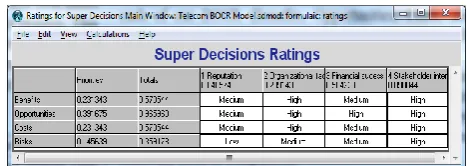
The Super Decisions Ratings Matrix is shown below in Figure 5. The priorities in the BOCR portion of this matrix show that the opportunities are most important followed by the benefitsand the costs,and finally risks.
Figure 5: Super Decisions Ratings Matrix
The relative advantage of three cloud computing strategies, 0.2662, 0.3075 and 0.4262 are displayed as synthesized outcomes in the Super Decisions Program, depicted in figure 6 .The Idealized values are obtained from the Normalized values via dividing all valuesusing the largest value in that column.
Figure 6: Synthesized Result of BOCR Model
International Journal of Innovative Technology and Exploring Engineering (IJITEE) ISSN: 2278-3075, Volume-8 Issue-6, April 2019
V. DISCUSSION A. Sensitivity Analysis
We observed the following results from experimenting with the sensitivity of the model to changing BOCR priorities:
[image:7.595.331.522.109.301.2]In our Ratings Model the Benefits Priority is 0.2313 and at that point service reformer strategy is best choice even service trendsetter strategy also very close to the best. If the benefits priority was less than 0.165, cloud trendsetter would be the preferred priority. As long as the priority of benefits is greater than 0.208, developing a cloud reformer strategy is the best choice as shown in figure 7.
Figure 7: Sensitivity Analysis for Benefits Node
[image:7.595.72.268.214.410.2]Opportunities: Opportunity model behaviors are nearly the same as of benefit behaviors in reference to the three cloud strategy options, apart from initial glitches. In our rating matrix, the opportunities Priority are 0.3916 and at priority level service trend setter is the preferred choice. When opportunity priorities are relatively very low, the alternative “service reformer” have slight advantages as shown figure 8.
Figure 8: Sensitivity Analysis for Opportunities Node
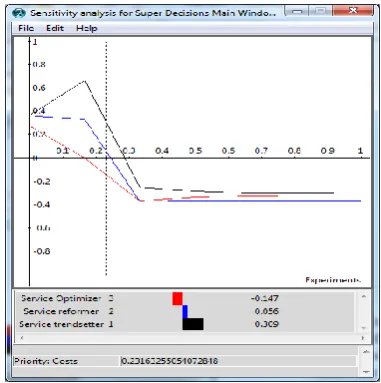
Costs: The cost model shows a major shift in behavior between priorities 0.2 and 0.3. Based on the rating model, at
cost priority 0.231, the model favor alternative “service trendsetter”. After the point 0.292, any further increase in cost priority result a sharp drop in all strategic alternatives and it became negative as given in figure 9.
Figure 9:Sensitivity Analysis for Costs Node
Risks: In our Ratings Model the Risks Priority is 0.145 and at that point, service trendsetter is the most risky alternative. A Priority of 0.28 or higher results in all alternatives drop sharplyand still service trendsetter offer marginally highest risk. This may be due the service trendsetter option disturb existing business model as shown in figure 10.The overall model giving high priority to service trendsetter strategies even though the risk of this strategy is relatively high. It also interesting to note that if the risk priorities are very high, cloud is not a best choice for telecom industries , unless without a proper mitigation strategies.
[image:7.595.56.283.541.723.2]VI. CONCLUSION
Cloud’s key promise is to open doors to more responsive Cloud’s key promise is to open doors to more responsive and innovative ways of doing business in telecom sector. So far, its full potential for driving business innovation and realizing new revenue streams remains virtually untapped in telecom sector. In this study, we proposed a BOCR model for selecting a best cloud strategy choice from three alternatives. This model compare three different strategic options .The first option service optimizers, which use cloud mostly for doing current business operations better and enhancing customers’ experiences is the least preferred choice based on our analysis. This shows the cloud objective of telecom sector is totally different than other players in cloud ecosystem. Even though the service reformer strategy give an edge in terms of benefits, our overall model giving high weightage to service trendsetter strategy which use cloud to significantly improve customer value through leveraging teleco’s distinctive assets in the delivery of current services, resulting in new revenue streams based on new business models. The sensitivity analysis demonstrate that if the risk priority of the organization is relatively very high , none of these cloud strategies give any edge over other. It’s also worthy to note that, in the current telecom market environment service trendsetter strategy giving more opportunities whereas service reformer strategy give more benefits.
ACKNOWLEDGMENT
We would like to thank Mr. Bryan Lamphere , Sr. Director Mr. G B Neal, Manager and Mr. M Caron, Administrator, Consolidated CommunicationUSA for the technical guidance, support and encouragement.Our sincere thanks also goes to Mr. Steven Rush, Executive VP Fairpoint Communication USA, who provided me an opportunity to join their team, and gave access to the facilities. We would also like to thank all the survey participants, who contributed towards survey part of this work.
REFERENCES
1. Nieuwenhuis, L. J., Ehrenhard, M. L., & Prause, L. “ The shift to Cloud Computing: The impact of disruptive technology on the enterprise software business ecosystem” ,Technological Forecasting and Social Change, 129, 2018 , pp 308-313. doi:10.1016/j.techfore.2017.09.037
2. E. Mishra and A.Bhatnagar,"A Survey on
CloudComputing",International Journal of Innovative Technology and Exploring Engineering (IJITEE),ISSN: 2278-3075, Volume-7 Issue-9, June 2018
3. H. Choi and S. Sim "RAMS Architecture based on Cloud Service" International Journal of Innovative Technology and Exploring Engineering (IJITEE) ISSN: 2278-3075, Volume-8 Issue-4S2 March, 2019
4. Gupta, P., Seetharaman, A., & Raj, J. R. “The usage and adoption of cloud computing by small and medium businesses”, International Journal of Information Management, 33(5), 2013, pp 861-874. doi:10.1016/j.ijinfomgt.2013.07.001
5. Fox,B, Gurney ,N , & Van den, R , “The natural fit of Cloud with Telecommunications”, 2017 ,Retrieved January 03, 2019, from https://www.ibm.com/services/us/gbs/thoughtleadership/ibv-telecom-cloud.html
6. Elgendy, I., Zhang, W., Liu, C., & Hsu, C. (2018). “An Efficient and Secured Framework for Mobile Cloud Computing” , IEEE
Transactions on Cloud Computing, 2018 ,pp1-5.
doi:10.1109/tcc.2018.2847347
7. Buyya, R., Yeo, C. S., Venugopal, S., Broberg, J., & Brandic, I. “Cloud computing and emerging IT platforms: Vision, hype, and reality for
delivering computing as the 5th utility”, Future Generation Computer
Systems, vol. 25, no. 6, 2009 ,pp 599-616.
doi:10.1016/j.future.2008.12.001
8. Mell, P. M., & Grance, T. “ The NIST definition of cloud computing” ,2011 ,pp 1-4 doi:10.6028/nist.sp.800-145
9. Varadharajan, V., & Tupakula, U. “Security as a Service Model for Cloud Environment” , IEEE Transactions on Network and Service
Management, vol.11, no.1, 2014 ,pp. 60-75.
doi:10.1109/tnsm.2014.041614.120394
10. Machado, C. C., Granville, L. Z., & Schaeffer-Filho, A. “ANSwer: Combining NFV and SDN features for network resilience strategies” , 2016 IEEE Symposium on Computers and Communication (ISCC) ,2016, pp. 391-396 doi:10.1109/iscc.2016.7543771
11. B. Jose and S. D. M. Kumar, "Telecom grade cloud computing: Challenges and opportunities," 2015 IEEE International Conference on Signal Processing, Informatics, Communication and Energy Systems
(SPICES), Kozhikode, 2015, pp. 1-5. doi:
10.1109/SPICES.2015.7091565
12. Stieninger, M., Nedbal, D., Wetzlinger, W., Wagner, G., & Erskine, M. A. "Impacts on the Organizational Adoption of Cloud Computing: A Reconceptualization of Influencing Factors" Procedia Technology, Volume 16, 2014, Pages 85-93. doi:10.1016/j.protcy.2014.10.071 13. Conway, G., & Curry, E. “ The IVI Cloud Computing Life Cycle.
Communications in Computer and Information Science”.2013, pp 183-199. doi:10.1007/978-3-319-04519-1_12
14. Whaiduzzaman, M., Gani, A., Anuar, N. B., Shiraz, M., Haque, M. N., & Haque, I. T. "Cloud Service Selection Using Multicriteria Decision Analysis",The Scientific World Journal , 2014, pp 1-10 ,doi:10.1155/2014/459375
15. Garg, H., & Kumar, K. “ An extended technique for order preference by similarity to ideal solution group decision-making method with linguistic interval-valued intuitionistic fuzzy information”. Journal of Multi-Criteria Decision Analysis, vol.26, 2018 ,pp. 16-26. doi:10.1002/mcda.1654
16. Niroomand, S., Mosallaeipour, S., & Mahmoodirad, A. “A Hybrid Simple Additive Weighting Approach for Constrained Multicriteria Facilities Location Problem of Glass Production Industries Under Uncertainty” IEEE Transactions on Engineering Management, 2019 ,pp 1-9. doi:10.1109/tem.2019.2891702
17. Corrente, S., Greco, S., & Słowiński, R "Multiple Criteria Hierarchy Process with ELECTRE and PROMETHEE" Omega vol 41, no 5, 2013, pp 820-846. doi:10.1016/j.omega.2012.10.00
18. Jansen, S. J. (2011). The Multi-attribute Utility Method. The Measurement and Analysis of Housing Preference and Choice, 2011,pp.101-125. doi:10.1007/978-90-481-8894-9_5 19. Demirel T., Demirel N.Ç.,& Kahraman C. “ Fuzzy Analytic Hierarchy
Process and its Application.”,Springer Fuzzy Multi-Criteria Decision Making, vol 16,2008, pp 53-83doi:10.1007/978-0-387-76813-7_3 20. Saaty, T. L "Fundamentals of the analytic network process — multiple
networks with benefits, costs, opportunities and risks" ,Journal of Systems Science and Systems Engineering , vol 13, no 3, 2004,pp 348– 379,https://doi.org/10.1007/s11518-006-0171-1
21. Peker, I., Baki, B., Tanyas, M., & Ar, I. M. “Logistics center site selection by ANP/BOCR analysis: A case study of Turkey”. Journal of Intelligent & Fuzzy Systems,vol 30,no.4, 2016 ,pp.2383-2396. doi:10.3233/ifs-152007
22. Taylor, R “Interpretation of the Correlation Coefficient: A Basic Review.” Journal of Diagnostic Medical Sonography. vol 6, no 1.pp 35-39. 10.1177/875647939000600106.
AUTHORSPROFILE
Binesh Joseis a research scholar in the School of
International Journal of Innovative Technology and Exploring Engineering (IJITEE) ISSN: 2278-3075, Volume-8 Issue-6, April 2019
hor-2 Photo
Author-3 Photo
Dr T. Radha Ramanan is an Associate professor&
Head in the School of Management Studies, National Institute of Technology Calicut. His area of specialization is Operations Management and Quantitative Techniques. Recently his area of interest has been in the study of HR perspective in Operations, and competency based recruitment. He has produced 6 research scholars and guiding currently 5 others. He has guided 16 PG projects and UG projects. He has published 12 articles in various reputed International journals and more than 40 papers in various International and National conferences. He also has published 2 cases in Time and IIMI journal.
Dr. S.D Madhu Kumar is a Professor in the