“FORMULATION AND EVALUATION OF IMMEDIATE RELEASE TABLETS OF METOCLOPRAMIDE HYDROCHLORIDE”
A Dissertation submitted to
THE TAMILNADU Dr. M.G.R MEDICAL UNIVERSITY CHENNAI – 600 032
In partial fulfillment of the requirements for the award of the Degree of MASTER OF PHARMACY
IN
PHARMACEUTICS
Submitted By ALBERT JOHNY Reg. No- 261511001
Under the guidance of Mr. J. KARTHIKEYAN, M. Pharm
Professor
DEPARTMENT OF PHARMACEUTICS
CHERRAAN’S COLLEGE OF PHARMACY COIMBATORE-641039
CHERRAAN’S COLLEGE OF PHARMACY
(Affiliated to the Tamilnadu Dr. M.G.R Medical University, Chennai)
Approved by the Govt. of Tamilnadu, Chennai All India Council for Technical Education, New Delhi
Recognized by Pharmacy Council of India, New Delhi
CERTIFICATE
This is to certify that the dissertation entitled “FORMULATION AND EVALUATION OF IMMEDIATE RELEASE TABLETS OF METOCLOPRAMIDE HYDROCHLORIDE” Submitted to The Tamilnadu Dr. M.G.R Medical University, Chennai, is a bonafide project work of Reg. No: 261511001 carried out in the department of pharmaceutics, Cherraan’s College of Pharmacy, Coimbatore, for the partial fulfillment for the degree of Master of Pharmacy under my guidance during the academic year 2016-2017.
This work is original and has not been submitted earlier for the award of any other degree or diploma of this or any other university.
Place: Coimbatore
Date: Mr. J. Karthikeyan, M. Pharm, Professor,
Department of Pharmaceutics Cherraan’s college of Pharmacy
521. Siruvani Main Road, Telungupalayam Pirivu, Coimbatore- 641039
CHERRAAN’S COLLEGE OF PHARMACY
(Affiliated to the Tamilnadu Dr. M.G.R Medical University, Chennai)
Approved by the Govt. of Tamilnadu, Chennai All India Council for Technical Education, New Delhi Recognized by Pharmacy Council of India, New Delhi
CERTIFICATE
This is to certify that the dissertation entitled “FORMULATION AND
EVALUATION OF IMMEDIATE RELEASE TABLETS OF METOCLOPRAMIDE
HYDROCHLORIDE” Submitted to The Tamilnadu Dr. M.G.R Medical University, Chennai, is a bonafide project work of Reg.No:261511001 carried out in the department of pharmaceutics, Cherraan’s College of Pharmacy, Coimbatore, for the partial fulfillment for the degree of Master of Pharmacy under the guidance of Mr. J. Karthikeyan, M.Pharm, Professor, Department of Pharmaceutics, Cherraan’s college of Pharmacy, Coimbatore, during the academic year 2016-2017.
Place: Coimbatore
Date:
Dr. N. Thirumoorthy, M. Pharm, Ph.D.,
Principal
Cherraan’s College of Pharmacy
521. Siruvani Main Road, Telungupalayam Pirivu, Coimbatore- 641039
EVALUATION CERTIFICATE
This is certify that the dissertation work entitled “FORMULATION AND EVALUATION OF IMMEDIATE RELEASE TABLETS OF METOCLOPRAMIDE HYDROCHLORIDE ”Submitted by Reg.no:261511001 to The Tamilnadu Dr. M.G.R Medical University, Chennai, in the partial fulfillment for the degree of Master of Pharmacy in Pharmaceutics is a record of bonafide work carried out by the candidate at the department of Pharmaceutics, Cherraan’s College of Pharmacy, Coimbatore and was evaluated by us during the academic year 2016-2017.
DECLARATION
The research work embodied in this work “FORMULATION AND EVALUATION OF IMMEDIATE RELEASE TABLETS OF METOCLOPRAMIDE
HYDROCHLORIDE” was carried out by me in the department of pharmaceutics, cherraan's College of Pharmacy, Coimbatore under the direct supervision of J. Karthikeyan, M.Pharm, Professor, Cherraan’s college of Pharmacy, Coimbatore.
The dissertation submitted to The Tamilnadu Dr. M.G.R Medical University,
Chennai, for the award of degree of Master of Pharmacy in Pharmaceutics during the
academic year of 2016-2017.
Place: Coimbatore
ACKNOWLEDGEMENT
The task of preparing the dissertation has been overwhelming experience, an achievement in itself and even rejoice in past completion euphoria, it affords me an immense pleasure to thank all those who helped me directly to complete my work.
First and foremost I would like to express my deepest sense of gratitude to Almighty God, My Father and Mother whose abundance grace and mercy has enabled me to complete this project successfully and giving me support to overcome all the problems.
I submit my sincere thanks to most respected Mr. K.C Palanisamy, Honorable Chairman Cherraan’s College of pharmacy for providing all infrastructure facilities to carry out this work during my studies.
I am grateful to Dr. N. Thirumoorthy, M. Pharm, Ph.D, Principal, Cherraan’s College of Pharmacy for providing necessary help for the completion of this project work
We are highly indebted to our esteemed guide Mr. J. Karthikeyan, M. Pharm for his constant encouragement, guidance and constructive criticism. His valuable suggestions and timely advice were of immense help to me throughout all the phases of my work; All in all. It is my fortune that he is my guide.
I express my sincere thanks to Mr. Santhosh Kumar T.R, Production Manager and Mr. Aju S Sam, Assistant Production Manager, Kerala State Drug and Pharmaceuticals Ltd. for providing necessary facilities and valuable suggestions throughout the entire dissertation work.
My gratitude and immense respect to Assist. prof. Mrs. Rubina Reichel, M. pharm for providing all the necessary help for the completion of our project work.
I express my heart full thanks to all teaching and non-teaching staffs of cherraan’s college of pharmacy, for helping us to bring out this project work to completion. I would like to express my sincere thanks and heart full gratitude to my friends and relatives for their help and constant support for all these years.
Above all my deepest and sincere gratitude to all people for inspiring and guiding this humble being.
Place: Coimbatore
LIST OF TABLES
S. NO TITLE PAGE NO
1.1 Classification of Superdisintegerants 8
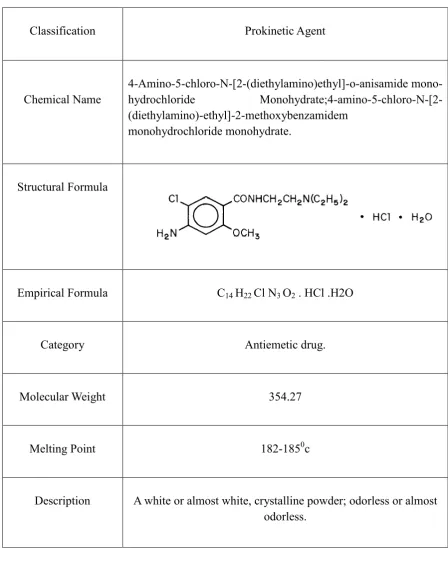
2.1 Metoclopramide drug profile 23
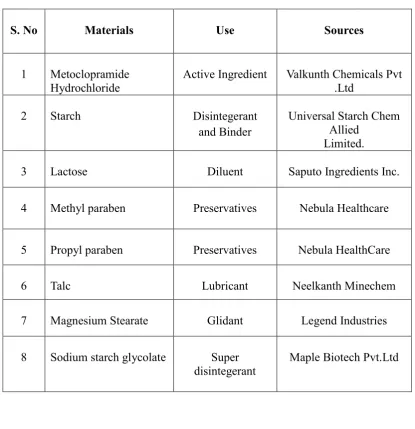
7.1 List of Materials 46
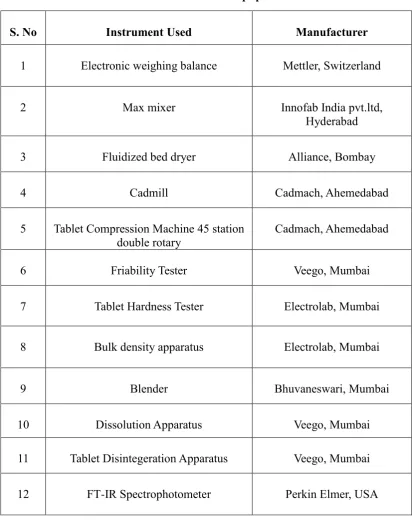
7.2 List of Equipment 47
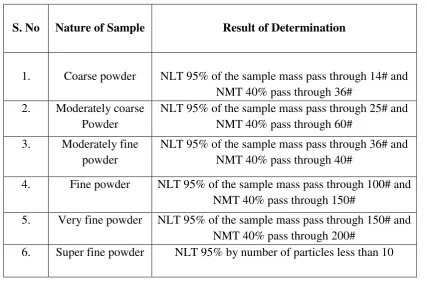
7.3 Relationship belongings Nature of sample and different particle size.
51
7.4 Relationship belongings angle of repose and powder flow
52
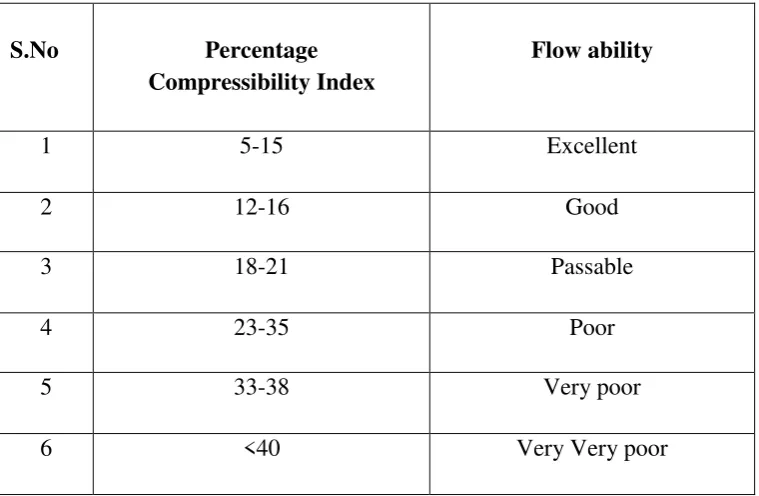
7.5 Compressibility Index range 53
7.6 Hausners Ratio Properties 53
7.7 Formulation of Metoclopramide hydrochloride tablets 54
7.8 Formulation of Metoclopramide hydrochloride tablets 55
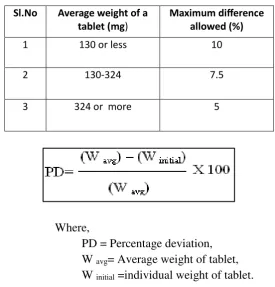
7.9 Weight variation limits 58
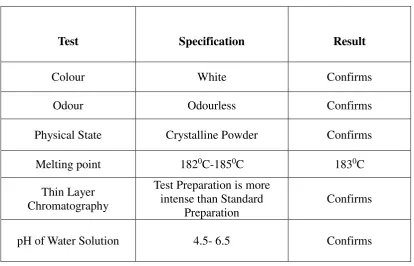
8.1 Characterization of Drug 61
8.2 Spectral assignment of metoclopramide hydrochloride 62
8.3 Calibration curve in Deionized Water 64
8.5 Calibration curve in simulated Gastric Fluid 66
8.6 Results of Pre-compression parameters 68
8.7 Particle size determination of Metoclopramide
hydrochloride 69
8.8 Drug – Excipient stability profile 69
8.9 Results of post compression parameters 71
8.10 In-vitro Drug release profile of Innovator 72
8.11 In-vitro Drug release profile of F5 batch 73
8.12 In-vitro Drug release profile of F6 batch 74
8.13 In-vitro Drug release profile of F7 batch 75
8.14 In-vitro Drug release profile of F8 batch 76
8.15 In-vitro Drug release profile of F9 batch 77
8.16 In-vitro Drug release profile of various formulation and
innovator 78
8.17 Stability studies of optimized formulation F7 at 250C/ 60% RH
79
8.18 Stability studies of optimized formulation F7 at 450C/
70% RH 80
8.19 Stability study of In-vitro dissolution of optimized
formulation. 81
LIST OF FIGURES
S. No Title Page No
1.1 Mechanism of Action of Emesis 19
8.1 FTIR spectra of metoclopramide hydrochloride 61
8.2 FTIR spectra of Metoclopramide Hydrochloride and Starch 62
8.3 FTIR spectra of Metoclopramide Hydrochloride and
Lactose 62
8.4 Calibration curve of Metoclopramide hydrochloride in
Deionised water. 63
8.5 Calibration curve in phosphate buffer 64
8.6 Calibration curve in simulated Gastric Fluid 65
8.7 In-vitro Drug release profile of Innovator 71
8.8 In-vitro Drug release profile of F5 batch 72
8.9 In-vitro Drug release profile of F6 batch 73
8.10 In-vitro Drug release profile of F7 batch 74
8.11 In-vitro Drug release profile of F8 batch 75
8.12 In-vitro Drug release profile of F9 batch 76
8.13 In-vitro Drug release profile of various formulation and
Innovator. 77
SYMBOLS AND ABBREVATIONS
Gm Gram
Hrs Hours
mg Milligram
nm Nanometer
mm Micrometer
UV Ultra-Violet
% Percent/Percentage
RPM Rotation per Minute
Abs Absorbance
Conc. Concentration
i.m Intra Muscular
Min Minute
L/kg Litre/ Kilogram
pH Negative logarithm of hydrogen ion
pKa Negative logarithm of acid Dissociation constant
Cm Centimeter
RH Relative Humidity
0C Degree Celsius
% Percent/Percentage
RF Retardation Factor
BPC British Pharmacopoeia
I.P Indian Pharmacopoeia
Ph. Eur European Pharmacopoeia
USP United State Pharmacopoeia
S.D Standard Deviation
5HT 5 Hydroxy Tryptamine
CONTENTS
S.NO CHAPTER PAGE.NO
1 INTRODUCTION 1
2 DRUG PROFILE 23
3 EXCIPIENT PROFILE 31
4 LITERATURE REVIEW 39
5 AIM AND OBJECTIVE 43
6 PLAN OF WORK 44
7 MATERIALS AND METHODOLOGY 46
8 RESULTS AND DISCUSSION 60
9 SUMMARY 83
10 CONCLUSION 84
INTRODUCTION
Department of pharmaceutics Page 1
1.
INTRODUCTION
An ideal dosage regimen in the drug therapy of any disease is the one which immediately attains the desired therapeutic concentration of drug in plasma (or at the site of action) and maintains it constant for entire duration of treatment. This is possible through administration of conventional dosage form in a particular dose at a particular frequency. Thus drug may administered by variety routes in variety of dosage form1.
Oral route is most common and popular route of administration of drug is oral route because of its systemic effect, patient compliance, less expensive to manufacture. Tablet provides high precision dosing. Tablet form is the most widely used dosage form because of self-administration and ease in manufacturing. In most of the cases immediate on set of action is required as compare to conventional therapy. To achieve the rapid onset of action and eliminate the drawbacks of conventional therapy immediate release dosage form is now a days popular and used as an alternative oral dosage form. Immediate release tablet are very quickly after administration. Basic approach used in development is the use of superdisintegrants which provide rapid disintegration of tablet after administration2.
1.1. Types of Tablets
[3, 4, 5]:
1. Tablets ingested orallya. Standard Compressed tablet b. Multiple compressed tablet
i. Layered Tablet
ii. Compression coated Tablet c. Repeat action Tablet
d. Delayed action and enteric coated Tablet e. Sugar and chocolate coated tablet
f. Film coated tablet g. Chewable Tablet h. Targeted tablet
INTRODUCTION
Department of pharmaceutics Page 2
These tablets are meant to be swallowed intact along with a sufficient quantity of potable water. Exception is chewable tablet. Over 90% of the tablets manufactured today are ingested orally. This shows that this class of formulation is the most popular worldwide and the major attention of the researcher is towards this direction.
2. Tablets used in the oral cavity: a. Buccal Tablet
b. Sublingual Tablet c. Troches and Lozenges d. Dental cones
e. Mouth dissolved tablet
The tablets under this group are aimed release API in oral cavity or to provide local action in this region. The tablets under this category avoids first-pass metabolism, decomposition in gastric environment, nauseatic sensations and gives rapid onset of action. The tablets formulated for this region are designed to fit in proper region of oral cavity.
3. Tablets administered by other routes: a. Implantation Tablet
b. Vaginal Tablets
These tablets are administered by other route except for the oral cavity and so the drugs are avoided from passing through gastro intestinal tract. These tablets may be inserted into other body cavities or directly placed below the skin to be absorbed into systemic circulation from the site of application.
4. Tablets used to prepare solution: a. Effervescent Tablet b. Dispensing Tablet c. Hypodermic Tablet d. Tablets Triturates
INTRODUCTION
Department of pharmaceutics Page 3
1.2. Immediate Release Dosage Form
Immediate release tablets are designed to disintegrate and release the drug in absence of any controlling features such as coating or other formulation techniques6. The solution
containing the active ingredients is swallowed, and the active ingredients are then absorbed through the gastrointestinal epithelium to reach the target and produce the desired effect7.
1.3. Advantages of Tablets
They are unit dosage form, and they offer the capabilities of all oral dosage forms for
the dose precision and the least content variability during dosing.
Accuracy and uniformity of drug content.
Optimal drug dissolution and hence, availability from the dosage form for absorption
consistent with intended use (i.e., immediate or extended release).
Usually taken orally, but can be administered sublingually, rectally or intra-vaginally.
Their cost is lowest of all oral dosage form.
They are the most compact of all oral dosage forms.
They are in general the easier and cheaper to package and ship as compare to other
oral dosage forms.
Product identification is simple and cheap, requiring no additional processing steps
when employing an embossed or monogrammed punch face.
They are ease to administer, does not require a specialist.
They are better suited to large-scale production than other unit oral forms.
They have the better properties of chemical, mechanical and microbiological stability.
Easy to prepare.
Provide prolonged stability to medicaments.
Formulate as a special release products such as enteric or delayed release products.
INTRODUCTION
Department of pharmaceutics Page 4
1.4. Problems With Existing Oral Dosage Form
[11,12]:
Patient may suffer from tremors therefore they have difficulty to take powder and liquids. In dysphasia physical obstacles and adherence to an esophagus may cause gastrointestinal ulceration.
Swallowing of solid dosage forms like tablet and capsules and produce difficulty for young adult of incomplete development of muscular and nervous system and elderly patients suffer from dysphasia.
Liquid medicaments (suspension and emulsion) are packed in multidose container; therefore achievement of uniformity in the content of each dose may be difficult.
Buccal and sublingual formation may cause irritation to oral mucosa, so patients refused to use such medications.
Cost of products is main factor as parenteral formulations are most costly and discomfort.
1.5. Desired Criteria For Immediate Release Drug Delivery System
[13,14]:
In the case of solid dosage it should dissolve or disintegrate in the stomach within a short period.
In the case of liquid dosage form it should be compatible with taste masking.
Be portable without fragility concern.
Have a pleasing mouth feel.
It should not leave minimal or no residue in the mouth after oral administration.
Exhibit low sensitivity to environmental condition as humidity and temperature.
Be manufactured using conventional processing and packaging equipment at low cost.
INTRODUCTION
Department of pharmaceutics Page 5
1.6. Merits of Immediate Release Drug Delivery System
[15]:
Improved compliance/added convenience
Improved stability, bioavailability
Suitable for controlled/sustained release actives
Allows high drug loading
Ability to provide advantages of liquid medication in the form of solid preparation.
Adaptable and amenable to existing processing and packaging machinery
Cost- effective
Improved solubility of the pharmaceutical composition
Decreased disintegration and dissolution times for immediate release oral dosage forms.
Bulking Agents
Bulking agents are significant in the formulation of fast-melting tablets. The material contributes functions of a diluents, filler and cost reducer. Bulking agents improve the textural characteristics that in turn enhance the disintegration in the mouth, besides; adding bulk also reduces the concentration of the active in the composition. The recommended bulking agents for this delivery system should be more sugar-based such as mannitol, polydextrose, lactitol, DCL (direct compressible lactose) and starch hydrolystate for higher aqueous solubility and good sensory perception. Mannitol in particular has high aqueous solubility and good sensory perception. Bulking agents are added in the range of 10 percent to about 90 percent by weight of the final composition.
Lubricants
INTRODUCTION
Department of pharmaceutics Page 6
Carrier Materials
For therapeutic purposes, the pharmaceutical compositions of the present invention comprise micronized drug in a desired amount in combination with one or more pharmaceutically-acceptable carrier materials appropriate to the indicated route of administration.
Oral dosage forms of the pharmaceutical compositions of the present invention preferably comprise micronized drug in a desired amount admixed with one or more carrier materials selected from the group consisting of diluents, disintegrants, binding agents and adhesives, wetting agents, lubricants, anti-adherent agents and/or other carrier materials. More preferably, such compositions are tableted or encapsulated for convenient administration. Such capsules or tablets can be in the form of immediate release capsules or tablets, or can contain a controlled-release formulation as can be provided.
For example, in a dispersion of drug in hydroxypropyl methylcellulose. Injectable dosage forms preferably are adapted for parenteral injection. Preferably, these dosage forms comprise micronized drug in aqueous or non-aqueous isotonic sterile injection solutions or suspensions, such as drug suspended or dissolved in water, polyethylene glycol, propylene glycol, ethanol, corn oil, cottonseed oil, peanut oil, sesame oil, benzyl alcohol, sodium chloride, and/or various buffers. These solutions and suspensions can be prepared from sterile powders or granules having one or more of the carriers or diluents mentioned for use in the formulations for oral administration.
Super Disintegrants
33A disintegrant is an excipient, which is added to a tablet or capsule blend to aid in the breakup of the compacted mass when it is put into a fluid environment.
Pharmaceutical products designed for oral delivery and currently available on the prescription and over-the-counter markets are mostly the immediate release type, which are designed for immediate release of drug for rapid absorption. Disintegrating agents are substances routinely included in tablet formulations and in some hard shell capsule formulations to promote moisture penetration and dispersion of the matrix of the dosage form in dissolution fluids.
INTRODUCTION
Department of pharmaceutics Page 7
Mechanism of Disintegrants
9,10:
1) High swellability
2) Capillary action and high swellability 3) Chemical reaction
When introduced to an aqueous environment of use, the tablet rapidly takes up water, leading to swelling of the disintegrant and rapid disintegration of the tablet before the dispersion polymer can form a hydrogel. The disintegrant should be chosen such that it:
(1) Swells rapidly when introduced into the use environment
(2) Has a low tendency to form or promote formation of a hydrogel.
The rate of swelling of the disintegrant is directly correlated to tablet disintegration times. Tablets containing disintegrants cause more rapid swelling have faster disintegration times at comparable disintegrant levels. The amount of work, W, or swelling energy, due to swelling can be measured using a dynamic mechanical analyzer (DMA). The swelling energy attributable to swelling of the disintegrant in the compact may be calculated from the following equation:
Where,
W is the work or swelling energy of the disintegrant, P is the pressure applied by the probe,
ΔV is the volume change of the sample.
To compare disintegrants, the swelling energy per mass of disintegrant is used. Preferably, the disintegrant generates a swelling energy of at least 0.05 J/g within about 10 minutes following addition of water to the liquid reservoir. The most popular disintegrants are corn starch, soluble starch etc. which have been well dried and powdered. Starches have great affinity for water and swell when moistened thus facilitating the rupture of the tablet matrix, its disintegration action in tablets is due to capillary action. Spherical shape of starch increases the porosity of tablet thus promoting capillary action.
INTRODUCTION
Department of pharmaceutics Page 8
Classification of “Superdisintegrant” may be organized into three classes based on their chemical structure. As shown in Table below.
Table No.1.1: Classification of Super disintegerants
Disintegerants Concentration in granules (%) Special comments
Starch USP 5-20 Higher amount is required,
poorly compressible
Starch 1500 5-15 -
Avicel®(PH 101,PH 102) 10-20 Lubricant properties and directly compressible
Solka floc 5-15 Purified wood cellulose
Alginic acids 1-5 Acts by swelling
Na alginate 2.5-10 Acts by swelling
Explotab 2-8
Sodium Starch glycolate Superdisintegerant
Polyplasdone(XL) 0.5-5 Cross-linked PVP
Amberlite (IPR 88) 0.5-5 Ion exchange resin
Methyl cellulose, Na CMC
HPMC 5-10
-
AC-Di-Sol 1-3
Direct compression
2-4
Wet granulation
Advantages:
1. Effective in lower concentrations
2. Less effect on compressibility and flow ability
INTRODUCTION
Department of pharmaceutics Page 9
A. Sodium Starch Glycolate used in concentration of 2-8 % and optimum is 4%. Mechanism of Action: Rapid and extensive swelling with minimal gelling. Microcrystalline cellulose (Synonym: Avicel, celex) used in concentration of 2-15% of tablet weight. And Water wicking.
B. Cross-linked Povidone (crospovidone) used in concentration of 2-5% of weight of tablet. Mechanism of Action: Water wicking, swelling and possibly some deformation recovery. Rapidly disperses and swells in water, but does not gel even after prolonged exposure. Greatest rate of swelling compared to other disintegrants. Greater surface area to volume ratio than other disintegrants.
C. Low-substituted hydroxyl propyl cellulose, which is insoluble in water. Rapidly swells in water. Grades LH-11 and LH-21 exhibit the greatest degree of swelling. Certain grades can also provide some binding properties while retaining disintegration capacity. Recommended concentration 1-5%.
D. Cross linked carboxy methyl cellulose sodium (i.e. Ac-Di-sol) Croscarmellose Sodium Mechanism of Action: Wicking due to fibrous structure, swelling with minimal gelling. Effective Concentrations: 1-3% Direct Compression, 2-4% Wet Granulation Conventional.
Surfactants:
One very useful class of excipients is surfactants, preferably present from 0 to 10 wt %. Suitable surfactants include fatty acid and alkyl sulfonates; commercial surfactants such as benzalkonium chloride, dioctyl sodium sulfosuccinate, polyoxyethylene sorbitan fatty acid esters, natural surfactants such as sodium taurocholic acid, lecithin, and other phospholipids and mono- and diglycerides; and mixtures thereof. Such materials can advantageously be employed to increase the rate of dissolution by, for example, facilitating wetting, or otherwise increase the rate of drug release from the dosage form.
pH Modifiers:
INTRODUCTION
Department of pharmaceutics Page 10
Porosigen
34:
The dosage form also includes a porosigen. A "porosigen" is a material that, when present in the formulation containing the solid amorphous dispersion, leads to a high porosity and high strength following compression of the blend into a tablet. In addition, preferred porosigen are soluble in an acidic environment with aqueous solubility typically greater than 1 mg/mL at a pH less than about 5.
Examples of porosigens include acacia, calcium carbonate, calcium sulfate, calcium sulfate dihydrate, compressible sugar, dibasic calcium phosphate, tribasic calcium phosphate, monobasic sodium phosphate, dibasic sodium phosphate, lactose, magnesium oxide, magnesium carbonate, silicon dioxide, magnesium aluminum silicate, maltodextrin, mannitol, methyl cellulose, microcrystalline cellulose, sorbitol, sucrose, xylitol and mixtures thereof.
Generally, the porosigen will comprise from 5 to 70 wt %. To ensure the tablet has sufficient porosity to allow adequate wicking of water into the tablet to cause rapid tablet disintegration and/or rapid release of drug, tablet porosity should be within 0.15-0.25. Accordingly, the disintegrant, porosigen should be selected so that the immediate release dosage form has high strength as well as the high porosity required to achieve rapid disintegration and/or release of drug.
Other Excipients
Excipients balance the properties of the actives in immediate release dosage forms. This demands a thorough understanding of the chemistry of these excipients to prevent interaction with the actives. Determining the cost of these ingredients is another issue that needs to be addressed by formulators. The role of excipients is important in the formulation of fast-melting tablets. These inactive food grade ingredients, when incorporated in the formulation, impart the desired organoleptic properties and product efficacy. Excipients are general and can be used for a broad range of actives, except some actives that require masking agents17.
1.7. Technique Used In the Preparation of Immediate Release Tablets
18 Tablet molding technique Granulation technique
Direct compression technique
INTRODUCTION
Department of pharmaceutics Page 11
1.7.1. Tablet molding technique
27In this technology, water-soluble ingredients are used so that tablet disintegrate and
dissolve rapidly. The powder blend is moistened with a hydro alcoholic solvent and is molded into tablet using compression pressure lower than used in conventional tablets compression. The solvent is then removed by air-drying. Molded tablets have a porous structure that enhances dissolution.Two problems commonly encountered are mechanical strength and poor taste masking characteristics. Using binding agents such as sucrose, acacia or poly vinyl pyrrolidone can increase the mechanical strength of the tablet. To overcome poor taste masking characteristic Van Scoik incorporated drug containing discrete particles, which were formed by spray congealing a molten mixture of hydrogenated cottonseed oil, sodium bicarbonate, lecithin, polyethylene glycol and active ingredient into a lactose based tablet triturate form.
1.7.2. Mass extrusion technique Tablet Molding
28This technology involves softening the active blend using the solvent mixture of water-soluble polyethylene glycol and methanol and subsequent expulsion of softened mass through the extruder or syringe to get a cylinder of the product into even segments using heated blade to form tablets. The dried cylinder can also be used to coat granules for bitter drugs and thereby achieve taste masking
Immediate release solid dosage forms prepared by solid dispersions. When formulating such solid amorphous dispersions into immediate release solid dosage forms for oral administration to a use environment such as the GI tract of an animal such as a human, it is often desirable to maximize the amount of dispersion present in the dosage form. This minimizes the size of the solid dosage form required to achieve the desired dose.
Depending on the drug dose, it is often desired that the solid amorphous dispersion comprise at least 30 wt. %, preferably at least wt. %, and more preferably at least 50 wt % or more of the solid dosage form. Such high drug loadings of dispersion in a solid dosage form minimize the dosage form's size, making it easier for the patient to swallow it and tending to improve patient compliance.
INTRODUCTION
Department of pharmaceutics Page 12
to 40 mg/ml. The drug dispersions used in fabricating the high loading immediate release dosage forms of the present invention comprise solid dispersions of a drug and at least one concentration enhancing polymer.
1.7.3. Direct Compression Method
41,42,43:
In this method, tablets are compressed directly from the mixture of the drug and excipients without any preliminary treatment. The mixture to be compressed must have adequate flow properties and cohere under pressure thus making pretreatment as wet granulation unnecessary. Few drugs can be directly compressed into tablets of acceptable quality. A type of disintegrant and its proportion are of prime importance. The other factors to be considered are particle size distribution, contact angle, pore size distribution, tablet hardness and water absorption capacity. All these factors determine the disintegration. The disintegrant addition technology is cost effective and easy to implement at industrial level.
Advantages
Direct compression is more efficient and economical process as compared to other
processes, because it involves only dry blending and compaction of API and
necessary excipients.
The most important advantage of direct compression is that it is an less
economical process. Reduced processing time, reduced labor costs, fewer
manufacturing step, and less number of equipments are required, less process
validation, reduced consumption of power. Elimination of heat and moisture, thus
increasing not only the stability but also the suitability of the process for
thermolabile and moisture sensitive API.
Particle size uniformity. Prime particle dissolution.
In case of directly compressed tablets after disintegration, each primary drug
particle is liberated. While in the case of tablets prepared by compression of
granules, small drug particles with a larger surface area adhere together into larger
agglomerates; thus decreasing the surface area available for dissolution.
The chances of batch-to-batch variation are negligible, because the unit operations
required for manufacturing processes is fewer.
Chemical stability problems for API and excipient would be avoided.
INTRODUCTION
Department of pharmaceutics Page 13
Disadvantages
Excipients Related
Problems in the uniform distribution of low dose drugs. High dose drugs having high bulk volume, poor compressibility and poor flow ability are not suitable for
direct compression for example, Aluminium Hydroxide, Magnesium Hydroxide.
The choice of excipients for direct compression is extremely critical. Direct compression diluents and binders must possess both good compressibility and
good flow ability.
Many active ingredients are not compressible either in crystalline or amorphous forms.
Direct compression blends may lead to unblending because of difference in particle size or density of drug and excipients. Similarly the lack of moisture may
give rise to static charges, which may lead to unblending.
Non-uniform distribution of color, especially in tablets of deep colors
1.7.4. Granulation
29Granulation may be defined as a size enlargement process which converts small particles into physically stronger & larger agglomerates. The objective of granulation is to improve powder flow and handling, decrease dustiness, and prevent segregation of the constituents of the product.
Granulation method can be broadly classified into two types:
1. Wet granulation and
2. Dry granulation Ideal characteristics of granules
The ideal characteristics of granules include spherical shape, smaller particle size distribution with sufficient fines to fill void spaces between granules, adequate moisture (between 1-2%), good flow, good compressibility and sufficient hardness. The effectiveness of granulation depends on the following properties:
Particle size of the drug and excipients
Type of binder (strong or weak)
INTRODUCTION
Department of pharmaceutics Page 14
Wet massing time (less or more)
Amount of shear applied
Drying rate (Hydrate formation and polymorphism)
(i) Wet granulation
30Wet granulation is a commonly used unit operation in the pharmaceutical industry. Wet granulation is often carried out utilizing a high-shear mixer. The high-shear granulation process is a rapid process which is susceptible for over wetting. Thus, the liquid amount added is critical and the optimal amount is affected by the properties of the raw materials. Power consumption of the impeller motor and the impeller torque have been applied to monitor the rheological properties of the wet mass during agglomeration and, thereby, have been used to determine the end-point of water addition. However, these methods are affected by the equipment variables. Hence, additional process monitoring techniques would be valuable. Important steps involved in wet granulation.
Mixing of drug(s) and excipients.
Preparation of binder solution.
Mixing of binder solution with powder mixture to form wet mass.
Coarse screening of wet mass using a suitable sieve (6-12 screens).
Drying of moist granules.
Screening of dry granules through a suitable sieve (14-20 screen).
Mixing of screened granules with disintegrant, glidant, and lubricant. Limitation
of wet granulation.
Advantages
Rapid process.
Ability to be operated continuously.
INTRODUCTION
Department of pharmaceutics Page 15
Disadvantages
The greatest disadvantage of wet granulation is its cost. It is an expensive process
because of labor, time, equipment, energy and space requirements.
Loss of material during various stages of processing
Stability may be a major concern for moisture sensitive or thermo labile drugs.
An inherent limitation of wet granulation is that any incompatibility between
Formulation components is aggravated. It is a unique granulation technique that
directly converts liquids into dry powder in a single step. This method removes
Moisture instantly and converts pumpable liquids into a dry powder.
(ii) Dry granulation
(30, 31)In dry granulation process the powder mixture is compressed without the use of heat and solvent. The two basic procedures are to form a compact of material by compression and then to mill the compact to obtain granules. Two methods are used for dry granulation. The more widely used method is slugging, where the powder is pre-compressed and the resulting tablets or slugs are milled to yield granules. The other method is to pre-compress the powder with pressure rolls using a machine such as chilsonator.
Advantages:
The main advantages of dry granulation or slugging are that it uses less equipment’s and space. It eliminates the need for binder solution, heavy mixing equipment and the costly and time consuming drying step required for wet granulation. Slugging can be used for advantages in the following situations:
For moisture sensitive material For heat sensitive material
For improved disintegration since powder particles are not bonded together by a
binder.
Disadvantages:
INTRODUCTION
Department of pharmaceutics Page 16
It does not permit uniform color distribution as can be achieved with wet
granulation where the dye can be incorporated into binder liquid.
The process tends to create more dust than wet granulation, increasing the
potential contamination.
Steps in dry granulation:
1. Milling of drugs and excipients
2. Mixing of milled powders Compression into large, hard tablets to make slug
3. Screening of slugs
4. Mixing with lubricant and disintegrating agent
5. Tablet compression two main dry granulation processes:
a. Slugging process
Granulation by slugging is the process of compressing dry powder of tablet formulation with tablet press having die cavity large enough in diameter to fill quickly. The accuracy or condition of slug is not too important. Only sufficient pressure to compact the powder into uniform slugs should be used. Once slugs are produced they are reduced to appropriate granule size for final compression by screening and milling.
b. Roller compaction
The compaction of powder by means of pressure roll can also be accomplished by a machine called chilsonator. Unlike tablet machine, the chilsonator turns out a compacted mass in a steady continuous flow. The powder is fed down between the rollers from the hopper which contains a spiral auger to feed the powder into the compaction zone. Like slugs, the aggregates are screened or milled for production into granule.
1.7.5. By solid dispersions
(35,36):
Dispersion of one or more active ingredients in an inert carrier or matrix in solid state, and insoluble or bland matrices may be used to mask the taste of bitter taste. Carriers used in solid dispersion systems include povidone, polyethelene glycols, hydroxypropyl methyl cellulose, urea, mannitol and ethyl cellulose.
INTRODUCTION
Department of pharmaceutics Page 17
such as a human, it is often desirable to maximize the amount of dispersion present in the dosage form. This minimizes the size of the solid dosage form required to achieve the desired dose. Depending on the drug dose, it is often desired that the solid amorphous dispersion comprise at least 30 wt %, preferably at least wt %, and more preferably at least 50 wt % or more of the solid dosage form. Such high drug loadings of dispersion in a solid dosage form minimize the dosage form's size, making it easier for the patient to swallow it and tending to improve patient compliance.
The immediate release dosage forms containing a solid dispersion that enhances the solubility of a “low-solubility drug,” meaning that the drug may be either “substantially water-insoluble,” which means that the drug has a minimum aqueous solubility at physiologically relevant pH (e.g., pH 1-8) of less than 0.01 mg/mL, “sparingly water -soluble,” that is, has an aqueous solubility up to about 1 to 2 mg/mL, or even low to moderate aqueous-solubility, having an aqueous-solubility from about 1 mg/mL to as high as about 20 to 40 mg/mL.
The drug dispersions used in fabricating the high loading immediate release dosage forms of the present invention comprise solid dispersions of a drug and at least one concentration-enhancing polymer. The concentration-enhancing polymer is present in the dispersions used in the present invention in a sufficient amount so as to improve the concentration of the drug in a use environment relative to a control composition. At a minimum, the dispersions used in the present invention provide concentration enhancement relative to a control consisting of crystalline drug alone. Thus, the concentration-enhancing polymer is present in a sufficient amount so that when the dispersion is administered to a use environment, the dispersion provides improved drug concentration relative to a control consisting of an equivalent amount of crystalline drug, but with no concentration-enhancing polymer present. Various approaches for preparation of solid dispersion are described below:
A. Melting Method
In this method, the drug or drug mixture and a carrier are melted together by heating. The melted mixture is cooled and solidified rapidly in an ice bath with vigorous stirring. This final solid mass is crushed and pulverized.
B. Solvent Method
INTRODUCTION
Department of pharmaceutics Page 18
C. Melting-Solvent Method
In this method the drug, in solution form, is incorporated into a molten mass of polyethylene glycol at a temperature below 700c without removing the solvent.
1.6. Emesis
37Vomiting can also be referred to as emesis, and consists of the following stages:
Nausea
Nausea is an unpleasant sensation of wanting to vomit, and is often associated with cold sweat, pallor, salivation, loss of gastric tone, duodenal contraction, and the reflux of intestinal contents into the stomach. Nausea generally precedes vomiting, but can occur by itself. The system that brings about the loss of gastric tone, of gastric relaxation, is the efferent part of the long loop intestinal reflex that relaxes the gut during food intake.
Retching
Retching is a strong involuntary effort to vomit, and usually follows nausea. During retching, the abdominal muscles, chest wall and diaphragm all contract without any expulsion of gastric contents.
Vomiting
Vomiting is the forceful expulsion of the contents of the gastrointestinal system out through the mouth. From an evolutionary perspective, it is thought to have evolved as a defense mechanism of the body, serving a protective function to rid the body of noxious substances that have been ingested, rather than allowing them to be retained and absorbed by the intestine.
Contrary to popular belief, the stomach itself does not actively expel its contents during vomiting. The stomach, oesophagus, and their relevant sphincters are all in fact relaxed during vomiting. Most of the force that expels the contents arises from the contraction of the diaphragm, which is the major respiratory muscle, and the abdominal muscles, which are the muscles involved in active expiration.
1.7. Mechanisms of emesis
INTRODUCTION
Department of pharmaceutics Page 19
[image:31.595.86.519.202.479.2]Afferent inputs go to the central nervous system (CNS), relaying the signals of emetic stimuli; these signals are received, recognized, and centrally processed. They then form integrated emetic efferent signals coming from the CNS; these motor and chemical efferent pathways relay signals that lead to the coordinated respiratory, gastrointestinal and abdominal muscle expulsive actions of vomiting.
Figure No.1.1: Mechanism of Action of Emesis
Central nervous system control
There are two medullary centers of vomiting in the brain known as the sensory “chemoreceptor trigger zone (CTZ)” and the integrative centre.
i.
Chemoreceptor trigger zone (CTZ)
INTRODUCTION
Department of pharmaceutics Page 20
ii.
Integrative vomiting centre
The integrative vomiting centre coordinates activities of the nearby neural structures to produce a complex patterned response, resulting in the processing and action of the vomiting reflex. The centre is located in the medulla. The motor component of the vomiting centre is controlled by both somatic and autonomic systems, meaning that both voluntary and involuntary systems are involved in the process. Their inputs are coordinated by the vomiting centre.
Somatic efferent pathways control respiratory and abdominal musculature, and visceral efferent components mediating changes in gastric tone and motility, while salivation, pallor and sweating are autonomic epiphenomena. The autonomic nervous system is not essential for the mechanical act of vomiting, but the activation of efferent nerves of the abdominal organs in the emetic process is proportional to the duration and intensity of the nausea that accompanies the process.
Afferent pathways
38The vomiting centre is predominantly activated by three different mechanisms:
By nervous impulses from the stomach, intestinal tract, and other portions of the body, resulting in a reflexive activation;
By stimulation from the higher brain centres;
By the chemoreceptor trigger zone (CTZ) sending impulses.
Afferent impulses may also arise from other sites, such as unpleasant sights and odours, as well as severe parietal pain. The most common afferent pathways are in the viscera, or abdominal organs. Vomiting can be provoked by occlusion of the coronary vessels, distension of the intestine, and irritation of the gastrointestinal mucosa. In the gastrointestinal tract, mechanoreceptors in the intestinal wall are activated by abnormal contractions, distension or physical damage. Potentially harmful chemical stimuli can also activate chemoreceptors located in the intestinal wall. These receptors then release information to the vomiting centre.
Efferent pathways
INTRODUCTION
Department of pharmaceutics Page 21
the autonomic and somatic systems, and consists of two phases:
Prodomal phase (pre
-
ejection):
Relaxation of gastric muscles followed by smallintestinal retrograde peristalsis;
Ejection phase: Comprises of retching and vomiting including expulsion of gastric contents.
Stimuli for vomiting:
Pain, sight, smell, taste, emotionThe experience of these sensations leads to information sent to the higher centres in the brain, and then information relayed to the vomiting centre and CTZ via chemicals that transmit information to the brain, hence the name ‘neurotransmitters‘. The one that is most commonly responsible is acetylcholine, or Ach. Neurotransmitters stimulate and activate the vomiting reflex through the afferent pathways previously described.
1.8. Motion sickness
39Motion sickness is due to labyrinth stimulation. The labyrinth is a part of the inner ear involved in balance and perception of movement. Labyrinth stimulation leads to impulses passing along the vestibular nerve to the central nervous system, where it activates the CTZ to produce emesis. Neurotransmitters such as histamine or Ach are also released to the CTZ, which itself can releases chemicals such as dopamine and serotonin (5HT) that go on to stimulate the vomiting centre, which releases Ach, which then leads to the feelings of nausea and actions of vomiting.
1.9. Opioid medications
Opioids such as codeine, morphine, pethidine, fentanyl, methadone, oxycodon, and tramadol can cause nausea and vomiting through a number of different possible mechanisms such as stimulation of CTZ, increased vestibular sensitivity, gastric stasis, or impaired intestinal motility and constipation.
1.10. Radiotherapy
40Whether radiation therapy causes nausea and vomiting depends on the part of the body being treated, the amount of radiation given, and how often the treatment is given.
INTRODUCTION
Department of pharmaceutics Page 22
Of those being treated with total body radiation therapy, used in bone marrow transplants, about 60% to 90% will develop nausea and vomiting if not given medicines to prevent nausea and vomiting. These people may also receive high doses of chemotherapy to prepare for the transplant.
The combination of radiation therapy and chemotherapy increases the chance of nausea and vomiting. People who receive one large dose of radiation therapy have a greater chance of nausea and vomiting than those who receive radiation therapy in smaller doses.
1.11. Hormonal changes during pregnancy
DRUG PROFILE
Department of Pharmaceutics Page
2. DRUG PROFILE
[image:35.595.74.523.208.770.2]METOCLOPRAMIDE HYDROCHLORIDE
Table No.2.1: Metoclopramide Drug Profile
Classification Prokinetic Agent
Chemical Name 4
-Amino-5-chloro-N-[2-(diethylamino)ethyl]-o-anisamide mono
-hydrochloride Monohydrate;4-amino-5-chloro-N-[2
-(diethylamino)-ethyl]-2-methoxybenzamidem
monohydrochloride monohydrate.
Structural Formula
Empirical Formula C14 H22 Cl N3 O2 . HCl .H2O
Category Antiemetic drug.
Molecular Weight 354.27
Melting Point 182-1850c
Description A white or almost white, crystalline powder; odorless or almost
DRUG PROFILE
Department of Pharmaceutics Page
Identification test
Shake a quantity of the powdered tablets containing 50 mg of anhydrous metoclopramide hydrochloride with 5ml of water.
Filter and add to the filtrate 5ml of a 1% w/v solution of 4
-methylaminobenzaldehyde in 1 M hydrochloride acid, a yellow color is produced.
Solubility Very soluble in water, Freely soluble in alcohol, sparingly
soluble in chloroform, practically insoluble in ether.
pKa 9.71 (Teritiary aliphatic amine), 0.42(Primary aromatic amine)
Pre-systemic
metabolism 32
-98%
pH range 4.6-6.5 of 10% solution
Plasma protein
binding 2.6
-5.4hr
Oral absorption Metoclopramide is rapidly and well absorbed. Relative to an
intravenous dose of 20 mg, the absolute oral bioavailability of
metoclopramide is 80% ± 15.5% 19.
Dose 10 mg (Children 0.25-0.5/kg) TDS oral or i.m.
DRUG PROFILE
Department of Pharmaceutics Page
Plasma half life mean 2.6-5.4hr
Storage Metoclopramide hydrochloride should be kept in a well
-closed container, protected from light.
Indications
Diabetic Gastroparesis (Diabetic Gastric Stasis).
The Prevention of Nausea and Vomiting Associated with
Emetogenic Cancer Chemotherapy.
The Prevention of Postoperative Nausea and Vomiting
Associated with Small Bowel Intubation and in cancer Therapy .
Radiological Examination.
In dyspepsia.
In treatment of migraine.
Mechanism of action
Dopamine antagonists: metoclopramide which block the effects of dopamine in the central nervous system and at the chemoreceptor zone. Because of this last
action they are effective anti-emetics. They stimulate
peristalsis by releasing acetylcholine since their actions are antagonized by atropine, a muscarinic blocker.
5HT4 agonist: It acts in the GIT to enhance
acetylcholine release for myenteric neurons. This result
from 5HT4 receptor activation on inter neuron which
promote acetylcholine release from the primary motor neurons innervating the smooth muscles.
5HT3 antagonism: At high concentrations of
metoclopramide can block 5HT3 receptor present on
DRUG PROFILE
Department of Pharmaceutics Page
Pharmacology
Metoclopramide stimulates motility of the upper
gastrointestinal tract without stimulating gastric, biliary, or pancreatic secretions. Its mode of action is unclear. It seems to sensitize tissues to the action of acetylcholine.
it can be abolished by anticholinergic drugs45.
Metoclopramide increases the tone and amplitude of
gastric contractions, relaxes the pyloric sphincter and the duodenal bulb, and increases peristalsis of the duodenum and jejunum resulting in accelerated gastric emptying and intestinal transit. It increases the resting tone of the lower esophageal sphincter. It has little, if any, effect on the motility of the colon or gallbladder.
In patients with gastroesophageal reflux and low LESP
(lower esophageal sphincter pressure), single oral doses
of metoclopramide produce dose-related increases in
LESP 46.
The onset of pharmacological action of metoclopramide
is 1 to 3 minutes following an intravenous dose, 10 to 15 minutes following intramuscular administration, and 30 to 60 minutes following an oral dose; pharmacological
effects persist for 1 to 2 hours47.
Contraindications
Metoclopramide should not be used whenever
stimulation of gastrointestinal motility might be dangerous, e.g., in the presence of gastrointestinal hemorrhage, mechanical obstruction, or perforation.
Metoclopramide is contraindicated in patients with
pheochromocytoma because the drug may cause a hypertensive crisis, probably due to release of catecholamines from the tumor. Such hypertensive crises may be controlled by phentolamine.
Metoclopramide is contraindicated in patients with
known sensitivity or intolerance to the drug.
Metoclopramide should not be used in epileptics or
DRUG PROFILE
Department of Pharmaceutics Page
Pharmacokinetic
Metoclopramide undergo variable first pass metabolism following oral administration resulting in considerable inter individual variation in peak plasma
concentration. Gastro-intestinal absorption may also be
affected by conditions such as vomiting and migraine. Attempts to overcome these factors and achieve more predictable plasma concentration have been investigated
using other route of administration23,24,25.
In a single dose study of 12 subjects, the area under
the drug concentration-time curve increased linearly with
doses from 20 to 100 mg. Peak concentrations increase linearly with dose; time to peak concentrations remains the same; whole body clearance is unchanged; and the
elimination Clinical Pharmacokinetics of
Metoclopramide21.
Renal impairment affects the clearance of metoclopramide. The reduction in clearance as a result of renal impairment suggests that adjustment downward of maintenance dosage should be done to avoid drug
accumulation22.
Distribution Apparent volume of distribution Metoclopramide Hydrochloride is 2.2-3.4 litres/ kg in adults. The drug
crosses the blood brain barrier and placenta. It is weakly bound to plasma protein.
Elimination
Elimination half life (t1/2) is 4-6 hours. The t1/2 is prolonged in patient with renal failure. It is excreted in urine, about
85% of a dose being eliminated in 72 hours, 20-30% as
DRUG PROFILE
Department of Pharmaceutics Page
Adverse Effect
Metoclopramide is a dopamine antagonist and may
cause extrapyramidal symptoms which are usually occur as acute dystonic reactions especially in young female patient. Parkinsonism and tarditive dyskinesia have occasionally occurred, usually during prolonged treatment in elderly patient.
Other adverse effect includes restlessness, drowsiness,
dizziness, head ache and bowel upsets such as diarrhoea. Hypotension and hyper tension and
depression may occur and there are isolated reports of blood group, hypersensitivity reaction malignant syndrome and urinary incontinence.
Ad i istratio for Ca er he otherap
Early studies showed that high doses of metoclopramide
could control nausea and vomiting associated with the administration of highly emetic cytotoxic agents,
cisplatin26. The dose of metoclopramide was 2mg per kg
body weight by intravenous over 15 minutes, or 1mg per kg for 6 doses in patient receiving lower doses of
cisplatin. The anti-emetic protection has been reported
to maintain with subsequent courses to upto 8
consecutive cycles of chemotherapy28, 29.
High dose of oral administration of metoclopramide
2mg per kg given 1 hour before and 1,3,5,8, and 11 hours after initiation of cisplatin chemotherapy has been
also found to be of benefit34, 35.
Metoclopramide is not effective in all patient and
various anti-emetic regimens have been investigated
which combine drugs with different mechanism of
action to increase antiemetic protection36.
Dexamethasone and lorazepam has been reported to enhance the antiemetic effect of metoclopramide. . However, the addition of diazepam to a standard regimen of metoclopramide maybe associated with
DRUG PROFILE
Department of Pharmaceutics Page
Administration in renal failure
Total clearance of metoclopramide is significantly reduced in patients with renal failure and the elimination
half-life is prolonged to up to 19 hours. This may be due to
impaired metabolism or to an alteration in enterohepatic circulation of metoclopramide in renal failure. Cumulation of metoclopramide could therefore occur in renal failure with a possible increased risk of side effects .Dosage reduction of at least 50% have therefore been recommended
in patients with moderate to severe renal impairement49.
Administration for Amenorrhea
Metoclopramide 5 mg four times daily for 10days followed by 2.5mg three times daily for 20 days, and then this whole sequence is repeated twice , Produced menstrual bleeding in 7 of 8 women with amenorrhoea associated with normoprolactinaemia. Regular menstruation was restored in patient50.
Administration for Aspiration syndrome
Metoclopramide has been investigated for the prevention of aspiration pneumonitis since it can increase lower oesophageal sphincter tone, increase gastric emptying and reduce emesis. A dose of 10 mg by mouth or intramuscularly has been reported to promote gastric emptying , thus reducing gastric fluid volume , during
labour and prior to laproscopy51.
Log p 2.667
Therapeutic Uses
A tie eti .
Gastroki eti
Gastroparesis
Hi up.
Orthostati h pote sio
Gastroesophageal reflu disease GERD
DRUG PROFILE
Department of Pharmaceutics Page 0
Allergic Reactions
A few cases of rash, urticaria, or bronchospasm, especially in patients with a history of asthma. Rarely, angioneurotic
edema, including glossal or laryngeal edema.
Over Dose
Symptoms of over dosage may include drowsiness,
disorientation and extrapyramidal reactions.
Anticholinergic or antiparkinson drugs or
antihistamines with anticholinergic properties may be helpful in controlling the extrapyramidal reactions. Symptoms are self-limiting and usually disappear within 24 hours.
Hemodialysis removes relatively little metoclopramide,
probably because of the small amount of the drug in blood relative to tissues. Similarly, continuous ambulatory peritoneal dialysis does not remove significant amounts of drug. It is unlikely that dosage would need to be adjusted to compensate for losses through dialysis. Dialysis is not likely to be an effective method of drug removal in overdose situations.
Methemoglobinemia has occurred in premature and full
-term neonates who were given overdoses of
metoclopramide (1-4 mg/kg/day orally, intramuscularly
or intravenously for 1-3 or more days).
Methemoglobinemia can be reversed by the intravenous administration of methylene blue. However, methylene blue may cause hemolytic anemia in patients with G6PD deficiency, which may be fatal.
EXCIPIENT PROFILE
Department of pharrmaceutics Page 31
3. EXCIPIENT PROFILE
3.1. STARCH
Synonyms:
Starch 1500, Starch I.MNonproprietary Names:
Amylum, PolysacharideChemical Structure:
Molecular weight:
162.14g/molEmpirical formula:
(C6H12O5)Chemical Name:
(2R,3S,4S,5R,6R)-2-(hydroxyl methyl)-6-[(2R,3S,4R,5R,6S)-4,5,6-trihydroxy-2-( hydroxyl methyl)oxan-3-yl]oxy-oxane-3,4,5-triol.
Physical
Description
White colour, Odorless, Tasteless
Functional Category
Thickening agent, stiffening agent, gluing agent, Disintegerant.
Identification Test
Boil with 15 times its weight of water and cool; a translucent viscous fluid or jelly is produced which is coloured deep blue by solution of iodine; the colour disappears on warming and reappears on cooling.
Incompatibilities
Incompatible with strong acids and alkali. Avoid mixing with strong oxidizing agents.
Application
EXCIPIENT PROFILE
Department of pharrmaceutics Page 32
3.2. LACTOSE
Synonyms
Fast flow, Lactochem, Tablettose, Zeparox, granulac, Microfine, Pharmatose.
Non
-
Proprietary Name:
Lactose monohydricum, Lactose monohydrate.
Chemical Structure:
Molecular weight :
360.31Empirical Formula
: C12H22O11.H2OChemical name :
O
-
β
-D-galactopyranosil-(1-4)-α-D-glycopyranose monohydratePhysical Description
It is a white to off-white crystalline powder. It is odourless and slightly sweet tasting.
Functional Category:
Diluents for dry powder, inhaler, tablets and capsule.
Identification Test
On heating it melts, swells up and burns, giving off an odour of burnt sugar and leaves bulky carbonaceous residue.
Incompatibilities
Lactose is incompatible with aminoacids, aminophylline, ametamines, and lisinopril.
Applications
EXCIPIENT PROFILE
Department of pharrmaceutics Page 33
3.3. PROPYL PARABEN
Synonym:
Propyl butex, Propyl chemosept, Propyl 4-hydroxybenzoate.
Non
-
proprietary names:
Propyis parahydroxy benzoates, Propyl 4-hydroxy benzoates, Propyl (parahydroxy benzoates)
Chemical structure
Molecular weight:
180.2Empirical formula:
C10H12O2Chemical Name:
Hydroxy benzoic acid propyl ester.
Physical Description
White crystalline powder, colourless crystals or white powder or chunky white solid odourless or faint aromatic odour, low toxicity and tastes.
Functional Category
Preservatives, Food additive.
Identification Test
Boil 10mg with 10 ml of water cool and add 0.05 ml of ferric chloride solution, a reddish white colour is produced.
Incompatible
Incompatible with alkalis and metal salts.
Applications
EXCIPIENT PROFILE
Department of pharrmaceutics Page 34
3.4. METHYL PARABEN
Synonym
Methyl 4-OH benzoate, Nipaginm.
Nonproprietary names:
Sodium methyl parahydroxy benzoates, Methyl paraben sodium salt.
Chemical structure
Molecular weight:
152.149g/mol
Empirical formula
: C10H12O2Chemical Name:
Methyl p- hydroxyl benzoate
Physical Description
Soluble in water at 250c, slightly soluble in benzene, CCl
4, ethanol, Ether, acetone,
DMSO, methanol.
Functional Category:
Preservatives
Identification Test
Boil 10mg with 10 ml of water cool and add 0.05 ml of ferric chloride solution, a reddish white colour is produced
Incompatible
Incompatible with alkalis and metal salts.
Applications
EXCIPIENT PROFILE
Department of pharrmaceutics Page 35
3.5. TALC
Synonyms
Altac ; E553b; hydrous magnesium calcium silicate; Purified French chalk.
Nonproprietary Names:
Purified Talc, JP: Talc, PhEur :Talc ,USP :Talc.
Chemical Structure:
Molecular weight:
379.259 g/molEmpirical Formula:
Mg
3Si4O10(OH)2Chemical Name :
Talc.Physical Description
Talc is a very fine, white to greyish-white, odorless, impalpable, unctuous, crystalline powder. It adheres readily to the skin and is soft to touch and free from grittiness.
Functional Category
Anticaking agents; glidant ; tablet and capsule diluent; tablet and capsules lubricant.
Identification test:
In a lead or platinum crucible and using a copper wire, mix the sample with about 10 mg of sodium fluoride and a few drops of sulphuric acid to give a thin slurry. Cover the crucible with a thin transparent plate of plastic under which a drop of water is suspended, and warm gently. It will give a white ring is rapidly formed around a drop of water.
Incompatible
Mostly compatible with all other tabulating ingredients.
Applications
EXCIPIENT PROFILE
Department of pharrmaceutics Page 36
3.6. SODIUM STARCH GLYCOLATE
Synonyms
Sodium salt of carboxy methyl ester of starch.
Nonproprietary names
Explotab, Vivastar
Chemical Structure:
Molecular weight:
500000- 11000000Empirical formula:
C2H5ONaChemical Name:
Sodium salt of a cross-linked partly O-carboxymethylated potato starch.
Physical Description
Weight to off white, Tasteless, Odorless, Relatively free flowing powder.
Functional Category
: Super Disintegerant, Dissolution aid, Suspending agent.
Identification Test
Heat 5 gm. with shaking, with 40 ml of dilute sulphuric acid and cool. Filter off the fatty acid liberated, the filtrate gives the reaction of magnesium.
Incompatible
Mostly compatible with all other tabulating ingredients.
Applications
EXCIPIENT PROFILE
Department of pharrmaceutics Page 37
3.7. MAGNESIUM STEARATE
Synonyms
Dibasic magnesium stearate, magnesium distearate, magnesia stearas.
Nonproprietary names
BP: Magnesium Stearate, JP: Magnesium Stearate, PhEur : Magnesium Stearate.
Chemical Structure