VOLUME 20 ISSUE 88 NOVEMBER 2016 ISSN 1366-5278
The HubBLe Trial: haemorrhoidal artery ligation (HAL)
versus rubber band ligation (RBL) for symptomatic
second- and third-degree haemorrhoids:
a multicentre randomised controlled trial
and health-economic evaluation
Steven Brown, Jim Tiernan, Katie Biggs, Daniel Hind, Neil Shephard,
Mike Bradburn, Allan Wailoo, Abualbishr Alshreef, Lizzie Swaby,
Angus Watson, Simon Radley, Oliver Jones, Paul Skaife, Anil Agarwal,
Pasquale Giordano, Marc Lamah, Mark Cartmell, Justin Davies,
ligation (HAL) versus rubber band ligation
(RBL) for symptomatic second- and
third-degree haemorrhoids: a multicentre
randomised controlled trial and
health-economic evaluation
Steven Brown,
1
Jim Tiernan,
2
Katie Biggs,
3
*
Daniel Hind,
3
Neil Shephard,
3
Mike Bradburn,
3
Allan Wailoo,
3
Abualbishr Alshreef,
3
Lizzie Swaby,
3
Angus Watson,
4
Simon Radley,
5
Oliver Jones,
6
Paul Skaife,
7
Anil Agarwal,
8
Pasquale Giordano,
9
Marc Lamah,
10
Mark Cartmell,
11
Justin Davies,
12
Omar Faiz,
13
Karen Nugent,
14
Andrew Clarke,
15
Angus MacDonald,
16
Phillip Conaghan,
17
Paul Ziprin
18
and Rohit Makhija
19
1
Sheffield Teaching Hospitals NHS Foundation Trust, Sheffield, UK
2Leeds Teaching Hospitals NHS Trust, Leeds, UK
3
School of Health and Related Research (ScHARR), University of Sheffield,
Sheffield, UK
4
NHS Highland, Inverness, UK
5
University Hospitals Birmingham NHS Foundation Trust, Birmingham, UK
6Oxford University Hospitals NHS Trust, Oxford, UK
7
Aintree University Hospital NHS Foundation Trust, Liverpool, UK
8
North Tees and Hartlepool NHS Foundation Trust, Stockton-on-Tees, UK
9Barts Health NHS Trust, London, UK
10
Brighton and Sussex University Hospitals NHS Trust, Brighton, UK
11Northern Devon Healthcare NHS Trust, Devon, UK
12
Cambridge University Hospitals NHS Foundation Trust, Cambridge, UK
13North West London Hospitals NHS Trust, London, UK
14
University Hospital Southampton NHS Foundation Trust, Southampton, UK
15Poole Hospital NHS Foundation Trust, Poole, UK
16
NHS Lanarkshire, Airdrie, UK
17
Royal Berkshire NHS Foundation Trust, Reading, UK
18Imperial College Healthcare NHS Trust, London, UK
19
Peterborough and Stamford Hospitals NHS Foundation Trust, Peterborough, UK
Published November 2016
DOI: 10.3310/hta20880
This report should be referenced as follows:
Brown S, Tiernan J, Biggs K, Hind D, Shephard N, Bradburn M,et al. The HubBLe Trial:
haemorrhoidal artery ligation (HAL) versus rubber band ligation (RBL) for symptomatic second- and third-degree haemorrhoids: a multicentre randomised controlled trial and health-economic
evaluation.Health Technol Assess2016;20(88).
ISSN 1366-5278 (Print)
ISSN 2046-4924 (Online)
Impact factor: 4.058
Health Technology Assessmentis indexed in MEDLINE, CINAHL, EMBASE, The Cochrane Library and the ISI Science Citation Index.
This journal is a member of and subscribes to the principles of the Committee on Publication Ethics (COPE) (www.publicationethics.org/).
Editorial contact: [email protected]
The full HTA archive is freely available to view online at www.journalslibrary.nihr.ac.uk/hta. Print-on-demand copies can be purchased from the report pages of the NIHR Journals Library website: www.journalslibrary.nihr.ac.uk
Criteria for inclusion in theHealth Technology Assessmentjournal
Reports are published inHealth Technology Assessment(HTA) if (1) they have resulted from work for the HTA programme, and (2) they are of a sufficiently high scientific quality as assessed by the reviewers and editors.
Reviews inHealth Technology Assessmentare termed‘systematic’when the account of the search appraisal and synthesis methods (to minimise biases and random errors) would, in theory, permit the replication of the review by others.
HTA programme
The HTA programme, part of the National Institute for Health Research (NIHR), was set up in 1993. It produces high-quality research information on the effectiveness, costs and broader impact of health technologies for those who use, manage and provide care in the NHS.
‘Health technologies’are broadly defined as all interventions used to promote health, prevent and treat disease, and improve rehabilitation and long-term care.
The journal is indexed in NHS Evidence via its abstracts included in MEDLINE and its Technology Assessment Reports inform National Institute for Health and Care Excellence (NICE) guidance. HTA research is also an important source of evidence for National Screening Committee (NSC) policy decisions.
For more information about the HTA programme please visit the website: http://www.nets.nihr.ac.uk/programmes/hta
This report
The research reported in this issue of the journal was funded by the HTA programme as project number 10/57/46. The contractual start date was in June 2012. The draft report began editorial review in March 2016 and was accepted for publication in July 2016. The authors have been wholly responsible for all data collection, analysis and interpretation, and for writing up their work. The HTA editors and publisher have tried to ensure the accuracy of the authors’report and would like to thank the reviewers for their constructive comments on the draft document. However, they do not accept liability for damages or losses arising from material published in this report.
This report presents independent research funded by the National Institute for Health Research (NIHR). The views and opinions expressed by authors in this publication are those of the authors and do not necessarily reflect those of the NHS, the NIHR, NETSCC, the HTA programme or the Department of Health. If there are verbatim quotations included in this publication the views and opinions expressed by the
interviewees are those of the interviewees and do not necessarily reflect those of the authors, those of the NHS, the NIHR, NETSCC, the HTA programme or the Department of Health.
© Queen’s Printer and Controller of HMSO 2016. This work was produced by Brownet al.under the terms of a commissioning contract issued by the Secretary of State for Health. This issue may be freely reproduced for the purposes of private research and study and extracts (or indeed, the full report) may be included in professional journals provided that suitable acknowledgement is made and the reproduction is not associated with any form of advertising. Applications for commercial reproduction should be addressed to: NIHR Journals Library, National Institute for Health Research, Evaluation, Trials and Studies Coordinating Centre, Alpha House, University of Southampton Science Park, Southampton SO16 7NS, UK.
Editor-in-Chief
Health Technology Assessment
NIHR Journals Library
Professor Tom Walley Director, NIHR Evaluation, Trials and Studies and Director of the EME Programme, UK
NIHR Journals Library Editors
Professor Ken Stein Chair of HTA Editorial Board and Professor of Public Health, University of Exeter Medical School, UK
Professor Andree Le May Chair of NIHR Journals Library Editorial Group (EME, HS&DR, PGfAR, PHR journals)
Dr Martin Ashton-Key Consultant in Public Health Medicine/Consultant Advisor, NETSCC, UK
Professor Matthias Beck Chair in Public Sector Management and Subject Leader (Management Group), Queen’s University Management School, Queen’s University Belfast, UK
Professor Aileen Clarke Professor of Public Health and Health Services Research, Warwick Medical School, University of Warwick, UK
Dr Tessa Crilly Director, Crystal Blue Consulting Ltd, UK
Ms Tara Lamont Scientific Advisor, NETSCC, UK
Professor William McGuire Professor of Child Health, Hull York Medical School, University of York, UK
Professor John Norrie Chair in Medical Statistics, University of Edinburgh, UK
Professor John Powell Consultant Clinical Adviser, National Institute for Health and Care Excellence (NICE), UK
Professor James Raftery Professor of Health Technology Assessment, Wessex Institute, Faculty of Medicine, University of Southampton, UK
Dr Rob Riemsma Reviews Manager, Kleijnen Systematic Reviews Ltd, UK
Professor Helen Roberts Professor of Child Health Research, UCL Institute of Child Health, UK
Professor Helen Snooks Professor of Health Services Research, Institute of Life Science, College of Medicine, Swansea University, UK
Professor Jim Thornton Professor of Obstetrics and Gynaecology, Faculty of Medicine and Health Sciences, University of Nottingham, UK
Please visit the website for a list of members of the NIHR Journals Library Board: www.journalslibrary.nihr.ac.uk/about/editors
Editorial contact: [email protected]
Professor Geoffrey Meads Professor of Health Sciences Research, Health and Wellbeing Research Group, University of Winchester, UK
Editor-in-Chief
Professor Hywel Williams Director, HTA Programme, UK and Foundation Professor and Co-Director of the Centre of Evidence-Based Dermatology, University of Nottingham, UK
Professor Jonathan Ross Professor of Sexual Health and HIV, University Hospital Birmingham, UK Dr Eugenia Cronin Senior Scientific Advisor, Wessex Institute, UK
Abstract
The HubBLe Trial: haemorrhoidal artery ligation (HAL) versus
rubber band ligation (RBL) for symptomatic second- and
third-degree haemorrhoids: a multicentre randomised
controlled trial and health-economic evaluation
Steven Brown,
1Jim Tiernan,
2Katie Biggs,
3* Daniel Hind,
3Neil Shephard,
3Mike Bradburn,
3Allan Wailoo,
3Abualbishr Alshreef,
3Lizzie Swaby,
3Angus Watson,
4Simon Radley,
5Oliver Jones,
6Paul Skaife,
7Anil Agarwal,
8Pasquale Giordano,
9Marc Lamah,
10Mark Cartmell,
11Justin Davies,
12Omar Faiz,
13Karen Nugent,
14Andrew Clarke,
15Angus MacDonald,
16Phillip Conaghan,
17Paul Ziprin
18and Rohit Makhija
191Sheffield Teaching Hospitals NHS Foundation Trust, Sheffield, UK 2Leeds Teaching Hospitals NHS Trust, Leeds, UK
3School of Health and Related Research (ScHARR), University of Sheffield, Sheffield, UK 4NHS Highland, Inverness, UK
5University Hospitals Birmingham NHS Foundation Trust, Birmingham, UK 6Oxford University Hospitals NHS Trust, Oxford, UK
7Aintree University Hospital NHS Foundation Trust, Liverpool, UK
8North Tees and Hartlepool NHS Foundation Trust, Stockton-on-Tees, UK 9Barts Health NHS Trust, London, UK
10Brighton and Sussex University Hospitals NHS Trust, Brighton, UK 11Northern Devon Healthcare NHS Trust, Devon, UK
12Cambridge University Hospitals NHS Foundation Trust, Cambridge, UK 13North West London Hospitals NHS Trust, London, UK
14University Hospital Southampton NHS Foundation Trust, Southampton, UK 15Poole Hospital NHS Foundation Trust, Poole, UK
16NHS Lanarkshire, Airdrie, UK
17Royal Berkshire NHS Foundation Trust, Reading, UK 18Imperial College Healthcare NHS Trust, London, UK
19Peterborough and Stamford Hospitals NHS Foundation Trust, Peterborough, UK
*Corresponding author [email protected]
Background:Optimal surgical intervention for low-grade haemorrhoids is unknown. Rubber band ligation (RBL) is probably the most common intervention. Haemorrhoidal artery ligation (HAL) is a novel alternative that may be more efficacious.
Objective:The comparison of HAL with RBL for the treatment of grade II/III haemorrhoids.
Design:A multicentre, parallel-group randomised controlled trial.
Setting:17 NHS Trusts.
Participants:Patients aged≥18 years presenting with grade II/III (second- and third-degree) haemorrhoids, including those who have undergone previous RBL.
Interventions:HAL with Doppler probe compared with RBL.
Outcomes:Primary outcome–recurrence at 1 year post procedure; secondary outcomes–recurrence at 6 weeks; haemorrhoid severity score; European Quality of Life-5 Dimensions, 5-level version (EQ-5D-5L); Vaizey incontinence score; pain assessment; complications; and cost-effectiveness.
Results:A total of 370 participants entered the trial. At 1 year post procedure, 30% of the HAL group had evidence of recurrence compared with 49% after RBL [adjusted odds ratio (OR)=2.23, 95% confidence interval (CI) 1.42 to 3.51;p=0.0005]. The main reason for the difference was the number of extra
procedures required to achieve improvement/cure. If a single HAL is compared with multiple RBLs then only 37.5% recurred in the RBL arm (adjusted OR 1.35, 95% CI 0.85 to 2.15;p=0.20). Persistence of significant symptoms at 6 weeks was lower in both arms than at 1 year (9% HAL and 29% RBL), suggesting significant deterioration in both groups over the year. Symptom score, EQ-5D-5L and Vaizey score improved in both groups compared with baseline, but there was no difference between interventions. Pain was less severe and of shorter duration in the RBL group; most of the HAL group who had pain had mild to moderate pain, resolving by 3 weeks. Complications were low frequency and not significantly different between groups. It appeared that HAL was not cost-effective compared with RBL. In the base-case analysis, the difference in mean total costs was £1027 higher for HAL. Quality-adjusted life-years (QALYs) were higher for HAL; however, the difference was very small (0.01) resulting in an incremental cost-effectiveness ratio of £104,427 per additional QALY.
Conclusions:At 1 year, although HAL resulted in fewer recurrences, recurrence was similar to repeat RBL. Symptom scores, complications, EQ-5D-5L and continence score were no different, and patients had more pain in the early postoperative period after HAL. HAL is more expensive and unlikely to be cost-effective in terms of incremental cost per QALY.
Limitations:Blinding of participants and site staff was not possible.
Future work:The incidence of recurrence may continue to increase with time. Further follow-up would add to the evidence regarding long-term clinical effectiveness and cost-effectiveness. The polysymptomatic nature of haemorrhoidal disease requires a validated scoring system, and the data from this trial will allow further assessment of validity of such a system. These data add to the literature regarding treatment of grade II/III haemorrhoids. The results dovetail with results from the eTHoS study [Watson AJM, Hudson J, Wood J, Kilonzo M, Brown SR, McDonald A,et al.Comparison of stapled haemorrhoidopexy with traditional excisional surgery for haemorrhoidal disease (eTHoS): a pragmatic, multicentre, randomised controlled trial.Lancet2016, in press.] comparing stapled haemorrhoidectomy with excisional
haemorrhoidectomy. Combined results will allow expansion of analysis, allowing surgeons to tailor their treatment options to individual patients.
Trial registration:Current Controlled Trials ISRCTN41394716.
Funding:This project was funded by the NIHR Health Technology Assessment programme and will be published in full inHealth Technology Assessment; Vol. 20, No. 88. See the NIHR Journals Library website for further project information.
Contents
List of tables xiii
List of figures xv
List of abbreviations xvii
Plain English summary xix
Scientific summary xxi
Chapter 1Introduction 1
Background 1
Rationale 2
Research objectives 2
Text reproduction 2
Chapter 2Methods 3
Trial design 3
Important changes to methods after trial commencement 3
Participants and eligibility criteria 4
Settings and locations where the data were collected 5
Interventions 5
Outcomes 6
Sample size 8
Explanation of any interim analyses and stopping guidelines 8
Randomisation and blinding 9
Statistical methods 9
Analysis populations 9
Analysis of 1-year recurrence (primary outcome) 9
Secondary outcomes 9
Safety outcomes 10
General considerations 10
Health-economic methods 10
Background 10
Overview 11
Resource use 11
Unit costs 12
Outcomes 13
Analysis 13
Patient and public involvement 18
Chapter 3Results 19
Recruitment and participant flow 19
Participants who were randomly assigned, received intended treatment and were
analysed for the primary outcome 19
Losses and exclusions after randomisation 19
Baseline data 19
Numbers analysed 23
Outcomes and estimation 23
Recurrence (primary outcome) 23
Persistent significant symptoms at 6 weeks 25
Haemorrhoid symptom severity score 25
European Quality of Life-5 Dimensions (5-level version) 26
Vaizey faecal incontinence score 28
Pain 28
Clinical appearance of haemorrhoids at proctoscopy 32 All important harms or unintended effects in each group 32
Post hoc analyses 33
Pre-randomisation questionnaire 33
Haemorrhoidal artery ligation device 36
Chapter 4Health-economic results 37
Data completeness 37
Costs 37
Outcomes 39
Cost–utility analysis results 40
Result of subgroup analysis 42
Cost-effectiveness results 42
Sensitivity analysis 43
Long-term cost-effectiveness 44
Summary 45
Chapter 5Discussion 47
Main findings 47
Primary outcome: recurrence 47
Secondary outcomes 48
Strengths and weaknesses 51
Generalisability 51
Definition of recurrence 52
Changes from baseline data 52
Justification of eligibility criteria 52
Haemorrhoidal grading systems 52
Learning curve 53
Variation in intervention 53
Symptom severity score 54
Length of follow-up 54
Rubber band ligation as a course of therapy 54 Meaning of the study and implications for clinicians or policy-makers 55 Recommendations for future research 56
Chapter 6Conclusions 57
Acknowledgements 59
References 63
Appendix 1Changes to protocol 71
Appendix 2Data collection tools 73
List of tables
TABLE 1 Use of assessment instruments during the trial 8
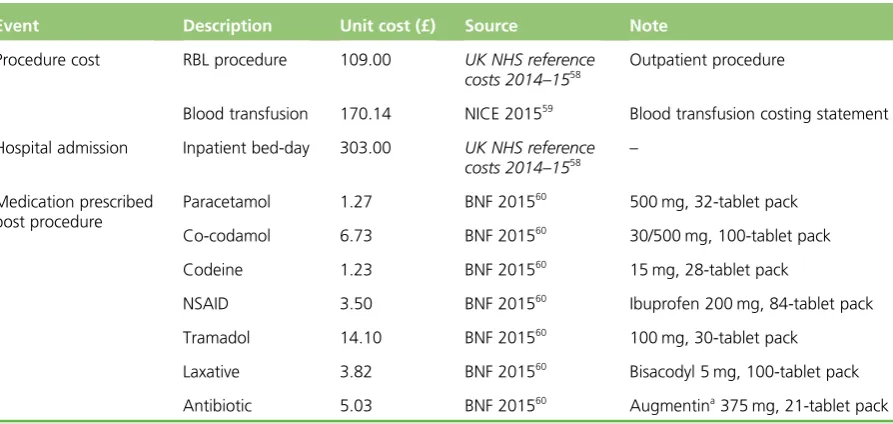
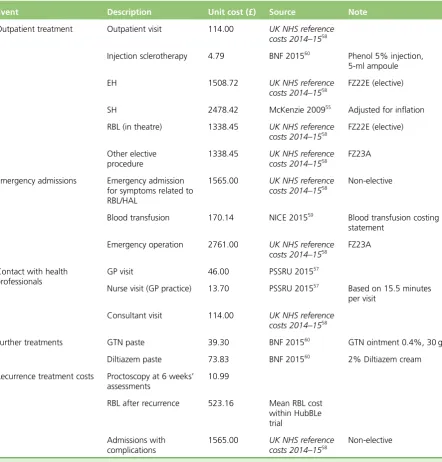
TABLE 2 Unit cost applied for valuation of resource use: RBL procedure 13
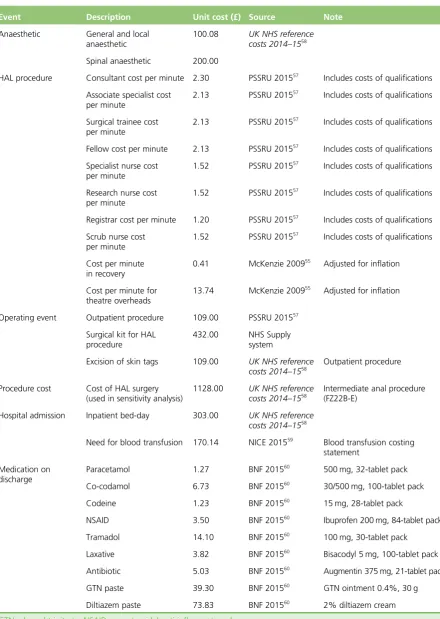
TABLE 3 Unit cost applied for valuation of resource use: HAL procedure 14
TABLE 4 Unit cost applied for valuation of resource use: post discharge
(RBL or HAL) 15
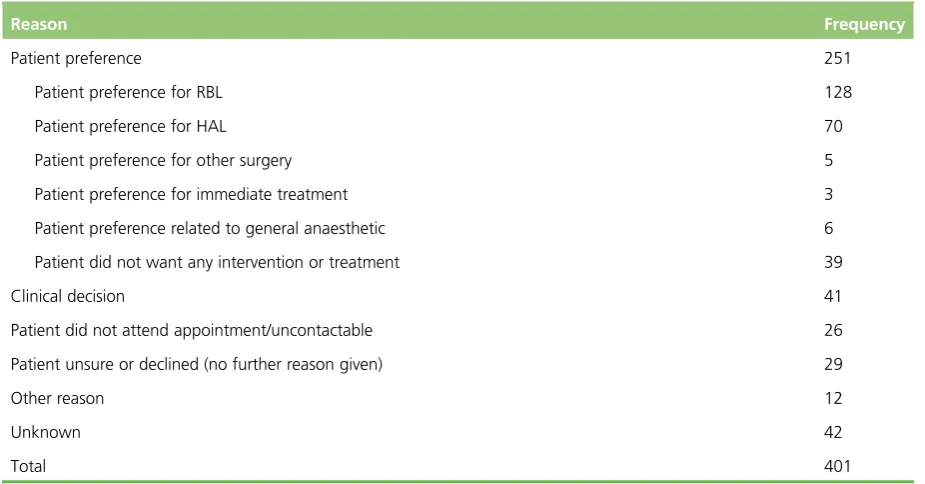
TABLE 5 Reasons for non-recruitment to the trial for eligible patients 22
TABLE 6 Reasons for participant withdrawal during the trial 22
TABLE 7 Duration between randomisation and treatment in the trial
(waiting time) 22
TABLE 8 Baseline demographical data by randomised group 23
TABLE 9 Recurrence at 1 year 24
TABLE 10 Type of second procedure by treating centre 24
TABLE 11 Participants with haemorrhoid symptom severity scores 26
TABLE 12 Percentage of participants with haemorrhoid symptom severity scores
of‘0’or‘1‘ 26
TABLE 13 The EQ-5D-5L health utility 27
TABLE 14 Vaizey faecal incontinence scores 28
TABLE 15 Level of pain relating to haemorrhoids: pain experienced today 29
TABLE 16 Level of pain relating to haemorrhoids: pain experienced over last week 30
TABLE 17 Change in VAS pain from baseline 30
TABLE 18 Grade of haemorrhoids at 6 weeks and change from baseline 32
TABLE 19 Serious adverse events by classification 33
TABLE 20 Agreement between self-completed measures of symptoms,
incontinence, EQ-5D-5L and pain pre-randomisation and pre-treatment 34
TABLE 21 Outcomes for the two HAL devices used in the trial 36
TABLE 23 Mean total costs of resource use for complete cases by group
(unadjusted) 37
TABLE 24 Mean costs of resource use for complete cases by group (unadjusted) 38
TABLE 25 Descriptive statistics for baseline utility and QALYs 40
TABLE 26 Differential cost and differential QALYs based on SUR (HAL vs. RBL) 40
TABLE 27 Sensitivity analysis: CUA for complete-case analysis using SUR and
controlling for baseline utility 44
TABLE 28 Deterministic long-term cost-effectiveness results 44
List of figures
FIGURE 1 Decision tree for recurrence at 1 year 7
FIGURE 2 Extrapolation model structure 17
FIGURE 3 Recruitment graph 20
FIGURE 4 Flow chart summarising the numbers of each type of questionnaire
completed throughout the trial 21
FIGURE 5 Haemorrhoid symptom severity scores 25
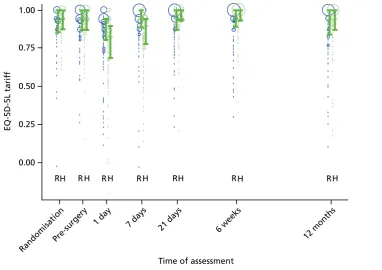
FIGURE 6 The EQ-5D-5L 27
FIGURE 7 Vaizey faecal incontinence score 29
FIGURE 8 Visual analogue scale pain scores: pain today 31
FIGURE 9 Visual analogue scale: pain over the last 7 days 32
FIGURE 10 Agreement of haemorrhoid symptom severity scores at
randomisation and pre-procedure 34
FIGURE 11 Agreement of EQ-5D-5L scores at randomisation and pre-procedure 34
FIGURE 12 Agreement of Vaizey scores at randomisation and pre-procedure 35
FIGURE 13 Agreement of VAS pain scores at randomisation and pre-procedure 35
FIGURE 14 Distribution of cost data: RBL 38
FIGURE 15 Distribution of cost data: HAL 39
FIGURE 16 Symptom score vs. EQ-5D-5L 39
FIGURE 17 Mean EQ-5D-5L scores over 12 months’follow-up 40
FIGURE 18 Cost-effectiveness acceptability curve showing the probability that
HAL is cost-effective given different values of cost-effectiveness threshold 41
FIGURE 19 Cost-effectiveness confidence ellipses illustrating the ICER point
estimate and CIs 41
FIGURE 20 Net monetary benefit line with CIs at different values of
cost-effectiveness threshold 42
FIGURE 22 Sensitivity analysis using the NHS reference cost for the HAL procedure 43
FIGURE 23 Uncertainties in the mean difference in costs and QALYs from
long-term CEA 45
List of abbreviations
AMI Agency for Medical Innovations
BMI body mass index
BNF British National Formulary CEA cost-effectiveness analysis CEAC cost-effectiveness acceptability
curve
CI confidence interval CRF case report form
CTRU Clinical Trials Research Unit CUA cost–utility analysis
DMEC Data Monitoring and Ethics Committee
EH excisional haemorrhoidectomy EQ-5D European Quality of Life-5
Dimensions
EQ-5D-5L European Quality of Life-5 Dimensions (5-level version) GP general practitioner
HAL haemorrhoidal artery ligation HALO haemorrhoidal artery ligation
operation
HRG Healthcare Resource Group HRQoL health-related quality of life ICC intraclass correlation
ICER incremental cost-effectiveness ratio IQR interquartile range
ITT intention to treat
NICE National Institute for Health and Clinical Excellence
NMB net monetary benefit
NSAID non-steroidal anti-inflammatory drug
OH open haemorrhoidectomy
OR odds ratio
PP per protocol
PPI patient and public involvement PSA probabilistic sensitivity analysis PSSRU Personal Social Services Research
Unit
QALY quality-adjusted life-year QoL quality of life
RBL rubber band ligation RCT randomised controlled trial REC Research Ethics Committee SAE serious adverse event
ScHARR Sheffield School of Health and Related Research
SD standard deviation
SE standard error
SH stapled haemorrhoidopexy SOPC surgical outpatient clinic STH Sheffield Teaching Hospitals SUR seemingly unrelated regression THD transanal haemorrhoidal
dearterialisation
Plain English summary
Background
There are many treatments for piles (haemorrhoids). In less-severe cases, one treatment is rubber band ligation (RBL), which involves placing a small band around the base of the pile to cut off the blood supply. RBL is a relatively painless outpatient treatment with minimal complications but recurrence is common. Haemorrhoidal artery ligation (HAL) uses a device to locate the arteries feeding the piles, which are then stitched. This procedure takes longer and is more painful but may reduce recurrence. We compared these two procedures to see which was best.
Results
One year after surgery, 49% of the patients had a recurrence of symptoms after RBL compared with 30% of patients undergoing HAL. About one-third of RBL patients, whose symptoms persisted, underwent a further surgical procedure, many having repeated RBL. If patients having further RBL are considered as having a‘course’of therapy then there was minimal difference between the treatments. Most patients initially felt better after surgery, but symptoms returned within the year. Symptom scores, quality of life, continence and complications were similar after both procedures. Those undergoing HAL tended to have more pain but the discomfort was not severe in the majority of patients and resolved by 1–3 weeks after the operation. HAL is much more expensive.
Conclusion
Scientific summary
Background
Anal cushions are a normal component of the anal canal and are composed predominantly of vascular tissue, supported by smooth muscle and connective tissue. Pathological changes in the anal cushions with enlargement of the vascular plexus result in haemorrhoidal development. Haemorrhoids are common, affecting as many as 1 in 3 of the population, and result in a significant burden to the UK NHS. Over 20,000 haemorrhoidal operations are carried out in England each year. Prevalence may be even higher in professionally active people. Repeated visits to hospital for therapy represent a significant disruption to the personal and working lives for this population in particular.
Treatment is dictated by the degree of symptoms and the degree of prolapse, and ranges from dietary advice to rubber band ligation (RBL) in the outpatient department, to an operation under anaesthetic. Although RBL is cheap, it has a high recurrence rate and often needs repeating. Failure may require surgical intervention, commonly the traditional‘open’haemorrhoidectomy (OH) or a stapled
haemorrhoidopexy (SH), both requiring anaesthetic. OH is associated with considerable postoperative discomfort and a delay in return to normal activity, but has a low recurrence rate. SH has a slightly higher recurrence rate, but potentially shorter recovery. An alternative treatment is haemorrhoidal artery ligation (HAL), which, although it also requires an anaesthetic, is thought to enable an even quicker return to normal activity. Recurrence rates are reportedly similar to SH, but complication rates are lower.
There are substantial data in the literature concerning the efficacy and safety of RBL, including multiple comparisons with other interventions. Recurrence varies from 11% to>50%, the broad range probably reflecting the definition of recurrence, severity of the disease, number of treatments and/or the intensity and length of follow-up. In most studies, the incidence of recurrence is>30% and appears greatest for grade III (third-degree) haemorrhoids (prolapsing piles requiring manual reduction). Significant complications are rare after RBL.
Although HAL requires an anaesthetic, evidence suggests a recovery that is similar to RBL, but an effectiveness that approaches the more intensive surgical options. There are significant data about the effectiveness of HAL, including four systematic reviews, 11 randomised controlled trials (RCTs), seven non-randomised trials and>60 case series. All of these reviews highlight the lack of good-quality data as evidence for the advantages of the technique. There are no existing RCTs that compare HAL with RBL.
Objectives
The aim of this study was to establish the clinical effectiveness and cost-effectiveness of HAL compared with conventional RBL in the treatment of people with symptomatic prolapsing haemorrhoids (second or third degree).
The primary objective was to compare patient-reported symptom recurrence at 12 months following the procedure. Recurrence was defined using a simple dichotomous outcome that was derived from a
previously published systematic review, and supplemented with general practitioner (GP) and hospital notes.
The secondary objectives were to compare postoperative:
l symptom severity score
l continence (using the validated Vaizey incontinence score)
l pain [using a 10-cm visual analogue scale (VAS)]
l surgical complications
l need for further treatment
l clinical appearance of haemorrhoids at proctoscopy following recurrence
l health-care costs
l cost-effectiveness.
Methods
This was a multicentre, parallel-group RCT involving 18 centres throughout England and Scotland. Delegated study staff located at individual centres identified and consented potential participants.
These participants fell into two basic groups:
1. Patients presenting to the surgical outpatient clinic (SOPC) with symptomatic haemorrhoids, for which alternative diagnoses had been excluded either clinically or after investigation.
2. Patients with symptoms–due to haemorrhoids–confirmed, who returned to SOPC following one unsuccessful RBL.
After consent, participants were individually randomised to HAL or RBL in equal proportion at all centres using a web-based randomisation system.
Sheffield Clinical Trials Research Unit (CTRU) coordinated follow-up and data collection in collaboration with the UK centres. Participant study data were collected and recorded on study-specific case report forms and patient questionnaires, and then entered on to a web-based data capture system, transferring data to Sheffield CTRU for analysis.
Data were collected to establish which patients had further treatment for recurrent symptoms or
complications following their initial procedure. This was achieved at a clinic visit around 6 weeks following the intervention and by reviewing hospital records, asking the patients’consultants, writing to patients’ GPs and questioning the patient via telephone interview at 12 months.
Setting
Sheffield Teaching Hospitals NHS Foundation Trust was the‘clinical coordinating centre’housing the Chief Investigator. A further 17 centres screened patients and delivered the trial; one centre did not recruit, so 17 centres recruited participants. Recruitment took place in outpatient clinics, RBL took place in outpatient clinics or theatre (depending on the Trust’s current practice) and HAL took place in theatre.
Participants
The target population was patients who were referred to collaborating centres for treatment of haemorrhoids.
Inclusion criteria
l Adults aged≥18 years with symptomatic second- or third-degree (grade II/III) haemorrhoids.
Exclusion criteria
l Patients who have had previous surgery for haemorrhoids (at any time).
l Patients who have had more than one injection treatment for haemorrhoids in the past 3 years.
l Patients who have had more than one RBL procedure in the past 3 years.
l Patients with known perianal sepsis, inflammatory bowel disease, colorectal malignancy or pre-existing sphincter injury.
l Patients with an immunodeficiency.
l Patients who were unable to have general or spinal anaesthetic.
l Patients who were currently taking warfarin or clopidogrel bisulfate (clopidogrel) or who had any other hypocoagulability condition.
l Patients who were currently taking nicorandil.
l Pregnant women.
l Patients who were unable to give full informed consent (this may be because of mental capacity or language barriers).
l Patients who were previously randomised to this trial.
Sample size
We assumed that the proportion of patients who experience recurrence following RBL was 30% and following HAL 15%. Therefore, the sample size required to detect a difference in recurrence rates with an odds ratio (OR) of‘2’, with 80% power and 5% significance, was 121 individuals per group. In order to account for any between-surgeon variation and loss to follow-up, we increased this to 175 per group.
Interventions
The intervention was either RBL or HAL–both established and well-documented procedures, considered as standard care by the National Institute for Health and Clinical Excellence.
Rubber band ligation is a basic surgical skill with which all senior staff are familiar and are competent in performing.
Haemorrhoidal artery ligation is a simple procedure that uses existing surgical skills and has a short learning curve. All of the surgeons involved in the study had completed the required training and, in addition, had carried out the manufacturer’s recommendation of five procedures before commencing the study.
Statistical and health-economic analyses
Differences in the primary outcome of recurrence were analysed using logistic regression, adjusting for gender, age and history of previous intervention as fixed effect covariates and surgeon as a random effect. This allows the calculation of ORs with confidence intervals (CIs) for the effect of RBL relative to HAL, adjusting for the effects of covariates and the clustering by surgeon. The secondary outcomes of pain, symptoms and incontinence were analysed at each time point using a random-effects, generalised least squares model, adjusting for the same covariates. Procedural complications and serious adverse events (SAEs) were summarised as numbers and percentages.
Results
In total, 372 participants were randomly assigned to receive RBL or HAL; 187 patients were allocated to receive RBL, and 185 were allocated to receive HAL. Two of these participants (both randomised to RBL) were removed from the trial completely, as they were ineligible at the time of consent, and, therefore, a total of 370 participants were entered into the trial. The recurrence rate for HAL was significantly lower than for RBL at 12 months (30% vs. 49%, adjusted OR=2.23, 95% CI 1.42 to 3.51;p=0.0005). Further treatment was required in 31% of the RBL group and 15% of the HAL group (adjusted OR for further procedure=2.86, 95% CI 1.65 to 4.93;p=0.0002). Eighteen per cent of the RBL group received a second banding session within the year. In these cases, because the initial haemorrhoids were incompletely treated, excluding these RBLs as recurrence resulted in a larger reduction of our recurrence rate for RBL and no statistical difference between the groups (HAL 30% vs. RBL 37.5%, adjusted OR 1.35, CI 0.85 to 2.15;p=0.20).
At 6 weeks following the procedure, 13 (9%) of patients in the HAL group and 44 (29%) of patients in the RBL group reported their haemorrhoidal symptoms as‘unchanged’or‘worse’(adjusted OR 4.35, 95% CI 2.19 to 8.65;p<0.001).
The haemorrhoid symptom severity score improved in both arms compared with scores prior to procedure. At 6 weeks, the mean scores reduced from 6.5 [standard deviation (SD) 3.3] to 4.0 (SD 3.5) for RBL and from 6.4 (SD 3.0) to 3.0 (SD 3.1) for HAL. There was a statistically significant difference between groups at 6 weeks in favour of HAL (adjusted mean difference 1.0, 95% CI 0.3 to 1.8;p=0.01) but no difference was apparent at 1 year (difference in means 0.0, 95% CI–0.8 to 0.8;p=0.98). Applying the definition used by Nyströmet al., in which a score of 0 or 1 points indicates symptomatic cure, the two interventions were similar at both 6 weeks (HAL 38% vs. RBL 31%; adjusted OR 0.73, 95% CI 0.44 to 1.22;p=0.23) and 1 year (HAL 31% vs. RBL 27%; adjusted OR 0.79, 95% CI 0.46 to 1.38;p=0.42) (Nyström PO, Qvist N, Raahave D, Lindsey I, Mortensen N. Randomized clinical trial of symptom control after stapled anopexy or diathermy excision for haemorrhoid prolapse.Br J Surg2010;97:167–76).
Haemorrhoidal artery ligation was associated with a short-term reduction in mean health utility
(European Quality of Life-5 Dimensions, 5-level version) at 1 and 7 days postoperatively, whereas for RBL the mean had reverted back at 1 week. The adjusted difference in means were 0.08 (95% CI 0.04 to 0.13; p=0.001) at 1 day and 0.08 (95% CI 0.05 to 0.12;p=0.001) at 7 days in favour of RBL. The two arms were similar (and above baseline values) at all time points from day 21 onwards.
There was a small reduction of about 1–2 points in the mean Vaizey faecal incontinence score 6 weeks after both interventions. There was no evidence of a difference in incontinence score between the two interventions. The majority of patients reported increased pain, measured by VAS, following both procedures (56% RBL vs. 71% HAL). For RBL, this pain was usually of low intensity (median VAS score on day 1: 3.0) and resolved rapidly to below baseline values (median VAS score on day 7: 1.0); about 50% of patients required analgesics for the first few days after treatment. For HAL, the pain was significantly greater, with moderate pain at day 1 (median VAS score 5.0, mean difference from RBL–1.2, 95% CI
–1.8 to–0.5;p<0.001) and mild pain on day 7 post procedure (median VAS score 3.0, mean difference from RBL–1.5, 95% CI–2.0 to–1.0;p<0.001). Pain had resolved in almost all patients by the 3-week assessment (median VAS score 0.0 RBL vs. 1.0 HAL, mean difference from RBL–0.1, 95% CI–0.6 to 0.3; p=0.44). Analgesia was required by the majority after a HAL procedure on a daily basis for the first week, but tailed off such that at 3 weeks 72% of patients had stopped taking medication.
Twelve patients (7%) reported a SAE (in all cases entailing hospitalisation) following HAL procedure, compared with two (1%) in the RBL arm. In the HAL arm there were six admissions due to pain, two for urine retention, and one each of bleeding, wound infection, nausea/vomiting and a reaction to anaesthetic. For RBL, both events related to prolonged hospitalisation: one for severe pain and one for bleeding 12 days following banding.
The main findings of within-trial cost–utility analysis suggest that HAL procedure appeared not to be cost-effective compared with RBL at a cost-effectiveness threshold of £20,000–30,000 per QALY. In the base-case results, the difference in mean total costs was £1027 higher for HAL than RBL. QALYs were higher for HAL; however, the difference was very small (0.01), resulting in an incremental cost-effectiveness ratio (ICER) of £104,427 per additional QALY. At the threshold of £20,000 per QALY, HAL has zero probability of being cost-effective; at the threshold of £30,000, it has 0.05 probability of being cost-effective.
The base-case CEA suggests that the incremental cost per recurrence avoided was estimated as £4882. In a sensitivity analysis scenario using recurrence from the consultant questionnaire only, the incremental cost per recurrence was estimated as £6346. The extrapolation for 3 years beyond the trial time horizon generated an ICER of £21,887 per QALY, and HAL has 0.34 probability of cost-effectiveness.
Conclusions
Haemorrhoidal artery ligation is a more clinically effective procedure than a single RBL intervention. However, if HAL is compared with repeat RBL the procedures become equivalent in terms of recurrence. Similarly, symptom severity score, complications, quality of life and continence score were no different between interventions, and patients had more pain in the early postoperative period after a HAL
procedure. The HAL procedure is significantly more expensive than RBL and not cost-effective in terms of cost per QALY.
Trial registration
This trial is registered as ISRCTN41394716 (UKCRN database ID 12486).
Funding
Chapter 1
Introduction
Background
Haemorrhoidal tissue, which forms the‘anal cushions’, is a normal component of the anal canal and is composed predominantly of vascular tissue, supported by smooth muscle and connective tissue. Haemorrhoids result from enlargement of the haemorrhoidal plexus and pathological changes in the anal cushions. They are common, affecting as many as 1 in 3 of the population.1
Approximately 23,000 haemorrhoidal operations were carried out in England in 2004–5,2and the prevalence may be even higher in professionally active people. Repeated visits to hospital for therapy represent a significant disruption to the personal and working lives for this population in particular.
Treatment is dictated by the degree of symptoms and the degree of prolapse, and ranges from dietary advice–to rubber band ligation (RBL) in the outpatient department–to an operation under general or regional anaesthetic. Although RBL is cheap, it has a high recurrence rate, and patients often require further visits to the outpatient department for repeat banding before exploring surgical options.3 Although there are some variations [such as LigaSure®(Covidien–Medtronic, Minneapolis, MN, USA) haemorrhoidectomy], surgery is commonly traditional‘open’haemorrhoidectomy (OH) or a stapled haemorrhoidopexy (SH); both require an anaesthetic. OH is associated with considerable postoperative discomfort, sometimes necessitating an overnight hospital stay and a delay in return to normal activity, but has a low recurrence rate; SH has a slightly higher recurrence rate, but is carried out as a day case and patients return to normal activity more quickly.4An alternative treatment is haemorrhoidal artery ligation (HAL), which also requires an anaesthetic, but is thought to enable even quicker return to normal activity. Recurrence rates are reportedly similar to SH, but complication rates are lower.5
There are substantial data in the literature concerning the efficacy and safety of RBL, including multiple comparisons with other interventions.6–12Recurrence varies from 11% to>50%. This broad range probably reflects the definition of recurrence (patient symptoms or clinical appearance), the grade of haemorrhoids treated (grade I, no prolapse; grade II, spontaneously reducible prolapse; grade III, prolapse requiring manual reduction; and grade IV, unreducible prolapse), the number of treatments and/or the intensity and length of follow-up. In most studies, the incidence of recurrence is>30% and appears greatest for grade III haemorrhoids. Pain is common for a few hours following RBL and occasionally patients experience pain so severe as to require admission to hospital (around 1%3), bleeding (3–4%, sometimes necessitating further treatment9) and vasovagal symptoms (3%13). There have also been rare incidences of blood transfusion3,11,14–18and severe pelvic sepsis, with a few instances leading to death.13 Recurrences can be treated by re-banding or by surgical intervention.
Although HAL requires an anaesthetic, evidence suggests a recovery similar to RBL, but an effectiveness that approaches the more intensive surgical options. The substantial data concerning effectiveness include four systematic reviews,5,19–2111 randomised controlled trials (RCTs),22–32seven non-randomised trials33–39 and>60 case series. An overview has been carried out by the National Institute for Health and Clinical Excellence (NICE), which concludes that current evidence shows it to be a safe alternative to OH or SH;40 this is summarised below.
l In terms of efficacy, studies with>1 year follow-up suggest bleeding, pain on defecation, and prolapse (surrogates of recurrent symptoms) in 10%, 9% and 11% of patients, respectively.
l The data from the three RCTs comparing HAL with SH and OH are difficult to combine, but efficacy seems similar for all of the procedures, with OH perhaps being superior in treating prolapse, although it is unclear if a‘pexy’stitch was used in the HAL cases to reduce prolapse. OH appears to lead to the most postoperative pain and longest recovery. There are conflicting results as to whether or not the HAL technique results in less pain compared with SH. Complications were also more frequent in the OH group, but occurred at a similar frequency when SH and HAL were used.
Rationale
Both of the systematic reviews and the NICE overview highlight the lack of good-quality data as evidence for the advantages of the technique; most data are from case series. Even the numerous RCTs have significant methodological drawbacks that make them subject to selection, performance, attrition and detection bias. Indeed, none of the studies is powered to reach any meaningful conclusion. There are no existing RCTs that compare HAL with RBL, although there is now one non-randomised comparison with small numbers of patients.41
Research objectives
The HubBLe study aimed to establish the clinical effectiveness and cost-effectiveness of HAL compared with conventional RBL in the treatment of people with symptomatic second- or third-degree (grade II or grade III) haemorrhoids.
The primary objective was to compare patient-reported symptom recurrence at 12 months following the procedure.
The secondary objectives were to compare postoperative:
l symptom severity score (adapted from Nyströmet al.42)
l health-related quality of life [HRQoL; using the European Quality of Life-5 Dimensions (EQ-5D)43]
l continence (using the validated Vaizey incontinence score44)
l pain [using a 10-cm visual analogue scale (VAS)]
l surgical complications
l need for further treatment
l clinical appearance of haemorrhoids at proctoscopy following recurrence
l health-care costs
l cost-effectiveness.
Text reproduction
The findings of this trial have been published inThe Lancetand as such there is reproduced text on pp. 24–26 ofThe Lancetpublication.45
Chapter 2
Methods
T
his report is concordant with the Consolidated Standards of Reporting Trials (CONSORT) statement (2010).46Trial design
We undertook a multicentre, parallel-group RCT of HAL compared with conventional RBL in the treatment of people with symptomatic second- or third-degree (grade II or grade III) haemorrhoids in 17 NHS Trusts in the UK. Participants were individually randomised to HAL or RBL, in equal proportion at all centres.
Important changes to methods after trial commencement
Recruitment commenced on 12 November 2012, and, following this, in response to early observations, a number of changes were made to the protocol (seeAppendix 1) and trial methods. Between the initial Research Ethics Committee (REC) approval and study commencement, there were two substantial amendments clarifying the serious adverse event (SAE) reporting and the expected adverse events. The protocol was published inBMC Gastroenterologyin October 2012.47
In October 2012 (substantial amendment 3; protocol version 4.0), a change was made to the eligibility criteria to exclude patients with hypercoagulability disorders [in addition to those on warfarin or
clopidogrel bisulfate (clopidogrel)] following a request from one of the Principal Investigators during a site set-up visit.
In January 2013 (substantial amendment 6; protocol version 5.0), the baseline data collection was changed to the day of surgery, rather than at randomisation. Sites and treatment arms differed in the time between randomisation and treatment, and this change was made to standardise the data collection as much as possible. This also standardised the time between the baseline and the 12-month follow-up, as the follow-up time point was based on the date of trial treatment.
In March 2013 (substantial amendment 7; protocol version 6.0), we removed one inclusion criterion and replaced it with three exclusion criteria for clarification. The inclusion criterion‘Either presenting for the first time or after failure of one banding’at sites had caused some confusion at sites and it was also decided during the review of this criterion that patients with some historical treatments for haemorrhoids could be included.
The study team, the sponsor and the Trial Steering Committee (TSC) discussed the windows in which treatment is clinically relevant, and agreed that there should be a difference between surgical and non-surgical treatment for haemorrhoids (and that dietary advice would not exclude patients). The
amended criteria clarified that all previous surgery for haemorrhoids and more than one injection treatment or banding in the previous 3 years would lead to exclusion. For non-surgical treatments,>3 years was considered a historical event and therefore not relevant to the current research. As one previous banding was allowed within the protocol, this was also the case for injection treatments, as they were both non-surgical; one previous course of injection treatment would not mean that patients were excluded.
In April 2013 (substantial amendment 8; protocol version 7.0), we added‘patients will have at least 24 hours to decide whether to take part’to the protocol, in order to provide clarification, as it was not explicitly stated previously. The 24-hour period was an appropriate time frame for the study population and intervention.
outcomes can be affected by the knowledge of their allocation. As baseline data collection took place on the day of surgery (following Substantial Amendment 6), the majority of patients knew their allocation by this point; the concern was that perceived pain and quality of life (QoL) may differ between the groups due to expectation bias at this time,48even though no procedure had yet taken place. The senior trial statistician reported that the early data did indeed support this hypothesis, in particular with higher self-reported symptoms in the HAL arm. As a result of this, the protocol was amended to incorporate a questionnaire to be completed before randomisation.
To improve the questionnaire completion rates at the 12-month follow-up, we introduced a prize draw for participants who returned the questionnaires in February 2014 (substantial amendment 7; no change to protocol). We completed three draws of £50 each.
Owing to the long waiting times for the HAL procedure, the dropout rate prior to the procedure was higher than expected. To account for this attrition, in April 2014 (substantial amendment 12; no change to protocol) the recruitment target was increased to 370 in order to achieve the sample size of 350 prior to treatment.
Participants and eligibility criteria
The trial was coordinated from the Clinical Trials Research Unit (CTRU) in the Sheffield School of Health and Related Research (ScHARR). Delegated study staff located at individual centres identified and consented potential participants.
The target population was patients referred to collaborating centres for treatment of haemorrhoids.
Potential participants fell into three groups:
1. Patients presenting to the surgical outpatient clinic (SOPC) with symptomatic haemorrhoids that did not require further tests: this group was identified by the clinical team from the general practitioner (GP) referral letter and a patient information sheet was sent to them prior to their clinic appointment. If they were willing to participate then they were consented and randomised when they attended the appointment.
2. Patients presenting to the SOPC with symptomatic haemorrhoids that required further tests to exclude other diagnoses: this group were identified by the clinician at the clinic appointment and given a patient information sheet. They underwent the necessary outpatient tests (usually endoscopy) and, if negative (i.e. the symptoms are due to haemorrhoids), they were contacted by the research nurse prior to attending their follow-up clinic appointment. They were then randomised and consented when they reattended the clinic.
3. Patients who returned to SOPC following one unsuccessful RBL: they were identified by the clinician at their first clinic appointment (when they have RBL) and given a patient information sheet. They were contacted prior to a follow-up appointment (usually 6 weeks after treatment) by a research nurse. If they remained symptomatic and were willing to participate, they were consented and randomised when they reattended.
All potential participants had a minimum of 24 hours in which to decide whether or not they wished to take part. Patients with investigations excluding pathologies other than haemorrhoids, and all of those who had undergone RBL, were contacted by the research nurse before the planned follow-up clinic to ascertain whether or not they met entry criteria and were interested in entering the trial. They would then be seen by the consultant and research nurse in clinic where recruitment and randomisation took place.
Potential participants were invited to take part in the trial if they were aged≥18 years and had symptomatic second- or third-degree haemorrhoids.
Patients were excluded if they met any of the following criteria:
l have had previous surgery for haemorrhoids (at any time)
l have had more than one injection treatment for haemorrhoids in the past 3 years
l have had more than one RBL procedure in the past 3 years
l with known perianal sepsis, inflammatory bowel disease, colorectal malignancy, pre-existing sphincter injury
l with an immunodeficiency
l unable to have general or spinal anaesthetic
l currently taking warfarin, clopidogrel or have any other hypercoagulability condition
l pregnant women
l unable to give full informed consent (this may be due to mental capacity or language barriers)
l previously randomised to this trial.
Settings and locations where the data were collected
The CTRU coordinated the follow-up and data collection in collaboration with centres. Participant study data were collected and recorded on study-specific case report forms (CRFs) by centre research staff, and then entered on to a remote web-based data capture system at site. To improve the rate of completion, research nurses could complete the participant questionnaires with the participants at the visit or over the telephone, or the participants could return the questionnaires by post to the centres at all time points. Patient questionnaires, at 12 months, could also be completed online and could be returned to the CTRU by participants for data entry.
Interventions
Participants were randomised to receive either RBL or HAL. Both interventions are established and well-documented procedures, which are considered standard care by NICE.40,49
Conventional RBL uses a device that allows a rubber band to be applied to each haemorrhoid via a proctoscope. The device used across sites was a suction device (various manufacturers), but bands can be applied using a forceps ligator. This rubber band constricts the blood supply causing it to become ischaemic before being sloughed approximately 1–2 weeks later. The resultant fibrosis reduces any element of haemorrhoidal prolapse that may have been present. This is a very commonly performed procedure in all SOPCs; figures from an audit of current practice at Sheffield Teaching Hospitals (STH) highlighted that prior to the trial over 20 such procedures were carried out every week. The procedure is a basic surgical skill with which all senior staff are familiar and competent in performing. All surgeons involved in the study performed this procedure routinely.
Haemorrhoidal artery ligation uses a proctoscope that is modified to incorporate a Doppler transducer. There are two types of equipment in common use: the HALO (haemorrhoidal artery ligation operation) device [Agency for Medical Innovations (AMI) HAL Doppler system, CJ Medical, Truro, UK] and the THD (transanal haemorrhoidal dearterialisation) device (THD Lab, Correggio, Italy). Both devices operate on the same principle, essentially enabling accurate detection of the haemorrhoidal arteries feeding the haemorrhoidal cushions. Targeted ligation of the vessels with a suture reduces haemorrhoidal engorgement. When combined with a‘pexy’suture, both bleeding and haemorrhoidal prolapse are addressed. All of the surgeons participating in the trial ensured that the need for a pexy suture was routinely assessed and recorded. The procedure is simple, uses existing surgical skills and has a short learning curve, with the manufacturers recommending at least five mentored cases before independently practising. All of the surgeons involved in the study had completed this training prior to the start and, in addition, had carried out more than five procedures prior to delivering the study treatment.
Outcomes
Measurement of outcomes
Following consent but prior to randomisation, a participant-completed questionnaire was administered which included questions relating to pain, symptoms, EQ-5D-5L (European Quality of Life-5 Dimensions, 5-level version), continence and use of pain medications. The research nurse completed a patient assessment form, which included demographics and details of the haemorrhoids, including previous treatment(s).
The same participant questionnaire was repeated at baseline, defined as the day of the procedure; in addition, the procedure details CRF was completed by the consultant or the research nurse.
Short-term outcome assessments were completed by participants either via return of a postal questionnaire or a telephone call with the research nurse at days 1, 7 and 21 post procedure. This covered EQ-5D-5L, pain and use of pain medication.
Data were collected 6 weeks following the procedure and again at 12 months following the procedure in order to establish which patients required further treatment for recurrent symptoms or complications. Participants attended a 6-week clinic visit following the intervention at which they were asked details regarding GP visits, hospital attendance or further treatment since the procedure; the baseline questionnaire was also repeated at this time. A clinical assessment was recorded wherein complications, SAEs and further treatment (planned or completed) were reported; the haemorrhoidal grade was recorded when it was clinically assessed. The clinician was also asked whether or not, in his/her opinion, the patient’s symptoms were improved.
Twelve-month data were collected from three sources. Details of further procedures were obtained from hospitals (by reviewing hospital records and asking the patients’consultants), by contacting the patients’ GPs and, finally, by questioning the patient via telephone interview or postal questionnaire at 12 months. Primary outcome measure
The main research question of the study was to ascertain the 1-year incidence of recurrence following HAL or RBL. The primary outcome was defined as the proportion of patients with recurrent haemorrhoids at 12 months post procedure, as derived from the patient’s self-reported assessment in combination with GP and hospital records.
The trial was a pragmatic design with a dichotomous outcome. As no validated patient-reported symptom score exists, we based our definition of recurrence on Shanmugamet al.’s systematic review12definition:
1. Cured or improved: Symptom free or mild residual symptoms but not requiring further treatment at the end of study period; or, 2. Unchanged or worse: No symptom improvement and requiring further intervention or suffered complication or deterioration of symptoms.
This study simplified Shanmugam’s criteria12into the following question, asked at 12 months by a research nurse:‘At the moment, do you feel your symptoms from your haemorrhoids are (1) cured or improved
compared with before starting treatment or (2) unchanged or worse compared with before starting treatment?’
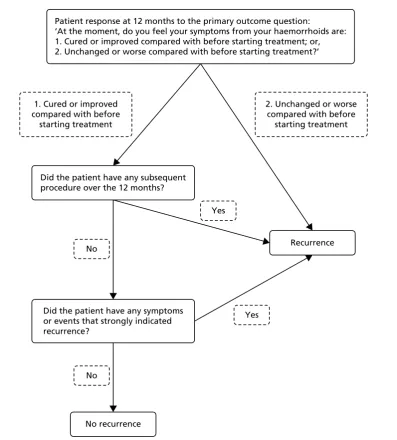
Patients were considered to have recurrent haemorrhoids when any of the following were recorded (as shown inFigure 1):
i. ‘Unchanged or worse compared with before starting treatment’at 12 months, as reported by the patient,or
ii. Any subsequent procedure (RBL, HAL, THD, haemorrhoidectomy, haemorrhoidopexy, haemorrhoidal injection or other relevant procedure) over the 12 months,or
iii. Presence of any symptoms or events that strongly indicated recurrent haemorrhoids [among patients not meeting (i) or (ii), as adjudicated by two trial investigators (JT, SB) who were blinded to allocated treatment].
Secondary outcome measures
Secondary end points seek to identify which treatment–HAL or RBL–is the most cost-effective, which is the least painful procedure with the fewest complications, and which has the greatest effect on the patient’s QoL. Secondary end points are therefore:
l Persistence of significant symptoms defined analogously to the 12-month outcome.
l Symptom severity score (adapted from Nyströmet al.42). This score is the sum of the scores from all five questions and is therefore a number on a nominal scale in the range of 0 to 15; where an increase in number is an increase in symptoms.
l HRQoL using the EQ-5D-5L.43A summary index with a maximum score of 1 can be derived from the five dimensions by conversion using a table of scores. The maximum score of 1 indicates the best health state, by contrast with the scores of the individual questions, where higher scores indicate more severe or frequent problems.
l Continence using the validated Vaizey incontinence score.44The Vaizey incontinence score is simply the sum of the scores from all of the seven questions, and is also a number on a nominal scale in the range of 0–24, for which an increase in number indicates more severe incontinence.
l Pain using a 10-cm VAS, for which‘0’is‘no pain’and‘10’is‘worst imaginable pain’.
Patient response at 12 months to the primary outcome question:
‘At the moment, do you feel your symptoms from your haemorrhoids are: 1. Cured or improved compared with before starting treatment; or, 2. Unchanged or worse compared with before starting treatment?’
Did the patient have any subsequent procedure over the 12 months?
Did the patient have any symptoms or events that strongly indicated recurrence?
1. Cured or improved compared with before
starting treatment No recurrence Recurrence No No Yes Yes
2. Unchanged or worse compared with before
[image:35.595.94.492.63.504.2]starting treatment
l Surgical complications.
l Need for further treatment.
l Clinical appearance of haemorrhoids at proctoscopy following persistent symptoms at 6 weeks.
l Health-care costs/cost-effectiveness/quality-adjusted life-years (QALYs).
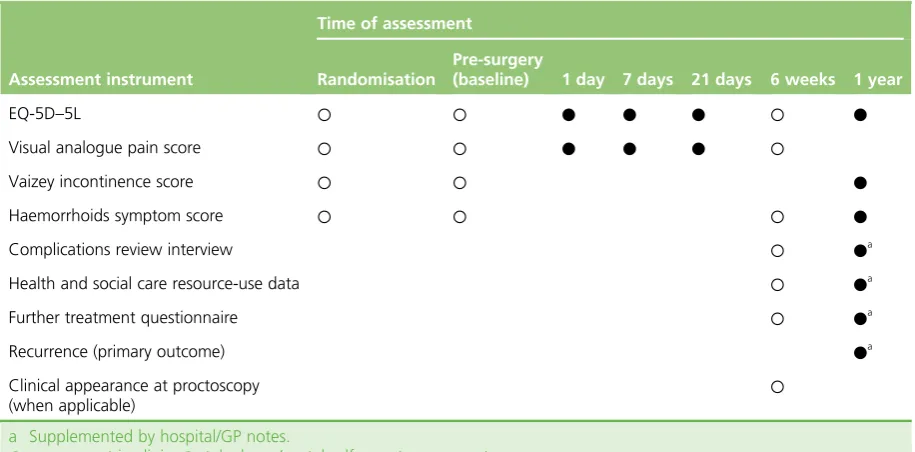
The schedule for collecting these end points is shown inTable 1.
Sample size
Assuming that the proportion of patients who experience recurrence following RBL is 30% and following HAL is 15%, the sample size calculated to detect a difference in recurrence rates with an odds ratio (OR) of 2 with 80% power and 5% significance was 121 individuals per group. In order to account for any between-surgeon variation and loss to follow-up, this was increased to 175 per group.
This increase was based on the conservative assumption that there would be 14 surgeons in the trial (one per centre, although the number of sites was increased) and intraclass correlation (ICC) of 2.5% in keeping with typical ICCs observed by Ukoumunneet al.50However, it was considered likely that each site would have a minimum of two surgeons, in which case the power to detect this difference was 85% (90% power if there was no between-surgeon variation). Because the surgical procedure was well developed and standardised, ICC was expected to be virtually zero and the proposed sample size was hoped to have closer to 90% power.
The impact of loss to follow-up was minimal for the primary end point (haemorrhoidal recurrence at 12 months). Patients who did not complete their 12-month follow-up still had their hospital notes reviewed, and their GP was contacted to ascertain whether or not any complications or operative procedures were recorded. The only dropout expected was if the patient should die, move out of the area or have no traceable patient notes; we anticipated this would be less than the 5% that we allowed for in this patient population (a previous study of RBL that used only clinical follow-up reported a 1-year loss to follow-up of 10%51).
Explanation of any interim analyses and stopping guidelines
[image:36.595.79.537.522.748.2]No formal interim analyses for efficacy were carried out. However, the safety of the treatments was assessed by an independent DMEC, the members of which convened annually to review SAEs experienced by study participants.
TABLE 1 Use of assessment instruments during the trial
Assessment instrument
Time of assessment
Randomisation
Pre-surgery
(baseline) 1 day 7 days 21 days 6 weeks 1 year
EQ-5D–5L ○ ○ ● ● ● ○ ●
Visual analogue pain score ○ ○ ● ● ● ○
Vaizey incontinence score ○ ○ ●
Haemorrhoids symptom score ○ ○ ○ ●
Complications review interview ○ ●a
Health and social care resource-use data ○ ●a
Further treatment questionnaire ○ ●a
Recurrence (primary outcome) ●a
Clinical appearance at proctoscopy (when applicable)
○
a Supplemented by hospital/GP notes.
○, assessment in clinic;●, telephone/postal self-report assessment.
Randomisation and blinding
Randomisation was undertaken using the CTRU’s web-based randomisation system. After consent, participants were individually randomised, in a 1 : 1 ratio, to either HAL or RBL by a member of the research team at site. To ensure equal allocation across centres, randomisation was stratified by centre using permuted blocks of random sizes 2, 4 and 6. Allocation concealment was achieved by ensuring that the participant identifier was entered, following which the allocation was revealed; no member of the study team had access to the randomisation schedule during recruitment. The study was open label, with no blinding of participants, clinicians or research staff attempted.
Statistical methods
Analysis populations
The primary analyses were intention-to-treat (ITT) analyses in which individuals were analysed according to the treatment to which they were randomised, regardless of whether or not they underwent their allocated surgery. Secondary analyses were undertaken on a per protocol (PP) basis, which was restricted to those individuals who complied with the protocol. The categories of non-compliance were eligibility, missed windows, consent and treatment issues, which included patients who did not receive their allocated treatment. Safety summaries were reported, based both on randomised and actual treatment where these differed.
Analysis of 1-year recurrence (primary outcome)
The primary outcome was the recurrence of haemorrhoids at 1 year, as defined above (seePrimary outcome measure). Analyses were undertaken using a random intercept logistic regression model in which the covariates were treatment allocation, gender, age at surgery and history of previous intervention as fixed effects; the surgeon was included as a random effect. Further sensitivity analyses assessed whether or not other baseline characteristics [including symptom score, EQ-5D-5L and body mass index (BMI)] altered the strength of the treatment effect and/or appeared to modify the treatment effect.‘Goodness of fit’ of the logistic regression model was assessed using the Hosmer–Lemeshow test.52ICC coefficients were calculated to summarise the clustering that may exist around surgeons.
Secondary outcomes
Persistent significant symptoms at 6 weeks
Recurrence at 6 weeks was analysed in the same manner as the primary outcome. Unlike the 12-month recurrence, no blind review was incorporated, as common symptoms (e.g. severe pain or bleeding) may be due to the procedure rather than the haemorrhoids.
Haemorrhoid symptom severity score
The severity of haemorrhoidal symptoms was compared using a generalised least squares regression mixed model using the same covariates as the primary outcome. The prespecified analysis did not include
baseline symptoms as a covariate because of the concerns noted below (seeImportant Changes to Methods after Trial Commencement), but sensitivity analyses were also undertaken, which adjusted for severity at randomisation (when available) and at baseline, and the average of the two. The difference in symptom severity was compared separately for the 6-week and 12-month time points.
European Quality of Life-5 Dimensions (5-level version) status
Health utility was assessed by the EQ-5D-5L questionnaire using the Value Set for England normative data.53EQ-5D-5L was assessed at days 1, 7 and 21. Longitudinal analyses of EQ-5D-5L were conducted as part of the economic evaluation described below (seeHealth-economic methods).
Vaizey faecal incontinence score